I was quoted at one of the franchise marketing conferences some years back…
“Content may be King, but it’s what’s done with the content that makes the Kingdom!”
Today, I believe this statement to be more the case than ever before.
As such, I’m seeking guest bloggers – authors & subject-matter experts along with thought-leaders, academics, and the like with focus on or related to entrepreneurship, franchising, small business, and restaurants.
Interested in writing about your brand or an entrepreneurial story? That’s great, provided it’s about a distinct point of differentiation from a typical promotional piece. Maybe you’d like to provide insight into a skillset that benefits entrepreneurs and small business owners? That’s fine, as well. As is sharing perspective and opinion on issues of the day. Self-help and mental health? About a specific demographic group? Success and failure experiences? Yes! Definitely, yes! Of course, in all instances, I will approve accordingly. If not approved, it will not be the case without first discussing with the author to possibly see if an edit or two would make the article more appropriate.
Acceler8Success Cafe is the interactive arm of Acceler8Success Group. It is centered around a Daily LinkedIn Newsletter with a growing subscriber base. The articles are shared across multiple LinkedIn Groups, on the Acceler8Success Group blog, on various social media platforms of Acceler8Success Group & its Leadership Team, and on Medium.com.
Plans are in place to significantly expand the reach of Acceler8Success Cafe in 2023 including white papers, infographics, videos, and finally after several false starts, a podcast! Who knows what the future will bring as we’ve already tested local in-person meetings and have actually had discussions about a brick & mortar cafe of the same brand name. It’s all quite exciting!
My goal is to provide current and aspiring entrepreneurs the information and resources necessary to succeed, and especially in today’s business climate surrounded by economic uncertainty and challenges that industry segments have never seen before. As one might imagine, the sky is the limit with any and all relevant information providing value or at the very least, to spur thought and discussions.
If you’re interested in submitting articles, of any length, and graphics, quotes, etc., or would just like to have a chat about my plans, please reach out to me here on LinkedIn or by email to Paul@Acceler8Success.com. I look forward to speaking with you and exploring possibilities. Thank you!
Today, I’m sharing Part 2 of the article, Is Franchising the Right Way to Grow Your Restaurant Business?An article for which I was interviewed based upon a webinar of the same title that I presented at RestaurantOwner.com approximately five years ago.
Timing is Everything
A restaurant operator knows the time is right to franchise his concept, ideally, after duplicating profitability and customer engagement at several locations. That proves systems and processes are working without the restaurateur being on the premises.
Slightly less than ideal, but certainly doable, Segreto continues, is having a single, highly successful location that runs like a well-oiled machine even when the owner is not on site. That said, the time can also be right when the restaurant owner wants to help others follow his vision to success, knowing that the business now is franchising as opposed to foodservice.
Understandably, the smaller and more efficient the restaurant, the better. The lower investment is attractive to experienced operators who may have $1 million to invest but would rather do it with five to I0 units rather than investing it all in one high-dollar operation with little to no room for error. That’s why the QSR (quick-service restaurant) model tends to be attractive, says Segreto.
Segreto also sees an excellent opportunity for successful food truck operations transitioning to brick and mortar. The key in all of this is simplicity in operations while maximizing efficiencies for higher profit margins. This is especially true of QSRs without grills or hoods, but with preparation of fresh salads and other dishes. Some don’t even have freezers, which is even cutting down space requirements.
Franchised takeout and delivery concepts will continue to proliferate, Segreto predicts. What I also see changing is a move away from single-item franchises such as French fries or dessert items. Basically, if it’s a single, complementing, or add-on item on a typical menu it won’t sustain a franchise operation. The few units that survive will be in high-foot-traffic areas albeit with high rents.
It will be a struggle, but some will survive, he suggests. I also believe we’ll see more modeled after typical pizza operations: large takeout and delivery, high percentage of online and phone orders, (and) counter-type operations of a high-margin family style product such as barbecue and fajitas.
Initial Steps
The first thing Segreto recommends would-be restaurant franchisors do is conduct a feasibility study. It’s understanding the competition, he explains. It’s understanding what’s working out in the restaurant industry in your particular food segment. It’s looking at where are the best locations. Where are the successful brands succeeding? What does the real estate footprint look like? What does the size of the space look like? What is the competition that’s out there? Who’s growing in my particular area that I anticipate going head-to-head with? So, the last thing you want to do is open up your Greek food restaurant as a franchise and go directly across the street from an actual brand that is doing the same thing.
Development of an operations manual is another necessary step, Segreto says, and this is really complex. It really is the specific development of every process, every procedure. Keep in mind, as I said before, franchising is being able to repeat the system over and over and over and over again; being able to duplicate it, to replicate it, so somebody can pick up that operations manual and actually learn from it and be able to operate that business.
“Some of the most successful brands – in any sector – are franchises. In the restaurant business, they are household names. For many independent operators, franchising their concept is the so-called Big Hairy Audacious Goal. Before you take that big leap, there are a lot of small and critical steps to consider.” – Paul Segreto
Franchisee and franchisee employee training and program development comes next. How are we going to go ahead and get individuals who are interested into your brand in a franchise situation to be trained correctly? – he asks. You have to develop a training program along with a training manual. You also have to have a train-your-trainer program, because the person who might be doing your training today might not be around (in the future), and you have to make sure you have everything documented from that.
Ongoing support, understandably, is critical. We have to support the individuals who are out there. Obviously, we don’t want to just pick up the phone and say, ‘Hey Joe, how are things going?’ There has to be an action plan. There have to be goals. There has to be a way of motivating them. There has to be a way of coaching them. There has to be a way of understanding at a glance where this franchisee might be having some issues.
Web site development must account for each new franchisee that comes on board. “They’ve got to have specific unique URLs (uniform resource locator, the address of a World Wide Web page) on your site. If you wind up selling 10, 20, 30 franchises, obviously you have to have the structure in place to be able to accommodate those location pages. Is it going to be Pizzarama Number One? Is it going to be Pizzarama, Abilene, Texas? How are we going to identify them? There must also be a franchise development web site, a page on the regular web site that also has its own unique URL that can be used as a landing page.
A franchise relations management computer application is another valuable addition. Compliance mechanisms must be put in place, he urges. How do you track royalty payments? How are you going to do it for multiple franchisees? There are different franchise relationship computer applications out there; some are very proprietary, and you can’t even get in the door at $25,000.
But there are a lot being released now which are Microsoft-dynamic, and are able to integrate QuickBooks very, very effectively. He calls this an absolute necessity in order to track what’s going on. And if you’re selling any type of supplies or goods to them, this is another way of tracking.
Another essential step is prototype restaurant layout and design. Rarely, says Segreto, does someone open a restaurant and afterward say it is exactly what he wanted. We’re always saying, ‘I wish the bathroom was a little bit different. I wish we had a little bit more room in the server area. I wish we had a little bit more room in the kitchen because we’re kind of running into each other.’ Keep in mind; this is something that your franchisees are depending upon you for, so obviously there’s a cost involved.
Likewise, development of signage specifications is a necessity. Whatever the franchisee is going to have, you’re going to have signage specs. What is the sign going to look like from the outside, on the building itself? What does the road sign look like? If it’s on a multi-use line, what is the small side going to be? Of course, make sure your logo fits on it.”
The franchise disclosure document is really the big one, – says Segreto. Within it is a franchise agreement. Again, you could reign in the cost on this, but a lot of it depends on how good your franchise attorney is. I would never, under any circumstances, ever, ever, ever recommend an attorney do your disclosure document that doesn’t specialize – not touch on but specialize – in franchise law.
The timing for a certified financial audit varies according to state. “You won’t need this your first year, at least in the State of Texas, says Segreto. But if you’re franchising in the State of New York, you will need it in the first year.” It calls for an independent audit firm to look at and sign off on the venture. “It says, ‘These are the financials as I know them.’ State administrators look at this to make sure that you can support franchisees, that you’re not just doing this on a wing and a prayer.
According to Segreto, a franchise registry is something that’s popped up of late. It is part of the Small Business Administration (SBA) registration. It’s almost, almost impossible for a franchisee to get an SBA loan without the brand already being vetted out and listed on the franchise registry, and there’s some reason behind it. By the same token, however, it also shows the franchise candidate that this brand is serious and has actually invested in getting listed on the registry.
You Can Do It Yourself… And Other Myths
If we can take anything away from Segreto’s advice it is that franchising is a tremendously complex endeavor. Few operators – even successful franchisors – have the breadth of knowledge and skills to do even a portion of the required steps without professional advisors.
Of course, the franchisor can try to do it himself, he adds. I’ve seen many, many individuals in the restaurant industry, and otherwise, try it. They always come running back and say, ‘I’ve no idea how to handle this. There are too many things going on at one time.’ So, you’re going to need a consultant to kind of ‘hold your hand’ along the way and make sure that everything gets done in a very progressive manner.
The human factor in a franchise relationship should never be overlooked. As Segreto has found, A few individuals may just be needy and whiny about everything. Could you handle that? How about a franchisee that’s not complying, not paying royalties, causing issues in the marketplace, and as a result you must take them to court and possibly terminate the franchise agreement and get them to cease operations? Keep in mind, his lifesavings are on the line. Could you handle that?
His point is that a franchisor has to have the right personality and has to be committed to the long-term vision. There are a lot of myths about franchising: ‘If I franchise, I’ll make tons of money. If I franchise, I won’t have to work as hard as I’m working now. I can just retire.’
The vision of franchising a restaurant concept can make some over-confident, Segreto has found. Some are likely to say, ‘Once I teach a franchisee how to run the business, then I don’t have to do anything else. All they do after they sign is pay me royalties.’ That’s not true. You have obligations.
Indeed, Segreto concludes, this might be the biggest myth there is. A lot of franchisees that, all of a sudden, make an investment have an entitlement attitude that, ‘Because I invested X-amount of dollars, the business should just succeed.’ You find that all of a sudden, they’re on the golf course a lot more. They bought that new boat. You’ll be surprised what comes out of the woodwork.
If you’re interested in exploring whether franchising is right for you and your business, let’s discuss. I can share with you my 40+ years’ franchise development experience while also introducing you to resources necessary for you to make an informed decision – one that is right for you and your brand! You can reach me via a LinkedIn message, by email to Paul@Acceler8Success.com, or by phone or text at (832) 797-9851.
A question I am always being asked is about whether franchising is the right way to grow a restaurant business. It’s certainly good to see restaurant operators and other business owners proactively planning for the long-term. Preparing to franchise a restaurant or any business for that matter, is a good project to undertake even if franchising turns out not to be in the cards, for whatever reason. A lot can be learned from the process itself.
Let me say that again:
Preparing to franchise a restaurant or any business for that matter, is a good project to undertake even if franchising turns out not to be in the cards, for whatever reason. A lot can be learned from the process itself.
It was this objective of being well informed regardless of whether franchising was the right strategy or not that I had on my mind when I was asked to conduct a seminar for RestaurantOwner.com five years ago. It’s no secret that many restaurant operators have aspirations of seeing their concept grow across a state or even across the country. Most think about franchising as the vehicle to accomplish their goals for all the obvious reasons. But is franchising right for them personally? Is their business positioned correctly for franchising? And is franchising the right or only path for growth?
After I presented my webinar, I was interviewed by RestaurantOwner.com staff for an article in their print publication. Over the next few days, I will share the article here at Acceler8Success Cafe. As it has helped a number of restaurateurs make what they’ve told me was truly the right decisions for them, two just in the past week, I feel compelled to start the conversation again in order that today’s restaurant operators that may be planning a pivot will have opportunity to explore and consider all options.
Note: At the time of the webinar and article I was CEO of Franchise Foundry. Today, with 40+ years under my belt, I am the CEO & Founder of Acceler8Success Group. Franchise Management & Development is a cornerstone of Acceler8Success Group along with other disciplines including business incubation & acceleration, business brokerage and entrepreneurship coaching.
Is Franchising the Right Way to Grow Your Restaurant Business?
Is Franchising the Right Way to Grow Your Restaurant Business?(An Interview with Paul Segreto, CEO of Franchise Foundry based on a RestaurantOwner.com webinar by the same name.)
The restaurant industry represents the largest number of franchised locations, thanks not only to established chains like McDonald’s Corp.; but also, smaller operators who use franchising to grow quickly. The IFA predicts the so-called full-service restaurant sector will account for the greatest growth, followed closely by quick-service units.
The risks are proportionate to the rewards. As with any complex business strategy, there are right ways and wrong ways to launch and maintain a franchise system. Franchising the right way is when the corporate unit from which the franchise model is being developed is already highly profitable,” says Paul Segreto, CEO of Franchise Foundry. From there it’s about having proven processes and systems that have been documented and will be easily replicable at franchise locations.”
Franchisors must understand franchisees have also made a significant investment in the business, and in the founder’s vision. We hear so much about positively memorable experiences for customers, but that should be the case for franchisees in their relationship with the franchisor. – Paul Segreto
Segreto’s company is a business accelerator focused on emerging franchise brands. Utilizing a hybrid coaching/consulting approach, he and his team develop and deploy effective short-and long-term solutions in franchise management and operations, change management, traditional and digital marketing, relationship and business management technology, and domestic and international franchise development. The company also assists franchise brands in raising capital and exploring merger and acquisition opportunities.
Segreto also stresses the importance of exemplary customer satisfaction levels” at the corporate unit prior to attempting to replicate the concept. Profitability can be a function of strong management at the corporate level. Exemplary customer satisfaction, proves not only those systems and processes are working, but are working to the finest of details.” Among the clearest evidence that a restaurant concept is delivering this level of service is a “stellar position on review sites,” says Segreto.
Successful franchisors have selected technology that support their systems across the franchise – including POS system, loyalty programs, and more. Before launching a franchise, the technology needs to be tested from all angles in the corporate stores.
Systems also require standardization of equipment and process flow. Franchising is where the restaurant business becomes as much science as art.
Last but most certainly not least, any company wishing to franchise must have solid ownership of trademarks and trade dress. In fact, securing this intellectual property is probably the prospective franchisor’s first step.
Of course, each of these aspects of creating a foundation for a successful franchise is a webinar – if not a book – in itself. The wrong way to franchise is simpler, says Segreto: ‘We’re making money, let’s franchise. We’ll make improvements and perfect things after we sell a few franchises…’
Misunderstanding Franchising
Segreto believes there is a lot of misunderstanding among restaurant operators when it comes to franchising. Franchising is regulated under federal, and in some cases state, disclosure laws, and ignorance [or these laws and regulations] is not a defense, – he warns. Franchisees are not employees and shouldn’t be treated as such. Franchisees are every bit the mom-and-pop operator with life savings invested in many cases. Consumers have confidence in a franchise brand, feeling a larger entity behind the local franchise unit. Expectations are higher than with independent operations. Conversely, consumers lose sight of it being locally owned and operated.
Prospective franchisors also need to identify the segment in which they will be competing. Franchised restaurants are currently divided into common segment categories, such as quick-service, full-service, family dining, etc. It doesn’t end there, says Segreto. Then there’s ethnicity: American, Korean, Mexican, Latin American, Asian, and many more – and top those off with fusion.
Your mission, as an operator who dreams of franchising your concept, is simpler, says Segreto. Do what you do best and focus on that. Don’t try to be everything to everyone. A ‘proven’ system is when the efficiencies can offset the royalty percentage and still churn out acceptable profit margins.”
Restaurateurs must also realize that franchise success is dependent on both franchisor and franchisee. Think marriage, Segreto says, because it is a marriage of sorts. It requires open, honest, transparent communications in both directions.
Don’t forget that you, as franchisor, are not the only party that wants to make money. Many times, an operator decides to franchise because he is pumping away at 15% to 20% profit, and with them at the restaurant 60 hours a week. For a franchisee, you must add back royalty percentage – let’s say 6% – and 2% to 3% for required brand funds. (Brand funds are payments required by the franchisor to be used in promoting the brand). So right away, if nothing changed to make operations highly efficient, the franchisee process fit is down to 8% to 12%.
The franchisor must resist the temptation to treat franchisees like employees. Franchisors must understand franchisees have also made a significant investment in the business, and in the founder’s vision. We hear so much about positively memorable experiences for customers, but that should be the case for franchisees in their relationship with the franchisor.
One of the keys to a strong interdependent relationship is for both parties to fully understand each other’s responsibilities, as well as their own. It’s all lined out in the franchise disclosure document, says Segreto. Unfortunately, it’s often overlooked, cast off as boilerplate.
Please check back tomorrow as the article continues with timing, initial steps, and myths.
In the meantime, if you have questions about franchising your restaurant (or service business) please feel free to reach out to me on LinkedIn, by text or phone to (832) 797-9851, or by email to paul@acceler8success.com. I look forward to speaking with you!
After taking a few days off to enjoy the Thanksgiving Holiday Weekend AND to support Small Business Saturday, Acceler8Success Cafe is back. And to start the week, I’d like to do so by expressing my utmost gratitude around Small Business Saturday.
Your participation and efforts in bringing more awareness to small business and franchising is greatly appreciated. Hopefully, #AmericanExpress and #AmericanExpressBusiness will take note and #franchising will continue to have a greater role in the event for years to come.
That said, I say thanks to #AMEX for their commitment to help #smallbusiness. However, I do have a request that I’m sure is also on the minds of many – please, additional focus on the restaurant sector of small business would be greatly appreciated!
The quote below definitely puts my thoughts into perspective about restaurant owners and franchisees being small business owners just the same as Mom & Pop / independent small business owners.
“Wherever you see a successful business, someone once made a courageous decision.” – Peter F. Drucker
To all who have made the courageous decision to own and operate a business, I thank you. And to all who have invested their hard-earned money, who have worked endless hours, who continue to give back to their local communities, and who have provided jobs, I cannot thank you enough.
Let’s all work toward ensuring the spirit of #smallbusinesssaturday lives on throughout the year!
As I typically end my articles with a message of making it happen and making it count, I thought I’d share the following story by Peter Shankman that this morning popped up on my Facebook Memories. I believe it’s especially relevant considering recent news of recession, economic uncertainty, inflation, and layoffs.
If you want success, you have to accept risk!
“I was working at AOL in the 1990’s when the company let go of 300 people. I was one of them. The movie, Titanic was coming out, so I took my rent money and had 500 t-shirts printed that read, “It sank. Get over it.” If I didn’t sell those shirts, I was homeless. I sold 500 shirts in 6 hours and made five grand. Then I called USA Today and gave a reporter the story. I sold 10,000 shirts on the Web over the next two months and ultimately racked up 100 grand. That was my very first company.”
Thank you Peter Shankman for sharing you’re very inspiring story. It resonates so well in the shadows of Small Business Saturday and of course, for small business ownership.
The Home Stretch
December is no different than any other month in that it represents 1/12 of the year. So, if you’re looking to end the year on a high note, efforts must remain focused just as they were at the beginning of the year or when starting a new quarter.
Don’t count the days until the holidays, or until year’s end. Instead, make the days count – each and every one of them. There will be plenty of time to enjoy the holidays. Just think how much more you’ll enjoy them if December were a record sales month for your organization. And, think about the emotional high by starting the new year on an upswing.
Thank you to all readers and subscribers of Acceler8Success Cafe. I greatly appreciate all of you!
Calling all franchise owners! Calling all franchise brands! Calling all that do business with franchises!
It’s imperative we remind the world of the role franchising plays in business.
There are more than 750,000 franchise establishments in the US alone. 7.49 million US employees work in franchise businesses. The economic output of the US franchise industry is valued at $670 billion. 10.5% of all businesses in the US are franchises.
Please make the image below your profile picture on your social media accounts from now through #SmallBusinessSaturday. It will stand as a reminder for everyone to #ShopSmall#ShopLocal at your franchise small business or restaurant on Nov. 26th. #ShopFranchise
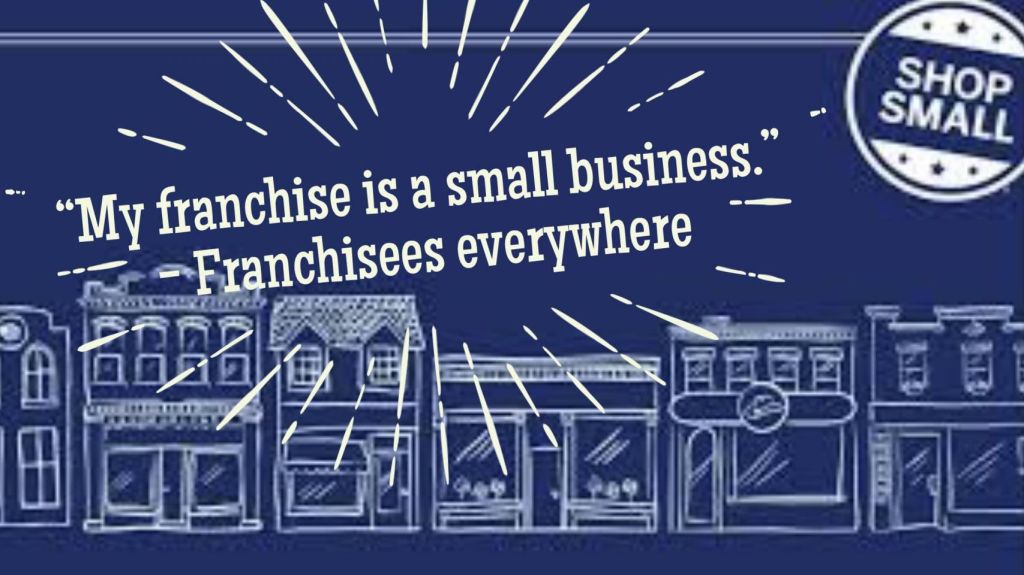
And please share the following images in your social media activity ahead of Small Business Saturday and even throughout the year to remind consumers that franchises are small business.
Also, if you see any of these images being posted on social media, please LIKE and SHARE to help spread the message – Franchise Are Small Business!
If you haven’t yet read yesterday’s article at Acceler8Success Cafe, you may do so at the link below. As well, please SHARE to help others understand how this movement came about and where we are today.
Many people that know me ask why I am so passionate about franchising and it’s minimized participation in Small Business Saturday by American Express. Well, the reason is continued confusion as to perceptions about franchising and that franchises are all big business.
McDonald’s comes to their minds as the typical franchise with large marketing budgets. The perception, as related to me eleven years ago by American Express executives was that the McDonald’s parent company pays for all marketing and that in and of itself creates a huge advantage for McDonald’s franchisees over local businesses. Obviously, this is totally off-course and couldn’t be further from the truth.
In any event, franchising has made some progress over the years as American Express has slowly expanded its efforts to allow franchises to participate in its Small Business Saturday program. Unfortunately, it still is not enough as limits continue to be imposed for franchise brands based upon the number of locations.
The number of locations is irrelevant when determining whether or not a business is considered small business, and a local business at that. It’s all about the individual location’s ownership. It’s about the investment made by the owner. It’s about the risks taken to pursue the American Dream of business ownership.
What is still being missed is the reality that thousands upon thousands of individuals that own franchises across our great Nation are basically in the same position as any Mom & Pop operator up and down Main Street USA. Yet, the majority are excluded from participating in Small Business Saturday events.
At the end of this article I’ve listed links to various articles chronicling my initial efforts to have American Express recognize franchising as small business. My concern now is that in addition to how the franchise business model is viewed by AMEX, how are other business models being viewed?
There’s a plethora of business models that have become quite popular for business ownership. I’m referring to home-based and virtual businesses. All are small businesses with many owned by individuals and families, no different than local Mom & Pop shop owners, the very target of American Express in its Small Business Saturday campaigns. If you disagree, please take a look at the typical image for the event depicting a small business storefront.
Other business models that are small business include sole practitioners offering professional services including real estate & insurance sales, financial planning, and the fast-growing coaching profession (business, life, health, and other areas of expertise). They’re really no different than the small business offering personal services such as hairstyling, massage, manicures & pedicures, and full-service spa experiences.
I am happy to see of late, more attention given to restaurants with #DineSmall but it’s not enough. I’m not sure if that was an AMEX initiative, but it should be, and one that should be expanded to piggyback Small Business Saturday. After all, besides the large company-owned restaurant chains, all restaurants are small businesses. And like other small businesses, restaurants (and bars) are the brainchild of an individual or family or, if a franchise restaurant, they are owned & operated by individuals and families, just the same.
American Express explains its Small Business Saturday campaign on its website. It states, American Express cares deeply about thriving communities and believes small businesses are at the core of every thriving neighborhood. That’s why – in the midst of the recession in 2010 – we created Small Business Saturday® on the Saturday after Thanksgiving to encourage people to Shop Small and bring more holiday shopping to small businesses.
In 2011, the U.S. Senate even passed a resolution to support Small Business Saturday, and participation in the event has expanded to all 50 states. Read more about the history of Small Business Saturday HERE. Momentum continues to build, but is it enough for ALL small businesses?
Investopedia explains Small Business Saturday as an annual event that was created to encourage consumers to shop locally in person and online at small businesses.
However, I don’t necessarily agree with some of the points made on the site as it specifically states this event is intended to encourage consumers to shop at small and locally owned businesses. That includes retail stores and restaurants as well as other small businesses, such as salons, grocery stores, and service-based businesses. It also extends to small businesses that exist online.
If there is any truth to the latter part of the statement, I’d have to say the efforts to promote the same are just not there, or certainly, are just not enough. To me, it may have been added as all encompassing lip-service.
Further, there is an Important Message on the Investopedia site that reads, Businesses must meet American Express guidelines regarding size and payment acceptance to be added to the Shop Small map.
So, is American Express more interested in driving AMEX card sales, or is it more interested in, as stated on the Investopedia site, to give small businesses a revenue boost during the holiday shopping season. Or, as referred to on various American Express sites, to help local communities thrive.
Please don’t get me wrong, I absolutely love the Small Business Saturday initiative. I thought it was great from day one which is why I encourage my franchise clients to participate across all locations. Unfortunately, that is what led to discovering the exclusion (and subsequent limitations) on franchise businesses.
Nevertheless, I still love Small Business Saturday. I just don’t want to see any small business owner left out. In other words, I’d love to see all small businesses promoted. I’d love to see all small business owners have the opportunity to benefit by the program.
As mentioned above, here are links to various articles about my initial efforts to include Franchising in the Small Business Saturday initiative:
Please help make a difference and encourage everyone you know to shop at franchises AND independent businesses on Small Business Saturday, as well as before and after this year’s event on November 26th. I suggest that each time they make a purchase at a franchise to let American Express know by using #ShopSmall in their social media activities along with #ShopFranchise. We must continue to let American Express know that franchises are small business, too.
We’re all in this together. We must all do what we can to strengthen our local communities and the businesses that support those communities.
As we continue celebrating National Entrepreneurship Month on this beautiful Sunday, a day I believe is one of reflection, I’d like to share The Entrepreneurs Prayer. This prayer was written by Rick Beneteau, co-creator of the breakthrough Make Every Day A Great Day Program.
The Entrepreneurs Prayer
As I awaken with the gift of yet another day and prepare for the tasks at hand, I offer up this most ardent prayer:
I pray for continued clarity of purpose so that I may hold my vision steady and keep my focus on the needs and success of others, which in turn shall bring me my success.
I pray for the wisdom to expect abundance in my life, that it surrounds me and is available for the taking and to be shameless and unapologetic upon its receipt, for I deserve abundance.
I pray for a cheerful countenance, be it clear or cloudy skies and that I may radiate and infect others with my positive attitude.
I pray for the trust of others that they may recognize my sincerity and true intentions so that we may move forward together.
I pray for the strength to fend off adversity and use my desire and determination as both weapon and shield.
I pray for the courage to carry forth my convictions during the battle of business and to resist temptation to a quicker monetary result when such temptation compromises these things for which I stand.
I pray that I may be used as a lightning rod to collect the amazing ideas already present in the universe and when blessed with such inspiration, that I may be able to apply my talents and abilities to turn the power of thought into measurable advancement of my goals.
I pray to retain my childhood wonder so that I can recognize and revel in the small miracles of each day that others may miss.
I pray for an infinite supply of self-confidence for it alone fortifies faith, strengthens my resolve and conquers the largest enemy I will ever face – fear.
I pray for a compassionate spirit and the patience to offer those who seek my advice and my help, my full and undivided attention.
I pray for good health and a feeling of well being, and the continued desire to improve those areas of my physical life I may be neglecting in the name of my spiritual and entrepreneurial advancement.
I pray that today is a day of excellence and at its conclusion I can acknowledge and be grateful for the forward motion I have made and the growth I have experienced.
I pray most of all for the understanding and support of those closest to my heart, my family, that they will equate what may seem like endless hours of apparent pre-occupation with affairs of business to what is at the very core of my being, that which drives me, for once I achieve what I have set out in its fullest, I will become that more complete being I strive to be.
It is for these things that I pray, for I am an entrepreneur.
As we prepare to begin another week celebrating National Entrepreneurship Month, I’ve posted links below for the past week’s articles for anyone that may have missed an article or two:
I’ll leave you with the following to ponder as this morning I asked myself, What does God say about entrepreneurship?
Proverbs 20:4 (NIV) Here’s a lesson for entrepreneurs – always be on the lookout for opportunities that lead to a harvest. This verse is probably more about the virtues of having a willingness to work, but it also talks about working in season. With certain seasons come opportunities.
What makes entrepreneurship so great is the multitude of ways one may become an entrepreneur. From operating a corner lemonade stand to developing a full-service restaurant to building a business around a sophisticated app, entrepreneurship takes on many forms.
Entrepreneurs come from every walk of life albeit with common denominators of imagination, creativity, and innovation. These are the tenets of the entrepreneurial spirit. This is especially the case as one looks beyond the business models typically associated with entrepreneurship.
Today, we’ll revisit an article, Arts Entrepreneurship that first appeared in this daily newsletter a few months ago. This article is in the top 10 of articles viewed at Acceler8Success Cafe and one that received the most comments. As such, I thought it the perfect article to share on a weekend as we continue our celebration of National Entrepreneurship Month.
Arts Entrepreneurship
There are many different types of entrepreneurship. From traditional startups to business ownership to today’s popular side hustles. There are also many more in between including entrepreneurship involving personal artistic and creative skills such as being an author or artist whose sole business is to create and then sell their books and paintings.
Some might argue that being an author or an artist is nowhere near being an entrepreneur. I’d argue that they’re mistaken. If the individual with a creative talent uses that talent to earn income, and over time develops a business from his or her efforts, they’ve then become entrepreneurs. In fact, part of the Wikipedia explanation of an entrepreneur’s purpose states:
“An entrepreneur uses their time, energy, and resources into creating value for others. They are rewarded for this effort monetarily and therefore both the consumer of the value created and the entrepreneur are benefitted.”
Artist Entrepreneur
One such Artist Entrepreneur was Leonid Afremov. He was a Mexican–Israeli modern impressionistic artist who used to work mainly with a palette knife and oils. He had developed his own unique technique and style which is unmistakable and cannot be confused with other artists.
His paintings were mainly landscape, city scenes, seascapes, flowers and portraits. Most of his work is considered very colorful and politically neutral.
Afremov was mainly known as being a self-representing artist who used to promote and sell his work exclusively over the internet with very little exhibitions and involvement of dealers and galleries.
Before the advancement of online sales and eBay, Afremov was a struggling artist. He was born in Vitebsk, Belarus, and lived there until 1990. Between 1990 and 2002 he lived in Israel, and from 2002 to 2010 in Boca Raton, Florida.
According to the Leonid Afremov website, during the cold Russian winter, Afremov stayed at home painting. He was not allowed to participate in government exhibitions because of his Jewish roots and was not allowed to be a member of the local art associations.
His early work was sold privately via family and friends and was not seen by many people. A lot of his work in the 1980’s was just given away for free. He did not keep records of his work then and not much of it survived. The family currently has only one painting that was made before 1990.
In 1986 the Chernobyl disaster happened. Vitebsk was only a few hundred kilometers from Chernobyl, close enough for radiation to travel with the wind and rain. The ecological situation in the area worsened, local crops and water becoming contaminated with radioactive fallout. Small children were affected strongly, including Afremov’s two year old son.
At the same time Leonid Afremov was experiencing serious discrimination and insults for his Jewish heritage. The liberal politics of Mikhail Gorbachev allowed Jewish soviet citizens to migrate to Israel in the late 1980s. After being fed up with anti-semitism and problems caused by radiation, Leonid decided to move to Israel without hesitation as soon as the doors were opened.
On 14 May 1990 the Afremov family left by train from Minsk to Warsaw where they stayed in a hostel for 3 days. Then on 17 May 1990 they took a flight to Israel provided by the Israeli immigration authorities. The Afremov family was among the first to migrate from USSR in the Russian–Jewish immigration wave of the 1990s.
Today, original oil paintings, original recreations, studio recreations, prints, giclees and much more can be purchased directly from the family of the world renowned Leonid Afremov at https://afremov.com/.
Author Entrepreneur
Another creative entrepreneur is author, Joanne (Jo) Rowling, better known as J.K. Rowling of Harry Potter fame. However, one might wonder how Rowling, the author, could possibly be considered an entrepreneur. Yet, considering the tremendous value of the Harry Potter franchise of books and movies, it’d be difficult to dispute.
We often learn about an entrepreneur’s humble beginnings such as Steve Jobs dropping out of college, living on friends’ couches, and sneaking into classes that he enjoyed despite not being enrolled.
Or, the early beginnings of Hewlett-Packard as Bill Hewlett and David Packard started the business out of a garage in Palo Alto, California. And the list goes on from Walt Disney to Daymond John, founder of the Hip Hop apparel company, FUBU.
In the case of J.K. Rowling, how is this for a humble beginning as described in an article at InsideBusiness.com?
After her mother’s death, Rowling moved to northern Portugal for a fresh start and taught English as a foreign language. She started dating a man named Jorge Arantes, became pregnant, and moved into a small two-bedroom apartment with Arantes’ mother.
The couple miscarried, but they married in October 1992. Rowling later gave birth to a daughter, Jessica, in July 1993.
The rocky marriage lasted a mere 13 months, and Rowling and Jessica returned to the UK to live in Edinburgh, Scotland, not long after. She carried three chapters of “Harry Potter” in her suitcase with her.
Living in a cramped apartment with her daughter, jobless and penniless, Rowling fell into a deep depression and admits she even considered suicide. She was forced to rely on state benefits and spent much of her time writing “Harry Potter” in cafés with Jessica sleeping in the pram next to her.
“An exceptionally short-lived marriage had imploded, and I was jobless, a lone parent, and as poor as it is possible to be in modern Britain, without being homeless… By every usual standard, I was the biggest failure I knew,” Rowling said during a 2008 Harvard University commencement speech.
Today, Harry Potter is a global brand worth more than $15 billion dollars.
Arts Entrepreneurship
According to AmericansForTheArts.org, Arts Entrepreneurship is nothing new. It is fair to assume that artists have always been entrepreneurial. Educators in higher education have been earnestly addressing this topic as early as the 1970s, first at the Eastman School of Music.
However, what is new is a formalized system of education that teaches artists how to, specifically, act entrepreneurially. Today, there are over one hundred colleges and universities addressing the topic, and at least 33 Master’s programs around the world focused on arts, creative, or cultural entrepreneurship.
In academic literature, there is absolutely no consensus as to what “entrepreneurship” means, much less “arts entrepreneurship.” Similarly, there are no agreed-upon definitions for “creativity,” “imagination,” or “art.” These phenomena are complex and subjective.
Regardless, at Meadows School of the Arts at Southern Methodist University (SMU), in a course, Arts Entrepreneurship, students are taught that entrepreneurship is defined as follows:
“The creation of opportunity and value with intent to profit financially, socially or otherwise through the assumption of risk and effort.”
In the context of arts entrepreneurship, the value created is art.
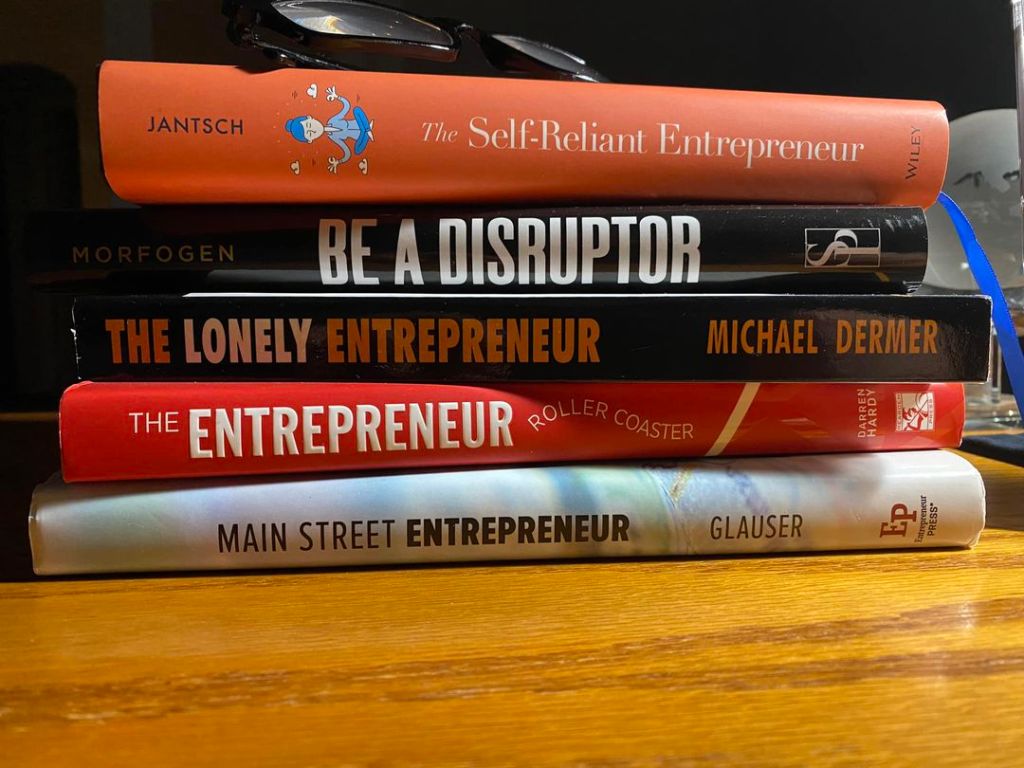
In my continued celebration of National Entrepreneurship Month, today I’m sharing my favorite books about entrepreneurship. I’m of the belief that both current and aspiring entrepreneurs alike will find these five books to be very useful resources. Of course, there are other great books on the subject, but let’s start here.
Do you feel that you have a great business but are struggling to thrive? …that the world is on your shoulders? …that you are energized and overwhelmed at the same time? …that no one understands or cares as much as you do?
In The Lonely Entrepreneur, author and entrepreneur Michael Dermer shows you how to thrive in the entrepreneurial struggle by changing your perspective. What took a decade to build was destroyed in ten days! Michael faced “the perfect storm” of struggles when the business he spent ten years building was almost wiped out in ten days by the financial crisis of 2008. Bankrupt customers. Enraged investors. Angry creditors. It would take years of working 24 hours a day to save his company. How did he do it? THE DIFFERENCE BETWEEN SUCCESS AND FAILURE IS YOUR PERSPECTIVE
Michael changed his perspective. He realized that with the right perspective, solutions were everywhere. With the wrong perspective, the simplest of tasks seemed impossible. Not only did Michael successfully sell his company and become an industry pioneer, he discovered a methodology that helps all entrepreneurs with the issue we face—the struggle.
In The Lonely Entrepreneur you will learn how to:
Identify the flawed perspectives you develop under the influence of the four Ps—pressure, passion, pleasure, and pain.
Change your perspectives from those that stifle progress to those that empower you to thrive.
Lessons in innovation and entrepreneurship from building a New York City restaurant empire.
Stratis Morfogen has been one of the most innovative names in New York City’s hospitality scene for decades. From bringing the famed Fulton Fish Market online in 1997 to pioneering the automat movement with Brooklyn Dumpling Shop to opening a 25,000 square foot venue in Times Square during the pandemic, Morfogen continues to disrupt the status quo.
In Be a Disruptor, Morfogen provides an unconventional, real-world education for any entrepreneur by sharing how he beat the odds in the cutthroat, mob-influenced New York City restaurant world. Morfogen teaches readers what he has learned about finding business opportunity in any situation, starting new ventures in times of adversity, and succeeding against all odds in one of the most challenging environments in the world. It’s a playbook for entrepreneurs with the page-turning qualities of a memoir.
With lessons for navigating pressures from powerful entities like the New York mob and local government, restarting mentally and financially after failed ventures, being aggressive when competitors are being conservative, and managing business and personal relationships, Be a Disruptor is a can’t miss, street-smart education for any entrepreneur, restauranteur, or anyone interested in how the NYC hospitality world really works.
100 Cities. 100 Entrepreneurs. 9 Keys for Success.
Main Street Entrepreneur offers a unique look at what it takes to create a successful and thriving business. Lifelong entrepreneur, business consultant and university professor Michael Glauser rode 4,005 miles in 45 days, spent 246 hours on a bike seat, climbed 165,748 vertical feet, and interviewed more than 100 entrepreneurs in 100 cities along the way to discover the secrets to entrepreneurial success.
Glauser has distilled hours of interviews and research to present the nine keys for:
Building a purpose-driven business
Meeting important community needs
Developing a supporting cast
Working with a zealous tenacity
Giving mind-boggling customer service
Diversifying revenue streams
Giving back to the broader community
And ultimately, creating the lifestyle of your dreams
Readers will learn how to achieve their own dreams and won’t need a 30-page business plan, venture capital, or an exit strategy. All they need to do is implement nine keys for success. Not everyone can build a Facebook, Google or eBay, but anyone with passion and tenacity can do what these entrepreneurs all across America are doing.
66 PERCENT OF SMALL BUSINESSES FAIL–AND IT’S NOT FOR THE REASONS YOU THINK. WHY DO THEY FAIL?
That is what SUCCESS Publisher Darren Hardy set out on a mission to discover.
What he found was startling. All the previously reported reasons and assumptions for the failure rate (capital, location, credit, inventory management, and competition) were wrong.
Failure was not due to outside factors–they were internal. They weren’t economic–they were emotional. The unexpected and terrifying emotional roller coaster an entrepreneur experiences is the greatest factor in why most quit and ultimately fail.
BUT IT DOESN’T HAVE TO BE THAT WAY.
The Entrepreneur Roller Coaster: Why Now Is The Time To #JoinTheRide, will prepare you for the wild ride of entrepreneurship. It will warn you (of forthcoming fears, doubts, and the self-defeating conditioning of your upbringing and past), inoculate you (from the naysayers, dream-stealers, and pains of rejection and failure), and guide you (as you build those under-developed skills of independence, self-motivation, and self-accountability) safely past the landmines that blow up and cause the failure of 66 percent of all new businesses.
You will learn the best strategies Darren has ever collected from the most successful people on the planet, covering the four essential skills necessary for entrepreneurial success: Sales, Recruiting, Leadership, and Productivity.
This book is for you if:
You’ve dreamed of having your own business but have a fear of the unknown.
You’ve stayed on the sidelines of entrepreneurship, not knowing what to expect or what to do.
You’re already on board as an entrepreneur, but you want to ensure you re a success and not a statistic.
BUY THIS BOOK… AND ENJOY THE MOST THRILLING RIDE OF YOUR LIFE!
And, one of my favorites… The Self-Reliant Entrepreneur: 366 Daily Meditations to Feed Your Soul and Grow Your Business which previously appeared at Acceler8Success Cafe (September 2022)
As many that know me are aware, I am an avid reader. Mostly, I read about franchising, small business, entrepreneurship, business & restaurant ownership, self-help and just about any related topics. I’m a sponge for information and resources that I can use in my life as well as in my business, and also for my team and clients.
I typically arise by 4 AM on the weekends and spend 4-6 hours reading through the 300+ digital publications, newsletters and blogs to which I subscribe and that I’ve bookmarked throughout the week. Some I file away for future reference. Others I save to share across social media. And a few I share with friends, colleagues and clients as may be appropriate and relevant based upon a recent conversation or as information, motivation or inspiration I believe will help them.
Over the course of a year, I will read between 35-50 books relating to the same topics I’ve listed above. Some I read and they’re one and done. Others I refer to as needed for reference or as a resource for a particular project. I also have a few go-to books that I refer to quite often for my own inspiration and motivation.
I do love biographies and autobiographies about entrepreneurs, successful business people and leaders. I marvel at these recounts of both success and failure. I’m intrigued by the journey of these individuals. I’m motivated by their passion. I’m amazed by the obstacles and challenges they’ve faced and overcome. And I’m inspired by the possibilities that come to mind as I relate their stories to present day times.
Why do I have such hunger for the written word? Well, my formal education is limited. I never graduated from college as quite frankly, I found it boring. I was not interested in the typical basic courses and although I always looked ahead to the courses I knew I would really enjoy, I fretted about the prerequisite courses that were required before being able to take the courses of which I had the most interest.
To compensate for not having a formal education, I knew I had to work my ass off to get ahead. Marrying and raising a family at an early age was a choice, and a great motivator. It was an experience of which I take great pride, especially as my wife and I have been married for 45 years. We have four great children, their wonderful spouses, and four – and soon to be five – extraordinary grandchildren.
Sure, I regret not completing college and although I have given significant thought on numerous occasions about going back to school, life always got in the way. So, early on when I read Lee Iacocca’s autobiography, Iacocca, I was inspired to learn more about this great man and leader. I read his second book and sought out to read all I could about other successful people.
My motivation to read all that I could was driven by an explanation by Iacocca that still resonates with me to this day. To paraphrase… A man is not as smart by what is in his head as he is by the information he could put his hands on, and that information is in books. And so began my quest for information to educate myself as much as humanly possible.
Oh, I do wish I had complemented it all with a formal education but there’s no use crying over spilt milk, right? There’s no reason to look back. Although, the “what if” questions do haunt me at times, yet they inspire and motivate me just the same.
No doubt I was self-reliant, so when I first heard about the book, The Self-Reliant Entrepreneur, I knew I had to read it. When my daughter, Jennifer asked me what I wanted for Christmas two years ago, I asked her for this book. Maybe the method to my madness was to start out making this book special as it was a gift and one that I knew I would treasure.
Well, as you can see in the image at the top of this article, the book sits at the top of a handful of books that sit on my desk at all times. These books are rotated quite often from the one I’m currently reading to others that I may be referring to for a special project I may be working on. Yet, The Self-Reliant Entrepreneur always sits atop the pile. Why? Because the book is meant to be read each and every day.
But what really makes the book very special is the author’s commitment to helping others. You can just tell he put a great deal of thought into the book. But to me, it’s even more than that as evident by an experience I had yesterday on LinkedIn when I posted the following:
This is my second year reading through the book, The Self-Reliant Entrepreneur by John Jantsch (author of Duct Tape Marketing). The book is comprised of 366 Daily Meditations to Feed Your Soul and Grow Your Business.
Today’s meditation is very spot-on in light of current challenges and economic uncertainty and especially the following sentence:
“As entrepreneurs pushing through fear and trying so many new things, we feel so intoxicated by the sensation of new that we are tempted to hold on and loiter – breathe it in, remember it, then turn the page and grind on.”
I highly recommend entrepreneurs everywhere purchase this book AND diligently follow the daily meditations. The book is great for aspiring entrepreneurs, as well.
Well, the author, John Jantsch personally responded, asking me to share my experience. I mean, who does that? Who takes the time to genuinely ask for your input? Well, it spoke volumes to me, as does this fantastic book.
John asked me, How are you finding you have changed this go around? I responded:
The first time I felt I was just reading. Sure, I always took away something from the various passages but I never seemed to give them much thought afterwards. This time around, I’ve found myself applying what I’ve read, or even like today, I found that it actually reinforced the message I shared in my daily LinkedIn newsletter, Acceler8Success Cafe.
More so, as I often write about what’s going on in my own mind, many of the passages either reinforce my own confidence or motivate me in my own writing as well as in my business. To summarize, first time around I’ve read to read. The second time, I’ve read to apply.
One more thing… For anyone that wants to learn about entrepreneurship or expand skills as an entrepreneur, this book is perfect because so many feel they don’t have time to read a book, but with The Self-Reliant Entrepreneur that’s all they have to read is one page each day. It’s the best 5-10 minutes I spend each and every day!
Interestingly, this morning’s meditation is titled, Original Giftedness. Well, I was already given a gift of John’s response yesterday, so today’s meditation is an appreciated extension of the same. Thank you, John.
If you’re interested in purchasing, The Self-Reliant Entrepreneur, you may do so on Amazon. I highly recommend you do so today. Also, I also believe it’s a great Christmas or Graduation gift that’ll make a difference in someone’s life. I know it’s made a difference in mine.















You must be logged in to post a comment.