
Author: Paul Segreto

Passionate About Fueling Entrepreneurial Spirit; Entrepreneurship Coaching; Management & Development Advisory & Consulting; Franchises, Restaurants, Service Businesses; Thought Leader, Influencer, Content Creator & Author.

Franchising as an Interdependent Relationship: What Every Franchisor Must Understand

The franchise model is often admired for its scalability and brand consistency, but its real power lies in the relationship at its core. Contrary to common misconceptions, the relationship between franchisor and franchisee is not one of control or hierarchy—it is one of interdependence. This fundamental truth is what separates thriving franchise systems from those that struggle with stagnation or internal conflict.

As a franchisor, it’s easy to focus on systems, standards, and expansion. After all, your role is to build and protect the brand while guiding franchisees toward operational excellence. But that guidance is not a one-way street. Franchisees aren’t simply following instructions—they are investing time, money, and energy into bringing your vision to life in local markets. They’re the face of the brand in communities across the country, and their success determines yours.

Interdependence means both franchisor and franchisee rely on each other. The franchisor supplies the business model, the tools, the training, and the brand reputation. The franchisee applies these elements on the ground, interacting with customers, managing teams, and navigating the nuances of local business. One cannot flourish without the other. The franchisor needs strong operators to grow the system; the franchisee needs a strong brand and support structure to succeed.

Franchisors who recognize this interdependence tend to foster a healthier franchise culture. They seek input, encourage collaboration, and build infrastructure that allows for continuous feedback. Advisory councils, regional meetings, pilot programs, and structured communication channels aren’t just good business practices—they’re expressions of respect for the franchisee’s role in the system.

This mindset also influences how challenges are approached. In systems where interdependence is embraced, franchisors work with franchisees during crises rather than issuing top-down directives. Whether it’s a pandemic, supply chain disruption, labor shortage, or market downturn, collaborative problem-solving strengthens the brand and deepens trust.

Financial performance is another lens through which interdependence becomes clear. A franchisor’s revenue often comes from royalties, marketing fees, or product sales—each of which depends on unit-level profitability. If franchisees aren’t doing well, neither is the franchisor. That’s why it’s in the franchisor’s best interest to focus not just on selling franchises, but on supporting and sustaining them. Growth should never outpace support.

Some franchisees may want more autonomy, while others may need more hands-on assistance. Recognizing these differences—and responding accordingly—demonstrates respect for the relationship and helps maintain balance. It also helps prevent system-wide issues from festering, as it creates space for ongoing dialogue and proactive leadership.

Franchisors must never forget that their franchisees are entrepreneurs in their own right. They’ve bet on your vision, invested in your system, and committed to your standards. The least they deserve in return is partnership. Interdependence doesn’t dilute authority—it enhances it by building credibility, trust, and alignment across the network.

Franchising works because it’s a model built on shared success. That success is only sustainable when both sides understand, appreciate, and act on the fact that they need each other—not just to survive, but to grow and thrive together.

Make today a great day. Make it happen. Make it count!

About the Author

Paul Segreto brings over four decades of hands-on experience in franchising, restaurants, and small business development. A passionate advocate for entrepreneurship, Paul has guided countless individuals on their journey to success, whether they are established entrepreneurs or just beginning to explore the path of business ownership.

Named one of the Top 100 Global Franchise and Small Business Influencers, Paul is also the voice behind the Acceler8Success Cafe, a daily content platform where thousands of entrepreneurs gain insight and motivation. A lifelong advocate for ethical growth and brand integrity, Paul continues to coach founders, franchise leaders, and entrepreneurial families, helping them find clarity in chaos and long-term success through intentional leadership.

Ready to take your next step in business or looking for expert insight to overcome today’s challenges? Reach out directly to Paul at paul@acceler8success.com — your path to success may be one conversation away.

About Acceler8Success Group

Acceler8Success Group is a multifaceted business advisory platform committed to empowering entrepreneurs, small business owners, franchise professionals, and industry leaders through strategic consulting, coaching, and curated content.

With a strong focus on entrepreneurship, franchising, restaurants, and small business growth, Acceler8Success Group delivers actionable insights and real-world strategies across its suite of brands, including the following:

Acceler8Success,  FranchiseReclaim,  OwnABizness.com,  Accelerate Success Coaching,  Your Entrepreneurial Success, and relaunching soon, Franchise Foundry.

By blending deep industry expertise with a dynamic content ecosystem, Acceler8Success Group fosters sustainable success and responsible leadership for today’s innovators and tomorrow’s legacy builders.
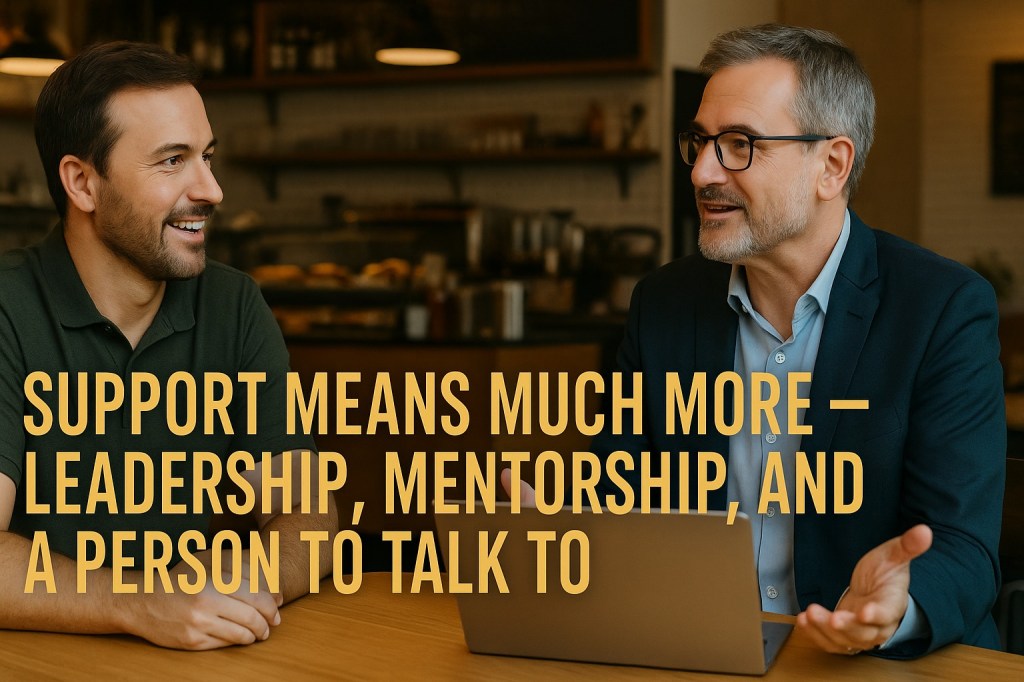
The Human Side of Franchising: Why Support Must Go Beyond Operations

Franchise systems are often praised for their structure — the operations manuals, training programs, brand standards, and turnkey models designed to ensure uniformity and performance. But beneath the systems and strategies lies something equally essential: people. Franchisees aren’t just operators. They’re entrepreneurs. They’re community leaders. And they’re human beings carrying the weight of a business, a family, and a dream.

This is where franchisors must widen their definition of “support.” It’s not just about answering emails or rolling out marketing campaigns. True, ongoing franchisee support is relational. It’s emotional. And at times, it’s deeply personal.

Yes, operational support is critical. Franchisees need guidance on staffing, inventory control, training protocols, and local marketing execution. They need to know how to handle customer complaints, maximize margins, and navigate new tech platforms. But beyond all of that, what they often need most — especially in moments of struggle or uncertainty — is leadership, mentorship, and a conversation without a script.

Because the truth is, business ownership can be an incredibly lonely experience.

Despite being part of a system, franchisees often feel isolated. They’re making day-to-day decisions with very real consequences. They’re trying to keep employees motivated, meet financial obligations, and hold their families together. They may be experiencing burnout, self-doubt, or anxiety about the future. They’re in the middle of the storm — and sometimes, what they need isn’t a manual or a memo. What they need is someone who will listen.

That’s where franchisors have a powerful opportunity — to be more than a brand steward. To be a trusted voice, a sounding board, a person who’s present not just when things go wrong, but consistently, proactively, and genuinely.

It’s easy to assume franchisees who’ve been in the system for years don’t need the same level of support as newer ones. But experienced operators face a different kind of pressure. Growth expectations, succession planning, employee retention, and long-term profitability create a mental load that compounds over time. They’ve probably already solved the basic operational problems — now they’re asking deeper questions: What’s next? Is this still what I want? How do I stay motivated?

These questions don’t come up in templated support calls. They arise in conversations where trust exists. In moments where franchisors take off the “trainer” hat and step into the role of mentor or peer.

This is where the “franchising is like family” metaphor really matters. Family doesn’t just tell you what to do — they listen, they show up, they walk alongside you through good days and bad. They give you space to vent, reflect, and regroup without judgment. That kind of support fosters loyalty and performance, not because it’s demanded, but because it’s earned.

Imagine a franchise system where every franchisee — new or tenured — knew they had someone to call who would listen. Not to fix, not to correct, not to audit, but to talk. To understand. To help them think more clearly, feel less alone, and take the next step with confidence. That’s the culture that fuels lasting success.

Support also means noticing changes in behavior — when a normally upbeat franchisee becomes withdrawn, when performance starts slipping without explanation, or when engagement drops off. These can be signs of something deeper, and franchisors who are truly connected to their network will catch these early and respond with care, not criticism.

Yes, franchise development matters. Yes, unit growth, brand standards, and compliance are vital. But none of it works long-term without strong, trusting relationships at the core.

So here’s the challenge to franchisors: go beyond the basics. Build systems that support the whole person — not just the operator. Schedule calls that aren’t just about KPIs, but about how someone’s really doing. Create forums where franchisees can talk to one another and realize they’re not alone. Encourage field reps and support teams to be human first, resource second.

Because when franchisees feel heard, supported, and respected, they perform better. They stay longer. They become brand ambassadors. Not because they have to, but because they want to.

Franchise success isn’t just built in kitchens or boardrooms. It’s built in conversations, in trust, in relationships that feel more like family than formality.

And if we really believe franchising is family, then let’s act like it — consistently, intentionally, and with heart.

Make today a great day. Make it happen. Make it count!

About the Author

Paul Segreto brings over four decades of hands-on experience in franchising, restaurants, and small business development. A passionate advocate for entrepreneurship, Paul has guided countless individuals on their journey to success, whether they are established entrepreneurs or just beginning to explore the path of business ownership.

Named one of the Top 100 Global Franchise and Small Business Influencers, Paul is also the voice behind the Acceler8Success Cafe, a daily content platform where thousands of entrepreneurs gain insight and motivation. A lifelong advocate for ethical growth and brand integrity, Paul continues to coach founders, franchise leaders, and entrepreneurial families, helping them find clarity in chaos and long-term success through intentional leadership.

Ready to take your next step in business or looking for expert insight to overcome today’s challenges? Reach out directly to Paul at paul@acceler8success.com — your path to success may be one conversation away.

About Acceler8Success Group

Acceler8Success Group is a multifaceted business advisory platform committed to empowering entrepreneurs, small business owners, franchise professionals, and industry leaders through strategic consulting, coaching, and curated content.

With a strong focus on entrepreneurship, franchising, restaurants, and small business growth, Acceler8Success Group delivers actionable insights and real-world strategies across its suite of brands, including the following:

Acceler8Success,  FranchiseReclaim,  OwnABizness.com,  Accelerate Success Coaching,  Your Entrepreneurial Success, and relaunching soon, Franchise Foundry.

By blending deep industry expertise with a dynamic content ecosystem, Acceler8Success Group fosters sustainable success and responsible leadership for today’s innovators and tomorrow’s legacy builders.
The Franchise Engine: Why Franchisor Teams Must Be Evaluated, Measured, and Held Accountable

In franchising, it’s easy to get caught up in the metrics that draw headlines—franchise sales, number of units, international expansion, and multi-unit deals. These metrics are important, yes, but they only tell part of the story. What often goes unspoken—but is absolutely critical to long-term brand success—is the performance of the franchisor team behind the scenes. These are the individuals responsible for onboarding, training, supporting, and mentoring franchisees—the very people investing their lives, livelihoods, and capital into the brand.

Franchising is not a one-sided transaction. It is an interdependent relationship. Franchisees invest in a system, but they also invest in the people who operate it. In return, franchisors must deliver not just a brand name and a manual, but a team that is capable, responsive, and accountable. That team is the engine of the franchise vehicle, and just like any high-performance machine, it must be evaluated, fine-tuned, and held to standards that ensure sustained forward motion.

The Accountability Gap in Franchising

Despite the interdependent nature of the relationship, many franchisors focus heavily on franchisee performance metrics—sales volume, customer satisfaction, compliance—while giving limited attention to how well their own internal team is delivering on their responsibilities. That’s a mistake. Franchisors expect franchisees to be all-in on execution, but what if the tools, training, or support aren’t there?

Without strong performance from the franchisor team, franchisees are left to fend for themselves. That’s not a recipe for growth—it’s a breeding ground for dissatisfaction, underperformance, and potential litigation.

What Should Be Evaluated?

To begin closing the accountability gap, franchisors must adopt a culture of internal measurement. This means evaluating departments like training, operations, field support, marketing, and franchisee relations—not just on activity, but on impact.

Some areas to consider:

  • Onboarding Efficiency & Effectiveness: How well does the team prepare new franchisees for launch? Are franchisees confident and competent coming out of training?
  • Field Support Quality: Are franchise business consultants or field reps providing strategic coaching or just checking boxes? Are franchisees improving as a result of support visits?
  • Response Time & Issue Resolution: How quickly and effectively are franchisee concerns addressed? Are support tickets or requests tracked and resolved to satisfaction?
  • Franchisee Satisfaction Scores: What do franchisees think of the support they’re receiving? Are surveys conducted and acted upon?
  • Unit Performance Growth: Is the franchisor team contributing to improved unit economics across the system?
  • Franchisee Retention & Engagement: Are relationships being nurtured? Is the brand fostering a collaborative franchisee community?

Why It Matters

When the franchisor team is evaluated with the same rigor expected of franchisees, the entire system gets stronger. Accountability improves communication, drives efficiency, and ensures alignment with the brand’s mission. More importantly, it builds trust—one of the most valuable currencies in franchising.

Franchisees want to know that the people supporting them are not only competent, but also committed. They want to believe that the franchisor has skin in the game. When franchisor teams are held to high standards, it signals that the brand takes success seriously—not just its own, but the success of every franchisee in the system.

Effective Team Management as a Growth Driver

Brands that outperform their competitors don’t just sell more franchises—they retain and elevate the ones they have. That kind of performance starts with the franchisor team. Well-managed franchisor teams are:

  • Proactive, not reactive
  • Resource-driven, not rule-driven
  • Solution-oriented, not compliance-focused
  • Mentors, not monitors

When leadership treats internal team development with the same importance as franchise sales, everything changes. Systems become scalable. Franchisees become brand ambassadors. Culture becomes contagious. And growth becomes sustainable.

Creating a Culture of Internal Performance

For this to work, accountability can’t be an annual afterthought. It must be baked into the DNA of the organization. Franchisors should implement:

  • Key Performance Indicators (KPIs) tied to franchisee success, not just internal checklists
  • Regular team evaluations including peer and franchisee feedback
  • Clear accountability structures where responsibilities are shared across functions
  • Training for the trainers, ensuring support teams stay sharp, current, and connected to the realities of field operations
  • Transparency in performance reviews and how team members impact franchisee outcomes

Conclusion

Franchising is about people, not just products or procedures. Behind every successful franchise location is a franchisee working hard to make their investment succeed. And behind that franchisee should be a franchisor team that’s just as dedicated.

It’s time to shift the focus. Selling franchises is only the beginning. Delivering on the promise of franchising depends on the engine running the system—the team. Evaluate it. Measure it. Hold it accountable. Because when the franchisor team performs at a high level, the entire brand accelerates.

Make today a great day. Make it happen. Make it count!

About the Author

Paul Segreto brings over four decades of hands-on experience in franchising, restaurants, and small business development. A passionate advocate for entrepreneurship, Paul has guided countless individuals on their journey to success, whether they are established entrepreneurs or just beginning to explore the path of business ownership.

Named one of the Top 100 Global Franchise and Small Business Influencers, Paul is also the voice behind the Acceler8Success Cafe, a daily content platform where thousands of entrepreneurs gain insight and motivation. A lifelong advocate for ethical growth and brand integrity, Paul continues to coach founders, franchise leaders, and entrepreneurial families, helping them find clarity in chaos and long-term success through intentional leadership.

Ready to take your next step in business or looking for expert insight to overcome today’s challenges? Reach out directly to Paul at paul@acceler8success.com — your path to success may be one conversation away.

About Acceler8Success Group

Acceler8Success Group is a multifaceted business advisory platform committed to empowering entrepreneurs, small business owners, franchise professionals, and industry leaders through strategic consulting, coaching, and curated content.

With a strong focus on entrepreneurship, franchising, restaurants, and small business growth, Acceler8Success Group delivers actionable insights and real-world strategies across its suite of brands, including the following:

Acceler8Success,  FranchiseReclaim,  OwnABizness.com,  Accelerate Success Coaching,  Your Entrepreneurial Success, and relaunching soon, Franchise Foundry.

By blending deep industry expertise with a dynamic content ecosystem, Acceler8Success Group fosters sustainable success and responsible leadership for today’s innovators and tomorrow’s legacy builders.

Franchising Isn’t for Everyone — Especially Founders and Executives Who Assume It Is

Franchising is often romanticized as the natural next step for a successful business. A well-oiled operation with strong financials, a loyal customer base, and operational consistency looks, on paper, like the perfect candidate for franchising. Founders see other brands scale rapidly, popping up in new cities and states, and imagine themselves doing the same — growing through a network of entrepreneurs who invest their own capital to expand the brand.

It sounds ideal. But franchising isn’t just about multiplying locations. It’s about fundamentally changing the DNA of a company — and the mindset of the people leading it. It is a transformation, not just in operations, but in purpose. And what few talk about — what doesn’t get covered in the headlines or pitch decks — is this simple but critical truth:

Franchising isn’t for every founder.

Not because the model doesn’t work — it does, brilliantly, for the right kind of business and leadership team. But because most founders don’t fully understand what they’re stepping into. They approach franchising as a growth tactic when, in reality, it’s a redefinition of their role, their company, and the way they create value.

To franchise successfully, you must move from being a doer to a teacher. From operator to mentor. From central authority to brand steward. This isn’t a subtle shift — it’s a transformation that requires emotional maturity, strategic patience, and a willingness to put systems and people ahead of speed and control.

Most founders don’t start businesses to become systems engineers or support executives. They start because they’re passionate about the product or service. They thrive in chaos. They make things happen. They have a personal connection to the day-to-day. But the moment they become franchisors, the game changes. They’re no longer building a company — they’re building a framework for others to build companies of their own. That’s a radically different mission.

Think about what that really means.

When you franchise, you’re asking someone — often a complete stranger — to take your brand and bring it to life in a market you may never even visit. You’re trusting them to live your values, follow your systems, and protect your reputation. But they won’t have your instincts. They won’t have your experience. And they certainly won’t have your level of ownership. They’ll interpret things differently. They’ll cut corners, make mistakes, push back, and want to do it “their way.”

Can you live with that?

Because as a franchisor, you don’t get to swoop in and fix everything. You don’t get to hire or fire. You don’t get to dictate every detail. What you do get is the responsibility of enabling others — through training, tools, and support — to succeed without you. You must guide without controlling. Influence without micromanaging. Create consistency without stifling initiative.

And that means building infrastructure most founders never imagine needing — legal documentation, compliance systems, onboarding programs, operations manuals, training protocols, brand guidelines, franchisee support channels, marketing funds, field visits, and more. Each of these comes with cost, complexity, and commitment. And many of them are invisible from the outside.

Yes, you collect royalties. But those royalties are earned, not given. They are payment for ongoing support, brand integrity, and system-wide leadership. You’ll be answering questions, solving problems, refereeing disputes, and constantly evolving the system to support an increasingly diverse franchise network. It’s a high-touch, high-responsibility role — far from the “hands-off” model many founders assume it will be.

And let’s not forget: this transformation doesn’t happen overnight. Franchising is a long game. There are no shortcuts to building a mature franchise system. Early franchisees will struggle. Some may fail. Others will succeed but challenge the system in ways that force you to revisit your assumptions. Growth is rarely linear. Mistakes are costly — not just financially, but in brand equity. And recovering from a bad franchisee or a flawed process takes time, energy, and credibility.

So, before you leap into franchising, ask yourself:

Are you willing to trade control for consistency?

Franchisees won’t do it your way. That’s inevitable. The question is whether your systems are strong enough to guide them without your direct involvement.

Are you ready to slow down before you scale up?

Franchising requires building first — the manuals, the training, the brand foundation, the legal structure. It’s a slow, deliberate process that rewards discipline over speed.

Are you prepared to support rather than lead?

Franchisees don’t work for you. They are your partners. You’re in the support business now. Your success depends on their success — even if they don’t always follow your advice.

Are you emotionally equipped to let go?

You’ve built this company with sweat, sacrifice, and instinct. Now you must trust others — who didn’t walk your path — to carry it forward, with your guidance but without your hand on the wheel.

If your answer to these questions is “no” — or even “I’m not sure” — then take a step back. Franchising might still be in your future. But maybe it’s not your next step. Maybe the real work is preparing yourself for the role you’ll need to play once you stop being the operator and start being the franchisor.

Because franchising isn’t just a model. It’s a mindset. A responsibility. A commitment to others. And it’s one of the most demanding — and potentially rewarding — journeys a founder can undertake.

But it’s not for everyone.

And that’s not a failure. That’s wisdom.

So before you chase scale, ask the harder question:

Not “Is my business ready to franchise?” — but “Am I?”

Because if the answer is yes — truly yes — then the path ahead is full of possibility.

But if not, take heart. There are other ways to grow. Ways that honor who you are and how you lead — without forcing you into a mold that doesn’t fit.

Franchising is powerful. But it demands clarity.

And it starts with knowing yourself.

Make today a great day. Make it happen. Make it count!

About the Author

Paul Segreto brings over four decades of hands-on experience in franchising, restaurants, and small business development. A passionate advocate for entrepreneurship, Paul has guided countless individuals on their journey to success, whether they are established entrepreneurs or just beginning to explore the path of business ownership.

Named one of the Top 100 Global Franchise and Small Business Influencers, Paul is also the voice behind the Acceler8Success Cafe, a daily content platform where thousands of entrepreneurs gain insight and motivation. A lifelong advocate for ethical growth and brand integrity, Paul continues to coach founders, franchise leaders, and entrepreneurial families, helping them find clarity in chaos and long-term success through intentional leadership.

Ready to take your next step in business or looking for expert insight to overcome today’s challenges? Reach out directly to Paul at paul@acceler8success.com — your path to success may be one conversation away.

About Acceler8Success Group

Acceler8Success Group is a multifaceted business advisory platform committed to empowering entrepreneurs, small business owners, franchise professionals, and industry leaders through strategic consulting, coaching, and curated content.

With a strong focus on entrepreneurship, franchising, restaurants, and small business growth, Acceler8Success Group delivers actionable insights and real-world strategies across its suite of brands, including the following:

Acceler8Success,  FranchiseReclaim,  OwnABizness.com,  Accelerate Success Coaching,  Your Entrepreneurial Success, and relaunching soon, Franchise Foundry.

By blending deep industry expertise with a dynamic content ecosystem, Acceler8Success Group fosters sustainable success and responsible leadership for today’s innovators and tomorrow’s legacy builders.
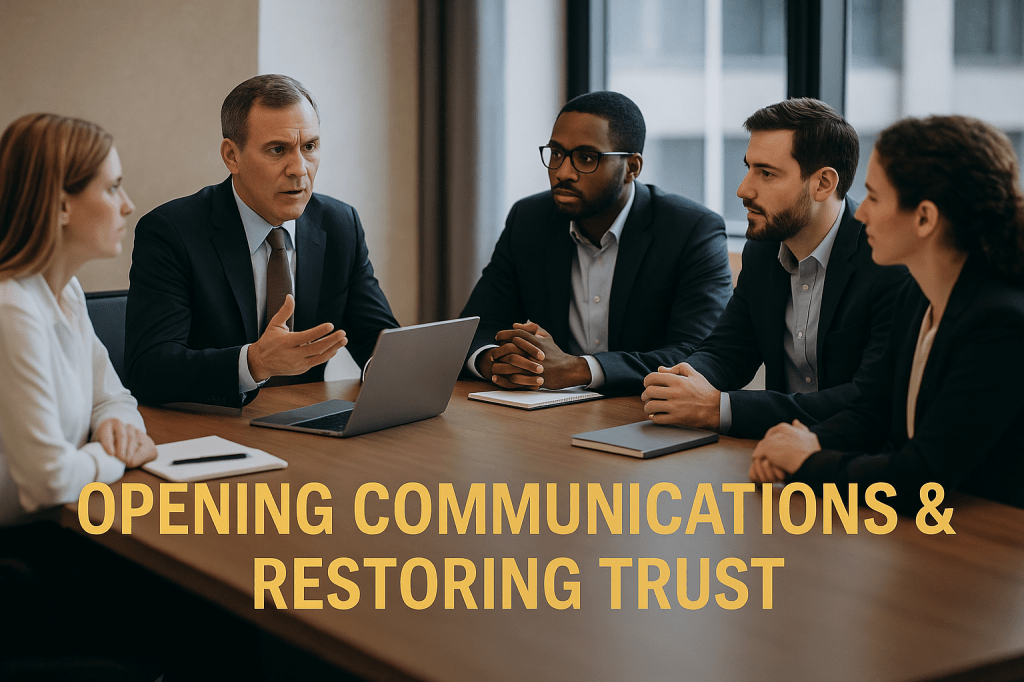
It Takes Two to Turn Things Around: The Franchisee-Franchisor Partnership in Crisis

Turning around a failing franchise location is never easy. It requires commitment, clarity, and courage—from both franchisor and franchisee. But most of all, it demands a partnership built on trust, transparency, and a shared determination to succeed. There’s no room for finger-pointing or isolation. Now is not the time to erect walls. Now is the time to recognize mutual goals and to rebuild from common ground.

The reality is this: some locations will struggle. It could be due to poor site selection, operational breakdowns, local economic shifts, inconsistent staffing, lack of marketing, or a loss of customer trust. Regardless of the cause, when performance dips, both parties have a choice. They can retreat into silence and self-protection, or they can step up, engage, and face the challenge together. A successful turnaround hinges on the latter.

The Franchisor’s Role: Guidance, Resources, and Motivation

The franchisor is the architect of the brand. They’ve designed the business model, refined the systems, and built the foundation for scalability. In a turnaround scenario, their responsibility is to provide the tools and support that allow the franchisee to execute at a higher level—even under pressure.

This includes:

  • Operational audits to identify performance gaps in service, cleanliness, food quality, or execution
  • Benchmarking tools to compare metrics across the system and spot red flags
  • Hands-on coaching from experienced field staff who understand both the brand and the realities of daily operations
  • Marketing and promotions that can drive immediate traffic and reintroduce the location to its trade area
  • Negotiations with vendors or landlords to ease financial strain where appropriate
  • Emotional leadership—acknowledging the franchisee’s stress, reinforcing a belief in the brand, and motivating the team to keep pushing forward

A franchisor cannot—and should not—do the work for the franchisee. But they must show up with solutions, not platitudes. The best franchisors are equal parts strategist, coach, and partner.

The Franchisee’s Role: Accountability, Execution, and Urgency

While the franchisor provides the playbook, the franchisee must run the plays. They are on the front lines, facing customers, managing staff, and making real-time decisions that shape the outcome of the business.

In a turnaround, the franchisee must double down on fundamentals:

  • Staffing—ensuring the right people are in the right roles, and that they are trained, supported, and held accountable
  • Service quality—consistency, friendliness, and cleanliness must become non-negotiable
  • Local marketing—even small, grassroots efforts can re-engage the community
  • Financial discipline—tight control over costs, aggressive waste reduction, and timely vendor payments are essential
  • Transparency—sharing what’s working and what’s not, so franchisor support can be targeted and effective

Most importantly, the franchisee must be willing to ask for help. Pride is a dangerous barrier in turnaround situations. Denial allows problems to grow. Franchisees must take responsibility for what they control, but also communicate candidly with their franchisor to access the help that’s available.

A Two-Way Street: Communication as the Cornerstone

The relationship between franchisor and franchisee is interdependent. Neither side can succeed alone, and in a turnaround, alignment is critical. That alignment starts with honest, two-way communication—not just updates or reports, but real conversations about what’s happening, what’s possible, and what’s needed.

Communication must be:

  • Frequent—weekly, even daily check-ins to maintain visibility and momentum
  • Candid—no sugarcoating, no excuses, just facts and next steps
  • Constructive—focused on problem-solving, not blame
  • Forward-looking—tracking what’s improved and what still needs work

When communication breaks down, so does trust. And without trust, no turnaround effort can succeed.

When Turnaround Isn’t Possible: Planning a Dignified Exit

Sometimes, despite the best efforts of both parties, the turnaround doesn’t succeed. The unit may be too far gone, or the local market may no longer support the concept. In such cases, the conversation must shift from recovery to resolution—but that shift must be handled with care and dignity.

A respectful exit plan may involve:

  • Assisting in the resale of the unit to another qualified operator
  • Reacquiring the location as a corporate store, with fair compensation
  • Closing the unit in a way that preserves brand standards, communicates professionally with staff, vendors, and customers, and protects the franchisee’s reputation

A failed location does not mean a failed person. The franchisor must treat the franchisee as a partner to the end, recognizing their financial and emotional investment in the brand. The goal is to preserve dignity and integrity on both sides while minimizing disruption to the system as a whole.

Shared Goals, Shared Responsibility, Shared Success

Turnarounds aren’t easy, but they are possible—when franchisor and franchisee work together with open minds and shared purpose. The franchisor brings systems, experience, and support. The franchisee brings grit, local leadership, and urgency. Together, with trust and communication, they can breathe life back into a struggling location—or agree on an exit that honors the effort made.

Either way, what matters most is the strength of the relationship. And that strength is forged not in times of ease, but in times of challenge.

Make today a great day. Make it happen. Make it count!

About the Author

Paul Segreto brings over four decades of hands-on experience in franchising, restaurants, and small business development. A passionate advocate for entrepreneurship, Paul has guided countless individuals on their journey to success, whether they are established entrepreneurs or just beginning to explore the path of business ownership.

Named one of the Top 100 Global Franchise and Small Business Influencers, Paul is also the voice behind the Acceler8Success Cafe, a daily content platform where thousands of entrepreneurs gain insight and motivation. A lifelong advocate for ethical growth and brand integrity, Paul continues to coach founders, franchise leaders, and entrepreneurial families, helping them find clarity in chaos and long-term success through intentional leadership.

Ready to take your next step in business or looking for expert insight to overcome today’s challenges? Reach out directly to Paul at paul@acceler8success.com — your path to success may be one conversation away.

About Acceler8Success Group

Acceler8Success Group is a multifaceted business advisory platform committed to empowering entrepreneurs, small business owners, franchise professionals, and industry leaders through strategic consulting, coaching, and curated content.

With a strong focus on entrepreneurship, franchising, restaurants, and small business growth, Acceler8Success Group delivers actionable insights and real-world strategies across its suite of brands, including the following:

Acceler8Success,  FranchiseReclaim,  OwnABizness.com,  Accelerate Success Coaching,  Your Entrepreneurial Success, and relaunching soon, Franchise Foundry.

By blending deep industry expertise with a dynamic content ecosystem, Acceler8Success Group fosters sustainable success and responsible leadership for today’s innovators and tomorrow’s legacy builders.
Bridging the Gap Between Franchisor and Franchisees Before It Widens

The Case for a Franchise Advisory Council

Communication inside a franchise brand can grow strained when revenue and profitability fall short of forecasts. For one of our emerging franchisor clients, six consecutive months of lower-than-projected sales had left both franchisor and franchisees uneasy. Messages flew back and forth in ever-longer email threads. Ideas arrived half-baked or wildly ambitious. Fingers pointed even when no one meant real harm. Each side worried that the other was not listening.

I have seen this movie play out before, and I know how easily it can escalate… more so within an emerging franchise brand. That said, I have also watched tensions fade the moment a structured forum appears. That forum is a Franchise Advisory Council. The concept is simple: bring committed representatives from both sides to the same table, establish ground rules, share accurate data, and convert complaints into agenda items the group can solve together.

Structure Is Key

The structure of a Franchise Advisory Council calls for a council size small enough for candid discussion yet large enough to reflect geographic and performance diversity. Member terms are staggered to blend fresh perspective with institutional memory. Meetings occur quarterly with a standing agenda circulated two weeks in advance so members could prepare facts, not feelings. Finance, marketing, operations, and technology each hold a standard slot, and ad-hoc topics are added only after supporting numbers are supplied. Minutes list action items, owners, and deadlines. A shared file will store all materials so no participant and other franchisees rely on rumor. Between meetings a two-way feedback loop remains open through a dedicated email address monitored by a liaison who tracks response time.

The council does not dilute franchisor authority; it sharpens it. By hearing concerns early, leadership can adjust menu pricing, regional promotion, or supply chain strategy before small issues harden into resentment. Franchisees gain a transparent channel to influence system direction and test ideas in a setting where feasibility is vetted by peers. Most important, both sides replace assumption with evidence. That change alone often lifts morale faster than any marketing campaign.

Franchising succeeds when brand standards and entrepreneurial energy reinforce each other instead of collide. A well-run Franchise Advisory Council turns that ideal into daily practice. For this brand and many others, the best time to build that foundation is at the first sign of strain, not after relationships fracture beyond repair.

Franchise Advisory Council Guidelines

Council Members – I always recommend that franchisees elect council members who are in good standing with the franchisor. While some franchisors may choose council members themselves, I’ve also seen franchisors present a list of potential candidates for franchisees to vote on. In either case, the following factors should be considered when selecting council members:

  • Choose franchisees who represent a range of geographical regions, unit sizes, and levels of experience.
  • Include diverse perspectives that reflect the overall makeup of the system.
  • Ensure active participation by selecting franchisees who are committed to offering constructive feedback.

By following the outline below, franchisors can conduct Franchise Advisory Council meetings that are both effective and mutually beneficial, fostering cooperation, providing valuable insights, and driving the overall success of the franchise system. Note: Be sure to tailor this to align with your brand.

1. Set Clear Objectives and Agenda

  • Define the purpose of the meeting (e.g., discussing system-wide challenges, new initiatives, feedback on operations).
  • Prepare and share the agenda in advance to allow franchisees to prepare adequately.
  • Ensure the agenda aligns with the franchise system’s strategic goals.

2. Facilitate Open and Respectful Dialogue

  • Encourage open, honest communication while maintaining respect for differing opinions.
  • Establish ground rules for constructive discussions, such as allowing everyone to speak and discouraging personal attacks.
  • Ensure that all voices are heard and that the meeting is balanced between listening and providing input.

3. Focus on Business Growth

  • Emphasize discussions around the franchise system’s long-term vision and strategy.
  • Encourage discussions about operational efficiencies, marketing strategies, brand consistency, and ways to drive profitability.
  • Be open to feedback and suggestions for system improvements, but keep the focus on the franchise network as a whole.

4. Maintain a Structured Format

  • Stick to the agenda and allocate specific times for each topic to ensure all items are covered.
  • Introduce new topics only when all scheduled agenda items have been discussed.
  • Appoint a meeting facilitator (often a senior member of the franchisor’s team) to ensure the meeting stays on track.

5. Balance the Franchisor and Franchisee Perspectives

  • While the franchisor should set the tone and direction, the council’s role is to provide input from the field.
  • Ensure franchisees feel empowered to offer suggestions and voice concerns, but be mindful of the franchisor’s business and legal constraints.

6. Actionable Outcomes

  • Conclude each discussion point with clear, actionable items and deadlines.
  • Assign responsibilities for follow-ups and make sure there is accountability.
  • Document the meeting’s key takeaways, decisions, and action items to distribute to participants after the meeting.

7. Regular Feedback and Follow-Up

  • Maintain transparency by providing updates on the progress of actions decided at previous FAC meetings.
  • Use feedback from the FAC meetings to adjust strategies and operations where necessary.
  • Create a system for ongoing communication between franchisors and the Franchise Advisory Council.

8. Encourage a Positive Relationship

  • Use the FAC as a forum for building stronger relationships between franchisors and franchisees.
  • Avoid a confrontational atmosphere—focus on collaboration and problem-solving rather than conflict.

9. Leverage Technology

  • Consider using virtual meeting tools for franchisees who can’t attend in person.
  • Share documents, presentations, and action items through a central portal to keep everyone informed and engaged.

Make today a great day. Make it happen. Make it count!

About the Author

Paul Segreto brings over four decades of hands-on experience in franchising, restaurants, and small business development. A passionate advocate for entrepreneurship, Paul has guided countless individuals on their journey to success, whether they are established entrepreneurs or just beginning to explore the path of business ownership.

Named one of the Top 100 Global Franchise and Small Business Influencers, Paul is also the voice behind the Acceler8Success Cafe, a daily content platform where thousands of entrepreneurs gain insight and motivation. A lifelong advocate for ethical growth and brand integrity, Paul continues to coach founders, franchise leaders, and entrepreneurial families, helping them find clarity in chaos and long-term success through intentional leadership.

Ready to take your next step in business or looking for expert insight to overcome today’s challenges? Reach out directly to Paul at paul@acceler8success.com — your path to success may be one conversation away.

About Acceler8Success Group

Acceler8Success Group is a multifaceted business advisory platform committed to empowering entrepreneurs, small business owners, franchise professionals, and industry leaders through strategic consulting, coaching, and curated content.

With a strong focus on entrepreneurship, franchising, restaurants, and small business growth, Acceler8Success Group delivers actionable insights and real-world strategies across its suite of brands, including the following:

Acceler8Success,  FranchiseReclaim,  OwnABizness.com,  Accelerate Success Coaching,  Your Entrepreneurial Success, and relaunching soon, Franchise Foundry.

By blending deep industry expertise with a dynamic content ecosystem, Acceler8Success Group fosters sustainable success and responsible leadership for today’s innovators and tomorrow’s legacy builders.

Preserving Brand Integrity Across Multiple Locations: Why Consistency Is the Cornerstone of Sustainable Growth

For brand operators, whether in franchising, corporate chains, licensing, or joint ventures, maintaining the integrity of the business model is not a luxury—it’s a non-negotiable necessity. As a brand expands, what once was controlled by a founder or small team becomes a much broader system influenced by dozens or even hundreds of hands. With each additional location, the risks of dilution, misinterpretation, or outright deviation increase. And with them, the risks of brand erosion.

Brand integrity is not simply about logos and color palettes. It is the sum total of what the brand promises, delivers, and represents—strategically, operationally, and emotionally. It encompasses the business model that defines unit economics and customer value, the trade dress that creates instant recognition, and the trademark and logo that symbolize trust and familiarity. When all elements are in alignment, brand integrity reinforces itself, building momentum with every customer interaction. But when misaligned, each crack grows larger, threatening the foundation upon which the business is built.

The business model is where it begins. From product offerings to service procedures, pricing structure to profit margins, the model provides the blueprint. Every store or unit is a direct extension of this framework. When a store changes that model—perhaps by offering unauthorized menu items, using cheaper ingredients, or altering operating hours—it isn’t just tweaking a store-level tactic. It’s compromising the brand’s economic engine. Suddenly, customers experience inconsistency. Franchisees and store managers become confused about the rules. Investors start to worry that growth will lead to chaos, not scale.

Trade dress—interior design, signage, uniforms, layout, packaging—is more than aesthetics. It’s a system of visual and experiential cues that tell the customer they’re in the right place. A customer walking into one location should feel the same rhythm, tone, and sensory experience as they would in another city or state. When locations start to “personalize” beyond brand standards, that familiarity disappears. It can feel jarring and uncertain, and trust quietly begins to erode.

Then there’s the trademark and logo—the heart of legal brand identity. These elements are what customers see first and what they remember last. They carry with them the weight of every marketing campaign, every social media post, every earned review and recommendation. If unauthorized locations or loosely affiliated operators misuse the brand or adopt similar names and designs, not only is the customer confused, but the brand owner may lose exclusive rights to its most valuable asset. Failure to enforce trademark protections can lead to legal vulnerability and long-term devaluation of the brand itself.

All of this matters not only to customers but to every stakeholder. Employees rely on a consistent brand identity to understand what’s expected of them. When standards change from one location to another, morale drops, and turnover increases. Franchisees and investors count on the strength and uniformity of the brand to support their investment. If they see inconsistent enforcement or favoritism, confidence in leadership erodes. Suppliers structure pricing and logistics based on predictability. Deviations cause inefficiencies, cost overruns, and damaged partnerships. Lenders evaluate brand strength as a factor in loan decisions—especially in franchise systems where royalties, marketing funds, and average unit volumes are essential to repayment models.

But what happens when brand integrity is compromised?

The answer can be swift and devastating. Customers notice first. Inconsistent quality, altered menu offerings, different service approaches—they all signal a lack of control. Social media accelerates that perception. A single photo or bad review from a non-compliant location can go viral and tarnish the entire system. Disgruntled franchisees may use the brand’s failure to maintain standards as grounds for legal action—or worse, for departure. Expansion slows, especially in new markets where brand equity hasn’t yet been firmly established. Media attention may shift from positive growth stories to damage control narratives. And in worst-case scenarios, the brand implodes under the weight of its own inconsistency.

On the flip side, protecting brand integrity creates long-term strength. Consistency builds trust. Trust drives loyalty. Loyalty drives lifetime value and fuels word-of-mouth growth. From the moment a guest enters a location or sees a logo online, they expect reliability. That reliability doesn’t just reflect on a local store—it reflects on the entire brand. Operators who uphold that standard, who demand compliance, who audit performance, who correct deviations immediately, are investing in more than quality control. They’re investing in the brand’s future.

Ultimately, maintaining brand integrity is not about rigidity or stifling creativity. It’s about discipline, clarity, and commitment. It’s about recognizing that growth multiplies both opportunity and risk—and the only way to sustain that growth is through a unified brand that customers, partners, and team members can believe in without question.

Because when a brand becomes inconsistent, it becomes forgettable. But when it becomes consistent, it becomes unstoppable.

Make today a great day. Make it happen. Make it count!

About the Author

Paul Segreto brings over four decades of hands-on experience in franchising, restaurants, and small business development. A passionate advocate for entrepreneurship, Paul has guided countless individuals on their journey to success, whether they are established entrepreneurs or just beginning to explore the path of business ownership.

Named one of the Top 100 Global Franchise and Small Business Influencers, Paul is also the voice behind the Acceler8Success Cafe, a daily content platform where thousands of entrepreneurs gain insight and motivation. A lifelong advocate for ethical growth and brand integrity, Paul continues to coach founders, franchise leaders, and entrepreneurial families, helping them find clarity in chaos and long-term success through intentional leadership.

Ready to take your next step in business or looking for expert insight to overcome today’s challenges? Reach out directly to Paul at paul@acceler8success.com — your path to success may be one conversation away.

About Acceler8Success Group

Acceler8Success Group is a multifaceted business advisory platform committed to empowering entrepreneurs, small business owners, franchise professionals, and industry leaders through strategic consulting, coaching, and curated content.

With a strong focus on entrepreneurship, franchising, restaurants, and small business growth, Acceler8Success Group delivers actionable insights and real-world strategies across its suite of brands, including the following:

Acceler8Success,  FranchiseReclaim,  OwnABizness.com,  Accelerate Success Coaching,  Your Entrepreneurial Success, and relaunching soon, Franchise Foundry.

By blending deep industry expertise with a dynamic content ecosystem, Acceler8Success Group fosters sustainable success and responsible leadership for today’s innovators and tomorrow’s legacy builders.
Life is Like a Cup of Coffee [Revisited]


This article was first published in 2009 and later reposted on Acceler8Success Cafe a few years ago. Since then, I’ve shared it with many people who’ve told me it helped them get through tough times. My hope is that sharing it once more will offer encouragement and a reminder that tomorrow can be better than yesterday.

Life is Like a Cup of Coffee

As one might imagine, I spend a great deal of time seeking out articles and information that may be of interest to the franchise industry, and readers of this site. Most of the time I’m looking for things relevant to franchising, entrepreneurship and small business.

Recently, I came across an inspirational video, “Life is Like a Cup of Coffee.” I watched the video several times, as I’m sure most of the people that have already seen this video have done. The message conveyed by the video made me think long and hard about the current economy and how it might be affecting people within the franchise community.

I thought about the franchise executives, who may be wondering when and where they’ll work next. Or, the entrepreneurs who invested large amounts of money developing new franchise systems, only to find themselves anxiously waiting for credit markets to ease up just a bit. And, I could not help think about the many franchisees, with life savings invested, watching their personal lifestyles drastically change, as they try to squeeze dollars out of cents.

This video provides a simple, yet profound look at life that may shed light on how challenges being faced today need to be addressed, and hopefully, resolved. Maybe, just maybe, it can be looked at as the simple approach to tackle complex problems. And, I’ve asked myself if it could really be instrumental in making people look at things differently and provide hope, where hope was not even considered before.

I know that hope is not a sound business strategy, but neither is waiting. At least with hope, it may provide inspiration to do things that may help in turning things around.

Anyway, take a look at the video and give this some thought. Then, please share it with your family and friends and request they share it with people they know. If we can ultimately help just one person, or just one family, we will have made progress. Progress that’s necessary to survive this rough economic storm.

Make today a great day. Make it happen. Make it count!

About the Author

Paul Segreto brings over four decades of hands-on experience in franchising, restaurants, and small business development. A passionate advocate for entrepreneurship, Paul has guided countless individuals on their journey to success, whether they are established entrepreneurs or just beginning to explore the path of business ownership.

Named one of the Top 100 Global Franchise and Small Business Influencers, Paul is also the voice behind the Acceler8Success Cafe, a daily content platform where thousands of entrepreneurs gain insight and motivation. A lifelong advocate for ethical growth and brand integrity, Paul continues to coach founders, franchise leaders, and entrepreneurial families, helping them find clarity in chaos and long-term success through intentional leadership.

Ready to take your next step in business or looking for expert insight to overcome today’s challenges? Reach out directly to Paul at paul@acceler8success.com — your path to success may be one conversation away.

About Acceler8Success Group

Acceler8Success Group is a multifaceted business advisory platform committed to empowering entrepreneurs, small business owners, franchise professionals, and industry leaders through strategic consulting, coaching, and curated content.

With a strong focus on entrepreneurship, franchising, restaurants, and small business growth, Acceler8Success Group delivers actionable insights and real-world strategies across its suite of brands, including the following:

Acceler8Success,  FranchiseReclaim,  OwnABizness.com,  Accelerate Success Coaching,  Your Entrepreneurial Success, and relaunching soon, Franchise Foundry.

By blending deep industry expertise with a dynamic content ecosystem, Acceler8Success Group fosters sustainable success and responsible leadership for today’s innovators and tomorrow’s legacy builders.
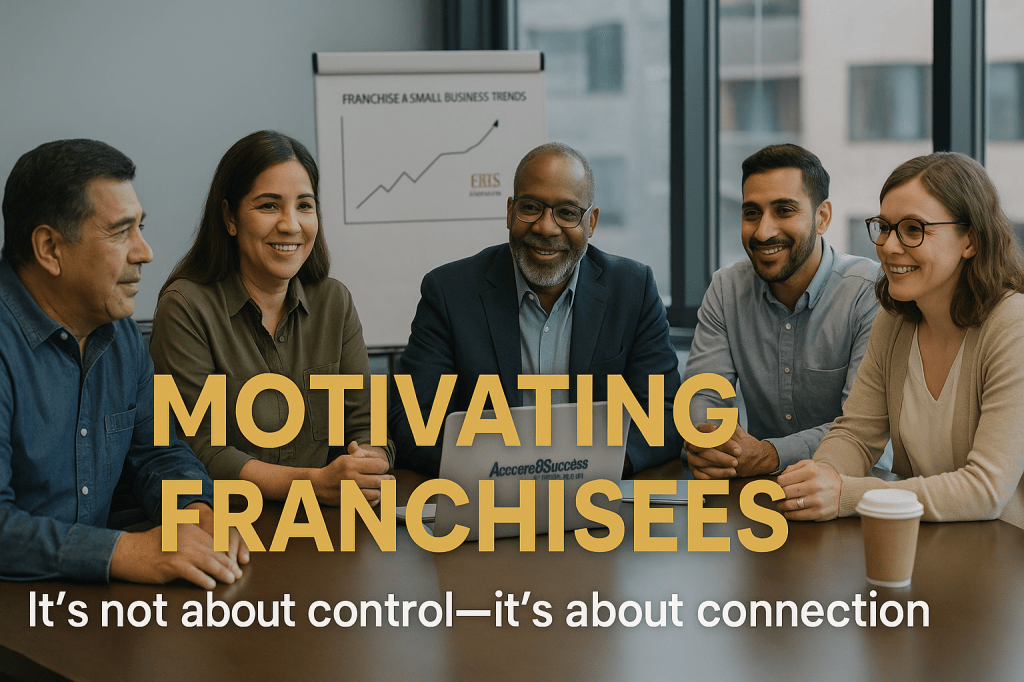
Keeping the Spark Alive: Motivating Franchisees at Every Stage

Motivating franchisees is one of the most nuanced challenges for any franchisor. Unlike traditional corporate structures, where promotions and raises can drive performance, franchisees are not employees. They’re independent business owners with their own goals, challenges, and motivations. Yet, the relationship between franchisor and franchisee is deeply interdependent—one cannot succeed without the other. This creates a unique leadership dynamic that demands creativity, empathy, and a keen understanding of what drives people when financial incentives alone are not always within direct control.

New franchisees often come into the system with enthusiasm and ambition but also with uncertainty. They’ve invested significant capital and trust in the franchisor’s model, seeking a proven path to success. Motivation at this stage is about validating their decision quickly and tangibly. Providing immediate wins—however small—can be incredibly powerful. Whether it’s breaking even within the expected timeframe, receiving strong customer feedback, or seeing positive sales trends from day one, these milestones provide momentum. Support from the franchisor in the form of frequent communication, responsive operational support, and real-time feedback can ease early anxieties and create a sense of progress. When new franchisees feel seen and supported, they’re far more likely to stay committed to the system and grow with it.

On the other hand, long-standing franchisees present a different challenge. These operators often know the system as well as the franchisor and, in some cases, may have even contributed to its growth and improvement. They’re no longer looking for basic training or entry-level support—they crave a sense of continued relevance. Motivation here comes from inclusion, trust, and partnership. Inviting these experienced franchisees to pilot new initiatives, serve on advisory councils, or even co-create marketing strategies not only engages them intellectually but also acknowledges their value. It shifts the relationship from franchisor-franchisee to something closer to strategic allies. For them, being treated as thought leaders and industry veterans is far more motivating than routine checklists or generalized updates.

Franchisors must also approach underperforming franchisees with a thoughtful and tailored strategy. It’s tempting to assume that these operators are disengaged or incapable, but in many cases, they’re overwhelmed, stuck, or simply in need of a fresh perspective. The franchisor’s role is not to punish but to coach. Providing comparative performance data that highlights specific gaps can turn a vague struggle into a clear opportunity. Offering structured turnaround programs that include targeted marketing support, cost reduction strategies, and operational streamlining can give these franchisees the tools and hope they need to course-correct. Moreover, linking support to performance milestones—such as temporary royalty reductions or performance-based incentives—can reignite focus and confidence. The tone of communication here is critical; it must convey partnership and belief rather than criticism or control.

Conversely, high-performing franchisees may seem self-sufficient, but they, too, require motivation to stay fully engaged. These are the individuals driving innovation, leading market performance, and raising the bar for the entire system. If they feel taken for granted or boxed in by rigid policies, they may grow restless or even look elsewhere. Recognizing their contributions publicly, offering exclusive development opportunities, or involving them in brand evolution helps maintain their commitment. High achievers thrive on autonomy, recognition, and the ability to shape the future of the brand they’ve helped build. When franchisors extend trust and respect in these ways, it reinforces the emotional and financial reasons for them to stay invested.

Ultimately, motivation across all types of franchisees—whether new, seasoned, struggling, or successful—depends on building a culture of trust, transparency, and shared purpose. A franchisor must constantly communicate not just expectations but also vision. When franchisees understand how their efforts contribute to something bigger—whether it’s transforming an industry, serving a community, or creating generational wealth—they’re more likely to commit deeply. Motivation doesn’t come from mandates or pressure; it comes from meaningful relationships, consistent support, and a sense of belonging to something worthwhile.

Franchisees may not receive promotions or raises, but they do seek growth, validation, respect, and purpose. The franchisor’s challenge—and opportunity—is to find the right levers for each individual and create a system that empowers success at every stage. When this is done well, motivation becomes embedded in the culture, and the entire brand benefits from stronger, more unified performance across the board.

Make today a great day. Make it happen. Make it count!

About the Author

Paul Segreto brings over four decades of hands-on experience in franchising, restaurants, and small business development. A passionate advocate for entrepreneurship, Paul has guided countless individuals on their journey to success, whether they are established entrepreneurs or just beginning to explore the path of business ownership.

Named one of the Top 100 Global Franchise and Small Business Influencers, Paul is also the voice behind the Acceler8Success Cafe, a daily content platform where thousands of entrepreneurs gain insight and motivation. A lifelong advocate for ethical growth and brand integrity, Paul continues to coach founders, franchise leaders, and entrepreneurial families, helping them find clarity in chaos and long-term success through intentional leadership.

Ready to take your next step in business or looking for expert insight to overcome today’s challenges? Reach out directly to Paul at paul@acceler8success.com — your path to success may be one conversation away.

About Acceler8Success Group

Acceler8Success Group is a multifaceted business advisory platform committed to empowering entrepreneurs, small business owners, franchise professionals, and industry leaders through strategic consulting, coaching, and curated content.

With a strong focus on entrepreneurship, franchising, restaurants, and small business growth, Acceler8Success Group delivers actionable insights and real-world strategies across its suite of brands, including the following: 

Acceler8Success,  FranchiseReclaim,  OwnABizness.com,  Accelerate Success Coaching,  Your Entrepreneurial Success, and relaunching soon, Franchise Foundry.

By blending deep industry expertise with a dynamic content ecosystem, Acceler8Success Group fosters sustainable success and responsible leadership for today’s innovators and tomorrow’s legacy builders.

Fatherhood, Mentorship, and the Heart of Entrepreneurship

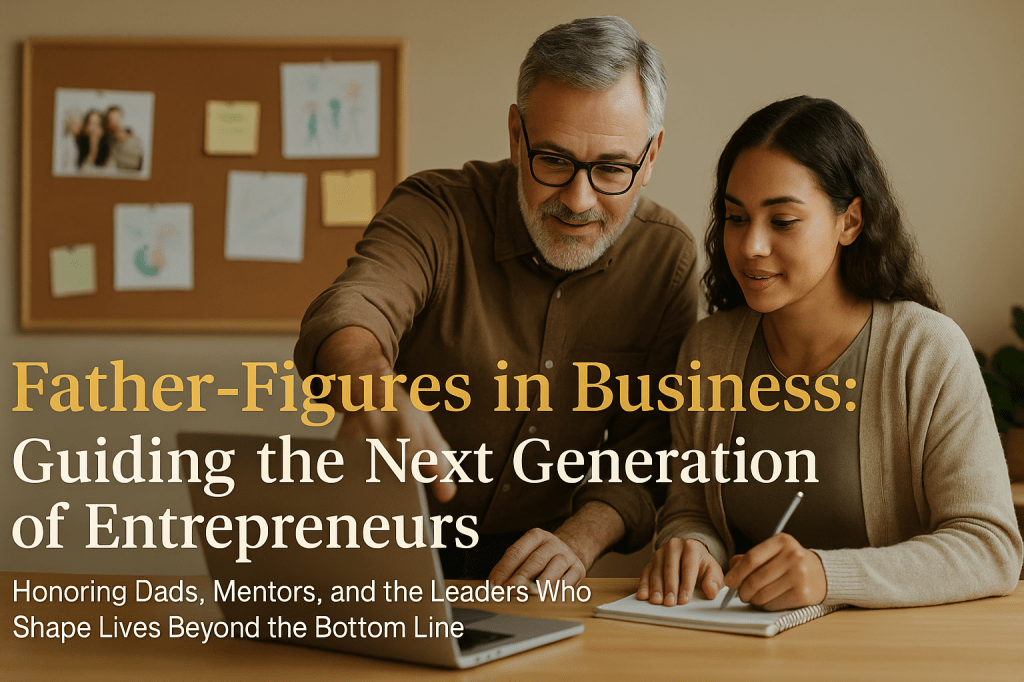
Mother’s Day reminded us how entrepreneurship thrives when Mompreneurs juggle meetings with school pickups, stretch thin budgets into growth capital, and turn late-night planning sessions into daylight milestones. Their progress inspires an entire generation. Father’s Day offers a complementary lens. Many dads chart comparable paths—closing sales calls on the sideline of a soccer match, drafting strategy decks after bedtime stories, carving out space for tenderness within relentless ambition. Less visible, yet profoundly influential, are men who step into fatherhood by choice rather than biology. These father-figures often occupy a quiet corner of the entrepreneurial landscape, guiding founders, interns, and employees who crave a steady hand more than they realize.

Entrepreneurship can be lonely even in a crowded co-working space. The pressure to project unwavering confidence masks doubts that every entrepreneur carries. A father-figure—sometimes a seasoned franchise owner, sometimes the manager of a neighborhood café—diffuses that isolation. He offers perspective born from scars and triumphs others haven’t yet accrued. He answers the late-night text about a looming payroll gap with both tactical advice and reassurance: you’ll solve this, and here’s how we can map it together. His mentorship transcends a transactional coach–client relationship because it mirrors the protective curiosity of parenthood, wanting the mentee to succeed on their own terms yet ready to catch them when they stumble.

In family-owned ventures a father may guide actual children, teaching them to analyze cash flow right beside learning to ride a bike. When those children are employees rather than kin, the lesson remains. Apprenticeship rooted in paternal care builds cultures of loyalty where turnover drops, creativity rises, and mistakes become teachable moments instead of termination points. Start-ups covet agility, yet the measured patience of a father-figure slows rash decisions long enough for clarity to emerge. That balance between urgency and prudence catalyzes sustainable growth.

Father-figures in entrepreneurship also challenge outdated images of masculine leadership. They model vulnerability by admitting when the numbers scare them or when the pressure at home is heavy. That transparency grants permission for younger founders—women and men alike—to share burdens openly and seek help before stress erodes judgment. A mentor who speaks candidly about fatherhood’s demands validates every parent in the room and widens access for those who once believed family life and high-stakes business could not coexist.

Single dads confront many of the same biases single moms face, from networking events scheduled during bedtime routines to investors who question their ability to “go all-in.” Their victories spotlight flexible work structures, childcare stipends, and outcome-based performance metrics that benefit entire teams, not just parents. When a single father refuses to miss a parent-teacher conference, he normalizes boundaries that allow everyone else to step away for life outside the venture. The ripple effect is a healthier workforce, better retention, and ultimately stronger financial results.

The most powerful contribution of father-figures is legacy beyond equity. Businesses eventually sell, pivot, or shut down; guidance embedded in a mentee’s character persists through every pivot yet to come. A young barista learns cash reconciliation from the café owner who stays late to demonstrate the ledger. Years later that barista launches a franchise network and, remembering the same quiet patience, mentors college interns who dream bigger than an hourly wage. In this iterative chain of father-figure influence, entrepreneurship becomes an intergenerational craft rather than a solitary pursuit.

Celebrating Father’s Day in the business community means applauding profit milestones and product launches, yet it also calls for gratitude toward men who embody silent stewardship. They show up unannounced with job leads for the laid-off, seed capital for the overlooked, wisdom for the overwhelmed. They expand the very definition of success to include the futures they shape but may never personally inhabit.

To every dad navigating investor calls while braiding hair, to every mentor who lends fatherly advice to founders he will never adopt but forever inspire, your impact reaches farther than quarterly earnings can document. You prove that entrepreneurship is not merely a path to personal freedom or wealth but a stage upon which the best of human guidance can play out in real time. Thank you for teaching by example that the greatest return on investment is the next generation of courageous, compassionate entrepreneurs who learned from you how to build not just companies, but lives worth leading.

Happy Father’s Day. Make today a great day. Make it happen. Make it count!

About the Author

Paul Segreto brings over four decades of hands-on experience in franchising, restaurants, and small business development. A passionate advocate for entrepreneurship, Paul has guided countless individuals on their journey to success, whether they are established entrepreneurs or just beginning to explore the path of business ownership.

Named one of the Top 100 Global Franchise and Small Business Influencers, Paul is also the voice behind the Acceler8Success Cafe, a daily content platform where thousands of entrepreneurs gain insight and motivation. A lifelong advocate for ethical growth and brand integrity, Paul continues to coach founders, franchise leaders, and entrepreneurial families, helping them find clarity in chaos and long-term success through intentional leadership.

Ready to take your next step in business or looking for expert insight to overcome today’s challenges? Reach out directly to Paul at paul@acceler8success.com — your path to success may be one conversation away.

About Acceler8Success Group

Acceler8Success Group is a multifaceted business advisory platform committed to empowering entrepreneurs, small business owners, franchise professionals, and industry leaders through strategic consulting, coaching, and curated content.

With a strong focus on entrepreneurship, franchising, restaurants, and small business growth, Acceler8Success Group delivers actionable insights and real-world strategies across its suite of brands, including the following: 

Acceler8Success,  FranchiseReclaim,  OwnABizness.com,  Accelerate Success Coaching,  Your Entrepreneurial Success, and relaunching soon, Franchise Foundry.

By blending deep industry expertise with a dynamic content ecosystem, Acceler8Success Group fosters sustainable success and responsible leadership for today’s innovators and tomorrow’s legacy builders.