Author: Paul Segreto

Passionate About Fueling Entrepreneurial Spirit; Entrepreneurship Coaching; Management & Development Advisory & Consulting; Franchises, Restaurants, Service Businesses; Thought Leader, Influencer, Content Creator & Author.

Franchisors: Don’t Stick Your Head in the Sand—This Is the Moment to Lead

Think back to 2010 through 2012. The franchise world was under pressure. Sales were down, pipelines were thin, and confidence was shaky. In response, many franchisors made bold declarations: “We’re going to use this time to refocus. We’ll improve training. Strengthen support. Reinforce our operations. Tighten up the brand.” The intention was there—but the follow-through? For most, it never happened.

As soon as development rebounded, priorities shifted back to growth. The deep operational work—the hard stuff that actually moves the needle—was forgotten. The opportunity to future-proof the system was missed.

Here we are again. And the warning signs are just as loud. Franchise development is softening. Labor costs are climbing. Operators are feeling squeezed. Consumer behaviors are shifting. AI and tech are moving faster than most can keep up. If you’re waiting for things to “go back to normal,” you’re missing the point.

This is not the time to wait. It’s the time to act. But first, don’t stick your head in the sand.

The market is evolving. Franchisees are watching. Candidates are questioning. Your team is looking for direction. Silence, inaction, and complacency aren’t strategies, they’re risks. Now is the time to buckle down and do what should’ve been done years ago.

Start at the core. Is your franchise model built for long-term success? Are your systems designed to make franchisees more profitable, or just to keep them compliant? Your training program, does it reflect how adults actually learn? Are your support teams solving problems or just reporting them? These are not cosmetic updates. They are foundational. And they demand your full attention.

Differentiate your offering. Look at your brand with fresh eyes. What can you add to truly stand out? This isn’t about gimmicks. It’s about meaningful innovation, something that creates real value for franchisees and their customers. Whether it’s enhanced tech, a new service layer, a more flexible operating format, or a built-in local marketing engine push to evolve beyond “what’s always worked.”

Reinvest in relationships. Franchisees are your partners, not just operators. And they’re paying attention to how you lead right now. Are you accessible? Are you listening? Are you showing up? The best franchisors don’t just manage relationships, they cultivate them with intention. Be visible. Be accountable. Be human.

Technology is not an accessory, it’s a necessity. Don’t delay exploring how AI, automation, data platforms, and digital tools can help your franchisees operate smarter. Whether it’s labor optimization, inventory management, localized marketing, or customer experience, technology is reshaping how brands compete. And if you’re not moving forward, you’re already behind.

Communicate relentlessly. With franchisees. With your internal team. With candidates. With your customers. Uncertainty breeds anxiety, and the only cure is clarity. Be proactive in your messaging. Set the tone. Share your strategy. Give people a reason to believe, not just in the brand, but in your leadership.

This is not business as usual. It’s a call to action.

Franchisors who use this time wisely, who resist the urge to retreat, who lean into the hard work, who innovate and engage will come out ahead. Those who don’t? They’ll lose ground that may be impossible to recover.

So no, don’t stick your head in the sand.

Get focused. Get moving. Lead like the future of your brand depends on it.

Because it does.

Make today a great day. Make it happen. Make it count!

Partnering With Acceler8Succes Group

At Acceler8Success Group, we are committed to helping entrepreneurs, founders, restaurateurs, franchise operators, and business owners defy the odds. Our work begins where passion meets reality—bridging vision with execution, and ambition with strategic discipline.

Through coaching, advisory, digital media, marketing solutions, franchise development, and business optimization strategies, we deliver tailored support designed to not just launch businesses but to scale them sustainably. We help uncover blind spots, optimize strengths, and build the operational and strategic foundation necessary for long-term success.

If you are building something bold—or struggling to hold together what you’ve built—we invite you to connect. Let’s ensure your business becomes the exception to grim statistics, not the example of them.

Acceler8Success Group: Where Entrepreneurs and Brand Find Clarity, Strategy, and Sustained Momentum. Inquire today at Acceler8Success.com.

About the Author

With over 40 years of experience as a senior executive, consultant, coach, and entrepreneur, Paul Segreto is a recognized leader in small business, franchise, and restaurant management and development. His mission is to drive success through a culture-to-growth philosophy while connecting the right people, brands, and opportunities.

Since 2001, Paul has advised startups and emerging brands in defining their competitive edge and scaling effectively. He also provides coaching to individuals, families, and partners pursuing entrepreneurial goals.

Recognized as a Top 100 Global Franchise and Small Business Influencer, Paul shares daily insights at Acceler8Success Cafe and regularly contributes to a variety of industry blogs and publications.

Reach out directly to Paul at paul@acceler8success.com—your path to success may be one conversation away.

Castles, Windmills, and Startups: A Tale of Delusion and Determination

Entrepreneurship has always been a pursuit filled with ambition, struggle, and the relentless desire to turn vision into reality. Few stories in literature embody this spirit better than Don Quixote, Miguel de Cervantes’ legendary tale of an idealist who sets off to revive chivalry in a world that has long since abandoned it. While often read as satire, Don Quixote’s journey mirrors the entrepreneurial experience fueled by purpose, marred by delusion, and ultimately driven by a refusal to quit even when faced with failure and ridicule.

Entrepreneurs, like Don Quixote, are visionaries. They see the world not as it is, but as it could be. They dream big, act boldly, and push forward despite odds, obstacles, and public opinion. But this mindset, while inspiring, also exposes them to immense challenges. And it’s in the exaggerated exploits of Don Quixote where we can draw parallels to the most common and often most misunderstood difficulties entrepreneurs face today.

The Windmills: Misjudged Markets and Misdirected Energy

One of the most iconic scenes in Don Quixote is his charge at windmills, which he mistakes for ferocious giants. To the reader, it’s absurd. But to the knight-errant, it’s a battle of justice. Entrepreneurs often do the same—they see opportunity where others don’t. They perceive gaps in markets, unserved customers, or disruptive innovations that could change everything. However, without grounding these ideas in reality through research, validation, and planning, they risk tilting at windmills: pouring time, energy, and resources into something that isn’t what it seems.

The entrepreneurial landscape is full of failed ventures that were based on passion rather than purpose, emotion rather than economics. Passion is necessary—it fuels the journey. But just like Don Quixote needed Sancho Panza’s pragmatism, entrepreneurs must balance vision with strategy, market data, and feedback. Charging ahead without clarity or due diligence is romantic, but rarely sustainable.

Sancho Panza: The Need for Grounded Companionship

Sancho Panza, Don Quixote’s loyal squire, represents realism. He doesn’t always agree with his master, but he follows him, challenges him, and occasionally redirects him. For entrepreneurs, surrounding oneself with people like Sancho is essential. Advisors, co-founders, mentors, and team members who speak truth even when it’s uncomfortable are critical to navigating the tumultuous entrepreneurial journey.

Too many entrepreneurs believe they must go it alone, glorifying the idea of the “lone genius.” But successful entrepreneurship is rarely a solo endeavor. It requires diverse input, constructive conflict, and collaboration. Sancho helps Quixote stay tethered to some semblance of reality. Similarly, the right team can keep a founder grounded, focused, and aware of risks they might otherwise ignore.

Delusion vs. Vision: Walking the Fine Line

Don Quixote believes he is a knight, born to uphold valor in a world of corruption. To the outside world, he’s delusional. This tension between how the entrepreneur sees their mission and how the world sees them is at the heart of entrepreneurship. Every bold idea begins as something others don’t believe in. Facebook was mocked. Airbnb was dismissed. Even electric cars were considered impractical. Entrepreneurs must be able to see what others can’t, but also know when to adapt.

Delusion becomes dangerous when feedback is ignored, reality is denied, or every sign of failure is met with denial rather than adaptation. The successful entrepreneur learns to evolve without abandoning the core vision. They learn when to pivot and when to persist.

Inns and Castles: Managing Expectations and Perception

Throughout the novel, Don Quixote repeatedly misinterprets common places as grand castles, ordinary people as nobility. He constructs a reality that aligns with his quest. Entrepreneurs can fall into this trap as well, seeing what they want to see rather than what is. Overestimating the readiness of a product, underestimating the cost of entry into a market, misjudging customer behavior, all of these are modern versions of turning inns into castles.

Managing expectations is essential. Overhyping a product or underdelivering on a service can damage a brand before it has a chance to find its footing. Entrepreneurs must walk a tightrope between promoting the dream and delivering value. Customers don’t want a myth—they want a solution.

The Broken Armor: Emotional Resilience

Quixote rides into battle in armor that is ill-fitting and often mocked. Yet he wears it with pride. Entrepreneurs, too, must protect themselves but the armor they need is emotional. The journey is filled with rejection, loss, criticism, and self-doubt. Friends question your decisions. Investors say no. Markets respond with indifference. The stress of uncertainty and the emotional toll of carrying responsibility for others can be crushing.

Resilience is the shield. Entrepreneurs must learn to weather emotional storms without becoming callous. They must find strength in the mission but remain open to change. Like Quixote, they must persist, but with greater self-awareness and psychological flexibility.

The Return Home: The Exit or Evolution

In the final chapters, Don Quixote, weary and broken, renounces his illusions. He accepts reality. Some interpret this as a tragic ending, others as a moment of peace. Entrepreneurs also reach turning points: a business fails, a startup gets acquired, or they simply burn out and move on. These moments are not necessarily losses. Sometimes, the dream must end for a new one to begin.

An entrepreneur who learns, adapts, and reinvents, who reflects on failure without losing their sense of purpose, is not unlike a wiser Don Quixote returning home. The journey, with all its madness, still mattered. It shaped them, challenged them, and prepared them for what’s next.

Conclusion: The Entrepreneurial Quest

The tale of Don Quixote is not merely a satire, it’s a metaphor for the audacious pursuit of something greater than oneself. Entrepreneurship, like Quixote’s quest, demands courage, imagination, and belief in the impossible. But it also demands humility, self-awareness, and a willingness to learn from the world rather than simply reimagine it.

Entrepreneurs must be both dreamers and doers, knights and realists. They must chase their giants, yes, but they must know when they’re windmills, and when they’re not.

For in the end, it is not the success alone that defines the entrepreneur. It is the journey, the attempt to create something better, to challenge the status quo, and to keep going even when the world doesn’t yet understand the dream.

Make today a great day. Make it happen. Make it count!

Partnering With Acceler8Succes Group

At Acceler8Success Group, we are committed to helping entrepreneurs, founders, restaurateurs, franchise operators, and business owners defy the odds. Our work begins where passion meets reality—bridging vision with execution, and ambition with strategic discipline.

Through coaching, advisory, digital media, marketing solutions, franchise development, and business optimization strategies, we deliver tailored support designed to not just launch businesses but to scale them sustainably. We help uncover blind spots, optimize strengths, and build the operational and strategic foundation necessary for long-term success.

If you are building something bold—or struggling to hold together what you’ve built—we invite you to connect. Let’s ensure your business becomes the exception to grim statistics, not the example of them.

Acceler8Success Group: Where Entrepreneurs and Brand Find Clarity, Strategy, and Sustained Momentum. Inquire today at Acceler8Success.com.

About the Author

With over 40 years of experience as a senior executive, consultant, coach, and entrepreneur, Paul Segreto is a recognized leader in small business, franchise, and restaurant management and development. His mission is to drive success through a culture-to-growth philosophy while connecting the right people, brands, and opportunities.

Since 2001, Paul has advised startups and emerging brands in defining their competitive edge and scaling effectively. He also provides coaching to individuals, families, and partners pursuing entrepreneurial goals.

Recognized as a Top 100 Global Franchise and Small Business Influencer, Paul shares daily insights at Acceler8Success Cafe and regularly contributes to a variety of industry blogs and publications.

Reach out directly to Paul at paul@acceler8success.com—your path to success may be one conversation away.

A Cautionary Tale for Emerging Franchise Brands: Beware the Cracked Cup

Picture a sleek ceramic coffee cup resting on the counter. It looks polished. Smooth. Maybe even brand new. There’s pride in its design, confidence in its potential. But there’s also something almost imperceptible—a slight crack at the bottom. Barely visible. Easy to miss. Not enough to raise concern. Not yet.

Now imagine pouring freshly brewed coffee into that cup. The aroma rises—warm, rich, and inviting. The coffee is valuable. It represents something deeper. It’s time. It’s money. It’s the energy of countless late nights and early mornings. It’s reputation. It’s everything you, your team, and your franchisees are putting into the brand.

At first, the cup seems to do its job. The coffee stays. The cup holds. But quietly, drop by drop, something begins to seep out. A small puddle forms. Nothing dramatic, nothing urgent. But it’s there. And over time, what looked like a promising, sturdy vessel can no longer keep pace. The crack spreads—subtly at first, then with greater speed. The coffee drains faster than it’s poured. And eventually, the cup fails.

This isn’t just a metaphor. It’s a reality for many emerging franchise brands.

The coffee cup represents the franchise system itself. Its shape, durability, and craftsmanship symbolize the infrastructure—marketing, training, technology, support, operations. It’s what franchisees buy into. It’s the promise of consistency, scalability, and success.

The coffee? That’s the investment. The financial capital, the emotional commitment, the sweat equity of both the franchisor and every franchisee who signs on. Every new location, every hire, every social media post, every dollar spent—it all pours into the cup.

But the crack? That’s the flaw in the system. And almost every franchise system has one, especially in the early stages. Maybe it’s poor onboarding. Maybe it’s fragmented communication. Maybe it’s a technology stack that hasn’t kept up with growth. Or marketing that lacks cohesion. Sometimes, it’s leadership misalignment or internal power struggles.

Whatever the cause, the flaw is rarely catastrophic at first. It’s the type of problem that’s easy to justify, easy to set aside, easy to explain away with early wins. But cracks don’t fix themselves. Left unaddressed, they expand under the pressure of scale.

More units open. More franchisees join. Expectations increase. Systems are stressed. And the very infrastructure that was supposed to support growth now starts to strain. Franchisees begin to feel the inefficiencies. They experience inconsistency in support, unanswered questions, marketing that doesn’t deliver, and operations that are harder than promised.

And as the crack grows, the franchisor begins working harder to compensate. More calls. More fixes. More “workarounds.” More money spent patching symptoms instead of solving root problems. It becomes a never-ending cycle—pouring in more coffee, trying to stay ahead of the leak.

Eventually, the cost to keep the cup full outweighs what it can ever hold.

This is the story of brands that had everything going for them—great product, passionate founders, even early market success—but didn’t invest in strengthening their systems. They mistook brand excitement for brand strength. They chased growth before they built sustainability.

Because franchise success doesn’t come from how many units are sold. It comes from how solidly the system supports those units. It comes from the infrastructure you build before scale tests it. It comes from knowing where the crack is and fixing it—not when it’s convenient, but when it’s critical.

A strong franchise brand doesn’t pretend cracks don’t exist. It identifies them early, addresses them honestly, and reinforces the system so it grows stronger with each new location, not weaker.

Because in the end, no matter how rich the coffee or how ambitious the pour, if the cup is compromised, the brand will fail.

And in franchising, that failure is more than spilled opportunity—it’s lost trust, broken livelihoods, and damaged reputations. It ripples outward. It hurts the people who believed in you most.

So build your cup like your brand depends on it. Because it does.

Fix the crack. Reinforce the system. Fortify the future.

Because a cracked cup may hold promise—but only a solid one holds success.

Partnering With Acceler8Succes Group

At Acceler8Success Group, we are committed to helping entrepreneurs, founders, restaurateurs, franchise operators, and business owners defy the odds. Our work begins where passion meets reality—bridging vision with execution, and ambition with strategic discipline.

Through coaching, advisory, digital media, marketing solutions, franchise development, and business optimization strategies, we deliver tailored support designed to not just launch businesses but to scale them sustainably. We help uncover blind spots, optimize strengths, and build the operational and strategic foundation necessary for long-term success.

If you are building something bold—or struggling to hold together what you’ve built—we invite you to connect. Let’s ensure your business becomes the exception to grim statistics, not the example of them.

Acceler8Success Group: Where Entrepreneurs and Brand Find Clarity, Strategy, and Sustained Momentum. Inquire today at Acceler8Success.com.

About the Author

With over 40 years of experience as a senior executive, consultant, coach, and entrepreneur, Paul Segreto is a recognized leader in small business, franchise, and restaurant management and development. His mission is to drive success through a culture-to-growth philosophy while connecting the right people, brands, and opportunities.

Since 2001, Paul has advised startups and emerging brands in defining their competitive edge and scaling effectively. He also provides coaching to individuals, families, and partners pursuing entrepreneurial goals.

Recognized as a Top 100 Global Franchise and Small Business Influencer, Paul shares daily insights at Acceler8Success Cafe and regularly contributes to a variety of industry blogs and publications.

Reach out directly to Paul at paul@acceler8success.com—your path to success may be one conversation away.
A Strategic Examination of Business Failure, Prevention, and the Path to Enduring Success

There exists a hard truth in the world of entrepreneurship: the vast majority of new businesses fail. While the figures vary slightly across sectors and regions, the consensus remains jarring—roughly 20% of businesses fail within the first year, and nearly 50% do not make it past the five-year mark. Some studies suggest the failure rate is even higher for certain industries, particularly in foodservice, retail, and undercapitalized tech ventures.

Yet, failure in business is not always rooted in a lack of effort or passion. Often, it is the result of a confluence of missteps—some obvious, many subtle—that compound over time. Understanding these drivers of failure is not merely an academic exercise. It is a critical step for any entrepreneur or business leader who seeks not only to survive but to thrive in an increasingly volatile marketplace.

The Hidden Forces Behind Business Failure

1. Misalignment Between Vision and Execution

Many businesses begin with an idea—often, a compelling one. But an idea is not a business. Without a clear, actionable strategy to transform vision into operations, even the best intentions remain inert. Execution falters when there is no roadmap, no KPIs, no milestones, and no accountability mechanisms.

2. Lack of Market Fit

An alarming number of entrepreneurs fall in love with their product rather than the problem it solves. They build for themselves, not for the market. Without rigorous validation, market testing, and feedback loops, businesses often create offerings that nobody truly needs—or worse, that people may need but aren’t willing to pay for.

3. Underestimating the Role of Capital and Cash Flow

Many early-stage businesses are dangerously undercapitalized. Founders often assume early revenue will compensate for initial shortfalls. They confuse sales with cash flow. In truth, it’s not the lack of capital that causes businesses to fail—it’s the lack of cash flow management and financial discipline.

4. Operational Inefficiencies and Poor Infrastructure

From outdated technology to clumsy processes, from inconsistent service delivery to undertrained teams—operational breakdown is a quiet killer. It rarely draws headlines, but it erodes margins, damages customer trust, and weakens internal morale.

5. Inexperience in Leadership and Management

Being a founder is not synonymous with being a leader. Leadership is a learned discipline, especially in navigating team dynamics, setting a culture, and making decisions under pressure. In many cases, founders avoid hiring experienced talent due to cost concerns, only to pay dearly for inexperience down the line.

6. Ineffective Marketing and Branding

A brilliant product with no audience is no business at all. Too often, marketing is treated as an afterthought—deprioritized in the budget and outsourced without alignment to the brand story. In today’s digital-first world, visibility, reputation, and content credibility are non-negotiable.

7. Resistance to Pivot and Adapt

Markets shift. Consumer preferences evolve. Competitors emerge. What worked last year—or last quarter—may no longer work tomorrow. Businesses that lack agility and humility to adjust often find themselves irrelevant in a landscape that punishes stagnation.

Markers of Risk: Early Warning Signs Not to Ignore

Businesses do not collapse overnight. They unravel quietly before falling apart publicly. Recognizing key indicators early can mean the difference between course correction and catastrophe:

  • Monthly revenues plateauing without clear explanation
  • Customer churn rising without proper tracking or feedback
  • A founder working in the business but never on the business
  • High employee turnover or persistent low morale
  • Reliance on one or two key clients for the majority of income
  • Absence of SOPs or documented processes
  • Mounting debt with no structured repayment plan
  • No clearly articulated value proposition or differentiator

Proactive Measures: What Successful Businesses Do Differently

Survival in business is never accidental. It is engineered through deliberate action and strategic foresight.

1. Build From the Ground Up, Not the Clouds Down

Foundational business planning is essential—not just a static business plan, but a living strategy with measurable actions. This includes legal structure, financial modeling, operational workflows, marketing strategy, and succession planning.

2. Prioritize Financial Intelligence

Implement sound accounting practices from day one. Develop forecasting models. Understand margins. Know your breakeven. Use dashboards. Monitor cash flow obsessively. Financial clarity is the oxygen of business.

3. Seek Objectivity, Not Echoes

Engage advisors, coaches, or mentors who will challenge assumptions. Surround yourself with people who tell you what you need to hear, not what you want to hear.

4. Focus Relentlessly on Customer Experience

In the age of instant feedback and social proof, one poor customer experience can do significant damage. Invest in CX, review responses, follow-ups, and internal service culture.

5. Adopt an Operational Mindset

Standardize everything. Automate where possible. Delegate what you shouldn’t do. Review and refine systems regularly. Operational discipline frees up strategic bandwidth.

6. Market with Consistency and Authenticity

Develop a cohesive brand message and stick with it. Tell stories that resonate. Don’t sell features—sell identity, aspiration, or relief from a problem. Be visible where your market lives—whether it’s social media, industry associations, or local events.

7. Embrace Continuous Improvement

Kaizen. Never stop auditing, learning, testing, tweaking. Build a business culture that evolves by design, not by force.

Focus Areas to Strengthen the Odds of Success

  • Clarity of purpose: Know who you are and what you stand for
  • Scalable systems: Build with the end in mind
  • Team empowerment: Equip and enable, don’t micromanage
  • Customer obsession: Learn, adapt, personalize
  • Realistic optimism: Hope for the best, plan for all else
  • Resilience through preparation: Avoid panic through preparedness

Make today a great day. Make it happen. Make it count!

Partnering With Acceler8Success Group

At Acceler8Success Group, we are committed to helping entrepreneurs, restaurateurs, franchise operators, and business owners defy the odds. Our work begins where passion meets reality—bridging vision with execution, and ambition with strategic discipline.

Through coaching, advisory, digital media, marketing solutions, franchise development, and business optimization strategies, we deliver tailored support designed to not just launch businesses but to scale them sustainably. We help uncover blind spots, optimize strengths, and build the operational and strategic foundation necessary for long-term success.

If you are building something bold—or struggling to hold together what you’ve built—we invite you to connect. Let’s ensure your business becomes the exception to grim statistics, not the example of them.

Acceler8Success Group: Where Entrepreneurs Find Clarity, Strategy, and Sustained Momentum. Inquire today at Acceler8Success.com.

About the Author

With over 40 years of experience as a senior executive, consultant, coach, and entrepreneur, Paul Segreto is a recognized leader in small business, franchise, and restaurant management and development. His mission is to drive success through a culture-to-growth philosophy while connecting the right people, brands, and opportunities.

Since 2001, Paul has advised startups and emerging brands in defining their competitive edge and scaling effectively. He also provides coaching to individuals, families, and partners pursuing entrepreneurial goals.

Recognized as a Top 100 Global Franchise and Small Business Influencer, Paul shares daily insights at Acceler8Success Cafe and regularly contributes to a variety of industry blogs and publications.

Reach out directly to Paul at paul@acceler8success.com—your path to success may be one conversation away.

The Stakeholder Revolution: Embedding Entrepreneurship Across the Enterprise

Today’s economic environment is unforgiving. Uncertainty has become the only certainty. Competition is fierce, rapid change is the norm, and the traditional playbooks for growth and stability are being rewritten in real-time. In this climate, success requires more than strategy, systems, or even leadership. It demands a shared entrepreneurial mindset—not just among executives, but across the full spectrum of stakeholders: employees, partners, vendors, franchisees, investors, and customers.

Gone are the days when entrepreneurship was confined to the founder’s office or innovation department. In the most resilient, adaptive, and competitive organizations today, everyone is expected to think and act like an entrepreneur.

An entrepreneurial mindset is not simply a set of actions. It is a way of thinking—driven by curiosity, powered by critical thinking, anchored in problem-solving, and committed to results. As Rowena Barrett of Queensland University of Technology describes, “An entrepreneurial mindset is resilient, resourceful, and solutions-oriented — even when the conditions say otherwise.” This mindset is now essential at every touchpoint of an organization’s ecosystem.

From frontline employees to franchise partners, from strategic alliances to the boardroom, every stakeholder must embrace agility, accountability, and a bias toward innovation. Why? Because value creation no longer occurs in silos. The customer experience is shaped by the alignment of internal culture, external collaboration, and stakeholder engagement. When each player operates with an entrepreneurial approach—seeking solutions, anticipating challenges, adapting to change—the organization becomes far more than the sum of its parts.

Unfortunately, many organizations still struggle with outdated mental models. Employees complete tasks to check boxes rather than solve problems. Vendors follow rigid guidelines instead of exploring efficiencies. Franchisees execute systems without seeking local innovations. Leadership dictates instead of co-creating. In these environments, talent disengages, partners lose trust, and customers drift toward more agile competitors.

This is not a talent issue. It’s a cultural one.

An entrepreneurial culture fosters shared ownership. It gives stakeholders permission—and expectation—to think beyond job titles, contracts, or transactional roles. It encourages them to ask better questions: What’s the real opportunity here? How can I improve this process? What value can I add? It invites them to see themselves not just as participants in an organization, but as catalysts of its evolution.

This mindset shift is particularly critical in navigating economic challenges. Organizations cannot afford to rely on a single visionary or department to generate all ideas or solve every problem. Empowering a wide base of stakeholders with entrepreneurial thinking distributes innovation. It accelerates responsiveness. It multiplies impact.

And it’s not theoretical. Companies that successfully embed this mindset at scale are outperforming their peers. Their employees are more engaged. Their partners are more collaborative. Their customers are more loyal. Why? Because entrepreneurial thinking is contagious. It creates energy, momentum, and shared belief in what’s possible—even in the face of adversity.

Still, building this mindset across stakeholders doesn’t happen by chance. It must be intentional.

It starts with leadership modeling entrepreneurial behavior: transparency, decisiveness, resilience. It extends through internal training that prioritizes critical thinking over compliance. It shows up in how franchisees and partners are treated—not as operators, but as entrepreneurial extensions of the brand. It’s embedded in performance metrics, incentive structures, and communications.

And perhaps most importantly, it is reinforced by the organization’s willingness to listen—really listen—to its stakeholders. When vendors propose process improvements, when customers share new ideas, when employees take initiative, those signals must be met with curiosity, not control. That is how entrepreneurial ecosystems are built.

This is the new paradigm: every stakeholder as an entrepreneur. Not in the literal sense, but in mindset. Forward-thinking. Problem-solving. Value-creating.

Organizations that embrace this shift don’t just survive—they grow, even during disruption. They attract people who thrive on accountability and innovation. They develop partnerships that stretch what’s possible. They build loyalty by inviting stakeholders into the story, not just the transaction.

At a time when stability is scarce, the most stable force in any organization is a shared mindset—resilient, curious, bold. Entrepreneurial.

Make today a great day. make it happen. Make it count!

Acceler8Success Group: Empowering the Entrepreneur in Everyone

At Acceler8Success Group, we believe the future belongs to organizations that cultivate entrepreneurial thinking across all stakeholders. We work with businesses, brands, and teams to operationalize this mindset—transforming employees into innovators, franchisees into strategic partners, vendors into collaborators, and customers into advocates.

Whether you’re scaling a franchise, evolving a legacy brand, or building alignment across distributed teams, we provide the coaching, advisory, and systems support to activate entrepreneurial energy throughout your organization.

Request information or schedule a call or online meeting at Acceler8Success.com.

About the Author

With over 40 years of experience as a senior executive, consultant, coach, and entrepreneur, Paul Segreto is a recognized leader in small business, franchise, and restaurant management and development. His mission is to drive success through a culture-to-growth philosophy while connecting the right people, brands, and opportunities.

Since 2001, Paul has advised startups and emerging brands in defining their competitive edge and scaling effectively. He also provides coaching to individuals, families, and partners pursuing entrepreneurial goals.

Recognized as a Top 100 Global Franchise and Small Business Influencer, Paul shares daily insights at Acceler8Success Cafe and regularly contributes to a variety of industry blogs and publications.

Reach out directly to Paul at paul@acceler8success.com—your path to success may be one conversation away.

Easing Back to Work After the Easter Holiday Weekend: Why Monday Is the Perfect “Reset” Day

As the Easter holiday weekend winds down and many prepare to return to work and school on Tuesday, there lies a hidden gem of an opportunity—Monday. While most are traveling home or simply winding down from the weekend’s festivities, entrepreneurs, leaders, and ambitious go-getters can treat this quiet Monday as a powerful reset. Not with hustle. Not with meetings or planning. But with calm. Reflection. Silence.

Imagine a day without distractions. No phone. No email. No social media scroll. No TV, no radio. Just quiet. Just stillness. Maybe a walk in nature, maybe a few deep breaths. Maybe nothing but the sound of the wind, the chirp of birds, or the simple rhythm of your footsteps.

Jay Shetty, well known for his insights on mindfulness and inner peace, often talks about the benefits of intentional silence. He reminds us that when we disconnect from the outside world, we open space to connect with ourselves. In that silence, we may hear what we’ve been too busy to notice—our thoughts, our goals, our truth.

For entrepreneurs, this kind of pause is anything but a waste. It’s a rare window to recharge before the push toward summer—a season full of deadlines, growth goals, campaigns, travel, and unpredictability. Taking a single day to reflect can be the most productive thing you do. Because clarity leads to momentum. And energy, real sustainable energy, comes from rest—not burnout.

Use the Monday after Easter to:

  • Walk instead of drive.
  • Journal instead of post.
  • Reflect instead of react.
  • Recharge instead of rush.

This isn’t about doing nothing. It’s about doing what matters most: listening. Not to others. To yourself.

Let those who must rush back on Tuesday do so. You? Take Monday. Not off. But inward.

You’ll be sharper. Calmer. Stronger. Ready for what’s next.

And with summer just around the corner, that’s exactly the edge you’ll need.

Make today a great day. Make it happen. Make it count!

About the Author

Paul Segreto brings over four decades of hands-on experience in franchising, restaurants, and small business development. A passionate advocate for entrepreneurship, Paul has helped countless individuals turn their visions into thriving ventures. Ready to take your next step in business or looking for expert insight to overcome today’s challenges? Reach out directly to Paul at paul@acceler8success.com—your path to success may be one conversation away.

About Acceler8Success Group

Acceler8Success Group is where entrepreneurial ambition meets expert execution. We partner with entrepreneurs, founders, and business leaders to ignite growth through a tailored hybrid appoach of coaching, consulting, and business advisory. Whether you’re launching your first venture or scaling your next big idea, our team is ready to help you accelerate success. Let’s build your future—visit and connect with us today at Acceler8Success.com.

Insight for Today’s and Tomorrow’s Franchisors: A Closer Look at the Road Ahead for Franchising

Today’s edition of Acceler8Success Cafe shines a spotlight on franchising, offering valuable insight specifically for current and aspiring franchisors. As the franchise landscape continues to evolve, understanding the road ahead—and the potential pitfalls—is more important than ever.

First, we explore The Way Forward in Franchising. Long considered a gateway to entrepreneurship, franchising now demands a more intentional approach to thrive. The future of the industry lies in three powerful principles: responsible, sensible, and sustainable franchising. Together, they form a “triple crown” framework to build trust, promote realistic growth, and ensure long-term viability. When applied thoughtfully, these principles elevate franchising from a transaction to a shared-value relationship between franchisor and franchisee.

Next, we address Why Some Businesses Aren’t Ready to Franchise. While franchising is a compelling growth strategy, jumping in too early can be a costly mistake. We identify key red flags—from overreliance on the owner and weak brand identity to poor systems and limited capital—that often signal a business isn’t quite franchise-ready. But with proper planning and preparation, these challenges can be overcome to build a scalable and successful franchise system.

Finally, we look toward the future in AI’s Impact on Franchising Over the Next 10 Years. Artificial Intelligence will revolutionize how franchisors and franchisees operate—streamlining operations, enhancing marketing, and enabling smarter decisions. But with great innovation comes responsibility. Implementation, data privacy, and human connection must be part of the conversation. As franchise agreements often span a decade, preparing for an AI-driven future begins now.

We’ve linked several articles below that offer valuable insights to help you navigate a smarter and more strategic path in franchising.

The Way Forward in Franchising: Embracing Responsibility, Sensibility, and Sustainability

Franchising has long been a path to entrepreneurship, but evolving industry dynamics demand a more thoughtful approach for long-term success. The emergence of three guiding principles—responsible, sensible, and sustainable franchising—represents a “triple crown” that can elevate the entire franchise model. Responsible franchising builds trust through ethical practices and transparency. Sensible franchising promotes practical growth strategies grounded in market reality. Sustainable franchising ensures economic, social, and environmental longevity. Together, these principles form a powerful framework that strengthens franchise relationships, fosters shared value, and positions franchising as a resilient, future-ready business model. Read the article HERE.

Beware of Red Flags: 8 Reasons Your Business Isn’t Ready for Franchising

Franchising can be a powerful growth strategy, but it’s not the right move for every business—especially not too early. Many entrepreneurs rush into franchising without the necessary foundation, only to face costly setbacks. Key warning signs include lack of profitability, overreliance on the owner, weak brand identity, unscalable systems, poor marketing, inadequate training infrastructure, unrealistic expectations, and insufficient capital. These red flags aren’t deal breakers—they’re signals that more work is needed before expanding. With patience, preparation, and honest evaluation, businesses can build a franchise model that’s resilient, scalable, and truly ready for success. Click HERE for the full article.

The Potential Impact of AI on Franchising Over the Next Decade

Artificial Intelligence is poised to transform the franchising industry over the next decade, reshaping how franchisees and franchisors operate, compete, and grow. From AI-powered automation and personalized customer experiences to smarter marketing, support systems, and data-driven decision-making, the potential for innovation is vast. Yet, with these advancements come challenges—ranging from workforce disruption and data privacy concerns to high implementation costs and growing dependence on technology. As franchise agreements stretch across ten-year terms, it’s critical to prepare for an AI-driven future now. At Acceler8Success, we’re committed to helping franchise stakeholders embrace this evolution with strategic insight, practical tools, and a focus on maintaining the human touch at the heart of franchising. The article can be accessed HERE.

Make today a great day. Make it happen. Make it count!

Partnering With Acceler8Succes Group

At Acceler8Success Group, we are committed to helping entrepreneurs, founders, restaurateurs, franchise operators, and business owners defy the odds. Our work begins where passion meets reality—bridging vision with execution, and ambition with strategic discipline.

Through coaching, advisory, digital media, marketing solutions, franchise development, and business optimization strategies, we deliver tailored support designed to not just launch businesses but to scale them sustainably. We help uncover blind spots, optimize strengths, and build the operational and strategic foundation necessary for long-term success.

If you are building something bold—or struggling to hold together what you’ve built—we invite you to connect. Let’s ensure your business becomes the exception to the grim statistics, not the example of them.

Acceler8Success Group: Where Entrepreneurs and Brand Find Clarity, Strategy, and Sustained Momentum. Inquire today Acceler8Success.com.

About the Author

With over 40 years of experience as a senior executive, consultant, coach, and entrepreneur, Paul Segreto is a recognized leader in small business, franchise, and restaurant management and development. His mission is to drive success through a culture-to-growth philosophy while connecting the right people, brands, and opportunities.

Since 2001, Paul has advised startups and emerging brands in defining their competitive edge and scaling effectively. He also provides coaching to individuals, families, and partners pursuing entrepreneurial goals.

Recognized as a Top 100 Global Franchise and Small Business Influencer, Paul shares daily insights at Acceler8Success Cafe and regularly contributes to a variety of industry blogs and publications.

Reach out directly to Paul at paul@acceler8success.com—your path to success may be one conversation away.

Legacy at a Crossroads: Inspiring the Next Generation to Lead the Family Business

A few days ago, we published Inspiring Younger Generations to Explore Entrepreneurship with Purpose and Values, and the response has been both energizing and thought-provoking. But amid the enthusiasm, one recurring question has stood out—raised quietly in private messages and voiced passionately in one-on-one conversations with seasoned business owners:

How do we inspire younger generations to consider working in—and ultimately taking over—the family business?

This isn’t a hypothetical or philosophical inquiry. It’s a real-world dilemma playing out in towns and cities across the country. And so, we’re elevating it as our Question of the Week—a regular feature at Acceler8Success Cafe where we highlight timely, thought-provoking topics that spark meaningful dialogue and, ideally, practical solutions.

This question often comes from individuals whose family businesses are anything but small side hustles. These are multi-million-dollar enterprises—one in particular generating over $90 million annually—built over six decades of perseverance and ingenuity. These are not just businesses. They are institutions, often at the center of their communities, employing dozens or even hundreds of people, and representing a lifetime of dedication across multiple generations.

And yet, many now stand at a pivotal moment.

It’s not for lack of profitability. Nor is it due to market irrelevance. These businesses are healthy. The problem? The next generation isn’t stepping up.

Instead of passing the baton to a son, daughter, niece, or nephew, many owners are eyeing exits via acquisition—corporations, private equity firms, or strategic buyers waiting in the wings. And while these offers may be financially attractive, they often come at a cost: the loss of identity, legacy, and community connection.

What’s really at stake is more than ownership—it’s continuity.

When a family business is sold outside the family, it’s rarely just a transaction. It’s often the quiet end of an era. The name above the door changes. The core values may shift. Longtime employees lose that sense of “working with family.” Customers sense the difference. And over time, the local legacy that took generations to build becomes little more than a memory.

So, how do we keep that from happening?

First, it requires a mindset shift—from both generations.

Owners must understand that younger generations don’t reject legacy out of indifference. They reject the expectation of legacy without the invitation to shape it. The next generation wants to lead, not simply inherit. They want purpose, autonomy, and relevance. And many family businesses—ironically—already offer all of that. They just haven’t been presented that way.

Reframing the business as a platform for innovation and impact—not just preservation—can be transformative. Let them digitize it. Let them rethink the brand. Let them use it as a vehicle to express their own values while respecting the foundation built before them.

But equally important is the transition—and how that transition is managed.

Too often, the “handoff” between generations becomes a tug of war. Misaligned expectations, differing management styles, and unresolved family dynamics can derail even the best intentions. That’s where the presence of a business advisor—a trusted third-party conduit—can make a world of difference. Not just as a consultant, but as a facilitator, a mediator when necessary, and a bridge between generations.

Beyond Conventional Succession Planning

An advisor can foster communication, help define roles, set boundaries, and guide both sides toward shared goals. Their involvement isn’t about taking control—it’s about creating space for compromise, clarity, and ultimately, collaboration. In many cases, this external guidance becomes the single most important factor in a successful generational transition.

But none of this works if we wait too long.

The younger generation is building their own lives, carving their own paths. And if they don’t see a place for themselves within the family business—if they’re not engaged early, not empowered meaningfully, and not supported through the transition—they’ll move on. And the legacy will move out, often sold off to outsiders who see opportunity, but not history.

So, let’s not wait for legacy to fade into nostalgia. Let’s make this conversation central, now. Let’s open the door—not with pressure or guilt, but with possibility and partnership.

Let’s challenge business owners to ask themselves: Are we inviting our children into the business, or simply expecting them to accept it?

And let’s encourage younger generations to consider the legacy not just as something to uphold—but as something they can evolve, reimagine, and make their own.

Because when a family business passes hands not just in ownership, but in spirit—that’s when legacy truly lives on.

And while this week’s question focused on inspiring someone in the next generation to step forward, we already see the next compelling question on the horizon—what happens when multiple individuals are poised to take the reins? It’s a very different dynamic—one that has echoes of the popular TV series Succession, where power struggles, personalities, and family dynamics complicate even the most strategic business decisions.

But that’s a discussion for another day—and another Question of the Week at Acceler8Success Cafe.

Make today a great day. Make it happen. Make it count!

About the Author

Paul Segreto brings over four decades of hands-on experience in franchising, restaurants, and small business development. A passionate advocate for entrepreneurship, Paul has helped countless individuals turn their visions into thriving ventures. Ready to take your next step in business or looking for expert insight to overcome today’s challenges? Reach out directly to Paul at paul@acceler8success.com—your path to success may be one conversation away.

About Acceler8Success Group

Acceler8Success Group is where entrepreneurial ambition meets expert execution. We partner with entrepreneurs, founders, and business leaders to ignite growth through a tailored hybrid appoach of coaching, consulting, and business advisory. Whether you’re launching your first venture or scaling your next big idea, our team is ready to help you accelerate success. Let’s build your future—visit and connect with us today at Acceler8Success.com.

How McDonald’s Put Its Stamp on Franchising Forever

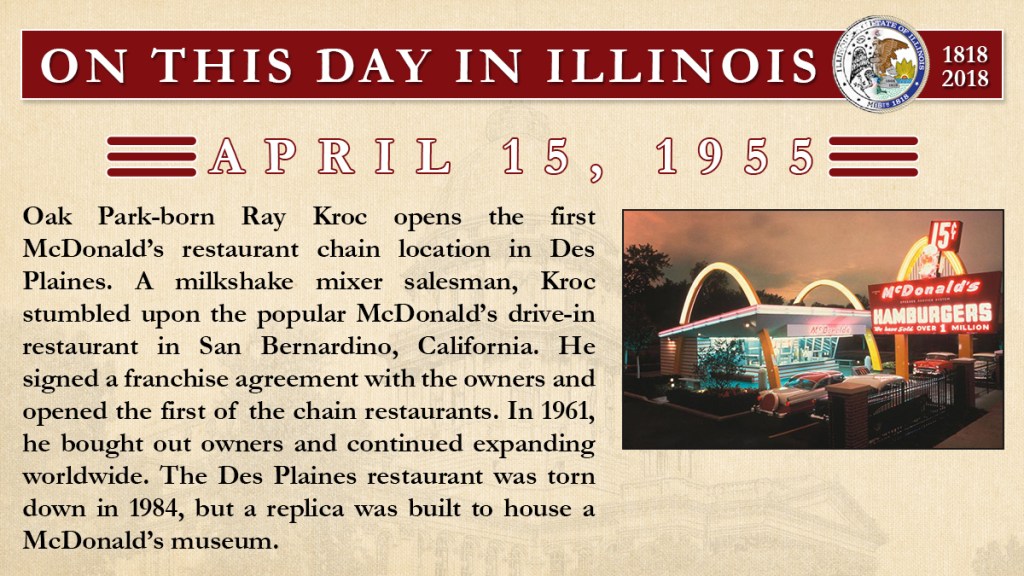
On April 15, 1955, Ray Kroc opened the first McDonald’s restaurant under his new corporation in Des Plaines, Illinois. It was not the first McDonald’s ever built, nor was it the first franchise business in America. Yet this date is widely recognized as the beginning of a new era in franchising, one that introduced a level of systemization, standardization, and scalability that would define modern franchising for decades to come.

Although franchising had existed in various forms for over a century, most notably in the soft drink, automobile, and petroleum industries, Ray Kroc’s vision for McDonald’s introduced a disciplined and replicable model that reshaped the business landscape. What began as a single unit serving a simple menu of burgers, fries, and shakes would evolve into one of the most influential business systems in history. More importantly, the principles established under Kroc’s leadership would become the foundation for the franchise industry as we know it today.

A New Model for Business Replication

What distinguished Ray Kroc’s approach from others before him was not simply the idea of duplication, but the meticulous structure around which that duplication would occur. At the heart of the McDonald’s model was consistency across locations, across operators, and across experiences. Kroc believed that a customer’s experience at a McDonald’s in Illinois should be identical to that of a customer visiting a McDonald’s in Arizona or New York. This was a radical departure from the more flexible, often decentralized franchise models of the time.

To achieve this level of consistency, Kroc introduced what would become some of the most widely emulated practices in franchising: detailed operational manuals, centralized training at the company’s Hamburger University, stringent site selection protocols, and ongoing franchisee support. These elements collectively established the franchise relationship not just as a legal contract, but as a fully integrated business partnership built on mutual success and accountability.

Kroc also understood the value of owning the real estate on which McDonald’s restaurants were built, an approach that allowed the corporation to exert significant control over franchisees while also creating a strong and stable revenue stream. This dual focus on operations and ownership created a model that was both financially sound and operationally efficient.

A Leadership Pipeline That Shaped an Industry

The culture within the McDonald’s system produced more than just successful franchisees, it became a breeding ground for industry leaders. Many executives, operators, and suppliers who cut their teeth within the McDonald’s ecosystem went on to establish or lead some of the most well-known brands in the franchise sector. Their success stories reflect the depth of the McDonald’s influence, which extends far beyond burgers and fries.

Fred Turner, who started as a grill operator in 1956, would eventually become CEO and chairman of McDonald’s. Under his stewardship, the company grew into a global institution, with increasingly refined systems and processes that reinforced the strength of the franchise model. Turner’s leadership further solidified the internal philosophy that training, discipline, and support were essential to sustainable growth.

Ed Rensi, another McDonald’s veteran who began as a grill cook, rose through the ranks to become President and Chief Executive Officer of McDonald’s USA. After leaving the company, Rensi applied the same operational discipline to other ventures, including serving as CEO of Famous Dave’s and as an advisor to several emerging franchise brands.

Rick Rosenfield and Larry Flax, both former McDonald’s franchisees, went on to found California Pizza Kitchen, a more upscale concept, yet one that retained many of the operational efficiencies they learned under Kroc’s system.

Others from the McDonald’s sphere brought their expertise to brands such as Burger King, Wendy’s, and countless franchise development firms, investment groups, and consulting practices. The culture of discipline and performance instilled at McDonald’s carried with them, and they replicated elements of that model in every new venture they touched.

An Enduring Legacy in Today’s Franchising Landscape

Nearly seventy years after Ray Kroc opened that first McDonald’s in Des Plaines, the company’s influence on franchising remains as strong as ever. The operational playbook he created is still used, in some form, by nearly every franchise system in existence today. From quick service restaurants to fitness concepts, from home service brands to education platforms, the core principles—consistency, support, replicability, and brand uniformity can all be traced back to the standards McDonald’s set in motion.

Training universities, franchise manuals, structured discovery processes, and site development protocols were not just innovations; they were institutional advancements that elevated franchising from an entrepreneurial experiment to a legitimate industry. Even the legal and regulatory frameworks that govern franchising today were influenced by the rise and scale of McDonald’s, prompting state and federal agencies to develop guidelines that could support this growing method of business expansion.

Today, as franchising continues to evolve in response to changing consumer behavior, digital transformation, and global market dynamics, the McDonald’s model remains a touchstone. Whether in discussions of operational excellence, franchisee support, or brand scalability, the example set by Ray Kroc and his successors continues to be studied, admired, and, more often than not, emulated.

A Historical Milestone With Modern Relevance

April 15, 1955, marks more than the opening of a restaurant. It marks the genesis of a movement. Ray Kroc may not have invented franchising, but he gave it form, function, and credibility. He showed the world what was possible when systems and people aligned in the pursuit of a singular brand experience delivered at scale.

The lessons learned under the golden arches have found their way into boardrooms, training rooms, and franchise expos across the globe. In doing so, McDonald’s did more than change the way people eat, it changed the way people do business. And it all began on a spring day in suburban Illinois, with a vision, a system, and a determination to do things differently.

Make today a great day. Make it happen. Make it count!

About the Author

Paul Segreto brings over four decades of hands-on experience in franchising, restaurants, and small business development. A passionate advocate for entrepreneurship, Paul has helped countless individuals turn their visions into thriving ventures. Ready to take your next step in business or looking for expert insight to overcome today’s challenges? Reach out directly to Paul at paul@acceler8success.com—your path to success may be one conversation away.
About Acceler8Success Group

Acceler8Success Group is where entrepreneurial ambition meets expert execution. We partner with entrepreneurs, founders, and business leaders to ignite growth through a tailored hybrid appoach of coaching, consulting, and business advisory. Whether you’re launching your first venture or scaling your next big idea, our team is ready to help you accelerate success. Let’s build your future—visit and connect with us today at Acceler8Success.com.

Franchise Brand Building Has Little to Do with Selling Franchises

For far too long, the idea of building a franchise brand has been synonymous with selling units. The belief that growth in numbers equates to brand strength is a dangerous illusion. In reality, the success and longevity of a franchise brand has little to do with how many franchises are sold. Instead, it has everything to do with the systems that are built behind the scenes—systems designed to drive franchisee profitability, ensure brand compliance, and protect the brand’s integrity at all costs.

The truth is this: a franchise brand isn’t built by franchise sales. It’s built by operational discipline. Selling a franchise without the infrastructure to support it is short-sighted at best and negligent at worst. Without systems, without processes, without the guardrails to protect every stakeholder in the network, what you’re building is not a franchise—it’s a house of cards.

Profitability is the cornerstone. Franchisees don’t invest in a brand because they want to fly a flag. They invest to build a successful business under the umbrella of a proven model. If that model doesn’t support their profitability from the very first day, the brand’s value quickly erodes. Support systems—financial, operational, marketing, and training—must be engineered with precision and delivered consistently. These systems are not optional. They are the lifeblood of a sustainable franchise network.

Equally critical is compliance. This is not about policing franchisees—it’s about protecting them, the customer experience, and the brand itself. Consistency is currency in franchising. When franchisees go rogue—whether through neglect, willful ignorance, or lack of guidance—the entire network pays the price. Customers don’t differentiate between locations. They view one bad experience as a stain on the brand. So from day one, compliance must be baked into the culture. Anything less is unacceptable.

And let’s be clear—what you tolerate, you accept. If you let standards slide, if you overlook underperformance, if you ignore early signs of misalignment, you are silently redefining what your brand stands for. That’s how brands deteriorate. Not overnight, but through a slow, quiet erosion of standards. Tolerance in franchising is not compassion—it’s compromise. And compromise is a direct threat to the very integrity you claim to protect.

For emerging franchisors, the temptation to scale quickly is strong. You’ll be encouraged to sign deals, open locations, chase markets. But none of that matters if your foundation isn’t sound. Franchise management isn’t something to be figured out along the way—it’s the very reason a franchise system exists. If you don’t have the right people, systems, and accountability mechanisms in place from the beginning, put everything else on hold. There is no shame in going slow if it means doing it right.

Building a franchise brand is a long game. It’s not about how fast you grow—it’s about how well you grow. It’s about earning trust, not just collecting fees. It’s about delivering on the promise that every franchisee makes to their families, their communities, and themselves when they buy into your system.

Building the Brand Beyond You: Becoming a True Franchisor

So, as you proceed forward as an emerging franchisor, do so with discipline. Do so with the resolve that your brand will be better served in the long run if proper franchise management is in place—without fail. And if that structure is not ready today, make it your top priority tomorrow. Because franchise brands aren’t remembered for how fast they launched. They’re remembered for how well they endured.

Make today a great day. Make it happen. Make it count!

Partnering With Acceler8Succes Group

At Acceler8Success Group, we are committed to helping entrepreneurs, founders, restaurateurs, franchise operators, and business owners defy the odds. Our work begins where passion meets reality—bridging vision with execution, and ambition with strategic discipline.

Through coaching, advisory, digital media, marketing solutions, franchise development, and business optimization strategies, we deliver tailored support designed to not just launch businesses but to scale them sustainably. We help uncover blind spots, optimize strengths, and build the operational and strategic foundation necessary for long-term success.

If you are building something bold—or struggling to hold together what you’ve built—we invite you to connect. Let’s ensure your business becomes the exception to grim statistics, not the example of them.

Acceler8Success Group: Where Entrepreneurs and Brand Find Clarity, Strategy, and Sustained Momentum. Inquire today Acceler8Success.com.

About the Author

With over 40 years of experience as a senior executive, consultant, coach, and entrepreneur, Paul Segreto is a recognized leader in small business, franchise, and restaurant management and development. His mission is to drive success through a culture-to-growth philosophy while connecting the right people, brands, and opportunities.

Since 2001, Paul has advised startups and emerging brands in defining their competitive edge and scaling effectively. He also provides coaching to individuals, families, and partners pursuing entrepreneurial goals.

Recognized as a Top 100 Global Franchise and Small Business Influencer, Paul shares daily insights at Acceler8Success Cafe and regularly contributes to a variety of industry blogs and publications.

Reach out directly to Paul at paul@acceler8success.com—your path to success may be one conversation away.