Author: Paul Segreto

Passionate About Fueling Entrepreneurial Spirit; Entrepreneurship Coaching; Management & Development Advisory & Consulting; Franchises, Restaurants, Service Businesses; Thought Leader, Influencer, Content Creator & Author.

Building Success Through Community Engagement: A Guide for QSR and Fast-Casual Operators

Quick-service restaurants (QSR) and fast-casual dining, operators often focus so much on the daily operations that they neglect one of the most powerful drivers of long-term success: community engagement. Whether part of a national brand or a small independent operation, stepping outside the four walls of the business is essential for building awareness, creating a personal competitive edge, and driving additional revenue. The walls of a restaurant, though central to the day-to-day operations, should not confine the scope of the operator’s vision. The true growth of a business often lies in the relationships formed and the reputation built within the community it serves.

Working the community involves reaching out beyond the immediate physical space of the restaurant to connect with people where they live, work, and gather. This can take many forms, from sponsoring local events to partnering with nearby schools, hospitals, and businesses. Sponsoring local youth activities and leagues is another powerful way to engage with the community. By contributing to and volunteering for these activities, operators can positively influence young lives while also connecting with families who are active in these circles. Volunteering for any cause that benefits the community not only reflects positively on the business but also demonstrates a genuine commitment to the people it serves. These proactive interactions can significantly boost brand visibility and foster goodwill among potential customers who may not have been reached through traditional advertising methods alone. In a crowded market, where multiple eateries may offer similar products, the personal connection you forge with the community can become a decisive factor in where customers choose to spend their money.

Schools and hospitals are critical points of outreach. Forming partnerships with educational institutions can involve anything from providing discounts to teachers and students to sponsoring events or supplying meals for school functions. Hospitals, with their constant flow of staff, patients, and visitors, offer a steady stream of potential customers. By offering promotions or discounts to healthcare workers or donating meals for hospital events, a restaurant can build a reputation as a business that cares about its local community.

Charitable events present another excellent opportunity to drive business outside the four walls. By participating in or sponsoring local charity events, a QSR or fast-casual operator can align the brand with causes that matter to the community. This not only enhances brand reputation but also provides the operator with a platform to introduce their offerings to new audiences. Additionally, these events often garner media attention, providing free publicity and increasing brand awareness beyond the immediate community. Engaging with local businesses is another critical strategy. Establishing partnerships with nearby offices or retail stores can lead to mutually beneficial arrangements, such as offering discounts to employees or catering services for company events. These relationships can lead to a steady stream of business and help establish the restaurant as a go-to spot for working professionals in the area.

In an era where social media is omnipresent, it serves as a powerful tool to extend the reach of community engagement efforts. Regularly posting about involvement in community events, sharing stories of partnerships with local organizations, and interacting with customers online can help build a loyal following. Social media also provides a platform for reciprocation — by highlighting other local businesses or charitable organizations, operators can foster a network of mutual support that benefits everyone involved.

Churches and neighborhood associations represent additional avenues for engagement. These groups often serve as the backbone of the local community, bringing together people from various walks of life. By reaching out to these organizations, offering catering services, or participating in community events, an operator can tap into a network of potential customers who may not have been aware of the restaurant otherwise. First responders and veterans groups are also key targets for community outreach. These individuals are often highly respected within the community, and by supporting them through discounts, donations, or special events, a restaurant can build a strong reputation as a business that values those who serve. This not only drives traffic to the restaurant but also builds a sense of loyalty and trust among customers.

Building a personal brand is just as important as building a business brand. While people may have confidence in a brand, they love doing business with people they know and trust. By being visible and active in the community, operators can establish themselves as not just business owners, but as integral members of the community. This personal connection can lead to increased customer loyalty and, ultimately, increased sales.

Operators should also consider other ways to think outside the four walls. Pop-up events in local parks, partnerships with food trucks, or participation in farmers’ markets can introduce the restaurant to new audiences. Collaborating with local influencers or bloggers to promote the restaurant can also help reach a wider audience. Providing cooking classes or demonstrations at community centers or schools can position the restaurant as an expert in its field, further enhancing its reputation.

While the day-to-day operations of a QSR or fast-casual restaurant are important, operators must not overlook the necessity of working the community. By extending their reach beyond the physical space of the restaurant, actively engaging with local youth activities, and volunteering for community causes, operators can build a strong personal brand, foster customer loyalty, and drive additional revenue. The success of a restaurant is not solely determined by what happens within its four walls, but by the relationships and reputation it builds in the world outside them.

Make today a great day. Make it happen. Make it count!

About the Author

With over 40 years of extensive experience in small business, restaurant, and franchise development, management, and marketing, Paul Segreto is a recognized authority in the entrepreneurial world. As an executive, consultant, coach, and entrepreneur, Paul has dedicated his career to empowering both current and aspiring business owners. His mission is to pave the way to success by connecting entrepreneurs with the right people, brands, and opportunities.

If you’re a current or aspiring entrepreneur that needs assistance, guidance, or just someone to talk to, please send an email to Paul Segreto at paul@acceler8success.com.

Building the Right Culture in a Diversified Organization: Overcoming Challenges, Achieving Unity

Creating and maintaining the right culture in a diversified organization with distinctly different business models in different industry segments presents a unique set of challenges. However, it is a necessity that cannot be overlooked if the organization aims to achieve long-term success. The complexity of managing a diverse portfolio of businesses across various industries requires a culture that is adaptable, inclusive, and cohesive, ensuring that all team members, regardless of their specific roles or industries, are aligned with the organization’s core values and objectives.

One of the most significant challenges in such a diversified organization is the potential for siloed thinking. When businesses operate in different industry segments, there is a natural tendency for teams to become insular, focusing solely on the needs and demands of their specific business model. This can lead to a lack of communication and collaboration across the organization, ultimately hindering the overall growth and innovation potential. To counteract this, it is essential to foster a culture that promotes cross-training and the sharing of knowledge between different teams. Cross-training not only helps employees gain a broader understanding of the organization’s operations but also enables them to develop new skills that can be applied in various contexts. By encouraging employees to step outside their immediate roles and learn about different aspects of the organization, leaders can break down barriers and create a more unified workforce.

Career advancement is another critical aspect that must be carefully managed in a diversified organization. Employees in different business segments may have varying career paths and advancement opportunities based on the nature of their industry. This can lead to disparities in career growth, which, if not addressed, can result in dissatisfaction and high turnover rates. To create a culture that supports career advancement for all employees, organizations must ensure that opportunities for growth and development are equally accessible across all segments. This may involve implementing tailored development programs that cater to the specific needs of each business model while maintaining a consistent approach to career progression throughout the organization. Providing clear career paths, mentoring, and leadership development programs that transcend individual business units can help employees see the potential for long-term growth within the organization, regardless of their specific industry.

Team cooperation is the cornerstone of a successful diversified organization. In an environment where different business models coexist, it is crucial to cultivate a culture of collaboration and mutual respect. Employees must be encouraged to work together, share insights, and support one another in achieving common goals. This requires strong leadership that actively promotes a cooperative spirit and leads by example. Leaders must communicate the importance of teamwork and collaboration across all levels of the organization, highlighting how these elements contribute to the overall success of the business. Recognizing and rewarding collaborative efforts can further reinforce the value of teamwork and encourage employees to prioritize cooperation over competition.

Maintaining the right culture in a diversified organization also requires a commitment to inclusivity. Given the different industry segments and business models, the organization will likely have a diverse workforce with varying backgrounds, perspectives, and experiences. Embracing this diversity and creating an inclusive environment where all employees feel valued and respected is essential. An inclusive culture not only enhances employee satisfaction and retention but also drives innovation by bringing together a wide range of ideas and viewpoints. Leaders must be proactive in promoting diversity and inclusion through policies, practices, and programs that support all employees and encourage their active participation in the organization’s culture.

While the challenges of creating and maintaining the right culture in a diversified organization with different business models are significant, they are not insurmountable. It requires a deliberate and strategic approach that prioritizes cross-training, career advancement, team cooperation, and inclusivity. By addressing these key areas, organizations can build a strong, cohesive culture that supports the success of all its business segments and drives the organization toward its long-term goals. The right culture not only unites the diverse elements of the organization but also empowers employees to thrive in their roles and contribute to the overall success of the business.

Make today a great day. Make it happen. Make it count!

About the Author

With over 40 years of extensive experience in small business, restaurant, and franchise development, management, and marketing, Paul Segreto is a recognized authority in the entrepreneurial world. As an executive, consultant, coach, and entrepreneur, Paul has dedicated his career to empowering both current and aspiring business owners. His mission is to pave the way to success by connecting entrepreneurs with the right people, brands, and opportunities.

If you’re a current or aspiring entrepreneur that needs assistance, guidance, or just someone to talk to, please send an email to Paul Segreto at paul@acceler8success.com.

Different Roads, Same Destination: Exploring Business Diversification

A small business or restaurant owner considering the various roads of diversification by starting or acquiring a business in a different industry segment faces a decision both complex and multifaceted. While the ultimate destination remains consistent—achieving growth, stability, and increased revenue—the paths to reach this goal are diverse, each presenting its own unique set of opportunities and challenges. Diversification offers the chance to spread risk across multiple industries, reducing dependence on a single source of income and thereby enhancing overall resilience. In an ever-changing market, this strategy can provide a crucial cushion against downturns in one sector, ensuring the broader business remains robust. For example, if the restaurant industry experiences a downturn due to economic conditions, having a foothold in another industry could mitigate losses and keep the business on a steady course. This approach also opens doors to emerging markets or trends that may align with the owner’s broader interests or areas of expertise, presenting new avenues for growth and expansion.

However, each road toward diversification is not without its obstacles. One of the most significant challenges lies in the steep learning curve associated with entering an unfamiliar market. Even a seasoned entrepreneur must develop industry-specific knowledge and expertise to effectively navigate the new landscape. This learning process can be time-consuming and resource-intensive, potentially diverting valuable attention and resources away from the existing business. The new industry may also require a different set of skills, management styles, or operational approaches that the business owner may not possess, leading to potential missteps and inefficiencies. Financial risk is another critical consideration. Diversification often necessitates a substantial upfront investment, whether through the acquisition of an existing business or the launch of a new venture from scratch. This investment can place significant strain on financial resources, particularly if the new venture does not generate immediate returns. Moreover, managing multiple businesses can lead to a dilution of focus and energy, with the owner struggling to provide adequate attention to each venture. This divided attention may result in suboptimal performance across both the existing and new businesses, ultimately undermining the overall success of the diversification strategy.

Another crucial factor is the potential for cultural and operational differences between industries. A restaurant owner, for instance, may find it challenging to adapt to the operational demands of a retail business, where customer expectations, supply chain logistics, and employee management differ significantly. Such differences can create friction and necessitate significant adjustments in management practices and business strategies. Furthermore, diversification can lead to brand dilution if not managed carefully. Expanding into a new industry under the same brand can create confusion among customers and dilute the brand’s identity, particularly if the new venture does not align with the core values or image of the original business. This misalignment can erode customer trust and loyalty, ultimately impacting the overall brand’s reputation.

As a business owner reflects on the decision to diversify, it is essential to conduct a thorough assessment of motivations, resources, and long-term goals. It is crucial to evaluate whether diversification aligns with the overarching vision for the business and whether it supports the owner’s personal aspirations and strengths. The timing of diversification is equally important. Market conditions, industry trends, and the current state of the existing business must all be considered. Diversifying during a period of instability or when the core business is struggling may exacerbate existing challenges rather than provide a solution. A detailed financial analysis is essential to determine whether the business can sustain the investment required for diversification without jeopardizing its financial stability. Understanding the financial implications, including potential cash flow challenges and return on investment timelines, is critical for making an informed decision.

Seeking advice from industry experts, mentors, or business consultants can provide valuable insights and help identify potential pitfalls and opportunities that may not be immediately apparent. Consulting with those who have successfully navigated the path of diversification can offer perspective and guidance that might otherwise be overlooked. A measured approach to diversification, possibly starting with a smaller-scale venture or a related industry, can also reduce risk and provide a smoother transition into a new market. By carefully selecting the path of diversification, whether through a related or entirely new industry, a business owner can increase the chances of reaching the desired destination of growth, stability, and expanded revenue. However, it is essential to remember that while the destination may be the same, the roads to get there are varied and require careful navigation. Each path comes with its own set of challenges and rewards, and the key to success lies in thoughtful planning, strategic decision-making, and an unwavering commitment to the long-term vision for the business. Diversification into a different industry segment offers the promise of growth and security, but it requires careful consideration of the inherent risks and challenges. A thorough evaluation of motivations, resources, and long-term goals, combined with a strategic and measured approach, can significantly increase the likelihood of success in this complex and demanding endeavor.

Make today a great day. Make it happen. Make it count!

About the Author

With over 40 years of extensive experience in small business, restaurant, and franchise development, management, and marketing, Paul Segreto is a recognized authority in the entrepreneurial world. As an executive, consultant, coach, and entrepreneur, Paul has dedicated his career to empowering both current and aspiring business owners. His mission is to pave the way to success by connecting entrepreneurs with the right people, brands, and opportunities.

If you’re a current or aspiring entrepreneur that needs assistance, guidance, or just someone to talk to, please send an email to Paul Segreto at paul@acceler8success.com.
The Power of Podcasting: Amplifying Your Brand’s Content Strategy

Podcasting continues it evolution as a powerful tool in the digital age, offering brands a unique platform to connect with their audience on a personal and engaging level. Unlike traditional forms of media, podcasting allows for an intimate conversation between the host and the listener, creating a sense of connection and loyalty that is difficult to replicate through other content mediums. The power of podcasting lies in its ability to deliver content that is both informative and entertaining, making it an essential component of a comprehensive content strategy for any brand.

One of the primary benefits of podcasting is its ability to reach a diverse and engaged audience. Podcasts are accessible to anyone with an internet connection, and they can be consumed on the go, whether during a commute, workout, or while doing household chores. This flexibility allows brands to reach their audience in moments when they are most receptive, increasing the likelihood of engagement and retention. Moreover, the on-demand nature of podcasts means that content can be consumed at the listener’s convenience, fostering a sense of loyalty and habit as listeners tune in regularly to hear new episodes.

Podcasting also offers a unique opportunity for brands to showcase their expertise and thought leadership. Through interviews, discussions, and storytelling, brands can provide valuable insights, share industry knowledge, and engage in conversations that resonate with their target audience. This not only positions the brand as an authority in its field but also builds trust and credibility with the audience. By consistently delivering high-quality content, brands can establish themselves as go-to resources for information and advice, further strengthening their relationship with their listeners.

Integrating podcasting into a broader content strategy can amplify its impact, creating a cohesive and unified brand message across multiple platforms. One effective way to do this is by using podcasts to complement and enhance other content channels, such as blogs, newsletters, and social media. For example, a brand can create podcast episodes that dive deeper into topics covered in blog posts, offering additional insights and perspectives that might not be captured in written form. This not only provides added value to the audience but also encourages cross-promotion between different content channels, driving traffic and engagement across the brand’s entire digital ecosystem.

Social media plays a crucial role in maximizing the reach and impact of a podcast. By sharing podcast episodes on social platforms, brands can tap into their existing follower base and attract new listeners. Social media also provides an opportunity for real-time interaction and feedback, allowing brands to engage with their audience in meaningful ways. This two-way communication fosters a sense of community and encourages listeners to share episodes with their networks, further expanding the podcast’s reach. Additionally, social media can be used to tease upcoming episodes, share behind-the-scenes content, and highlight key takeaways from past episodes, keeping the audience engaged and anticipating new releases.

Cross-promotion between a podcast and other content channels can significantly enhance the overall content strategy. For instance, a brand newsletter can feature highlights from recent podcast episodes, providing subscribers with an easy way to access and engage with the content. This not only increases the podcast’s visibility but also adds value to the newsletter by offering exclusive content or insights that are not available elsewhere. Similarly, a blog can be used to recap podcast episodes, providing a written summary for those who prefer to read rather than listen. This approach ensures that the content is accessible to a wider audience while reinforcing the brand’s key messages across different formats.

The versatility of podcasting makes it an ideal tool for content repurposing, allowing brands to maximize the value of their existing content. For example, a podcast episode can be transcribed and repurposed into a blog post, creating additional content without requiring significant time or resources. This not only saves effort but also ensures that the brand’s message is consistent across different channels. Additionally, key quotes or soundbites from podcast episodes can be shared on social media, creating bite-sized content that is easy to consume and share. By repurposing podcast content in this way, brands can extend the lifespan of their content and reach a broader audience.

Podcasting offers numerous benefits for brands looking to enhance their content strategy. Its ability to reach a diverse and engaged audience, showcase expertise and thought leadership, and integrate seamlessly with other content channels makes it an invaluable tool for building brand awareness and loyalty. By leveraging the power of podcasting, brands can create a dynamic and engaging content strategy that resonates with their audience and drives long-term success.

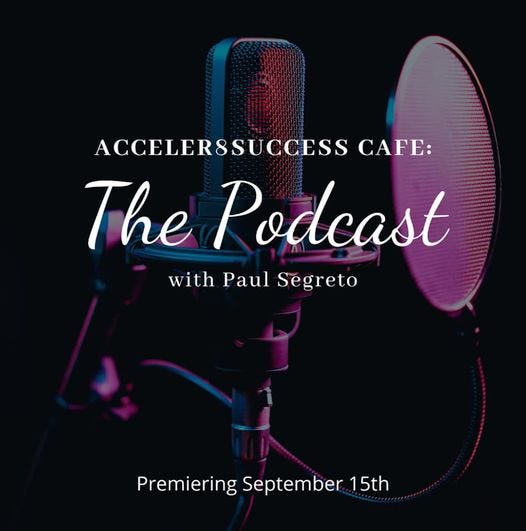
As part of my own journey in podcasting and content creation, I’m excited to announce my return to podcasting with the launch of “Acceler8Success Cafe: The Podcast.” Starting September 15th, this new series will stream on Sundays, bringing conversations and insights focused on entrepreneurship, small business, franchising, restaurants, and more. I look forward to reconnecting with past listeners and reaching new audiences as we dive into the topics that drive success in today’s business landscape. Stay tuned for more information as we prepare to kick off this exciting new chapter.

Make today a great day. Make it happen. Make it count!

About the Author

With over 40 years of extensive experience in small business, restaurant, and franchise development, management, and marketing, Paul Segreto is a recognized authority in the entrepreneurial world. As an executive, consultant, coach, and entrepreneur, Paul has dedicated his career to empowering both current and aspiring business owners. His mission is to pave the way to success by connecting entrepreneurs with the right people, brands, and opportunities.

If you’re a current or aspiring entrepreneur that needs assistance, guidance, or just someone to talk to, please send an email to Paul Segreto at paul@acceler8success.com.

Seniors in Business: Why Entrepreneurship Has No Expiration Date

The question of whether someone is too old to become an entrepreneur is complex and multifaceted, encompassing a range of considerations that go beyond simple age. While youth is often associated with the energy, drive, and risk-taking necessary for launching a new business, investing in a franchise, or getting involved in a restaurant, the reality is that age brings with it a wealth of experience, wisdom, and resources that can be equally, if not more, valuable in entrepreneurship. The key lies not in the number of years one has lived, but in the alignment between the individual’s capabilities, the complexity of the business venture, and the financial and personal resources available.

One of the primary considerations for an older individual contemplating entrepreneurship is the level of complexity involved in the chosen business venture. High-complexity businesses, such as those requiring significant technological integration, large teams, or intense market competition, may present challenges that are exacerbated by age. These challenges might include staying current with rapidly evolving market trends, managing the physical and mental demands of a large operation, or navigating the high-risk, high-reward nature of certain industries. For instance, launching a tech startup in a highly competitive market might require a level of technological fluency, rapid decision-making, and long hours that could be more challenging for someone later in life.

However, entrepreneurship is not a one-size-fits-all endeavor. For many older individuals, the key to success may lie in choosing a business model that is less complex, less demanding, and more in tune with their strengths and life stage. A small business operation, perhaps home-based or a low investment storefront enterprise, might be more suitable. These types of businesses often have lower overhead costs, less risk, and a slower, more controlled growth trajectory. This can make them more manageable and less stressful, allowing the entrepreneur to maintain a balanced lifestyle while still pursuing their business goals.

A home-based business, for example, offers numerous advantages for the senior entrepreneur. It eliminates the need for commuting, reduces overhead costs associated with renting commercial space, and provides the flexibility to work from the comfort of one’s own home. Whether it’s an online consultancy, an e-commerce store, or a service-based business like freelance writing or graphic design, a home-based business can be tailored to the individual’s schedule and energy levels. This flexibility can be particularly beneficial for someone managing health concerns or simply preferring a slower pace of life.

Similarly, a low investment storefront enterprise, such as a small café, boutique, or local service business, can offer the opportunity to engage with the community and create a business that reflects the entrepreneur’s passions and interests. These types of businesses typically require a more modest initial investment and can often be run with a small team or even solo, depending on the scale of the operation. This can make them more accessible and less financially risky, particularly for someone who may not want to dip too deeply into retirement savings or take on significant debt.

Another promising avenue for older entrepreneurs is the coaching or consulting business model. Here, the senior entrepreneur can leverage decades of experience, industry knowledge, and professional networks to provide valuable guidance and support to others. This type of business not only capitalizes on the entrepreneur’s expertise but also offers significant flexibility. Coaching or consulting can often be done on a part-time basis, allowing the entrepreneur to take on as many or as few clients as they wish, and to schedule sessions at times that are convenient for them. This flexibility can be particularly appealing for those who are looking to stay active and engaged without the full-time demands of a traditional business.

However, despite these advantages, there are important considerations and potential pitfalls that senior entrepreneurs must be aware of. Health is a critical factor that cannot be overlooked. As individuals age, they may face various health challenges, ranging from decreased energy levels to chronic conditions that require regular management. These health issues can impact the ability to work long hours, handle stress, and maintain the physical and mental stamina required to run a business. Therefore, it is essential for older entrepreneurs to choose a business model that aligns with their health status and allows for the flexibility to prioritize well-being. This might mean opting for a part-time business, delegating more responsibilities to others, or choosing a venture that can be scaled down as needed.

Another potential pitfall is the risk of becoming outdated in a rapidly changing business environment. The world of business is constantly evolving, with new technologies, market trends, and consumer behaviors emerging at a rapid pace. For a senior entrepreneur who may have been out of the business world for some time, staying current can be a significant challenge. This is particularly true in industries that are heavily reliant on technology, where new tools and platforms can quickly render older methods obsolete. To mitigate this risk, it is important for older entrepreneurs to commit to lifelong learning, whether through formal education, online courses, or by surrounding themselves with younger, tech-savvy team members who can help bridge the gap.

Financial planning is another critical area where senior entrepreneurs must exercise caution. With potentially limited working years ahead and the need to protect retirement savings, it is crucial to avoid high-risk investments and focus on ventures that offer steady, predictable returns. This might mean choosing a business with lower startup costs, minimal overhead, and a clear path to profitability. It is also wise to seek the advice of financial advisors who can help create a business plan that aligns with long-term financial goals and ensures that personal finances are not jeopardized by the new venture.

Despite these challenges, there are numerous resources available to support senior entrepreneurs. Organizations such as SCORE, which offers free mentoring and workshops, and AARP, which provides resources specifically for older entrepreneurs, can be invaluable in helping navigate the complexities of starting a business later in life. The Small Business Administration (SBA) also offers a range of resources, including access to loans, business planning tools, and training programs tailored to the needs of older entrepreneurs. Additionally, online communities and networks can provide support, advice, and collaboration opportunities, connecting senior entrepreneurs with peers who are facing similar challenges and opportunities.

Certainly, while age may present certain challenges to entrepreneurship, it also brings significant advantages in the form of experience, wisdom, and a lifetime of professional and personal insights. By carefully selecting a business model that aligns with their capabilities, managing health and financial risks, and leveraging available resources, senior entrepreneurs can not only succeed but thrive in their entrepreneurial endeavors. The key is to approach entrepreneurship with a realistic understanding of one’s strengths and limitations, to plan carefully, and to embrace the journey with the same enthusiasm and passion that has characterized their professional lives up to this point. With the right mindset and support, there is no age limit to pursuing and achieving entrepreneurial success.

Make today a great day. Make it happen. Make it count!

About the Author

With over 40 years of extensive experience in small business, restaurant, and franchise development, management, and marketing, Paul Segreto is a recognized authority in the entrepreneurial world. As an executive, consultant, coach, and entrepreneur, Paul has dedicated his career to empowering both current and aspiring business owners. His mission is to pave the way to success by connecting entrepreneurs with the right people, brands, and opportunities.

If you’re a current or aspiring entrepreneur that needs assistance, guidance, or just someone to talk to, please send an email to Paul Segreto at paul@acceler8success.com.

Reclaiming Your Youth: How Entrepreneurship Revives Early Experiences and Success

Entrepreneurship provides a powerful means for individuals to reconnect with the vigor and passions of their early years. Those who were once athletes, academics, or deeply involved in any pursuit often find in entrepreneurship a new stage to showcase their talents, ambitions, and dreams. The thrill of competition, the joy of achieving something meaningful, and the satisfaction of overcoming challenges are experiences that many seek to relive through their entrepreneurial ventures. For some, this journey is about reclaiming the glory that once defined them. It’s about tapping into the same energy and drive that fueled their early successes and finding a way to channel it into something new, something that resonates with the person they’ve become.

However, entrepreneurship is not just about reliving the triumphs of the past. For many, it’s a way to rewrite the narrative of their lives, particularly if their early years were marked by difficulties, failures, or unresolved tensions. Those who faced negativity, whether from personal circumstances, societal expectations, or the harsh words of others, often find in entrepreneurship a powerful outlet for transformation. The entrepreneurial path allows them to redefine themselves, to build something that is a direct reflection of their resilience, creativity, and determination. It’s not uncommon for entrepreneurs to be driven by a desire to prove something — to themselves, to their families, to their communities, and sometimes, to those who doubted them. Each success becomes a form of vindication, a way to show that they are capable, that they can achieve what others said they could not. The naysayers and bullies of the past become fuel for the fire, motivating them to push harder, dream bigger, and reach higher.

In many ways, entrepreneurship can be seen as an extension of the process of growing up. Just as childhood is a time of learning, exploration, and growth, so too is the journey of an entrepreneur. The skills developed in youth — the ability to navigate challenges, the resilience to bounce back from failures, the creativity to solve problems — are all essential in the entrepreneurial world. The transition from childhood to adulthood involves learning how to apply these skills in new contexts, and entrepreneurship is one such context where these early lessons prove invaluable. The parallels between childhood experiences and entrepreneurial success are striking. The determination, curiosity, and willingness to take risks that are often evident in children can be strong indicators of future entrepreneurial success. These are the same traits that make someone destined to become an entrepreneur, just as others might be identified early on as future doctors, engineers, or artists.

This connection raises an important question: should we be teaching entrepreneurship from a much earlier age? In today’s educational landscape, entrepreneurship is often introduced at the college or university level. While many institutions now offer degrees and courses in entrepreneurship, these opportunities are still far fewer compared to other fields of study. Despite this, the number of entrepreneurs continues to grow, often rivaling or even outpacing many traditional professions. This suggests that there is a natural entrepreneurial instinct in many individuals, one that might be nurtured more effectively if it were identified and developed earlier in life.

If entrepreneurship were taught in the early years, it could fundamentally change the way individuals approach their careers and their lives. By fostering entrepreneurial thinking from a young age, we could equip people with the tools they need to navigate an increasingly complex and rapidly changing world. Entrepreneurship is not just a career choice; it’s a mindset, a way of thinking that encourages innovation, resilience, and a willingness to take risks. These are skills that are valuable not just in business, but in every aspect of life. By introducing entrepreneurship early on, we can help individuals develop these skills and prepare them for whatever challenges and opportunities they may face in the future. The growing number of entrepreneurs, despite the relatively limited educational pathways available to them, underscores the need to rethink how we approach education and career development. Perhaps it’s time to recognize that entrepreneurship is not just a profession, but a fundamental aspect of personal growth and development, one that should be nurtured from the earliest stages of life.

Make today a great day. Make it happen. Make it count!

About the Author

With over 40 years of extensive experience in small business, restaurant, and franchise development, management, and marketing, Paul Segreto is a recognized authority in the entrepreneurial world. As an executive, consultant, coach, and entrepreneur, Paul has dedicated his career to empowering both current and aspiring business owners. His mission is to pave the way to success by connecting entrepreneurs with the right people, brands, and opportunities.

If you’re a current or aspiring entrepreneur that needs assistance, guidance, or just someone to talk to, please send an email to Paul Segreto at paul@acceler8success.com.

Valuing and Potentially Selling a Restaurant During Times of Economic Uncertainty

Over the past two months, I’ve had numerous conversations and meetings with restaurant owners across Texas. Many are feeling the strain of the daily grind, which has been exacerbated by the current economic uncertainty. Some are contemplating whether it might be the right time to step away from the industry.

In response to these discussions, I’ve created a five-part series of articles designed to assist restaurant owners in evaluating their options. These articles aim to guide them through the process of exploring possibilities and making informed decisions. Below is the list of the articles in this series.

Make Informed Decisions in Uncertain Times: Understanding Your Restaurant’s Value

From Valuation to Sale: Setting the ‘Right’ Asking Price for Your Restaurant

Staging Your Restaurant for Success: Tips to Enhance Appeal and Boost Sale Price

Closing the Deal: How to Negotiate and Accept the Best Offer for Your Restaurant

The Emotional Journey of Selling Your Restaurant

If you’re a restaurant operator or investor seeking assistance, guidance, or simply a conversation, feel free to reach out to me at paul@acceler8success.com or text me at (832) 797-9851. I look forward to speaking with you in complete confidence.

Navigating Change: How to Shift Business Direction Without Capsizing

Changing the course of a business, no matter the products, services, or industry involved, is a complex endeavor akin to turning a large ship at sea. Just as a ship must navigate treacherous waters with caution, a business must approach change with deliberate, calculated moves. Abrupt shifts in direction can lead to catastrophic consequences, potentially capsizing the enterprise. Successful navigation requires that the change be carefully planned, with potential obstacles anticipated and addressed before they become insurmountable.

Every person onboard a ship has a specific skill set and defined responsibilities. They work together as a cohesive unit, understanding that their collective efforts are essential to the ship’s safe passage. The same holds true in business. Each member of the team must be fully aware of their role and how it contributes to the company’s success. The ability to work together is paramount. During times of change, it is not the moment to alter the organizational culture or disrupt the established order. Leadership, much like a ship’s captain, must have an intimate understanding of the company’s operations and command the respect of their team to execute the change with precision.

As Steve Jobs once remarked, “Innovation distinguishes between a leader and a follower.” This quote underscores the importance of leadership during times of change. Leaders must act with both vision and authority, guiding their team through the transition with a clear sense of purpose. However, acting swiftly and decisively is crucial, it must be done proactively rather than reactively. Reacting to changes after they’ve already impacted the business is akin to trying to steer a ship away from an iceberg only after it’s been sighted at close range. The result is often too little, too late.

This analogy works across all types of businesses, from small startups to large corporations. When altering a company’s trajectory, leaders must chart the course with a clear understanding of the destination. Like a ship’s captain who must anticipate the weather and sea conditions, business leaders need to foresee market trends, economic shifts, and industry challenges. A well-planned strategy ensures that the change in direction is smooth, minimizing disruption to daily operations. Each team member, similar to a crew member on a ship, must know their role and how it contributes to the larger goal. Communication and coordination are essential to ensure everyone is moving in unison.

Tony Hsieh, the former CEO of Zappos, once said, “Your culture is your brand.” Attempting to change the culture of an organization during a strategic shift can destabilize the entire operation. During a critical transition, the focus should be on maintaining operational stability rather than experimenting with new cultural shifts. The captain of a ship wouldn’t attempt to change the crew’s routines in the middle of a storm; similarly, in business, the emphasis during a transition should be on executing the change with precision, not on altering the foundational culture.

Potential pitfalls in this process include misjudging the timing or scale of the change, which can lead to confusion, loss of morale, and even a breakdown in operations. Without a clear and shared vision, team members may feel lost or unmotivated, leading to inefficiencies and errors. A lack of respect or trust in leadership can undermine the entire process, much like a crew that doubts their captain’s ability to navigate through rough waters. Mark Zuckerberg, co-founder of Facebook, once noted, “In a world that’s changing really quickly, the only strategy that is guaranteed to fail is not taking risks.” However, the risk must be calculated, and the path well-charted.

The benefits of a seamless transition are significant. When done correctly, a change in course can lead to new opportunities, enhanced competitiveness, and a stronger, more unified team. Richard Branson, founder of the Virgin Group, famously stated, “Every success story is a tale of constant adaptation, revision, and change.” When businesses navigate change effectively, they emerge not just on a new path but with a renewed sense of purpose and direction. The company, like a well-steered ship, reaches its intended destination, having successfully navigated through challenging waters.

Ultimately, changing the course of a business is a complex, multifaceted process that requires careful planning, strong leadership, and cohesive teamwork. It is not a task to be undertaken lightly, but with the right approach, it can lead to growth, innovation, and long-term success.

Make today a great day. Make it happen. Make it count!

About the Author

With over 40 years of extensive experience in small business, restaurant, and franchise development, management, and marketing, Paul Segreto is a recognized authority in the entrepreneurial world. As an executive, consultant, coach, and entrepreneur, Paul has dedicated his career to empowering both current and aspiring business owners. His mission is to pave the way to success by connecting entrepreneurs with the right people, brands, and opportunities.

If you’re a current or aspiring entrepreneur that needs assistance, guidance, or just someone to talk to, please send an email to Paul Segreto at paul@acceler8success.com.

Choosing Your Path: Entrepreneurship, Traditional Jobs, or Commission-Based Work?

The allure of entrepreneurship lies in the promise of independence, the opportunity to create something from nothing, and the potential for unlimited earnings. For those tired of the predictability and constraints of a W2 career, entrepreneurship offers a path to control one’s destiny. It is the dream of being your own boss, of making decisions that directly affect your future, and of building a business that reflects your passions and values. The idea of working on your own terms, setting your schedule, and having the freedom to innovate can be intoxicating. Entrepreneurship is also seen as a route to financial freedom. Unlike a W2 job with a fixed salary, entrepreneurship offers the potential for exponential growth in income. If successful, an entrepreneur can build wealth far beyond what a typical job might provide. The ability to scale a business, attract investors, and eventually sell or pass on the company can create long-term financial security.

Yet, entrepreneurship is not without its challenges. One of the most significant advantages of a W2 career is the stability it offers. A regular paycheck, benefits, and a clear career path provide a level of security that entrepreneurship often lacks. Entrepreneurs face the uncertainties of income, the pressures of running a business, and the ever-present risk of failure. The financial investment required to start a business can be substantial, and the time commitment often far exceeds that of a traditional job. Entrepreneurs frequently work long hours, especially in the early stages, and the stress can be overwhelming. Unlike a W2 job where responsibilities are clearly defined, entrepreneurship demands that you wear many hats. From marketing to finance to operations, the entrepreneur is responsible for every aspect of the business. This can be both exciting and exhausting. The burden of decision-making falls squarely on the entrepreneur’s shoulders, and the consequences of those decisions can be far-reaching. In a W2 career, one can rely on a team, a manager, and an established system. In entrepreneurship, you are often alone in making critical decisions, leading to feelings of isolation and burnout. The path of entrepreneurship is not for everyone. It requires a specific mindset, resilience, and a high tolerance for risk. It demands a level of commitment and sacrifice that can strain personal relationships and affect one’s quality of life.

Commission-based and performance-driven jobs occupy an interesting middle ground between traditional W2 employment and full-fledged entrepreneurship. These roles, often found in sales, real estate, and other commission-heavy industries, share some similarities with entrepreneurship but differ in key ways. Like entrepreneurs, individuals in commission-based roles have the potential for significant financial rewards. Their income is directly tied to their performance, offering the possibility of earnings that far exceed a fixed salary. This setup attracts those who are motivated by the idea of being rewarded in direct proportion to their efforts. The freedom to determine one’s income based on performance, rather than time spent on the job, is a powerful incentive. However, unlike entrepreneurship, commission-based roles typically come with a built-in structure provided by the employer. There is usually a product or service to sell, a market to target, and often some level of support in terms of training and resources. While there is more autonomy than in a traditional W2 job, the individual is still operating within the confines of someone else’s business. This structure can be comforting to those who want the potential upside of entrepreneurship without the full responsibility of running a business. The risks are lower, as there is often a base salary or a draw against commission, and the financial investment required is minimal compared to starting a business from scratch. However, the potential rewards are also capped by the structure and limits set by the employer.

Commission-based roles share the challenge of income variability with entrepreneurship. A bad month or quarter can significantly impact earnings, and the pressure to perform can be intense. The sales cycle can be unpredictable, and external factors like market conditions or economic downturns can affect income in ways that are out of the individual’s control. The need to constantly meet or exceed targets can lead to stress and burnout, similar to the pressures faced by entrepreneurs. However, unlike entrepreneurs who can pivot their business model or product offering in response to market changes, individuals in commission-based roles are often limited by the company’s strategy and offerings. The freedom to innovate and make significant changes is restricted, and there is less control over the broader direction of the business.

There are also less obvious factors to consider when weighing entrepreneurship against both W2 careers and commission-based roles. The perceived freedom of entrepreneurship can sometimes be misleading. Entrepreneurs are free from the constraints of a boss, but they are accountable to their customers, investors, and employees. The pressure to perform is immense, and the stakes are often higher than in a W2 job or commission-based role. The flexibility of setting one’s schedule can quickly turn into the reality of working around the clock, especially in the early stages of a business. The myth of absolute freedom is perhaps the most deceptive in entrepreneurship. Entrepreneurs may not have a boss in the traditional sense, but they are bound by the demands of their business, their customers, and the market. The entrepreneurial journey is often romanticized, with success stories of overnight millionaires and disruptive innovators. However, the reality is that most entrepreneurs face years of hard work, financial struggle, and setbacks before achieving success, if they achieve it at all. The financial risks are significant. Many businesses fail, and the financial losses can be substantial. This is a reality that is often glossed over in the romanticized notion of entrepreneurship. In contrast, commission-based roles, while offering the potential for high earnings, often come with the support and structure of an established business, reducing some of the risks and challenges faced by entrepreneurs.

Choosing between entrepreneurship, a W2 career, or a commission-based role is a deeply personal decision that depends on one’s goals, values, and risk tolerance. Entrepreneurship offers the potential for great rewards, but it comes with significant risks and challenges. A W2 career provides stability, security, and a clear path but may lack the excitement and fulfillment that entrepreneurship or commission-based roles can offer. Commission-based roles offer a blend of autonomy and security, with the potential for high earnings tied to performance, but they lack the full freedom and potential upside of entrepreneurship. The right choice depends on what one values most. For some, the stability and predictability of a W2 career will be more appealing. For others, the lure of entrepreneurship or the performance-driven rewards of a commission-based role will be impossible to resist. Ultimately, the decision should be made with a clear understanding of the realities of each path, the risks involved, and what one truly wants from their work and life.

Make today a great day. Make it happen. Make it count!

About the Author

With over 40 years of extensive experience in small business, restaurant, and franchise development, management, and marketing, Paul Segreto is a recognized authority in the entrepreneurial world. As an executive, consultant, coach, and entrepreneur, Paul has dedicated his career to empowering both current and aspiring business owners. His mission is to pave the way to success by connecting entrepreneurs with the right people, brands, and opportunities.

If you’re a current or aspiring entrepreneur that needs assistance, guidance, or just someone to talk to, please send an email to Paul Segreto at paul@acceler8success.com.

The Emotional Ride of Entrepreneurship

A long week has come to an end, the kind that stretches over 80 hours, where time loses meaning, and the boundary between day and night blurs into a haze of phone calls, emails, and presentations. There’s an emotional fatigue settling in, almost as if the soul has been wrung out and left to dry. Yet, there’s a spark of exhilaration, a sense of satisfaction that despite the relentless pace, the week was productive. It’s the strange duality that comes with being an entrepreneur, where the highs are as intense as the lows. One moment, you’re riding the wave of success, adrenaline coursing through your veins like a sugar rush; the next, you’re crashing, hitting a wall of exhaustion that stops you in your tracks.

The comparison is vivid, like driving at 120 miles per hour and then coming to an abrupt stop, only to rev the engine and do it all over again. The week felt like that — moments of intense acceleration, fueled by passion and purpose, followed by the inevitable slowdown, where the mind and body scream for rest. But rest isn’t always a friend; it’s often an unwelcome reminder that the pace of life can’t be sustained indefinitely. And yet, despite the toll it takes, there’s a pull, an irresistible urge to get back on the track and do it all over again.

Such is the life of an entrepreneur, a life I know all too well. It’s a dance between the thrill of victory and the agony of defeat, much like that old Wide World of Sports show. The highs are intoxicating, filling the soul with a sense of purpose and achievement. But the lows? They’re brutal, a stark reminder that every success is hard-won, often at the expense of one’s own well-being. It’s almost like playing a real-life chess game, only the opponent isn’t human. It feels more like a spiritual being, a force that places challenges in your path just as you think you’re making progress. Or maybe it’s more like the Hunger Games, where for every step forward, there’s an obstacle that threatens to derail everything.

But unlike the Hunger Games, there’s an odd enjoyment in the chaos, a positive excitement that makes it all worthwhile. The highs make it easy to forget the toll it takes, but deep down, I know that a sense of calm is needed, some solitude to recharge. Mental health is important, crucial even. The pressures are immense, and while the rewards are there, they often come at a cost. Recognizing when the battery needs recharging is vital, but here’s the thing — rest brings its own challenges. Boredom sets in, a sense of restlessness that’s hard to shake. It’s like watching a movie, only to realize you have no clue what just happened because you missed key details. The light is on, but no one’s home. Or trying to read a book and finding yourself stuck on the same page for what feels like an eternity.

Entrepreneurship is like a drug, one that’s impossible to live without. The highs, the rush, the thrill of building something, sometimes from nothing or against all odds — it’s addictive. But with every high comes a low, and with every push forward comes the need to pull back. It’s weird, maybe even a little unsettling, to find myself looking forward to Monday when it’s still days away. But that’s the reality, the never-ending cycle of push and pull, of acceleration and deceleration. The mind craves the challenge, the soul needs the rush, even as the body protests, demanding rest. It’s a delicate balance, one that’s hard to maintain but impossible to live without. This is the life of an entrepreneur — exhilarating, exhausting, and endlessly compelling.

Make today a great day. Make it happen. Make it count!

About the Author

With over 40 years of extensive experience in small business, restaurant, and franchise development, management, and marketing, Paul Segreto is a recognized authority in the entrepreneurial world. As an executive, consultant, coach, and entrepreneur, Paul has dedicated his career to empowering both current and aspiring business owners. His mission is to pave the way to success by connecting entrepreneurs with the right people, brands, and opportunities.

If you’re a current or aspiring entrepreneur that needs assistance, guidance, or just someone to talk to, please send an email to Paul Segreto at paul@acceler8success.com.