Author: Paul Segreto

Passionate About Fueling Entrepreneurial Spirit; Entrepreneurship Coaching; Management & Development Advisory & Consulting; Franchises, Restaurants, Service Businesses; Thought Leader, Influencer, Content Creator & Author.

Navigating the Business Landscape: Entrepreneurs and Small Business Owners Compared

.

Entrepreneurship and business ownership are terms that are often used interchangeably, but they can signify different roles and mindsets in the world of commerce. The distinction often hinges on innovation, risk-taking, and the scale of ambition.

Entrepreneurs are typically seen as innovators who start businesses to bring new ideas, products, or services to the market, often filling a gap or addressing a need that has not been met. They are willing to take on greater than normal financial risks to do so. An entrepreneur’s goal is often to change the market dynamics with a scalable and potentially disruptive business model. For example, a tech startup founder developing a new app that aims to revolutionize how people share news stories is an entrepreneur because they are trying to introduce a change to the existing market.

In contrast, small business owners might not necessarily seek to innovate or disrupt markets. Their primary goal is to be their own boss, secure a livelihood, and perhaps serve a local community without necessarily scaling up. The local grocer, baker, or butcher from back in the day might be seen as a small business owner if they were simply following existing business models without seeking significant changes or innovations in their market.

However, the lines can be blurred. For example, an independent restaurant owner could be a small business owner if they’re opening a typical local eatery. But if they introduce a novel concept or unique dining experience not found elsewhere, they might be more accurately described as an entrepreneur.

A real estate broker or local attorney typically operates as a small business owner unless they are employing a novel business model or offering an innovative service that disrupts the current market.

Franchisees operate under a pre-established business model, which could imply they are not entrepreneurs in the purest sense. However, they do take on significant financial risk and must navigate many of the same challenges as other business owners. It could be argued that they exhibit entrepreneurial qualities by creating their own culture within their franchise business, and especially when venturing into area development or co-branding with multiple brands.

The essence of entrepreneurship lies in the creation, innovation, and scaling of new ideas into viable businesses, often involving considerable risk beyond just opening a shop or following a traditional business path. So, while all entrepreneurs are business owners, not all business owners are entrepreneurs in the strictest sense. As such, here are some questions to consider:

How does the distinction between entrepreneurship and small business ownership manifest in terms of day-to-day operations, long-term goals, and strategies for growth and adaptation?

In what ways might the evolving economic landscape and technological advancements blur the lines between traditional small business ownership and entrepreneurship?

How can small business owners cultivate an entrepreneurial mindset to innovate within their industries, and conversely, how might entrepreneurs ensure they maintain the community-oriented focus that often underpins successful small businesses?

To summarize, entrepreneurship is about the new and the novel, and the potential for growth beyond the local or traditional, while small business ownership focuses on the established, local, and often personal or community oriented. Each contributes vitally to the economy, but they play different roles within it.

From the Author, Paul Segreto, CEO & Founder, Acceler8Success Group

If you’d like to discuss your entrepreneurial experiences, challenges, or aspirations, or if you need guidance or coaching concerning your small business, restaurant, or franchise, please don’t hesitate to contact me. You can send an email to me at paul@acceler8success.com or you may reach me by text or phone at (832) 797–9851. I look forward to helping you.

Make it a great day. Make it happen. Make it count!

Creative Ventures: The Entrepreneurial Art of Turning Passion into Profit

Entrepreneurship manifests in various forms, ranging from traditional startups and business ownership to contemporary side hustles, as well as those that blend personal artistic and creative prowess, like authorship and visual art. The latter involves creators who build a livelihood by producing and selling their original work.

Some may contend that authors and artists do not fit the entrepreneurial mold, but such a view overlooks the essence of entrepreneurship. When creative individuals harness their talents to generate income, nurturing a business through their endeavors, they indeed embody entrepreneurial spirit. As described on Wikipedia, an entrepreneur invests time, energy, and resources to create value for others, reaping monetary rewards and benefitting both themselves and their consumers.

Artist Entrepreneur: Leonid Afremov

Take Leonid Afremov, a Mexican-Israeli artist known for his modern impressionistic works crafted predominantly with palette knives and oils. He carved out a distinctive technique and style that set his art apart. Afremov’s pieces—vibrant landscapes, cityscapes, seascapes, florals, and portraits—steered clear of political themes.

Before the rise of online marketplaces like eBay, Afremov faced challenges as an artist. Born in Vitebsk, Belarus, and residing there until 1990, he later lived in Israel (1990-2002) and Boca Raton, Florida (2002-2010). His Jewish roots barred him from participating in government exhibitions or joining art associations in his homeland. Much of his early work, circulated privately or given away, lacked documentation, with little surviving to the present day—save for one pre-1990 painting held by his family.

The 1986 Chernobyl disaster brought additional turmoil, contaminating the environment near Vitebsk with radioactive fallout and profoundly impacting the health of local children, including Afremov’s two-year-old son. Coupled with anti-Semitic discrimination, these adversities prompted Afremov to migrate to Israel when Mikhail Gorbachev’s policies permitted. In May 1990, the Afremov family took a train from Minsk to Warsaw, followed by a flight to Israel, joining the early wave of the 1990s Russian-Jewish emigration.

Today, Afremov’s family continues to sell his original oil paintings, recreations, prints, and giclées via afremov.com.

Author Entrepreneur: J.K. Rowling

Similarly, J.K. Rowling, the celebrated author behind the Harry Potter series, exemplifies an author entrepreneur. Despite the Harry Potter brand’s worth of over $15 billion, Rowling’s story is rooted in humble beginnings. An InsideBusiness.com article details her journey, marked by personal loss, a brief and tumultuous marriage, and a return to the UK as a single mother and struggling writer, bearing the early chapters of “Harry Potter” in her luggage.

Settling in Edinburgh, Rowling battled depression and poverty, writing in cafés while her daughter slept beside her. Despite experiencing what she described in a 2008 Harvard commencement speech as her lowest point, Rowling transformed her situation into a triumphant narrative that today resonates worldwide.

Arts Entrepreneurship

Arts Entrepreneurship, as chronicled by AmericansForTheArts.org, is not a modern concept. Historically, artists have embodied the entrepreneurial spirit, though formal education in arts entrepreneurship is relatively new. Institutions such as the Eastman School of Music have been addressing it since the 1970s, with over a hundred colleges and at least thirty-three Master’s programs globally now offering dedicated courses.

Academic consensus on the definition of “entrepreneurship,” “arts entrepreneurship,” “creativity,” “imagination,” or “art” remains elusive due to the subjective nature of these terms. However, the Meadows School of the Arts at Southern Methodist University (SMU) delineates arts entrepreneurship as the creation of opportunity and value with the intention of profiting—financially or otherwise—by assuming risk and putting forth effort. In this realm, the art itself becomes the created value.

Reflective Questions

If you’re contemplating a career as an arts entrepreneur, here are several reflective questions for your consideration:

  1. What unique value can you create through your art or writing, and how do you envision turning that value into a sustainable business model? Consider the balance between staying true to your artistic vision and the commercial aspects of running a successful enterprise.
  2. How will you navigate the business challenges that are specific to the arts sector, such as intellectual property rights, fluctuating market demands, and the digitalization of creative content? Think about the strategies you might employ to protect your work while reaching a wider audience.
  3. What resources, networks, and educational opportunities can you leverage to develop your entrepreneurial skills as an artist or author? Reflect on the importance of continuous learning and networking in the growth and evolution of your arts-based business.

Conclusion

The journey of an arts entrepreneur is both challenging and rewarding. It blurs the lines between the creative impulse and business acumen, illustrating that entrepreneurship is not confined to conventional business models but also thrives in the realms of art and literature. Figures like Leonid Afremov and J.K. Rowling stand as testaments to the potential that lies in the heart of the artistic entrepreneur. Their stories of overcoming adversity to create value that resonates on a global scale serve as powerful exemplars for aspiring creators. In embracing both their craft and the principles of entrepreneurship, they have paved the way for a new generation of artists and authors who are ready to turn their passion into a profession.

As we recognize the evolving landscape of arts entrepreneurship, supported by academia and a growing recognition of the creative industries as a legitimate and vital area of economic growth, we witness a promising horizon for those who dare to dream and do. This convergence of creativity and commerce marks not just a livelihood, but a dynamic and fulfilling way of life.

From the Author, Paul Segreto, CEO & Founder, Acceler8Success Group

If you’d like to discuss your entrepreneurial experiences, challenges, or aspirations, or if you need guidance or coaching concerning your small business, restaurant, or franchise, please don’t hesitate to contact me. You can send an email to me at paul@acceler8success.com or you may reach me by text or phone at (832) 797–9851. I look forward to helping you.

Make it a great day. Make it happen. Make it count!

The Solopreneur’s Journey: Mastering the Art of a One-Person Business

In an era marked by technological advancement and a shift towards a more flexible job market, the concept of solopreneurship has become increasingly prevalent. A solopreneur is an individual who operates their business single-handedly, without any employees or partners. This model has become particularly attractive to freelancers, consultants, coaches, and professional service providers such as CPAs, financial planners, real estate and insurance agents, and attorneys.

Pros and Cons of Solopreneurship

Pros:

  1. Full Control: Solopreneurs retain complete control over their business decisions, work style, and creative direction. This autonomy allows for rapid decision-making and a personal touch that many clients value.
  2. Flexibility: Without the constraints of a traditional office environment or the need to manage a team, solopreneurs can work whenever and wherever they choose, leading to a better work-life balance.
  3. Cost Efficiency: Operating solo eliminates the need for significant overhead costs. Solopreneurs can often work from home, saving on office space, and do not have the financial burden of employee salaries and benefits.

Cons:

  1. Isolation: Working alone can lead to a sense of isolation, lacking the collaborative environment that a company can offer.
  2. Capacity Limitations: There is a ceiling to how much work a single person can handle, which can limit income potential and the ability to scale the business.
  3. Lack of Support: Solopreneurs must wear multiple hats, managing every aspect of their business, which can be overwhelming without the support structure that a company provides.

Treating Solopreneurship as a Business

To ensure sustainability and growth, solopreneurs should adopt a structured approach:

  1. Develop a Business Plan: Articulate your business idea, target market, value proposition, and financial projections.
  2. Establish a Brand: Create a strong brand identity that reflects your values and appeals to your target audience.
  3. Financial Management: Keep meticulous financial records and understand your cash flow. Utilize software to streamline invoicing, billing, and tax preparation.
  4. Invest in Marketing: Build a robust online presence with a professional website and use social media and content marketing to attract and retain clients.
  5. Continuous Learning: Stay abreast of industry trends and invest in developing new skills that can enhance your service offering.

Scaling a One-Person Operation

Scaling a solopreneur business involves increasing revenue without significantly increasing workload:

  1. Productize Services: Develop packaged offerings with set prices. This makes it easier to sell your services and scale without customizing every solution.
  2. Outsource Non-Core Activities: Delegate tasks like administrative work, bookkeeping, or marketing to freelancers or virtual assistants.
  3. Leverage Technology: Use automation tools for scheduling, customer relationship management, and project management to handle repetitive tasks efficiently.
  4. Create Passive Income Streams: Develop courses, write e-books, or offer recorded webinars that can be sold multiple times without additional effort.
  5. Build Strategic Partnerships: Align with other businesses or solopreneurs to offer complementary services, which can lead to referrals and shared projects.

Quotes About Solopreneurship

The following quotes reflect the multifaceted role of a solopreneur, highlighting the perseverance, self-reliance, and personal investment required to thrive in such a solo venture:

“Solopreneurs are the true definition of an entrepreneur. We bet on ourselves, turn vision into reality, and ‘company culture’ is whatever mood we’re in.” – Angela Benton, Founder & CEO of Streamlytics.

“As a solopreneur, you can make a living doing what you love. That’s the ultimate form of success.” – John Rampton, Entrepreneur and Connector.

“A solopreneur is not simply a ‘one-man-band.’ They are an orchestra, a production studio, a whole company wrapped in one passionate individual.” – Paul Jarvis, Author of “Company of One.”

“The solopreneur’s journey is a testament to self-belief, with the soundtrack of independence as its score, and the horizon of opportunity in its sights.” – Chris Ducker, Author of “Rise of the Youpreneur.”

“The beauty of being a solopreneur is that you can pivot at will, negotiate with agility, and realize the rewards of your hustle at the speed of thought.” – Dorie Clark, Author and Executive Education Faculty, Duke University Fuqua School of Business.

“As a solopreneur, your brand is a mirror image of your work ethic, your values, your passion. It’s not just business; it’s personal.” – Lewis Howes, Author and Podcaster.

“Solopreneurs don’t just run a business; they live their vocation. They’re in it with the entirety of their heart, soul, and the unyielding drive to create impact.” – Marie Forleo, Entrepreneur and Life Coach.

“To be a successful solopreneur, you must be comfortable with being uncomfortable. You are the business, the manager, and the worker all in one.” – Neil Patel, Digital Marketing Expert.

Books About Solopreneurship

The following books offer a combination of inspiration, practical advice, and real-world examples, giving readers a comprehensive look at what it takes to be a successful solopreneur in today’s economy:

  1. “Company of One: Why Staying Small Is the Next Big Thing for Business” by Paul Jarvis  
  2. “The $100 Startup: Reinvent the Way You Make a Living, Do What You Love, and Create a New Future” by Chris Guillebeau  
  3. “The One Person Business: Make Great Money. Work the Way You Like. Have the Life You Want.” by Elaine Pofeldt
  4. “The Lean Startup: How Today’s Entrepreneurs Use Continuous Innovation to Create Radically Successful Businesses” by Eric Ries  
  5. “The Solopreneur Life: 42 Solo-Business Owners Speak the Truth on Dreaming Big, Failing Forward, and Calling Your Own Shots” by Terri Hockett –
  6. “The Freelancer’s Bible: Everything You Need to Know to Have the Career of Your Dreams
  7. “Escape from Cubicle Nation: From Corporate Prisoner to Thriving Entrepreneur” by Pamela
  8. “Solopreneur Ronin: Break the Chains, Earn Your Freedom, and Engineer a Happy Life Blogging from Anywhere” by Ryan Biddulph
  9. “The E-Myth Revisited: Why Most Small Businesses Don’t Work and What to Do About It” by Michael E. Gerber
  10. “Crush It!: Why NOW Is the Time to Cash In on Your Passion” by Gary Vaynerchuk

Reflection Questions for Aspiring Solopreneurs

  1. What unique value can you provide that differentiates you from competitors, and how can you communicate this to potential clients?
  2. How will you manage the potential isolation and capacity limitations inherent in solopreneurship, and what support systems can you put in place?
  3. What scalable business model aligns with your strengths and lifestyle, and how can you implement systems to maintain a balance between growth and workload?

Conclusion

Solopreneurship is a viable and increasingly popular way to conduct business, offering independence, flexibility, and cost efficiency. However, it also comes with challenges such as isolation, capacity limitations, and the need for self-management. By treating solopreneurship with the same strategic planning as any business and by considering scalable models and support systems, solopreneurs can successfully grow their operations while maintaining the freedom that drew them to this mode of work in the first place.

From the Author, Paul Segreto, CEO & Founder, Acceler8Success Group

If you’d like to discuss your entrepreneurial experiences, challenges, or aspirations, or if you need guidance or coaching concerning your small business, restaurant, or franchise, please don’t hesitate to contact me. You can send an email to me at paul@acceler8success.com or you may reach me by text or phone at (832) 797–9851. I look forward to helping you.

Make it a great day. Make it happen. Make it count!

Network Marketing: A Viable but Often Misunderstood Form of Entrepreneurship

According to Investopedia, network marketing is a business model that depends on person-to-person sales by independent representatives, often working from home. A network marketing business may require you to build a network of business partners or salespeople to assist with lead generation and closing sales.

Also known as multi-level marketing (MLM), network marketing has been a part of the business landscape for several decades. Despite its long history, it remains a relatively unknown or misunderstood form of entrepreneurship. This article aims to demystify network marketing, explore its benefits and challenges, and highlight the legal frameworks governing it.

Understanding the Premise

Network marketing is a strategy that involves direct selling of products or services through a network of independent distributors or representatives. These representatives are compensated based on their sales and the sales of the people they recruit into the business, creating a hierarchical structure. This structure often comprises multiple levels of commissions and bonuses, encouraging individuals to not only sell products but also to recruit new members into their network.

Advantages and Benefits

  1. Low Startup Costs: Unlike traditional businesses, network marketing requires minimal initial investment, making it accessible to many aspiring entrepreneurs.
  2. Flexible Work Hours: Network marketing allows individuals to work at their own pace, offering an opportunity to earn income part-time or full-time based on one’s schedule.
  3. Personal Development: Many MLM companies offer personal development and training programs to help individuals enhance their sales and marketing skills.
  4. Passive Income Potential: Successful network marketers can potentially build a stream of passive income through the efforts of their downline (the network of individuals they have recruited).
  5. Community Engagement: Network marketing fosters a sense of community, where individuals can network and learn from like-minded entrepreneurs.

Legality of Network Marketing

While network marketing is legal in many countries, it has often been associated with pyramid schemes, which are fraudulent and illegal. Legal network marketing programs differ from pyramid schemes as they focus on real sales of goods or services, not merely on recruiting new members. Governments worldwide have established laws and guidelines to regulate network marketing businesses to protect individuals from scams. Participants are encouraged to research and choose companies that comply with these regulations.

Industry Segments

Network marketing spans various industry segments, including but not limited to:

  1. Health and Wellness: Companies in this segment offer products like dietary supplements, health foods, and fitness programs.
  2. Beauty and Personal Care: This segment includes companies offering cosmetics, skincare products, and other personal care items.
  3. Home Care: Network marketing businesses in this segment sell household cleaning products, home appliances, and other home care items.
  4. Technology and Telecommunications: Some companies focus on selling tech products, software, or telecommunications services through network marketing.
  5. Financial Services: This includes companies offering insurance products, investment opportunities, and other financial services.

Success Stories and Income Levels

The network marketing industry has witnessed numerous success stories of individuals who have achieved significant levels of income and financial independence. Successful network marketers often demonstrate strong leadership, persistence, and a deep understanding of the products they promote. They build substantial networks and benefit from the cumulative sales efforts of their teams. It should be noted that achieving high income levels in network marketing usually requires substantial time, effort, and commitment.

The Road to Success: Hard Work and Commitment

Like any entrepreneurial endeavor, succeeding in network marketing demands hard work and commitment. Prospective network marketers should be prepared to invest time in training, product knowledge, and building a solid network. They should also maintain ethical business practices, focusing on genuine sales rather than mere recruitment.

Network Marketing Books

1. “I Will Never Do Network Marketing” by Joe Occhiogrosso

Though there isn’t information readily available regarding a book with this exact title, based on the title itself, it seems like it might be a critique or skeptical examination of network marketing as a business model. A book with this title might explore the common criticisms of network marketing, including concerns about pyramid schemes, the risks of financial loss, and the challenges of recruiting new members. It might also offer personal stories or case studies illustrating why the author has chosen to avoid network marketing.

2. “The New Professionals: The Rise of Network Marketing as the Next Major Profession” by Charles W. King and James W. Robinson

In “The New Professionals”, the authors Charles W. King and James W. Robinson describe the evolution and expansion of network marketing as a viable career path. They argue that network marketing has grown to be a significant force in the business world, offering opportunities for entrepreneurship and financial independence to a wide range of people. The book may delve into success stories, strategies, and tactics that professionals in the field employ, suggesting that network marketing has become a respectable and potentially lucrative profession.

More Book Recommendations:

For a well-rounded view on network marketing, you might want to explore books that both critique and praise the industry. Here are some other books you might consider:

  1. “Go Pro: 7 Steps to Becoming a Network Marketing Professional” by Eric Worre – A guidebook offering strategies and steps to succeed in network marketing.
  2. “Your First Year in Network Marketing: Overcome Your Fears, Experience Success, and Achieve Your Dreams!” by Mark Yarnell and Rene Reid Yarnell – This book provides insights into navigating the first year in network marketing, offering advice on overcoming common fears and hurdles.
  3. “The Ultimate Guide to Network Marketing: 37 Top Network Marketing Income-Earners Share Their Most Preciously Guarded Secrets to Building Extreme Wealth” edited by Joe Rubino – A collection of insights and strategies from successful network marketing professionals.
  4. “Network Marketing for Facebook: Proven Social Media Techniques For Direct Sales & MLM Success” by Jim Lupkin & Brian Carter – A guide to utilizing Facebook for building a successful network marketing business.
  5. “Rock Your Network Marketing Business: How to Become a Network Marketing Rock Star” by Sarah Robbins – This book offers tips and strategies for succeeding in network marketing, with a focus on building a profitable business.

Additional Resources

Podcasts:

  1. “The Network Marketing Podcast” by Simon Chan
  2. “Network Marketing Heroes” hosted by Richard Bliss Brooke
  3. “The Network Marketing Mindset” by Deb Erickson

Publications:

  1. Networking Times – A magazine that offers a plethora of articles and insights into network marketing.
  2. The Direct Selling Journal – A publication that focuses on the broader scope of direct selling, including network marketing.

Conclusion

Network marketing presents a viable business opportunity, albeit one that is often misunderstood. When approached with dedication and a focus on product sales, it offers numerous benefits including low startup costs, flexible work hours, and the potential for financial growth. As with any business model, it carries its own set of challenges and risks. Therefore, aspiring network marketers should conduct thorough research, understand the legal landscape, and align themselves with reputable companies to enhance their chances of success.

From the Author, Paul Segreto, CEO & Founder, Acceler8Success Group

If you’d like to discuss your entrepreneurial experiences, challenges, or aspirations, or if you need guidance or coaching concerning your small business, restaurant, or franchise, please don’t hesitate to contact me. You can send an email to me at paul@acceler8success.com or you may reach me by text or phone at (832) 797–9851. I look forward to helping you.

Make it a great day. Make it happen. Make it count!

Launching with Momentum: The Power of Advanced Grand Opening Marketing

In today’s rapidly changing economic landscape, where the stakes of real estate and construction costs are skyrocketing, the age-old adage “time is money” has never been truer. For new restaurants, this means the pressure is on to start generating revenue from day one. But how can a brand-new restaurant operate as if it’s been a cornerstone of the community for years? The answer lies in advanced grand opening marketing.

Start Early with a Bang

Your restaurant might be opening its doors in a month, but your marketing should begin much earlier. Think of your grand opening as a movie premiere. The trailers, interviews, and promotions begin months ahead, building anticipation and ensuring that seats are filled on the big day.

Utilize an Integrated Marketing Approach

  • Social Media: Platforms like Instagram, Facebook, and Twitter offer an excellent medium to showcase behind-the-scenes preparations, introduce staff, and give a sneak peek into the menu offerings. Engage with followers through polls, contests, or Q&A sessions.
  • Digital Marketing: Invest in targeted ads that reach potential customers in your geographical area. Use SEO strategies on your business’s website to ensure that local searches find you quickly.
  • Public Relations: Draft press releases detailing your grand opening and the uniqueness of your restaurant. Engage local bloggers or influencers for collaborations and reviews.
  • Rewards or Loyalty Programs: Encourage early sign-ups to a rewards program. Offer exclusive deals or bonuses for those who register before the grand opening. It not only incentivizes customers to visit but ensures they return.

Engage with the Community

Long before the doors officially open, create a presence within the community. Attend local events, collaborate with local businesses for cross-promotions, or sponsor community-driven initiatives. This fosters a sense of belonging and portrays your restaurant as a local mainstay from the get-go.

Questions to Consider for Your Grand Opening Marketing Plan:

  1. Who is your target audience and what are their preferences? Understanding your audience helps tailor your marketing strategy to resonate more effectively.
  2. What sets your restaurant apart from competitors in the community? Emphasizing your unique selling proposition (USP) can make you more memorable in a saturated market.
  3. How can you continuously engage with your audience post the grand opening? Maintaining momentum is crucial. Plan how you’ll keep the conversation going after the initial buzz fades.

In conclusion, the success of a restaurant’s grand opening often predicates its future in the community. With the right mix of anticipation-building and community engagement, new restaurants can position themselves as longstanding staples even before they officially open.

Resources & Support

If you need assistance with goals or plans relating to your restaurant, small business, and / or franchise, please feel free to reach out to me at paul@acceler8success.com, or by phone or text to (832) 797–9851. I look forward to hearing from you.

Make it a great day. Make it happen. Make it count!

The Perils of Entrepreneurship: Embracing the Marathon, Not the Sprint

In an age of non-stop connectivity, the entrepreneurial spirit thrives. The allure of charting one’s own path and forging ahead with a vision that promises to disrupt the status quo or introduce groundbreaking solutions to age-old problems is tantalizing. But for all its glitter, entrepreneurship is fraught with dangers that are often overlooked, especially in today’s frenetic and interconnected world.

It’s not uncommon to hear of entrepreneurs working seven days a week, pouring in 10, 12, or even 14 hours each day. Even their downtime—those precious moments meant for rest and recuperation—are filled with podcasts, videos, and readings on entrepreneurship and business strategies. While dedication and passion are commendable, there’s a fine line between commitment and over-commitment. This raises a pivotal question: Is the modern entrepreneurial journey akin to suicide by work?

At its core, entrepreneurship is about problem-solving, innovation, and bringing value to the market. But it’s also a deeply personal journey, with one’s emotions, health, and overall well-being intrinsically tied to the ebbs and flows of business. The hamster wheel metaphor is apt: many entrepreneurs find themselves trapped in a cycle of perpetual motion, where the hustle never stops, and there’s always another milestone just around the bend. But just like the hamster, after so much running, aren’t we too, as entrepreneurs, at risk of exhaustion, if not complete burnout?

Consider the strain this places on one’s mental health. The relentless pursuit of success, combined with the inherent uncertainties of the entrepreneurial path, creates an environment ripe for anxiety, depression, and a host of other mental health issues. Physical health, too, often takes a backseat, with irregular sleep patterns, poor diet, and lack of exercise becoming the unfortunate norm for many.

Yet, if walking away is not an option and failure is out of the question, what’s an entrepreneur to do?

The first step is recognizing the perils. Admitting that the current trajectory is unsustainable is essential. The adage “work smarter, not harder” holds true. Efficiency, delegation, and knowing when to pause are just as vital as perseverance and hard work. Embracing the idea that entrepreneurship is a marathon, not a sprint, can provide perspective. The journey is long, filled with both challenges and triumphs, and to navigate it successfully, one must prioritize well-being and balance.

This brings us to three crucial questions for reflection:

  1. Am I nurturing my holistic well-being as passionately as I’m nurturing my business? Your physical, emotional, and mental well-being are the foundations upon which your entrepreneurial journey stands. Ignoring any of these aspects can lead to a shaky foundation and, eventually, a collapse.
  2. What boundaries have I set to protect my personal and professional life? Boundaries are essential. They help create spaces where you can recharge, reflect, and reconnect with your purpose beyond the business realm.
  3. How am I ensuring that I’m not isolated in my journey? Entrepreneurship can be a lonely path. Building a support system, be it through mentors, peer groups, or personal relationships, can make the journey more bearable and provide essential perspective when challenges arise.

In today’s chaotic world, where the pace of change is dizzying and the pressure to perform is relentless, entrepreneurs need to prioritize their well-being. The vision, the dream, and the hustle are crucial, but so is the visionary, the dreamer, and the hustler. It’s imperative to remember that the heart and soul of any enterprise is the entrepreneur. And for the enterprise to thrive, the entrepreneur must first thrive.

In conclusion, while entrepreneurship is a path laden with challenges and perils, it is also one of immense potential and reward. By recognizing the dangers, asking the right questions, and ensuring a balanced approach to work and life, entrepreneurs can navigate this path with resilience, grace, and enduring success.

From the Author, Paul Segreto, CEO & Founder, Acceler8Success Group

If you’d like to discuss your entrepreneurial experiences, challenges, or aspirations, or if you need guidance or coaching concerning your small business, restaurant, or franchise, please don’t hesitate to contact me. You can send an email to me at paul@acceler8success.com or you may reach me by text or phone at (832) 797–9851. I look forward to helping you.

Make it a great day. Make it happen. Make it count!

The Fallen Tree Paradigm: Business Resilience and Growth Amidst Setbacks

A tree, once a towering and majestic symbol of nature, can sometimes fall, felled by the elements, disease, or age. However, even in its fallen state, it plays a crucial role in the ecosystem. Similarly, businesses can face adversities, but with the right mindset and strategy, they can continue to inspire growth and opportunity around them.

Becoming a Nurture Ground: A fallen tree in the forest does not mark the end; it becomes a nutrient-rich site for new life. Mosses, ferns, and fungi begin to take root on the tree’s decaying trunk. The tree, in its fallen state, now nurtures and facilitates the growth of new life forms. Similarly, a business setback, whether it’s bankruptcy, a market crash, or a failed product launch, can become a learning experience. By analyzing what went wrong, companies can create a fertile ground for innovation and new strategies.

Opening Up New Horizons: When a large tree falls, it often creates a gap in the forest canopy. This gap allows sunlight to reach the forest floor, giving a chance for dormant seeds and young plants to thrive. Analogously, when a dominant player in the business world faces challenges or leaves the market, it paves the way for smaller enterprises and startups to flourish, filling the void with innovation and fresh perspectives.

Strengthening the Community: A fallen tree becomes a haven for wildlife – insects, birds, and small mammals find shelter, food, and breeding grounds in its nooks and crannies. Likewise, businesses that undergo restructuring or downsizing can still maintain a strong company culture. Employees, stakeholders, and leaders can come together, working cohesively to rebuild and rejuvenate the enterprise.

Diversification and Adaptation: The decay process of a tree involves numerous organisms and different stages, demonstrating nature’s remarkable ability to diversify and adapt. In the business world, diversification is a way to mitigate risks. Companies can explore new markets, develop varied product lines, and invest in different sectors to ensure long-term stability and growth.

Legacy and Rebirth: The remnants of the tree, after years of decay, enrich the soil around it, leaving behind a legacy that leads to the birth of new trees and plants. Similarly, businesses that may no longer operate can leave behind legacies in the form of brand equity, patents, or company culture, which can be the foundation for new ventures or inspire other entrepreneurs.

In conclusion, just as a fallen tree in nature is not the end but a beginning of new cycles of life, businesses too can find rejuvenation amidst setbacks. It’s about adopting a growth mindset, learning from failures, and being adaptable. As the saying goes, “It’s not about how many times you fall, but how many times you get back up.” The lessons from the forest remind us that even in our fallen moments, there’s potential for immense growth and rebirth.

From the Author, Paul Segreto, CEO & Founder, Acceler8Success Group

The future may be a bit bumpy for some, more so for others. Knowing who to turn to and when to turn to for guidance and help is important. Having resources at your disposal is also important.

So, if you hit a wall, for whatever reason, please feel free to reach out to me for assistance or even if you just need to talk and bounce around a few thoughts. Please do not hesitate.

You can reach me on LinkedIn, by email to Paul@Acceler8Success.com, and by phone or text at (832) 797-9851.

Make it a great day. Make it happen. Make it count!

Warm Thoughts for a Beautiful Sunday: The Power of Kindness and Unity

On this beautiful Sunday morning, while the world outside seems to swirl with chaos and tumult, let us turn inwards and bask in warm thoughts of kindness, care, and mutual respect. At a time when divisiveness seems to be the order of the day, the reassuring truth remains that we have each other. We’re passengers on this vast spaceship called Earth, journeying together through the galaxy of life. Isn’t it peculiar that amidst the cosmic immensity, we sometimes forget to extend a simple smile or a kind gesture to our fellow travelers?

“Why can’t we just get along?” This age-old question tugs at the strings of many hearts. The answer might be complex, yet the starting point is simple. It begins with a single act. An act of understanding, a moment of empathy, or just a genuine smile. The ripple effect of such small acts can create waves of positive change.

Remember, it’s not about grand gestures or headline-worthy deeds. It’s the little things, like holding the door for someone, lending a listening ear, or sharing a heartfelt compliment. Today, challenge yourself to perform one act of kindness. Tomorrow, maybe two. These acts are like seeds, and with each one sown, the world becomes a garden bursting with compassion and unity.

If this resonates with you, share it with your loved ones. Talk about it over Sunday brunch or a family dinner. The power of word-of-mouth is extraordinary. Consider the infamous music festival, Woodstock, an event that drew almost a million attendees without the help of social media. Think of the possibilities now, in a world intricately connected through technology. We have the tools at our fingertips to unite millions with a shared vision of kindness and care.

In a world that sometimes seems bleak, each one of us holds a beacon of hope. We can choose to light up the darkness with our acts of kindness and compassion. By recognizing our shared humanity, we can foster an environment where mutual respect and understanding flourish.

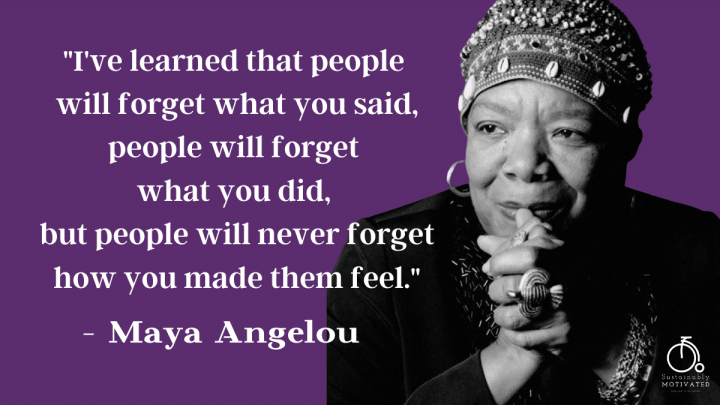
“I’ve learned that people will forget what you said, people will forget what you did, but people will never forget how you made them feel.” – Maya Angelou

So, as you soak in the warmth of the Sunday sun, reflect upon Maya Angelou’s famous quote along with the impact your actions can have. Commit to kindness, and watch as it spreads like the rays of the sun, touching and illuminating every corner of the world. One by one, act by act, together we can create a world filled with love, understanding, and unity. Let’s start today. Let’s make it happen. Let’s make it count!

15 Inspiring Quotes About Entrepreneurship

Entrepreneurship is a journey filled with ups and downs, successes, failures, and endless learning. It requires grit, passion, and perseverance. Throughout history, many successful entrepreneurs and thinkers have shared their wisdom and insights about this unique path. Here are 15 of the most inspiring quotes on entrepreneurship:

  1. “Your work is going to fill a large part of your life, and the only way to be truly satisfied is to do what you believe is great work. And the only way to do great work is to love what you do.” – Steve Jobs
  2. “Success is not just about making money. It’s about making a difference.” – Kathy Ireland
  3. “Entrepreneurship is living a few years of your life like most people won’t, so you can spend the rest of your life like most people can’t.” – Anonymous
  4. “The best way to predict the future is to create it.” – Peter Drucker
  5. “The biggest risk is not taking any risk. In a world that is changing quickly, the only strategy that is guaranteed to fail is not taking risks.” – Mark Zuckerberg
  6. “I’m convinced that about half of what separates the successful entrepreneurs from the non-successful ones is pure perseverance.” – Steve Jobs
  7. “Entrepreneurship is neither a science nor an art. It is a practice.” – Peter Drucker
  8. “The critical ingredient is getting off your butt and doing something. It’s as simple as that. A lot of people have ideas, but there are few who decide to do something about them now.” – Nolan Bushnell
  9. “The way to get started is to quit talking and begin doing.” – Walt Disney
  10. “It’s not about ideas. It’s about making ideas happen.” – Scott Belsky
  11. “I never dreamed about success. I worked for it.” – Estée Lauder
  12. “Failure is just a resting place. It is an opportunity to begin again more intelligently.” – Henry Ford
  13. “The hardest part about being an entrepreneur is that you’ll fail ten times for every success.” – Adam Horwitz
  14. “Don’t worry about being successful but work toward being significant and the success will naturally follow.” – Oprah Winfrey
  15. “To any entrepreneur: if you want to do it, do it now. If you don’t, you’re going to regret it.” – Catherine Cook

These quotes encapsulate the spirit of entrepreneurship and serve as a source of motivation for those embarking on this challenging yet rewarding path. Remember, the journey is as important as the destination, and every experience along the way helps shape the entrepreneur you become.

From the Author, Paul Segreto, CEO & Founder, Acceler8Success Group

If you’d like to discuss your entrepreneurial experiences, challenges, or aspirations, or if you need guidance or coaching concerning your small business, restaurant, or franchise, please don’t hesitate to contact me. You can send an email to me at paul@acceler8success.com or you may reach me by text or phone at (832) 797–9851. I look forward to helping you.

Make it a great day. Make it happen. Make it count!

Proactive Change for Restaurant Success: The Crucial Steps in Managing Trends and Transitions

In the dynamic landscape of the restaurant industry, trends wax and wane, consumer preferences evolve, and unforeseen challenges emerge. Year over year decreases in revenue and profitability can be alarming, but the message is clear: change is inevitable. Rather than accepting and reacting to these shifts, the key to success lies in proactively addressing and embracing change head-on. Here’s how restaurant operators can not only adapt to change but thrive amidst it.

Recognizing the Need for Change

To borrow a phrase, “shit happens.” Roadblocks, obstacles, challenges—these are par for the course in the world of food and service. However, these are not just mere disruptions; they are signals. Ignoring negative trends and assuming they will correct themselves is a grave mistake. These are indicators prompting the need for change.

“You can’t just keep doing what works one time, everything around you is changing. To succeed, stay out in front of change.” – Sam Walton

The Logistics of Change Management

1. Situational Analysis: Begin by conducting a thorough analysis of your current situation. Understand your financials, customer feedback, and market trends.

2. Set Clear Objectives: Determine what you want to achieve. Whether it’s improving profitability, enhancing customer experience, or expanding your customer base, having clear goals will guide your change initiatives.

3. Develop a Strategy: Create a roadmap for change. This might involve rebranding, introducing new menu items, or shifting operational methods.

4. Communicate and Train: Everyone in the business, from the kitchen staff to the front-of-house team, must be informed and trained on the new changes.

Achieving Buy-In Across the Business

Change can be unsettling, and resistance is a natural response. Achieving buy-in from your staff is crucial because they’re on the front lines, executing your vision. Involve them in the decision-making process, listen to their feedback, and ensure they understand the reasons behind the changes. A team that believes in the change is far more effective in implementing it.

Customer Buy-In: The Real Challenge

Your customers have grown accustomed to a certain experience, and changes might disorient them. However, change can be presented as an improvement. Here’s how:

  • Transparent Communication: Let them know about the forthcoming changes, the reasons behind them, and the benefits they stand to gain.
  • Offer Samples: If it’s a menu change, offer samples of the new dishes. Get feedback and adjust based on it.
  • Promotions and Offers: Introduce special offers to entice customers to try the new offerings or experience the rebranded environment.

Thinking Outside the Four Walls

Adapting to change may also mean exploring revenue opportunities beyond the traditional confines of your restaurant:

  • Delivery and Takeout: If you haven’t yet, invest in a delivery system or partner with established platforms.
  • Pop-Up Events: Host special events or pop-ups in different locations to generate buzz and attract a new audience.
  • Merchandising: Selling branded merchandise or packaged versions of your specialty sauces or dishes can be a new revenue stream.

Generating Excitement

Change should not only be about mitigation but also about excitement:

  • Engage on Social Media: Share behind-the-scenes looks at the changes, run contests, and engage with followers.
  • Host Reopening or Relaunch Events: If the changes are substantial, a grand reopening can create a buzz and attract both regulars and new customers.

Contemplating Change

When contemplating changes, especially significant shifts, operators should deeply consider the following questions:

Is this change aligned with our core brand values and identity?

Rationale: Any change, whether in the menu, branding, or operations, should still reflect the core values and identity of the restaurant. Drifting too far from these foundational principles can risk alienating loyal customers and muddling the brand’s identity in the market.

How will [any] change impact our staff, and what training or support will they need to adapt successfully?

Rationale: Your staff are the frontline ambassadors of any change you implement. Their ability to understand, embrace, and effectively communicate or execute the change can significantly influence its success or failure.

Have we established clear metrics and evaluation methods to assess the effectiveness of this change?

Rationale: Without measurable outcomes, it’s challenging to determine if a change is beneficial or detrimental. By setting clear metrics (e.g., increased sales, customer satisfaction scores, or reduced wait times), you can objectively evaluate the change’s impact and make further adjustments if necessary.

It is not the strongest or the most intelligent who will survive but those who can best manage change. –  Charles Darwin

In conclusion, while change can be daunting, it’s an opportunity for growth, innovation, and reinvigoration. By proactively addressing change, involving your team, and putting the customer at the center of your strategy, your restaurant can not only navigate the tumultuous waters of the industry but sail forth into a brighter, more prosperous future.

From the Author, Paul Segreto, CEO & Founder, Acceler8Success Group

The future may be a bit bumpy for some, more so for others. Knowing who to turn to and when to turn to for guidance and help is important. Having resources at your disposal is also important.

So, if you hit a wall, for whatever reason, please feel free to reach out to me for assistance or even if you just need to talk and bounce around a few thoughts. Please do not hesitate.

You can reach me on LinkedIn, by email to Paul@Acceler8Success.com, and by phone or text at (832) 797-9851.

Make it a great day. Make it happen. Make it count!