Category: Acceler8Success Cafe

Avoid Being Paralyzed by Fear

“There’s nothing to fear but fear itself” is a very true statement. Unfortunately, that may be easy to comprehend but it’s certainly not easy to act upon. Fear in hearing, “no” makes a salesperson drag out the sales process. Heck “maybe” is better than “no” is actually their justification.

However, the longer the salesperson hangs onto “maybe” the more time is wasted – time that could be used on realizing other opportunities including actually closing other sales. Of course, there are similar situations outside sales.

Doing nothing when a definitive decision is necessary is often due to fear in making the wrong decision. Not asking a question because of fear that the answer is not what you want to hear is just a delay tactic.

Fear causes wrong decisions, procrastination and so many different things that are certainly not progressive or proactive. Typically, it starts a domino effect of reacting, and like dominoes, once they start toppling over it’s difficult to stop the momentum… and quickly, it gets away from you. So, realize your fears, act decisively and move forward but don’t ever let fear paralyze you.

“Fear” as defined on Wikipedia

Fear is an intensely unpleasant emotion in response to perceiving or recognizing a danger or threat. Fear causes physiological changes that may produce behavioral reactions such as mounting an aggressive response or fleeing the threat. Fear in human beings may occur in response to a certain stimulus occurring in the present, or in anticipation or expectation of a future threat perceived as a risk to oneself. The fear response arises from the perception of danger leading to confrontation with or escape from/avoiding the threat (also known as the fight-or-flight response), which in extreme cases of fear (horror and terror) can be a freeze response or paralysis.

In humans and other animals, fear is modulated by the process of cognition and learning. Thus, fear is judged as rational or appropriate and irrational or inappropriate. An irrational fear is called a phobia.

Fear is closely related to the emotion anxiety, which occurs as the result of threats that are perceived to be uncontrollable or unavoidable. The fear response serves survival by engendering appropriate behavioral responses, so it has been preserved throughout evolution. Sociological and organizational research also suggests that individuals’ fears are not solely dependent on their nature but are also shaped by their social relations and culture, which guide their understanding of when and how much fear to feel.

Fear is sometimes considered the opposite of courage; however, this is incorrect. Because courage is a willingness to face adversity, fear is an example of a condition that makes the exercise of courage possible.

Fear can only be realized as we’re able to admit being scared, it’s only with that admission and realization that we can work through fear and hopefully, overcome it. As fear is such a strong emotion that easily grips the soul, it takes time and patience to overcome such a grip. Little by little, fear can be replaced by courage gained from confidence that fear is just a challenge to be conquered.

Although, conquering fear does not have to be done alone. Instead, collaborative efforts aligned with common goals truly exemplify the phrase, ‘strength in numbers’ and it’s that strength that will make it easier to conquer fear. Easier said than done? Possibly, but the alternative is being overwhelmed by fear and that, we recognize, is not living…

Talk to a friend or a colleague today about your fears. Doing so will go a long way toward realizing that there truly is nothing to fear but fear itself.

Facing Fear in a Traumatized World

I am an entrepreneur. Go ahead. Say it!

Why is there reluctance to say, I am an entrepreneur? I’ve been asked that question many times. Heck, I’ve asked that question of myself on more than one occasion. It seems, at times we’re prouder to call ourselves, Founder or CEO or to say, I’m a business owner. Why is that?

Are those titles more respectful than, entrepreneur? Yet, we hear of late, we’re in an entrepreneurial economy. So, is that a bad thing or a good thing, and especially if we have a hard time fully admitting to entrepreneurship? Or should we just be entrepreneurial in how we approach our work, whatever that truly means?

Are we claiming to be in an entrepreneurial economy to justify the disappearance of the lifelong career at one company and this is just a way to say we need to create and prove ourselves over and over again, and forget the gold watch?

Back to the reference of being an entrepreneur… Is there a stigma of being a dreamer, always looking for something better, bigger, faster as opposed to what some believe is mundane, repetitive work with the security of a paycheck? Often, I hear it’s mostly due to yesterday’s immigrant mindset of being thankful to just have a job, yet it’s that same immigrant mindset that is the epitome of entrepreneurship.

 “Your time is limited, so don’t waste it living someone else’s life. Don’t be trapped by dogma – which is living with the results of other people’s thinking. Don’t let the noise of other’s opinions drown out your own inner voice. And most important, have the courage to follow your heart and intuition. They somehow already know what you truly want to become. Everything else is secondary.” – Steve Jobs

We are living our fears.

Actually, I believe it’s because of fear — fear of failure, fear of what other people think, fear of the unknown, fear of the what if, fear of starting over, fear of change… But it’s when those fears are hit head-on and the adrenaline rush of success far outweighs those fears because you know, deep in your heart that you have a deeply ingrained talent that can and will make a difference.

Does that mean failures aren’t possible? Hell no, but it’s working through those failures, those blips, those aberrations that provide experience and resiliency to improve and innovate to make the next step, the next task, the next venture successful. That is entrepreneurship. And it’s when I don’t consider what I do as entrepreneurship, is when failure mostly occurs. Conversely, it’s when I focus on what I do as an entrepreneur, complete with that thinking outside the box and failure is not an option perspective, and when focused more on results as opposed to opinion of others, THAT is when success mostly occurs.

Yes, I’m an entrepreneur. My focus will stay as such as it is not only good for me, but also for my family and for those that rely on me to help them achieve their wishes, hopes and dreams! Why? Because I believe in possibilities, as without them, there are none.

Nurture Your Business for Optimum Growth

Think of your entrepreneurial journey much like growing a tree. First, you decide what type of tree you’d like to grow. Next, you learn how best to grow it. You then cultivate the soil to provide a firm foundation, but with necessary room to grow. The seeds go into the soil and it’s time to begin growing. Over a relative time, care is provided along with water, fertilizer and other nutrients so the tree not only grows but grows strong.

“Nobody talks of entrepreneurship as survival, but that’s exactly what it is and what nurtures creative thinking.” – Anita Roddick

For a while it’s frustrating as you stare at the dirt wondering when the first signs of growth will penetrate through the surface — a breakthrough of sorts. Then, one day it appears through the surface of the soil and as fragile as it is you wonder how it had the strength to push through. You then care for the tree a bit more, nurturing it along as it grows and grows, branches sprouting out along the way.

At times, it may look a bit unhealthy, so you move it into more direct or less sunlight, maybe increase watering or add some new fertilizer to the soil around it. You may even relocate the tree to a bigger space, a deeper hole to firm up the foundation so it can grow stronger. And then, you see it blossom as it takes a new form with bright flowers, attracting visiting insects from far and wide. It’s beautiful, but you’re cautious as there are predators that may want to feed off your tree, destroying it along the way. So, you protect it with insecticide or even a cage around it to prevent it from being eaten altogether.

Once mature, your tree will only require periodic maintenance. Sometimes it’ll need to be trimmed and pruned to spur new growth, again making it stronger and stronger and more beautiful than ever. You then think, maybe I should plant another one, and then another? Possibly you can grow them to a certain point and then sell them. After all, you know the process. You’ve gone through the learning curve. You most likely still have some or many of the resources you used to grow the first one. There may even be something new that will help it grow faster.

You see, growing a tree is a process. It takes time. It takes perseverance. It takes care and thought at every step. And yes, it takes you staying involved and committed to, not only the process but to the desired results. If you quit or neglect your responsibilities, your dream and business will die, just as the tree would die.

10 Ways to Grow Your Small Business

5 Considerations for Millennials & Generation Z Open to Franchising and Business Ownership

Franchising is not often considered by the approximately 139 million Millennials and Generation Z population (as of 2020). But, with so many qualified people looking to start or extend their careers, and on their own terms, every job option merits consideration.

First things first. Let’s understand who makes up this segment of the U.S. population that will make up the majority of the workforce for the next 30-40 years:

Millennials were the largest generation group in the U.S. in 2019, with an estimated population of 72.1 million. Born between 1981 and 1996, Millennials recently surpassed Baby Boomers as the biggest group, and they will continue to be a major part of the population for many years.

Generation Z is the most recent to have been named, and many group members will not be able to remember a time before smartphones and social media. However, the group already makes up around 20.35 percent of the U.S. population, and they are said to be the most racially and ethnically diverse of all the generation groups. 

The number of Baby Boomers, whose generation was defined by the boom in births following the Second World War, has fallen by nearly six million since 2010. However, they remain the second-largest generation group, and aging Boomers are contributing to steady increases in the median age of the population. Meanwhile, the Millennial and Gen Z generations continue to grow, and a big reason for this is the increasing number of young immigrants and refugees arriving in the United States.

Thanks to Adecco’s ‘Way to Work’ survey, which surveyed 1,001 Americans who are mostly currently in college or recently graduated and in their late teens to mid-20s, the primary differences between the two generations and how these differences might play out in the workplace have been identified. Three key takeaways, or differences between Millennials and Gen Z regarding work include:

  • Members of Gen Z are more concerned about the cost of education (21% of respondents), compared to Millennials (13% of respondents).
  • Millennials value stability (34%), while Gen Z puts more of an emphasis on finding their dream job (32%).
  • More Gen Zers follow their parents’ influence (42%), compared to their Millennial counterparts (36%).

So, what about business ownership and franchising, once the American Dream of Baby Boomers?

Here are five important considerations for Millennials and Gen Z open to this path of entrepreneurship:

Affordability. Most people between the ages of 18 and 35 cannot afford $800,000 for a brick-and-mortar business but a home-based business might cost between $40,000 and $60,000. There are a vast variety of franchises. Millennials and Gen Z can find one that fits their budget as well as their ideal income, lifestyle, wealth and equity.

Digital Minds. Both groups are digital natives who can capitalize on the Internet to grow their business. Every type of franchise can benefit from someone proficient in the cyber realm, whether that be growing an at-home business in pajamas, creating a digital work force or driving business with a creative social media campaign.  

Control. Some franchises have a web presence that is systemized from the top. If that’s the case, Millennial and Gen Z candidates need to decide if controlling the social presence is important to them or not, then choose a franchise accordingly.

Do Good. Many young people are as concerned their life work be meaningful and socially responsible as they are with money. A franchise allows Millennial and Gen Z candidates the opportunity to “do good” while being their own boss. Franchises exist for dog sitting, tutoring and healthy food, among countless options available for those looking align livelihood with their social mission. 

Difficulties. Both generations like their own voice on social media, their own marketing plan and are generally excited to execute their next big idea. Franchisors offer a replicable model so customers know what to expect. A Millennial or Gen Z candidates who decide to become a franchisee must be sure they completely support the system they choose.

21 Tips for Young and Aspiring Entrepreneurs

As the future of works rests on the shoulders of Millennials and Generation Z, changes to the work force will continue and most likely, not return to any semblance of what was common pre-pandemic. I guess the most important questions (concerns) for me are, Will Millennials and Gen Zers pull professional culture in opposite directions, or do both generations have common ambitions? After all, the workplace structure cannot be a work in progress forever.

What Happened to Our Dreams and Goals?

I recently came across an interesting discussion in one of the LinkedIn groups that I found quite intriguing, and downright enjoyable to read. It wasn’t about franchising. Nothing about social media. There was no mention of business or entrepreneurship. Money or finances weren’t a major part of the equation. And, surprisingly, just a few mentions about current economic challenges. The discussion was actually about the concept of dreams and goals.

It was enlightening that there were well over one hundred responses in a relatively short period of time. Definitely a considerable amount when compared to other discussions within the same group. Often, the responses were being posted one right after the other. It seemed like people wanted to talk about their dreams and goals, almost as if they had been prohibited from doing so of late.

In light of the economic uncertainty surrounding us today, it seems the subject of dreams and goals has hibernated like a bear for winter. During good times, dreams and goals are out in the open, shared by many. Actually, bragged about by some, and the end results, often materialistic, flaunted by others.

It’s ironic that we’re taught that in order to achieve a goal, a key element in doing so is to enlist the assistance of people that can help us achieve the goal. Yet, in the current economic climate, discussions about dreams and goals have subsided, and have almost disappeared. It’s almost like we feel guilty to have such discussions at this time. Or, that we should just be thankful for what we have and dismiss our dreams and goals as frivolous.

What about the dreams and goals that are not financially driven or rewarding? Why have they been put on the back burner? Well, to all of this, I say “enough is enough.” Yes, enough of the poor me attitudes. Enough of the pity parties. And, enough of the social “rubbernecking.” (Social rubbernecking is when people excitedly talk about other people’s miseries – i.e., neighbor lost his job, their house was foreclosed on, he was having an affair – it’s just like slowing down to look at the horrific car wreck!)

NOW is definitely the time to put all the negatives aside and re-ignite the passion behind our dreams. It’s the perfect time to pull out those lists of goals and remember why we wrote them down in the first place. Why they’re important. How they’re important to people close to us. And how our lives would be positively affected upon achieving our goals and making our dreams come true.

Certainly, it’s time to face the realization that it’s up to us to make our dreams and goals a reality. They’re ours. We own them. No one can take them from us. To paraphrase a quote that I’ve seen many times (in many different forms) in discussions about success, “There are people that make things happen, some that watch things happen, and others that wonder what the hell happened?” Could you tell which group of people are most successful at achieving their goals and making their dreams come true?

And I’ll leave you with my favorite quote to ponder:

The best way to predict your future is to create it. – Abraham Lincoln

*Note: The basis of this post was originally published by the author January 2010. The similarities between the economic challenges faced in 2010 and in 2022 make this post, with minor edits very relevant today!

Happy Easter!

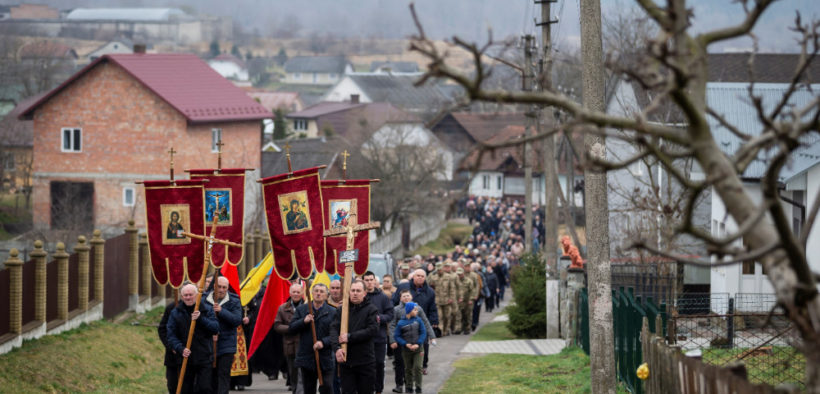
Pope Francis attended the Easter Vigil in St Peter’s Basilica, focusing his homily on how the women of the Gospel help glimpse the “first rays of the dawn of God’s life rising in the darkness of our world,” and teach us to see, hear and proclaim the Passover of the Lord from death to life.

Present at the celebration were members of a small delegation from Ukraine, made up of representatives of the local government and the country’s parliament, whom the Pope met with just before the liturgy began.

The delegation included the mayor of Melitopol, Ivan Fedorov, now an exile. The Pope greeted him in particular during the celebration.

“In this darkness that you are living, Mr. Mayor, Parliamentarians, the thick darkness of war, of cruelty, we are all praying, praying with you and for you this night. We are praying for all the suffering. We can only give you our company, our prayer and say to you: “Courage! We are accompanying you!” And also, to say to you the greatest thing we are celebrating today: Christòs voskrés! Christ is risen!”

We can sometimes keep looking at life and reality with a downcast perspective, the Pope went on to say, and even write off the future, believe things will never change or improve, burying “the joy of living.”

Yet, the Easter hope we proclaim today is a call by the Lord to see life with different eyes and make the jump to really believing that “fear, pain and death will not have the last word over us.”

While death can fill us with fear and sadness, he said, we must remember that “the Lord is risen!” 

“Let us lift up our gaze, remove the veil of sadness and sorrow from our eyes, and open our hearts to the hope that God brings!”

The Pope added that we need to break free of moribund ways of thinking and behaving, where we can become prisoners of the past, lacking courage to to let ourselves be forgiven by God, to opt in favor for Jesus and his love.

We need to accept and encounter the living God who desires to change us and to change our world. 

“Yet the Lord is risen! Let us not tarry among the tombs, but run to find him, the Living One! Nor may we be afraid to seek him also in the faces of our brothers and sisters, in the stories of those who hope and dream, in the pain of those who we suffer: God is there!”

The Pope expressed his wish for a Church that can proclaim in the same way, with the same fervor, the joy of the Gospel, what all Christians are called to do “to experience the risen Christ and to share the experience with others” and the joy it brings. 

In conclusion, Pope Francis recalled how Jesus entered “the tomb of our sin” and “bore the weight of our burdens” restoring us to life. 

“Let us celebrate Easter with Christ! He is alive! Today, too, he walks in our midst, changes us and sets us free…For with Jesus, the Risen Lord, no night will last forever; and even in the darkest night, the morning star continues to shine.”

Full video of the Easter Vigil with Pope Francis.

*Note: This post has been shared in part from Vatican News. Read the full message HERE.

Wishing everyone a beautiful Easter Sunday filled with happiness, love, and faith. May you feel the love of God on this blessed day. Happy Easter!

“First Things”​ first…

As both Easter and Passover are being celebrated this Holy Weekend, I’ve decided to shift away from business and motivation and instead, share what I believe is a relevant post for the times. The post is from one of the many blogs I subscribe to and read weekly. First Things is presented as America’s Most Influential Journal of Religion and Public Life.

I will leave you with my thoughts to start every day by being thankful for all that you have in your life. Be thankful for the new day and the opportunity to go after all the things you truly want in your life. Start with an attitude of gratitude and watch your achievements happen one after another. During this Holy Weekend, I hope and pray God’s love fills your heart and soul.

HOLY WEEK 2022: A WARTIME MEDITATION by George Weigel

In both the Roman and Byzantine liturgical calendars, Lent 2022 has coincided with a brutal war in Ukraine. That war was launched by Russia’s Vladimir Putin for an ignoble, imperial cause. It has been conducted by the Russian military in a manner that recalls the barbarism of the Romans who crucified six thousand slaves along the Appian Way after the Spartacus revolt. It’s an old story. Tyrants cannot tolerate the truth about their tyranny; they terrorize in order to break the spirit of those who seek freedom. 

In the third week of the war, Latin-rite Catholics read a passage from St. Augustine’s commentary on Psalm 140 that would surely ring true in the hearts of our Eastern Christian brethren in Ukraine, both Greek Catholic and Orthodox:

“Lord, I have cried to you, hear me.” This is a prayer we can all say. This is not my prayer, but that of the whole Christ. Rather, it is said in the name of his body. When Christ was on earth he prayed in his human nature and prayed to the Father in the name of his body; and when he prayed, drops of blood fell from his whole body. So it is written in the Gospel: “Jesus prayed with earnest prayer, and sweated blood.” What is this blood streaming from his whole body but the martyrdom of the whole Church?

Blood has been streaming from Christ’s body, the Church in Ukraine, for eight weeks now. It has poured from the bodies of men, women, and children. Ukrainian patriots have fallen in defense of their homeland; Russian soldiers have fallen for reasons they could not comprehend, because their superiors lied to them about their mission. The bloody wounds that have been inflicted on the Body of Christ in this war call to mind the Lord’s scourging; the mindless cruelties inflicted on civilians remind us of his crowning with thorns by sadists. With Christ, the Ukrainian people, who ask only to be themselves, have walked the bloody path to Calvary, where those who inflict their suffering mock their claims to be who they are.

Read more at FirstThings.com.

When the volume increases, there are positive solutions!

As we enter a holiday weekend, one with religious meaning for many, I know it’ll be a time of reflection, and of loneliness and depression and possibly, despair. Loved ones will be missed even more. Increasing costs and pandemic-induced fear may have prevented traveling to visit with friends and family. The news of the day full of horrific images of war to the seemingly endless political differences certainly can chip away at hope.

And despite several days away from work, if unhappy with work or if challenges have been mounting as they’ve been for many entrepreneurs and business owners, it becomes difficult, if not impossible to clear one’s mind. In fact, idle time may keep the difficulties more front and center without the distractions of work and operating a business. As such, I’m compelled to share the following article I had written a while back about a personal experience.

Recently, I was told about someone who had committed suicide. I had only met him once, but it got me thinking about what may have been going through that person’s mind.

Personally, I can only imagine the ‘noise’ being experienced without being able to control the volume either to drown it out or to hear it better. It’s like what we’ve all done at one time or another… turning up the volume on the car radio when hearing a noise that wouldn’t go away or that couldn’t be identified or when turning up the volume was just to hear something more clearly, and at times, just because a certain song was playing — sometimes stirring up memories. There could be other reasons.

There are also times the volume is cranked up to ‘disappear’ into deep, personal thought, essentially, to just get lost in the moment. However, turning up the volume could possibly be a form of denial akin to putting one’s head in the sand. Isn’t it interesting that similar actions are done for various reasons and possibly, for different results? Yet, the action taken is often done impulsively without nary a thought as to the action being taken and certainly with no thought as to the consequences thereafter.

Here is a quote about suicide from an episode of Yellowstone as John Dutton tries to reason with his son, Jamie who is sitting alone in a field with a gun in his hand…

You know the thing about suicide, you don’t just kill yourself. You kill every memory of you. This’ll be all everyone remembers, Jamie. Every second you spent on this earth will be reduced to how you chose to leave it.

Ultimately, how do we help others to help them think through what it is that’s on their minds before it’s too late? How do we help others toward better mental health, a necessity for better decision-making and in understanding and managing emotions? Of course, I really don’t know. It’s just hard to grasp the why in these situations. It’s all difficult to comprehend.

During this holiday weekend, and any time for that matter, please talk to someone and share your thoughts, feelings. Do not feel anything less than the wonderful person that you are. To put it bluntly, shit happens but there is always a positive solution to reverse course.

If you feel you have no one to talk to, contact me. I’m happy to help. You can reach out to me on any social media, on LinkedIn, by email to paul@acceler8success.com, or feel free to call or text me at (832) 797-9851. I will respond as quickly as humanly possible!

If you feel you’re at wit’s end, please immediately call the National Suicide Prevention Lifeline at 1–800–273–8255.

In any event, no one will think less of you if you reach out for help. You’re loved no matter what you may think. Please do not hesitate to reach out to someone!

Prioritize Your Way to Happiness

Easter and Passover are upon us. Many families and friends will join together to celebrate these two important religious holidays. With this in mind, I thought I’d share a story most of us have probably heard or read at one time or another. There are no religious references or connotations. Instead, I believe it’s a story that delivers an excellent message about the important things in life – the ones most critical to your happiness, and the happiness of those close to you – your family and friends.

A professor stood before his philosophy class and had some items in front of him. When the class began, he wordlessly picked up a very large and empty mayonnaise jar and proceeded to fill it with golf balls. He then asked the students if the jar was full. They agreed that it was.

The professor then picked up a box of pebbles and poured them into the jar. He shook the jar lightly. The pebbles rolled into the open areas between the golf balls. He then asked the students again if the jar was full. They agreed it was.

The professor next picked up a box of sand and poured it into the jar. Of course, the sand filled up everything else. He asked once more if the jar was full. The students responded with a unanimous ‘yes.’

The professor then produced two beers from under the table and poured the entire contents into the jar effectively filling the empty space between the sand. The students laughed.

‘Now,’ said the professor as the laughter subsided, ‘I want you to recognize that this jar represents your life. The golf balls are the important things — your family, your children, your health, your friends and your favorite passions — and if everything else was lost and only they remained, your life would still be full. The pebbles are the other things that matter like your job, your house and your car. The sand is everything else — the small stuff.

‘If you put the sand into the jar first,’ he continued, ‘there is no room for the pebbles or the golf balls. The same goes for life.

If you spend all your time and energy on the small stuff, you will never have room for the things that are important to you.

Pay attention to the things that are critical to your happiness.

Spend time with your children. Spend time with your parents. Visit with grandparents. Take your spouse out to dinner. Play another 18. There will always be time to clean the house and mow the lawn.

Take care of the golf balls first — the things that really matter. Set your priorities. The rest is just sand.

One of the students raised her hand and inquired what the beer represented. The professor smiled and said, ‘I’m glad you asked.’ The beer just shows you that no matter how full your life may seem, there’s always room for a couple of beers with a friend.

Opinions, Insights & Perspectives on Franchising

Social Media has certainly proven to be a fantastic medium to cross-reference opinions, insight and perspectives. I often utilize social media to gain varying thoughts from both within and outside the franchise community. From the personal side of Facebook to the simplicity of messages on Twitter, to the business focus on LinkedIn, social media is truly a cornucopia of perspectives to tap.

Recently, I posted a question within various LinkedIn discussion groups that sought out the primary reasons to explore franchising. Below please find several of the responses from a cross-section of industry and non-industry professionals.

What is your opinion of franchising as a business model, business expansion strategy and as a career alternative?

An SAP Consultant with some franchising experience obviously has done his homework and offered valuable advice as well as sharing some real-life experiences.

“I have studied business and many individual businesses personally. I read many business cases and books and have a deep interest in business models and how they work in the current market.

First of all, check out the book ‘The E-myth Revisited?’ It is a very interesting way of viewing a business model. It describes the benefits of the franchise way of doing business.

I also have been involved in a few franchise opportunities; most recently, I was looking to purchase a tanning franchise. The business model was highly tuned; the computer system was revolutionary and perfectly adapted to the business through many years of iterations. The computer system alone would allow you to manage multiple stores with very little hands on control. The power of the franchise itself brought purchasing power and brand recognition which would have been difficult to build independently. The small percentage of revenues to fund regional advertising brought in enough business that I could have been almost completely hands off while still turning a sizable profit.

In short, most entrepreneurs work IN their business, but at a point you need to delegate so you can work ON your business. And franchising is a marvelous way (for most businesses) to grow exponentially.”

This next response if from a business coach that specializes in guerilla marketing strategies. Before I even read her response i knew I would agree with her perspective of franchisees needing to be prepared to work hard despite buying into a system. How true, indeed.

“I think that Franchises represent a great opportunity for some people. They can provide an excellent template for success, as well as resources and support as you are growing your business. That said, opening a franchise is just like starting any other business from the standpoint that you must have a clear idea as to how you will drive customers to your product/service. A franchisor will provide you with the tools and a blueprint, but you are going to have to do a lot of the heavy-lifting yourself. Make sure you are prepared!

Before committing to any franchise, talk to some of their current (and former!) franchisees. Don’t just call the people the franchisor tells you to call; reach deeper into their list of franchisees. Develop a list of questions that you can ask that help you to understand whether this particular franchise is going to be a good fit for you.

Lastly, if you are someone who doesn’t really like “rules”, you may want to think twice about franchising. What makes franchises work is that things are delivered consistently. That can be a good thing, or a bad thing, depending on how well you follow rules!”

An entrepreneur who previously founded a small franchise company offered his view which it appears may have been formed by some entrepreneurial types that entered into a franchise agreement with his franchise company. Personally, I do not believe true entrepreneurs make very good franchisees. On the flip-side, is he referring to true entrepreneurs or franchisees that just had buyer’s remorse and had to blame someone for their poor performance and/or failure?

“I could wax on for hours on the subject and don’t have the finger skills to type it all!

First, my qualifications: I founded/own a successful retail business for over 15 years. I have created multiple businesses, some successful, some not, but all independent. I also created a retail concept that I franchised. So I have the unique view of being an independent and a franchisor.

Here are some quotes:

  • A franchise is like a bicycle with training wheels. Once you learn how to ride, you won’t want training wheels anymore.
  • Franchising is for those who want you to help them but then to leave them alone. In other words, they want to be indies, but in a community.
  • A franchise is only as good as its support.
  • If a franchise operation doesn’t give back in value more than royalties paid in, the franchisee will eventually resent writing a check to “the mother ship”.
  • A franchise is a business model that people expect to have it all figured out – no one has it all figured out.”

A very well-respected and experienced franchise consultant offered his perspective from having worked with individuals explores franchising as a career alternative. I agree that many explore business ownership options because they cannot find a career position that will compensate them as they have grown accustomed to in the past. The choice between franchise and startup often comes down to risk.

“As a business model I think that franchising is or has taken the place of corporate expansion in a lot of cases. Especially in the startup sector. I don’t know how many times recently I have been contacted from a startup that wants to expand via franchising.

I am talking to a lot of people that are looking at franchising as an alternative career path. Most of them are coming to me because they can’t find a job, it isn’t that they don’t want one, but they can’t find one making the money they were making before.

So they turn to owning a business and a logical choice for some of them is a franchise. For others it is starting their own business.

I think it comes down to personal preference and ability to cope with risk factors. I think most of the people that buy a franchise do so to help reduce their risk, so if they were really looking for a job and then had to buy a business, a franchise is probably a one choice.

About 1/3 of my clients are people in this situation that were looking for a new career, due to recent economic conditions, and they couldn’t find what they were looking for.”

An upstart franchise founder offers her views from the perspective of being new to franchising but quite experienced in running her own business. She appears to be spot on about ideal franchise relationships but I look forward to discussing her thoughts after she awards her first four or five franchises.

“As a career alternative, franchises are not for entrepreneurs, whose M.O. is ‘anything you can do, I can do better’. As an expansion strategy, it depends on the industry, product, service and system. For those that rely heavily on outside sales, for instance, hiring salespeople is more risky and time consuming than offering the opportunity for ownership.

I agree that franchising is a great way to grow by working on your business instead of in it.

Franchises offer franchisees:

  • Self direction (while some do, many don’t have too-stringent rules)
  • Higher income potential than a fixed salary or most sales positions, and often even more than business ownership because growth may be better supported
  • Proven solutions to problems that exists in the market, the basis for any startup
  • Elimination or reduction of what can often be years or decades of research, development, relationship building and trial and error and financial investment
  • SUPPORT

This article was originally published on Franchising.com.