
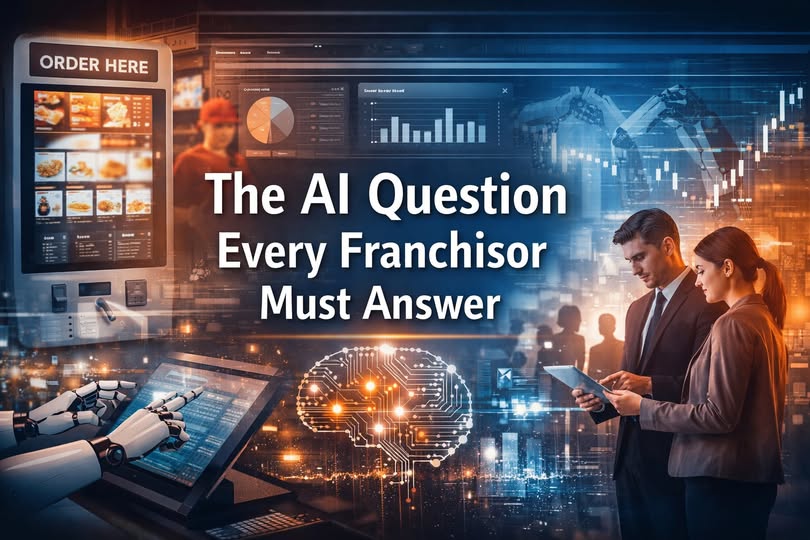
Artificial intelligence will not replace the human side of franchising. The relationship between franchisor and franchisee, the culture of the brand, and the guest experience in restaurants or retail will always rely on people. Franchising has never been purely about systems, manuals, and processes. It has always been about people working together within a structured model to create something larger than any one operator could achieve alone.
A franchise system is ultimately a network of human relationships. Franchisees look to franchisors for leadership, guidance, and support. Franchisors rely on franchisees to execute the brand promise every day inside their businesses. Guests return to restaurants and retail locations because of how they are treated, how the environment makes them feel, and how consistently the experience is delivered.
Artificial intelligence cannot replicate those human dynamics. What it can do is dramatically enhance how franchise systems operate behind the scenes.
The earliest and most significant adoption of AI in franchising will likely occur in operational infrastructure rather than in guest-facing technology. While the public conversation often focuses on automation, kiosks, or robotic kitchens, the real transformation will take place in the invisible systems that support the day-to-day operation of franchise networks.
Franchise systems generate enormous amounts of operational data. Every transaction at the point-of-sale, every labor schedule adjustment, every supply chain purchase, every loyalty program interaction, every digital marketing campaign produces data. Historically, most franchisees have only been able to access a fraction of the insights buried within that information.
Artificial intelligence will change that.
Unit-level analytics and decision support will likely become one of the earliest and most impactful uses of AI in franchising. Operators will no longer be dependent on static reports or manual analysis. Instead, they will be able to interact with their data in real time.
A franchisee could ask simple but important questions. Why were sales down last Tuesday? Why are food costs higher this month? Which menu items are underperforming compared to similar locations? Are labor hours aligned with sales patterns?
Instead of spending hours searching through spreadsheets or waiting for corporate reports, the answers will be available in seconds, often accompanied by recommendations. The system may identify a pricing inconsistency, a staffing imbalance, or a product that is performing poorly in a specific market.
For franchisees who are often operating multiple responsibilities at once, this type of clarity can be transformative.
But it raises an important question. If operators suddenly have access to dramatically better insights about their business, will they be prepared to act on them?
Another area where AI will quickly reshape franchising is franchisee support and training. Franchise systems rely heavily on operational documentation. Manuals, procedures, and training materials are designed to maintain consistency across hundreds or thousands of locations. Yet the reality inside many franchise systems is that managers rarely have time to search through hundreds of pages of documentation while running a busy operation.
AI-powered knowledge systems trained on a brand’s operational manuals, training resources, and brand standards will allow franchisees and managers to ask questions in real time.
A manager could ask what the proper closing procedure is, how to handle a refund request, or how to manage a product complaint from a guest. Instead of flipping through manuals or waiting for guidance from a field consultant, the answer could appear instantly, directly sourced from the brand’s official standards.
This will not eliminate field support teams. In fact, it will strengthen their role. When routine operational questions are handled instantly through AI systems, field consultants can focus on what they do best: coaching operators, improving performance, and strengthening the franchise relationship.
Which raises another important question. If AI can handle procedural questions instantly, how should franchisors redefine the role of field support moving forward?
Local marketing execution is another area where adoption will accelerate rapidly. For decades, franchisors have struggled to balance brand consistency with local creativity. Franchisees are expected to promote their businesses locally, yet many operators lack the marketing experience or time to consistently produce high-quality campaigns.
Artificial intelligence can change that dynamic. Franchisees will be able to generate localized marketing content that aligns with brand guidelines while still speaking to their specific community. Social media posts, promotional campaigns, and community engagement ideas can be developed quickly while still reflecting the voice and identity of the brand.
This allows the franchisor to maintain strategic control over messaging while empowering franchisees to execute marketing locally and consistently.
But it also presents a strategic consideration. If every franchisee suddenly has access to high-quality marketing tools, what role should the franchisor play in shaping the brand’s narrative?
Customer feedback analysis is another area where AI will deliver immediate value. Franchise brands receive thousands of online reviews, customer surveys, and digital comments every week. For most organizations, that feedback is scattered across multiple platforms and rarely analyzed in a structured way.
AI can aggregate and analyze that information instantly. Sentiment analysis across an entire franchise network can reveal patterns that would otherwise remain hidden. If multiple locations begin receiving complaints about service speed, product quality, or cleanliness, the system can flag the issue immediately.
This allows franchisors to intervene early. Coaching and operational improvements can begin long before declining customer sentiment translates into declining sales.
But this also introduces another strategic question. If AI allows franchisors to see operational problems earlier than ever before, will brands be prepared to address those issues quickly enough?
Franchise development will also benefit from AI-driven systems. Most franchise brands receive large numbers of inquiries from prospective franchisees. Screening those inquiries to identify qualified candidates requires time, resources, and experience.
Artificial intelligence can help evaluate candidates based on financial qualifications, professional experience, geographic fit, and operational background. Development teams can then spend their time speaking with candidates who are far more likely to succeed within the system.
AI will not make the final decision, nor should it. Franchising still depends heavily on cultural alignment, leadership capability, and personal character. Those qualities require human judgment.
Yet AI can dramatically improve the early stages of the qualification process.
Which leads to a deeper question about franchise development itself. If AI can help identify stronger candidates earlier, will franchisors become more disciplined about who they award franchises to?
Supply chain and purchasing optimization will likely see early adoption as well. Franchise systems rely on complex supplier networks, and forecasting demand accurately has always been a challenge. For restaurant brands in particular, inventory management has a direct impact on profitability.
AI systems can analyze sales trends, seasonal patterns, local market behavior, and supply chain data to forecast demand more accurately. Operators can manage inventory levels more efficiently, reduce waste, and control food costs more effectively.
For many franchisees, improvements in inventory management alone could significantly improve unit-level economics.
But another question emerges. If AI can help operators control costs more effectively, will franchisors use these insights to improve systemwide profitability, or simply to push expansion faster?
Content creation and documentation will also change dramatically. Franchise systems constantly produce operational updates, training materials, marketing assets, and franchise communications. Maintaining clarity and consistency across a growing system can be challenging.
Artificial intelligence allows these materials to be created, refined, and updated far more efficiently. Training programs can evolve faster. Marketing assets can be localized more easily. Operational communications can be clearer and more consistent across the network.
Yet even here, human leadership remains essential.
The tone, values, and culture of a franchise system cannot be written by algorithms alone. They come from the vision of founders, the leadership of executives, and the shared experiences of franchisees working together.
The most important takeaway is that artificial intelligence will not replace the human relationships that make franchising work.
Franchising has always been built on mentorship, collaboration, and trust. The best franchise systems are communities of operators who share ideas, support one another, and collectively strengthen the brand.
Artificial intelligence will not replace that dynamic.
What it will do is remove friction from the system. It will reduce administrative complexity, surface better insights, and allow both franchisors and franchisees to make more informed decisions.
In doing so, it may allow the people within franchise systems to focus on what has always mattered most.
Building stronger businesses.
Supporting better operators.
Delivering exceptional experiences to guests.
And perhaps the most important question of all is this.
If artificial intelligence can make franchise systems smarter, faster, and more informed, how will the leaders of those systems choose to use that advantage?
If you are a franchisor, founder, or leadership team thinking about how artificial intelligence should fit into your growth strategy, the conversation should start now. The brands that thoughtfully integrate AI into their operational infrastructure will create stronger franchisee support systems, better unit economics, and more scalable growth.
If you would like to discuss how AI and operational infrastructure can strengthen your franchise system, connect with me directly at paul@acceler8success.com. I look forward to it.







You must be logged in to post a comment.