I’m excited to introduce one of many Guest Bloggers that will be contributing to Acceler8Success Cafe as we start expanding what has become a very popular platform for current and aspiring entrepreneurs alike.
Our Guest Bloggers all have extensive experience related to all aspects of entrepreneurship, franchising, business ownership, and restaurants. With expertise across a multitude of business functions and topics, all will help us achieve our objective to provide information and resources necessary to succeed, and especially in today’s challenging business environment.
Today I’m proud to introduce Wayne P. Bunch, Jr. As a partner in the Franchise Practice Group of FisherBroyles, LLP, Wayne represents franchisor companies in connection with their efforts to expand through franchising both domestically and internationally.
Wayne’s participation at Acceler8Success Cafe will be to provide timely and easy-to-read franchise advice, reminders and tips that will help our readers fortify and expand their knowledge of franchising.
Franchise Sales Methodologies
As the new year is upon us, many franchisors will have set ambitious goals related to the sale of many new franchises. There are many methodologies related to increasing franchise sales; however, I would argue that the best franchise sales tool is the development of a system full of happy and successful franchisees.
So, what makes a happy and successful franchisee?
Clearly, being profitable is important. However, I would answer this question in the following way. Most franchisees want two things:
1) positive brand recognition and awareness, and 2) efficient operating systems, which insure adequate profit margins and a consistently compelling customer experience.
Building a powerful brand image is done through the use of a smart growth strategy, an effective marketing strategy, and by consistently meeting customer expectations.
The development of high quality operating systems is the result of a determined franchisor who is focused on excellence. The operating systems will provide your franchisees with the tools for success, and generally include systems related to site selection, training, customer service, advertising, branding, purchasing, pricing, merchandising, employer/employee relationship, managing, accounting/bookkeeping and quality control, among others.
A franchisor focused on building brand recognition and creating great operating systems will develop a very healthy system of franchisees, each of which will be the best ally during any franchise sales process.
To learn more about Wayne P. Bunch, Jr., please check out his LinkedIn profile or if you’d like to speak with Wayne, he may be contacted directly via email to Wayne.Bunch@fisherbroyles.com.
Thank you, Wayne for your contribution to Acceler8Success Cafe.
I will be introducing additional Guest Bloggers in the coming days. If you’re interested in contributing as a Guest Blogger, please reach out to me on LinkedIn or via email to Paul@Acceler8Success.com. I look forward to hearing from you. If you have already submitted your request, I will be in touch very soon.
Validation and multi-unit ownership are strong indicators that positively memorable experiences exist within your franchise system. Another way to confirm the existence of these experiences is simply to ask your franchisees: Would you do it all over again? However, as a franchisor you must first earn the right to even be taken seriously before asking this question.
As you head down the path of creating positively memorable experiences with each and every franchisee, be sure to consider ALL touch points – even those beyond the obvious interactions of in-person, by phone and via email. Think digitally!
How do you interact with franchisees on social media? How do you come across to your franchisees in LinkedIn discussion groups? Is there common courtesy? Are you proud of each other’s actions within these platforms?
Many will refer to all of this as being great in theory, and not really practical. But just think what could happen if every touch point were seen as another opportunity to create or enhance a positively memorable experience. How would that change the culture of your franchise system? How would that lend towards growing your brand? Think of the [positive] ripple effect.
When interacting with your franchisees, keep the famous Maya Angelou quote in mind…
“People will forget what you said, people will forget what you did, but people will never forget how you made them feel.”
Here are six key points to creating positively memorable experiences in a franchise organization – all are essential the right culture within a franchise organization:
Understanding the true meaning AND spirit of interdependent franchise relationships. This must be shared and exemplified at every point of contact with franchisees.
Developing the right culture at all levels. Be careful- culture is also defined as bacteria! This takes time and commitment, and is a reflection of how people, whether franchisees, employees, suppliers or others, are treated at all times.
Creating an environment of truth, trust and transparency based upon open, two-way communications – the cornerstone of creating the right culture. Think of a three-legged stool that could hold a great deal of weight when fully intact, yet would immediately fall under its own weight if one leg was compromised.
Establishing your franchise system as family. Treat them as such but understand that this is not the typical type of family of yesteryear with subservience to the head of the household. Mutual respect is paramount!
Building an environment of bottom-up profitability and growth with ALL parties to the franchise agreement and other related agreements focused on mutual goals and objectives. All must sing out of the same hymnal, and not just for dress rehearsal – so be sure to give them the hymn book.
Positively Memorable Experiences – Live it and breathe it every day for optimum results!
The most effective way to start the week off on the right foot is to plan before the week starts. It’s definitely one of the things I do every Sunday night when my phone is quiet and my email has slowed to a trickle, mostly of spam.
I also believe it’s effective to do so on Sunday evening as it’s one of the few times that I can look at my calendar with more than a glance. It affords me the opportunity to plan and shuffle calls and meetings, as necessary.
Also, as I review commitments for the week ahead, including completion of deliverables, it enables me schedule blocks of time to focus on time-consuming projects and especially ones that command undivided attention.
Here Are 6 Ways to Start Your Week Off On the Right Foot (credit to Inc.com)
An article at Inc.com in 2019 focused on starting the week on the right foot. I’ve shared the 6 ways outlined in the article below:
1. Do a mind sweep.
The first thing is to think about the bigger picture and trying to plan a mind sweep to clear thoughts. This process walks through a list of prompts in different categories, looking for things to be remembered and commitments that have been made. The goal is to get them all on paper. This minimizes distractions so focus may be directed on the day and week ahead.
2. Review the week to come.
The next step is to review the coming week’s schedule. It’s recommended to use a Defensible Calendar strategy, which improves productivity by organizing a schedule into large chunks of time with tasks grouped by importance and urgency. This will make it easier to organize and manage work.
If the plan is not well organized, request changes to free up continuous time in the calendar to create focused time and to optimize travel and logistics. This is also the time to identify any prep work or reviews required for the week.
3. Look forward to three to five weeks out.
Once the week is under control, look ahead three to five more weeks for anything that requires any kind of action in the next seven days. Look for things like travel arrangements, larger project work, and creative development. Doing this prevents surprises that create fire drills for you and/or your team.
4. Reflect on the last week.
Once there’s a good grasp on the future, look back at the last week or two and see if there are any open items or actions from previous events that may have been missed. Look for opportunities to write quick thank-you notes and to confirm any actions or plans coming out of previous meetings. Also take this time to reflect on what went well and what didn’t, and how to improve your schedule and planning going forward.
5. Check your longer-term goals.
Next, check quarterly objectives and key results. Based on where you may want to be at the end of the quarter, check to see areas where progress needs to be made and set tasks for the coming week. Also reach out to people with whom you’ll need to coordinate or collaborate to schedule time or set up meetings.
6. Sort by urgency and impact.
Once tasks and reminders are written down, begin to sort and organize. Make notes on complexity and size and then sort them by two major criteria. First is urgency, which is how critical the task is to this week. Basically, pushing it off to next week will it cause problems for you and/or for others. The second criteria is impact, which is how much value this task creates in the short and long term.
If things are correctly, your schedule will be well-structured and you will have a plan for how the week will unfold. You will have several time blocks for focused work, grouping similar tasks so that you can stay in the same mindset and minimize task-switching.
Of course, life happens, and on Monday morning something unexpected could come up and you’ll need to replan everything. And that’s fine. Just don’t procrastinate making the necessary changes.
“Just because something isn’t happening for you right now doesn’t mean that it will never happen.”
The quote above is one that I have come across quite often on various social media sites. It’s what originally spurred my thinking about how many individuals put off taking a step into entrepreneurship, maybe waiting for the perfect time, and the perfect opportunity. Or, if already a business owner, putting off the necessary next steps to grow their business.
I thought, is it procrastination? Or, is it that they’re just ill-informed or do not know where to turn to for resources and support?
Many times it takes being able to find useful information and resources that will help a person along, whether to inspire and motivate them and/or to provide them with insight and perspective so that they may make an informed decision – one in which they are confident. Often, it’s just something that becomes an eye-opener to possibilities or potential solutions.
So, I had decided to help, and continue to do so today. Mostly, it’s a passion but of course, as an entrepreneur, I also want to grow a business – a business helping others succeed!
My mission is clear – to help individuals, families, and partners from all walks of life understand various aspects of entrepreneurship, whether expanding upon current business ownership or exploring opportunities. Since 2014, I had developed and deployed a plan to do just that and created Acceler8Success.
From a philosophy to a methodology to a business model, Acceler8Success, and subsequently, Acceler8Success Group was developed and has evolved to assist todays and tomorrow’s entrepreneurs succeed. Along the way, Acceler8Success Cafe was developed as a resource and platform from which to share information.
Acceler8Success Group
My objective remains steadfast to provide information, insight, perspective, services and resources about entrepreneurship – whether to explore possibilities, expand upon ideas or build upon current business ownership. All as may be applicable across various business platforms and distribution models including:
Franchising – growth strategies for current business & franchise models; single, multi-unit, area development & enterprise opportunities; management consulting; investment & capital raise projects; assist individuals explore franchising & business ownership as the next step in career growth.
Small Business & Restaurants – startup or acquisition; improve business operations; develop and execute expansion & growth strategies including franchising; explore exit strategies.
Freelancing – assist in turning creative skills into a business and how to grow that business; explore growth strategies including transition to a bricks & mortar and/or franchise model.
Professional Services – work with sole practitioners in law, health & wellness, insurance or financial services; improve and expand current business practice; explore business expansion.
Comprehensive Consulting & Coaching Services – sales & business development, business management, digital marketing, branding, personal branding, and social media. Coaching entrepreneurs, business owners & partners, and brand executives.
International Consulting Services – Since 2020 with the addition of my partner, Erik Premont, Acceler8Success Group has successfully expanded to serving entrepreneurs and investment groups conducting business within international markets in exploring development opportunities and acquisitions within the U.S.
Erik leads a select team of highly experienced multi-lingual franchise & business development professionals whose primary focus is specific to Spanish, Portuguese & French speaking clientele as well as spearheading efforts with other non-English speaking clientele.
Learn more about Acceler8Success Group by previewing the following websites:
Real estate, insurance and financial services industries all fall into the category of highly regulated and policed industries. In some way, fashion, or form, all involve transactions stemming from individuals’ personal savings and investments.
Licensing, including comprehensive testing, are required for all sales representatives in these industries. Continuing education is also mandatory. Each industry has some type of regulatory board with enforcement powers whose primary focus is to maintain the integrity of the respective industry. Each industry maintains some type of bonding or minimal cash position requirements to ensure economic stability.
If franchising adopted a similar structure, or a portion thereof, what would be the pros and cons? What would the effects be over the next twenty years?
Recent discussions in various franchise groups eluded to the fact that there are too many franchisors and franchise brokers (in some organizations also referred to as coaches and consultants) within franchising today, a result of it being “too easy” to enter franchising. There’s been talk of less than ethical practices by various parties within franchising and poor business practices by others. Of course, most comments focus on franchise sales.
Would tighter controls and stricter requirements strengthen the franchise model and franchising itself? But what about problems caused or driven by franchisors with weak financial positions? Should franchisors be subject to one level of requirements with frontline franchise salespeople subject to another level, yet interdependent much like the relationship between real estate broker and real estate agents?
And are problems occurring because those on the front line with candidates are essentially “invisible” after the fact… meaning, by not being listed in the Franchise Disclosure Document, whether as a broker or franchise salesperson it’s hard to prove who was responsible for illicit financial claims and other misrepresentations that come to light several years into the franchise relationship and with a franchisee failing.
Mind you, before chastising me about all of the above, believing it is my intent to propose more regulation and the requirements that come along with regulation, please understand it is not [yet] my firm position that any of the above be entertained. Instead, I believe issues need to be discussed, problems need to be identified, and solutions need to be implemented to fortify franchising sooner by the industry itself, rather than later when it’s out of our hands.
I look forward to anyone willing to share their perspective on this topic – especially, those on the franchisor side who typically remain quiet while franchisee attorneys speak their minds. To clarify my thoughts, this is a discussion that should be occurring amongst all in franchising, regardless of your position as it relates to the franchise relationship.
Between building a brand and the awareness that goes with it, adding additional revenue streams, and the plethora of other advantages to turning your business into a franchise, it may seem like the obvious next step for business owners that are anxious to further growth and expansion of their business.
However…
While franchising can provide immense success, achieving better business margins and successful growth is not guaranteed.
To determine if your business is ready to be franchised, prompt an honest conversation with yourself, starting with these four questions:
1. Have you realized consistent success?
While there are no rules about the required years of experience, revenue dollars, etc. before you can franchise your business, owners should be able to demonstrate that their concept is successful enough to take on a second and third location.
Think about how you will pitch to potential franchisees when that day comes – you should be able to communicate the true value of the business and the success they can reasonably expect from buying in. You must be able to share your vision and ensure potential franchisees are able to follow through on your vision.
2. Can your success be replicated?
Realizing business success is promising, but the revenue of the company doesn’t multiply just because the number of storefronts does. If your business gets boosts from a local event or based upon customers specific to your current neighborhood, attempting to replicate that might be challenging.
However, if your operations isn’t dependent upon specific local events and you believe a new region will benefit from your business because of X, that’s a good sign that expanding will be a positive move.
Of course, if your business is extremely dependent upon you, a honest evaluation is necessary to determine how the same efforts could possibly be replicated by your franchisees. After all, a business model could be franchised but unless you’re operating within the National Football League, a person cannot be franchised.
3. Are you ready to invest in your franchisees?
In large companies, the responsibility of providing training and resources doesn’t typically fall on the owner’s shoulders. Being a new franchisor means building that support network from scratch. Providing continuous support to franchisees is an investment in not only their success, but the success of the franchise as a whole – therefore it’s a responsibility that should not be taken lightly.
Yes, even if it means you will be spending a significant amount of time with new franchisees in a training capacity. To that point, the franchisor-franchisee relationship is equal parts manager and mentor, and you need to be ready to provide the guidance and support they will seek, and without fail.
You must realize the relationship is one of interdependence much like a marriage. It’s at this juncture that you must realize you’re no longer just in the X business, but now also in the franchise business.
4. Would your own balance sheet qualify you to buy a franchise within your own franchise system?
This is really an eye-opening question that most individuals never even think about when considering to franchise their business. The bottom line is the adequate financial resources necessary to franchise your business AND sustain the ramp up period to being an organization that is able to operate successfully on the royalty stream only.
That’s correct, but maybe a better way of stressing this is to emphasize, your organization cannot rely on franchise fees to survive. Attempting to do so would be a kiss of death for your brand, and your franchisees. It cannot be stressed enough to be adequately capitalized before dipping your toe into the franchising pool.
If you’re considering franchising your business, I’ll leave you with a statement in a local publication about a recently shuttered restaurant – one of a few company-operated locations. The article shared the following from an apparent interview with the brand owner which in my mind definitely raises cause for concern:
“… he wants to begin franchising this year. Perhaps the right franchisee will feel more comfortable with the costs of operating inside the [city] than he does.”
If you’d like to learn more about franchising your business, please visit our website at Acceler8Success.com. For additional information, please reach out to me on LinkedIn or via email to Paul@Acceler8Success.com. I look forward discussing with you what proper franchising can do for your business.
This morning I was reviewing my article from a few days ago, Personal Branding and the Power of YOU! and immediately thought about how personal branding is snubbed by many as a fad, nothing more than a buzz-phrase. I’ve even heard people say it was unnecessary and a waste of time.
Truly, it all annoys me quite a bit. I believe their thoughts are driven by fear – fear of the unknown, no different than originally expressed thoughts about social media or of anything “new” that is introduced into the marketplace. I’m sure there were naysayers when the telephone was introduced into businesses way back when. I wonder how many thought the phone was unnecessary, a waste of time, an annoyance, and eventually something that would become a product along the lines of here today and gone tomorrow.
As many that know me will attest, I’m one to always look back and ask myself if I was on the right track and if I’m staying the course with my perspective.
Yesterday was one of those days as I saw a post that popped up in my Facebook Memories. I smiled as it affirmed that I was spot-on about personal branding and especially as it’s become a recommended foundational component of franchise development per discussions at a recent franchise sales conference. As well, it affirmed I’ve stayed true to my perspective.
My Facebook post was from January 29, 2013: I was asked again today, “What was the basis of developing Personal Branding for Franchise Professionals?” My answer is always, “To assist all who work in franchising to develop personal branding strategies to align individual experience and expertise with brand and business development.”
The following, which I shared in May 2022, explains even more about my perspective about personal branding and a walk down memory lane about how I came to be so passionate about it then, and still today.
Personal Branding: It’s More Than a Buzz Phrase!
Wikipedia defines personal branding as the conscious and intentional effort to create and influence public perception of an individual by positioning them as an authority in their industry, elevating their credibility, and differentiating themselves from the competition, to ultimately advance their career, increase their circle of influence, and have a larger impact.
The process of personal branding involves finding your uniqueness, building a reputation on the things you want to be known for, and then allowing yourself to be known for them. Ultimately, the goal is to create something that conveys a message and that can be monetized.
Whether it was described as we know it today or not, personal branding has been around for many years. Personal branding essentially showcases an individual’s image to the target audiences they’re trying to attract. From kings to world leaders to politicians to movie stars, each developed a personal brand that became the “packaging” of their own persona.
For instance, Babe Ruth. Besides being a world-class baseball player, The Babe, as he was affectionately known was loved as an everyday type of guy, a friend at the local gin mill or a pal at work. He loved to drink and eat, but he was a professional athlete despite being significantly overweight.
He loved kids and was often seen talking with them. He visited with sick children in hospitals, made bold promises, and lived up to them. He was larger than life. Books were written about him. Movies were made and even a candy bar was named after him. The Babe certainly had; most likely unknowingly developed a personal brand.
Of course, not many will see their personal brand identified as a nickname, or of a term of endearment like Babe Ruth or other ballplayers of yesteryear – The Mick (Mickey Mantle), The Splendid Splinter (Ted Williams), Say Hey Kid (Willie Mays), Hammerin’ Hank (Hank Aaron), just a few that immediately come to mind. They were heroes of the day. I can’t even begin to imagine what their personal brands would be like today in the Digital Age!
Okay, I know. Not everyone reading this today knows about these individuals. I’d like to think I’m not that old that many might not even recognize their names. But that’s a story for another day. So, let’s shift gears. Do you recognize the name, Gary Vaynerchuk, or as he is often referred to, Gary Vee?
To me, Gary Vaynerchuk epitomizes personal branding today. From his sometime harsh language to his extremely casual appearance, he is definitely not the picture of what many would perceive to be a businessman and certainly not a successful one. Yet, he’s one of the most successful businesspeople of our time! Why? I’d say to a large extent, it’s due to the way he developed his personal brand.
Of course, he is brilliant. But it’s his personal brand that has taken his brilliance to the level that he is very well known, is in high demand for speaking engagements, and is all over the digital space. From his podcasts and videos to his own blogs to articles written about him, it’s hard not to know, or at least be aware of Gary Vaynerchuk.
It was Gary Vaynerchuk who first introduced me to personal branding when I read his book, Crush It! To me, it’s the primer for everything that should come after it, much the same as our first-grade reader was back in elementary school. So, as we focus on personal branding this week at Acceler8Success Cafe, we’ll start with Gary Vaynerchuk’s great book. It’ll be our foundation as we take a deep dive into personal branding.
I’ve recently re-read for the umpteenth time this fascinating book. He has posted, tweeted, and videoed himself, and his business, to unbelievable success in a very short period of time. The book is a relatively short read, so there should be no excuses for not reading it asap, as it can only help you improve yourself and your business, and your personal brand. The following is directly from one of the tabs from the book’s original website. Upon reading the book, I’m sure you’ll further explore Crush It! just as I do quite often.
Everything has changed. The social media revolution has irreversibly changed the way we live our lives and conduct our business. There are billions of dollars in advertising moving online, waiting to be claimed by whoever can build the best content and communities. Despite this change, most people keep working at jobs that don’t make them happy and businesses continue to ignore the major marketing and public relations benefits that can be found online.
Myth #1
I’m not passionate about something sexy or popular like wine so these lessons don’t apply to me.
The internet has drastically decreased the costs of building communities around niche subjects, allowing for even the most obscure subjects to draw enough eyeballs to command advertising attention. Starting a video blog about tortilla chips may seem farfetched until Doritos gives you a call and offers $40,000 a year to sponsor and advertise on your blog.
Myth #2
My business already has a Twitter account and a Facebook page, we’re set in the social media department.
This is the equivalent of claiming twenty years ago that just because your business bought a TV spot and a few ads in the newspaper, you didn’t need to pay attention to your advertising department. Social media isn’t about joining in, it’s about being involved.
Myth #3
I’m happy at my job so this book is irrelevant to me.
First of all, congratulations on finding work that makes you happy! However, the lessons in this book are valuable to anyone, regardless of their employment status. Crush It will show you how to utilize high level and platform specific social media and marketing strategies that will improve your work. It will also show you how to build a personal brand so that even if you’re forced to leave your job, a situation that’s especially relevant today, you’ll be able to easily find employment elsewhere in a field you’re passionate about.
Myth #4
I need to quit my job to take advantage of this book’s entrepreneurial lessons.
While the entrepreneurial strategies in this book do take time, it’s completely reasonable to start the effort as an after-work project to build up until you’re able to replace your current income with the income from your online presence. While you may have to fall behind on the current season of Lost or let your Madden 2010 game suffer, because you’ll be doing something you love you won’t mind putting in the extra effort.
In Crush It, Gary Vaynerchuk shows how anyone can build a career around what they’re passionate about. He also delivers both high-level and platform specific strategy and analysis, allowing you to take advantage of the current business environment while preparing you to succeed as it changes and evolves.
This book isn’t interested in making unrealistic promises while glossing over the work involved. Making a living by building content around your passion isn’t simple and it doesn’t happen overnight. What it is, however, is fulfilling and in most cases just as profitable, if not more so, than your previous job.
Furthermore, a business can’t just pay lip service to social media and expect it to return results. The transparency and accountability inherent in its structure necessitates a comprehensive and dedicated strategy in order to reap its tremendous benefits.
By combining practical analysis and strategy with the same passion and humor that’s made Gary one of the most in demand keynote speakers in the U.S. as well as network television’s go to wine expert, Crush It is essential reading for anyone who wants to understand and harness the future of business and work.
Learn: Why social media has evened the playing field, destroying the “gate-keepers” who had previously dictated the distribution of content.
Learn: How to beat unemployment and create wealth-building opportunities by building and maintaining a personal brand.
Learn: Why storytelling is the most important business concept in the current marketplace.
Learn: How you can build an online business around your passion without quitting your day job.
Learn: Why Twitter and Facebook are just tools and not a social media strategy.
Learn: How to take advantage of the half-billion dollars in advertising that are moving to the internet
Learn: Why transparency and being true to yourself are now winning marketing formulas
Learn: How to build and maintain an online community around your passion and brand
Learn: Strategies for turning attention into money
Learn: Why the legacy element of the internet era is so underrated
Need some Personal Branding guidance, please reach out to me on LinkedIn or via email to paul@acceler8success.com.
I often take a look at some of my posts from years back just to compare my thoughts and perspective from then to now. I always ask myself if I’m consistent so as not to confuse anyone. But more importantly, am I focused on the long-term or just on the here-and-now?
Well, below is a post from June 2009. Upon reading it, I’m sure you’ll agree that I have been consistent and have not jumped on any flavor-of-the-day bandwagon…
It really is about fundamentals and best practices, along with the willingness to think beyond what had been perceived as the norm. And like the great recession of 2008-2009, the looming recession (or period of economic uncertainty) will require similar focus.
Franchise Sales During a Recession
In one of the franchise groups on LinkedIn, there was some discussion about a Wall Street Journal article, “Franchise Sales Pull Back During the Recession.”
Several franchise professionals posted their comments and, of course, I added my “two cents” as well. Okay, I was definitely long-winded compared to the others, but as most of you who read my articles are well aware, I have a passion for franchising and franchise success and tend to go on and on to share the same with all who will “listen.”
Having worked in franchising through several recessionary periods, I strongly believe there are many well-qualified candidates who will be exploring franchising through today’s challenging times. Some will do so as a career alternative or transition, and for those already a small business owner, they may look at franchising as a business expansion strategy. And whether as a current or aspiring entrepreneur, more than ever before, many will view franchising as a way to diversify income.
No doubt, the number of franchise leads has started to drop. But I believe it’s because many of the “tire kickers” have gone by the wayside while the more qualified candidates continue to search, inquire and ultimately decide franchising is right for them to achieve their goals and objectives. The cream is rising to the top. However, in order to fully capitalize on this trend, franchisors must realize that the candidates’ approach has evolved and act accordingly.
Today’s franchise candidate is more qualified, sophisticated, educated and technologically advanced than we have ever seen before. Add to the mix, a sense of extreme caution, and their process in exploring franchising and specific franchise opportunities is evolving to more of a detailed, well-thought-out and planned strategy – essentially, due diligence 2.0.
Always understanding that there is risk in any entrepreneurial endeavor, today’s candidates explore franchising because it may provide even the slightest edge against failure. Their mantra has become, “failure is not an option” and they now live it by doing everything humanly possible to dot every “i” and cross every “t” and then rechecking only to do it over and over again until they have full, complete confidence in their decision. They’re quickly becoming experts at due diligence.
To that end, the overall process from initial inquiry to franchise award will be much longer than in years’ past and that is something franchisors must be prepared to effectively handle. It’s a primary reason I believe social media and digital tools work so well in the new era of franchise sales as it creates an environment for today’s candidates to research organizations, share information, communicate with individuals at all levels of the franchise organization from franchisees to corporate executives, view photos, audio and video, etc. And, they can do so at their own pace and to their full understanding.
Understanding and adapting to today’s qualified franchise candidate and their evolving propensity toward extreme due diligence will help franchisors ride out this current economic downturn. Putting their heads in the sand and just complaining about the poor economy and the franchise candidate pool drying up will only prove true that their negative thoughts are correct. But that doesn’t need to be the case. Diligence on the part today’s franchisor is paramount, just as it is for today’s franchise candidate.
All that being said, certainly there will be challenges in securing financing and other variables that must be contended with and addressed accordingly. But as the franchise candidate pool recedes and many of the tire kickers aren’t around to waste our time, franchisors will now have more time to explore options, use creativity and innovation, network beyond comfort zones – all to seek out alternative solutions. I believe outside-the-box solutions are out there and many franchisors are capitalizing on them as we speak. They will not only survive, they will thrive as other franchisors have done in other recessionary periods.
If you need some additional information regarding franchise sales during a recession, I refer you to an article by Keith Gerson, President of Franchise Operations at FranConnect that was republished at Franchising.com. The article is titled, Recession Predictions for Franchising in 2023 and may be accessed HERE.
Help is just a message, phone call, email or text away!
The future may be a bit bumpy for some, more so for others. Knowing who to turn to and when to turn to for guidance and help is important. Having resources at your disposal is also important.
So, if you hit a wall, for whatever reason, please feel free to reach out to me for assistance or even if you just need someone to talk to. Please do not hesitate.
Some time ago, I responded to a LinkedIn discussion about startups. An MBA student posed the question, are startups necessary with so many businesses already in existence? The student went on to discuss the concept of recycling businesses, adding to current business models with an additional component or two – as the alternative to developing a startup. The premise was akin to remodeling an old house and as an investment strategy, flipping it.
These are some very interesting thoughts – “recycled” or “flipped” businesses instead of closed businesses. Basically, if you can’t make it, give someone else a shot. Diversification would be a necessity. Successful businesses may be worth more. But what is the contingency plan if the improvements and / or additions actually take the business in a different direction?
On the other side of the coin, startups brought us Bill Gates, Steve Jobs, Walt Disney, Henry Ford, just to name a few. Would they have been as innovative working for a company as opposed to blazing trails themselves? What would the world have missed without them? Would tomorrow’s Gates, Jobs, Disneys and Fords be left to work “within the box” as opposed to “outside the box?”
I have not even begun to think about the rise of even more powerful companies resulting in massive monopolies. In the end, would we wind up with just a small handful of enormous conglomerates owning and operating every industry? Or, heaven forbid, could we end up moving toward a small number of powerful entities controlling all industries, and the world?
Some see startups as catalysts for growth but they’re more than that. They are the engine of growth itself. They solve problems no other sector is addressing with innovative thinking, thus pushing society forward – all while creating jobs, stimulating the economy, and attracting investment.
No startups? I think not!
But still an interesting thought to say the least. One that I believe could actually spur creativity and innovation. It’s definitely out of the box thinking and as a hybrid could be a disruptor philosophy and one that could also create jobs, stimulate the economy, and attract investment.
A case in point is what Stratis Morfogen has done with his newest concept, Brooklyn Dumpling Shop, essentially a hybrid of the old Horn & Hardart cafeteria model as the foundation of a modern QSR. Add to the mix an additional hybrid component from his idea of one-ounce sandwiches in a dumpling fashion from his successful steakhouse ventures, and a star is born.
In my opinion, the success possibilities, like the Brooklyn Dumpling Shop are far greater than a startup based entirely upon unproven components and those based upon wishes, hopes and dreams.
So, back to answering the question about the necessity of startups, I believe they all serve a purpose in lending to innovation and creativity that are vital to our future. Vital to democracy. Vital to free enterprise. Vital to helping third world countries. Vital to making the world a better place for today and tomorrow.
But it’s what we learn from all that makes up startups that helps expand success of other businesses, and even industries. Adding in proven components as opposed to attempting to recreate the wheel can bring in innovation not previously thought of before.
Someone in the discussion thread looked down at this thought of “redundant solutions” as a waste of time and resources. My thought is that without startups clicking at the heals of established companies, would those companies continue to improve on solutions they had already developed or just stop, sit back and rake in the profits?
Afterall, why continue spending millions in improving solutions if no one else is working on more effective solutions? And wouldn’t it be better for all if technologies are learned from and shared for even more purpose?
In simple terms, if we’ve created a trap that would catch mice, do we really need a better mousetrap? Maybe not from the practical sense. But what if we could catch a mouse a different way and it’s more cost effective? Or, maybe it has less health risks. Or more humane? Or just flat-out more effective?
Or, if a new solution is built with technology that could be used for other products and even across industry segments? For instance, what if a better mouse trap becomes the foundational component of a new wild hog trap? One that helps alleviate a growing problem that according to a USDA study can be blamed for $1.5 billion in damages every year in the United States?
Today’s post is from 2012 as the final segment of a week-long recap of my interview with Renee Bailey of Franchise Direct. The title of the post in Franchise Direct was “Marketing, Media and Franchising – An Interview with Paul Segreto”. The full interview may be read HERE.
But if you’ve been reading this newsletter you’ll know how passionate I am about personal branding, and how I believe it best integrates with franchising. In fact, yesterday I focused on the importance of personal branding in developing an organization’s brand identity. If you missed it, you can read it HERE.
In any event, the following represents my final answer in the interview along with some parting advice for prospective franchisees.
In August of 2011, HubSpot explored why every franchisee needs their own website. Does this relate to your philosophy that individual brands enhance the overall franchise system?
Yes. I don’t think that it can be argued that a franchise organization with franchisees with strong personal branding wouldn’t be significantly stronger than a system with franchisees that just stand behind the counter.
Now, I’m not degrading the efforts of franchisees that strive for 100% customer satisfaction and are willing to put in long hours to ensure the same. But with a strong personal brand that reaches into the local community, franchisees would be more successful driving the business. I refer to this as “GOYA marketing” – Get Off Your Ass marketing. Here’s the great part of GOYA marketing… in today’s digital world, much of the personal branding can be done online!
Are there any additional insights you would like to share with prospective franchisees?
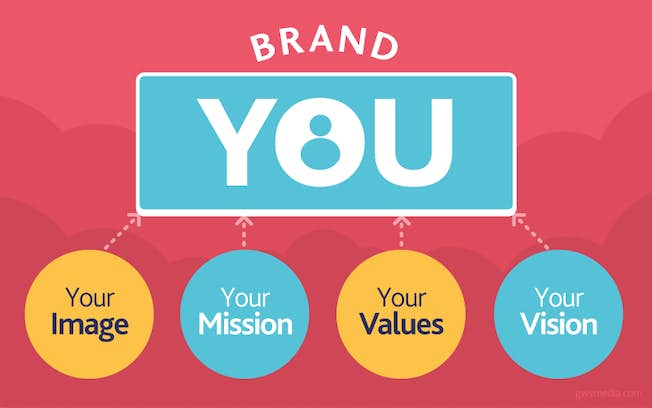
It doesn’t matter what your level of investment, or visibility and strength of the brand, the key to your success is YOU! Yes, I am a firm believer in location, location, location, and I always stress not to fall so in love with a brand that you accept a secondary location because that is a recipe for failure. But as important is for me to stress: You, You, You.









You must be logged in to post a comment.