Category: Entrepreneurship

Culture is a Work in Progress That Must be Managed

I’m so glad I have your attention. I say that as I’m again seeing significant increases in daily views of recent articles and subscribers at Acceler8Success Cafe. The reason, of course is sharing once again articles from the series, Preparing for War: You vs. Recession.

Well, we’re in this war together as it would be very hard to believe that any entrepreneur, restaurateur, solopreneur and any small business owner isn’t already being impacted by economic uncertainty. Preparing to win this war right now is paramount to our survival.

The past few articles I have shared from the series centered around positive experiences for customers and employees alike. The two go hand-in-hand like peas & carrots but actually more like peanut butter & jelly. Have you ever tried pulling apart a peanut butter & jelly sandwich? If you have the visual in your mind, you’ll picture the two substances essentially being stuck together.

And if you’re an aficionado of peanut butter & jelly sandwiches as I am, you’ll agree that the two ingredients to this wonderful sandwich are dependent upon each other. If you don’t agree, may I refer you to a section of bread that only has peanut butter with the jelly not having been spread to that corner. It’s just not as good as the rest of the sandwich.

The customer experience is dependent upon the employee experience. The employee experience is dependent upon the customer experience. It’s a simple, yet complex scenario. An employee has control of the customer experience in how he or she interacts with a customer and along with other components of the experience (environment and product), an employee, the one interacting with the customer enhances the experience. This employee is key to bringing it all together.

Conversely, an employee is dependent upon the customer to interact back with him or her, sharing in the experience, creating a bond. However, only if the employee is of the right mindset, one that is driven by his or her personal experience with the business will he or she be able to effectively interact with the customer. Therein lies the complexity to positive experiences. Only with a strong foundation on each side of the bread can the bread be brought together to create the desired result.

In order for positive experiences to be achieved, the right culture within an organization is paramount.

Culture lives and breathes in all organizations. It must be nurtured – fed and taken care of. If sick, the virus causing the sickness must be addressed. In the case of cancer, it must be identified, isolated and removed – making sure to properly treat closely affected areas to be sure of total elimination. If healthy, it must continue to be fortified – an immune system built, and new well-being programs developed.

At the end of the day, culture is a work in progress! It must be fluid. It must fill in the cracks and gaps and reach its own level. It must be understood by all. It must be allowed to grow. But it must be managed. The key is whether you do so reactively or proactively!

As I had shared in the series, I had read an interesting article about strategy and its effect on culture, Why Strategy Matters and How it Influences Culture. The author brought up several key points:

Does strategy matter?

If you do not think that it matters, then you are in good company. There are many who question the value of strategy. And I see many companies where there is no formal strategy; the informal strategy is to keep doing what has worked in the past or to chase what is fashionable today.

Strategy v Execution

When it comes to questioning strategy there are two schools that are particularly prominent. First, there is the school of execution. The execution school which says that strategy is waste of time. Why? Because strategies are generic-obvious and what matters is execution. The ability to turn strategy into the daily lives of the organization. Clearly, there is some truth in this school. Strategy which cannot be operationalized is waste of time-resource.

Strategy v Culture

Then there is the school that says, “culture eats strategy for breakfast”. Yes, culture is powerful. Culture determines what gets done and how it gets done. A strategy that does not take into account the fit with culture will meet lots of resistance. Getting people to enact such a strategy will be like fighting a guerilla war with an enemy who is patient and cunning. What is forgotten is that culture can be and is influenced-shaped-shifted through strategy.

To see strategy and culture as being separate and distinct is a gross misunderstanding. This misunderstanding arises due to our reductionist-analytical thinking. Strategy and culture are interlinked. Put differently, if you change strategy, you will take actions that will influence the culture. And if you change culture, it will eventually influence the strategy.

Corporate Culture as defined by Investopedia (aka Business Culture, Company Culture, Organizational Culture)

Corporate culture refers to the beliefs and behaviors that determine how a company’s employees and management interact and handle outside business transactions. Often, corporate culture is implied, not expressly defined, and develops organically over time from the cumulative traits of the people the company hires.

A company’s culture will be reflected in its dress code, business hours, office setup, employee benefits, turnover, hiring decisions, treatment of clients, client satisfaction, and every other aspect of operations.

A commonly used definition by Inc. Magazine

Corporate culture refers to the shared values, attitudes, standards, and beliefs that characterize members of an organization and define its nature. Corporate culture is rooted in an organization’s goals, strategies, structure, and approaches to labor, customers, investors, and the greater community.

Positively Memorable Experiences… They’re Not Only for Customers!

Several months ago, I shared my article, Positively Memorable Experiences… They’re Not Only for Customers. The focus of that article was on the franchisor / franchisee relationship, but the tenets of a strong relationship are paramount in developing a strong culture regardless of the organization, franchise or otherwise. The following 5 points are from that article and now shared here with some editing, making them applicable to relationships within any organization:

  1. Understanding the true meaning and spirit of relationships. This must be shared and exemplified at every point of contact with all within the organization.
  2. Developing the right culture at all levels. Be careful — culture is also defined as bacteria. This takes time and commitment, and is a reflection of how people, whether employees, suppliers or others, are treated at all times.
  3. Creating an environment of truth, trust and transparency based upon open, two-way communication — the cornerstone of creating the right culture. Think of a three-legged stool that could hold a great deal of weight when fully intact yet would immediately fall under its own weight if one leg was compromised.
  4. Establishing your organization as family. Treat them as such but understand that this is not the typical type of family of yesteryear with subservience to the head of the household. Mutual respect is paramount.
  5. Building an environment whereby all are focused on mutual goals and objectives. All must sing from the same hymnal, and not just for dress rehearsal; be sure everyone has the hymn book; ideally, one that is based upon collaborative efforts.

Some may refer to the above as being great in theory, and not really practical. But just think what could happen if every touch point were seen as another opportunity to create or enhance positively memorable experiences. How would that change the culture of your organization? How would that lend credibility toward growing your organization? Think of the ripple effect. Live it and breathe it every day for optimum results!

The Experience Factor

The ‘Experience Journey’, which I also refer to as an ‘Emotion Circle’ is a simple way to gauge and improve any type of relationship. Keep in mind, all relationships have an experience factor. All interactions have an experience factor. Every touchpoint also has an experience factor. Even digital touchpoints have an experience factor. And especially, culture within an organization has an experience factor. Take some time to let that all set in.

As I continue to share this week the articles from the series, we will take a deep dive into the ‘Experience Journey’. I believe you’ll see how it all ties together – customer experience, employee experience, culture – and how this simple graphic will be a priceless point of reference for organizations of any size.

Help is just a message, call, email or text away!

The future may be a bit bumpy for some, more so for others. Knowing who to turn to and when to turn to for guidance and help is important. Having resources at your disposal is also important. So, if you hit a wall, for whatever reason, please feel free to reach out to me for assistance or even if you just need someone to talk to. Please do not hesitate. You can reach me right here on LinkedIn, by email to Paul@Acceler8Success.com, and by phone or text at (832) 797-9851. Learn more about Acceler8Success Group at Acceler8Success.com and also at Entrepreneurship411.com.

Bring the Preparing for War: You vs. Recession series to your organization

If you’re interested in having the series presented to your organization, either as a webinar, workshop or conference break-out session, please click HERE for more information. The program can be tailored to your business model, product, service offering and industry segment. It has been resonating quite well with franchise and restaurant brands.

Have a great day. Make it happen. Make it count!

‘Tis the Season for Others

Make a difference in someone’s life this weekend by being kind, caring, and helpful. After all, we do not know what others may be dealing with, and especially during the holiday season. Even the smallest of gestures may actually be more impactful than you might believe possible.

As I started to share this post this morning, I recalled a poem that I had read awhile back. I thought it would be good to share today… I hope some will find solace in reading it. For others, I pray it will help make a difference in their lives.

“Every minute someone leaves this world” by Marianne Baum

“Every minute someone leaves this world behind.

Age has nothing to do with it. 

We are all in “the line” without knowing it.

We never know how many people are before us.

We cannot move to the back of the line.

We cannot step out of the line.

We cannot avoid the line.

So while we wait in line:

Make moments count.

Make priorities.

Make the time.

Make your gifts known.

Make a nobody feel like a somebody.

Make your voice heard.

Make the small things big.

Make someone smile.

Make the change.

Make love.

Make up.

Make peace.

Make sure to tell your people they are loved.

Make sure to have no regrets.

Make sure you are ready…”

Have a great day. Make it happen. Make it count!

Create Positive Experiences for Both Employees and Customers for Optimum Results

Delivering positively memorable experiences for customers is a key part of an action plan to combat various challenges small business owners are and will be facing during a period of economic uncertainty. Without a doubt, customers will keep a tighter grip on their wallets, but I do believe they will still frequent businesses for more than just necessities. So, the customer experience is paramount to ensure customers come to your business and return again and again.

As employees are instrumental in creating and delivering the customer experience, what would happen if an employee were unhappy, dissatisfied or disgruntled? Would they be capable of delivering a positively memorable experience? Could their attitude be detrimental to the business? Of course, we know the answers to both questions but sadly, these employees are on the front line of many businesses today. Even more so is that they most likely didn’t have a bad attitude when they were first hired.

It’s been said that a salesperson is more successful if they believe in the product they’re selling. Is that also the case of the restaurant server or retail clerk? Of course, it is. Although, it’s not as much about believing in the product as it is about what they themselves see happening within the business, how management treats employees and its philosophy about customer service and the customer experience, and the mindset around the physical condition of the restaurant or store.

Also affecting the employee experience are lack of opportunities to progress in their positions and within the company itself, to participate in discussions about improvements in day-to-day operations, and to be listened to about customer needs and desires. Employees want to be part of the solution and not always just the front person dealing with customer problems.

Customer loyalty to the business certainly goes a long way to generating repeat business and referrals but can customer loyalty be achieved without a personal connection? What motivates a customer to return to a business? A great looking building? Clean restrooms? Or even just great food or service? Sure, those may be contributing factors, but it’s not enough to ensure customer loyalty if there’s not a personal connection – one that both delivers and extends the customer experience.

As fragile as customer loyalty may be, it is even more so without a personal connection. If a personal connection is absent and something goes wrong during a store or restaurant visit, it will certainly affect the customer’s opinion and potentially cause a customer to visit less or try another business. A personal connection creates a relationship, a bond. One that if something does go wrong, a customer would be almost apologetic in complaining. It often becomes a conversation with suggestions instead of one rife with confrontation.

The bottom line is that the brand, or the physical aspect of the business may attract a customer, but the customer ultimately wants to do business with individuals representing the business, and the customer’s best interests. Customers like the familiarity established in the relationship. They love when they’re immediately recognized as they walk in the door. They love when they’re ushered to their favorite table, and without asking. They love when they receive this personal attention.

Creating an environment where a positive experience is created at all times for employees is essential to business success, and especially at a time when employee loyalty is becoming harder and harder to find. It’s more than just throwing money at employees. Sure, money helps, but not without the employee being happy. Correction, being satisfied and feeling good about all that surrounds their job. And being inspired and motivated to want to do more.

Facts and Questions to be Considered

According to Gallup, businesses with higher levels of employee engagement showed 21% more profitability and 17% more productivity.

A recent study from Deloitte found that 80% of executives said they consider the employee experience to be either very important or important, yet only 22% reported that their organizations did an excellent job of creating a differentiated experience for employees.

What defines employee experience? Employee experience is an employee’s perceptions about his or her journey through all the touchpoints at a particular company, starting with job candidacy through to the exit from the company.

What contributes to a positive employee experience? HR experts say improving the employee experience is about more than simply gathering feedback during an annual review. Organizations need to value employees, consistently listen to their needs, and continuously take action to truly improve employee experience.

What is the goal of employee experience? The purpose of employee experience is for companies and their employees to work together to improve individual, team and company performance, providing the employees with a high-quality physical, cultural and technological environment.

Why is it important to have a positive employee? In interacting with others, an employee exhibiting positive energy is cheerful, respectful, and polite. They are also approachable and engaging as opposed to inaccessible and despondent. The attitude necessary for possessing positive energy is being grateful to be part of the team.

What does it take to make employee experience extraordinary? Invest in good technology. Good technology (specifically, a good communications tool) will enable streamlining of communication and processes and improve company culture and engagement. Encourage honest dialogue. Make every moment count. Enable managers. Of course, there’s more but this a great start.

A lot of effort goes into developing the correct product mix and service offering. A great deal of money is invested in building a beautiful building, inside and out. A lot of attention is directed at the details necessary to build a successful business. But an experience factor FOR ALL who “participate” in the business from all sides is often an afterthought yet is critical to business success. Maybe even more so during challenging times.

Help is just a message, call, email or text away!

The future may be a bit bumpy for some, more so for others. Knowing who to turn to and when to turn to for guidance and help is important. Having resources at your disposal is also important. So, if you hit a wall, for whatever reason, please feel free to reach out to me for assistance or even if you just need someone to talk to. Please do not hesitate. You can reach me by email to Paul@Acceler8Success.com, and by phone or text at (832) 797-9851. Learn more about Acceler8Success Group at Acceler8Success.com and also at Entrepreneurship411.com.

Have a great day. Make it happen. Make it count!

Small Business Survival: A Combination of Proactive AND Reactive Measures is Essential

If there was one benefit for small business owners and entrepreneurs from the pandemic, it was learning how to pivot, shift, and survive. Lean and mean was the order of the day, driven by watching numbers – cost of goods, payroll, and accounts payable & receivable.

To that end, I believe CPA’s, accountants and financial advisors did a remarkable job helping businesses survive in what was a 2-year business-threatening tsunami. Today, I’d like to give a shout-out to all who worked diligently behind the scenes to keep small business afloat and now are being asked to do it again in light of the current level of economic uncertainty.

With the financial side of the business continuing to be addressed from lessons learned during the pandemic, it must be realized these efforts alone will not be enough to survive the recession that is barreling our way or may already be here as we speak. After all, there’s only so much a business owner can do on the financial end of the business. I refer to this as being reactive – reacting to the times… monitoring, controlling and actions are just a few steps that come to mind.

Sure, it takes being proactive to jumpstart these efforts but from there it’s all about being reactive like a hockey goalie protecting the net, blocking shot after shot but it’s not the goalie alone that wins games. If a goalie is spot-on and does not allow a goal, the best the team can hope for is a tie. The offense must do their job for a different outcome. Even more so from the perspective of an errant deflection that may sneak the puck past the goalie. In that scenario, if the offense is flat, the team loses 1-0 despite the stellar performance of its goalie.

The same is the case with our finance professionals. They could do the best job imaginable on all fronts. However, if revenue isn’t generated, there will be nothing to manage and the business ultimately loses because in business, there are just too many errant deflections. It’s as if the goalie is trying to protect the net when several opposing players are each shooting pucks at him – at the same time! Unless the goalie is an octopus, it’s just not feasible to stop every shot, more less the errant deflections.

Please understand, the proactive measures must complement the reactive ones just as they do in hockey and in any professional sport. It just doesn’t make sense, let’s say to be entirely proactive and leave the rest to fend for itself. Conversely, the same is true. Action plans to battle an economic downturn and ultimately, a recession must include BOTH approaches at the same time. They must be interdependent!

And, as in any sport, the action plan sets the stage before the action starts. It reminds me of a quote from Sun Tzu’s Art of War. It is all about planning, strategic planning.

First on the proactive side must be the development of goals. Not just from the standpoint of a sales figure as a goal but from the various things from which sales are generated. The bottom line… it’s an understanding of what makes up a sale, and how to get to the actual sale.

Questions that must be asked and answered include how many leads it takes to result in an appointment, how many appointments will result in a presentation, how many presentations will result in a sale, etc. Of course, this part of the process must be tailored to your sales process. If addressed honestly, it may actually be determined that the sales process needs tweaking, or even an overhaul. Do not procrastinate at this point. If it needs fixing, it must be fixed!

When addressing the sales process, it must also be determined what it will take to generate the leads necessary to keep the sales funnel full and to the extent goals can be met. This is where some education is imperative.

It’s alarming how many business leaders really don’t understand the difference between marketing, advertising, public relations, and branding, often tangling them together. Many also don’t understand how they all work together and/or complements each other. In order to develop an effective plan, the differences must be understood, as well as the complementing benefits.

So, as we look back at goals, they must be established based upon data, analysis, and projections. Informed decisions are always best. The same is true for goalsetting. A key point in this process is to be sure all stakeholders and staff are involved each step of the way. Doing so will go a long way to ensuring they’re committed to the goals, and to the plan. If they’re part of the process, they will believe in the plan. Teamwork works!

The financial side of the business is just one cornerstone of the action plan. Another one is sales & marketing, although I still find it interesting that we always say, ‘sales & marketing’ when nothing happens without a sale. Should it really be ‘marketing & sales’?

I only bring this up as I believe there really isn’t one before the other because they’re interdependent upon each other in order to achieve defined goals. You see, one doesn’t work without the other just as defense doesn’t work without an offense, and how being reactive must be complemented with being proactive.

I’m committed to providing as many resources as possible to help small business owners survive, and thrive including current (and aspiring) entrepreneurs, franchisees, restaurant operators, solopreneurs, freelancers and all who essentially ‘eat what they kill’. Meaning, they rely on the money they earn, not a paycheck.

As always, your input and perspective are greatly appreciated.

Help is just a message, call, email or text away!

The future may be a bit bumpy for some, more so for others. Knowing who to turn to and when to turn to for guidance and help is important. Having resources at your disposal is also important. So, if you hit a wall, for whatever reason, please feel free to reach out to me for assistance or even if you just need someone to talk to. Please do not hesitate. You can reach me right here on LinkedIn, by email to Paul@Acceler8Success.com, and by phone or text at (832) 797-9851. Learn more about Acceler8Success Group at Acceler8Success.com and also at Entrepreneurship411.com.

Have a great day. Make it happen. Make it count!

Warning: Recession Ahead. NOW is the time to take action!

I refer to recession as war because we’ll never know what’s going to hit us next, we won’t know where and when the next battle will occur, and we will not know the casualties until the dust settles on a particular battle or possibly, on multiple battles at one time. And, just like a war where allied forces may be fighting right alongside, it will be necessary to be aware and cognizant of how the war will be affecting them.

In order to win each battle, and ultimately, the war itself, we will need to minimize our losses. We’ll need to protect our position and territory. We will need to be prepared, including being well-armed!

With recession looming ahead, now is the time to fortify our arsenal, assessing what must be repaired or replaced. We must evaluate our skills, improving as necessary and learning new skills, as well. We must rally our troops and ensure all who will be helping us are properly trained and have the necessary firepower for combat. Essentially, we must plan for the inevitable fight ahead.

Today, let’s take a look at an important, yet often overlooked part of the arsenal… personal branding.

As the leader of your company or brand, and of your efforts to generate revenue and achieve profitability, your personal brand must be rock-solid. Maintaining a strong personal brand will mean those around you and those you’re trying to attract to do business with (clients, prospective clients, vendors & suppliers, bankers, stakeholders, etc.) will have or will start building confidence in taking the next steps with you.

A fortified personal brand will help establish and showcase your values, mission and vision – the reasons for fighting to not only survive, but to thrive. It will help you stand out from competitors. It will help attract others that will want to work with you, for you and alongside you – strengthening you network, one that will be full of resources!

Previously at Acceler8Success Cafe, I published a series of articles about personal branding, so let’s start there. Below please find links to the various articles. Moving forward, we will progressively build our arsenal. We are in this fight together with a common goal of ensuring we have survived (and possibly even have thrived) when the dust settles.

Personal Branding Through Uncharted Waters

Economic uncertainty. Recession. Failing business. All would certainly depict challenging times, if not devastating times. For most, these are unchartered waters. Certainly, giving up is not the answer. Or, at the very least, it shouldn’t be the only option. So, how can personal branding help navigate through rough seas until the waters calm down again?

Personal Branding: It’s More Than a Buzz Phrase!

The process of personal branding involves finding your uniqueness, building a reputation on the things you want to be known for, and then allowing yourself to be known for them. Ultimately, the goal is to create something that conveys a message and that can be monetized.

Personal Branding for: (sales or biz dev title here)

For this article, my thoughts wandered back to 2012 when I presented at the Franchise Brokers Association Conference & Expo. My presentation was appropriately titled, Personal Branding for Franchise Brokers. I recall many questions that essentially asked the same thing – What is personal branding and why is it important to me as a franchise broker or franchise salesperson (or business development professional)?

“You You You” is as Important as “Location Location Location”

“Your personal brand is a promise to your clients… a promise of quality, consistency, competency, and reliability.” – Jason Hartman

Help is just a message, call, email or text away!

The future may be a bit bumpy for some, more so for others. Knowing who to turn to and when to turn to for guidance and help is important. Having resources at your disposal is also important. So, if you hit a wall, for whatever reason, please feel free to reach out to me for assistance or even if you just need someone to talk to. Please do not hesitate. You can reach me right here on LinkedIn, by email to Paul@Acceler8Success.com, and by phone or text at (832) 797-9851. Learn more about Acceler8Success Group at Acceler8Success.com and also at Entrepreneurship411.com.

Have a great day. Make it happen. Make it count!

Preparing for War: You vs. Recession REVISTED

Over the next two weeks I’ll be sharing some of the articles I’ve previously shared at Acceler8Success Cafe. I will include the ones that have proven to be the most popular articles based upon impressions, views, and interaction.

In light of continued economic uncertainty, I believe sharing the Preparing for War: You vs. Recession series would be timely. As such, I also believe this series could benefit many still finalizing plans for 2023.

Recession Prep Question: How important is the WOW factor?

No alt text provided for this image

Surviving through difficult economic times, it’s essential to keep the sales pipelines full, to keep customers coming back for more, to keep employees happy, to keep strong relationships with vendors & suppliers, and to keep moving forward. But how likely are these scenarios (goals) considering the current state of uncertainty compounded by rising costs, fragile supply chains, and a somewhat undependable or unreliable workforce?

Creating and delivering positively memorable experiences is more than just customer-focused efforts. Certainly, the customer experience is key to business survival and growth but so are the experiences shared by staff, partners, vendors and all who “participate” in the daily activities of your business.

Magical experiences and the WOW factor!

Walt Disney focused on creating a magical experience for all who visited Disneyland and Disney World. When conducting customer experience training sessions, I ask the question, what is excellent customer service? Most of the answers are somewhat on track, except the focus is more on meeting customer expectation, not exceeding them. Essentially, it also means that if everything went right, the customer would be getting exactly what they paid for. Nothing more – leaving no room for error if the customer is expected to return.

I then ask the question, when have you been on the receiving end of a positively memorable experience? This exercise typically lasts an hour or so as the class realizes that the experiences they’re sharing are just examples of good or average customer service, but not positively memorable experiences. That is until someone mentions their family’s experience at a Disney destination.

Magical is often a word used to describe the experience but it’s most likely a word driven by Disney’s outstanding marketing campaigns. WOW is a word that often follows and is typically repeated multiple times in the description of the experience – a positively memorable experience. It’s at this time that the class comes alive with everyone chiming in, sharing their own Disney experiences. It truly is a WOW moment listening to them sharing their WOW experiences.

What is the definition of a positively memorable experience?

A recent Google search for the phrase, “positively memorable experience” revealed results that were exclusive to customer experiences, and TripAdvisor.com garnered one-half of all results with the phrase. So, what causes customers to be so emphatic about their experience that they deem them “positively memorable?” Further, what implores them to share their thoughts so openly within a public forum?

To answer these questions, we must first examine the definitions of the words that make up this phrase as shown on Google:

Positively: In a positive way, in particular; with certainty, so as to leave no room for doubt; used to emphasize that something is the case, even though it may seem surprising or unlikely.

Memorable: Worth remembering or easily remembered, especially because of being special or unusual.

Experience: Practical contact with and observation of facts or events.

Is it more expensive to attract a customer or to keep a customer?

If every customer experienced a positively memorable experience with a business, what are the potential scenarios that could come of that experience? Repeat visits and visiting more frequently? Sharing the experience with others and referring some directly to the business? Choosing the business over another business when a particular need or desire arises? As you see, positively memorable experiences compound positive actions and drives loyalty.

The icing on the cake, or the cherry on the top is that a loyal customer does not have to be attracted again and again. Meaning, marketing dollars have already been spent as opposed to repeatedly spending marketing dollars as is necessary to attract new customers. The investment in developing and keeping loyal customers is in the delivery of products and services at an extremely high level of satisfaction – positively memorable experiences.

So, when looking to increase business, management should focus on its current customer base with the goal of delivering positively memorable experiences to them at all times. Easier said than done, right? Yes, that is correct, which is why positively memorable experiences must also extend to all who are responsible for serving customers. Not only in how they deliver on the goal, but about what’s in it for them.

Have a great day. Make it happen. Make it count!

Help is just a message, call, email or text away!

The future may be a bit bumpy for some, more so for others. Knowing who to turn to and when to turn to for guidance and help is important. Having resources at your disposal is also important. So, if you hit a wall, for whatever reason, please feel free to reach out to us for assistance or even if you just need someone to talk to. Please do not hesitate. You can reach us by email to Paul@Acceler8Success.com, and by phone or text at (832) 797-9851. Learn more about Acceler8Success Group at Acceler8Success.com and also at Entrepreneurship411.com.

Controlled Growth is Key to Success for Emerging Franchise Brands

According to Entrepreneur.com, approximately 300 new franchise concepts are launched every year. The introduction of these newbies, along with other brands that fall under the category of emerging franchises, actually make up the majority of all opportunities.

Many experts agree that approximately 80% of all franchises have less than 100 units. That makes for an extremely competitive landscape, as each of these emerging brands vie for the attention of potential franchisees.

To succeed in the world of franchising requires continual improvements to the brand’s business model, growth strategy, systems and processes. To that end, I believe controlled growth is key to both initial and ongoing success for emerging franchise brands.

No alt text provided for this image

Having worked with many, many entrepreneurs exploring franchising as a business growth and expansion strategy, I’m often asked the question, “How does a new franchise company sell franchises without brand recognition?” Here are my thoughts…

Initially, the founder is the brand. It’s his or her passion for the business. It’s how he or she treats customers and employees alike. It’s how the business is promoted within the local market. Not just through typical advertising efforts, but through solid grassroots, organic efforts.

The initial franchise candidates are actually the “low hanging fruit” of the original business. These are the customers that inquire whether or not the business is a franchise and how they can learn more about owning their own. Most are interested because the business appears to be thriving and they’ve seen the owner (founder) time and again, always smiling and shaking hands. Public Relations efforts should ensure this occurs.

They admire the owner a great deal and will base their decision to open a franchise location, on the potential of establishing a relationship with the owner. They’ll compare the opportunity to other franchises and justify to themselves that they’re in on a ground floor opportunity with a direct line to the founder. As such, they feel their probability of success is greater because their location will be in the home office city and if they need help, they could easily approach the founder and the home office because of the proximity to their franchise location.

Ideally, the next few franchisees will also be in the same market as the original business and the first franchise location. It’s prudent to only expand locally until brand awareness begins to be achieved in the market and immediate suburbs or outlying towns, some semblance of an ad cooperative is developed for economy of scale, and support systems are perfected. Now the concept is ready to expand outside the initial market or hub.

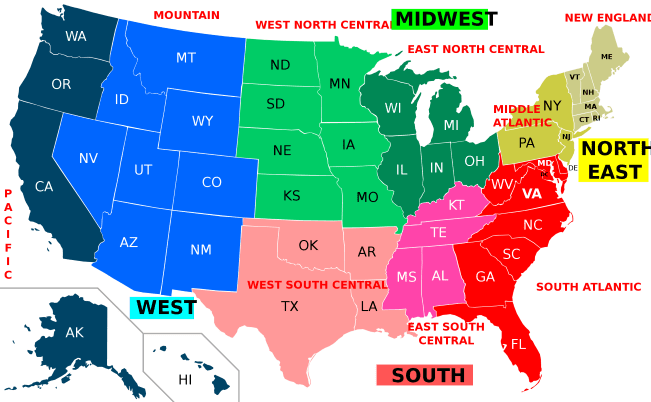
However, it is often financial suicide to entertain requests from candidates all over the country. Instead, development efforts should be concentrated on one or two cities relatively close to the home office city. For instance, if original business and home office is in Houston, the natural progression would be to promote the opportunity next in San Antonio/Austin and Dallas/Fort Worth areas, and smaller markets in between.

My rule of thumb: Early-stage development should occur less than a 4-hour drive or a 2.5-hour flight from the home office market. Essentially, being able to provide hands-on support but still having the ability to make it back and forth in the same day or with just a one-night stay. Managing time is critical during initial development efforts.

As these markets start to become established with franchise locations, it’s advisable to promote the concept in another two or three markets. Maybe, explore another “hub” and “spoke” scenario. Let’s say, Greater Atlanta as the next hub.

Expansion efforts should be the same as they were in Texas and expansion out of that market shouldn’t occur until development moves from Atlanta to the suburbs – for instance, to Roswell, Alpharetta and beyond, for example to Savannah and Augusta. Then, as that occurs, the opportunity could be promoted close by in Nashville, Charlotte and Birmingham. Now, you see the spokes of national expansion beginning to form.

While this is going on, maybe inquiries start coming in from the Rocky Mountain Region. The Greater Denver Area would naturally become the hub as the gateway to Wyoming, Utah, Montana and into Idaho. Initially, locations should be developed in downtown Denver and out to the suburbs – Boulder, Centennial and even into Fort Collins and Colorado Springs. All the while building brand awareness.

It’s all about controlled growth and the founder exhibiting tremendous restraint in expanding too fast and in areas far away from his core group and subsequent hubs to be able to provide ample support, create ad cooperatives and build the brand geographically. Chances of franchise success are far greater at all levels of the franchise organization within the parameters of a controlled plan of development.

So, to answer the often-asked question directly, I suggest everyone in the system having a clear understanding of the founder’s vision. If it includes anything but a controlled development plan with his or her firm commitment to actively participate in the franchise sales process, the chances of selling the first ten to twenty franchises will be a frustrating, monumental task.

The results? Most likely the brand will immediately miss franchise development goals. Stakeholders will be upset as expectations are repeatedly missed. Before one knows it, the franchise system is scrambling to recover. Resources will be thrown at various ways to turn things around. Decisions will be reactive to the next fire that is burning or of a knee-jerk nature out of shear frustration. Little if anything will be done proactively with a plan. It’ll be akin to playing not to lose instead of playing to win. Although, I’m not sure what a tie relates to in business, so I must consider anything less than a win, a failure.

Have a great day. Make it happen. Make it count!

Sunday Is My Favorite Day!

To many, Sunday is considered the end of the weekend. To me, it’s the start of a new week, a new beginning. I love the quiet and solitude of Sunday mornings as I’m awake by 5AM.

I use the time to think about possibilities as I catch up on reading, reviewing the many publications, newsletters & blogs to which I subscribe. Sunday afternoons are typically reserved for family time. Today that will include a traditional Italian family dinner at home – antipasto, lasagna, and garlic bread, all complemented with a bottle (or two) of Chianti.

Preparing for the week ahead is reserved for early Sunday evenings. This ensures a stress-free start to the week ahead. It goes a long way toward achieving goals.

Doing so actually helps plan for free evenings during the week. This allows me to maintain a work life balance as family commitments & events are firmly in place on my calendar, not to be interrupted by work. 

“Sunday. Take it slow and give your soul a chance to catch up with your body.” ~ Anonymous

The last few hours before bedtime is my time to unwind. It’s personal time. I highly recommend for others to make sure to take similar time for themselves.

Be sure to fit it in after taking care of the things you need to get done such as getting the kids to bed, putting out the trash, etc. Essentially, make your last responsibility YOU! You can do so by…

  1. Stop staring at the clock.
  2. Taking a walk.
  3. Praying for others.
  4. Counting and reflecting upon your blessings.
  5. Taking a hot bath with salts or bubbles.
  6. Reading a book.
  7. Meditating.
  8. Doing yoga.
  9. Listening to calming music.

“Let Sunday be a rainbow for the entire upcoming week.” ~ Anonymous

We don’t know what others may be going through, and especially during the holiday season when loneliness and depression are amplified. Let’s be there for them as we can. Let’s be thoughtful. Let’s be kind. Let’s be aware. Let’s make a difference.

Have a great day. Make it happen. Make it count!
Successful Entrepreneurs Make Time to Achieve Work Life Balance

It’s hard to believe Christmas is two weeks away. Many will, or already have shut down until after the ball drops in Times Square. But for current and aspiring entrepreneurs that’s most likely not the case.

All of the basic definitions and descriptions of being an entrepreneur aside, questions come to mind…

Even with work life balance seemingly achieved, can entrepreneurs actually shut down for extended periods of time? Or, do entrepreneurs find or make enough time every day to keep their minds stimulated whether for motivation, inspiration, or to drive thought and creativity?

I’m of the opinion that an entrepreneur’s mind requires almost constant stimulation, even when they’re relaxing. I believe it’s the entrepreneurial mindset to be productive regardless of what they may doing on a particular day.

A successful entrepreneur is quite efficient with his or her time. Certainly, they’re not ones to waste time. On the contrary, they will make time to achieve balance, fitting in things that are important to them, but not at the expense of their goals and obligations for the day. For instance, waking up at 4AM to workout, read or meditate several hours ahead of starting the work day or before the rest of the family awakens on the weekends

It’s their efficient use of time that enables them to fit in the things an entrepreneur can’t completely shut off. Like the nourishment and health benefits gained from food, water, and exercise, an entrepreneur’s mind needs mental nourishment. This is typically gained by consuming information for knowledge or that which may provide motivation and inspiration.

Just as our bodies require food & water everyday, an entrepreneur’s mind needs frequent stimulation. And just as we snack to quell a hunger pang, an entrepreneur needs to keep his or her mind fueled accordingly.

Even reading a motivational or inspirational quote or two, or watching a five-minute video will satisfy the entrepreneur’s hunger and thirst for anything that might help in his or her business endeavors – or possibly spur a new idea. One can only imagine what created the idea for the pet rock that generated millions of dollars in sales in its very short history.

No alt text provided for this image

Have a great day. Make it happen. Make it count!

Mental Health Must Not Be Ignored During the Holidays – Please be Aware!

Many find this time of year to be a low spot in their lives. Maybe it’s the stress of the holiday season or the end of year realization that goals have been missed. Or, thoughts turn to loved ones that are dearly missed…

Please know that whatever is weighing on your mind, there are bright spots as well. People that love you and that you love as well. There are solutions, no matter how dire your situation may appear. The key is to communicate! Talk to someone. Anyone. Just don’t keep it bottled up inside.

Certainly, the past couple of year has had us facing many uncertainties which, quite frankly took us on an emotional roller coaster. Mostly, the driving force has been fear. I’ve realized my own fear once I was able to admit being scared. Hey, at my age and the fact I’m not in good shape, I must be realistic. So, I’ve worked through my fear and in doing so, maybe I can overcome it. As fear is such a strong emotion that easily grips the soul, it will take time and patience to overcome such a grip.

Little by little I look forward to continuing to pry it away as fear is replaced by courage gained from confidence that fear is just a challenge to be conquered. The great thing is that some of the challenges don’t have to be tackled alone. Instead, collaborative efforts aligned with common goals truly exemplify the phrase, ‘strength in numbers’ and it’s that strength that ultimately conquers fear. Easier said than done? Possibly, but the alternative is being overwhelmed by fear and that, I’ve recognized is not living.

Loneliness, Depression, Fear: All Contribute to Mental Health Issues

Some, but not nearly enough has been written about entrepreneurs & celebrities and their battles with mental health. Loneliness and depression continue to occur within the ranks of both groups at an increasing rate and although failure (or fear of failure or a drop from superstar ranks) may be a driving force, it’s often not the sole deciding factor.

Is it the quest for perfection? Is it a blinding passion that nothing else is visible? Or a control issue where no one can do it better, so it’s dealt with alone?

Questions must be asked… Are current efforts enough to slow down the alarming rate of suicide among entrepreneurs – and often more in the spotlight than entrepreneurs, celebrities? As successful as they were, what were the deciding factors leading to the suicides of chef and TV personality Anthony Bourdain and fashion designer Kate Spade?

The deaths of Bourdain and Spade by suicide have thrown the spotlight on celebrities and depression. Instead of bringing them happiness and freedom, for many, being sought-after, rich and at the top of their game leads to an identity crisis and ruminations on their self-worth.

Recently, Naomi Judd, one-half of the iconic country music duo The Judds, reportedly died by suicide after years of struggling with mental illness.

This is a topic that must be brought front and center as we continue to grow as an entrepreneurial society with approximately 60% of the labor force in some type of self-sustaining endeavor whether it’d be as freelancers, sole practitioners, professional service providers, contractors, solopreneurs, and increasingly, musicians, artists, and authors.

Why is suicide more common among entrepreneurs, celebrities and creatives?

Noted Bollywood actor and television star Sushant Singh Rajput committed suicide a couple of years ago. His demise came as a shock to many as it was the fourth death of a famous personality from the Hindi film industry to pass away within months of each other.

Suicide is not a new issue, especially not in celebrity circles. These tragic deaths are also not limited by lines of work, ranging from boxers, designers, politicians and writers to actors, musicians and yes, entrepreneurs. What about influencers that have achieved celebrity status along with becoming rising stars in this relatively new class of entrepreneurs?

There was a string of influencer suicides in 2021. All unfortunate and tragic occurrences that took young lives, they left entire fan communities in mourning for their favorite stars who had secured places as standing icons of inspiration across fields, from beauty to travel to farming to sports. But what often goes ignored when reviewing these moments of tragedy is the kind of impact the internet is having on our mental health, every single day.

It isn’t just online celebrities or creators partaking in influencer cultures who are burdened with the impossible expectations and virtual validation that the internet has become the one-stop destination for. Sadly, it can happen, and is happening, to many of us plugged into social media.

There is no conclusive line on whether all these influencer suicides came about as a result of social media impinging on mental health. But there is no doubt about the fact that a direct or indirect correlation between our use (or abuse) of the internet and offline consequences.

So, why do wealthy people kill themselves? Don’t they have it all?

The reality we often forget, however, is that celebrities are human beings, just like us. “We only see one version – one of glamour, fame and fortune,” explains Nance Roy, Ed.D, Chief Clinical Officer at The Jed Foundation. They may struggle with relationships, finances and illness. Adds Dr. Roy: “Celebrities may feel more pressure to perform, to be perfect and to keep up their image for fans, often making it more difficult for them to reach out for help.” Another critical point: a person rarely takes his or her own life because of just one reason. “Suicide is complex, and we often don’t know all the factors involved.”

Bullying, even of celebrities and other notable individuals is certainly a contributing factor as it is for our younger generations. In fact, the 10th leading cause of death in the U.S. and 2nd among people aged 10 to 34 (a person dies every 11 minutes), suicide was identified by the National Institute of Mental Health as a major public health concern. Suicide rates increased 35% from 1999 to 2018, briefly declining in 2019. However, reports of depression and anxiety – risk factors for suicide – had increased during the pandemic.

Talking About Mental Health

We need to reduce the stigma faced by people experiencing a mental illness. How? As Martin mentioned, we need to talk about it. Stigma remains a major barrier to treatment and care. Dr. Fink agrees: “How do we grieve and process except by speaking and sharing with others?” When people die of cancer, their illness is almost always part the public conversation. From his Haitian roots, Dr. Arty provides a global perspective: “As a world community, we need to be bold and unashamed in discussing this sensitive and painful topic. The discussion itself may save a life.”

Dispelling myths is also key. A common myth? “Asking someone if they are suicidal will not increase the risk that they will die by suicide,” clarifies Dr. Roy. Inquiring about potential self-harm in a compassionate way may instead provide an opportunity for the person to express their feelings and reach out for help.

Even before the pandemic, millions of Americans were experiencing stress, trauma, anxiety, and heightened levels of depression. The COVID-19 pandemic exacerbated those conditions, creating an unprecedented mental health crisis across our country. Communities of color, frontline workers, health care workers, and individuals with eating disorders have been disproportionately impacted, and the rate of depression across the country has more than tripled compared to rates in 2019.

When entrepreneurs are facing failure, what happens next?

Sometimes no matter how well we plan and how much effort we dedicate to something, we fall short of our goal and the end-result causes a variety of challenges and problems. Ultimately, it can adversely affect financial position, reputation, relationships, team spirit and much more. It can also start to spiral into personal life and affect family, health and overall well-being.

Unfortunately, such situations are often perpetuated by denial by placing one own’s head in the sand.

Well, when our head is in the sand, our most vulnerable ass-et is sticking out in plain view. Some will laugh. Others will point and snicker, definitely telling others. And a few will take advantage of the situation and current position of vulnerability. Sadly, we put ourselves in that position. Not because we swung and missed. Not because we didn’t see the forest for the trees. And not because we just flat-out saw something that wasn’t there. Instead, it’s because we didn’t keep our head high, accept the situation, learn from it and move on, and with laser-focus. That is exactly what entrepreneurs do when faced with failure.

‘Why’ is a question that is always asked by those left behind or hurt by these suicides – the answer or answers would never make sense to someone who loves life.

If you or someone you know is in crisis, please call the National Suicide Prevention Lifeline at 1-800-273- TALK (8255). It’s free, confidential and available 24 hours a day, 7 days a week.

No alt text provided for this image

I look forward to thoughts on this with hope the discussion continues. Thank you!

Have a great day. Make it happen. Make it count!