Another month is coming to an end. It’s hard to believe we’re now only two months from another new year! Do you realize we’re closer now to the year 2045 than we are to Y2K? Where has the time gone?
No doubt, time flies which should be motivation enough to get things done. We must.
Yes, we must and as a reminder, today I’m sharing an article with the same words – we must – that had been published here at Acceler8Success Cafe earlier this year. Sharing it today, I hope it provides some motivation, and realization that we must be proactive in order to survive, get beyond survival, and thrive once again. We must stop spinning our wheels.
Quite a few things, as we once knew them, have changed. And so, we must embrace change. We must change. Yes, we must.
We Must.
The past 2+ years have seen many scrambling to fight off challenge after challenge. Accordingly, actions have been mostly reactive. To many, it’s been a shear, exhausting act of survival.
Well, it’s time to make the complete shift back to being proactive.
If it’s a pivot to move forward in what may be a new normal, we must accept it. If it’s a drastic change that is required, we must act on it. If it’s a new direction that is inevitable, we must move toward it.
We must get back to playing to win as opposed to playing not to lose.
Even in the face of failure, we must dust off dreams that have been cast aside. We must pursue them once again. We must do so with purpose and conviction.
We must overcome negativity with a positive mindset. We must explore possibilities. We must capitalize on opportunities.
Life as we once knew it has changed. We must realize it for what it is. We must deal with it. We must adapt. We must take action.
We must act swiftly. We must act decisively. We must do so with aggressive plans to not only survive, but to thrive. We must accelerate success.
We must make it happen. We must make it count. Yes, we must!
Help is just a message, call, email or text away!
The future may be a bit bumpy for some, more so for others. Knowing who to turn to and when to turn to for guidance and help is important. Having resources at your disposal is also important.
So, if you and when you hit a wall, for whatever reason, please feel free to reach out to me for assistance or even if you just need someone to talk to. Please do not hesitate.
You may reach me by phone or text at (832) 797-9851, or if you’re more inclined, please send me an email to paul@acceler8success.com. All interaction will be kept confidential.
Have a great weekend. Make it happen. Make it count!
I’ve been asked time and again by brand founders my philosophy about achieving success as a franchise brand. As the International Franchise Association Emerging Franchisor Conference is next week in Nashville, Tennessee, I thought it’d be a good time to share my thoughts on franchise success, and especially for those franchise founders unable to attend.
Franchise Success Strategy
At Acceler8Success Group, we focus on developing strategies for healthy, sustainable growth. Unlike many consultants and advisors in our field, we know that this must be more than just a focus on franchise development to acquire and convert leads.
That strategy is based on a concept of a hierarchy of franchise success requiring certain needs be met as a foundation to the next level and ultimately sustainable growth. Our approach is much like the Maslow model of human motivation.The first level of success to be achieved is establishing and maintaining franchisee profitability. The next level is to maintain a healthy relationship with the franchise network. Sustainable growth in franchise development relies on a solid foundation of profitable franchisees that believe in the management team guiding their future because sustainable growth relies on validation from the existing network for future franchise development.
Once that foundation is in place, a strategy for growth relies on the third level of success. A robust marketing and management approach must be developed to generate leads, develop prospects, and convert franchise candidates to open and operate a successful franchise location or territory. This development will be designed to maximize the impact of the positive validation from the existing franchisees.
The fourth level requires a constant vigilance of the management to team to understand and react to changes within the marketplace. The evolution of the offering and the brand creates a continuous improvement cycle that continues to support and sustain unit profitability, the franchisee/franchisor relationship, and thereby continued success in franchise development.
90% of organizations continue to miss their strategic targets. Poor planning is at the root, but you are only as good as your culture. James Milsom, Head of Marketing, i-Nexus regarding ‘True North’ companies
We believe our approach to franchising is in accord with the simple and constant philosophy of True North companies:
• We provide outstanding companies the tools for improved performance.
• We partner with management to provide new opportunities for growth.
• We believe that the most important assets in any business are the people who run them and work at them every day (including the franchisees).
• We develop strategies built on a solid foundation and continuous improvement for long-term success
• And of course, we reflect and maintain the highest standard of integrity.
We start with an introductory meeting to determine the pain points of our clients and the pain points of their franchisees. The next step involves a complete evaluation of the franchise system to help the franchisor identify the actual root causes of the problems that have hindered or reversed its growth pattern. Once we have determined the root cause(s) of the issues, in coordination with the existing management, we develop a strategic plan to strengthen every level within the hierarchy of success.
The strategic plan is designed to be cyclical in nature allowing continuous improvement at each level so as you reach the evolution level the cycle starts again with an evaluation of how the changes have affected the unit economics of the franchises and the relationship. Again that will impact validation and the foundation for growth through franchise development. This cyclical approach for continuous improvement provides the strategy a plan for sustainable growth.
For more information about our Franchise Success Strategy, please reach out to me via email at Paul@Acceler8Success.com. As well, please visit our website to learn more about our comprehensive services. Our initial consultation is complimentary as it’s necessary for us to fully understand goals as well as current challenges.
At what point does a Financial Performance Representation, also known as an Earnings Claim, cross the line beyond federally mandated franchise disclosure requirements?
Social media has created many opportunities to present and discuss franchise opportunities across multiple digital channels, often linking from one social media platform to another. As many franchisors jockey for a competitive edge (or for survival) and continue to increase their digital marketing efforts, it’s imperative they not lose sight of franchise disclosure requirements. Especially, if these efforts are spearheaded by a person or agency not familiar with franchise disclosure rules.
The practice of embedding financial information is growing. It’s no surprise considering the increasing number of online press releases, blogs, social media posts, and even books about a franchise brand or founder. There’s also the popularity of reality TV shows to consider.
Certainly, publishing financial information alone doesn’t necessarily create a financial performance representation. But, directly or indirectly referring candidates to the information is an earnings claim, and if the shared information is not in line with a franchisor’s Item 19 of its Franchise Disclosure Document (FDD), it does becomes improper or illicit.
Considering the linking capabilities in the digital space, often to the point of creating a cross-platform, multi-tiered effect, some self-professed industry professionals apparently believe they can get away with improper financial performance representation. Especially, as digital and social media continues to expand into new areas. As such, much of the activity is virtually under the radar of most authorities.
It appears the thought is, if enforcement of franchise disclosure is lacking in traditional areas, digital and social media marketing have become the new wild west!
Beyond the obvious illicit practices and potential ramifications to unsuspecting franchise candidates, also causing reason for concern is the impression it makes upon start-up franchisors that follow suit – often, not even realizing the practice may be improper. After all, they see it being done by individuals who they believe are reputable franchise professionals. So, why not follow the same practice that they unsuspectingly come to believe is actually a best practice?
Sure, everyone is responsible for their own actions, and ignorance is not a legal defense. However, if these practices, borderline or otherwise continue within franchising, more and more will participate to the point of it becoming a common practice, with many believing it has become a best practice.
Momentum will pick up with so-called thought-leaders promoting the practice as an effective lead generation strategy, influencing even more franchisors. Some will be unsuspecting. Some will just jump on the bandwagon.
At what point will these practices be considered to be out-of-control and intolerable, and detrimental to franchising? Or, will the franchise community just wait until another BurgerIM situation raises its ugly head, and with more media attention?
Who hasn’t seen the phrase “organizational skills” listed as a requirement of a position? It might seem excessive that this vague term in such demand, but the possession of organizational skills can make or break your career success.
While this is true for any role, it is even more important for a small business owner.* As there are so many tasks to juggle on any given day, keeping everything organized is the best way to ensure being able to maintain even some semblance of work/life balance which as we know all too well, is essential to positive mental health. It’s also essential to effectively run a business, and especially through periods of economic uncertainty.
Organizational skills are defined as, a set of techniques used by an individual to facilitate the efficiency of future-oriented learning, problem-solving, and task completion; It requires the integration of several elements to reach a planned goal.
Listed below are 5 essential organizational skills to propel a small business toward success:
Scheduling. More than just scheduling shifts and meetings, a small business owner is responsible to ensure scheduling of every aspect that goes into running the business. From scheduling progress check-ins for projects to scheduling incentive programs for sales goals, the ability to create a schedule and stick to it is essential to running the business.
Delegation. It’s impossible for one person to handle everything that needs to happen to keep a business running smoothly—that’s why delegation is key. By delegating, in not only lightens the load on the owner’s shoulders, it empowers the team to tackle difficult tasks.
Time Management. In many jobs, time is managed for the employee. They’re provided with small goals on the way to larger accomplishments and project timelines are completed at their manager’s discretion. However, as a small business owner, those project timelines and daily tasks are set by themselves – often, reactive to needs. Proactive management of time is key to improving productivity.
People Management. Managing is commonly regarded as a “people skill,” but it takes organizational savvy as well. Planning evaluations, building a successful team and orchestrating group meetings may not be the leadership tasks that get all the attention, but they’re just as integral to being a respected and regarded manager.
Preparation. Being prepared is the key to staying on top of business routines. Whether it’s taking notes before a meeting with staff, franchisor, or banker or jotting down the next to-do list at the end of the day, starting off on the right foot will keep the business owner from playing catch-up when they should be looking ahead.
*Note: Small business owners include small independent business operators (Mom & Pop), franchisees, restaurant operators, professional services providers (law offices, medical offices) and even solopreneurs with staff.
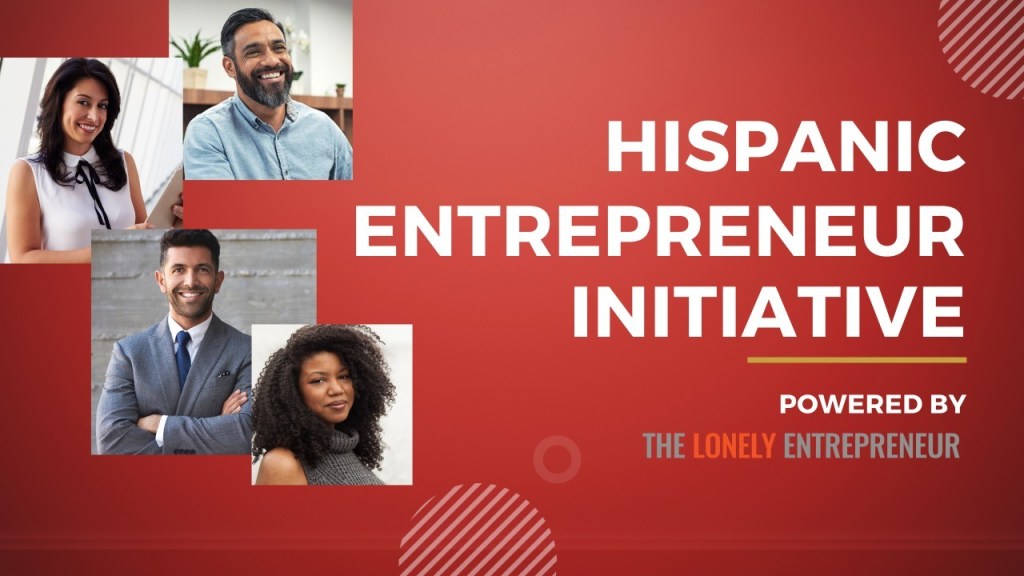
As reported here before, we’re very excited to partner once again with Michael Dermer and The Lonely Entrepreneur. Their project, The Hispanic Entrepreneur Initiative continues to be of major interest to Acceler8Success Group as we continue to build upon a growing list of clients from Mexico and Latin America whose interests focus on entrepreneurship in the U.S.
With a goal of empowering 100,000 Hispanic entrepreneurs, Hispanic entrepreneurs will be provided with free access to The Lonely Entrepreneur Learning Community – a one stop shop for the knowledge, tools and support an individual needs to start or grow a business. This access is provided free due to the financial contributions of corporations, philanthropies, individuals, and economic development organizations.
Supporters include UPS, Microsoft, US Hispanic Chamber of Commerce, HISPA and Molson Coors and the initiative has been endorsed by over 50 Hispanic leaders including:
Dr. Juan Andrade, Jr. (President, US Hispanic Leadership Institute, Recipient – Presidential Citizen’s Medal)
Luis Ubinas (Investor, Entrepreneur, Past President – Ford Foundation, Past President – Pan American Development Foundation)
Dr. Loui Olivas (Professor Emeriti, W.P. Carey School of Business At Arizona State University)
The challenges for entrepreneurs in general are great. The challenges for Hispanic entrepreneurs are even greater. And there isn’t just one “Hispanic” entrepreneur – there are entrepreneurs from various countries that face some of the same – but some different – challenges and opportunities.
In addition to lack of access to capital, many Hispanic entrepreneurs possess passion and great ideas but lack access to the knowledge and support they need to succeed.
With the help from corporations, philanthropies, individuals, and economic development organizations, the Hispanic Entrepreneur Initiative will change that by putting the tools in the hands of 100,000 Hispanic entrepreneurs.
How it Works
In this initiative, organizations sponsor a certain number of Hispanic entrepreneurs who receive free access to The Lonely Entrepreneur Learning Community – a one stop shop for the knowledge, tools and support a current or aspiring Hispanic entrepreneur needs to start or grow a business. The platform addresses both the business and personal issues Hispanic entrepreneurs face and provides multiple ways for Hispanic entrepreneurs to get the answers they need:
• Knowledge: 500 learning modules that cover both the business and personal issues entrepreneurs face including issues Hispanic entrepreneurs face
• Tools: 100s of templates (e.g., business plans, legal agreements) and reviews of the top vendors and solution providers they need (e.g., accounting software) including Ongoing Support via Two Channels: multiple ways to solve their pressing challenges, Guidance from the TLE Team in Our Community: where entrepreneurs can ask questions and get answers from members of the TLE Team, Group Coaching: entrepreneurs can sign up for an unlimited number of group coaching sessions on the various business and personal issues they face. If they miss sessions, recordings are available for future reference at any time.
• Funding Sources: 150+ funding sources available for entrepreneurs
• Vendors: 50+ vendor reviews, discounts and a list of “vetted vendors” (including some free resources)
• Procurement Opportunities: 150+ opportunities made available by large organizations
• Business and Personal Issues: our program not only covers business issues, but all the personal issues entrepreneurs face (dealing with stress, ego and humility, leading)
• Daily Perspective: an entrepreneurial “tip” sent to every individual each day
• Access: 24/7 access from any desktop or mobile device
Having the Learning Community at every step of the journey significantly increases their chance of success.
The Needs of Different Hispanic Entrepreneurs
There isn’t just one “Hispanic” entrepreneur. There are native born and immigrant entrepreneurs from various countries that face some of the same – but some different – challenges and opportunities. In addition to providing answers for the issues facing all Hispanic entrepreneurs, the initiative addresses the issues and opportunities faced by the different Hispanic entrepreneurs, including entrepreneurs from: Mexico, Puerto Rico, Brazil, Colombia, Argentina, Venezuela, Guatemala, Cuba, Chile, Spain, El Salvador, and Peru.
Program Supporters
The initiative has gotten off to a fast start with programs launched by major corporations including:
• Microsoft empowering Hispanic entrepreneurs in El Paso Texas as reported in El Diario Mx and on television
• UPS launching its program at the L’Attitude 2021 conference to empower Hispanic entrepreneurs
• US Hispanic Chamber of Commerce
Benefits of the Program
There are multiple benefits to the program:
• Help Entrepreneurs: provide individuals with the knowledge, tools and support they need
• Proven Success: the program has been implemented successfully by a vast array of corporations, governments and charitable organizations
• Scalability: the ability to put the tools in the hands of a large number of individuals quickly
• Branding: various elements of the program would be branded including landing pages, access to the leaning assets and a group in the online community.
• Minimal Effort on Your Part: the program is turn-key and is executed with minimal lift on your part
• Turn-Key Execution: you are investing in a program that delivers turn-key execution
• Marketing Opportunities: making a program like this available and the success stories that come from it are powerful marketing opportunities
• Flexibility: to apply to the specific type, geography or group of entrepreneurs
• Measurement: the ability to measure activity and impact of the program
The program provides the opportunity to quickly get tools in the hands of a large number of current and aspiring small business owners.
Integrated Marketing to Highlight Impact
The TLE Team works with supporter marketing teams to maximize the impact on their public image:
• Public Relations: coordinated communications with media outlets to highlight supporter efforts
• Social Media: ongoing social media activities to show the impact supporter is having
• Success Stories: to be used in marketing and to inspire supporter audiences
Endorsements from Leaders
A coalition of stewards of the Hispanic community have endorsed the Hispanic Entrepreneur Initiative:
• Yvette Donado (former Chief Diversity Officer of ETS; Hispanic Magazine, 50 Most Influential Hispanics)
• Marcel Portmann (Latin America Advisor for +70 global brands; liaison to Inter-American Development Bank (IADB); former Vice President of Emerging Markets, International Franchise)
• Dr. Pilar Nava-Parada, (Philanthropist and Leader For Women Entrepreneurs with Mexican Origin)
• Dr. Joy Nicole Martínez (Raised $240m for nonprofits; inaugural member of Peace50 Community; Director, World Woman Foundation)
• Andrés Guardado, (Mexican Football star and his wife Sandra De La Vega)
• Sheila Ivelisse Borges, (Managing Director, Research, at Rutgers University; former Assistant Director – NYU Adjunct Professor/STEM Educator/Diversity & Equity – Columbia University in New York City)
• Gabriel Brodbar, (Social Impact Leader; former Executive Director, NYU Social Entrepreneurship Program)
• Nepherter Estrada (Charlotte Business Journal 40 Under 40 Honoree)
• Catherine Milone, (President, Junior Achievement of New Jersey)
Three different areas are measured to ensure that current and aspiring entrepreneurs are getting the value of the Learning Community and moving toward the achievement of business results:
• Engagement – engage with the Learning Community and fellow entrepreneurs
• Achieve Key Business Activities – achieve business activities and improvements that are necessary steppingstones to achieving business results (e.g., form a company, prepare financials)
• Achieve Business Results – achieve key business results (e.g., increase revenue)
Each day, entrepreneurs in the program improve their chance of success.
For more information about this exciting initiative, please reach out to me or Acceler8Success Group president, Erik Premont here on LinkedIn. Or, if you prefer, please send either of us an email to Paul@Acceler8Success.com or Erik@Acceler8Success.com. We look forward to helping to make a difference for Hispanic Entrepreneurs everywhere.
The Emerging Franchisor Conference by the International Franchise Association is being held November 2-4 in Nashville, Tennessee. The event is described as rocket fuel for franchises.
A marketing message promotes the event as an opportunity to join other franchise leaders and innovators to discover the latest way to take your franchise to the next level. It goes on that you’ll hear from development experts, speak with operations gurus, discover next-generation opportunities. And you’ll have the opportunity to gather with industry leaders who are building the long-term success that creates real wealth for franchisor and franchisee.
There really isn’t any ‘formal’ training on how to become a successful franchisor. Instead, it’s imperative to learn at industry events. So, if you’re an emerging franchisor, this event should be on your radar to attend. But please, don’t stop with this event as there’s a great deal for you to learn, and especially from practical experience of those that have been in your shoes as an emerging franchisor.
So, besides attending franchise events, an essential way to grow as a franchisor is to network with franchisors that have experienced success as a new, up and coming franchise brand. Visit with the founders at their corporate offices. Be sure to schedule time with them at franchise events. Develop relationships with two or three founders as informal go-to advisors. Consider forming an advisory board as your brand grows.
Unfortunately, I will not be at the Emerging Franchisor Conference this year. So, I thought it prudent to share some of my thoughts on emerging franchise brands and specifically about controlled growth. Having worked with many entrepreneurs exploring franchising as a growth and expansion strategy for their business, I’m often asked the question, “How does a new franchise company sell franchises across the country without brand recognition?” Here are a few of my thoughts…
Emerging Franchisor Brands: Controlled Growth is Key to Initial Success
Initially, the founder is the brand. It’s his or her passion for the business. It’s how he or she treats customers and employees alike. It’s how the business is promoted within the local market. Not just through typical advertising efforts, but through solid grassroots and other organic efforts.
The initial franchise candidates are actually the “low hanging fruit” of the original business. These are the customers that inquire whether or not the business is a franchise and how they can learn more about owning their own. Most are interested because the business appears to be thriving and they’ve seen the owner (founder) time and again, always smiling and shaking hands. Local public relations efforts should ensure this occurs.
They admire the owner a great deal and will base their decision to open a franchise location, on the potential of establishing a relationship with the owner. They’ll compare the opportunity to other franchises and justify to themselves that they’re in on a ground floor opportunity with a direct line to the founder. As such, they feel the probability of success is greater because their location will be in the home office city and if they need help, they could easily approach the founder because of proximity to their franchise location.
Ideally, the next few franchisees will also be in the same market as the original business and the first franchise location. It’s prudent to only expand locally until brand awareness begins to be achieved in the market and immediate suburbs or outlying towns, some semblance of cooperative marketing is developed for economy of scale, and support systems are perfected. Now the concept is ready to expand outside the initial market or hub.
However, it is often financial suicide to entertain requests from candidates all over the country. Instead, development efforts should be concentrated on one or two cities relatively close to the home office city. For instance, if the original business and home office is in Houston, the natural progression would be to promote the opportunity next in San Antonio/Austin and Dallas/Fort Worth areas, and smaller markets in between.
My rule of thumb: Early-stage development should occur less than a 4-hour drive or a 2.5-hour flight from the home office market. Essentially, being able to provide hands-on support but still having the ability to make it back and forth in the same day or with just a one-night stay. Managing time is critical during initial development efforts.
As these markets start to become established with franchise locations, it’s advisable to promote the concept in another two or three markets. Maybe, explore another “hub and spoke” scenario. Let’s say, Greater Atlanta as the next hub.
Hub & Spoke Franchise Development Model
Expansion efforts should be the same as they were in Texas and expansion out of that market shouldn’t occur until development moves from Atlanta to the suburbs – for instance, to Roswell, Alpharetta and beyond – in this example to Savannah and Augusta. Then, as that occurs, the opportunity could be promoted close by in Nashville, Charlotte and Birmingham. Now, you see the spokes of national expansion beginning to form.
While this is going on, let’s say inquiries start coming in from the Rocky Mountain Region. The Greater Denver Area would become a natural hub as the gateway to Wyoming, Utah, Montana and into Idaho. Initially, locations should be developed in downtown Denver and out to the suburbs – Boulder, Centennial and even into Fort Collins and Colorado Springs. All the while building brand awareness.
It’s all about controlled growth and the founder exhibiting restraint in expanding too fast and in areas too far away from the core group and subsequent hubs to be able to provide ample support, create ad cooperatives and build the brand geographically. Chances of franchise success are far greater at all levels of the franchise organization within the parameters of a controlled plan of development. A Hub & Spoke development model ensures staying the course.
So, to answer the often-asked question directly, I suggest everyone in the system having a clear understanding of the founder’s vision. If it includes anything but a controlled development plan with his or her firm commitment to actively participate in the franchise sales process, the chances of selling the first ten to twenty franchises will be a frustrating, monumental task.
The results? Most likely the brand will immediately miss franchise development goals. Stakeholders will become upset as expectations are repeatedly missed. Before one knows it, the franchise system will be scrambling to recover. Resources will be thrown at various ways to turn things around. Decisions will be reactive to the next fire that is burning or of a knee-jerk nature out of shear frustration. Little if anything will be done proactively. As such, it will be a kiss of death for franchisor and franchisees alike. Sadly, it happens all too often but really, it does not have to be that way.
For information about how Acceler8Success Group assists Emerging Franchisor Brands enter the market and accelerate success, please visit our website at Acceler8Success.com.
As well, we offer one-on-one Entrepreneurship Coaching that many emerging Franchisors have found beneficial from day one as a Franchisor. Learn more about our coaching program at Entrepreneurship411.com.
Or, just reach out to me on LinkedIn or via email to Paul@Acceler8Success.com.
Sundays at Acceler8Success Cafe are focused on providing motivation and inspiration for the week ahead. My goal is to provide a positive foundation for the week that will complement the weekday activities at Acceler8Success Cafe. My intent is to do so as an extension of my commitment to help current and aspiring entrepreneurs achieve and accelerate their success.
Motivation & Inspiration
“It’s not that we spend five days looking forward to just two. It’s that most people do what they enjoy most on those two days. Imagine living a life where everyday are your Saturdays and Sundays. Make everyday your weekend. Make everyday a play-day…” – James A. Murphy, Author of The Waves of Life Quotes and Daily Meditations
“Are you bored with life? Then throw yourself into some work you believe in with all you heart, live for it, die for it, and you will find happiness that you had thought could never be yours.” – Dale Carnegie
“Life has no limitations, except the ones you make.” – Les Brown
“Always ask yourself if what you’re doing today is getting you closer to where you want to be tomorrow.” – Paulo Coelho
Success is not something you attain without putting in the effort. It is a mindset you must adopt to accomplish your goals and grow as a person, and it takes hard work.
Everyone wants to be successful until they see what it actually takes.
Professional athletes have bad stretches where their performance is lackluster. However, they often come back and end up with a stretch of superstar performances. Instead of wallowing in self doubt or making excuses, they learn from their mistakes.
They make the necessary improvements, and return to the field or court with determination to not only do better, but to rise to the occasion.
It is about attitude and how to respond to the challenge. It has to do with the ability to put the failures behind, albeit learning from them nonetheless.
Ultimately, failure mostly occurs as the result of quitting. Never, never, never quit!
“Pain doesn’t tell you when you ought to stop. Pain is the little thing in your head that tries to hold you back because it knows if you continue you will change.” – Kobe Bryant
Positive attitude leads to positive results.
“The one thing that I think is critical in the entrepreneurial spirit is that it’s all attitude. If you think you can, then you’re halfway there. If you say, ‘I can’t,’ then you’re defeated.” – Debbi Fields, Founder, Mrs. Fields Cookies
“I have always been delighted at the prospect of a new day, a fresh try, one more start, with perhaps a bit of magic waiting somewhere behind the morning.” – J. B. Priestley
“Gratitude is the single most important ingredient to live a successful and fulfilled life.” – Jack Canfield
‘Attitude of Gratitude’ is powerful in that it truly enables one to look at the world through a very defined filter of positivity and optimism, This week, share your Attitude of Gratitude for others to experience. Imagine the domino effect you could create!
Have a great week ahead. Act swiftly. Act decisively. Make it happen. Make it count!
As we know, many small businesses and restaurants are having a difficult time staying afloat due to rising costs due to inflation, supply chain issues, and labor challenges (Although, I’m not so sure about actual worker shortages). Feeling the inflation pinch, as well, customers are being more diligent as to where and when they may decide to enjoy a meal at or from a restaurant or choose to shop at a local business.
Although, as is often the case in challenging times, there are businesses realizing sales increases over pre-pandemic levels. Some businesses are actually expanding. Why and how they are thriving while others are barely surviving spurs a great deal of thought in my mind. I’m sure, there’s a lot to be learned from their success.
But the questions I have of late have more to do with the mindset of these business owners and how they’ve embraced [the need to] change – not just a shift or pivot, but actual change – even of the disruption variety. Changing direction, going against trends, acting on gut instinct, relying on intuition, seeing and acting upon a vision that no one else sees or possibly could even imagine all seem to be common denominators.
As such, would they be viewed as crazy to think different than others, than what might be expected of them or considered by others to be a normal course of action? Should they just go with the flow along with everyone else? Or, should they move toward taking full advantage of circumstances to develop a distinct point of differentiation and as such, a competitive edge?
We’ve been hearing quite a bit of late that entrepreneurship will drive our country to full recovery from the pandemic and from a possible or inevitable recession. In fact, coming out of past recessions, it was entrepreneurship that led the way. So, it does make sense for entrepreneurs to lead the way this time around. Yet, it appears the entrepreneurial mindset and spirit of many have given way to caution and/or, for obvious reasons, mental fatigue.
Feeling defeated and barely hanging on will do that to the best of people. Even ones that had been very successful in prior years. It’s akin to the old adage of playing not to lose instead of playing to win.
For example, a team could defend their goal with extreme tenacity and success, but sooner or later a ball may be deflected into the goal despite their relentless efforts. Unless the defense was complemented with an aggressive offense, the result will have the team on the short end of 1-0 score – best case scenario, a 0-0 tie.
The bottom line – a team cannot win by just being reactive. The same is true in business.
So, what will it take to not only survive through challenging times, but to actually thrive?
Will it take having the same drive and persistence as the Wright Brothers as they attempted to fly in what was essentially a homemade machine? How about with similar commitment and perseverance of settlers trekking across unexplored lands? Or, will it be along the lines of a quest to achieve something never achieved before much like explorers crossing an ocean for a new world or to set a flag on frozen ground in Antarctica.
All were considered to be crazy. Yet, they achieved success. Arguably, unbelievable success!
I truly love the mindset of Steve Jobs shortly after he returned to Apple, the company he founded as he launched the Think Different campaign. He started things off with these words:
“Here’s to the crazy ones, the misfits, the rebels, the troublemakers, the round pegs in the square holes… the ones who see things differently — they’re not fond of rules, and they have no respect for the status quo… You can quote them, disagree with them, glorify or vilify them, but the only thing you can’t do is ignore them because they change things… They push the human race forward, and while some may see them as the crazy ones, we see genius, because the people who are crazy enough to think that they can change the world, are the ones who do.”
Through the pandemic, change had been looked at as the New Normal. Before we dive into how the New Normal had quickly become the norm, I’d like to spur some thought regarding change with two questions:
How are you currently handling change? How will you handle change moving forward?
Maybe if we take look at the definition of change, it may help better understand change:
change (verb) – 1. make (someone or something) different; alter or modify. 2. replace (something) with something else, especially something of the same kind that is newer or better; substitute one thing for (another).
Change, has changed!
In the past, business leaders predicted threats and planned responses with a risk-management strategy. Today, however, the nature of risk itself is different… It’s right upon us, and repeatedly at that! Change, in and of itself has changed. Instead of a single occurrence, change has become a fluid, recurring event. As such, change has become constant.
Changes being implemented today to survive will continue to be necessary through recovery and beyond Most likely, repeated change will be key to future success as customers and clients will become accustomed to changes and look for them to continue. This will be the case even if it means changes are to run alongside what was once viewed as standard operations.
For example, think about the focus over the past two years on take-out & delivery in the restaurant industry. Customers are now expecting these welcomed additions to continue long after standard operations have resumed. So, what was described as the New Normal is now normal.
Actually, these additions to the business model have helped many businesses to recover faster, going from surviving to thriving as processes have been perfected and improvements have been made along the way. On the flip side, businesses that had considered the shift as a temporary solution for the times, have either continued to struggle, or have already closed their doors.
A proactive approach to change is key.
As businesses continue to face, seemingly one challenge after another, many have settled into a perpetual survival mode. Unfortunately, that will hurt more in the long run than the very challenges believed to be the sole reason for diminishing sales & profits.
Are these businesses just putting off the inevitable by essentially having become complacent and numb to recurring challenges? Most likely, yes. But it’s not too late to act in a proactive manner. Adjusting to challenges, offsetting or making drastic changes is the right strategy – one that is more inclined to work than just reacting. Often, just reacting is often too late.
Business owners must [always] be thinking about the next steps in addressing challenges, lest they fall short and lose the war (long-term survival) despite winning battles (short-term survival) along the way. In a world of constant change, non-adaptive behavior is inevitably a kiss of death for many businesses. Quite frankly, I’m very tired of the funerals!
To say the franchising industry has taken a new shape in the last two years is a considerable understatement. Traditional marketing strategy has been uprooted in favor of new innovative strategies. However, despite the changes COVID-19 has brought, many brands still find massive success with old-school franchise sales strategies, whether it be franchise expos, direct mailers or television commercials.
From this opening paragraph, of which I mostly agree, my mind immediately turned toward the mindset of today’s franchise candidates. Understanding their mindset is essential to understanding not only how best to attract them but to also effectively engage with them.
As I’ve addressed the mindset of franchise candidates several times over the years with edits appropriate for the current time, I’m again sharing my most recent article below and especially for today’s emerging franchisor. Although, it should also benefit even the most seasoned franchise marketing and development professionals.
I believe that to be the case as despite old-school franchise sales strategies still working, a one-size-fits-all strategy does not effectively address an expanding candidate base. Besides addressing current challenges along with candidates’ changing and evolving mindset, the candidate marketing net must be cast to a much wider audience. More importantly, it must be addressed so as to not miss growing parts of this widening audience!
The demographics of today’s candidates have grown beyond what was once typical for candidates. Franchise investment levels have both increased AND decreased from previous levels while industry segments have expanded, as well. No longer exploring franchise opportunities as only a way to achieve wishes, hopes and dreams, today’s candidates are also considering opportunities from a mindset that is focused on lifestyle and/or necessity.
To put a fine point on this, more so than in the past, today’s candidate base spans four and soon-to-be five generations with influence from one generation to another more prevalent than ever before. To confirm, just take a look at the following graphic about five generations working side-by-side today. No doubt they’re influencing each other and in some instances, partnering with each other in business.
Mind you, there are other considerations including how best to address minorities, immigrants, and culture. All must be addressed in strategy development and execution of plan. To that end, it’s definitely not a one-size-fits-all plan.
I look forward to addressing the expanding candidate base in future editions of Acceler8Success Cafe. For now, let’s focus on the evolving mindset of today’s candidates.
The article below was originally published in 2009, as Franchise Candidates: A Changing Mindsetand then revised in 2014 as, Franchise Candidates: A Changed Mindset.
Recently revised under its current title, Franchise Candidates: An Evolving Mindset, the article is relevant today as franchising continues to evolve AND rebound from the pandemic and its unprecedented challenges. Compounding these challenges include the necessity of developing and implementing plans to address the looming recession and how the same could potentially hinder recovery plans and squash growth initiatives.
Franchise Candidates: An Evolving Mindset
Franchise brands will continue to explore and invest in more viable, effective lead generation strategies in order to stand out in an increase in industrywide efforts to attract franchise candidates. Think of the increasing number of franchise expos & shows and franchise broker (consultant, coach) networks as cases in point along with the proliferation of new franchise portals and lead generation companies. And let’s not forget the influx of ways to distribute content including podcasts, video, blogs and now, the metaverse!
Further, franchise brands are continuing with their commitment to social media and digital marketing having [finally] realized their positions as integral and effective components of these strategies. Sadly, but not surprisingly, a significant number of brands still have not realized the potential of doing so according to an evolving integrated plan thinking these marketing efforts are solely line-item costs as opposed to an investment/expense hybrid.
Today’s Candidates
A look at today’s franchise candidates will reveal they are more sophisticated, better educated (academically & professionally, as well as self-educated), and more technologically advanced than ever before. Demographically as well with more females and minorities (including a growing number of immigrants and refugees) seeking business ownership as a way toward self-independence. Multi-generational partnerships are adding to the mix.
In addition, and possibly even more so due to current economic uncertainty and challenges, including world events, the mindset of today’s candidates, regardless of background tends to be somewhat unsettled or uncertain in thought. Ultimately, this creates a sense of uncertainty and hesitancy in moving forward. Caution is a common thought expressed by today’s candidates.
To that end, today’s candidates are spending more time researching options and opportunities and doing so at a much slower, deliberate pace. In order to be diligent in the process, more time is being spent online reviewing page after page of information, constantly bookmarking, and moving back and forth from new information to saved information. They’re comparing notes for consistency across one platform to another as well as with other franchise candidates on social networking sites. As well, they’re gaining invaluable insight monitoring online discussion groups and forums.
Ultimately, today’s franchise candidates desire and need to be certain the franchise opportunity is as close to perfect for his or her (or their) situation, and as humanly and practically possible.
Especially after previous recessions, franchise candidates have used their capital gains to invest in franchise opportunities, often being able to leave their principal investment untouched. There was a sense of throwing caution to the wind because they were investing profits, often considered as found money from ungodly profits, at least by today’s standards. Does anyone remember when money markets kicked out 17% returns?
Unfortunately for the typical franchise brand but possibly and rightly so for the future of franchising, a multitude of individuals looking at franchise opportunities today are looking at things differently. They have to. They must.
Many are transitioning corporate executives and mid-level managers staring at the back end of what were previously described as great career paths, now trying to squeak out just five or ten more years before they actually retire, or when they could afford to retire. Facing the challenge of younger talent, new technology, a rapidly changing business environment, along with living longer lives many opt to “buy” another job and explore franchising and small business ownership.
What has Changed?
Here’s the difference between today’s recession, and of those in the past. As huge fortunes have been lost, and large gains have not been realized in current financial markets, today’s candidates are forced to invest all or part of their remaining nest eggs in order to enter the world of business ownership. Of course, most everyone knows and somewhat understands the risks (or that there is risk) involved in owning a business. But in yesterday’s business environment, many franchisees and business owners were “gambling” with profits.
Certainly, no one wanted to lose money in a business venture. But many had fallback positions with funds still in retirement accounts and if they had to, continued employment including second and third jobs.
For many of today’s candidates, failure is not an option because fallback opportunities are fast becoming more challenging. Maybe even more so due to recent views and actions against side-gigs & freelancing and monitoring of Venmo & Pay Pal transactions. Actually, I believe many of today’s candidates might not have even considered franchise or small business ownership in the past. For tomorrow’s candidates that may be even more the case.
So, as many individuals explore their options, they will focus more and more of their efforts online. Franchisors must embrace this fact and continue to dedicate more resources to the internet and expand their efforts within social media to complement and enhance their traditional franchise marketing strategies. They must focus more and more on bringing their messages directly to their audience as opposed to just relying on attracting them, and in an interactive way. By doing so, they’ll realize multiple benefits for their entire system including:
– Developing and strengthening brand awareness with franchise candidates and consumers alike – including those who may not know much, or anything about franchising, or quite frankly about the brand itself.
– Generating franchise leads that are genuinely interested in exploring entrepreneurship and to that end what franchising and small business ownership have to offer.
– Introducing particularly new industry segments that may include opportunities that could be the right fit for candidates to achieve their goals and objectives.
– Establishing an interactive environment of information sharing, communications and education that will become the backbone of future franchise relationships throughout emerging and legacy franchise systems alike.
– Creating positively memorable experiences and the right culture for franchisees (as well as for all brand stakeholders) the foundation for future growth fostered by excellent validation and multi-unit development.
Last, many franchise candidates previously viewed franchising and small business ownership as a way of achieving their wishes, hopes and dreams, regardless of what those may have been. Today, it’s more about goals and objectives, AND necessities. All within franchising must fully realize this and understand the evolving mindset of today’s franchise candidates in order to survive and grow today, and tomorrow.
















You must be logged in to post a comment.