Freedom to do what I want to do. Control my own destiny. Spend more time with my family. Take more vacations. Play golf as often as I’d like. To be able to answer to no one. These are just some of the statements I hear all too often from individuals that want to be an entrepreneur. Or think they do!
When I ask them to define entrepreneurship, almost all respond with their thoughts of glory, reverence and the materialistic aspects of success. I ask them to tell me what they believe an entrepreneur looks like. It’s interesting to hear most describe a middle-aged male wearing dark, fashionable clothes. They describe this person as having a tan and wearing sunglasses. Seemingly, they wear sunglasses all the time. Many reference the look of Mark Cuban and Ralph Lauren.
They describe entrepreneurs as being very cool and relaxed. Open collar shirt or expensive t-shirt is the order of the day along with a dark sports coat or suit jacket. Yet, they’re emphatic that it’s not what had been previously labeled as traditional business wear. Definitely no ties. Several were adamant that a golf-type shirt was unacceptable, especially with a country club logo. Although, a polo shirt with a name brand logo would be acceptable some days.
Interestingly, the responses are very similar from those 30-55 years old. The under-30 crowd are more inclined to describing a young celebrity appearance as their entrepreneurial success look. More interesting are the similar responses from men AND women. When I push women a bit to share their thoughts about the look of a successful female entrepreneur, I have found they tend toward explaining how the female entrepreneur acts, as opposed to how they look. It seems like they’re describing the Meryl Streep character in the movie, A Devil Wears Prada.
Considering the popularity of TV reality shows like Shark Tank, The Profit and Undercover Boss along with series like Billions and Succession and how business moguls (entrepreneurs) are depicted in the movies, it’s easy to realize how entrepreneurs in general have been stereotyped into the minds of many considering entrepreneurship today. Even across the Real Housewives franchise where some of the wives and most of the husbands have achieved varying levels of entrepreneurial success, the influence about entrepreneurship is front and center.
Sadly, what isn’t realized or showcased is the work and effort it takes to achieve entrepreneurial success. And what about the risks and hardships of being an entrepreneur? Dare I mention failure as an entrepreneur and its potential ripple effects?
That has me thinking, is entrepreneurship ultimately being harmed by misperception of what entrepreneurship is really about – launching ideas, taking risks, solving social problems, innovating, creating jobs, etc.? As such, are tomorrow’s entrepreneurs being set up to fail due to these misperceptions? That’s a scary thought considering the popular opinion that it will be entrepreneurship that will save our great nation.
I know I’ve shared this video before, but I believe it’s worth sharing again… and again, and again.
I’m often asked to help salespeople succeed. Whether in business or franchise brokerage, or in any professional sales setting, the fundamentals are essentially the same. Listed below are various points I make in a typical sales training workshop including 30 Rules of Sales Success and 5 Degrees of Failing followed by two sets of questions about why salespeople fail and whether you were born to sell.
As you’re reading through the questions, make note of your answers. Following each of the two questions is a simple grading system. See how you rank. Be honest with yourself as you’ll only be deceiving yourself if you act otherwise. If you’d like to discuss your results afterwards, feel free to reach out to me.
30 Rules of Sales Success
Establish rapport and client confidence
Establish and maintain a positive attitude
Believe in yourself
Make a plan…set and achieve goals
Learn and execute sales fundamentals
Understand the client and meet his/her needs
Sell to help
Establish long-term relationships
Believe in what your selling
Always be prepared
Always be sincere
Be on time for calls, appointments and follow-up
Look and sound professional
Use humor strategically
Master total knowledge of what you’re selling
Sell benefits, not features
Always tell the truth
Always keep your promises
Don’t dog the competition
Listen more than you speak
Anticipate responses – statements and objections
Overcome objections
Ask for the sale
Shut up after asking closing question
If sale not made, make firm appointment for follow-up
Follow up… Persist until you succeed
Redefine their rejection
Find your success formula through numbers
Do what you do passionately
Create positively memorable experiences at all times
5 Degrees of Failing
Failing to do your best
Failing to learn the science of selling
Failing to accept responsibility
Failing to meet pre-set goals
Failing to have a positive attitude
Why do salespeople fail?
Answer YES or NO…
I watch the news for I hour each day.
I read the paper each day.
I read a news magazine every week.
My work is a drag.
I get angry for an hour or more.
I talk to and commiserate with negative people.
I look to blame others when something goes wrong.
When something goes wrong or bad, I tell others.
I get angry at my spouse and don’t talk for more than 4 hours.
I bring personal problems to my work and discuss them.
I expect and plan for the worst.
I’m affected by bad weather enough to talk about it
How did you do?
0-2 yes answers: You have a positive attitude.
3-6 yes answers: You have a negative attitude.
7 or more yes answers: You have a problem attitude.
Are you born to sell? No, you learn to earn!
Answer YES or No…
I have set my goals in writing.
I have good self-discipline.
I am self-motivated.
I want to be more knowledgeable.
I want to build relationships.
I am self-confident.
I like myself.
I love people.
I love a challenge.
I love to win.
I can accept rejection with a positive attitude.
I can handle the details.
I am loyal.
I am enthusiastic.
I am observant.
I am a good listener.
I am perceptive.
I am a skillful communicator.
I am a hard worker.
I want to be financially secure.
I am persistent.
How did you do?
Answer over 15 with an honest yes and you’ve got what it takes.
Between 10 and 14, it could go either way – better chance if you answered yes to knowledge, enthusiasm, self-confident, perceptive, self-motivated, persistent)
Under 10… well, a career in sales is most likely not for you!
A while back I had posted a question on LinkedIn, “Are Franchisees personally responsible for their own success or failure?”
Below please find several of the responses from a cross-section of professionals that I believe provide some very interesting perspectives. Certainly, ones that may be different from franchise professionals that may be too far into the forest to actually see the trees, or of the franchisees that would rather point the finger of blame at someone else rather than at themselves.
As I have done in the past, the names of the responding individuals will be kept confidential. Instead, they will only be identified by their LinkedIn statement or profile.
The president of an HR consulting firm responded, “Franchising quickens the start-up of a new business operation with a systemized model. But in the end, a franchise is a business like any other. Each business owner is responsible for the success of their business. Drive, ambition, courage, determination and a keen focus on sales and marketing is critical. You reap what you sow.”
An operations manager from the telecommunications industry added, “I have the fortune of working with some great franchises in a manner where both the franchisees and the franchise are clients. As others have said, it is a combination of what is provided by the franchise and effort on the side of the franchisee. One could write a series of books on the subject; however, I feel that proper guidance and training are more vital than even advertising when it comes to a good ratio of successful franchisees. Often, I will see even the highest revenue producing franchisee left alienated by a brand, it is not uncommon for some franchisees to not even know who the current regional contact is for their brand until there is a problem. On the other hand, I have seen franchises that provide complete packages for their franchisees including market research, technology like database, PBX, and websites, corporate trainers that are easy to contact and on a first name basis, and most importantly a feeling of partnership where the owner often makes contact for advice, ideas, and information. The right franchise provides two vital resources to a business owner: 1. Instant name recognition and consumer confidence. 2. Tools enough for a business owner to focus on growing his business and not burdened with reinventing solutions to common problems.”
Finally, an expert in the HR field stated, “They are totally responsible for their own success or failure. If the franchiser does not support them, they have to remember they are the ones who made the decision to buy the franchise. They decided who to hire and to approve the location. If the system is not working, then figure out what needs to happen and make it happen. When you buy a franchise, you do not buy a job you buy a business. Would you let your employees blame it on you if they did not produce?”
As I read through the responses, I realized that several were adamant that the fact individuals invested money with a franchisor, they should be guaranteed success. Others pointed toward franchisees being different than entrepreneurs who know there is risk. Does that imply that those investing in a franchise don’t realize there is a risk when investing in any type of business, even if the investment is made by a successful entrepreneur?
And that brings to mind, the off again, on again discussion about whether franchisees are entrepreneurs?
Are Franchisees Entrepreneurs?
In business circles we frequently hear and make reference to “entrepreneurial spirit.” It’s this spirit that drives an individual to taking risks, sometimes calculated, but not always. “Spirit” is often associated with “free.” Sir Richard Branson of Virgin Airways fame, among other successful business ventures, would definitely be considered a risk taker, an entrepreneur and free-spirited.
It’s often been said that individuals explore franchising due to it being less risky than starting a business from scratch as the franchise comes complete with a proven business system. The old adage about being in business for yourself, but not by yourself, creates a nice, warm sense of security that a franchise can ultimately provide.
Minimized risk. Proven system. Sense of security. Could you really see Sir Richard as a franchisee? So, if Sir Richard Branson epitomizes the true entrepreneurial spirit, my question is, “Are franchisees entrepreneurs?”
Come to think of it, I don’t believe I’ve ever seen the word, “entrepreneur” in a word cloud about franchising… Wait, there it is in tiny print next to the pinky finger!
I’m anxious to hear what franchise professionals, franchisees and others have to say. Please post your comments below. Thanks.
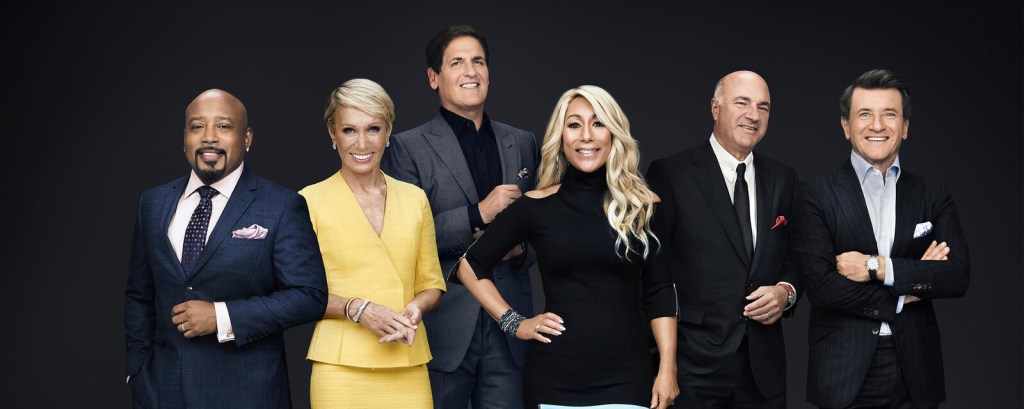
The hit ABC reality television show Shark Tank continues to be one of the highest rated shows on television today. The show’s panel typically consists of its recurring millionaire and billionaire venture capitalists: Kevin O’Leary, Robert Herjavec, Daymond John, Barbara Corcoran, Lori Greiner and Mark Cuban with appearance by others with similar backgrounds and experience.
The premise of the show is for these venture capitalists being presented with new ideas, inventions, products and services from individuals and partners that are seeking investments. The people that enter the “Tank” are given the chance to present these VCs, or “Sharks” as they are known on the show, with an opportunity to invest in their companies.
Many of the people who walk into the “Tank” are told by the Sharks that their business is not a business and that they are not even entrepreneurs. Some are dumbfounded when they hear this because they believe that they are serious entrepreneurs — not just another businessperson looking to make a buck.
So, what differentiates an entrepreneur from a businessperson? Therein lies the basis of our Question of the Week but let’s set some groundwork that possibly could help answer the question.
An entrepreneur is defined as, “a person who organizes and operates a business or businesses, taking on greater than normal financial risks in order to do so.” A businessperson is defined as, “a man or woman who works in business or commerce, especially at an executive level.” Although the two seem closely related, they actually differ on a major level. In order to understand this concept, we’ll have to use the Sharks themselves as examples.
Kevin O’Leary earned his way to fame and fortune by building his educational software company SoftKey, right out of college. As his empire grew, he eventually acquired The Learning Company for over $600 million — taking the name as well. Eventually, O’Leary sold his business to a company called Mattel for $3.8 billion in a stock swap. In 2003, O’Leary moved on to his next venture, Storage Now, which was later acquired for $110 million.
O’Leary now sits on several boards and operates as an advisor to many companies. O’Leary eventually made his way to the Shark Tank after the success of his other show Dragon’s Den, which Shark Tank is modeled after. O’Leary is known as “Mr. Wonderful” on the show for his outlandish and often brutal honesty — as he so puts. He approaches his investment decisions with the cold hard truth that he believes some ideas are just not meant to be businesses.
Robert Herjavec got his start by building up his Internet security empire, BRAK Systems, until he eventually sold it to AT&T Canada in 2000. After an early retirement, Herjavec found his way back to the Internet security world when he founded The Herjavec Group in 2003, where he currently operates as the CEO. Herjavec also started out on Dragon’s Den with O’Leary and now holds a recurring spot on Shark Tank. Herjavec appears to be more optimistic than the other “Sharks”, with more of a sensitive side. Maybe it’s the fact that his working-class father immigrated to America in pursuit of the “American Dream” and taught him that hard work pays off — which he’s used as the model for his success.
Daymond John, who is most famously known for his start-up company FUBU, which he grew with the help of celebrity endorsement and a mortgage from his mother’s house. John built FUBU into the global empire it is today, with global sales at over six billion to date. Although he is known to be a more reserved Shark, taking careful consideration before jumping on a deal, John is known to have a compassionate side and one that has been seen before on Shark Tank.
Barbara Corcoran built her empire with nothing more than a mere $1,000 loan that she used to start her real estate company The Corcoran Group — which she co-founded. In 2001, Corcoran sold her company to NRT Incorporated for $66 million. Corcoran is responsible for pioneering many revolutionary techniques that changed the real estate market. Corcoran is a wild one — the fun-loving Shark, who astounds the others with her business decisions but somehow always proves that she still has her business swagger.
Lori Greiner began her career with the invention of a revolutionary jewelry box that was capable of holding over 100 earrings. Greiner is now known as the “Queen of QVC”, since she has helped launch hundreds of products via the network and holds over 120 U.S. and international patents. She is also the president and CEO of the company For Your Ease Only. Greiner is a savvy investor who has helped grow hundreds of companies. She is a force to be reckoned with — despite her physical appearance she is not to be underestimated.
Mark Cuban, the richest of the Sharks, made his billions despite some claims that were ultimately defeated in court, with the start of his company MicroSolutions in the 1980’s. In 1990, Cuban sold his company for $6 million. After that, Cuban moved on to his next venture AudioNet, which became Broadcast.com and eventually sold to Yahoo! for $5.7 billion. Cuban is probably the deadliest of the Sharks, with the biggest bite. He’s known for his ruthless execution and ability to swoop in at any moment and steal a deal right from another Shark’s mouth. Although this is true, Cuban has been known to drop out of the race if he feels he can’t contribute more than another Shark.
As far as the term “entrepreneur” is concerned, assuming that it’s not as subjective an idea, but more literal: Mark, Kevin and Robert seem to fit this definition best and more so than Barbara, Lori and Daymond. The reason for this is due to the fact that these individuals have started their companies, sold them and started new ones, continuing this trend indefinitely. Daymond is sort of in the middle since his claim to fame is mostly FUBU. Barbara and Lori predominantly gained success from one business, which generated most of their wealth, later allowing them to invest in future companies.
At some point in their lives I believe that all of these Sharks were full-time entrepreneurs but as time progressed and success achieved, Barbara and Lori, and to some extent, John actually “switched” positions and became businesspeople, just managing their day to day operations, investing in some other companies, but letting others follow through on the vision, actually passing the entrepreneurial torch on to the next eager person, or better stated, igniting the entrepreneurial torch for others.
I don’t believe it could be argued that an entrepreneur is a businessperson. But I do believe it can’t be argued that not all businesspeople are entrepreneurs. So, what differentiates an entrepreneur from a businessperson?
As always, I look forward to your response. I appreciate all comments and perspective. Thank you in advance for taking the time to share your thoughts.
An obvious answer to the question of how to stimulate local economies is job creation, but that’s only a fraction of the answer. Steady growth of local business improves communities as well as the overall economies and ecosystem of these communities – small cities, college towns, rural markets, and essentially, areas beyond larger cities and the first ring of suburbs.
If there was a silver lining in the pandemic, it’s the realization that work could be efficiently and effectively performed away from the office. Mind you, I’m not a big proponent of all work being performed remotely, but the flexibility of a hybrid work structure would enable individuals and families to live further away from urban areas and close suburbs. It provides opportunity to reside 50-80 miles or more away from the office as commuting would be limited to a couple of days a week. Thus, many, if not most wouldn’t mind a longer commute if it wasn’t required every day.
As well, college towns like Auburn, Alabama and College Station, Texas, always attractive to its alumni and former students, but lacking opportunities for a wide range of careers beyond those at or related to the local university. Yet, being able to live there was a consideration, but really not much of an option. But the dream remained.
Even with the flexibility to live further away from the ‘big’ city and crowded suburbs, how does a small town attract individuals and families to their area? There must be amenities. There must be conveniences they’ve grown accustomed to. There must be good schools for their children. There must be restaurants and movie theaters. And the list goes on.
Unfortunately, many small towns have seen better days, but a renaissance of sorts has started. City and county economic development departments are extremely busy looking for ways to showcase their local market. Sure, a few may become a destination such as what’s going on in Johnson City, Texas as a growing Texas wine market.
But truly, what is sustainable for towns over the long-term? How do they achieve balance as opposed to having all their eggs in one basket? The answer is local entrepreneurship.
Businesses move their headquarters there or open a branch in the region. This attracts executives who want to work for these companies. It’s a ripple effect that makes local entrepreneurial growth the gift that keeps on giving. Said Daniel Isenberg, founding executive director of the Babson Entrepreneurship Ecosystem Platform, Associate at the Harvard Kennedy School of Government, and Adjunct Professor at Columbia Business School, “There is not one greatest impact these programs create; that’s what makes it so self-sustaining and a true ecosystem: it is self-organizing.”
Ultimately, local entrepreneurship has great potential as an economic development strategy for rural communities with or without stagnating or declining economies. A thriving local economy can substantially alter a city’s image, making it a more attractive place to work and to live. Local entrepreneurship also stimulates a sense of community. Think back to Main Street of yesteryear where neighbors and friends often see each other in the local grocery store or cafe. Small business owners all knew each other, often referring business to each. Local sports teams were sponsored by local business owners.
Similar to Main Street was the town square. Often Main Street ran into the town square but in some small cities, town sqaure was the town with businesses surrounding a common area for meetings, events, and relaxation in a park-like setting. It was the center of the community. A common place for all but one that was supported by local business owners, and entrepreneurs of the day. The same can hold true today. Actually, it must hold true for tomorrow.
Business owners and entrepreneurs are not the only players responsible for building up the economy. “If everyone doesn’t participate in the growth, then it will not spread and take root,” said Isenberg. “There is one entrepreneur on the stage but there is also a cast of characters, orchestra pit, and the audience. Without those ecosystem stakeholders, change will not be successful.”
Isenberg has witnessed firsthand how big influencers are coming around, realizing they must invest in growth for the greater benefit of not just business, but of the entire ecosystem of a region and of themselves. Change takes a village, but once it has taken a hold of a region, growth will be substantial and impactful.
Shared from CameoNetwork.org… A shift is needed to move from old strategies that may have worked for a different economy to a new innovative, creative and flexible method that will work for today’s economy – strategies that are based on creating jobs locally and based on building a Local Entrepreneurial Ecosystem. This will create a strong and diversified infrastructure of many small, locally owned businesses that will be a major source of job creation, economic stability, and community success in the new economic reality.
“Connected economies have higher median incomes, lower-income volatility, more high-wage service jobs, lower median ages, higher population growth, and greater educational attainment than their isolated peers.” – “The Challenges and Opportunities of Running a Small Business in Rural America,” John Lettieri, Economic Innovation Group
There’s a lot of work to do but I believe small town USA will be the driving force behind recovery for our great country. Resources must be committed to assisting current and aspiring entrepreneurs alike. A return to Main Street is inevitable. It’s already begun. But it must be stimulated further, proactively. The time is now.
Today’s Entrepreneurs. Are you one of them?
The world around us has become so noisy that it’s easy to not hear opportunity knocking. In the past, opportunity presented itself in only a few ways… a job offer, a referral, an ad in the paper. Business was regimented… 9 to 5, straight forward processes, slow to change, staying inside the box.
Well, technology along with our lost feeling of security, job and other has provided us opportunity and reason that we must keep our eyes open, explore beyond our comfort zones and maintain an open mind to create things of value, to control our own destiny, to diversify our income, to take calculated risk, to think and act outside the box (of complacency, fear and procrastination).
We’re in an environment where the visionaries continue to create the playing field but it will only be doers who will win… the ones will act swiftly, yet deliberately – often throwing caution to the wind, caring little about what others think of them and their decisions, maintaining a laser-focus to succeed. Those doers are today’s entrepreneurs.
If you could do one thing to transform your life, it’s highly recommended finding something you’re passionate about and focus a significant amount of your energy toward the same.
Now, this isn’t as easy as it sounds, but it’s well worth the effort. If you dread going to your job or business, or find yourself constantly lacking motivation, or find what you’re doing dull and repetitive, you need to start looking for a new direction. Staying where you are will not only continue to make you unhappy, but you are not realizing your full potential in life.
If you’re thinking about doing something different in life, think no more and follow Nike’s slogan to, JUST DO IT!
“When you keep hitting walls of resistance in life, the universe is trying to tell you that you are going the wrong way. It’s like driving a bumper car at an amusement park. Each time you slam into another car or the edge of the track, you are forced to change direction.” – Suzy Kassem, Rise Up and Salute the Sun: The Writings of Suzy Kassem
Did I Choose Entrepreneurship, or Did it Choose Me?
Perhaps the buzzword of the internet in the 21st century, Entrepreneur is a term that is thrown around quite loosely nowadays. With the abundance of opportunities to start businesses online with little to no capital, more and more people are choosing the path of creating their own destiny. Much like myself.
When it comes to being an entrepreneur, there are a lot of things that people don’t consider. For one, it requires a lot of self-discipline and accountability – which not many people have. Fortunately for me, I developed a lot of the characteristics and habits of a high-performing entrepreneur through playing golf at an elite level.
As franchising continues to grow despite the pandemic, new concepts are entering the space offering franchise opportunities across most industry segments. This has been occurring at a rapid clip for the past few years and is anticipated to continue for the foreseeable future. That means that in addition to exploring opportunities with household names like Taco Bell, FastSigns and The UPS Store, candidates now have options to explore new brands such as Pepperoni’s, Outlaw FitCamp and Code Ninja. These newer brands are referred to as emerging brands while the former considered legacy brands.
With this new wave of brands, candidates are faced with questions beyond the norm. Instead of just focusing on investment level, industry segment and competition they will ask about the difference between legacy and emerging brands and advantage of one over the other. They’ll also ask specifically about an emerging brand head-to-head with a competing legacy brand that may clearly be the leader in that industry segment. They’ll wonder, isn’t it safer to invest in a recognized brand with a proven system as opposed to investing in something new and relatively unknown?
Let’s look at the obvious differences.
Legacy Brands
Typically, the brand has been developed over many years. In some cases, 20-50 years or more. There’s a relative level of success as exemplified by the sheer number of locations across a region or across the country. The perception of success is even greater. The brand name is well known from geographic locations to a multitude of advertising. Some by slogans and spoke persons – Who doesn’t know, Double A ‘Beep Beep” MCO (AAMCO) or Colonel Sanders (KFC) real or lookalike? For training and support there’s most likely an impressive corporate office with various departments and possibly local field offices or training centers.
Emerging Brands
The brand or initial business from which the franchise has been developed is well known locally. The founder is also well known and may be a local hero, of sorts. Customers live in the founder’s neighborhood with some knowing him or her from way back when. The brand is viewed as the antithesis of the big chain attracting customers like a magnet.
So, with these obvious differences, why invest in an emerging brand? It really does come down to personality and specifically willingness to tolerate a higher-than-normal level of risk, desire to communicate directly with the founder, desire to get in on the ground floor and opportunity to help mold the brand. Yes, it’s an entrepreneurial personality that is attracted to emerging brands and is probably the best answer to-date in the ongoing debate about whether or not a franchisee is an entrepreneur? Well, let’s leave that for another day…
In upcoming editions of Acceler8Success Cafe, I’ll take a deeper dive into the difference between legacy and emerging brands, and I’ll address the relatively new brands that have rapidly grown beyond the emerging brand category but certainly not to be considered a legacy brand. A couple of exciting brands immediately come to mind including Teriyaki Madness, Mosquito Joe and Crave Hot Dogs and BBQ. In addition, I’ll take a close look at a fast-growing segment of franchising, the multi-brand franchise systems offering complementing opportunities. Last, I’ll also be exploring a booming segment of franchising – home-based and home services businesses, both offering relatively low initial investments levels and flexibility, opportunities in high-demand by Millennials and Generation Z and also by Seniors.
Although franchising offers a plethora of opportunities across many industry segments and investment levels, diligence is even more important than ever before. So, if you’re considering owning a franchise as the next step in your career path, PLEASE, DO YOUR HOMEWORK AND MORE!
Question of the Week:
Is it safer to invest in a recognized brand with a proven system as opposed to investing in something new and relatively unknown?
Other articles at Acceler8Success Cafe that are relevant to buying a franchise include:
Sunday at Acceler8Success Cafe is the time for looking back over the past week. It’s a time for review as with so much going on at Acceler8Success Cafe I know it’s easy to miss a newsletter or two. Possibly my Question of the Week slipped by without you noticing, or an announcement I may have made just seemingly got lost amongst the busy news feed.
Just like an experience at your local cafe, I really want Acceler8Success Cafe to be conveniently located when you desire or need to relax, enjoy a cup of coffee, and catch up on some reading. My goal is for Acceler8Success Cafe to be your virtual cafe. A place where you may frequently visit to enjoy a few minutes to yourself. I’d like the experience to be memorable by providing learning opportunities, by presenting a different perspective & insight, by spurring thought & reflection, by encouraging interaction, and by spotlighting topics that, frankly, may not be as front and center as they should or need to be.
Acceler8Success Cafe is open for business seven days a week. For the benefit of current & aspiring entrepreneurs, this daily newsletter is delivered each morning. As a way to jumpstart the week ahead, a weekly review is delivered each Sunday morning listing and linking to the articles you might have missed during the previous week. My goal is to provide an opportunity for you to begin the new week informed and with ideas that possibly could accelerate your success.
The process of personal branding involves finding your uniqueness, building a reputation on the things you want to be known for, and then allowing yourself to be known for them. Ultimately, the goal is to create something that conveys a message and that can be monetized.
This week as I’m focusing on Personal Branding, my thoughts wandered back to 2012 when I presented at the Franchise Brokers Association Conference & Expo. My presentation was appropriately titled, Personal Branding for Franchise Brokers. I recall many questions that essentially asked the same thing – What is personal branding and why is it important to me as a franchise broker or franchise salesperson (or business development professional)?
Question of the Week: How important do you believe personal branding is today?
Economic uncertainty. Recession. Failing business. All would certainly depict challenging times, if not devastating times. For most, these are unchartered waters. Certainly, giving up is not the answer. Or, at the very least, it shouldn’t be the only option. So, how can personal branding help navigate through rough seas until the waters calm down again?
We often hear about entrepreneurs being incessant about working long hours, never taking a day off, missing family functions, and essentially not having lives outside their own minds, and their work. Many have asked me if all of that is true?
Mental Health Awareness Month is coming to an end. Hopefully, we’ve all learned a little more about mental health than we did before. Truly, it needs to be front and center, and we must all do our part to recognize and address it however we can for ourselves, as well as for others.
Remembering the tragic event in Uvlade, TX
Words cannot describe my thoughts and the sadness I feel… It’s all so senseless. How? Why? Both repeat through my mind. I think about these poor people – and of course, the children! I cry for them and their loved ones. I think of my own grandchildren – OMG I couldn’t even begin to imagine… it’s true that in an instant, life can change forever.
Instead of sharing our thoughts & prayers as we do EVERY time we hear about a tragic event, especially, seemingly after a mass shooting involving children, I’ve chosen to promote kindness to honor the victims and their families. Maybe, just maybe, by spreading acts of kindness, we can change the tide of isolation, loneliness, despair, hopelessness, lawlessness, godlessness, and yes, evil that ultimately is behind these dreadful, heartless acts. What we do makes a difference. Let’s all do our part, one act of kindness at a time.
Have a great day (and week ahead). Make it happen. Make it count!
We often hear about entrepreneurs being incessant about working long hours, never taking a day off, missing family functions, and essentially not having lives outside their own minds, and their work. Many have asked me if all of that is true? Well, for the most part it’s not true. Yet, there is some truth. Sure, some of it is myth as people just love superheroes and the stories about their seemingly superpowers including being able to function on little to no sleep.
Well, let’s dispel right now that entrepreneurs are anything more than human. Let’s dispel the myths that they can function without sleep, without rest, without knowing when to shut down for a day or two. But what we can do is learn from what makes them successful by ensuring sure they have the freedom and flexibility to do what they want to do, when they want to do it. It’s all about being positioned to have choices.
Award-wining author and entrepreneur, Richie Norton says it best, “Entrepreneurs don’t have weekends or birthdays or holidays. Every day is my weekend, my birthday, my holiday. OR every day is my workday. Mostly it’s a choice.”
Strategic Coach is one of the world’s leading organizations focused on entrepreneurial success. Within their resource section of its website is a blog post, Putting the Focus on Freedom. Of all the information about entrepreneurship that I have researched and read over the years, the opening question and statement in this post has become, in my mind the foundation of entrepreneurship to me:
“Why did you decide to become an entrepreneur? For most entrepreneurs, the answer is freedom. They wanted more freedom of time, money, relationship, and purpose when they took the leap to starting their own business.”
Another great organization focused on entrepreneurial success is The Lonely Entrepreneur. What I love about this organization and the writings of its founder, Michael Dermer is the reality of entrepreneurship and the inner workings of an entrepreneur’s mind.
There’s an article on The Lonely Entrepreneur website that always comes to my mind as a holiday weekend is in sight, What is an Entrepreneur? Dealing with the Holidays. This particular statement is embedded in my mind:
“As entrepreneurs, we have enough stress throughout the year trying to win customers, bring on employees, raise money and sign deals with vendors. We may have enjoyed, or even taken advantage of these breaks in our “past lives,” but once you become an entrepreneur, we can’t understand how this ever made sense. Most of us also don’t understand how the world could be so insensitive to our efforts by taking time off when we need to get shit done.”
I highly value both organizations and certainly, I respect both Michael Dermer and Strategic Coach founder, Dan Sullivan. I know that both strive to help entrepreneurs succeed. Both have approaches that make sense. Both speak and teach from personal experience and long distinguished careers of helping others succeed – thousands upon thousands! Yet, each comes from a different angle, so to speak. But I do appreciate that!
It truly has been a blessing and a privilege to have been exposed to both organizations. I have learned so much, and yet, have so much more to learn so I’m extremely grateful to see both founders’ continued efforts and commitment to entrepreneurial success. For me, it helps me balance perspective in my own work, and balance in my personal life.
Freedom. Choice. Balance.
Freedom is defined as the power or right to act, speak, or think as one wants without hindrance or restraint.
Choice is defined as an act of selecting or making a decision when faced with two or more possibilities.
Balance is defined as a condition in which different elements are equal or in the correct proportions.
Do you see where I’m headed with this? Are you wondering, what does freedom, choice and balance have to do with entrepreneurs and holidays, the basis and title of this article? To some it may mean nothing. To others, as it does to me, it speaks volumes. But what it means to you is the correct answer.
Have a great day (and weekend). Make it happen. Make it count!
Elan Musk has 94.8m followers on Twitter; Tesla has 15.6m. Bill Gates has 59.1m followers on Twitter; Microsoft has 10.7m. Even Mark Cuban has significantly more followers on Twitter at 8.6m than his own Dallas Mavericks at 2m. I probably could do a mic drop here to prove the point about personal branding being more front and center for entrepreneurs than the widely popular and well-known brands of which they are most associated.
Okay, I agree. Musk, Gates & Cuban are in a celebrity class and of course known to many, if not, to most anyone. But that wasn’t always the case. Over the years they rose from entrepreneur status to influencer status. Think about the Kardashians or for that matter, any of the influencers today on You Tube or Tik Tok. All have built personal brands that influence people. Of course, besides associating their names with other brands, their rise in popularity significantly increases the awareness, and value of their own brands… and themselves.
“Your personal brand is a promise to your clients… a promise of quality, consistency, competency, and reliability.”
– Jason Hartman
Before continuing my focus on entrepreneurs and personal branding, I’d like to make the point of how valuable a strong personal brand is for anyone in business today. In today’s Digital Age, anyone – yes, anyone – can be seen as an influencer in their company, industry, or community. Sometimes, in all three.
Through social media, blogs, vlogs, videos, podcasts, e-publications and more, anyone can be visible to their target audience as well to audiences of which they might not even be aware. And influencers are often viewed as experts. Imagine interviewing for a job and the interviewer Googles your name and finds result after result that showcases your influence… and expertise?
Now let’s shift back to entrepreneurs, including aspiring entrepreneurs. A strong personal brand goes a long way toward raising capital and attracting top talent. It also helps generate interest in the business or concept itself which in turn attracts customers or clients, as well as potential suitors for joint ventures, strategic partnerships… and how about private equity players?
An article at PersonalBrand.com lists seven reasons why a personal brand is important for an entrepreneur or business owner as follows:
A personal brand gives you more credibility. Building a personal brand is almost like creating your own “Credibility Bank” where you make small daily and weekly deposits. Over time, you’ve got a huge asset that continues to grow on its own.
A personal brand will attract client to you versus you chasing them. A strong personal brand is a magnet for business. A well-built personal brand will attract more business than you know what to do with, but it won’t happen overnight.
A personal brand gives you the ability to work with higher-quality clients. Not only will your personal brand start to attract clients, but it will also start to attract higher-quality clients as well. Successful people want to do business with other people who know what they are doing.
A personal brand allows you to charge more money. One way to start charging more money faster, is to establish your personal brand in a specialized niche of your industry. Specializing allows you to focus and get results for your clients/customers. People pay for results. The bigger the results you get, the more you can charge.
A personal brand allows you to choose more freedom. When you can start charging more money, you now have the ability to choose how much you want to work. You can still work crazy-long 12–16-hour days, and stash cash. Or you can scale back your hours, work with only the BEST clients that come your way and enjoy a better quality of life.
A personal brand helps you build a better network. Have you heard the saying, “Your network is your net worth”? Well, it’s true, and building a personal brand is one of the best things you can do to build your network, and ultimately, your net worth.
A personal brand will get you in on bigger, better deals. As you build your brand, you will build a following and as a result a lot more people will want to work with you. If done right, your personal brand should also attract other movers-and-shakers who can bring bigger, better deals and opportunities your way.
People want to do business with people. They buy from people. Sure, the brand may get them in the door, but it’s the person representing the brand that they want to do business with.
The bottom line is, it’s not uncommon for anyone interested in doing business with you today to perform a Google search of the brand or company AND the founder or other leaders of the brand or company. What they hope to find is information that lends to experience and expertise. (Even the banking industry is moving towards utilizing a social reputation score for business loan applicants that will rival the credit score.)
I’ll use franchising as an example. I don’t think that it can be argued that a franchise organization with franchisees with strong personal branding wouldn’t be significantly stronger than a system with franchisees that just stand behind the counter.
I’m certainly not degrading the efforts of franchisees that strive for 100% customer satisfaction and are willing to put in long hours to ensure the same. But with a strong personal brand that reaches into the local community, franchisees would be more successful driving the business. I refer to this as GOYA marketing – Get Off Your Ass marketing. Here’s the great part of GOYA marketing… and again, in today’s digital world, much of the personal branding can be done online!
Personal branding is about YOU. The key to your success is YOU! Yes, I am a firm believer in location, location, location, and I always stress to not settle for a secondary location as that is a recipe for failure. But as important for me is to stress: YOU! YOU! YOU! Not doing so is more of a recipe for failure!














You must be logged in to post a comment.