Category: Entrepreneurship

Acceler8Success Cafe Wednesday 6.2.21

A New Virtual World has Arrived

The world is becoming more digitized every day. Pushed by a pandemic that forced a large part of the workforce and academia to operate remotely, virtual life has become a norm.

The virtual world is being supported by a myriad of new and exciting technologies including artificial intelligence, augmented reality, and exponential connectivity to both people and objects. The virtual communication trend is rapidly expanding across industry, academia, and government.

Collaborative and interactive work environments are trending in industry. Before the pandemic, already many workers were operating from their homes and telecommuting. That number has grown substantially since Covid19. Offering a virtual employment capability allows for a more flexible, adaptive, and productive workforce.

Virtual business is integral to the emerging “Gig Economy” being reinforced by the millennial generation. Virtual communications combined with virtual reality will become integrated into business applications. It can also serve as an outlet of entertainment; and already is in gaming at attractions such as “Soaring” at Disney World. It is a booming virtual market. The AR market is expected to reach $70-$75 billion in revenue by 2023 and it is estimated that 500 million VR headsets will be purchased by 2025. Augmented and Virtual Reality Statistics in 2021 | AR & VR Stats (ukwebhostreview.com)

Read more at BizCatalyst360.com

The Calm Before The Storm: How The Pandemic Recovery Will Change Business

It’s almost summer and the Pandemic is starting to ebb, so everyone’s talking about Hybrid Work. But as I think about the Fall and year ahead, I think there’s a bigger storm coming – a storm caused by the recovery. It’s not a bad storm, but it’s a storm – and the rate of change is going to be violent. In this podcast, these changes are discussed.

Read and listen at JoshBersin.com

“A lot of people have ideas, but there are few who decide to do something about them now. Not tomorrow. Not next week. But today. The true entrepreneur is a doer, not a dreamer.” – Nolan Bushnell

Here Comes the Great Resignation. Are You Prepared for the Ensuing Talent Shortage?

Have you read the news? The Great Resignation is coming. Anthony Klotz, a Texas A&M University academic who studies organizational management trends, told the media recently that employers should expect a significant exodus of talent as the job market continues to stabilize.

Klotz explained that when there’s economic and societal volatility, employees tend to stay in jobs, even less than ideal ones. This means that the pandemic delayed resignations among those highly motivated to quit. Additionally, those who have begun to search for more meaningful work and balance, inspired by spending more time at home, are also prepared to job switch.

This means that the hiring market tide (which had already begun to turn in favor of job seekers) is going to roll in even faster. By mid-Summer, it is anticipated that there will be more employers looking for talent and more highly motivated top-tier candidates on the move. 

Learn more at 24SevenTalent.com

How To Recruit In A Virtual World

Covid-19 has presented the business community with some unique challenges. The near-shutdown of the economy has destroyed many companies and adversely affected the way we conduct business. One of the most challenging areas business entities, executives and teams have had to face is working remotely.

In contrast to the pre-Covid-19 environment, many of us found ourselves in new territory, seemingly handicapped by the lack of human interaction. A sense of anxiety ensued whereby questions arose such as: How will we collaborate? How do we stay on task? How do we snoop on our subordinates (well, maybe not this one)? How do we recruit new talent without meeting them face to face?

Read more at Forbes.com

Virtual Businesses Take Off: How to Start a Fully Remote Business

In the age of remote work and social distancing, it’s easier than ever to launch, grow and run a business without the need for a physical office or in-person meetings. If you’re considering exploring this path, though, it’s important to have the right technology, systems and processes in place.

Whether you’re launching a new company or transitioning a previously in-person business to a permanently remote one, here’s what you need to know about running a fully virtual business.

Learn more at USChamber.com

The Necessity Of Women Supporting Women In a Virtual Revolution

It is no secret that women supporting women is absolutely critical to our growth and evolution. Not just for women, but the difference it makes to society as a whole. But we don’t spend nearly enough time thinking about ways to extend this initiative into our virtual reality. The truth is, women need equal if not more support online to navigate the complexities of human interaction, from conducting business to building relationships or even surfing social media.

As any woman will tell you, the Internet can be a really dark and often dirty place for us. Whether its unsolicited sexual harassment sliding into our DMs or the deep anxiety and fatigue of swiping through everyone else’s “perfect lives”, women particularly are struggling to maintain their identity and self-worth without constantly looking for virtual validation so they can use technology to their benefit.

And as the global market moves increasingly online, many women entrepreneurs are running their entire businesses virtually. Communities that enable and encourage these women to connect with each other provide opportunities for collaboration and livelihood. And if the pandemic has taught us anything it is this; that our reality is going to become only increasingly virtual.

Read more at Entrepreneur.com

How to Avoid Remote Work Stress & Burnout

Working from home stress is remarkably common for remote employees. That’s why learning how to take care of your mental health when working from home is crucial for today’s ever expanding remote workforce.

Managing your mental health at work is just as important as reaching your project goals and maintaining high levels of productivity. Issues associated with employees who work from home, such as loneliness and burnout, are on the rise — especially with employees who have never worked from home before. 

Remote work is no longer just a perk. Today, it’s a necessity for many. When your house doubles as your workspace, it can lead to difficulty setting boundaries, added career pressure, issues managing workloads, and more. These are just some of the reasons many find it difficult to work from home full time.

Employees that have transitioned to remote work may also have the added pressure of working with children in the house, and catering to their family’s needs while trying to stay engaged and productive at work.

Read more at Wrike.com

How to Stay Calm When the People Around You Are Stressed

As we continue to deal with the challenges that come with the pandemic, it’s only natural to feel stressed from time to time — and you might notice that your colleagues, friends, or family members seem tense as well. While we want to be supportive of the people in our lives, being in contact with all that stress can have a negative domino effect, and further prevent us from staying calm ourselves. 

“I try to start my mornings with a meditation, and it gives me a sense of calm to carry me through the day. It varies day to day from three minutes to even forty, depending on how much time I have, but I try to never miss this space. If there’s something bothering me or that I want to reinforce during the day, I search for an assisted meditation on that topic.” – Brunella Mori, senior project manager, Peru

Learn what others suggest at ThriveGlobal.com

What Are the Myths You Hold About Your Personality?

When you consider the past events in your life, what do you believe define those key turning points? How do you reply when people ask you to tell them about yourself? You might choose to focus on the so-called “objective” facts such as where you grew up and when you graduated from school. Or, if the situation calls for more reflective answers, you might talk a bit more about what it was like growing up in your family or what factors led you to make some of your major life choices.

Perhaps you’ve noticed that at each retelling of your past life experiences, some of your answers have taken on an automatic quality where you don’t even have to think about how to respond. As this so-called narrative about yourself starts to take shape, the details may shift, but overall, it will have some type of theme or organizing framework.

Read more at PsychologyToday.com

Why is Positive Thinking the Key to Overcoming Obstacles?

These days, when we are facing the coronavirus disease (COVID-19), we hear about new cases and deaths around the globe on a daily basis. The numbers have been growing already for several weeks. Despite the tremendously hard work of doctors, nurses, scientists, lab technicians, policemen, and many other heroes, nobody knows how long this situation will last, and when we will be safe again to meet our families, friends, and colleagues face to face. Our heroes put their health at risk, I dare to say, even their lives. This looks like operating in a war zone. We all live in uncertainty and many of us live also in fear. We are afraid to lose either our loved ones, our jobs, clients, or our income. And those fears are normal.

However, we should find a way to think positively and believe that everything will be fine again because it will! And we need our positive minds in order to be stronger and motivated to take action, to go through those tough times.

Negative thoughts and negative emotions are not helpful. They eventually enter our minds and stop us from taking action towards where we want to be. I would recommend that when you catch yourself having those thoughts and emotions, thank them for being there. No kidding! They serve their role – they send you a message that something needs to be improved, changed. Then, make time for positivity and start identifying steps to make changes.

Read more at BizCatalyst360.com

How Covid Inspired a New Generation of Entrepreneurs

Humans normally respond to big unforeseen shocks in one of two ways:  either they recoil from risk-taking like we saw after the Great Depression, leading to creation of the modern welfare state and a generation that feared the stock market; or they accept that risk is part of life and learn to embrace it — like they did in the Roaring Twenties after the 1918 flu and 1920 recession.

So far it looks like we’re going with the 1920s — at least from an economic risk perspective. Entrepreneurship rates are up.  

That might seem counterintuitive. After all, the past year was exceptionally hard on small businesses, leading many to shut down. But the number of new business applications from the U.S. Census is up 38% compared to the year before the pandemic. Nothing similar to this happened during the Great Recession or dot-com bust. The Census classifies two types of business applications, those that will probably grow and hire other people (called High Propensity applications), and business that will stay small and mostly limited to its founder. The latter dominates the “all other kinds of applications” category, and may include things like consulting, contract work, or small-scale catering.

Economist John Haltiwanger dug into the data and estimates that most of the new businesses will probably stay small, not hire more workers, though application rates are up for both kinds of businesses.

Learn more at Bloomberg.com

“Your work is going to fill a large part of your life, and the only way to be truly satisfied is to do what you believe is great work. And the only way to do great work is to love what you do.” – Steve Jobs

The New-Era Entrepreneur

In the midst of global economic uncertainty and a rapidly changing social environment, many entrepreneurs find themselves in a state of panic. For many in the new age of entrepreneurship, this is the first major “disruption” in business activity that they have experienced. Running a business and maintaining the status of self-employment was never an easy task, and it just got a lot harder. However, with the proper mindset and affinity for innovation, success is still on the horizon.

The good news is, there are a few core principles in the world of business that will never change and are arguably now more important than ever.

First, the allure of authenticity and value. In the post-pandemic economy, this is truer than ever. The era of “fake it till you make it” is long over and gives room for a new, value-centric market.

Read more at Forbes.com

Study: Black Entrepreneurship in the United States

A steady stream of media reports detailing the deaths of unarmed Black Americans at the hands of police. False 911 calls aimed at bringing harm to African Americans engaged in innocuous, everyday activities. Street protests calling for an end to discrimination and police brutality. 

As racial tensions swirled this summer, so did calls on social media for those who support the social justice movement for African American civil rights to amplify Black voices and support Black businesses.

One problem? A lag in Black entrepreneurship and corresponding deficit in Black businesses available to support — a result of hundreds of years of racial discrimination in the United States — says Tiffiany Howard, a UNLV political science professor and recent Congressional Black Caucus Foundation (CBCF) senior research fellow.  

In a new study, Howard and her CBCF colleagues researched strategies that large banks can implement to help bridge the economic divide.


Learn more at UNLV.edu

Acceler8Success Cafe Tuesday 6.1.21

Why Entrepreneurship Is the Engine of Economic Development

We often hear that entrepreneurship is important, but it’s hard to overstate just how vital entrepreneurship is for the economy at large. Entrepreneurial activity, or in other words, the creation of new businesses, is what supports local economies, what supports our country’s GDP and what helps the stock market continue to grow.

So why is it that entrepreneurship is such a powerful engine of economic development?

It’s actually more complex than you might think.

First, the evidence suggests that small businesses created by entrepreneurs are disproportionately responsible for job growth. Small companies create more than 1.5 million jobs annually in the United States, which translates to 64 percent of total new job growth.

Why are new jobs so important? Economic growth is partially dependent on job growth. More available jobs lead to more people working, and more people working leads to higher GDP. On top of that, more people have recurring income and can better provide for their families.

This can also create a kind of cascade of entrepreneurship; more people work, have an opportunity to save up money and can then start businesses of their own.

Read more at Entrepreneur.com

12 Questions You Might Be Afraid to Ask About Entrepreneurship

Back when I was a naive college junior, sitting across from my soon-to-be boss in JP Morgan’s San Francisco high-rise office for my final interview, he handed me the floor to ask any lingering questions about the role. Darren reminded me that I was interviewing him and their company, just as much as they were interviewing me. Little did I know, those days of “ask me anything” interviews would end the moment I hopped off the Wall Street treadmill.

Entrepreneurship, in contrast, doesn’t have welcoming bosses-to-be, comprehensive detailed job descriptions, or any cohesive environment in which to get all your questions answered. It’s more like voluntarily throwing yourself into a chaotic body of rapidly flowing waters all alone, with only two choices: swim to safety or die trying. When the treacherous current kicks your brain into survival mode, you suddenly realize you’re all alone, with no one to answer the questions sprinting through your head.

If that’s how you view or experience entrepreneurship, you aren’t alone — most first-time or early-stage founders feel similarly like they’re flying blind, with no one to turn to. That’s why I’ve compiled 12 of the gnawing questions you may be too afraid to ask as you embark on the entrepreneurial journey.

Learn more at EntrepreneursHandbook.co

5 Success Tips for the Serial Entrepreneur Entering a New Industry

The term “serial entrepreneur” isn’t very common in business circles, but I believe that some people are built for that kind of practice. A serial entrepreneur is an entrepreneur who continuously comes up with new ideas and starts new businesses. As opposed to a typical entrepreneur, who will often come up with a single idea, start the company, then see it through and play an important role in the day-to-day functioning of said company.

A serial entrepreneur will often come up with an idea and get things started, but then give responsibility to someone else and move on to a new idea and a new venture. This would have been a very bad practice in the days when the old cliché held sway, “a Jack of all trades is master of none.” In my opinion I think the 21st century has become “the century of the Jacks.”

As a serial entrepreneur myself, I know how challenging it is to leave the comfort of a thriving business and step out into the icy cold waters of starting a business again, much less in a different industry. However, in 2017, I decided to stop suppressing all my new and unique ideas and just get on with it.

Read more at Entrepreneur.com

An entrepreneur tends to bite off a little more than he can chew hoping he’ll quickly learn how to chew it. – Roy Ash

Here’s Why Entrepreneurs Make The Best Marketers

The best marketers are those who know how to build a brand, scale it for rapid growth, and cultivate long-term success. They understand the essentials of marketing because they have lived it first hand. I’ve learned countless strategies in the process of becoming an entrepreneur and evolving as a business leader.

Whether or not you are a founder yourself, you need an entrepreneurial mindset to be a successful marketer. Here’s what I mean: entrepreneurs are compelled to take their message and mission further because they are wholly devoted to its success. An entrepreneurial mindset means being totally sold on your company’s mission and having the ability to communicate it clearly. 

But, if you’re a marketer reading this, you may not have the rounded experience of an entrepreneur. That’s okay – you just need to adopt the mindset. Here is what an entrepreneur-driven marketing strategy looks like, and how you can implement it for yourself.

Learn more at Forbes.com

How These 10 Latinx Small Business Owners Persevered and Overcame Challenges

Latinx entrepreneurs are making incredible contributions to the world of small business. According to a recent study conducted by The Stanford Latino Entrepreneurship Initiative (SLEI), Latinx entrepreneurship has grown 34% in just the last ten years. 

Yet, that doesn’t mean that success comes easily. These ambitious Latinx entrepreneurs don’t just have to overcome self-doubt or know how to pivot quickly during moments of a business slowdown. They also face significantly less access to funding and can face discrimination in their communities.

Despite the obstacles, Latinx entrepreneurs consistently identify strategies to move their businesses forward, share their culture, and succeed on their terms.

Read more at Invoice.2go.com

New Moms Can Fix the Entrepreneurship Gender Diversity Gap, If We Help Them

Fix the gender diversity gap in entrepreneurship? Focus on supporting female entrepreneurs who are starting a family.

Sure, there are mentorship programs, female-focused incubators, books and podcasts to “lean in” or “lean out.” But how about policies supporting parents so they can actually found and grow companies, to ultimately diminish inequities in entrepreneurship.

Did you know the average startup founder is in their early 40s? And why are they mostly men? Because by the time a future entrepreneur cuts their teeth, builds the expertise, saves up to bootstrap, they’re right at the baby-rearing age window. And, by that “baby time” (let’s call it that, say) there are new choices that need to be made by women.

Women don’t have to make the same choices and considerations as men when deciding to start a family, I don’t care what you say.

Read more at News.Crunchbase.com

I have not failed. I’ve just found 10,000 ways that won’t work. – Thomas Edison

15 Tips On Becoming a Successful Female Entrepreneur from MeetingPlay’s Owner, Lisa Vann

According to the US Chamber Foundation, only 2% of women-owned businesses have 10 or more employees. Only 1.3% of venture-backed companies have a female founder. And though technology is one of the fastest growing industries in the US – less than 25% of those who work in the tech industry, are female.

As the owner of an engagement driving event technology business with nearly 30 employees and growing daily, Lisa Vann continues to break through the barriers of women entrepreneurs in the technology industry.

Read more at MeetingPlay.com

Welcome to The Social Geek Radio Network.

Get in touch with your inner geek. Jack Monson and many special guests discuss social media and digital marketing trends for brands, small businesses, and franchises. 

Social Geek Radio was listed as one of 20 Best Business Podcasts according to Emerge and was named to the Best Small Business Podcasts by FitSmallBusiness.com. Recently, Social Geek Radio finally made the Top 25 podcasts in the Marketing category of Apple Podcasts / iTunes.

Listen, download, subscribe to Social Geek Radio!

The Digital Entrepreneur

The Digital Entrepreneur is for people who want to discover smarter ways to create and sell profitable digital goods and services. Tune in weekly as Sean Jackson, Katy Katz, and a host of experts give you the strategies and insight you need to start building your digital business … the right way.

Learn more at Rainmaker.fm

Entrepreneurs on Fire

Entrepreneurs on Fire is one of the leading business podcasts today. Hosted by John Lee Dumas, it has won the Best of Apple Podcasts award, and has over 2,500 episodes and 85 million downloads. What makes it exceptionally unique from most other podcasts is that new episodes are released every day.

Dumas aims to inspire and educate young entrepreneurs in this show. To that end, he interviews legends of business growth and financial freedom. Some of his guests include Tony Robbins, Seth Godin, and Tim Ferriss.

This podcast is for anyone who is looking for some inspiration to enhance their business and entrepreneurial journey. If you want to listen to real stories of the world’s top leaders and entrepreneurs, then we recommend checking out this show.

Read more at EOFire.com

The Tim Ferriss Show

Tim Ferriss is yet another name we can’t leave out when talking about success in business and entrepreneurship. As an entrepreneur and author, he is most popular for his bestselling book titled “The 4-Hour Workweek.”

His podcast celebrates the successes of a variety of people. He interviews famous individuals like LeBron James, Malcolm Gladwell, and Ray Dalio to talk about how to be successful in the field you have chosen.

For people who’d like tips and guidelines on how to be successful in their businesses just like their favorite celebrities, this show is the answer!

Read more at tim.blog

How to Identify Your Entrepreneurial Skills and Redefine Them to Match Your Business?

Do you have what it takes to be a successful entrepreneur? What makes someone a successful entrepreneur, anyway? There is no one defining the characteristic of being an entrepreneur. It certainly helps to have strong expertise in a key area, but there is more to being an entrepreneur than being an expert on a particular subject matter.

No matter how you choose to define being an entrepreneur, getting there requires a lot of hard work and determination. So, let us take a delve into the makings of an entrepreneur. What makes a business person? How do you find out that you are destined to be an entrepreneur?

Though there have been many studies on the subject, researchers have not been able to find out one definitive answer. What they do know is that successful magnates have certain traits in common.

Learn more at OurBusinessLadder.com

The Top 15 Traits That Guarantee to Make a Successful Entrepreneur

Starting your own business is a big step. You want your passion to be recognized and appreciated by people who share similar interests. Or, maybe they didn’t know they needed something until you introduced it to them! Yes, the process is intimidating, but being an entrepreneur also means you are the writer of your own success story. While you may not know where to start, remember that even the most successful entrepreneurs were in your shoes at one point in time. How did they do it?

Read more at FactorFinders.com

43 Ways to Improve Yourself in Just 10 Minutes

We use the word busy way too much. We say it when friends ask us how we are doing, as if being busy is an emotion. We use it as an excuse to procrastinate on unpleasant tasks. We use it to sound important at work, because being busy somehow equates to being successful.

But you’re never too busy for 10 minutes, which is all it takes to improve yourself just a little each day. You can de-stress using meditation, yoga or reading. Track your unhealthy spending habits. Learn a new language. The possibilities are endless. Stop prioritizing the busy parts of your life and make time for the important things, such as the constant development of your mental, physical and emotional well-being.

Read more at Success.com

Acceler8Success Cafe Wednesday 5.26.21

Our Image of an Entrepreneur Desperately Needs an Update

“Young people are just smarter,” Mark Zuckerberg infamously said to 650 aspiring entrepreneurs at a Y Combinator Startup School event in 2007. His logic was straightforward—young people lead simpler lives, so they’re able to focus on big-picture problems. Now that Zuckerberg is in his thirties, I’m not sure he’d still agree—in fact, I’m confident he wouldn’t.

But this idea continues to resonate. Silicon Valley still fetishizes youth, and a lot of people probably see 22-year-old Zuckerberg as the archetype of a founder. Research confirms that many people perceive young entrepreneurs to be more driven and more capable of solving significant challenges.

There’s just one problem. A substantive and growing body of data tells us this picture is dead wrong. A study released in 2017 reveals that the average age of a startup founder is 42. The rate of new entrepreneurs in the US is actually highest among those aged 45-54, and lowest for 20-34-year-olds.

Read more at Shopify.com

16 Young And Successful Entrepreneurs Who Prove That Age Is Nothing but a Number

Self-employment has been blossoming over the past decade. In this age of internet and technology, people are now more confident to try and sell their ideas and hit the road to success. With even the basic skills like knowing how to create a website[1] or marketing products online, people can reach out to the world and showcase their talent.

A study conducted in the year 2015 revealed that about 14% of the total working population in the U.S. was into running a business of their own and we all know that the numbers have been growing since then.

Each day while we drive, when we shower or go through a boring lecture, our minds come up with some of the most intriguing ideas that can potentially become big business plans, but we tend to ignore them as we are never looking to make anything out of it. Our brains are idea machines, but only a few of us go ahead to make these ideas big.

One of the most common complaints of the people who bloom late and succeed in the later ages of their lives is that they didn’t dare enough to sell their ideas sooner. Ironically, one of the most common excuses among the youth is that they are not old enough to start their own business. It is never too early or late to become successful in your life.

Read more at LifeHack.org

Can Entrepreneurship Be Taught in a Classroom?

In early April, a Thai student in our entrepreneurship class saw a shortage of high quality, low cost hand sanitizer across Thailand. To support the Covid relief effort and generate revenue, he quickly shifted his family’s medical supply company to sanitizer production. Closer to home, when Dollaride, a business incubated in NYU’s Future Labs, recognized that the pandemic had eliminated demand for their shared commuting van business in New York, they refreshed their business model to leverage their existing vans, technology, and routes to support burgeoning package delivery demands.

Neither entrepreneur followed a typical business school approach when deciding to pivot their business: they didn’t conduct a long-term market analysis, develop a business plan, or weigh various alternative approaches. In fact, had they done these analyses, they might have concluded that the short-term gains wouldn’t justify the retooling investment, or they might have gotten stuck trying to figure out how to estimate the duration of the pandemic or how soon global manufacturing might recover. Instead, they simply took action based on the resources at their disposal.

Read more at HBR,org

Importance of Youth Entrepreneurship

The importance of youth entrepreneurship is huge. Yet sometimes, teachers and professors do not know how to promote entrepreneurship among youth properly.

Things have changed a lot in the last 20 years. Teenagers do not have the same attitude and mindset as before. Youth entrepreneurship becomes more and more popular on a daily basis. The development of Internet Technology gives us many business opportunities. It really doesn’t matter how old you are. Everyone has equal chances to achieve his business goals.

Because of that, it doesn’t need to surprise us that youth entrepreneurship became some kind of trend.

Learn more at Risepreneur.com

Why Young Entrepreneurs Are Positioned to Succeed

Entrepreneurship is a unique field in which many of the most successful people are actually quite young and found their success in their early twenties, rather than decades later after years of climbing a corporate ladder. There are many reasons why young people are well-suited to entrepreneurial success, and as long as they have the ambition and confidence to move forward with their ideas, these young people are likely to continue to dominate this field.

That said, it’s important that we reinforce their capabilities and equip these adolescents, teens, and young adults with the tools, resources, and support to try their hand at entrepreneurship in the first place. This encouragement can come from supportive parents, entrepreneurial clubs and programs in schools, and business-building extracurricular programs like Beta Bowl, that help give students their first positive entrée into the world of entrepreneurship. In case you needed a refresher on why teens are such perfect candidates for entrepreneurial success, just keep reading.

Read more at Beta-bowl.com

Who are the entrepreneurs?

Recently, the Kauffman Foundation released its annual Index of Entrepreneurial Activity looking at entrepreneurism in the United States. Here’s a breakdown of some of their numbers that give us a good picture of what entrepreneurs look like today.

Entrepreneurism has increased greatly within the Latino community, up to a 20% share of all American entrepreneurs from just 11% in 1996. Asian entrepreneurs increased to 6%. The percentage of black entrepreneurs declined slightly, going from 8% to 9% in 2013. White entrepreneurs made up 76% of entrepreneurs in 1996, but just 61% of entrepreneurs in 2013.

Learn more at Money.CNN.com

Diversity In Entrepreneurship: What We Can Do To Create A Level Playing Field

What inspires someone to become an entrepreneur?

I’ve often wondered what gives some people the energy and focus to take their idea and turn it into reality. I know so many others who dream but don’t ever take action to venture out on their own. They love working and contributing to an organization as part of a team and enjoy the security that comes with it.

But for some of us, entrepreneurship is like an itch that demands to be scratched. For me, it’s the challenge of creating something that makes an impact on people’s lives.

Creating a viable business requires more than just a great idea. There are the long hours and a commitment to doing the work without knowing if your work is going in the right direction or not. Of course, it also requires capital, sound decision making, strategy, the right team and luck. Without these ingredients, the business starves and fails. And even with these, the odds are the business will not make it.

Read more at Forbes.com

The Diversity of Entrepreneurs in the U.S.

New businesses are popping up every day. In fact, an estimated 550,000 open up each month just in the United States.

Of these businesses, approximately 60 percent are launched by men, but women aren’t far behind, launching businesses at six times the national average. Of these female entrepreneurs, African American women are the fastest growing demographic.

Unfortunately though, launching a business doesn’t equate to success. Three-fourths of new businesses only last a year. Your best bet is to open a business in finance, insurance or real estate, which have the highest survival rates in the country.

Don’t let that discourage you though. The world needs entrepreneurs and new businesses: They create jobs, offer new products and/or services, help the economy grow, boost communities and sometimes even spark social change.

Learn more at Entrepreneur.com

Black Americans share in flurry of business startups

There has been a surge in startups in America that experts have yet to fully explain. But a new study — using data that allows researchers to more precisely track new businesses across time and place — finds that the surge coincides with federal stimulus, and is strongest in Black communities.

Across a number of states, the pace of weekly business registrations more than doubled in the months after the The Coronavirus Aid, Relief, and Economic Security Act was signed in March 2020. Business registrations rose again, by 60%, around the period of the supplementary aid package signed in December. Coinciding with the third wave of stimulus in March, weekly business registrations have been up by 20%, but the data is less complete.

Read more at NWAonline.com

Small Businesses Have Surged in Black Communities. Was It the Stimulus?

Over the last year, multiple stimulus measures from the federal government have helped families buy groceries, pay rent and build a financial cushion. This aid might have also helped start a new era of entrepreneurship.

There has been a surge in start-ups in America that experts have yet to fully explain. But a new study — using data that allows researchers to more precisely track new businesses across time and place — finds that the surge coincides with federal stimulus, and is strongest in Black communities.

Across a number of states, the pace of weekly business registrations more than doubled in the months after the CARES Act was signed in March 2020. Business registrations rose again, by 60 percent, around the period of the supplementary aid package signed in December. Coinciding with the third wave of stimulus in March, weekly business registrations have been up by 20 percent, but the data is less complete.

Read more at NYTimes.com

Female Entrepreneurship Is on the Rise

Women are founding companies at a historic rate, with more than 9 million women-owned businesses in the U.S. today.

Over the past 15 years, these women-owned firms have grown at a rate 1.5 times other small businesses and are estimated to provide more than 5 million jobs by 2018.

There’s still a long way to go though — female-led businesses only make up 30 percent of companies around the world. There’s much opportunity ahead — businesses with at least one female executive team member are more likely to receive higher valuations in their first round of fundraising.

Read more at Entrepreneur.com

5 Tips for Female Entrepreneurs to Improve Their Odds of Business Success

If you want to achieve long-term success as a female entrepreneur, it is imperative you learn early on how to increase your odds of success. Developing a strategy early to improve the growth trajectory of your career is one of the savviest moves you’ll make as a woman in business. Whether you’re a mompreneur building your own home-based business or a female startup founder launching what you hope will be the next unicorn startup, how you approach the growth rate of your entrepreneurial career is crucial. If you want help learning how female entrepreneurs can improve the growth trajectory of their careers, bear the following five essential tips for entrepreneurs in mind.

Stretch outside your comfort zone in terms of business development and marketing ideas. If all you’re willing to do is try the same growth activities every other female entrepreneur is using, how will you ever achieve remarkable success or have your business become a viral sensation? Be willing to try new methods to grow your company, and you’ll increase your chances of entrepreneurial success in the process.

Read more at MyASBN.com

Challenges faced by female entrepreneurs

The journey for women to become badass entrepreneurs include many challenges:

  • Lack of funding: Guidant Financial reported that 74% of women has to raise the required funds to establish their businesses.
  • Network Access: In a male-dominated business world, women can find it difficult to find the right mentors or network.
  • Lack of information: Women are unsure how to get started or even find relevant information sometimes.
  • Being taken seriously: A Swedish qualitative study concluded that venture capitalists believe that female entrepreneurs were unsubstantiated compared to male entrepreneurs.
  • Balancing business & family life: In general, 30 is where entrepreneurs start a venture, and that’s also around the same time of starting a family.

Read more at Medium.com

Inclusive Entrepreneurship: A Roadmap for a More Equitable Future

Imagine an ecosystem where entrepreneurship is open and accessible to everyone.

Then picture a space founded on the belief that entrepreneurship can level the playing field by giving all entrepreneurs an equal opportunity to start and run a business – irrespective of gender, race, and so on.

Sexism, racism, and other forms of systemic inequality have long meant that conventional entrepreneurship was ill-equipped to unlock the full potential of women and people of color, who often lack access to critical resources for business growth. That is, until now. 

Enter inclusive entrepreneurship.

Learn more at NASDAQ.com

9 Entrepreneurs Share Their Thoughts on the Future of Entrepreneurship

Every waking day, we are having tremendous changes in regulations and technology which greatly affects the way businesses operate. Some entrepreneurs will say the future is definitely bright but to others, some of these changes are meant to work against their expansion and business operations. Additionally, there’s growing empowerment and embracing of individuality which motivates more people to begin their entrepreneurship journey. But the big question, what’s the future of entrepreneurship?

Learn what entrepreneurs had to say about the future of entrepreneurship at Hear.CEOblognation.com.

The Future of Entrepreneurship in the 21st Century

For years, becoming an entrepreneur has been the goal of many a would-be business owner. The lifestyle, flexibility of working hours and the ability to set yourself up financially, potentially for life, is a call that thousands each year find difficult to ignore, taking the leap and setting out on their own business ventures.

What puts a large fraction of potential entrepreneurs off, however, is the inability to decide what kind of business they are best to venture into in the first place. What do consumers favor in 2020, and what will make you more likely to succeed? Is it innovative ideas, bringing something completely new to the market? Is it about keeping a keen eye on consumer trends and new markets? Or is it perhaps all about embracing the move towards sustainability and using business to ‘give back’ to the world around you?

Read more at RitzHerald.com

Acceler8Success Cafe Tuesday 5.25.21

Feeling Like Giving Up? Read This Before You Do

What do anger, shame, remorse, guilt, frustration, overwhelm, indecisiveness, scarcity, and fear all have in common? When an emotional response occurs, the amygdala – the part of the brain most often referred to as “snake brain” takes hold, causing you to “process” the emotions. What’s actually happening then is that we’re living a memory from the past in the now – a form of time travel: the mind knows no different.

It’s up to you how you want to leave it though. The way you feel  is determined by how you linked those two things. The way you feel when you’re triggered again is about how you link them now. When you’re inspired, it’s the same except you’re applying excitement or fear to the life you could have, not the life you do.

Read more at Addicted2Success.com

Why Entrepreneurs Give Up

Whether or not to give up. It’s the question that hits every aspiring entrepreneur at some point. It’s rooted in the deepest of anxieties.

It’s scary because some business ideas SHOULD be given up on.

But there’s only one reason you should ever quit. Before we get to that, we’re going to list off all the insidious, bullshit, self-deception reasons that cause entrepreneurs to give up on their dreams.

You’re about to read ten far too common reasons that entrepreneurs use to give up on good business ideas prematurely.

Because of these different types of toxic thinking, people cheat themselves out of hope and possibility. They give up, and lose their ticket to the most powerful personal-growth experience of all: Taking a business idea and turning it into an empire.

Read more at CommitAction.com

Perseverance – The MOST Important Quality of Entrepreneurs

Perseverance (noun)  persistence in doing something despite difficulty or delay in achieving success.

Perseverance in entrepreneurship is necessary if you seek success. 

The hardest part in entrepreneurship isn’t finding the initial spark. It’s a few months in (or even years), once you realize your business isn’t moving as fast as you want it to.

Every entrepreneur has a day where they are launching. They think, “This is it, I’m about to kill it. I’m finally going to start bringing in some real money.” Then majority of the time, it falls flat on its face. This happens to many people because we learn through failure.

“There are no secrets to success. It is the result of preparation, hard work, and learning from failure.” – Colin Powel

It would be awesome if your business succeeds on the first try but that rarely ever happens. Most of success comes from doing your best and then learning from what did or didn’t work. This does not give you an excuse to fail. Every attempt is still a shot at success.  However, when you fail, you must understand why and improve the next time. 

Deliberate practice refers to a special type of practice that is purposeful and systematic. While regular practice might include mindless repetitions, deliberate practice requires focused attention and is conducted with the specific goal of improving performance.

Read more at HoursLogger.com

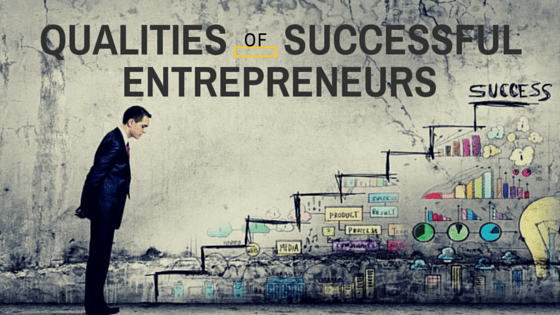
The Qualities That Define a Successful Entrepreneur

Being a successful entrepreneur means more than starting new ventures every other day. It means the right attitude towards a business and the determination and grit to achieve success.

A successful entrepreneur has a strong inner drive that helps him or her to succeed. Let us take a look at the qualities that go into making a successful entrepreneur.

An entrepreneur should be excited by the prospect of work. They should always have a strong drive to succeed and overcome obstacles. They should not only set big goals for themselves but also see that they are actually committed to achieving them regardless of the countless setbacks that occur.

A successful entrepreneur always has a strong sense of self-confidence and a healthy opinion of their skills and abilities. Their personality is assertive and strong. They are always focused and do not really dilly dally with the issues at hand. This is what makes them different from the rest.

An entrepreneur should always be on the lookout for new innovations and ideas in order to emerge as a winner. They should constantly reinvent themselves and think of better ways to run a business and improvise on the products and services offered by them.

Learn more at Groco.com

How to Open New Doors of Opportunity and Wake Up Fulfilled

Everyone is screaming to live a meaningful life and do something that matters. You look on all the bookshelves and at social media influencers, it’s a common message to find your passion. It begs the question though, are those same people living the life they desire? I am sure many are living a life fulfilled but there are so many that aren’t.

If that was the case, we would not be fighting against an identity crisis. The majority of the world would not be living in stress, anxiety and wake up every morning fighting to get out of society’s imposed rat race. We know at a basic level that life is meant to be filled with excitement and that we desire to have an impact. 

The problem is that most individuals do not understand this, otherwise people would not continue to open up the same doors to life. Those doors include going to school, getting a degree, finding a job, getting married, having kids and then crossing your fingers that you work hard enough for 40-50 years in order to actually start enjoying your life!

Read more at Addicted2Success.com

How To CAPITALIZE on Your Opportunities

Jonathan Frederick is the host of a successful podcast called the Heart Healthy Hustle Show. He specializes in interviewing force for good entrepreneurs and is a student of life. In this G-FORCE Influencer Interview, Britnie Turner, Founder and CEO of Aerial and G-Force Mastermind, talks with Jonathan about the blessings in disguise and how we can capitalize on current opportunities.

““There’s a difference between taking advantage of a crisis and capitalizing on an opportunity that is happening during a crisis.” – Jonathan Frederick

Jonathan describes pain as the catalyst for his podcast. During a period of being “broke” in all areas of his life, his faith steered him in the direction to serve the greater good. Today he shares 3 practical exercises to help you realize your gifts, unique abilities and understanding that your voice matters.

Learn more at GforceMastermind.com

 “The way to get started is to quit talking and begin doing.” – Walt Disney, founder Disney

What is the Difference Between Possibility and Opportunity?

They have two very distinct meanings yet I hear those two words used interchangeably a lot.  Possibility means something might happen if you do it yourself whereas Opportunity means if someone gives you a set of circumstances that you adhere to, it might happen.  I can see why people use it either way at times.  Yet one you have more direct control over than the other. 

I have been given lots of “opportunities” over the years.  At the very beginning of my business I remember people telling me that if I did something for them at no charge it would by my opportunity to demonstrate my skillset.  Hmmm, well maybe they were on to something?  However, after a while I could see that they couldn’t see any value in what I did and I was being “had”. 

Yet when I was offered a “possibility”, it was up to me if it happened or not.  It was made possible for me to be on the team for the Social Media Summit Ireland 2 years ago.  It was easily one of the most transformative times of my career.  I say this because I took the initiative and worked on this for free. In return I was given valuable experience, access (to speakers and the event) and met some amazingly talented people that I have since worked with and strengthened other relationships I had already had. 

Read more at WomensInspireNetwork.com

4 Entrepreneurs on What Made Them Take the Leap into Business Ownership

Every entrepreneur has a different story when it comes to what made him or her finally take the leap into launching that first business.

For some, it’s a choice made in hopes of finding more freedom and flexibility. For others, it’s an opportunity to grow and challenge themselves beyond what they can do in a normal job.

We wanted to hear some real stories from different entrepreneurs to see what it was that made them finally take the leap at start their own business journeys.

Read what they had to say at Grasshopper.com

Ready To Take The Entrepreneurial Leap? Read This Business Visionary’s Advice First.

Do you have visions of owning your own business someday? Then you just might be an entrepreneur. 

However, even if you fantasize about becoming your own boss, that doesn’t mean entrepreneurship is the answer— according to Gino Wickman, the innovative mind behind the groundbreaking Entrepreneurial Operating System, founder of EOS Worldwide, and author of the bestselling book Traction: Get a Grip on Your Business.

Gino wrote his most recent book, Entrepreneurial Leap: Do You Have What It Takes to Become an Entrepreneur? as the ultimate resource for budding entrepreneurs. It’s packed with wisdom that only someone with decades of business-building experience—someone like Gino Wickman—could offer. 

As a business owner who has benefited from Gino’s expertise myself, I was thrilled to chat with him about everything entrepreneurship. Throughout our conversation, he discussed how aspiring entrepreneurs can learn if that life is right for them, and if so, what they can do to jumpstart their journey.

Read more at Forbes.com

Two Ways Entrepreneurs Can Turn Perfectionism Into Progress

We’ve all had experiences where we attempted to start a new project, but struggled to make progress and complete it. However, the reason we haven’t completed that project isn’t because we are lazy, unmotivated, or didn’t have the time. The real reason is because of a sneaky little affliction called perfectionism.

Over the last few weeks, two friends (who are also entrepreneurs) decided to finally launch new websites for their businesses. The problem is, each of them had been kicking around the idea for months and still had nothing to show for it.

The problem wasn’t their motivation, abilities, or that they were too busy. Rather, perfectionism was preventing them from making progress. Perfectionism caused them to get distracted by all the potential details and decisions that could be made in the process of creating a website. In the end, this lack of focus prevented them from making progress.

Read more at YFSmagazine.com

Work Life Balance For Women Entrepreneurs!

Balancing professional and personal life is a challenge for everyone these days; more so, for women. Given the traditional way our society looks up at our women, they are expected to maintain both, their work as well as their family life, perfectly. With the emergence of more and more women as entrepreneurs and businesswomen, it is very important to learn how so many women these days are handling their work and personal life so nicely.

Women of the 21st centuries can be easily referred as superwomen! They not only manage a total 9-5 job but also make sure that there home is not falling apart. They deal with both, domestic responsibilities and work-place related stress. They handle business meetings and conferences smoothly and, at the end of the day, have spent quality time with their family. How do they do that? How do they constantly maintain the balance between work and life? It sure isn’t easy.

Read more at TechStory.in

Five Steps For Female Entrepreneurs To Minimize Stress

Since opening our business 15 years ago, my business and life partner and I have experienced just about every possible pitfall that entrepreneurship can throw at us, including government audits. In that same period, we raised our oldest son and had three more wonderful children. I’ve nursed an elderly family member, caring for their end-of-life needs, renovated two homes, maintained a happy marriage and kept my sanity most of the time. So when I talk about stress, I am speaking from a position of knowledge and understanding.

As I see it, life is made up of three elements: personal life, work and home. I have learned that if one of these elements is out of kilter, life can become stressful, and negative thoughts can dominate your mind to the point where you become unproductive. When two elements are unstable, it overwhelms your thinking to the degree that it is hard to get anything done at home or at work. It takes a very emotionally and physically strong woman to consistently and personally see to the needs of others, which is essentially what you do as a business owner.

How does one build strength?

Read more at Forbes.com

6 Things Women in Business Know That Men Don’t

A dear friend of mine once said, “Life turns you into an expert at things you never chose to become an expert at.” This resonates with me a lot as an entrepreneur and mother of two. It’s one of the worst stereotypes these days to see a businesswoman who is also a mother and ask, “How do you do it?” Do men ever get asked that?

The fact of the matter is, female entrepreneurs have a whole different skill set than their male counterparts, and this is out of necessity. Far be it from me to look at this and think that we’re forced, kicking and screaming, to learn to work harder, smarter, and more efficiently than our male peers. In my experience, it’s best to approach the challenges by thinking, this is a gift.

Learn more at AllBusiness.com

16 Ways Working Women Can De-Stress and Decompress at Work

Have you ever had one of those days where you sit down at your desk and never look up from your computer til the sun has gone down? Ever had one of those days when you end the day tightly wound and needing a stiff drink and a lot of self-care? Yes, us too. But it doesn’t have to be that way. You can leave work more relaxed than when you arrived. De-stressing during your workday — using a number of methods, from meditation to a walk — is important, and there are many ways that can help working women de-stress at work in less than 30 minutes.

Take a walk… It’s the easiest thing to do to de-stress at work and costs nothing. Take a walk outside. See the sun. Breathe the air. Don’t take your phone. If you can, work up a smallish sweat to get your heart rate pumping. If there’s a nearby park or trail, head there and “forest bathe.” (Forest bathing, or “Shinrin-yoku,” for the uninitiated, is simply, walking or sitting amongst many trees). Walking, even as a little as 20 or 30 minutes, according to studies cited by Prevention magazine, “can have the same calming effect as a mild tranquilizer.” One bookExercise for Mood and Anxiety: Proven Strategies for Overcoming Depression and Enhancing Well-Being, discusses the benefits of walking for mood.

Read more at ThriveGlobal.com

8 Funny and Relatable Experiences That All Entrepreneurs Go Through

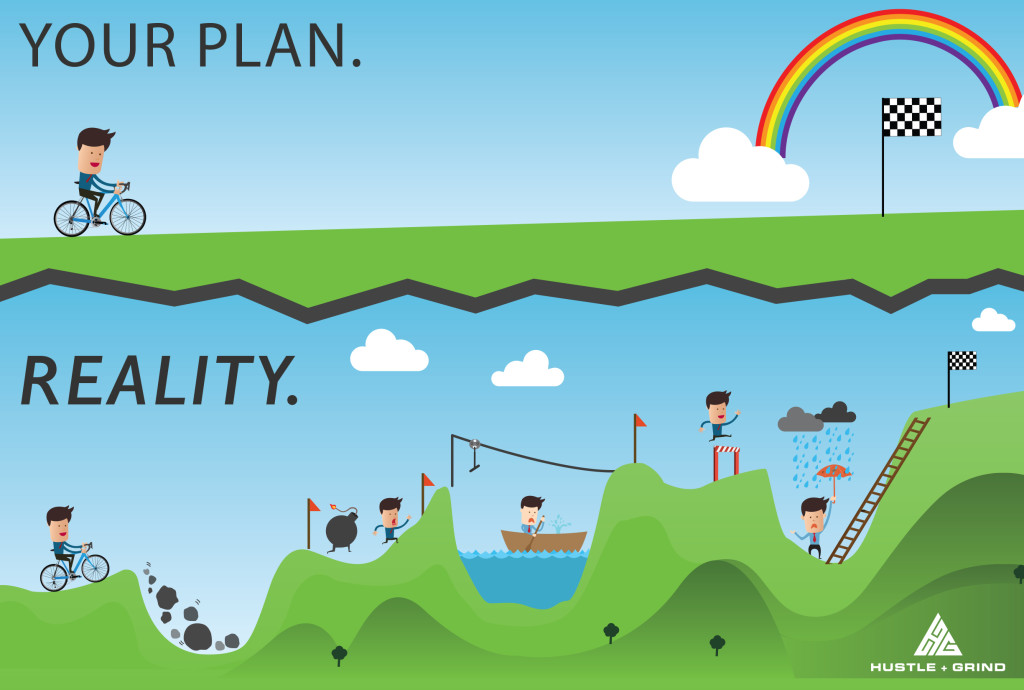
The road to becoming an entrepreneur is often difficult, treacherous and filled with unexpected roadblocks and detours. Those who embark on this journey do so because they are driven, independent-minded and probably a little crazy. In a good way, of course!

The most successful entrepreneurs have a clever mind, strong business acumen and a deep and abiding sense of humor that keeps them going when they hit the inevitable rough patches that come with any business.

If you’ve ever hit a tough spot, know that you aren’t alone. Here are 8 experiences showing that all entrepreneurs go through challenges. The trick is to keep your head up and keep moving forward.

Read more at Entrepreneur.com

9 Of The Craziest Things Founders Have Done To Make Their Startups Successful

We’ve all heard the stories of people dropping out of college to work on their startups, living on their friends’ couches, or eating ramen every day for a month.

Some ambitious entrepreneurs take this to the next level, going the extra mile to make their businesses successful.

We’ll take a look at the lengths startup founders go to get their companies off the ground, from AirBnB’s wacky fundraising side-business to PayPal giving away money to get initial users to join.

Read more at BusinessInsider.com

Acceler8Success Cafe Monday 5.24.21

Who is a Successful Entrepreneur?

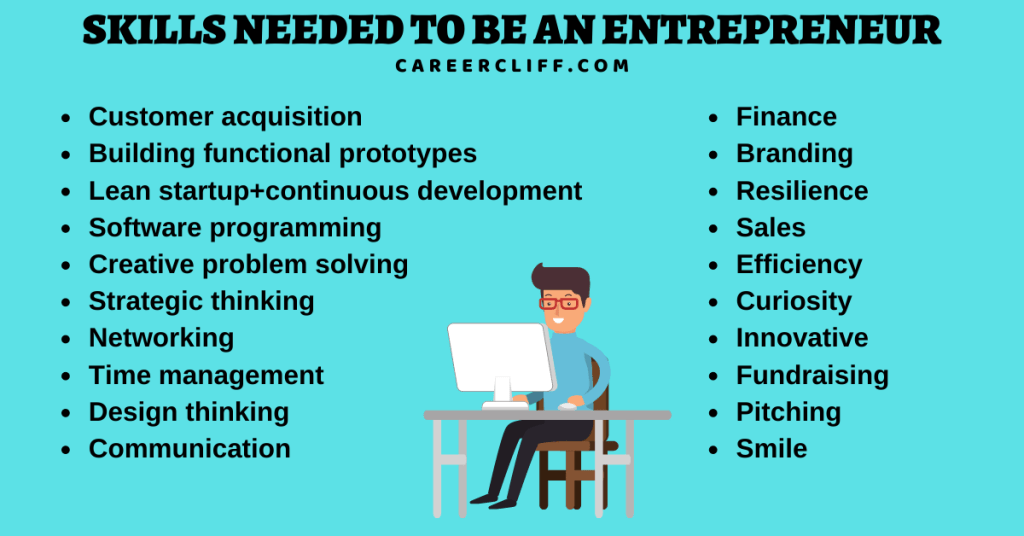
It’s important to state from the outset that there is no magic bullet that can transform you into a rich and successful entrepreneur overnight. However, for those prepared to work hard to succeed, there is an almost formulaic blend of entrepreneurial skills that can help set successful businessmen/women apart from the rest.

Being an entrepreneur means you are your own manager, as well as manager of others. Your skills need to be extensive in order to to be successful. An entrepreneur should be able to effectively manage people, a budget, operations and in some instances, investors. This requires a multi-tasking work style, planning for both the short and long- term goals of their business. A successful entrepreneur must be able to make wise decisions about how he uses his time, continually evaluating and prioritizing tasks according to relevance and importance.  This means including short and long-range planning and the ability to participate in economic forecasting and market research.

Another important factor with many reasons is getting enough sleep. When you sleep, your brain signals your body to release hormones. This helps you focus, and protects and strengthens your memory. The best sleeping hours are between 12am-8am as our bodies have a better blood circulation at this time. This, in turn, contributes to creative thinking, memory processing and positivity. One wakes up with a sense of domination ‘’ I am going to conquer as I give my 100per cent.’’ Maintaining an active and healthy lifestyle is a must! Exercise regularly as it also promotes deeper, more restful sleep. One also gets a chance to sweat out their stress and troubles that a successful entrepreneur faces in life.

Read more at Entrepreneur.com

How Do You Become an Entrepreneur Without a Passion

One of my most vivid childhood memories was biting into a Mrs. Fields chocolate chip cookie and hearing the story of the housewife with a passion for baking cookies who created a national chain. The story resonated deeply with me and, from a young age, I’ve always associated passion with business success. Our society loves a passion to profit story and we pepper our lives with quotes from people like Meg Whitman. “Do what you love and success will follow. Passion is the fuel behind a successful career.” We are so crazy for passion that there’s now a whole economy devoted to it. Adam Davidson wrote a book about it called, “Passion Economy.” A quote of his that always stuck out to me,

“For most of them it was a long struggle, and it went in unexpected ways. You’re not born with passion — it’s not that on your twenty-first birthday, you either have it or you don’t, and then you’re done. In fact, I think working on understanding your passion is so valuable that it’s okay — and maybe even good — that it can take 10, 15, 20 years. When I talk to people, it’s not just, ‘Sit around waiting until you have your passion, and then you’re good to go.’ It’s, ‘This is your project. Figure this out and experiment, try things out, pay attention, listen to people.’”

The passion economy allows anyone to produce content that can be monetized by their audience via digital platforms. Now, entrepreneurship is attainable for anyone with a passionate point of view and a WIFI connection. It feels like anyone can make it happen, but what if you don’t necessarily have a passion project or honed skill to sell? Does that mean charting your own professional course is off limits?

Here’s to your entrepreneurial success. Make it happen. Make it count!” – Acceler8Success Founder, Paul Segreto

Read more at Medium.com

GEM study proves importance of entrepreneurship when there is a decline in the economy

Based on nearly 140,000 interviews with adults from 46 economies across the World, this is a study of entrepreneurial activity, attitudes and ambitions that has been gathering data since 1999.

However, the 2021 report is particularly relevant as the data has been collected during a Covid-19 pandemic that has decimated national economies, and therefore this is one of the first international measurements of the business lockdowns on levels of entrepreneurship. It is also important in trying to assess whether, as in previous recessions, entrepreneurial activity will again drive economic recovery across the World

So what are the main findings of the 2021 GEM report? With only six GEM countries reporting that less than one in three adults had experienced a decrease in household income due to the pandemic, the study again demonstrates the importance of entrepreneurship as an income generating alternative when there is a decline in the economy especially in poorer nations.

“One of the most important things I have learned is that businesses don’t fail, entrepreneurs give up. Now sometimes, giving up is the right decision. But usually you just need to dig in and figure out how to make things better. Remember: Every day is a new opportunity to get up and do it better than yesterday!” – Adda Birnir

Read more at Business.live.co.UK

60% of Small Businesses Expect Revenue to Grow in 2021

Well over half (60%) of small businesses expect their revenue to increase over the next 12 months. This compares to fall 2020, when just 34% of small business owners were confident of increasing revenue.

This positive statistic about the outlook of small businesses after the unprecedented disruption of 2020 and early 2021, was unveiled by the Bank of America.

Bank of America’s 2021 Small Business Owner Report was based on a survey of nearly 1,000 small business owners. The survey was conducted in March 2021. It reveals that economic confidence and business outlook is witnessing a rebound.

56% of participants say they are confident the local economy will improve, which is a significant rise from 39% last fall. Half of respondents anticipate the national economy will expand, up from 37% in fall 2020.

Read more at SmallBizTrends.com

3 Workplace Habits Every Entrepreneur Needs to Survive the ‘New Normal’

We are all longing for the same goals right now — a sense of peace and safety for ourselves, our families, and our businesses during this unprecedented time. No matter what our belief systems may look like, we are all trying to establish some sense of belonging, to be secure, and to have days that are purposeful and productive.

In business, while everyone talks about this “New Normal,” entrepreneurs are left to establish what that looks like for their own lives, and without a guidebook of any kind, this task is a tall order. Each day brings change and, as of right now, there is no end in sight.

The beauty in this situation is that we all have an amazing opportunity in front of us to grow, expand, and ultimately, lean into becoming our absolute best, because we need that in order to continue moving forward. We have space to create and find purpose, and we have time to pour into our businesses like never before. 

Now, perhaps for the first time, you’re the one writing the rules … all of them.

Read more at Entrepreneur.com

What it Takes to Grow a Successful Business and Keep Your Spot on Top with Alec Stern

Growing a business is not a walk in the park. But Alec Stern, also known as “America’s Start-up Success Expert” and co-founder of Constant Contact, has made his way to the top and speaks with Dr. Diane Hamilton on growing successful businesses and scaling companies among various industries throughout the years. He shares his insights on the different ways business owners can propel their way to success, pointing out the importance of what you do with your idea and how you can use it to your advantage. If you’re ready to make your business work and grow, learn Alec’s secrets and make your way to the top.

Listen to the podcast at DrDianeHamilton.com

Welcome to The Social Geek Radio Network

Get in touch with your inner geek. Jack Monson and many special guests discuss social media and digital marketing trends for brands, small businesses, and franchises. 

Social Geek Radio was listed as one of 20 Best Business Podcasts according to Emerge and was named to the Best Small Business Podcasts by FitSmallBusiness.com. Recently, Social Geek Radio finally made the Top 25 podcasts in the Marketing category of Apple Podcasts / iTunes.

Listen, download, subscribe to Social Geek Radio!

Top 10 Podcasts for Entrepreneurs and Startups

The podcast industry has exploded with growth over the past several years, and that growth has extended to entrepreneurial podcasts as well. There are over 1.5 billion podcasts globally as of Oct. 2020, according to PodcastHosting.org.1

If you are looking to develop a business, launch a startup, or stay-up-to-date on marketing techniques, here are 10 podcasts for you.https://698580fb11b59858d6df22a3b4974672.safeframe.googlesyndication.com/safeframe/1-0-38/html/container.html

And, don’t forget to check out Investopedia’s recently launched podcast, The Investopedia Express, where Editor-in-Chief Caleb Silver digs into the most important stories in finance and global economics.

Read more at Investopedia.com

Black Entrepreneurs Start Businesses At Higher Rates Than Other Groups, Analysis Finds

Black entrepreneurs start businesses at higher rates than other groups and have high rates of female entrepreneurship, according to a new analysis by researchers at Babson College.

The research shows consistently higher rates of entrepreneurship among Black Americans. On average from 2014 to 2018, about 20% of the Black population in the U.S. started businesses — compared to roughly 12% of the white population and nearly 13% of the Latino population — the analysis found.

The research analyzes data from the college’s annual “Global Entrepreneurship Monitor” studies over the last five years, which includes a survey of over 3,000 adults in the U.S.

Read more at WBUR.org

These Entrepreneurs Launched Startups During COVID-19 — Here’s Why You Can Too

Recently, there has been a huge spike in applications for business tax numbers. The unusual economic environment brought on by the pandemic has led to a renaissance of America’s business dynamism, which had been lagging for some time. The recent crisis appears to have begotten a new class of entrepreneurs that, either through necessity or another compulsion, is set to fill the decimated ranks of the small business sector. A study by the Federal Reserve found that 9 million US small businesses fear they won’t survive the pandemic. What’s causing this revival of the entrepreneurial spirit? It may be a while before we find the answers, but let’s take a look at a few possibilities.

For the US, the year 2020 was the worst of times but also in some ways, the best of times. The pandemic raged across the nation, taking lives, destroying livelihoods, spreading fear, and dispensing uncertainty. The only defense to its onslaught was the valiant efforts of medical personnel and first responders. Fortunately, vaccines were developed remarkably quickly to turn the tide. Nevertheless, the public health toll has been devastating. As of April 10, the US had recorded 31.2 million cases of coronavirus infection, and over 560,000 Americans have succumbed to COVID-19.

Economic activity fell off drastically. In Q2 2020, US GDP contracted at an annual rate of 32.9%. For the entire year, it fell by 2.3% ($500.6 billion) to $20.93 trillion. (For comparison, GDP had increased by $821.3 billion in 2019.) The unemployment rate rose to 14.8% in April – a level never before reached since data collection started in 1948.

Learn more at StartupSavant.com

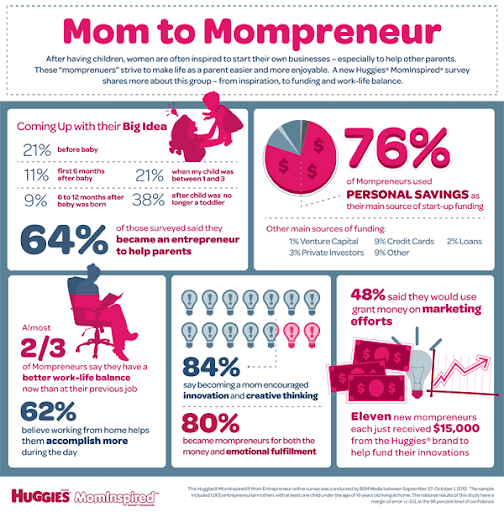
The Real Post-Pandemic Boom: Mom Entrepreneurs

“Moms do whatever it takes to get things done. But we live in a constant state of guilt. Balancing it all—it’s tough,” says Pina Romolo, founder of Piccola Cucina, and mother of two. 


Pina isn’t alone. The pandemic has exposed the impossible balancing act that society demands of working mothers—and how incompatible our ideals of the “good mother” and the “career woman” are. More than that, it’s shown us how unsustainable the nature of work has been for women with children. 

And while the data is clear that the pandemic has driven mothers out of the workforce, what’s less clear is how they will re-enter the workforce when all of this is over. We’re optimistic that the nature of work is changing—and based on new Shopify research, we think that mothers may be seeking a healthier work-life balance through entrepreneurship. 

Read more at Shopify.com

Another Resource for Entrepreneurs at Acceler8Success Cafe

We fully understand the importance and necessity for today’s entrepreneur to be well-informed. We also acknowledge that an entrepreneur’s time is limited, and quite valuable.

As such, and as part of our commitment to entrepreneurial success at all levels, we will do the heavy lifting and review podcasts & videos we know will help entrepreneurs achieve their goals. Then, each weekend we will share what we believe to be of interest to our growing list of current and aspiring entrepreneurs, and as a complement to daily editions of Acceler8Success Cafe.

Check out the Premiere Weekend A/V Edition of Acceler8Success Cafe!

Connecting the Right Brands, People & Opportunities

The uncertainty of COVID-19 pandemic created the perfect time to diversify and expand. After all, it’s been said that necessity is the mother of invention. To that end, Acceler8Success Group was formed mid-2020, building upon Acceler8Success principles and methods that have proven successful since 2014.

Widely recognized as industry leaders & experts, Acceler8Success Group leadership have extensive experience as entrepreneurs in small business & restaurants, as senior-level executives within nationally recognized brands, and as franchisees within successful franchise systems. 

Learn more at Acceler8Success.com

Acceler8Success Cafe Friday 5.21.21

Entrepreneurial Confidence and Mental Health

The pandemic affects everyone. Today, we are all dealing with a different model for living; many people are working or attending school virtually, there is less social interaction, greater isolation, more juggling of home and work duties, and of course the anxiety and pain if loved ones become sick or die from COVID-19. A study by the CDC in June reported 40% of US adults are struggling with mental health or substance abuse, substantially higher figures than in 2019.

Where does that leave our entrepreneurs? Beginning in March, the Trust Center closed its doors until further notice. We are continuing to support MIT’s entrepreneurship community virtually, including via online resources like Orbit. This past summer, our delta v accelerator moved to a completely virtual experience, including online Demo Day presentations.

One question we continue to ask ourselves is: How has the pandemic affected the mental health of entrepreneurs?

Read more at Entrepreneurship.MIT.edu

There is a mental health crisis in entrepreneurship. Here’s how to tackle it

In the US alone, start-ups create approximately 43% of new jobs annually based on data released by the Census Bureau’s Business Dynamic Statistics (BDS). The Small Business Administration has calculated that from 2000 to 2017, small businesses created 8.4 million net new jobs as opposed to 4.4 million jobs created by large corporations. In 2015 there was a total of 30.2 million small businesses, representing 99.9% of all firms.

But while the data sets have historically focused on the macro wellbeing of local and global economies, they have failed to measure the pernicious impact that mental health disorders have on the micro well-being of founders. Fortunately, the focus of the value analysis has begun to change.

According to Dr Paul Hokemeyer, an expert in elite identity constructs: “Given the extraordinary impact entrepreneurs have on our world economy, it’s critically important they operate in a state of optimum emotional and relational health. Unfortunately, in our current zeitgeist of founder burnout as a benchmark of entrepreneurial excellence, such has not been the case.”

Read more at WeForum.org

Why Some Traits of Successful Entrepreneurs Could Exacerbate Mental Health Issues and Substance Abuse

Entrepreneurs are go-getters. People who want to build a business, disrupt an industry or simply be their own bosses. The excitement of chasing the next big thing leads some people to become “serial entrepreneurs,” which researcher April J. Spivack and others are investigating as a possible behavioral addiction. In addition, a few traits of some successful entrepreneurs, such as risk-taking and obsessive-compulsive behaviors, are found to be indicative of someone potentially at risk of becoming addicted to substances as well as behaviors, according to the experts at American Addiction Centers.

Dr. Hokemeyer, a clinical and consulting psychotherapist, spoke at the recent World Economic Forum about entrepreneurs and mental health.

“Entrepreneurs are trained to ignore the qualitative needs of their well-being measured in meaningful and authentic relationships, overall life satisfaction and happiness,” he said. “The message they have internalized from the field’s most celebrated entrepreneurs is the outdated prescription of ‘no pain, no gain’ and a pernicious message that success is purely measured in quantitative returns, return on investment and profit.”

In other words, it’s not far-fetched that the basic entrepreneurial structure could potentially lead to or exacerbate mental health issues such as addiction and depression.

Read more at Entrepreneur.com

7 Ways Successful Entrepreneurs Manage Stress

When it comes to the world of business ownership, success involves developing a plan for stress management. It takes a great deal of effort and energy to run a profitable company. People who are responsible for the health of an organization are frequently under a great deal of pressure.

With this in mind, stress management is critical. However, it can be difficult for business owners to learn how to develop a strategy that works for them. To help we’ve compiled a list of the stress management tactics from seven successful entrepreneurs around the world.

Read more at ThriveAgency.com

How to Keep the Peace In a Busy, Entrepreneurial Family

Becoming a solopreneur is tough, but it’s easier when you’re single. You don’t have to schedule your life around your spouse’s calendar. There are no kids to pick up from school or cook meals for. When life gets busy, it’s because you—and only you—have a lot going on.

But what happens when you fall in love with another independent person, someone who’s just as driven as you? Can a pair of entrepreneurs merge their lifestyles to start a family, achieve their goals and maintain a peaceful household?

In this episode of Brilliant ThoughtsSUCCESS People Editor Tristan Ahumada talks to Elena Cardone about how to succeed as a family of entrepreneurs. Her husband, Grant Cardone, owns seven companies and manages a $2 billion real estate portfolio. Elena is a Hollywood actress and model-turned-businesswomen. She’s the author of Build an Empire: How to Have it All and produces the annual 10X Ladies and Build an Empire Mastermind events. Their kids contribute to the family business by speaking at growth conferences and seminars.

Learn more at Success.com

18 Movies Every Entrepreneur Should Watch

Between documentaries and fictional films, there is a lot you can learn about the plight of entrepreneurs from the comfort of your couch. Whether you are just starting out on your business venture or have been at it for years, you can glean some powerful insights from these 18 provocative and wildly entertaining films.

Read more at Entrepreneur.com

20 All-Time Best Entrepreneur Books to Make Your Business Successful

Being an entrepreneur is all fun until you realize that you’re actually not as experienced as others. Your knowledge might not be at the same level as those who’ve been in the business for twenty years and that scares you.

No need to worry though, if you have a high teachability index, you will be fine!

The following books will help you grow both in life and in business in order to become a successful entrepreneur. These best entrepreneur books will give you basic knowledge about being an entrepreneur and share advice on what happens while on the journey to entrepreneurial success.

Learn more at Lifehack.org

11 real-life entrepreneurs with lives so crazy they deserve their own movie

From The Social Network to Steve Jobs to Girlboss on Netflix , Hollywood has always invested money in actors who dramatically tell how the origins of companies that have changed the world came about.

Mark Zuckerberg , Steve Jobs, and Ray Kroc are just a few of the entrepreneurs whose stories can put you on the edge of your seat. Here are 11 business men and women who deserve their own feature film.

Read more at Entrepreneur.com

11 Ways for Busy Entrepreneurs to Rest and Recharge

Entrepreneurs are often on the go and rarely take a moment to slow down. However, time off is crucial if you want to prevent burnout and keep your passion for the business alive.

You might wonder how you can balance all your responsibilities and still take time for yourself. To help you combat the stress of building a business, members of Young Entrepreneur Council share some ways for leaders to unplug and recharge, even with a jam-packed schedule.

Learn more at Influencive.com

Why Entrepreneurs Ignore A Formal Plan, The Root Cause Of Business Failure

It might be surprising to learn that many new entrepreneurs ignore advice even when it is given by experts. With as many valuable resources and expert business advice on startups, strategy and financial planning available online today, you would think that more entrepreneurs would succeed at building sustainable business models, but in fact, the opposite is true. Businesses still fail at a staggering rate in both healthy and down-turned economies, and there is not any shortage of research as to why. Take any of the dozens of articles from your favorite platforms and distill their top reasons down to a single root cause, and I have observed that your number one culprit is typically a lack of planning.

From “poor product offering” to “no market demand” or “lack of resources” to “too much competition,” these are all signs of not having a formal business plan in place. Having one is a fundamental step in business development, and every notable business leader, advisor and strategist will tell you that the process of building one increases your survival rate and positions you for long-term success. It is one of the most important documents that an entrepreneur can create for their business because its job is to address the topics above, including all the other reasons for failure commonly reported. Beyond that, it is also used to obtain funding and in-kind support on demand.

Read more at Forbes.com

Ten Tips for Entrepreneurial Success

Research shows that only about one-third of all start-up ventures in the US are still in existence ten years after inception. However, interestingly the average return from entrepreneurship is still high enough for more and more start up projects to emerge. What are the key success factors that differentiate the successful ventures from those that fail?

  1. Discovery Driven Planning: Generally past performance is used to plan for the future by existing companies. However, if you are an entrepreneur with a completely novel idea and looking to get started, there is no past data so the approach to planning you use is discovery driven. This approach is a bit like walking in a field with thorns and roses scattered randomly. Each step you take guides you to the next based on the response you get from the marketing field. So you take small steps and learn along the way.
  2. Track and Refine: The winners in the game of entrepreneurship are able to develop a marketing mix that is just right for their target audience.  You can use various tools to do this. For example, you can use call tracking to determine which of your marketing sources generate the most productive leads. In this way you can optimize your marketing budget by focusing on channels that get you the highest Return on Investment (ROI).

Learn more at Blog.Avidtrak.com

Narcissism is associated with entrepreneurial intention but not business success

New research published in the Journal of Business Venturing Insights sheds light on the relationship between narcissistic personality traits and entrepreneurship. The findings indicate that narcissism “is a mixed blessing.”

“Mental health symptoms such as ADHD and autism have traditionally been labeled in a negative light. However, there is increasing evidence that individuals characterized with these symptoms can excel in certain work environments that have a good person-job fit with them,” said study author Yik Kiu Leung, an assistant professor of entrepreneurship at Tilburg University.

“Since the characteristics of narcissism, such as the need for attention, admiration, and power fit well with the work environment of entrepreneurship, we think it is important to extend previous literature and provide a systematic overview of the link between narcissism and various aspects of entrepreneurship.”

Read more at PsyPost.org

How to Qualify for an SBA Loan in 2021

When you don’t have the personal or investment capital necessary to start a business that requires a good chunk of it, the logical answer is to look into a business loan. And although just about any loan involves receiving a lump sum of cash and paying it back over a period of time, not every loan program is created equal. Out of all the business loan programs out there, many entrepreneurs tend to enjoy the accessibility and simplicity of SBA loans.

But how do you qualify for an SBA loan? The current economy is volatile, and following the financial losses caused by many coronavirus-related closures, more and more businesses are competing for precious capital. Here’s how to get in on what’s available. 

Read more at Entrepreneur.com

Learn how to fund and run your startup with this expert-led training package

Outside an MBA or a professional mentorship, getting access to advanced business insight is extremely difficult. If you’re an entrepreneur with the vision and drive to make a small organization successful, skills like raising capital may still be out of reach because there are few affordable places where you can learn them. The Complete CEO Startups Venture Capital Bundle fills the accessibility gap by providing courses designed to guide you to becoming an effective CEP of your own company, and right now lifetime access is on sale for $40.

This bundle offers seven comprehensive courses spanning 261 lessons comprised of 17 hours of content. You can expect to learn effective strategies for startups and CEOs, capital raising practices; advice on pitching and more. With lifetime access, you’ll be able to parse this information at a pace that works well for you and your company. Learn and return when you need a refresher from this bundle, which will be relevant for any business ventures you decide to pursue in the future.

Learn more at engadget.com

Acceler8Success Cafe Thursday 5.20.21

The Trillion-Dollar Opportunity in Supporting Female Entrepreneurs

There is much discussion and debate about how to support female entrepreneurs — and rightly so. Currently, women-led businesses are less likely to survive, despite evidence that their startups are often highly successful. New analysis by Boston Consulting Group (BCG) shows that if women and men around the world participated equally as entrepreneurs, global GDP could ultimately rise by approximately 3% to 6%, boosting the global economy by $2.5 trillion to $5 trillion.

So how do we support female entrepreneurs? The focus is often on improving access to credit (financial capital) or providing training to help women build new skills (human capital) — two areas critical for improving the success of women-led businesses. However, another key factor in the success of these businesses tends to be overlooked: access to networks.

Working with public, private, and social sector clients around the world, we have seen first-hand how potent such networks can be. And we have also come to understand that these supportive mechanisms are in short supply.

The good news is that action in all sectors can address this gap.

Read more at hbr.org

10 Inspiring Women Entrepreneurs on Overcoming Self-Doubt and Launching Your Dream

As an entrepreneur and established businesswoman, I’m often asked if females still have to face the sort of obstacles and hurdles that males do not have to contend with. In other words, is it still a struggle for a woman to succeed in the world of business, an environment that many still consider to be male-dominated?

As is often the case with big questions, the answer is complicated. We’ve made positive progress in recent times when it comes to equality in the workplace. Still, the adversaries and struggles a woman has to contend with, particularly while growing a startup, cannot be underestimated. Having said that, I’m a firm believer in the adage that what doesn’t kill you makes you stronger. 

An entrepreneur of any gender needs a determined belief in what they’re doing and a cast-iron resolve to get things done if they’re to succeed in a highly competitive marketplace. Unfortunately, the evidence still seems to indicate that if you’re a female, you need that little extra something to break through the proverbial glass ceiling.

Read more at entrepreneur.com

Develop an Entrepreneurial Mindset

At its core, a business is really just a repeatable process of solving problems for other people. The problem just has to be big enough that customers and clients will pay for your product or service. If you’re an entrepreneur, really all that means is that you’re a problem solver.

And it takes some drive and a whole lot of other qualities to push your business idea toward success. Did you know that about half of all small businesses fail in the first five years? Did you know that about 70 percent of those businesses fail because of cash problems?

So in addition to being a creative person who sees opportunities and has the drive to persevere and navigate those rough spots when things get tough, you have to keep the business side of things in mind, too. Keeping things like financials, cash flow, bookkeeping, etc., in focus, in addition to your business goals, is key for success.

Read more at mosourcelink.com

Go Ahead and Start a Business — But Don’t Quit Your Day Job

Many professionals dream about becoming their own boss — a full 62% of Americans, according to one survey. They often envision the classic image of entrepreneurship: triumphantly giving one’s notice, and then pounding the pavement to hunt for clients. But that “all or nothing” strategy is needlessly high risk and, almost always, is the wrong path forward. Instead, the correct answer to “Should I become an entrepreneur?” is two-fold: Go ahead and start your business. But don’t quit your day job.

Of course, there are some basic challenges to overcome — making time for a side hustle, and ensuring that your new venture doesn’t violate company policy. You should double check the rules, but most often, if you’re operating a different type of business — say, freelance writing when you work for an investment bank — there won’t be any perceived conflicts.

Read more at hbr.org

How to Get Ahead as a New Entrepreneur

Whether you’ve dreamed of going into business for yourself for a long time or you’ve only recently started thinking about entrepreneurship, you’re in excellent company. According to a 2018 study, about 62 percent of all Americans want to own their own business one day, and with good reason.

Being your own boss gives you the freedom to finally follow your passion and make a difference. You get to say goodbye to dress codes, time clocks, and rules you didn’t create for good, too. And best of all, it’s never too late to pursue the dream of working for yourself.

Read more at bizepic.com

Who is a Mompreneur?

Basically, a mompreneur is a woman who successfully juggles parenting and a new profession (which is usually a home-based business).

She balances the demands of motherhood and the uncertainties of launching a company in order to bring in extra money or to fulfill a passion. She must be a super multi-tasker and a self-motivator if she wants to keep her family and her business running smoothly.

The companies created by mompreneurs are as varied as the businesswomen themselves. However, we’ve noticed that mompreneurs choose to be involved in passion-projects, whether it’s an artistic, political, or educational enterprise.

Read more at shailajav.com

Business Mom Tips: Be Successful and Keep Balanced

More and more women of our time are proving to themselves and the whole world: a woman’s place is not only in the kitchen. A woman can be successful in politics, medicine, science, entrepreneurship. But what to do when you are also a mother? 

As soon as you become a mother, all other worries usually fall into the background. But what if you are a single mother and do not have enough funds to support the child? Or do you have a lot of energy and want to use it?

Previously, you met with friends with pleasure, shopping or sitting in a cafe, sharing your experiences. You were in society, and it seemed that this would continue forever. But a child appeared, and your communication or exit to people came to naught. Although this does not mean at all that you have fallen out of normal life — just your quantity develops into quality.

Read more at inspiredn.com

Why Family Entrepreneurship is the New Family Business

Family businesses are everywhere. And they’re often misunderstood.

Many think of family businesses as old-fashioned companies, passed down from one generation to the next, sometimes across three or more generations. Findings from the first ever Family Entrepreneurship Report by the Global Entrepreneurship Monitor (GEM) debunk that assumption.

The reality: 75% of entrepreneurs in 48 economies around the world said that their family was involved in starting their businesses, either as co-managers or co-owners. The vast majority of startups around the world are, in fact, family businesses.

Family businesses come in all shapes and sizes. They may be legacy businesses or new businesses  started by siblings, spouses, and cousins—not just parents and children. The traditional focus of family business is on the business, when the real focus should be on the family.

Read more at entrepreneurship.babson.edu

3 Challenges Every Solopreneur Faces and How to Overcome Them

As a solopreneur, there’s a lot riding on your shoulders. You are a staff of one, so how many clients you have, how many hours you work, and how much revenue you generate is completely up to you. You are your own boss. You set the rules and reap the rewards.

But those rewards only come after putting in the time and effort to set your business up for success. After all, creating a full-time, long-term business involves more than just having a couple of clients from time to time. Being a successful solopreneur requires planning, follow through, and having reliable partners and services like VSP® Individual Vision Plans on your side.

Read more at entrepreneur.com

7 Key Questions to Lay the Foundation for Success as a Solo Business Owner

Could you turn your passion, hobby or side hustle into a six-figure solopreneur career? Based on my experience working with thousands of solo businesses, you totally can! But if you’re going to move from earning side income to being your own boss full-time, you need to be honest with yourself about the answers to these seven questions.

What do you naturally love to do? When I talk about loving what you do, I’m not talking about results. For example, if you’re a hairstylist, it’s not about whether you love to see people with pretty hair. We all do. It’s about whether you love the washing, conditioning, cutting and teasing — the process of styling thick and rough or thin and flat hair into something full and beautiful. 

Ultimately, it comes down to whether you love the process, and there’s no way to know that other than doing it over and over again. You have to own that, because fundamentally running your own business is doing the same thing over and over again and loving it like it’s the first time.

Read more at entrepreneur.com

What Makes Being an Entrepreneur Challenging?

While being an entrepreneur does have its benefits, it also has its challenges. When entrepreneurs first start out, they’re often considered a one-man show, meaning they’re responsible for doing everything on their own. This usually equates to working really long hours, juggling numerous projects and having to constantly come up with new ideas. However, once you learn to overcome the challenges, you’ll be able to reap the rewards.

One of the biggest headaches for entrepreneurs involves dealing with finances. For new entrepreneurs, it’s often difficult to raise enough capital to start up their companies. Even after the business is established, entrepreneurs have a hard time obtaining loans and lines of credit, as banks set high eligibility requirements for small-business owners. Another issue that entrepreneurs face is they may struggle financially for quite some time before their business becomes profitable. In the mean time, entrepreneurs work long hours and for little to no pay.

Learn more at smallbusiness.chron.com

Advantages and Disadvantages of Starting a Startup

Before you launch your own startup company, it is important to weigh the pros and cons of owning a business to ensure that it is the right choice for you. While entrepreneurship can be an extremely rewarding career path both financially and personally for many, there are inherent risks and potential drawbacks that may make it less suitable for some aspiring entrepreneurs. Ultimately, the decision to start a startup comes down to you and your personal preferences.

If you’re an aspiring entrepreneur, this guide to the advantages and disadvantages of starting a startup will help you establish whether this is the right path for you before you get started.

Learn more at startupsavant.com

The Best Part of Entrepreneurship? Giving Up and Getting a Job

Entrepreneurship isn’t usually worth the risk, some research says, at least strictly in financial terms. Thankfully, plenty of people take the plunge anyway, because they’re drawn to it for other reasons, such as wanting to be their own boss, or wanting to pursue a personal passion.

But that conventional view is misleading, argues a recent paper by Gustavo Manso at the University of California, Berkeley. Instead, he finds that self-employment does pay off financially, but not in the way entrepreneurs might expect. The financial benefit doesn’t usually come from the entrepreneurship itself, but in the form of higher wages when the entrepreneur returns to the workforce.

Research in this area typically compares salaried workers to those working for themselves; the latter group tends to make less, on average, after controlling for factors like level of education, hence the finding that entrepreneurship isn’t worth it financially.

Read more at hbr.org

The Myth of Failure – Debunking Entrepreneur Myths

Failure is a core part of the story of entrepreneurship. Each year about 6 million new businesses start up, but they don’t last long. By five years, half are gone. By 20 years, almost all are gone.

In most of our discussions around entrepreneurship, the genuine agony, trauma and shame around failure is discussed solely as a learning experience and bump on the road to inevitable success. We promote and analyze the building of a startup, but we leave the failure part untouched until the entrepreneur has been successful with another venture. Then, that failure is lauded as an important part of their journey that made them who they are. But why wasn’t that important moment in the entrepreneurial journey something we cared about when the failure actually happened? What are the immediate learnings that could be shared?

Read more at casefoundation.org

What can you do to avoid failure as an entrepreneur?

To be an entrepreneur is to fail. Let me explain. All entrepreneurs fail. Yes. All of them. It is the harsh reality of entrepreneurship. Entrepreneurs might fail before they even begin. The task of starting a business is just too enormous. Other entrepreneurs might fail within the first few weeks or months. Some entrepreneurs fail within the first couple of years.

Entrepreneurs start many different types of businesses. Some businesses have higher failure rates than others. According to a study that was done by Harvard Business School, 75% of venture-backed businesses fail. The failure rate of companies after five years in business is about 50%, and more than 70% after 10-years in business.

There are many causes of entrepreneur failure. One of the biggest reasons people fail as entrepreneurs is because they were never able to think like entrepreneurs. To succeed as an entrepreneur is to think differently.

Read more at successharbor.com

15 Rich & Famous People Who Were Fired Before They Became Successful

In recent years, the economy has suffered and a lot of us have fallen on hard times. So how can ‘getting fired’ be the best thing that could ever happen to someone? Well, a lot of successful people were handed the pink slip before they found their place in the world.

Read more at addicted2success.com

Acceler8Success Cafe Wednesday 5.19.21

Why It’s Never Too Late To Become An Entrepreneur

Many people think that entrepreneurship is a young person’s game. This assumption is probably because when people think of successful entrepreneurs, the ones that immediately come to mind are college dropouts like Bill Gates, Mark Zuckerburg and Michael Dell. However, college dropout entrepreneurs are the exception, and there is data to back it up. A study by the Kauffman Foundation led by Syracuse University professor Carl Schramm revealed that the average entrepreneur was 39 when he or she started a company.

Not only that, Schramm said that “Americans who are 35 or older are 50% more likely to start a business than are their younger counterparts”. Also, recent research led by Javier Miranda of the U.S. Census Bureau and Pierre Azoulay of MIT indicated that for the top 0.1% of fastest growing new businesses in the U.S., the average age of the founder in the business’ first year was 45. So, in a nutshell, it’s never too late to become an entrepreneur. In fact, it could be an advantage to start a business mid-career.

Starting a business mid-career could be an advantage for many reasons. The Kauffman Foundation study found that entrepreneurs starting businesses mid-career were five times more likely to enjoy success five years later than entrepreneurs starting businesses right out of college. This is because management experience is great training to become an entrepreneur. Once you’re in your 30s or beyond, you’ve acquired strong skills, contacts and industry-specific knowledge that you can apply to a new business. You are more likely to be financially stable so that you can potentially self-fund your new company, allowing you to incur minimal debt and have greater stability.

Read more at forbes.com

Modern Aging: Senior Entrepreneurship–Is It For You?

On the one hand, there’s a lot of Rah-Rah in favor of senior entrepreneurs these days.  On the other hand, there’s the ageist assumption that entrepreneurship is a young person’s game, that olders are not creative or energetic or visionary enough to be entrepreneurs – the “Gloom and Doom” scenario. 

Reality: 

  • The highest rate of entrepreneurship worldwide – not just in America, where 34 million seniors want to start a business – has shifted to the 55–64 age group.  Entrepreneurial activity among the over 50s increased by more than 50% since 2008.
  • Entrepreneurs over 50 are almost twice as likely to found successful companies than those between 20 and 34.  GEM (Global Entrepreneurship Monitor)

 Reasons:

  • Creativity often increases with age.
  • Older people bring “the experience dividend,” plus know-how, networks, and financial capital – i.e., money.
  • “Experieneurship” – Global Institute for Experienced Entrepreneurship

Read more at wemu.org

15 Best Startup Books You Should Read in 2021

Whether you’re just starting a business or are a veteran entrepreneur, startup books are one of the many ways to get inspiration and to stay motivated. If you think you’re in over your head, or are just plain curious about what others have been through, startup books are a great resource full of entrepreneur advice, strategies, and inspiration. There are so many options to choose from, though, that selecting just a few to check out from your local library can become an overwhelming task in itself.

That’s why we’re here to help. This list includes some of the best startup books to help you get your business off the ground, find VC funding, be a supportive leader, and stay inspired—no matter the problems you’re facing.

“The Startup Owner’s Manual” by Steve Blank: The startup process laid out in “The Startup Owner’s Manual” is taught at elite universities such as Stanford, Berkeley, and Columbia. Luckily, you can get those lessons without paying for tuition, making this one of the best startup books on our list.

While most people view starting a business as a nebulous, complicated process, it’s not. This book lays out each step you need to take to get a successful startup business into operation. With over 100 charts and graphs and 77 checklists, this startup book gives you specific, actionable steps to start a business.

Read more at nerdwallet.com

“My biggest motivation? Just to keep challenging myself. I see life almost like one long University education that I never had — every day I’m learning something new.” – Richard Branson, founder Virgin Group

Designer Vera Wang on starting her company at 40: ‘I thought maybe it’s just too late for me’

Vera Wang has dressed everyone from the Kardashians to Michelle Obama and women around the world covet her wedding gowns, which cost thousands of dollars.

But Wang’s success — even her career as a fashion designer — still comes as a surprise to her.

“If anyone had said, [I’d be] the girl who didn’t get married until she was 40 [and] would build a business based on wedding gowns, I would have laughed,” Wang, tells CNBC Make It

Indeed, Wang’s biggest success came later in life. Growing up, Wang lived a privileged life with her Chinese immigrant parents on Manhattan’s Upper East side.

At 7, she started figure skating and excelled. But after failed attempts to make the Olympics, Wang eventually turned to her attention to her other passion: fashion.

Read more at cnbc.com

How to Use a 401K to Fund a Start Up Business

If your dreams of starting a business are bigger than your startup budget, you may be glancing at your 401(k) retirement nest egg as potential seed money. You’ve resisted the impulse to withdraw your retirement funds until now, but you know it could make your business dream a reality. If you’re ready to take the plunge, make sure you have all your legal ducks in a row before you withdraw money from a 401(k) for a business startup.

After diligently saving money in a 401(k) account for your retirement years, the thought of losing it can be daunting. As long as your nest egg is safely tucked in your 401(k), your comfort level of enjoying the funds in retirement is likely pretty high. But if you use this money for a startup, you may want to brace yourself for a sobering reality check.

According to the U.S. Bureau of Labor Statistics, 20 percent of new businesses fail in their first year, and 50 percent fail in their fifth year. Staring in the face of a 50-50 proposition that your startup will fail after five years may send you looking for other funding options so you can preserve your 401(k) nest egg.

Read more at finance.zacks.com

How Entrepreneurs Can Manage Their Business Finances With Success

Entrepreneurship can be an enriching journey, and with the right skills, it can also be financially rewarding. With that journey comes more responsibility and hard work that, hopefully, pays off in the end. Smart entrepreneurs do what they can to ensure the success of their business. 

While working towards the success of their businesses, entrepreneurs need to be mindful of both business finances and personal finances. Many entrepreneurs need to rely on personal financing to back their businesses, especially startup business, so financial management needs to be a top priority. As Matt D’Angelo wrote for Business News Daily, “The most important step for any business owner is to educate themselves. By understanding the basic skills needed to run a small business — like doing simple accounting tasks, applying for a loan or drafting financial statements — business owners can create a stable financial future. In addition to education, staying organized is a major component of sound money management.”

Unfortunately, many entrepreneurs tend to overlook the need to manage their finances and know their numbers.  When you have this skill mastered, you will be more likely to save money and keep your business profits.

Read more at entrepreneur.com

 “Twenty years from now you will be more disappointed by the things that you didn’t do than by the ones you did do. So throw off the bowlines. Sail away from the safe harbor. Catch the trade winds in your sails. Explore. Dream. Discover.” – Mark Twain

How to Increase Productivity as a Home Business Entrepreneur

Running a business from home brings with it a whole host of benefits, but it also has its cons. When your business takes place at home, it’s very easy for household demands to overshadow business needs. This is a common challenge for every home business entrepreneur.

So what’s the best way to run a company from the comfort of your home while ensuring productivity and a healthy work ethic? Eleven members of Young Entrepreneur Council shared their insights by answering the following question:

What’s one productivity tip you’d offer someone trying to start a business at home, and why?

Read more at allbusiness.com

A Message from Acceler8Success Founder, Paul Segreto

Success… It Starts and Grows With a Vision

In an interview, I was asked my opinion about why some Private Equity firms fail in their efforts at operating what was originally considered a successful franchise system, while others take the system to even higher levels of success… As you’ll see by my response below, I actually started at the end and worked backwards. But in the end there is a common theme and its built around relationships, or lack thereof. Certainly, systems play a big part in the success equation but losing sight of “people” is a sure way to create a disconnect, even within the most perfect systems. My response and theory may be too simple for many to agree, but I do feel it lends towards the foundation of any successful business in one way, shape, fashion or form.

All too often you hear about founders buying out the Private Equity firm. I personally, know of two that have done so recently, and for different reasons. And, even though only one was a franchise company, there was a common denominator in the circumstances that had developed within the organizations that led to the founders deciding to buy out the PEs… the “parent” company lost sight of its relationship with its “employees & franchisees” and the end-users, “clients & customers”.

My opinion is that “true” mom & pop operations are typically built upon the foundation of relationships, and it’s the strength of those relationships that build the foundation of a strong organization complete with common beliefs, values and mission. It definitely becomes an interdependent relationship. I have rarely seen that occur when PEs get involved where it’s more numbers, numbers, numbers. Don’t get me wrong, numbers are important. But, it’s the lack of balance between driving towards making the numbers and building relationships that is often missing. Ultimately causing rifts in the organization with the customer or client feeling the lingering effect of diminishing service levels.

Read more at linkedin.com

 “The important thing is not being afraid to take a chance. Remember, the greatest failure is to not try. Once you find something you love to do, be the best at doing it.” – Debbi Fields, found Mrs. Fields Cookies

4 Mental Exercises That Lead to Entrepreneurial Success

Success does not come easy. It takes guts, vision, and perseverance. If you want to build a successful business, it is important to know that up front, and to arm yourself with both mindsets and mental exercises that can keep you on the right track. Here are four mental exercises that can keep you motivated and emotionally stable while you go through the ups and downs of building a business.

Mental health gurus often preach the importance of gratitude. Humans are in the nasty habit of comparing themselves to one another, which breeds envy and discontent. It takes a conscious effort to focus on what we have rather than what we do not have, and when we can redirect our minds to the gratitude we are often much happier. 

When it comes to establishing a mindset that leads to success, consciously expressing gratitude for the difficult journey is vital. Every person on the planet yearns for an easy path through life, but easy paths do not lead to success. If you can switch your thinking from “This is difficult, I am uncomfortable and I hate this,” to “I love how hard this is because easy roads will not get me to where I want to go,” it will help you persevere through the most challenging moments. Appreciating the struggle means that you recognize there is no easy way to the top. Appreciate the difficulty and appreciate yourself for committing to it.

Read more at addictedtosuccess.com

What to Do When Your Work Ethic Is Affecting Your Family

My research suggests that workaholism has devastating systemic effects on other family members that can be as severe as — or even more severe than — the familial effects of alcoholism. But there is one major difference between the spouses and children of alcoholics and those who live with workaholics: Clinicians give the partners and children of alcoholics understanding, professional help, and referrals to self- help programs like Al-Anon. When the partners and children of workaholics complain, they get blank looks. Therapists — some of whom are workaholics themselves — often suggest that the partner simply accept and adapt to the workaholic’s schedule or tell the spouse not to be a “pop psychologist.” 

Asked what a spouse can do to change a workaholic, one management consultant gave some less than helpful advice in a popular magazine interview: “Family members should make every effort to be exposed to the workaholic’s work world. They should meet for lunch if possible. Even a small child can be taken to the office, shop or lab on a weekend. To make time together enjoy- able, they must simplify household chores — pay bills and shop by phone, for example, and buy a microwave oven. Most important, they should anticipate spending a lot of time on their own. As one stockbroker told me, ‘I may be a lousy father, but when Merrill Lynch needs me, I’m here.’

The message here is to center your life around the workaholic and his or her work schedule, join in the addiction whenever possible, and settle for being alone a lot. In other words, bite the bullet and enable the problem to continue.

Read more at thriveglobal.com

Acceler8Success Cafe Tuesday 5.18.21

Why Mentally Strong Women Don’t Fear Breaking the Rules

Maybe you were raised to be a “good girl.” Or maybe you just aren’t the type of person who likes to create waves. Being a rule-follower can serve you well in many ways. But there are times when breaking the rules might be the key to living a better life.

Bending—or breaking—a few rules might actually be good for your career. Take Lori Greiner, for example. Not only is she one of the cast members on Shark Tankbut she’s also known as “the Queen of QVC.” She’s an inventor and entrepreneur with an estimated net worth of $50 million.

But she certainly doesn’t follow all the rules. Take sleep, for example. You don’t have to look very hard to find books or articles that will tell you the secret to success is waking up early and getting a head start on the day. And you’ll likely hear Tim Cook wakes up at 3:45 a.m. and Richard Branson gets up at 5:00 a.m. because they both want to start the day before sunrise.

Not Lori, however. She told Parade magazine she usually goes to sleep at 1:00 or 2:00 a.m. And what does she do right before she goes to bed? She exercises. I doubt you’ll find too many health gurus or productivity specialists who will recommend a robust workout right before you hit the hay. But Lori says she’s a night owl and that schedule works for her.

Read more at success.com.

Why More Women Are Turning To Entrepreneurship

The number of women-owned businesses increased nearly 3,000% since 1972 according to the “2018 State of Women-Owned Businesses Report” commissioned by American Express. Not only that but between 2017 and 2018 women started an average of 1,821 new businesses per day in the U.S. With women now making up a whopping 40% of new entrepreneurs, it’s clear that more women are turning to entrepreneurship than ever before.  But why are so many women starting businesses? 

The reality is that women are still the primary caregivers whether we’re talking about children or aging parents. One research study indicated that the primary reason American women start businesses is to accommodate work to their family needs. Another survey revealed that roughly 74% of women said flexibility is more important than making the most money. Being your own boss generally allows for more freedom than working for someone else. This additional autonomy is especially helpful when family may be the number one priority. The ability to set your own schedule also makes it easier to make time for exercise and a healthy lifestyle—another reason why women are turning to entrepreneurship.

Read more at forbes.com.

“I roll out of bed in the morning, whenever I want, and I work right away because, to me, that’s the life. That’s freedom. The whole point for me is that I love the freedom of being an entrepreneur that I do what I want to do when I want to do it.” – Lori Greiner

5 Entrepreneur Tips to Learn from Successful Women

More women are becoming entrepreneurs and business owners than ever before. In fact, women-owned businesses now account for 40% of US businesses, a 30% increase since 2007. But how do you make a start on the entrepreneurship journey and overcome challenges so that you can grow your business successfully? 

Whether you are considering starting your own business, need some help navigating the choppy, uncertain waters typical of entrepreneurship, or are simply looking for some fresh inspiration, these hard-won pieces of advice will be sure to come in handy. Here are 5 entrepreneur tips to achieving success from some of the world’s most successful women in business.

Businesses can face great periods of challenge and struggle, especially during the first few months of starting out. Repeatedly, successful female entrepreneurs offer the same advice to other women entering the world of entrepreneurship: be patient. 

Read more at hivelife.com.

101 Reasons Being an Entrepreneur Rocks

Being an entrepreneur can be an exciting and liberating endeavor. Many people have ideas for a business or product, but only a few take the leap and open a new business. While being an entrepreneur is extremely difficult, it has its benefits. We spoke to 101 entrepreneurs to find out why they love what they do.

1. “When I quit and started my own business, I realized I could never go back to work for anyone else. I love being in control of my own destiny, choosing the clients I like to work with, and I even enjoy most of the challenges that business brings. I now work with small business owners, who are the backbone of the economy, and I love helping them to grow their businesses in turn.” – Alastair McDermott, founder, WebsiteDoctor

2. “I love being an entrepreneur because I am able to set my own schedule around my family life. Being a busy mom of two, I have the flexibility to schedule clients around my children’s sports, school schedules and doctor appointments.” – Stacy Haynes, CEO and counseling psychologist, Little Hands Family Services

3. “Being an entrepreneur gives you the opportunity to take a calculated risk on a passion.” – Francesco Clark, founder, Clark’s Botanicals

Read more at businessnewsdaily.com.

The 8 Most Common Secrets of Self-Made Millionaires

Since 2004, I’ve been immersed in studying what to do and what not to do in order to become wealthy and avoid poverty. Thanks to my research, I’ve made two monumental discoveries:

First, your daily habits have a great deal to do with your financial circumstances. Some habits lift you up and help you grow wealth, while others drag you down and could put you in the poor house.

And second, there are four paths to wealth: the Saver-Investor Path, the Big Company Climber Path, the Virtuoso Path and the Entrepreneur Path.

When you choose the path that is right for you and install what I call “Rich Habits” to reinforce you on your journey, building wealth becomes almost automatic. Conversely, if you choose a path that is not right for you, building wealth becomes almost impossible.

Read more at success.com.

Why Gen Z is so keen on entrepreneurship, and what that means for employers

“In an era of fake news, and the filter bubble, [Gen Z is] also more likely to be able to push through the noise. . . Not only are they able to consume more information than any group before, they have also become accustomed to cutting through it. They are perhaps the most brand-critical, bullshit-repellent, questioning group around and will call out any behavior they dislike on social media. (Little wonder brands are quaking in their boots.)” – Lucie Greene

Who do members of Gen Z want to work for most in the future? Themselves.

According to a recent survey conducted by EY Ripples and JA Worldwide of 6,000 active and former JA Worldwide participants born between 1997 and 2007, 53% hope to run their own business within the next ten years. That proportion increases to 65% for those who have already entered the workforce.

This extremely favorable view of entrepreneurship is the result of a confluence of push and pull factors. On the one hand, the traditional pathway to career success—namely higher education and climbing the corporate ladder—has never felt more out of reach or less certain. At the same time, startup costs are plummeting, the pool of resources entrepreneurs can tap into is ballooning, and casual experimentation with entrepreneurship has never been easier.

“The results of the survey show that this generation yearns for careers that enable ‘original thought and ideas,’ which ranked higher than any other characteristic for Gen Z in describing elements of their ideal career,” explains Asheesh Advani, the CEO of JA Worldwide. “Entrepreneurship delivers on this promise of creative control.”

Read more at fastcompany.com.

How to Reignite Your Creativity When You Feel Unmotivated

“Everything you can imagine is real.” — Pablo Picasso

Pausing to connect with the purpose behind what we do — whether at home, with our work, or in our relationships — can help us unlock our creativity and feel more satisfied with life. But when we feel uninspired, discovering that sense of meaning can feel challenging. In Thrive’s first book, Your Time to Thrive, we talk about the research behind discovering our purpose, and provide actionable tips for finding creativity and inspiration in what we do. And so often, it helps to hear what works for others.

We asked our Thrive community to share with us the tips that help them reignite their creativity when they feel unmotivated. Which of these will you try?

“My go-to fix when I’m feeling uninspired is nature. I typically visit the Theosophical Society Gardens, or go to Marina beach to listen to the waves. I take my notebook with me, sit by the water, and jot down notes. But mainly, I simply daydream in solitude. Doing nothing can be so inspiring.” – Anitha Balaraj, executive coach, Chennai, India

“To reignite my creativity, I like looking through a book of quotes, whether it’s an official tome or my own quote journal. Reading a quote that resonates with me is a great way for me to re-energize. It always helps motivate me and change my perspective when I’m feeling uninspired.” – Marta Rzeszowska Chavent, management and change consultant, France 

Read more at thriveglobal.com.

Clearing Your Own Path

‘Live your dreams.’ ‘Listen to your heart.’ ‘Embrace your uniqueness.’ These messages call you to connect to your inner purpose and to clear your own path in life.

And yet in everyday living, you are programmed to stay on the path created by societal norms. As a young child, you receive messages from your parents about what to do and how to do it. These messages will help you learn how to survive in the world. Siblings and relatives help to reinforce what is considered normal. At school, teachers and classmates encourage you to fit in. And there is a general unspoken directive from a society that reinforces these norms. You become adept at gliding along this groomed path. And if you don’t, you feel the discomfort. When you pause to listen to your inner voice and take action, you can make unique choices. Yet the messages you receive from your surroundings can overpower this inner voice and will guide you to remain within the boundaries of a well-groomed path.

There are many benefits to being on a well-cleared path. It can feel comfortable for a long while. Consider that you are speeding down the road. As a child, on a bicycle and you gradually upgrade to a fancy car. You may get skilled at passing people along the way. You pause to invite a partner to join you. You add a few children and a dog. You know where to stop to enjoy the scenery. You may take a few detours and hit a few bumps. The style of your trip will be influenced by where you started out in childhood and your experiences along the way. You work hard and please others to stay with your group. You may be surviving but you may not feel as though you are thriving.

Read more at bizcatalyst360.com.

Self-Sabotage

Albert Camus, in a short story titled, “Jonas, or the Artist at Work,” describes a painter named Jonas who gradually squanders his talent:

Jonas was working less, without quite knowing why. He had always followed his routine but now he had difficulty painting, even in moments of solitude. He would spend these moments looking at the sky. He had always been distracted and absorbed, but now he became a dreamer. He would think about painting, about his vocation, instead of painting. ‘I love to paint,’ he still said to himself, and the hand holding the paintbrush would hang at his side as he listened to a distant radio.

The problem for Camus’ Jonas is that he fantasizes about painting instead of actually painting. The closer he gets to the self he wishes to be—a successful artist—in his dreams, the more the gap between that self and the real Jonas widens. Jonas is engaging in a common form of self-sabotage, one that teams up with fantasy and blocks adopting and implementing plans.

Many of us act in much the way Jonas does. We sabotage both our own success and our own happiness.

Read more at psychologytoday.com.

You Are Not Your Failure. It Does Not Define You

Most of us are afraid of failure, but not for the reason you think.

Yes, there are many reasons why we fear failure. We are afraid of humiliation. We are afraid of headaches and aggravation. We are afraid of wasting our time and effort.

And yes, we are afraid that our failure confirms that we are not good enough.

But if there’s one terror that failure evokes in us, it’s this: failure closes doors.

You see, before failure happens, everything is full of hope and promise. We’re optimistic about what roads lie before us. But as we experience setbacks, we feel those doors gradually begin to close on us. We are afraid that if there are no doors left to go through, we’re left with no possibilities.

As we grow older, we become more and more afraid of failure. We become risk-averse. We seek to avoid situations that may induce failure.

Eventually, not trying anything new seems like a better option because we’d rather not know the limits.

Failing in any area of life can be terrifying when you look at it that way.

Read more at thriveglobal.com.

5 Ways to Pick Yourself Up After Someone Tears You Down

It’s happened to the best of us: We’ve been told words that sting, handled experiences that crumple our self-esteem, and met people who let us down or left us feeling defeated.

To move past disappointment and hurt, try these tips at success.com.

Best Cities for Startup

During the pandemic many Americans uprooted themselves and moved. The exodus to smaller cities, the burbs, and even rural areas was on. Now that the pandemic is winding down, some may be coming back, though others have found life away from the crowded big cities a relief. Others love city life, and are staying or moving to the “big” city.

If you thought about moving in the last year, it’s not (it’s never) too late. If you want to move to a city that’s particularly conducive to business startup, there’s a “best” place for you.

The team at Go.Verizon.com just issued its 4th annual report on the Best Small Cities to Start a Small Business.

If you hate snow (like me) this is a great list for you. But, if you love snow, don’t despair, there are three cities on the list for you.

Learn more at smallbizdaily.com.

Texas Named Best State For Business By CEO Magazine For A Record-Smashing 17th Year In A Row

For the 17th year in a row, Texas has again been named the Best State for Business by the nation’s leading CEOs in an annual survey conducted by Chief Executive Magazine. The rankings are determined by the CEO’s assessments of each state’s business climate, workforce, and quality of life. Texas has secured the top spot each year since the ranking’s inception.

“Texas continues to dominate as the Best State for Business because of the unmatched competitive advantages we offer: no corporate or personal income taxes, a predictable regulatory climate, and a young, growing, and skilled workforce,” said Governor Greg Abbott. “As we continue to unleash the full economic might of the Lone Star State, I look forward to welcoming even more innovative, job-creating businesses to Texas. When businesses succeed in Texas, Texans succeed.”

Learn more at gov.texas.gov.

Yes, opportunity is what Texas is all about!

As a Texas-based organization, Acceler8Success Group can help you explore and capitalize on opportunities across the Lone Star State with the following services:

  • Entrepreneur & Leadership Coaching
  • Small Business & Franchise Consulting
  • Restaurant & Hospitality Consulting
  • International Business Development Consulting
  • Business & Product Brokerage
  • Commercial Development Management
  • Commercial Real Estate Advisory
  • Design & Construction Advisory

For more information or to schedule a complimentary consultation, please visit our websites at Acceler8Success.com and FranchiseFoundry.com. We know business. We know Texas!

Acceler8Success Cafe Monday 5.17.21

Why Women Entrepreneurs Do More With Less

Research suggests that women between the ages of 35-44 are most likely to launch a business, whereas men have fairly consistent level of entrepreneurship throughout all their working years.

Presumably, this trend is largely due to many women choosing to stay home and raise families in their 20’s and early 30’s. They may have trained for a particular career prior to their family commitments, but after raising a family, are now ready to get back out into the workforce, or to find/create a job that allows a better work/life balance.

But why does this necessarily mean female entrepreneurs “do more with less”? One reason may be that women in this age group likely still have children at home. They have oftentimes been the primary caregiver, and are unwilling to sacrifice this role simply because they’ve started a business.

These are women who have less time overall, but who still have a fierce determination to start and grow a business.

They may have less time to commit to their business, but they make it work by being ruthless in how they manage their time. Read more at kimgarst.com.

Women Entrepreneurs: Taking the Business World by Storm

Every day in the US, women entrepreneurs start about 850 new businesses on average. And over the past two decades or so, the number of women-owned business firms has increased by a whopping 114 percent.

These developments are a sure sign that the world of American entrepreneurship is now eagerly opening its arms to women as they become all the more comfortable in taking on the mantle of business owners and entrepreneurs.

As a matter of fact, the overall entrepreneurship rate amongst women is now considered to be higher than ever before.  And these rates are also steadily increasing at an even higher rate as more and more women decide to leave the patriarchal norms of society behind. Read more at percentotech.com.

“I never dreamed about success. I worked for it.”- Estee Lauder

10 Expert Tips for Women Entrepreneurs, Local Businesses and Others

Follow these female entrepreneurs: There are tons of inspiring women in the business world. If you’re looking for some inspiration or pointers from some successful entrepreneurs, this post from Vevue has some suggestions. Small Business Trends’ Anita Campbell is honored to be included.

Find the best cities for professional women: If you’re thinking about starting a company or moving your business to a new location, it might help to look at the trends in various cities. In this GetResponse post, Kamil Guzdek lists some of the best cities for professional women in terms of income and workforce issues. Read more at smallbiztrends.com.

It Takes a Community to Build a Business

In the past year, the value of community and the movement to “support local” have become more prominent than ever before. As post-pandemic recovery efforts continue, consumers want to see their communities thrive, and they know that buying locally is key to that growth. In a recent study, most consumers reported that they buy local in order to provide support to their local community and local economy.

However, multiculturally-owned businesses face disproportionate challenges. Between February and April 2020, Black-owned businesses declined by 41 percent, while white-owned businesses declined by only 17 percent. Even under normal circumstances, eight out of 10 Black-owned businesses fail within the first 18 months. Read more at blackenterprise.com.

How To Be Creative As An Entrepreneur

You might think that creativity requires the antithesis of rules and regulation. Even the thought of being creative conjures up images of disorder. Messy rooms, paint everywhere, scraps of paper with ideas scrawled across them. The frantic creative genius works away, oblivious to the world around them. Chaos. Method in madness. Flashes of brilliance among a cluttered existence.

The best entrepreneurs are creative. They need to find ways of solving old and new problems. They picture a world that doesn’t yet exist, they bring products to life using only their imagination. They think of ways to move forward, grow bigger and stand out. Doing more with the same tools doesn’t happen by accident, it’s intentional and it requires ideas. Read more at forbes.com.

Am I a Good Franchise Candidate?

The following is an excerpt from Franchise Bible: How to Buy a Franchise or Franchise Your Own Business, Ninth Edition, out now through Entrepreneur Press. Order now via Amazon | Barnes & Noble | IndieBound | Bookshop.

Not everyone is franchise material. This is no less true in franchising than it is in medicine, teaching or gardening. Thus, to help you make this determination, you must ask yourself some questions:

What do I really enjoy doing? This does not have to be the work that you are doing at the moment. Instead it could be a hobby that you are passionate about. Indeed, one of the most important factors that may determine your success or failure is the level of enjoyment and satisfaction you can hope to experience in operating the franchise from day to day. You must be involved with the daily operation of your business at some level regardless of the model you choose. So it is critical for you to “inventory yourself” to make sure you are indeed a good franchise candidate. Read more at entrepreneur.com.

Financing the Dream

What are your financing options? Here are a few opportunities. 

  • Franchisor Funding. Many franchises offer financing solutions, either through lender partners or direct capital from the corporation. Many allow for financing not only of franchise fees but also equipment purchases and other start-up costs.
  • Commercial Bank Loans. A traditional term loan is often a challenging option for minorities, who sometimes lack the credit history or collateral to secure a loan. Banks will want to see your business plan and review your credit history to determine creditworthiness, terms, and interest rates.
  • SBA Loans. The U.S. Small Business Association offers loan options through intermediary partners. These loans are often attractive to lenders because the SBA guarantees a percentage of the loan amount. Consequently, lenders in SBA programs are more apt to offer better interest rates and longer repayment terms.
  • Friends and Family. Many franchise owners turn to those closest to them to ask for gifts or loans. Some bring on friends and family as business partners. While these situations often come at a good price for the entrepreneur, the risks of family disputes and lost relationships loom large.
  • Rollover as Business Start-up. The ROBs strategy lets entrepreneurs leverage existing 401(k) funds to finance a new business or franchise launch. With ROBs, the entrepreneur rolls over existing funds into the new company’s investment plan, issues shares, and has the plan to purchase those shares. The proceeds provide fast, flexible cash to use for franchise fees, leasing, and equipment costs or hiring. 

Benetrends pioneered the use of ROBs 401(k) business funding more than three decades ago. It has helped thousands of business owners find solutions that let dreams be realized. Download the Definitive Guide To 401(k)/ROBS Business Funding to learn more about how Benetrends can help ease the challenge of finding financing. Read more at benetrends.com.

Starting a Franchise with Your 401(k): Is It Right for You?

2020 was a problematic year for many businesses. The COVID-19 pandemic created a volatile business environment across the United States. Many people lost jobs while others struggled to make ends meet. The uncertainty following 2020 has influenced some individuals to bet on themselves by purchasing a franchise.

Starting a business requires a solid financial plan. Part of the plan may include leveraging some of your 401(k). But is it a good idea? Here to talk about this issue is Bill McPherson, vice president of franchise development for AlphaGraphics, a leading franchisor of printing and marketing solutions. Read more at franchisechatter.com.

21 Ways to Quickly Fund Your Business Growth

In a 2020 Small Business Credit Survey released by a collective of Federal Reserve Banks, it was reported that 66 percent of businesses faced financial challenges in 2019. Yet 57 percent did not apply for financing or third-party funding.

The top reasons given by those that either did not apply or approved funding but declined it included:

  • Cost/interest rate too high
  • Unfavorable repayment terms
  • Amount offered was too small
  • Collateral requirements
  • Debt-averse
  • Found enough funding from other sources

When business owners used other funding methods, they often relied on existing business reserves, personal funding resources or personal credit cards. 

Business owners looked to use the funding for expansion, operating expenses, debt reduction or repairing/replacing capital assets. Getting funding is more difficult for smaller businesses, younger businesses and minority-owned businesses. Service-based businesses, which lack collateral, also have a tougher time in the funding process.

Despite all these statistics, the need to raise funds to cover expenses and fuel growth is ever-present. Read more at entrepreneur.com.

“Build your business success around something that you love — something that is inherently and endlessly interesting to you.” — Martha Stewart

How to work for yourself: A step-by-step guide

The first and most obvious step of working for yourself is knowing what you want to do. Although it’s not unheard of that people quit their job with no game plan and become a huge success, you’re going to perform a lot better if you know what you want to do ahead of time.

One of the best ways to figure out how you want to work for yourself is by looking at the things you already enjoy doing. Often, your big idea is going to start as a hobby or passion that you already have, whether that’s art, craft making, programming, etc.

These kinds of ideas make great startup ideas because even if things don’t work out, you’ll still have a lot of fun learning about and exploring a topic you’re passionate about.

Another thing to consider when deciding what you want to do is to figure out if you want to become an entrepreneur or a freelancer. Though both are paths to self-employment, they’re very different.

Entrepreneurship is the traditional route of becoming your own boss. Becoming an entrepreneur just means trying to launch your own business. This can be any kind of business at any scale, whether you’re going to shoot to become the next big tech startup or simply an Etsy crafts store.

Freelancing, on the other hand, involves taking a talent or skill that you already have (like writing or programming) and finding clients to work with on your own rather than working for a company or agency. It offers a lot of the same benefits as entrepreneurship, like working for yourself and setting your own schedule and even follows many of the same steps. However, there isn’t as much growth potential as there is when starting a business. Read more at b12.io.

“We need to get women to the point where they aren’t apologizing. It is time to take ownership in our success.”- Tory Burch

5 Reasons You Should Not Aspire to Building a Massive, Multi-billion Dollar Empire

Everybody loves a good success story. However, the media dedicates much of its attention to businesses that take the world by storm. Whenever you check the news or scroll through your social media timeline, you’ll likely see an article about an entrepreneur who turned their small business idea into a multi-billion dollar empire.

If you’ve ever met with other aspiring entrepreneurs or attended conventions for business owners, you’ve probably encountered dozens of people who want to become the next Jeff Bezos or Mark Zuckerberg in their respective niches. While there’s absolutely nothing wrong with aiming high and having a global vision for your business — it doesn’t mean that it’s the right path for everyone.

In fact, there are plenty of reasons to reign in unnecessary scaling, focus on localized markets, or simply maintain a small business with no intentions of expanding to the international stage. The key is to avoid giving in to the hype and the media narrative that worldwide business stardom should be the endgame for every entrepreneur. Read more at entrepreneur.com.

Welcome to The Social Geek Radio Network.

Get in touch with your inner geek. Jack Monson and many special guests discuss social media and digital marketing trends for brands, small businesses, and franchises. 

Social Geek Radio was listed as one of 20 Best Business Podcasts according to Emerge and was named to the Best Small Business Podcasts by FitSmallBusiness.com. Recently, Social Geek Radio finally made the Top 25 podcasts in the Marketing category of Apple Podcasts / iTunes.

Listen, download, subscribe to Social Geek Radio!

There are no limits to starting over?

No matter what you’re struggling with—addiction, relationships, impulsivity, layoffs, divorce, other mental health issues—take my advice.

You Can Start Over.

Starting over means that you’re determined to get better. It means you’re able to recognize you screwed up, and you’re going to do something about it. It means you’re taking responsibility, and you’re going to put your best foot forward. Starting over means that you got up off the ground, dusted off your hands, and put yourself back on the path to where you want to go.

It doesn’t matter how many times you have to start over, as long as you start over. So get up off the ground and walk that road, no matter how long you spent walking it the first, second, or tenth time. Just remember you are not starting from scratch; you are starting from experience. Learn more at leadershipfirst.com.

7 Ways to Increase Your Odds of Success

There is no fool-proof way to make sure you reach success in everything you do. If you are a poker player, you will know that no matter how good the cards are; or how well you play them; there is always a chance that you will be “drawing dead”. For those of you who don’t play poker, the term “drawing dead” basically means you are holding a losing hand, but you don’t know it. Although I’ve reached success on many occasions in my life, I’ve equally often been “drawing dead” on many occasions too. The whole point is that we can intend many outcomes, but more often than not, we simply don’t know how things are going to pan out. We need some strategies to increase our odds of success.

The problem is our conscious minds are, at this stage in our evolution, pretty limited. Scientist Dr Bruce Lipton asserts that 95% of our mind is unconscious and it is this part of the mind which is largely in control. This explains why for example, we might intend to lose those extra pounds or save for that vacation, but no matter what our intention, we carry on with old habits and no change is made.

It can feel pretty scary to think we actually aren’t aware of what controls us. Although if you are prepared to learn and become self-aware it can be powerful. All you have to do in theory is to become aware of those unconscious beliefs and recordings which are driving you. Once identified, you can make those changes. Learning and becoming aware of our unconscious mind, definitely increases our odds of success.

Sounds easy? Of course sometimes it is and sometimes it isn’t. What you have to do to tap into the unconscious mind is to ask the right questions and then be prepared to listen for the answer. In the meantime, though we have to make decisions, take action and deal with life. Read more at peopledevelopmentmagazine.com.

“I wake up every morning and think to myself, ‘How far can I push the company forward in the next 24 hours?” — Leah Busque

Philosophy Behind Success

Scientists like to put bullets to make things easier to analyze and they agree that there are 4 simple things that finally define our development in the workplace and our personal growth in general.

Functionality is the criterion of all choices. The question we have to ask each time we are asked to make a decision is whether this is functional or not and if yes up to what extent this particular choice can help us. Does it help our personal development or does it help the group and the company?

It is possible that a choice which helps the group will help us indirectly, besides we are a part of the group after all. Putting others first sometimes works in our favor more than it would if we chose to be selfish. Finding the equilibrium between those two is crucial and can make the difference between success and failure. We are often so absorbed by what is ethical that we tend to miss the point. Just think about how many times during the day we use the words ”good” and ”bad” or words with similar meanings.

All this just to justify actions that should always answer the question ”does this help me or not?” Albert Einstein suggested that half of the solution to a problem lays on the correct definition of what the problem is. Having functionality as a leading parameter in our decisions is vital to put the reality into words and explain it to ourselves in a way that can only prove helpful. Read more at ceoworld.biz.