Category: Entrepreneurship

Acceler8Success Cafe Thursday 4.29.21

What “Done” Looks Like When You Are Living at Work

We are conditioned over the course of our lifetimes to believe that in order to overachieve, we must always “go the extra mile.” Doing exactly what is required of us – and nothing more – feels lazy. It feels unambitious. We fear falling behind.  

The problem is, when we are constantly pushing ourselves to go the extra mile (then one more mile, and one more mile…), we never actually reach the finish line. 

At a key moment in my career, a client at a high-profile technology company asked me to give three presentations on leadership. They told me that if all went well they were prepared to hire me for the next year or more. It was exactly the career break I needed. I under­stood their needs well. I had ready-made content they had already approved.  

The afternoon before the first presentation, I decided to add some finishing touches. It already looked good. But I worried it didn’t look good enough. I decided to scrap it all and start over. Read more at thriveglobal.com.

Entrepreneur Insomnia: 12 Things to Try When You Keep Waking up at Night

It was 1am and I was sleeping just fine, and then I got up to use the bathroom and it happened….

….entrepreneur insomnia.

I got back in bed, thought I could totally fall back asleep…but I was awake pretty much from that point on.

The thoughts just started flowing:

  • “I should totally use this kind of audience for X client’s next Facebook ad”
  • “THAT topic would be a killer blog post”
  • “Wait – did I actually send that email, or is in just sitting my drafts folder?!”
  • “It’s been 13 hours and we haven’t gotten a single Facebook lead. WHYYYY?!”
  • “Am I sharing enough to help people on Hustle to Startup? Maybe I should change my approach.”
  • “Ohhh, another good blog post idea.”
  • “Okay, now it’s 2am, only 2 hours until I have to get up anyway. I should just get up now and start writing.”
  • “NO stay in bed. You can’t work efficiently if you’re exhausted you idiot.”

And on….and on….and on….. Read more at hustletostartup.com.

5 Nighttime Routines of Successful Entrepreneurs

America’s fascination with entrepreneurial productivity is endless — just look at the waves of books published each year to the ongoing obsession with finding ways to wake up earlier each day. But it’s not just optimizing your morning routine or the approach to structuring your work day that’s important. In fact, one of the most overlooked productivity and schedule hacks is the entrepreneur’s nighttime routine.

Ben Franklin was famous for his rigorous routines and schedules. He ended each carefully mapped day by asking one single question, “What good did I do today?” The sentiment is right, but as an entrepreneur take a slightly more structured approach to examining your day. Take time to review your schedule, projects and insights. Read more at entrepreneur.com.

10 places moonlighting entrepreneurs love to burn the midnight oil

Call it a side business, a second shift, or a night job. For entrepreneurs with a typical nine to five — whether that’s as a student or a full-time employee — moonlighting is a challenge. Not only are moonlighters launching a startup after traditional work hours and often on little sleep, but they’re also building a dream without a dedicated office space.

And they’re not going away anytime soon. Moonlighters make up 27% of the 53 million Americans who freelance according to a recent study released by the Freelancers Union and Elance-oDesk.

Working outside a typical office environment is exciting, but finding a location with solid Wi-Fi, plentiful outlets and a good vibe — plus food and coffee — isn’t as easy as it sounds. We asked a few entrepreneurs to share their favorite tried-and-true moonlighting spaces and here’s what they said… Read more at mashable.com.

“Your time is limited, so don’t waste it living someone else’s life. Don’t be trapped by dogma – which is living with the results of other people’s thinking. Don’t let the noise of other’s opinions drown out your own inner voice. And most important, have the courage to follow your heart and intuition. They somehow already know what you truly want to become. Everything else is secondary.” – Steve Jobs

How to Make Yourself Indispensable as a Freelancer

It’s no surprise that the gig economy is skyrocketing. More than one-third of the American workforce turned to freelancing during the pandemic, and not necessarily because they lost their full-time jobs—some workers are simply filling extra time by making extra money, or supplementing their incomes to bridge the gap between stagnant wages and a nationwide rising cost of living. Others are willingly turning to freelancing for flexible hours and less stress. 

The rise of the gig economy dispels the long-held idea that an army of full-time, salaried employees are essential to running a business. In fact, the opposite is true—slim core teams with a wide network of freelancers will likely be the standard business model of the future. 

This world has become possible because technology has democratized what companies can achieve with fewer resources. Affordable SaaS solutions have replaced major infrastructure investments; lightning-fast 5G and fiber internet speeds allows remote teams to work from anywhere. Elon Musk’s Starlink project, for example, will connect users in remote areas around the world. All this underscores the shift toward individual talent without physical barriers. It’s a golden age for freelancing. Read more at entrepreneur.com.

Launching a Business Post-COVID

There is truth that the small business economy can – and will – lead to our economic recovery post-COVID.

While the US takes small steps toward a new normal, small businesses have been taking great leaps forward.

There was a temporary dip in new business applications in between February and May 2020 but came back strong during the remainder of 2020. Overall, there was a 24.18% increase in applications from 2019 to 2020, and this year the numbers are looking even better. The US Census Bureau Business Formation Statistics show that in the first quarter of 2021, over 1.55 million new business applications were submitted. Read more at benetrends.com.

Up For Grabs: The Best & Worst States For Business 2021

Despite a global pandemic, near-economic collapse, civic unrest, just-plain-insane election cycle and everything in between during this crazy Covid year, when it comes to the places CEOs like to do business, the old saw is true: The more things change, the more they stay the same.

For the 17th year in a row, Texas tops Chief Executive’s Best and Worst States for Business list. Number two? Florida, once again. When it comes to the three criteria CEOs tell us they value most in site selection—tax policy (37 percent rank it first), regulatory climate (35 percent) and talent availability (25 percent)—Texas and Florida outclass all comers. (Find out why, despite the February storm and power collapse, businesses are still flocking to the Lone Star State.)

And once again—yawn—California, New York, Illinois and Massachusetts pile up at the bottom of our rankings (based entirely on polling of the nation’s CEOs) where they have dwelt for most of the list’s existence. Read more at chiefexecutive.net.

Meanwhile… Deep in the Heart of Texas

With many individuals, families and corporations relocating to Texas, it’s no wonder Texas is a hotbed for entrepreneurship and business ownership.

If you’re interested in exploring the business landscape and opportunities within the Lone Star State, please contact us for a complimentary consultation. Text “TEXAS” to (832) 797-9851 or send an email to info@franchisefoundry.com..

We are Texas-based & Texas-proud and here to help! Please visit us at www.Acceler8Success.com and www.FranchiseFoundry.com.

Five Tips For Growing A Multi-Unit Franchise Empire

As the world’s economy slowly starts to return to normal after the roller coaster that was 2020, many franchise owners are exploring their next steps. The International Franchise Association’s Economic Outlook report projected that franchising’s impact on the economy would grow by 7% this year.

In fact, the report forecasted that an additional 26,000 franchise locations would open in 2021, which would bring the total number of franchises in the U.S. “higher than the 2019 pre-Covid level.” This would add about 800,000 jobs and up to $477 billion to the GDP of the U.S.

With these promising predictions in mind, if you currently run one franchise location, you might be tempted to branch out and grow a multi-unit franchise empire. Read more at forbes.com.

Franchises Join Virtual Restaurant Brand Craze

The explosion of virtual brands in the last year has been nothing short of amazing to watch. Whether it was out of desperation or innovation that restaurant operators looked to add more food items out of the kitchen, the trend is not likely to go away completely when customers can return to dine-in routines.

While coming up with a brand might sound fun, building a virtual concept is not a simple task, and creating a successful one with strong branding, crave-worthy food and synergies with the core business is even harder. Read more at franchisetimes.com.

How to Fund Your Franchise

After years of working for someone else and having gone as far as you can, it’s time to move on. You know it, and your employer knows it. You’ve decided that running a franchise is the best way to go, because not only does it give you the flexibility and independence of being a small business owner, but you get the support and infrastructure of a larger business behind you. It’s an ideal opportunity, and it’s time for you to seize the day and take a chance at being the boss. There’s only one thing left to decide however, how to fund it.

Like opening any business, opening a franchise requires a significant investment of capital. From the initial franchise fee to the ongoing royalties, working capital and advertising costs, an entrepreneur needs cash to get things rolling. While not everyone has immediate access to the kind of money needed to open a franchise, there are plenty of options available to them. Here are some of the most popular. Read more at franchisegrade.com.

6 Tools to Help Entrepreneurs Build Better Credit to Access Financing

Entrepreneur Sharita Humphrey knows firsthand how important it is to build and maintain positive personal credit. Several years ago she hit rock bottom financially, which resulted in her and her two small children being evicted from their apartment. A motel became their home for almost a year. She knew that she had to rebuild her finances and personal credit because two of her goals required both. She was determined to secure a new home for her family and to get a job working for the government.

By building her credit, Humphrey was able to accomplish both of her goals, and her government position gave her the financial stability that she never had before. After a few years of working, she struck out on her own as an entrepreneur, helping others through financial coaching and education. Her business ventures would lead her to be recognized in 2020 as the National Financial Educator of the Year, to become a brand partner and media spokesperson for fintech company Self Inc., and a contributing writer to America’s SBDC, among other accomplishments. Read more at allbusiness.com.

“Risk more than others think is safe. Dream more than others think is practical.” — Howard Schultz (Starbucks)

What’s Hot in Franchise M&A for 2021, Plus Seller Advice

The first thing Boxwood Partners looks for when working with a new franchisor is franchisee profitability, according to J. Patrick Galleher, managing partner at the boutique investment bank which has closed more than 35 transactions since launching in 2008. Factors such as the quality of each location and territory plus the health of the franchisee network come into play, including both retention of franchisees and tenure and new franchise development and validation.

“Franchisors, even if their financials are good, if franchisees’ financials aren’t fantastic, it’s going to have trouble during the process of doing good diligence,” Galleher said. “So the franchisors we see getting the highest multiples and the most interest when taken to market are the ones that truly have very strong franchisee financials and quality franchisees.” Read more at franchisetimes.com.
Will Your Business Make A Successful Franchise?

Every business owner enters their new venture with a vision. Though success is certainly a mix of objective targets and subjective value in the eye of the beholder, every business owner wants to see growth in some form or fashion, and there are many ways to achieve that goal. One of them is franchising.

While franchising allows the possibility of growing your business regionally or even nationally, the decision to go this route requires diligent and objective long-term thinking. When we chose to make my business a franchise, the decision came after months of evaluation.

Franchising means essentially running an entirely different business than the business being franchised. For that reason, you should consider several factors in your decision-making process and determine whether the franchise route is not only your best option but one that is viable in the first place. Read more at forbes.com.

Acceler8Success Cafe Wednesday 4.28.21

It’s Time to Reclaim the Meaning of the Word ‘Entrepreneur’

Two hundred and ninety years ago, when the French-Irish economist Richard Cantillon first defined an entrepreneur as anyone who worked for unfixed wages, he noted that the one thing that linked all entrepreneurs—from wealthy merchants to beggars—was the risk they shouldered as the price of independence.

That cost is clearly visible on the faces of entrepreneurs everywhere today. Shut down by necessity and starved of customers, many small businesses are bleeding money and fighting to stave off failure. Forty-four percent reported a decline in revenue during the second week in June because of the pandemic, according to data released by the U.S. Census Bureau on June 18. As the boarded-up shops, restaurants, and stores around our neighborhoods already hint at, many won’t survive the crisis.

As a journalist, I’ve devoted my career to writing about entrepreneurs in the pages of this and other magazines, as well as in books, the latest of which is The Soul of an Entrepreneur. I know they’re a resilient bunch. And that gives me hope, because while Covid-19 is ending many small businesses, it’s already creating scores of new ones. The pandemic might have brought American entrepreneurship to the breaking point, but it also holds the key to its revival and a more equitable renewal—if we can get it right this time. Read more at bloomberg.com.

Reasons to Become an Entrepreneur in 2021

The financial troubles surrounding the COVID-19 pandemic have left many industries in dismay, and millions of workers around the world had to face uncertainty regarding the future of their job. Unfortunately, protecting yourself from such circumstances is not an easy endeavor, but there are some things you can consider to improve your current situation and keep yourself safe from black swan events in the future.

One thing to consider as a solution for troubles of this type is becoming an entrepreneur. Of course, this is not an easy task, and it will require a lot of planning, time, and money – but this should not discourage you. If you are still wondering whether this is the path you should take, then we have some additional advice for you. We will guide you through the top reasons to become an entrepreneur in 2021. Read more at ventsmagazine.com.

The Startup Surge? Unpacking 2020 Trends in Business Formation

The COVID-19 crisis plunged the U.S. economy into its quickest and deepest economic recession in modern U.S. history. In the near-term, how and when the country gets out of the disaster will primarily be determined by its public health response and the efficacy of rolling out the vaccine. 

Yet if history is any indication, the strength of the longer-term recovery will be determined in part by the vitality of American entrepreneurship. New business formation traditionally powers economic recoveries, as entrepreneurs and new growth companies take advantage of new market opportunities and the resources freed up by firms that contracted or failed during recessions. That mechanism broke down somewhat in the wake of the Great Recession, and the depressed startup rates that persisted throughout the 2010s may have contributed to the slow and uneven nature of the recovery that followed. 

A new Census Bureau dataset allows us to track early-stage entrepreneurial activity in almost real-time. For the duration of the pandemic, the Bureau’s Business Formation Statistics series has provided a detailed look at the number and character of new business applications on a weekly basis. Its findings suggest that the pandemic delivered a massive shock to American entrepreneurship that has seriously altered established trends in new business formation. Counter to expectations, 2020 shaped up to be the best year for business applications on record. Read more at eig.org.

Contrary to popular belief, middle-aged entrepreneurs do better

Bill Gates was 21 when he and Paul Allen registered Microsoft. Steve Jobs was 22 when he and Steve Wozniak launched Apple. Mark Zuckerberg started Facebook in his Harvard dormitory.

The biographies of these tech billionaires who achieved great success in their twenties has helped cement the perception that entrepreneurship is a young person’s game.

Not true. Such stories are the exception rather than the norm.

Starting young can have some clear advantages. For one thing, it gives you much more time to fail the several times most entreprenuers do before they put it all together and succeed. But overall, the research suggests, older age is associated with higher levels of entrepreneurial success. Read more at theconversation.com.

 “Successful and unsuccessful people do not vary greatly in their abilities. They vary in their desires to reach their potential.” – John Maxwell

8 Surprising Traits of the World’s Most Successful Entrepreneurs

We can all think of the names of some of the world’s most successful entrepreneurs. Richard Branson, Steve Jobs, Larry Page, Warren Buffet and many more.

In my interviews and studies of these successful entrepreneurs, I’ve come to notice several key traits that most share in common with each other. What makes them successful? Why do these people succeed at business when so many do not?

Every successful entrepreneur has their own individual quirks and idiosyncrasies, developed over years of experience within their own unique environments. Here are the 8 most surprising traits of the world’s most successful entrepreneurs. Read more at thebalancesmb.com.

10 Inspiring Women Entrepreneurs on Overcoming Self-Doubt and Launching Your Dream

As an entrepreneur and established businesswoman, I’m often asked if females still have to face the sort of obstacles and hurdles that males do not have to contend with. In other words, is it still a struggle for a woman to succeed in the world of business, an environment that many still consider to be male-dominated?

As is often the case with big questions, the answer is complicated. We’ve made positive progress in recent times when it comes to equality in the workplace. Still, the adversaries and struggles a woman has to contend with, particularly while growing a startup, cannot be underestimated. Having said that, I’m a firm believer in the adage that what doesn’t kill you makes you stronger. 

An entrepreneur of any gender needs a determined belief in what they’re doing and a cast-iron resolve to get things done if they’re to succeed in a highly competitive marketplace. Unfortunately, the evidence still seems to indicate that if you’re a female, you need that little extra something to break through the proverbial glass ceiling. Read more at entrepreneur.com.

Small Business Week 2021: How to Celebrate It (and Capitalize, Too)

National Small Business Week 2021 is an opportunity not only for celebrating your team and boosting employee morale, but for building your business. 

If you didn’t celebrate small business week last year, now is the year to start building your own annual small business week traditions.

Hosted by the Small Business Association (SBA), National Small Business Week is a celebration and appreciation of small businesses. With an emphasis on local shopping and supporting local entrepreneurs, it highlights the role small businesses contribute in the nation’s economy. 

It’s been going on for more than 50 years, with small businesses leveraging the opportunity to influence their local community, reward loyal customers and partner with other small businesses. Read more at fastcapital360.com.

Thinking It Is Too Late to Chase Your Dream? Then You Are the Killer

We all have dreams, thoughts on things we want to do or have in life. Most of us reflect on them often, imagining and wishing they could become reality. More often than not, people sit in their cubicle or on their couch in their pajamas daydreaming and then formulating reasons to keep those dreams just that: dreams.

Here are some of the thoughts that have run through my head as I contemplated pursuing my dream:

  • People will think I’m crazy
  • My life will be screwed if it doesn’t work out
  • I’ll have to sacrifice too much to make it happen
  • I’m too young
  • I’m too old
  • I’m too busy
  • I don’t have enough money,
  • I’m not smart enough, knowledgeable enough, tough enough…
  • I’m not ready yet.

The list goes on, but you get the idea. I worked to relegate my dream to “someday”. Read more at lifehack.org.

10 Tips for Setting Your Greatest Goals

I’ve told people countless times that they’ve just got to ask for what they want. The problem is that most people don’t know what they want. You can’t ask for what you want unless you know what it is.

So I’m going to start you on a wonderful path of painting your dreams into reality. I’m going to teach you the secrets behind setting—and achieving—your greatest ambitions.

Before we set off on this path together, let me make one thing very clear: The word “goals” can be intimidating. It can feel so overbearing that it keeps people from even beginning the process. Instead, think of goals as a to-do list with deadlines. Read more at success.com.

10 Most Popular Small Businesses (2021)

Working for yourself can be a tough gig, but yet many Americans do just that. In fact, the US government estimates that there are over 32 million small businesses in the United States- about 99% of all businesses in America!!

This is because many Americans view small business as the key to financial and personal freedom. Here we’ll be taking a dive into the most popular kinds of small businesses, taking inspiration from a list created by the Small Business Administration, both so you can get a picture of what’s what, and maybe so you can get inspired to run a small business of your own!

And now really is a good time to consider opening your own small business. The economy is booming, the population is expanding, and potential clients are ready to spend dollars. Every single day new small businesses launch. Read more at mightycall.com.

Pros & Cons of Non-Brick-and-Mortar Service Brands

One thing franchisees learned during Covid is that recession-resistant brands are not necessarily pandemic-resistant. Not even service brands, unless they’re declared essential. Any service business requiring a physical, brick-and-mortar retail site – from hair salons to gyms – was severely affected by mandated closures and occupancy restrictions in 2020.

And while sit-down, dine-in restaurants were similarly afflicted, those able to quickly adapt by adding or expanding their takeout or delivery services managed to get through relatively unscathed, although buffet-style restaurants were hit hard with many closing permanently. And by now it’s common knowledge that in the “Year of the Drive-Thru,” QSRs and other food concepts were able to surf the pandemic wave successfully in 2020.

No matter how they fared in the past year, franchisees in all sectors took a step back to consider their fate in a future pandemic, which many predict is inevitable. Many are now exploring investments in “essential” businesses, many of which are non-brick-and-mortar service brands. These include home repair and maintenance, moving, junk removal, mobile pet care, senior home care, travel services, and many more. Read more at franchising.com.

Acceler8Success Cafe Tuesday 4.27.21

How to Stay Relentless and Competitive as an Entrepreneur

Entrepreneurship is probably one of the biggest hypes in the 21st century. From Snapchat and Youtube stars to the all-famous, Mark Zuckerberg, who dropped out of Harvard to found Facebook… we’ve seen the successes. But it is for sure, not a rosy path with the numerous statistics of the failures that occur along the path. The term, “survivorship bias”, also suggests that we are often only aware of those who survive (and thrive) but not, those who failed often in the shadows.

As we celebrate the successes of these “survivors”, let us also be realistic to know the necessary sacrifices and costs that one has to pay in the road of entrepreneurship. Read more at huffpost.com.

How to Stay Ahead of the Competition

In a business world, competition is one thing that cannot be overlooked. There is a high possibility that your business is not the monopoly in the market as there are many other businesses that have the same product as you or they offer similar services as yours. Staying ahead of the competition might require more than just business skills. Here are some of the tips that can help you survive in a competitive business environment.

The first thing that you should do is to study and analyze the competition environment. The competitor may be an individual or a large company but that shouldn’t matter to you.  The knowledge gained at this stage will be help you determine other steps in relation to the competition. Knowing your competitor is important. As an entrepreneur, you will face off with different types of competitors so it’s crucial that you are agile enough to make a move in a different direction if needed.

Don’t feel intimidated but instead be ready to tackle them head on. Find out what they are providing and also look at the unique tactics that they use to sell their products. Also find out about their relations and reputation to the customers and the external community. This will help you to lay out the best strategies that you will employ to emerge the best. Read more at startupmindset.com.

These Entrepreneurs Launched Startups During COVID-19 — Here’s Why You Can Too

Recently, there has been a huge spike in applications for business tax numbers. The unusual economic environment brought on by the pandemic has led to a renaissance of America’s business dynamism, which had been lagging for some time. The recent crisis appears to have begotten a new class of entrepreneurs that, either through necessity or another compulsion, is set to fill the decimated ranks of the small business sector. A study by the Federal Reserve found that 9 million US small businesses fear they won’t survive the pandemic.

The capital markets were unaffected by the trials and tribulations affecting broad swaths of the population and the economy. The S&P 500 rose around 16% in 2020. Another anomaly was the rise in entrepreneurial activity. New business starts rose at an unprecedented rate, judging by Employer Identification Number (EIN) data. New business entities (e.g., LLCscorporations, and sole proprietorships that intend to have employees) must apply for an EIN. There were 4.3 million EIN applications in 2020. That number represented a 24% increase over the same period in 2019. High-propensity applications, those filed by entities very likely to have employees (restaurants, for instance), are of particular focus. In 2020, these increased 16%.

This is a welcomed development. A recent study had warned that US business dynamism, as measured by new business starts, job creation and destruction, and worker flows, was on the decline. More jobs are being lost in unproductive industries than are being replaced by the ones in newer, technologically advanced industries. Read more at startupsavant.com.

The 5 Signs of an Unskilled Entrepreneur

In my early twenties, I was simultaneously going to college and running a business I’d started called Pufferfish Software that made apps for autistic children. As part of the local startup community, I found myself at a lot of local pitch contests and networking events, listening to people struggle to find funding for their startup.

While it can be hard to predict which entrepreneurs will succeed over the long run and which will fail, it was always easy to tell which ones weren’t going to succeed anytime soon. Everyone who isn’t going to succeed anytime soon always makes the same mistakes. Read more at entrepreneurshandbook.co.

Are you ready to own your own business?

Are you thinking of going into business for yourself and learning how the choice of a franchise can “jump-start” the process and your earning potential?  Well, Franchise Foundry can help. Working with in-house franchise professionals you will work one-on-one in determining if you’re right for franchising and whether it is right for you.  If you determine that franchising is a path to consider, you will be introduced to various industry segments and ultimately, brands that could be a “right-fit” situation . . . all to help ensure your future success! Read more at FranchiseFoundry.com.

How Many of the 10 Characteristics of Young Entrepreneurs Do You Have?

Visualizing your own business or company is the dream of thousands of young people, doing what they like, without neglecting their personal life, in addition to achieving success accompanied by unforgettable experiences has become the goal of many students today.

According to the 2015/16 National Report of the Global Entrepreneurship Monitor , the majority of entrepreneurs around the world are driven more by opportunity (as a voluntary alternative to entrepreneurship) than by necessity (as a forced decision due to lack of employment). In Mexico, 79% of early-stage ventures pursue an opportunity reason and 56% do so motivated by an expectation of improvement in their income or quality of life. Read more at entrepreneur.com.

43 Ways to Improve Yourself in Just 10 Minutes

We use the word busy way too much. We say it when friends ask us how we are doing, as if being busy is an emotion. We use it as an excuse to procrastinate on unpleasant tasks. We use it to sound important at work, because being busy somehow equates to being successful.

But you’re never too busy for 10 minutes, which is all it takes to improve yourself just a little each day. You can de-stress using meditation, yoga or reading. Track your unhealthy spending habits. Learn a new language. The possibilities are endless. Stop prioritizing the busy parts of your life and make time for the important things, such as the constant development of your mental, physical and emotional well-being. Read more at success.com.

Why Most Startups Fail, and How to Avoid a Similar Fate

Almost every entrepreneur and new business owner I mentor is certain that his or her idea has a very high probability of success, and all find it hard to believe that only about half of businesses with employees survive at least five years.

They always ask me for the key reasons that other people fail, but because I’ve seen so many different situations, I’m have been reluctant to generalize the failure patterns.

Thus, I was pleased to see my own insights covered in a new book, Why Startups Fail, by Tom Eisenmann, a Harvard Business School professor who has mentored entrepreneurs and authored more than a hundred HBS case studies from real-world startups.

I realize that he and I see several common patterns that account for a large percentage of new venture failures. I paraphrase these for you here, not as a deterrent to you moving forward with your new venture, but as a guideline for how to do it better, avoid the high-risk elements, and enjoy the challenge and ultimate success of your innovative initiatives. Read more at inc.com.

What This Young YouTube Millionaire Can Teach You About Entrepreneurship

Age is an axis of diversity every bit as significant as gender or ethnicity. While most of the focus in the age category tends to be on the 50+ end of that spectrum, there are plenty of lessons to be learned by studying those who entered the world of business in their lemonade-stand days.

Internet advertising leader Aleric Heck wasted zero time trying to find himself in college. His YouTube channel was already being approached by serious players in the online ad market. By the time he landed at University of Massachusetts-Amherst, Heck’s channel was pulling in six figures — more than enough to pay his tuition and treat his buddies to a pizza or two. Read more at forbes.com.

Acceler8Success Cafe Monday 4.26.21

What Does Success Really Mean to You?

Before we can pursue success, we need to understand what success isn’t. If you spend just a few minutes on social media, you’ll realize how many people hold a very narrow definition of success. They think it’s about building wealth, having the perfect relationship, launching a billion-dollar business or amassing a large social media following. And a lot of times, they attach famous people to their image of success.

None of these things or people is wrong, but being like them doesn’t necessarily make you successful. Many people have fought and struggled to the top only to feel miserable and burned out once they get there. They’re unhappy because they pursued the wrong definition of success—one that didn’t match their values.

Throughout childhood and early adulthood, we learn various ideas of success from our parents, teachers and friends. Everyone has their own agenda and idea of who and what we should be. Although it’s OK to value the opinions and hopes of others, we shouldn’t necessarily adopt them as our own. No one can impose their version of success on us. No one can tell us what it means to live the good life. Read more at success.com.

Successful People Who Worked Through Failures

If there’s one thing in life that’s guaranteed, it is that you will fail. If you haven’t failed already at something in your life, rest assured that, somewhere, somehow, you will. This is not a bad thing, simply a fact of life.  The sooner that somebody realizes and becomes comfortable with that fact, the sooner they can move away from the negative side of failure. What you fail at, ultimately is not important. What is important is that you’ve worked through failures, and what you take from those experiences.

If you don’t get back on that horse just because you’re afraid you’re going to fall again, then you’ll never get anywhere. Some of the world’s most influential people mastered failing before they saw their first successes. Fortunately for them (and for the rest of the world), these gifted individuals never gave up. Instead, they worked through failures and become some of the most successful people in recent history. Read more at peopledevelopmentmagazine.com.

19 Definitions Of Success You Should Never Ignore

What is success? Is it wealth? Is it happiness? Is it fame?

The late Zig Ziglar was one of the most respected modern day experts on success, motivation, and leading a balanced life. In his book Born to Win!, he argues that success cannot be defined in one sentence, but instead it is comprised of many things. One could argue that the definition depends on the individual and that one size does not fit all[1].

Here are 19 different definitions of success. Not all of these will resonate with you, but chances are at least a few of them will. Use these or find inspiration here to create your own definition of success that can be applied to your unique life. Read more at lifehack.org.

Savoring Success

Check out virtually any review of Fisher Vineyards and the results are invariably similar: The winery, located in Santa Rosa, Calif., is renowned for producing premium varietals — but unlike many of its competitors, it operates with what appears to be a willful resistance to the spotlight.

“We do win some competitions,” says Rob Fisher, general manager of Fisher Vineyards, “but we don’t make our wines for that purpose. As we’ve worked through this over the decades, we think our mission and our wines are entirely about enriching life.”

That perfectly captures the essence of the vision Fisher’s parents shared when they decided to get into the winemaking business. “They didn’t come to Napa to be scored on wine,” Fisher says. “They did it as a sort of enrichment, a confirmation of their own life view. There’s a story behind every wine. Slow down and savor that time. I think for my parents it was all about slowing down.” Read more at dbusiness.com.

Join us in SUCCESS Achievers Community. If you’re interested in personal and professional success, we’re certain you’ll find it very beneficial. It takes less than a minute to join and together we’re sharing our stories, experiences, and ideas. Learn more at achievers.success.com.

Dear entrepreneurs, you’re not lazy. You’re scared.

The alarm goes off, slicing through the quiet darkness of your bedroom. It’s 5 a.m. Outside, the air is damp and cold, but your bed is soft and warm. There’s nothing in the world that sounds less appealing than getting up, fumbling for your running shoes, and heading out the door. 

What do you do?

If you’re like many of us, you make excuses. You need more sleepIt’s too cold. You don’t feel 100 percentYou just really, really don’t want to run today

Now, imagine the same scenario for an elite athlete. It’s 5 a.m. It’s cold. They’re tired. Their bed, like yours, is nice and warm. But when that alarm buzzes, they’re up. Day after day, month after month. What’s their secret? What do they think about? The answer is:

They don’t. They—to quote a certain brand’s catchphrase—just do it. Read more at entrepreneur.com.

Why Entrepreneurs Need To Talk About Their Mental Health

72% of entrepreneurs are directly or indirectly affected by mental health issues compared to just 48% of non entrepreneurs. That’s according to a study by the National Institute of Mental Health. 49% of entrepreneurs deal with mental health issues directly while only 32% of others experienced them. Similarly, 23% of entrepreneurs have family members who face these issues compared to just 16% of others with family members who face these same types of issues.

I’ve been an entrepreneur now for almost a decade (9 years and counting). I’m just one of 500 million entrepreneurs; we make up about eight percent of the global population, amazingly. As a category – we are exponentially more likely to suffer from mental health problems, and yet, people don’t talk about that enough – it is fetishised and glamourised, so here’s an attempt to share some data and personal experience to show the other side.

In my 9 years, I’ve failed 4 times, and had 2 successes, and am currently scaling my latest company, Heights, which launched to the public in January of this year – 2020, great timing indeed. During this time, I have suffered from 3 major mental health problems. Read more at forbes.com.

Feeling Overwhelmed? These Little Tips Will Help You Take Control of Your To-Dos and Prioritize the Right Way

Between work, meetings, household chores, and — for some — parenting duties, we all have a lot on our plates right now. And as the to-dos pile on, it can be hard to know what to tackle first, which leads to feeling overwhelmed and stressed. Taking a moment to pause and prioritize isn’t always easy, yet research tells us that trying to constantly multitask only ends up backfiring and adding to our stress.

Questions were asked of the Thrive community to share the little ways they prioritize when they start to feel overwhelmed. Which of these will you try? Read more at thriveglobal.com.

Welcome to The Social Geek Radio Network.

Get in touch with your inner geek. Jack Monson and many special guests discuss social media and digital marketing trends for brands, small businesses, and franchises. 

Social Geek Radio was listed as one of 20 Best Business Podcasts according to Emerge and was named to the Best Small Business Podcasts by FitSmallBusiness.com. Recently, Social Geek Radio finally made the Top 25 podcasts in the Marketing category of Apple Podcasts / iTunes.

Listen, download, subscribe to Social Geek Radio!

4 Ways to Actively Reprogram Your Thoughts

Neuroplasticity refers to the brain’s ability to form new neural pathways, interconnections between parts of our nervous system. This happens after injury but also in response to our environment, thoughts and emotions.

As with building muscle, the more we “work out” certain neural pathways, the stronger they become. Robust pathways become our favored psychological “highways.” We can generate more happiness, calm and kindness in our life simply by practicing these emotions.

Throughout our lives, we have unwittingly used this technique to program negative emotions, but we can do the same for patience, love, passion and joy.

How many of you know something intellectually but fail to apply that wisdom? You know jealousy will push your partner away, but you get angry when they talk to the opposite sex for too long, anyway.

“When judgment or negativity comes up, it means your internal dialogue is off,” says Thais Gibson, a personal development expert. Read more at success.com.

12 Signs You’re Destined to Be an Entrepreneur

Some people think they’re born to be an entrepreneur; others see it as a skill anyone can learn. Regardless of where you stand on this debate, you can’t argue with the fact that some people just know they’re destined for entrepreneurship. 

You’re constantly reaching for new achievements: Having a restless spirit that’s never satisfied with “good enough” is one sign that you’d make a great entrepreneur. Being a business owner means continually improving on your success and never resting in your comfort zone. If you love achieving, entrepreneurship might just be for you.

You like to be in control: If you’ve ever been in a bad relationship with a controlling partner, you know that needing to be in control isn’t always an entirely positive trait. That said, every entrepreneur needs a team to be successful. If you like being in charge and people have an easy time following your vision, you could make a very good entrepreneur.

Read more at inc.com for signs that you’re destined to be an entrepreneur.

If You’re the Lifeblood of Your Business, Then You’ve Doomed It to Failure

Netflix turned heads when the media giant announced that Reed Hastings would no longer be CEO. Instead, he became co-CEO, sharing the title with former Chief Content Officer Ted Sarandos. Netflix isn’t the first company to try the atypical arrangement, but it’s easy to imagine why it might be tough to have two leaders at the top.

Whether they’re running a small business on Main Street or an S&P 500 heavy hitter, business owners and CEOs often have a hard time ceding control. Part of that sense of ownership stems from being the visionary, but the other half is that business leaders also think of themselves as quality control.

Many businesses have two general camps: the promise makers and the promise keepers. Making a promise is a big deal for leaders with integrity, and they want to hold up their end of the bargain. As a result, they spend a significant amount of time making sure that the promise keepers (i.e., their operations team) deliver on the business’s promise to the leader’s exacting specification.

This sentiment of wanting the final say comes from the right place. But it can also have unintended consequences. Read more at entrepreneur.com.

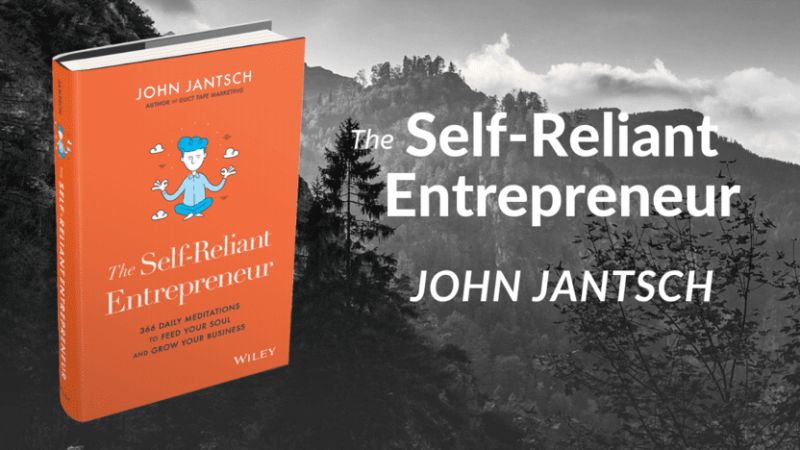
A Message from Acceler8Success Founder, Paul Segreto about “The Self-Reliant Entrepreneur”

Recently, I’ve decided to once again work through, “The Self-Reliant Entrepreneur” by John Jantsch. It’s a daily journal that I have found poses very direct questions… ones that we most likely wouldn’t ask AND/OR answer ourselves, but should. For only 15 minutes a day, you’ll find it to be an eye-opener in many ways.

Google Books refers to the book as, A guide for creating a deeper relationship with the entrepreneurial journey The Self-Reliant Entrepreneur offers overworked and harried entrepreneurs, and anyone who thinks like one, a much-needed guide for tapping into the wisdom that is most relevant to the entrepreneurial life. Check it out here.

Acceler8Success Cafe Friday 4.23.21

How to Rise Up After Life Knocks You Down

“It doesn’t matter how far you might rise. At some point, you’re bound to stumble.”

Oprah Winfrey spoke these words while giving a commencement speech at Harvard University, and I continue to find more truth in this statement the longer I live.

Each one of us experiences a few “stumbles” in our life. Some of us have the mental scars to show for it, too. Maybe you just got fired from your job and don’t know how to start over. Or maybe you’re trying with all your might to find a new one without any luck.

Sometimes we work hard for the things we truly believe in, only for life to not go according to our plans. In these moments, you might feel like throwing in the towel. Or that it’s just not worth the heartache to go after your dreams.

These feelings of pain and doubt are normal, but they shouldn’t stop you. In fact, when you realize you’ve hit rock bottom, there’s only one way to go, and that’s up. The process may be a difficult one and may even take away all your energy, but with a strategy and will, it can surely be done. Read more at success.com.

How to Build Motivation to Overcome Depression

One of the key features of depression is the lack of motivation to do things that you know you should really do. For example, you may think that you don’t have the motivation to exercise, or spend time with friends, or work on that project that is overdue. And as I’ve indicated in previous posts, we know that depression is a vicious cycle.

It includes avoidance, isolation, self-criticism, perfectionism, and hopelessness. We can add lack of motivation to this vicious cycle because when you lack motivation, you end up not doing the things that you need to do to build self-esteem, to overcome avoidance, to build your support network, and to feel effective so that you don’t fall into a rabbit hole of hopelessness. Read more at psychologytoday.com.

Why Entrepreneurship Involves Depression (And How To Overcome It)

If you’re headed into entrepreneurship, get ready to be depressed. Here’s how to get through it…

Sooner or later as an entrepreneur, you are going to face off against depression. At least the odds are extremely high. Those that deny it are probably hiding it or still in denial. It’s a virtually guaranteed part of entrepreneur life. The good news is that just knowing this gives you a huge edge going in. Read more at forbes.com.

“Running a start-up is like chewing glass and staring into the abyss. After a while, you stop staring, but the glass chewing never ends.” – Elan Musk

Why You’ll Have to Confront Depression as an Entrepreneur

Whether it is before, during or after exiting a company, depression is likely to rear its head at the worst time. Yet, if you can make it through it, the silver lining can be far more rewarding than you planned.

Reasons entrepreneurs get depressed include:

  • Empty successes
  • Naturally being prone to high levels of anxiety
  • Difficulty not feeling in control
  • Large numbers of investor rejections
  • Stress and long working hours leading to burnout
  • Being sabotaged by partners, staff or investors
  • Being fired from your own company
  • Struggles gaining and maintaining traction

The depression can be moderate and fleeting. Or it can be personally bankrupting and lead to a deep dive into bad habits, homelessness, and may take many years to recover from. Some don’t at all. Read more at forbes.com.

Entrepreneurial Leadership, Good Eats: How Independent Restaurant Operators Are Showing Their Strength

Independent restaurant operators have always been more entrepreneurial and a bigger source of innovation in the restaurant industry than the large chain restaurants can be. But the pandemic has been devastating for local restaurants across the country, with more than 110,000 locations closing their doors either temporarily or permanently, according to the National Restaurant Association. National Restaurant Association data also shows that restaurant and foodservice industry sales fell by $240 billion in 2020 from an expected level of $899 billion.

Some thought that future of the independent restaurant was all but over, but a closer look reveals that instead, restaurateurs became even more innovative. Many have found incredibly creative ways to keep diners visiting their restaurants, keeping them safe and, most of all, keeping cash flowing. This article features some examples of the creativity that has kept local restaurants alive. Read more at entrepreneur.com.

How Jersey Mike’s did Things its Own Way and Won 2020

For the past 30 years, marketing folks and ad agencies suggested to Peter Cancro that he appear in video or television ads for the brand he owns, Jersey Mike’s. The generally media-shy CEO always said no. “I didn’t want it to be about me,” he said.

Like many things, Cancro’s resistance was a victim of the pandemic. So, in March of last year, after the country went on lockdown, he appeared in an ad, simply urging people to “make a difference in someone’s life.”

“I felt compelled,” Cancro said. “It was a ‘we-got-to-do-something’ type thing.”

He’s appeared in ads for the chain ever since. Coincidentally or not, Jersey Mike’s sales have taken off. According to data from the most recent Technomic Top 500 Chain Restaurant Report, Jersey Mike’s was the 10th fastest growing big chain in the U.S. last year. Its system sales rose 19.6%.

But that doesn’t tell the full story. Of the 10 largest sandwich chains, only three of them managed to hold serve last year: Arby’s, which has drive-thrus and grew by 8.5%; Firehouse Subs, which recovered as 2020 went on and saw system sales rise 0.9%, and Jersey Mike’s. The rest of them pulled back, including the sector’s 500-pound gorilla, Subway, where sales plunged 18.5%, and Jimmy John’s, where sales fell 8.5% despite operating its own delivery network. Read more at restaurantbusinessonline.com.

Attention: Experienced Restaurant Managers & Operators… Managing Partner Opportunities!

If you’re interested in owning your own restaurant and putting your full-service restaurant management experience to work for you and your future, then read on.

Popular national brand is offering Managing Partner opportunities at new locations in Texas. Low investment required in exchange for significant equity positions. Excellent compensation package. Peak performance opens door to full ownership possibilities. Bi-lingual a plus but not required.

Interested? Intrigued? Are you ready to earn what you’re worth? If so, please reach out to Paul Segreto via email to paul@Acceler8Success.com.

We’ve Been Raised Like Wolves to Hunt Like Wolves

For something to exist, it must be created. For something to survive, it must be fed.

True for wolves. True for business.True for self-worth.

Unsure how the three are related? Here’s the uncomfortable truth: So many entrepreneurs unconsciously hunt for their self-worth by feeding on the validation that comes from business success, and it isn’t sustainable, or healthy.

If you think you’ve fallen into this trap of turning your business into a self-worth feeder you’re in good company, some trouble, and probably a degree of emotional pain. 

Here’s why so many entrepreneurs hunt, how to tell if your sense of self has displaced onto your business, and steps towards making self-worth an inside job. Read more at entrepreneur.com.

A Message from Acceler8Success Founder, Paul Segreto

I’ve read many, many books over the years as I’m a firm believer in what Lee Iacocca stated about a person not being smart by what is between his ears as he is by the information he can put his hands on.

Without having completed college, I knew I had to continue to educate myself as best and as much as I could to provide for my family. Early on, my wife, Laureen and I made a very conscious decision that we believed it best that our children would grow up with their Mom in the house at all costs. That meant while she was working her tail off at home, I had to work equally hard at work, and at whatever work would help us achieve our objective of our children having Mom home with them in the morning, upon arriving home from school and in the evening when we made it a point to have dinner together as a family.

Looking back, I saw these as objectives, as goals and as beliefs – our beliefs, but I never realized they were values in how we raised our family, all together and to respect each other and be there for each other… values of which we were steadfast in believing. Values we built our lives around. That is, I didn’t realize they were values until six years ago when I read the book, Values Inc. I read it two times within a few short weeks of receiving it from Dina Dwyer-Owens.

The first time around, I read it and enjoyed it. I took away a few things here and there. Then, I read it word for word, reflecting along the way how important it is to incorporate values into our lives, and certainly into business. Values, Inc. is applicable not only for Business, Inc. but for Family, Inc. as well.

This is really some very powerful reading. It’s inspirational. It’s motivational. It’s compelling. And, it makes sense… so much sense. I only wish it were published in the 90’s so I could have given it to my children as they were growing up and when they were ready to enter high school, college and the workforce. It really should be considered a textbook for life, required reading as in my opinion it truly outlines a foundation of values that an enriched, successful future should be built upon.

Last, I wish I were more conscious of values early on so I could have treated others better. Certainly, I would have made better decisions using a values framework. But today is as good a time as any to start rereading the book once again as I’ve done at least once a year since receiving this treasure. I’m forever grateful for Dina for writing and sharing such an outstanding book. Again, Dina, thank you!

Listen to an interview with Dina Dwyer-Owens, “Leading With Values” on Franchise Today podcast.

How does a founder / entrepreneur ensure the initial startup passion and culture remain as the brand and organization experiences accelerated growth?

How To Maintain An Entrepreneurial Culture At A Fast-Growing Company

In the earliest stages of building a company, there’s not much time to stop and reflect. The focus is almost exclusively on building something that can scale and endure as quickly as possible, all based on the vision you have for success.

But when you were just getting started, you were up for it. You knew that what you were doing was worth it. And you knew, better than anyone else, why you decided to take the initial risk. Before the office lease, before the 60-plus employees and before the profitability, there was you and an idea — a spark. Instead of second-guessing yourself, you put faith in your intuition and got lost in the work. Some days, it felt good. Some days, it didn’t.

Amid that chaos, excitement and, of course, the unknown, there’s some real freedom. In massive growth, I don’t think any entrepreneur is able to pinpoint the exact moment that freedom starts to dissipate, but it does. This is because with success and scale come responsibility and logistics. Bringing on new hires means you have more mouths to feed. Your first few clients are taking a risk, too, by hiring you. Read more at forbes.com.

Acceler8Success Cafe Thursday 4.22.21

How Generation Z Is Altering the Face of Entrepreneurship for Good

For the longest time, my generation, the Millenials, were touted as the Entrepreneurial generation. For the most part, we have lived up to the billing. However, as the world evolves, the art of business evolves with it, and it turns out that Generation Z has more to do with this evolution than many care to admit. 

Generation Z entrepreneurs are springing forth at such a startling rate that a recent Gallup Student Poll found that 40 percent of students surveyed from grades five to 12 stated they wanted to run their own business. Then, 24 percent said they have already started. At this rate, it isn’t at all challenging to see Generation Z take over as the most Entrepreneurial Generation. Read more at entrepreneur.com.

What I’ve Learned From Working With Gen Z Entrepreneurs

Born between 1997 and 2010, Generation Z succeeds millennials, and while they’re similar in some ways (their facility with digital media, in particular), their approach to business and entrepreneurship is very different.

Gen Z is rapidly becoming known as the most entrepreneurial generation ever, with 62 percent of Gen Zers indicating they have started—or intend to start—their own business. And those who have already started down this path are not only embracing entrepreneurship but also transforming it with unique approaches to brand building, upskilling and operations. With their oldest members just a tender 24 years old, Gen Z is already finding widespread success with their entrepreneurial exploits, from apps and YouTube channels to beauty products and hand-made bow ties. Read more at worth.com.

What Generation Z Entrepreneurs Are Like

If you think Generation Y is the most entrepreneurial generation, think again. The newest generation of workers, Gen Z, shows great promise as the next wave of entrepreneurs. Born between 1994 and 2010, Gen Z is about 21 million strong in America alone, with the oldest being juniors in college and the youngest about five years old.

In a new study by my company and the third-largest staffing organization in the United States, Randstad US, we found more Gen Z’s (17%) than Gen Y’s (11%) want to start their own business and employ others. Another study that I did with Internships.com in February 2014 shows 72% of Gen Z’s want to start their own business someday. Only 64% of Gen Y said the same in the study. In addition, 61% of high school students and 43% of college students said they would rather be an entrepreneur than an employee when they graduate college. Read more at Forbes.com.

Two Ways Entrepreneurs Can Turn Perfectionism Into Progress

Over the last few weeks, two friends (who are also entrepreneurs) decided to finally launch new websites for their businesses. The problem is, each of them had been kicking around the idea for months and still had nothing to show for it.

The problem wasn’t their motivation, abilities, or that they were too busy. Rather, perfectionism was preventing them from making progress. Perfectionism caused them to get distracted by all the potential details and decisions that could be made in the process of creating a website. In the end, this lack of focus prevented them from making progress. Read more at yfsmagazine.com.

“I have a view that if you build something that’s good, and you keep making it better, it lasts.” – Adam D’Angelo (Quora)

Today’s Young Entrepreneurs See the World in a New Way

Every generation likes to thinks it’s special, just a little bit “different” than the generations that came before. I know my generation, the baby boomers, sure did. Caught up in the unbridled optimism of youth, we thought we were so different that we were going to change the world.

I thought about this a few weeks ago while attending the Future of Entrepreneurship Education (FEE) Summit in Orlando, Fla. I met many driven young entrepreneurs under 30 who are determined to fix the mess the previous generations have made of the world (which kind of reminds me of what my generation used to think).

Don’t get me wrong. I hope they can do what we boomers couldn’t. And one thing this new generation, known either as the Millennial Generation or Generation Y, has going for it is the prevalence of entrepreneurs in the world today. In my day, most people aspired to get a good job and start climbing the corporate ladder. (Heck, most women aspired to get any job at all.) Today, it’s obviously a different story. Entrepreneurship is taught at hundreds of colleges, and programs like the Network for Teaching Entrepreneurship (NFTE) provide entrepreneurial education to at-risk teens. Read more at allbusiness.com.

A Message from Acceler8Success Founder, Paul Segreto

The following is from a social media post I shared seven years ago as a tribute to my Dad, a long-time business owner and entrepreneur who had recently passed away…

“Tonight I’m especially honored to be the host (and founder) of “What Keeps You Up At Night” as this podcast focuses on small business and my Dad, who passed away this past Sunday was a small business owner for over 50 years. He was a business owner through a time when most men got jobs and worked for a steady paycheck, incremental raises and a gold watch. Instead, he started a business, was very active in the business and opened multiple locations.

Through good times and bad, he stayed the course. I cannot recall a day when he stayed home sick. I do remember when he broke his hip that required surgery. It left him on crutches and with a brace all the way down his leg screwed into his shoe. Well, within days of surgery he was back at work, standing non-stop all day long with the crutches under his arms taking care of customers and his business. Truly he was an entrepreneur and I know there were many things about owning and operating his business that kept him awake at night. So, Dad, tonight’s show is for you!”

Why Start-ups Fail

If you’re launching a business, the odds are against you: Two-thirds of start-ups never show a positive return. Unnerved by that statistic, a professor of entrepreneurship at Harvard Business School set out to discover why.

Based on interviews and surveys with hundreds of founders and investors and scores of accounts of entrepreneurial setbacks, his findings buck the conventional wisdom that the cause of start-up failure is either the founding team or the business idea. The author found six patterns that doomed ventures. Two were especially common: bad bedfellows & false starts.

Other parties besides the founders—like employees, strategic partners, and investors—can play a major role in a firm’s demise. Quincy Apparel, for instance, was undone by weak support from its investors and factory partners and inflexible employees.

Many overlook a crucial step in the lean start-up process: researching customer needs before testing products. Like Triangulate, an online dating start-up, they keep rushing to launch fully functional offerings that don’t fit any market needs.

The good news is, firms can avoid that pitfall by rigorously defining the problem they want to solve, getting one-on-one feedback from potential customers, and validating concepts with real customers in real-world settings. Read more at hbr.org.

Is This the Biggest Myth in Entrepreneurship?

“I’m glad you could make it!” he said. “I’ve got an idea I want to run by you.”

I’d just arrived at a birthday party for one of my daughter’s kindergarten friends. If you’re a parent, you understand the kind of party I was at. It was one of those “invite everyone from your child’s class” parties where the parents stand around and make small talk with each other while our kids consume all the junk food and juice boxes we’d never feed them at home.

Since becoming a father, these little kid birthday parties have taken over my weekends, and the parent who was excited to see me was a father I’d been chatting with during a similar party a couple weeks prior. I felt a bit awkward because he was excited to see me, but I couldn’t remember his name. However, he clearly remembered me. And, judging by his statement, I knew what was coming next. He wanted my feedback on a business idea.

This kind of thing happens a lot. When people find out I teach entrepreneurship, they love telling me their business ideas. And I don’t just mean typical entrepreneurs pitching their venture-style tech companies. I mean my neighbor, my hairdresser, my bartender, and even, one time, my mailman. Read more at medium.com.

Seven Steps These Entrepreneurs Wish They Would’ve Taken Before Starting Their Businesses

Information can be a valuable resource, and having enough of it is key to helping business owners make smart decisions. But lack of information or experience can also have an impact. Even seasoned entrepreneurs have regrets or moments when they wish they had done something differently if they knew at the beginning what they know now.

Here, seven members of Young Entrepreneur Council reflect on their current knowledge and business experience in order to share some of the steps they wish they would have taken before starting their businesses. Read more at forbes.com.

This is What the Small Business Model of the Future Looks Like

Ten years ago, I remember standing in a large corporate board room of one of the world’s largest pet product manufacturers explaining this new thing called “Facebook“. There really shouldn’t have been a reason for me to be there. I worked for a small local fish store that a year prior was virtually unknown outside of extreme hobbyist enthusiasts. But it was what happened between 2010 and 2011 that got me in that boardroom. My small company created a following on Facebook, which at the time measured around 40,000 followers and a YouTube viewership of over 1 million.

We can’t even imagine a world without the internet literally available 24/7 in our pockets anymore. What that means is that the biggest single asset any small business has is its access to people through the internet. Small businesses can foster connection through followings on social media, visitors on a website and even through the people who look up to the business as a thought leader or industry expert. Powered by the internet, social media and influencers have turned marketing and product offerings and owner priorities upside down. The business model of the future is here and with it comes an all new way of doing small business. Read more at entrepreneur.com.

If you’re a blogger or an author interested in having your articles, posts, book excerpts, etc. included in our daily newsletter, please reach out to us via email to info@Acceler8Success.com.

Acceler8Success Cafe Wednesday 4.21.21

Sustainopreneurship is the future

It is encouraging to notice that the combined focus on sustainability and innovation is clearly intensifying. This is more than logical since behaving sustainably requires innovation, and innovation is no good if it creates problems of any kind, including those related to sustainability. But reaching logic is sometimes quite demanding!

Since so much depends on how entrepreneurial we are, it is essential that entrepreneurs (being able to find the ways to resolve their challenges) exclude any approach which would generate issues for any of the three aspects of sustainability – because that would not be a solution, but a new problem. This is of course the global, responsible approach, also the only socially responsible one. But in everyday reality, we often tend to think in terms of solving “our problem” and take advantage of “our opportunities” – ignoring problems of “others” and “the environment” – as if we would be living on another planet. Read more at wsimag.com.

Social Entrepreneurship: 10 Ways to Make a Difference Through Business

What is social entrepreneurship? Does the term refer to social media businesses? (No.) Is it something to do with networking? (Nope.)

In short, social entrepreneurship is an exciting way to make a positive difference in the world while also making a profit. 

It almost sounds too good to be true, right? Thankfully, it’s not.

Social entrepreneurship is the process of doing business for a philanthropic cause. Social enterprises seek to maximize profits while growing their positive impact on a particular social issue. These organizations are legal businesses that make money. However, much like a charity or non-profit, social enterprises focus most on benefiting society. Read more at oberlo.com.

“What you get by achieving your goals is not as important as what you become by achieving your goals.”

― Henry David Thoreau

How mayors can lead the way for entrepreneurial ecosystem building

Supporting entrepreneurs and early-stage businesses is key to economic mobility, opportunity and growth. But it’s one thing for city leaders to “talk the talk” and quite another to implement a strategy that will spark and sustain entrepreneurship.

A report called “Dynamism in Retreat” (Economic Innovation Group, February 2017) stated, “From 2010 to 2014, just five metro areas – New York, Miami, Los Angeles, Houston and Dallas – produced as big of an increase in businesses as the rest of the nation combined.” In fact, across the rest of the United States, many cities were seeing major declines in new business starts.

Since the report was released in 2017 more and more city officials, especially mayors, are embracing the role of “entrepreneurial ecosystem builder” and actively working to create – through policies and programs – an environment within their communities that supports entrepreneurship. Read more at joinsourcelink.com.

Are You an Entrepreneur? The Answer Might Surprise You!

They don’t wait to be told what to do, or for conditions to be perfect, or to be handed the resources they need on a platter.  In the spirit of a famous slogan, they just go out and do it. End of story. Sounds simple, right? But it’s not an easy process by any means.

It’s this kind of spirit that sees success as inevitable after hundreds of failures, rejections and setbacks. It’s this kind of spirit that enables the entrepreneur to pick themselves up off the floor, dust themselves off, and start all over again, even where the outcome is uncertain. It’s this kind of spirit that can hold a dream in perfect suspension in the imagination, believing in it even in the face of all odds, until the day it’s there in solid reality. Read more at addicted2success.com.

A Message from Acceler8Success Founder, Paul Segreto

Today’s Entrepreneurs

The world around us has become so noisy that it’s easy to not hear opportunity knocking. In the past, opportunity presented itself in only a few ways… a job offer, a referral, an ad in the paper. Business was regimented… 9 to 5, straight forward processes, slow to change, staying inside the box.

Well, technology along with our lost feeling of security, job and other has provided us opportunity and reason that we must keep our eyes open, explore beyond our comfort zones. We must maintain an open mind to create things of value, to control our own destiny, to diversify our income, to take calculated risk, and to think and act outside the box (of complacency, fear and procrastination).

We’re in an environment where the visionaries continue to create the playing field but it’s only doers who will win.

Acting swiftly, yet decisively, albeit deliberately, often throwing caution to the wind, caring little about what others think of them and their decisions, maintaining a laser-focus to not only succeed, but to thrive.

21 Reasons to Start a Business Today

Freedom is the golden promise of entrepreneurship. Over and over again, entrepreneurs that we interview for Foundr Magazine point to autonomy, to independence, as a key driver of their decision to start a business.

This isn’t just a little anecdote I’ve noticed. It’s a huge reason that people become entrepreneurs.

In 2008, the academic International Entrepreneurship and Management Journal released stats from a global survey of early-stage business owners. Independence was the most common reason these people gave for starting their business:

  • Within the 25 countries, the study looked at, an average of 38% of beginning business owners cited independence as a motivation.
  • Independence served as a reason for 35% of entrepreneurs in the US and 39% in the UK.
  • In Australia and Japan, 57% of beginning owners pointed to independence as their motivator.

Why does this fervor for freedom move people to hurl themselves into the crazy world of business? Freedom is having more control over the course of your life, having the power to direct it in the ways that you want, rather than working for the whims of others. Read more at foundr.com.

How Motivation Determines Success of Your Small Business

Does motivation play a part in the success of your small business? The answer is “yes!”

Motivation determines the success of your small business in many ways. It plays a part in everything from how you approach your day, how you make decisions, and to your health.

When we say motivation, we don’t refer to the sort of excitement that gets you fired up to do random things– things that don’t ultimately matter to your business. And it doesn’t refer to how excited you are about life in general. No, real motivation is the powerful force that pushes and justifies your daily actions towards something reaching a goal.

If you don’t have that motive pushing you, your days will probably be filled with stress, frustration, endless obligations, and most likely a lot of procrastination.

Without having it in both your personal life and business, it becomes increasingly hard to strive for success, fulfillment, and internal happiness. Read more at snapreads.com.

6 Ways to Stop Working So Hard and Like Yourself More

Urgency. Competition. Measure up. Improve. More. 

We’ve been conditioned to believe that if we work hard enough and optimize ourselves, we’ll get “there” sooner. 

There is no there.

We think we’re evolved human beings in charge of our destiny. In truth, we’ve been conditioned to work long, fast, and hard to earn the right to feel “good enough.” 

There is nothing empowering about it.

Collective unworthiness is the fuel that feeds our society. Humans have turned self-worth into something we need to hunt for, and our careers are a powerful way to pump up our inner metrics. We’re desperate for someone or something to validate our existence. 

Grinding to the bone has a glaring limitation: self-worth requires no work, is readily available, and free.

Not very catchy, but it’s true. 

Reclaiming your self worth starts with understanding where you’ve created dependency models, or are hunting for your worth externally. Then it’s time to dismantle the systems of oppression. Read more at entrepreneur.com.

Overthinking Everything? Use This Strategy to Get Out of Your Head

Overanalyzing every decision you make is a terrible habit to fall into. We’re all guilty of it. Our feelings of uncertainty drive us to overthink. Collecting more data and noodling about every potential outcome might make you think you are advancing toward a goal when you’re really just spinning your wheels.

Our subconscious drives 95 percent of our decisions, according to Gerald Zaltman, a Harvard Business School professor emeritus, who studied consumer-buying patterns. How you feel about the decision stalls your progress. If you feel uncertain about choosing, guess what? You’ll just keep thinking about it. The project or business doesn’t start until you do.

The first step is taking control. Despite what you might think, you are always ready to start. If you make the wrong decision at some point, you can adjust. You don’t have to know all of the answers, you just have to start and then you’ll figure them out. Read more at success.com.

9 Mindful Ways To Add More Self-Care To Your Routine

If there’s one thing we’ve learned in the last year, it’s that stress is pretty dang inescapable. While it’s impossible to totally remove worry from our day-to-day (after all, some stress is actually good for us), there are ways to minimize its impact and find harmony with it.

One such way is to weave more moments of self-care into our day. These moments allow us to make a conscious effort to ground ourselves and re-establish control over anything that may be increasing our anxiety, particularly throughout the workday. To figure out where to start, we tapped our friends at Boxed Water who know a thing or two about prioritizing one of the most essential elements of self-care: staying hydrated!

Ahead, we share nine mindful ideas you can tap into today to bring some zen to your 9-to-5. These self-care swaps will help infuse a spa-like feel to your everyday routine and help you feel relaxed from the AM rush to your midday lunch break, all the way through to your wind-down bedtime routine. Read more at brit.co.

The Shortest Guide to Dealing with Emotions

Imagine you are sitting in a car, and you are driving down a lonely highway. Suddenly, in the middle of nowhere, a warning light goes off. Your oil pressure is very low. If you just ignore it and continue your drive, you run the risk of doing serious damage to your engine. You know you can get a tow, but this is going to take a while.

As you are considering your next step, you suddenly remember a trick about how you can short circuit the warning light. This would not change anything about the engine—it would still be starved for oil—but the low-pressure signal would no longer be blinking on your dashboard, and you could ignore it more easily.

Here’s the question: Should you do it? Read more at psychologytoday.com.

Entrepreneurs Who Sleep More Are Better at Spotting Good Ideas

It is time to put the myth of the sleepless founder to bed. Too many entrepreneurs think skipping on sleep is the heroic path to success, and a badge of honor. But in a recent series of studies, we found several specific deficits among exhausted entrepreneurs that demonstrate that even the most dedicated founders could best serve their fledgling venture by resting up. Read more at hbr.org.

Acceler8Success Cafe Tuesday 4.20.21

25 Entrepreneurs Explain What They Love About Being An Entrepreneur

Being in love is great. Being in love with your business, when you’re an entrepreneur, is even better. Waking up each morning knowing you are getting to do exactly what you love is more than most people could ever say about any “job” they have had. Although there are days when tossing in your hat seems like a viable option, remembering how much you love your “job” can quickly snap an entrepreneur out of that mentality.

Different business owners also have different reasons why they love their business. It might be the products or the customers they deal with, or it could even be the fact that they are the ones in charge of it all. The reasons are as varied as the businesses themselves. Read more at hear.ceoblognation.com.

The Entrepreneur’s Impact on a Successful and Prosperous Society

The world as we know it would not be what it is if it weren’t for the brilliant and creative minds of entrepreneurs. When we talk about entrepreneurs, we often equate them with business people. While both share certain qualities, there’s much more to an entrepreneur compared to a business owner. They are not exactly one and the same.

What is Entrepreneurship?

The basest definition of the word “entrepreneurship” is this: the activity or the process of creating an enterprise or a business and taking on the financial risks with profit in mind. But, of course, there’s more to it than just that.

It also refers to having the capacity and the willingness to contribute to a nation’s socio-economic development by coming up with creative solutions that promote social changes and drive innovations.

Entrepreneurship, as well as entrepreneurs themselves, are deemed important in several ways, which we have outlined below. Read more at usaprojects.org.

Develop an Entrepreneurial Mindset

At its core, a business is really just a repeatable process of solving problems for other people. The problem just has to be big enough that customers and clients will pay for your product or service. If you’re an entrepreneur, really all that means is that you’re a problem solver.

And it takes some drive and a whole lot of other qualities to push your business idea toward success. Did you know that about half of all small businesses fail in the first five years? Did you know that about 70 percent of those businesses fail because of cash problems?

So in addition to being a creative person who sees opportunities and has the drive to persevere and navigate those rough spots when things get tough, you have to keep the business side of things in mind, too. Keeping things like financials, cash flow, bookkeeping, etc., in focus, in addition to your business goals, is key for success. Read more at msourcelink.com.

Can Entrepreneurship Be Taught in a Classroom?

As the pandemic reshapes entire industries, the need for agile entrepreneurs have never been more urgent. But traditional business education isn’t always optimized for preparing the next generation of leaders for an uncertain, rapidly changing world. Nevertheless, some business schools have pioneered new teaching models designed to teach entrepreneurship more effectively by focusing on “effectuation,” or leveraging existing resources to take action.

New research sheds light on two new models for entrepreneurship education: Rotman’s operating theater classroom, in which startups are interrogated in front of an audience of students, and Darden’s rewiring approach, in which students are encouraged to embrace an action-oriented, collaborative mindset. Read more at HBR.org.

The Entrepreneurial Spirit: Are Entrepreneurs Born or Made?

So what are the characteristics and skills of a good entrepreneur? What’s the “it” factor that makes for a great entrepreneur? To be a basketball star, you would most likely be extremely tall, fast, athletic, and have real hops. But the qualities of a great entrepreneur are more abstract or illusive for someone studying entrepreneurship and business. From my experience, I believe there are five major traits that mean you have the chops when it comes to building a business and living the life of an entrepreneur. Read more at garyvaynerchuk.com.

18 Simple Ways Entrepreneurs Can Prevent Burnout

It’s no surprise that entrepreneurs must possess a strong work ethic in order to keep their businesses up and running. As a result, many face long and demanding hours, increased pressure to perform, tough decisions, loneliness; the list goes on.

Unfortunately, many of the challenges faced by entrepreneurs can lead to ‘burnout,’ which Dr. David Ballard, Psy.D. defines as “an extended period of time where someone experiences exhaustion and a lack of interest in things, resulting in a decline in their job performance.”

Luckily, there are several ways to stay proactive and prevent burnout from affecting you and your entrepreneurial journey. From practicing self-care to maximizing productivity, we’ve got you covered. Read more at startupsavant.com.

Why Entrepreneurship Is the Engine of Economic Development

We often hear that entrepreneurship is important, but it’s hard to overstate just how vital entrepreneurship is for the economy at large. Entrepreneurial activity, or in other words, the creation of new businesses, is what supports local economies, what supports our country’s GDP and what helps the stock market continue to grow.

So why is it that entrepreneurship is such a powerful engine of economic development? It’s actually more complex than you might think.

The evidence suggests that small businesses created by entrepreneurs are disproportionately responsible for job growth. Small companies create more than 1.5 million jobs annually in the United States, which translates to 64 percent of total new job growth.

Why are new jobs so important? Economic growth is partially dependent on job growth. More available jobs lead to more people working, and more people working leads to higher GDP. On top of that, more people have recurring income and can better provide for their families. Read more at entrepreneur.com.

A Message from Acceler8Success Founder, Paul Segreto

Entrepreneurship: Ideas and the Courage (Nerve) to See Them Through

“I always thought you needed to be innovative, original, to be an entrepreneur. Now I have a different perception. Entrepreneurs are the ones that make things happen. (That) takes focus, diligence, discipline, flexibility and perseverance. They can take an innovative idea and make it impactful. … successful entrepreneurs are also ones who take challenges in stride, adapt and adjust plans to accommodate whatever problems do come up.”

– Steve Blank launched the Lean Startup movement. His work has changed how startups are built, how entrepreneurship is taught and how existing companies and the U.S. government innovate.

Read more…

Entrepreneurs Who Create Startup Businesses Have to be Crazy

People who start companies are, without a doubt, just a little bit crazy. And people who start more than one company? Deranged lunatics — all of them! Why? Because it’s insanely hard! You’re signing up for a ridiculous amount of work. Your startup journey will be the wildest ride of your life.

Read more…

Poker or Chess?

Do you plan your business strategy like you’re playing chess or poker? But, before you answer, consider the following…

“Industry executives and analysts often mistakenly talk about strategy as if it were some kind of chess match. But in chess, you have just two opponents, each with identical resources, and with luck playing a minimal role. The real world is much more like a poker game, with multiple players trying to make the best of whatever hand fortune has dealt them. In industry, Bill Gates owns the table until someone proves otherwise.”

– Deep thoughts by David Moschella

Is Courage a Necessary Trait for Success?

We never really hear enough about courage. The courage to take a risk, to stretch limits, to push forward, to go beyond, to keep moving… to make things happen regardless of the challenges in front of us.

Think about the early-day pioneers crossing the Midwest when they first caught a glimpse of the Rocky Mountains and stared at them getting bigger and bigger as they approached over a few days. What unbelievable courage they must’ve had to continue not only towards the mountains, but up into them and through them, often having to go north or south for awhile to keep making progress forward, and despite the elements of weather and resulting hardships. They believed in their dreams and as a result of their relentless courage, their goals were achieved.

The Cowardly Lion’s Thoughts on Courage

In his most famous song, the Lion muses on what it would be like if he had any courage (not realizing he already has plenty):

Cowardly Lion: [singing]I’m afraid there’s no denying, I’m just a dandy-lion. A fate I don’t deserve. I’m sure I could show my prowess, be a lion, not a mowess (mouse). If I only had the nerve!

For Successful Entrepreneurs, Courage And Leadership Go Hand In Hand

When we think of great leadership, we often envision someone who emanates confidence and strength. There are many entrepreneurs who think this means that, to lead their companies, they must present an image of permanent self-assuredness and fearlessness.

But true leaders are ones who forge ahead even when they’re not confident and who let their teams know that they don’t always have the answers.

Some of the greatest leaders in history have publicly made commitments that they didn’t know, at the time, how they would pull off. In 1960, newly elected President John F. Kennedy declared that the United States would put a man on the moon by the end of the decade. They didn’t yet have the capabilities in place to do this, but nevertheless, he committed to making this happen. This could have been a disaster for Kennedy, but in the end, it was a success, and they pulled it off within the time frame with a year to spare.

Great leaders take risks with their reputations for the sake of moving ahead with a big, sometimes seemingly impossible, goal. Their vision and innovation spur them forward when they don’t yet have the capability to make these ambitions a reality.

Doing this takes courage. And being willing to go through periods of courage is essential to both entrepreneurship and leadership. Read more at resources.strategiccoach.com.

Acceler8Success Cafe Friday 4.16.21

The Pandemic Created the Next Generation of Great Entrepreneurs

Could the pandemic be incubating a boom in the next generation of entrepreneurship? It’s hard to say, exactly — but it sure looks like something is happening. Applications for employer tax IDs have spiked dizzyingly since COVID-19 began; that translated to Americans starting 4.4 million new businesses last year, according to researchers at the Peterson Institute for International Economics — a record-breaking 24 percent increase from 2019. The Census doesn’t track business applications by age, and platforms like Kickstarter, GoFundMe, and Instagram told Entrepreneur they don’t have any data or insight to share. So it’s difficult to pinpoint exactly how much of this growth is kid-related.

Still, experts say that crises have historically fostered entrepreneurship — and this particular crisis comes with some unique kid-focused factors. Many entrepreneurial parents juggling work and childcare are eager to offer their kids something other than Charli D’Amelio’s TikToks and Minecraft, which makes creating a business an appealing diversion. Meanwhile, the culture at large has been speedily molting old normals for new ones and seems to be charged with a fresh surge of startup spirit. For ambitious young people, it all combines to produce one of the greatest lessons in entrepreneurship: Unpredictable times are rife with opportunity. Read more at Entrepreneur.com.

‘If Not Now, When?’ – Women Entrepreneurs Launch Mid-Pandemic

They say necessity is the mother of invention — it is, at the very least, a parent of many startups. While the coronavirus crisis has forever altered our lives, and has had devastating economic consequences for millions of people, it has also fostered a groundswell of entrepreneurial spirit, especially among women.

The U.S. Census Bureau saw a significant uptick in new business filings over the course of the pandemic, with more than 4.4 million new firms created since March 2020 — a 24-percent increase from the previous year. Data compiled for The Washington Post by LinkedIn found that female entrepreneurship grew 5 percent during roughly the same period, more than double the pre-pandemic average. Read more at TheStoryExchange.org.

Opening Up Entrepreneurship To All: The Resource Hub

Plenty of potential entrepreneurs have great business ideas but are held back in their pursuit of their goals by barriers: knowledge and resources kept out of reach of all but a few, as well as assumptions about who might be an entrepreneur and where they might come from. And while it’s understood that starting your own business is a tough road — particularly in the age of COVID, where many small businesses are struggling to stay afloat — it’s to the betterment of all that more people should have the tools available to them to try their hand at a startup.

Enter Nicole Loftus, the founder of The Resource Hub, a national directory for small businesses, as well as SkinX, a funding platform for entrepreneurs, both New York based. She’s working to help entrepreneurs succeed, including over 3,500 resources on the Resource Hub and adding new ones regularly. Read more at Forbes.com.

Daring to Compete: The DNA of an Entrepreneur

Entrepreneurs are a special breed. They are the disruptive forces constantly challenging the status quo and often defining our futures for us. The media has an endless fascination with trying to understand who they are and how to teach us to be more like them. At any one time, you can find thousands of articles, blogs, profiles, and books attempting to breakdown the backgrounds, traits, and habits of these unique disruptors of society. Unfortunately, these attempts mostly fall short due to the top-line superficial nature of media today.    

The newly released book Daring to Compete takes a stab at cracking that elusive entrepreneurial code by taking a deeper dive. Based on data collected from thousands of interviews over the course of the more than 30-year span of the acclaimed EY Entrepreneur of The Year program, the authors uncovered some fascinating similarities among the world’s elite entrepreneurs. Although these similarities appear quite simple at first glance, there is a lot that goes on below the surface. Read more at PsychologyToday.com.

Dr. Alyssa Adams: How To Successfully Ride The Emotional Highs & Lows Of Being An Entrepreneur

Upgrade your self-talk by challenging unhelpful thoughts and patterns

As a business owner, you are your own supporter, cheerleader, thought partner, and saboteur all at the same time. It’s essential to choose what role you want to play and to notice when your self-talk has become negative, harsh, and critical. It’s a pattern that is important to identify and change, especially as a new business owner. There are ups and downs that are a natural part of entrepreneurship, but it’s how you describe those experiences to yourself that really matters. Read more at Medium.com.

60% of US Workers Concerned Over Mental Health After Pandemic

A new survey says that 60% of US workers are worried about their mental and psychological health.

According to the survey by The Conference Board, there is a positive side to that. Nearly 80 percent of respondents felt that their supervisors cared.

Yet only 62% felt that they felt comfortable talking about well-being challenges at work. And 18% said they do not feel comfortable discussing hardships at work. They said they feared negative consequences.

The strongest indicator may simply be through personal connection, said Amy Lui Abel, PhD, VP Human Capital, The Conference Board.

“Direct managers and supervisors should regularly check-in with their teams and simply ask: “How are you doing? How is the family? Are there things preventing you from focusing on your work? What is going on?” Abel advised. “These check-ins can happen on an organizational level as well, with quick “pulse check” surveys (anonymous or not) asking these same basic questions about well-being.” Read more at SmallBizTrends.com.

Do you plan your business strategy like you’re playing chess or poker?

But, before you answer, consider the following…

“Industry executives and analysts often mistakenly talk about strategy as if it were some kind of chess match. But in chess, you have just two opponents, each with identical resources, and with luck playing a minimal role. The real world is much more like a poker game, with multiple players trying to make the best of whatever hand fortune has dealt them. In industry, Bill Gates owns the table until someone proves otherwise.” ~ Deep thoughts by David Moschella

Let the professionals at Acceler8Success Group help you play the right hands. For more info please visit Acceler8Success.com.

7 Parts of Your Life That Suffer When You Fail to Change

Change. It’s a scary thing, and fears associated with change often cause people to just give up.

But how scary is not making a change? Let me ask you to try this. Pick up a 50-pound rock and carry it around with you. No, not just for a few seconds, or even a few hours. Do it forever. That’s what an unexecuted change can feel like. It weighs you down, potentially adversely affecting other areas of your life.

Just how much is maintaining the status quo costing you? Like Coach John Wooden said, “Failure isn’t fatal, but failure to change might be.” Read more at Success.com.

The Changing Workplace

As the COVID-19 pandemic appears to be winding down and many entrepreneurs are gearing up to get back to business, many of us still don’t feel like we’re getting back to normal.

For many, the coronavirus has complicated an already complex situation. A few weeks ago, I read something in The New York Times that actually made me exclaim out loud, “Yes, that’s what’s wrong with me.” Author Susan Orleans told the newspaper, “I feel like I’m in quicksand. I’m just so exhausted all the time. I’m doing so much less than I normally do…I’m just sitting in front of my computer—but I am accomplishing way less. It’s like a whole new math. I have more time and fewer obligations, yet I’m getting so much less done.”

Sarah Lyall, the author of the article, calls it a “late-pandemic crisis of productivity, of will, of enthusiasm, of purpose.” And it’s affecting everyone—business owners and employees. MetLife’s 19th Annual U.S. Employee Benefit Trends Study 2021, Redesigning the Employee Experience: Preparing the Workforce for a Transformed World, discusses five trends that are changing the workplace small business owners should be aware of at Score.org.com.

The Weekend Habits of Successful Entrepreneurs

Weekends allow a break from the abundance of menial duties of the week. In the Forbes article “Don’t Balance Work and Life, Integrate Them”, the estimated average business professional has between 30 to 100 projects on their plate, are interrupted an average of seven times per hour, and distracted over 2 hours a day. Take some time to spend alone in order reflect on the bigger picture. Just listen to what Spencer Rascoff, CEO of Zillow Group, has to say on the matter:

“My weekends are an important time to unplug from the day-to-day and get a chance to think more deeply about my company and my industry.”

Remember to take a step back from the hustle and bustle. Don’t lose the vision in all the commotion. Read more at Medium.com.

Balancing Work And Family When You’re An Entrepreneur

When people talk about entrepreneurship, it’s mainly about the challenges that apply directly to that person. Being an entrepreneur means long hours, a lack of social life, that weekends are no longer “downtime”, but a means to squeeze more work into seven days. 

While all this is technically true, there is less thought to how entrepreneurship affects those closest to a person – i.e. balancing your work with family and friends. 

Let’s be honest. When we got ourselves into this game, we knew that balancing work and family was going to be a challenge. Once I’ve fixated on an idea, I will pour all my time and energy into it until it’s finished. I was born that way. 

But, on my journey to becoming a self-sufficient PPC agency owner, I met the love of my life. I married Mimi and went on to have two amazing children. 

Suddenly, my life was filled with people who depended on me. My wife has always been very supportive and understanding, but I couldn’t work 24/7 with kids. Read more at Flexxable.com.

5 Ways to Juggle Family and Business for Entrepreneurs

Two of the most crucial aspects of life are family and business. Each demands a lot of attention and dedication from an individual and it can often be overwhelming, trying to balance the two. 

In life, there is never a manual on how to be working parents and make things work. As an entrepreneur, venturing into new opportunities, crafting working strategies, and getting results is your sole purpose. You do this for self-improvement, portfolio expansion, and financial betterment. 

But when your family enters the picture, things can get a bit complicated. Your work rate and results have to improve because you’re now not just responsible for yourself, but your family too. The attention you previously gave solely to your business now has to be divided and shared with the addition of your new obligations and balancing the two can be quite a challenge. Read more at HiveLife.com.

Acceler8Success Cafe Thursday 4.15.21

Women Entrepreneurs Face Gender, Culture Issues

Across the globe, women’s entrepreneurship is increasingly important for creating new jobs and contributing to the social and economic growth of societies. According to the 2019/2020 Global Entrepreneurship Monitor (GEM) Report, 231 million women launched or operated businesses in the 59 economies around the world. As noted in a 2015 McKinsey Global Institute report, if women were to play an identical role in the global labor market to that of men, it is estimated that $28 trillion, or 26%, could be added to the global gross domestic product (GDP).

While the overall perception of female entrepreneurship may seem positive, the underlying reality of the success or failure of women entrepreneurs continues to be dynamically shaped by gender and culture. According to University of Delaware Professor of Management Amanda Bullough, both the business world and society-at-large need to pay more attention as to why these conditions persist. Read more at udel.edu.

The 10 Mompreneurs to Watch in 2021

With more and more females breaking into the world of entrepreneurship, there is one thing that becomes inevitable: more Mompreneurs. Women all around the world are breaking the mould more than ever, taking control of their lives and destiny through the vehicle of entrepreneurship. Despite what people may think, mompreneurs don’t take their foot off the gas once they’ve had kids – many push even harder, as they know the livelihood of their kids depends on them.

According to Boost Media Agencymompreneurs play an enormous role in the future of female entrepreneurship, paving the way for the next generation. Each with their own unique businesses and areas of expertise, Read about the 10 mompreneurs to watch in 2021 at Finance.Yahoo.com.

Building supportive ecosystems for Black-owned US businesses

Entrepreneurship and business ownership—particularly of community-based businesses—are crucial ways to develop community wealth, for both business owners and the people they employ. Healthy Black-owned businesses could be a critical component for closing the United States’ Black–white wealth gap, which we project will cost the economy $1 trillion to $1.5 trillion (in 2018 dollars) per year by 2028. The COVID-19 crisis, however, has further stressed Black-owned businesses and may cause the racial wealth gap to widen. This gap includes a $290 billion—and growing—opportunity to grow overall wealth by achieving revenue parity between Black- and white-owned businesses in addition to providing aid to small and medium-size businesses (SMBs)—those with up to 500 employees—with nonwhite owners.

Black business owners have been disproportionately affected by the pandemic-linked economic downturn, partly because they were more likely to already be in a precarious position, including more likely to be located in communities with business environments that are more likely to produce poor business outcomes. Indeed, about 58 percent of Black-owned businesses were at risk of financial distress before the pandemic, compared with about 27 percent of white-owned businesses. The pandemic contributed to tipping 41 percent of Black-owned US businesses into closure from February to April 2020. More than 50 percent of the owners of surviving Black businesses surveyed in May reported being very or extremely concerned about the viability of their businesses. This concern may be linked to having a more difficult time accessing credit since the COVID-19 crisis began; 36 percent of Black business owners responding to the survey said they had experienced this, compared with 29 percent of all respondents. Read more at McKinsey.com.

“We are a nation of communities… a brilliant diversity spread like stars, like a thousand points of light in a broad and peaceful sky.” – George H.W. Bush

Latino Entrepreneurs Face — and Can Overcome — Funding Obstacles

Recent research by the Stanford Latino Entrepreneurship Initiative offers detailed insights into the difficulty Latino entrepreneurs often have finding funding for their businesses — and points to some ways these entrepreneurs may be able to improve their odds of success.

The 2020 State of Latino Entrepreneurship report found that Latino-owned businesses are significantly less likely than similar White-owned businesses to have loans approved by national banks. The report is based on a survey of “employer” businesses that have at least one paid employee other than the owner.

Overall, the survey found that 20% of Latino-owned businesses that applied to national banks for loans over $100,000 received funding, compared with 50% of White-owned businesses. The discrepancy was even larger when looking at firms with annual revenues over $1 million who were requesting similar-size loans: 29% of Latino-owned businesses got the loans vs. 76% of White-owned businesses. Even after controlling for business performance measures, the odds of loan approval from national banks were 60% lower for Latino-owned businesses. Read more at GSB.Stanford.edu.

Five Ways To Raise Money To Launch Your Own Startup

While there are tons of obstacles along the road of setting up your own business, raising funds could be the number one cause (after mis-planning, of course) for the failure of your new business venture.

A lot of entrepreneurs are faced with many challenges when setting up a new business venture, but the most common one? Garnering the right amount of resources and funds necessary to kickstart the business. While there are tons of obstacles along the road of setting up your own business, raising funds could be the number one cause (after mis-planning, of course) for the failure of your new business venture. Read more at Entrepreneur.com.

Practical Guide To Running A Single-person Startup

Being an entrepreneur is amazing. But just like any other profession, there are ups and downs. You’re always faced with the question of “How do I keep going?” The truth is, entrepreneurship is hard. It’s a lot of work, a ton of stress, and not a lot of financial rewards (yet). But if you want to be successful, you have to push through the hard times.

Similar to Oprah Winfrey’s story, even when she had an awfully rated show, she was able to turn her misfortune into good fortune. Oprah gained recognition and was awarded her own show for her efforts “The Oprah Winfrey Show” which earned a full hour spot and became the top daytime talk show in the United States. Oprah has never given up and only moved onto greater things.

It’s better to think of the entrepreneurship journey as an extreme sport. That doesn’t mean you can’t take breaks, but it’s best to keep pushing through the hard times to the good ones. To do this, you have to establish your foundation in the beginning. You can do this by getting a handle on your finances and keeping good records (and sticking to them). As far as your industry, it’s not a bad idea to learn about it as early as possible, as you can use it to find your market or to assess the competition. When you do find your market, look for clients who can afford your product (you’ll want to set prices high enough to cover your overhead). The whole idea here is to keep your prices as low as possible while still delivering the right services. Read more at Medium.com.

6 Things Women in Business Know That Men Don’t

A dear friend of mine once said, “Life turns you into an expert at things you never chose to become an expert at.” This resonates with me a lot as an entrepreneur and mother of two. It’s one of the worst stereotypes these days to see a businesswoman who is also a mother and ask, “How do you do it?” Do men ever get asked that?

The fact of the matter is, female entrepreneurs have a whole different skill set than their male counterparts, and this is out of necessity. Far be it from me to look at this and think that we’re forced, kicking and screaming, to learn to work harder, smarter, and more efficiently than our male peers. In my experience, it’s best to approach the challenges by thinking, this is a gift.

Let’s explore six things that female entrepreneurs know about business and life that men don’t necessarily not know, but can never understand to the degree that women do. Read more at AllBusiness.com.

My Ideal Client Became My Worst Nightmare: 5 Lessons For Freelancers

After years of handling online marketing for local small businesses, I decided to pivot and help musicians with their marketing. Except I knew nothing about the music industry.

My lack of experience didn’t matter. I’ve always been passionate about supporting independent artists so I’d learn along the way. After all, I credit music with having saved my life when I was a youth dealing with mental health issues.

Despite venturing blindly into the music industry, my journey has been surprisingly great so far as a music marketing freelancer. Read more at YFSmagazine.com.

How to Start a Young Entrepreneurs Book Club

Inspired to start your own book club? From one young entrepreneur to another – education outside of the classroom is essential to growing as a business person. Whether you choose to read my book or choose from the hundreds of other value-packed entrepreneurship reads, it’s important to constantly learn new things.

Whether you want to host a book club for a small group or bring together a larger group of young entrepreneurs, the first step is to find out who will be involved. Although there are pluses and minuses to both bigger and smaller groups, I typically recommend petite gatherings. They can be more intimate and allow you to connect and learn a lot more from your book club and its members. Read more at Influencive.com.