Category: Entrepreneurship

Acceler8Success Cafe Wednesday 4.14.21

What entrepreneurial strengths do I have?

Anyone can start a business (yes, really).

But there’s no denying that some entrepreneurs have skills and strengths that help them achieve success.

As you pursue a path to becoming an entrepreneur, you’ll likely focus most of your attention on your business: your plan, your strategy and what you need to launch.

Yet it’s just as important to take some time and reflect on yourself, too. What strengths do you bring to the table as a business owner? And what are your weaknesses?

As you start thinking about your applicable skills and entrepreneurial strengths, let’s take a closer look at the importance of evaluating both your strengths and your weaknesses.

tarting a business is challenging. That’s why it helps to know going in what personal strengths you have that can help you be successful.

Maybe you’re a person who embraces challenges not as obstacles, but as opportunities. Perhaps you’re highly motivated and/or goal-oriented. Do you excel at meeting deadlines? What about your work style: do you prefer to operate at the 50,000-foot level, or do you thrive in the midst of details? Are you creative? A people-person? Competitive or disciplined (or both)? Read more at FastTrac.org.

A Message from Acceler8Success Founder, Paul Segreto

What goes through an entrepreneur’s mind at 2 AM?

An entrepreneur’s mind never seems to stop. More so in the dead of night.

Sure, there’s some worrying – there always is. But it’s more about thinking things through. It’s actually a sense of relaxing and unwinding. It’s some quiet alone time ahead of what is certain to be another busy day. Others would think this is all weird but it’s the peaceful solitude that allows an entrepreneur to think, to sort out answers. For example, part a typical internal conversation might sound like this…

“Where does the time go? We’re already halfway through April and before we know it we’ll be at the mid year mark. Focus. Yes, it’s time to stay focused on goals for this quarter – they’re still clearly in sight. They’re achievable. They are. So, staying the course, yes, it’s key to making this quarter a success. Okay, that‘s right. Don’t change now. New course direction is not needed, just a slight adjustment here and a little maneuvering there and all will be good…”

Actually, this uninterrupted conversation is assuring and as such, mind clearing. And, it enables the entrepreneur to doze off for the best two hours sleep of the night. 

3 Ways to Overcome the Fear of Business Uncertainty

Life doesn’t have a “pause” button. Even if it did, I’d tell you not to push it. Yes, being an entrepreneur during COVID-19 is scary, but fear of failure in business is simply part of the journey. Ironically, it’s also a great motivator.

When I launched my first business, I was scared to death. I was supposed to be the breadwinner. What would our family do if I failed? I didn’t want to find out, so I became incredibly resourceful, never allowing the risk and uncertainty inherent to business capsize my dreams. My experience showed me how to use fear as a positive springboard rather than as a reason to throw in the towel.

The COVID-19 pandemic hasn’t been kind to the startup community. Nevertheless, plenty of entrepreneurs will come out on top when all is said and done. Those business leaders will have something in common: They’ll share an unwillingness to quit in the face of something out of their control. Read more at Addicted2Success.com.

How to Form Better Habits as an Entrepreneur

For better or worse, our habits define us and, if significant enough, can shape our future. The habits we practice every day, whether big or small, eventually add up as the sum total of our behavior. They impact our decisions, our actions and even our internal thoughts and feelings. Good habits can make us smarter, more physically fit and better at our jobs, while bad habits can make us stagnate — and possibly sabotage our own careers.

Accordingly, being able to positively change our habits (i.e., introducing new good habits and eliminating old bad habits) is one of the biggest keys to long-term success, no matter how you define that success. Of course, the issue here is that changing habits can be very difficult. Ingrained habits are ridiculously hard to stop; practicing a habit continuously reinforces it, making it harder and harder to break away from the pattern. And starting something new requires a surplus of focus, attention and willpower.

So how can you do it? How can you form better habits as an entrepreneur? Read more at Entrepreneur.com.

SUCCESS Magazine is back!

The newest issue of SUCCESS magazine hits newsstands today. On cover is none other than personal development legend, entrepreneur, best-selling author and philanthropist Tony Robbins! In this issue, Tony breaks down the surest path to financial independence and offers straightforward advice to the everyday investor. This is one you won’t want to miss. Click here to get your copy >> success.com/subscribe

Navigating the Four Stages of the Entrepreneur Journey

Independent people from all walks of life — everyday entrepreneurs — strive to make an impact on their world. This impact can be commercial, civic or creative, or all three. If you’re reading this, you’re a part of this community of like-minded individuals. You are sharing the path — a recognizable entrepreneur journey — with others around the corner and around the world.

We have identified four distinct stages of this entrepreneur journey that are similar worldwide, across industries, and bridging all types of ventures: Dream it, Create it, Grow it and Manage it. Read more at GoDaddy.com.
Asking for Help is Badass

A smart leader knows the skills it takes to get the job done. An even smarter leader knows when to ask for help.

Don’t get so caught up in your own ego that you can’t get help when the chips are on the table.

It doesn’t make you weak. In fact, it makes you strong as hell to identify WHEN you need help, get the RIGHT help, and IMPLEMENT IT when it comes.

Join the Lonely Entrepreneur Learning Community today as www.lonelyentrepreneur.com.

How to Discover and Unleash Your Strengths as an Entrepreneur

If you want to become a successful entrepreneur, you need to discover your strengths and give yourself every possible opportunity to leverage them each day. It goes without saying that you need to be damn good at what you do.

Taking the time to discover your strengths and focus on perfecting the skills that’ll help you become the best in your industry, becomes a very crucial decision point in every entrepreneur’s journey. Especially on the road to validating a business idea, getting the early traction and acquiring your first paying customers.

Through my interviews and experiences working with successful entrepreneurs, I’ve come to notice many remarkable similarities they tend to share in common.

They’re often ruthless when it comes to both opportunity management and time management, which very quickly become defining traits as an entrepreneur.

They know the importance of optimizing their lifestyle and doing their most challenging work at the time of day that best suits them.

They never give up and actively refuse to take no for an answer. Read more at Ryrob.com.

“Strength does not come from winning. Your struggles develop your strengths. When you go through hardships and decide not to surrender, that is strength.” —Arnold Schwarzenegger

How Your Business Can Be Ahead of the Curve by Looking Backward and Thinking Forward

Looking back, the formation of many innovative companies began with change. The founders of Home Depot, the first big-box home improvement store, were fired from their local hardware store. One year later, the first two Home Depot stores opened in Atlanta, Ga. Groupon, a website that promotes companies by offering deals on their products and services to consumers, developed right in the middle of the 2008 recession. This company’s aim was two-fold: promote struggling companies’ products and ease the public’s financial burden with discounts. 

The point? Adversity inevitably brings change, and this trend of change spurring innovation is constantly recurring. Therefore, entrepreneurs and businesses should always think of how to turn today’s adversity into tomorrow’s bright star. Read more at Entrepreneur.com.

The Secret Weapon for Successful Entrepreneurs; 5 Must-read Books in 2021

Are you determined to get back on track this year no matter what? If so, you’re not alone. Many entrepreneurs faced unexpected hurdles in 2020 and had to evolve to survive. 

Now is the perfect time to remain flexible and open to new ideas so you can better position your business for success. One of the best ways to learn fresh, innovative ideas is to read books written by accomplished entrepreneurs. While your competitors are binge-watching the latest Netflix shows, why not stay one step ahead by reading books? Regardless if you want to build a startup or sell a mature business to the highest bidder, this curated list of must-read 2021 releases can help guide you during each stage of your entrepreneurial journey.

All of these books offer wise advice, practical strategies, and insightful stories that can make it easy for you to learn how to build a profitable, sustainable business. And remember, the most successful business owners never stop learning! Read more at Influencive.com.

We’re very excited to announce an addition to our digital family… the Acceler8Success Cafe Daily Podcast. Launching in June 2021, our new podcast will help current and aspiring entrepreneurs to start their day on the right foot in the time it takes to enjoy a cup of coffee or two. Guests will include some of the leading entrepreneurs in small business, restaurants & hospitality and franchising today. Stay tuned for more details!

Acceler8Success Cafe Tuesday 4.13.21

The Ultimate Entrepreneurial Checklist

In the U.S, 10% of the population comprises entrepreneurs. These statistics are no different worldwide. In Brazil, for example, the number of businesspersons is one in eight adults. Entrepreneurship encompasses all attempts at starting a new venture creation or business and expanding your current business as an individual or a team. It is a major contributor to a country’s economic well-being in terms of job creation and economic growth.

In the past, the four attributes that defined entrepreneurship were decision-making, initiative, innovation and risk-taking. Though these are still important, the entrepreneurship world is constantly changing. As such, you need the rights traits to break even as an entrepreneur in today’s cutthroat competitive business spheres.

Read more at Influencive.com for more including a checklist of what you need, while also keeping you on your toes and a step ahead of the competition.

3 Ways to Make Your Startup Feel Like a Booming Business

Being an entrepreneur is a hugely popular day dream. Well over 50% of people want to be their own bosses, according to a survey from Forbes. However, only 4% of those surveyed are actually entrepreneurs! Why is entrepreneurship such a popular dream that many cannot achieve?

The problem is, many people approach running a startup without a solid plan. They hear about the benefits of being able to set your own schedule, develop your dreams, and ignore the realities of setting up a small business.

As Richard Branson says, “To be successful you have to be out there, you have to hit the ground running.” Success will only come if you are well prepared for the daily challenges of entrepreneurship. You need to be organized, focused, and connected to achieve your goals. Read more at Addicted2Success.com.

A Message from Acceler8Success Founder, Paul Segreto

Change… Because Failure is not an Option

Like a ship at sea, a business should make directional changes in a long, sweeping manner. Conversely, although abrupt change in direction may create havoc, it may be deemed necessary by the captain and navigation team to avoid what may not be apparently visible on the surface to others on the ship, but is evident nonetheless through compilation of data and viewing radar. In any event, well thought-out plans, including contingency plans must be in place and acted upon to arrive safely at a specific destination within a certain time frame, and with available resources.

However, what happens when seas are rough, or when a storm is approaching, or when an engine shuts down? It’s then the captain’s responsibility to crew and passengers, and to the ship’s stakeholders to make any and all necessary changes to ensure all interests are protected. Thereafter, when the ship is safely docked, management must review the events that took place and explore options to ensure the same problems don’t reoccur. Management must identify ways to improve performance by developing strategy and executing on tactical plans to accomplish objectives at all required intervals – short, mid and long-term.

Change requires thought and planning. As does operating a successful business. As change occurs, many within the business are exposed to decisions that on the surface appear to be “drastic or severe” and are not understood and/or agreed upon. However, what is typically not realized are areas of weakness and vulnerability that must be addressed and with the utmost sense of urgency. In many cases there are common denominators across multiple areas of the business. Most will be directly attributable to reduction in sales. Some will adversely affect profitability.

Unfortunately, the economic woes of the past year continue to linger, compounding problems that may have actually started prior to the first lockdown in early 2020. Deficiencies, usually hidden by high sales levels are now standing out like sore thumbs. Accepting these facts while realizing limitations and shortcomings is vitally important, but knowing what and how to improve [and change] is required. Definitive action is paramount!

Change what needs to be changed. Prioritize changes that will make the most immediate impact. Grow into the changes that aren’t urgent. But, do it all within the time frame where challenges present themselves as survival may be dependent upon the same. Change, as unpopular as it might be, is necessary to recover AND to move forward. To this end, hard decisions must be made – with absolute conviction and without delay for the good of the business and ultimately, for all within the business. Yes, change is difficult. But so is failure, and failure is not an option!

How to work for yourself: A step-by-step guide

The first and most obvious step of working for yourself is knowing what you want to do. Although it’s not unheard of that people quit their job with no game plan and become a huge success, you’re going to perform a lot better if you know what you want to do ahead of time.

One of the best ways to figure out how you want to work for yourself is by looking at the things you already enjoy doing. Often, your big idea is going to start as a hobby or passion that you already have, whether that’s art, craft making, programming, etc.

These kinds of ideas make great startup ideas because even if things don’t work out, you’ll still have a lot of fun learning about and exploring a topic you’re passionate about. Read more at b12.io.

The Five Entrepreneurial Rules I live by

You don’t choose entrepreneurship; entrepreneurship chooses you. A great entrepreneur, by their very nature, is instinctive and instinct—when you listen to it—will always guide you in the right direction.

In my case, that gut instinct has always driven me to projects that I wanted to test and execute. Combined with this is an unquenchable sense of curiosity and a desire to prove myself. I love these ‘intellectual puzzles’, as I call them. This is exactly what entrepreneurship is about for me. It keeps life fresh and exciting. Moreover, it is actually a way of life in itself, and is something that defines who I am.

If I could highlight a few of the rules that I live by as an entrepreneur, I would first emphasize that while having a passion for what you do is necessary, it’s not enough on its own.

Neither is motivation enough by itself. It can expire quickly, and is also subject to mood, especially when the chips are down. As an entrepreneur, you have to be resilient because the harsh reality is that you will fail… many times over. Read more at TheLondonEconomic.com.

“Sometimes it (entrepreneurship) is a fine line between positive & negative thoughts, confidence & doubt, the road less traveled & the norm, being conservative & taking a risk, exhibiting caution & throwing caution to the wind… but I know I wouldn’t have it any other way!” – Paul Segreto, Founder, Acceler8Success

10 Personal Development Tips to Help You Love Your Small Business Life

Running a small business is hard work. But it can also be fun if you love what you do. Personal development is an important element of creating a successful, sustainable business. Use these tips from the online small business community to learn, grow, and love what you do.

Find joy in your business: Lots of entrepreneurs get into business because they love it. However, that feeling can sometimes fade through the years. If you want to build a sustainable company, it’s important to enjoy it at least somewhat. John Jantsch dives into this topic with Shani Godwin in this Duct Tape Marketing post and podcast.

Add fitness workouts into a busy life schedule: Taking care of your business requires a lot of time. But it’s important not to neglect your own personal health. Fitness is an important element of healthy work-life balance. Learn how to add fitness workouts in your busy schedule in this Aha!NOW post by Sarun Ravindrad. Then read what BizSugar members had to say about the concept… and read more at SmallBizTrends.com.

The Complete 35-Step Guide for Entrepreneurs Starting a Business

Starting a business entails understanding and dealing with many issues—legal, financing, sales and marketing, intellectual property protection, liability protection, human resources, and more. But interest in entrepreneurship is at an all-time high. And there have been spectacular success stories of early stage startups growing to be multi-billion-dollar companies, such as Uber, Facebook, WhatsApp, Airbnb, and many others.

Starting a business is a huge commitment. Entrepreneurs often fail to appreciate the significant amount of time, resources, and energy needed to start and grow a business.

Here are some of the biggest challenges to starting and growing a business:

  • Coming up with a great and unique product or service
  • Having a strong plan and vision for the business
  • Having sufficient capital and cash flow
  • Finding great employees
  • Firing bad employees quickly in a way that doesn’t result in legal liability
  • Working more than you expected
  • Not getting discouraged by rejections from customers
  • Managing your time efficiently
  • Maintaining a reasonable work/life balance
  • Knowing when to pivot your strategy
  • Maintaining the stamina to keep going even when it’s tough

Please visit AllBusiness.com for an overview of 35 key steps for entrepreneurs who are starting a business, with links to additional articles addressing some of the topics in more depth.

5 Small Business Strategies to Recover, Rebuild and Be Ready

We are living through a very uncertain time — from day to day it seems almost impossible to predict what will come next.

It’s easy to see that the rather dramatic occurrences in 2020 have impacted businesses of all sizes, and especially small businesses. One study of 5800 small businesses in the US pointed to the fact that smaller companies tend to be “financially fragile,” which only exacerbates the problems that face them during times of national crisis, for instance.

It’s impossible to fully predict what will happen in 2021 and beyond, but there are strategies that can help small businesses stabilize and grow. Learn five of them at Entrepreneur.com.

The Common Path to Uncommon Success Begins with an Idea

There are two mistakes people make when trying to identify their big idea. First, they believe their big idea can be something they are just passionate about. I love muffins! I’ll open a bakery! Second, they believe their big idea is something they just have expertise in. I know how to code; I’ll build websites! 

Your big idea is not either/or. It’s not something you are passionate about or something you have expertise in. It’s both. Your big idea needs to be a combination of your passions and your expertise.

Let’s look at scenario one, just passion. Having passion for your big idea is important. You need to be excited to work on your big idea every single day. However, if you just have passion and you’re not providing a needed solution to the world, your idea will not gain traction.

Every human is tuned into the same radio station: WIIFM, or, what’s in it for me? Sure, people will be happy you’re pursuing a passion, but unless they are going to benefit directly from your passion, they’ll never become a customer, you’ll never generate revenue, and your big idea will become nothing more than a hobby. Read more at Success.com.

“Twenty years from now you will be more disappointed by the things that you didn’t do than by the ones you did do. So throw off the bowlines. Sail away from the safe harbor. Catch the trade winds in your sails. Explore. Dream. Discover.” – H. Jackson Brown Jr.

Acceler8Success Cafe Monday 4.12.21

10 Signs You’re Not Cut Out To Be An Entrepreneur

Statistics show that about 50% of small businesses fail within five years but that doesn’t necessarily mean that 50% of people who try aren’t cut out to be entrepreneurs. Nearly every successful entrepreneur has failed at some stage during their journey – from Bezo to Gates.

Clearly, failure is not an indicator of your capabilities. However, your reaction to failure certainly is – if you’re not ready to fail then you’re probably not ready to be an entrepreneur.

But even if you’re unfazed by failure, you may have other traits holding you back from startup success. With that said, here read more at Medium.com for ten signs you’re not cut out to be an entrepreneur.

21 Entrepreneurs Who Failed Big Before Becoming a Success

Failure is a part of business. Very few entrepreneurs ever make it big without first experiencing some massive failures. Whether it be running a business into the ground, getting fired from a job or even going to jail, plenty of very successful entrepreneurs have seen huge failures before ever accomplishing their dreams.

So if you ever feel worn down or intimidated by the thought of failing, just take a look at entrepreneurs who failed before making it big at SmallBizTrends.com.

A Message from Acceler8Success Founder, Paul Segreto

When Entrepreneurs Are Faced With Failure

Sometimes no matter how well we plan and how much effort we dedicate to something, we fall short of our goal and the end-result causes a variety of challenges and problems. Ultimately, it can adversely affect financial position, reputation, relationships, team spirit and much more. It can also start to spiral into personal life and affect family, health and overall well-being. Unfortunately, such situations are often perpetuated by denial by placing one own’s head in the sand.

Well, when our head is in the sand, our most vulnerable ass-et is sticking out in plain view. Some will laugh. Others will point and snicker, definitely telling others. And a few will take advantage of the situation and current position of vulnerability. Sadly, we put ourselves in that position. Not because we swung and missed. Not because we didn’t see the forest for the trees. And not because we just flat-out saw something that wasn’t there. Instead, it’s because we didn’t keep our head high, accept the situation, learn from it and move on, and with laser-focus. That is exactly what entrepreneurs do, and should do when faced with failure.

6 Reasons Why More Women Are Turning To Entrepreneurship

There are a lot of challenges that women are facing in the modern world. And it gets doubled when they try to break through the glass ceiling of male-centric stereotypes in the workplace. But you should know that you can’t achieve greatness with a small mind, and getting into an entrepreneurship journey is extremely rewarding.

Nowadays, women are taking the courage to excel and become the masters of this art. Recent studies show that more than 63% of women entrepreneurs are dependent on their business as their primary revenue source. This challenges the old stereotype that women only run lifestyle businesses for supplemental income, rather than as a primary source of income. Instead, today’s women are breaking this stereotype, and becoming good at it. 

It’s no surprise that more and more women are becoming more attracted to entrepreneurship, compared to traditional career paths. Visit Addicted2Success.com. to read about some of the reasons why women are turning their dreams into reality.

The entrepreneurial mindset that helped me grow my business

Six years ago, I left my career as a full-time attorney to open a pie bakery with my mom. I had never baked a pie in my life.

I know, right? Who makes that sort of decision?

Because I was naïve about entrepreneurship, I fully expected smooth sailing through calm seas as we ventured into world pie domination. I really believed that because my mom had some entrepreneurial experience and that because I practiced law, the world would watch as we slayed the pie market. 

Ahem. 

Spoiler alert: starting, managing, and growing a successful company is a million times harder than what most people expect. What I saw in my head was Meg Ryan in You’ve Got Mail. The reality was 90-hour work weeks and a tremendous time of personal, emotional, and mental health growth that felt mostly like an uphill battle. (Uphill both ways. In the snow.) 

Also, my hair never looked as cute as Meg’s. Not even once. And no one ever brought me a bouquet of freshly sharpened pencils. 

If you’re considering entrepreneurship – or if you’re already there and are struggling – Read about the two insights the author shares at Zapier.com.

The 32 Best Entrepreneur Books of All Time

Are you looking for advice on boosting your small business and improving your life?

We’ve compiled a list of the best books by renowned business leaders, novelists, and successful entrepreneurs, packed with practical advice on becoming an industry innovator and finding your passion through meaningful work. With these books, you too can build your own business and thrive.

We encourage you to find a local bookstore that offers delivery or curbside pickup. Check IndieBound if you truly don’t have local options, or consider purchasing from Bookshop, an online bookstore with a mission to financially support local, independent bookstores. Read more at Shopify.com.

Why “Quit Your Job” Is Terrible Advice For Entrepreneurs

All over the Internet, startup porn dictates you have to quit your job to be an effective entrepreneur. You can be your own boss. You can have flexibility. You can set your own rules.

I understand the mindset behind quitting your day job and not being tied down to your day job, but “quit your job” comes with a tremendous undercurrent of privilege. And it’s terrible advice.

The risks are likely self-explanatory. Your day job provides a safety net in terms of income and benefits, much more than your new startup or business can. Not only do you have a salary, but hopefully your job provides benefits and insurance. And what if the business fails? It’s a high risk, high reward venture to quit your job and pursue your passion and a life of entrepreneurship. Read more at EntrepreneursHandbook.co.

The pandemic has been an economic disaster for women. Some took advantage of it.

Since graduating from college in 2017, Tamika Scriven, who makes and wears her own wigs, has wanted to launch a business selling them.

While working at Macy’s downtown Brooklyn store as a counter manager for Bobbi Brown Cosmetics, Scriven found that customers frequently asked where she had gotten her wig. When Scriven told them she made it herself, they often wanted one, too. She decided to develop a business plan in her spare time and also began teaching courses on wigmaking. “I loved the intimacy of meeting with each person and working closely with them,” she says.

By last spring, Scriven, 32, was working at a software company, her plans for a wig business on hold. Then the coronavirus changed the economic landscape, and she watched co-workers — as well as her own mother — get laid off from their jobs. Read more at WashingtonPost.com.

Welcome to The Social Geek Radio Network.

Get in touch with your inner geek. Jack Monson and many special guests discuss social media and digital marketing trends for brands, small businesses, and franchises. 

Social Geek Radio was listed as one of 20 Best Business Podcasts according to Emerge and was named to the Best Small Business Podcasts by FitSmallBusiness.com. Recently, Social Geek Radio finally made the Top 25 podcasts in the Marketing category of Apple Podcasts / iTunes.

Listen, download, subscribe to Social Geek Radio!

Acceler8Success Cafe Friday 4.9.21

The Critical Thing Entrepreneurs Rarely Consider…Until It’s too Late

You may have heard the phrase, “Starting something is not as important as finishing it.”

This axiom holds true for virtually every element of life – whether it’s physical, emotional, spiritual, personal or professional. 

However, “finishing” is one of the last things that entrepreneurs and business founders consider when starting a business and running it. They typically don’t give much thought to succession planning until they’re ready to retire.

In fact, a study conducted by Wilmington Trust found that nearly 60 percent of privately held businesses have not even considered succession planning. Additionally, a statistic from Wisconsin-based estate planning firm, the Walny Legal Group, found that 60-70 percent of small business owners want to pass their operations on to their progeny, but less than 15 percent ever do. Read more at Entrepreneur.com.

A Message from Acceler8Success Founder, Paul Segreto

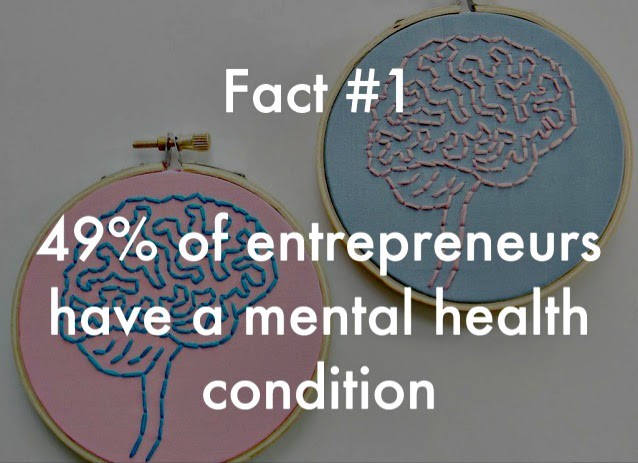
Entrepreneurs and Mental Health: Awareness and Action is a Must!

Some, but not nearly enough has been written about entrepreneurship and mental health. Loneliness and depression, continue to occur within the ranks of entrepreneurs at an increasing rate and although failure (or fear of failure) may be a driving force it’s often not the sole deciding factor.

Is it the quest for perfection? Is it a blinding passion that nothing else is visible? Or, a control issue where no one can do it better so it’s dealt with alone?

Michael Dermer has written a great book, The Lonely Entrepreneur and has developed a membership site that is a great resource for entrepreneurs.

Strategic Coach has developed a great program for entrepreneurs. There are others, as well.

But are current efforts enough to slow down the alarming rate of suicide among entrepreneurs? As successful as they were, what were deciding factors leading to the suicides of Anthony Bourdain and Kate Spade?

This is a topic that must be brought front and center as we continue to grow as an entrepreneurial society* with approximately 60% of the labor force in some type of self-sustaining endeavor whether it’d be as freelancers, sole practitioners, professional service providers, contractors, solopreneurs, etc.

I look forward to thoughts on this with hope the discussion continues. Thanks.

Entrepreneurial Society

While the previous generation had an average of four employers over the course of their lifetimes, the current generation will hold an average of four different jobs by the time they reach 30. One of their employers will be either someone they know or they will be self-employed. Over two-thirds of US college students will be their own boss at some point in their lifetime. Entrepreneurship is good, but not just for individuals. It is also the link to growth, jobs, and competitiveness in a global economy. The too often missing link in communities, cities, states, and entire countries plagued by rising unemployment and stagnation is entrepreneurship.

Entrepreneurship saved the United States from going under in a sea of imports flooding in from Japan and Europe. It has also emerged as the positive and proactive response to globalization. In the leading developed economies, globalization and technology have triggered a shift away from traditional capital towards knowledge. This book argues that the entrepreneurial economy is the strategic response to this shift. It aims to provide an understanding and interpretation of the emergence of entrepreneurship policy. Visit Oxford.universitypressscholarship.com to order the book, Entrepreneurial Society by David B. Audretsch.

39 Entrepreneur Statistics You Need to Know in 2021

Small businesses and ambitious enterprises are at the heart of every industry. Not only do they immensely contribute to the overall revenue of a country, but they also have a beneficial effect on the workers themselves. 

Employees who decide to make the switch and become independent employers feel more fulfilled and motivated to work. There are a lot of inspirational entrepreneur statistics out there that show us the US is still the best place in the world to become your own boss and start something new.

Now, young entrepreneurs are mostly concerned about the risks that come with new businesses, including funding, staff, and success rate. Indeed, a large number of business owners rely on loans to keep the company operational and often have to use their personal funds to tie some loose ends. Read more at SmallBusinessgenius.net.

Perceptions of barriers may keep budding entrepreneurs from building businesses

Teaching people to become entrepreneurs requires more than just passing on entrepreneurial skills, according to a team of Penn State Berks-led researchers. Would-be entrepreneurs also need to understand—and negotiate—the barriers that they might face.

In a study, researchers built a multidimensional model to measure the effectiveness of entrepreneurship education. The model not only includes teaching entrepreneurial skills, but also addresses the students’ intentions to start a business and their perceptions of the barriers they might encounter when starting a business.

“There are a lot of studies in the literature that focus on, for example, how entrepreneurship education influences the students’ competence in starting a business,” said Abdullah Konak, professor of information sciences and technology. “But, our model does not look at it from one perspective. We look at it from three perspectives—competencies, intentions and barriers. What we found was that entrepreneurship education helps to increase the students’ skills. If those skills help to reduce the barriers, then it increases their intentions to start a business.” Read more at phys.org.

Money and Entrepreneurship: Making the Connection

When you’re an entrepreneur, you’re going to hit rock bottom. But there is a way you can control just how low you go. Being able to build a successful business requires thought that goes beyond just the initial start-up, and you’ve got to be prepared to take the punches the business world might throw at you.  

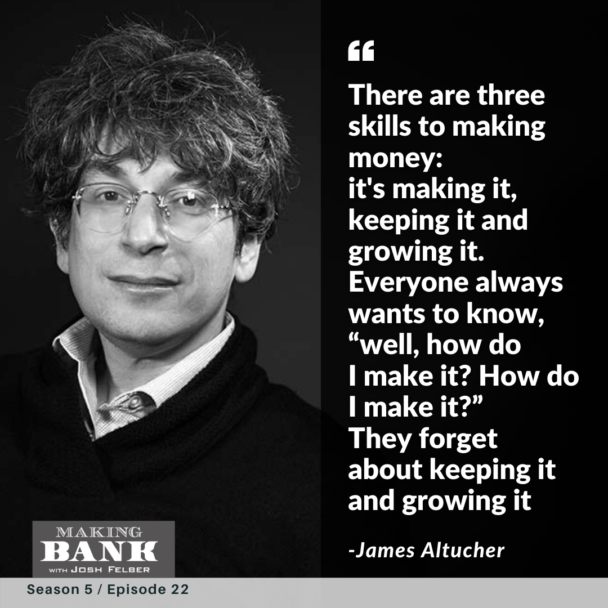
Take it from James Altucher, our recent guest on Making Bank. A podcast host, Altucher used to be a serial entrepreneur and had a lot of skin in the business game. However, he lost it all in the late ’90s. In a matter of months, he built himself back up and started a new approach to his life. This has led to his success, but more importantly, his happiness. Learn about some of the most important things he’s learned when it comes to money and business. Read more at Influencive.com.

Ask The Entrepreneurs: 16 Ways to Master Your Work-Life Balance as an Entrepreneur

Ask The Entrepreneurs is a regular series where members of those involved in the Young Entrepreneur Council are asked a single question that aims to help Lifehack readers level up their own lives, whether in a area of management, communication, business or life in general.

Read more in this edition of Ask The Entrepreneurs at Lifehack.org.

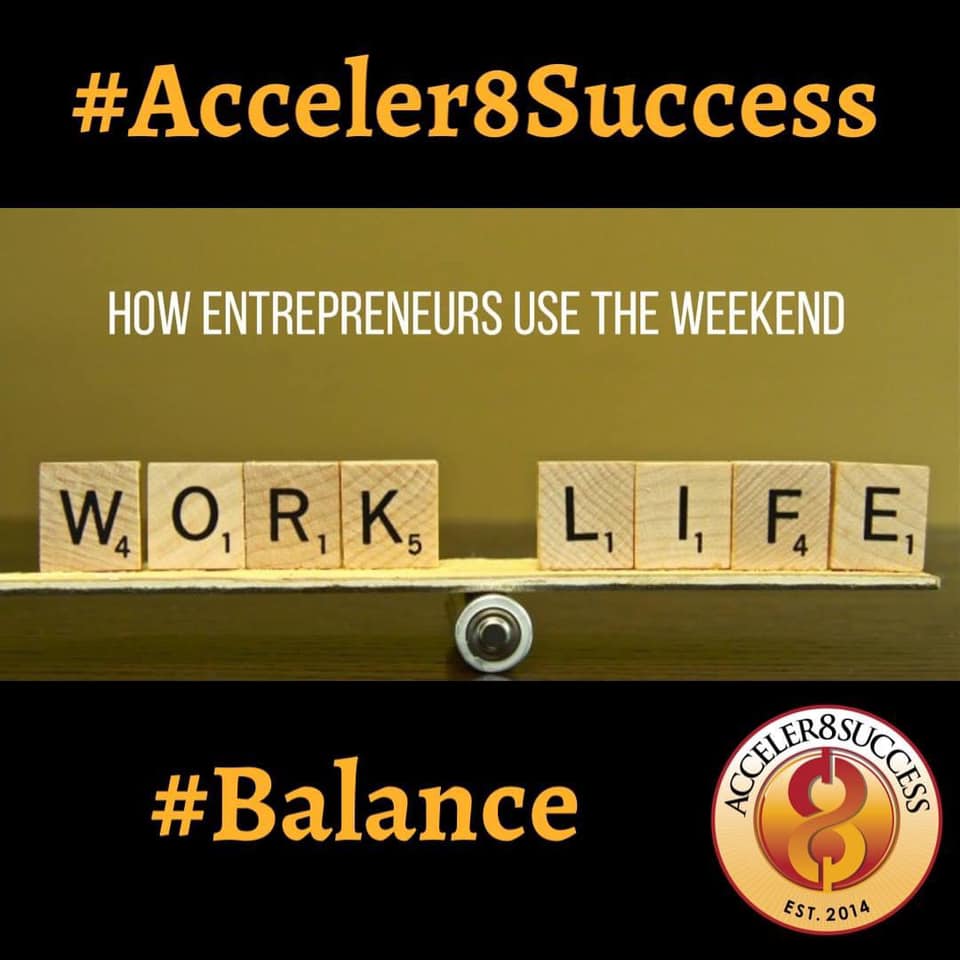
What do you think entrepreneurs do on weekends?

Finding work-life balance is so incredibly important, especially when you’re a one-woman or one-man show. Amazingly enough, when you do find it, things seem to turn out to be a lot easier. You start to pick-up new ideas and link older ones together, eventually becoming highly valuable to your clients and customers. Read more at EverydayPower.com.

Connecting the Right Brands, People & Opportunities!

The uncertainty of 2020 created the perfect time to diversify and expand. After all, it’s been said that necessity is the mother of invention. To that end, Acceler8Success Group was formed mid-year, building upon Acceler8Success principles and methods that have proven successful since 2014. Group services include:

  • Entrepreneur & Leadership Coaching
  • Management Consulting
  • Small Business Consulting
  • Franchise Consulting
  • Restaurant Consulting
  • International Business Development Consulting
  • Business & Product Brokerage
  • Social Media & Digital Marketing Coaching & Consulting

Widely recognized as industry leaders & experts, Acceler8Success Group leadership have extensive experience as entrepreneurs in small business & restaurants, as senior-level executives within nationally recognized brands, and as franchisees within successful franchise systems. Learn more at Acceler8Success.com.

Acceler8Success Cafe Thursday 4.8.21

How To Find Your Entrepreneurial Spirit

After the year we just had – now is a great time to start a business. The world of work has changed and with it came massive innovation. New social platforms like Clubhouse are here, remote work is the norm and skincare for “maskne” is on the market. It’s never been a better time to jump in with your unique idea.

If you’ve ever had that feeling that you were meant to run your own business, that you want to leave the routine of the 9-5 in search of more freedom and flexibility in your career, now might be the right time. Read more at Forbes.com.

How to Launch Your Startup in 7 Easy Steps

We all want to manifest success in our lives. It fuels our desires to attain something. People perceive success differently as we have different desires. Some go after enriching themselves with material things to get financial freedom. Others study further to advance to the next level in their academic career.

Nevertheless, it’s necessary to identify clearly what we truly desire to achieve in life. This will give you a clear vision of which path you should go and what steps to take.

Bill Gates’s top secrets in achieving success includes starting as early as you can. He was only 13 years old when he started working with computers and looked how successful and influential he has become.

Facebook’s CEO, Mark Zuckerburg built up his now multi-billion dollar company while he was still a student at Harvard University. Facebook has become one of the most popular and widely used social media platforms around the globe. 

These people proved that age is not a determining factor of success. Therefore, we don’t need to wait until we are old and stable enough to launch our start-up business. Read more at Addicted2Success.com.

The Powerful Connection Between Entrepreneurship And Fitness

Becoming an entrepreneur is a dream, aspired by many but attempted by only a small fraction. Entrepreneurship is a highly demanding job requiring copious amounts of patience and endurance. While the reward for success is extremely lucrative, the risk of burning out in the process is very high.

Entrepreneurs are often the busiest workers in the room putting in longer work hours than most and doggedly pursuing their goals with a single-minded focus. But while the rewards are aplenty, prolonged exposure to such stress is liable to take a serious physical toll on the human body.

Often, work overrides other aspects of life and isolates one from the reality of their own existence. This is a slippery slope and can easily be avoided with a simple solution – of maintaining an exercise regime. Following and diligently maintaining a regular fitness regime has a host of benefits to offer. Read more at inc42.com.

Outlaw FitCamp: A passion for changing lives

A lot of us find ourselves muddled when it comes to choosing the right place to work out. With so many big-box gyms, fitness studios, yoga classes, group classes, etc., it gets hard to decide which one will work. Hence, we find ourselves shuffling from one place to another until we find the one that feels like home. But why is it so difficult to make this choice in the first place.

To begin with it, apart from the basic criteria such as location, budget, and personal goal, it depends on the quality of services and environment offered by the facility to their customers. After that, it comes down to the results and the level of engagement, enjoyment, and satisfaction in the training sessions. For instance, one of the downsides of choosing fitness studios is the repetitive and humdrum routines that pose the risk of getting injuries and hitting the plateau despite offering personalized attention with specifically designed and structured classes. That’s exactly where Outlaw FitCamp, an indoor bootcamp and personal training brand, differentiates itself. Read the interview at Aspioneer.com with Outlaw FitCamp Founder, Jesse James Leyva.

What Do I Need To Do Before Buying a Franchise?

Before you buy a franchise, you must ensure that you are well equipped for the task ahead. But where should you start?

Many franchisees sign a significant portion of their life savings over to open a business, and they do so because they are confident in the franchisor’s business model and their own ability to follow it. If they are smart, they have also retained legal counsel and consulted their loved ones. 

Buying a franchise means becoming a business owner, and owning a business means liability. If you fail, your business fails. Franchisors can train and support you for success, but it will be you unlocking the doors each morning and running day-to-day operations, unless you hire a manager to do it in your stead. Read more at 1851franchise.com.

Franchise Financing Options: How to Find the Money

When buying a franchise, the key number you will need to know for franchise financing purposes is the initial investment. The initial investment is your “all in” costs and includes the franchise fee and various startup costs such as grand opening, initial inventory, signage, leasehold improvements, supplies, equipment and more.

The initial investment for most franchises is between $75,000 to $500,000 — with about half falling under $250,000. However, the initial investment varies widely by industry and brand, with some franchises at less than $75,000 and others approaching $1 million or more.

But don’t shy away because of these numbers. Buying a franchise is very doable. “Many first time franchise buyers can find an abundance of viable franchise options between $100k to $250k,” advises Mariel Miller, a national franchise advisor. “And most of the time, with the right franchise financing strategies, they can come up with several funding combinations to afford it.”

Many buyers put together financing options that include a combination of personal savings, SBA loans, conventional business loan products, 401(k) rollovers, and/or franchisor in-house programs. Read more at SmallBizTrends.com.

Escaping the Cube:  Why, When, and How Workers Leave Corporate America to Pursue Entrepreneurial Ambitions

Many employees who choose to leave the safety of a corporate job do it for the freedom and flexibility that comes with starting a business. In addition to the wealth potential, running your own business gives you the opportunity to control your destiny.

The choice to leave a seemingly secure position in corporate America may seem risky. However, in many cases, the climate and culture in the corporate world leave a bit to be desired. Here are a number of other reasons people are choosing to leave:

  • Office Politics. When you become your own boss, the nastiness of office politics is a headache you can completely avoid. You’re no longer burdened by coworker infighting, pressured to cater to the whims of a difficult boss, or forced to be a pawn in someone else’s chess game.
  • Career Control.With a corporate job, workers are not always in control of their career path. The opportunity for promotion or advancement or learning new skills is often at the whims of a supervisor.
  • Declining Benefits. In most areas of corporate life, the notions of company-provided pensions, reliable healthcare, and other benefits are long gone. More of those costs are now passed on to the worker.
  • Loyalty. In years gone by, companies earned the loyalty of their employees, providing them with opportunities and security that enabled a long, productive career with one company. Today, some corporations no longer value loyalty, and workers have to cope with ever-looming threats of layoffs and downgraded opportunities.

While not everything about corporate America is doom and gloom, there is certainly a great deal of dissatisfaction that employees are feeling about the work being done and the way they are being treated. It’s no wonder that employee engagement is only at 31 percent in America and Canada; and that number is drops to 15 percent globally. Read more at Benetrends.com.

10 Surprising Ways to Take Exercise Beyond a Habit

As an executive coach and writer, Brad Stulberg studies the science of performance. His books probe the connections between passion, motivation and success. 

He co-created The Growth Equation, which he describes as “dedicated to the art and science of a more fulfilling and sustainable kind of success.” He summarizes the equation as stress plus rest equals growth, and that applies to running a business just as much as it does to getting in shape. 

Read this Q&A at Success.com for tips to make exercise a foundational part of your life. 

7 Steps to Starting Your Own Business Quickly and Effectively

If you are thinking of starting a business because you lost your job and are having trouble finding a new one, then think about doing a better job search. Hire a career coach or get some training. Starting a business is much harder than getting a job, so it’s worth the extra effort to look for employment in a better way if that’s your true preference.

Also, think about whether you have what it takes to start a business in these terms: No one will tell you what to do (except your customers). You have to be self-motivated, willing to make many sacrifices and be able to last for the long term while your business goes from startup to maturity.

Franchise or independent? Service or manufacturing? Brick-and-mortar retail or online? Consumer or business-to-business? There are dozens of different types of businesses, each with its own benefits and drawbacks. Like to work with the public? A retail store might be right for you, but you will face the tradeoff of having a lot of overhead (rent and utilities for example). Read more at BalanceSMB.com.

Are you ready to own your own business?

Are you thinking of going into business for yourself and learning how the choice of a franchise can “jump-start” the process and your earning potential?  Well, Franchise Foundry can help. Working with in-house franchise professionals you will work one-on-one in determining if you’re right for franchising and whether it is right for you.  If you determine that franchising is a path to consider, you will be introduced to various industry segments and ultimately, brands that could be a “right-fit” situation . . . all to help ensure your future success! Read more at FranchiseFoundry.com.

Pandemic inspires surge in first-time business owners

“The pandemic has forced everybody to look at life in a different way,” said Marc Parham, director of the Urban League of Greater Atlanta’s Entrepreneurship Center. “Folks will either sink or swim. The key to success for any entrepreneur is to identify their superpower– the thing they do better than anybody else– and then learning how to successfully pivot and partner in these dynamic times.”

“Folks have been eating and cooking the same foods for months,” he said. “They have been locked down and now want to try something new. It’s no longer about the place anymore. It’s about the creating value in the experience. Consumers care about how these experiences and interactions with your business makes them feel.” Read more at TheAtlantaVoice.com.

These 5 Nontraditional Types of Franchisees Make Great Leaders

As the community faces a new reality resulting from unprecedented circumstances, motivated entrepreneurs are seeking to control their job security through acquiring a business.

This new landscape also means the common profile of a modern franchisee business owner is shifting from older stereotypes, with many new entrants bringing nontraditional backgrounds and experiences.

Consider these new faces of the franchise community and the advantages they have over the usual franchisee at Entrepreneur.com.

Acceler8Success Cafe Wednesday 4.7.21

The Pandemic Sparks an Entrepreneurial Boom

Historically speaking, many wildly successful companies have been founded during lean times, says Andrew Zacharakis, the John H. Muller Jr. Professor of Entrepreneurial Studies at Babson College. General Electric was started during a recession in the 1800s, and Revlon was born during the Great Depression. More recently, Warby Parker and Airbnb began during the Great Recession.

“There is a history of world-changing companies starting in these time frames,” Zacharakis says. “It is the next Amazon that is being born today. It is the next Microsoft that is being born today. In 10, 15 years from now, we will say 2020 is when these great companies were started.”

Multiple factors are driving the current increase in new businesses, chief among them being the large number of people who are unemployed. Unable to land a new position, many are deciding to take matters into their own entrepreneurial hands and pursue self-employment, Zacharakis says. Read more at entrepreneurship.Babson.edu.

16 Podcasts for Entrepreneurs and Innovators

Podcasts can provide entrepreneurs with expert advice and practical strategies to launch, manage, and grow a brand.

For a list of podcasts for entrepreneurs and innovators please visit practicalecommerce.com. There are shows that provide skills, such as growing an audience and managing a team. There are also shows that profile established businesses, detailing their journeys and breakthroughs. All of these podcasts are free.

The Government Wants You to Become an Entrepreneur

It’s been a little over a year since the beginning of the coronavirus pandemic and so much has changed in such a short period. More than four million businesses have closed in the last nine months, and as of January, more than 10 million people in the United States are still unemployed. The biggest question for many is, “What do I do now?” The good news is, there’s one solution that the government favors: entrepreneurship.

The government favors entrepreneurship, but why? One of the biggest reasons is job creation. When the government wants to encourage specific behavior, they can either do so by force or by policy. One of the ways this is done is through the policy of the tax law. So, rather than spending a lot of money trying to create jobs, it’s a whole lot cheaper for the government to provide tax benefits that encourage business owners to create them. Government can get even more specific in the types of jobs they want the market to create by giving specific tax breaks for farming, green energy and more. For example, during the pandemic the CARES Act encouraged employers to keep employees on their payroll with the Employee Retention Credit. With the refundable tax credit, 50% of up to $10,000 in wages paid by an eligible employer whose business has been financially impacted by Covid-19, helped reduce the number of jobs lost due to the pandemic. Read more at Entrepreneur.com.

A Message from Acceler8Success Founder, Paul Segreto

Why is there reluctance to say, I am an entrepreneur? I’ve been asked that question many times. Heck, I’ve asked that question of myself on more than one occasion. It seems, at times we’re more proud to call ourselves, Founder or CEO or to say, I’m a business owner. Why is that?

Are those titles more respectful than, entrepreneur? Yet, we hear of late, we’re in an entrepreneurial economy. So, is that a bad thing or a good thing, and especially if we have a hard time fully admitting to entrepreneurship? Or, should we just be entrepreneurial in how we approach our work, whatever that truly means? 

Are we claiming to be in an entrepreneurial economy to justify the disappearance of the lifelong career at one company and this is just a way to say we need to create and prove ourselves over and over again, and forget the gold watch?

Back to the reference of being an entrepreneur… Is there a stigma of being a dreamer, always looking for something better, bigger, faster as opposed to what some believe is mundane, repetitive work with the security of a paycheck? Often I hear it’s mostly due to yesterday’s immigrant mindset of being thankful to just have a job, yet it’s that same immigrant mindset that is the epitome of entrepreneurship. 

Actually, I believe it’s because of fear – fear of failure, fear of what other people think, fear of the unknown, fear of the what if, fear of starting over, fear of change… But it’s when those fears are hit head-on and the adrenaline rush of success far outweighs those fears because you know, deep in your heart that you have a deeply ingrained talent that can and will make a difference.

Does that mean failures aren’t possible? Hell no, but it’s working through those failures, those blips, those aberrations that provide experience and resiliency to improve and innovate to make the next step, the next task, the next venture successful. That is entrepreneurship. And, it’s when I don’t consider what I do as entrepreneurship, is when failure mostly occurs. Conversely, it’s when I focus on what I do as an entrepreneur, complete with that thinking outside the box and failure is not an option perspective, and when focused more on results as opposed to opinion of others, THAT is when success mostly occurs.

Yes, I’m an entrepreneur. My focus will stay as such as it is not only good for me, it’s good for my family and for those that rely on me to help them achieve their wishes, hopes and dreams! Why? Because I believe in possibilities, as without them, there are none.

How Generation Z Is Altering the Face of Entrepreneurship for Good

For the longest time, my generation, the Millenials, were touted as the Entrepreneurial generation. For the most part, we have lived up to the billing. However, as the world evolves, the art of business evolves with it, and it turns out that Generation Z has more to do with this evolution than many care to admit. 

Generation Z entrepreneurs are springing forth at such a startling rate that a recent Gallup Student Poll found that 40 percent of students surveyed from grades five to 12 stated they wanted to run their own business. Then, 24 percent said they have already started. At this rate, it isn’t at all challenging to see Generation Z take over as the most Entrepreneurial Generation. Read more at Entrepreneur.com.

15 Powerful Quotes On Success

Eager to build a successful business? Shared at Forbes.com are the quotes of those who have made it, and the DNA and definition of what it takes to be a successful entrepreneur.

Bookmark them, screen shot them, and use them to fuel your own journey.

1) Success is No Accident

Famous soccer athlete, Pele who appeared to be born with plenty of natural talent, continues this quote by adding “It is hard work, perseverance, learning, studying, sacrifice and most of all, love of what you are doing.”

2) Success is Not Final, Failure is Not Fatal: it is the Courage to Continue that Counts

This quote by Winston Churchill really puts the life cycle of an entrepreneur in perspective. Failure won’t kill you, if you don’t let it. Experiencing this can give you more courage to try again. Even when you ‘make it’ and raise a lot of money or sell your company, life isn’t over. You might unfortunately, have a much clearer picture of the struggles, but then you get to start again with a new startup, or become an angel investor yourself.

For the remaining 13 quotes please visit Forbes.com.

How Defining Success is the Key to Being Successful

Could you imagine getting into a car, planning to go somewhere, and yet have no idea as to when you’ve arrived? This seems absolutely ridiculous. How could you get anywhere without being aware of the destination? Yet, the truth is, this is how many of us work towards success. We have the idea in our mind that we’d like to be successful, but there is no clear picture of what this success would be. In other words, we have no destination.

I played college baseball, so this failure to define success was quite evident within myself. Before a game, I would say that I wanted to play well, as most athletes do. But what I failed to realize was what playing well truly meant. Without pinpointing what a successful day would be, I’d be lost in all the ways it went wrong. As a result of having no clear definition of success, I succumbed to all sorts of negative forms of thinking. 

Like clockwork, I could always find areas where I fell short. However, that all changed once I learned a valuable skill. As a result of learning how to define success, I freed myself from much of my perfectionism and anxiety, along with developing a clear picture of what it meant to be successful. Read more at Addicted2Success.com.

2020 State of Latino Entrepreneurship

This is the sixth annual State of Latino Entrepreneurship report where we have collected robust survey data from Latino-owned businesses across the country to provide a timely account on the fastest-growing segment of the U.S. business population. This year, we administered our national survey amid a global pandemic and vast social unrest, and the unique disruptions businesses faced over the past year are clearly visible in the survey responses.

This report highlights the impact of Latino-owned employer businesses in the U.S. economy and compares their experiences to those of White-owned employer firms in the United States. This year, we not only surveyed U.S. Latino business owners but also a comparison group of White business owners to identify similarities and differences in their experiences. We collected a sample of 3,500 White-owned businesses and 3,500+ Latino-owned businesses. Additionally, we captured time-series data from a smaller cohort of Latino-owned firms over the months of March, June, and September 2020, to capture the progressive impact of the pandemic on Latino-owned businesses. Read more and download the report at gsb.stanford.edu.

Hispanic entrepreneurs own 1 out of every 7 small businesses in the United States.

It is SCORE’s mission to support all entrepreneurs in the United States, including the 4.6 million Hispanic-owned businesses. We’ve been providing resources to all entrepreneurs for over 50 years and are proud to have the nation’s largest network of volunteer, expert business mentors. For more info please visit SCORE.com.

Acceler8Success Cafe Tuesday 4.6.21

Are You an Entrepreneur? The Answer Might Surprise You!

They don’t wait to be told what to do, or for conditions to be perfect, or to be handed the resources they need on a platter.  In the spirit of a famous slogan, they just go out and do it. End of story. Sounds simple, right? But it’s not an easy process by any means.

It’s this kind of spirit that sees success as inevitable after hundreds of failures, rejections and setbacks. It’s this kind of spirit that enables the entrepreneur to pick themselves up off the floor, dust themselves off, and start all over again, even where the outcome is uncertain. It’s this kind of spirit that can hold a dream in perfect suspension in the imagination, believing in it even in the face of all odds, until the day it’s there in solid reality. Read more at Addicted2Success.com.

Do You Have Any of the 5 Traits Shared by Successful Traders and Entrepreneurs?

As the founder and CEO of Bear Bull Traders and Peak Capital Trading, I’ve taught thousands of new traders how to trade the market and make the right decisions for their trading venture. These traders come from all walks of life and from countries all around the globe. I’m honored to bring such a diverse group of people together for the purpose of building better lives through trading.

During my time as a trading coach and mentor, I’ve seen it again and again – some just have a knack for trading, and some fail miserably … and fast. What makes the difference? Successful traders enter into the world of trading with a specific set of personality characteristics. As I’ve built my own businesses, I’ve discovered that these are the same characteristics that also drive successful entrepreneurs. Read more at Entrepreneur.com.

3 Reasons to Quit Your Corporate Job and Become a Restaurant Franchisee

Covid-19 has been a stress-test for every facet of restaurant operations. Nearly four in 10 U.S. restaurants are currently closed, and many will close permanently as a result of the pandemic.

However, the industry’s setbacks over the past year should serve not as a warning, but as a guiding light. The restaurant franchises that have weathered the storm — those with the strongest customer bases, the best food and the most effective technology — are here to stay.

Although it is disheartening to watch restaurants shut their doors permanently, I am encouraged by the industry’s resilience and innovation over the past year. Market demand is another source of optimism. The reality of the current situation is, we have the same amount of people evaluating food options every day as we did before the pandemic hit. It is no surprise that we are seeing fast casual and QSR brands reporting an increase in sales at a time when the industry overall is struggling. Read more at Entrepreneur.com.

Franchise Foundry is seeking experienced operators, managers & investors for unique fast-growing quick service restaurant (QSR) brands. Single, Multi-unit & Area Development Opportunities. Wide investment range starting at $150k. New Operating Partner Program! Learn more and inquire at FranchiseFoundry.com.

How Successful Entrepreneurs Handle Rejection

Did you know Steve Jobs was fired from Apple before he returned to turn it into the icon it is today? Harry Potter author J.K. Rowling was turned down 12 times before getting published. Don’t even get us started on Elon Musk, who was fired from PayPal before going on to co-found Tesla, SpaceX, and more. 

No one likes rejection, but rejection happens even to the best of entrepreneurs. That’s why it makes sense to learn how to handle rejection well and turn it into a learning opportunity for your business.

If no one told you you’re going to hear “no” as an entrepreneur, here’s what you need to know: You’d better get used to it. Whether it’s telling your spouse about how you want to quit your day job and start a business, or you’re going after small business funding, the one thing most entrepreneurs have in common is rejection. Selling anything (whether it’s the idea of entrepreneurship to a skeptical spouse or the idea of a loan to your banker) is hard.

It’s not the rejection that matters. It is how you handle it afterward that will make or break your business. As sure as you set out to achieve a goal, you are going to experience roadblocks. Big or small, each “no” could take a chunk out of your armor, if you let it. Read more at Benetrends.com.

11 Tips for Entrepreneurs Looking to Write Their First Book

Putting together a book takes time, energy and a lot of effort. And while it accounts for a lot of the book’s labor, writing isn’t the only thing an entrepreneur needs to concern themselves with. Publishing the book and the marketing associated with it also have a place in the overall success equation. But not all new writers know what to expect from the writing process. To help, 11 experts from Young Entrepreneur Council (YEC) answer the following question:

“What advice would you give to an entrepreneur looking to write or publish their first book? Why?”

Read more at SmallBizTrends.com for tips to ensure your first book-writing experience is a successful one.

Patience Is Still An Entrepreneurial Virtue

The phrase “patience is a virtue” has been known through the ages and across the world. More than ever, it feels like the entrepreneurial community has abandoned this virtue for the lusty pursuit of expediency. It feels like patience is regarded as just a relic of a long passed slow-paced business cycle. The belief that those who hesitate are lost, and one must strike while the iron is hot (insert additional metaphors) to be successful causes many entrepreneurs to throw themselves irrationally towards ill-timed opportunities. There is still a virtue in delayed gratification; believe me, doing it right is more important than doing it right now.

I spend most of my time these days helping companies and CEOs craft their story for the market. I see hundreds of company presentations and business outlines, with most of them looking to raise money to launch or expand their business venture. Far too often, I see these entrepreneurs effectively “rushing” into the market. They often find themselves battling questions, objections, and rejections they could have avoided with a little more time, experience, and patience. There is too much emphasis on being ‘first to market’ and not nearly enough on being “best to market.” Read more at Forbes.com.

“You can’t truly be considered successful in your business life if your home life is in shambles.” – Zig Ziglar, motivational speaker

The Entrepreneur’s Guide to Work/Life Balance

If you search Google for “entrepreneur personal relationships” you’ll come across some interesting articles:

Clearly, work life balance harmony is not considered one of the defining characteristics of the life of an entrepreneur, but perhaps it should be.

No doubt, 24/7 work requirements and a passion (that may sometimes border on obsession) can be difficult to balance against the focus and presence required to maintain a healthy relationship. Read more at KEAP.com.

Acceler8Success Cafe Monday 4.5.21

10 reasons why you haven’t started your business yet (and how to get past them)

You’ve been talking about starting a business forever, but (quite possibly to the increasing frustration of your friends and family) you haven’t actually done anything about it yet. 

So what’s it going to take to get your business out of your dreams and into your life? To help you identify what’s stopping you – and blast away any excuses – here are the top 10 reasons why most people put off starting their businesses. 

Find out what might be stopping you, so you can move past it and finally get your business off the ground at TalentedLadiesClub.com.

Starting a Business in 2021? Nine Great Reasons to Explore the Culture Space

After the tumult of 2020, many people who lost their jobs are now considering turning to entrepreneurship to get back on their feet. Starting a business is an exciting and empowering way to earn a living, and many who go down this path are drawn in by the promise of freedom and flexibility.

However, entrepreneurship takes a lot of hard work, too, so it’s important to stay motivated and choose a field you know you’ll be passionate about for years to come. To help aspiring entrepreneurs stay focused and thrive, nine members of Rolling Stone Culture Council listed their reasons to start a business in the culture space this year and why. Read more at RollingStone.com.

Two Stages Every Entrepreneur Goes Through Before Becoming a Success

Every time we start a project or a new path, we expect the best results , without counting or evaluating the probable ones (they are probable and in fact necessary) obstacles that are going to be presented to us along the way, difficulties that will undoubtedly forge character in each of us and will shield us from life itself.

Now, do we really know what it means to be successful? Do we really know when we achieve the goal? It is almost impossible, we normally attribute success to fame and money, to worldwide recognition for an activity or achievement, in fact, the word success is increasingly used in high performance sports and in entrepreneurs with highly productive companies or, failing that, those in charge of very high positions in recognized companies such as, for example, Apple or Microsoft, who rarely show sacrifice, but who all applaud each new product.

But success, without a doubt, must go further, it is impossible that after so much struggle and effort, the long-awaited summit is only a mountain of recognition and goods, material and superficial things that will never give a true feeling of fulfillment. , if they are complete, in the face of what the greatest achievement of your life can mean. Are you really just waiting for money after such a long time and to be asked for a photo? Read more at Entrepreneur.com.

“All our dreams can come true, if we have the courage to pursue them.” – Walt Disney

Grants and Incentives Available for U.S. Small Businesses and Startups

The United States has a global reputation for being one of the most business-friendly countries in the world, and is home to some of the world’s largest and most influential corporations—from Google and Amazon, to Tesla and Microsoft. However, despite the presence of these global brands, it’s the nation’s small businesses that keep the American economy alive.

Approximately 99.9% of all U.S. companies are small businesses, according to the U.S. Small Business Administration (SBA). In addition, the United States is home to a wide variety of innovative startups, as illustrated by high startup density in locations such as Silicon Valley, Calif.; New York; and Austin, Tex., and particularly in high-value sectors such as technology, fintech, and marketing.

To maintain the nation’s leading position as a hotbed of entrepreneurship, federal and local governments have launched multiple initiatives and incentives to support small businesses and startups. What follows is an exploration of grants, benefits, and industry incentives available to U.S.-based businesses. Read more at AllBusiness.com.

Welcome to The Social Geek Radio Network.

Get in touch with your inner geek. Jack Monson and many special guests discuss social media and digital marketing trends for brands, small businesses, and franchises. 

Social Geek Radio was listed as one of 20 Best Business Podcasts according to Emerge and was named to the Best Small Business Podcasts by FitSmallBusiness.com. Recently, Social Geek Radio finally made the Top 25 podcasts in the Marketing category of Apple Podcasts / iTunes.

Listen, download, subscribe to Social Geek Radio!

Starting or Buying a Business

So, you’re thinking of going into business for yourself. You have several options available, and all involve some degree of risk. Do you want to create a start-up operation? Perhaps you are planning on buying an existing business. Or, you may be considering the purchase of a franchise operation.

Each option involves some element of risk and reward. Whichever option you choose, however, owning your own business offers a chance at more freedom and greater financial rewards. Read more at NohoArtsDistrict.com.

Build an Empire with Empire Business Brokers!

Small business and restaurant resales are on the rise making it an excellent time to consider owning your own Empire Business Broker office. Empire offers:

– Executive business opportunity
– Low initial investment from $25k
– Multiple profit centers
– Excellent commissions
– Growing database of buyers, businesses & franchises
– Initial training, marketing assistance and on-going support
– Network of 70+ offices throughout the U.S. and abroad
– Excellent markets available
– Brand founded in 1981

For more information please text EBB2021 to (832) 797-9851 or inquire at info@Acceler8Success.com.

The Definitively Terrifying Rules of Serial Entrepreneurship

If you’re like me you probably have a pretty enthusiastic outlook on the idea of being an entrepreneur.

That’s good. You’re going to need that passion as the world savagely grinds you to dust over and over again until you’re wondering which way is up, why you started this, and what it all means.

As a military veteran who stepped away from the corporate world to plunge into a pretty wild array of enterprises (from e-commerce success to digital marketing, with a quick stop for a record-breaking zombie movie), I’m here to assure you of absolutely nothing. Read more at YFSmagazine.com.

Should You Be a Freelancer or an Entrepreneur?

Creating your own business is an exciting prospect. Whether as a freelancer or as an entrepreneur, there’s a thrill about ultimately being in control of your own career destiny. 

More and more people are leaving the world of salaried work and embarking on an entrepreneurial path. Yet with so many different ways to build a business, what type of self-employment is right for you? 

Are you a freelancer at heart, or were you born to be an entrepreneur? 

First, let’s take a closer look at each path. Read more at InvoiceNinja.com.

How to Succeed as a Millennial Entrepreneur

We all have our unique entrepreneurial journeys. As a member of the millennial generation that now dominates the world population, it’s our generation’s challenge to build a better world through the products and services that we offer, and also through the values that our businesses stand for. 

This Herculean mission for millennial entrepreneurs comes with challenges that are unique to our generation. And when there are new problems, we are compelled to address them with new solutions, too. 

Learn five actionable steps that millennials can implement to help them overcome obstacles and forge their way to entrepreneurial success at Entrepreneur.com.

Connecting the Right Brands, People & Opportunities!

The uncertainty of 2020 created the perfect time to diversify and expand. After all, it’s been said that necessity is the mother of invention. To that end, Acceler8Success Group was formed mid-year, building upon Acceler8Success principles and methods that have proven successful since 2014.

Widely recognized as industry leaders & experts, Acceler8Success Group leadership have extensive experience as entrepreneurs in small business & restaurants, as senior-level executives within nationally recognized brands, and as franchisees within successful franchise systems. 

Members of Acceler8Success Group along with Strategic Partners have earned designation as Certified Franchise Executives, Certified Franchise Brokers, Certified Business Brokers and Commercial Real Estate Brokers. Positioned to deliver services within the U.S., Canada and other Global markets, languages spoken include: English, Spanish, Portuguese, French, Italian, German and Russian. Learn more at Acceler8Success.com.

Acceler8Success Cafe Friday 4.2.21

Growth Mindset: The Secret Sauce of Entrepreneurial Success

In today’s ever-changing world, if you don’t develop a growth mindset, you will get left behind.

Your mindset is the driving force behind every decision that you make. At the end of the day, it determines your success or your failure in business. In her book, Mindset: The New Psychology for Success, Stanford psychology professor Carol Dweck explains that “The attitude we bring to our daily activities can play a large role in shaping and extending the ways we utilize our innate talents.” 

People with a growth mindset believe that their intelligence can be developed through hard work. They possess a passionate love of learning and view failure as a gift. In contrast, people with a fixed mindset believe their intelligence is fixed, that mistakes are signs of failure, and that talent, void of effort, is what creates success. 

Which mindset do you adopt? If you are trapped in a fixed mindset, now is the time to change it! Entrepreneurial success demands that you do so. Read more at ProjectLifemastery.com.

7 questions to help you figure out if it’s time to quit your job to start your own business

Quitting your day job to be your own boss, set your own hours, and make your own decisions sounds like a dream come true for anyone stuck in a job they hate. Striking out on your own sounds like the perfect solution to your workday woes. But, after the initial enthusiasm, the downside starts to sink in. Starting your own business means leaving a regular paycheck and tossing benefits aside. There’s a ton of risk. But the potential for reward can be oh so alluring.

So, how can you tell if it’s the right time to jump ship and start your own business? Read more at FastCompany.com.

Student Entrepreneurship Fuels Business Growth And Learning

recent study conducted by the National Association of Colleges and Employers pointed to a disturbing trend. While graduates believe they are well prepared for a job, employers increasingly think otherwise.

Nick Bayer, Founder and CEO of Public Benefit Corporation and hospitality company Saxbys expressed it to me this way: “The job market demands skills like critical thinking, emotional intelligence, problem solving, cultural agility—attributes that are extremely difficult if not impossible to teach in a classroom.”  

Bayer developed the Saxbys Experiential Learning Platform (ELP), a student-centric entrepreneurship opportunity where partners with leading universities to give students the opportunity to run a business, specifically a bustling on-campus café. 

Each ELP cafe is helmed by a Student CEO (SCEO) and a team entirely of undergraduate students who fully responsible for the business, and in return receive academic credit as well as financial compensation.  The program also has an important educational component. Starting three months before their term, the SCEO completes 100 hours of training centered in the following three areas:  Team Development; hiring, inspiring & empowering a team of on average, 50 of their peers; Community Leadership, engaging with stakeholders to become a valued cornerstone on campus; and Financial Management, being fully accountable for the Profit & Loss statement of the cafe. Read more at Forbes.com.

5 Ways to Conquer Entrepreneurship at a Young Age

When it comes to success, age is really just a number. All one needs to succeed in the business world is a strong drive and guidance to be able to navigate the waters and make the right choices.

Here are a few tips to help young entrepreneurs thrive in the business world… Read more at Influencive.com.

How This 19-Year-Old Became An Expert And Bestselling Author

My name is Ali Scarlett, and I believe information is a form of power. To empower others so they can achieve anything they set their minds to, I shorten other people’s learning curve by sharing all of the wisdom I acquire as a lifelong student of personal and professional development.

Thinking over my career options, I always knew I wanted to be an entrepreneur. But, I didn’t exactly know how I was going to grow my business if I started it. There was never any concrete idea of where the revenue I needed to confidently run and grow my business was going to come from. Until I became a bestselling author.

Publishing a book positioned me as an expert in my field. It put me in a position where instead of going out looking for customers, customers started to come to me. It gave me a competitive advantage over my competitors because they didn’t have the authority I did. And, now, I’m going to show you exactly how I did it so you can gain the same life-changing results in your own life and business. Read more at YFSMagazine.com.

A Message from Acceler8Success Founder, Paul Segreto

Fear can only be realized as we’re able to admit being scared. It’s only with that admission and realization that we can work through fear and hopefully, overcome it. As fear is such a strong emotion that easily grips the soul, it takes time and patience to overcome such a grip. Little by little, fear can replaced by courage gained from confidence that fear is just a challenge to be conquered.

Although, conquering fear does not have to be done alone. Instead, collaborative efforts aligned with common goals truly exemplify the phrase, ‘strength in numbers’ and it’s that strength that will make it easier to defeat fear. Easier said than done? Possibly, but the alternative is being overwhelmed by fear and that, we recognize, is not living…

Talk to a friend or a colleague today about your fears. Doing so will go a long way toward realizing that there truly is nothing to fear, but fear itself.

Have a great day. Make it happen. Make it count!

The Entrepreneur’s Guide to Clubhouse

Clubhouse is where founders go to chat. 

Upon its launch last March, the social app quickly became popular among investors, who hold regular, live audio-only discussions, called “rooms,” in some cases within various topics of interest to groups called “clubs.” Business owners soon followed, building a roster of virtual educational events and places to hone their storytelling skills, commiserate about entrepreneurial life, and share experiences with the likes of high-profile users like Daymond John and Jason Fried. 

If you can get an invitation–Kristin Marquet Chester, owner of New York City-based Marquet Media, recommends starting by asking your closest friends and then making requests on social media if needed–here are three types of rooms and clubs worth checking out for entrepreneurs. To find these events in the app, search for the relevant speakers or the name of the club. 

The access to famous people on Clubhouse is “mind blowing,” says Jeremy Knauff, CEO at digital marketing agency Spartan Media. “It’s like cramming everybody into a stadium and doing an episode of Shark Tank.” Spend enough time networking with people on the app, and you might be able to connect with and ask questions of celebrity entrepreneurs directly. Read more at Inc.com.

Entrepreneurs and the “High Hope” Environment

A sense of “hope” is different than being “optimistic,” which generally has a positive view of the future but not the desire or ability to create that future. Hope has two important components– being proactive towards achieving set goals and having “pathways” to achieve those goals. Recent research shows entrepreneurial startups that create a “high hope” environment can increase productivity and foster higher performing employees. Hope is the key success factor in entrepreneurial ventures.

High-hope organizations are led by entrepreneurs highly involved with employees in a formal goal-setting process. The process includes accountability sessions or check-ins between the leader and employees and instills clear and proactive communication. Entrepreneurs in a high-hope company have a strong physical presence, frequent supportive interactions with employees, seek teaching opportunities, and are highly aware of employee accomplishments and acknowledge them accordingly through words of encouragement. Flexibility to reach company goals is perceived positively, empowered employees to find creative solutions to problems, making the company more effective. Research has indicated a positive correlation between high-hope leadership and employee satisfaction and the likelihood of employee retention. Read more at SmallBizDaily.com.

“Hope is the spark of the spirit that keeps us moving through difficult and trying times; the beacon of light when we are struggling to find our way out of the darkness. Adversity can be overwhelming and it is easy to get swept up in a feeling of hopelessness, but like the cherry blossom- a symbol of new birth, you endure the harshness of the cold and emerge anew. Hope does indeed spring eternal.” – Laurie Edwards-Tate

Before we take off for the next few days to enjoy family during this special time of year we wanted to be sure to wish all our friends, colleagues and far-away family the very best wishes as they celebrate the things most close to their hearts. Enjoy and please be safe!

Acceler8Success Cafe Thursday 4.1.21

The Qualities That Define a Successful Entrepreneur

Being a successful entrepreneur means more than starting new ventures every other day. It means the right attitude towards a business and the determination and grit to achieve success.

A successful entrepreneur has a strong inner drive that helps him or her to succeed. Let us take a look at the qualities that go into making a successful entrepreneur.

An entrepreneur should be excited by the prospect of work. They should always have a strong drive to succeed and overcome obstacles. They should not only set big goals for themselves but also see that they are actually committed to achieving them regardless of the countless setbacks that occur.

A successful entrepreneur always has a strong sense of self-confidence and a healthy opinion of their skills and abilities. Their personality is assertive and strong. They are always focused and do not really dilly dally with the issues at hand. This is what makes them different from the rest.

An entrepreneur should always be on the lookout for new innovations and ideas in order to emerge as a winner. They should constantly reinvent themselves and think of better ways to run a business and improvise on the products and services offered by them. Read more at Groco.com.

7 Common Traits of Successful Entrepreneurs

Mark Zuckerberg, the founder and CEO of Facebook, works 50-60 hours a week and the rest of the time he spends exercising, spending time with family and travelling.

Warren Buffet, chairman and CEO of Berkshire Hathaway, spends 80% of his working hours reading reports, newspapers and books. Buffet said “I just sit in my office and read all day.”

Steve Jobs, founder of Apple Inc. used to work from 7 am to 9 pm. He was known to have an incredible work ethic.

All successful entrepreneurs have habits unique to them. There, however, are some common traits that set them apart from the rest of the population. Here are 7 common traits of successful entrepreneurs that can offer you an insight into what it takes to succeed in work and life. Read more at FutureStartup.com.

A Message from Acceler8Success Founder, Paul Segreto

This is an excellent message about focusing on the important things in life and still being able to make time for a beer or two. Please take a moment to read… Setting Priorities is Critical to Happiness

A professor stood before his philosophy class and had some items in front of him. When the class began, he wordlessly picked up a very large and empty mayonnaise jar and proceeded to fill it with golf balls. He then asked the students if the jar was full. They agreed that it was.

The professor then picked up a box of pebbles and poured them into the jar. He shook the jar lightly. The pebbles rolled into the open areas between the golf balls. He then asked the students again if the jar was full. They agreed it was.

The professor next picked up a box of sand and poured it into the jar. Of course, the sand filled up everything else. He asked once more if the jar was full.. The students responded with a unanimous ‘yes.’

The professor then produced two Beers from under the table and poured the entire contents into the jar effectively filling the empty space between the sand.The students laughed..

‘Now,’ said the professor as the laughter subsided, ‘I want you to recognize that this jar represents your life. The golf balls are the important things—-your family, your children, your health, your friends and your favorite passions—-and if everything else was lost and only they remained, your life would still be full. The pebbles are the other things that matter like your job, your house and your car.. The sand is everything else—-the small stuff.

‘If you put the sand into the jar first,’ he continued, ‘there is no room for the pebbles or the golf balls. The same goes for life.

If you spend all your time and energy on the small stuff you will never have room for the things that are important to you.

Pay attention to the things that are critical to your happiness.

Spend time with your children. Spend time with your parents. Visit with grandparents. Take your spouse out to dinner. Play another 18. There will always be time to clean the house and mow the lawn.

Take care of the golf balls first—-the things that really matter. Set your priorities. The rest is just sand.

One of the students raised her hand and inquired what the Beer represented. The professor smiled and said, ‘I’m glad you asked.’ The Beer just shows you that no matter how full your life may seem, there’s always room for a couple of Beers with a friend.

You’ll never achieve work-life balance if you don’t know what you’re balancing

If you think you’re “too busy” for something, it’s probably because you’re not great at investing your time.

I’ve spent most of my career thinking about resource management. I started off in finance thinking about money management—budgets, forecasts, and spending analyses. And as my career shifted into product management, the focus became time rather than money. But, compared to money management, time management is relatively underserved.

Go ask someone how they spend their week and you’ll get some hand waving, loose guesses, and lots of uncertainty. Now ask them what they spend on rent or a mortgage every month and you’ll get a crisp number along with a rich set of guidelines for how much that should be based on their financial situation (e.g. the 30% rule!). How should a product manager budget their time? How should a sales leader be spending theirs?

I believe the primary reason for this disconnect is because very few people have a detailed picture of how their time is actually spent—and thus there’s a general lack of planning and conversation around it. Read more at FastCompany.com.

Entrepreneurial Mindset: How to Think Like an Entrepreneur

Let’s start by dispelling a common myth about successful entrepreneurs.

Entrepreneurs are NOT born. They are driven to it. And this same drive enables them to do what is necessary to be an entrepreneur.

If you have ever had a feeling in the pit of your stomach — that you are meant to do something bigger, more meaningful, and all yours — you are an entrepreneur. You just need to learn to think like an entrepreneur.

You simply need to harness your entrepreneurial mindset. Read more at HackTheEntrepreneur.com.

12 ways to manage your mental health as an entrepreneur

Did you know, over 70% of entrepreneurs experience poor mental health?

Tania Diggory, Founder of Calmer, wrote in Psychologies Magazine that entrepreneurs need to get comfortable with being uncomfortable. “Every day presents different challenges as an entrepreneur … the entrepreneur lifestyle demands that you to take calculated risks, try new things, find solutions and make bold moves … this can feel highly overwhelming and have a profound impact on a person’s mental health and wellbeing.”

Whether you are planning on launching your business, working freelance, or you have been running your own business for a number of years, it’s important to prioritize your mental health and well-being. Read more at ThisIsCalmer.com/blog.

How Successful Entrepreneurs Spend Their Weekends

If you believe everything you read or see on TV, you have to work every moment you’re awake, subsist on leftovers, and live out of your car at some point in order to become a successful business owner.

Although that may be the route to success for a few entrepreneurs, not everyone follows the same path to greatness. To gain some insight into how successful types actually spend their precious time, the Intuit Small Business Blog interviewed dozens of small-business owners. We asked them one telling question: What do they do on weekends?

Contrary to popular belief, small-business owners aren’t all constantly focused on the job. In fact, the majority of them told us they prioritize spending time with their families, pursuing hobbies, and recharging their mental batteries on weekends. Read more at QuickBooks.Intuit.com.

Do you consider work / life balance when planning your weekend?

Successful entrepreneurs have a passion for what they do, so working hard is part of their DNA. But anyone who is successful also recognizes that life and work are a marathon, not a sprint. Even they need downtime on the weekend to ensure they’re up to the task of being creative problem solvers and innovators Monday through Friday.

Are you finding it difficult to maintain work / life balance as an entrepreneur… small business owner, franchisee, restaurant operator? If so, let’s talk. Inquire here.