Category: Entrepreneurship

The High Stakes of Restaurant Entrepreneurship: Passion Isn’t Enough

It’s often said that owning a restaurant is one of the toughest businesses to run. Margins are razor-thin, turnover is high, and just one bad week can spiral into disaster. Pair that with the relentless demands of entrepreneurship—the constant problem-solving, financial pressure, and emotional toll—and it becomes clear that operating a restaurant is not just a business; it’s a high-stakes balancing act. A game of inches, with little to no room for error.

Yet, despite the odds, restaurant ownership remains one of the most alluring pursuits in business. For many, it’s a passion project or a legacy dream. For others, it’s the promise of scalability and the excitement of building a brand people love. And remarkably, while countless restaurants barely scrape by or ultimately shutter their doors, there are operators—both independent owners and multi-unit franchisees—who are thriving. So how is it that one group fails while another finds extraordinary success in the very same industry?

The answer lies in execution, systems, mindset, and adaptation.

The Thin Line Between Success and Struggle

The restaurant business is unforgiving. Even the most promising concept can fail due to poor location, inadequate marketing, inconsistent service, or rising food and labor costs. It’s not just about great food or a trendy interior; it’s about managing hundreds of variables in real time, every single day. And for entrepreneurs entering the space with little industry experience or underestimating the demands of operations, the learning curve can be brutal.

Moreover, many independent operators fall into the trap of trying to do everything themselves. Passion alone cannot sustain a business without proper systems, cost controls, staff training, marketing strategy, and leadership. A lack of financial literacy or an emotional resistance to letting go of control can further compound the struggle. This is often where restaurant dreams go to die—not in lack of effort, but in lack of structure.

The Blueprint Behind Success

Successful operators approach the business differently. They don’t just work in their business; they work on it. They treat the restaurant not just as a passion project, but as a performance-based business model that must be monitored, measured, and optimized continuously.

These operators invest in:

  • Systems and Processes: From food prep to service protocols, consistency is king. Whether it’s a single-unit or a franchise, the most profitable restaurants run like clockwork because every task is streamlined and repeatable.
  • Financial Discipline: Successful restaurateurs know their numbers inside out. Food cost, labor percentage, average ticket size, customer acquisition cost—these metrics aren’t just tracked, they’re used to make daily decisions.
  • Leadership and Culture: High-performing teams don’t happen by accident. The best operators invest in training, create clear expectations, and foster a culture of accountability and growth. Employee turnover is expensive—top operators know how to build loyalty.
  • Scalability and Brand Consistency: For franchisees, success hinges on following a proven model. For independents, it’s about creating a brand that is scalable, from menu to marketing. The difference? Discipline versus chaos.
  • Adaptability: Consumer behavior shifts quickly—what worked three years ago may be obsolete today. The most successful operators are nimble. They embrace technology, optimize for takeout and delivery, leverage social media, and continually evolve their offerings.

Franchise vs. Independent: A Tale of Two Paths

Multi-unit franchise operators often succeed where others don’t because they start with a proven framework. Franchisors provide support in site selection, training, marketing, and operations, which helps reduce risk. But success is never guaranteed—franchisees must still execute at a high level. The most successful franchisees are those who treat each location as its own business while benefiting from the strength of the system.

On the other hand, independent operators have full creative control, but the lack of infrastructure can be a double-edged sword. The most successful independents know how to marry creativity with discipline. They build something unique, but also something operationally sound. Many of them become local legends, and a select few even evolve into franchise concepts themselves.

The Entrepreneur’s Mindset

At its core, restaurant ownership is entrepreneurship in its purest form. It’s about risk, reward, resilience, and relentless attention to detail. The wide spread between success and failure is often not about luck or location—it’s about mindset.

Successful restaurateurs are not just food lovers; they are leaders, data analysts, marketers, negotiators, and visionaries. They know when to pivot and when to double down. They stay curious, keep learning, and surround themselves with people who are smarter than they are in specific areas.

In contrast, those who struggle often do so in isolation, avoiding hard truths, resisting change, or failing to seek out mentorship and support.

In Conclusion

Owning a restaurant is not for the faint of heart. It demands an entrepreneurial spirit backed by discipline, strategy, and grit. The allure of restaurant ownership is real, but so is the risk. The wide spread between success and failure is not an accident—it’s the natural outcome of how well an operator understands and executes the business behind the dream.

So yes, it’s one of the hardest games in town—but for those who master it, the reward is not just profit. It’s legacy, impact, and a deeply satisfying sense of purpose.

Make today a great day. Make it happen. Make it count!

About the Author

Paul Segreto brings over four decades of hands-on experience in franchising, restaurants, and small business development. A passionate advocate for entrepreneurship, Paul has guided countless individuals on their journey to success, whether they are established entrepreneurs or just beginning to explore the path of business ownership.

Named one of the Top 100 Global Franchise and Small Business Influencers, Paul is also the voice behind the Acceler8Success Cafe, a daily content platform where thousands of entrepreneurs gain insight and motivation. A lifelong advocate for ethical growth and brand integrity, Paul continues to coach founders, franchise leaders, and entrepreneurial families, helping them find clarity in chaos and long-term success through intentional leadership.

Ready to take your next step in business or looking for expert insight to overcome today’s challenges? Reach out directly to Paul at paul@acceler8success.com — your path to success may be one conversation away.

About Acceler8Success Group

Acceler8Success Group is a multifaceted business advisory platform committed to empowering entrepreneurs, small business owners, franchise professionals, and industry leaders through strategic consulting, coaching, and curated content.

With a strong focus on entrepreneurship, franchising, restaurants, and small business growth, Acceler8Success Group delivers actionable insights and real-world strategies across its suite of brands, including the following:

Acceler8Success,  FranchiseReclaim,  OwnABizness.com,  Accelerate Success Coaching,  Your Entrepreneurial Success, and relaunching soon, Franchise Foundry.

By blending deep industry expertise with a dynamic content ecosystem, Acceler8Success Group fosters sustainable success and responsible leadership for today’s innovators and tomorrow’s legacy builders.

My Awakening to Entrepreneurial ADD: From Chaos to Clarity

Until recently, I wore my chaos like a crown.

I saw it as a symbol of ambition, of creativity, of entrepreneurial drive. I prided myself on the constant brainstorms, the late-night bursts of inspiration, the notebooks scattered across my workspace—each filled with plans for five or six different ventures, some fresh, others long-forgotten. That was how I operated. It felt electric. Productive. Alive.

Or at least, that’s what I told myself.

I genuinely believed I was wired to move fast, to chase opportunity, to stay endlessly “on.” But what I failed to see—what I refused to see—was that I wasn’t actually building momentum. I was spinning in circles. Fast, noisy, exhausting circles.

The realization didn’t come in a flash. It crept in quietly, disguised as a simple conversation with someone from my trusted circle of advisors—what I like to call my personal board of directors.

It wasn’t criticism. It wasn’t judgment. It was just an honest observation:
“You know, you’re always three steps into the next thing before you finish the one in front of you.”

At first, I brushed it off, like I’d done so many times before.

But later that evening, I remembered a moment from a few years back—my daughter, Jennifer, had said something nearly identical. I laughed it off at the time, chalking it up to the eccentricities of being a “creative entrepreneur.” She didn’t press. And I didn’t reflect.

But this time, hearing it again—and truly feeling the weight of it—I was ready to listen.

Sorry, Jennifer. I should have listened then.

Because deep down, I knew it was true.

What I’d been calling energy and drive was often just noise. What I thought was ambition was, more often than not, avoidance. I wasn’t leaving projects because I’d outgrown them or pivoted strategically. I was abandoning them because I got bored. Or overwhelmed. Or distracted by something shiny and new.

And there was also this essential, often-ignored piece: the business itself. You know, the part that actually keeps everything running. The revenue-generating, system-building, operational backbone that turns passion into something sustainable. I was so deep in the clouds of ideation that I wasn’t anchoring myself to what truly mattered.

That’s when I stumbled on the term “Entrepreneurial ADD.” Not a clinical diagnosis, but a painfully accurate one.

The description was like reading my own biography—hyper-creative, constantly chasing stimulation, addicted to the rush of starting but rarely following through. Always in the launch phase. Rarely in the finish line photo.

Suddenly, it all made sense.

I realized I’d been navigating a storm for years without knowing I was even in one. And worse—I had been calling it progress.

A Clearer Kind of Clarity

This wasn’t just about being busy or scattered. It was deeper. I was mistaking motion for progress. I was confusing passion with purpose. I was getting high on new beginnings and resisting the slow, unglamorous work of follow-through.

Even though it’s just me and my business partner, Erik, managing the business day-to-day—and me personally with a small, tight circle of trusted confidants—the impact was undeniable.

I’d pitch a new idea with fire in my eyes. We’d dive in, maybe even make some early traction. Then just as quickly, I’d shift gears. Not because the idea was bad—but because something newer, louder, or more exciting came along.

We weren’t short on opportunities. We were drowning in them—most of them the wrong ones, or at the very least, the wrong ones for right now. We were working hard, under constant pressure, but not really moving forward.

Once I saw the pattern, I couldn’t unsee it. And that shift—acknowledging it for what it was—began to change everything.

What I’m Doing Differently Now

This isn’t one of those before-and-after stories where everything magically falls into place. There’s no secret hack or single breakthrough moment. What’s happening is slow, steady, deliberate recalibration—retraining how I create, focus, and finish.

Here’s what’s working for me:

1. Naming the Pattern Out Loud
There’s tremendous power in calling something by its name. When I said it out loud—“I think I’ve been dealing with Entrepreneurial ADD”—something shifted. I talked about it with the advisors I trust most. No one was surprised. They saw it before I did. But naming it took away the shame and created space for solutions.

2. The 3-Day Rule
Now, when a new idea pops into my head (which still happens often), I write it down and let it sit for 72 hours. No action. No obsessing. Just time. If it still feels worthy after three days, I’ll bring it forward. But most of the time, the urgency fades—and I can let it go without guilt.

3. One Page, One Focus
I’ve replaced stacks of notebooks and endless folders with a single piece of paper—what I call my focus sheet. No more than three core initiatives per quarter. There a few “doodle” pages attached where I’m drawing lines and connecting dots to visualize organization. That’s it. It’s all on my desk, in plain sight. These are the priorities. No pivots, no new lanes, just clarity. Truth be told, a journal still sits on my desk, albeit for notes, reminders, etc. for daily operations.

4. Leaning on My Inner Circle for Accountability
It’s still just Erik and me leading the charge, supported by a small team—but I’ve invited a handful of close collaborators and advisors into my personal fold to keep me grounded. They don’t manage me—they mirror me. They help me see the things I sometimes can’t, and they ask the questions that make me pause before I pivot. They also answer my questions without telling me what I want to hear.

5. Redefining What It Means to Be “Creative”
For years, I believed creativity was all about the spark—the beginning. But now I see creativity in the editing. In the repetition. In the systems. In the discipline to finish. Creativity isn’t just invention. It’s endurance. It reminds me that it’s a marathon, not a sprint.

6. Making Peace With Boredom
This was tough. I had to learn that boredom—or more accurately, frustration—isn’t something to avoid. It’s part of the process. It’s where real work lives. Where grit is built. Distraction was the real enemy. Boredom just pointed me back to the work.

7. Designing Boundaries Around My Brain
I used to think structure would kill my creativity. But I’ve learned that without boundaries, my creativity burns itself out. Now I use time-blocking, weekly priorities, and digital limits. I give my brain room to wander—but not to run wild.

What’s Changed—and What’s Still Changing

The shift hasn’t been dramatic, but it’s been undeniable.

I’m finishing more. I feel more present in conversations. My thoughts are clearer. My decisions more grounded. Erik and I are having more meaningful conversations—not reactive, but strategic. Rooted in intention, not impulse.

And the best part?

The ideas haven’t stopped coming. If anything, they’re better—more refined, more aligned, more executable. I no longer feel the need to chase every opportunity. I’m learning to choose the right ones. And when I do? I follow through.

A Work in Progress

Entrepreneurial ADD didn’t show up yesterday. It’s been with me for years. So I know this isn’t a one-and-done journey. I’ll still get distracted. I’ll still want to chase something shiny. But now, I see the signs. I have tools. I have support.

And most importantly—I’ve developed a new respect for commitment. The kind that doesn’t make headlines. The kind that builds legacies.

So that’s where I am now. Not at the finish line. Not back at the starting gate. Somewhere in the middle. Between realization and refinement. Between chaos and clarity. Between dreaming and doing.

Finally Building What Matters

I’m building something now that’s been on and off the proverbial drawing board for more than a decade. A project that’s the culmination of everything—experience, failure, curiosity, resilience. It’s still complex (because meaningful things always are), but it’s becoming streamlined, focused, and real.

And for once, I’m not launching it in haste. Not rushing to push it out half-baked. I’m letting it come together when it’s truly ready.

Yes—this time, I’m building something that will last. A sum of all the parts—entrepreneurship, franchising, restaurants, small business, and my love for helping others succeed. And in the not-so-distant future, when it finally introduced, I have a feeling some of you will see it and nod in agreement, acknowledgment…

Not just starting—finishing.
Not just dreaming—doing.

Not just making it happen—making it count.

About the Author

Paul Segreto brings over four decades of hands-on experience in franchising, restaurants, and small business development. A passionate advocate for entrepreneurship, Paul has helped countless individuals turn their visions into thriving ventures. Ready to take your next step in business or looking for expert insight to overcome today’s challenges? Reach out directly to Paul at paul@acceler8success.com — your path to success may be one conversation away.

The Deeper Why Behind Franchising a Business

Aspire Groups Recap June 2025

The June discussion at Aspire Groups by Acceler8Success proved to be both thought-provoking and inspiring as we explored the idea of franchising a business when financial gain isn’t the primary motivator. Early in the conversation, a powerful premise was established: if the goal of franchising isn’t simply to make more money, then it must be to create greater value—for others, for communities, and for the future.

This shift in intent demands an equally profound change in how a franchise is developed. It’s no longer about rapid growth or market domination. Instead, it’s about intentional, thoughtful expansion—about refining and elevating the business until it’s truly worth replicating.

Franchising with purpose becomes a vehicle for good, a way to multiply impact, and a platform for others to achieve success on their own terms.

The guiding question posed to a small group of entrepreneurs, each seriously exploring franchising as a growth strategy for their business, was this:

If money were removed from the equation, would your business still be worth sharing—and are you willing to make it even better before you do?

What followed was a dynamic and insightful dialogue across several sessions throughout the month. Below is a recap of that discussion.

Why Franchise a Business If Not for the Money? A Deeper Look into Purpose, Impact, and Business Model Evolution

Franchising is often associated with financial growth, scalability, and wealth creation. It’s easy to see why. A successful franchise system can yield multiple revenue streams, broaden brand reach, and drive valuation. But what if money isn’t the primary motivator? What if a business owner, comfortable with their current financial standing, seeks to franchise for other reasons—reasons rooted in purpose, impact, and a desire to create lasting change?

For entrepreneurs driven by more than profit, the decision to franchise must be grounded in a compelling why. And if done with intention, it can become one of the most powerful vehicles to deliver value at scale, solve real-world problems, and provide opportunities for others to succeed in business. But such an endeavor requires more than replicating what’s already working. It demands a deeper commitment to improving the business model itself—ensuring that what is being shared is not just viable but exceptional.

1. Purpose-Driven Expansion

Franchising offers a pathway for mission-minded entrepreneurs to extend the reach of their purpose. Whether it’s healthy food, sustainable fashion, early childhood education, or community wellness, the business becomes a conduit for spreading values and creating consistent, purpose-aligned experiences in communities across the country or even around the world.

In this context, franchising becomes a form of advocacy. You’re not just selling units. You’re empowering local operators—people who care about what you care about—to bring your shared mission to life in their own markets.

2. Creating Opportunities for Others

Entrepreneurs often remember how hard it was to start from scratch. Franchising allows them to create a more guided, supported pathway for others to enter entrepreneurship. By offering a proven model, training, tools, and systems, franchisors can eliminate many of the common barriers to business ownership.

For people who may not have the means, confidence, or business experience to start on their own, a franchise offers a framework for success. When the intent is to uplift others, franchising becomes a tool for empowerment, mentorship, and transformation. It becomes a way to share not only a brand—but an opportunity for freedom and growth.

3. Scaling Solutions to Real Problems

Some of the most impactful franchises were born out of solving a specific, everyday problem: accessible fitness, affordable daycare, home repair, fast-casual dining with healthy options. If the business you’ve built addresses a real pain point, then franchising becomes the way to scale that solution. It’s about getting the fix into more hands, more neighborhoods, more communities.

In this way, your business isn’t growing just for growth’s sake. It’s growing because there’s demand—real need—for the solution you provide. That kind of growth creates loyalty, relevance, and long-term impact.

4. Bettering the Business Model for Longevity and Value

When financial motivation is secondary, entrepreneurs have the rare freedom to focus deeply on improving the business before scaling it. This means ensuring it’s franchise-ready—not just operationally, but in terms of sustainability, relevance, and replicability.

Here’s where the focus should shift:

  • Operational Excellence: Streamlining systems, technology, and training to ensure franchisees can deliver the same value consistently.
  • Brand Clarity: Strengthening the identity, values, and positioning of the brand to ensure it can withstand geographic and cultural shifts.
  • Unit Economics: Refining the model so that it’s not just profitable, but resilient across a variety of locations and operator backgrounds.
  • Support Infrastructure: Building strong onboarding, ongoing coaching, and community for franchisees—especially important when the goal is to create opportunity, not just extract royalties.
  • Culture Replication: Defining the spirit of the brand in a way that it can be taught, embraced, and lived by others across locations.

If money isn’t the motivator, then there’s no need to rush. The franchise can be built deliberately, intentionally, with quality prioritized over quantity. The result? A stronger, more enduring system with a mission that resonates.

5. Contributing to Local Economies and Entrepreneurial Ecosystems

Each franchise location isn’t just a new unit—it’s a new employer, a contributor to a local economy, and a presence in a community. For entrepreneurs who believe in the power of small business to change lives and neighborhoods, franchising can be a way to multiply that influence.

A well-structured franchise system can lead to:

  • Local hiring and job creation
  • Partnerships with regional suppliers and service providers
  • Community engagement and philanthropy at scale
  • A rising tide of entrepreneurship across multiple regions

6. Leaving a Legacy

Franchising can also be about building something that outlasts the founder. A business that becomes a system, a framework, a platform for others—this is legacy work. For entrepreneurs driven by purpose, this might be the most meaningful reward of all.

In Conclusion

If the goal of franchising isn’t simply to make more money, then it must be to create more value—for others, for communities, for the future. That shift in intent requires an equally deep shift in how you approach the development of the franchise. It’s not about rapid growth or market domination. It’s about thoughtful expansion. It’s about refining and elevating the business so that it is truly worth replicating.

When done with purpose, franchising becomes a vehicle for good, a method for multiplication of impact, and a platform for others to find success on their own terms.

About Aspire Groups by Acceler8Success

Aspire Groups by Acceler8Success is a virtual community designed for new and aspiring entrepreneurs with a drive for success!

🤝 Connect with like-minded individuals
💡 Gain insights, share ideas, and ask questions
✨ Discover your strengths and unlock your future

Whether you’ve recently launched your entrepreneurial venture, are just beginning to explore the path to business ownership, dreaming of becoming your own boss, or—as was the case in June—an entrepreneur considering franchising as a growth strategy, these interactive sessions are designed to inspire and guide you at every stage of the journey.

📍 Limited to 4-6 participants per group
💻 Weekly virtual sessions – no financial obligation

💬 Ready to take the first step? Groups now forming for September. Please contact Paul Segreto at paul@acceler8success.com for details.

About Acceler8Success Group

Acceler8Success Group is a multifaceted business advisory platform committed to empowering entrepreneurs, small business owners, franchise professionals, and industry leaders through strategic consulting, coaching, and curated content.

With a strong focus on entrepreneurship, franchising, restaurants, and small business growth, Acceler8Success Group delivers actionable insights and real-world strategies across its suite of brands, including the following: 

Acceler8Success,  FranchiseReclaim,  OwnABizness.com,  Accelerate Success Coaching,  Your Entrepreneurial Success, and relaunching soon, Franchise Foundry.

By blending deep industry expertise with a dynamic content ecosystem, Acceler8Success Group fosters sustainable success and responsible leadership for today’s innovators and tomorrow’s legacy builders.

The Franchise Disruptor’s Playbook: Building Smarter with a Moneyball Mentality

In conversations with franchisors over the past several months, one thing has become clear to me — the future of franchising isn’t just about expansion. It’s about smarter investment. It’s about building scalable systems that support franchisees, leveraging technology that drives performance, and attracting the right candidates without draining resources. But achieving this doesn’t come from following the same well-worn paths. It comes from thinking differently. From embracing disruption. From challenging the norms.

That’s exactly what came to mind while rewatching Moneyball, the true story of how Oakland A’s GM Billy Beane redefined how to build a winning baseball team — not by outspending competitors, but by using data and analytics to identify undervalued players who could deliver results. He resisted tradition. He ignored outdated thinking. And by doing so, he leveled the playing field with a fraction of the budget.

That same approach — a Moneyball strategy — has a powerful place in franchising today.

It starts with a disruptor’s mindset, the willingness to challenge the status quo and push beyond industry habits. It’s not about how much you spend. It’s about where and why you spend. It’s about focusing on franchisee profitability, unit-level performance, and operational efficiency — not just brand optics.

Instead of overspending on top-dollar hires or massive trade show booths, forward-thinking franchisors are building lean, effective support teams that drive impact. They’re integrating tech not for appearances, but to streamline processes, automate training, and boost franchisee engagement. They’re measuring success with real data — not assumptions or outdated benchmarks.

And perhaps most critically, they’re rethinking how they bring in new franchisees.

Traditionally, franchisors have relied on high-cost lead generation models: pay-per-click ads, expensive portals, and sky-high commissions that eat into marketing budgets and delay ROI. But there’s a better way — one that aligns perfectly with a Moneyball philosophy.

FranchiseReclaim offers a smarter, more cost-effective approach to franchise development. Built on a true referral model, FranchiseReclaim connects franchisors with serious, aligned candidates through authentic storytelling and targeted outreach — not by driving quantity, but by focusing on quality.

Unlike traditional brokers who charge steep commissions (often 40–60% of the franchise fee), FranchiseReclaim helps franchisors put more dollars to their bottom line. Its model removes the friction, filters out misaligned prospects, and enables brands to reinvest saved dollars into franchisee support, system improvements, and long-term scalability.

In other words, it’s franchise development — the Moneyball way.

Billy Beane didn’t build a great team by spending more. He built it by thinking more. He challenged the industry’s beliefs, trusted the data, and bet on results over perception.

Franchisors today can do the same.

So, ask yourself:

  • Are you measuring what really matters — or just what’s easy to track?
  • Are you building a support system that scales with franchisees — or one that inflates costs without real value?
  • Are you paying for leads — or investing in relationships that convert?
  • Are you playing the long game — or stuck in short-term habits?

Now is the time to play Moneyball in franchising.

Lead your category by thinking differently. Build smarter. Spend wisely. Measure relentlessly. And grow intentionally.

I’d love to hear your thoughts. What would Moneyball look like in your franchise system? Let’s start the conversation.

Make today a great day. Make it happen. Make it count!

About the Author

Paul Segreto brings over four decades of hands-on experience in franchising, restaurants, and small business development. A passionate advocate for entrepreneurship, Paul has guided countless individuals on their journey to success, whether they are established entrepreneurs or just beginning to explore the path of business ownership.

Named one of the Top 100 Global Franchise and Small Business Influencers, Paul is also the voice behind the Acceler8Success Cafe, a daily content platform where thousands of entrepreneurs gain insight and motivation. A lifelong advocate for ethical growth and brand integrity, Paul continues to coach founders, franchise leaders, and entrepreneurial families, helping them find clarity in chaos and long-term success through intentional leadership.

Ready to take your next step in business or looking for expert insight to overcome today’s challenges? Reach out directly to Paul at paul@acceler8success.com — your path to success may be one conversation away.

About Acceler8Success Group

Acceler8Success Group is a multifaceted business advisory platform committed to empowering entrepreneurs, small business owners, franchise professionals, and industry leaders through strategic consulting, coaching, and curated content.

With a strong focus on entrepreneurship, franchising, restaurants, and small business growth, Acceler8Success Group delivers actionable insights and real-world strategies across its suite of brands, including the following:

Acceler8Success,  FranchiseReclaim,  OwnABizness.com,  Accelerate Success Coaching,  Your Entrepreneurial Success, and relaunching soon, Franchise Foundry.

By blending deep industry expertise with a dynamic content ecosystem, Acceler8Success Group fosters sustainable success and responsible leadership for today’s innovators and tomorrow’s legacy builders.
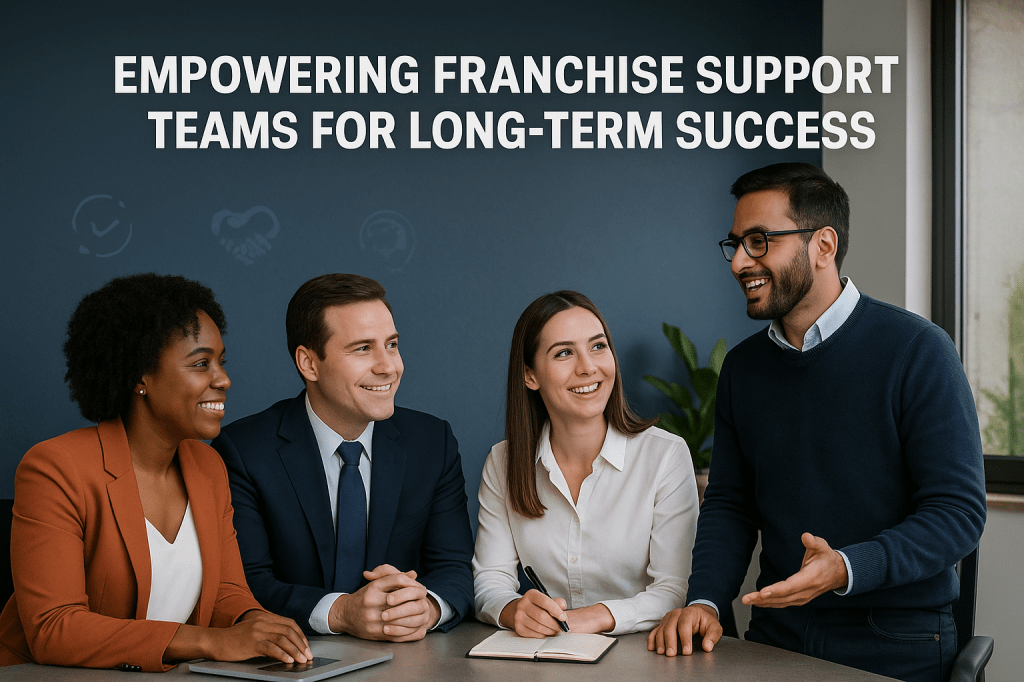
Strengthening the Foundation of Franchising: Why Developing People Matters More Than Just Building Processes

A well-structured franchise system is only as strong as the people behind it. While much is often said about systems, manuals, technology, and marketing programs, one of the most critical and sometimes overlooked components of a successful franchise organization is the team responsible for providing support to franchisees. These support personnel are the boots on the ground, the first line of defense, and often the most direct link between the franchisor and its franchisees. Their role extends well beyond technical expertise or knowledge of the brand’s products and services. It demands a high level of emotional intelligence, interpersonal skills, and a commitment to fostering trust and partnership.

Franchisors must be proactive in identifying, developing, and continually supporting individuals in these vital roles. It’s not enough to hire people who understand operations or sales. Effective franchise support requires a unique blend of personal and professional skills—qualities that should be nurtured just as rigorously as knowledge of systems or processes.

At the heart of franchisee support is communication. Strong verbal and written communication skills are essential for conveying ideas, delivering feedback, and diffusing tension. But communication is more than words—it’s about listening, empathizing, and understanding the perspectives and challenges that franchisees face. Support team members must be trained to listen actively, not just to respond, but to truly understand and help solve problems in a way that respects the franchisee’s point of view and circumstances.

Problem-solving and adaptability are also key. Support teams must be prepared to troubleshoot a wide array of issues—some operational, some personal, and many that fall somewhere in between. No two franchisees are the same, and no two situations are identical. A successful support team member must be able to adapt their approach, think on their feet, and help franchisees find workable solutions within the framework of the brand.

Patience and diplomacy cannot be overstated. Franchisees may become frustrated, especially during the early stages of operation or in times of economic or operational strain. Support personnel must remain composed and constructive, balancing empathy with accountability. It’s a delicate dance: upholding the brand’s standards while respecting the entrepreneurial spirit of the franchisee.

Equally important is emotional intelligence. The ability to read between the lines, detect when a franchisee is struggling even if they’re not saying it directly, and respond with the appropriate level of concern or guidance is what separates good support from great support. It’s about building relationships that go beyond checklists and compliance.

And finally, there’s a need for personal investment. Franchise support staff must be fully bought into the mission and values of the brand. When support team members believe in the vision of the franchisor and care about the success of each franchisee as if it were their own business, their passion becomes contagious and their efforts more impactful.

For franchisors, this means more than hiring for experience or training on technical topics. It requires the creation of a robust internal infrastructure to identify high-potential individuals, train them on both the hard and soft skills necessary for support roles, and offer them ongoing professional development and mentoring. This includes clear onboarding pathways, role-specific coaching, and leadership development tracks to retain and grow this essential talent.

Supporting the supporters is not optional—it’s foundational. When a franchisor makes a concerted effort to develop its support team, it enhances the franchise system’s ability to scale, adapt, and thrive. Franchisees—new and seasoned—are more likely to feel confident, connected, and capable when they know they’re backed by a knowledgeable and emotionally intelligent team that genuinely cares about their success.

A franchise system is a partnership, and like all great partnerships, it flourishes when people are empowered, understood, and equipped to support one another. That begins with the franchisor investing not just in systems, but in people.

Make today a great day. Make it happen. Make it count!

About the Author

Paul Segreto brings over four decades of hands-on experience in franchising, restaurants, and small business development. A passionate advocate for entrepreneurship, Paul has guided countless individuals on their journey to success, whether they are established entrepreneurs or just beginning to explore the path of business ownership.

Named one of the Top 100 Global Franchise and Small Business Influencers, Paul is also the voice behind the Acceler8Success Cafe, a daily content platform where thousands of entrepreneurs gain insight and motivation. A lifelong advocate for ethical growth and brand integrity, Paul continues to coach founders, franchise leaders, and entrepreneurial families, helping them find clarity in chaos and long-term success through intentional leadership.

Ready to take your next step in business or looking for expert insight to overcome today’s challenges? Reach out directly to Paul at paul@acceler8success.com — your path to success may be one conversation away.

About Acceler8Success Group

Acceler8Success Group is a multifaceted business advisory platform committed to empowering entrepreneurs, small business owners, franchise professionals, and industry leaders through strategic consulting, coaching, and curated content.

With a strong focus on entrepreneurship, franchising, restaurants, and small business growth, Acceler8Success Group delivers actionable insights and real-world strategies across its suite of brands, including the following:

Acceler8Success,  FranchiseReclaim,  OwnABizness.com,  Accelerate Success Coaching,  Your Entrepreneurial Success, and relaunching soon, Franchise Foundry.

By blending deep industry expertise with a dynamic content ecosystem, Acceler8Success Group fosters sustainable success and responsible leadership for today’s innovators and tomorrow’s legacy builders.

From Burgers to Brand Power: Ray Kroc’s Vision Still Resonates Today

The 2016 film The Founder, starring Michael Keaton as Ray Kroc, tells the compelling and controversial story of how a struggling milkshake machine salesman transformed a small San Bernardino burger stand into the global behemoth known as McDonald’s. While the movie is as much a character study as it is a business drama, it serves as a masterclass in entrepreneurship, branding, and the franchise model. Nearly 70 years after Ray Kroc began his journey with McDonald’s, his strategies and vision still resonate deeply with modern franchisors—and offer powerful lessons that remain as relevant today as ever.

The Power of Systems and Standards

One of the film’s most striking moments is when Kroc first sees the McDonald brothers’ kitchen operation. The “Speedee Service System” they created—an assembly-line method for producing burgers and fries—was revolutionary for its time. But more than the process itself, what fascinated Kroc was its replicability. He understood that consistency was the cornerstone of scalability. A McDonald’s burger in California had to be the same as one in Illinois, and that required precise systems, procedures, and training.

Today’s franchisors must still take this to heart. The success of any franchise system depends on its ability to deliver a consistent experience across locations, and this requires more than a good product—it demands operational excellence, clearly defined brand standards, and an obsessive focus on the customer experience. The tools may be different now—driven by digital checklists, data dashboards, and AI-powered training—but the principle is unchanged: systematize everything that matters.

Franchising as a Scalable Growth Strategy

Kroc’s early franchising efforts were often met with skepticism, especially from the McDonald brothers themselves. They were more concerned about quality control and reluctant to expand. Kroc, however, saw a bigger picture—he envisioned McDonald’s on every corner of America, serving families with speed and affordability.

Modern franchisors must also balance this duality: the desire to grow quickly with the responsibility to protect the brand. Kroc’s approach to franchising—bringing in motivated, often local, operators who had skin in the game—remains the gold standard. He understood that success depended not just on the model, but on the people behind each location.

Today, with more advanced vetting tools, performance tracking, and franchisee support systems, franchisors can be even more selective and strategic in how they grow. But the fundamentals are still rooted in what Kroc practiced: alignment between brand, systems, and people.

Branding Beyond the Product

One of Ray Kroc’s boldest moves was to prioritize the brand over the founders. He once said, “McDonald’s can be the new American church.” That statement, controversial as it was, revealed his understanding of brand symbolism and emotional connection. To him, McDonald’s wasn’t just about burgers—it was about family, trust, predictability, and community.

In today’s marketplace, consumers are more brand-conscious than ever. They expect values, consistency, and identity. Kroc’s instinct to turn the Golden Arches into a cultural icon is a lesson in emotional branding. Franchisors today must cultivate not just products or services, but a brand experience that resonates with customers on multiple levels—through storytelling, community involvement, and digital engagement.

Disruption and Reinvention: What Would Ray Do Today?

If Ray Kroc were alive today, he would undoubtedly still be a disruptor. He wouldn’t merely follow trends—he’d create new ones. Just as he redefined food service in the 1950s, today he would likely be at the forefront of tech-driven innovation in the franchise space.

He would likely harness AI and automation—not just in the kitchen, but in customer service, supply chain management, and marketing. He’d understand the importance of data, using it to predict demand, optimize staffing, and personalize offers. He’d see the value in apps, loyalty programs, and social media—but not as accessories to the business. He’d integrate them into the very DNA of the brand experience.

Kroc would also likely challenge traditional location-based thinking. Just as he standardized the physical restaurant footprint, today he might redefine it—investing in virtual kitchens, delivery-only brands, or modular restaurants that bring speed and efficiency to new heights. Sustainability, labor shortages, and rising costs wouldn’t deter him—they’d inspire him to find new ways to deliver on the original promise: quality food, fast, and consistent.

Final Thoughts

The Founder may have been set in the mid-20th century, but its lessons transcend time. Ray Kroc was far from perfect, and the film does not shy away from his flaws. Yet his ability to recognize opportunity, systematize success, and scale with vision made him one of the most influential figures in business history.

For today’s franchisors, the key takeaways are clear: Build systems that support consistency. Empower franchisees through alignment and training. Create a brand experience that means something. And most of all, don’t be afraid to challenge convention—because true growth often comes from disrupting what others take for granted.

Ray Kroc didn’t just build a restaurant chain—he created a model for global business growth. And in an age of rapid change, his playbook is more relevant than ever.

Make today a great day. Make it happen. Make it count!

About the Author

Paul Segreto brings over four decades of hands-on experience in franchising, restaurants, and small business development. A passionate advocate for entrepreneurship, Paul has guided countless individuals on their journey to success, whether they are established entrepreneurs or just beginning to explore the path of business ownership.

Named one of the Top 100 Global Franchise and Small Business Influencers, Paul is also the voice behind the Acceler8Success Cafe, a daily content platform where thousands of entrepreneurs gain insight and motivation. A lifelong advocate for ethical growth and brand integrity, Paul continues to coach founders, franchise leaders, and entrepreneurial families, helping them find clarity in chaos and long-term success through intentional leadership.

Ready to take your next step in business or looking for expert insight to overcome today’s challenges? Reach out directly to Paul at paul@acceler8success.com — your path to success may be one conversation away.

About Acceler8Success Group

Acceler8Success Group is a multifaceted business advisory platform committed to empowering entrepreneurs, small business owners, franchise professionals, and industry leaders through strategic consulting, coaching, and curated content.

With a strong focus on entrepreneurship, franchising, restaurants, and small business growth, Acceler8Success Group delivers actionable insights and real-world strategies across its suite of brands, including the following:

Acceler8Success,  FranchiseReclaim,  OwnABizness.com,  Accelerate Success Coaching,  Your Entrepreneurial Success, and relaunching soon, Franchise Foundry.

By blending deep industry expertise with a dynamic content ecosystem, Acceler8Success Group fosters sustainable success and responsible leadership for today’s innovators and tomorrow’s legacy builders.

Coaching vs. Managing: Why Today’s Franchisees Want More Than Just a Business Model

“High expectations are the key to everything.” That quote from Sam Walton doesn’t just describe the mindset of an extraordinary business leader—it defines the new generation of franchisees entering today’s marketplace. These aren’t just people looking for a job alternative or a second income stream. They are transitioning executives, business professionals, as well as entrepreneurs and legacy-builders with big dreams and even bigger standards. They’re investing with purpose and fully expect to succeed—not eventually, but intentionally, and at a high level.

For franchisors, this rise in ambition is not a burden. It’s an opportunity to raise the bar system-wide. When franchisees come in with high expectations, it drives innovation, sharpens operations, and improves results across the board. But those expectations must be matched with clarity, structure, and support. Otherwise, even the most promising partnerships can unravel.

Expectation Setting: The Foundation for High-Performance Franchising

Franchisors must understand that today’s franchisee expects transparency from day one. Glossy brochures and vague promises won’t cut it. They want to know exactly what the franchisor expects from them, and in turn, what they can count on in support, systems, and ongoing guidance. Setting this foundation early—before the agreement is signed—is not just about due diligence. It’s about trust.

Clear communication around operational standards, timelines, compliance obligations, and even revenue benchmarks must be established during the recruitment and onboarding process. When these standards are laid out plainly and reinforced often, they help prevent friction down the line.

But the conversation cannot be one-sided. It’s just as critical that franchisors understand what the franchisee expects from the opportunity. This is where a structured, introspective goal-setting process comes into play.

The Written Goal-Setting Exercise: Creating a Personal Roadmap

During onboarding, each new franchisee should be required—not encouraged, but required—to participate in a structured goal-setting session. This should be more than jotting down a few revenue targets. It’s a reflective and strategic exercise that defines their vision of success.

Franchisees should be prompted to articulate:

  • What are your personal and professional goals over the next 1, 3, and 5 years?
  • What does your business look like if you achieve these goals—number of employees, revenue, location count, community impact?
  • What does your life look like if these goals are met—freedom, income, family time, satisfaction?
  • What does your business and life look like if these goals are not met?
  • What expectations do you have of yourself, your team, and your franchisor?
  • What obstacles do you anticipate, and how will you respond to them?
  • What daily, weekly, and monthly habits will you commit to in order to stay on track?

The goal is not to intimidate or overwhelm the franchisee—it’s to help them get clear about what they’re building and why it matters. These written goals form the basis for a customized success plan and a powerful tool for accountability and coaching moving forward.

Elevating Onboarding: More Than Just Operations

Once the franchisee’s goals are articulated, onboarding takes on a different tone. Rather than just being about how to run the business, onboarding becomes a launchpad for leadership, personal development, and strategic alignment.

Franchisors should incorporate these goals into the training process. How does the brand’s system support the franchisee’s vision? What tools exist to help them get there? What data will they need to monitor progress?

This approach shifts onboarding from compliance to commitment. It becomes the first milestone in a business-building journey rather than a box to check.

Ongoing Support Must Be Structured, Personal, and Relational

The biggest mistake franchisors make is allowing support to become reactive. When field staff or corporate support teams only reach out when there’s a problem, the franchisee begins to view the relationship as transactional. Today’s high-expectation franchisees want something more—they want a partner who’s invested in their goals.

This is why the original goal-setting document is so important. It should become a living reference point during every check-in, quarterly review, or coaching call.

Support staff should be trained to ask:

  • How are you progressing toward your year-one goals?
  • Are your daily habits and team structure aligned with the outcomes you envisioned?
  • What’s changed since our last conversation, and how does that impact your roadmap?
  • Are there gaps in training, marketing, or staffing that we need to address to get you back on track?

These discussions turn accountability into empowerment. Instead of franchisees feeling like they’re being audited, they feel like they’re being supported in achieving something they’ve defined as important.

Technology, Tools, and Reporting: Enabling Franchisees to Take Ownership

Today’s franchisees are sophisticated. They expect digital dashboards, performance insights, real-time analytics, and operational tools that allow them to run lean and smart. But it’s not enough to have these tools—they must be integrated into the support framework.

Franchisors should connect key performance indicators directly to the goals the franchisee set early on. For instance:

  • If the franchisee’s goal was to reach $1M in revenue in Year 2, what KPIs matter most today?
  • How does labor efficiency, cost of goods, and local marketing ROI connect to that vision?
  • Is the franchisee being taught how to read these numbers and act on them effectively?

By connecting franchisee goals with performance metrics, franchisors elevate the conversation. It’s no longer about hitting arbitrary numbers. It’s about building a business that reflects the franchisee’s definition of success.

Coaching vs. Managing: A Cultural Shift

Franchisees don’t want to be managed—they want to be coached. This requires a cultural shift in how franchisors engage their networks. Field staff should not merely be auditors or trainers. They should be mentors, motivators, and accountability partners.

To support this, franchisors can create structured coaching programs that include:

  • Quarterly “goal reviews” based on the franchisee’s written roadmap
  • Peer mastermind groups to promote best practices and shared learning
  • Optional strategic planning retreats or workshops
  • Scorecards that blend financial, operational, and personal growth metrics

This level of engagement is what high-performing franchisees crave. It separates thriving franchise brands from those simply surviving.

Celebrate the Journey, Not Just the Destination

Every goal achieved should be celebrated. Franchisees want to feel seen and validated for their efforts. Recognize milestones—not just financial ones, but personal ones too. Did a franchisee finally promote a team member into management? Did they take their first real vacation in years? Did they give back to their community?

Celebrating wins reinforces the idea that the brand is aligned with the franchisee’s “why.” It deepens emotional connection and cultivates loyalty.

Likewise, when setbacks occur, returning to the original goal-setting exercise provides context. It helps the franchisee reassess, regroup, and recommit. It becomes a tool not of judgment, but of reflection and resilience.

Conclusion: Building a Brand Worth Investing In

Franchising is evolving. Today’s franchisees aren’t just looking for business opportunities. They’re looking for platforms that support their dreams, structures that foster their growth, and partners who believe in their potential.

By building a culture around goal-setting, structured support, strategic coaching, and personal accountability, franchisors can meet—and exceed—the high expectations of this new generation of operators.

And when done right, those expectations won’t just drive individual success. They’ll elevate the entire brand.

Because as Sam Walton wisely said, “High expectations are the key to everything.” In franchising, that key opens the door to transformation—for franchisees, for franchisors, and for the future of the business itself.

Make today a great day. Make it happen. Make it count!

About the Author

Paul Segreto brings over four decades of hands-on experience in franchising, restaurants, and small business development. A passionate advocate for entrepreneurship, Paul has guided countless individuals on their journey to success, whether they are established entrepreneurs or just beginning to explore the path of business ownership.

Named one of the Top 100 Global Franchise and Small Business Influencers, Paul is also the voice behind the Acceler8Success Cafe, a daily content platform where thousands of entrepreneurs gain insight and motivation. A lifelong advocate for ethical growth and brand integrity, Paul continues to coach founders, franchise leaders, and entrepreneurial families, helping them find clarity in chaos and long-term success through intentional leadership.

Ready to take your next step in business or looking for expert insight to overcome today’s challenges? Reach out directly to Paul at paul@acceler8success.com — your path to success may be one conversation away.

About Acceler8Success Group

Acceler8Success Group is a multifaceted business advisory platform committed to empowering entrepreneurs, small business owners, franchise professionals, and industry leaders through strategic consulting, coaching, and curated content.

With a strong focus on entrepreneurship, franchising, restaurants, and small business growth, Acceler8Success Group delivers actionable insights and real-world strategies across its suite of brands, including the following:

Acceler8Success,  FranchiseReclaim,  OwnABizness.com,  Accelerate Success Coaching,  Your Entrepreneurial Success, and relaunching soon, Franchise Foundry.

By blending deep industry expertise with a dynamic content ecosystem, Acceler8Success Group fosters sustainable success and responsible leadership for today’s innovators and tomorrow’s legacy builders.
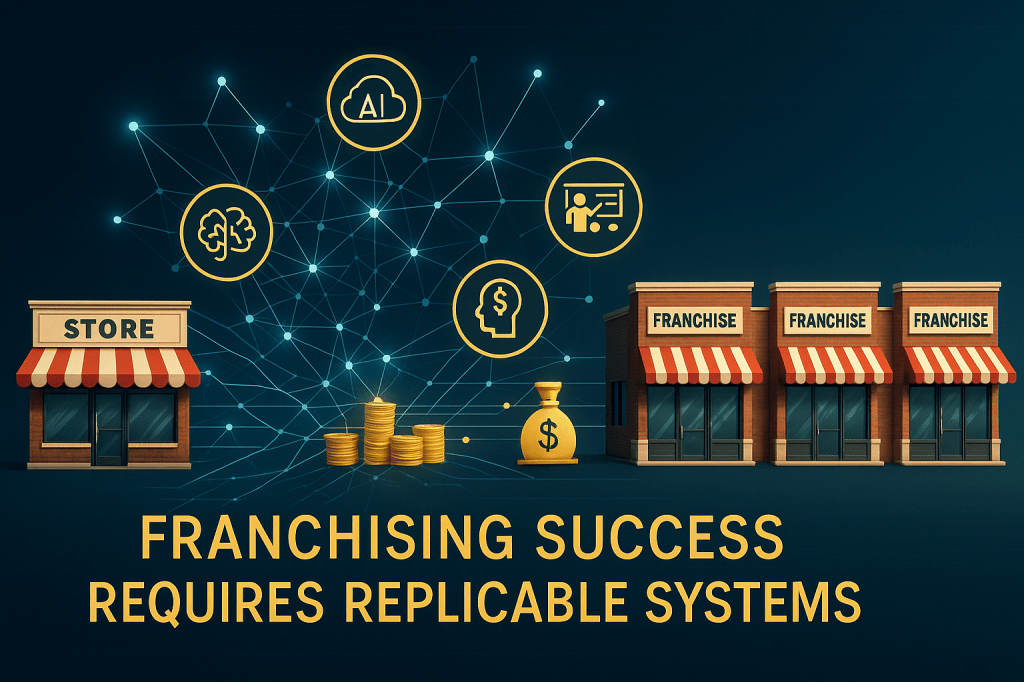
Systems, Scale & Capital: What Emerging Franchisors Must Know

In an age where technology is transforming how businesses operate and grow, the idea of turning a single successful business into a national franchise brand can seem enticing. But the harsh truth is this: one location—even if wildly successful—does not make a franchise. Not today. Not when consumer expectations are high, franchisee demands are sophisticated, and technology is advancing at an unprecedented pace.

For emerging franchisors, the path to franchising must begin with building a multi-location operation before ever entertaining the idea of selling franchises. Why? Because expanding to multiple company-owned locations does more than just validate the product or service—it proves the business can run on systems, not just the founder’s instinct, hustle, or personal touch. This distinction is everything in franchising.

Franchisees are not buying a personality. They’re investing in a proven, repeatable business model. A model that must work in different locations, with different teams, and without the founder involved in daily operations. Operating multiple units internally provides the real-world laboratory for refining systems, testing training programs, and preparing for the challenges that franchisees will face.

It also serves as early proof for multi-unit development, which is increasingly common in modern franchising. Many serious franchise investors aren’t looking to buy one unit—they’re looking to scale quickly with two, five, or even ten units under their control. But no credible developer will commit to multi-unit deals if the brand hasn’t even demonstrated the ability to scale internally.

Layer in the role of technology, and the stakes get even higher.

Today’s franchise landscape demands far more than a good product and a loyal customer base. A franchise system must be backed by tech infrastructure that supports operations, ensures brand consistency, enhances customer experience, and drives data-informed decision making. Think POS integrations, CRM platforms, AI-enhanced marketing tools, online training portals, automated inventory systems, mobile ordering, AR training, and more. Without these capabilities, an emerging brand risks being dismissed as outdated—before it even gets off the ground.

All of this requires one thing above all: capital. Significant capital.

Far too many entrepreneurs underestimate what it takes to become a franchisor. They believe a great idea and a strong store are enough. But launching a franchise system today requires capital not just for legal documentation and FDD development, but for:

  • Building a technology stack that can scale
  • Hiring professionals to support franchisees
  • Developing comprehensive training systems
  • Implementing brand standards and quality control
  • Marketing to attract qualified franchisees
  • Providing ongoing innovation and tech support

Trying to fund a franchise system from the cash flow of a single unit is not only impractical—it’s a serious risk. Without enough capital, shortcuts are taken. Technology gets postponed. Support teams are understaffed. Training is rushed. And the result is often an unstable, inconsistent brand that leads to failed franchisees and legal trouble.

Meanwhile, established and private equity-backed brands are charging ahead. They have the resources to implement cutting-edge tech, hire top talent, and offer franchisees turnkey systems. For emerging brands, the gap is widening—fast.

That’s why delaying franchising in favor of opening multiple company-owned locations is not just smart—it’s essential. It gives founders time to build the backbone of the business, prove it can be replicated without them, and implement the tech and systems required to support a growing franchise network. It also builds credibility. When a brand goes to market with multiple successful locations and a well-defined infrastructure, it doesn’t have to convince franchisees that the model works—it can show them.

Franchising is a serious business. It’s a promise to provide the tools, support, and systems that others will use to build their own futures. That promise must be backed by more than passion and potential. It must be built on a track record of repeatability, a foundation of strong systems, and a level of capitalization that allows for long-term success.

Emerging brands shouldn’t be asking Can we franchise? but rather, Should we franchise now?

If the brand isn’t yet operating successfully in multiple locations, if systems still rely on the founder’s oversight, and if the capital needed to invest in technology and infrastructure isn’t in place, then the answer is clear: not yet.

The best franchise brands aren’t born from a rush to grow—they’re built on the patience to prove, prepare, and invest before inviting others to join the journey.

Make today a great day. Make it happen. Make it count!

About the Author

Paul Segreto brings over four decades of hands-on experience in franchising, restaurants, and small business development. A passionate advocate for entrepreneurship, Paul has guided countless individuals on their journey to success, whether they are established entrepreneurs or just beginning to explore the path of business ownership.

Named one of the Top 100 Global Franchise and Small Business Influencers, Paul is also the voice behind the Acceler8Success Cafe, a daily content platform where thousands of entrepreneurs gain insight and motivation. A lifelong advocate for ethical growth and brand integrity, Paul continues to coach founders, franchise leaders, and entrepreneurial families, helping them find clarity in chaos and long-term success through intentional leadership.

Ready to take your next step in business or looking for expert insight to overcome today’s challenges? Reach out directly to Paul at paul@acceler8success.com — your path to success may be one conversation away.

About Acceler8Success Group

Acceler8Success Group is a multifaceted business advisory platform committed to empowering entrepreneurs, small business owners, franchise professionals, and industry leaders through strategic consulting, coaching, and curated content.

With a strong focus on entrepreneurship, franchising, restaurants, and small business growth, Acceler8Success Group delivers actionable insights and real-world strategies across its suite of brands, including the following:

Acceler8Success,  FranchiseReclaim,  OwnABizness.com,  Accelerate Success Coaching,  Your Entrepreneurial Success, and relaunching soon, Franchise Foundry.

By blending deep industry expertise with a dynamic content ecosystem, Acceler8Success Group fosters sustainable success and responsible leadership for today’s innovators and tomorrow’s legacy builders.

What Comes After AI in Franchising? The Next Wave of Innovation for Franchise Brands

Artificial Intelligence (AI) is already transforming franchising. From automating lead generation and streamlining franchise development to supporting operations and customer engagement, AI has become a core part of how many brands grow and support their networks. But what’s next?

Rather than being replaced, AI is evolving—and it’s bringing other advanced technologies with it. For franchisors and franchise leaders, the future is about expanded AI: systems that are more intelligent, more immersive, and more connected across every part of the franchise model.

Here’s what’s coming next—and why forward-thinking franchisors should start preparing now:

Augmented Reality (AR): Smarter Training and Stronger Validation
AR will soon play a major role in franchise development and onboarding. Imagine prospective franchisees taking a virtual tour of a store concept in their own living room, or new owners using smart glasses to walk through opening procedures in real-time. AR also enables interactive operations training, equipment demos, and site inspections—saving time and improving consistency.

What is Augmented Reality (AR)?
Augmented reality (AR) is a technology that enhances the real world by overlaying digital information, such as images, text, or sounds, onto a user’s view of their physical environment. It essentially adds a layer of computer-generated elements to the real world, creating an interactive and immersive experience according to Investopedia. Unlike virtual reality, which creates a completely simulated environment, AR maintains the user’s connection to the real world while augmenting it. 

Google AI Overview

AI-Powered Franchise Support Systems
Today’s AI tools assist with scheduling, inventory, and customer service. What’s next is smarter AI that can proactively solve problems across the system. These next-gen tools will anticipate franchisee needs, answer complex questions, guide compliance, and even coach owners on local marketing—all without waiting for human support. It’s like having a 24/7 franchise business coach built into your system.

Digital Twins: Scaling Your Best People
Franchisors will soon create digital replicas—or “twins”—of key team members. These AI-powered versions of founders, trainers, or ops managers can guide franchisees, deliver brand messaging, and even attend virtual meetings. This allows brands to scale expertise without sacrificing quality and gives new franchisees around-the-clock access to leadership-level support.

Autonomous Business Systems
AI will go beyond support—it will take on full operational roles. From auto-responding to franchisee inquiries to managing CRM and local advertising efforts, autonomous systems will handle tasks that used to require multiple departments. Franchisors will gain efficiency while offering more consistent support to franchisees.

Smarter, More Ethical AI
As AI takes on greater responsibility, franchisors must lead with transparency and trust. Ethical use of AI—especially in areas like franchisee recruitment and customer data handling—will become a competitive advantage. AI systems that understand tone, emotion, and sentiment will also enhance franchisee relations and improve feedback loops.

Virtual Discovery Days and Spatial Brand Building
Franchise discovery will become immersive. Using AI-powered virtual environments, franchisors will host full-scale discovery days online. Prospects will “walk” a location, interact with digital brand reps, and explore systems in a realistic setting—cutting travel costs while increasing reach and engagement.

AI + AR in Field Support and Compliance
Franchise field teams will use AR tools to inspect locations remotely, review safety protocols, and provide instant visual feedback. Combined with AI, these systems will flag non-compliance, recommend improvements, and even offer on-the-spot coaching. This improves unit-level performance and ensures brand consistency across all locations.

The next generation of franchising won’t just be driven by smarter systems—it will be defined by how these systems come together to support people. Expanded AI, AR, and automation will help brands grow faster, support franchisees better, and maintain consistency at scale.

Franchisors who embrace this shift early will position themselves as industry leaders. Those who wait risk being left behind as technology becomes not just an advantage—but an expectation.

AI isn’t the end of innovation in franchising. It’s the foundation for what’s coming next.

Make today a great day. Make it happen. Make it count!

About the Author

Paul Segreto brings over four decades of hands-on experience in franchising, restaurants, and small business development. A passionate advocate for entrepreneurship, Paul has guided countless individuals on their journey to success, whether they are established entrepreneurs or just beginning to explore the path of business ownership.

Named one of the Top 100 Global Franchise and Small Business Influencers, Paul is also the voice behind the Acceler8Success Cafe, a daily content platform where thousands of entrepreneurs gain insight and motivation. A lifelong advocate for ethical growth and brand integrity, Paul continues to coach founders, franchise leaders, and entrepreneurial families, helping them find clarity in chaos and long-term success through intentional leadership.

Ready to take your next step in business or looking for expert insight to overcome today’s challenges? Reach out directly to Paul at paul@acceler8success.com — your path to success may be one conversation away.

About Acceler8Success Group

Acceler8Success Group is a multifaceted business advisory platform committed to empowering entrepreneurs, small business owners, franchise professionals, and industry leaders through strategic consulting, coaching, and curated content.

With a strong focus on entrepreneurship, franchising, restaurants, and small business growth, Acceler8Success Group delivers actionable insights and real-world strategies across its suite of brands, including the following:

Acceler8Success,  FranchiseReclaim,  OwnABizness.com,  Accelerate Success Coaching,  Your Entrepreneurial Success, and relaunching soon, Franchise Foundry.

By blending deep industry expertise with a dynamic content ecosystem, Acceler8Success Group fosters sustainable success and responsible leadership for today’s innovators and tomorrow’s legacy builders.

Your Voice, Your Thoughts—Amplified by AI, Not Replaced

Artificial Intelligence is rapidly becoming central to nearly every aspect of our lives—and its effect is only accelerating. From boardrooms to classrooms, from content creation to customer service, AI is being used to lead, to influence, to impress. It’s reshaping how we work, how we think, and how we connect. Yet, in the rush to adopt the latest and greatest, something vital is being overlooked. Somewhere along the way, many have begun to mistake AI not as a powerful tool—but as a shortcut. A substitute for original thought. And that’s not just lazy—it’s unprofessional.

Like every major technological advancement before it, AI was never intended to replace human intellect, creativity, or judgment. It was created to assist, to elevate, to enhance. Using AI to generate content or complete tasks without any personal input or critical thinking is no different than scribbling test answers on your hand and hoping no one notices. It’s cutting corners. It bypasses the learning. It denies the growth. And ultimately, it chips away at your credibility—sometimes without you even realizing it.

Let’s not confuse convenience with competence.

To be clear, I believe AI should absolutely be embraced. Its potential is extraordinary. It can help us communicate better, solve problems faster, and operate more efficiently. But like any powerful tool—whether it was the telephone in its time, or later the personal computer, the internet, and eventually the smartphone—it requires responsible use. It demands understanding. And it must always be wielded with integrity and professionalism.

I use AI every day. Specifically, ChatGPT has become a vital part of my writing process. But here’s the difference: I don’t rely on it to do the thinking for me. Every article starts with me. My ideas. My voice. My message. I draft the content just as I have for years—brainstorming, outlining, writing from scratch. Only then do I turn to AI, using it much like I once used grammar tools or spell-checkers: to clean up, to clarify, to sharpen.

Once AI has helped polish that initial draft, I go back in and refine it myself—often more than once. I analyze the tone, I consider the flow, I check the alignment with my intended audience. Sometimes I prompt AI for additional suggestions or alternative phrasing. But never do I blindly accept its output. What resonates stays. What doesn’t gets reworked or removed. The final voice remains my own.

Even when it comes to titles and visuals, I use AI with deliberate intent. I may ask for headline ideas or use image generators to create visuals, but they’re always prompted with context, direction, and purpose. Sometimes, I combine AI-generated graphics with designs from my team or images sourced online—always striving to match the tone and meaning behind my message.

What once took me two to two and a half hours to complete now takes closer to ninety minutes. Not because I’ve handed over the wheel, but because I’ve learned how to let AI ride shotgun. It’s not about letting AI take over. It’s about working smarter. About evolving without compromising.

Technology, after all, is meant to help us grow—not to make us disappear.

Throughout history, we’ve seen the same pattern with every major innovation. The early adopters rush in. Mistakes are made. Lessons are learned. Eventually, we find balance. The internet, smartphones, digital media—all of them came with growing pains. AI will be no different. But the faster we learn how to use it properly—how to pair it with thoughtfulness and ethics—the better positioned we are to lead in this new era.

In my opinion, AI is the most powerful business and creative tool since the smartphone—and arguably even more transformational. But its power only matters if we understand how to harness it. And its value only grows when paired with human authenticity, discernment, and responsibility.

So again, I ask: How are you using AI?

Are you letting it make you faster, sharper, more efficient—without losing yourself in the process? Or are you handing over your voice, your credibility, and your unique value to a machine?

That’s the real question. And the answer, ultimately, is up to you.

Make today a great day. Make it happen. Make it count!

About the Author

Paul Segreto brings over four decades of hands-on experience in franchising, restaurants, and small business development. A passionate advocate for entrepreneurship, Paul has guided countless individuals on their journey to success, whether they are established entrepreneurs or just beginning to explore the path of business ownership.

Named one of the Top 100 Global Franchise and Small Business Influencers, Paul is also the voice behind the Acceler8Success Cafe, a daily content platform where thousands of entrepreneurs gain insight and motivation. A lifelong advocate for ethical growth and brand integrity, Paul continues to coach founders, franchise leaders, and entrepreneurial families, helping them find clarity in chaos and long-term success through intentional leadership.

Ready to take your next step in business or looking for expert insight to overcome today’s challenges? Reach out directly to Paul at paul@acceler8success.com — your path to success may be one conversation away.

About Acceler8Success Group

Acceler8Success Group is a multifaceted business advisory platform committed to empowering entrepreneurs, small business owners, franchise professionals, and industry leaders through strategic consulting, coaching, and curated content.

With a strong focus on entrepreneurship, franchising, restaurants, and small business growth, Acceler8Success Group delivers actionable insights and real-world strategies across its suite of brands, including the following:

Acceler8Success,  FranchiseReclaim,  OwnABizness.com,  Accelerate Success Coaching,  Your Entrepreneurial Success, and relaunching soon, Franchise Foundry.

By blending deep industry expertise with a dynamic content ecosystem, Acceler8Success Group fosters sustainable success and responsible leadership for today’s innovators and tomorrow’s legacy builders.