Category: entrepreneurship

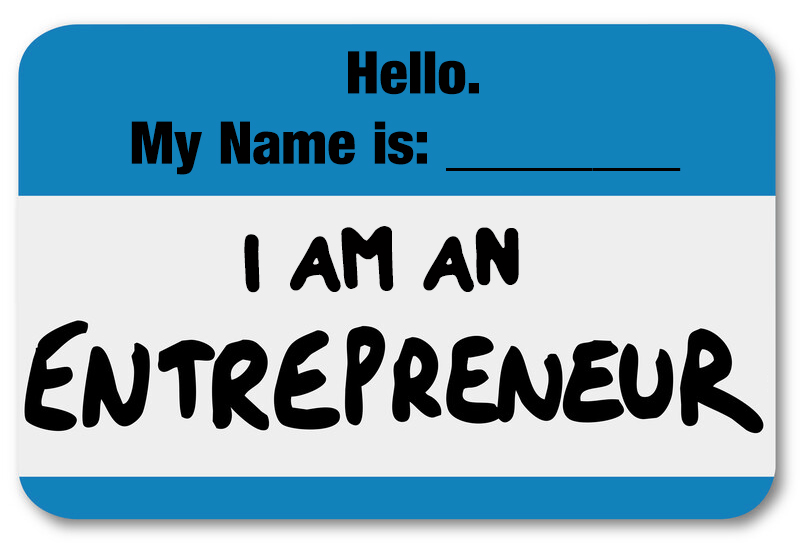
I am an entrepreneur. Go ahead. Say it!

Why is there reluctance to say, I am an entrepreneur? I’ve been asked that question many times. Heck, I’ve asked that question of myself on more than one occasion. It seems, at times we’re prouder to call ourselves, Founder or CEO or to say, I’m a business owner. Why is that?

Are those titles more respectful than, entrepreneur? Yet, we hear of late, we’re in an entrepreneurial economy. So, is that a bad thing or a good thing, and especially if we have a hard time fully admitting to entrepreneurship? Or should we just be entrepreneurial in how we approach our work, whatever that truly means?

Are we claiming to be in an entrepreneurial economy to justify the disappearance of the lifelong career at one company and this is just a way to say we need to create and prove ourselves over and over again, and forget the gold watch?

Back to the reference of being an entrepreneur… Is there a stigma of being a dreamer, always looking for something better, bigger, faster as opposed to what some believe is mundane, repetitive work with the security of a paycheck? Often, I hear it’s mostly due to yesterday’s immigrant mindset of being thankful to just have a job, yet it’s that same immigrant mindset that is the epitome of entrepreneurship.

 “Your time is limited, so don’t waste it living someone else’s life. Don’t be trapped by dogma – which is living with the results of other people’s thinking. Don’t let the noise of other’s opinions drown out your own inner voice. And most important, have the courage to follow your heart and intuition. They somehow already know what you truly want to become. Everything else is secondary.” – Steve Jobs

We are living our fears.

Actually, I believe it’s because of fear — fear of failure, fear of what other people think, fear of the unknown, fear of the what if, fear of starting over, fear of change… But it’s when those fears are hit head-on and the adrenaline rush of success far outweighs those fears because you know, deep in your heart that you have a deeply ingrained talent that can and will make a difference.

Does that mean failures aren’t possible? Hell no, but it’s working through those failures, those blips, those aberrations that provide experience and resiliency to improve and innovate to make the next step, the next task, the next venture successful. That is entrepreneurship. And it’s when I don’t consider what I do as entrepreneurship, is when failure mostly occurs. Conversely, it’s when I focus on what I do as an entrepreneur, complete with that thinking outside the box and failure is not an option perspective, and when focused more on results as opposed to opinion of others, THAT is when success mostly occurs.

Yes, I’m an entrepreneur. My focus will stay as such as it is not only good for me, but also for my family and for those that rely on me to help them achieve their wishes, hopes and dreams! Why? Because I believe in possibilities, as without them, there are none.

Nurture Your Business for Optimum Growth

Think of your entrepreneurial journey much like growing a tree. First, you decide what type of tree you’d like to grow. Next, you learn how best to grow it. You then cultivate the soil to provide a firm foundation, but with necessary room to grow. The seeds go into the soil and it’s time to begin growing. Over a relative time, care is provided along with water, fertilizer and other nutrients so the tree not only grows but grows strong.

“Nobody talks of entrepreneurship as survival, but that’s exactly what it is and what nurtures creative thinking.” – Anita Roddick

For a while it’s frustrating as you stare at the dirt wondering when the first signs of growth will penetrate through the surface — a breakthrough of sorts. Then, one day it appears through the surface of the soil and as fragile as it is you wonder how it had the strength to push through. You then care for the tree a bit more, nurturing it along as it grows and grows, branches sprouting out along the way.

At times, it may look a bit unhealthy, so you move it into more direct or less sunlight, maybe increase watering or add some new fertilizer to the soil around it. You may even relocate the tree to a bigger space, a deeper hole to firm up the foundation so it can grow stronger. And then, you see it blossom as it takes a new form with bright flowers, attracting visiting insects from far and wide. It’s beautiful, but you’re cautious as there are predators that may want to feed off your tree, destroying it along the way. So, you protect it with insecticide or even a cage around it to prevent it from being eaten altogether.

Once mature, your tree will only require periodic maintenance. Sometimes it’ll need to be trimmed and pruned to spur new growth, again making it stronger and stronger and more beautiful than ever. You then think, maybe I should plant another one, and then another? Possibly you can grow them to a certain point and then sell them. After all, you know the process. You’ve gone through the learning curve. You most likely still have some or many of the resources you used to grow the first one. There may even be something new that will help it grow faster.

You see, growing a tree is a process. It takes time. It takes perseverance. It takes care and thought at every step. And yes, it takes you staying involved and committed to, not only the process but to the desired results. If you quit or neglect your responsibilities, your dream and business will die, just as the tree would die.

10 Ways to Grow Your Small Business

5 Considerations for Millennials & Generation Z Open to Franchising and Business Ownership

Franchising is not often considered by the approximately 139 million Millennials and Generation Z population (as of 2020). But, with so many qualified people looking to start or extend their careers, and on their own terms, every job option merits consideration.

First things first. Let’s understand who makes up this segment of the U.S. population that will make up the majority of the workforce for the next 30-40 years:

Millennials were the largest generation group in the U.S. in 2019, with an estimated population of 72.1 million. Born between 1981 and 1996, Millennials recently surpassed Baby Boomers as the biggest group, and they will continue to be a major part of the population for many years.

Generation Z is the most recent to have been named, and many group members will not be able to remember a time before smartphones and social media. However, the group already makes up around 20.35 percent of the U.S. population, and they are said to be the most racially and ethnically diverse of all the generation groups. 

The number of Baby Boomers, whose generation was defined by the boom in births following the Second World War, has fallen by nearly six million since 2010. However, they remain the second-largest generation group, and aging Boomers are contributing to steady increases in the median age of the population. Meanwhile, the Millennial and Gen Z generations continue to grow, and a big reason for this is the increasing number of young immigrants and refugees arriving in the United States.

Thanks to Adecco’s ‘Way to Work’ survey, which surveyed 1,001 Americans who are mostly currently in college or recently graduated and in their late teens to mid-20s, the primary differences between the two generations and how these differences might play out in the workplace have been identified. Three key takeaways, or differences between Millennials and Gen Z regarding work include:

  • Members of Gen Z are more concerned about the cost of education (21% of respondents), compared to Millennials (13% of respondents).
  • Millennials value stability (34%), while Gen Z puts more of an emphasis on finding their dream job (32%).
  • More Gen Zers follow their parents’ influence (42%), compared to their Millennial counterparts (36%).

So, what about business ownership and franchising, once the American Dream of Baby Boomers?

Here are five important considerations for Millennials and Gen Z open to this path of entrepreneurship:

Affordability. Most people between the ages of 18 and 35 cannot afford $800,000 for a brick-and-mortar business but a home-based business might cost between $40,000 and $60,000. There are a vast variety of franchises. Millennials and Gen Z can find one that fits their budget as well as their ideal income, lifestyle, wealth and equity.

Digital Minds. Both groups are digital natives who can capitalize on the Internet to grow their business. Every type of franchise can benefit from someone proficient in the cyber realm, whether that be growing an at-home business in pajamas, creating a digital work force or driving business with a creative social media campaign.  

Control. Some franchises have a web presence that is systemized from the top. If that’s the case, Millennial and Gen Z candidates need to decide if controlling the social presence is important to them or not, then choose a franchise accordingly.

Do Good. Many young people are as concerned their life work be meaningful and socially responsible as they are with money. A franchise allows Millennial and Gen Z candidates the opportunity to “do good” while being their own boss. Franchises exist for dog sitting, tutoring and healthy food, among countless options available for those looking align livelihood with their social mission. 

Difficulties. Both generations like their own voice on social media, their own marketing plan and are generally excited to execute their next big idea. Franchisors offer a replicable model so customers know what to expect. A Millennial or Gen Z candidates who decide to become a franchisee must be sure they completely support the system they choose.

21 Tips for Young and Aspiring Entrepreneurs

As the future of works rests on the shoulders of Millennials and Generation Z, changes to the work force will continue and most likely, not return to any semblance of what was common pre-pandemic. I guess the most important questions (concerns) for me are, Will Millennials and Gen Zers pull professional culture in opposite directions, or do both generations have common ambitions? After all, the workplace structure cannot be a work in progress forever.

We Must.

The past 2 years have seen many scrambling to fight off challenge after challenge. Accordingly, actions have been mostly reactive. To many, it’s been a shear, exhausting act of survival.

Well, it’s time to make the complete shift back to being proactive.

If it’s a pivot to move forward in what may be a new normal, we must accept it. If it’s a drastic change that is required, we must act on it. If it’s a new direction that is inevitable, we must move toward it.

We must get back to playing to win as opposed to playing not to lose.

Even in the face of failure, we must dust off dreams that have been cast aside. We must pursue them once again. We must do so with purpose and conviction.

We must overcome negativity with a positive mindset. We must explore possibilities. We must capitalize on opportunities.

Life as we once knew it has changed. We must realize it for what it is. We must deal with it. We must adapt. We must take action.

We must act swiftly. We must act decisively. We must do so with aggressive plans to not only survive, but to thrive. We must accelerate success.

We must make it happen. We must make it count. Yes, we must!

Startup or Franchise? Focus on what is best for you but choose wisely.

Owning and operating a small business was once the exclusive domain of the risk takers of the business world. The true entrepreneur had a distinct flair for creativity, innovation and vision. He, and I emphasize “he”, knew how to operate outside-the-box. He knew how to make things happen. Many times, this individual had little choice as he knew from an early age, he would be responsible for shaping his future and for making it on his own. Formal education was usually limited and often just a far-fetched dream. Corporate life was not even an option. Besides, he couldn’t be told what to do, how to do it and when to do it. No way. No how.

Well, times certainly have changed in the business world. More so recently as many individuals are again faced with economic uncertainty. An advanced degree is no longer the fast track to success. As such, many individuals especially more women than ever before are deciding enough is enough. Wanting to control their own destiny they’re increasingly choosing small business ownership as opposed to leaving their future in the hands of Corporate America.

Sure, the financial aspects are vitally important. That’s a given. However, today’s new small business owners describe their number one priority as establishing true balance in all areas of their life. They desire the freedom of furthering their own personal growth but will limit that growth by their abilities and resources, finding it more important to help others improve the quality of their lives and build long-term mutually beneficial relationships; both business and personal. They firmly believe people and relationships to be the foundation of success even more than money itself as they have determined money (profits) will be the end result of their actions.

This is where the road gets tricky as a decision must be made between starting their own venture and assuming total risk or reducing the learning curve and limiting the risk by investing in a franchise where they would be in business for themselves but not by themselves. The key questions posed by many emerging small business owners are asked very emphatically, “Can I achieve my goals and objectives as part of a franchise system? And do I have what it takes to be a franchisee?”

In addressing these questions (and concerns), it’s relatively easy to analyze the two and realize, beyond the viability of a particular franchise brand as addressed in due diligence of the franchise concept itself, the answers are really contingent and dependent upon each other. The answers actually lie in understanding the mindset required to be a franchisee. Once understood, a choice must be made regarding the desired path either as an independent small business owner or as one of the hundreds of thousands of franchisees across several thousand franchise concepts worldwide.

The typical franchisee must be willing to follow and adhere to a franchise company’s business system and ultimately, promote the same within their new franchise community at all times. It must be completely understood the system cannot be changed by the franchisee nor can their business be operated differently than the franchise company requires as the system is proven and uniform across the chain. It’s this uniformity throughout the organization that is paramount to brand awareness leading to company and franchisee success and is the foundation of an interdependent relationship between both parties to the franchise agreement.

A franchise is almost definitely not the right choice for the business maverick or renegade. Certainly, there is an important place in business and in our hearts for these unique innovators. If not, we wouldn’t know Apple or Amazon as they’re known today. Even McDonalds, as probably the greatest franchise of all time that stormed through the country under the leadership and direction of a true maverick, Ray Kroc, would not have been successful without franchisees being required to strictly follow and adhere to the McDonalds system without fail. No questions asked and no room for negotiation.

Entrepreneurs will be around for centuries to come blazing trails as never before. Some will actually plan to choose franchising as an expansion strategy and build the foundation of future franchise concepts. They will provide a choice for tomorrow’s small business owners on whether to go it alone or invest in a franchise. And it will be those franchisees of tomorrow that will follow, promote and expand those systems that will prove to be the steel, bricks and glass built upon the foundation of new franchise companies. Thus, continuing the growth of franchising as it increasingly expands throughout the world, giving back by affording people more opportunities and options in determining the path to small business ownership that suits them best.

Fear And Consequences of Failure: A True Story Retold Once Again

I’ve been asked time and again to post the following article that I’ve written about in 2011 regarding my own personal experience as a multi-unit franchisee where I succeeded at first, only to crash and burn later on. Over the years, this article has been posted on several of my blogs, picked up by numerous other blogs & online publications, and discussed on various podcasts. I have received numerous comments and inquiries about the article and my experience as well as individuals sharing their own personal experiences and requests for assistance. Although I cringe at the thought of any business failing, I admire and respect the fact that franchisees and franchisors alike (small business owners and individuals & teams running larger organizations as well) know when to put their pride aside and ask for assistance, and I always look forward to providing my experience and expertise to help determine a practical resolve to their problems. 

I’m proud to say this article has been instrumental in helping a number of businesses keep their doors open and work towards recovery. On the other hand, I’m also sad to say several businesses were not as fortunate, but at least the owners were able to exit with dignity and in few cases, with less liability than they previously thought possible. And, in one case, the business owner actually exited in the black when we were able to facilitate the sale of her business when she previously thought about just walking away. Considering the difficulties many small business owners, restaurant operators, franchisees, entrepreneurs and organizations have experienced over the past two years and with challenges continuing, I’m sharing this article once again.

Fear and Consequences of Failure (unedited from 2011)

I can personally relate to the trials and tribulations of owning franchise businesses as I have “been there and done that” and have experiences on both ends of the spectrum from achieving overwhelming success to dealing with bitter failure. I have definitely come to understand the fine line between success and failure in trying to nail down the American Dream.

I know it is sometimes counterproductive to even mention failure which is why the subject is always avoided and never discussed. Yet, it’s out there and it’s real. Once franchisees face the possibility of failure and its very real consequences, they can be motivated to understand that failure is not an option and commit 100% to a plan that addresses immediate problems and provides solutions accordingly. Even if it’s necessary for the plan to be quite drastic or aggressive due to prevailing circumstances, franchisees that unequivocally realize that failure is not an option are prepared for immediate action.

Let me emphasize one point. Franchisees should not view poor sales and disappointing profits as either potential or immediate failure and stick their heads in the sand. I made that mistake in the past and suffered the consequences. Instead, franchisees should build upon the courage it took to become a franchise business owner and recommit to success as they did when they first took the entrepreneurial plunge.

They need to remember their wishes, hopes and dreams that prompted the decision to own their own business. They need to remember the admiration of family and friends when they heard about the new venture. They need to remember the excitement when they actually signed the franchise agreement.

Unfortunately, there’s a very distinct possibility the root of the problem is embedded in the franchisee’s actions, non-conformity to the franchise system and unwillingness to face reality. However, as there was some shining light evident during the franchise award process, it may not be a totally lost cause if the franchisee is made to completely understand the implications and consequences of failure.

As franchisors are faced with the potential of closed units [during this recession] that may be the result of things out of their control, it’s imperative they don’t lose even a single unit just because a franchisee just flat out needs a snap back to reality. It’s worth the effort.

Let me clarify something. I failed as a franchisee. Not because of anything the franchisor did or didn’t do but because I put and kept my head in the sand and did not face reality. I could go on and make excuses about things that happened around me but at the end of the day I could have turned things around if I got my own head out of the sand, made some difficult decisions and took full, immediate responsibility.

Unfortunately, I was scared of failing. I was afraid of what people would think. I was ashamed at what other franchisees, ones I put in business, would think of me. I couldn’t even think of facing my family. All lame excuses for not taking responsibility. Maybe a hard swift kick you-know-where would have helped.

Did I mention that I previously ran the franchise company where I failed as a franchisee? Did I mention I was elected by fellow franchisees, President of the National Advisory Council? Did I mention that I owned and operated five franchise units?

If I had clearly understood the implications and consequences that were looming on the horizon and if I was able to get my big ego out of the way and address things head on, maybe I could have survived. Maybe I could have at least implemented an exit strategy that would have, in some small way, paid back the loyalty and support of my employees, family and friends.

In the end, I may not have survived because it may very well have been too late when and if I finally took action and responsibility. But maybe I could have at least exited with some dignity. Also, I could have saved many innocent people a great deal of hardship, embarrassment, wasted effort and ill-spent resources if I did face reality. This includes my family, my employees and yes, my franchisor; all who believed in me.

Yes, it was a tremendous learning experience but not one I would bestow or wish on anyone. Now, all I can do is to offer my experience to anyone in the franchise industry that needs assistance. As we [prepare to enter 2012] in the realms of economic uncertainty, I’m certain already difficult situations have been compounded but I’m confident a snap back to reality could only help. If just one franchise business is saved from the consequences of failure, then we’ve made progress. Progress we’ll continue to build upon.
When Faced with Failure…

Sometimes regardless of how well entrepreneurs plan and despite how much effort they dedicate to something, they often fall short of their goals and the end-results cause a multitude of challenges and problems. Ultimately, it can adversely affect their financial position, reputation, relationships, team spirit and much more. It can also start to spiral into personal life and affect family, health and overall well-being. 

Unfortunately, such situations are often perpetuated by denial when placing one own’s head in the sand. 

Think of it this way… If we are to put our own head is in the sand, our most vulnerable ass-et would be sticking out in plain view. Some will laugh. Others will point and snicker, definitely telling others. And a few will take advantage of the situation and current position of vulnerability. 

“Only those who dare to fail greatly can ever achieve greatly.” – Robert F. Kennedy

Sadly, many business owners put themselves in that position. Not because they swung and missed. Not because they didn’t see the forest for the trees. And not because they just flat-out saw something that wasn’t there. Instead, it’s because they didn’t keep their head high, accept the situation, learn from it and move on, and with laser-focus. That is exactly what true entrepreneurs do when faced with failure.

Why Embracing Failure is Key for Entrepreneurial Success

Starting a business is anything but easy. From raising the appropriate capital to arming yourself with the right resources, there are a lot of steps to take and a lot of places in which one wrong decision can threaten everything. And while a small fraction of new business launches go off without a hitch, most experience at least a few roadblocks along the way. After all, over 50% of small businesses fail in the first four years.

In many ways, entrepreneurship is as much about luck as it is about skill, and there’s not always a way to avoid failure. However, learning how to rise above failure and turn problems into possibilities can be the deciding factor between making things work and shutting down your business. This is why embracing failure is the key to entrepreneurial success.

Read more HERE.

Motivation for Today’s Entrepreneur

Flexibility, control and legacy are common entrepreneurial motivations. Being in the right mindset helps entrepreneurs maintain their entrepreneurial motivation when challenges arise. A positive attitude, meditation and a strong support system help to sustain enthusiasm for not only running their business, but also for exploring possibilities and opportunities while thinking about how to capitalize on the same.

As part of our commitment and dedication to entrepreneurial success at all levels, Acceler8Success Cafe has been developed to provide current and aspiring entrepreneurs information and resources to help them succeed, and to also provide a relaxing way to stay motivated.

“My biggest motivation? Just to keep challenging myself. I see life almost like one long University education that I never had — every day I’m learning something new.”

-Richard Branson, founder Virgin Group

NOTE: Please pause video before moving from one to another. Thank you!

Positively Memorable Experiences… They’re Not Only for Customers!

A recent Google search for the phrase, “positively memorable experience” revealed results that were exclusive to customer experiences, and TripAdvisor.com garnered one-half of all results with the phrase. So, what causes customers to be so emphatic about their experience that they deem them “positively memorable?” Further, what implores them to share their thoughts so openly within a public forum?

To answer these questions, we must first examine the definitions of the words that make up this phrase as shown on Google:

Positively: In a positive way, in particular; with certainty, so as to leave no room for doubt; used to emphasize that something is the case, even though it may seem surprising or unlikely.

Memorable: Worth remembering or easily remembered, especially because of being special or unusual.

Experience: Practical contact with and observation of facts or events.

Now that we fully understand the meaning of these words, their impact when joined together truly makes sense, not only as a powerful phrase, but as a compelling statement. Clearly, this is a statement we should strive to hear from customers at every location within our franchise systems; such a clear, concise message is something we want to share every chance we get. It speaks volumes of the relationship between customer and business, one that both sides can agree on as a benchmark for excellence.

Utilizing this phrase as a filter, ask yourself if your franchise relationships merit the same sentiment. Better yet, imagine if your franchise relationships were deemed as being “positively memorable experiences.” Is this possible or even practical to consider? Of course, it is!

The Beginning of the Experience

Pick one franchisee and think back to the time when he or she (or they) first inquired about your franchise. What made him want to continue through the next steps of your franchise sales process? Now, think about what that franchisee must have been feeling along the way through the due diligence and validation processes. Imagine how she must have felt when she shared with family and friends what he was going to do. Then, after signing and remitting a check for the franchise fee and committing to the initial investment along with a five, 10- or 20-year term, imagine how he justified his decision to these same confidants.

Do you think this was all part of a positively memorable experience? I believe most within franchising would agree that this is the case, or the franchise sale would not have occurred. Yet too often the positively memorable experience diminishes from this point forward. Sure, there are many happy, satisfied franchisees across many great franchise systems. But how many, during or after the fact, would actually say the experience was positively memorable?

Moving the Positively Memorable Experience Forward

Just like at many of the hotels mentioned in the search results on TripAdvisor.com, there must be clearly defined criteria — a filter of sorts — that every customer, and in this case, every franchisee, must go through at every stage of the relationship and on a daily basis. This is essential to creating positively memorable experiences. Here are five tips that will help move toward this end.

  1. Understanding the true meaning and spirit of interdependent franchise relationships. This must be shared and exemplified at every point of contact with franchisees.
  2. Developing the right culture at all levels. Be careful — culture is also defined as bacteria. This takes time and commitment, and is a reflection of how people, whether franchisees, employees, suppliers or others, are treated at all times.
  3. Creating an environment of truth, trust and transparency based upon open, two-way communication — the cornerstone of creating the right culture. Think of a three-legged stool that could hold a great deal of weight when fully intact yet would immediately fall under its own weight if one leg was compromised.
  4. Establishing your franchise system as family. Treat them as such but understand that this is not the typical type of family of yesteryear with subservience to the head of the household. Mutual respect is paramount.
  5. Building an environment of bottom-up profitability and growth with all parties to the franchise agreement and other related agreements focused on mutual goals and objectives. All must sing from the same hymnal, and not just for dress rehearsal; be sure to give them the hymn book.

“Certainly, validation and multi-unit ownership are strong indicators that positively memorable experiences exist within a franchise system.” 

Another way to confirm the existence of these experiences is simply to ask your franchisees: Would you do it all over again? However, as a franchisor you must first earn the right to even be taken seriously if you ask this question. That starts and must continue by consistently working through the criteria identified above.

As you head down the path of creating positively memorable experiences with each franchisee, be sure to consider all touch points, even those beyond the obvious mediums of in-person, by phone and via email. Think digitally. How do you interact with franchisees on Facebook? How do you come across to your franchisees in LinkedIn discussion groups? Is there common courtesy? Are you proud of the interactions within these platforms?

Many will refer to all of this as being great in theory, and not really practical. But just think what could happen if every touch point were seen as another opportunity to create or enhance positively memorable experiences. How would that change the culture of your system? How would that lend credibility toward growing your brand? Think of the ripple effect.

Live it and breathe it every day for optimum results!

Note: This was originally published by the Author in the International Franchise Association publication, Franchising World September 2014.

Acceler8Success Cafe Small Business Weekly

Small Business Weekly

Are You an Entrepreneur? The Answer Might Surprise You! (credit: addicted2success.com)

They don’t wait to be told what to do, or for conditions to be perfect, or to be handed the resources they need on a platter. In the spirit of a famous slogan, they just go out and do it. End of story. Sounds simple, right? But it’s not an easy process by any means.

It’s this kind of spirit that sees success as inevitable after hundreds of failures, rejections and setbacks. It’s this kind of spirit that enables the entrepreneur to pick themselves up off the floor, dust themselves off, and start all over again, even where the outcome is uncertain. It’s this kind of spirit that can hold a dream in perfect suspension in the imagination, believing in it even in the face of all odds, until the day it’s there in solid reality.

And the best part? You don’t even have to be building your own business to have entrepreneurial spirit. You can be working to transform a business – someone else’s business, or even the ‘business’ of a non-profit, university or government. This is called being an intrepreneur.

Admittedly this can be extremely challenging. You often won’t have control over all the resources you need. However, don’t forget our definition! Entrepreneurs progress with determination towards their goals despite not having the resources under their control. That’s the entrepreneurial way.

Read more HERE.

4 Keys to Growing Yourself as an Entrepreneur (credit: startupmindset.com)

If you are considering the entrepreneurial journey, then you may have already weighed many of the pros and cons in taking on this new venture. From the financial aspect and its commitment, to the hours of hard work and personal time sacrificed, to finally the personnel and logistics that goes into a company, the entrepreneur’s path is not an easy one.

However, what’s the fun in taking the easy path in life all the time? Entrepreneurship is a challenge, one that can be daunting due to the weight of its expectations in the final result being a success for both yourself and the people you serve and employ. Regardless of all the scare tactics one can tell themselves when thinking of becoming an entrepreneur, there is so much more this journey offers than just a monetary benefit.

Becoming an entrepreneur is not just about the hard work you put into opening a business, but also about the personal growth one endures as well. The path of entrepreneurship is one that can test an individual in many ways, but ultimately, teaches invaluable life lessons that can’t be taught in a classroom or at a seminar.

Here are some examples where becoming an entrepreneur can grow a person in ways that one never thought possible, and why experience is so crucial in becoming a better leader and boss.

Read more HERE.

Ready or Not: My Experience Launching a Side Hustle in 121 Days (credit: success.com)

The handwritten check arrived in a plain envelope. I signed and deposited it right away. Normally I would have then shredded it. But not this one. I’m saving this one.

It’s from my friend Fred “Honey Pot” Williams, a 61-year-old gastroenterologist and beekeeper, and it’s the first revenue from a side hustle I started with another friend, the first check I’ve gotten since graduating college for producing anything other than words. It feels like the first check of the rest of my life.

That’s certainly an overstatement. But I’m excited to stretch out into something new and for conceiving, planning and executing the first product: an adventure I dreamed up called 50-50-50 in which Honey Pot, eight others and I hiked 50 miles, biked 50 miles and canoed 50 miles, all in one five-day weekend. The 50s were a hook to celebrate my 50th birthday and just happened to form a great marketing shtick for an adventure trip. 

I’ve had a thousand half-baked side hustle ideas; this is the first one I’ve allowed to cook until it was edible. The difference between all those half-baked ideas and this delicious one is simple: passion. I wanted, needed, had to try this one. 

Life’s too short to pursue things you don’t love. If you’ve got that idea—that challenging, exciting, can’t-get-it-out-of-your-head-idea—I urge you to stop thinking about it, stop daydreaming about it, and start doing it. 

Maybe you can learn from my journey. Here’s how it went.

Read more HERE.

Have a great week. Make it happen. Make it count!

Learn about Acceler8Success Group services & resources for current and aspiring entrepreneurs by visiting our website at Acceler8Success.com.