Category: Franchising

Strengthen Franchise Relationships by Saying “Thank You”​

To celebrate Franchisees, I cite the lyrics to the Alabama hit song, “Forty Hour Week”. It’s my way of expressing gratitude for the many, many franchisees and their employees that do their parts every day to make, not only their franchise brands run each and every day, but also our great country. We often take so much for granted when things run smoothly, almost seamlessly. Of course, during COVID there were challenges, but many franchisees did what they had to do, and persevered.

And then, it hit me as I reread the last verse of the song…

There are people in this country who work hard every day. Not for fame or fortune do they strive. But the fruits of their labor are worth more than their pay. And it’s time a few of them were recognized.

Wow, how could I miss something that should be standing out front and center? Is it obvious? Do you see it yet?

Okay, let me make it easier to spot. In the verse above, change “people” to “franchisees” – Ah, there it is! There are franchisees in this country…

At times, there is some discourse (maybe more than we’ll admit) today around the franchise relationship and it really doesn’t need to be the case if the focus is clearly on relationship basics, and that starts with appreciation. Remember, many franchise organizations refer to their system as a family. Isn’t being family enough to expect appreciation?

Think about when a franchisee signs their franchise agreement and remits the franchise fee – they’re quickly told, “thank you” and they’re even recognized in the brand’s newsletter and also in press releases announcing them as a new franchisee. Yes, that’s awesome.

Now, ask yourself, is that the last time franchisees are actually thanked or recognized? Most likely that is often the case. But I’m not just referring to systemwide accolades. I’m talking about someone from the brand’s leadership team picking up the phone for a quick call or planning to visit when in the franchisee’s area. Or at the very least sending a hand-written note just to say, “thank you” and that they’re appreciated for their investment in the brand, for how they represent the brand, and for how they’re committed to protecting the brand.

So, why not jumpstart an improvement in your franchise brand’s culture by starting with “thank you” as the norm, rather than as the exception?

There are franchisees in this country who work hard every day. Not for fame or fortune do they strive. But the fruits of their labor are worth more than their pay. And it’s time a few of them were recognized.

Are You Confused by Franchise Terminology?

Many, including myself, refer to franchising as an industry… even though we know it’s really not an industry. A business model is probably one of the better definitions, but what does that really mean?

The International Franchise Association (IFA) defines a franchise as:

A franchise (or franchising) is a method of distributing products or services involving a franchisor, who establishes the brand’s trademark or trade name and a business system, and a franchisee, who pays a royalty and often an initial fee for the right to do business under the franchisor’s name and system. Technically, the contract binding the two parties is the “franchise,” but that term more commonly refers to the actual business that the franchisee operates. The practice of creating and distributing the brand and franchise system is most often referred to as franchising.

When referring to a franchise, even many within franchising choose from a variety of terms as a point of reference – franchise organization, franchise system, franchise company, franchise brand.

The IFA definition continues:

There are two different types of franchising relationships. Business Format Franchising is the type most identifiable. In a business format franchise, the franchisor provides to the franchisee not just its trade name, products and services, but an entire system for operating the business. The franchisee generally receives site selection and development support, operating manuals, training, brand standards, quality control, a marketing strategy and business advisory support from the franchisor. While less identified with franchising, traditional or product distribution franchising is larger in total sales than business format franchising. Examples of traditional or product distribution franchising can be found in the bottling, gasoline, automotive and other manufacturing industries.

Of course, there are also the varying terms relating to the franchise relationship – franchisee, franchise partner and not to mention the slang, zee. And to the other side of the relationship – franchisor, head office, corporate office, parent company… and yes, zor.

And what’s the difference between franchisor and franchiser?

Confused yet? Maybe the IFA definition will help clear the air:

Franchising Is About Relationships

Many people, when they think of franchising, focus first on the law. While the law is certainly important, it is not the central thing to understand about franchising. At its core, franchising is about the franchisor’s brand value, how the franchisor supports its franchisees, how the franchisee meets its obligations to deliver the products and services to the system’s brand standards and most importantly – franchising is about the relationship that the franchisor has with its franchisees.

Franchising Is About Brands

A franchisor’s brand is its most valuable asset and consumers decide which business to shop at and how often to frequent that business based on what they know, or think they know, about the brand. To a certain extent consumers really don’t care who owns the business so long as their brand expectations are met. If you become a franchisee, you will certainly be developing a relationship with your customers to maintain their loyalty, and most certainly customers will choose to purchase from you because of the quality of your services and the personal relationship you establish with them. But first and foremost, they have trust in the brand to meet their expectations, and the franchisor and the other franchisees in the system rely upon you to meet those expectations.

Franchising Is About Systems and Support

Great franchisors provide systems, tools and support so that their franchisees have the ability to live up to the system’s brand standards and ensure customer satisfaction. And franchisors and all of the other franchisees expect that you will independently manage the day-to-day operation of your businesses so that you will enhance the reputation of the company in your market area.

And franchise locations are independently owned and operated. Yet, the franchise relationship is interdependent… or at least it should be interdependent and not dependent or independent upon… Well, you get it, right?

Franchising Is also a Contractual Relationship

While from the public’s vantage point, franchises look like any other chain of branded businesses, they are very different. In a franchise system, the owner of the brand does not manage and operate the locations that serve consumers their products and services on a day-to-day basis. Serving the consumer is the role and responsibility of the franchisee.

Even more confusing is the difference between a franchise and a license. The IFA explains it correctly below but it’s still confusing unless you can follow the bouncing ball:

Franchising is a contractual relationship between a licensor (franchisor) and a licensee (franchisee) that allows the business owner to use the licensor’s brand and method of doing business to distribute products or services to consumers. While every franchise is a license, not every license is a franchise under the law. Sometimes that can be very confusing.

Now let’s look at the people serving the franchise community. Yep, franchise community is another reference for the franchise list above but let’s move on. Franchise consultants, do they sell or consult? How about franchise brokers, coaches, sales agents, sales representatives, and again, franchise consultants.

Is there embarrassment in being involved in what really is a sales process? To that point, is a franchise sold or awarded? If awarded, along the lines of receiving an award at the Oscars (no Will Smith / Chris Rock jokes, please!), maybe the term should be presenter?

Of course, there are references to segments within franchising such as master franchising and sub-franchising… Which one is correct? And isn’t the sub-franchisor actually the master franchisee? I guess it all depends on which end of the relationship one is on. In any event, these terms aren’t being used as frequently as in the past. Maybe it’s because correctly defining these relationships were confusing. Again, unless you could keep up with the bouncing ball.

Back to the IFA definition:

The definition of a franchise is not uniform in every state. Some states for example, may also include a marketing plan or community of interest provision in the definition. The definition of what is a franchise can vary significantly under the laws in some states and it is important that you don’t simply rely on the federal definition of a franchise in understanding any particular state’s requirements.

Put another way, in a franchise a business (the franchisor) licenses its trade name (the brand, such as BrightStar Care or Sport Clips) and its operating methods (its system of doing business) to a person or group operating within a specific territory or location (the franchisee), which agrees to operate its business according to the terms of a contract (the franchising agreement). The franchisor provides the franchisee with franchising leadership and support and exercises some controls to ensure the franchisee’s adherence to brand guidelines.

How about now – confused yet or are things starting to appear clearer? But wait…

Moving down the chain there are franchise suppliers, service providers and vendors… What’s the difference? Preferred or approved? Is there really a difference?

Franchise services means what, and providing services to who? Franchisee to end-user? Franchisor to franchisee? Franchise service provider to franchisor and/or franchisee? Or are they suppliers as is the reference to an IFA committee of franchise service providers that are referred to as suppliers?

Same can be said of franchise marketing, right? Does marketing in a B2B or B2C scenario but within a franchise environment mean that it’s franchise marketing? Or is franchise marketing actually marketing to franchise candidates?

Speaking about franchise candidates, when is a candidate actually a candidate and not a lead, prospect or just an interested party? Does this fall under franchise sales or franchise development? Or back to the sale versus award question, should it fall under franchise awards. And who’s in charge – the VP of Franchise Sales, VP of Franchise Development, or VP of Franchising? And along the line of the many creative titles nowadays, maybe VP of Franchise Awards??

Then there’s reference to franchise professionals. Is a franchisee a franchise professional? How about if the franchisee is a multi-unit franchisee with 25, 50 or 100 locations? How about a franchise attorney (or is it franchise lawyer)? Are they franchise service providers or seemingly ridiculous to say, suppliers?

If a franchise executive is a franchise professional, at what level of management or leadership does one begin to be considered a franchise professional? How about within the franchise organization itself? How about others within the franchise corporate office if their support is purely administrative as opposed to an admin that actually communicates with franchisees?

Oh, and should the CEO or others senior executives of a franchise company be considered a franchisor as we often refer to them as such at franchise events? And if a franchisor operates corporate locations, should they also be considered franchisees? Yes, that’s a stretch… sorry, but I often hear franchisors claim their locations are treated just like franchise locations and remit the same fees for marketing and hold positions on franchise advisory boards, etc.

Let’s take a last look at the IFA definition:

Investing in a franchise or becoming a franchisor can be a great opportunity. But before you select any franchise investment and sign any franchise agreement, do your homework, understand what the franchise system is offering and get the support of a qualified franchise lawyer.

Although this author firmly believes the International Franchise Association does a great job on behalf of franchising and I’m not sure I could even think of franchising without their tireless efforts to protect franchising, I do believe some efforts must be focused on minimizing confusion around franchising rather than adding to it.

From personal experience with highly educated senior executives at American Express around their ignorance about franchising, my concern always reverts to the individuals investing their life savings not clearly understanding what it is that they’re agreeing to. I’m also concerned that because of confusion, many don’t even consider a franchise as a viable opportunity. But then again, as many franchisors claim and heavily promote, a franchise is like a family, I’m ecstatic more franchisees don’t have BurgerIm as their “family” name.

After all, isn’t it ironic how franchising is the replicating of a system with focus on consistency in image, appearance, product and service from one location to another? Yet, there’s little consistency in the terminology used to define many aspects of franchising.

Note: The IFA definitions referred to above may be accessed HERE. All kidding and sarcasm aside, it really is great information and again, I do truly appreciate all IFA efforts!


Franchising: Yesterday, Today & Tomorrow

As I often do on the weekends, I was searching through my personal library seeking out a book or two that might provide me some inspiration for an article or report, and this particular weekend, I came across a business book that was published back in 1979. The book, “Free Yourself in a Business of Your Own” by Byron Lane, caught my eye for reasons I cannot really explain. Obviously, I’ve had it in my possession for many years, yet, never opened it again since I purchased it for $1.29 at Target. It must have been a clearance book as the cover price was $5.95. Anyway, I can’t even recall seeing it when I routinely search through my library. It’s like it suddenly jumped out front and center and said, “Hey, look here!”

Well, I decided to look through the book because the back cover stated, “This book is about freedom. Freedom from an 8 to 5 regimen. Freedom from dehumanizing democracies. Freedom from job boredom. Freedom from the lock-step culture. Freedom to do your work your way.” Hmmm… not much seems to have changed although lock-step culture is not something I’ve heard of before. Lock-step, yes. But not, lock-step culture.

Right away, my thoughts turned to franchising and I began to think about what franchising was like back in 1979. Fortunately, I didn’t have to think very hard, as to my surprise, was a chapter on franchising! It’s placement was to present franchising strictly as an alternative to other forms of business ownership, and in a book with 174 pages, the franchising chapter comprised all of 3 pages. Yes, 3 pages!

Within these pages were a series of bullet points that I found very interesting and it made me wonder how much franchising had actually changed since 1979, and if the changes have improved franchising today. Read the bullet points below and you be the judge.

– While there are no federal laws governing franchising, most states have franchise laws. Get a copy of the law in your state and read it for degree of stringency and coverage. If it is a tough law and a franchising company qualifies to do business in your state, you have one measure of security.

– Don’t believe that acceptance of you by a franchiser means they have evaluated your ability to get the job done. Some franchisers would select a corpse if rigor mortis had not set in and if it clutched in its hand a certified check for the amount of the franchise fee. Do your own introspection and decide if you can handle the franchise.

– Do not deal with profit projections or average profits. Insist on actual financial statements from a cross-section of franchisees. Then, evaluate your expected return on investment.

– Get the financial statement of the parent company and evaluate its ability to provide the services it promises.

– Read the franchise contract. It should be simple, frank, and fair, with complete disclosure, not an instrument of repression. After you think it through with your head, listen to your gut and determine if the contract fits you

– Finally, and perhaps most important of all, is evaluation of the franchiser’s management team. You should do this from two aspects – their management ability and their humanness. If the management does not measure up to good corporate standards, you will not get the profits you seek. You may turn out okay, but they can bring you down.

Here we are 43 years later and as I’m in the midst of wrapping up a few last FDDs to be just in time for annual renewals, I find myself asking the question over and over in mind… How much has franchising changed since 1979, and have the changes been for the better? Ironically, I just saw another article about BurgerIM and thought, maybe we need more changes, or are more changes only necessary because of the few who refused to play by the rules?

5 Tips for Finding the Perfect Franchise

With the Great Resignation still in full swing, a lot of people are choosing to take control of their personal and professional future by exploring entrepreneurship. 

Of those who realize their entrepreneurial potential many choose owning a franchise as the vehicle to take them from employment to entrepreneurship due to the already proven business model and built-in, ongoing support system, among other benefits.

If becoming a franchisee seems like the right path for you, follow the tips below to find the perfect opportunity.

1. Keep an open mind, then focus. No one wakes up and says, “I want to be in the septic tank industry,” but I know someone making a lot of money and meeting his lifestyle goals doing just that. The bottom line is: Don’t rule out a business without learning or seeing what the day-to-day will look like.

It’s important to find a franchise that allows you to reach your desired income, lifestyle, wealth and equity goals. For instance, think about a mom returning to the work force who knows she wants to interact with children on a daily basis. There are hundreds of options that allow her to do just that. Now, she needs to decide if she would like to be hands on as a teacher or if she would rather manage a facility that tutors children in math. Deciding between the two is easy if she considers which day-to-day position she would prefer and how that will impact her other goals.

2. Be proactive with your research. After you’ve determined what role you want in a franchise, it’s important to start scouting different options. Physically visit many different franchise locations to see if there is a void in the marketplace and start thinking strategically about how you could fill it.

Next, browse the web to see what is available in other areas and determine whether or not it will be a fit in your community. For example, if your neighborhood has many well-run restaurants but none dedicated to ethnic food, it may be time to look for Mexican franchise restaurants within your budget. 

3. Make sure the franchisor has experience. Before signing on to a franchise, it is essential to ask the franchisor about the executive team and its past industry experience. A potential franchisee should look for a company that has a corporate store — or better yet several — that have seen success that can be replicated. If this isn’t the case, find out if the company leaders have had significant experience at another franchise and are now applying that knowledge to this concept. 

4. Reach out to other franchisees. When asking other franchisees about their experience, it’s important to take the good with the bad and to examine a large sample size before making a statement about the franchise in general. I call this the “dilution factor.” If one franchisee says they can’t turn a profit at their store, make sure it isn’t because they refuse to clean the bathrooms and their customer service is lacking. By talking to a wide array of people you can get the best feel for the franchise as a whole.

5. Read the franchise disclosure document carefully. The first thing to look at is how much a franchise would cost to purchase. If the money is there, then check out “item 19,” which lays out the financial performance representation. Make sure you have a financial advisor who can look at that item with you and see the type of profit a franchisee can make on average.

Finally, take a look at the post-termination clause in the agreement. I am a big believer in exit strategies, because sometimes you may later find a franchise is not the right fit and sometimes things just happen. In any case, it’s important to protect yourself should there be a situation where you want to disembark from the franchise. 

Author’s Note: If you’ve been thinking about exploring business ownership and live in and around the Orlando area, then you will not want to miss The Great American Franchise Expo March 26-27 at the Orange County Convention Center and April 9-10 in Miami at Miami Airport Convention Center. Learn about future dates at FranExpoUSA.com.

Acceler8Success Cafe Small Business Weekly

Small Business Weekly is the weekly edition of Acceler8Success Cafe newsletter on LinkedIn. Moving forward, the newsletter will transition from a weekly to a daily publication. It will then be shared here on Acceler8Success Cafe blog for the benefit of our subscribers. We certainly do not want to leave our loyal followers behind. If you like what you see upon previewing this new content, please take a few minutes to subscribe so the blog will be in your email each morning. If you would, please also share with your friends & colleagues. It’d be greatly appreciated. Thank you.

Small Business Weekly

Number of Women in Franchising Has Grown Each Year Since 2016 (credit: 1851franchise.com)

There has never been a better time to be a woman business owner. 

For Women’s History Month, Franchise500’s Jeff Cheatham offered a look at the impressive strides females have made in the franchising industry, which indicates a promising future for women in the industry. 

First, Cheatham looked at how much the rate of women-owned businesses has grown in the last half-century. The U.S. Census Bureau started keeping records of female entrepreneurs in 1972, when just 400,000 companies were women-owned. Today’s statistics show over 13 million businesses owned by women, a staggering 3,150% increase. Women now account for about one-third of small business owners and franchisees, Guidant Financial reports.

When it comes to interest in franchise ownership, women are currently outnumbering men in exploring possible investments, Franchise Insights reports. And that trend shows no sign of slowing; the number of women becoming franchisees has risen steadily for the last five years.

About 33% of all female business owners and franchisees have been running their operations for more than a decade, the Guidant Financial data shows.

As gas prices rise, small business owners slam Biden’s ‘shortsighted’ energy policies: ‘Out of touch’ (credit:foxbusiness.com)

The pressure that the coronavirus pandemic put on small business, coupled with the historic inflation and spiking gas prices as the Russia-Ukraine war wages and relative inaction by the Biden administration, is creating a rapidly deteriorating situation for small business owners and operators.

Gas prices have reached historic levels amid soaring inflation in the wake of the pandemic and Russia’s war on Ukraine. In an effort to combat soaring gas prices, the Biden administration has already released tens of millions of barrels of oil from the Strategic Petroleum Reserve, but it has not been enough to have an impact. Meanwhile, the administration’s ban on Russian energy imports further tightened supply.

Some of the hardest hit have been small business across the U.S., who told Fox News Digital that they are struggling to keep their doors open and are demanding the Biden administration take immediate action to help them.

Read more HERE.

Funding Your Business Dreams at Benetrends

Get fast, economical, custom funding and realize your small business or startup dreams with help from Benetrends Financial. Our experts provide an innovative approach to help you achieve the ideal funding you need to get your ideas off the ground for long-term entrepreneurial success!

From unemployment to entrepreneurship (credit: yourstory.com)

Over a million Indians move to the US each year, but finding a job can be a tough task. Priyanka Botny found herself in such a situation. 

Unwilling to give up, she decided on becoming an immigrant entrepreneur and started Playonomics — an online experiential learning platform for employees to improve their emotional intelligence. 

Priyanka says often focusing on IT infrastructure takes away attention from employee wellbeing. “We help in bringing that intelligence to build emotional skills, along with digital transformation at organisations,” Priyanka explains. 

The startup focuses on decision-making and using human emotions to further digital transformation. 

Read more HERE.

Fast Food and Quick Service Restaurant Market Development, Trends, Demand and Forecast Till 2022-2027 (credit: marioniniversitysabre.com)

According to IMARC Group’s latest report, titled “Fast Food and Quick Service Restaurant Market: Global Industry Trends, Share, Size, Growth, Opportunity and Forecast 2022-2027”, the global market reached a value of US$ 232.3 Billion in 2021. Fast food and quick service restaurants (QSRs) serve fast foods that are cooked and packed in advance. They are commonly a part of a franchise or a food chain, wherein standardized ingredients are available for food preparation. These types of restaurants have minimal table service and generally offer takeaway options. Some of the widely available foods and beverages in these restaurants include pizza, pasta, soft drinks, coffee, tea, juices and burgers.

The global market is primarily driven by significant growth in the food and beverages industry. Along with this, the inflating disposable incomes, changing dietary patterns and the shifting lifestyle preferences of the masses are creating a positive outlook for the market. Additionally, the hectic schedules and busy lifestyles led by the working professionals have resulted in a rise in the consumption of on-the-go food items, thereby providing an impetus to the market growth. Some of the other factors contributing to the market growth include the increasing penetration of social media, easy food availability via online delivery options and innovative marketing strategies adopted by numerous players. Looking forward, IMARC Group expects the global fast food and quick service restaurant market to reach US$ 308 Billion by 2027, exhibiting at a CAGR of 4.9% during 2022-2027.

Read more HERE.

Have a great week. Make it happen. Make it count!

Learn about Acceler8Success Group services & resources for current and aspiring entrepreneurs by visiting our website at Acceler8Success.com.

Entrepreneurial Mindset: Consultant’s Friend or Foe?

failureSometimes, no matter what you do, no matter what you try, it just doesn’t work, or work to the level it needs to in order to help turn around a failing business. Not all consulting opportunities leave us smiling even though we gave it our all… and then some.

It’s sad, but we must learn from the experience to be better, even just a little bit better for the next time, for the next person, the next client, the next entrepreneur.

Certainly, we must be better for the next opportunity if we are to make a difference. In the end, we must not second guess. Instead, reflect upon the experience and move forward. It does leave me with a question, Does having an entrepreneur’s mindset help or actually hinder being an effective consultant?

#reflection #entrepreneurship

Organizational Skills All Small Business Owners Should Possess

Organizational skillsWho hasn’t seen the phrase “organizational skills” listed as a requirement of a position? It might seem excessive that this vague term is so in demand, but the possession of organizational skills can make or break your career success.

While this is true for any role, it is even more integral for a small business owner.* Because there are so many tasks to juggle on any given day, keeping everything organized is the best way to ensure you’re getting the most out of your working hours.

Read on for a look at the essential organizational skills to propel your small business toward success:

Scheduling. More than just scheduling shifts and meetings, as a small business owner you’ll be expected to schedule every aspect that goes into running your business. From scheduling progress check-ins for projects to scheduling incentive programs for sales goals, the ability to create a schedule and stick to it is essential to running your business.

Delegation. It’s impossible for one person to handle everything that needs to happen to keep a business running smoothly—that’s why delegation is key. By delegating, you’re lightening the load on your own shoulders while empowering your team to tackle the difficult tasks.

Time Management. In many jobs, your time is managed for you. You’re provided with small goals on the way to larger accomplishments and project timelines are completed at your own manager’s discretion. However, as a small business owner, those project timelines and daily tasks are set by you.

People Management. Managing is commonly regarded as a “people skill,” but it takes organizational savvy as well. Planning evaluations, building a successful team and orchestrating group meetings may not be the leadership tasks that get all the attention, but they’re just as integral to being a respected and regarded manager.

Preparation. Being prepared is the key to staying on top of your business routine. Whether it’s taking notes before a meeting with your staff, franchisor, or banker or jotting down the next to-do list at the end of the day, starting off on the right foot will keep you from playing catch-up when you should be looking ahead.

*Note: Small business owners include small independent business operators (Mom & Pop), franchisees, restaurant operators, professional services providers (law offices, medical offices) and even solopreneurs with staff.

Visit Acceler8Success Daily at https://paper.li/Acceler8Success-Daily

Visit Acceler8Success Group website at www.Acceler8Success.com

Crush It!

I’ve recently re-read for the umpteenth time a fascinating book, Crush It! by Gary Vaynerchuk. He has posted, tweeted, and videoed himself, and his business, to unbelievable success in a very short period of time. The book is a relatively short read, so there should be no excuses for not reading it asap, as it can only help you improve yourself and your business. The following is directly from one of the tabs from the book’s original website. Upon reading the book, I’m sure you’ll further explore Crush It!

Crush It!
By Gary Vaynerchuk

Everything has changed. The social media revolution has irreversibly changed the way we live our lives and conduct our business. There are billions of dollars in advertising moving online, waiting to be claimed by whoever can build the best content and communities. Despite this change, most people keep working at jobs that don’t make them happy and businesses continue to ignore the major marketing and public relations benefits that can be found online.

crush_it

Myth #1

I’m not passionate about something sexy or popular like wine so these lessons don’t apply to me.

The internet has drastically decreased the costs of building communities around niche subjects, allowing for even the most obscure subjects to draw enough eyeballs to command advertising attention. Starting a video blog about tortilla chips may seem farfetched until Doritos gives you a call and offers $40,000 a year to sponsor and advertise on your blog.

Myth #2

My business already has a Twitter account and a Facebook page, we’re set in the social media department.

This is the equivalent of claiming twenty years ago that just because your business bought a TV spot and a few ads in the newspaper, you didn’t need to pay attention to your advertising department. Social media isn’t about joining in, it’s about being involved.

Myth #3

I’m happy at my job so this book is irrelevant to me.

First of all, congratulations on finding work that makes you happy! However, the lessons in this book are valuable to anyone, regardless of their employment status. Crush It will show you how to utilize high level and platform specific social media and marketing strategies that will improve your work. It will also show you how to build a personal brand so that even if you’re forced to leave your job, a situation that’s especially relevant today, you’ll be able to easily find employment elsewhere in a field you’re passionate about.

Myth #4

I need to quit my job to take advantage of this book’s entrepreneurial lessons.

While the entrepreneurial strategies in this book do take time, it’s completely reasonable to start the effort as an after-work project to build up until you’re able to replace your current income with the income from your online presence. While you may have to fall behind on the current season of Lost or let your Madden 2010 game suffer, because you’ll be doing something you love you won’t mind putting in the extra effort.

In Crush It, Gary Vaynerchuk shows how anyone can build a career around what they’re passionate about. He also delivers both high-level and platform specific strategy and analysis, allowing you to take advantage of the current business environment while preparing you to succeed as it changes and evolves.

This book isn’t interested in making unrealistic promises while glossing over the work involved. Making a living by building content around your passion isn’t simple and it doesn’t happen overnight. What it is, however, is fulfilling and in most cases just as profitable, if not more so, than your previous job.

Furthermore, a business can’t just pay lip service to social media and expect it to return results. The transparency and accountability inherent in its structure necessitates a comprehensive and dedicated strategy in order to reap its tremendous benefits.

By combining practical analysis and strategy with the same passion and humor that’s made Gary one of the most in demand keynote speakers in the U.S. as well as network television’s go to wine expert, Crush It is essential reading for anyone who wants to understand and harness the future of business and work.

Learn: Why social media has evened the playing field, destroying the “gate-keepers” who had previously dictated the distribution of content.

Learn: How to beat unemployment and create wealth-building opportunities by building and maintaining a personal brand.

Learn: Why storytelling is the most important business concept in the current marketplace.

Learn: How you can build an online business around your passion without quitting your day job.

Learn: Why Twitter and Facebook are just tools and not a social media strategy.

Learn: How to take advantage of the half-billion dollars in advertising that are moving to the internet

Learn: Why transparency and being true to yourself are now winning marketing formulas

Learn: How to build and maintain an online community around your passion and brand

Learn: Strategies for turning attention into money

Learn: Why the legacy element of the internet era is so underrated

Visit Acceler8Success Daily at https://paper.li/Acceler8Success-Daily

Visit Acceler8Success Group website at www.Acceler8Success.com

Entrepreneurship: Ideas and the Courage (Nerve) to See Them Through

“I always thought you needed to be innovative, original, to be an entrepreneur. Now I have a different perception. Entrepreneurs are the ones that make things happen. (That) takes focus, diligence, discipline, flexibility and perseverance. They can take an innovative idea and make it impactful. … successful entrepreneurs are also ones who take challenges in stride, adapt and adjust plans to accommodate whatever problems do come up.”

Steve Blank launched the Lean Startup movement. His work has changed how startups are built, how entrepreneurship is taught and how existing companies and the U.S. government innovate.

Read more…

Entrepreneurs Who Create Startup Businesses Have to Be Crazy

People who start companies are, without a doubt, just a little bit crazy. And people who start more than one company? Deranged lunatics — all of them! Why? Because it’s insanely hard! You’re signing up for a ridiculous amount of work. Your startup journey will be the wildest ride of your life.

Read more…

Poker or Chess?

Do you plan your business strategy like you’re playing chess or poker? But, before you answer, consider the following…

“Industry executives and analysts often mistakenly talk about strategy as if it were some kind of chess match. But in chess, you have just two opponents, each with identical resources, and with luck playing a minimal role. The real world is much more like a poker game, with multiple players trying to make the best of whatever hand fortune has dealt them. In industry, Bill Gates owns the table until someone proves otherwise.”

– Deep thoughts by David Moschella

Is Courage a Necessary Trait for Success?

dreams.jpg2

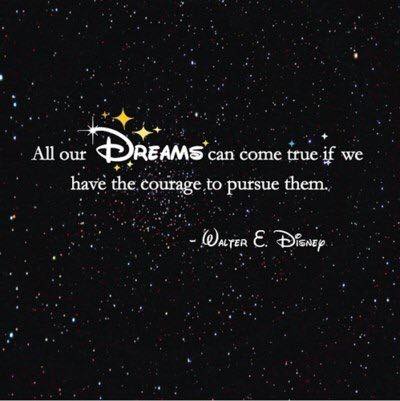
We never really hear enough about courage. The courage to take a risk, to stretch limits, to push forward, to go beyond, to keep moving… to make things happen regardless of the challenges in front of us.

Think about the early-day pioneers crossing the Midwest when they first caught a glimpse of the Rocky Mountains and stared at them getting bigger and bigger as they approached over a few days. What unbelievable courage they must’ve had to continue not only towards the mountains, but up into them and through them, often having to go north or south for awhile to keep making progress forward, and despite the elements of weather and resulting hardships. They believed in their dreams and as a result of their relentless courage, their goals were achieved.

The Cowardly Lion’s Thoughts on Courage

In his most famous song, the Lion muses on what it would be like if he had ​any courage (not realizing he already has plenty):

Cowardly Lion: [singing]
I’m afraid there’s no denyin’
I’m just a dandy-lion
A fate I don’t deserve
I’m sure I could show my prowess
Be a lion, not a mouse
If I only had the nerve.

Visit Acceler8Success Daily at https://paper.li/Acceler8Success-Daily

Visit Acceler8Success Group website at www.Acceler8Success.com

The Truth About Startups

The process

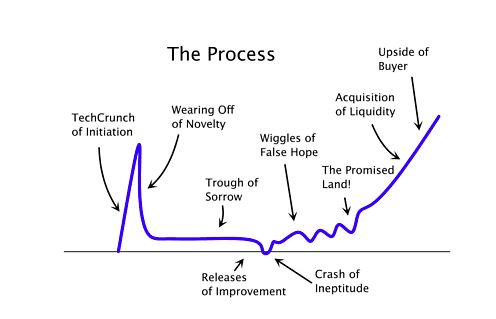
Many people think startups are up and to the right all the time. But more exhibit this startup curve than any other growth pattern. Of course, some never get past the “trough of sorrow”. But many do. Mostly by staying focused on the problem they are trying to solve and working diligently to get to the promised land.

Would love to hear some thoughts on this from today’s entrepreneurs!

50 Inspirational Quotes for Startups and Entrepreneurs

“Your work is going to fill a large part of your life, and the only way to be truly satisfied is to do what you believe is great work. And the only way to do great work is to love what you do.”

Steve Jobs, Co-Founder, Chairman and CEO, Apple

Visit Acceler8Success Daily at https://paper.li/Acceler8Success-Daily

Visit Acceler8Success Group website at www.Acceler8Success.com