Category: Franchising

3 Questions to Ask Before Franchising Your Business

three questionsBetween building a larger community network, adding an additional revenue stream and the plethora of other advantages to turning your business into a franchise, it can seem like the obvious next step for business owners that are anxious to further growth.

While franchising can provide immense success, achieving better business margins is not guaranteed.

To determine if your business is ready, prompt an honest conversation with yourself with these three questions:

1. Have you seen consistent success?

While there are no rules about the required years of experience, revenue dollars, etc. before you can franchise, owners should be able to demonstrate that their concept is successful enough to take on a second location. Think about how you will pitch to potential franchisees when that day comes—you should be able to communicate the value of the business and the success they can reasonably expect from buying in.

2. Can the success be replicated?

Seeing business success is promising, but the revenue of the company doesn’t multiply just because the number of storefronts does. If your business gets boosts from a local event, one great shift lead or customers specific to your current neighborhood, attempting to replicate that might be challenging. However, if your operations don’t have many variables and you think a new region will benefit from your business, that’s a good sign that expanding will be a positive thing.

3. Are you ready to invest in your franchisees?

In large companies, the responsibility of providing training and resources doesn’t typically fall with the owner. Being a new franchisor means building that support network from scratch. Providing continuous support to franchisees is an investment in not only their success, but the success of the franchise as a whole—therefore it’s a responsibility that should not be taken lightly. The franchisor-franchisee relationship is equal parts manager and mentor, and you need to be ready to provide the guidance they will seek.

If you’d like to learn more about franchising your business, that’s our specialty! Contact Franchise Foundry today to learn more about what franchising can do for your business.

Is Owning a Franchise in Your Future?

For many individuals that explore franchising as the next step in their career, as a way to control their own destiny or as a way to create a family business understanding the process can be quite overwhelming. Below are several articles by franchise experts that will help interested parties diligently navigate the process to help create a playing field that is best for them as opposed to seeing them aimlessly tiptoe through a minefield consisting of franchising’s good, bad and ugly.

If you’re thinking of becoming a franchisee, how should you prepare yourself?

franchise2

Buying a franchise can be a great move for a would-be entrepreneur who doesn’t want to create a new business from scratch. In theory, franchisees acquire a model that already works on every level, from branding to pricing to marketing. A ready clientele eagerly spends on Dunkin’ Donuts, McDonald’s and 7-11. The market has tested the best recipes for glazed crullers, Egg McMuffins and the right combo of energy drinks to stock next to the register. But making a go as a successful franchisee can be a lot more complicated than simply finding an appealing brand and plunking down some cash. For a taste of what can go wrong, see Forbes’ piece about the problems at sandwich franchise Quiznos, which paid $206 million to settle a suit brought by franchisees who claimed the chain had oversold its markets and excessively marked up supplies.

Read more…

How to Buy A Franchise

Contrary to popular belief, the process of buying a franchise isn’t really difficult-but it is a process. I’ve found, (through working one-on-one with thousands of potential franchise owners) that it’s really important to tackle a major life decision like the purchase of a franchise business-or any type of business, in a very methodical way. (Even if you’re not a methodical person!)

But you need to realize that buying a franchise is a big deal. It could potentially be life-changing. That’s what you want, isn’t it?

After all, you probably wouldn’t be reading this if you wanted to just go out and find a new job -or keep the one you have.

With that in mind, kick off your shoes and grab your favorite beverage. In this article, Joel Libava, The Franchise King shows exactly how to buy a franchise.

Read more…

Why Owning A Franchise Business Is Good For Your Family

Many entrepreneurs choose to become small-business owners with an exit strategy of turning over the business to their children one day — a strategy that takes on more importance in an era where young people are struggling to find gainful employment. Children who begin working in the family business at a young age will typically start an ascension into management after college, with an eye on purchasing some or all of the family business as their parents head into retirement. Often, the parents will retain a percentage of the business as a revenue stream in retirement, adding an extra level of responsibility for the child as a steward of their parents’ nest egg.

Even if they don’t stay in the family business, studies show that parental entrepreneurship increases the probability of children’s entrepreneurship by about 60%. Children of entrepreneurial parents have already experienced many of the ebbs and flows of small-business ownership, which helps to mitigate their fears and raise their risk tolerance.

Read more…

Learning About Franchising

During research for Franchise Bible, 8th Edition, author, Rick Grossman found that the franchise industry had changed in many ways over the years. Technology has had the biggest impact by modifying buying behaviors. Not too many years ago, franchise buyers would find an opportunity in Entrepreneur magazine or by attending a franchise expo in-person. They would then go through the franchisor’s respective step-by-step process to qualify, purchase and launch their franchises. But today, buyers can find a plethora of information online about nearly any franchise they want to learn about. This has leveled the playing field for new innovative companies to compete favorably with the “big boys” in the marketplace.

Read more…

Are you ready to own your own franchise or expand your current franchise portfolio?

US job growth sluggish in March

The US economy ended a tumultuous week with disappointing news.

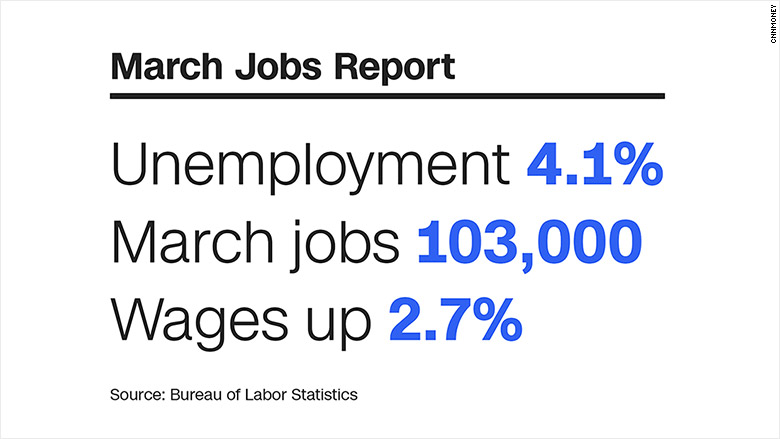
America added 103,000 jobs in March, slower than previous months and well below expectations.

March jobs reportEconomists had predicted 185,000 jobs.

The unemployment rate stayed at 4.1%, the lowest since 2000. It has come down steadily from a peak of 10% in 2009.

Wages grew 2.7% in March compared with a year ago, in line with expectations. Wage growth is one of the few yardsticks in the job market not to pick up meaningfully in recent years.

Job gains for January and February were revised down by a total of 50,000 jobs.

Read more…

QSR & Pizza Fueling Franchise Growth

Fast-Food-2Each year the International Franchise Association commissions a study from PwC (PricewaterhouseCoopers) on the economic impact of franchising in the U.S. Highlights from that study include the following:

  • Taking into account the indirect impact of franchised businesses, business format franchises support more than 13.2 million jobs, $1.6 trillion in economic output for the U.S. economy, and 5.8 percent of the country’s GDP.
  • Franchise businesses provided more jobs in 2016 than wholesale trade, transportation and warehousing, nondurable goods manufacturing, and information (including software and print publishing, motion pictures and videos, radio and television broadcasting, and telecommunications carriers and resellers).
  • Quick service restaurants (QSR) is the largest category, representing 25 percent of all franchise establishments and 45.5 percent of all franchise jobs.
  • Jobs supported because of franchise businesses were at least 10 percent of the private sector nonfarm workforce in 33 states, and at least 6 percent in every state.
  • The number of people employed by franchises is greatest in California, Texas, Florida, Illinois, and Ohio.
  • Franchisees own and operate 88 percent of all business format franchise establishments and franchisors own and operate 12 percent.

Read more…

Quick Serve Franchise Sector Continues to Blaze a Trail for Franchising

There is little doubt that the franchise industry is undergoing significant changes fueled in great part by the success of various PE firms that began in the QSR sector. As other franchise sectors are targeted by PE investors, the competitive environment in those sectors will become more challenging. In order to prepare for these challenges, small to medium sized franchises will need to become successful franchise systems that produces sustained system growth, successful franchisees and an efficient operating system.

Multi-unit franchisee ownership that originated in the QSR sector continues to increase as franchisors seek large multi-unit franchisees that can own and operate more franchise units.This ownership model provides organizational stability, ample financial resources, sustained growth and economies of scale to the franchisee operation.

Read more…

Who’s Winning the Pizza Wars?

Welcome to the pizza wars, where brands big and small, quick-service and fast-casual alike face two choices: pick up the pace and earn relevancy through definitive, clear marketplace differentiation or step aside.

Read more…


Facts & Perspective on the Future of Franchising

franchise imageTwo out of three isn’t bad. In fact, in baseball that would be a phenomenal batting average never even remotely approached. A winning season percentage? Well, it has been done in several professional sports. However, what I’m referring to are leading stories last week (see below) about franchising. Two of three were positive with growth statistics for franchising shared and the power of the franchise model defined. The other presented as somewhat of a negative perspective on family-owned franchises as being less productive than non family-owned businesses.
In any event, I’d love to see more study done on family-owned franchises and how the notion of underperformance may vary from one industry segment to another. My thought on this focuses on the potential differences between multiple generations of families that own Dunkin’ Donuts franchises as opposed to families that may own a non-food brand that may be more inclined to rely on the performance of one, two or several key staff members. I’d also like to explore the difference between single-unit and multi-unit ownership by families. Any takers to start the discussion?

“Regulations have been trimmed, taxes have been cut, and, as a result, the franchise community has continued its economic momentum. As we move into 2018, we expect lawmakers will remain steadfast in their support for a strong business environment,” said Robert Cresanti, IFA President and CEO in a statement.

The franchise industry is set for another year of major growth!

Franchise establishments are set to grow by 1.9 percent to 759,000 locations after increasing 1.6 percent in 2017, while employment will increase 3.7 percent to 8.1 million workers after growing 3.1 percent in 2017. The gross domestic product of the sector is forecast to increase by 6.1 percent to $451 billion, and will contribute approximately 3 percent of U.S. GDP in nominal dollars, according to the report. Franchise business output will also increase 6.2 percent to $757 billion. The forecast follows a year of slower growth in 2017, mirroring trends seen the year prior in terms of employment and output. Read more.

Family-owned franchises underperform, study finds.

A new study that involved a Ball State University researcher found family-owned franchisees post 6.7 percent lower sales per employee than other franchise owners of restaurants and other chain businesses. “It boils down to the fact that often, family-owned franchises have different objectives as compared to their counterparts,” said Srikant Devaraj, a researcher with Ball State’s Center for Business and Economic Research. Read more.

Will franchise leaders embrace a new future state of franchising?

A relatively misunderstood business model, with a paucity of academic support, franchising is on the precipice of history.  Defined by the Federal Trade Commission as an ongoing commercial relationship that includes a license to a brand, payment of a modest fee and the existence of significant control or support, the average consumer knows it as Subway, McDonald’s or Anytime Fitness.  In layman terms, a chain of businesses that share a common brand and a consistent customer experience owned by a local consumer.  But the traditional methodology of franchising has been supplanted by an ever-growing array of hybrid formulations that increasingly are revealing the real power of this enigmatic model. Read more.

Is Franchising the Right Way to Grow Your Restaurant Business… or Any Business, for That Matter?

This past January I presented a webinar for RestaurantOwner.com about the ins and outs of franchising a restaurant business. Special attention was also placed on preparing to franchise and how doing so could significantly improve the business itself and provide a road map for multi-unit operations – even without actually proceeding into franchising.

Well, the response after the event was quite robust and led to us performing a number of franchise feasibility studies for independent restaurant owners in various markets across the country. Our recommendations were split on whether to franchise or stay the course as an independent operation. In the coming months, we’ll be able to see how our recommendations play out. In the meantime, interest remains high, not only for restaurants but also non-foodservice operations across a multitude of industries and industry segments exploring franchising as an expansion or growth strategy.

RSG_Logo_Rev3.pngLast month, in Restaurant Startup & Growth magazine, a RestaurantOwner.com publication, appeared an article by the RS&G staff, taking a deep dive into my webinar and philosophy about franchising a business. The article started out…

Some of the most successful brands – in any sector – are franchises. In the restaurant business, they are household names. For many independent operators, franchising their concept is the so-called “Big Hairy Audacious Goal”. Before you take that leap, there are a lot of small and critical steps to consider.

The rest of the article, Baby Steps – Is Franchising the Right Way to Grow Your Restaurant Business? may be read on pages 42-47 by clicking HERE.

Winning at Poker & Business Starts with the Right Mindset

If you’re not aware of the movie, “Rounders”, it’s basically about the dark side of underground high-stakes poker. Movies like this easily correlate to business. For instance, the main character, Michael McDermott says,

“Why do you think the same five guys make it to the final table of the World Series of Poker EVERY YEAR? What, are they the luckiest guys in Las Vegas?”

Similar sentiment can be expressed about entrepreneurs that start one business after another, and mostly succeed. Do you think that’s luck? Hell, no! It’s knowing when to take a calculated risk, understanding the odds, hedging bets when necessary, being patient, exploring opportunities to increase your bankroll and knowing when to take a competitor head-on. It really is a mindset. Something to think about from the movie as well, “You can’t lose what you don’t put in the middle.. but you can’t win much either.”

Acceler8Success Poker

#Acceler8Success

Eight Years on the Air… But Who’s Counting?

celebrating_8_yearsIt’s hard to believe we’re celebrating 8 years on Franchise Today. I’d like to thank all that have made this show, not only possible but what it is today as one the leading podcasts dedicated specifically to sensible, sustainable franchising.

I’d especially like to thank my co-host for the past two years, Stan Friedman who encouraged me to continue with the show at a time when I was losing interest. He pushed until he got the answer he was looking for, knowing it was the right thing to do. It’s definitely an honor getting to work weekly with Stan and developing a bond that is truly special. Of course, I cannot forget Stan’s organization, FRM Solutions who along with Franchise Foundry sponsor the show.

Thank you to the great PR firms in franchising who continue to introduce us to some of the brightest stars in franchising today, and especially to the fantastic team at Fishman Public Relations who have been bringing us guests for well over five years, sometimes on a moment’s notice.

Certainly, I must also thank Joel Libava, The Franchise King who was a co-host in the early years and as franchising’s earliest blogger really did teach me a thing or two – not to mention all his retweets which helped spur more and more to follow our announcements on Twitter. Along those same lines, thank you to Jerry Darnell who is always the first to LIKE and SHARE show announcements on Facebook.

I think back to the early years and I’d be remiss if I didn’t thank Joe Caruso as it was Joe who truly helped reshape the show’s format for the better as producer of the show five or six years ago. Not only did he schedule a new wave of guests, including many great franchise attorneys and finance professionals, but Joe was also instrumental in introducing Franchise Today to the International Franchise Association. Since then we’ve had on the show a number of then current and former IFA Chairpersons as well as the last two to hold the position of IFA CEO & president. To that end, a special thanks goes out to the IFA for continuing to recognize Franchise Today as highly relevant to the franchise community.

And what would Franchise Today be without such fantastic franchise professionals who unselfishly share their time, knowledge and experience so that others may learn the right way, the best way to succeed at this great thing we call franchising? The list goes on and on and without being able to name all for fear of missing just one, I’ll just say I’m blown away by the list as it is truly a Who’s Who in the world of franchising!

Last, but certainly not least I’d like to thank all of our loyal listeners who either listen LIVE or on-demand week in and week out, many without fail, even taking us on vacation with them. Yes, you truly are the reason we’re still here today. Your notes of appreciation and comments across social media make me want to continue Franchise Today for years to come.

To all I’ve referred to above and to all I may have left out, I say, Thank you!

Financial Performance Representations in Digital Space – Friend or Foe to Franchising?

At what point do you believe a Financial Performance Representation crosses the line outside franchise disclosure requirements?

As discussed at various break-out sessions during the recent IFA Convention, social media has created many opportunities to present and discuss franchise opportunities across and through multiple channels, often linking from one social media platform to another. As many franchisors jockey for a competitive edge and increase their social media efforts, it’s important not to lose sight of franchise disclosure requirements.

The practice of embedding financial information within online press releases, blogs and even within Facebook posts, appears to be growing. Certainly, publishing this information by itself doesn’t create an FPR. But, directly or indirectly referring candidates to the information is an FPR, and if the information is not part of a franchisor’s Item 19, it becomes an improper FPR.

Considering the linking capabilities within social media, often to the point of creating a cross-platform, multi-tiered effect, some so-called, self-professed industry professionals apparently believe they can get away with improper FPRs. Especially, as social media is still “relatively new” and growing into new areas, misunderstood by many, and virtually under the radar of most authorities.

It appears the thought is, if enforcement of franchise disclosure is lacking in traditional areas, social media has become the new wild west!

Beyond the obvious illicit practices and potential ramifications to unsuspecting franchise candidates, what also causes reason for concern is the impression it makes upon start-up franchisors that follow suit – often, not even realizing the practice may be improper. After all, they see it being done by individuals who they believe are reputable franchise professionals. So, why not follow the same practice that they unsuspectingly come to believe is actually a best practice?

Sure, everyone is responsible for their own actions, and ignorance is not a legal defense. However, if these illicit practices continue within franchising, more and more will participate to the point of it becoming a common practice, with many believing it has become a best practice. Momentum picks up with so-called thought-leaders promoting the practice as an effective lead generation strategy, influencing even more franchisors. Some will be unsuspecting. Some will just jump on the bandwagon.

At what point will these practices be considered to be out-of-control and intolerable, and detrimental to franchising?

Controlled Growth Key to Success for New Franchise Concepts!

Working with entrepreneurs exploring franchising as a business expansion strategy, I’m often asked the question, “How does a new franchise company sell franchises without brand recognition?” Here are my thoughts…

Initially, the founder is the brand. It’s his or her passion for the business. It’s how he or she treats customers and employees alike. It’s how the business is promoted within the local market. Not just through typical advertising efforts, but through solid grassroots, organic efforts.

The initial franchise candidates are actually the “low hanging fruit” of the original business. These are the customers that inquire whether or not the business is a franchise and how they can learn more about owning their own. Most are interested because the business appears to be thriving and they’ve seen the owner (founder) time and again, always smiling and shaking hands. Public Relations efforts should ensure this occurs.

They admire the owner a great deal and will base their decision to open a franchise location, on the potential of establishing a relationship with the owner. They’ll compare the opportunity to other franchises and justify to themselves that they’re in on a ground floor opportunity with a direct line to the founder. As such, they feel their probability of success is greater because their location will be in the home office city and if they need help, they could easily approach the founder and the home office because of the proximity to their franchise location.

Ideally, the next few franchisees will also be in the same market as the original business and the first franchise location. It’s prudent to only expand locally until critical mass is established in the market, ad cooperative is developed and support systems are perfected. Now the concept is ready to expand outside the initial market.

However, it is often financial suicide to entertain requests from candidates all over the country. Instead, development efforts should be concentrated on one or two cities relatively close to home office city. For instance, if original business and home office is in Houston, the natural progression would be to promote the opportunity next in San Antonio/Austin and Dallas/Fort Worth areas.

As these markets start to become established with franchise locations, it’s advisable to promote the concept in another two or three areas. Maybe, explore another “hub” and “spoke” scenario. Let’s say, Atlanta as the next hub.

Expansion efforts should be the same as they were in Houston and expansion out of that market shouldn’t occur until Atlanta has a critical mass. Then, when that occurs, the opportunity could be promoted close by in Nashville and Charlotte. Now, you see the spokes of national expansion beginning to form.

While this is going on, maybe inquiries start coming in from the San Francisco area. So, the next phase of expansion might be in the Bay Area. The Bay Area becomes another hub, and once developed, the franchise opportunity could be promoted up the road in Portland and to the East in Sacramento and the process continues.

It’s all about controlled growth and the founder exhibiting tremendous restraint in expanding too fast and in areas far away from his core group and subsequent hubs to be able to provide ample support, create ad cooperatives and build the brand geographically. Chances of franchise success are far greater at all levels of the franchise organization within the parameters of a controlled plan of development.

So, to answer the often-asked question directly, I suggest everyone in the system having a clear understanding of the founder’s vision and if it includes anything but a controlled development plan with his or her firm commitment to actively participate in the franchise sales process, the chances of selling the first ten to twenty franchises will be a frustrating, monumental task that most likely will fail miserably.