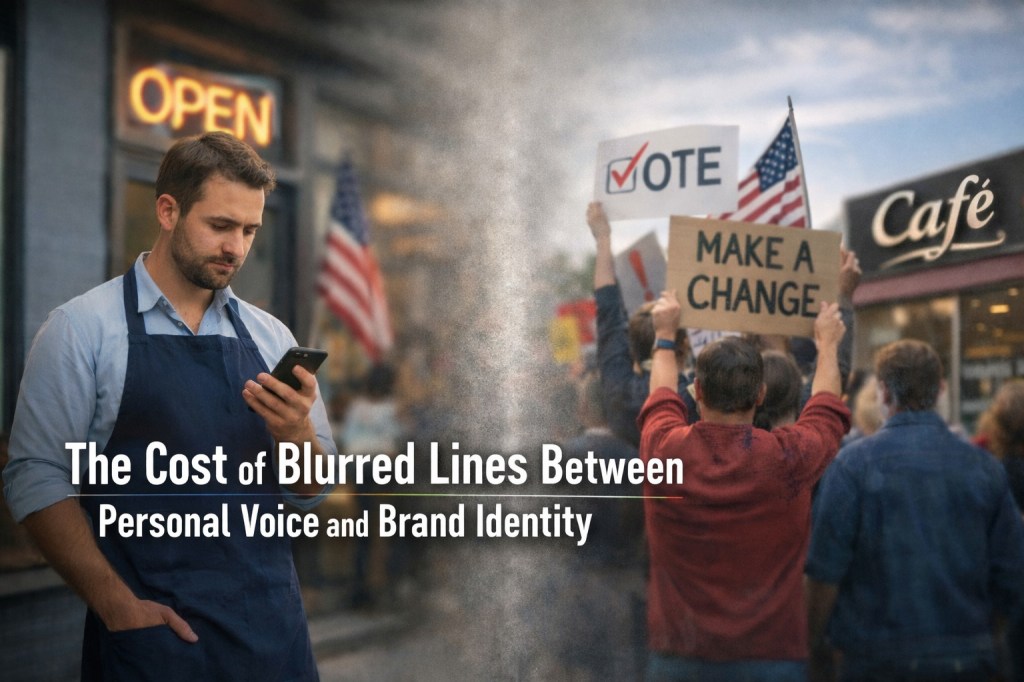
For as long as I have been in business, I have believed in a simple, non-negotiable principle: sex, religion, and politics do not belong in business. That belief was shaped long before social media, long before every opinion became a public statement, and long before brands were expected to weigh in on cultural or political flashpoints. It comes from experience. Business works best when it is a place of common purpose, not ideological alignment. Franchising, more than almost any other business model, depends on that discipline.
Franchise systems are not built on shared political views. They are built on shared standards, shared economics, and shared responsibility to a brand that belongs to everyone and no one at the same time. When political views begin to seep into a franchise organization, the consequences are rarely theoretical. What often starts as casual commentary, a social media post, or a strongly held personal conviction expressed publicly can quickly ripple through a system designed around consistency and neutrality. The strain shows up in trust, morale, performance, and ultimately revenue.
Today, this issue is even more complex because franchisees are no longer just operators behind the scenes. In most local markets, they are the face of the brand. Customers know who owns the business. They follow them online. They see their posts, comments, and reactions. The distinction between “personal” and “business” views has blurred to the point where, in the public eye, it often no longer exists. When a franchisee speaks publicly, especially on social media, that voice is frequently interpreted as an extension of the brand, whether that is fair or not.
Inside the organization, political signaling quietly erodes confidence in leadership and in one another. Franchisees are independent business owners, but they rely on the franchisor and the system for fairness, consistency, and support. When leadership appears to tolerate, ignore, or implicitly endorse political expression tied to the brand, some operators will feel alienated. Others disengage. Peer relationships fracture. Meetings that should focus on growth, execution, and problem-solving become tense or guarded. The culture shifts from collaboration to caution.
Employees are often the first to feel the pressure. Franchise locations are staffed by people with diverse beliefs who did not sign up to navigate political landmines at work. When political views, whether framed as personal or business-related, creep into management behavior, internal conversations, or brand-adjacent messaging, employees can feel uncomfortable, judged, or unsafe. Morale suffers. Turnover rises. Managers spend more time managing emotions than leading teams. None of this improves the customer experience.
Customers, however, are where the damage becomes most visible and immediate. Franchise brands serve broad audiences. A brand perceived as politically partisan instantly narrows its appeal. Customers do not walk into a restaurant, fitness studio, or service business looking for a political statement. They come for familiarity, reliability, and a sense of welcome. When political messaging intrudes, some customers quietly leave. Others respond publicly through reviews, complaints, or social media backlash. Either way, sales suffer, and the brand absorbs the hit.
This is where the common franchisor refrain begins to fall apart. “It’s not our role to monitor franchisees’ personal views.” In theory, that sounds reasonable. Franchisees are independent operators with lives, beliefs, and rights outside of their businesses. But theory ends the moment one franchisee’s publicly expressed views, whether labeled personal or business-related, begin to affect another franchisee’s business. At that point, it is no longer about individual expression. It is a brand issue. And brand issues are absolutely the responsibility of the brand leader.
Franchising is a shared-risk environment. One name. One logo. One reputation. Customers do not parse ownership structures or legal disclaimers. They see the brand, and they react accordingly. When one franchisee publicly associates political views with themselves as a known brand operator in the community, every other franchisee shares the exposure. The operator across town, who has said nothing and done nothing wrong, may still lose customers or face uncomfortable interactions simply because they share the same signage.
Social media has magnified this reality beyond anything franchising faced in the past. What was once said privately is now posted publicly, screenshot instantly, and shared widely. A personal account does not insulate the brand when the individual is clearly identified as a franchise owner. Once a franchise brand is perceived as partisan, reversing that perception is nearly impossible, regardless of intent or clarification.
Neutrality is often criticized as avoidance or weakness. In franchising, neutrality is stewardship. A franchise brand does not exist to take political positions. It exists to serve customers, support franchisees, create jobs, and build opportunity. Protecting that mission requires boundaries. It requires clarity about expectations for both business and personal public conduct when it intersects with the brand. And it requires leadership willing to act when those boundaries are crossed, even when doing so is uncomfortable.
Leadership in franchising is not passive. It is not limited to operations manuals, training programs, or marketing approvals. It includes protecting franchisees from unnecessary risk, including risk created by other franchisees’ public behavior. Saying “we don’t get involved” may sound hands-off, but when inaction allows one operator’s public views to harm another’s livelihood, it becomes a failure of responsibility.
This is not about policing beliefs or suppressing free thought. It is about understanding that franchising is a collective enterprise. When you choose to operate under a shared brand, you benefit from its strength and reach, and you also accept the discipline required to protect it. Shared opportunity demands shared accountability.
In an era defined by division and amplification, franchise organizations have a choice. They can allow politics, whether framed as personal or professional, to fracture trust, culture, and performance, or they can deliberately remain places of common purpose where people of different backgrounds and beliefs work toward a shared economic goal. Keeping sex, religion, and politics out of business is not outdated thinking. It is a leadership choice. One that protects the brand, respects the people within it, and preserves the very opportunity franchising is meant to create.
About the Author
Paul Segreto brings over forty years of real-world experience in franchising, restaurants, and small business growth. Recognized as one of the Top 100 Global Franchise and Small Business Influencers, Paul is the driving voice behind Acceler8Success Café, a daily content platform that inspires and informs thousands of entrepreneurs nationwide. A passionate advocate for ethical leadership and sustainable growth, Paul has dedicated his career to helping founders, franchise executives, and entrepreneurial families achieve clarity, balance, and lasting success through purpose-driven action.
About Acceler8Success America
Acceler8Success America is a comprehensive business advisory and coaching platform dedicated to helping entrepreneurs, small business owners, and franchise professionals achieve The American Dream Accelerated.
Through a combination of strategic consulting, results-focused coaching, and empowering content, Acceler8Success America provides the tools, insights, and guidance needed to start, grow, and scale successfully in today’s fast-paced world.
With deep expertise in entrepreneurship, franchising, restaurants, and small business development, Acceler8Success America bridges experience and innovation, supporting current and aspiring entrepreneurs as they build sustainable businesses and lasting legacies across America.
Learn more at Acceler8SuccessAmerica.com


You must be logged in to post a comment.