Tag: digital marketing

From Trade School to Business Owner: A Smart Path to Entrepreneurship & Franchising

Debate continues across kitchen tables, classrooms, and boardrooms about whether a college degree still holds the same value it once did. Tuition climbs, student debt rises, and many graduates enter the workforce lacking practical skills that convert to income immediately. Meanwhile, the demand for skilled labor continues to surge. Electricians, plumbers, HVAC technicians, welders, mechanics, heavy equipment operators — even culinary professionals — remain in short supply. The contrast is striking. While society questions the worth of traditional higher education, the trades quietly offer a pathway that is more direct, more affordable, and often more lucrative.

Here’s the opportunity too many overlook: a trade is not merely a job. It can be the first step toward business ownership. A trade builds skill, skill builds confidence, and confidence paired with knowledge builds companies. The problem is not capability — tradespeople solve problems daily — the problem is that technical training rarely continues into business training. Apprentices learn wiring diagrams, gas lines, freon recovery, food safety, or blade sharpening, but few learn cash flow, pricing, branding, customer acquisition, or leadership. Yet those are the skills required to turn a talent into a business.

Imagine a system where both paths merge.

Trade school equips the individual with a certifiable skill. Business education teaches them how to monetize it. Together, they create a blueprint for entrepreneurship. The journey becomes logical: learn the craft, master the work, understand the numbers, create a brand, and eventually hire and scale. A welding student could graduate with not only a certification but a business plan. An apprentice plumber could understand profit margins as well as pipe sizing. An HVAC tech could diagnose compressors and price seasonal maintenance programs profitably.

And the culinary world may be the best example of this needed shift.

Many chefs dream of owning a restaurant, but passion and plate presentation alone do not guarantee success. The restaurant failure rate remains one of the highest in small business. Not because of lack of talent in the kitchen — but because business fundamentals are often missing. With the right business education integrated into culinary programs, chef-to-owner transitions would be smoother, smarter, and far more sustainable. Understanding labor percentages, menu engineering, food cost controls, licensing, marketing, and customer retention could turn thousands of talented chefs into long-term operators rather than short-lived dreamers. The difference between a great cook and a successful restaurateur is rarely flavor — it is financial literacy and business discipline.

Technical mastery paired with entrepreneurial readiness could reshape entire industries. It not only fills workforce shortages but builds new enterprises, creates jobs, strengthens local economies — and opens a new opportunity for franchising. If aspiring business owners enter the workforce with both trade competence and business fluency, franchise brands suddenly gain access to a highly qualified pool of future operators. People who already know the work, understand service delivery, and can manage people, financials, and customer relationships. Franchise organizations thrive on strong operators, and a talent pool of trades-based entrepreneurs could become one of the greatest assets for franchise development. Instead of training franchisees from scratch, brands would onboard individuals already equipped with technical mastery, business fundamentals, and the mindset to scale — accelerating growth systemwide.

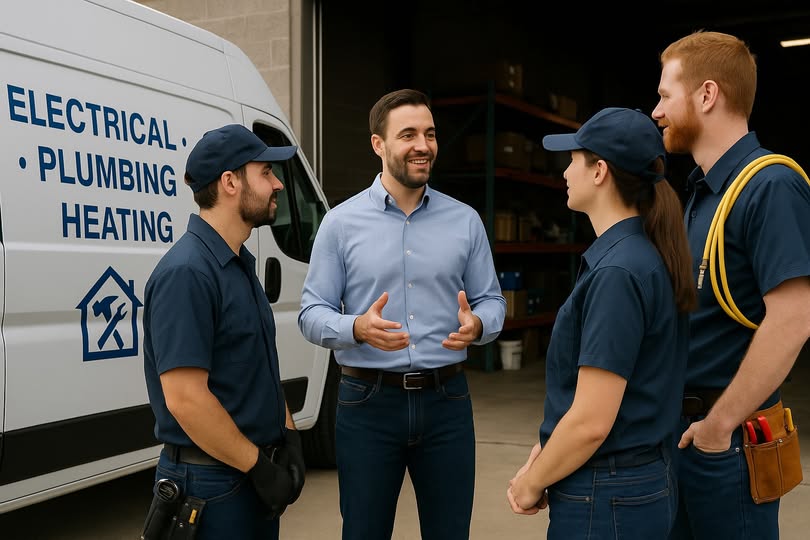
A student who chooses a trade should see a future far beyond hourly work. They should see a path to owning the truck, the crew, the fleet, the brand. They should see themselves not just repairing air conditioners, building fences, or crafting plates — but hiring teams, designing logos on vans, expanding locations, and eventually franchising themselves.

Not everyone thrives in lecture halls. Many learn best by doing — and those who build, fix, cook, weld, wire, and restore are often the most creative problem-solvers in the workforce. When given business knowledge alongside technical training, they become something even more powerful.

They become entrepreneurs.

The next generation of business owners may not be found in classrooms. They may be in garages, commercial kitchens, job sites, fabrication labs, and boiler rooms — waiting not just for opportunity but for direction. A blended path from trade mastery to business ownership could very well be the most practical, accessible, and impactful educational model of the future — not just for workers and communities, but for franchise systems hungry for capable operators who can grow with strength and scale.

Hands can build careers. Business skills can build empires. Together, they build the American Dream.


About the Author

Paul Segreto brings over forty years of real-world experience in franchising, restaurants, and small business growth. Recognized as one of the Top 100 Global Franchise and Small Business Influencers, Paul is the driving voice behind Acceler8Success Café, a daily content platform that inspires and informs thousands of entrepreneurs nationwide. A passionate advocate for ethical leadership and sustainable growth, Paul has dedicated his career to helping founders, franchise executives, and entrepreneurial families achieve clarity, balance, and lasting success through purpose-driven action.


About Acceler8Success America

Acceler8Success America is a comprehensive business advisory and coaching platform dedicated to helping entrepreneurs, small business owners, and franchise professionals achieve The American Dream Accelerated.

Through a combination of strategic consulting, results-focused coaching, and empowering content, Acceler8Success America provides the tools, insights, and guidance needed to start, grow, and scale successfully in today’s fast-paced world.

With deep expertise in entrepreneurship, franchising, restaurants, and small business development, Acceler8Success America bridges experience and innovation, supporting current and aspiring entrepreneurs as they build sustainable businesses and lasting legacies across America.

Celebrating Entrepreneurship: A Journey of Ideas, Impact, and Growth

Over the past two weeks of our series, Celebrating Entrepreneurship, we’ve explored how meaningful disruption is built on operational precision, how brands like Disney turn two-minute drills into daily discipline, how Apple and Amazon teach us to deliver on extraordinary expectations at a scale that still feels intimate, how a business becomes locally indispensable, how culture becomes transferable across teams and towns, and how development succeeds when communities cheer before the ribbon is cut. Threaded together, these aren’t essays so much as a playbook: design the experience, rehearse it until it becomes muscle memory, localize without lowering standards, export culture without diluting soul, and earn anticipation by keeping promises that compound into trust.

If the series had one recurring argument, it was this: excellence is not an event; it is choreography. Markets reward momentum, but people reward consistency. The brands we referenced don’t rely on fortune or viral luck. They architect outcomes through details that feel invisible until they’re missing. They act as if every guest interaction could be someone’s first and someone’s last. They anchor national ambition in local relevance. They make culture teachable, portable, and durable. Most of all, they refuse to let “good enough” harden into habit.

As we look back on this series, I want to emphasize what matters most right now:

Entrepreneurship in America is not merely alive; it is accelerating.

The entrepreneurs who will define the next decade are those willing to operationalize wonder, to treat training like storytelling, to design stores and service models that belong to a neighborhood, and to measure success in repeatable smiles as much as in repeatable systems. When the lights come up and the doors open tomorrow, the question remains the same as the one we asked early on: if your business closed, would anyone notice? The work of this series has been to help you make that question rhetorical.

I’m grateful for your time, your ideas, and your pushback. Your notes, reflections, and lived examples have sharpened the arguments and made the writing better. Keep them coming. Please send questions, comments, and challenges to paul@acceler8success.com. I read every message, and I reply.

If you’re ready to translate these principles into outcomes, Acceler8Success America is here to help. We provide hands-on consulting, coaching, and advisory support to founders, franchise and restaurant operators, and growth-minded brands. We develop and scale franchise and business brokerage programs that attract right-fit owners, licensees, investors, and strategic partners. We build content ecosystems that create demand, strengthen reputation, and drive deal flow. We help teams codify culture, operationalize brand standards, map local market strategies, and prepare for development that actually earns a line on opening day.

The American Dream is still the world’s most ambitious startup. Our work is to accelerate it—patiently, precisely, and with purpose. Thank you for being part of this community and for choosing to lead with intention. Let’s keep building what people would miss if it were gone.

And, thank you for walking this road with me.


About the Author

Paul Segreto brings over forty years of real-world experience in franchising, restaurants, and small business growth. Recognized as one of the Top 100 Global Franchise and Small Business Influencers, Paul is the driving voice behind Acceler8Success Café, a daily content platform that inspires and informs thousands of entrepreneurs nationwide. A passionate advocate for ethical leadership and sustainable growth, Paul has dedicated his career to helping founders, franchise executives, and entrepreneurial families achieve clarity, balance, and lasting success through purpose-driven action.

If you’d like a copy of the full playbook as it’s released, please reach out via email to paul@acceler8success.com.


About Acceler8Success America

Acceler8Success America is a comprehensive business advisory and coaching platform dedicated to helping entrepreneurs, small business owners, and franchise professionals achieve The American Dream Accelerated.

Through a combination of strategic consulting, results-focused coaching, and empowering content, Acceler8Success America provides the tools, insights, and guidance needed to start, grow, and scale successfully in today’s fast-paced world.

With deep expertise in entrepreneurship, franchising, restaurants, and small business development, Acceler8Success America bridges experience and innovation, supporting current and aspiring entrepreneurs as they build sustainable businesses and lasting legacies across America.

The Art of Evolving Without Losing the Soul of the Brand

This article continues our Celebrating Entrepreneurship series — each installment constructing a playbook for the modern entrepreneur as part of our tribute to National Entrepreneurship Month. We have now covered the arc from establishing culture, to embedding identity, to scaling experience, to expanding with integrity, and most recently, to developing leaders who can carry the brand forward.

Now we reach the natural next stage in the life of a brand:

Legacy and Renewal.

Because every brand that lasts will face a moment where it must evolve — and evolution is where many brands lose their footing.

Some evolve too aggressively and lose their soul.
Some refuse to evolve and become irrelevant.

Legacy lies in the space between:
Preserve what is essential.
Refresh what is expressed.

Legacy Is Not the Past — It’s the Thread That Runs Through Time

Legacy is not nostalgia.
Nostalgia looks backward.
Legacy is continuity — a through-line of meaning that extends forward.

Legacy answers the question:
What is the part of this brand that must never change?

Once that is known, evolution becomes possible without identity loss.

The Risk of Evolution Without Anchoring

When brands decide to “modernize,” “update,” or “expand,” they often inadvertently discard the very thing that made them special.

We have seen it:
• A menu is expanded but loses clarity
• Décor is refreshed but loses warmth
• Processes are upgraded but lose humanity
• A founder steps back and presence disappears

The market does not rebel because of change itself.
The market rebels when change breaks the relationship.

Brands that endure know how to change the presentation without changing the promise.

Brands That Evolve While Protecting Meaning

Disney

The technology, attractions, dining, and aesthetics evolve constantly.
But the emotional promise — wonder, joy, shared experience — remains untouched.

What changes: form.
What remains: feeling.

Nike

Logos evolve. Campaigns evolve. Retail experiences evolve.
But the story — human potential realized through effort — is permanent.

What changes: expression.
What remains: belief.

Domino’s

The menu changed. The brand voice changed. The product formula improved.
But the identity — fast, friendly, dependable pizza — stayed intact.

What changes: performance.
What remains: purpose.

How Emerging Brands Apply This

To preserve legacy while evolving, a brand must articulate two statements:

1. The Immutable Core (What Must Never Change)
This is the emotional reason the brand exists.
It usually sounds like:
• We exist to make people feel ___________.
• We believe __________ always matters.

This is the heart.

2. The Adaptable Expression (What Can and Should Change)
These are the forms through which the brand is experienced:
• Menu items
• Interior design
• Technology
• Training systems
• Community programming

This is the skin.

Heart is permanent.
Skin is renewable.

The Founder’s Role in Renewal

As we explored in the last article, the founder must evolve from center to source.
Here, the founder becomes:

Interpreter of Meaning
Protector of Emotional Consistency
Guide for Identity in Transition

The founder’s voice shifts from “Do as I do” to:
“Here is why we do what we do.”

This is how legacy becomes teacher, not museum piece.

Practical Framework for Legacy in Motion

  1. Revisit the Origin Story
    Ask: What problem were we truly solving in the beginning?
    Meaning is often hidden in the founder’s earliest instincts.
  2. Name the Brand’s Emotional Outcome
    If the guest cannot describe how the experience feels, the brand is not anchored.
  3. Evolve Only in Ways That Amplify the Emotional Outcome
    A menu change is good if it creates more delight.
    A remodel is good if it creates more welcome.
    A new process is good if it creates more ease.

If it doesn’t amplify meaning — it dilutes it.

The Core Truth

Legacy is not what you preserve.
Legacy is what you continue.

Brands die not from change, but from changing the wrong things.
Brands endure when the heart remains recognizable — even as the expression modernizes.

The entrepreneur’s job is to protect the heartbeat, not the wallpaper.

The Playbook Moves Forward

We have now reached the final pivot in the series:

The Entrepreneur’s Personal Legacy.
Not the business’s.
Yours.

Because entrepreneurship is not only about what you build.
It is also about who you become in the process, and what remains long after your hands are no longer on the work.

The next article will explore:

Identity Beyond the Business —
The Leader’s Legacy as Mentor, Builder, and Steward of Others’ Dreams.

For a business to last, the brand must endure.
For a legacy to last, the wisdom must travel.


About the Author

Paul Segreto brings over forty years of real-world experience in franchising, restaurants, and small business growth. Recognized as one of the Top 100 Global Franchise and Small Business Influencers, Paul is the driving voice behind Acceler8Success Café, a daily content platform that inspires and informs thousands of entrepreneurs nationwide. A passionate advocate for ethical leadership and sustainable growth, Paul has dedicated his career to helping founders, franchise executives, and entrepreneurial families achieve clarity, balance, and lasting success through purpose-driven action.

Ready to elevate your business or navigate today’s challenges with confidence? Connect directly with Paul at paul@acceler8success.com, because every success story begins with a meaningful conversation.


About Acceler8Success America

Acceler8Success America is a comprehensive business advisory and coaching platform dedicated to helping entrepreneurs, small business owners, and franchise professionals achieve The American Dream Accelerated.

Through a combination of strategic consulting, results-focused coaching, and empowering content, Acceler8Success America provides the tools, insights, and guidance needed to start, grow, and scale successfully in today’s fast-paced world.

With deep expertise in entrepreneurship, franchising, restaurants, and small business development, Acceler8Success America bridges experience and innovation, supporting current and aspiring entrepreneurs as they build sustainable businesses and lasting legacies across America.

From Operator to Leader: Why GOYA Marketing Matters Now More Than Ever

One of the articles in the current Celebrating Entrepreneurship series, If Your Business Closed Tomorrow, Would Anyone Notice? has sparked a great deal of interest. It pushed me to think deeper, and then to reflect on an interview I did toward the end of the 2009–2012 financial downturn where I discussed this very topic.

Get Off Your Ass Marketing: The Missing Skill in Franchise Success

In 2012 I was interviewed for Fraanchise Direct for an article about franchisee marketing. At the time, one of my comments stirred a bit of controversy, though it shouldn’t have. It should have sparked a movement. It should have become a formal initiative. It should have been structured, trained, reinforced, and built into franchise culture nationwide. Instead, it simply lived as a quote. Yet earlier today, in a conversation about franchisees working long hours but not necessarily working smart, that old quote came screaming back to life.

I had said then, “I’m not degrading the efforts of franchisees that strive for 100% customer satisfaction and are willing to put in long hours to ensure the same. But with a strong personal brand that reaches into the local community, franchisees would be more successful driving the business. I refer to this as GOYA marketing — Get Off Your Ass marketing. Here’s the great part of GOYA marketing… in today’s digital world, much of the personal branding can be done online!”

That quote caused immediate controversy. People said it was too abrupt. Too blunt. Too in-your-face. My response then is the same as it is today: too abrupt would be not doing it, and a franchisee losing their business because they stayed comfortable behind the counter instead of getting out in front of their community. If directness saves a struggling operator from becoming another statistic, then directness is exactly what’s needed.

The challenges that existed back then are even more pronounced now. Franchisees pour in time. They stay open later. They work the line. They fill the gaps. They run deliveries. They take on so much of the day-to-day that they unintentionally turn themselves into the highest-paid hourly employees in the building. They equate effort with leadership. They mistake exhaustion for progress. They confuse showing up with showing up strategically.

But businesses don’t scale on sweat alone. They scale on smart, deliberate, outward-facing action. They scale on visibility. They scale on proactive engagement. They scale on becoming known, trusted, relevant, and connected within the community. And that doesn’t happen from behind the counter.

GOYA Marketing calls for that shift. It calls for franchisees to step into the role of local business leader, local celebrity, local advocate, local connector, local storyteller. And while in 2012 I emphasized that much of this could be done digitally — because suddenly the tools existed — I’d be remiss today if I didn’t add a critical point. The real power comes when digital and in-person efforts work together. Not one or the other. Both. Your digital presence creates recognition before you even walk into the room. Your in-person presence cements trust that no algorithm can replace. Together they form the engine of influence that drives loyalty, community buzz, and scalable growth.

Where franchising is trending today — the movement toward franchise local, the emphasis on community presence, the push for franchisees to lead not just operate — creates the perfect moment to revive GOYA Marketing as a formal philosophy. Not as motivation. Not as a rant. Not as nostalgia from a decade-old interview. But as a movement with real consequences for those who adopt it and for those who don’t.

Maybe the real message from 2012 was never about working harder. It was about working where it matters. Because if a franchisee isn’t seen, if they aren’t engaged, if the community doesn’t know them, like them, and trust them, then they’re simply running a store. And today, running a store is not enough. Not with competition tightening. Not with the economic climate shifting. Not with consumer expectations climbing higher every month.

So maybe the right question for franchisees — and for franchisors — is this: What would happen if GOYA Marketing was a required skill? What if every franchisee was trained to build influence, not just manage operations? What if becoming the face of the business was part of the system? What if community presence carried the same weight as food costs and labor control? What if personal brand equity became one of the strongest drivers of local unit performance?

And the question that matters most: If your business closed tomorrow, would anyone beyond your regulars even notice?

If the answer is anything short of “absolutely,” then GOYA Marketing isn’t blunt. It isn’t controversial. It isn’t optional. It’s the wake-up call that saves businesses. The philosophy was ahead of its time in 2012. It’s right on time today. And it will be indispensable tomorrow.


About the Author

Paul Segreto brings over forty years of real-world experience in franchising, restaurants, and small business growth. Recognized as one of the Top 100 Global Franchise and Small Business Influencers, Paul is the driving voice behind Acceler8Success Café, a daily content platform that inspires and informs thousands of entrepreneurs nationwide. A passionate advocate for ethical leadership and sustainable growth, Paul has dedicated his career to helping founders, franchise executives, and entrepreneurial families achieve clarity, balance, and lasting success through purpose-driven action.

Ready to elevate your business or navigate today’s challenges with confidence? Connect directly with Paul at paul@acceler8success.com, because every success story begins with a meaningful conversation.


About Acceler8Success America

Acceler8Success America is a comprehensive business advisory and coaching platform dedicated to helping entrepreneurs, small business owners, and franchise professionals achieve The American Dream Accelerated.

Through a combination of strategic consulting, results-focused coaching, and empowering content, Acceler8Success America provides the tools, insights, and guidance needed to start, grow, and scale successfully in today’s fast-paced world.

With deep expertise in entrepreneurship, franchising, restaurants, and small business development, Acceler8Success America bridges experience and innovation, supporting current and aspiring entrepreneurs as they build sustainable businesses and lasting legacies across America.

Why Customers Return: Ritual, Familiarity, and the Power of Being Known

This article continues the Celebrating Entrepreneurship series — each installment building toward a complete playbook for the modern entrepreneur in honor of National Entrepreneurship Month. So far, we’ve moved from disruption grounded in precision, to leadership presence, to transferable culture, to community belonging, and most recently, to creating anticipation that leads to opening-day excitement.

Now we arrive at the next stage in the entrepreneurial arc:

Opening day can create attention. But only consistency, connection, and meaning create enduring momentum.

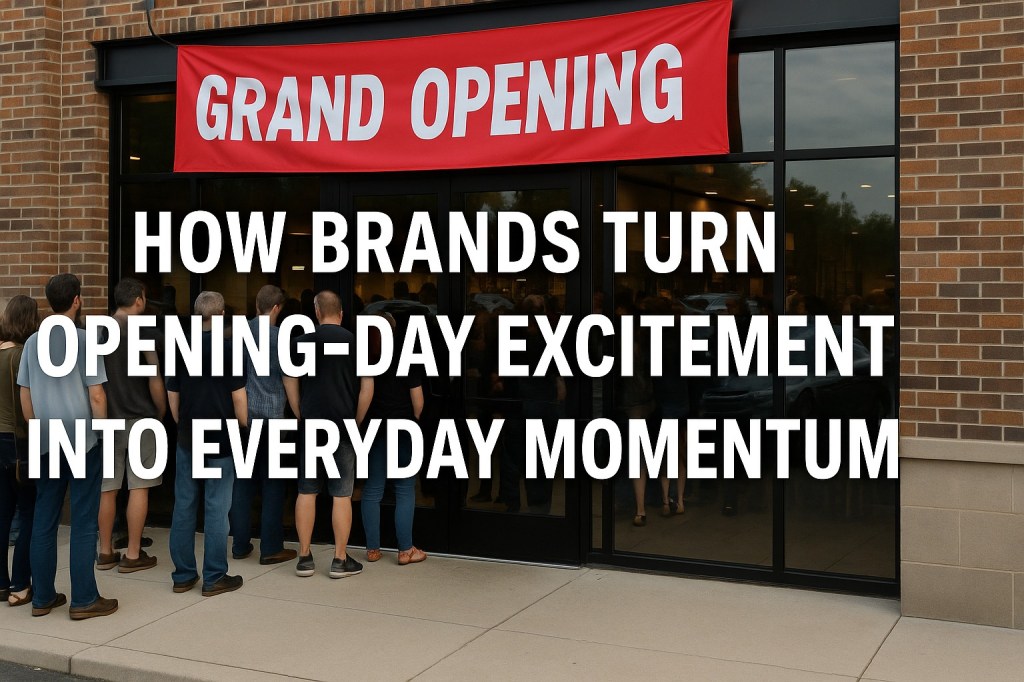
A long line at a grand opening is the spark.

Sustained momentum is the fire that keeps the business alive, relevant, and valued — long after the ribbon is cut and the excitement fades.

Grand openings are emotional events.

Sustained success is a relational practice.

The Problem Most Brands Face After Opening Day

After the excitement fades, many restaurants and franchise locations experience a decline that feels inevitable:

• Customer visits normalize

• Energy stabilizes

• Word of mouth slows

• Team enthusiasm fades

• Community connection weakens

This is not because demand disappears.

It is because intentional momentum-building stops.

The brands that remain top-of-mind do not wait for customers to return.

They continue to show up.

The Lesson: Ritual Sustains What Excitement Begins

Excitement is temporary.

Ritual is permanent.

Starbucks does not depend on launch campaigns to fill stores every day.

It depends on ritual — the morning stop, the familiar barista, the drink that matches identity.

Local restaurants and franchise brands can do the same.

Not by imitation — but by repetition of emotional touchpoints.

Momentum is not sustained by newness.

It is sustained by familiarity.

Three Pillars of Post-Opening Momentum

1. Consistency in Experience

Guests return when:

• Quality is reliable

• Staff interactions feel personal

• The business feels “the same” in the best way

This is where the transferable culture we discussed in the last article becomes essential.

If opening-day service is warm and present — and week eight feels automated and indifferent — momentum dies.

Consistency is not repetition of procedure.

Consistency is repetition of care.

2. Community Engagement as Continuing Behavior

Brands that remain relevant do not disappear after opening weekend.

They embed themselves into the rhythm of the community.

Examples:

• Hosting school spirit nights

• Sponsoring youth teams

• Providing meeting space for local groups

• Donating meals to community organizations

• Showing up at farmers’ markets, festivals, and local gatherings

These actions are not marketing.

They are presence.

Presence creates familiarity.

Familiarity creates loyalty.

3. Fresh Moments Without Losing Identity

Sustaining momentum requires periodic bursts of renewed curiosity — without confusing the brand’s identity.

Think of:

• Limited-time specials that fit the brand

• Seasonal menu items that feel natural

• Customer appreciation days

• Events that highlight team members or regulars

These are not promotions.

These are invitations.

The brand remains recognizable, yet alive.

Examples of Momentum Maintainers

Dutch Bros.

Energy and personality stay consistent every visit.

The excitement at the window is replicated, not performed once.

Buffalo Wild Wings

Connection to sports culture creates repeating reason to return.

The brand ties itself to local ritual, not just food.

Local Main Street Diners That Last for Generations

They don’t chase customers.

They know customers.

They become part of life, not an occasional visit.

The Key Truth of Sustained Momentum

Opening day creates awareness.

Identity creates loyalty.

Rhythm creates permanence.

Momentum is not preserved by doing more.

It is preserved by doing what matters again, and again, and again.

Customers return not because they are reminded —

but because they are remembered.

The Playbook Expands

This series has now shown the entrepreneur how to:

• Disrupt through intention

• Lead through presence

• Meet modern consumer expectations

• Become essential to the community

• Scale culture across locations

• Build anticipation before opening

• And now, sustain momentum long after

Next in the series, we move from sustaining momentum to expanding opportunity:

How the best brands grow without losing identity — and how to decide when and where to grow.

Because growth, when done in alignment with meaning, becomes legacy.


About the Author

Paul Segreto brings over forty years of real-world experience in franchising, restaurants, and small business growth. Recognized as one of the Top 100 Global Franchise and Small Business Influencers, Paul is the driving voice behind Acceler8Success Café, a daily content platform that inspires and informs thousands of entrepreneurs nationwide. A passionate advocate for ethical leadership and sustainable growth, Paul has dedicated his career to helping founders, franchise executives, and entrepreneurial families achieve clarity, balance, and lasting success through purpose-driven action.

Ready to elevate your business or navigate today’s challenges with confidence? Connect directly with Paul at paul@acceler8success.com, because every success story begins with a meaningful conversation.


About Acceler8Success America

Acceler8Success America is a comprehensive business advisory and coaching platform dedicated to helping entrepreneurs, small business owners, and franchise professionals achieve The American Dream Accelerated.

Through a combination of strategic consulting, results-focused coaching, and empowering content, Acceler8Success America provides the tools, insights, and guidance needed to start, grow, and scale successfully in today’s fast-paced world.

With deep expertise in entrepreneurship, franchising, restaurants, and small business development, Acceler8Success America bridges experience and innovation, supporting current and aspiring entrepreneurs as they build sustainable businesses and lasting legacies across America.

If Your Business Closed Tomorrow, Would Anyone Notice?

This article continues the Celebrating Entrepreneurship series — a body of work deliberately developing into a playbook for the modern entrepreneur in honor of National Entrepreneurship Month. We have explored disruption as precision, leadership as presence, and the influence of brands like Disney, Apple, and Amazon in shaping consumer expectations. Now, we shift from the global to the hyper-local: the community in which the business actually lives.

Because no matter how sophisticated the brand strategy or how refined the operational system, a business only becomes essential when it matters to the people who encounter it every day.

And so we arrive at a defining question — one of the most important a founder, franchisee, or operator can ask:

If your business closed tomorrow, would anyone notice?

Not whether people would know.
Whether they would feel the loss.

Why It Matters Who Notices

Consider a Starbucks in a community.
If it closed, people would notice.
Not because Starbucks is unique.
Not because its coffee is incomparable.

But because it has become a ritual space.
A place of habit, familiarity, rhythm, and identity.

It is not the product alone that matters.
It is the role the business plays in the daily life of the community:

• A place where the morning begins
• A place where names are remembered
• A place where the staff waves even before words are exchanged
• A neutral ground for work, pause, conversation, or simply existing

This is not “brand awareness.”
This is belonging.

And belonging is the most powerful, most defensible competitive advantage a business can earn.

Where Many Restaurants and Franchise Brands Fall Short

Many businesses operate with a transactional posture:
Serve the guest. Close the ticket. Move to the next.

But essential businesses operate differently.
They become part of the narrative of the local area.
They contribute to shared memory.
They anchor moments.

This is not accidental — it is strategic.
Disney taught us the precision of experience.
Apple taught us clarity of design.
Amazon taught us reliability as hospitality.

Now we apply those principles at the level of place.

The Business as a Community Contributor

For a local restaurant or franchise location to become indispensable, it must answer two questions consistently:

  1. How does our presence make this community better?
  2. How do we participate, not just operate?

A business becomes essential not when it is known,
but when it is missed in its absence.

This happens when:

• Employees know regulars by name
• The business supports local events and not just with logos
• The owner shows up where neighbors gather
• The brand is present in local celebrations and local challenges
• The restaurant becomes a place people bring others to say, “This is where I belong”

This is not marketing.
This is relationship infrastructure.

The Three Levels of Community Integration

To become a brand that matters locally, the business must operate on three levels:

Level 1: Functional Presence
We provide a service.
This is the baseline — not enough to be missed.

Level 2: Emotional Familiarity
People feel comfortable here.
Ritual forms. Identity begins.

Level 3: Communal Significance
The business participates in the heartbeat of the community.
It becomes a gathering place, a connector, a shared reference point.

Once a business reaches Level 3, its absence would leave a gap.

The Real Measure of Success

The modern entrepreneur, particularly in franchising and restaurants, must understand:

Growth is not simply the number of units added.
Growth is the depth of connection each unit holds.

A business that is known in many places but missed in none is vulnerable.
A business known in fewer places but missed deeply in each is beloved — and enduring.

The brands that last do not only scale operations.
They scale meaning.

A Question Worth Asking Weekly

Not quarterly.
Not annually.
Weekly.

If we closed tomorrow — who would miss us, and why?

The answers tell you whether you are building a business —
or building a place that matters.


About the Author

Paul Segreto brings over forty years of real-world experience in franchising, restaurants, and small business growth. Recognized as one of the Top 100 Global Franchise and Small Business Influencers, Paul is the driving voice behind Acceler8Success Café, a daily content platform that inspires and informs thousands of entrepreneurs nationwide. A passionate advocate for ethical leadership and sustainable growth, Paul has dedicated his career to helping founders, franchise executives, and entrepreneurial families achieve clarity, balance, and lasting success through purpose-driven action.

Ready to elevate your business or navigate today’s challenges with confidence? Connect directly with Paul at paul@acceler8success.com — because every success story begins with a meaningful conversation.


About Acceler8Success America

Acceler8Success America is a comprehensive business advisory and coaching platform dedicated to helping entrepreneurs, small business owners, and franchise professionals achieve The American Dream Accelerated.

Through a combination of strategic consulting, results-focused coaching, and empowering content, Acceler8Success America provides the tools, insights, and guidance needed to start, grow, and scale successfully in today’s fast-paced world.

With deep expertise in entrepreneurship, franchising, restaurants, and small business development, Acceler8Success America bridges experience and innovation — supporting current and aspiring entrepreneurs as they build sustainable businesses and lasting legacies across America.

When Small Brands Compete with Giants: The Expectation Economy

This article continues the Celebrating Entrepreneurship series — each installment deliberately expanding the playbook forming in real time, one principle building upon the last. As we honor National Entrepreneurship Month, our exploration now turns from the emotional center of leadership toward the expectations that leadership must meet and continually exceed.

In the previous article, we explored the founder’s role as the emotional anchor — the steady presence that gives culture shape and meaning. But a brand does not live solely in the internal space of its people. A brand lives in the expectations of its customers. Today, customers do not evaluate experiences in isolation. Their standards are shaped by the best experiences they’ve ever had — anywhere.

This is why even the smallest restaurant or emerging franchise now competes with giants. Not in scale. In expectation.

Whether consciously or not, consumers compare every point of service, responsiveness, design, and reliability against companies like Apple and Amazon — two organizations that have redefined what it means to be effortless, intuitive, and thoughtfully engineered. Yet the lessons they offer are not about size, technology, or capital. They are about how decisions are made.

Apple does not lead through feature count or price advantage. It leads through coherence. From the tactile feel of a device to the layout of a store to the simple “Hello” that appears when a new product starts for the first time, everything is intentional. Apple understands that users do not remember the mechanics of an experience — they remember how it felt.

In contrast, restaurants and franchise brands often make the mistake of adding more: more menu items, more products, more messaging, more complexity. Apple teaches us the strategic power of removal. Remove clutter. Remove unnecessary variation. Remove friction. Remove anything that does not reinforce the emotional center of the brand. The company succeeds not by giving customers more to choose from, but by giving them less to think about.

A small restaurant can do the same. A franchise location can do the same. Not by copying Apple, but by practicing clarity as a daily discipline. Every brand can ask: what should this feel like, and what must be removed to ensure that feeling is never diluted?

If Apple elevates experience through design, Amazon elevates trust through reliability. Customers return to Amazon not because it surprises them, but because it does not surprise them. It shows up. It works. It delivers. Reliability, it turns out, is a form of hospitality.

Many restaurants and franchise brands focus so heavily on new promotions, specials, and campaigns that they unintentionally compromise consistency. Amazon reminds us that dependability is the true differentiator. Orders arrive when promised. Claims are resolved without friction. Prices are clear. Communication is steady. The customer never has to wonder. In restaurants, the same principle applies: the order is correct, the temperature is right, the cleanliness is consistent, the greeting is familiar, and the goodbye is sincere. No fanfare — just excellence as a rhythm.

The entrepreneur, especially in franchising and restaurants, must now operate with the understanding that customers do not lower expectations simply because a business is smaller. The playing field may be smaller, but the stakes are not. Assume the guest has experienced seamlessness somewhere else today. Assume they will notice any friction. Assume they desire clarity, ease, and welcome. And assume they will reward brands that deliver those things consistently.

This is not about copying Apple or Amazon. It is about adopting the mindset that excellence is expected, not exceptional. When Disney taught us the importance of choreographed experience, we learned the emotional side of disruption. When we examined leadership presence, we understood the human anchor of culture. Now, through Apple and Amazon, we uncover the next layer: experience must be both elevated and repeatable, thoughtful and dependable, human and precise.

This is how modern brands earn trust, loyalty, and advocacy — no matter their size.

We are not studying giants to imitate them. We are studying them to understand why they feel inevitable. The modern entrepreneur must learn to design experiences that feel intentional, to show up with consistency that feels reliable, and to lead in a manner that feels steady.

The next article in this series will explore how culture becomes transferable — the key to scaling meaning as brands expand from one location to many. Because the true test of entrepreneurship is not whether you can build something remarkable once, but whether that remarkability can be preserved when others begin building it with you.


About the Author

Paul Segreto brings over forty years of real-world experience in franchising, restaurants, and small business growth. Recognized as one of the Top 100 Global Franchise and Small Business Influencers, Paul is the driving voice behind Acceler8Success Café, a daily content platform that inspires and informs thousands of entrepreneurs nationwide. A passionate advocate for ethical leadership and sustainable growth, Paul has dedicated his career to helping founders, franchise executives, and entrepreneurial families achieve clarity, balance, and lasting success through purpose-driven action.

Ready to elevate your business or navigate today’s challenges with confidence? Connect directly with Paul at paul@acceler8success.com — because every success story begins with a meaningful conversation.


About Acceler8Success America

Acceler8Success America is a comprehensive business advisory and coaching platform dedicated to helping entrepreneurs, small business owners, and franchise professionals achieve The American Dream Accelerated.

Through a combination of strategic consulting, results-focused coaching, and empowering content, Acceler8Success America provides the tools, insights, and guidance needed to start, grow, and scale successfully in today’s fast-paced world.

With deep expertise in entrepreneurship, franchising, restaurants, and small business development, Acceler8Success America bridges experience and innovation — supporting current and aspiring entrepreneurs as they build sustainable businesses and lasting legacies across America.

The Precision of Magic: How Disney Disrupts Through Operational Excellence — And What Franchise & Restaurant Brands Can Learn From It

This article is the second installment in the Celebrating Entrepreneurship series — a deliberate progression in thought and practice. Each article builds on the one before it, and by the conclusion, the collective work will stand as a playbook for the modern entrepreneur. It is both a tribute to entrepreneurial rigor and a meaningful acknowledgment of National Entrepreneurship Month — honoring those who build not only businesses, but experiences, communities, and lasting value.

Our last discussion explored disruption as a strategic act — not chaotic, but deliberate — the choice to challenge norms and create new outcomes. This installment extends that concept into operations. Because disruption, when sustained, is not fueled by inspiration alone; it requires precision.

And no brand demonstrates precision-driven disruption better than Disney.

The Disney Standard: Operational Precision as Emotional Experience

While the franchise and restaurant industries often speak of consistency, Disney practices something far more advanced: consistency as emotional engineering.

Disney does not simply aim to avoid mistakes. It aims to create moments worth remembering. It ensures that each interaction — no matter how routine — contributes to a larger narrative.

This is where the lesson for franchise and restaurant brands becomes clear:

Experience is the product.

The menu, the food, the décor, the signage, the service — these are artifacts.
The memory is the outcome.

Most restaurants try to deliver accuracy.
Disney delivers affection.

Most franchise systems strive for standardization.
Disney strives for continuity of feeling.

This is why Disney can replicate magic at scale — daily, globally, seamlessly.
It operates each day as if it were a two-minute drill, where every second matters and every detail contributes to victory.

The result does not look intense.
The result looks effortless.
That is the mark of mastery.

Relevance for Franchises and Restaurants

Franchise and restaurant brands live in a uniquely challenging environment:

• Multiple operators
• Varied labor pools
• Diverse customer demographics
• High competition
• Public visibility of every failure

Precision is not optional.
Precision is survival.

But precision built around process alone becomes sterile.
Precision built around experience becomes powerful.

This is where franchisors must pivot.

The shift looks like this:

• Employees → Hosts and ambassadors
• Dining rooms → Atmospheres for belonging
• Menu training → Story training
• Operational checklists → Experience choreography
• Consistency → Consistency with character

Franchisees do not simply run units.
They steward meaning.
They carry culture on their shoulders.

The restaurant counter is not the end of the journey.
It is the stage.

How Disney Thinks — And How Franchises Can Apply It

Disney designs experiences around four foundational principles:

  1. Purpose-first culture — everyone knows why they are there
  2. Narrative-driven environments — the setting tells the story before anyone speaks
  3. Human-centered performance — service is not task execution, but emotional presence
  4. Operational choreography — details are intentional, practiced, measurable, and refined

Restaurant and franchise brands already have the structure.
What is often missing is the story and the emotional expectation embedded into every action.

When teams know the purpose, the details become sacred.
When the details become sacred, the experience becomes unforgettable.

The Playbook Continues

As the Celebrating Entrepreneurship series progresses, we are not simply exploring theory — we are constructing a framework for modern entrepreneurial leadership, especially in franchise and restaurant environments where scale makes culture harder, not easier.

What we are building together will serve as:

• A guide for founders
• A compass for franchise executives
• A mindset model for emerging restaurant brands
• A reinforcement tool for franchisees stepping into leadership

Because the brands that endure will be those that deliver not just transactions, but reassurance, welcome, rhythm, familiarity, and meaning.

Disney shows us that magic is not mystical.
It is operational excellence in service of emotional connection.
It is process with soul.

And when a franchise or restaurant brand operates at that level — consistently, intentionally, humbly — disruption is no longer a strategy.
It becomes the natural state of the brand.


About the Author

Paul Segreto brings over forty years of real-world experience in franchising, restaurants, and small business growth. Recognized as one of the Top 100 Global Franchise and Small Business Influencers, Paul is the driving voice behind Acceler8Success Café, a daily content platform that inspires and informs thousands of entrepreneurs nationwide. A passionate advocate for ethical leadership and sustainable growth, Paul has dedicated his career to helping founders, franchise executives, and entrepreneurial families achieve clarity, balance, and lasting success through purpose-driven action.

Ready to elevate your business or navigate today’s challenges with confidence? Connect directly with Paul at paul@acceler8success.com — because every success story begins with a meaningful conversation.


About Acceler8Success America

Acceler8Success America is a comprehensive business advisory and coaching platform dedicated to helping entrepreneurs, small business owners, and franchise professionals achieve The American Dream Accelerated.

Through a combination of strategic consulting, results-focused coaching, and empowering content, Acceler8Success America provides the tools, insights, and guidance needed to start, grow, and scale successfully in today’s fast-paced world.

With deep expertise in entrepreneurship, franchising, restaurants, and small business development, Acceler8Success America bridges experience and innovation — supporting current and aspiring entrepreneurs as they build sustainable businesses and lasting legacies across America.

Franchising’s Fork in the Road: Passion or Professionalism — Can It Be Both?

Strong leadership has always been the lifeblood of successful organizations. But in franchising, it’s more than that — it’s the heartbeat that keeps the system alive. Unlike traditional corporate structures where authority flows downward, the franchise model is built on a network of independent entrepreneurs, each with their own ambitions, challenges, and investments on the line. These are individuals who have put their personal capital, time, and faith into a brand’s promise. They’re not employees who collect paychecks; they are owners who have staked their livelihoods on leadership they can trust.

That distinction changes everything. Leadership in franchising isn’t about command and control — it’s about collaboration and credibility. Franchise leaders must walk a tightrope between enforcing brand consistency and nurturing entrepreneurial freedom. They must influence without dictating, inspire without micromanaging, and align hundreds of independent operators around a shared purpose. The question becomes: how does a leader unify so many voices under one banner while still allowing individuality to thrive?

The best franchise leaders understand that success doesn’t come from issuing directives — it comes from fostering belief. A franchisee who feels heard, valued, and supported becomes an advocate, not just an operator. Yet this is where many systems struggle. When leadership fails to communicate, trust erodes. When consistency becomes rigidity, creativity dies. And when franchisees stop believing in the brand’s direction, growth slows — or worse, reverses.

This delicate balance explains why private equity has become so dominant in the franchise sector. In many cases, they bring what founder-led systems often lack: discipline, structure, and scalability. Private equity leadership approaches franchising through the lens of data and performance rather than emotion or attachment. They focus on results — efficiency, profitability, and replication. They introduce operational frameworks, performance metrics, and financial oversight that many founder-led brands desperately need but rarely embrace early on.

So, what happens when private equity steps in? Processes tighten. Metrics sharpen. Decision-making accelerates. The emotional weight founders often carry — the nostalgia, the attachment to “how things used to be” — gives way to professional detachment. That shift can be uncomfortable but often necessary. Is it possible that private equity’s greatest strength lies in its lack of emotional bias? Could that be why so many private equity-backed brands outperform those still held tightly by their founders?

Of course, this brings us to a deeper, more provocative question: are founders truly the best people to lead their brands beyond the early stages? Many founders are visionaries — they dream, create, and ignite ideas that resonate. But leadership at scale demands a completely different skill set. It’s no longer about passion alone; it’s about process. It’s about developing systems that can grow beyond one person’s reach. It’s about building teams, empowering decision-makers, and trusting others to execute the vision.

Too often, founders resist this evolution. They fear losing control or diluting the spirit of what they built. But is clinging to control a form of leadership — or a limitation disguised as loyalty? When emotion overrides logic, when vision outweighs discipline, brands stall. History is full of examples where founder-driven passion became the very thing that capped a company’s potential. The question, then, isn’t whether founders can lead — it’s whether they can adapt to lead differently.

The most successful founder-led brands are those where founders recognize when to evolve. They understand that leadership isn’t about doing everything themselves — it’s about surrounding themselves with people who can do it better. They remain the storytellers and the cultural anchors of the brand, but they allow experienced executives to handle the complexities of scaling, operations, and strategy. This blend — emotional authenticity from the founder and analytical precision from professional leadership — creates an ideal balance between heart and mind.

At its core, franchising is an ecosystem of trust. Every franchisee signs an agreement not just with a company but with a belief — that the leadership guiding the brand will continue to make decisions that protect and grow their investment. They expect leadership that is visionary but steady, ambitious but responsible. They look for clarity, confidence, and consistency. When those qualities are missing, morale declines, and franchisees begin to question whether they’ve chosen the right partner.

And that raises one of the most critical questions of all: can a franchise truly succeed if its leadership isn’t trusted by its franchisees? In corporate America, poor leadership can lead to temporary dips in stock price or internal turnover. But in franchising, poor leadership can destroy lives. Franchisees have mortgages, employees, and families depending on the success of their units. When leadership falters, it’s not just brand equity at risk — it’s people’s livelihoods.

As the franchise industry continues to evolve, one truth stands above all: passion launches a brand, but leadership scales it. The future of franchising will belong to those who understand that leadership is not about ego, title, or control — it’s about alignment, accountability, and shared success. Founders, executives, and investors who grasp this will shape not only the next generation of franchise brands but also redefine what leadership means in a business built on trust.

So perhaps the most important questions to ask today are these:
Are franchise leaders inspiring belief or merely enforcing compliance?
Are they empowering entrepreneurs or managing operators?
Are they building a legacy — or just running a system?

Because in franchising, leadership doesn’t just move the needle. It defines the entire future of the brand.


About the Author

Paul Segreto brings over forty years of real-world experience in franchising, restaurants, and small business growth. Recognized as one of the Top 100 Global Franchise and Small Business Influencers, Paul is the driving voice behind Acceler8Success Café, a daily content platform that inspires and informs thousands of entrepreneurs nationwide. A passionate advocate for ethical leadership and sustainable growth, Paul has dedicated his career to helping founders, franchise executives, and entrepreneurial families achieve clarity, balance, and lasting success through purpose-driven action.

Ready to elevate your business or navigate today’s challenges with confidence? Connect directly with Paul at paul@acceler8success.com — because every success story begins with a meaningful conversation.


About Acceler8Success America

Acceler8Success America is a comprehensive business advisory and coaching platform dedicated to helping entrepreneurs, small business owners, and franchise professionals achieve The American Dream Accelerated.

Through a combination of strategic consulting, results-focused coaching, and empowering content, Acceler8Success America provides the tools, insights, and guidance needed to start, grow, and scale successfully in today’s fast-paced world.

With deep expertise in entrepreneurship, franchising, restaurants, and small business development, Acceler8Success America bridges experience and innovation — supporting current and aspiring entrepreneurs as they build sustainable businesses and lasting legacies across America.


Discover More from Acceler8Success America

Continue your journey toward The American Dream Accelerated by exploring Paul’s other platforms — each designed to inspire, educate, and empower entrepreneurs at every stage:

  • Substack Newsletter: Exclusive articles exploring the personal journey behind achieving entrepreneurial success — subscribe at paulsegreto.substack.com
  • LinkedIn: Join thousands of professionals following Paul’s commentary and the Acceler8Success Café newsletter at linkedin.com/in/paulsegreto
  • InstagramFacebook, and X: Follow for real-time thoughts, quotes, and stories from the entrepreneurial journey
  • Acceler8Success America (Acceler8SuccessAmerica.com): Visit often for updates, events, and initiatives

Wherever you connect, you’ll find one consistent message — empowering entrepreneurs to succeed faster, smarter, and with greater purpose.

Why Loyalty, Not Discounts, Will Save Restaurants in Tough Times

Yesterday, I wrote about the importance of delivering positively memorable experiences — the kind that stay with guests long after the meal is over. Today, let’s take that a step further and build upon that premise by exploring how those experiences become the foundation for something even more powerful: loyalty.

Loyalty isn’t just a strategy — it’s a philosophy. In the restaurant world, where countless establishments compete for attention and where closures continue to make headlines, the concept of loyalty can make the difference between surviving and thriving. When a restaurant builds a loyalty program grounded in genuinely positive and memorable experiences, it does more than reward visits — it creates lasting emotional connections that inspire customers to return again and again. Over time, those loyal guests become the foundation for consistent revenue, glowing reviews, and long-term brand strength.

At its core, a loyalty program is about relationships. It’s a structured way to say, “We value you. We remember you. We appreciate that you choose us.” While many operators mistakenly treat loyalty programs as discount systems or marketing gimmicks, the real opportunity lies in something deeper — turning customers into true fans through a combination of thoughtful rewards, personalized engagement, and consistently excellent service.

In the short term, a well-designed loyalty program drives repeat business almost immediately. Guests who sign up are more likely to come back within a shorter period, often spending more each time. When a customer knows they’re earning something tangible — points, special offers, or early access to new menu items — their visits feel more rewarding. Just as important, those repeat visits give the restaurant valuable insights: what customers love, what they order, and how often they return. That information fuels better decision-making, from menu design to promotional timing, allowing restaurants to meet guests where they are and exceed their expectations.

Those short-term returns evolve into powerful long-term benefits. Over time, loyalty members tend to spend more per visit, bring more friends, and actively refer others — often without being asked. A loyalty program creates built-in advocates who share their enthusiasm both in person and online. In fact, loyal customers consistently produce better reviews, higher star ratings, and more thoughtful feedback than non-members. Because they feel recognized and appreciated, they are naturally more inclined to praise the restaurant publicly, defend it privately, and recommend it passionately. Every positive review helps build credibility and attracts new guests who, in turn, can become loyal members themselves — creating a virtuous cycle of engagement and growth.

Loyalty programs also drive higher average check totals. Members tend to explore the menu more freely, adding appetizers, beverages, or desserts because they perceive greater value through their rewards. When executed properly, loyalty encourages indulgence without the feeling of overspending. The result is a sustainable lift in revenue without relying on constant deep discounts, which can erode profitability and cheapen brand perception over time.

Beyond the numbers, however, lies the emotional heart of loyalty — the guest experience. The best programs aren’t driven solely by points or perks but by the consistent delivery of experiences guests want to remember. When customers feel that they are treated like family — when servers remember their favorite drink, greet them by name, or simply show genuine appreciation — the loyalty program becomes more than a transactional tool. It becomes a symbol of belonging, a reflection of the restaurant’s culture, and proof that the brand values its relationship with guests as much as the revenue they bring in.

And that sense of belonging is especially powerful in today’s climate. With rising costs and restaurant closures continuing nationwide, diners are making more careful choices about where they spend their money. They want to support establishments that make them feel appreciated, where their loyalty is reciprocated with gratitude and consistency. They’d rather dine where they’re treated like gold — where every visit feels personal, every smile feels genuine, and every meal feels like coming home. That emotional connection not only drives repeat visits but also creates resilience. When challenges arise — a price increase, a service hiccup, or even a temporary closure — loyal customers tend to be more forgiving because they feel invested in the brand’s success.

The long-term effect is transformational. A strong loyalty base acts as a built-in marketing engine, reducing reliance on expensive advertising. Repeat customers cost far less to retain than new ones cost to acquire, and their lifetime value is significantly higher. Moreover, loyalty members’ behavior provides real-time insights that can shape everything from menu innovation to staffing and even location strategy. In essence, the loyalty program becomes both a retention tool and a research platform — one that continually refines the restaurant’s offering to meet evolving customer desires.

But the true magic happens when loyalty and experience intertwine. A guest who earns points for dining is pleased. A guest who earns points while being remembered, appreciated, and genuinely delighted — that guest becomes devoted. That’s how restaurants build emotional equity — through authentic moments that matter: a warm greeting, a personal thank-you, a small gesture of recognition that reinforces why they chose the restaurant in the first place.

In a world where customers have endless choices, loyalty gives them a reason not to look elsewhere. It reminds them why they fell in love with a restaurant to begin with. When backed by great food, genuine hospitality, and meaningful engagement, a loyalty program becomes much more than a marketing initiative. It becomes the heartbeat of the business — fueling repeat business, referrals, better reviews, higher sales, and above all, enduring relationships.

Ultimately, loyalty is not something that can be bought; it’s something that must be earned. And when a restaurant earns it, the rewards are endless — for the guest, for the staff, and for the brand itself. In a time when customers still want to dine out but crave familiarity and trust, loyalty rooted in memorable experiences is more than just smart business. It’s the future of hospitality — and the truest reflection of what it means to serve from the heart.


About the Author

Paul Segreto brings over forty years of real-world experience in franchising, restaurants, and small business growth. Recognized as one of the Top 100 Global Franchise and Small Business Influencers, Paul is the driving voice behind Acceler8Success Café, a daily content platform that inspires and informs thousands of entrepreneurs nationwide. A passionate advocate for ethical leadership and sustainable growth, Paul has dedicated his career to helping founders, franchise executives, and entrepreneurial families achieve clarity, balance, and lasting success through purpose-driven action.

Ready to elevate your business or navigate today’s challenges with confidence? Connect directly with Paul at paul@acceler8success.com — because every success story begins with a meaningful conversation.


About Acceler8Success America

Acceler8Success America is a comprehensive business advisory and coaching platform dedicated to helping entrepreneurs, small business owners, and franchise professionals achieve The American Dream Accelerated.

Through a combination of strategic consulting, results-focused coaching, and empowering content, Acceler8Success America provides the tools, insights, and guidance needed to start, grow, and scale successfully in today’s fast-paced world.

With deep expertise in entrepreneurship, franchising, restaurants, and small business development, Acceler8Success America bridges experience and innovation — supporting current and aspiring entrepreneurs as they build sustainable businesses and lasting legacies across America.


Discover More from Acceler8Success America

Continue your journey toward The American Dream Accelerated by exploring Paul’s other platforms — each designed to inspire, educate, and empower entrepreneurs at every stage:

  • Substack Newsletter: Exclusive articles exploring the personal journey behind achieving entrepreneurial success — subscribe at paulsegreto.substack.com
  • LinkedIn: Join thousands of professionals following Paul’s commentary and the Acceler8Success Café newsletter at linkedin.com/in/paulsegreto
  • InstagramFacebook, and X: Follow for real-time thoughts, quotes, and stories from the entrepreneurial journey
  • Acceler8Success America (Acceler8SuccessAmerica.com): Visit often for updates, events, and initiatives

Wherever you connect, you’ll find one consistent message — empowering entrepreneurs to succeed faster, smarter, and with greater purpose.