Imagine the excitement of fantasy football merged with the educational value of real-world business metrics—only this time, it’s not about touchdowns or passing yards. It’s about average unit volumes, customer reviews, increase in rewards members, and franchisee feedback. Picture a fantasy franchise league where aspiring entrepreneurs pick teams made up of franchise brands—maybe five QSR concepts, three home service brands, a gym or two—and compete based on performance indicators drawn from real or simulated data.
Each week, just like fantasy sports, players would accumulate points based on how well their selected franchises perform. Higher average unit volume? That’s 10 points. Fewer complaints or higher online ratings? Bonus points. Franchise closures? Points deducted. It’s competitive. It’s fun. But more importantly, it’s an immersive way to learn about franchising and entrepreneurship.
Beyond just KPIs, additional elements could enhance the experience:
Franchise Drafts – Participants draft their “teams” of franchise brands, learning to assess FDDs, growth trends, investment ranges, and support systems. This naturally leads to researching brands and comparing models—a real-world skill in disguise.
Scenario Cards – Random weekly scenarios could mimic real-life events. “Global chicken wing shortage” could impact QSRs like Wingstop. “Minimum wage hike” could affect labor-heavy models. Players must adapt by trading or benching brands, learning how economic and operational issues affect profitability.
Expansion Mode – Participants can simulate growing their chosen brands in different markets. They’ll face decisions about site selection, staffing, marketing budgets, and even local partnerships. A/B testing results could be revealed after each decision, teaching experimentation and adaptation.
Mentorship Bonuses – Involve real franchise owners and execs who “sponsor” teams, offer insights, or host short Q&A sessions. Their input could give bonus points, but more importantly, valuable mentorship for players.
Leaderboard & Rewards – A scoreboard keeps the competition alive, and prizes—whether small scholarships, internship opportunities, or business books—can help reward top players and build community.
Live Pitch Rounds – At season’s end, participants create a pitch based on one of their franchise picks. They present it Shark Tank-style to a panel of actual franchisors, consultants, or investors. It blends storytelling, business planning, and public speaking into one powerful skill-building exercise.
Most importantly, a gamified learning experience makes franchising real. It moves young aspiring entrepreneurs from reading about ownership to thinking like owners. They begin to understand scalability, unit economics, and brand development—all before ever signing a franchise agreement.
Franchising is often misunderstood or underestimated as just a path to business ownership. But under the lens of competition, strategy, and interactive fun, it becomes a dynamic, teachable system. And maybe, just maybe, the next great franchisor is currently building the winning fantasy franchise roster from their dorm room.
What do you think—should we build it?
About the Author
With more than 40 years of experience in franchise, restaurant, and small business management and development, Paul Segreto is a respected expert in the entrepreneurial world, dedicated to helping others achieve success. Whether you’re an aspiring or current franchisor, restaurateur, or entrepreneur in need of guidance, support, or simply a conversation, you can connect with Paul at paul@acceler8success.com.
About Acceler8Success Group
Acceler8Success Group empowers entrepreneurs, founders, and business leaders with personalized coaching, strategic guidance, and a results-driven approach. Whether launching, scaling, or optimizing a business, we provide the tools, mentorship, and resources to drive long-term success.
Entrepreneurship is not merely a profession. It is a calling—often uninvited, almost always misunderstood. From the outside, the entrepreneur appears driven, innovative, resilient, perhaps even fearless. But beyond the pitch decks, the social media updates, and the elevator speeches lies something far more complex: a mind in constant motion, balancing vision with vulnerability. If you’ve ever stared at the ceiling at 3:00 a.m. thinking about your business, you’re not broken—you’re engaged in one of the most intellectually and emotionally demanding journeys a person can take.
What truly keeps entrepreneurs up at night is not a simple checklist of tasks or looming deadlines. It’s the depth of responsibility that comes with daring to create. It’s the quiet fear that, despite all effort and sacrifice, it may not work. That your best ideas won’t land. That your leadership won’t inspire. That you won’t find the right people. That the market won’t care. And if it doesn’t work, it won’t just be a failed business. It will feel like a failed version of yourself. Because when you pour your identity into your work, the line between professional setbacks and personal failure blurs.
Every night becomes a review session for the day’s decisions—some made with confidence, others with hesitation. There’s rarely a sense of finality. Even on the best days, the high is temporary. Because entrepreneurship doesn’t rest. The questions come in waves: Did I make the right hire? Did I miss something in that contract? Am I pricing correctly? Are we innovating fast enough? Am I doing too much? Too little? And just when you find answers to some, more appear. The search for clarity is endless.
Cash flow anxiety is a recurring demon. And while it’s easy to say “watch the numbers,” those numbers are often the surface-level indicators of deeper challenges. Can we afford to scale without compromising quality? Will that delayed payment affect our ability to serve a key client? Are we overleveraged in a volatile market? The concern isn’t simply about money—it’s about the domino effect of one variable shifting the entire operation. It’s about your commitment to your team and the silent promise you make to each person relying on the business to support their families.
Entrepreneurs also lie awake thinking about people—partners, employees, customers. Leadership isn’t just about setting direction; it’s about alignment, culture, and communication. It’s about whether your message is resonating, whether people feel heard, whether the people you’ve chosen to help build this vision are thriving or quietly disengaging. The emotional labor of entrepreneurship is relentless. You’re not just solving business problems. You’re managing egos, ambitions, relationships, and emotions—your own included.
Then there’s time—the one thing you can’t control or get back. You think about how fast it’s all moving. The speed at which technology, competition, and customer preferences are evolving. The opportunities that pass while you’re caught in execution mode. The family dinners missed, the vacations postponed, the relationships strained by the all-consuming nature of your work. You ask yourself: Is this sustainable? Can I keep going at this pace? What am I sacrificing—and is it worth it?
But the sleeplessness isn’t all fear. There’s fire in the insomnia. There are moments—quiet, late-night moments—when ideas come so clearly you’re compelled to write them down. There’s energy that builds when you see the threads of your vision starting to come together. The entrepreneur’s mind doesn’t switch off because the mission is too important. The possibility of impact is too real. And the thought that tomorrow could be the day it all clicks? That’s enough to keep anyone awake.
This is the paradox of entrepreneurship. The same intensity that can exhaust you is also what elevates you. You live in a perpetual state of becoming—becoming a better leader, a sharper thinker, a more empathetic communicator. And as you grow, so does your business. The sleepless nights are not signs of failure. They are part of the process. They are evidence that you care deeply about what you’re building, how you’re building it, and who you’re building it for.
So if you find yourself wide-eyed while the rest of the world sleeps, understand this: sleeplessness isn’t weakness—it’s awareness. It’s the raw, unfiltered dialogue between your current reality and your future potential. And it’s in those moments of quiet struggle that some of the most important insights are born. You are not alone in your insomnia. You are among the few willing to feel the weight of the future before it arrives—and still choose to carry it forward.
That’s what truly keeps entrepreneurs up at night. And that’s what separates them from the rest.
Make today a great day. Make it happen. Make it count!
About the Author
With more than 40 years of experience in small business, restaurant, and franchise management, marketing, and development, Paul Segreto is a respected expert in the entrepreneurial world, dedicated to helping others achieve success. Whether you’re an aspiring or current entrepreneur in need of guidance, support, or simply a conversation, you can connect with Paul at paul@acceler8success.com.
About Acceler8Success Group
Acceler8Success Group empowers entrepreneurs and business leaders with personalized coaching, strategic guidance, and a results-driven approach. Whether launching, scaling, or optimizing a business, we provide the tools, mentorship, and resources to drive long-term success.
Many restaurants today are selling at surprisingly low prices. On the surface, it may seem like an opportunity for bargain hunters, but the deeper reality is a reflection of ongoing challenges in the industry. Rising food costs, labor shortages, tighter margins, and changes in customer behavior have put tremendous pressure on restaurant owners. For some, selling becomes a necessity rather than a strategic choice. And when sales are lackluster or inconsistent, the business may be valued less than expected, often leading to frustration and disappointment for owners who’ve invested years of hard work.
Even if you’re not currently looking to sell your restaurant, there’s something to be learned here. Because one thing is certain—whether for a future sale, attracting investment, or simply staying competitive, you need to show value in your business. That starts with the day-to-day and how you present yourself to customers, vendors, employees, and even potential buyers who might quietly be watching from the sidelines.
If your numbers aren’t as strong as you’d like, don’t panic. Instead, focus on the things you can control that enhance perceived and actual value. Make sure your branding is consistent and professional. Keep your restaurant clean, well-maintained, and inviting. Train your team to provide a consistently excellent guest experience. Strengthen your online presence with fresh content, updated menus, and glowing reviews. Share your story—what makes your food special, why you started the business, and what keeps you passionate. Community connection, authenticity, and customer loyalty still matter, and they translate to real value.
You should also keep your operations in order. Make sure your books are clean and current. Track your KPIs. Document your processes. Streamline where you can. These things not only make your business run better, but they signal to others that your restaurant is a serious operation worth attention.
Preparation isn’t just about selling—it’s about being ready for any opportunity. Maybe you’ll bring in a partner, open a second location, or attract an investor. Or maybe you’ll simply start to see better results as your value becomes clearer to customers who appreciate the improved experience. Increased business often starts when you start acting like you’re worth more—and showing it in every way possible.
So even if selling isn’t on your radar, act like it might be. Take pride in your restaurant’s story and value, and never stop building on it. Because the work you do now to show value could be what leads to a turnaround in business—or the best offer you never expected.
Make today a great day. Make it happen. Make it count!
About the Author
With more than 40 years of experience in small business, restaurant, and franchise management, marketing, and development, Paul Segreto is a respected expert in the entrepreneurial world, dedicated to helping others achieve success. Whether you’re an aspiring or current entrepreneur in need of guidance, support, or simply a conversation, you can connect with Paul at paul@acceler8success.com.
About Acceler8Success Group
Acceler8Success Group empowers entrepreneurs and business leaders with personalized coaching, strategic guidance, and a results-driven approach. Whether launching, scaling, or optimizing a business, we provide the tools, mentorship, and resources to drive long-term success.
Success in the corporate world requires sharp decision making, strong leadership, and a deep understanding of industry dynamics. However, transitioning from an executive role to owning a small business and then evolving into a true entrepreneur demands a fundamental shift in mindset that many never fully make. Some individuals remain small business owners, comfortable with their level of operational control, but never truly embrace the uncertainty and risk taking that define entrepreneurship. Understanding the distinctions among these three roles is critical for those who aspire to break free from the safety net and step into the boundless and often unpredictable world of entrepreneurship.
The Corporate Executive Mindset Structure and Control
Executives operate within a well defined system. They have clear objectives, set responsibilities, and layers of support whether from direct reports, fellow leadership, or corporate resources. Success is measured by performance metrics, shareholder value, and the ability to execute strategies within an established framework.
Executives are decision makers, but those decisions are made within predefined constraints. Risk is calculated, and failure, while possible, is rarely existential to their personal livelihoods. Compensation is stable, and while leadership is required, a safety net exists in the form of company infrastructure, teams, and financial security.
For an executive, the transition to small business ownership might seem like an extension of their leadership experience, but the reality is far more complex.
The Small Business Owner Mindset Hands On and Operational
The move from corporate executive to small business owner is often accompanied by the desire for more control, financial independence, and personal fulfillment. However, small business ownership presents an entirely different set of challenges.
Execution Over Strategy – Unlike in a corporate setting where teams handle execution, small business owners must be involved in nearly every aspect of operations. The focus shifts from strategy to hands on management overseeing employees, handling customer interactions, managing cash flow, and dealing with day to day issues.
Limited Resources – Corporate leaders are accustomed to robust budgets, teams, and support systems. A small business owner, however, must navigate limited capital, wear multiple hats, and operate with fewer resources. The level of self reliance required is often overwhelming.
Risk Without a Safety Net – The most jarring reality for former executives is that small business ownership exposes them to direct financial risk. There is no cushion of a corporate salary, stock options, or bonuses. If the business struggles, personal finances, reputation, and livelihood are all at stake.
Operational Grind – Many small business owners never transition beyond the daily grind. They work in the business rather than on the business. Growth is often limited by the owner’s ability to delegate, automate, or scale.
This is where the distinction between small business owner and entrepreneur becomes clear. Some stop at small business ownership because it offers stability, control, and familiarity. However, to move beyond small business ownership and truly embrace entrepreneurship, one must let go of control and step into an entirely new way of thinking.
The Entrepreneurial Mindset Risk Vision and Scaling
Entrepreneurship is not simply owning a business. It is a mindset and a way of operating that is fundamentally different from being a small business owner. Entrepreneurs do not just manage operations, they build, innovate, and scale businesses beyond themselves.
Comfort with Uncertainty – Unlike small business owners who focus on sustaining a single entity, entrepreneurs embrace uncertainty. They take calculated risks to scale businesses, enter new markets, or disrupt industries. This means relinquishing the need for stability in exchange for exponential potential.
Delegation and Systemization – Entrepreneurs are not trapped in the day to day operations of a business. They build systems, hire the right people, and create a structure that allows the business to grow without their constant oversight. This shift requires trust, vision, and the ability to let go.
Scalability and Expansion – Small business owners think in terms of maintaining and surviving, while entrepreneurs think in terms of scaling and multiplying. Whether through franchising, licensing, technology integration, or partnerships, entrepreneurs seek to expand their reach and impact.
Innovation and Market Disruption – Entrepreneurs do not just fill an existing need, they look for opportunities to change the game. They focus on what is next, whether it is new technology, emerging consumer trends, or industry inefficiencies that they can turn into competitive advantages.
Failure as a Learning Tool – Corporate executives and small business owners often avoid failure at all costs. Entrepreneurs understand that failure is a natural part of the journey. Each setback provides valuable insight that fuels the next opportunity.
Why Some Never Make the Full Transition
Many individuals make the leap from executive to small business owner but never fully embrace entrepreneurship. Why does this happen?
The Comfort of Control – After leaving a structured corporate role, many find comfort in small business ownership because it still allows for control. Entrepreneurs, on the other hand, must delegate and empower others, which requires letting go.
Fear of Risk – The entrepreneurial journey is filled with uncertainty. Many former executives and small business owners fear the idea of scaling beyond what they can personally manage. They prioritize security over opportunity.
Mindset Stagnation – The most difficult shift is not in actions but in mindset. Moving from small business ownership to entrepreneurship requires a willingness to think differently, to stop operating and start envisioning long term impact.
Lack of Financial Strategy – Scaling a business requires financial acumen beyond operational management. Entrepreneurs must raise capital, secure funding, and make strategic investments in growth, something many small business owners are hesitant to do.
Making the Transition How to Break Free and Become an Entrepreneur
If you are a former executive who has moved into small business ownership and aspire to make the leap into true entrepreneurship, here are key steps to guide your transition
Shift from Working In to Working On the Business – Document systems, delegate tasks, and focus on strategy rather than daily operations.
Adopt a Growth Mindset – Always look for opportunities to scale. Can your business expand to multiple locations Can it be franchised Can it integrate technology for broader reach
Learn to Accept Risk – Risk taking is an inherent part of entrepreneurship. The key is learning how to take calculated risks rather than avoiding them altogether.
Network and Surround Yourself with Entrepreneurs – Being in the right environment is crucial. Surround yourself with entrepreneurs who push you to think bigger.
Think Like an Investor Not Just an Operator – Entrepreneurs are builders. Instead of just running a business, consider how you can build an asset that can be sold, licensed, or scaled beyond you.
Prioritize Innovation – Entrepreneurship is about solving problems in new ways. Continuously challenge your own assumptions and explore new opportunities for disruption.
Leverage Outside Capital – Growth often requires outside investment. Entrepreneurs master the art of securing capital, whether through venture funding, strategic partnerships, or reinvesting profits.
Conclusion Crossing the Final Threshold
The journey from corporate executive to small business owner to entrepreneur is a path of increasing risk, but also increasing freedom and potential. Many stop at small business ownership, never leaving behind the need for control and stability. But for those who truly make the leap into entrepreneurship, the rewards both personal and financial can be limitless.
True entrepreneurs are visionaries, builders, and risk takers. They step beyond the safety net, understanding that in order to create something truly great, they must be willing to embrace uncertainty, delegate responsibility, and think far beyond the day to day. The question is, are you ready to let go of the familiar and step into the unknown Because that is where entrepreneurship truly begins.
About Aspire Groups by Acceler8Success
Aspire Groups by Acceler8Success is a virtual community designed for aspiring entrepreneurs with a drive for success!
🤝 Connect with like-minded individuals 💡 Gain insights, share ideas, and ask questions ✨ Discover your strengths and unlock your future
Whether you’re dreaming of becoming your own boss or just starting to explore the world of entrepreneurship, these interactive sessions will inspire and guide you every step of the way.
📍 Limited to 6 participants per group 💻 Weekly virtual sessions – no financial obligation
💬 Ready to take the first step? Please contact Paul Segreto at paul@acceler8success.com for details.
Franchising has been in the spotlight at Acceler8Success Cafe this past week, igniting conversations around the evolving landscape of franchise ownership, leadership, and growth. As the industry continues to adapt to changing market conditions, it’s clear that success in franchising is not a one-size-fits-all approach. Whether it’s understanding the varying support needs of franchisees from different backgrounds, recognizing the essential role immigrant entrepreneurs play in the expansion of U.S. franchise brands, or exploring how professionals are reimagining their careers through franchising, each topic underscores the many pathways to success in the industry.
Beyond ownership, franchise leadership remains a cornerstone of sustained growth, emphasizing the power of personal investment, authenticity, and strategic vision. As franchise networks expand and evolve, the management of franchise resales has also become a critical factor in preserving brand integrity and ensuring smooth transitions. This week’s discussions at Acceler8Success Cafe highlight the challenges, opportunities, and innovative strategies that are shaping the future of franchising, offering valuable insights for both aspiring entrepreneurs and seasoned industry professionals.
Do All Franchisees Need the Same Support to Succeed?
Franchise success is not one-size-fits-all. A transitioning executive and a retired blue-collar manager bring different strengths and challenges to business ownership. While executives excel in strategy and leadership, they may struggle with hands-on operations. Blue-collar managers thrive in day-to-day execution but may need more support with financial management. Should franchisors treat them differently to ensure equal chances of success? The answer lies in customized training, mentorship, and setting the right expectations.
Could a Franchise Brand in the U.S. Grow Without Immigrant Entrepreneurs?
A franchise brand in the U.S. may see some growth without focusing on immigrant entrepreneurs, but long-term success is unlikely without their contributions. Immigrant franchisees bring resilience, local community connections, and a strong work ethic, making them ideal business partners. Brands that fail to communicate effectively, understand cultural nuances, and create an inclusive environment risk missing out on significant expansion opportunities. The future of franchising belongs to those who embrace diversity and foster a welcoming platform for all entrepreneurs.
Amid widespread corporate layoffs professionals are again turning to franchising as an alternative path to financial independence and entrepreneurship. By leveraging a proven business model, strong brand recognition, and extensive support, individuals can navigate economic uncertainty and pursue a new career opportunity. This recurring trend highlights the importance of even senior executives adapting to market changes and finding stability in challenging times.
Franchise Leadership: Building Success Through Personal Investment and Authenticity
Are you ready to elevate your franchise leadership role? In today’s Acceler8Success Cafe newsletter, you’ll unlock the power of genuine leadership. Discover how building trust, executing strategic planning, fostering transparent communication, and offering steadfast support can transform your approach. Learn how investing in your personal development can pave the way for a lasting legacy that inspires every franchisee. I eagerly welcome your feedback and look forward to your insights.
The Critical Role of Franchisors in Managing Franchise Resales
Today’s franchisors must actively manage the resale process to safeguard their brand and adapt to changing dynamics. By fostering transparent discussions, conducting thorough valuations, and defining ideal buyer profiles, with communication managed through trusted intermediaries, each step reinforces the brand’s legacy. This proactive approach not only ensures fair transactions but also enhances equity, strengthens brand reputation, and builds long-term loyalty across the franchise network.
Looking to Drive Franchise Development with Spanish-Speaking Candidates?
– Do you need someone who can effectively engage Spanish-speaking candidates? – Someone who is not only bilingual but also business fluent, with a deep understanding of the diverse cultures across Latin America? – Do you need a franchise development professional with a proven track record of success, particularly in working with international candidates? – If your answer is yes to all of the above, then the right solution is available.
Make today a great day. Make it happen. Make it count!
About the Author
With more than 40 years of experience in small business, restaurant, and franchise management, marketing, and development, Paul Segreto is a respected expert in the entrepreneurial world, dedicated to helping others achieve success. Whether you’re an aspiring or current entrepreneur in need of guidance, support, or simply a conversation, you can connect with Paul at paul@acceler8success.com.
About Acceler8Success Group
Acceler8Success Group empowers entrepreneurs and business leaders with personalized coaching, strategic guidance, and a results-driven approach. Whether launching, scaling, or optimizing a business, we provide the tools, mentorship, and resources to drive long-term success.
For more information on our business advisory services or expert content for your company, brand, or personal needs, whether for blogs, articles, newsletters, or special projects, in English, Spanish or French, please inquire at https://acceler8success.com/contact.
Curious if you’ve got that entrepreneurial spark? The journey to becoming an entrepreneur isn’t reserved for a select few, it starts with the right mindset. Here are 10 key traits that might help you determine if you’re naturally inclined to lead, innovate, and take bold risks. Whether you’re constantly spotting opportunities, resilient in the face of setbacks, or driven by a passion for lifelong learning, these traits can provide you with a clearer picture of your entrepreneurial potential. Dive in and see for yourself.
Relentless Opportunity Seeking You’re always on the lookout for gaps in the market, new trends, or ways to improve everyday processes. Rather than waiting for opportunities to come knocking, you create your own.
Calculated Risk-Taking Instead of shying away from uncertainty, you embrace it, but with a plan. You weigh potential outcomes, prepare for setbacks, and see risks as stepping stones rather than obstacles.
Innovative Problem-Solving When faced with challenges, you’re quick to think outside the box. Whether it’s streamlining a workflow or reimagining an old idea, your creativity shines in your solutions.
Networking and Relationship Building You naturally connect with others, building relationships that can lead to collaborations, partnerships, or mentorships. Your network isn’t just a contact list, it’s a vibrant community of ideas and support.
Resilience and Adaptability Setbacks don’t define you; they refine you. Each failure is seen as a lesson, and you adjust your strategies quickly, learning and growing from every misstep.
Visionary Goal Setting You have a clear vision of what you want to achieve. This isn’t just about setting high aspirations, it’s about breaking down that vision into actionable, measurable goals that drive your daily efforts.
Self-Motivation and Initiative Without waiting for someone else to give you a nudge, you take the initiative. Your drive to work on your ideas comes from within, often pushing you to work beyond the conventional 9-to-5.
Passionate Pursuit of Knowledge Entrepreneurs never stop learning. Whether it’s diving into a new skill, reading up on industry trends, or seeking feedback, your curiosity and commitment to growth are evident.
Effective Time Management Juggling multiple projects or ideas isn’t easy, but you excel at prioritizing tasks and managing your time. This discipline allows you to balance creativity with the necessary grind to get things done.
Public Display of Confidence and Leadership When you speak about your ideas, others can sense your conviction. Your ability to inspire, lead, and articulate your vision often draws people in, whether they’re potential investors, team members, or customers.
Each of these traits reflects the entrepreneurial mindset, a blend of creativity, determination, and adaptability. If you see these qualities in your daily actions, your mindset might just align with entrepreneurship. If it does, you owe it to yourself to follow that path and explore all the possibilities it opens up.
About the Author
With more than 40 years of experience in small business, restaurant, and franchise management, marketing, and development, Paul Segreto is a respected expert in the entrepreneurial world, dedicated to helping others achieve success. Whether you’re an aspiring or current entrepreneur in need of guidance, support, or simply a conversation, you can connect with Paul at paul@acceler8success.com.
About Acceler8Success Group
Acceler8Success Group empowers entrepreneurs and business leaders with personalized coaching, strategic guidance, and a results-driven approach. Whether launching, scaling, or optimizing a business, we provide the tools, mentorship, and resources to drive long-term success.
For more information on our business advisory services or expert content for your company, brand, or personal needs, whether for blogs, articles, newsletters, or special projects, in English, Spanish or French, please inquire at https://acceler8success.com/contact.
In the realm of highly entrepreneurial organizations, where calculated risk is not just accepted but actively embraced, culture stands as the guiding light that illuminates the path from inception to sustained expansion. Unlike traditional corporate environments, where caution often tempers ambition, these organizations thrive on agility, bold decision-making, and an unwavering commitment to innovation. In such an ecosystem, culture is more than a set of values—it is the foundation upon which every decision is made, the lens through which opportunities are evaluated, and the force that shapes not only internal operations but also the brand’s external presence in the marketplace.
From the earliest stages of brand development, culture serves as both a compass and a catalyst. It is woven into the company’s mission, vision, and identity, influencing everything from product development to customer engagement. A brand’s culture dictates its approach to problem-solving, defines its appetite for disruption, and sets the tone for how it interacts with stakeholders. In an entrepreneurial landscape where uncertainty is a given, culture provides stability, ensuring that the brand’s core essence remains intact even as it adapts to new challenges and market shifts.
At the heart of brand development lies the mission statement—far more than a formal declaration, it is a bold proclamation of purpose that encapsulates the organization’s identity and aspirations. For companies where entrepreneurship thrives and risk-taking is an integral part of their DNA, the mission must reflect a pioneering spirit, a relentless drive to push boundaries, and an unyielding commitment to creating value beyond conventional business models. It must be clear enough to inspire confidence, yet flexible enough to evolve without losing its authenticity. This balance between vision and adaptability is critical, as it allows the brand to maintain its core identity while continuously innovating in response to market demands.
Beyond mission and vision, culture shapes the very identity of the brand. From its visual elements to its tone of voice, every touchpoint must reflect the company’s entrepreneurial spirit. The brand must exude confidence, project agility, and communicate a willingness to embrace change. Authenticity is non-negotiable—customers, investors, and partners alike must see and feel the company’s culture in action. A culture built on calculated risk-taking must manifest in the way the brand interacts with its audience, whether through marketing, customer service, or strategic partnerships. This identity cannot be manufactured or merely imposed from the top down—it must be embedded in the organization’s DNA and lived daily, from leadership to frontline employees.
As the brand scales, whether through franchising, strategic partnerships, or direct market expansion, the role of culture becomes even more pronounced. Growth in an entrepreneurial organization is rarely linear; it is dynamic, often requiring quick pivots, bold moves, and the courage to seize opportunities that others might hesitate to embrace. Unlike large corporations, where expansion often follows rigid playbooks and structured frameworks, entrepreneurial brands must approach growth with a mindset of adaptability. Expansion strategies must align with the culture that fuels the brand, ensuring that as the company reaches new markets, it does so without compromising its essence.
However, scaling a brand while preserving its cultural identity is not without challenges. The very nature of rapid growth can dilute the core values that made the brand successful in the first place. As new markets open, leadership must take deliberate steps to ensure that the brand’s cultural DNA remains intact. This means carefully selecting partners and team members who not only understand but also embody the company’s ethos. Training and operational structures must be designed to encourage innovation rather than stifle it. Processes should be flexible enough to allow for market-specific adaptations while still maintaining the integrity of the brand’s overarching vision.
Ultimately, for a highly entrepreneurial brand, culture is not just a guiding principle—it is the driving force behind every decision, every risk, and every milestone achieved. It informs the brand’s approach to growth, fuels its ability to innovate, and strengthens its resilience in the face of uncertainty. Organizations that embed culture into their DNA from the very beginning create brands that are not only recognized but respected, not just followed but believed in. In an ever-evolving marketplace, where the only constant is change, culture remains the anchor that ensures a brand’s longevity, relevance, and continued success.
Make today a great day. Make it happen. Make it count!
About the Author
With more than 40 years of experience in small business, restaurant, and franchise management, marketing, and development, Paul Segreto is a respected expert in the entrepreneurial world, dedicated to helping others achieve success. Whether you’re an aspiring or current entrepreneur in need of guidance, support, or simply a conversation, you can connect with Paul at paul@acceler8success.com.
About Acceler8SuccessGroup
Acceler8Success Group empowers entrepreneurs and business leaders with personalized coaching, strategic guidance, and a results-driven approach. Whether launching, scaling, or optimizing a business, we provide the tools, mentorship, and resources to drive long-term success. Explore entrepreneurship coaching at Acceler8Entrepreneurship.com or business ownership resources at OwnABizness.com. For more information on our business advisory services or expert content for your company, brand, or personal needs—whether for blogs, articles, newsletters, or special projects—in English, Spanish or French, please inquire at https://acceler8success.com/contact.
The Super Bowl is today and many eyes will be on the head coaches orchestrating every detail of their team’s performance. Every decision, from play-calling to motivation, can determine whether they hoist the Lombardi Trophy or come up short. In the days (and years) ahead, armchair quarterbacks everywhere will analyze, second-guess, and critique their performance. In many ways, an entrepreneur is no different. Every business owner is the head coach of their own team, working tirelessly to lead, strategize, and inspire a group of individuals toward a common goal. And, just like head coaches, their decisions and performance will be scrutinized and talked about well into the future.
Success in football, like in business, doesn’t happen by accident. It requires preparation, adaptability, and leadership under pressure. The best head coaches and entrepreneurs know that the key to victory lies in building a strong team, executing a winning strategy, and keeping everyone motivated even when faced with challenges.
A head coach studies the competition, breaks down film, and develops a game plan tailored to strengths and weaknesses. Similarly, an entrepreneur analyzes the market, researches competitors, and crafts a business strategy that plays to their company’s unique advantages. Both must be willing to adjust when circumstances change, whether it’s shifting tactics at halftime or pivoting a business model in response to market trends.
No championship team exists without a strong locker room culture. The best coaches foster trust, accountability, and a shared vision that keeps players aligned toward a common goal. Entrepreneurs must do the same, building a company culture that encourages teamwork, creativity, and resilience. The ability to inspire a team when adversity strikes can mean the difference between success and failure.
The Super Bowl is won not just on talent but on execution. A coach ensures every player knows their role, every detail is rehearsed, and everyone is mentally prepared for the big stage. An entrepreneur must do the same, ensuring employees are trained, operations run efficiently, and the business is primed for peak performance when opportunities arise.
At the core of it all, both a head coach and an entrepreneur understand that leadership is about more than just making decisions—it’s about bringing out the best in others. They must set the tone, make tough calls, and guide their teams with clarity and confidence.
Winning a championship and building a thriving business both demand relentless focus, unwavering commitment, and the ability to inspire those around them. Whether on the field or in the boardroom, the ultimate victory belongs to those who prepare, strategize, and lead with purpose.
Enjoy the Super Bowl. Please do so responsibly!
About the Author
With more than 40 years of experience in small business, restaurant, and franchise management, marketing, and development, Paul Segreto is a respected expert in the entrepreneurial world, dedicated to helping others achieve success. Whether you’re an aspiring or current entrepreneur in need of guidance, support, or simply a conversation, you can connect with Paul at paul@acceler8success.com.
About Acceler8SuccessGroup
Acceler8Success Group empowers entrepreneurs and business leaders with personalized coaching, strategic guidance, and a results-driven approach. Whether launching, scaling, or optimizing a business, we provide the tools, mentorship, and resources to drive long-term success. Explore entrepreneurship coaching at Acceler8Entrepreneurship.com or business ownership resources at OwnABizness.com. For more information on our services, programs, or unique opportunities, inquire HERE.
Entrepreneurs thrive on momentum. There’s always another task to complete, another challenge to solve, another opportunity to chase. The drive that fuels success can often become the very thing that leads to exhaustion. While discussions around work-life balance are common, what is often overlooked is the necessity of rest—not just time off, but true, deep rest.
By definition, rest is “ceasing work or movement in order to relax, refresh oneself, or recover strength.” It is an intentional pause, a state of renewal, both physically and mentally. Rest is not a luxury. It is a requirement. It is the act of bringing the mind and body to a standstill, allowing for restoration and renewal.
Even in the Bible, rest is emphasized as essential. In Genesis, God created the world in six days and on the seventh day, He rested. Not because He was tired, but to set an example. The Sabbath, a day of rest, was instituted as a time to cease from labor, reflect, and restore. This principle is just as relevant today, especially for entrepreneurs who often push themselves to the limit without pause.
Sleep is the most obvious form of rest, yet many entrepreneurs pride themselves on functioning with as little of it as possible. This is a mistake. Quality sleep enhances cognitive function, decision-making, and overall health, all of which are critical to sustained success. Short naps, even as brief as 20 minutes, can reset energy levels, improve mood, and sharpen focus.
Beyond sleep, rest must extend to calming the mind. The entrepreneurial brain is constantly processing—ideas, problems, solutions, risks, and rewards. The ability to slow that process, even for a few moments, can be transformative. Meditation, deep breathing, or simply sitting in silence without external stimulation can allow the mind to reset. It is in these moments that an entrepreneur learns to just be—to exist without the need to solve, plan, or act. Entrepreneurs often assume they are too busy for such practices, but the truth is, they can’t afford to neglect them. A calm mind is a clear mind, and clarity leads to better decisions and stronger leadership.
“Rest is not idleness, and to lie sometimes on the grass under trees on a summer’s day, listening to the murmur of the water, or watching the clouds float across the sky, is by no means a waste of time.”― John Lubbock, The Use Of Life
The body, too, requires intentional rest. Entrepreneurs are accustomed to pushing themselves—long hours at a desk, constant travel, endless meetings. Yet, physical fatigue can quietly erode stamina and resilience. True rest means taking moments to completely disengage, stretching, lying down, or engaging in passive recovery. Even stepping away for five minutes to focus on breathing can restore energy levels.
The benefits of true rest are undeniable. In the short term, it improves focus, patience, and emotional regulation. Entrepreneurs who prioritize rest find themselves thinking more clearly, reacting more thoughtfully, and managing stress more effectively. In the long term, it becomes a tool for endurance. Burnout is not a sudden collapse—it is a slow erosion caused by the absence of rest. Those who integrate true rest into their routines are the ones who sustain success, rather than merely sprint toward it.
Rest is not idleness. It is not a sign of weakness. It is a strategic tool, one that separates those who endure from those who fade. If even God took a day to rest, surely the entrepreneur must do the same. To just be—to embrace rest in its simplest forms, whether through sleep, naps, stillness, or deep relaxation—is not just beneficial. It is essential.
Make today a great day. Make it happen. Make it count!
About the Author
With more than 40 years of experience in small business, restaurant, and franchise management, marketing, and development, Paul Segreto is a respected expert in the entrepreneurial world, dedicated to helping others achieve success. Whether you’re an aspiring or current entrepreneur in need of guidance, support, or simply a conversation, you can connect with Paul at paul@acceler8success.com.
About Acceler8SuccessGroup
Acceler8Success Group empowers entrepreneurs and business leaders with personalized coaching, strategic guidance, and a results-driven approach. Whether launching, scaling, or optimizing a business, we provide the tools, mentorship, and resources to drive long-term success. Explore entrepreneurship coaching at Acceler8Entrepreneurship.com or business ownership resources at OwnABizness.com. For more information on our services, programs, or unique opportunities, inquire HERE.
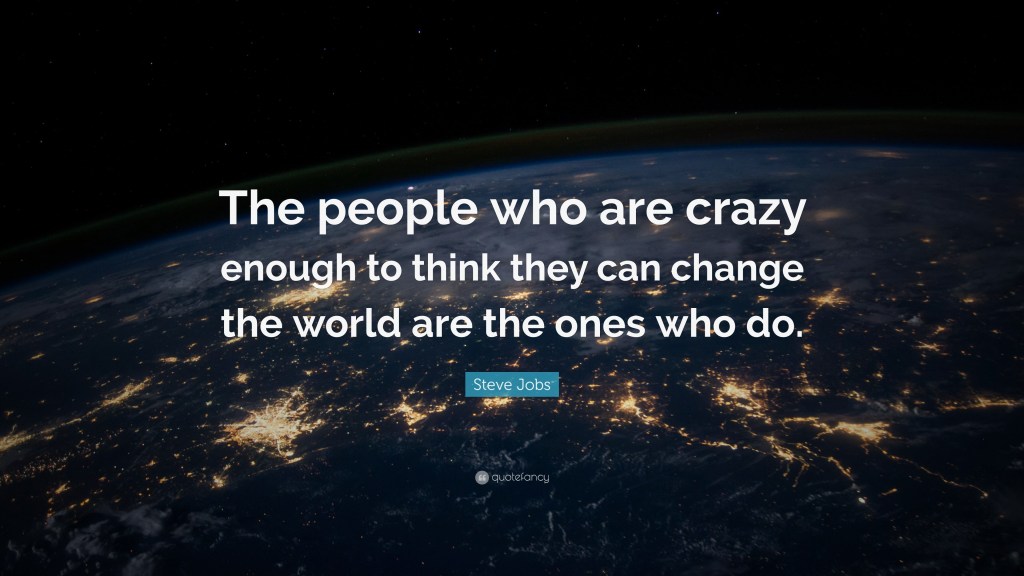
Steve Jobs once said, “Here’s to the crazy ones, the misfits, the rebels, the troublemakers, the round pegs in the square holes… the ones who see things differently… because the ones who are crazy enough to think that they can change the world, are the ones who do.” While this quote is often associated with visionaries in technology and innovation, its essence applies just as powerfully to business consultants who dare to think differently. Can those in seemingly mundane roles truly be considered among “the crazy ones”? The answer lies not in the title, but in the approach.
Traditional business consulting is often associated with structured advice, strategic planning, and incremental improvement. However, the world has changed, and so have the needs of entrepreneurs and small business owners. Today, those who challenge conventional wisdom and push businesses beyond the expected are the ones making the most profound impact. The question is: how can a business consultant change the world? By thinking beyond the status quo and embracing innovation, purpose, and bold action.
Rewriting the Entrepreneurial Playbook
For decades, entrepreneurship has followed a fairly standard trajectory. Write a business plan, secure funding, launch, scale, and eventually exit. But what if that model is outdated? A business consultant willing to challenge these norms can help entrepreneurs build companies that defy traditional structures. Encouraging alternative revenue models, decentralized decision-making, or leveraging AI-driven automation can help small businesses compete with larger corporations and even redefine entire industries.
Instead of reinforcing old business norms, consultants who embrace flexibility, adaptability, and resilience can help entrepreneurs create business models that are more responsive to the fast-changing economic landscape. Whether it’s encouraging the adoption of lean startups, subscription-based services, or micro-franchising, these shifts can transform the way businesses are built and sustained.
Championing Mission-Driven Businesses
What if success were not solely defined by revenue, but by impact? In today’s market, consumers and employees are increasingly drawn to businesses that align with their values. A business consultant who recognizes this shift can help entrepreneurs build companies that are not only profitable but also purpose-driven.
By integrating social impact into business models, consultants can guide clients toward sustainable practices, ethical sourcing, and community-driven initiatives. Whether it’s a coffee shop that donates proceeds to social causes, a franchise that prioritizes eco-friendly operations, or a manufacturing business that ensures fair wages, these small shifts can create lasting impact. Consultants who encourage businesses to measure success beyond the balance sheet are not only helping their clients thrive but also making a difference in the world.
Creating Entrepreneurial Movements
Instead of working one-on-one, what if a business consultant started a movement? The power of collective knowledge and shared experiences cannot be underestimated. By leveraging digital platforms, online communities, and in-person mastermind groups, consultants can help entrepreneurs connect, collaborate, and challenge each other.
A consultant who builds a network of ambitious entrepreneurs creates more than just a client base; they create a revolution. Imagine an online hub where entrepreneurs share insights in real time, a podcast that inspires action, or an incubator that fosters disruptive ideas. By shifting from individual consulting to fostering entrepreneurial communities, consultants can magnify their impact and transform the business landscape.
Breaking Down Barriers for Underserved Entrepreneurs
Many aspiring entrepreneurs face systemic barriers to entry. Immigrants, minority founders, and individuals from underserved communities often lack access to the capital, mentorship, and resources necessary to start and scale businesses. A consultant who dedicates their efforts to leveling the playing field can create generational change.
By guiding these entrepreneurs through funding strategies, government grants, alternative lending options, and unique business models tailored to their circumstances, consultants can make entrepreneurship accessible to a broader range of people. When more individuals have the opportunity to succeed in business, entire communities are uplifted. A consultant who prioritizes inclusion and economic empowerment can leave a lasting impact far beyond individual business success.
Redefining Risk and Failure
Traditional consulting often focuses on mitigating risk. But what if failure were embraced as a necessary step toward innovation? A consultant who encourages radical experimentation and calculated risk-taking can shift the entire entrepreneurial mindset.
Silicon Valley has long celebrated the idea of “failing fast and failing forward.” Yet, many small business owners operate under a fear-based mentality, believing that every failure is a step closer to ruin. A consultant who normalizes the idea that setbacks are part of the journey empowers entrepreneurs to take bolder steps. Whether it’s encouraging A/B testing, rapid prototyping, or agile business strategies, consultants who redefine risk can unlock unprecedented growth for their clients.
Turning Small Businesses Into Industry Disruptors
It’s easy to think of industry disruption as something that happens at the corporate level. Companies like Uber, Airbnb, and Tesla have redefined their respective industries. But what if disruption started from the ground up? Small businesses have the agility and innovation to challenge industry norms—if they are guided in the right direction.
A consultant who helps a local business leverage cutting-edge technology, automation, or unique customer experiences can transform an entire sector. Imagine a consultant guiding a restaurant to adopt AI-driven personalization, a retail shop to implement augmented reality shopping experiences, or a service provider to automate processes that cut costs while enhancing customer satisfaction. These shifts don’t just help individual businesses; they redefine consumer expectations and industry standards.
Embracing the Spirit of the “Crazy Ones”
The ones who change the world are not necessarily those with the biggest platforms or the most resources; they are the ones who see what others don’t and act on it. A business consultant who embraces this mentality can become a true force for transformation.
Whether by challenging outdated business models, advocating for purpose-driven entrepreneurship, creating networks of forward-thinking entrepreneurs, breaking down barriers, redefining failure, or helping small businesses disrupt industries, consultants have the potential to be much more than advisors. They can be catalysts for change.
In the end, being “crazy enough to think you can change the world” is not about having a radical idea for the sake of being different. It’s about seeing possibilities where others see limitations. For the business consultants willing to embrace this mindset, the opportunity to push the human race forward is within reach.
Make today a great day. Make it happen. Make it count!
About the Author
With more than 40 years of experience in small business, restaurant, and franchise management, marketing, and development, Paul Segreto is a respected expert in the entrepreneurial world, dedicated to helping others achieve success. Whether you’re an aspiring or current entrepreneur in need of guidance, support, or simply a conversation, you can connect with Paul at paul@acceler8success.com.
About Acceler8SuccessGroup
Acceler8Success Group empowers entrepreneurs and business leaders with personalized coaching, strategic guidance, and a results-driven approach. Whether launching, scaling, or optimizing a business, we provide the tools, mentorship, and resources to drive long-term success. Explore entrepreneurship coaching at Acceler8Entrepreneurship.com or business ownership resources at OwnABizness.com. For more information on our services, programs, or unique opportunities, inquire HERE.








You must be logged in to post a comment.