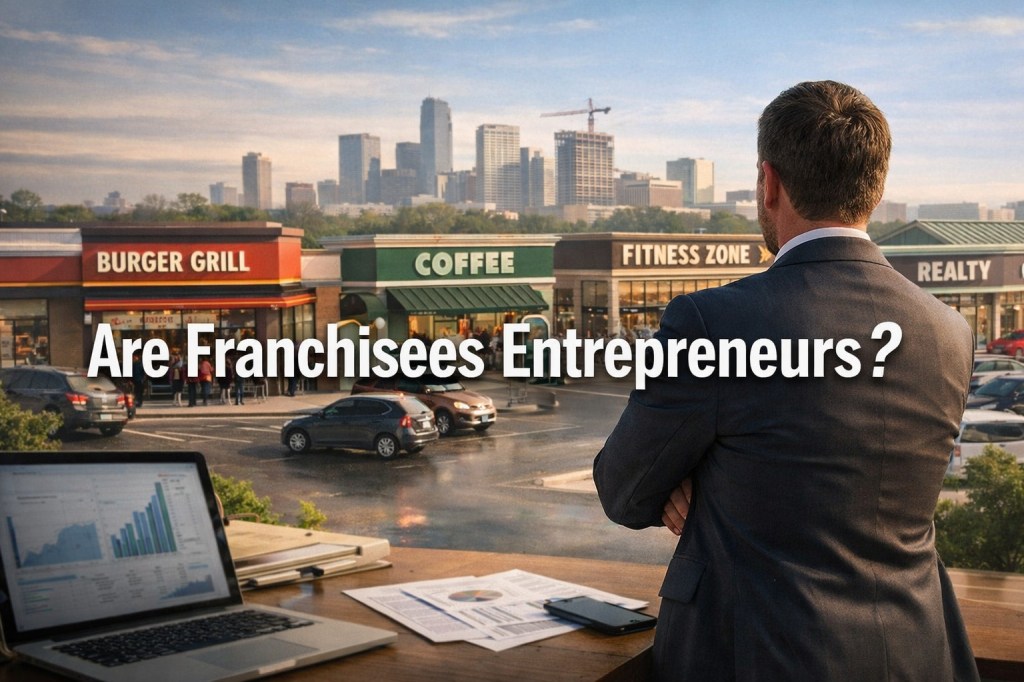
The question of whether franchisees are entrepreneurs has been debated for decades, and it is a debate that refuses to settle neatly into a single answer. On one side are those who argue that entrepreneurship requires originality, invention, and independence, while franchising, by design, offers a proven system, defined boundaries, and prescribed standards. On the other side are those who point out that franchisees invest capital, take risk, hire teams, manage operations, and are responsible for profit and loss, which sounds a lot like entrepreneurship in practice. Both perspectives have merit, which is precisely why the debate endures.
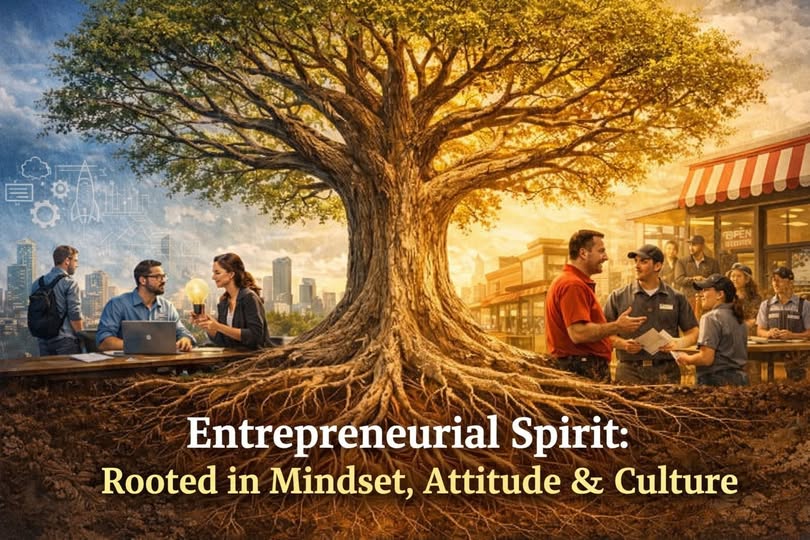
One way to move past the circular nature of this argument is to rethink how we frame entrepreneurship itself. Rather than treating it as a fixed label, it can be more useful to see entrepreneurship as both foundational and overarching, much like the trunk of a tree. From that trunk grow branches that take different forms: startups, acquisitions, family businesses, licensing, partnerships, and franchising among them. Each branch has its own structure and constraints, yet all are nourished by the same core elements: initiative, risk tolerance, accountability, creativity, and the desire to build something meaningful. Franchising is not separate from entrepreneurship; it is one of its branches, shaped by systems and shared brand stewardship.
But the more interesting conversation may not be whether franchisees are entrepreneurs in the classical sense. A more revealing question is whether they possess entrepreneurial spirit. That distinction matters. Entrepreneurship can be defined by actions and structures, while entrepreneurial spirit is rooted in mindset, attitude, and culture. It shows up in how problems are approached, how teams are led, how opportunities are recognized, and how responsibility is embraced. It is less about inventing the model and more about how one inhabits it.
This leads to a provocative hypothetical for franchisors. Given the choice, would a brand rather have one hundred entrepreneurs as franchisees, or one hundred franchisees who deeply embody entrepreneurial spirit? Entrepreneurs often arrive with their own frameworks, habits, and definitions of success, shaped by experiences outside the brand. That independence can be an asset, but it can also create friction. Strong entrepreneurs may be inclined to reshape the system to fit their worldview, sometimes pushing against brand standards in the name of innovation or autonomy. In a franchise system, that tension can dilute consistency and strain alignment.
Franchisees with entrepreneurial spirit, on the other hand, tend to channel their drive inward, working within the brand to maximize performance rather than redefining it. They see the system not as a limitation, but as a platform. Their creativity shows up in execution, local leadership, community engagement, and team development. Their ambition is expressed through growth, mastery, and stewardship of the brand rather than reinvention of it. Over time, that mindset often spreads. Teams become more engaged, managers think like owners, and a culture of accountability and pride takes hold inside each location.
From a long-term brand perspective, this internal cultivation of entrepreneurial spirit may be more powerful than recruiting entrepreneurs from the outside. Franchise systems ultimately scale not just through units, but through people who grow within the brand, understand its values, and internalize its standards. Future franchisees often emerge from this environment: managers who rise through the ranks, operators who expand responsibly, leaders who already speak the language of the brand because they helped shape its culture from the inside. That continuity can be difficult to replicate when growth relies primarily on externally sourced entrepreneurs, each bringing their own interpretations and expectations.
None of this is to suggest that entrepreneurs cannot be exceptional franchisees, or that systems should discourage independent thinking. The most resilient franchise brands find a balance, honoring structure while encouraging initiative. Still, when considering sustainable growth, cultural alignment, and brand integrity, entrepreneurial spirit may be the more essential trait. It is teachable, transferable, and contagious in ways that pure entrepreneurial identity is not.
Perhaps the real question is not whether franchisees are entrepreneurs, but whether franchise systems are intentional about fostering entrepreneurial spirit at every level. When that spirit is embedded in the culture, franchising becomes less about replicating locations and more about multiplying leaders. In that environment, success grows organically from within the brand, branch by branch, nourished by a shared mindset rather than competing definitions of entrepreneurship.
About the Author
Paul Segreto brings over forty years of real-world experience in franchising, restaurants, and small business growth. Recognized as one of the Top 100 Global Franchise and Small Business Influencers, Paul is the driving voice behind Acceler8Success Café, a daily content platform that inspires and informs thousands of entrepreneurs nationwide. A passionate advocate for ethical leadership and sustainable growth, Paul has dedicated his career to helping founders, franchise executives, and entrepreneurial families achieve clarity, balance, and lasting success through purpose-driven action.
About Acceler8Success America
Acceler8Success America is a comprehensive business advisory and coaching platform dedicated to helping entrepreneurs, small business owners, and franchise professionals achieve The American Dream Accelerated.
Through a combination of strategic consulting, results-focused coaching, and empowering content, Acceler8Success America provides the tools, insights, and guidance needed to start, grow, and scale successfully in today’s fast-paced world.
With deep expertise in entrepreneurship, franchising, restaurants, and small business development, Acceler8Success America bridges experience and innovation, supporting current and aspiring entrepreneurs as they build sustainable businesses and lasting legacies across America.
Learn more at Acceler8SuccessAmerica.com


You must be logged in to post a comment.