Tag: entrepreneurial mindset

The Franchisee’s Role Has Changed. Has Franchising Kept Up?

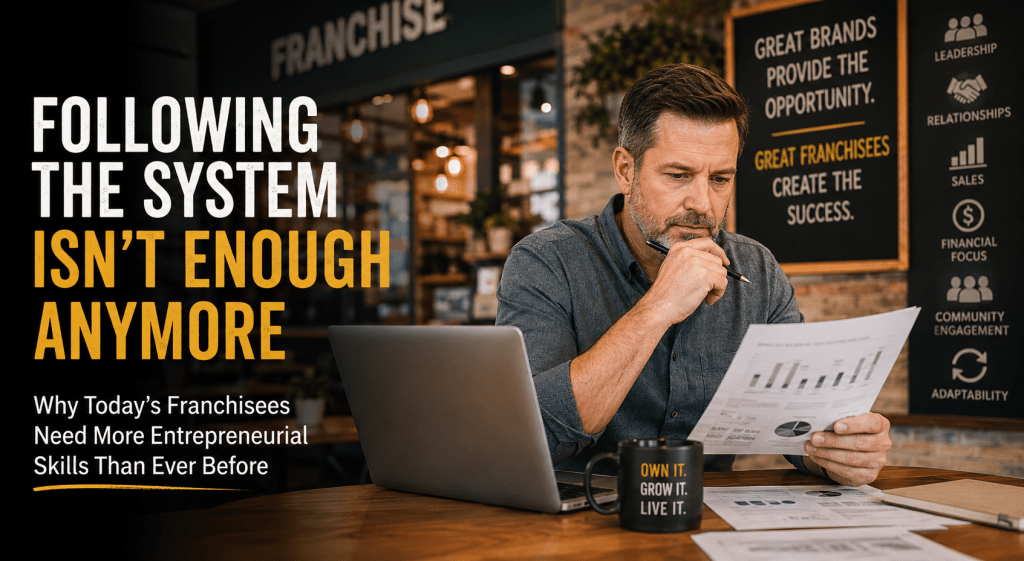
For decades, one of the most compelling promises of franchising has been the system. Buy into a proven concept. Follow the model. Execute established standards. Leverage the brand. Success should follow.

To be clear, I still believe in the value of the franchise system. Brand standards matter. Operational consistency matters. Training matters. Marketing support matters. The experience and guidance of a franchisor matter. These are among the reasons franchising has helped thousands of individuals realize their entrepreneurial dreams while reducing many of the risks associated with starting a business entirely from scratch.

Yet after more than forty years of working alongside franchisors, franchisees, restaurant operators, and entrepreneurs, I find myself increasingly asking a question that perhaps isn’t discussed often enough.

Has the role of the franchisee fundamentally changed?

I believe it has.

In fact, I would argue that today’s franchisees need more entrepreneurial skills than at any point in modern franchising history.

That statement may seem contradictory. After all, many individuals choose franchising precisely because they are seeking a proven path rather than creating something entirely on their own. But somewhere along the way, I believe many operators have confused following a system with relying upon a system. There is a significant difference between the two.

The system provides a foundation. It does not guarantee success. The franchisor provides tools. It does not build every customer relationship. The brand creates awareness. It does not generate every sale. The operations manual provides guidance. It does not make decisions. Ultimately, the responsibility for success still rests squarely on the shoulders of the franchisee.

What I continue to observe across franchise systems of all sizes is that many operators remain focused almost exclusively on what happens inside the four walls of their business. They focus on staffing, scheduling, inventory, customer service, compliance, and operational execution. All of those things remain critically important. However, in today’s marketplace, they are no longer enough.

Consumers have more choices than ever before. Competition is no longer limited to the business across the street. Today’s competitors include virtual brands, delivery platforms, independent operators, digital-first concepts, and emerging businesses that can seemingly appear overnight. At the same time, labor challenges continue, operating costs remain elevated, and consumer expectations continue to evolve.

Against this backdrop, I often wonder whether some franchisees are expecting the system to do more than it was ever designed to do.

Are they expecting the brand to create every opportunity?

Are they expecting national marketing to generate all local demand?

Are they expecting customers to simply appear because a sign is hanging above the front door?

Perhaps the more important question is whether those expectations are realistic in today’s environment.

From what I am seeing, the franchisees who are thriving tend to view their role very differently. They understand that operational excellence is only part of the equation. They recognize that growth increasingly depends upon activities that extend well beyond the four walls of the business.

They understand that visibility matters.

Relationships matter.

Community involvement matters.

Networking matters.

Local partnerships matter.

They become active participants in their markets rather than passive observers of them.

These operators are attending community events, participating in local organizations, building relationships with schools, churches, youth groups, chambers of commerce, civic organizations, and fellow business owners. They are looking for opportunities to create awareness, develop trust, and position their businesses as part of the fabric of the community.

In many respects, they are doing what entrepreneurs have always done.

They are creating opportunities rather than waiting for them.

This naturally leads to another observation that may make some franchisees uncomfortable.

Every franchisee is in sales.

Yes, sales.

For some reason, the word often carries a negative connotation. Many franchisees see themselves as operators, managers, or business owners, but not salespeople. Yet the reality is that sales is far more than asking someone to buy something.

Sales is communicating value.

Sales is building trust.

Sales is creating awareness.

Sales is developing relationships.

Sales is helping others understand why they should choose your business over countless alternatives.

When a franchisee is recruiting employees, they are selling. When they are pursuing catering accounts, they are selling. When they are introducing themselves to local organizations, they are selling. When they are building partnerships with neighboring businesses, they are selling. When they are representing their brand within the community, they are selling.

The most successful franchisees I encounter embrace this reality. They understand that business development is not someone else’s responsibility. It is part of their responsibility as business owners.

I also believe today’s franchisees must possess stronger financial skills than ever before. There was a time when growing sales could often compensate for operational inefficiencies. Today’s environment is far less forgiving. Rising costs and shrinking margins leave little room for error.

Understanding financial statements, labor percentages, food costs, occupancy expenses, customer acquisition costs, cash flow, and profitability drivers is no longer an advantage. It is a necessity.

The strongest operators don’t simply review reports. They study them. They ask questions. They identify trends. They seek opportunities for improvement. They understand that financial statements often reveal opportunities and challenges long before they become obvious in daily operations.

The same can be said for negotiation. Whether dealing with landlords, vendors, service providers, employees, local marketing opportunities, or strategic partnerships, negotiation has become an increasingly important leadership skill. Yet many franchisees have never received meaningful training in this area. Those who develop these skills often create significant competitive advantages over time.

Perhaps what I find most interesting is that franchising and entrepreneurship are becoming increasingly interconnected rather than increasingly separate.

For years, franchising was often positioned as an alternative to entrepreneurship. Today, I believe the most successful franchisees are among the most entrepreneurial business owners in any industry. Not because they ignore the system. Quite the opposite. They respect it. They leverage it. They maximize it.

But they also understand that the system is a starting point, not a finish line.

They ask questions. They challenge assumptions. They identify opportunities. They solve problems. They develop relationships. They understand their numbers. They engage their communities. They continuously learn and adapt.

In other words, they think like entrepreneurs.

Whether operating a single location or multiple units, whether part of a legacy brand or an emerging concept, I believe the underlying premise remains the same. The franchisees who will thrive in the years ahead will not simply be the best operators. They will be the best leaders. They will be the best communicators. They will be the most engaged within their communities. They will be financially astute. They will understand the importance of business development. And they will never lose the entrepreneurial mindset that drives growth and opportunity.

After more than four decades in franchising, I have become increasingly convinced that one of the greatest competitive advantages a franchisee can possess is the ability to operate within a proven system while simultaneously thinking like an entrepreneur.

The system remains important.

But from where I sit, following the system alone simply isn’t enough anymore.

I’d love to hear your thoughts. Has the role of the franchisee changed? Are today’s operators being asked to do more than previous generations of franchisees? What entrepreneurial skills do you believe are most critical for success in today’s franchise environment?

Please continue the discussion in the comments below, send me a direct message, or reach out to me directly at paul@acceler8success.com. I look forward to hearing your perspective.
The Franchise Tree: Rethinking Entrepreneurship and Growth From Within

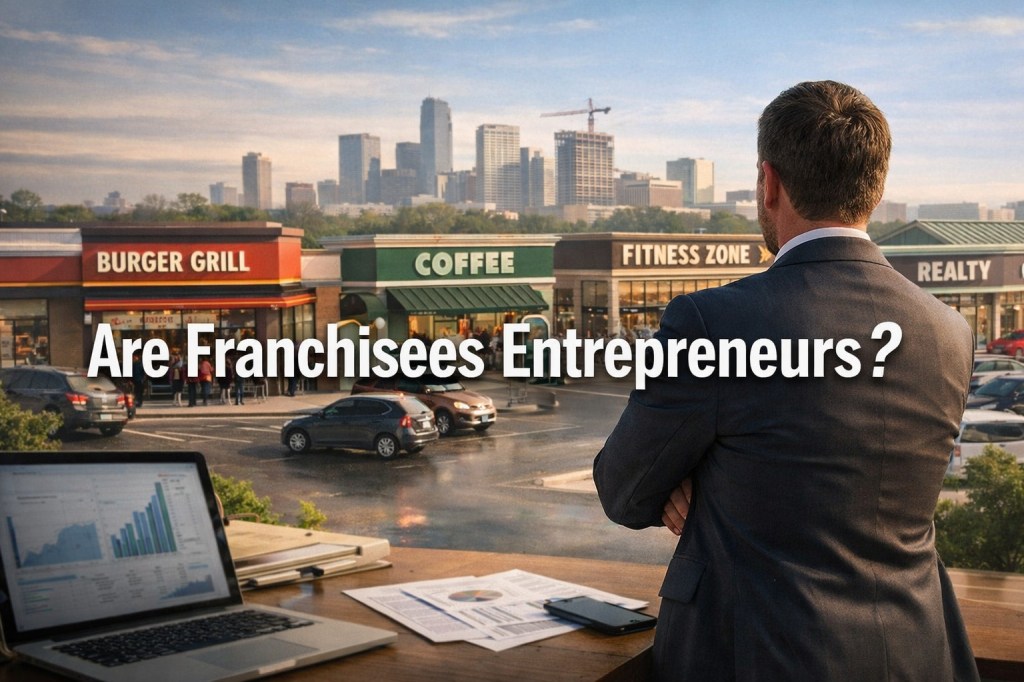
The question of whether franchisees are entrepreneurs has been debated for decades, and it is a debate that refuses to settle neatly into a single answer. On one side are those who argue that entrepreneurship requires originality, invention, and independence, while franchising, by design, offers a proven system, defined boundaries, and prescribed standards. On the other side are those who point out that franchisees invest capital, take risk, hire teams, manage operations, and are responsible for profit and loss, which sounds a lot like entrepreneurship in practice. Both perspectives have merit, which is precisely why the debate endures.

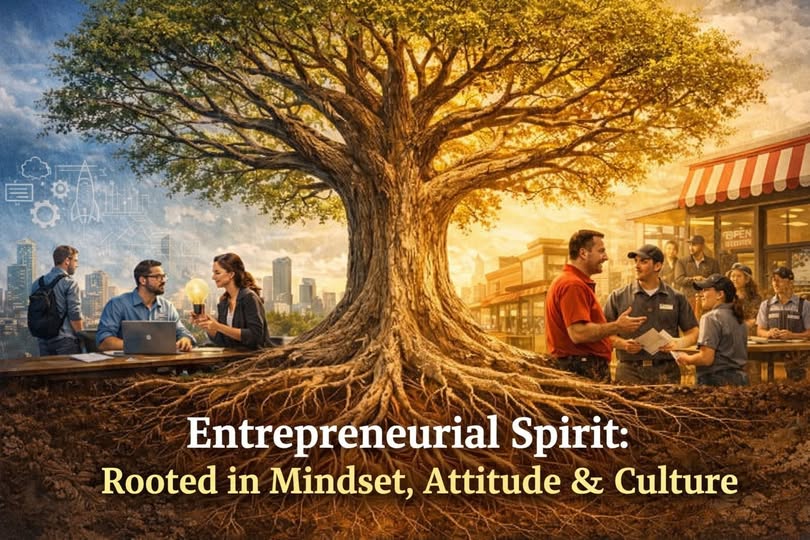
One way to move past the circular nature of this argument is to rethink how we frame entrepreneurship itself. Rather than treating it as a fixed label, it can be more useful to see entrepreneurship as both foundational and overarching, much like the trunk of a tree. From that trunk grow branches that take different forms: startups, acquisitions, family businesses, licensing, partnerships, and franchising among them. Each branch has its own structure and constraints, yet all are nourished by the same core elements: initiative, risk tolerance, accountability, creativity, and the desire to build something meaningful. Franchising is not separate from entrepreneurship; it is one of its branches, shaped by systems and shared brand stewardship.

But the more interesting conversation may not be whether franchisees are entrepreneurs in the classical sense. A more revealing question is whether they possess entrepreneurial spirit. That distinction matters. Entrepreneurship can be defined by actions and structures, while entrepreneurial spirit is rooted in mindset, attitude, and culture. It shows up in how problems are approached, how teams are led, how opportunities are recognized, and how responsibility is embraced. It is less about inventing the model and more about how one inhabits it.

This leads to a provocative hypothetical for franchisors. Given the choice, would a brand rather have one hundred entrepreneurs as franchisees, or one hundred franchisees who deeply embody entrepreneurial spirit? Entrepreneurs often arrive with their own frameworks, habits, and definitions of success, shaped by experiences outside the brand. That independence can be an asset, but it can also create friction. Strong entrepreneurs may be inclined to reshape the system to fit their worldview, sometimes pushing against brand standards in the name of innovation or autonomy. In a franchise system, that tension can dilute consistency and strain alignment.

Franchisees with entrepreneurial spirit, on the other hand, tend to channel their drive inward, working within the brand to maximize performance rather than redefining it. They see the system not as a limitation, but as a platform. Their creativity shows up in execution, local leadership, community engagement, and team development. Their ambition is expressed through growth, mastery, and stewardship of the brand rather than reinvention of it. Over time, that mindset often spreads. Teams become more engaged, managers think like owners, and a culture of accountability and pride takes hold inside each location.

From a long-term brand perspective, this internal cultivation of entrepreneurial spirit may be more powerful than recruiting entrepreneurs from the outside. Franchise systems ultimately scale not just through units, but through people who grow within the brand, understand its values, and internalize its standards. Future franchisees often emerge from this environment: managers who rise through the ranks, operators who expand responsibly, leaders who already speak the language of the brand because they helped shape its culture from the inside. That continuity can be difficult to replicate when growth relies primarily on externally sourced entrepreneurs, each bringing their own interpretations and expectations.

None of this is to suggest that entrepreneurs cannot be exceptional franchisees, or that systems should discourage independent thinking. The most resilient franchise brands find a balance, honoring structure while encouraging initiative. Still, when considering sustainable growth, cultural alignment, and brand integrity, entrepreneurial spirit may be the more essential trait. It is teachable, transferable, and contagious in ways that pure entrepreneurial identity is not.

Perhaps the real question is not whether franchisees are entrepreneurs, but whether franchise systems are intentional about fostering entrepreneurial spirit at every level. When that spirit is embedded in the culture, franchising becomes less about replicating locations and more about multiplying leaders. In that environment, success grows organically from within the brand, branch by branch, nourished by a shared mindset rather than competing definitions of entrepreneurship.


About the Author

Paul Segreto brings over forty years of real-world experience in franchising, restaurants, and small business growth. Recognized as one of the Top 100 Global Franchise and Small Business Influencers, Paul is the driving voice behind Acceler8Success Café, a daily content platform that inspires and informs thousands of entrepreneurs nationwide. A passionate advocate for ethical leadership and sustainable growth, Paul has dedicated his career to helping founders, franchise executives, and entrepreneurial families achieve clarity, balance, and lasting success through purpose-driven action.


About Acceler8Success America

Acceler8Success America is a comprehensive business advisory and coaching platform dedicated to helping entrepreneurs, small business owners, and franchise professionals achieve The American Dream Accelerated.

Through a combination of strategic consulting, results-focused coaching, and empowering content, Acceler8Success America provides the tools, insights, and guidance needed to start, grow, and scale successfully in today’s fast-paced world.

With deep expertise in entrepreneurship, franchising, restaurants, and small business development, Acceler8Success America bridges experience and innovation, supporting current and aspiring entrepreneurs as they build sustainable businesses and lasting legacies across America.

Learn more at Acceler8SuccessAmerica.com

The Entrepreneurial Transition Inside Franchising

Are franchisees entrepreneurs? If you look only at the black-and-white definitions, the answer feels deceptively simple. A franchisee is a business owner licensed to operate a proven brand, paying fees in exchange for systems, trademarks, and support. An entrepreneur, by definition, creates something new, assumes most of the risk, and enjoys most of the reward. On paper, one appears structured and guided, the other inventive and self-directed. Yet those definitions miss the gray space where real-world ownership lives, especially as a franchisee grows beyond a single location.

At the entry level, a first-time franchisee often looks more like a disciplined operator than a classic entrepreneur. The model is established, the playbook is written, and the expectations are clear. Risk still exists, but it is partially mitigated by brand recognition, operating systems, and collective learning. Vision, at this stage, is often borrowed rather than invented. The goal is execution, not reinvention. Success depends on following systems, hiring well, managing cash flow, and delivering consistency. In that moment, calling the franchisee an entrepreneur may feel like a stretch to some purists.

But that perspective freezes the franchisee at day one and ignores what happens next.

The moment a franchisee begins thinking beyond survival and into growth, the equation changes. Opening a second location introduces new layers of risk that are no longer shared equally with the franchisor. Capital exposure increases. Management complexity expands. The franchisee is no longer simply running a store; they are building an organization. Decisions about people, culture, leadership structure, real estate, and market prioritization become theirs to own. The safety net of “just follow the system” starts to thin.

With each additional location, the franchisee’s role shifts further away from operator and closer to architect. Vision is no longer limited to executing a model; it becomes about designing a portfolio. Strategy enters the conversation. Questions around scale, timing, financing, and long-term exit begin to matter more than daily transactions. At this point, risk is no longer confined to a single unit’s performance. One bad decision can affect an entire multi-unit enterprise.

The entrepreneurial mindset becomes even more pronounced when a franchisee expands across multiple brands. Now the individual is not just scaling within a framework but selecting frameworks themselves. Evaluating concepts, assessing markets, diversifying revenue streams, and balancing brand-specific risks requires the same instincts as launching a new venture. While the brands themselves may not be original creations, the ecosystem being built absolutely is. The entrepreneur is not inventing the product, but they are inventing the business behind the products.

This is where the gray area provides the clearest answer. Entrepreneurship is not solely about creating something from scratch. It is about ownership of outcomes, tolerance for uncertainty, and the ability to allocate resources toward future opportunity. A multi-unit, multi-brand franchisee carries most of the risk tied to growth decisions and enjoys most of the upside if those decisions succeed. That balance of risk and reward aligns far more closely with entrepreneurship than with simple business operation.

There is also a psychological transition that occurs. Early-stage franchisees often think in terms of compliance and performance. Entrepreneurial franchisees think in terms of leverage and possibility. They ask different questions. How do I build a leadership team that can scale without me? How do I create enterprise value beyond cash flow? How do I turn locations into assets rather than jobs? These are not operator questions. They are entrepreneurial ones.

So are franchisees entrepreneurs? Not automatically. Not on day one simply by signing a franchise agreement. But many become entrepreneurs through growth, complexity, and intentional risk-taking. The transition from single-unit operator to multi-unit owner, and from single-brand participant to portfolio builder, strengthens and ultimately demands an entrepreneurial mindset.

In that sense, franchising can be less a shortcut around entrepreneurship and more a pathway into it. For those who choose to stay small and operational, the franchisee role may remain primarily that of a business owner. For those who expand, diversify, and build something larger than themselves, the line fades quickly. At that point, the question answers itself.


About the Author

Paul Segreto brings over forty years of real-world experience in franchising, restaurants, and small business growth. Recognized as one of the Top 100 Global Franchise and Small Business Influencers, Paul is the driving voice behind Acceler8Success Café, a daily content platform that inspires and informs thousands of entrepreneurs nationwide. A passionate advocate for ethical leadership and sustainable growth, Paul has dedicated his career to helping founders, franchise executives, and entrepreneurial families achieve clarity, balance, and lasting success through purpose-driven action.


About Acceler8Success America

Acceler8Success America is a comprehensive business advisory and coaching platform dedicated to helping entrepreneurs, small business owners, and franchise professionals achieve The American Dream Accelerated.

Through a combination of strategic consulting, results-focused coaching, and empowering content, Acceler8Success America provides the tools, insights, and guidance needed to start, grow, and scale successfully in today’s fast-paced world.

With deep expertise in entrepreneurship, franchising, restaurants, and small business development, Acceler8Success America bridges experience and innovation, supporting current and aspiring entrepreneurs as they build sustainable businesses and lasting legacies across America.

Learn more at Acceler8SuccessAmerica.com

I am an entrepreneur. Go ahead. Say it!

Why is there reluctance to say, I am an entrepreneur? I’ve been asked that question many times. Heck, I’ve asked that question of myself on more than one occasion. It seems, at times we’re prouder to call ourselves, Founder or CEO or to say, I’m a business owner. Why is that?

Are those titles more respectful than, entrepreneur? Yet, we hear of late, we’re in an entrepreneurial economy. So, is that a bad thing or a good thing, and especially if we have a hard time fully admitting to entrepreneurship? Or should we just be entrepreneurial in how we approach our work, whatever that truly means?

Are we claiming to be in an entrepreneurial economy to justify the disappearance of the lifelong career at one company and this is just a way to say we need to create and prove ourselves over and over again, and forget the gold watch?

Back to the reference of being an entrepreneur… Is there a stigma of being a dreamer, always looking for something better, bigger, faster as opposed to what some believe is mundane, repetitive work with the security of a paycheck? Often, I hear it’s mostly due to yesterday’s immigrant mindset of being thankful to just have a job, yet it’s that same immigrant mindset that is the epitome of entrepreneurship.

 “Your time is limited, so don’t waste it living someone else’s life. Don’t be trapped by dogma – which is living with the results of other people’s thinking. Don’t let the noise of other’s opinions drown out your own inner voice. And most important, have the courage to follow your heart and intuition. They somehow already know what you truly want to become. Everything else is secondary.” – Steve Jobs

We are living our fears.

Actually, I believe it’s because of fear — fear of failure, fear of what other people think, fear of the unknown, fear of the what if, fear of starting over, fear of change… But it’s when those fears are hit head-on and the adrenaline rush of success far outweighs those fears because you know, deep in your heart that you have a deeply ingrained talent that can and will make a difference.

Does that mean failures aren’t possible? Hell no, but it’s working through those failures, those blips, those aberrations that provide experience and resiliency to improve and innovate to make the next step, the next task, the next venture successful. That is entrepreneurship. And it’s when I don’t consider what I do as entrepreneurship, is when failure mostly occurs. Conversely, it’s when I focus on what I do as an entrepreneur, complete with that thinking outside the box and failure is not an option perspective, and when focused more on results as opposed to opinion of others, THAT is when success mostly occurs.

Yes, I’m an entrepreneur. My focus will stay as such as it is not only good for me, but also for my family and for those that rely on me to help them achieve their wishes, hopes and dreams! Why? Because I believe in possibilities, as without them, there are none.