Tag: entrepreneurs

The Entrepreneurial Transition Inside Franchising

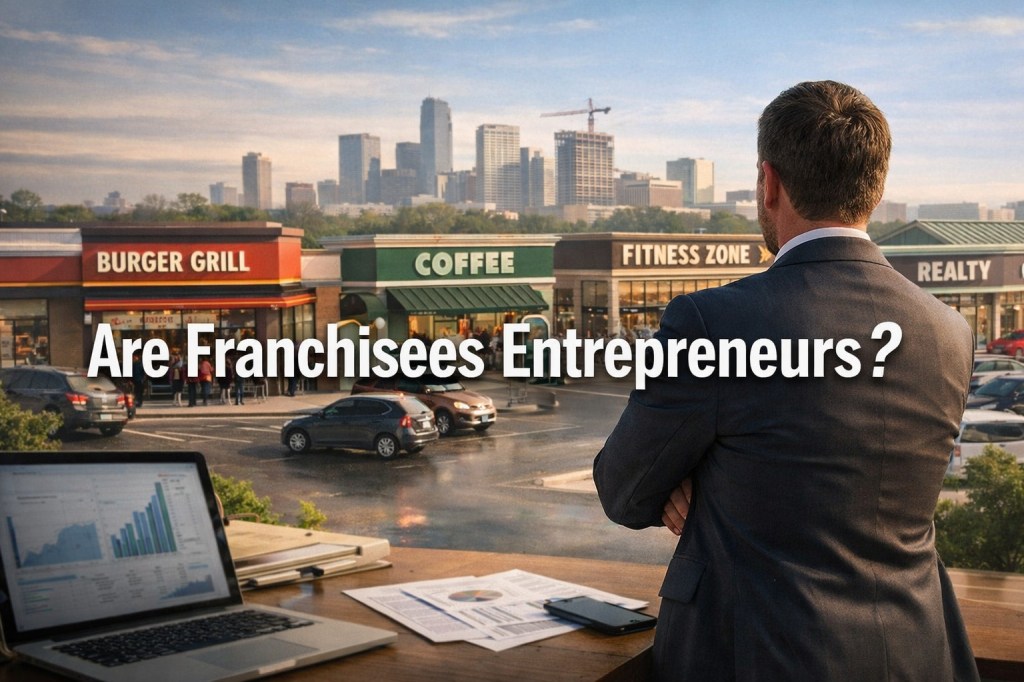
Are franchisees entrepreneurs? If you look only at the black-and-white definitions, the answer feels deceptively simple. A franchisee is a business owner licensed to operate a proven brand, paying fees in exchange for systems, trademarks, and support. An entrepreneur, by definition, creates something new, assumes most of the risk, and enjoys most of the reward. On paper, one appears structured and guided, the other inventive and self-directed. Yet those definitions miss the gray space where real-world ownership lives, especially as a franchisee grows beyond a single location.

At the entry level, a first-time franchisee often looks more like a disciplined operator than a classic entrepreneur. The model is established, the playbook is written, and the expectations are clear. Risk still exists, but it is partially mitigated by brand recognition, operating systems, and collective learning. Vision, at this stage, is often borrowed rather than invented. The goal is execution, not reinvention. Success depends on following systems, hiring well, managing cash flow, and delivering consistency. In that moment, calling the franchisee an entrepreneur may feel like a stretch to some purists.

But that perspective freezes the franchisee at day one and ignores what happens next.

The moment a franchisee begins thinking beyond survival and into growth, the equation changes. Opening a second location introduces new layers of risk that are no longer shared equally with the franchisor. Capital exposure increases. Management complexity expands. The franchisee is no longer simply running a store; they are building an organization. Decisions about people, culture, leadership structure, real estate, and market prioritization become theirs to own. The safety net of “just follow the system” starts to thin.

With each additional location, the franchisee’s role shifts further away from operator and closer to architect. Vision is no longer limited to executing a model; it becomes about designing a portfolio. Strategy enters the conversation. Questions around scale, timing, financing, and long-term exit begin to matter more than daily transactions. At this point, risk is no longer confined to a single unit’s performance. One bad decision can affect an entire multi-unit enterprise.

The entrepreneurial mindset becomes even more pronounced when a franchisee expands across multiple brands. Now the individual is not just scaling within a framework but selecting frameworks themselves. Evaluating concepts, assessing markets, diversifying revenue streams, and balancing brand-specific risks requires the same instincts as launching a new venture. While the brands themselves may not be original creations, the ecosystem being built absolutely is. The entrepreneur is not inventing the product, but they are inventing the business behind the products.

This is where the gray area provides the clearest answer. Entrepreneurship is not solely about creating something from scratch. It is about ownership of outcomes, tolerance for uncertainty, and the ability to allocate resources toward future opportunity. A multi-unit, multi-brand franchisee carries most of the risk tied to growth decisions and enjoys most of the upside if those decisions succeed. That balance of risk and reward aligns far more closely with entrepreneurship than with simple business operation.

There is also a psychological transition that occurs. Early-stage franchisees often think in terms of compliance and performance. Entrepreneurial franchisees think in terms of leverage and possibility. They ask different questions. How do I build a leadership team that can scale without me? How do I create enterprise value beyond cash flow? How do I turn locations into assets rather than jobs? These are not operator questions. They are entrepreneurial ones.

So are franchisees entrepreneurs? Not automatically. Not on day one simply by signing a franchise agreement. But many become entrepreneurs through growth, complexity, and intentional risk-taking. The transition from single-unit operator to multi-unit owner, and from single-brand participant to portfolio builder, strengthens and ultimately demands an entrepreneurial mindset.

In that sense, franchising can be less a shortcut around entrepreneurship and more a pathway into it. For those who choose to stay small and operational, the franchisee role may remain primarily that of a business owner. For those who expand, diversify, and build something larger than themselves, the line fades quickly. At that point, the question answers itself.


About the Author

Paul Segreto brings over forty years of real-world experience in franchising, restaurants, and small business growth. Recognized as one of the Top 100 Global Franchise and Small Business Influencers, Paul is the driving voice behind Acceler8Success Café, a daily content platform that inspires and informs thousands of entrepreneurs nationwide. A passionate advocate for ethical leadership and sustainable growth, Paul has dedicated his career to helping founders, franchise executives, and entrepreneurial families achieve clarity, balance, and lasting success through purpose-driven action.


About Acceler8Success America

Acceler8Success America is a comprehensive business advisory and coaching platform dedicated to helping entrepreneurs, small business owners, and franchise professionals achieve The American Dream Accelerated.

Through a combination of strategic consulting, results-focused coaching, and empowering content, Acceler8Success America provides the tools, insights, and guidance needed to start, grow, and scale successfully in today’s fast-paced world.

With deep expertise in entrepreneurship, franchising, restaurants, and small business development, Acceler8Success America bridges experience and innovation, supporting current and aspiring entrepreneurs as they build sustainable businesses and lasting legacies across America.

Learn more at Acceler8SuccessAmerica.com

What Entrepreneurs Can Learn About Leadership from Super Bowl Head Coaches

The Super Bowl is today and many eyes will be on the head coaches orchestrating every detail of their team’s performance. Every decision, from play-calling to motivation, can determine whether they hoist the Lombardi Trophy or come up short. In the days (and years) ahead, armchair quarterbacks everywhere will analyze, second-guess, and critique their performance. In many ways, an entrepreneur is no different. Every business owner is the head coach of their own team, working tirelessly to lead, strategize, and inspire a group of individuals toward a common goal. And, just like head coaches, their decisions and performance will be scrutinized and talked about well into the future.

Success in football, like in business, doesn’t happen by accident. It requires preparation, adaptability, and leadership under pressure. The best head coaches and entrepreneurs know that the key to victory lies in building a strong team, executing a winning strategy, and keeping everyone motivated even when faced with challenges.

A head coach studies the competition, breaks down film, and develops a game plan tailored to strengths and weaknesses. Similarly, an entrepreneur analyzes the market, researches competitors, and crafts a business strategy that plays to their company’s unique advantages. Both must be willing to adjust when circumstances change, whether it’s shifting tactics at halftime or pivoting a business model in response to market trends.

No championship team exists without a strong locker room culture. The best coaches foster trust, accountability, and a shared vision that keeps players aligned toward a common goal. Entrepreneurs must do the same, building a company culture that encourages teamwork, creativity, and resilience. The ability to inspire a team when adversity strikes can mean the difference between success and failure.

The Super Bowl is won not just on talent but on execution. A coach ensures every player knows their role, every detail is rehearsed, and everyone is mentally prepared for the big stage. An entrepreneur must do the same, ensuring employees are trained, operations run efficiently, and the business is primed for peak performance when opportunities arise.

At the core of it all, both a head coach and an entrepreneur understand that leadership is about more than just making decisions—it’s about bringing out the best in others. They must set the tone, make tough calls, and guide their teams with clarity and confidence.

Winning a championship and building a thriving business both demand relentless focus, unwavering commitment, and the ability to inspire those around them. Whether on the field or in the boardroom, the ultimate victory belongs to those who prepare, strategize, and lead with purpose.

Enjoy the Super Bowl. Please do so responsibly!

About the Author

With more than 40 years of experience in small business, restaurant, and franchise management, marketing, and development, Paul Segreto is a respected expert in the entrepreneurial world, dedicated to helping others achieve success. Whether you’re an aspiring or current entrepreneur in need of guidance, support, or simply a conversation, you can connect with Paul at paul@acceler8success.com.

About Acceler8Success Group

Acceler8Success Group empowers entrepreneurs and business leaders with personalized coaching, strategic guidance, and a results-driven approach. Whether launching, scaling, or optimizing a business, we provide the tools, mentorship, and resources to drive long-term success. Explore entrepreneurship coaching at Acceler8Entrepreneurship.com or business ownership resources at OwnABizness.com. For more information on our services, programs, or unique opportunities, inquire HERE.

A Couple’s Guide to Entrepreneurship (When Only One is the Entrepreneur)

Living with an entrepreneur can be both exhilarating and exhausting. The dynamic nature of entrepreneurship means that life can often be unpredictable, filled with highs of success and lows of failure. For the spouses or life partners of entrepreneurs, this can lead to a series of emotional and practical challenges. Understanding and adapting to these challenges can help in fostering a supportive and healthy relationship.

The life of an entrepreneur is rarely a 9-to-5 job; it’s more of a 24/7 commitment. This often results in irregular working hours, financial instability, and periods of high stress. For their partners, this can mean unexpected changes to personal plans, increased responsibility for household or familial duties, and coping with the emotional rollercoaster that accompanies the pressures of starting and maintaining a business.

To navigate these challenges, communication is key. Partners of entrepreneurs need to integrate some entrepreneurial thinking into their own mindset, which includes understanding the drive, the risk tolerance, and the relentless pursuit of goals that characterize an entrepreneur. This understanding can transform a partner into a vital sounding board, providing not only support but also valuable outside perspectives that can help in decision-making processes.

Entrepreneurs, on their part, should strive to be transparent about their business. Sharing both the successes and the struggles can demystify the process for their partners, helping them feel more connected and less sidelined by the demands of the business. Involving them in small decisions or discussing strategies not only fosters this connection but also leverages the unique insights a life partner can offer, which might be overlooked in a typical business setting.

For partners looking to educate themselves further about entrepreneurship, there are several resources available including books, online courses, and workshops that focus on entrepreneurship, startup culture, and financial planning. This knowledge can enhance conversations and enable partners to provide more informed feedback and support.

A helpful book is The Untold Story of the Entrepreneur’s Wife: How to Permanently Exit Your Old Norm and Thrive in Your New Entrepreneurial Lifestyle. Author and coach, Amy Stefanik shows her perspective that being an entrepreneur’s wife is not all doom and gloom to entrepreneurial couples. Stefanik shares her tools with entrepreneurial families for when they find themselves in the valley and helps them transform “married to the business” to “the secret weapon” to becoming an unstoppable entrepreneurial power couple!

Of course, setting boundaries is crucial. Entrepreneurs need to consciously carve out quality time, free from business calls and emails, to devote to their personal relationships. This helps in maintaining a balance between work and life and reassures the partner that they are a priority.

So, while the entrepreneurial journey can be strenuous on personal relationships, it also offers unique opportunities for growth and bonding. By integrating entrepreneurial thinking, maintaining open lines of communication, and educating themselves about business, partners can not only navigate the complexities of their situation but also contribute significantly to the entrepreneurial venture. In return, entrepreneurs must recognize the value and support their partners provide, ensuring they are included and valued, not just as supporters but as partners in every sense of the word.

Make today a great day. Make it happen. Make it count!

About Acceler8Success

With over 70 years of combined experience in entrepreneurship, small business, franchises, and restaurants, Acceler8Success is dedicated to helping entrepreneurs and business owners succeed in various economic climates. For more information, please visit Acceler8Success.com.

If you’re an entrepreneur that feels lost, needs assistance or needs someone to talk to — with or without your partner, please contact Paul Segreto by text at (832) 797–9851 or via email to paul@acceler8success.com. Please, don’t hesitate!

Loneliness, Depression, Fear: All Contribute to Mental Health Issues

Some, but not nearly enough has been written about entrepreneurs & celebrities and their battles with mental health. Loneliness and depression continue to occur within the ranks of both groups at an increasing rate and although failure (or fear of failure or a drop from superstar ranks) may be a driving force, it’s often not the sole deciding factor.

Is it the quest for perfection? Is it a blinding passion that nothing else is visible? Or a control issue where no one can do it better, so it’s dealt with alone?

Michael Dermer has written a great book, The Lonely Entrepreneur and has developed a membership site of the same name that is a great resource for entrepreneurs. Strategic Coach has developed a great program for entrepreneurs. There are others, as well.

But are current efforts enough to slow down the alarming rate of suicide among entrepreneurs – and often more in the spotlight than entrepreneurs, celebrities? As successful as they were, what were the deciding factors leading to the suicides of chef and TV personality Anthony Bourdain and fashion designer Kate Spade?

The deaths of Bourdain and Spade by suicide have thrown the spotlight on celebrities and depression. Instead of bringing them happiness and freedom, for many, being sought-after, rich and at the top of their game leads to an identity crisis and ruminations on their self-worth.

And now, Naomi Judd, one-half of the iconic country music duo The Judds, reportedly died by suicide after years of struggling with mental illness.

This is a topic that must be brought front and center as we continue to grow as an entrepreneurial society with approximately 60% of the labor force in some type of self-sustaining endeavor whether it’d be as freelancers, sole practitioners, professional service providers, contractors, solopreneurs, and increasingly, musicians, artists, and authors.

Why is suicide more common among entrepreneurs, celebrities and creatives?

Noted Bollywood actor and television star Sushant Singh Rajput committed suicide a couple of years ago. His demise came as a shock to many as it was the fourth death of a famous personality from the Hindi film industry to pass away within months of each other.

Suicide is not a new issue, especially not in celebrity circles. These tragic deaths are also not limited by lines of work, ranging from boxers, designers, politicians and writers to actors, musicians and yes, entrepreneurs. What about influencers that have achieved celebrity status along with becoming rising stars in this relatively new class of entrepreneurs?

There was a string of influencer suicides in 2021. All unfortunate and tragic occurrences that took young lives, they left entire fan communities in mourning for their favorite stars who had secured places as standing icons of inspiration across fields, from beauty to travel to farming to sports. But what often goes ignored when reviewing these moments of tragedy is the kind of impact the internet is having on our mental health, every single day.

It isn’t just online celebrities or creators partaking in influencer cultures who are burdened with the impossible expectations and virtual validation that the internet has become the one-stop destination for. Sadly, it can happen, and is happening, to many of us plugged into social media.

There is no conclusive line on whether all these influencer suicides came about as a result of social media impinging on mental health. But there is no doubt about the fact that a direct or indirect correlation between our use (or abuse) of the internet and offline consequences.

So, why do wealthy people kill themselves? Don’t they have it all?

The reality we often forget, however, is that celebrities are human beings, just like us. “We only see one version – one of glamour, fame and fortune,” explains Nance Roy, Ed.D, Chief Clinical Officer at The Jed Foundation. They may struggle with relationships, finances and illness. Adds Dr. Roy: “Celebrities may feel more pressure to perform, to be perfect and to keep up their image for fans, often making it more difficult for them to reach out for help.” Another critical point: a person rarely takes his or her own life because of just one reason. “Suicide is complex, and we often don’t know all the factors involved.”

Bullying, even of celebrities and other notable individuals is certainly a contributing factor as it is for our younger generations. In fact, the 10th leading cause of death in the U.S. and 2nd among people aged 10 to 34 (a person dies every 11 minutes), suicide was identified by the National Institute of Mental Health as a major public health concern. Suicide rates increased 35% from 1999 to 2018, briefly declining in 2019. However, reports of depression and anxiety – risk factors for suicide – had increased during the pandemic.

Discussing Mental Health Issues

We need to reduce the stigma faced by people experiencing a mental illness. How? As Martin mentioned, we need to talk about it. Stigma remains a major barrier to treatment and care. Dr. Fink agrees: “How do we grieve and process except by speaking and sharing with others?” When people die of cancer, their illness is almost always part the public conversation. From his Haitian roots, Dr. Arty provides a global perspective: “As a world community, we need to be bold and unashamed in discussing this sensitive and painful topic. The discussion itself may save a life.”

Dispelling myths is also key. A common myth? “Asking someone if they are suicidal will not increase the risk that they will die by suicide,” clarifies Dr. Roy. Inquiring about potential self-harm in a compassionate way may instead provide an opportunity for the person to express their feelings and reach out for help.

Proclamation from The White House on National Mental Health Awareness Month

Each May we raise awareness about the importance of mental health and its impact on the well-being of all Americans, including children, adults, families, and communities across our Nation. We also give thanks to the dedicated mental health providers whose service and support improve the lives of so many Americans. We stand in solidarity with those who are experiencing mental health conditions, renewing our commitment to providing them with the support they need and deserve. 

Even before the pandemic, millions of Americans were experiencing stress, trauma, anxiety, and heightened levels of depression. The COVID-19 pandemic exacerbated those conditions, creating an unprecedented mental health crisis across our country. Communities of color, frontline workers, health care workers, and individuals with eating disorders have been disproportionately impacted, and the rate of depression across the country has more than tripled compared to rates in 2019.

Read the full proclamation on the White House website.

‘Why’ is a question that is always asked by those left behind or hurt by these suicides – the answer or answers would never make sense to someone who loves life. As such, I look forward to thoughts on this with hope the discussion continues. Thank you!

If you or someone you know is in crisis, please call the National Suicide Prevention Lifeline at 1-800-273- TALK (8255). It’s free, confidential and available 24 hours a day, 7 days a week.

Weekly Review April 24-30

With so much going on at Acceler8Success Cafe I know it’s easy to miss a newsletter or two, or possibly our Question of the Week slipped by without you noticing, or an announcement we may have made just seemingly got lost amongst the busy news feed. Well, just like an experience at your local cafe, I really want Acceler8Success Cafe to be conveniently located when you desire or need to relax, enjoy a cup of coffee, and catch up on some reading.

Okay, I may be going bit far with this, but my goal is for Acceler8Success Cafe to be your virtual cafe. A place where you may frequently visit to enjoy a few minutes to yourself. I’d like the experience to be memorable by providing learning opportunities, by presenting a different perspective & insight, by spurring thought & reflection, by encouraging interaction, and by spotlighting topics that, frankly, may not be as front and center as they should or need to be.

To that end, Acceler8Success Cafe is open for business daily, seven days a week. For the benefit of current & aspiring entrepreneurs, our daily newsletter will be delivered each morning. Our Question of the Week along with an occasional announcement will be delivered at various times throughout the week.

As a way to jumpstart the week ahead, we also will deliver a weekly review each Sunday morning which will include articles you might have missed during the previous week. My goal is to provide an opportunity to begin the new week with information and ideas that possibly could accelerate your success.

No alt text provided for this image

Conquering Fear “You gain strength, courage and confidence by every experience in which you really stop to look fear in the face. You are able to say to yourself, ‘I have lived through this horror. I can take the next thing that comes along.’ You must do the thing you think you cannot do.” – Eleanor Roosevelt

3 Steps Ahead of Business Ownership Whether doing so as an independent business or as a franchise there are important initial steps to take to ensure that business ownership is practical and feasible. Due diligence is essential in order to make the right decision – one that will go a long way toward minimizing risk of failure.

Sorry. Your Application Has Been Rejected! Despite being financially qualified and with a proven track record of success, is it possible for franchise candidates to be rejected for not being a “right fit” for a brand?

What role will entrepreneurs play in the economy over the next 5-10 years? This is our Question of the Week. As such, I’d really appreciate your feedback. So please, share your comments, insight and perspective in the comments section below. But first, let’s see if I can spur some thought.

Vision to Reality: A Deliberate Journey A deliberate approach led to the creation of the Acceler8Success mantra that is often seen alongside a black panther whose approach in getting to its goal is nothing less than deliberate.

Maintaining Work Life Balance Here’s to a great weekend and a productive stress-free week ahead. Please share this with others as there are far too many that have a difficult time managing stress and especially so during what are seemingly uncertain times.

Are you ready for National Small Business Week May 1-7, 2022?

No alt text provided for this image

As we prepare to celebrate National Small Business Week 2022, it’s the perfect time to announce the new franchise & business opportunity platform by Acceler8Success Group. In its final stages of development, I anticipate an official introduction within the next 7-10 days.

No alt text provided for this image

“You must take personal responsibility. You cannot change the circumstances, the seasons, or the wind, but you can change yourself. That is something you have charge of.” – Jim Rohn

No alt text provided for this image

What is an entrepreneur? It’s a matter of personal experience & perspective.

Entrepreneurs are from all walks of life. They have different levels of skill and education. Some take more risks than others, but risk is there, nonetheless. Of course, there are many, many other characteristics and traits, and many combinations thereof.

So, really, what is an entrepreneur? What does the term mean? Are there varying degrees of being an entrepreneur – different classes, different levels?

These were some of the questions I have asked over the years in various LinkedIn groups and podcast interviews, and also in impromptu interactions. Below are some of the insights and perspective from a wide cross-section of individuals (entrepreneurs, corporate executives, small business owners, and even a number of restaurant servers, retail clerks, construction workers, and high school & college students).

What is the definition of an entrepreneur?

In a few cases, the definition provided included a specific word ahead of ‘entrepreneur’ almost as if to prequalify the definition. Doing some research, here are actual definitions of the shared terms:

1) Born Entrepreneur: Somebody that from an early age was active in earning money in exchange for products or services. These people never considered becoming an employee.

2) Must-preneur: Somebody who through chance or circumstance sees no other option than to become an entrepreneur. This might be due anything from to age to an utter lack of job opportunities

3) Opportunistic Entrepreneur: Somebody who sees an opportunity to start a business but has a contract to provide services to their current employer. E.g., Head of IT starting his own company to provide services to their previous employer

4) Executive Entrepreneur: Somebody who has reached the top of an executive ladder and views starting their own business as a way to progress further. They usually have a decent amount of money saved up and an extensive business network to tap into.

5) Family Entrepreneur: Start a business in order to spend more time with family. Lifestyle is the main motivator.

6) Mumpreneur: A mother who sees no other way of earning a flexible income whilst raising her family. Usually runs a highly efficient business.”

A couple of definitions seemed to be well thought out apparently having run through their minds before…

“An entrepreneur is a person who will see the embryonic seeds of an opportunity well in advance of others. Others will eventually only see a lost opportunity. An entrepreneur will see risk as an opportunity. Others will see opportunity as a risk. An entrepreneur will look forward to the challenges and hard work that an opportunity will bring. Others will only see an uphill struggle. An entrepreneur will continue to work at that opportunity irrespective of setbacks, make mistakes, pick themselves up and learn from their mistakes. Others will give up the fight when the going gets tough. An entrepreneur will work outside of the normal business framework in order to feel free and unrestricted while others will have a need to build an even stronger framework in order just to feel safe. When the opportunity is finally realized, an entrepreneur will not say ‘I told you so’. An entrepreneur will say to themselves not others, ‘I knew I could do it’. Others will say, ‘I wish I had done that’.”

“I think that we all, at one time or another, have what we believe is a great idea, the difference is that the entrepreneur will seize it, grab the ball and run with it, where most people will look back and say: I woulda, coulda, shoulda; the difference is implementation and execution. When I was a youngster, I used to ride horses a lot and the first lesson you are taught is when you get thrown off of the horse, you immediately get back on, for if you don’t, you will have a fear of doing so for the rest of your life. I would agree with you that being a business owner does not necessarily mean that you are an entrepreneur; most people who buy a franchise are looking for security (avoidance of risk), a structured environment and direction as to what to do and how to do it.”

Personal experience and emotions played into a number of responses. Here are a few that were definitely very heartfelt:

“For me- it was a burning desire to create something that would change the world. Simply owning a business was not my motivating factor.”

“I was tired of being told how to run a business by people that had no clue how to manage people or a business. When you get to that point you just say screw it, I am doing my own thing. You are never alone either. surround yourself with people that are positive and are open to you sharing ideas at a much higher level.”

“For me, it was an opportunity to offer a service that my former employer would not or could not provide. I also got tired off working my butt of to benefit someone else. Owning my own business has given me the opportunity to spend more time with my family and to provide them financially.”

“An entrepreneur is someone who doesn’t like following rules. Someone who wants to eventually make them. For me, I became an entrepreneur because I was sick and tired of working for a bunch of idiots. These goofballs were making way too much money…and I wasn’t. So, I took a risk. Joined my dad’s franchise consulting firm in 2001. Now, I’m a solo entrepreneur. And the King of the Castle. It’s been a fun ride. There are several more roads for me to cruise on. Join me.”

“The more I sold, management would adjust my comp plan to lower my pay. I got burned out on them fundamentally not getting that the more sold the better off everyone would be. So, I became a competitor starting with a folding chair, table and legal pad. Now I have lost my table and chair! Just kidding, I have never looked back.”

There were a few negative and somewhat cynical responses. Two that I remember quite well:

“I thought entrepreneur was French for unemployed. Can’t we just be business owners?” and “I always think of an entrepreneur as someone who can’t find or keep a job and justifies his existence by saying he is an entrepreneur.”

And here are a couple of my own comments from these exchanges…

“I believe the derogatory comments have been increasing because so many individuals lost jobs during economic downturns and then decided, well, I’ll be an entrepreneur. It really doesn’t work that way for true entrepreneurship. For them, it’s about the money. It’s about survival. It’s about replacing a job! That is not entrepreneurship.”

“Entrepreneurship, to me is looking to make a difference. Looking to change the way things are done. Sure, money is great, but money should not be the only result of your actions and success and certainly not the primary force from the beginning. Think about the true entrepreneurs of the world… Steve Jobs, Richard Branson, Bill Gates, Mark Cuban and of course, there are many more. Quitting school, operating out of garages, pushing to be leading edge with something different, disagreeing with the way industry leaders were doing things, and the list goes on – it wasn’t about the money or even the thought of riches to come. It was about change. It was about making a difference. It was about taking risk when they didn’t even think there was risk involved because they knew they would succeed. It was their conviction to perfection.”

Entrepreneurs do exist at many different levels and there are many within small business today, and the number is growing. As such, I’ll share this academic definition:

An entrepreneur is one that wants to make a difference, doing so by motivating and encouraging change all the while being aware of risk but challenging risk with clear perspective and innovation, never losing sight of their goals and the always driving forward even in the face of setbacks and failure.

Per Merriam-Webster: entrepreneur en· tre· pre· neur | \ ˌän-trə-p(r)ə-ˈnər  , -ˈn(y)u̇r, ˌäⁿn- \ Definition of entrepreneur : one who organizes, manages, and assumes the risks of a business or enterprise.

Per Investopedia: An entrepreneur is an individual who creates a new business, bearing most of the risks and enjoying most of the rewards. The process of setting up a business is known as entrepreneurship. The entrepreneur is commonly seen as an innovator, a source of new ideas, goods, services, and business/or procedures.

Study.com has an interesting course with an animated video about the definition of an entrepreneur. Take a few minutes to preview HERE.

There is even a 10-minute video for children about what it means to be an entrepreneur. Definitely share this with your children or grandchildren. You can view it HERE.

Let’s keep the discussion alive. It’s too important a topic not to. So, what do you think? What is an entrepreneur? After all, being an entrepreneur is difficult enough without being misunderstood!

Weekends & Entrepreneurs

It’s the weekend and entrepreneurs need rest and relaxation just the same as others. However, entrepreneurs always keep their eyes and ears open for possibilities and opportunities.

They always keep their minds sharp in order to be able to evaluate and act upon the same. They always strive to stay fit to be prepared for grueling schedules and long days.

Nevertheless, taking care of mental and physical health certainly does not mean being complacent and lazy. Success is about balance… and focus on achieving goals!

#entrepreneurship#physicalhealth#mentalhealth#entrepreneurialmindset#success

9 Ways Successful Entrepreneurs Spend Their Weekends

Successful entrepreneurs have a passion for what they do, so working hard is part of their DNA. But anyone who is successful also recognizes that life and work are a marathon, not a sprint. Even they need downtime on the weekend to ensure they’re up to the task of being creative problem solvers and innovators Monday through Friday.

Sure, they may spend some time catching up on administrative work. They may spend time on a big project that needs special attention. And they should definitely spend time thinking about the future and considering the big picture.

But what successful entrepreneurs don’t do is spend the entire weekend buried under work. We all need a break, and entrepreneurs are no less immune to burnout than anyone else. Their weekends are spent restoring their bodies and minds and getting prepared to function optimally come Monday.

Read about nine things successful entrepreneurs do over the weekend to unwind and re-energize for the week ahead HERE.

“If you are not willing to risk the unusual, you will have to settle for the ordinary.” –Jim Rohn

Visit Acceler8Success Daily at https://paper.li/Acceler8Success-Daily

Visit Acceler8Success Group website at www.Acceler8Success.com

An entrepreneur knows…

An entrepreneur knows…

An entrepreneur knows to wake up in the morning and immediately begin planning the day ahead.
An entrepreneur knows to do this despite having already done so the night before and possibly several times throughout the night.
An entrepreneur knows he or she will awaken hungry for results.
An entrepreneur knows new ideas will be churned and devoured by his or her mind each day, each hour, each minute.
An entrepreneur knows the hunger for success has no end.
An entrepreneur knows all too well the success bar will keep rising.
An entrepreneur knows personal expectations will continue to grow.
An entrepreneur knows the fire in his or her belly must be fed continuously.
An entrepreneur knows he or she must accomplish more and more each and every day.
An entrepreneur knows the hunger will persist no matter how much he or she bites off.
An entrepreneur knows to chew faster and faster to keep from choking.
An entrepreneur knows to survive and to succeed is to fuel the hunger, not curtail it.
An entrepreneur knows all this because it’s in his or her DNA.
An entrepreneur knows…

Turning Impossible into Possible

How many of today’s mainstream brands are offering products and services that would have been considered impossible not all that long ago? Of course, Amazon immediately comes to mind…

Amazon rapidly grew from an unproven concept to one of the most valuable companies in the world within a relatively short period of time.

How many times do you think Bezos heard someone tell him what he was trying to achieve was impossible? Thinking back, how about Jobs, Gates, Walton, Dell, Disney, Ford, Branson? All were entrepreneurs!

Nothing is impossible provided there’s a plan and an unwavering commitment to excellence.

Want to be an entrepreneur? It’s impossible without these 3 characteristics

They go by many names: self-employed, 1099 Contractor, Side Hustle, CEO, Business Owner, or Agency Owner, but our favorite term is Entrepreneur. No more working for the “man!” Be your own boss, set your own hours, answer to no one is the cry of everyone that has ever had to punch a clock, ask to take a bathroom break or be elated with a 5% raise. Why would anyone want to work for someone else for 40 years when they can work for themselves and make millions?

If you could only will things into existence by belief, we’d all be the boss. With over 300 million people living in America today, only 15 million of those are self-employed full time.

We’ve all heard of the Pareto Principle, right? The 80/20 rule? In sales, business ownership, and entrepreneurship that means only 20% have the right skills, masteries and characteristics to succeed. The author of this article, Joshua Jones has personal experience in observing thousands of other entrepreneurs that makes him think Pareto might have under-promised and over-delivered. Seems as if only 5% have what it takes.

So what does it take to be a successful entrepreneur? Jones believes all the books, podcasts, blogs, webinars, and self-help seminars on this subject could be summed up in three simple characteristics found HERE.

The way to get started is to quit talking and begin doing.” – Walt Disney

Today’s Entrepreneurs

The world around us has become so noisy that it’s easy to not hear opportunity knocking. In the past, opportunity presented itself in only a few ways… job offers, a referral, an ad in the paper. Business was regimented… 9 to 5, straight forward processes, slow to change, staying inside the box.

Well, technology along with our lost feeling of security, job and otherwise has provided us opportunities and reason that we must keep our eyes open, explore beyond our comfort zones. We must maintain an open mind to create things of value, to control our own destiny, to diversify our income, to take calculated risk, and to think and act outside the box (of complacency, fear and procrastination).

We’re in an environment where the visionaries continue to create the playing field but it’s only doers who will win.

Acting swiftly, yet decisively, albeit deliberately, often throwing caution to the wind, caring little about what others think of them and their decisions, maintaining a laser-focus to not only succeed, but to thrive.

These individuals not only make things happen, but they also make them count, and in a big way.

They are today’s entrepreneurs.