Tag: finance

Why Franchisees Are the Local Entrepreneurs America Keeps Forgetting

Franchising has long stood at the intersection of entrepreneurship, community, and economic growth, yet too often it is overlooked in the broader conversations around local business support. Small Business Saturday, launched as a way to shine a spotlight on independent businesses, has unintentionally left many franchisees standing in the shadows, despite the fact that the overwhelming majority of them are small business owners themselves. The truth is simple: franchising not only belongs within the Small Business Saturday conversation, but its role in local communities should be celebrated year-round. And today, with the International Franchise Association’s powerful initiative, Franchise Means Local, the message is clearer and more important than ever.

Most franchise locations are owned and operated by someone who has made a personal investment in their neighborhood. They are parents coaching Little League, volunteers at community fundraisers, donors to local schools, employers of local residents. They live where they work. They hire from the same talent pool as independent businesses. They pay taxes into the same community they serve. They wake up every day with the same pressures, hopes, challenges, and ambitions as any other small business owner. Yet public perception has often painted franchise businesses as distant corporate extensions rather than the hyper-local enterprises they truly are. Franchise Means Local is reframing that narrative by uplifting the people behind the signs: the franchisees whose sweat equity and personal sacrifice make these businesses thrive.

Small Business Saturday reminds Americans to shop small, dine local, and support the entrepreneurs in their communities. Franchising deserves to be part of that mindset not because franchisees seek special recognition, but because the reality of their role has been misunderstood for far too long. Franchisees operate under a brand, but they assume all the financial risk. They sign the lease. They make payroll. They secure financing. They weather inflation. They create jobs. They contribute to the vibrancy of local commerce. To support franchising is to support local economies in a measurable, meaningful way. If the goal of Small Business Saturday is to strengthen the backbone of communities, then franchisees belong in that story every single day, not just once a year.

Even multi-unit franchisees, who often operate multiple locations across a region, are deeply rooted at the local level. Each of their stores is a community fixture with its own staff, its own customers, and its own neighborhood identity. Their success is tied directly to the health and engagement of the markets they serve. And in many systems, multi-unit operators play an even greater local role by cultivating upward mobility within their teams. Many frontline managers, shift leaders, and general managers gain the opportunity to own their own franchise locations — a pathway that transforms employees into entrepreneurs and keeps the next generation of owners anchored in the same communities where they worked, grew, and learned the business. This creates a powerful cycle of local ownership, local wealth-building, and local stability that few other business models can match.

For franchise systems, embracing a year-round Small Business Saturday mindset is not just about community goodwill; it is a blueprint for long-term brand strength. The clearer and more authentic the connection between franchisees and their communities, the more powerful the brand becomes. And for emerging franchise brands especially, this approach may be one of the most effective strategies to build early traction and eventually become a household name. When a brand is young, national awareness doesn’t drive growth—local trust does. Emphasis on local connection gives new brands a foundation that glossy branding alone cannot create. It puts real faces in front of real people. It helps early franchisees tell the brand’s story in their own communities, making the brand feel familiar before it is famous. That familiarity builds loyalty, and that loyalty builds momentum. For emerging brands striving to stand out in competitive markets, showing up locally is not just beneficial; it is essential.

Consumers today want authenticity. They want to support businesses that support them. They want to feel that their dollars are contributing to their own neighborhoods, not disappearing into distant corporate coffers. When they understand that franchisees — whether single-unit owners or multi-unit operators — are local owners with local investment and local impact, their relationship with the brand changes entirely. Franchise Means Local helps make that understanding visible. It positions franchisees not as operators of a national chain, but as the face of the brand in that community, the ones who show up at civic events, sponsor school programs, contribute to charitable initiatives, and participate in local life in ways that no corporate team ever could.

Franchising elevates the spirit of Small Business Saturday by keeping the focus on entrepreneurship at every stage of the journey. Franchisees represent one of the most accessible and scalable paths to business ownership in America. They create jobs, revitalize neighborhoods, and help shape the economic landscape of the towns they call home. Recognizing them as small business owners reinforces the broader belief that entrepreneurship is within reach for anyone willing to work for it. It also inspires future franchisees, proving that locally rooted business ownership is both attainable and impactful.

At a time when local economies are evolving, when small business owners face rising operational challenges, and when consumers crave meaningful ties to the businesses they patronize, franchising offers a uniquely strong foundation. Franchise Means Local captures that strength and amplifies it. It’s a reminder that behind every brand, every storefront, and every logo is a local owner invested in the success of their community.

The future of franchising will be shaped not only by expansion maps and growth metrics but by the way franchisees continue to show up in the lives of the people they serve. Year-round recognition, year-round support, year-round appreciation — this is the heart of the Small Business Saturday mindset. Franchising deserves to be part of that energy every day. And by embracing the Franchise Means Local philosophy, the industry ensures that franchisees remain at the center of the story: local owners, multi-unit operators, and future franchisee-entrepreneurs who are building businesses, creating opportunity, and strengthening the communities they proudly call home.


About the Author

Paul Segreto brings over forty years of real-world experience in franchising, restaurants, and small business growth. Recognized as one of the Top 100 Global Franchise and Small Business Influencers, Paul is the driving voice behind Acceler8Success Café, a daily content platform that inspires and informs thousands of entrepreneurs nationwide. A passionate advocate for ethical leadership and sustainable growth, Paul has dedicated his career to helping founders, franchise executives, and entrepreneurial families achieve clarity, balance, and lasting success through purpose-driven action.


About Acceler8Success America

Acceler8Success America is a comprehensive business advisory and coaching platform dedicated to helping entrepreneurs, small business owners, and franchise professionals achieve The American Dream Accelerated.

Through a combination of strategic consulting, results-focused coaching, and empowering content, Acceler8Success America provides the tools, insights, and guidance needed to start, grow, and scale successfully in today’s fast-paced world.

With deep expertise in entrepreneurship, franchising, restaurants, and small business development, Acceler8Success America bridges experience and innovation, supporting current and aspiring entrepreneurs as they build sustainable businesses and lasting legacies across America.
If Your Business Closed Tomorrow, Would Anyone Notice?

This article continues the Celebrating Entrepreneurship series — a body of work deliberately developing into a playbook for the modern entrepreneur in honor of National Entrepreneurship Month. We have explored disruption as precision, leadership as presence, and the influence of brands like Disney, Apple, and Amazon in shaping consumer expectations. Now, we shift from the global to the hyper-local: the community in which the business actually lives.

Because no matter how sophisticated the brand strategy or how refined the operational system, a business only becomes essential when it matters to the people who encounter it every day.

And so we arrive at a defining question — one of the most important a founder, franchisee, or operator can ask:

If your business closed tomorrow, would anyone notice?

Not whether people would know.
Whether they would feel the loss.

Why It Matters Who Notices

Consider a Starbucks in a community.
If it closed, people would notice.
Not because Starbucks is unique.
Not because its coffee is incomparable.

But because it has become a ritual space.
A place of habit, familiarity, rhythm, and identity.

It is not the product alone that matters.
It is the role the business plays in the daily life of the community:

• A place where the morning begins
• A place where names are remembered
• A place where the staff waves even before words are exchanged
• A neutral ground for work, pause, conversation, or simply existing

This is not “brand awareness.”
This is belonging.

And belonging is the most powerful, most defensible competitive advantage a business can earn.

Where Many Restaurants and Franchise Brands Fall Short

Many businesses operate with a transactional posture:
Serve the guest. Close the ticket. Move to the next.

But essential businesses operate differently.
They become part of the narrative of the local area.
They contribute to shared memory.
They anchor moments.

This is not accidental — it is strategic.
Disney taught us the precision of experience.
Apple taught us clarity of design.
Amazon taught us reliability as hospitality.

Now we apply those principles at the level of place.

The Business as a Community Contributor

For a local restaurant or franchise location to become indispensable, it must answer two questions consistently:

  1. How does our presence make this community better?
  2. How do we participate, not just operate?

A business becomes essential not when it is known,
but when it is missed in its absence.

This happens when:

• Employees know regulars by name
• The business supports local events and not just with logos
• The owner shows up where neighbors gather
• The brand is present in local celebrations and local challenges
• The restaurant becomes a place people bring others to say, “This is where I belong”

This is not marketing.
This is relationship infrastructure.

The Three Levels of Community Integration

To become a brand that matters locally, the business must operate on three levels:

Level 1: Functional Presence
We provide a service.
This is the baseline — not enough to be missed.

Level 2: Emotional Familiarity
People feel comfortable here.
Ritual forms. Identity begins.

Level 3: Communal Significance
The business participates in the heartbeat of the community.
It becomes a gathering place, a connector, a shared reference point.

Once a business reaches Level 3, its absence would leave a gap.

The Real Measure of Success

The modern entrepreneur, particularly in franchising and restaurants, must understand:

Growth is not simply the number of units added.
Growth is the depth of connection each unit holds.

A business that is known in many places but missed in none is vulnerable.
A business known in fewer places but missed deeply in each is beloved — and enduring.

The brands that last do not only scale operations.
They scale meaning.

A Question Worth Asking Weekly

Not quarterly.
Not annually.
Weekly.

If we closed tomorrow — who would miss us, and why?

The answers tell you whether you are building a business —
or building a place that matters.


About the Author

Paul Segreto brings over forty years of real-world experience in franchising, restaurants, and small business growth. Recognized as one of the Top 100 Global Franchise and Small Business Influencers, Paul is the driving voice behind Acceler8Success Café, a daily content platform that inspires and informs thousands of entrepreneurs nationwide. A passionate advocate for ethical leadership and sustainable growth, Paul has dedicated his career to helping founders, franchise executives, and entrepreneurial families achieve clarity, balance, and lasting success through purpose-driven action.

Ready to elevate your business or navigate today’s challenges with confidence? Connect directly with Paul at paul@acceler8success.com — because every success story begins with a meaningful conversation.


About Acceler8Success America

Acceler8Success America is a comprehensive business advisory and coaching platform dedicated to helping entrepreneurs, small business owners, and franchise professionals achieve The American Dream Accelerated.

Through a combination of strategic consulting, results-focused coaching, and empowering content, Acceler8Success America provides the tools, insights, and guidance needed to start, grow, and scale successfully in today’s fast-paced world.

With deep expertise in entrepreneurship, franchising, restaurants, and small business development, Acceler8Success America bridges experience and innovation — supporting current and aspiring entrepreneurs as they build sustainable businesses and lasting legacies across America.

The American Franchise Act: A Game Changer for Entrepreneurs and Communities

Although Acceler8Success Café is temporarily closed until October 6th, when we’ll be announcing exciting changes to Acceler8Success Group, I felt it important to share timely information about the American Franchise Act. This legislation, in my view, represents a significant step forward in helping entrepreneurs pursue and achieve the American Dream.

In putting this together, I’ve drawn from the work and insights of some of the greatest minds in franchising (and some AI for clarity). The credit is truly theirs for keeping us informed and for tirelessly advancing conversations that affect franchise owners, franchisors, and the communities they serve.

If I’ve overlooked something, or if what I’ve shared is incomplete, inaccurate, or perhaps even outdated, please don’t hesitate to let me know. I’ll gladly revise and update, as my goal is to ensure this information remains accurate, relevant, and useful to all who follow franchising’s evolving story.

Personally, I believe the American Franchise Act is long overdue. By clarifying the rules, reducing unnecessary risk, and fostering stability, it has the potential to positively transform the franchise landscape. More importantly, it can open the doors for countless entrepreneurs to start businesses, create jobs, and build lasting legacies.

At its core, franchising has always been one of the most accessible pathways to business ownership. The American Franchise Act reinforces that pathway, and I believe it will help many more entrepreneurs — including first-time business owners, women, immigrants, and underrepresented groups — realize their own version of the American Dream.

The American Dream and Entrepreneurship

For many Americans, the “American Dream” is the idea that through hard work, persistence, and some opportunity, one can build a business, achieve financial independence, and contribute to one’s community. Business ownership is a key pathway in that vision. Yet starting and scaling an independent business comes with high risk, capital requirements, operational challenges, regulatory burdens, and market risk.

Franchising has long been viewed as a hybrid model: giving entrepreneurs a structure, proven systems, brand recognition, and operational playbooks, while still allowing them to be (relatively) independent owners. It lowers some of the risk of going it completely alone. But uncertainties in the legal environment — especially around employment liability — have constrained that pathway. The American Franchise Act seeks to reduce that uncertainty, thereby strengthening the franchise avenue as a route to economic opportunity.


What Is the American Franchise Act?

The American Franchise Act (introduced in the U.S. House of Representatives on September 10, 2025) is bipartisan legislation designed to address uncertainty around the so-called “joint employer” standard in the franchise context. Coalition to Save Local Businesses+4International Franchise Association+4National Law Review+4

The Core Issue: Joint Employer Liability

One of the thorniest legal and regulatory questions in franchising is: when can a franchisor (the brand owner) be held responsible for employment-related decisions at a franchisee’s location (e.g. wages, hours, hiring/firing, scheduling)? In other words — when are the franchisor and franchisee “joint employers”?

Over the last decade, that standard has repeatedly changed, depending on shifts in National Labor Relations Board (NLRB) rulings and federal regulation. This regulatory “whiplash” has created significant legal uncertainty. 1851 Franchise+5National Law Review+5franchiselaw.foxrothschild.com+5

Proponents of the American Franchise Act argue that this instability has discouraged investment, increased litigation risk, and made it harder for startups/franchisees to plan and grow.

What the Act Proposes

Under the Act, the law would explicitly define that in the franchise context:

A franchisor may be considered a joint employer of the employees of a franchisee only if the franchisor possesses and exercises substantial, direct, and immediate control over one or more essential terms or conditions of the employees of the franchisee. National Law Review+4International Franchise Association+4franchiselaw.foxrothschild.com+4

In simpler terms, the franchisor would not automatically be deemed jointly liable merely because it sets standards, provides training, or monitors performance. Only where the franchisor steps into direct operational decisions (like hiring, firing, wages, discipline) would it be considered a joint employer. Saxton & Stump+3National Law Review+3franchiselaw.foxrothschild.com+3

The Act would amend two key federal statutes:

It would not broadly change joint employer determinations outside of franchising. International Franchise Association+2National Law Review+2

By codifying this standard in statute, the Act aims to remove ambiguity, lock in a consistent rule, and allow franchise systems to better predict and manage liability.


How It Could Benefit Entrepreneurs & Foster the American Dream

Here’s how, if passed, the American Franchise Act could strengthen the franchise pathway for entrepreneurs and support their pursuit of the American Dream:

1. Reduced Legal & Regulatory Risk

One of the biggest barriers for prospective franchisees is the unpredictability of liability. If franchisors can be held jointly liable for employment practices of local franchisees even when not directly involved, that risk can deter investment, cause franchise systems to pull back support, or push franchisors to micromanage franchisees (reducing their autonomy).

By clarifying and limiting when joint employer liability arises, franchisees can operate with greater confidence that day-to-day staffing and HR decisions reside with them. That legal clarity lowers risk and may reduce litigation costs. International Franchise Association+6Saxton & Stump+6franchiselaw.foxrothschild.com+6

2. Greater Access to Franchise Ownership, Especially for First-Time Owners

Because franchising allows entrepreneurs to “plug into” a tested model, it is often more accessible than creating an entirely new brand from scratch. But high uncertainty can make lenders or investors hesitant to back franchise deals. With legal certainty, more capital may flow, making franchise ownership viable for more people.

Moreover, many prospective franchisees are first-time business owners from diverse backgrounds (women, minorities, immigrants). The Act’s supporters argue that it would preserve this route to business ownership. franchiselaw.foxrothschild.com+3Coalition to Save Local Businesses+3International Franchise Association+3

3. Preservation of Franchise Autonomy & Incentive to Invest Locally

If franchisees can be more confident that they control their staffing, operations, and strategic decisions (within brand standards), they may be more motivated to invest in local innovation, customer service, facility improvements, and community engagement.

This autonomy also helps ensure that franchisees are truly independent small business operators, not micro-managers beholden to the franchisor in every respect. The Act enables a balance: brand consistency + local flexibility. International Franchise Association+3Saxton & Stump+3franchiselaw.foxrothschild.com+3

4. Encouragement of Growth, Jobs, & Economic Activity

With lower risk and more certainty, existing franchisors may be more willing to expand, and new franchise systems may form. That leads to job creation, investment in new locations (especially in underserved communities), and ripple effects in the supply chains.

For example, in the hotel sector, the American Hotel & Lodging Association predicts that the Act would bolster hotel franchising — a key channel for entrepreneurs in hospitality — creating and safeguarding jobs. AHLA+2Hotel Online+2

Also, the International Franchise Association notes there are more than 831,000 franchise small-business establishments in the U.S. whose growth would be supported by this legal clarity. International Franchise Association

5. Stability for Long-Term Planning & Investments

Entrepreneurs need to make investments—capital improvements, hiring, training, marketing, scaling. But regulatory uncertainty makes long-term planning difficult. If the law is stable and predictable, entrepreneurs can confidently take on debt, expand, and innovate.

6. Protecting Entrepreneurs’ Equity & Capital

When liability is unclear, franchisors or regulators might seek to increase oversight, cast wider liability nets, or push for consolidation. That could squeeze franchisees’ margins or reduce their leverage in the relationship. By locking in a fair standard, franchisees’ capital investments are better safeguarded.

7. Boosting Local Economies & Broadening Access to Upward Mobility

Because franchises operate locally, the success of franchisees can seed wealth in local communities, particularly in areas underserved with business opportunities. As more entrepreneurs succeed, they can hire locally, stimulate local supply chains, and contribute to economic revitalization.

This dynamic helps ensure that the benefits of business ownership are not concentrated only in major cities or among already well-resourced individuals.


Potential Critiques & Challenges

No legislation is without challenges or critiques, and the American Franchise Act will likely face close scrutiny. Some of the potential counterpoints include:

  • Labor protections vs. liability shielding — Critics may argue that narrowing joint employer liability could weaken worker protections, because franchisors might evade accountability more easily. The counterargument is that the Act preserves worker rights under NLRA and FLSA; it only limits attribution of liability unless control is direct. Saxton & Stump+4International Franchise Association+4National Law Review+4
  • Definition and evidentiary challenges — What constitutes “substantial, direct, and immediate control” may itself be litigated. The Act’s language will need to be precise, and courts may have to interpret borderline cases.
  • Scope limitation — The Act applies only to franchise relationships. In non-franchise joint employer contexts (e.g. staffing agencies, subcontracting, gig economy arrangements), existing law or other reforms will be needed.
  • Political hurdles — Passage depends on legislative support, negotiations, amendments, and possible opposition over labor policy, federal-state balance, or other ideological lines.
  • Unintended consequences — There’s always a risk that franchisors interpret the law in ways that shift burdens to franchisees, or reduce support services, arguing that certain supervisory oversight would trigger liability.

Supporters are already working to build coalitions: the International Franchise Association, hotel and lodging associations, small business groups, and a “Coalition to Save Local Businesses” backing the legislation. International Franchise Association+3Coalition to Save Local Businesses+3International Franchise Association+3


Conclusion: Reinforcing the Franchise Pathway to the American Dream

The American Franchise Act is an ambitious, narrowly tailored attempt to bring stability and clarity to a legal framework that has been characterized by volatility and confusion for a decade. For entrepreneurs, especially those who see franchising as a viable route to business ownership, that clarity could be transformational.

By reducing liability uncertainty, preserving autonomy, encouraging capital investment, and facilitating expansion, the Act has the potential to make franchising a more robust and widely accessible vehicle for achieving upward mobility, community impact, and generational wealth.

If passed and enforced effectively, the American Franchise Act can help reaffirm franchising as one of the durable ladders of the American Dream — a ladder empowered not just for a few, but for many aspiring business owners across sectors, communities, and backgrounds.

About the Author

Paul Segreto brings more than 40 years of hands-on experience in franchising, restaurants, small business development, and entrepreneurship.

Recognized as one of the Top 100 Global Franchise and Small Business Influencers, Paul is also the voice of Acceler8Success Cafe and Your Entrepreneurial Success, daily platforms where thousands of entrepreneurs turn for insight, strategies, and motivation. A lifelong advocate for ethical growth and brand integrity, he coaches founders, franchise and restaurant executives, and entrepreneurial families, guiding them to find clarity in complexity and achieve lasting success through intentional leadership.

Ready to elevate your business or navigate today’s challenges with confidence? Reach out to Paul directly at paul@acceler8success.com — your next step begins with a conversation.

About Acceler8Success Group

Acceler8Success Group is a comprehensive business advisory firm dedicated to empowering entrepreneurs, small business owners, franchise professionals, restaurant operators, and industry leaders. Through strategic consulting, personalized coaching, and impactful content, we provide the tools and guidance needed to drive growth and long-term success.

With a sharp focus on entrepreneurship, franchising, restaurants, and small business development, Acceler8Success Group delivers practical insights and proven strategies that translate vision into results.

By combining deep industry expertise with a robust content ecosystem, we help build sustainable businesses and cultivate responsible leadership. Our mission is clear: to support today’s innovators and tomorrow’s legacy builders as they pursue—and accelerate—the American Dream.

Don’t Lose Sight of Your Top Performers: Why Franchisors Must Elevate, Not Just Support, High-Performing Franchisees

In franchise systems across every industry segment, it’s a common and often understandable tendency: attention and resources are heavily directed toward struggling franchisees. After all, poor performance can damage brand reputation, customer experience, and unit-level economics. However, in this laser focus on supporting underperformers, franchisors can easily overlook one of their most valuable assets—the high-performing franchisees who are consistently hitting and exceeding their targets. This imbalance, if unchecked, can lead to stagnation, disengagement, and even loss of top talent within the system.

High-performing franchisees are not just individual success stories; they are benchmarks, innovators, and often quiet leaders within the network. They operate efficiently, uphold brand standards, and frequently pilot best practices that could benefit the system as a whole. Yet, many find themselves operating without the acknowledgment or engagement they deserve. Some may even grow resentful if their contributions are taken for granted, especially when they see disproportionate effort directed toward those who are failing to meet expectations.

This is not to say that struggling franchisees should be left behind. On the contrary, comprehensive support systems and corrective action plans are essential. But a balanced approach that also recognizes, supports, and strategically leverages top performers is what separates good franchisors from great ones.

The Risks of Neglecting Top Performers

Ignoring high performers can have long-term consequences. Without meaningful engagement, these franchisees may begin to feel isolated or undervalued. Their loyalty may wane. Worse yet, some may decide to sell or exit the system entirely, taking their experience and operational excellence with them. Others may grow reluctant to share best practices if they feel the system isn’t reciprocating their effort or investing in their continued growth.

Additionally, new and average-performing franchisees often look to top performers as role models. When those role models are disengaged, the overall morale and collaborative spirit of the system can suffer.

Franchise Success Isn’t a One-Way Street

A franchise system is only as strong as its network, and that network must be nurtured at every level. High-performing franchisees don’t just need support when things are broken—they thrive on opportunities for growth, inclusion in strategic initiatives, and visible recognition. They want to be heard and challenged. Many are capable of contributing to the evolution of the brand, and they’re often eager to do so if given the opportunity.

Franchisors should view these individuals not just as operators but as strategic partners. They can help test innovations, serve as mentors to new franchisees, and contribute to improving system-wide operations. But this can only happen when franchisors engage them with the same intentionality and enthusiasm applied to those needing remedial support.

Strategies to Elevate and Engage Top Performers

  1. Recognition and Reward: Public recognition in newsletters, conferences, and award ceremonies validates their hard work. But beyond applause, financial incentives such as performance bonuses or access to exclusive growth opportunities can deepen their commitment.
  2. Involvement in Innovation: Engage them in pilot programs, menu development, marketing campaigns, or new technology rollouts. Their real-world operational insights are invaluable.
  3. Peer Leadership Roles: Encourage them to mentor new or struggling franchisees. This not only enhances system performance but also reinforces a culture of collaboration.
  4. Advanced Development Opportunities: Offer them executive-level training, investment opportunities in corporate initiatives, or even leadership roles within franchisee advisory councils.
  5. Regular Executive-Level Communication: Make sure high performers have direct lines of communication with leadership. This helps identify emerging issues, unearth new ideas, and make them feel like part of the brand’s strategic direction.

Creating a Balanced Culture of Support and Growth

The ultimate goal for franchisors should be to build a thriving network where every franchisee—regardless of performance level—is given what they need to succeed. For struggling franchisees, that may be training, operational support, or a revised business plan. For top performers, it’s about elevation, continued learning, and meaningful recognition.

A balanced approach fosters a culture where success is celebrated, excellence is emulated, and no one feels overlooked. It becomes a system where franchisees at every level of performance see a future within the brand.

In the end, franchising is a people business. And like any high-functioning team, everyone—top, bottom, and middle—must feel valued and engaged. Neglecting your top performers isn’t just a missed opportunity; it’s a risk to the system’s long-term health and growth.

Franchisors who commit to nurturing excellence across the board will not only improve performance metrics but also strengthen their brand’s culture, reputation, and future.

Make today a great day. Make it happen. Make it count.

About the Author

Paul Segreto brings over four decades of hands-on experience in franchising, restaurants, and small business development.

Named one of the Top 100 Global Franchise and Small Business Influencers, Paul is also the voice behind the Acceler8Success Cafe, a daily content platform where thousands of entrepreneurs gain insight and motivation. A lifelong advocate for ethical growth and brand integrity, Paul continues to coach founders, franchise leaders, and entrepreneurial families, helping them find clarity in chaos and long-term success through intentional leadership.

Looking to elevate your business or need expert guidance to navigate current challenges? Connect directly with Paul at paul@acceler8success.com — your next step starts with a conversation.

About Acceler8Success Group

Acceler8Success Group is a multifaceted business advisory platform committed to empowering entrepreneurs, small business owners, franchise professionals, and industry leaders through strategic consulting, coaching, and curated content.

With a strong focus on entrepreneurship, franchising, restaurants, and small business growth, Acceler8Success Group delivers actionable insights and real-world strategies across its suite of brands, including the following:

Acceler8Success,  FranchiseReclaim,  OwnABizness.com,  Accelerate Success Coaching,  Your Entrepreneurial Success, and relaunching soon, Franchise Foundry.

By blending deep industry expertise with a dynamic content ecosystem, Acceler8Success Group fosters sustainable success and responsible leadership for today’s innovators and tomorrow’s legacy builders.

More Than Capital: Who Truly Fits Your Franchise System?

As a franchisor, one of the most critical questions you can ask yourself is this: Who is my ideal franchise candidate? The answer goes well beyond someone with available capital or interest in business ownership. It requires introspection into your brand’s standards, values, vision, mission, and customer promise. It requires clarity on the type of person who not only wants to join your system—but will thrive in it.

Think about your brand at its core. What does it stand for? Is it built on speed and efficiency, creativity and personalization, community and service, or luxury and exclusivity? Your franchise candidate must embody the spirit of the brand, not just wear the logo. They need to live and breathe what your brand delivers—day in and day out, not just during discovery day presentations or grand opening celebrations.

Culture plays a pivotal role. A franchise system is, in essence, a culture-driven ecosystem. Your ideal franchisee should be someone who integrates seamlessly into that ecosystem, upholding and championing brand standards while contributing positively to the greater network. If your brand is built around innovation, a candidate who resists change is a poor fit. If your success hinges on community involvement, someone uncomfortable stepping out from behind the counter won’t represent your values effectively.

It’s also vital to look beyond the brand and toward your end user—your customer. Your ideal candidate should be someone who naturally delivers a customer experience that reflects your brand promise. If you operate a family-oriented restaurant, the ideal franchisee likely thrives in hospitality, has strong people skills, and takes genuine pleasure in creating welcoming environments. If you’re in health and wellness, perhaps your best candidates are passionate about lifestyle improvement and personal transformation.

This is where mindset and skillset converge. You’re not just seeking operators; you’re seeking stewards of the brand. They must be able to lead a team, follow systems, make decisions, and adapt to market challenges. But they must also have a mindset grounded in accountability, brand loyalty, growth orientation, and a long-term vision—not just a desire for financial return.

Visualization is often underrated in the qualification process. The ideal franchisee is someone who can see themselves in the role—someone who doesn’t just think your concept is interesting, but someone who envisions managing the team, interacting with customers, solving daily operational challenges, and proudly representing the brand in their community. It’s not a stretch for them; it’s a natural extension of who they are.

So who is your ideal franchise candidate? They’re the person whose values echo your mission, whose skills align with operational demands, whose personality fits your culture, and whose energy enhances the customer experience. They’re someone who wakes up each day with pride in what your brand stands for and sees themselves as part of something greater than just one location.

The clearer you are about who that person is, the more effectively you can build a thriving franchise system—one strong brand ambassador at a time.

Make today a great day. Make it happen. Make it count!

About the Author

Paul Segreto brings over four decades of hands-on experience in franchising, restaurants, and small business development. A passionate advocate for entrepreneurship, Paul has guided countless individuals on their journey to success, whether they are established entrepreneurs or just beginning to explore the path of business ownership.

Named one of the Top 100 Global Franchise and Small Business Influencers, Paul is also the voice behind the Acceler8Success Cafe, a daily content platform where thousands of entrepreneurs gain insight and motivation. A lifelong advocate for ethical growth and brand integrity, Paul continues to coach founders, franchise leaders, and entrepreneurial families, helping them find clarity in chaos and long-term success through intentional leadership.

Ready to take your next step in business or looking for expert insight to overcome today’s challenges? Reach out directly to Paul at paul@acceler8success.com — your path to success may be one conversation away.

About Acceler8Success Group

Acceler8Success Group is a multifaceted business advisory platform committed to empowering entrepreneurs, small business owners, franchise professionals, and industry leaders through strategic consulting, coaching, and curated content.

With a strong focus on entrepreneurship, franchising, restaurants, and small business growth, Acceler8Success Group delivers actionable insights and real-world strategies across its suite of brands, including the following:

Acceler8Success,  FranchiseReclaim,  OwnABizness.com,  Accelerate Success Coaching,  Your Entrepreneurial Success, and relaunching soon, Franchise Foundry.

By blending deep industry expertise with a dynamic content ecosystem, Acceler8Success Group fosters sustainable success and responsible leadership for today’s innovators and tomorrow’s legacy builders.

Legacy at a Crossroads: Inspiring the Next Generation to Lead the Family Business

A few days ago, we published Inspiring Younger Generations to Explore Entrepreneurship with Purpose and Values, and the response has been both energizing and thought-provoking. But amid the enthusiasm, one recurring question has stood out—raised quietly in private messages and voiced passionately in one-on-one conversations with seasoned business owners:

How do we inspire younger generations to consider working in—and ultimately taking over—the family business?

This isn’t a hypothetical or philosophical inquiry. It’s a real-world dilemma playing out in towns and cities across the country. And so, we’re elevating it as our Question of the Week—a regular feature at Acceler8Success Cafe where we highlight timely, thought-provoking topics that spark meaningful dialogue and, ideally, practical solutions.

This question often comes from individuals whose family businesses are anything but small side hustles. These are multi-million-dollar enterprises—one in particular generating over $90 million annually—built over six decades of perseverance and ingenuity. These are not just businesses. They are institutions, often at the center of their communities, employing dozens or even hundreds of people, and representing a lifetime of dedication across multiple generations.

And yet, many now stand at a pivotal moment.

It’s not for lack of profitability. Nor is it due to market irrelevance. These businesses are healthy. The problem? The next generation isn’t stepping up.

Instead of passing the baton to a son, daughter, niece, or nephew, many owners are eyeing exits via acquisition—corporations, private equity firms, or strategic buyers waiting in the wings. And while these offers may be financially attractive, they often come at a cost: the loss of identity, legacy, and community connection.

What’s really at stake is more than ownership—it’s continuity.

When a family business is sold outside the family, it’s rarely just a transaction. It’s often the quiet end of an era. The name above the door changes. The core values may shift. Longtime employees lose that sense of “working with family.” Customers sense the difference. And over time, the local legacy that took generations to build becomes little more than a memory.

So, how do we keep that from happening?

First, it requires a mindset shift—from both generations.

Owners must understand that younger generations don’t reject legacy out of indifference. They reject the expectation of legacy without the invitation to shape it. The next generation wants to lead, not simply inherit. They want purpose, autonomy, and relevance. And many family businesses—ironically—already offer all of that. They just haven’t been presented that way.

Reframing the business as a platform for innovation and impact—not just preservation—can be transformative. Let them digitize it. Let them rethink the brand. Let them use it as a vehicle to express their own values while respecting the foundation built before them.

But equally important is the transition—and how that transition is managed.

Too often, the “handoff” between generations becomes a tug of war. Misaligned expectations, differing management styles, and unresolved family dynamics can derail even the best intentions. That’s where the presence of a business advisor—a trusted third-party conduit—can make a world of difference. Not just as a consultant, but as a facilitator, a mediator when necessary, and a bridge between generations.

Beyond Conventional Succession Planning

An advisor can foster communication, help define roles, set boundaries, and guide both sides toward shared goals. Their involvement isn’t about taking control—it’s about creating space for compromise, clarity, and ultimately, collaboration. In many cases, this external guidance becomes the single most important factor in a successful generational transition.

But none of this works if we wait too long.

The younger generation is building their own lives, carving their own paths. And if they don’t see a place for themselves within the family business—if they’re not engaged early, not empowered meaningfully, and not supported through the transition—they’ll move on. And the legacy will move out, often sold off to outsiders who see opportunity, but not history.

So, let’s not wait for legacy to fade into nostalgia. Let’s make this conversation central, now. Let’s open the door—not with pressure or guilt, but with possibility and partnership.

Let’s challenge business owners to ask themselves: Are we inviting our children into the business, or simply expecting them to accept it?

And let’s encourage younger generations to consider the legacy not just as something to uphold—but as something they can evolve, reimagine, and make their own.

Because when a family business passes hands not just in ownership, but in spirit—that’s when legacy truly lives on.

And while this week’s question focused on inspiring someone in the next generation to step forward, we already see the next compelling question on the horizon—what happens when multiple individuals are poised to take the reins? It’s a very different dynamic—one that has echoes of the popular TV series Succession, where power struggles, personalities, and family dynamics complicate even the most strategic business decisions.

But that’s a discussion for another day—and another Question of the Week at Acceler8Success Cafe.

Make today a great day. Make it happen. Make it count!

About the Author

Paul Segreto brings over four decades of hands-on experience in franchising, restaurants, and small business development. A passionate advocate for entrepreneurship, Paul has helped countless individuals turn their visions into thriving ventures. Ready to take your next step in business or looking for expert insight to overcome today’s challenges? Reach out directly to Paul at paul@acceler8success.com—your path to success may be one conversation away.

About Acceler8Success Group

Acceler8Success Group is where entrepreneurial ambition meets expert execution. We partner with entrepreneurs, founders, and business leaders to ignite growth through a tailored hybrid appoach of coaching, consulting, and business advisory. Whether you’re launching your first venture or scaling your next big idea, our team is ready to help you accelerate success. Let’s build your future—visit and connect with us today at Acceler8Success.com.

How McDonald’s Put Its Stamp on Franchising Forever

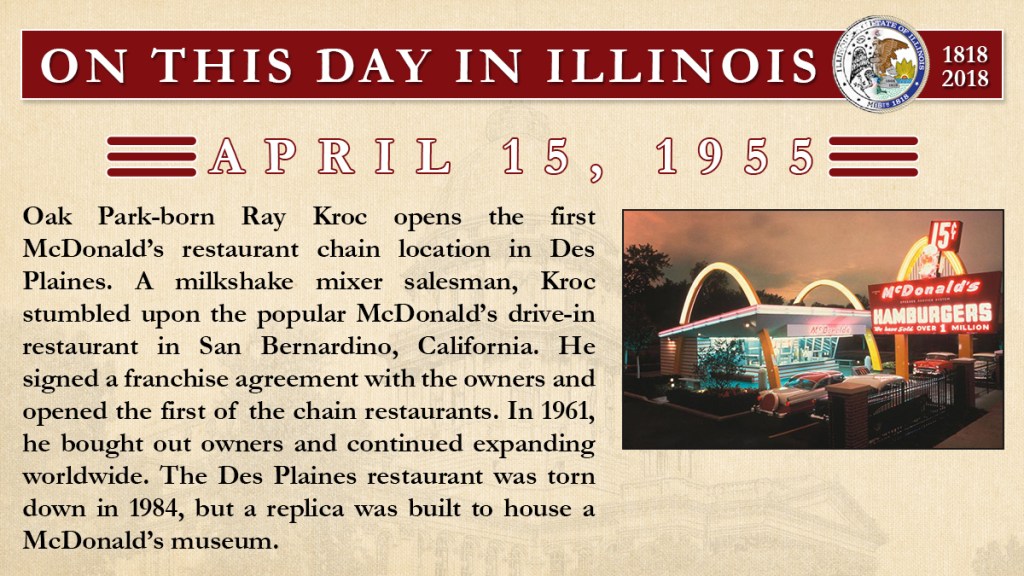
On April 15, 1955, Ray Kroc opened the first McDonald’s restaurant under his new corporation in Des Plaines, Illinois. It was not the first McDonald’s ever built, nor was it the first franchise business in America. Yet this date is widely recognized as the beginning of a new era in franchising, one that introduced a level of systemization, standardization, and scalability that would define modern franchising for decades to come.

Although franchising had existed in various forms for over a century, most notably in the soft drink, automobile, and petroleum industries, Ray Kroc’s vision for McDonald’s introduced a disciplined and replicable model that reshaped the business landscape. What began as a single unit serving a simple menu of burgers, fries, and shakes would evolve into one of the most influential business systems in history. More importantly, the principles established under Kroc’s leadership would become the foundation for the franchise industry as we know it today.

A New Model for Business Replication

What distinguished Ray Kroc’s approach from others before him was not simply the idea of duplication, but the meticulous structure around which that duplication would occur. At the heart of the McDonald’s model was consistency across locations, across operators, and across experiences. Kroc believed that a customer’s experience at a McDonald’s in Illinois should be identical to that of a customer visiting a McDonald’s in Arizona or New York. This was a radical departure from the more flexible, often decentralized franchise models of the time.

To achieve this level of consistency, Kroc introduced what would become some of the most widely emulated practices in franchising: detailed operational manuals, centralized training at the company’s Hamburger University, stringent site selection protocols, and ongoing franchisee support. These elements collectively established the franchise relationship not just as a legal contract, but as a fully integrated business partnership built on mutual success and accountability.

Kroc also understood the value of owning the real estate on which McDonald’s restaurants were built, an approach that allowed the corporation to exert significant control over franchisees while also creating a strong and stable revenue stream. This dual focus on operations and ownership created a model that was both financially sound and operationally efficient.

A Leadership Pipeline That Shaped an Industry

The culture within the McDonald’s system produced more than just successful franchisees, it became a breeding ground for industry leaders. Many executives, operators, and suppliers who cut their teeth within the McDonald’s ecosystem went on to establish or lead some of the most well-known brands in the franchise sector. Their success stories reflect the depth of the McDonald’s influence, which extends far beyond burgers and fries.

Fred Turner, who started as a grill operator in 1956, would eventually become CEO and chairman of McDonald’s. Under his stewardship, the company grew into a global institution, with increasingly refined systems and processes that reinforced the strength of the franchise model. Turner’s leadership further solidified the internal philosophy that training, discipline, and support were essential to sustainable growth.

Ed Rensi, another McDonald’s veteran who began as a grill cook, rose through the ranks to become President and Chief Executive Officer of McDonald’s USA. After leaving the company, Rensi applied the same operational discipline to other ventures, including serving as CEO of Famous Dave’s and as an advisor to several emerging franchise brands.

Rick Rosenfield and Larry Flax, both former McDonald’s franchisees, went on to found California Pizza Kitchen, a more upscale concept, yet one that retained many of the operational efficiencies they learned under Kroc’s system.

Others from the McDonald’s sphere brought their expertise to brands such as Burger King, Wendy’s, and countless franchise development firms, investment groups, and consulting practices. The culture of discipline and performance instilled at McDonald’s carried with them, and they replicated elements of that model in every new venture they touched.

An Enduring Legacy in Today’s Franchising Landscape

Nearly seventy years after Ray Kroc opened that first McDonald’s in Des Plaines, the company’s influence on franchising remains as strong as ever. The operational playbook he created is still used, in some form, by nearly every franchise system in existence today. From quick service restaurants to fitness concepts, from home service brands to education platforms, the core principles—consistency, support, replicability, and brand uniformity can all be traced back to the standards McDonald’s set in motion.

Training universities, franchise manuals, structured discovery processes, and site development protocols were not just innovations; they were institutional advancements that elevated franchising from an entrepreneurial experiment to a legitimate industry. Even the legal and regulatory frameworks that govern franchising today were influenced by the rise and scale of McDonald’s, prompting state and federal agencies to develop guidelines that could support this growing method of business expansion.

Today, as franchising continues to evolve in response to changing consumer behavior, digital transformation, and global market dynamics, the McDonald’s model remains a touchstone. Whether in discussions of operational excellence, franchisee support, or brand scalability, the example set by Ray Kroc and his successors continues to be studied, admired, and, more often than not, emulated.

A Historical Milestone With Modern Relevance

April 15, 1955, marks more than the opening of a restaurant. It marks the genesis of a movement. Ray Kroc may not have invented franchising, but he gave it form, function, and credibility. He showed the world what was possible when systems and people aligned in the pursuit of a singular brand experience delivered at scale.

The lessons learned under the golden arches have found their way into boardrooms, training rooms, and franchise expos across the globe. In doing so, McDonald’s did more than change the way people eat, it changed the way people do business. And it all began on a spring day in suburban Illinois, with a vision, a system, and a determination to do things differently.

Make today a great day. Make it happen. Make it count!

About the Author

Paul Segreto brings over four decades of hands-on experience in franchising, restaurants, and small business development. A passionate advocate for entrepreneurship, Paul has helped countless individuals turn their visions into thriving ventures. Ready to take your next step in business or looking for expert insight to overcome today’s challenges? Reach out directly to Paul at paul@acceler8success.com—your path to success may be one conversation away.

About Acceler8Success Group

Acceler8Success Group is where entrepreneurial ambition meets expert execution. We partner with entrepreneurs, founders, and business leaders to ignite growth through a tailored hybrid appoach of coaching, consulting, and business advisory. Whether you’re launching your first venture or scaling your next big idea, our team is ready to help you accelerate success. Let’s build your future—visit and connect with us today at Acceler8Success.com.

Has the Small Business Success Model Changed?

The small business success model has long been rooted in the expectation of building equity, creating wealth, and establishing a legacy. Small business ownership was seen as a pathway to financial independence, where the end goal extended beyond profitability to the opportunity of selling a thriving business or passing it on to future generations. Today, however, many entrepreneurs find themselves questioning whether this model still holds true or whether it’s been redefined by shifting economic conditions and evolving mindsets.

For many, the reality of small business ownership has shifted from the dream of wealth creation to what feels more like owning a demanding job. This is particularly true for entrepreneurs who find themselves locked into long hours, struggling to achieve consistent profitability. The challenge of turning a profit, compounded by rising costs, supply chain disruptions, and labor shortages, has become a hurdle for even the most dedicated small business owners. The idea of walking away, once unthinkable for those pursuing equity and legacy, now feels like an acceptable option—or even an inevitability—for some.

Economic uncertainty, fueled by the pandemic, has undoubtedly played a role in reshaping perspectives on small business ownership. For many entrepreneurs, the COVID-19 crisis forced a reckoning with financial vulnerability, operational fragility, and the risks inherent in small business ownership. Some business owners chose to pivot, adapt, and rebuild, but others realized that the weight of these challenges might not be worth the potential rewards.

This shift raises important questions: Is the traditional small business success model still viable, or does it need to be reimagined? Should profitability remain the cornerstone of small business ownership, or has the goal of building equity been replaced by survival and stability?

The answer may lie somewhere in between. While the fundamentals of entrepreneurship—profitability, growth, and value creation—remain as relevant as ever, the pathways to achieving those goals require a fresh approach. Here are a few key considerations that could help redefine the small business success model for today’s entrepreneurs:

  1. Mindset Shift: For many, the struggle to achieve profitability and build equity may stem from a mindset shaped by fear and uncertainty. The pandemic heightened a focus on short-term survival, leaving long-term goals sidelined. A renewed focus on strategic planning, adaptability, and innovation can help entrepreneurs regain confidence in the viability of their businesses.
  2. Operational Efficiency: Rising costs and shrinking margins make it more critical than ever for small businesses to optimize operations. From leveraging technology to streamlining workflows, focusing on efficiency can lead to profitability and sustainability.
  3. Value-Driven Models: Building equity requires more than just financial performance—it demands a focus on creating a business with transferable value. Entrepreneurs must look beyond day-to-day operations and consider how to position their businesses as attractive to potential buyers or successors.
  4. Support Systems: Economic uncertainty has underscored the importance of support networks for small business owners. From mentorship and coaching to peer groups and financial advisors, having a strong support system can help entrepreneurs navigate challenges and seize opportunities.
  5. Resilience and Adaptability: Small business owners who survived the pandemic learned valuable lessons about resilience. Embracing change, diversifying revenue streams, and staying agile can help businesses thrive in unpredictable environments.

Ultimately, the small business success model hasn’t fundamentally changed—it’s the environment and mindset surrounding it that have shifted. Profitability, equity, and legacy remain attainable goals, but they require a willingness to adapt, innovate, and rethink traditional approaches. By doing so, small business owners can ensure they’re building more than just a job; they’re creating a sustainable and rewarding future.

Make today a great day. Make it happen. Make it count!

About the Author

With more than 40 years of experience in small business, restaurant, and franchise management, marketing, and development, Paul Segreto is a respected expert in the entrepreneurial world, dedicated to helping others achieve success. Whether you’re an aspiring or current entrepreneur in need of guidance, support, or simply a conversation, you can connect with Paul at paul@acceler8success.com.