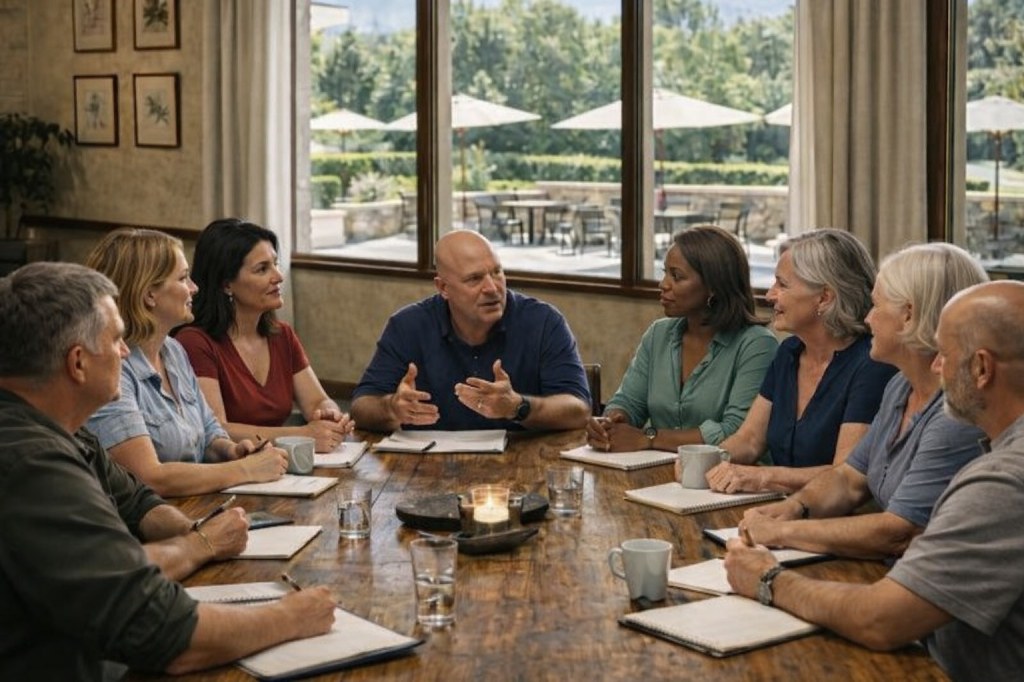
There are moments in the life of a franchise brand when incremental improvement is no longer enough. When dashboards, weekly calls, leadership huddles, and well-intended off-sites all begin to feel like motion without momentum. When decisions are technically sound but strategically thin. When alignment is assumed rather than tested. At that point, what senior leadership needs most is not another initiative, not another consultant in the room, and certainly not another “team-building” exercise disguised as strategy. What is needed is deliberate separation from the business in order to finally think about the business.
A properly designed two- to three-day leadership retreat is not a reward, not a perk, and not a morale exercise. It is a working session in the purest sense of the word. Its purpose is quiet, uninterrupted, disciplined strategic thinking. Under no circumstances should there be calls to or from the office. No “quick check-ins.” No texts framed as emergencies that somehow resolve themselves once answered. No one half-present while mentally managing daily operations. The moment the office is allowed into the room, the retreat loses its power. Strategy does not survive constant interruption.
The environment matters more than most leaders realize. Ideally, this retreat takes place at a destination where cars are unnecessary. A walkable setting, a resort or remote location where the group arrives together and stays together. This is not incidental; it is structural. When people can leave freely, they do. When distractions are nearby, they find their way in. When leaders retreat to separate hotels, bars, or side conversations, alignment fractures before it is ever built. Physical proximity reinforces psychological commitment. If the leadership team is serious about acting as one, it must first be together as one.
This requires intentional togetherness throughout the entire retreat. Meals are shared without exception. Breakfast, lunch, and dinner are all part of the working environment. There is no lingering at the bar after dinner, no splitting off into smaller groups, and no one-on-one conversations between two or three leaders outside the presence of the full team. This is not about control; it is about integrity of process. Alignment built in fragments is not alignment at all. This retreat is about collective truth, not selective consensus.
What this environment is meant to create is the modern equivalent of the old advertising agency war room. When the stakes were high and the ideas mattered, teams locked themselves in, covered walls with thinking, challenged each other relentlessly, discarded what did not hold up, and emerged with clarity forged through friction. Franchisors face stakes that are arguably higher. You are stewarding a brand, a system, and the livelihoods of franchisees who depend on your clarity, discipline, and consistency. Polite agreement is not enough. Intellectual honesty is required.
An often-overlooked component of these retreats is perspective gathered from outside the room, particularly from franchisees. Insight gathered in advance from franchise owners should be brought into the conversation not as an agenda item and not as a referendum on leadership performance, but as context. As texture. As a reality check. These insights are not meant to steer the meeting or dominate it; they exist to ground leadership thinking in the lived experience of the system. What franchisees are feeling, where they are confused, what they are frustrated by, and where they see opportunity provides invaluable perspective that senior leadership cannot generate in isolation. Ignoring that voice weakens strategy; acknowledging it sharpens it.
For this retreat to work, full transparency must be the standard, not the aspiration. There must be explicit permission to disagree, challenge assumptions, and surface uncomfortable truths without fear of being labeled negative, disloyal, or disruptive. If leadership cannot argue productively behind closed doors, conflict will eventually leak into the system in far more damaging ways. This room must be a place where reality is spoken plainly and where silence is treated as a failure of responsibility, not professionalism.
Preparation is non-negotiable. Every participant must arrive ready to lead a portion of the conversation, not with polished presentations designed to defend territory, but with thoughtful frameworks and hard questions. The agenda should be divided into essential categories that define the health of the franchise system. Brand culture deserves more than aspirational language; it requires an honest assessment of what behaviors are rewarded, what behaviors are tolerated, and whether internal conduct matches external promises. Day-to-day operations must be examined for systemic friction, not surface-level inefficiencies. Where does complexity creep in unnecessarily? Where are standards unclear or inconsistently enforced?
Franchise relationships demand particularly candid examination. Are franchisees truly heard, or merely acknowledged? Where has trust eroded, and why? What issues are repeatedly escalated without resolution? Franchise development should be scrutinized beyond pipeline metrics. Are growth decisions aligned with long-term brand health, or are short-term targets quietly driving compromise? What markets, profiles, or deal structures should be paused or eliminated entirely?
The absence of a facilitator is intentional. This is not a workshop; it is a leadership obligation. When an external voice manages the conversation, leaders often unconsciously outsource accountability for the hardest moments. In this setting, the leadership team must self-regulate. It must sit in discomfort long enough to move past defensiveness and into insight. The tension that arises is not a problem to solve; it is evidence that real work is happening.
Equally important is what happens between sessions. Long days spent together reveal how leaders think, listen, react, and recalibrate. Conversations that continue over dinner are not breaks from the work; they are extensions of it. Trust is built not through exercises but through shared intensity, mutual respect, and the experience of staying present when it would be easier to disengage.
The retreat does not end with ideas. It ends with decisions. The group must leave with a clear, agreed-upon plan to move forward, complete with priorities, ownership, timelines, and accountability. Ambiguity is not strategic flexibility; it is deferred conflict. Every leader should leave knowing exactly what they are responsible for and how progress will be measured.
That accountability must continue. Thereafter, the leadership team should commit to meeting once a month for an extended office session dedicated to reviewing progress, challenging assumptions, and editing the plan as reality evolves. Not status updates. Not operational reviews. Strategic recalibration. The retreat sets the direction; disciplined follow-up sustains it.
The real question for franchisors and senior leadership teams is not whether they can afford to step away for two or three days. It is whether they can afford to continue without doing so. When was the last time your leadership team thought deeply instead of reacting quickly? What conversations are being postponed because there never seems to be space for them? What truths are being managed around rather than confronted directly? And if everything were truly on the table, what would need to be said that has not yet been voiced?
Strategic clarity is rarely accidental. It is earned through presence, discipline, and collective courage. It is built in rooms where honesty outweighs comfort, where togetherness is intentional, and where leadership commits to acting as one long after the retreat ends.
About the Author
Paul Segreto brings over forty years of real-world experience in franchising, restaurants, and small business growth. Recognized as one of the Top 100 Global Franchise and Small Business Influencers, Paul is the driving voice behind Acceler8Success Café, a daily content platform that inspires and informs thousands of entrepreneurs nationwide. A passionate advocate for ethical leadership and sustainable growth, Paul has dedicated his career to helping founders, franchise executives, and entrepreneurial families achieve clarity, balance, and lasting success through purpose-driven action.
About Acceler8Success America
Acceler8Success America is a comprehensive business advisory and coaching platform dedicated to helping entrepreneurs, small business owners, and franchise professionals achieve The American Dream Accelerated.
Through a combination of strategic consulting, results-focused coaching, and empowering content, Acceler8Success America provides the tools, insights, and guidance needed to start, grow, and scale successfully in today’s fast-paced world.
With deep expertise in entrepreneurship, franchising, restaurants, and small business development, Acceler8Success America bridges experience and innovation, supporting current and aspiring entrepreneurs as they build sustainable businesses and lasting legacies across America.
Learn more at Acceler8SuccessAmerica.com

You must be logged in to post a comment.