Tag: franchise brands

From Founder’s Vision to Franchise Reality: Why Great Brands Go Back to Basics

There was a moment, long before disclosure documents, franchise sales funnels, conferences, and awards, when a founder looked at a thriving business and asked a simple but consequential question: how can this grow without losing its soul? Franchising was rarely the first answer. It emerged after proof of concept, after customers validated the offering, after systems were tested under pressure, and after the founder recognized a ceiling that could not be broken alone. Franchising began as a solution to scale impact, extend a brand’s reach, and create opportunity for others to succeed through a proven model.

Getting back to basics requires revisiting that original intent. Franchising at its core is not a sales strategy. It is a relationship-based growth model built on shared risk, shared responsibility, and shared upside. The franchisor contributes the brand, the systems, the training, and the ongoing leadership. The franchisee contributes capital, execution, local market knowledge, and daily operational discipline. One without the other does not work. The strength of the system is determined not by how fast it grows, but by how well the relationship functions when growth becomes difficult.

The franchise relationship was never meant to be passive. It was designed to be active, accountable, and dynamic. Franchisors lead, protect, and evolve the brand. Franchisees operate, represent, and deliver on the brand promise every day in their communities. Trust is not implied by the agreement. It is earned through consistency, transparency, communication, and follow-through. When either side forgets this, the system begins to drift from purpose to transaction.

The mindset required for successful franchising is demanding and often underestimated. Founders must transition from operator to leader of leaders. Control gives way to influence. Ego gives way to stewardship. Decisions must be made with the long-term health of the system in mind, not short-term revenue or convenience. Franchisees must embrace the discipline of following systems while still thinking like owners. Independence exists within structure, not outside of it. The commitment on both sides is ongoing, not front-loaded, and it deepens as the brand grows.

“Be in business for yourself, not by yourself” is one of the most quoted lines in franchising, yet one of the most misunderstood. It does not mean abdication of responsibility. It does not mean guaranteed success. It means support exists, guidance is available, and lessons are shared so mistakes do not have to be repeated alone. The moment a franchisee expects the franchisor to run their business for them, or a franchisor expects franchisees to perform without engagement, the phrase loses its meaning.

“We are family” is another familiar refrain. In its best form, it reflects mutual respect, honest dialogue, and a willingness to work through challenges together. In its worst form, it becomes a slogan used to soften hard conversations or excuse poor performance. Real family holds each other accountable. Real family tells the truth even when it is uncomfortable. Real family understands that loyalty is built through actions, not words.

Founders would benefit from asking themselves why franchising was chosen in the first place. Was it to scale responsibly or to accelerate revenue? Was it to create opportunity for others or to offload operational burden? Was the infrastructure built to support franchisees at the level promised, or did growth outpace leadership capacity? Franchisees should ask equally difficult questions. Did you fully understand the role you were stepping into? Are you operating the business as designed or selectively following systems? Are you contributing to the health of the brand or merely extracting from it?

Getting back to basics is not about nostalgia. It is about clarity. It is about reaffirming the purpose of the franchise model and recommitting to the relationship that sustains it. It is about remembering that franchising works best when both sides see themselves as partners in something larger than a single unit or a single quarter.

The call to action is simple and demanding. Pause the noise. Revisit the original promise of the brand. Re-examine how the franchise relationship is being honored today. Initiate honest conversations with franchisees and leadership teams. Invest in communication, training, and alignment before investing in expansion. Measure success not only by unit count, but by trust, consistency, and shared belief in the future.

Franchising did not begin as a shortcut. It began as a commitment. The brands that endure are the ones willing to return to that commitment again and again.


About the Author

Paul Segreto brings over forty years of real-world experience in franchising, restaurants, and small business growth. Recognized as one of the Top 100 Global Franchise and Small Business Influencers, Paul is the driving voice behind Acceler8Success Café, a daily content platform that inspires and informs thousands of entrepreneurs nationwide. A passionate advocate for ethical leadership and sustainable growth, Paul has dedicated his career to helping founders, franchise executives, and entrepreneurial families achieve clarity, balance, and lasting success through purpose-driven action.


About Acceler8Success America

Acceler8Success America is a comprehensive business advisory and coaching platform dedicated to helping entrepreneurs, small business owners, and franchise professionals achieve The American Dream Accelerated.

Through a combination of strategic consulting, results-focused coaching, and empowering content, Acceler8Success America provides the tools, insights, and guidance needed to start, grow, and scale successfully in today’s fast-paced world.

With deep expertise in entrepreneurship, franchising, restaurants, and small business development, Acceler8Success America bridges experience and innovation, supporting current and aspiring entrepreneurs as they build sustainable businesses and lasting legacies across America.

Learn more at Acceler8SuccessAmerica.com
The Franchise ROI Crisis: How Did We Get Here and How Do We Fix It?

Franchising has long been celebrated as one of the most proven pathways to entrepreneurship. For decades, the franchise model balanced opportunity, scalability, and shared success. But today, a growing number of franchisees, franchisors, suppliers, lenders, and industry observers are asking a difficult question: Does modern franchising still work the way it was intended to work? Or has the financial and operational reality of the franchise relationship shifted so dramatically that the model itself needs updating, transforming, or even rethinking entirely?

Margins in many segments are tighter than ever. Buildout costs have climbed from the $250,000–$350,000 range of a decade ago to $500,000–$750,000 or more. Labor costs have risen significantly. Commodities fluctuate at levels that were once considered outliers but now feel permanent. Royalties and required spend commitments often remain fixed regardless of market pressures. And the time to reach ROI, once measured in two to four years for many concepts, now too often stretches into five, six, or even eight years, if it arrives at all. When an owner invests half a million dollars only to generate income that resembles job-level wages, many cannot help but ask whether they purchased a business or simply bought themselves a job. And when the day comes to exit and the resale value barely exceeds depreciated assets plus $25,000 to $30,000, the question becomes even more uncomfortable.

This is not an indictment of franchising. It is a call to confront reality. The franchise model remains powerful when the unit economics support real wealth creation. But when they do not, the system becomes strained. Trust erodes. Misalignment grows. And the relationship that should be mutually beneficial becomes adversarial, defensive, and transactional. The franchise community, franchisors, franchisees, advisors, and suppliers, must decide whether to accept the status quo or rethink the structure in ways that create healthier, more resilient outcomes for everyone involved.

What should be considered? Perhaps the future of franchising requires more than incremental adjustments. Perhaps it requires a reimagining of how risk and reward are shared. Maybe royalties evolve from fixed percentages to performance-based, margin-aware models. Maybe franchisors participate more meaningfully in local profitability rather than simply top-line revenue. Maybe franchisees are offered hybrid structures that lower upfront capital burdens in exchange for shared equity, giving both sides deeper alignment and a shared stake in long-term brand value. Maybe multi-unit pathways become more accessible not through aggressive financing, but through structured internal growth programs that reward operators who consistently perform. Maybe supplier and franchisor rebates, often a sore point for franchisees, are restructured so value flows more transparently and equitably throughout the system. And maybe franchise development itself becomes less about awarding units and more about cultivating entrepreneurs who are prepared for the realities of running high-cost, thin-margin businesses in a competitive and unforgiving market.

There is also space for entirely non-traditional concepts that blend franchising, licensing, partnership, and revenue-sharing arrangements. Models that reduce upfront capital requirements through modular builds, micro-footprints, shared kitchens, or neighborhood partnerships. Models that use technology to reduce labor dependency. Models that allow experienced operators to earn their way into ownership rather than buy their way into it. Models that align franchisor success not simply with brand expansion but with the financial stability of its franchisees.

These ideas are not meant as prescriptive answers. They are starting points. And perhaps the most important question the franchise community must ask is not “What needs to be fixed?” but “What are we willing to change?” Because the market is already changing, consumer behavior is already changing, and the economics of operating a small business—franchised or otherwise—are already changing. The question is whether franchising will evolve proactively or react when forced.

Franchising remains one of the most powerful economic engines in America and around the world. But engines require maintenance. Systems require updates. Relationships require honesty. And business models, even successful ones, eventually require reinvention. The future of franchising will belong to the brands, advisors, franchisees, and leaders who are willing to rethink not just the operational pieces, but the philosophical ones: fairness, alignment, opportunity, accessibility, sustainability, and shared success.

If the franchise community wants a stronger tomorrow, now is the moment for candid conversation. What do you believe needs to change? How do you see the future of franchise relationships? What innovations, structures, or bold ideas would you like to see tested? Whether you are a franchisor, franchisee, supplier, lender, consultant, or industry observer, your perspective matters. Add your voice, your experience, and your vision. This is a dialogue the industry needs—and one only the community itself can lead.


About the Author

Paul Segreto brings over forty years of real-world experience in franchising, restaurants, and small business growth. Recognized as one of the Top 100 Global Franchise and Small Business Influencers, Paul is the driving voice behind Acceler8Success Café, a daily content platform that inspires and informs thousands of entrepreneurs nationwide. A passionate advocate for ethical leadership and sustainable growth, Paul has dedicated his career to helping founders, franchise executives, and entrepreneurial families achieve clarity, balance, and lasting success through purpose-driven action.


About Acceler8Success America

Acceler8Success America is a comprehensive business advisory and coaching platform dedicated to helping entrepreneurs, small business owners, and franchise professionals achieve The American Dream Accelerated.

Through a combination of strategic consulting, results-focused coaching, and empowering content, Acceler8Success America provides the tools, insights, and guidance needed to start, grow, and scale successfully in today’s fast-paced world.

With deep expertise in entrepreneurship, franchising, restaurants, and small business development, Acceler8Success America bridges experience and innovation, supporting current and aspiring entrepreneurs as they build sustainable businesses and lasting legacies across America.

Learn more at Acceler8SuccessAmerica.com

The Heart of a Franchise Brand

Darren Hardy once said, “If people can’t feel your message, they won’t follow your mission.” Few statements speak more directly to the heart of franchising.

Maya Angelou expressed the same truth from a human perspective:
“People will never forget how you made them feel.”

For franchisors, franchisees, and the customers who experience the brand every day, these two insights form the foundation of sustainable success. In franchising, people don’t simply follow a system, they follow what moves them. They follow what they feel.

Franchising is often viewed through the lens of operations, manuals, technology, unit economics, and scalability. All important. All necessary. Yet none of these elements alone inspire belief, loyalty, or lasting brand culture. What people remember most, what creates momentum within a system is how the brand makes them feel.

A franchisee won’t recall every metric or every detail of the financial model. But they will remember whether the franchisor made them feel supported, respected, and set up for success.

A franchisor won’t remember every question a candidate asked in discovery day. But they will remember whether the candidate showed passion, alignment, and belief in the brand’s purpose.

Employees on the front lines won’t remember every policy or training video. But they will remember whether their franchise owner made them feel valued and part of something meaningful.

And customers, the lifeblood of every franchise system, won’t remember every feature of a menu item or every element of a service package. But they will remember whether the brand made them feel welcomed, cared for, and understood.

That emotional connection is everything.

A franchise system comes to life when every stakeholder — franchisor, franchisee, employee, and customer — can feel the mission.
It grows when franchisees feel connected not just to a business model, but to a purpose greater than their individual location.
It becomes a brand when people feel emotionally aligned with the story it tells and the experience it promises.
And it becomes a movement when customers feel seen, heard, and delighted in ways they don’t experience anywhere else.

This is why the franchisor’s most important responsibility isn’t just to build a strong system — it’s to communicate a meaningful one. It’s to lead with clarity and conviction so franchisees don’t simply follow processes; they follow purpose.

Maya Angelou’s wisdom reminds us that emotion is not optional in franchising… it’s essential. Logic may convince someone to buy a franchise, but emotion is what inspires them to stay, grow, and thrive. Trust is the currency of franchisor–franchisee relationships, and it is earned through how people feel interacting with the brand.

Many brands talk endlessly about what they do. Very few communicate why it matters and even fewer ensure every franchisee, every manager, every team member understands that why. But that is what transforms a franchise from a business model into a shared mission. It’s what turns customers into loyalists. It’s what turns a brand into a community.

If the franchisor’s message is polished but cold, franchisees won’t be inspired.
If the franchisee’s culture is efficient but emotionally empty, employees won’t commit.
If the customer experience is consistent but disconnected from real human warmth, the brand will not be remembered.

The strongest franchise brands don’t simply deliver products or services, they deliver experiences. They tell stories rooted in real values, real challenges, and real aspirations. They create a sense of belonging. They make people feel part of something bigger.

People don’t follow operations manuals.
They don’t follow marketing calendars.
They don’t follow strategies alone.

They follow leaders who make them feel confident.
They follow brands that make them feel seen.
They follow missions that make them feel inspired.

If you want your franchise system to thrive, lead with clarity.
If you want your brand to resonate, lead with connection.
If you want your company to become a movement, lead with emotion and with intention.

Because when your franchisees, your employees, and your customers can feel your message, they won’t just follow your mission.
They will champion it.
They will live it.
They will bring others into it.

That is how franchise systems grow.
That is how cultures deepen.
That is how legendary brands are built.

By making people feel — and by giving them something truly worth believing in.


About the Author

Paul Segreto brings over forty years of real-world experience in franchising, restaurants, and small business growth. Recognized as one of the Top 100 Global Franchise and Small Business Influencers, Paul is the driving voice behind Acceler8Success Café, a daily content platform that inspires and informs thousands of entrepreneurs nationwide. A passionate advocate for ethical leadership and sustainable growth, Paul has dedicated his career to helping founders, franchise executives, and entrepreneurial families achieve clarity, balance, and lasting success through purpose-driven action.


About Acceler8Success America

Acceler8Success America is a comprehensive business advisory and coaching platform dedicated to helping entrepreneurs, small business owners, and franchise professionals achieve The American Dream Accelerated.

Through a combination of strategic consulting, results-focused coaching, and empowering content, Acceler8Success America provides the tools, insights, and guidance needed to start, grow, and scale successfully in today’s fast-paced world.

With deep expertise in entrepreneurship, franchising, restaurants, and small business development, Acceler8Success America bridges experience and innovation, supporting current and aspiring entrepreneurs as they build sustainable businesses and lasting legacies across America.

Learn more at Acceler8SuccessAmerica.com

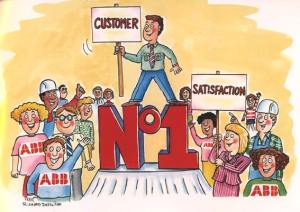
Franchise brands are few and far between on list of top brands in customer service!

Despite repeatedly hearing that exceptional customer service is paramount in today’s economic environment, franchising sees few brands make the list of top brands in customer service.

Do you believe it’s possible for a franchise brand to consistently deliver positively memorable customer service along the likes of Apple and Amazon.com, just to name a few of the brands that are repeatedly mentioned when discussing exceptional customer service and customer experience?

Are franchisors dedicating enough resources on customer service training? Are franchisees focused enough on providing exceptional customer service?

Personally, I believe it all starts with the culture of the Franchisor and the same must be conveyed to franchisees, not only through training, but in the way franchisors treat franchisees. It must be a top-down effect to start the process and must be on the forefront of everyone’s mind at all times and at all levels of the franchise organization. I also believe an extremely high level of providing positively memorable customer experiences is a key component towards improved unit-economics, and also in helping increase interest in franchise opportunities.

50 Brands Named ‘Customer Service Champions’ as posted on MediaPost.com March 15, 2012

In the faltering economy, the importance of customer service has reached new highs, overtaking even price as a purchase determinant, according to a J.D. Power report.

Read the complete article.

Want to learn more about customer service in franchising?

Mindy Golde, Director of Sales at Listen360 (formerly Systino) discusses Consumer Sales and Customer Experience at the upcoming Franchisee Sales & Marketing Summit. Listen to what she has to say about franchise brands and customer service! FranSummit is March 26-29.

Bookmark and Share