As the distance between franchise systems grows, home-based businesses deserve a more serious place in the conversation about sustainable ownership, personal exposure, and building equity.
In yesterday’s article, Franchise Success or Franchise Survival?, I questioned whether the industry’s measures of growth adequately reflect the financial realities of franchise ownership. That discussion leads to another question: If the distance between large restaurant brands and much of the rest of franchising continues to widen, what should prospective owners conclude?
Certainly, they should not conclude that the franchise model has become obsolete.
Franchising remains a credible way to organize business expansion, transfer operating knowledge, establish standards, and provide entrepreneurs with a framework for ownership. But the value of that framework must be evaluated alongside the capital required, the obligations assumed, and the consequences if the business fails to perform.
A recognizable brand does not eliminate financial exposure. A smaller investment does not automatically create a sound opportunity. And an owner’s willingness to work hard does not make every contractual obligation reasonable.
Perhaps the more productive discussion is about how different franchise opportunities distribute risk—and whether the industry has done enough to help prospective owners understand those differences before they sign.
The Real Investment Extends Beyond the Opening Check
Franchise opportunities are frequently introduced through an initial investment range. That number provides a starting point, but it cannot adequately describe everything an individual may be putting at risk.
There is the money required to acquire and launch the business. There is additional working capital needed if sales develop slowly. There is the household income the owner may surrender by leaving employment. Then there are obligations that can extend beyond the business itself.
A commercial lease may require a personal guaranty. Financing and equipment arrangements may introduce additional guarantees. The franchise agreement may contain its own guaranty, along with provisions governing default, termination, and obligations after the relationship ends.
These commitments deserve attention individually and collectively.
The question is not simply, “How much does it cost to get into this business?”
It is also, “What could it cost to get out?”
A venture can close its doors before the owner’s financial obligations end. Depending on the agreements and applicable law, the loss may extend beyond invested capital into personal liability. Forming a business entity does not, by itself, remove obligations an individual separately agrees to guarantee.
For a family investing years of savings, that distinction can determine whether an unsuccessful venture becomes a difficult setback or a financial burden that follows them for years.
It can also affect decisions long before closure. An owner facing substantial guaranteed obligations may continue funding an unprofitable operation because the perceived cost of stopping appears even greater. Additional savings enter the business. Household expenses move onto credit cards. Necessary decisions are postponed while the owner hopes that another season, promotion, or capital infusion will change the outcome.
That is why the full exposure belongs in the original investment analysis.
Personal Guarantees Deserve More Than a Passing Explanation
In my view, personal guarantees belong near the center of the ownership discussion.
They are often treated as another document to execute after the major business decisions have already been made. By then, the prospective franchisee may have spent months exploring the opportunity, developing relationships, arranging financing, and imagining life as a business owner.
The emotional commitment is substantial. The willingness to question a final requirement may be considerably smaller.
Yet a guaranty can be among the most consequential commitments in the entire transaction.
Franchisors, landlords, and lenders have legitimate reasons to seek protection. They commit resources and accept risks of their own. An owner should also expect accountability for payment obligations and conduct.
But legitimate protection still deserves examination for scope, duration, and proportionality.
Should every financial obligation under a franchise agreement carry an unlimited personal guaranty? Should exposure remain unchanged after years of timely payments and compliant operation? Should ordinary commercial failure be treated the same way as fraud, deliberate misuse of a brand, or intentional misconduct?
Those are reasonable questions about how the relationship should be structured.
Perhaps, somewhat tongue in cheek, franchise agreements should supplement their standard risk disclosures with a plain-language warning label similar to those found on cigarettes, alcohol, and other consumer products that carry potential risks:
WARNING: Your financial exposure may exceed your initial investment. Closing this business may not end your obligations. Personal guarantees may put personal assets at risk. Consult independent franchise counsel before signing.
The comparison may raise an eyebrow, but the underlying point deserves serious consideration. The most consequential risks should be understandable in plain language, even when their legal treatment requires hundreds of pages of disclosure documents and agreements.
A warning would hardly replace due diligence or legal advice. It might, however, prompt the question that enthusiasm too often postpones: “Before I focus on what I could earn, do I understand what I could lose—and what I could still owe?”
That question also makes the case for looking more carefully at businesses that may require fewer layers of guaranteed obligations in the first place.
The Serious Case for Home-Based Franchise Ownership
Home-based franchises have sometimes been positioned as the inexpensive end of the market: an entry point for people who cannot afford something larger.
That description overlooks their potential strategic value.
For the right individual and the right operating model, a home-based business can offer an ownership structure that preserves capital, reduces fixed commitments, and allows growth to follow demonstrated demand.
The advantages can include:
- No separate commercial premises lease. A genuinely home-based model may avoid a storefront or office lease and its associated personal guaranty.
- Less capital tied up before revenue begins. There may be little need for extensive construction, customer-facing improvements, or large equipment installations.
- Lower recurring overhead. Eliminating commercial occupancy costs can reduce the revenue needed to cover expenses.
- A possible transition alongside employment. Where the franchise agreement and the work itself permit it, an owner may retain a job while developing the business.
- Continued household income and benefits. Maintaining employment during an initial transition may reduce pressure to fund household expenses through early business withdrawals.
- More gradual expansion. Some models allow staffing, equipment, and service capacity to increase as the customer base develops.
- Greater flexibility in where work is performed. Administration may occur at home while services are delivered remotely or at customer locations.
- A potential path to a transferable business. Customer relationships, recurring revenue, trained personnel, and documented processes can become the foundation of an asset.
These are possible structural advantages, not promises attached to every home-based franchise.
Some require substantial vehicle investments, inventory, storage, employees, specialized equipment, or daytime availability. Others eventually need commercial premises. Working from home may also require attention to local rules, insurance, and residential restrictions.
The meaningful distinction is how the business actually operates and what it obligates the owner to carry.
A business with no storefront can still have significant operating complexity. Conversely, an operation with a modest physical footprint may serve a substantial customer base. The address from which the business is managed tells us relatively little about its ultimate potential.
Keeping a Job Can Be a Disciplined Ownership Strategy
There is a tendency to romanticize the entrepreneurial leap: leave employment, commit fully, and make the business work.
Commitment matters. So does preserving the financial capacity to make good decisions.
For an owner whose business can realistically develop alongside employment, a gradual transition may provide valuable breathing room. Household expenses do not immediately depend on a new venture. Early revenue can help fund operations, marketing, and reserves. The owner can evaluate customer demand before making a larger commitment.
That flexibility can change the quality of decision-making.
An entrepreneur under immediate pressure to replace a salary may accept unprofitable customers, spend too aggressively on questionable leads, or take on debt to sustain expectations that should be reconsidered. An owner with dependable outside income may have more room to build deliberately.
However, the operating requirements must support that approach.
A business requiring weekday sales calls, immediate customer responses, or close supervision of service crews may be a poor fit for someone with an inflexible full-time job. A franchisor’s permission to retain employment does not establish that the arrangement works in practice.
Prospective owners should ask existing franchisees how they managed their schedules, how many hours they actually worked, and when—or whether—they were able to replace their employment income.
They should also understand the cost of hiring someone to perform work they cannot personally cover. A model that appears affordable when the owner provides all the labor may look considerably different when management or service delivery must be paid for from the beginning.
A transition strategy needs an operating plan, realistic milestones, and sufficient resources. Retaining employment can be part of that plan, provided the business has been selected and structured accordingly.
Lower Overhead Can Create Room to Build
The financial significance of a home-based model extends beyond saving rent.
Every recurring expense places a claim on future revenue. When fixed obligations are lower, the owner may have more room to absorb an uneven start, retain cash, or respond to a temporary decline in demand.
That room matters because businesses rarely develop in a straight line.
Customer acquisition takes time. Employees leave. Equipment needs replacement. A promising account may delay a decision. An owner may become ill or face a family emergency.
A business with manageable fixed costs can sometimes adjust to those conditions without requiring an immediate personal cash infusion.
Still, low overhead cannot rescue weak demand or poor margins. A business can operate from a spare bedroom and lose money consistently. Royalties, technology charges, required marketing expenditures, insurance, vehicle costs, and customer acquisition expenses can consume what initially looks like an attractive margin.
The opportunity must demonstrate sound economics after all necessary expenses—and after assigning a reasonable value to the owner’s labor.
Otherwise, a smaller investment may simply purchase an underpaid job.
The more useful comparison is how much revenue each model requires to support operating costs, compensate the owner, service debt, maintain reserves, and provide a return on invested capital. That analysis can reveal advantages that an initial investment figure alone cannot.
Building Equity Does Not Require a Storefront
One of the most persistent misconceptions in business ownership is that a substantial physical presence signals a substantial asset.
A restaurant may have expensive improvements and equipment while producing little transferable value after debt and other obligations are considered. A home-based service business may own relatively few physical assets while developing dependable cash flow and a customer base that another operator would want to acquire.
The value lies in what can be transferred.
Can customers remain with the business after the owner leaves? Are revenues recurring or reasonably repeatable? Are customer relationships spread across enough accounts to avoid dangerous concentration? Can employees or managers perform the work? Are processes documented? Do the records demonstrate earnings after allowing for the cost of replacing the owner?
Those questions help distinguish a business from an individual’s personal workload.
A home-based franchise can begin with the owner doing nearly everything and still develop into an organization with meaningful equity. But that development requires deliberate choices: building systems, developing people, retaining customers, and reducing dependence on the owner.
The franchise agreement also matters. Transfer approval, fees, remaining contract term, renewal requirements, and restrictions can influence whether—and on what terms—the business can be sold. The FTC specifically directs prospective franchisees to examine renewal, termination, and transfer provisions in Item 17 of the disclosure document.
Equity is a possibility to build toward. It should never be presented as an automatic result of purchasing a franchise.
A Smaller Footprint Does Not Resolve the Guaranty Question
Avoiding a commercial lease may remove a major source of exposure. It does not resolve the obligations contained in the franchise agreement.
For that reason, I believe personal guarantees deserve a more deliberate discussion within home-based franchising as well.
Where a financial guaranty is required, prospective owners and their franchise counsel could explore whether the franchisor would consider:
- A defined dollar limit on guaranteed financial obligations.
- A reduction in exposure after a specified period of compliant operation.
- A clearly defined expiration or release mechanism.
- Limits on exposure to claimed future fees after termination.
- A documented release following an approved transfer and satisfaction of agreed obligations.
- Elimination of the financial guaranty where the circumstances support it, while preserving appropriate protections against intentional misconduct.
These are proposals for negotiation, not rights a buyer can assume exist. A franchisor may decline them, and a change to the franchise guaranty would not alter separate obligations to a lender, landlord, or equipment provider.
Nevertheless, an industry that promotes ownership and wealth creation should be willing to discuss how much personal exposure is necessary to support those objectives.
That discussion may also encourage better alignment. If both parties understand the limits of an owner’s resources and the consequences of underperformance, they have a stronger basis for evaluating capitalization, development expectations, support requirements, and the suitability of the candidate.
A Legal Strategy Must Accompany the Business Strategy
Before signing, a franchise candidate should ask their attorney a direct question: “If this business fails, what exactly could I remain personally responsible for?”
The answer needs to go well beyond whether the franchise agreement contains a personal guaranty. It should explain how the franchise agreement, financing documents, equipment arrangements, and any lease obligations interact—and what those commitments could mean for the individual and their household.
A candidate should leave that discussion understanding the potential consequences of failure, not merely knowing that an attorney reviewed the documents.
There is a considerable difference between accepting a business risk and discovering, after the business closes, that the financial exposure extends far beyond the original investment. No owner should first learn the practical meaning of a personal guaranty when a demand for payment arrives.
The questions deserve to be specific:
- What obligations am I personally guaranteeing? Does the guaranty cover unpaid fees alone, or could it extend to other damages, interest, collection expenses, and attorney fees?
- What could remain payable after closure or termination? Could the franchisor assert a claim for future royalties or other amounts, and how would the agreement and applicable law affect that claim?
- What personal assets could be exposed? How do ownership arrangements, applicable exemptions, collateral pledges, and any spouse’s signature affect the analysis?
- Does selling or transferring the business release me? What written releases would be necessary, and from whom?
- Can my exposure be negotiated before signing? Would the franchisor consider a cap, a time limit, a reduction after satisfactory performance, or elimination of particular guaranteed obligations?
- What options would I have if the business became financially unsustainable? What would a negotiated exit, approved transfer, restructuring, or orderly closure require?
These questions should produce a practical explanation tied to the actual documents and the candidate’s circumstances. General assurances about what is “standard” are insufficient.
The same level of attention belongs on default and termination provisions.
A candidate needs to understand what conduct can trigger a default notice, which defaults may be cured, and which circumstances may permit termination without an opportunity to cure, subject to applicable law. Missed payments are an obvious concern, but the review should also address operating standards, reporting requirements, insurance, required training, unauthorized transfers, and other contractual obligations.
Timing can be equally consequential.
When does a notice become effective? What delivery methods are permitted? When does the response or cure period begin? Are deadlines measured in calendar days or business days? What must actually be completed to cure the default? Can repeated defaults create different consequences even when earlier violations were corrected?
The owner should also ask whether a default under one agreement could trigger consequences under another. A problem involving a lease, financing arrangement, development commitment, or related location may have implications beyond the document where it first arises.
A default notice and a termination notice should never be treated as interchangeable. Nor should an owner assume that acknowledging a notice, disputing its allegations, making a partial payment, or discussing a solution automatically satisfies a cure requirement or extends a deadline. Counsel should confirm the applicable requirements and document any agreed extension or resolution.
This understanding should shape how the business is managed from the beginning. Notice addresses must remain current. Important communications need prompt attention. Compliance dates should be tracked. Cash reserves should reflect contractual commitments. The owner should know when to involve counsel before a manageable problem becomes a more serious dispute.
Essentially, the legal strategy must coincide with the business strategy.
If the business plan assumes the owner can retain outside employment, the agreement’s participation requirements must support that approach. If the plan anticipates selling after five years, transfer provisions and remaining contract term matter. If the financial model depends on the ability to reduce operations during a downturn, contractual operating requirements must be understood before that flexibility is assumed.
Legal review has its greatest value when it helps shape the investment decision, the operating plan, and the exit strategy before commitments become binding.
Franchising Needs More Than One Ladder of Success
Perhaps today’s franchising is best understood as several overlapping markets.
There are substantial restaurant and retail investments involving real estate, construction, equipment, and large workforces. There are smaller fixed-location businesses. There are mobile operations, home-based service businesses, and organizations that begin at home before adding employees and facilities.
Separately, there are emerging systems, developing systems, and mature brands.
Those distinctions intersect. A home-based franchise can belong to an established organization. A restaurant franchise can belong to a system still proving its ability to support independent owners.
This is why a single ranking by investment level or unit count tells an incomplete story.
A more useful framework would examine capital intensity, fixed commitments, personal guarantees, operating demands, system maturity, support capacity, and transferability.
Such a framework would help prospective owners understand what kind of opportunity they are evaluating—and whether it fits their financial position and objectives. It would also give responsible franchisors a clearer way to explain their value without relying on comparisons to businesses with entirely different economics.
Perhaps franchising should be more explicitly multi-tiered, with each tier evaluated against the outcomes it is designed to deliver.
Those tiers should describe differences in ownership structure and exposure rather than imply that every entrepreneur ought to progress toward a larger investment.
For some owners, success may be a substantial multi-unit organization. For others, it may be a home-based business with manageable overhead, dependable income, a small team, and eventual resale value.
Both deserve to be taken seriously.
The Franchise Itself Still Has to Earn Its Place
The case for home-based ownership does not automatically establish the case for buying a franchise.
An independent business may offer similar cost advantages without franchise fees, royalties, or contractual restrictions. The prospective franchisee therefore needs a clear explanation of what the system contributes.
Does it provide effective training? Credible customer acquisition methods? Useful technology? Operating processes that improve delivery? Purchasing advantages? Support that helps an owner solve problems and develop the business?
A lesser-known brand may still provide substantial value through its systems and expertise. But those contributions need to be demonstrated.
The right comparison is between the realistic economics of joining the franchise and those of building a comparable independent business, including the time, expense, and uncertainty involved in each.
Lower startup costs should never excuse weak support. Nor should a home-based label distract from an excessive fee burden.
The franchise must improve the ownership proposition enough to justify its continuing cost.
That is an important responsibility for emerging franchisors in particular. A business may be affordable to enter while the system behind it remains inadequately funded or insufficiently developed. Reducing the franchisee’s physical footprint does not reduce the franchisor’s responsibility to provide the support it has committed to deliver.
Final Thoughts
A widening gap between large restaurant brands and other parts of franchising does not invalidate the franchise model. It reinforces the need to evaluate its different forms with greater precision.
Franchising encompasses opportunities with substantially different capital requirements, operating demands, support structures, and personal obligations. Those differences should be central to how opportunities are developed, presented, and evaluated.
Home-based businesses deserve a meaningful place in that discussion. For suitable owners, they may provide a path to entrepreneurship with less capital committed to premises, fewer fixed expenses, and the possibility of maintaining employment while building a customer base. With sound economics and deliberate development, they can become sustainable businesses with transferable value.
However, a lower initial investment cannot substitute for understanding the full commitment. A business operated from home may still carry substantial contractual obligations. A modest franchise fee may be accompanied by a far less modest personal guaranty. The absence of a commercial lease does not establish the limits of an owner’s exposure.
Prospective franchisees must understand both how the opportunity can succeed and what happens if it does not. They need to know what they are guaranteeing, what can trigger default, what opportunities exist to cure, and what obligations may survive termination. Their business plan should reflect those realities.
Franchisors have a corresponding opportunity to examine whether their agreements and practices support the ownership outcomes they promote. Appropriate protections are necessary. So is a thoughtful assessment of whether the allocation of risk is proportionate to the opportunity being offered.
After more than four decades working across entrepreneurship, franchising, restaurants, and small business, I believe a worthwhile ownership opportunity should provide a credible relationship between effort, investment, personal exposure, income, and the potential to build equity.
That relationship can exist in a restaurant, a mobile operation, or a business managed from a home office. Its quality will be determined by the economics, the support, the contractual structure, and the owner’s ability to execute.
The future of franchising should accommodate different levels of ambition and investment while giving each prospective owner a clearer understanding of what success requires—and what failure could cost.
Does your franchise opportunity offer a credible path to sustainable ownership—and do the obligations support that promise?
Whether you are considering franchise ownership, exploring franchising your business, leading an emerging system, or reassessing an existing brand’s development strategy, that question deserves an objective review. One of our core services at Acceler8Success America, we work with entrepreneurs, business owners, and franchise leadership teams to evaluate feasibility, examine business models and development readiness, and identify priorities for a more sustainable path forward. Alongside qualified franchise counsel, that work can help bring the business strategy and legal commitments into clearer alignment. Connect with me directly or comment below to start the conversation.
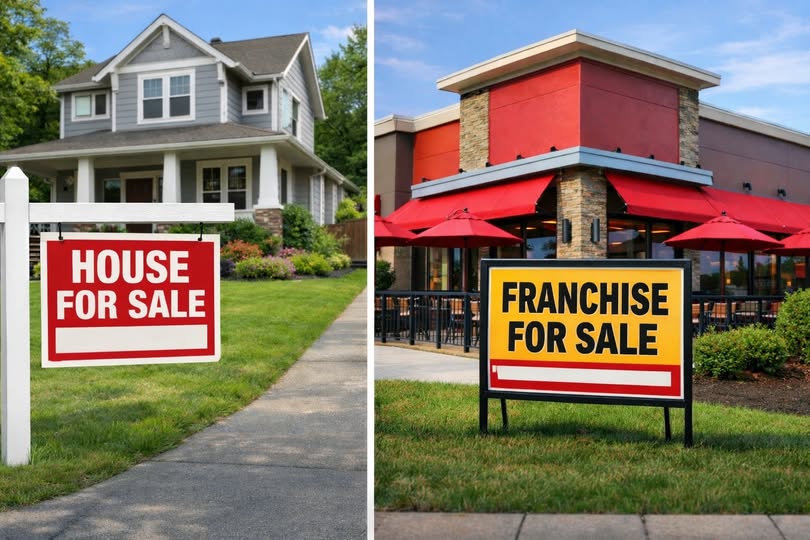
 Some time back, posted on LinkedIn was a discussion about franchising that generalizes negative franchise experiences, places blame for the experiences on “improper practices” and ultimately forces the franchise community to defend its practices, and ultimately, its integrity. My question is, “When do franchisees take responsibility for their own actions, or in many cases, their own in-actions?”


You must be logged in to post a comment.