Tag: franchise relationship

Leading a Franchise System Through the Holidays With Clarity and Care

For franchisors, the holiday season brings its own version of noise and quiet. The system is busy with year-end targets, staffing challenges, family obligations, and the emotional weight that often comes with closing out a year. At the same time, there is a quieter responsibility that never really turns off: being there for franchisees. This season offers a rare opportunity to pause long enough to remember that leadership in franchising is not just about systems, standards, and performance. It is about people. People who are carrying the same pressures you are, often while wearing even more hats at the unit level.

As a franchisor, you are conditioned to keep moving. You solve problems, set direction, protect the brand, and support operators who rely on you for guidance and stability. There is always another call to take, another decision to make, another franchisee who needs clarity or reassurance. Over time, that constant responsibility can quietly shift how you treat yourself. Rest becomes optional. Reflection becomes postponed. Personal well-being becomes something to address later, when things slow down, even though leadership rarely allows for that moment to arrive on its own. The holiday season is a reminder that leadership without renewal eventually becomes unsustainable.

Being present for franchisees requires more than availability. It requires clarity, patience, empathy, and sound judgment. Those qualities do not come from running on empty. Quiet time, whether it is a walk without a phone, an early morning moment of stillness, time in prayer or reflection, or simply stepping away long enough to breathe, is not indulgent. It is part of the responsibility. Franchisees feel the difference when their franchisor is grounded versus exhausted, intentional versus reactive, calm versus overwhelmed. Your internal state shapes the tone of the entire system.

Mental health and physical health are not separate from franchisor leadership. They are foundational to it. When stress goes unchecked, communication suffers. When exhaustion builds, patience shortens. When clarity fades, decisions become reactive instead of strategic. Franchisees look to franchisors not just for answers, but for steadiness. Protecting your well-being protects your ability to show up as a leader they can trust, especially during uncertain or demanding times.

It can feel uncomfortable to step back, particularly during a season centered on giving and service. Franchisors are often wired to put the system first, the brand first, the franchisees first. That instinct comes from care, not ego. But neglecting yourself does not strengthen the system. It weakens it. You cannot consistently support franchisees from a place of depletion. You cannot guide others effectively if you are running on fumes. Taking care of yourself is not a withdrawal from leadership; it is part of sustaining it.

Your reasons for leading a franchise system run deep. They may include your family, your team, the franchisees who invested their futures in your brand, or the legacy you are building. Caring for yourself is not separate from those responsibilities. It is directly tied to them. When you protect your mental health, you protect your ability to listen and lead with intention. When you honor your physical health, you preserve the energy required to serve others. When you prioritize your well-being, you ensure that franchisees receive leadership that is thoughtful, present, and steady, not rushed or reactive.

This holiday season does not need to be about doing more for the sake of appearance. It can be about becoming more aware. Aware of your limits. Aware of the pressures you carry. Aware of the signals your body and mind have been sending. Giving yourself permission to pause is not a sign of weakness. It is a sign of maturity as a leader.

Mental health matters. Physical health matters. Well-being matters. These are not abstract ideas or seasonal talking points. They are leadership truths that franchisors often learn through experience. If there is one message worth carrying into the new year, it is this: you matter. Not only as the steward of a brand or the head of a system, but as a human being. Taking care of yourself is not stepping away from your franchisees. It is one of the most important ways you show up for them.


About the Author

Paul Segreto brings over forty years of real-world experience in franchising, restaurants, and small business growth. Recognized as one of the Top 100 Global Franchise and Small Business Influencers, Paul is the driving voice behind Acceler8Success Café, a daily content platform that inspires and informs thousands of entrepreneurs nationwide. A passionate advocate for ethical leadership and sustainable growth, Paul has dedicated his career to helping founders, franchise executives, and entrepreneurial families achieve clarity, balance, and lasting success through purpose-driven action.


About Acceler8Success America

Acceler8Success America is a comprehensive business advisory and coaching platform dedicated to helping entrepreneurs, small business owners, and franchise professionals achieve The American Dream Accelerated.

Through a combination of strategic consulting, results-focused coaching, and empowering content, Acceler8Success America provides the tools, insights, and guidance needed to start, grow, and scale successfully in today’s fast-paced world.

With deep expertise in entrepreneurship, franchising, restaurants, and small business development, Acceler8Success America bridges experience and innovation, supporting current and aspiring entrepreneurs as they build sustainable businesses and lasting legacies across America.

Learn more at Acceler8SuccessAmerica.com
Planning Is Leadership: An Awakening for Franchisors Entering a New Year

The arrival of a new year has a way of demanding attention. Calendars reset. Forecasts are refreshed. Decks are rebuilt. Yet for franchisors, the turning of the year should be less about routine planning and more about an awakening. A moment of deliberate pause. A recognition that planning is not an administrative exercise, but a responsibility that shapes livelihoods, investments, and trust across an entire system.

Too often, planning begins with ambition before it begins with truth. Growth targets are set before lessons are absorbed. Initiatives are launched before friction is understood. A more grounded approach starts by asking harder questions. What did we believe a year ago that turned out not to be true? Where did we underestimate the strain on franchisees? Where did we mistake activity for progress? This kind of reflection can feel uncomfortable, but without it, planning becomes performance rather than preparation.

An awakened planning process forces leadership to slow down long enough to listen. Not just to reports and dashboards, but to the lived experience of those inside the system. Operations teams feel the pressure points first. Support teams hear the frustration before it shows up in metrics. Development sees the hesitations of prospects long before deals stall. Finance understands the limits of what can be sustained. When these voices are invited into the planning room, the plan gains depth, not complexity.

Franchisees must be more than an audience for the plan; they must be part of its formation. They are not theoretical operators. They are the ones hiring in tight labor markets, managing rising costs, responding to customer expectations that shift faster than brand standards can be rewritten. Their perspective grounds planning in reality. Inclusion here is not symbolic. It is strategic. A plan shaped with franchisee input is more likely to be executed with discipline, because it reflects conditions as they truly exist, not as leadership wishes them to be.

Awakened planning also expands the definition of stakeholder. Suppliers are not line items. Vendors are not interchangeable. Professional service providers are not merely outsourced functions. These partners operate at the edges of the system, often seeing disruption before it reaches the core. Ignoring their insights narrows vision. Inviting them into the conversation strengthens resilience. When partners understand where the brand is headed, they are better positioned to support, innovate, and adapt alongside it.

Then there is the customer, the most powerful stakeholder and the one most often spoken for rather than listened to. Customers rarely articulate strategy, but their behavior speaks volumes. What they buy, what they ignore, what they complain about, and what they praise all reveal the truth of the brand promise. Planning that fails to confront this reality risks internal alignment while drifting further from the market. An awakened franchisor treats customer insight not as a marketing input, but as a strategic compass.

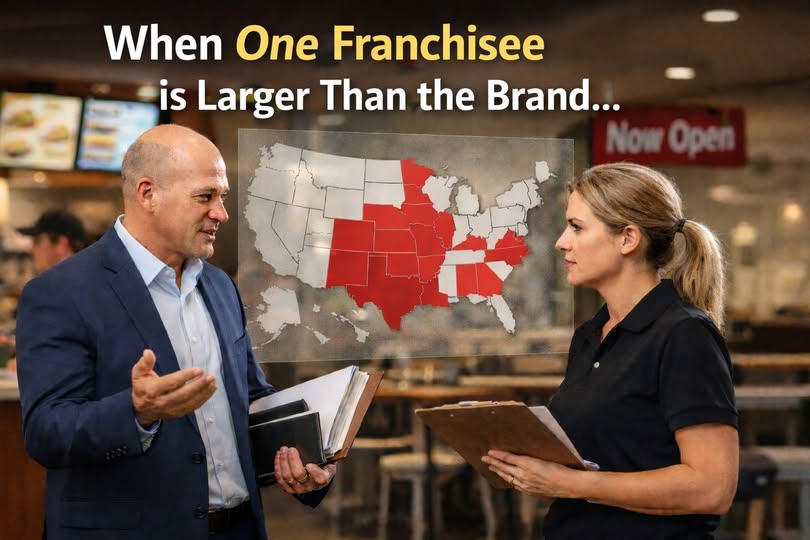
Benchmarks, when viewed through this lens, become more than numbers. They become signals. Same-store sales, profitability, retention, operational consistency, and brand engagement all tell a story about the health of the system. Setting these benchmarks requires restraint and courage. Inflated targets may inspire briefly, but they corrode credibility over time. Realistic benchmarks, transparently chosen, create momentum because they are believed.

It is also worth acknowledging a quiet truth many leaders carry into the new year. Planning does not always happen on schedule. January arrives, the pace accelerates, and suddenly it feels as though the moment has passed. It has not. It is never too late to plan. In fact, planning in January, even when you feel behind, is often more honest than planning months earlier. Real conditions are visible. Early data is already emerging. The urgency sharpens focus. A delayed plan is far more powerful than no plan at all, and a reset done with clarity can still shape the remaining eleven months in meaningful ways.

Yet even the most thoughtful plan is only a starting point. The year ahead will not unfold as predicted. It never does. Monitoring the plan requires humility and discipline. Regular, structured reviews force leadership to confront what is working and what is not. Quarterly conversations are not about defending decisions made months earlier; they are about recalibrating with clarity. The strongest organizations do not cling to tactics out of pride. They adjust early, decisively, and with intention.

Change, however, must be anchored. Goals represent commitment. Tactics represent movement. When conditions shift, movement may change, but commitment should not. This distinction matters. Franchisees lose confidence when goals feel disposable. They gain confidence when leadership explains how and why the path is evolving while the destination remains steady.

Communication becomes the connective tissue of the entire process. Silence breeds speculation. Overly polished updates breed skepticism. What builds trust is consistent, honest communication about progress, setbacks, and decisions. When franchisors communicate openly, they invite the system into shared accountability. The plan stops belonging to corporate and starts belonging to the brand.

Planning for a new year, at its highest level, is an act of stewardship. It acknowledges that franchising is not just a growth model, but a relationship model. Every decision echoes across operators, partners, employees, and customers. An awakened approach to planning respects that weight. It resists shortcuts. It values inclusion over illusion. It recognizes that certainty is rare, but clarity is attainable.

The challenge now is not to admire the idea of planning, but to confront it. Not to ask whether a plan exists, but whether it is alive. Is your plan grounded in truth or propped up by optimism? Have you invited the voices that will be most affected by it, or only those who will approve it? Do your franchisees understand the plan well enough to defend it, execute it, and believe in it? Are you reviewing it with discipline, or only revisiting it when results disappoint?

If you find yourself already in January and behind, the challenge is sharper still. Pause anyway. Gather the right people. Ask the uncomfortable questions. Build the plan you wish you had started earlier. Then commit to managing it relentlessly for the rest of the year. The cost of delayed planning is real, but the cost of avoiding it is far greater.

The call to action is simple, but not easy. Treat planning as leadership, not logistics. Make it inclusive, measurable, and visible. Revisit it often. Communicate it clearly. Adjust without abandoning it. Because in franchising, the future is rarely decided by the strength of the idea, but by the discipline of the plan and the courage to lead it forward, together.


About the Author

Paul Segreto brings over forty years of real-world experience in franchising, restaurants, and small business growth. Recognized as one of the Top 100 Global Franchise and Small Business Influencers, Paul is the driving voice behind Acceler8Success Café, a daily content platform that inspires and informs thousands of entrepreneurs nationwide. A passionate advocate for ethical leadership and sustainable growth, Paul has dedicated his career to helping founders, franchise executives, and entrepreneurial families achieve clarity, balance, and lasting success through purpose-driven action.


About Acceler8Success America

Acceler8Success America is a comprehensive business advisory and coaching platform dedicated to helping entrepreneurs, small business owners, and franchise professionals achieve The American Dream Accelerated.

Through a combination of strategic consulting, results-focused coaching, and empowering content, Acceler8Success America provides the tools, insights, and guidance needed to start, grow, and scale successfully in today’s fast-paced world.

With deep expertise in entrepreneurship, franchising, restaurants, and small business development, Acceler8Success America bridges experience and innovation, supporting current and aspiring entrepreneurs as they build sustainable businesses and lasting legacies across America.

Learn more at Acceler8SuccessAmerica.com
The Franchise ROI Crisis: How Did We Get Here and How Do We Fix It?

Franchising has long been celebrated as one of the most proven pathways to entrepreneurship. For decades, the franchise model balanced opportunity, scalability, and shared success. But today, a growing number of franchisees, franchisors, suppliers, lenders, and industry observers are asking a difficult question: Does modern franchising still work the way it was intended to work? Or has the financial and operational reality of the franchise relationship shifted so dramatically that the model itself needs updating, transforming, or even rethinking entirely?

Margins in many segments are tighter than ever. Buildout costs have climbed from the $250,000–$350,000 range of a decade ago to $500,000–$750,000 or more. Labor costs have risen significantly. Commodities fluctuate at levels that were once considered outliers but now feel permanent. Royalties and required spend commitments often remain fixed regardless of market pressures. And the time to reach ROI, once measured in two to four years for many concepts, now too often stretches into five, six, or even eight years, if it arrives at all. When an owner invests half a million dollars only to generate income that resembles job-level wages, many cannot help but ask whether they purchased a business or simply bought themselves a job. And when the day comes to exit and the resale value barely exceeds depreciated assets plus $25,000 to $30,000, the question becomes even more uncomfortable.

This is not an indictment of franchising. It is a call to confront reality. The franchise model remains powerful when the unit economics support real wealth creation. But when they do not, the system becomes strained. Trust erodes. Misalignment grows. And the relationship that should be mutually beneficial becomes adversarial, defensive, and transactional. The franchise community, franchisors, franchisees, advisors, and suppliers, must decide whether to accept the status quo or rethink the structure in ways that create healthier, more resilient outcomes for everyone involved.

What should be considered? Perhaps the future of franchising requires more than incremental adjustments. Perhaps it requires a reimagining of how risk and reward are shared. Maybe royalties evolve from fixed percentages to performance-based, margin-aware models. Maybe franchisors participate more meaningfully in local profitability rather than simply top-line revenue. Maybe franchisees are offered hybrid structures that lower upfront capital burdens in exchange for shared equity, giving both sides deeper alignment and a shared stake in long-term brand value. Maybe multi-unit pathways become more accessible not through aggressive financing, but through structured internal growth programs that reward operators who consistently perform. Maybe supplier and franchisor rebates, often a sore point for franchisees, are restructured so value flows more transparently and equitably throughout the system. And maybe franchise development itself becomes less about awarding units and more about cultivating entrepreneurs who are prepared for the realities of running high-cost, thin-margin businesses in a competitive and unforgiving market.

There is also space for entirely non-traditional concepts that blend franchising, licensing, partnership, and revenue-sharing arrangements. Models that reduce upfront capital requirements through modular builds, micro-footprints, shared kitchens, or neighborhood partnerships. Models that use technology to reduce labor dependency. Models that allow experienced operators to earn their way into ownership rather than buy their way into it. Models that align franchisor success not simply with brand expansion but with the financial stability of its franchisees.

These ideas are not meant as prescriptive answers. They are starting points. And perhaps the most important question the franchise community must ask is not “What needs to be fixed?” but “What are we willing to change?” Because the market is already changing, consumer behavior is already changing, and the economics of operating a small business—franchised or otherwise—are already changing. The question is whether franchising will evolve proactively or react when forced.

Franchising remains one of the most powerful economic engines in America and around the world. But engines require maintenance. Systems require updates. Relationships require honesty. And business models, even successful ones, eventually require reinvention. The future of franchising will belong to the brands, advisors, franchisees, and leaders who are willing to rethink not just the operational pieces, but the philosophical ones: fairness, alignment, opportunity, accessibility, sustainability, and shared success.

If the franchise community wants a stronger tomorrow, now is the moment for candid conversation. What do you believe needs to change? How do you see the future of franchise relationships? What innovations, structures, or bold ideas would you like to see tested? Whether you are a franchisor, franchisee, supplier, lender, consultant, or industry observer, your perspective matters. Add your voice, your experience, and your vision. This is a dialogue the industry needs—and one only the community itself can lead.


About the Author

Paul Segreto brings over forty years of real-world experience in franchising, restaurants, and small business growth. Recognized as one of the Top 100 Global Franchise and Small Business Influencers, Paul is the driving voice behind Acceler8Success Café, a daily content platform that inspires and informs thousands of entrepreneurs nationwide. A passionate advocate for ethical leadership and sustainable growth, Paul has dedicated his career to helping founders, franchise executives, and entrepreneurial families achieve clarity, balance, and lasting success through purpose-driven action.


About Acceler8Success America

Acceler8Success America is a comprehensive business advisory and coaching platform dedicated to helping entrepreneurs, small business owners, and franchise professionals achieve The American Dream Accelerated.

Through a combination of strategic consulting, results-focused coaching, and empowering content, Acceler8Success America provides the tools, insights, and guidance needed to start, grow, and scale successfully in today’s fast-paced world.

With deep expertise in entrepreneurship, franchising, restaurants, and small business development, Acceler8Success America bridges experience and innovation, supporting current and aspiring entrepreneurs as they build sustainable businesses and lasting legacies across America.

Learn more at Acceler8SuccessAmerica.com

The Franchise Relationship: Defined by Contract, Confused by Language?

The franchise relationship is one of the most talked about, most misunderstood, and most emotionally charged relationships in business. It starts innocently enough with language. How the parties refer to each other. How the documents define them. How they speak about themselves in meetings, conferences, and discovery days. Words matter because words shape expectations, and expectations, when misaligned, quietly erode trust long before conflict ever surfaces.

Are franchisors and franchisees partners? In spirit, many would like to believe so. Partnership implies shared goals, mutual respect, aligned incentives, and a belief that success is created together. Legally, though, they are not partners. The franchise agreement is explicit about that. No equity is shared. No joint ownership exists. No implied partnership is intended. That distinction is not accidental. It is foundational. Yet the emotional expectation of partnership often lingers, especially on the franchisee side, and sometimes on the franchisor side as well. That tension alone is worth sitting with.

Is a franchisee a business owner? Yes, unequivocally. The franchisee owns a business entity, assumes financial risk, signs personal guarantees, hires employees, pays rent, pays vendors, manages cash flow, and is responsible for success or failure within the four walls of their operation. Is a franchisee a franchise owner? That answer becomes more nuanced. The brand, the trademarks, the systems, and the intellectual property are not owned. They are licensed. The right to use them is governed, controlled, and conditional. Ownership of the business exists, but ownership of the brand does not. That distinction is often glossed over until conflict arises, at which point it becomes painfully clear.

Perhaps that is why the term “Franchise Business Owner” feels more accurate. It acknowledges autonomy without overstating control. It recognizes ownership without blurring the legal reality of a license-based relationship. Still, the question lingers. If we struggle to clearly name the relationship, how can we reasonably expect both sides to instinctively understand what the relationship should entail?

The franchise relationship is not an employer-employee relationship. Every franchise agreement says so. Every disclosure document reinforces it. Yet in practice, some franchisors, or more commonly managers within franchise organizations, treat franchisees as if they were employees. Mandates delivered without context. Corrections issued without collaboration. Expectations communicated without listening. The irony is that this behavior often stems not from malice, but from uncertainty. When leaders do not fully understand how to lead independent business owners, they default to the management styles they know best. Control replaces influence. Enforcement replaces alignment.

At the same time, some franchisees unconsciously drift toward employee-like thinking. Waiting to be told what to do. Expecting protection from market realities. Assuming the franchisor will solve problems that live squarely inside the franchisee’s own business. That mindset quietly undermines the very independence that drew many people to franchising in the first place.

What, then, is the relationship really? Interdependent feels close, but even that word deserves scrutiny. The success of the franchisor depends on franchisee performance, brand consistency, and system-wide health. The success of the franchisee depends on the strength of the brand, the relevance of the system, and the quality of leadership and support. And yet, the dependence is not absolute. A franchisor can survive the loss of individual franchisees. A franchisee can sometimes survive despite a weak franchisor, at least for a while. Interdependence exists, but only to a point.

And just when we think we have our arms around the core relationship, we introduce a new layer of complexity: third parties involved in the franchise sales and development process. Broker. Consultant. Coach. Advisor. Agent. These titles are used interchangeably, often casually, sometimes strategically, and rarely with precision. Each implies a different role, a different duty, and a different set of loyalties. Yet how often are those distinctions clearly explained to a prospective franchisee? How often does the industry pause to define who truly represents whom, and in what capacity?

Is a broker advocating for the buyer, the seller, or the transaction itself? Is a consultant independent, or compensated by the brand? Is a coach preparing someone for ownership, or nudging them toward a deal? Is an advisor offering objective guidance, or operating under an agency relationship that carries fiduciary implications? If the people closest to the process cannot clearly articulate these roles, what chance does a first-time franchise buyer have?

Then there is the language around the transaction itself. Are franchises bought and sold? Are they awarded? Granted? Approved? Earned? Each word carries weight. Buying suggests ownership. Selling implies a transferable asset. Awarding implies selectivity and merit. Granting reinforces the licensing nature of the relationship. The industry uses all of these terms, often in the same conversation, without stopping to reconcile the contradictions.

And then we wonder why so many people misunderstand franchising. Why expectations clash. Why disappointment follows excitement. Why litigation replaces collaboration. Why trust erodes where optimism once lived.

This gray space is where most franchise tension resides. Too much control and franchisees feel suffocated. Too little leadership and they feel abandoned. Too much ambiguity and misunderstanding thrives. Somewhere in between is a relationship that works, but it requires intentional effort, disciplined language, and a shared commitment to clarity.

Maybe the real question is not what we call the relationship, but whether the behavior on all sides matches the reality of what it is and what it is not. Independent, but not isolated. Guided, but not managed. Supported, but not controlled. Transparent, but not romanticized.

If franchising is to evolve, perhaps it starts with more honest conversations about language, roles, power, responsibility, and respect. Perhaps franchisors need to ask themselves whether they are leading business owners or managing locations. Perhaps franchisees need to ask themselves whether they are thinking like owners or waiting like employees. And perhaps the industry as a whole needs to take a hard look at the words it uses every day and the expectations those words create.

What do you call the franchise relationship today, and does the way it is lived match the way it is defined?

About the Author

Paul Segreto brings over forty years of real-world experience in franchising, restaurants, and small business growth. Recognized as one of the Top 100 Global Franchise and Small Business Influencers, Paul is the driving voice behind Acceler8Success Café, a daily content platform that inspires and informs thousands of entrepreneurs nationwide. A passionate advocate for ethical leadership and sustainable growth, Paul has dedicated his career to helping founders, franchise executives, and entrepreneurial families achieve clarity, balance, and lasting success through purpose-driven action.

About Acceler8Success America

Acceler8Success America is a comprehensive business advisory and coaching platform dedicated to helping entrepreneurs, small business owners, and franchise professionals achieve The American Dream Accelerated.

Through a combination of strategic consulting, results-focused coaching, and empowering content, Acceler8Success America provides the tools, insights, and guidance needed to start, grow, and scale successfully in today’s fast-paced world.

With deep expertise in entrepreneurship, franchising, restaurants, and small business development, Acceler8Success America bridges experience and innovation, supporting current and aspiring entrepreneurs as they build sustainable businesses and lasting legacies across America.

Learn more at Acceler8SuccessAmerica.com
The Heart of a Franchise Brand

Darren Hardy once said, “If people can’t feel your message, they won’t follow your mission.” Few statements speak more directly to the heart of franchising.

Maya Angelou expressed the same truth from a human perspective:
“People will never forget how you made them feel.”

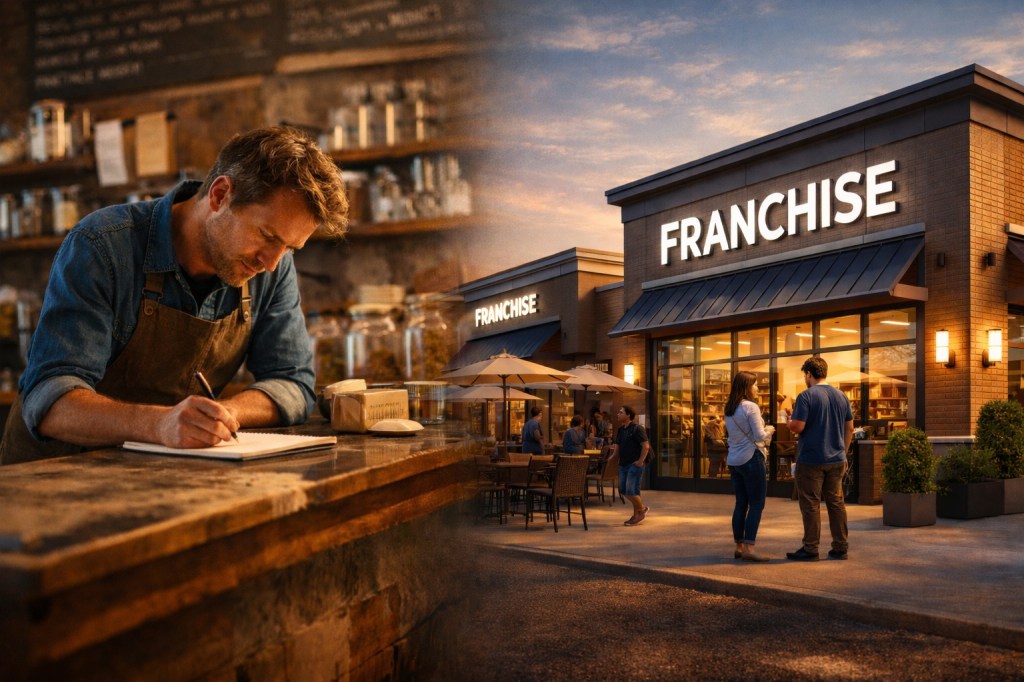
For franchisors, franchisees, and the customers who experience the brand every day, these two insights form the foundation of sustainable success. In franchising, people don’t simply follow a system, they follow what moves them. They follow what they feel.

Franchising is often viewed through the lens of operations, manuals, technology, unit economics, and scalability. All important. All necessary. Yet none of these elements alone inspire belief, loyalty, or lasting brand culture. What people remember most, what creates momentum within a system is how the brand makes them feel.

A franchisee won’t recall every metric or every detail of the financial model. But they will remember whether the franchisor made them feel supported, respected, and set up for success.

A franchisor won’t remember every question a candidate asked in discovery day. But they will remember whether the candidate showed passion, alignment, and belief in the brand’s purpose.

Employees on the front lines won’t remember every policy or training video. But they will remember whether their franchise owner made them feel valued and part of something meaningful.

And customers, the lifeblood of every franchise system, won’t remember every feature of a menu item or every element of a service package. But they will remember whether the brand made them feel welcomed, cared for, and understood.

That emotional connection is everything.

A franchise system comes to life when every stakeholder — franchisor, franchisee, employee, and customer — can feel the mission.
It grows when franchisees feel connected not just to a business model, but to a purpose greater than their individual location.
It becomes a brand when people feel emotionally aligned with the story it tells and the experience it promises.
And it becomes a movement when customers feel seen, heard, and delighted in ways they don’t experience anywhere else.

This is why the franchisor’s most important responsibility isn’t just to build a strong system — it’s to communicate a meaningful one. It’s to lead with clarity and conviction so franchisees don’t simply follow processes; they follow purpose.

Maya Angelou’s wisdom reminds us that emotion is not optional in franchising… it’s essential. Logic may convince someone to buy a franchise, but emotion is what inspires them to stay, grow, and thrive. Trust is the currency of franchisor–franchisee relationships, and it is earned through how people feel interacting with the brand.

Many brands talk endlessly about what they do. Very few communicate why it matters and even fewer ensure every franchisee, every manager, every team member understands that why. But that is what transforms a franchise from a business model into a shared mission. It’s what turns customers into loyalists. It’s what turns a brand into a community.

If the franchisor’s message is polished but cold, franchisees won’t be inspired.
If the franchisee’s culture is efficient but emotionally empty, employees won’t commit.
If the customer experience is consistent but disconnected from real human warmth, the brand will not be remembered.

The strongest franchise brands don’t simply deliver products or services, they deliver experiences. They tell stories rooted in real values, real challenges, and real aspirations. They create a sense of belonging. They make people feel part of something bigger.

People don’t follow operations manuals.
They don’t follow marketing calendars.
They don’t follow strategies alone.

They follow leaders who make them feel confident.
They follow brands that make them feel seen.
They follow missions that make them feel inspired.

If you want your franchise system to thrive, lead with clarity.
If you want your brand to resonate, lead with connection.
If you want your company to become a movement, lead with emotion and with intention.

Because when your franchisees, your employees, and your customers can feel your message, they won’t just follow your mission.
They will champion it.
They will live it.
They will bring others into it.

That is how franchise systems grow.
That is how cultures deepen.
That is how legendary brands are built.

By making people feel — and by giving them something truly worth believing in.


About the Author

Paul Segreto brings over forty years of real-world experience in franchising, restaurants, and small business growth. Recognized as one of the Top 100 Global Franchise and Small Business Influencers, Paul is the driving voice behind Acceler8Success Café, a daily content platform that inspires and informs thousands of entrepreneurs nationwide. A passionate advocate for ethical leadership and sustainable growth, Paul has dedicated his career to helping founders, franchise executives, and entrepreneurial families achieve clarity, balance, and lasting success through purpose-driven action.


About Acceler8Success America

Acceler8Success America is a comprehensive business advisory and coaching platform dedicated to helping entrepreneurs, small business owners, and franchise professionals achieve The American Dream Accelerated.

Through a combination of strategic consulting, results-focused coaching, and empowering content, Acceler8Success America provides the tools, insights, and guidance needed to start, grow, and scale successfully in today’s fast-paced world.

With deep expertise in entrepreneurship, franchising, restaurants, and small business development, Acceler8Success America bridges experience and innovation, supporting current and aspiring entrepreneurs as they build sustainable businesses and lasting legacies across America.

Learn more at Acceler8SuccessAmerica.com
8 Key Focus Areas of Successful Franchise Leadership

From professional athletes to high-tech programmers, every career requires different talents. However, what makes a career as a leader of a franchise system different are skills that do not have to be acquired through rigorous training or years of schooling.

Instead, success in franchise leadership can come to anyone who is determined, dedicated and willing to invest in their personal development—and will pay off tremendously by developing a network of franchisees who respect your leadership traits. Below are key focus areas for individuals to become successful brand executives and great well-respected leaders:

  1. Consistency: As the franchisor, your franchisees will be looking up to you. Being consistent and following through on your word will let them know that they have a leader they can count on.
  2. Planning: Your franchisees are invested in the business, so it’s natural that they will want to know where it is headed and the steps necessary to get there.
  3. Communications: Make certain to share your vision with franchisees as well as with your team in an open, transparent manner to ensure confidence at all levels.
  4. Support: As a franchisor, everyone in the organization is your team member—meaning you have a vital role as a pillar of support and encouragement.
  5. Positivity: Focus on creating a positive space for your franchisees. This will help strengthen your bond and let them know you have their back.
  6. Respect: Every franchisee makes mistakes—it’s just a part of the business. Making sure your franchisees know you still respect them even when they slip up will go a long way. The same will be true for franchisor mistakes, but only if earned through mutual respect.
  7. Face Time: You can’t be expected to visit every franchise location every day. However, the occasional impromptu visit will help you learn more about the day-to-day operations and struggles of each individual location—and let them know you’re invested in solving their problems.
  8. Passion: Franchising means getting to work with talented, passionate colleagues who love what they do. Believe in the brand and believe in your franchisees—your passion will shine through and inspire them, as well.