Tag: franchise relationship

Franchise Family: More Than a Phrase, A Responsibility

The strength of a franchise system is often measured in unit counts, revenue growth, and brand consistency. But the true foundation—the part that determines whether a system thrives long-term or simply survives is far more personal. It lives in the relationships between franchisor and franchisee, beyond the dashboards, KPIs, and operational checklists.

Too often, communication within a franchise system becomes transactional. It revolves around performance metrics, compliance, marketing calendars, and operational updates. Necessary? Absolutely. Sufficient? Not even close.

Franchisees are not just operators of a system. They are individuals. They are spouses, parents, partners, and members of their communities. They carry responsibilities, pressures, and challenges that extend far beyond the four walls of their business. When communication is limited strictly to business matters, something critical is lost—the human connection that builds trust, loyalty, and long-term alignment.

Reaching out simply to ask, “How are you doing?” is not a soft gesture. It is a strategic one. It signals awareness. It communicates that the relationship is not conditional on performance. It reinforces that the franchisor sees the franchisee as more than a unit in a system.

And when that question extends further, into family, into life outside the business, it creates a different kind of dialogue. One rooted in authenticity. One that allows franchisees to be open, not just about operational challenges, but about the real pressures they may be carrying.

Mental well-being must be part of that conversation. The demands of operating a business, particularly in industries like restaurants and service, can be relentless. Long hours, staffing challenges, financial pressure, and the constant need to perform can take a toll. If franchisors are not actively creating space for these conversations, they are missing a critical responsibility.

This does not require formal programs or complex initiatives to begin. It starts with intention. A call that is not tied to performance. A message that has no agenda other than checking in. A willingness to listen without immediately trying to solve.

When franchisees know that someone is there for them, not just as a business partner, but as a person, it changes the dynamic. Trust deepens. Communication becomes more open. Challenges are surfaced earlier. And perhaps most importantly, franchisees feel supported in a way that extends beyond the business itself.

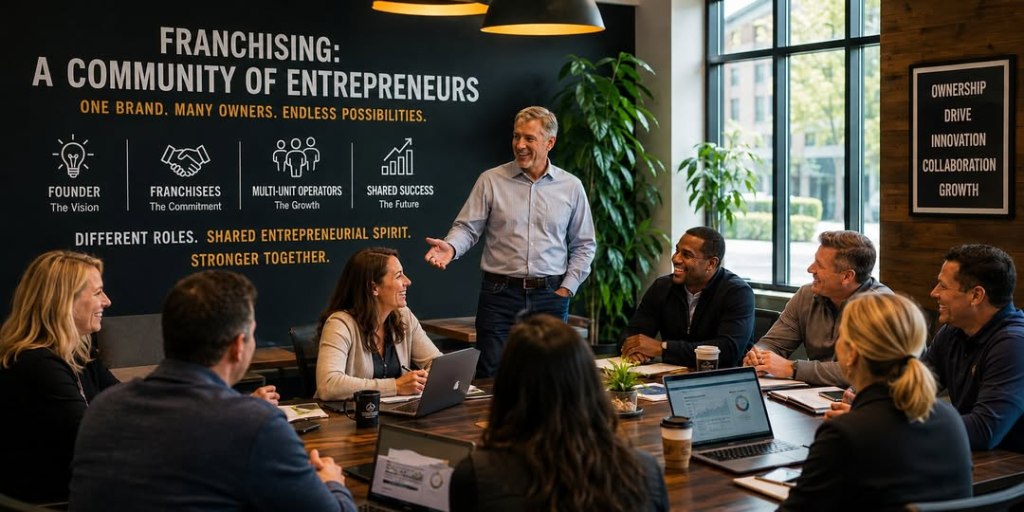
The phrase “franchise family” is often used, but too rarely lived. Family implies presence. It implies care. It implies showing up even when there is nothing to gain in the moment. It means not taking individuals for granted, especially those who are on the front lines building the brand every day.

Living that statement requires action.

It can be as simple as inviting a franchisee to lunch. Not a formal meeting. Not an agenda-driven discussion. Just time together. It can extend to small group dinners where franchisees can connect with one another in a more relaxed environment. These moments often lead to conversations that would never happen in a conference room or on a scheduled call.

For those willing to take it a step further, consider low-key weekend retreats. Nothing overly structured or corporate. Just an opportunity to step away, to connect, to share experiences, and to build relationships in a different setting. Including spouses, when appropriate, adds another dimension. It acknowledges that the business impacts the entire family, not just the individual operating it.

These efforts are not about optics. They are about substance. They are about creating an environment where franchisees feel seen, heard, and valued.

And there is a business outcome to all of this, even if it is not the primary intent. Franchisees who feel connected are more engaged. They are more aligned with the brand. They are more likely to communicate openly, collaborate with peers, and stay committed for the long term. Culture, in this sense, becomes a competitive advantage.

But this cannot be approached as a tactic. Franchisees will see through that immediately. It must be genuine. It must be consistent. And it must be led from the top.

At the end of the day, franchising is a relationship business. Systems and processes matter. Brand standards matter. But without strong, human-centered relationships, those elements can only carry a system so far.

The opportunity and responsibility for franchisors is clear. Communicate beyond the business. Show up without an agenda. Create space for real conversations. Pay attention to mental well-being. And above all, live the idea of “franchise family” in a way that is real, visible, and felt.

Because when you take care of the people behind the business, the business has a far greater chance of taking care of itself.

A final thought… if you are a franchisor or part of a leadership team, take a moment today to reach out to a franchisee with no agenda. Just ask how they’re doing. Listen. That one conversation may matter more than you realize.

And if this resonates with you, I’d welcome the conversation. Reach out to me directly at Paul@Acceler8Success.com or connect with me to share your thoughts, your experiences, or even the challenges you may be facing within your own franchise system. After all, we’re all part of one big franchise family, right?

Build From Within: Why Franchisee Experience Defines Customer Experience

In franchising, we often make things more complicated than they need to be.

We talk about brand strategy, marketing plans, growth models, and unit counts. All of that matters. But none of it works the way it should if we miss something far more fundamental.

The real focus is the franchisee.

When a franchisor truly prioritizes its franchisees, everything else begins to align. Franchisees who feel supported, respected, and valued don’t just operate a business. They take ownership in a different way. They care more.

And when they care, it shows.

They build stronger teams. They lead with intention. They create environments where people want to work, not just show up. That energy carries forward into every customer interaction.

Customers feel it. Every time.

They may not describe it in words, but they recognize the difference. It’s in the tone, the consistency, the willingness to go a little further. It’s what turns a transaction into an experience.

And when customers feel cared for, they come back. They tell others. They become loyal to the brand.

That’s the circle of success… The Franchise Circle of Success.

Franchisor to franchisee.
Franchisee to team.
Team to customer.
Customer back to brand.

Simple.

Break it anywhere, and performance suffers. Strengthen it at the core, and everything improves.

Yes, systems matter. Processes matter. Unit economics matter. They always will. But they are not what people remember.

People remember how they were treated.

Care. Respect. Kindness. Consistency. These are not soft ideas. They are what create positively memorable experiences. They are what separate one brand from another, especially when times get tough.

Think about Chick-fil-A.

While others struggle, they continue to perform at extraordinary levels, with average unit volumes around $9 million. That doesn’t happen by accident. It happens because their culture is built around people. Their operators. Their teams. Their customers.

They understand the circle.

For franchisors, the takeaway is straightforward.

If you want customers to care about your brand, start by caring about your franchisees.

Make it real. Make it consistent. Build it into your culture, not just your messaging.

Because when franchisees care, everything else follows.

…It really is that simple.

If you’re ready to strengthen your brand by creating positively memorable experiences across your franchise system, let’s have a conversation. Reach out to me directly by email at Paul@Acceler8Success.com or send me a direct message.

Why Communication Breakdowns Destroy Franchise Systems

Franchise systems are not built on products, menus, or even brand identity. They are built on alignment. And alignment lives and dies with communication.

You can have a strong concept, compelling economics, and real market demand, but if communication is inconsistent, unclear, or undisciplined, the system will eventually break down. Not all at once, but gradually, quietly, and often irreversibly. What begins as minor misalignment becomes operational inconsistency. What starts as confusion becomes frustration. And what ultimately emerges is a system that no longer operates as a system at all.

For emerging franchise brands, this reality is even more critical.

At the early stages of franchising, everything is still being defined, refined, and tested. Processes are evolving. Messaging is being shaped. The culture is being established in real time. This is precisely when communication matters most, yet it is often when it is least structured. Founders and leadership teams are moving quickly, making decisions on the fly, and communicating in ways that feel natural in the moment but are not scalable.

What works with two or three franchisees does not work with ten. What works with ten will not work with twenty-five.

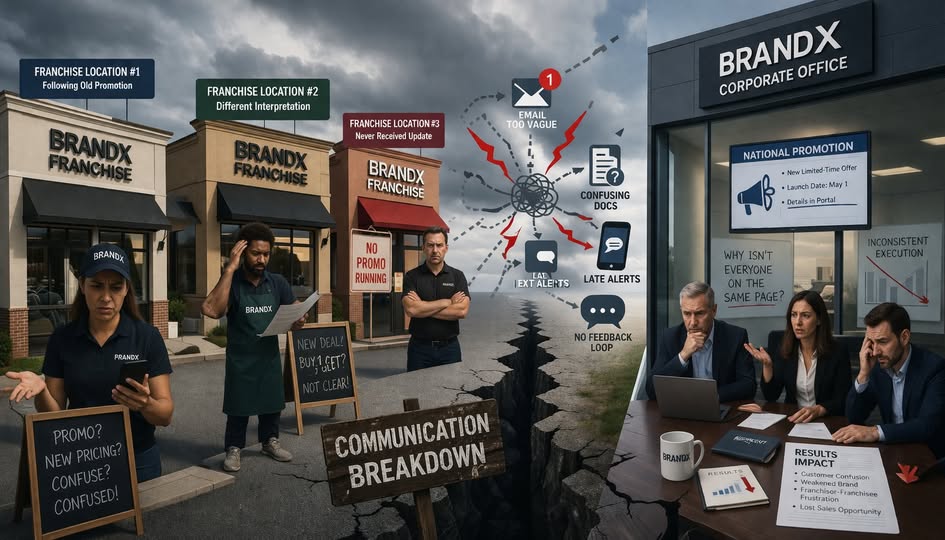
Emerging brands often rely on informal communication. Text messages. Quick calls. One-off emails. Verbal direction during site visits. While this may feel efficient, it creates inconsistency. Different franchisees hear different things. Messages are interpreted differently. There is no single source of truth. Over time, this lack of structure becomes the foundation for fragmentation.

And fragmentation is the beginning of the end for any franchise system.

The promise of franchising is consistency. A customer walking into one location should have the same experience as they would in another. That consistency is not achieved through intention alone. It is achieved through disciplined communication that ensures standards are not only defined but understood, embraced, and executed.

When communication breaks down, execution follows.

One franchisee runs a promotion as intended. Another modifies it. A third ignores it altogether because it was buried in a long email or never clearly explained. Marketing loses its impact. Operations become uneven. The brand begins to drift. Customers may not immediately identify the source of the inconsistency, but they feel it.

Internally, the impact is even more damaging.

Franchisees begin to question leadership. Not always openly at first, but the questions start to surface. Why are directives changing? Why are expectations unclear? Why does one field consultant say one thing while another says something different? Silence is interpreted as a lack of support. Mixed messages are interpreted as a lack of direction.

Trust erodes.

And once trust begins to erode in a franchise system, everything becomes harder. Compliance weakens. Collaboration declines. Innovation slows. Franchisees begin to operate more independently, not out of defiance, but out of necessity. The system loses cohesion.

From the franchisor’s perspective, communication breakdowns often stem from a fundamental misunderstanding: believing that sending information is the same as communicating.

It is not.

Communication is not what is sent. It is what is received, understood, and executed consistently across the system.

This requires structure. It requires intention. It requires discipline.

It means establishing clear channels of communication and using them consistently. It means prioritizing what matters most instead of overwhelming franchisees with constant noise. It means reinforcing key initiatives through repetition, not assuming that one message is enough. It means ensuring that everyone within the franchisor’s organization is aligned before anything is communicated outward.

Because internal misalignment always becomes external confusion.

Field teams, marketing departments, operations leaders, and executive leadership must operate with a single voice. If they do not, franchisees are left to interpret conflicting guidance. That interpretation leads to inconsistency, and inconsistency leads directly to brand erosion.

For emerging brands, this is where many systems unknowingly create long-term challenges.

In the rush to grow, communication is treated as a secondary function rather than a core pillar of the franchise model. There is focus on selling units, opening locations, and building brand awareness, but not enough emphasis on building the communication infrastructure required to support that growth.

Growth without communication discipline is not growth. It is expansion without alignment.

And expansion without alignment will eventually stall, or worse, regress.

Technology has added another layer of complexity. There are more tools than ever to communicate—email, intranets, messaging platforms, apps—but more tools do not equal better communication. In many cases, they create fragmentation. Franchisees receive information from multiple sources, in multiple formats, with varying levels of importance. Critical messages get lost in the noise.

Clarity becomes the competitive advantage.

The most effective franchise systems simplify communication. They create a cadence. They establish a hierarchy of information. They ensure that when something is communicated, it is clear, actionable, and reinforced. They listen as much as they speak, creating feedback loops that allow the field to inform decision-making at the highest levels.

Because communication in franchising is not one-way. It is a continuous loop.

Franchisees are not just recipients of information. They are operators on the front lines. They see what works. They feel what doesn’t. Without structured mechanisms to capture and act on that feedback, franchisors risk becoming disconnected from their own system.

And disconnection is where poor decisions are made.

Strong communication keeps franchisors grounded. It ensures that strategies are not only well-intended but operationally viable. It strengthens relationships. It builds trust. It reinforces the idea that the system is working together, not operating in silos.

At its core, communication is what holds a franchise system together.

It is what turns individual business owners into a unified brand. It is what ensures that growth is not just measured in units, but in consistency, performance, and long-term sustainability.

Without it, even the best concepts will struggle.

With it, even emerging brands can build a foundation strong enough to scale with confidence.

If you are building, scaling, or recalibrating a franchise system, take a hard look at how communication is structured within your organization. Not just what is being said, but how it is being received, understood, and executed.

Because communication is not a support function.

It is the system.

If you are interested in discussing how to strengthen and improve communication within your franchise system, reach out directly at Paul@Acceler8Success.com.

LinkedIn: The Most Important Platform Franchisors Are Still Underutilizing

Franchising has always been built on relationships. Long before a franchise agreement is signed, long before a discovery day is scheduled, and long before a territory is awarded, trust must exist. In today’s environment, that trust is formed digitally first. And no platform plays a more critical role in shaping that trust than LinkedIn.

While many franchisors continue to focus heavily on consumer-facing platforms such as Facebook, Instagram, or TikTok, LinkedIn operates in an entirely different arena. It is not a platform for attracting customers. It is the platform for attracting franchisees, multi-unit operators, strategic partners, vendors, and leadership talent. It is, in many ways, the front door to the franchise opportunity itself.

For franchisors focused on thoughtful, deliberate expansion, LinkedIn is not optional. It is foundational.

Franchisees Are Not Just Buyers. They Are Investors.

The decision to become a franchisee is not impulsive. It is deliberate, analytical, and often deeply personal. Prospective franchisees are evaluating more than the brand. They are evaluating the leadership behind it. They want to understand the people, the culture, the vision, and the stability of the organization.

Before initiating a conversation, most serious candidates will research the franchisor’s leadership team on LinkedIn. They will review their experience, career progression, and professional credibility. They will examine how leaders communicate, what they share, and how they engage with others. They are not simply looking for success. They are looking for authenticity, consistency, and clarity.

A strong LinkedIn presence allows franchisors to demonstrate leadership long before the first direct interaction occurs.

LinkedIn Establishes Credibility at Scale

In franchising, perception matters. A franchisor may have a strong model, excellent unit economics, and a proven operating system. But if that credibility is not visible, it effectively does not exist to those evaluating the opportunity.

LinkedIn allows franchisors to showcase that credibility consistently. This includes sharing milestones such as new franchise agreements, openings, and expansions. It includes highlighting franchisee success stories, operational improvements, and brand evolution. It includes demonstrating the expertise and depth of the leadership team.

Every post contributes to a broader narrative. Over time, that narrative establishes trust.

Unlike traditional franchise portals or broker listings, LinkedIn allows franchisors to control their own story rather than relying solely on third-party platforms to tell it.

It Attracts the Right Franchisees, Not Just More Franchisees

One of the greatest risks in franchising is awarding franchises to the wrong candidates. Growth without alignment creates operational challenges, cultural fragmentation, and long-term brand risk.

LinkedIn naturally attracts professionals, operators, and executives. These individuals are often more experienced, more capitalized, and more aligned with structured business environments. Many are corporate professionals exploring entrepreneurship, multi-unit operators expanding their portfolios, or seasoned entrepreneurs seeking proven models.

By consistently communicating the brand’s expectations, values, and operational standards on LinkedIn, franchisors attract candidates who align with the brand’s culture and philosophy.

This improves not only franchise sales efficiency, but long-term system stability.

It Strengthens the Brand Beyond Franchise Sales

LinkedIn’s impact extends far beyond franchise development. It strengthens the brand’s position across multiple dimensions.

It attracts leadership talent. Strong operators, executives, and managers are far more likely to engage with brands that demonstrate professional credibility and clear direction.

It strengthens relationships with landlords and developers. Real estate partners increasingly evaluate brands through their digital presence.

It enhances vendor relationships. Vendors want to work with brands that demonstrate growth, stability, and professionalism.

It builds confidence among existing franchisees. When franchisees see consistent leadership communication and brand momentum, it reinforces their own confidence in the system.

LinkedIn becomes a central communication hub for the brand’s entire ecosystem.

Leadership Visibility Is More Important Than Brand Visibility

One of the most overlooked realities of LinkedIn is that people connect with people more than logos. While company pages are important, the personal presence of founders and leadership teams carries significantly greater impact.

Prospective franchisees want to know who they will be working with. They want to see leadership’s perspective, philosophy, and approach. They want to feel connected before committing.

When franchisors share insights, lessons learned, operational philosophy, and brand vision through their personal LinkedIn presence, they humanize the brand. This builds trust in ways traditional marketing cannot.

This is especially important for emerging and growth-stage franchise brands.

LinkedIn Shortens the Franchise Development Cycle

Franchise sales cycles are often lengthy. Candidates move slowly because trust takes time to build. Questions need to be answered. Confidence needs to develop.

LinkedIn accelerates this process.

When prospective franchisees have already been exposed to leadership’s thinking, brand momentum, franchisee success stories, and operational philosophy through LinkedIn, they enter conversations more informed and more confident. Much of the early trust-building has already occurred.

This allows franchise development conversations to focus less on proving credibility and more on determining mutual fit.

It Positions the Brand for Long-Term Expansion

Franchising is not about rapid expansion alone. Sustainable franchising requires attracting the right partners, maintaining operational integrity, and preserving brand value.

LinkedIn supports this by positioning the franchisor as a credible, stable, and forward-thinking organization.

It communicates professionalism. It demonstrates leadership maturity. It reflects organizational stability.

For franchisors seeking to expand in markets like Texas and throughout the United States, LinkedIn provides a platform to reach qualified candidates across geographies without reliance on traditional franchise portals alone.

It allows expansion to occur through relationships, not just transactions.

LinkedIn Is Not Advertising. It Is Leadership Communication.

The most effective franchisors do not use LinkedIn to advertise. They use it to communicate.

They share perspective. They share progress. They share lessons learned. They share their vision for the future.

Over time, this communication builds familiarity, credibility, and trust.

Franchisees do not simply buy into a brand. They buy into leadership.

LinkedIn allows franchisors to demonstrate that leadership every single day.

For franchisors serious about expansion, LinkedIn is no longer just a useful platform. It is one of the most powerful and underutilized tools for attracting the right franchisees, strengthening the brand, and building the foundation for long-term, sustainable growth.


About the Author

Paul Segreto brings over forty years of real-world experience in franchising, restaurants, and small business growth. Recognized as one of the Top 100 Global Franchise and Small Business Influencers, Paul is the driving voice behind Acceler8Success Café, a daily content platform that inspires and informs thousands of entrepreneurs nationwide. A passionate advocate for ethical leadership and sustainable growth, Paul has dedicated his career to helping founders, franchise executives, and entrepreneurial families achieve clarity, balance, and lasting success through purpose-driven action.


About Acceler8Success America

Acceler8Success America is a comprehensive business advisory and coaching platform dedicated to helping entrepreneurs, small business owners, and franchise professionals achieve The American Dream Accelerated.

Through a combination of strategic consulting, results-focused coaching, and empowering content, Acceler8Success America provides the tools, insights, and guidance needed to start, grow, and scale successfully in today’s fast-paced world.

With deep expertise in entrepreneurship, franchising, restaurants, and small business development, Acceler8Success America bridges experience and innovation, supporting current and aspiring entrepreneurs as they build sustainable businesses and lasting legacies across America.

Learn more at Acceler8SuccessAmerica.com

Power Dynamics in Early-Stage Franchise Systems

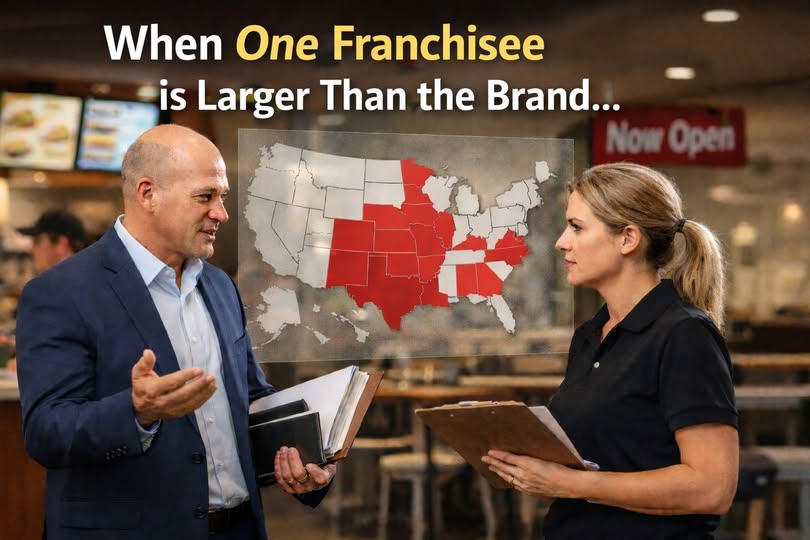
For an emerging franchise brand, few moments feel more validating than attracting an experienced multi-unit operator with a track record in another franchise system, deep pockets, and an appetite for scale. When that interest is paired with a large protected territory and a commitment to develop ten, twenty, thirty or more units, it can feel as though the brand has skipped several chapters in its growth story. The temptation is understandable. These deals signal confidence, momentum, and market belief. Yet they also represent one of the most consequential inflection points a young franchisor will face, because what appears to be acceleration can quietly introduce risks that reshape power, culture, and control in ways that are difficult, if not impossible, to reverse.

At the earliest stages of franchising, the franchisor is still becoming itself. The system may be functional, but it is rarely finished. Unit economics are still being validated across markets. Operating standards are evolving. Support infrastructure is lean by necessity, and leadership is learning in real time how to shift from being an operator to becoming a system builder. When a franchisee enters with significantly more multi-unit experience than the franchisor, the relationship begins on uneven psychological footing. Add a development commitment large enough to materially influence the system’s footprint, and the imbalance becomes structural rather than theoretical.

One of the most overlooked dimensions of this imbalance is financial. The large, experienced operator almost certainly has far greater financial resources than the young franchisor. That reality matters long before a dispute ever arises, because it shapes leverage, confidence, and risk tolerance on both sides. If disagreements escalate into a legal dispute, the operator’s ability to sustain prolonged litigation, absorb legal costs, and apply pressure through delay or attrition can heavily favor them. Even if the franchisor is technically right, the practical cost of being right may be too high for a young organization with limited capital and thin margins. That imbalance alone can subtly influence how firmly a franchisor enforces standards or pushes back on demands, particularly when the operator controls a meaningful percentage of projected system growth.

Operational influence often shifts well before legal leverage is tested. An experienced operator will naturally compare systems, question processes, and suggest alternatives based on what worked elsewhere. Some of that scrutiny can be healthy. The danger lies in how exceptions are handled. Requests framed as efficiency improvements or market realities can lead to carve-outs that are not available to smaller franchisees. Over time, these exceptions become informal policy. The franchisor may still speak about uniformity, but the system begins to operate on two tracks: one for the dominant multi-unit operator and another for everyone else. This is where the risk of the tail wagging the dog becomes real. Control is not lost in a single dramatic moment; it erodes through accommodation, deference, and the quiet fear of losing momentum if the relationship frays.

As the system grows, another subtle but highly consequential dynamic emerges. New franchisees, especially those entering an early-stage brand, naturally look for signals of credibility and stability. In the absence of a long-established franchisor track record, they gravitate toward visible success and experience. When one operator controls a large territory, operates multiple units, and is perceived as seasoned in franchising, that operator can quickly become an informal authority figure within the system. New franchisees may begin seeking guidance, validation, and advice from that operator rather than from the franchisor itself.

Over time, this creates a parallel leadership structure. Practices, shortcuts, and assumptions from another franchise brand can spread peer-to-peer, even when they conflict with the franchisor’s standards or strategic intent. Phrases like “this is how the big operator does it” begin to replace “this is the system standard.” The franchisor is no longer leading by design, but reacting by correction. At that point, the brand risks becoming operator-led rather than system-led, a dynamic that accelerates inconsistency and undermines long-term scalability.

Compounding this risk is the issue of attention gravity. Even when a large operator requires less day-to-day operational support, the sheer size of the deal tends to dominate leadership focus. Meetings, strategy discussions, internal resources, and emotional energy drift toward the partner with the biggest development schedule and the loudest future impact. Smaller early franchisees, often the ones who most need guidance and who quietly define brand culture, can become secondary. In a young system, this imbalance distorts priorities and creates blind spots that only surface later, when leadership realizes it has built processes around one operator rather than around the system as a whole.

Perhaps the most dangerous scenario is not open conflict, but underperformance. Experience in one franchise brand does not guarantee success in another. Differences in positioning, price point, labor model, supply chain, and customer expectations—combined with the reality that the business model may require a far more hands-on operating approach—can erode performance despite prior franchise experience. If a high-profile, large-territory operator struggles to open units on schedule, stalls after a handful of locations, closes underperforming stores, or grows increasingly frustrated with the business model, the consequences extend far beyond those individual units. In an early-stage franchise, perception carries disproportionate weight. Prospective franchisees, brokers, lenders, and vendors will inevitably read meaning into that struggle. One visible stumble can shape the narrative of a young brand far more powerfully than dozens of quiet successes.

When disagreements inevitably arise, the experience gap complicates resolution. The franchisor may feel compelled to assert authority to protect the brand, while the operator may view resistance as inexperience or rigidity. Without clearly defined non-negotiables, governance mechanisms, and escalation paths established from the outset, disputes can become personal rather than procedural. At that point, the imbalance of experience, capital, and influence becomes decisive, not because the franchisor lacks conviction, but because it lacks margin for error.

None of this suggests that large, experienced multi-unit operators are inherently a poor fit within a franchise system, particularly in the context of an emerging brand. When aligned properly, they can bring discipline, capital strength, real estate expertise, and operational insight that accelerates responsible growth. They can stress-test systems, expose weaknesses early, and help professionalize a franchisor’s infrastructure. The difference lies in timing and readiness. The question is not whether the operator is qualified, but whether the franchisor is ready to lead that relationship without compromising control, culture, or clarity.

There are moments when the most strategic decision an emerging franchisor can make is to say no. If systems are still fragile, if leadership lacks confidence in enforcing standards under pressure, if legal and financial reserves are insufficient to withstand serious conflict, or if a single operator would control an outsized share of future development, restraint is not caution—it is leadership. Growth one unit at a time is not a sign of weakness. It is often a sign of discipline.

Acceleration should come after the foundation is proven, not before. When a franchisor has validated unit economics across markets, refined its support model, clarified non-negotiable brand standards, and built the confidence to say no—even to powerful partners—multi-unit development becomes an asset rather than a liability. In franchising, momentum is valuable, but control is essential. The brands that endure are rarely the ones that grew fastest at the beginning, but the ones that grew at the right pace for who they were at the time.

One final thought is worth emphasizing. This is not an argument for automatically turning down a large, experienced operator or rejecting an ambitious multi-unit development deal outright. It is, however, a call to explore such opportunities with extreme caution, intentional structure, and sober perspective. These decisions should never be driven solely by excitement, ego, or the pressure to “prove” scalability early.

Before entering into any large, system-shaping agreement, an emerging franchisor should consult not only with their franchise attorney, but also with experienced franchisors who have navigated similar inflection points and with seasoned franchise development or advisory professionals who understand how power, culture, and control evolve as systems grow. Legal agreements can define rights and remedies, but they cannot replace judgment, lived experience, and foresight. In many cases, the most valuable insight comes from those who have already learned—sometimes the hard way—where early enthusiasm can quietly turn into long-term constraint.

Handled deliberately, a large, experienced operator can become a strategic partner and catalyst for sustainable expansion. Handled prematurely, the same relationship can redefine a young system before it has had the opportunity to define itself.


About the Author

Paul Segreto brings over forty years of real-world experience in franchising, restaurants, and small business growth. Recognized as one of the Top 100 Global Franchise and Small Business Influencers, Paul is the driving voice behind Acceler8Success Café, a daily content platform that inspires and informs thousands of entrepreneurs nationwide. A passionate advocate for ethical leadership and sustainable growth, Paul has dedicated his career to helping founders, franchise executives, and entrepreneurial families achieve clarity, balance, and lasting success through purpose-driven action.


About Acceler8Success America

Acceler8Success America is a comprehensive business advisory and coaching platform dedicated to helping entrepreneurs, small business owners, and franchise professionals achieve The American Dream Accelerated.

Through a combination of strategic consulting, results-focused coaching, and empowering content, Acceler8Success America provides the tools, insights, and guidance needed to start, grow, and scale successfully in today’s fast-paced world.

With deep expertise in entrepreneurship, franchising, restaurants, and small business development, Acceler8Success America bridges experience and innovation, supporting current and aspiring entrepreneurs as they build sustainable businesses and lasting legacies across America.

Learn more at Acceler8SuccessAmerica.com

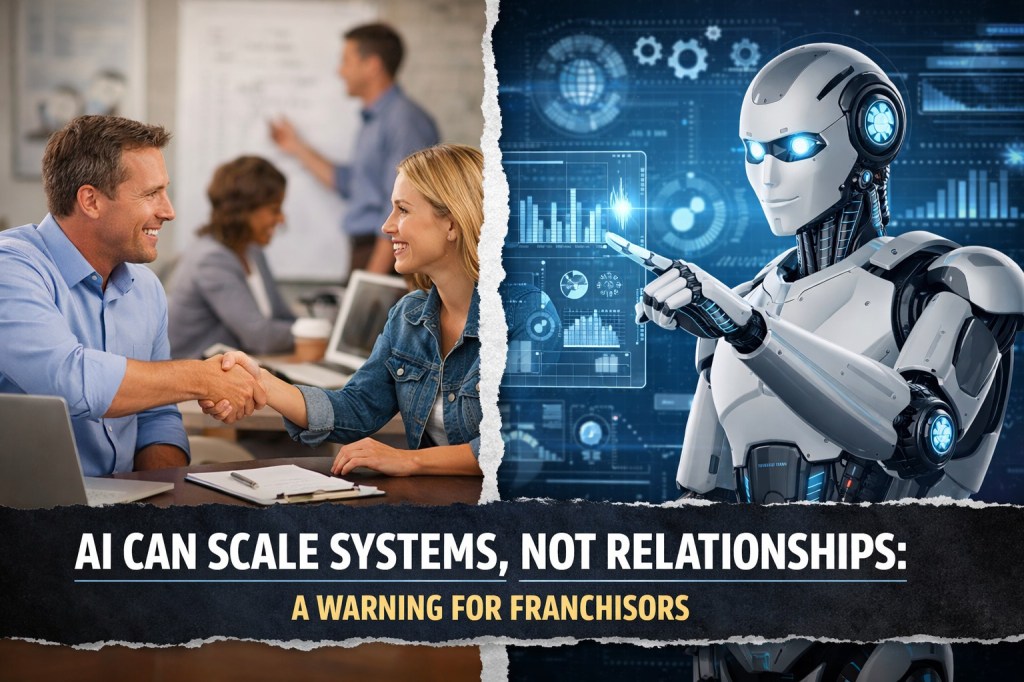
Technology Without Touch: What Happens When Franchisors Rely Too Heavily on AI

There is a certain kind of “crazy thought” making the rounds in franchising right now, and it usually sounds efficient, modern, and irresistible on the surface: what if training and franchisee support could be handled almost entirely by AI?

The logic is understandable. AI doesn’t sleep. It scales instantly. It answers questions consistently. It reduces labor costs. It never has a bad day. For emerging and even mature franchise systems under pressure to grow faster, spend less, and appear technologically advanced, the idea of AI-driven training and support can feel like the holy grail.

But franchising has never been just a systems business. It is a relationship business. And that is where this thinking starts to unravel.

Franchise relationships are built on trust, confidence, shared accountability, and human judgment. A franchisee is not just buying a playbook. They are buying access to people who have been in the trenches, who understand nuance, who can read between the lines, and who can respond not just to a question, but to the emotion behind the question. When training and support become almost exclusively AI-driven, the relationship risks becoming transactional, sterile, and emotionally disconnected.

AI can tell a franchisee what the standard operating procedure says. It can surface policy language. It can point to videos, checklists, and documentation. What it cannot do is sense frustration in a franchisee’s voice after a tough week, recognize fear behind a “simple” question about cash flow, or understand when someone is overwhelmed and needs reassurance as much as instruction. Those moments are not edge cases in franchising. They are the daily reality of ownership.

Exclusive reliance on AI also subtly changes accountability. When a franchisee struggles, who owns the outcome? A system that pushes them toward an algorithm instead of a person sends an unspoken message: figure it out yourself, just faster. Over time, that erodes the feeling of partnership that franchising depends on. Franchisees stop reaching out early. Issues go unspoken longer. Small problems quietly become big ones.

There is also a cultural cost. Franchise systems develop their personality through human interaction. The tone of a brand, the way standards are enforced, how exceptions are handled, how wins are celebrated, and how mistakes are coached all shape culture. AI can reinforce rules, but it cannot model leadership. It cannot mentor. It cannot pass down institutional wisdom that lives outside of documentation.

None of this means AI does not belong in franchise training and support. In fact, it absolutely does. The mistake is thinking of AI as a replacement rather than a force multiplier.

Used correctly, AI should remove friction, not relationships. It should handle first-level questions, documentation search, refresher training, onboarding reminders, compliance tracking, scheduling, and knowledge recall. It should help franchisees get answers quickly so that human support teams can focus on higher-value conversations. AI should prepare franchisees for human interactions, not replace them.

The healthiest model is a layered one. AI becomes the always-available assistant that supports consistency, speed, and efficiency. Human franchisor teams remain the interpreters, coaches, problem-solvers, and relationship builders. When a franchisee escalates from AI to a person, the conversation is better because both sides are better informed. Time is spent on judgment, strategy, and encouragement, not on reading manuals out loud.

Franchisors should also be intentional about where AI stops. Anything involving performance coaching, financial stress, conflict, exceptions, growth decisions, or cultural alignment belongs firmly in human hands. AI can support those conversations with data and insights, but it should never replace them.

The future of franchising is not human versus AI. It is human with AI. Systems that forget this risk building networks that are efficient but brittle, scalable but disconnected, technologically advanced yet emotionally hollow.

Franchisees do not stay loyal because information is accurate. They stay loyal because they feel supported, understood, and valued. AI can help deliver information. Only people can deliver trust.


About the Author

Paul Segreto brings over forty years of real-world experience in franchising, restaurants, and small business growth. Recognized as one of the Top 100 Global Franchise and Small Business Influencers, Paul is the driving voice behind Acceler8Success Café, a daily content platform that inspires and informs thousands of entrepreneurs nationwide. A passionate advocate for ethical leadership and sustainable growth, Paul has dedicated his career to helping founders, franchise executives, and entrepreneurial families achieve clarity, balance, and lasting success through purpose-driven action.


About Acceler8Success America

Acceler8Success America is a comprehensive business advisory and coaching platform dedicated to helping entrepreneurs, small business owners, and franchise professionals achieve The American Dream Accelerated.

Through a combination of strategic consulting, results-focused coaching, and empowering content, Acceler8Success America provides the tools, insights, and guidance needed to start, grow, and scale successfully in today’s fast-paced world.

With deep expertise in entrepreneurship, franchising, restaurants, and small business development, Acceler8Success America bridges experience and innovation, supporting current and aspiring entrepreneurs as they build sustainable businesses and lasting legacies across America.

Learn more at Acceler8SuccessAmerica.com

I Love Franchising, But…

An open conversation about profitability, pressure, and the future of responsible franchising.

During the past two years of my forty-plus years in and around franchising, I have felt a shift that is difficult to dismiss. Franchising has always carried a natural tension between promise and reality, but rarely has that tension felt this persistent, this widespread, or this quietly unsettling. What I am seeing now is not a single broken link in the chain, nor a few isolated business failures that can be rationalized away as “operators who did not execute.” What I am seeing is a growing sense that the balance the model relies upon is being tested in ways the industry has not fully reconciled, and perhaps has not fully wanted to.

That context is what made this past week’s news so resonant. A 100+ unit franchisee of Popeyes filing for bankruptcy protection is not, by itself, a verdict on a brand or on franchising as a whole. But placed alongside what has unfolded over the last two years, it feels less like an anomaly and more like another marker in an emerging pattern. Distress has surfaced across systems of every size and stage. Large multi-unit operators with sophisticated infrastructure. Smaller franchisees who followed the playbook precisely. Legacy brands and emerging concepts alike. The stories are not identical, but the undertone is familiar: the economics have become harder, the margin for error thinner, and the path to stability less certain than the model has historically implied.

And then there are the quieter developments that rarely make headlines. Franchisors closing corporate locations. Emerging franchise systems quietly disappearing when capital tightens, when development pipelines stall, or when early optimism meets the reality of operations. What often goes unspoken is what happens to franchisees in those moments. They do not disappear when a brand contracts or fails. They remain attached to leases, loans, equipment, staffing obligations, personal guarantees, and in many cases, personal identity. When a franchise system falters, it does not simply “fail.” It leaves people behind.

The instinctive reaction in franchising, especially among those who have built careers on the model, is to search for blame and then defend the model against that blame. To point at inflation, labor volatility, the cost of goods, supply chain disruptions, third-party delivery, interest rates, changing consumer behavior, rising real estate costs, and increased regulatory and compliance burdens. All of those forces are real. But the industry has always faced headwinds. The deeper question is why those headwinds now feel capable of breaking operators at scale, including those who are experienced, well-capitalized, and once considered “the best of the best.”

Because franchising, stripped to its essentials, is an economic arrangement. When unit-level economics no longer work consistently, everything else becomes secondary. Support, marketing, culture, brand strength, operational excellence, each matters, but all of them ultimately feed a single outcome: profitability. Not theoretical profitability. Not “on paper.” Not “once the next three stores open.” Real profitability that can withstand shocks, absorb reinvestment, pay down debt, and provide a return worthy of the risk.

Yes, there are profitable franchisors and profitable franchisees. Some are thriving. Some are scaling responsibly. Some are generating exceptional returns. Those examples deserve recognition and study. But they also risk masking the more uncomfortable truth: a significant portion of franchising appears to be living in a state of fragility. Units that are technically open but financially strained. Owners deferring reinvestment because the math no longer supports it. Operators compensating for margin compression with longer hours, reduced staffing, or personal sacrifice. Businesses continuing not because the model is healthy, but because exiting feels worse than enduring.

The question that rarely gets asked publicly is how large that middle has become. Not the winners. Not the failures. The wide swath of franchising that is barely holding together. How many franchisees are one unexpected expense away from serious trouble? How many are “profitable” only if the owner works sixty or seventy hours a week, effectively subsidizing the business with labor the P&L does not reflect? How many have stopped paying themselves appropriately just to keep the doors open? How many are staying in the game because they have too much personally guaranteed debt to walk away?

Now ask the next question, the one franchising tends to avoid: if a material portion of franchisees are living like that, what does it say about the health of the model, not in its best-case form, but in its average form?

Because franchising is not judged by its outliers. It is judged by its median. The “middle” is the industry. If the middle is strained, the industry is strained.

That brings me to another question that feels uncomfortable, but necessary to ask. At what point are there simply too many franchise brands? There are now more than 4,000 franchise concepts competing for the same franchisees, the same territories, the same real estate, the same labor pool, and the same consumer attention. Entire segments feel crowded to the point of indistinguishability, brands differentiated more by marketing language than by true strategic advantage. We see the same categories proliferate: chicken, burgers, pizza, coffee, smoothies, cleaning, restoration, lawn care, senior care, fitness, pet services, tutoring, and countless others. Many are good concepts. Some are exceptional. But the marketplace can only support so many “good” concepts before the fight becomes less about excellence and more about survival.

This is not an anti-capitalism argument. I believe in capitalism and the American Dream deeply. Markets should decide. Entrepreneurs should be free to build. Innovation deserves room to breathe. But believing in capitalism does not mean ignoring the consequences of oversaturation. Oversaturation has a way of turning opportunity into a zero-sum contest where only the strongest balance sheets win, while the average operator gets squeezed.

So the question is not whether there are too many brands in the abstract. The question is this: have we normalized launching franchise systems without fully stress-testing unit economics under real-world conditions? And are we honest about what “success” looks like for the average franchisee in a crowded segment?

If a concept requires best-in-class execution just to be marginally profitable, is it truly franchiseable? Or is it simply scalable for a small percentage of operators and a narrow set of markets?

If a franchisor’s growth story depends on adding units faster than the system can support them, does that create strength or does it hide weakness until it is too late?

If a franchisee’s path to “success” increasingly depends on becoming a multi-unit operator to gain purchasing leverage and overhead absorption, what does that mean for the single-unit owner, the one franchising has historically positioned as the heartbeat of the model?

Another subtle but telling signal has surfaced in recent conversations. I have heard more about the possibility of five-year franchise agreement terms, a shift away from the ten-year agreements that have long been standard. On the surface, this may be framed as flexibility. But it is hard not to wonder what is really driving it. I almost feel like there is worry about franchisees making it ten years. If the industry is shortening terms because it is unsure about long-term viability at the unit level, what does that say? Is it a prudent modernization, or is it an admission, however quiet, that the road ahead feels less predictable?

And if franchise terms shrink, what happens to long-term thinking? Does it encourage reinvestment and brand stewardship, or does it subtly incentivize short-term optimization? Does a five-year term make it easier for franchisees to exit, or does it make it harder for them to build wealth because they are constantly in renewal mode? Does it change how lenders view the risk? Does it alter the relationship between franchisor and franchisee in ways we have not yet fully considered?

Now let’s zoom out further. The balance that once defined franchising feels increasingly misaligned in multiple directions:

The balance between franchisor revenue structures and franchisee margins… When royalties, marketing funds, technology fees, and required vendor costs rise while unit economics tighten, where does the pressure go? It goes to the franchisee.

The balance between “support” as a promise and “support” as an experience… What does support mean today when operations have become more complex, labor is more volatile, and technology is no longer optional? Are franchisors adequately resourced to deliver meaningful support at scale, or is support increasingly a marketing statement rather than a lived reality?

The balance between development momentum and operational readiness… Is the industry rewarding franchisors for selling franchises or for building profitable franchisees? When the scoreboard is unit count, does that create blind spots around unit performance?

The balance between brand standards and local market realities… As costs rise, franchisees look for flexibility. As brand competition intensifies, franchisors look for consistency. Where is the line between protecting a brand and suffocating a franchisee’s ability to adapt?

None of these questions are intended to indict franchising. They are intended to protect it. Because if franchising does not engage in honest self-examination, external forces will. Regulators. Media. Plaintiffs’ attorneys. Consumer advocates. That is not fearmongering. It is how industries get reshaped when they fail to address internal fractures before those fractures become public.

So let’s ask the questions that might actually matter most right now.

What is the franchisor’s responsibility in ensuring unit economics remain viable, not just at the start, but over time as costs and markets change?

How often should franchisors revisit and recalibrate their economic model, especially in segments where margins are structurally thin?

Should franchise systems be required, ethically, if not legally, to present prospective franchisees with a more stress-tested picture of potential outcomes, including scenarios where costs rise faster than revenue?

What is a fair measure of success for a franchisee today? Is it net income? Cash flow? Return on invested capital? Owner wage plus profit? And how many franchisees in a given system are truly hitting that measure?

How do we define “responsible franchising” in 2026? Is it slower growth? More selective franchisee recruitment? Different fee structures? Greater franchisor skin in the game? More investment in support? Some combination of all of the above?

And perhaps the hardest question: if a system’s economics cannot support an average operator in an average market, does the industry have the courage to say that model needs to change, even if it disrupts the way franchising has traditionally generated growth?

I do not believe franchising is broken. I do believe it is at an inflection point. Franchising has survived many cycles, but survival has never been accidental. It has required adjustment, restraint, and sometimes reinvention. Tweaks address symptoms. Structural shifts address causes. Avoiding that work risks allowing the story of franchising to be written by bankruptcy filings, closures, and disillusionment rather than by opportunity and partnership.

This is intentionally an open conversation, not a verdict. I want to hear from franchisors wrestling with these realities internally, from franchisees who are thriving and from those who are struggling but still believe in the model, and from lenders, suppliers, advisors, and operators who see the pressure points from different angles.

If asking whether there are too many brands, too many look-alike concepts, or too many systems chasing the same segments sparks deeper thinking and conversation, then so be it. Not because I want fewer entrepreneurs. Not because I want less competition. But because I want franchising to remain one of the most credible and powerful vehicles for the American Dream, not a model that quietly drifts toward imbalance until a reputational crisis forces change.

From what I have seen during the past two years, the question is not whether the industry will change. It will. The real question is whether that change will be deliberate, transparent, and collaborative, or reactive and forced under scrutiny. The conversation is not a distraction from the work. It may be the work.


About the Author

Paul Segreto brings over forty years of real-world experience in franchising, restaurants, and small business growth. Recognized as one of the Top 100 Global Franchise and Small Business Influencers, Paul is the driving voice behind Acceler8Success Café, a daily content platform that inspires and informs thousands of entrepreneurs nationwide. A passionate advocate for ethical leadership and sustainable growth, Paul has dedicated his career to helping founders, franchise executives, and entrepreneurial families achieve clarity, balance, and lasting success through purpose-driven action.


About Acceler8Success America

Acceler8Success America is a comprehensive business advisory and coaching platform dedicated to helping entrepreneurs, small business owners, and franchise professionals achieve The American Dream Accelerated.

Through a combination of strategic consulting, results-focused coaching, and empowering content, Acceler8Success America provides the tools, insights, and guidance needed to start, grow, and scale successfully in today’s fast-paced world.

With deep expertise in entrepreneurship, franchising, restaurants, and small business development, Acceler8Success America bridges experience and innovation, supporting current and aspiring entrepreneurs as they build sustainable businesses and lasting legacies across America.

Learn more at Acceler8SuccessAmerica.com

From Founder’s Vision to Franchise Reality: Why Great Brands Go Back to Basics

There was a moment, long before disclosure documents, franchise sales funnels, conferences, and awards, when a founder looked at a thriving business and asked a simple but consequential question: how can this grow without losing its soul? Franchising was rarely the first answer. It emerged after proof of concept, after customers validated the offering, after systems were tested under pressure, and after the founder recognized a ceiling that could not be broken alone. Franchising began as a solution to scale impact, extend a brand’s reach, and create opportunity for others to succeed through a proven model.

Getting back to basics requires revisiting that original intent. Franchising at its core is not a sales strategy. It is a relationship-based growth model built on shared risk, shared responsibility, and shared upside. The franchisor contributes the brand, the systems, the training, and the ongoing leadership. The franchisee contributes capital, execution, local market knowledge, and daily operational discipline. One without the other does not work. The strength of the system is determined not by how fast it grows, but by how well the relationship functions when growth becomes difficult.

The franchise relationship was never meant to be passive. It was designed to be active, accountable, and dynamic. Franchisors lead, protect, and evolve the brand. Franchisees operate, represent, and deliver on the brand promise every day in their communities. Trust is not implied by the agreement. It is earned through consistency, transparency, communication, and follow-through. When either side forgets this, the system begins to drift from purpose to transaction.

The mindset required for successful franchising is demanding and often underestimated. Founders must transition from operator to leader of leaders. Control gives way to influence. Ego gives way to stewardship. Decisions must be made with the long-term health of the system in mind, not short-term revenue or convenience. Franchisees must embrace the discipline of following systems while still thinking like owners. Independence exists within structure, not outside of it. The commitment on both sides is ongoing, not front-loaded, and it deepens as the brand grows.

“Be in business for yourself, not by yourself” is one of the most quoted lines in franchising, yet one of the most misunderstood. It does not mean abdication of responsibility. It does not mean guaranteed success. It means support exists, guidance is available, and lessons are shared so mistakes do not have to be repeated alone. The moment a franchisee expects the franchisor to run their business for them, or a franchisor expects franchisees to perform without engagement, the phrase loses its meaning.

“We are family” is another familiar refrain. In its best form, it reflects mutual respect, honest dialogue, and a willingness to work through challenges together. In its worst form, it becomes a slogan used to soften hard conversations or excuse poor performance. Real family holds each other accountable. Real family tells the truth even when it is uncomfortable. Real family understands that loyalty is built through actions, not words.

Founders would benefit from asking themselves why franchising was chosen in the first place. Was it to scale responsibly or to accelerate revenue? Was it to create opportunity for others or to offload operational burden? Was the infrastructure built to support franchisees at the level promised, or did growth outpace leadership capacity? Franchisees should ask equally difficult questions. Did you fully understand the role you were stepping into? Are you operating the business as designed or selectively following systems? Are you contributing to the health of the brand or merely extracting from it?

Getting back to basics is not about nostalgia. It is about clarity. It is about reaffirming the purpose of the franchise model and recommitting to the relationship that sustains it. It is about remembering that franchising works best when both sides see themselves as partners in something larger than a single unit or a single quarter.

The call to action is simple and demanding. Pause the noise. Revisit the original promise of the brand. Re-examine how the franchise relationship is being honored today. Initiate honest conversations with franchisees and leadership teams. Invest in communication, training, and alignment before investing in expansion. Measure success not only by unit count, but by trust, consistency, and shared belief in the future.

Franchising did not begin as a shortcut. It began as a commitment. The brands that endure are the ones willing to return to that commitment again and again.


About the Author

Paul Segreto brings over forty years of real-world experience in franchising, restaurants, and small business growth. Recognized as one of the Top 100 Global Franchise and Small Business Influencers, Paul is the driving voice behind Acceler8Success Café, a daily content platform that inspires and informs thousands of entrepreneurs nationwide. A passionate advocate for ethical leadership and sustainable growth, Paul has dedicated his career to helping founders, franchise executives, and entrepreneurial families achieve clarity, balance, and lasting success through purpose-driven action.


About Acceler8Success America

Acceler8Success America is a comprehensive business advisory and coaching platform dedicated to helping entrepreneurs, small business owners, and franchise professionals achieve The American Dream Accelerated.

Through a combination of strategic consulting, results-focused coaching, and empowering content, Acceler8Success America provides the tools, insights, and guidance needed to start, grow, and scale successfully in today’s fast-paced world.

With deep expertise in entrepreneurship, franchising, restaurants, and small business development, Acceler8Success America bridges experience and innovation, supporting current and aspiring entrepreneurs as they build sustainable businesses and lasting legacies across America.

Learn more at Acceler8SuccessAmerica.com

A Franchisor’s Annual Message: A Leadership Blueprint for the Year Ahead

At the beginning of every year, leaders in government deliver a State of the Union–style address. It is not merely a recap of the past twelve months. It is a moment of leadership. It sets direction, acknowledges realities, establishes priorities, and creates a shared understanding of where the nation stands and where it is going. Franchisors should be thinking the same way as a new year begins. A well-crafted State of the Union for a franchise brand is one of the most powerful leadership tools a franchisor can deliver, yet it is often overlooked or reduced to a sales-heavy presentation or an overly optimistic rally speech.

A true State of the Union for a franchise system should begin with clarity about why it exists. This communication is not marketing. It is leadership. It is meant to align the franchisor, franchisees, corporate staff, and key partners around a common reality and a common direction. Franchisees are not passive listeners. They are business owners who have invested capital, time, and trust into the brand. They deserve a candid assessment of where the brand stands and what the year ahead realistically looks like.

The most effective State of the Union opens with an honest reflection on the previous year. This does not mean airing every internal issue, but it does mean addressing what actually happened. Growth achieved or missed. Initiatives that worked and those that did not. Operational improvements that moved the needle and programs that fell flat. Franchisees already know when things are not working. Avoiding these realities erodes trust. Addressing them builds credibility. Transparency here sets the tone for everything that follows and reinforces that leadership understands the system from the inside out.

From there, the conversation should shift to the current state of the brand. This is where many franchisors miss the mark by defaulting to high-level language that sounds good but says little. Franchisees need to understand where the brand stands today in terms of unit economics, system health, operational consistency, brand perception, support infrastructure, and competitive positioning. This does not require disclosing confidential details that could harm the system, but it does require enough specificity that franchisees can see themselves in the narrative. When leadership clearly articulates the brand’s present condition, it creates a shared baseline for the year ahead.

Equally important is addressing the external environment. Markets do not exist in a vacuum. Labor conditions, supply chain pressures, consumer behavior, technology shifts, regulatory changes, and local market dynamics all impact franchise performance. A strong State of the Union demonstrates that leadership is paying attention to these forces and factoring them into strategy. Franchisees gain confidence when they see that plans are grounded in reality rather than hope.

The heart of the State of the Union is the roadmap for the year. This is not a long wish list of initiatives or a deck full of buzzwords. It is a focused articulation of priorities. What are the three to five things the brand must get right this year? What initiatives will receive the most attention, resources, and leadership involvement? What will not be pursued, even if it sounds attractive, because focus matters? Clarity here helps franchisees understand how decisions will be made and where expectations should be set.

With priorities must come realistic expectations. Overpromising may energize a room in the moment, but it damages credibility over time. Franchisees would rather hear a grounded plan that acknowledges constraints than an aggressive vision that never materializes. Leadership should clearly define what success looks like for the year, what progress will realistically look like quarter by quarter, and where patience will be required. This honesty allows franchisees to plan their own businesses with greater confidence and alignment.

Accountability is what separates a State of the Union from a motivational speech. The communication should clearly define who owns what. What responsibilities sit with the franchisor. What responsibilities sit with franchisees. What shared commitments are required for success. When expectations are mutual and explicit, the system functions with greater discipline and fewer misunderstandings. This also reinforces the idea that franchising is a partnership, not a top-down directive.

A powerful State of the Union should also establish metrics that matter. Not every number needs to be shared, but the system should understand what leadership will be measuring and why. Whether it is unit-level profitability trends, same-store sales growth, operational compliance, brand consistency, or customer experience, defining the scorecard creates alignment. What gets measured gets managed, and what gets shared creates accountability on both sides of the franchise relationship.

Just as important is acknowledging the human side of the system. Franchise brands are built by people. Recognizing franchisees, operators, managers, and support teams reinforces culture and connection. A State of the Union is an opportunity to reaffirm values, reinforce the standards that matter most, and remind the system why the brand exists beyond financial performance alone.

Finally, a franchisor’s State of the Union should not be a one-time event. Leadership should clearly state that this roadmap is something the brand will manage by, not simply talk about. Committing in advance to a six-month review sends a strong signal of accountability. At that midpoint, leadership should revisit what was promised, what progress has been made, what assumptions have changed, and what adjustments are required. This reinforces discipline, adaptability, and trust. It tells franchisees that leadership is willing to hold itself accountable to the same standards it expects of the system.

When done correctly, a State of the Union becomes a living document and a shared point of reference for the year. It guides decisions, frames conversations, and creates alignment across a diverse network of independent business owners. More importantly, it reinforces leadership credibility. In a franchise system, trust is currency. A clear, transparent, and realistic State of the Union is one of the most effective ways a franchisor can earn and protect that trust as the new year begins.


About the Author

Paul Segreto brings over forty years of real-world experience in franchising, restaurants, and small business growth. Recognized as one of the Top 100 Global Franchise and Small Business Influencers, Paul is the driving voice behind Acceler8Success Café, a daily content platform that inspires and informs thousands of entrepreneurs nationwide. A passionate advocate for ethical leadership and sustainable growth, Paul has dedicated his career to helping founders, franchise executives, and entrepreneurial families achieve clarity, balance, and lasting success through purpose-driven action.


About Acceler8Success America

Acceler8Success America is a comprehensive business advisory and coaching platform dedicated to helping entrepreneurs, small business owners, and franchise professionals achieve The American Dream Accelerated.

Through a combination of strategic consulting, results-focused coaching, and empowering content, Acceler8Success America provides the tools, insights, and guidance needed to start, grow, and scale successfully in today’s fast-paced world.

With deep expertise in entrepreneurship, franchising, restaurants, and small business development, Acceler8Success America bridges experience and innovation, supporting current and aspiring entrepreneurs as they build sustainable businesses and lasting legacies across America.

Learn more at Acceler8SuccessAmerica.com

What Does It Say About a Franchise Culture When Franchisees Are Resented?

I recently heard a C-level franchise executive say, without hesitation, that he hated franchisees. The comment lingered with me far longer than it should have, not because it was shocking for shock’s sake, but because of what it quietly revealed. People do not arrive at hatred casually. Hatred is not a momentary reaction or a throwaway frustration. It is the final stage of a mindset that has been forming for a long time. What disturbed me most was not the statement itself, but the culture that must exist for that statement to feel acceptable, even logical, in the speaker’s mind.

Franchising does not function without franchisees. They are not adjacent to the model. They are not downstream participants. They are the model. Every location opened, every customer served, every employee hired, every dollar earned in the field is the direct result of a franchisee’s daily decisions and personal risk. When a franchisor reaches a point where resentment replaces respect, the system has already drifted far from its original intent. That drift rarely announces itself. It happens quietly, through small decisions, unchallenged assumptions, and leadership habits that go unchecked.

At the heart of the issue is a fundamental misunderstanding of what franchising actually is. Franchising is not a control mechanism disguised as growth. It is not a way to scale without responsibility. It is not a license to dictate without listening. It is a partnership model built on shared risk, shared reward, and shared accountability. When that truth is ignored, franchisees stop being seen as entrepreneurs and start being viewed as obstacles. Once that mental shift occurs, every disagreement feels like defiance, every question feels like resistance, and every challenge feels personal.

Culture always reveals itself through language. If an executive can say he hates franchisees, what language is being used internally when franchisees are not present? How are they described in meetings, emails, and private conversations? Are they talked about as partners trying to succeed, or as problems to be managed? Are struggles in the field treated as signals that support systems need improvement, or as proof that franchisees are incapable of execution? The answers to those questions define whether a system is built on leadership or control.

Many franchisors reach a stage where complexity increases and patience decreases. Growth brings pressure. Pressure exposes insecurity. Insecure leadership often responds by tightening its grip. That grip shows up as heavier compliance, stricter enforcement, and less tolerance for feedback. Over time, franchisees learn that speaking up carries consequences. They learn that silence is safer than honesty. When that happens, leadership stops hearing the truth and starts hearing only what reinforces its own beliefs. Eventually, frustration grows on both sides, but only one side holds the power to label the other as the problem.

What is often framed as “franchisee issues” is frequently a reflection of broken trust. Franchisees push back when they feel unheard. They resist when they feel disrespected. They disengage when they believe decisions are made for corporate benefit at the expense of unit-level viability. Compliance problems are rarely about rules. They are about belief. Franchisees comply more willingly when they trust that leadership understands their reality and acts in the best interest of the system as a whole.

There is also an uncomfortable truth that rarely gets acknowledged. Franchisees represent accountability. They live with the consequences of corporate decisions in real time, in real markets, with real financial exposure. They are the first to feel when a new initiative increases labor strain, compresses margins, confuses customers, or complicates operations. For leaders who equate authority with infallibility, that feedback feels threatening. Instead of being seen as insight, it is experienced as opposition. Over time, frustration with feedback turns into resentment toward the people delivering it.

When resentment sets in, leadership often seeks refuge in metrics and mandates. Numbers replace nuance. Policies replace conversation. Legal language replaces leadership presence. The system becomes more rigid at the very moment it needs flexibility. Franchisees feel the shift immediately. Calls take longer to return. Support becomes transactional. Communication becomes defensive. Trust erodes quietly until it becomes visible through conflict, attrition, or stagnation.

The most dangerous franchise culture is not one filled with loud critics. It is one filled with quiet survivors. Franchisees who stop offering ideas. Franchisees who no longer attend meetings with optimism. Franchisees who comply outwardly while disengaging inwardly. That culture does not produce excellence. It produces mediocrity protected by contracts. By the time leadership openly expresses contempt, the damage is already well underway.

It is worth asking why anyone would choose to franchise a brand if they fundamentally resent franchisees. Franchising demands humility. It requires the ability to lead people you do not employ, influence outcomes you do not directly control, and accept that your success is inseparable from someone else’s execution. Leaders who crave absolute control will always struggle in this model. Their frustration is not with franchisees. It is with the nature of shared power.

Healthy franchise systems are built on respect without illusion. Respect does not mean appeasement. It does not eliminate standards or accountability. It means recognizing franchisees as capable business owners whose perspectives matter, even when they are inconvenient. It means understanding that disagreement is not disloyalty and that questions are often a sign of engagement, not resistance.

Every franchisor should periodically confront a simple but revealing question. If you were not bound by contracts, if renewal were optional tomorrow, would your franchisees choose to stay? Not because of sunk costs, but because of trust, belief, and alignment. Culture is what holds a system together when legal structures are no longer the primary glue.

A franchise executive who says he hates franchisees is not simply expressing frustration. He is revealing a worldview. That worldview will shape decisions, communication, and priorities, whether acknowledged or not. It will influence how support is delivered, how conflicts are handled, and how success is defined. Over time, that worldview becomes culture, and culture becomes destiny.

The real work for franchisors is not fixing franchisees. It is fixing the environment in which franchisees operate. It is examining whether leadership behaviors invite partnership or enforce obedience. It is deciding whether the system values truth or comfort, collaboration or control. Franchising does not fail because franchisees are difficult. It fails when leadership forgets why franchisees exist in the first place.

Franchisees are not the enemy. They are the evidence. They are the living proof of whether a brand’s promises, systems, and leadership philosophies actually work. If contempt has replaced curiosity, the solution is not more enforcement. It is deeper reflection. Because the moment a franchisor begins to hate franchisees is the moment the franchise model itself is being quietly dismantled from within.


About the Author

Paul Segreto brings over forty years of real-world experience in franchising, restaurants, and small business growth. Recognized as one of the Top 100 Global Franchise and Small Business Influencers, Paul is the driving voice behind Acceler8Success Café, a daily content platform that inspires and informs thousands of entrepreneurs nationwide. A passionate advocate for ethical leadership and sustainable growth, Paul has dedicated his career to helping founders, franchise executives, and entrepreneurial families achieve clarity, balance, and lasting success through purpose-driven action.


About Acceler8Success America

Acceler8Success America is a comprehensive business advisory and coaching platform dedicated to helping entrepreneurs, small business owners, and franchise professionals achieve The American Dream Accelerated.

Through a combination of strategic consulting, results-focused coaching, and empowering content, Acceler8Success America provides the tools, insights, and guidance needed to start, grow, and scale successfully in today’s fast-paced world.

With deep expertise in entrepreneurship, franchising, restaurants, and small business development, Acceler8Success America bridges experience and innovation, supporting current and aspiring entrepreneurs as they build sustainable businesses and lasting legacies across America.

Learn more at Acceler8SuccessAmerica.com