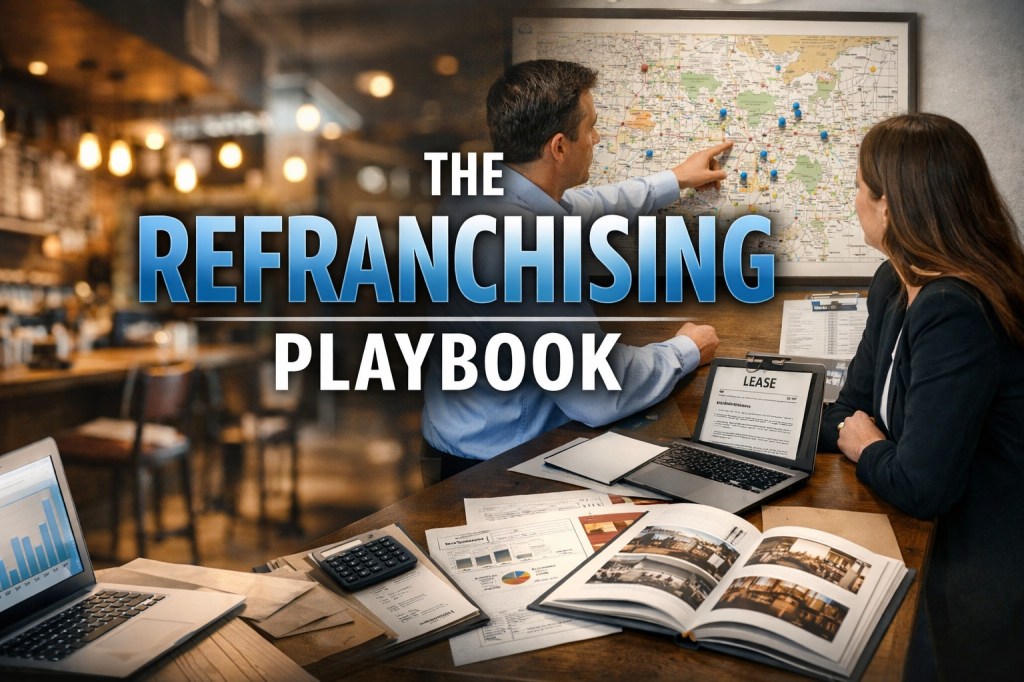
Refranchising has long been a strategic tool used by mature franchise systems to strengthen balance sheets, sharpen operational focus, and place restaurants in the hands of committed operators. Yet for many franchisors, refranchising is treated as a transactional exercise rather than the strategic growth initiative it should be.
In today’s uncertain economic climate, refranchising deserves far more attention. Done correctly, it stabilizes the brand, places locations with the right operators, and prepares the system for the next phase of growth. Done poorly, it simply transfers underperforming assets from one owner to another without addressing the underlying issues.
The difference lies in strategy.
At its core, effective refranchising begins with creating a clear and compelling story for every location or group of locations being offered for sale. Prospective franchisees are not simply buying a restaurant. They are investing in a future business opportunity. Without a well-articulated narrative explaining the current condition of the unit and the path forward, even experienced operators struggle to visualize long-term potential.
The starting point is transparency.
Why is the unit being sold?
The answer must be truthful and direct. In many cases the reasons are operational realities that can be addressed: corporate ownership priorities shifting, underperforming units that need local ownership, lease structures that require renegotiation, or locations that would perform better under multi-unit operators with a local market presence. Attempting to mask the truth undermines credibility. Investors and experienced franchise operators recognize challenges quickly. Franchisors that openly acknowledge those realities while presenting a credible improvement plan immediately gain trust.
Once the narrative is established, the next step is developing a specific turnaround or improvement plan for each opportunity.
A refranchising plan should never be generic. Each location deserves its own operational and strategic review. Some locations may require aesthetic changes such as updated interior finishes, signage improvements, lighting adjustments, or modernized exterior branding to better reflect current brand standards. Others may require functional changes that have a direct impact on profitability, such as kitchen layout improvements, technology upgrades, revised labor models, or menu adjustments better suited to the local market.
These changes should be clearly documented in the refranchising plan. Prospective buyers should understand what improvements are recommended, what they will cost, and what operational benefits they are expected to produce.
Equally important is identifying the ideal candidate for each opportunity.
One of the most common mistakes franchisors make is applying a single franchise candidate profile across every refranchising opportunity. The ideal buyer for a turnaround urban location may be very different from the operator best suited for a suburban market with strong catering potential. Some opportunities may require seasoned multi-unit restaurant operators with existing infrastructure. Others may be ideal for experienced franchisees within the system looking to expand their territory.
Defining the ideal candidate criteria for each specific opportunity increases the likelihood that the location ends up with the right operator.
Understanding the market itself is another critical component.
Every refranchising opportunity should include detailed market intelligence. Demographic data, population trends, daytime employment levels, traffic patterns, and household income levels all contribute to understanding the true potential of a location. Equally important is a careful review of the competitive landscape. Identifying nearby competitors, analyzing their positioning, and understanding their strengths and weaknesses provides valuable context for the buyer.
This information helps prospective franchisees see not only where the location stands today, but where it can realistically compete in the future.
Lease analysis is another often overlooked element in refranchising preparation.
A thorough review of each lease should identify key factors such as renewal dates, rent escalation schedules, common area maintenance obligations, and potential opportunities for renegotiation. In many cases, landlords welcome the opportunity to work with a new franchisee. A fresh operator bringing new energy to a location can represent a positive outcome for the property owner. Proactively exploring these possibilities can strengthen the investment case significantly.
Support from the franchisor also plays a major role in successful refranchising.
Rather than offering generic onboarding support, franchisors should develop a transition and support plan tailored to each location or group of locations. This may include enhanced training, operational support during the transition period, local marketing initiatives, or assistance with facility improvements.
For underperforming units, franchisors may also consider temporary financial relief structures that demonstrate commitment to the franchisee’s success. One example is a graduated royalty structure where royalty payments start at a reduced rate and increase over time as the location stabilizes and grows. When used thoughtfully, this approach signals partnership rather than simple asset transfer.
These types of support mechanisms can make a meaningful difference when recruiting experienced operators who are evaluating the risk of taking on a turnaround opportunity.
Perhaps the most important aspect of refranchising strategy is how the opportunity is presented.
The pitch for refranchising an existing location is very different from the pitch for a new franchise territory. A new franchise sale focuses on the brand story and development potential. Refranchising requires a more detailed investment narrative built around a specific location.
An effective refranchising pitch should clearly outline the current performance, the reasons for sale, the market dynamics, the improvement strategy, the investment required, and the long-term opportunity. When properly developed, this narrative allows prospective franchisees to see the path forward rather than focusing solely on current challenges.
In many cases, even experienced operators struggle to visualize long-term potential without this level of clarity. Providing a well-structured plan helps bridge that gap and significantly increases buyer confidence.
In today’s economic environment, refranchising is no longer simply a method for franchisors to reduce corporate ownership. It is a strategic tool for strengthening the system, attracting stronger operators, and positioning the brand for future expansion.
For brands navigating uncertain markets, it may be time to place a much larger spotlight on refranchising as part of the broader growth strategy.
When approached thoughtfully, refranchising becomes more than a transaction. It becomes a catalyst for system stability, operational improvement, and renewed momentum across the franchise network.
If your organization is evaluating the sale of corporate locations or franchise units that require new ownership, developing a structured refranchising strategy can make the difference between a difficult transaction and a successful long-term transition.
Acceler8Success America works with franchisors to design and execute disciplined refranchising strategies, from location-specific turnaround plans and market analysis to investor positioning and candidate recruitment.
If your brand is considering refranchising opportunities, let’s start the conversation about how to structure those opportunities for success. Please reach out to me at paul@acceler8success.com or via a direct LinkedIn message.

You must be logged in to post a comment.