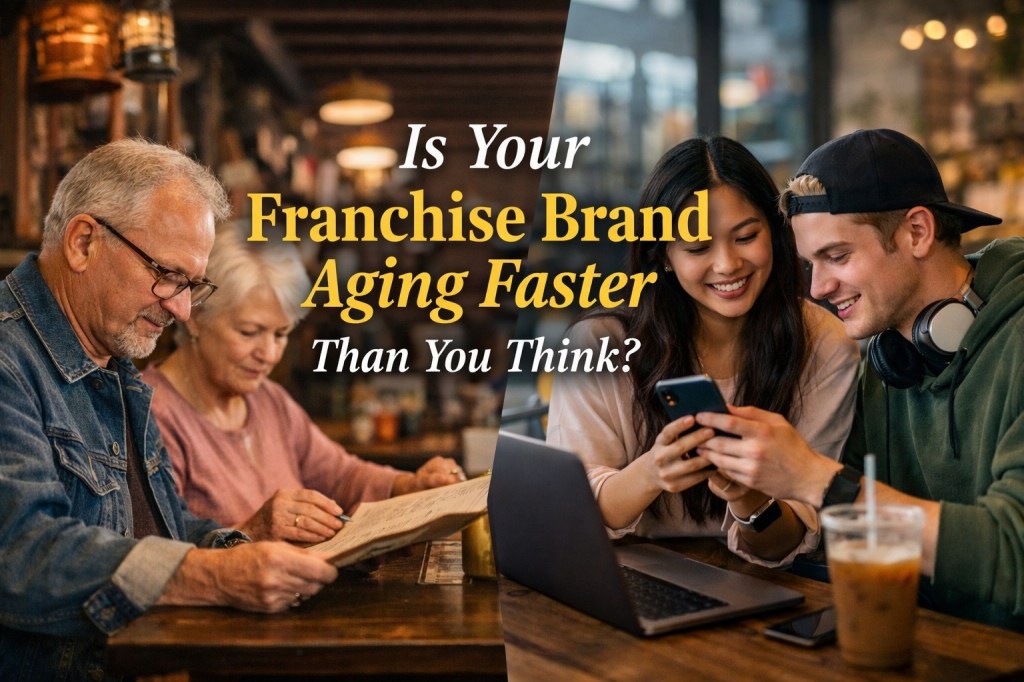
Franchisors who are building relatively young brands, or stewarding established concepts that are now facing a generational handoff, are arriving at a moment that is both uncomfortable and unavoidable. Gen Z is no longer an abstract future customer. They are entering the workforce in force, influencing household spending, shaping digital culture, and increasingly deciding where brands earn relevance or quietly fade into the background. Ignoring this shift is not neutral. It is a strategic choice to age out.
The necessity of engaging Gen Z is not about chasing trends or reinventing a brand every six months. It is about recognizing how expectations around trust, transparency, values, and experience have fundamentally changed. Gen Z has grown up with unlimited access to information, constant comparison, and an instinctive skepticism toward polished brand promises. They can sense performative marketing almost instantly. They reward brands that feel human, consistent, and aligned with something beyond short-term profit. For franchisors, this creates tension because scale thrives on consistency while Gen Z thrives on authenticity. The challenge is not choosing one over the other, but proving they can coexist.
What Gen Z wants is often misunderstood. They are not demanding perfection, nor are they universally price-insensitive or anti-brand. They want clarity. They want to understand what a brand stands for, how it treats its people, how it contributes to the community, and whether its behavior matches its words. They value experiences that feel intentional rather than transactional. They care deeply about convenience, but they also notice friction immediately, especially digital friction. If ordering, onboarding, communication, or support feels outdated or confusing, trust erodes before the first purchase is even completed. For franchisors, the digital experience is no longer an extension of the brand. It is the brand.
For younger franchise systems, Gen Z represents an opportunity to grow alongside a generation rather than retrofit later. The brands that resonate most tend to bake clarity, flexibility, and transparency into their operating model early. That shows up in how franchisees are supported, how employees are trained, how feedback flows upward, and how stories are told outward. Gen Z notices when franchisees feel like true partners rather than interchangeable operators. They notice when frontline employees are empowered instead of scripted. They notice when marketing reflects real people and real moments rather than overly polished messaging.
For established or growing brands, the shift can feel far riskier. There is often a legitimate fear that leaning toward Gen Z will alienate the loyal customers who built the business in the first place. Mishandled change can fracture trust. But the mistake is framing the strategy as replacement rather than expansion. Appealing to Gen Z does not require abandoning what made the brand successful. It requires translating those strengths into a language that resonates today. Values that mattered to older generations still matter. They simply need to be expressed with less polish and more proof.
One of the biggest pitfalls franchisors face is confusing relevance with reinvention. Chasing viral moments, slang-heavy campaigns, or surface-level cultural signals often backfires. Gen Z is not impressed by brands trying to sound young. They are drawn to brands that sound honest. Another common pitfall is operational lag. A brand can refresh its logo, update its tone, and modernize its marketing, yet still lose Gen Z if franchisees are burdened with outdated systems, clunky technology, or rigid policies that prevent responsiveness. The gap between brand promise and lived experience is where trust erodes fastest.
There is also danger in standing still. Brands that rely solely on legacy loyalty eventually encounter shrinking traffic, declining unit economics, and increasing difficulty recruiting employees who see the brand as irrelevant. Gen Z is not just a customer base. They are your future managers, franchisees, and brand ambassadors. If they do not see a place for themselves inside the system, growth becomes increasingly expensive and fragile.
The balance that franchisors must strike is precarious. Long-time customers often value familiarity, consistency, and personal connection. Those priorities do not conflict with Gen Z expectations. In many cases, they reinforce them. A brand that communicates clearly, operates ethically, treats people well, and delivers a reliable experience tends to resonate across generations. The difference lies in how those attributes are expressed. One size no longer fits all, but fragmentation is rarely the answer.
Franchisors should be asking themselves difficult questions. Does our brand feel alive or preserved? Are we telling stories that reflect today’s operators and customers, or are we still celebrating yesterday’s wins? Do our franchisees have the tools to meet modern expectations, or are we asking them to compete with one hand tied behind their back? Are younger voices inside the system being invited into meaningful dialogue, or quietly dismissed as inexperienced? If Gen Z encountered our brand for the first time today, would they see relevance, or residue?
Shifting a brand toward Gen Z is not a marketing initiative. It is a leadership decision. It requires humility, curiosity, and a willingness to evolve without erasing the past. The franchisors who navigate this transition successfully are rarely the loudest or trendiest. They are the ones who remain grounded in who they are, clear about where they are going, and disciplined enough to build a brand that feels trustworthy to the generations who built it and credible to the generations who will carry it forward.
About the Author
Paul Segreto brings over forty years of real-world experience in franchising, restaurants, and small business growth. Recognized as one of the Top 100 Global Franchise and Small Business Influencers, Paul is the driving voice behind Acceler8Success Café, a daily content platform that inspires and informs thousands of entrepreneurs nationwide. A passionate advocate for ethical leadership and sustainable growth, Paul has dedicated his career to helping founders, franchise executives, and entrepreneurial families achieve clarity, balance, and lasting success through purpose-driven action.
About Acceler8Success America
Acceler8Success America is a comprehensive business advisory and coaching platform dedicated to helping entrepreneurs, small business owners, and franchise professionals achieve The American Dream Accelerated.
Through a combination of strategic consulting, results-focused coaching, and empowering content, Acceler8Success America provides the tools, insights, and guidance needed to start, grow, and scale successfully in today’s fast-paced world.
With deep expertise in entrepreneurship, franchising, restaurants, and small business development, Acceler8Success America bridges experience and innovation, supporting current and aspiring entrepreneurs as they build sustainable businesses and lasting legacies across America.
Learn more at Acceler8SuccessAmerica.com

You must be logged in to post a comment.