Tag: Leadership

Leading a Franchise System Through the Holidays With Clarity and Care

For franchisors, the holiday season brings its own version of noise and quiet. The system is busy with year-end targets, staffing challenges, family obligations, and the emotional weight that often comes with closing out a year. At the same time, there is a quieter responsibility that never really turns off: being there for franchisees. This season offers a rare opportunity to pause long enough to remember that leadership in franchising is not just about systems, standards, and performance. It is about people. People who are carrying the same pressures you are, often while wearing even more hats at the unit level.

As a franchisor, you are conditioned to keep moving. You solve problems, set direction, protect the brand, and support operators who rely on you for guidance and stability. There is always another call to take, another decision to make, another franchisee who needs clarity or reassurance. Over time, that constant responsibility can quietly shift how you treat yourself. Rest becomes optional. Reflection becomes postponed. Personal well-being becomes something to address later, when things slow down, even though leadership rarely allows for that moment to arrive on its own. The holiday season is a reminder that leadership without renewal eventually becomes unsustainable.

Being present for franchisees requires more than availability. It requires clarity, patience, empathy, and sound judgment. Those qualities do not come from running on empty. Quiet time, whether it is a walk without a phone, an early morning moment of stillness, time in prayer or reflection, or simply stepping away long enough to breathe, is not indulgent. It is part of the responsibility. Franchisees feel the difference when their franchisor is grounded versus exhausted, intentional versus reactive, calm versus overwhelmed. Your internal state shapes the tone of the entire system.

Mental health and physical health are not separate from franchisor leadership. They are foundational to it. When stress goes unchecked, communication suffers. When exhaustion builds, patience shortens. When clarity fades, decisions become reactive instead of strategic. Franchisees look to franchisors not just for answers, but for steadiness. Protecting your well-being protects your ability to show up as a leader they can trust, especially during uncertain or demanding times.

It can feel uncomfortable to step back, particularly during a season centered on giving and service. Franchisors are often wired to put the system first, the brand first, the franchisees first. That instinct comes from care, not ego. But neglecting yourself does not strengthen the system. It weakens it. You cannot consistently support franchisees from a place of depletion. You cannot guide others effectively if you are running on fumes. Taking care of yourself is not a withdrawal from leadership; it is part of sustaining it.

Your reasons for leading a franchise system run deep. They may include your family, your team, the franchisees who invested their futures in your brand, or the legacy you are building. Caring for yourself is not separate from those responsibilities. It is directly tied to them. When you protect your mental health, you protect your ability to listen and lead with intention. When you honor your physical health, you preserve the energy required to serve others. When you prioritize your well-being, you ensure that franchisees receive leadership that is thoughtful, present, and steady, not rushed or reactive.

This holiday season does not need to be about doing more for the sake of appearance. It can be about becoming more aware. Aware of your limits. Aware of the pressures you carry. Aware of the signals your body and mind have been sending. Giving yourself permission to pause is not a sign of weakness. It is a sign of maturity as a leader.

Mental health matters. Physical health matters. Well-being matters. These are not abstract ideas or seasonal talking points. They are leadership truths that franchisors often learn through experience. If there is one message worth carrying into the new year, it is this: you matter. Not only as the steward of a brand or the head of a system, but as a human being. Taking care of yourself is not stepping away from your franchisees. It is one of the most important ways you show up for them.


About the Author

Paul Segreto brings over forty years of real-world experience in franchising, restaurants, and small business growth. Recognized as one of the Top 100 Global Franchise and Small Business Influencers, Paul is the driving voice behind Acceler8Success Café, a daily content platform that inspires and informs thousands of entrepreneurs nationwide. A passionate advocate for ethical leadership and sustainable growth, Paul has dedicated his career to helping founders, franchise executives, and entrepreneurial families achieve clarity, balance, and lasting success through purpose-driven action.


About Acceler8Success America

Acceler8Success America is a comprehensive business advisory and coaching platform dedicated to helping entrepreneurs, small business owners, and franchise professionals achieve The American Dream Accelerated.

Through a combination of strategic consulting, results-focused coaching, and empowering content, Acceler8Success America provides the tools, insights, and guidance needed to start, grow, and scale successfully in today’s fast-paced world.

With deep expertise in entrepreneurship, franchising, restaurants, and small business development, Acceler8Success America bridges experience and innovation, supporting current and aspiring entrepreneurs as they build sustainable businesses and lasting legacies across America.

Learn more at Acceler8SuccessAmerica.com

Planning Is Leadership: An Awakening for Franchisors Entering a New Year

The arrival of a new year has a way of demanding attention. Calendars reset. Forecasts are refreshed. Decks are rebuilt. Yet for franchisors, the turning of the year should be less about routine planning and more about an awakening. A moment of deliberate pause. A recognition that planning is not an administrative exercise, but a responsibility that shapes livelihoods, investments, and trust across an entire system.

Too often, planning begins with ambition before it begins with truth. Growth targets are set before lessons are absorbed. Initiatives are launched before friction is understood. A more grounded approach starts by asking harder questions. What did we believe a year ago that turned out not to be true? Where did we underestimate the strain on franchisees? Where did we mistake activity for progress? This kind of reflection can feel uncomfortable, but without it, planning becomes performance rather than preparation.

An awakened planning process forces leadership to slow down long enough to listen. Not just to reports and dashboards, but to the lived experience of those inside the system. Operations teams feel the pressure points first. Support teams hear the frustration before it shows up in metrics. Development sees the hesitations of prospects long before deals stall. Finance understands the limits of what can be sustained. When these voices are invited into the planning room, the plan gains depth, not complexity.

Franchisees must be more than an audience for the plan; they must be part of its formation. They are not theoretical operators. They are the ones hiring in tight labor markets, managing rising costs, responding to customer expectations that shift faster than brand standards can be rewritten. Their perspective grounds planning in reality. Inclusion here is not symbolic. It is strategic. A plan shaped with franchisee input is more likely to be executed with discipline, because it reflects conditions as they truly exist, not as leadership wishes them to be.

Awakened planning also expands the definition of stakeholder. Suppliers are not line items. Vendors are not interchangeable. Professional service providers are not merely outsourced functions. These partners operate at the edges of the system, often seeing disruption before it reaches the core. Ignoring their insights narrows vision. Inviting them into the conversation strengthens resilience. When partners understand where the brand is headed, they are better positioned to support, innovate, and adapt alongside it.

Then there is the customer, the most powerful stakeholder and the one most often spoken for rather than listened to. Customers rarely articulate strategy, but their behavior speaks volumes. What they buy, what they ignore, what they complain about, and what they praise all reveal the truth of the brand promise. Planning that fails to confront this reality risks internal alignment while drifting further from the market. An awakened franchisor treats customer insight not as a marketing input, but as a strategic compass.

Benchmarks, when viewed through this lens, become more than numbers. They become signals. Same-store sales, profitability, retention, operational consistency, and brand engagement all tell a story about the health of the system. Setting these benchmarks requires restraint and courage. Inflated targets may inspire briefly, but they corrode credibility over time. Realistic benchmarks, transparently chosen, create momentum because they are believed.

It is also worth acknowledging a quiet truth many leaders carry into the new year. Planning does not always happen on schedule. January arrives, the pace accelerates, and suddenly it feels as though the moment has passed. It has not. It is never too late to plan. In fact, planning in January, even when you feel behind, is often more honest than planning months earlier. Real conditions are visible. Early data is already emerging. The urgency sharpens focus. A delayed plan is far more powerful than no plan at all, and a reset done with clarity can still shape the remaining eleven months in meaningful ways.

Yet even the most thoughtful plan is only a starting point. The year ahead will not unfold as predicted. It never does. Monitoring the plan requires humility and discipline. Regular, structured reviews force leadership to confront what is working and what is not. Quarterly conversations are not about defending decisions made months earlier; they are about recalibrating with clarity. The strongest organizations do not cling to tactics out of pride. They adjust early, decisively, and with intention.

Change, however, must be anchored. Goals represent commitment. Tactics represent movement. When conditions shift, movement may change, but commitment should not. This distinction matters. Franchisees lose confidence when goals feel disposable. They gain confidence when leadership explains how and why the path is evolving while the destination remains steady.

Communication becomes the connective tissue of the entire process. Silence breeds speculation. Overly polished updates breed skepticism. What builds trust is consistent, honest communication about progress, setbacks, and decisions. When franchisors communicate openly, they invite the system into shared accountability. The plan stops belonging to corporate and starts belonging to the brand.

Planning for a new year, at its highest level, is an act of stewardship. It acknowledges that franchising is not just a growth model, but a relationship model. Every decision echoes across operators, partners, employees, and customers. An awakened approach to planning respects that weight. It resists shortcuts. It values inclusion over illusion. It recognizes that certainty is rare, but clarity is attainable.

The challenge now is not to admire the idea of planning, but to confront it. Not to ask whether a plan exists, but whether it is alive. Is your plan grounded in truth or propped up by optimism? Have you invited the voices that will be most affected by it, or only those who will approve it? Do your franchisees understand the plan well enough to defend it, execute it, and believe in it? Are you reviewing it with discipline, or only revisiting it when results disappoint?

If you find yourself already in January and behind, the challenge is sharper still. Pause anyway. Gather the right people. Ask the uncomfortable questions. Build the plan you wish you had started earlier. Then commit to managing it relentlessly for the rest of the year. The cost of delayed planning is real, but the cost of avoiding it is far greater.

The call to action is simple, but not easy. Treat planning as leadership, not logistics. Make it inclusive, measurable, and visible. Revisit it often. Communicate it clearly. Adjust without abandoning it. Because in franchising, the future is rarely decided by the strength of the idea, but by the discipline of the plan and the courage to lead it forward, together.


About the Author

Paul Segreto brings over forty years of real-world experience in franchising, restaurants, and small business growth. Recognized as one of the Top 100 Global Franchise and Small Business Influencers, Paul is the driving voice behind Acceler8Success Café, a daily content platform that inspires and informs thousands of entrepreneurs nationwide. A passionate advocate for ethical leadership and sustainable growth, Paul has dedicated his career to helping founders, franchise executives, and entrepreneurial families achieve clarity, balance, and lasting success through purpose-driven action.


About Acceler8Success America

Acceler8Success America is a comprehensive business advisory and coaching platform dedicated to helping entrepreneurs, small business owners, and franchise professionals achieve The American Dream Accelerated.

Through a combination of strategic consulting, results-focused coaching, and empowering content, Acceler8Success America provides the tools, insights, and guidance needed to start, grow, and scale successfully in today’s fast-paced world.

With deep expertise in entrepreneurship, franchising, restaurants, and small business development, Acceler8Success America bridges experience and innovation, supporting current and aspiring entrepreneurs as they build sustainable businesses and lasting legacies across America.

Learn more at Acceler8SuccessAmerica.com
From $15/Hour Tasks to Million-Dollar Thinking: Reframing the Franchisee Role

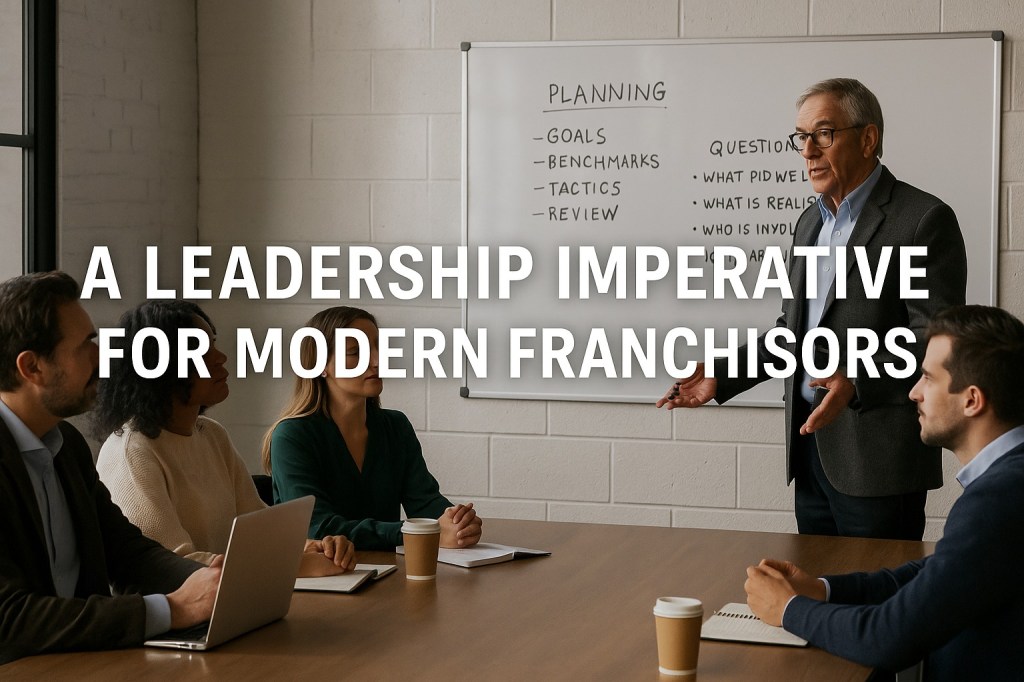
Franchise systems succeed when franchisees succeed, yet one of the most common and costly missteps within franchising is how often owners spend the majority of their time working inside their business instead of on it. Franchisors have an opportunity — and an obligation — to train franchisees to understand the difference. It begins with a simple but powerful question: should a franchisee take on what effectively becomes a $15-per-hour position within the business, or should they lead the business to maximize profitability, growth, scalability, and asset value?

For years, the belief was that franchisees needed to be hands-on, shoulder-to-shoulder with their team, immersed in day-to-day operations to stay connected to challenges. That argument still surfaces today. It is often said that working in the business keeps a franchisee tuned in to what customers expect and what employees need. However, there is a counterargument that cannot be ignored — and it is far more aligned with long-term success. When a franchisee becomes absorbed in daily tasks, they risk losing strategic perspective. They may become excellent at frontline responsibilities, but less effective at leadership, management, marketing, financial oversight, and growth. Essentially, they cannot see the forest for the trees.

This issue often reveals itself early in the franchisor’s training process. Many systems teach franchisees how to run the business but fall short in teaching them how to lead the business. Training is heavily weighted toward operations, checklists, recipes, service steps, or POS procedures. While these are critical, they can inadvertently reinforce the franchisee’s instinct to jump behind the counter, perform tasks, and fill shifts. The outcome is predictable. Franchisees become the highest-paid hourly employees in their own business, stretched thin, exhausted, and unable to make the kinds of decisions that actually grow revenue or profitability.

What franchisors must teach — and reinforce continuously — is the discipline of working smarter. Franchisees must understand that their responsibilities cannot be delegated, while most operational tasks can and should be. Their value lies in building people, tightening systems, driving marketing, analyzing financials, improving culture, and increasing customer lifetime value. When they step back from the front line and step into leadership, the business scales beyond their physical presence. That is where true profitability is found.

The challenge, of course, is mindset. Many franchisees come from corporate roles, operations-heavy backgrounds, or first-time entrepreneurial experiences where doing equals progress. Their instinct is to stay busy, to be seen, to jump in wherever help is needed. If they come from a customer-facing business, they often believe their personal involvement is what drives customer experience. But franchisors must help them see that their real job is not to ring the register but to build a business that rings without them.

This shift begins with training that emphasizes leadership over labor. Scenario-based learning, financial modeling, staffing strategies, task delegation frameworks, and metrics-driven management must take center stage. Franchisees should leave training not only knowing how to operate the business, but knowing how to create an environment where employees can operate the business successfully. Franchisors must explain the opportunity cost: every hour spent on a frontline task is an hour not spent growing the top line, improving margins, strengthening teams, or expanding to additional units.

There is also the matter of visibility. Some franchisees argue that working inside the business keeps them connected to daily challenges, employee morale, and customer behavior. That is valid to a point, but it becomes problematic when it replaces strategic leadership. Franchisors should teach franchisees how to maintain visibility without sacrificing their role. Scheduled floor time, structured observation periods, listening tools, weekly team meetings, and performance dashboards provide insight without trapping the owner inside daily operations.

Ultimately, the franchisee’s highest and best use is leadership. They must set the tone, drive accountability, build a culture of execution, and ensure compliance with brand standards. These responsibilities cannot be outsourced to a $15-per-hour employee. They also cannot be fulfilled effectively when the franchisee is constantly running registers, prepping product, or filling shifts. Leadership requires elevation, and franchisors must help franchisees understand the value of stepping into that role.

Training is the foundation of that shift. When franchisors prioritize teaching franchisees to think like leaders, act like strategists, and operate like business owners, everything changes. The franchisee becomes more profitable. The location becomes better run. The brand becomes stronger. And the system becomes more sustainable. Working on the business is where growth happens, where opportunities are recognized, and where long-term success is built.

Franchisees who embrace this philosophy discover that their business doesn’t depend on their physical presence to succeed — only their leadership. And that is the difference between owning a job and owning a scalable enterprise. For franchisors, the more effectively they train franchisees to work smarter, not harder, the stronger their entire network becomes.


About the Author

Paul Segreto brings over forty years of real-world experience in franchising, restaurants, and small business growth. Recognized as one of the Top 100 Global Franchise and Small Business Influencers, Paul is the driving voice behind Acceler8Success Café, a daily content platform that inspires and informs thousands of entrepreneurs nationwide. A passionate advocate for ethical leadership and sustainable growth, Paul has dedicated his career to helping founders, franchise executives, and entrepreneurial families achieve clarity, balance, and lasting success through purpose-driven action.


About Acceler8Success America

Acceler8Success America is a comprehensive business advisory and coaching platform dedicated to helping entrepreneurs, small business owners, and franchise professionals achieve The American Dream Accelerated.

Through a combination of strategic consulting, results-focused coaching, and empowering content, Acceler8Success America provides the tools, insights, and guidance needed to start, grow, and scale successfully in today’s fast-paced world.

With deep expertise in entrepreneurship, franchising, restaurants, and small business development, Acceler8Success America bridges experience and innovation, supporting current and aspiring entrepreneurs as they build sustainable businesses and lasting legacies across America.

Learn more at Acceler8SuccessAmerica.com
When Franchisees Are Afraid—Leadership Becomes More Important Than Operations

Fear shows up quietly first. A nervous voice on a discovery day. A spouse asking are we sure about this? A new franchisee calling support three times a week—not because they don’t understand the system, but because they need reassurance the system will hold. Later it shows up differently: a once-confident operator suddenly avoiding calls, slipping into silence, pulling back from collaboration with peers. Fear is not always loud. Often it whispers. And if leadership isn’t listening, it goes unheard until it becomes something harder to fix: disengagement, resentment, burnout, or failure.

Understanding this is where true franchisor leadership begins.

Franchisees step into ownership full of hope. They invest time, money, identity—sometimes everything. But hope alone isn’t armor. Hope must be reinforced with guidance, with clarity, with trust. Too often franchisors focus only on the business mechanics: unit economics, marketing programs, compliance, labor models, food costs, margins. Necessary, absolutely. But these alone cannot carry a franchisee through the emotional turbulence of entrepreneurship.

Because franchising isn’t just business. It’s personal.

A franchisee’s fear is tied to livelihood, to family, to ego, to the story they’ve told themselves about who they wish to become. Fear shows up strongest when dreams feel fragile. A good franchisor teaches systems. A great franchisor strengthens belief.

This is where expansion matters most.

Fear is a leadership responsibility
Franchise leaders often want to fix. It’s natural. Show them processes. Give them tools. Point to the roadmap. But fear doesn’t respond to correction—it responds to connection. Franchisees need to feel seen, heard, understood. They need leadership that recognizes the emotional reality of ownership: the 2 a.m. cashflow panic, the silent dining room during slow hours, the weight of payroll, the fear of disappointing family and self.

Leadership here is not about eliminating fear. It’s about normalizing it and guiding through it.

What if franchisors treated fear like data?
A signal that communication needs strengthening.
A sign training must go deeper, not wider.
A cue that mentorship and peer-to-peer communities need attention.
A reminder that culture is either strengthening or cracking.

When fear becomes visible, it becomes manageable.

Culture is the true operating system
You can have the greatest playbook in franchising—but if the culture doesn’t reinforce courage, collaboration, and vulnerability, the playbook becomes nothing more than laminated paper.

Culture makes franchisees raise their hand before they’re in trouble.
Culture makes high performers share what’s working, and struggling operators listen without shame.
Culture makes franchisees say, I’m scared but I’m not alone.
That belief is worth more than any marketing fund or training module.

Support isn’t soft; it’s strategic
Franchisees who feel supported don’t fight the system—they engage with it. They ask questions instead of hiding mistakes. They lean into improvement instead of resisting change. They innovate responsibly instead of improvising dangerously. A franchisee who trusts leadership can take coaching. A franchisee who feels judged will retreat.

Fear-informed leadership develops:

✓ Field support that coaches instead of polices
✓ Training that reinforces competency and confidence
✓ Communication that is honest about challenges, not just celebrations
✓ A leadership tone that is steady even in uncertainty
✓ Peer networks where franchisees learn to lift each other

Empathy becomes operational advantage.

When uncertainty hits—economic shifts, rising costs, new competition—franchisees look not just for answers, but for anchors. They look to leadership for tone, for steadiness, for belief. The franchisor’s emotional posture during turbulence often matters more than the technical solution. Franchisees follow the energy before they follow the strategy.

Survival isn’t just about numbers
Units don’t close because of lack of marketing alone. They close when an owner loses belief. Declining metrics often begin weeks or months after hope starts to weaken. A franchise system survives long-term only if the people inside it feel worthy of survival.

When franchisors address fear at its root, they achieve more than compliance—they unlock commitment. Fear becomes motivation, not paralysis. Doubt becomes inquiry, not quiet withdrawal. Franchisees who feel emotionally supported push through slow seasons, adapt to new initiatives, and lead with resilience. And resilient franchisees build resilient brands.

Franchisors must become more than architects of systems—they must become architects of belief. The future of franchising will not belong to brands with the best operations alone, but to those who build a culture where franchisees feel safe enough to grow beyond their fear.

Because franchising is human.
Because leadership is emotional.
Because culture is the backbone.
Because belief is survival.

Fear is not a flaw in the franchise system.
Fear is an invitation—
for deeper leadership,
for stronger relationships,
for a culture that doesn’t just scale performance,
but scales courage.

And the franchisors who embrace this reality will not simply build businesses.
They will build legacy.


About the Author

Paul Segreto brings over forty years of real-world experience in franchising, restaurants, and small business growth. Recognized as one of the Top 100 Global Franchise and Small Business Influencers, Paul is the driving voice behind Acceler8Success Café, a daily content platform that inspires and informs thousands of entrepreneurs nationwide. A passionate advocate for ethical leadership and sustainable growth, Paul has dedicated his career to helping founders, franchise executives, and entrepreneurial families achieve clarity, balance, and lasting success through purpose-driven action.


About Acceler8Success America

Acceler8Success America is a comprehensive business advisory and coaching platform dedicated to helping entrepreneurs, small business owners, and franchise professionals achieve The American Dream Accelerated.

Through a combination of strategic consulting, results-focused coaching, and empowering content, Acceler8Success America provides the tools, insights, and guidance needed to start, grow, and scale successfully in today’s fast-paced world.

With deep expertise in entrepreneurship, franchising, restaurants, and small business development, Acceler8Success America bridges experience and innovation, supporting current and aspiring entrepreneurs as they build sustainable businesses and lasting legacies across America.

The American Dream Accelerated: The Modern Guide to Building Brands People Believe In

This article concludes our Celebrating Entrepreneurship series — a collection written in honor of National Entrepreneurship Month that has steadily, intentionally formed a complete framework for entrepreneurs, franchise operators, and restaurant brand builders.

We began with an idea:
Disruption is not chaos. It is precision.
Leadership is not visibility. It is presence.
Growth is not expansion. It is replication of meaning.
Legacy is not memory. It is continuity.

Now, we bring these principles together — not as theory, but as a usable operating philosophy.

Because today’s entrepreneur is navigating a world where:
• Consumer expectations are shaped by global brands
• Community identity matters more than ever
• Culture must be transferred, not just taught
• People do not just buy products — they join experiences
• Legacy is measured not by buildings, but by belonging

The modern entrepreneur is not merely building a business.
They are building an ecosystem of meaning.

The Playbook: The Seven Pillars of Modern Entrepreneurial Leadership

  1. Purpose
    Every brand begins with a reason to exist.
    Not a mission statement, but a promise:
    What should people feel because your brand exists?

Purpose is the gravitational center.
Without it, growth has no direction.

  1. Precision
    Disruption is not found in loud moves, but in quiet mastery.
    Like Disney, the brands that endure are those that care about:
    • The greeting
    • The tone
    • The cadence
    • The cleanliness
    • The details no one sees — until they are missing

Excellence is not a performance.
It is a system.

  1. Identity & Experience
    Consumers don’t compare one pizza place to another —
    they compare every experience to the best experience they’ve had anywhere.

This means:
• Clarity matters
• Simplicity matters
• Reliability matters

Apple taught us that less is more when less is intentional.
Amazon taught us that reliability is hospitality.

Your brand is not what it says.
Your brand is what it feels like to interact with you.

  1. Community Belonging
    A business becomes essential when its absence would be felt.

To matter locally, a brand must:
• Show up
• Participate
• Embed
• Connect
• Contribute

Long lines on opening day are not marketing success.
They are relationship success.

People do not rally behind businesses.
They rally behind places that make them feel known.

  1. Transferable Culture
    Culture cannot scale unless it is:
    • Visible
    • Trainable
    • Repeatable
    • Reinforced

Behavior is culture.
Language is culture.
Ritual is culture.

If employees cannot show the culture, it has not been taught.

  1. Leadership Multiplication
    The brand scales only when leaders scale.
    Not managers — leaders.

A leader’s job is not to be indispensable.
A leader’s job is to make others capable of carrying the meaning forward.

Legacy begins when people act in alignment even when no one is watching.

  1. Continuity & Renewal
    The final test of a brand is its ability to grow and evolve without losing its essence.
    Legacy is not preservation — it is continuation.

The identity — the heart — must remain clear even as expression modernizes.

Brands survive when:
• The founder shifts from operator to architect
• Meaning is protected
• Relevance evolves
• People continue the work with conviction

The Modern Entrepreneur’s Charge

Entrepreneurship today is not about building as many units as fast as possible.
It is about building something people care about, feel connected to, and want to last.

A brand is not successful when it becomes big.
A brand is successful when it becomes meaningful.

We do not measure success by how many know the name —
but by how many would feel the loss.

The American Dream, Accelerated

Entrepreneurship remains one of the most powerful expressions of the American Dream —
the belief that through courage, contribution, and persistence, something new and valuable can be created.

This series has shown that the dream still exists —
but today it requires:
• Clarity
• Consistency
• Community
• Culture
• Leadership
• Discipline
• Heart

Success is not found in the extraordinary moment.
Success is found in the ordinary moment, performed with intention, repeated daily, and carried forward by others.

The entrepreneur accelerates the dream when they build something that lifts more than themselves.

Something others can join.
Something others can lead.
Something that continues.

That is legacy.
That is entrepreneurship.
That is the work worth doing.


About the Author

Paul Segreto brings over forty years of real-world experience in franchising, restaurants, and small business growth. Recognized as one of the Top 100 Global Franchise and Small Business Influencers, Paul is the driving voice behind Acceler8Success Café, a daily content platform that inspires and informs thousands of entrepreneurs nationwide. A passionate advocate for ethical leadership and sustainable growth, Paul has dedicated his career to helping founders, franchise executives, and entrepreneurial families achieve clarity, balance, and lasting success through purpose-driven action.

If you’d like a copy of the full playbook as it’s released, please reach out via email to paul@acceler8success.com.


About Acceler8Success America

Acceler8Success America is a comprehensive business advisory and coaching platform dedicated to helping entrepreneurs, small business owners, and franchise professionals achieve The American Dream Accelerated.

Through a combination of strategic consulting, results-focused coaching, and empowering content, Acceler8Success America provides the tools, insights, and guidance needed to start, grow, and scale successfully in today’s fast-paced world.

With deep expertise in entrepreneurship, franchising, restaurants, and small business development, Acceler8Success America bridges experience and innovation, supporting current and aspiring entrepreneurs as they build sustainable businesses and lasting legacies across America.

The Leader’s Imprint: How Great Entrepreneurs Live On Through Others

This article continues our Celebrating Entrepreneurship series — a body of work in honor of National Entrepreneurship Month that has evolved into a playbook for the modern entrepreneur. We have followed the arc from initial identity and operational precision, through cultural scalability, community belonging, anticipation-building, sustaining momentum, expanding with integrity, and most recently, protecting legacy while evolving the brand.

Now we turn to the most personal — and perhaps most defining — chapter of entrepreneurship:

Your legacy, as the leader.

Because there will come a day when the business is no longer built by your hands, guided by your presence, or shaped by your daily decisions.

The question becomes:

What remains of you when you are no longer in the room?

Entrepreneurship Is Not Just the Building of Businesses

It is the building of people.
It is the building of belief.
It is the building of standards.

True entrepreneurship is less about management and more about imprint.
The imprint you leave is your legacy.

Products fade.
Locations change.
Strategies evolve.
Systems update.

But the imprint — the way people think, act, treat others, and carry meaning — can endure for generations.

The Shift From Operator to Architect

In the early stage, a founder is an operator: present, active, directing.
In the growth stage, a founder becomes a leader: visible, guiding, clarifying.
But in the legacy stage, a founder becomes an architect: shaping the mental models that others use to lead.

This is the point where leadership moves from hands to mind — and from mind to heart.

You stop teaching what to do.
You begin teaching how to think.

The Leaders Who Leave the Deepest Legacy Do Three Things

1. They Model What Matters Most

People don’t follow instructions.
They follow example.
The behavior of the leader becomes the culture of the organization.

If you want humility in your brand, show humility.
If you want hospitality in your brand, offer hospitality.
If you want excellence, practice excellence in the unseen moments.

Legacies are built in the smallest behaviors — repeated consistently.

2. They Develop People, Not Dependence

The insecure leader creates followers.
The courageous leader creates other leaders.

Your legacy is not measured by how many people needed you.
Your legacy is measured by how many people no longer need you because of what you taught them.

Your success is reflected in:
• The shift leader who learned to lead with empathy
• The GM who learned to build teams, not schedules
• The franchise owner who learned to serve the community, not just the bottom line

Your legacy is the growth of others.

3. They Pass Down Meaning, Not Just Methods

Methods change.
Markets change.
Consumer behavior changes.
Technology changes.

Meaning endures.

The founder’s role in legacy leadership is to make sure the why is never lost — even as the how evolves.

This is how brands survive generations:
The identity remains recognizable, even when the expression modernizes.

Examples of Leaders Whose Legacy Outlived Their Presence

Walt Disney

He left a worldview of wonder and meticulous care.
Today, cast members still learn why things are done a certain way — not just how.

Howard Schultz (Starbucks)

He made “the third place” a cultural idea — a place between work and home.
The cafés, the drink recipes, the technology — all can change.
The “third place” remains the legacy.

Ray Kroc (McDonald’s)

He did not invent the product.
He scaled the system — and more importantly, the expectation of consistency.
That is the inheritance.

None of these leaders simply built companies.
They shaped thinking.

Your Legacy Begins Long Before You Leave

Legacy is not something that happens at the end.
Legacy is something shaped every day, quietly and gradually.

• It’s in the questions you ask.
• It’s in the standards you defend.
• It’s in the patience you show while teaching.
• It’s in the conviction with which you protect the guest experience.
• It’s in the dignity you give to the people who represent your brand.

Legacy is not a statement.
It is a practice.

The Core Truth

The real legacy of an entrepreneur is not the business they built.
It is the people who continue building after them — with the same heart.

Your legacy is not what you did.
Your legacy is what others continue because of you.

The Series Continues

In the next and final article of this series, we will bring the playbook together — articulating the complete framework:

The Modern Entrepreneur’s Operating System:
Purpose, Precision, Community, Culture, Leadership, Growth & Legacy.

Because entrepreneurship is not just a path to opportunity —
it is a calling to contribute something worthy of being continued.


About the Author

Paul Segreto brings over forty years of real-world experience in franchising, restaurants, and small business growth. Recognized as one of the Top 100 Global Franchise and Small Business Influencers, Paul is the driving voice behind Acceler8Success Café, a daily content platform that inspires and informs thousands of entrepreneurs nationwide. A passionate advocate for ethical leadership and sustainable growth, Paul has dedicated his career to helping founders, franchise executives, and entrepreneurial families achieve clarity, balance, and lasting success through purpose-driven action.

Ready to elevate your business or navigate today’s challenges with confidence? Connect directly with Paul at paul@acceler8success.com, because every success story begins with a meaningful conversation.


About Acceler8Success America

Acceler8Success America is a comprehensive business advisory and coaching platform dedicated to helping entrepreneurs, small business owners, and franchise professionals achieve The American Dream Accelerated.

Through a combination of strategic consulting, results-focused coaching, and empowering content, Acceler8Success America provides the tools, insights, and guidance needed to start, grow, and scale successfully in today’s fast-paced world.

With deep expertise in entrepreneurship, franchising, restaurants, and small business development, Acceler8Success America bridges experience and innovation, supporting current and aspiring entrepreneurs as they build sustainable businesses and lasting legacies across America.

Women’s Entrepreneurship Day: Recognizing the Builders of Belonging, Meaning, and Momentum

Women’s Entrepreneurship Day arrives not simply as a date on the calendar, but as a moment of acknowledgment — a recognition of the women who are reshaping what entrepreneurship means in communities, industries, families, and futures.

This article continues the spirit and progression of our Celebrating Entrepreneurship series. In that series, we explored how businesses become meaningful; how culture becomes transferable; how anticipation is earned; how leadership is passed forward; and how legacy is built through continuity of purpose.

Today, we turn to the women who do all of that — often while carrying more, balancing more, and leading in ways that are both visible and deeply unseen.

Women entrepreneurs are not simply participating in the entrepreneurial journey —
they are expanding the definition of it.

Women Don’t Just Build Businesses — They Build Belonging

Across restaurants, retail storefronts, service-based companies, consulting firms, franchise operations, and emerging brands, women entrepreneurs are creating spaces that feel less like transactions and more like connection.

• Places where people feel welcomed
• Teams that feel supported
• Brands that feel personal
• Communities that feel seen

This is more than customer service.
This is emotional architecture.
It is culture in motion.
It is leadership expressed as care — not softness — but strength through presence.

Women have long understood something the business world only recently began to articulate:
People return to places where they feel valued.

Operational Excellence With Emotional Intelligence

The Celebrating Entrepreneurship series emphasized precision and cultural consistency as the foundation for businesses that endure.

Women often excel here naturally — not because of stereotype, but because of awareness.

Awareness of:
• Atmosphere
• Tone
• Story
• Community rhythm
• Employee morale
• Guest emotion
• The subtle signals that determine experience

This is the type of leadership Disney built empires on.
This is the type of leadership Apple refined into brand clarity.
This is the type of leadership Amazon scaled into reliability.

Women leaders do it instinctively — often without recognition.

Today, we name it:
This is business intelligence.

Women Entrepreneurs Build Culture That Transfers

We learned in the series that culture must be:
• Observable
• Trainable
• Repeatable
• Reinforced

Women are building cultures that do exactly that — not by force, but by consistency:
• Consistency of tone
• Consistency of care
• Consistency of expectation and accountability

They create environments where employees understand how we treat people here — not just how we perform tasks.

And that is the backbone of every brand that scales successfully.

The Dual Work: Building the Business and Holding the World

Many women entrepreneurs do the demanding work of leadership while also:
• Raising children
• Supporting partners
• Caring for aging parents
• Managing households
• Carrying emotional labor invisibly

This is not simply multitasking.
This is ingenuity.
This is resilience designed in real time.
This is courage lived out quietly, daily, with no finish line except continuation.

The world benefits from this labor.
The economy benefits.
Communities benefit.
But too often, the entrepreneur herself is expected to carry it without acknowledgment.

So today — we acknowledge it.
We honor it.
We say it out loud:

You have done more than build a business.
You have held a world together while doing it.

The Legacy Being Written

The women entrepreneurs of today are:
• Mentoring the next generation
• Redefining leadership presence
• Creating workplaces where dignity is default
• Building brands that feel human, not corporate
• Modeling that strength and empathy are not opposites — they are partners

This is legacy — in motion.

Not legacy someday.
Legacy now.

So On Women’s Entrepreneurship Day — Stand Fully In Your Role

You are:
A creator of value
A carrier of culture
A shaper of identity
A builder of community
A leader of meaning
A designer of legacy

Your work matters — not because it is hard —
but because it changes the spaces where people live their lives.

Your success is not measured only by revenue, growth, or footprint —
but by the sense of belonging your business creates.

Entrepreneurship needs your voice.
Communities need your leadership.
The future needs your imprint.

Happy Women’s Entrepreneurship Day.
May the world continue to rise to match the strength, insight, creativity, and courage you bring to it — every single day.


About the Author

Paul Segreto brings over forty years of real-world experience in franchising, restaurants, and small business growth. Recognized as one of the Top 100 Global Franchise and Small Business Influencers, Paul is the driving voice behind Acceler8Success Café, a daily content platform that inspires and informs thousands of entrepreneurs nationwide. A passionate advocate for ethical leadership and sustainable growth, Paul has dedicated his career to helping founders, franchise executives, and entrepreneurial families achieve clarity, balance, and lasting success through purpose-driven action.

Ready to elevate your business or navigate today’s challenges with confidence? Connect directly with Paul at paul@acceler8success.com, because every success story begins with a meaningful conversation.


About Acceler8Success America

Acceler8Success America is a comprehensive business advisory and coaching platform dedicated to helping entrepreneurs, small business owners, and franchise professionals achieve The American Dream Accelerated.

Through a combination of strategic consulting, results-focused coaching, and empowering content, Acceler8Success America provides the tools, insights, and guidance needed to start, grow, and scale successfully in today’s fast-paced world.

With deep expertise in entrepreneurship, franchising, restaurants, and small business development, Acceler8Success America bridges experience and innovation, supporting current and aspiring entrepreneurs as they build sustainable businesses and lasting legacies across America.

From Founder-Driven to Values-Driven: Why Leadership Identity Must Transfer Before the Brand Can Scale

This article continues our Celebrating Entrepreneurship series — a sequence intentionally building toward a full playbook for the modern entrepreneur in honor of National Entrepreneurship Month. At this stage in the progression, we have explored how brands take shape, take root, become essential to their communities, build anticipation, sustain momentum, and expand with integrity.

But now we reach one of the most defining — and often most difficult — chapters in entrepreneurial growth:

Leadership Transition and Internal Development.

The moment a brand begins to expand beyond the daily reach of its founder, something profound happens:

The founder must shift from being the center of the brand to being the source of the brand.

The difference is not subtle.
It is foundational.

The Founder’s Dilemma

Early on, the founder is everywhere:
• On the floor
• Meeting guests
• Training staff
• Fixing problems
• Shaping culture by proximity

But as the brand grows, proximity is no longer possible.
And without deliberate leadership development, the brand’s identity weakens with each new location.

This is where many promising restaurant and franchise brands lose their soul.

Not because the product changes.
Not because demand fades.
But because leadership identity does not transfer.

Leadership Must Be Built, Not Appointed

Titles do not create leaders.
Proximity to the founder does not create leaders.
Tenure alone does not create leaders.

Leaders are developed when a brand has:

  1. A clear definition of what leadership looks like here
    (not in theory — in behavior)
  2. A pathway that develops people gradually, not suddenly
  3. A culture where leadership is modeled daily, not explained occasionally

In other words, leadership is not a promotion.
Leadership is an inheritance.

And inheritances must be earned and taught — not handed out.

The Brands That Get It Right

Starbucks — Leadership through Shared Values

Starbucks doesn’t promote based on skill alone.
They promote based on who already lives the culture.
This is why a Starbucks in Houston or Boston or Tokyo feels like Starbucks.

Values, not volume, determine leadership readiness.

Shake Shack — Leadership through “Hospitality DNA”

Shake Shack trains leaders to look for micro-cues in guest experience:
• Eye contact
• Tone
• Pace
• Presence

Leaders are taught to feel the room.
This is emotional intelligence as brand identity.
Culture is protected by awareness, not just rules.

Chick-fil-A — Leadership through Stewardship

Leaders are selected not for performance, but for citizenship.
They don’t just run stores.
They lead communities.

This is why franchisees become pillars — not just operators.

What This Means for Emerging Brands

The question is no longer:
Can we train someone to do the job?

The question becomes:
Can we trust someone to carry the meaning of the brand?

The brand scales only when:

• Frontline employees become ambassadors
• Shift leaders become custodians of culture
• General managers become protectors of guest experience
• Franchisees become stewards of the community mission

This requires leadership frameworks, not just org charts.

A Practical Playbook for Internal Leadership Development

Step 1: Define Leadership Behavior
Write leadership standards in verbs, not adjectives.
Not “leaders must be inspiring.”
But:
• Leaders greet every guest first
• Leaders resolve tension quietly and personally
• Leaders coach before they correct

Behavior is teachable.
Buzzwords are not.

Step 2: Identify Leaders Early
Leaders show up in:
• The employee who asks how the guest’s day was
• The dishwasher who wipes a table without being asked
• The team member who treats the business like it matters

Leadership potential is not loud.
It is attentive.

Step 3: Develop Slowly, Intentionally
Leadership is not accelerated — it is layered.
Training should move from:
• Self-awareness
• To guest awareness
• To team awareness
• To business awareness

Identity comes before influence.

Step 4: Publicly Honor Culture-Carrying Behavior
What is celebrated becomes replicated.

The Core Truth

A brand can only grow to the level of its leaders.

If you do not grow leaders, you do not grow culture.
If you do not grow culture, you do not grow identity.
If you lose identity, growth becomes expansion — not impact.

The founder’s job is not to be everywhere.
The founder’s job is to ensure the spirit of the brand is everywhere.

Leadership development is how that spirit travels.

The Series Continues

Next in the series, we advance to a defining final arc:

Legacy and Renewal
How brands evolve over time without losing the meaning that made them matter in the first place.

Because the goal of entrepreneurship is not simply to build something that lasts.
It is to build something that lasts without you.


About the Author

Paul Segreto brings over forty years of real-world experience in franchising, restaurants, and small business growth. Recognized as one of the Top 100 Global Franchise and Small Business Influencers, Paul is the driving voice behind Acceler8Success Café, a daily content platform that inspires and informs thousands of entrepreneurs nationwide. A passionate advocate for ethical leadership and sustainable growth, Paul has dedicated his career to helping founders, franchise executives, and entrepreneurial families achieve clarity, balance, and lasting success through purpose-driven action.

Ready to elevate your business or navigate today’s challenges with confidence? Connect directly with Paul at paul@acceler8success.com, because every success story begins with a meaningful conversation.


About Acceler8Success America

Acceler8Success America is a comprehensive business advisory and coaching platform dedicated to helping entrepreneurs, small business owners, and franchise professionals achieve The American Dream Accelerated.

Through a combination of strategic consulting, results-focused coaching, and empowering content, Acceler8Success America provides the tools, insights, and guidance needed to start, grow, and scale successfully in today’s fast-paced world.

With deep expertise in entrepreneurship, franchising, restaurants, and small business development, Acceler8Success America bridges experience and innovation, supporting current and aspiring entrepreneurs as they build sustainable businesses and lasting legacies across America.

When Culture Scales: How to Grow a Brand Without Losing Its Soul

This article continues our Celebrating Entrepreneurship series, written in honor of National Entrepreneurship Month and crafted to form a cohesive playbook for the modern entrepreneur. We began with disruption grounded in precision, examined leadership presence as emotional anchor, learned from global brand expectations (Disney, Apple, Amazon), and then brought the business home, into the community, where belonging becomes the ultimate differentiator.

Now we address the next critical challenge:

How do you scale a brand without losing its soul?

Because it is one thing to make one location meaningful.
It is another to ensure that meaning holds across ten, twenty, or one hundred.

This is the precise point where many franchise and restaurant brands succeed or fail. They do not fail because the operations cannot be replicated. Operations are the easy part. They fail because culture has not been made transferable.

What Makes Culture Transferable?

Culture is not a slogan, a values poster, or a paragraph in an operations manual.
Culture is the lived behavior of the brand, ideally, repeated so consistently that it becomes instinctive.

A culture becomes transferable when it is:

  1. Observable — People can see what it looks like.
  2. Trainable — It can be taught, not just felt.
  3. Reinforced — There are systems that sustain it.
  4. Rewarded — The behaviors that express it are recognized.

If culture cannot be seen, it cannot be taught.
If it cannot be taught, it cannot be replicated.
If it cannot be replicated, it cannot scale.

Examples of Transferable Culture in Practice

1. Chick-fil-A — Culture in Language

Guests are not thanked with “No problem.”
They are thanked with “My pleasure.”

This is not a script.
It is a signal.
It communicates care, attentiveness, and respect.

Every location, every shift, every transaction, the language reinforces the identity.
Culture is transferred through shared speech.

2. Starbucks — Culture in Ritual

Starbucks does not simply serve coffee. It creates ritual.

The cadence of the barista, the consistency of the order repeat, the familiar environment, these are not operations.
They are rituals that replicate belonging.

Culture is transferred through consistent sensory experience.

People don’t return because the coffee is irreplaceable.
They return because the feeling is.

3. Texas Roadhouse — Culture in Behavior

Every server kneels to take an order.
It is not required by local leadership preference, it is an embedded behavior system-wide.

Why does it matter?
Because kneeling changes the dynamic:
• It eliminates hierarchy
• It increases customer comfort
• It expresses respect

Culture is transferred through shared physical behaviors.

How Independent and Emerging Brands Can Do the Same

You do not need global scale to build transferable culture.
You need definition and discipline.

Start with three questions:

  1. What does it look like when we are at our best?
    Describe it as if you were filming it.
    Don’t use adjectives, use behaviors.
  2. What do we want customers to feel every single time?
    Define the emotional outcome, not the procedural one.
  3. How do we teach new people what matters here?
    Not “what we do,” but why we do it that way.

Once defined, culture must be embedded into:
• Hiring criteria
• Training systems
• Daily routines
• Leadership language
• Celebrations and coaching
• Promotions and rewards

If behaviors are not reinforced, they disappear.
If values are not demonstrated, they become decoration.

The Most Important Truth

Culture cannot scale unless leaders embody it.
Not founders alone.
Leaders at every level.
Shift leaders, franchise owners, veteran staff, these are your culture carriers.

Their behavior is the brand.

If they model the culture, it spreads.
If they break the culture, it breaks.

This is why the previous article emphasized leadership presence.
Culture does not transfer through documents.
Culture transfers through people.

The Work Ahead

As the series continues, we are building a playbook, not for businesses that merely operate, but for businesses that live.

Our next article will address the next question in the entrepreneurial arc:

How does a brand evolve and expand without losing relevance or authenticity as it grows?

Because once culture scales, the work shifts from preservation to evolution, ensuring the brand continues to feel alive.

For now, the focus is clear:
Define the culture.
Demonstrate the culture.
Teach the culture.
Reinforce the culture.
Celebrate the culture.

This is how a business stops being a business…
and becomes a place where people belong.


About the Author

Paul Segreto brings over forty years of real-world experience in franchising, restaurants, and small business growth. Recognized as one of the Top 100 Global Franchise and Small Business Influencers, Paul is the driving voice behind Acceler8Success Café, a daily content platform that inspires and informs thousands of entrepreneurs nationwide. A passionate advocate for ethical leadership and sustainable growth, Paul has dedicated his career to helping founders, franchise executives, and entrepreneurial families achieve clarity, balance, and lasting success through purpose-driven action.

Ready to elevate your business or navigate today’s challenges with confidence? Connect directly with Paul at paul@acceler8success.com, because every success story begins with a meaningful conversation.


About Acceler8Success America

Acceler8Success America is a comprehensive business advisory and coaching platform dedicated to helping entrepreneurs, small business owners, and franchise professionals achieve The American Dream Accelerated.

Through a combination of strategic consulting, results-focused coaching, and empowering content, Acceler8Success America provides the tools, insights, and guidance needed to start, grow, and scale successfully in today’s fast-paced world.

With deep expertise in entrepreneurship, franchising, restaurants, and small business development, Acceler8Success America bridges experience and innovation, supporting current and aspiring entrepreneurs as they build sustainable businesses and lasting legacies across America.

The Founder as the Emotional Center: Leadership Presence as the Core of Brand Experience

This article continues the Celebrating Entrepreneurship series, with each installment intentionally building toward a complete playbook for today’s entrepreneur. As we honor National Entrepreneurship Month, this series is meant not only to explore ideas, but to assemble a framework that founders, franchise leaders, and restaurant operators can apply directly. The previous article examined Disney’s mastery of operational precision, showing that disruption is sustained not through sudden breakthroughs but through the disciplined orchestration of experience. Now we turn to the element that precedes all operational excellence: leadership presence.

In any franchise or restaurant brand, systems may scale, but culture does not scale on its own. Culture requires a carrier — a voice, a center of gravity, a source of emotional identity. That role belongs to the founder or the brand’s leading steward. This leadership presence is not about constant visibility or charismatic performance. It is about embodying the values, tone, and emotional intention of the brand so consistently that others know how to act even when the leader is not present.

In Disney’s world, this began with Walt. His influence was not merely in vision, but in the way he described the work, the way he greeted guests, the standards he held, and the tone with which he held them. Long after he was gone, cast members still knew how decisions should feel, not just how they should function. That is the true power of leadership: when presence becomes principle, and principle becomes habit.

In franchising and restaurants, the founder’s presence matters even more, because the brand is replicated through people who did not create it. Franchisees and team members are inheriting a story, not writing the first chapter of one. Without the founder’s emotional imprint, the brand becomes procedural, not experiential. And when a brand becomes procedural, it becomes forgettable.

Leadership presence is not expressed through speeches or slogans, but through rhythms. The way the founder speaks about guests. The care with which the founder walks a restaurant dining room. The seriousness with which cleanliness, welcome, and gratitude are treated. The manner in which decisions are explained, not just enforced. The tone sets the temperature. The temperature sets the culture. The culture sets the behavior. And behavior is what the guest experiences.

This is why founders cannot outsource spirit. They may delegate function, scale operations, and build infrastructure, but the emotional tenor of the brand must originate with them. When employees see the founder treat the business as meaningful, they follow. When they see the founder treat it as mechanical, they follow just the same. Organizations imitate conviction. They also imitate indifference.

Many founders underestimate the quiet power of embodied consistency. It is not the force of personality that matters, but the steadiness of intent. A founder who moves with clarity, directness, and composure creates an internal atmosphere of alignment. That atmosphere shapes how franchisees lead their teams, how teams welcome guests, and how guests interpret the entire brand.

In franchise and restaurant environments, where the guest experience is delivered by many people in many places, leadership presence is not about being everywhere. It is about being archetypal. The founder becomes the reference point for how to communicate, how to care, and how to carry the brand’s meaning. When this presence is strong, the culture begins to replicate with fidelity. When this presence is weak, the culture fragments.

To lead in this way is to understand that entrepreneurship is not only an act of building. It is an act of anchoring. As the series continues, we are shaping a framework that guides entrepreneurs not just to grow, but to grow with intention — with purpose that travels, with culture that sustains, and with experience that endures.

The modern entrepreneur does not simply scale operations. The modern entrepreneur scales meaning.

And meaning begins with the leader.


About the Author

Paul Segreto brings over forty years of real-world experience in franchising, restaurants, and small business growth. Recognized as one of the Top 100 Global Franchise and Small Business Influencers, Paul is the driving voice behind Acceler8Success Café, a daily content platform that inspires and informs thousands of entrepreneurs nationwide. A passionate advocate for ethical leadership and sustainable growth, Paul has dedicated his career to helping founders, franchise executives, and entrepreneurial families achieve clarity, balance, and lasting success through purpose-driven action.

Ready to elevate your business or navigate today’s challenges with confidence? Connect directly with Paul at paul@acceler8success.com — because every success story begins with a meaningful conversation.


About Acceler8Success America

Acceler8Success America is a comprehensive business advisory and coaching platform dedicated to helping entrepreneurs, small business owners, and franchise professionals achieve The American Dream Accelerated.

Through a combination of strategic consulting, results-focused coaching, and empowering content, Acceler8Success America provides the tools, insights, and guidance needed to start, grow, and scale successfully in today’s fast-paced world.

With deep expertise in entrepreneurship, franchising, restaurants, and small business development, Acceler8Success America bridges experience and innovation — supporting current and aspiring entrepreneurs as they build sustainable businesses and lasting legacies across America.