Tag: marketing

Share Your Voice, Inspire Others: Contribute to Acceler8Success Cafe

Acceler8Success Cafe Content Submission Guidelines

Are you creating content about entrepreneurship, franchising, restaurants & hospitality, or small business? Whether you’re sharing lessons from your journey, offering insights into operations, or providing practical resources, Acceler8Success Cafe is your platform to be heard—with full creation credit and no cost to you.

We’re inviting contributors to join our mission of educating, inspiring, and empowering current and aspiring entrepreneurs through content that reflects the real-world challenges and triumphs of business ownership.

What We’re Looking For

We welcome original or republished content that fits one or more of the following themes:

  • Entrepreneurship & startup journeys
  • Franchising insights & development strategies
  • Restaurant and hospitality operations & trends
  • Small business tips, marketing, and growth
  • Leadership, mindset, and personal development
  • Lessons learned, best practices, or case studies

Types of Content Accepted:

  • Articles or blog posts
  • Infographics or visuals
  • Short-form videos or reels
  • Podcast episodes or audio snippets
  • Thoughtful social media posts or threads
  • Brand stories and founder interviews

Submission Guidelines

  • Content should educate, inform, or inspire our audience of entrepreneurs and business leaders.
  • Keep written content between 500–1,200 words when possible. Shorter or longer pieces will be considered if highly engaging or visual.
  • Include your name, company (if applicable), and social media handles for proper credit and tagging.
  • You may include links back to your website or blog for additional exposure.
  • Content must be your own or properly credited if co-created or repurposed.

How to Submit

Email your content or pitch directly to paul@acceler8success.com, or send a message on LinkedIn to Paul Segreto. Please attach files or include links to hosted content (Google Drive, Dropbox, YouTube, etc.).

What to Expect

  • Submissions are reviewed for quality and alignment with our mission.
  • While there’s no compensation, you will receive full credit and visibility across our platforms.
  • We share content via Acceler8SuccessCafe.com and our extended social media network.
  • We may lightly edit for grammar, clarity, or formatting. We’ll reach out for approval if edits are substantial.

Final Notes

All content is subject to editorial approval. We’re happy to collaborate on adjustments to make your piece ready for publication. Our goal is to help amplify your voice and provide value to our readers and followers.

Explore our archive of over 1,400 published features at Acceler8SuccessCafe.com to get a feel for the platform—and imagine how your voice could contribute to this growing collection of entrepreneurial insight.

Let’s build something impactful together.

Gamifying Franchising: A Fantasy League for Future Entrepreneurs

Imagine the excitement of fantasy football merged with the educational value of real-world business metrics—only this time, it’s not about touchdowns or passing yards. It’s about average unit volumes, customer reviews, increase in rewards members, and franchisee feedback. Picture a fantasy franchise league where aspiring entrepreneurs pick teams made up of franchise brands—maybe five QSR concepts, three home service brands, a gym or two—and compete based on performance indicators drawn from real or simulated data.

Each week, just like fantasy sports, players would accumulate points based on how well their selected franchises perform. Higher average unit volume? That’s 10 points. Fewer complaints or higher online ratings? Bonus points. Franchise closures? Points deducted. It’s competitive. It’s fun. But more importantly, it’s an immersive way to learn about franchising and entrepreneurship.

Beyond just KPIs, additional elements could enhance the experience:

Franchise Drafts – Participants draft their “teams” of franchise brands, learning to assess FDDs, growth trends, investment ranges, and support systems. This naturally leads to researching brands and comparing models—a real-world skill in disguise.

Scenario Cards – Random weekly scenarios could mimic real-life events. “Global chicken wing shortage” could impact QSRs like Wingstop. “Minimum wage hike” could affect labor-heavy models. Players must adapt by trading or benching brands, learning how economic and operational issues affect profitability.

Expansion Mode – Participants can simulate growing their chosen brands in different markets. They’ll face decisions about site selection, staffing, marketing budgets, and even local partnerships. A/B testing results could be revealed after each decision, teaching experimentation and adaptation.

Mentorship Bonuses – Involve real franchise owners and execs who “sponsor” teams, offer insights, or host short Q&A sessions. Their input could give bonus points, but more importantly, valuable mentorship for players.

Leaderboard & Rewards – A scoreboard keeps the competition alive, and prizes—whether small scholarships, internship opportunities, or business books—can help reward top players and build community.

Live Pitch Rounds – At season’s end, participants create a pitch based on one of their franchise picks. They present it Shark Tank-style to a panel of actual franchisors, consultants, or investors. It blends storytelling, business planning, and public speaking into one powerful skill-building exercise.

Most importantly, a gamified learning experience makes franchising real. It moves young aspiring entrepreneurs from reading about ownership to thinking like owners. They begin to understand scalability, unit economics, and brand development—all before ever signing a franchise agreement.

Franchising is often misunderstood or underestimated as just a path to business ownership. But under the lens of competition, strategy, and interactive fun, it becomes a dynamic, teachable system. And maybe, just maybe, the next great franchisor is currently building the winning fantasy franchise roster from their dorm room.

What do you think—should we build it?

About the Author

With more than 40 years of experience in franchise, restaurant, and small business management and development, Paul Segreto is a respected expert in the entrepreneurial world, dedicated to helping others achieve success. Whether you’re an aspiring or current franchisor, restaurateur, or entrepreneur in need of guidance, support, or simply a conversation, you can connect with Paul at paul@acceler8success.com.

About Acceler8Success Group

Acceler8Success Group empowers entrepreneurs, founders, and business leaders with personalized coaching, strategic guidance, and a results-driven approach. Whether launching, scaling, or optimizing a business, we provide the tools, mentorship, and resources to drive long-term success.

Selling or Not, It’s Time to Show Value in Your Restaurant

Many restaurants today are selling at surprisingly low prices. On the surface, it may seem like an opportunity for bargain hunters, but the deeper reality is a reflection of ongoing challenges in the industry. Rising food costs, labor shortages, tighter margins, and changes in customer behavior have put tremendous pressure on restaurant owners. For some, selling becomes a necessity rather than a strategic choice. And when sales are lackluster or inconsistent, the business may be valued less than expected, often leading to frustration and disappointment for owners who’ve invested years of hard work.

Even if you’re not currently looking to sell your restaurant, there’s something to be learned here. Because one thing is certain—whether for a future sale, attracting investment, or simply staying competitive, you need to show value in your business. That starts with the day-to-day and how you present yourself to customers, vendors, employees, and even potential buyers who might quietly be watching from the sidelines.

If your numbers aren’t as strong as you’d like, don’t panic. Instead, focus on the things you can control that enhance perceived and actual value. Make sure your branding is consistent and professional. Keep your restaurant clean, well-maintained, and inviting. Train your team to provide a consistently excellent guest experience. Strengthen your online presence with fresh content, updated menus, and glowing reviews. Share your story—what makes your food special, why you started the business, and what keeps you passionate. Community connection, authenticity, and customer loyalty still matter, and they translate to real value.

You should also keep your operations in order. Make sure your books are clean and current. Track your KPIs. Document your processes. Streamline where you can. These things not only make your business run better, but they signal to others that your restaurant is a serious operation worth attention.

Preparation isn’t just about selling—it’s about being ready for any opportunity. Maybe you’ll bring in a partner, open a second location, or attract an investor. Or maybe you’ll simply start to see better results as your value becomes clearer to customers who appreciate the improved experience. Increased business often starts when you start acting like you’re worth more—and showing it in every way possible.

So even if selling isn’t on your radar, act like it might be. Take pride in your restaurant’s story and value, and never stop building on it. Because the work you do now to show value could be what leads to a turnaround in business—or the best offer you never expected.

Make today a great day. Make it happen. Make it count!

About the Author

With more than 40 years of experience in small business, restaurant, and franchise management, marketing, and development, Paul Segreto is a respected expert in the entrepreneurial world, dedicated to helping others achieve success. Whether you’re an aspiring or current entrepreneur in need of guidance, support, or simply a conversation, you can connect with Paul at paul@acceler8success.com.

About Acceler8Success Group

Acceler8Success Group empowers entrepreneurs and business leaders with personalized coaching, strategic guidance, and a results-driven approach. Whether launching, scaling, or optimizing a business, we provide the tools, mentorship, and resources to drive long-term success.

Transforming Your Business with the Disney and Apple Mindset

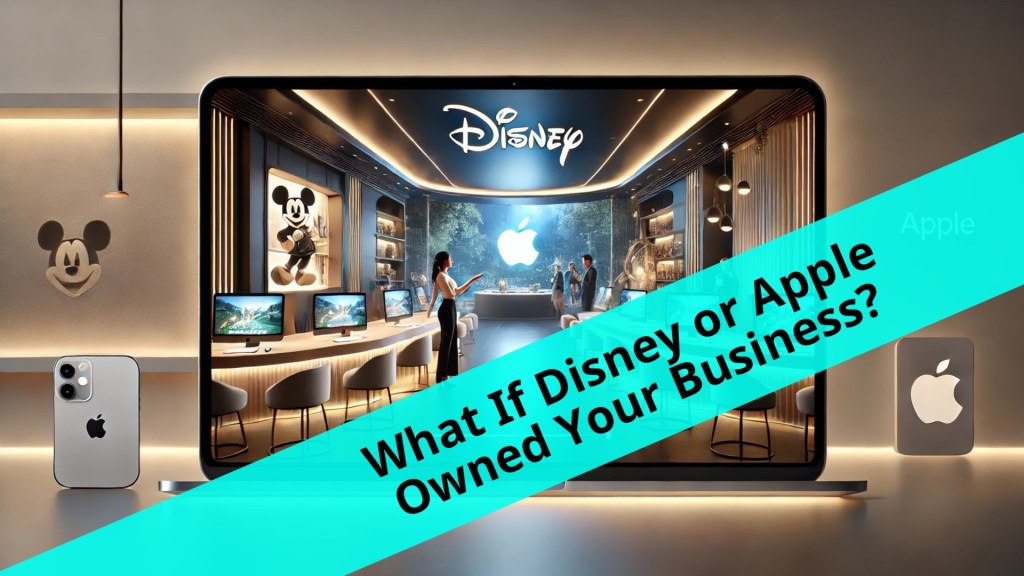
Disclaimer: The images in this article were developed using AI to visually represent the concept of a business inspired by Disney and Apple. These AI-generated visuals are not real-world depictions but are intended to provoke thought and inspire possibilities. Just as Disney and Apple push the boundaries of innovation and imagination, AI serves as a tool to help visualize what a business could become when built with an obsessive focus on excellence, customer experience, and attention to detail.

If Disney or Apple owned your business, how would every customer interaction, process, and detail transform to create an unforgettable experience?

Two companies stand out when it comes to delivering positively memorable experiences. Disney and Apple have set the benchmark for customer experience, attention to detail, and brand loyalty. Their success is not just about the products or services they offer but how they have built cultures that embrace excellence, consistency, and emotional connection. If a business—whether in retail, service, or the restaurant industry—were to operate under the same principles as Disney or Apple, it would require a deep commitment to a customer-centric philosophy and a relentless pursuit of perfection in every aspect.

At the foundation of such an approach is culture. Disney and Apple have strong, well-defined cultures that guide their employees’ actions, behaviors, and decisions. A business looking to replicate this must first establish core values that define the brand’s essence and mission. These values should be ingrained in every employee, starting from the hiring process. Employees must be selected not just for their skills but for their alignment with the company’s philosophy. Training is an ongoing effort, not just an onboarding event. Employees must be empowered to make decisions that enhance the customer experience without waiting for managerial approval. This level of trust and autonomy ensures that service remains seamless and consistently exceeds expectations.

Processes and procedures play a crucial role in maintaining a standard of excellence. Every customer touchpoint must be carefully analyzed, designed, and refined to ensure a frictionless and enjoyable experience. This means reducing complexities, eliminating unnecessary steps, and predicting customer needs before they even arise. Apple stores, for example, are designed with a clear and intentional flow, allowing customers to engage with products freely and interact with knowledgeable employees rather than feeling pressured by sales tactics. Disney’s theme parks follow a strict operational design that minimizes wait times and ensures guests are immersed in magic at every turn. A business following this model must create systems that make interactions effortless, whether it’s a streamlined checkout process, intuitive service flow, or personalized engagement.

Branding must go beyond logos and colors to become a fully immersive experience. Both Disney and Apple have mastered the art of creating emotional connections with their audiences. Every touchpoint, from advertising to physical environments to digital interactions, must tell a cohesive story that resonates with the customer. A business aspiring to this level of excellence must consider how its brand is perceived at every level. It should have a clear brand promise and ensure that every experience lives up to that promise. Consistency is key. Customers should receive the same level of service and engagement regardless of location, time, or platform. This requires meticulous training, well-defined brand standards, and a leadership team committed to enforcing those standards.

“Do what you do so well that they will want to see it again and bring their friends.” – Walt Disney

The customer experience should be designed around emotional impact. Disney’s magic is rooted in storytelling and immersive experiences. Apple’s genius lies in simplicity, elegance, and an almost obsessive attention to detail. A business that adopts this approach must consider how it makes customers feel. Every detail, no matter how small, contributes to the overall perception. The physical space must be welcoming, intuitive, and engaging. Service interactions must be warm, knowledgeable, and proactive. Digital experiences must be seamless and user-friendly. Every aspect of the business must be engineered to delight and surprise, fostering a sense of loyalty and advocacy.

Technology should be leveraged to enhance, not replace, human interaction. Apple uses technology to create effortless customer journeys, from mobile checkouts to personalized recommendations. Disney incorporates technology to elevate guest experiences, whether through mobile apps, interactive attractions, or seamless payment systems. A business adopting this mindset must embrace technology as a tool for personalization, efficiency, and engagement. It should not be implemented for the sake of innovation alone but with the intent of making customer interactions more intuitive and meaningful.

“Be a yardstick of quality. Some people aren’t used to an environment where excellence is expected.” – Steve Jobs

Marketing and community engagement must reflect the brand’s core values. Disney and Apple do not simply sell products; they sell a vision, a feeling, a lifestyle. Their marketing efforts are aspirational, focusing on what customers can experience, achieve, or become. A business that follows this model must craft messaging that goes beyond features and benefits to tap into human emotion. It must create a community around the brand, fostering deep connections through storytelling, exclusivity, and authenticity. Social media, content marketing, and public relations should all align to create a seamless narrative that reinforces the brand’s identity.

The leadership team must embody the brand’s values at every level. It is not enough to create a mission statement and expect employees to follow it. Leaders must set the example, demonstrating the same level of commitment to excellence and customer focus that they expect from their teams. They must be involved in the details, actively participating in the customer experience and constantly refining processes to improve them. They must also foster a culture of innovation, encouraging employees to challenge norms, bring forth new ideas, and contribute to the evolution of the brand.

A business operating with the mindset of Disney or Apple must be unwavering in its commitment to excellence, from the way employees are trained to the way products and services are delivered. Every detail matters. Every experience should be designed with the customer in mind. The brand should not just be a company that sells products or services, but an entity that customers trust, admire, and connect with on a deeper level. Those who master this approach do not just attract customers; they create lifelong brand advocates who return time and time again, not just for what they buy but for the way it makes them feel.

So, with a Disney and Apple mindset, what steps can/will you take to make positively memorable experiences an unrelenting passion and as such, a reality in your business?

Make today a great day. Make it happen. Make it count!

About the Author

With more than 40 years of experience in small business, restaurant, and franchise management, marketing, and development, Paul Segreto is a respected expert in the entrepreneurial world, dedicated to helping others achieve success. Whether you’re an aspiring or current entrepreneur in need of guidance, support, or simply a conversation, you can connect with Paul at paul@acceler8success.com.

About Acceler8Success Group

Acceler8Success Group empowers entrepreneurs and business leaders with personalized coaching, strategic guidance, and a results-driven approach. Whether launching, scaling, or optimizing a business, we provide the tools, mentorship, and resources to drive long-term success.

10 Things An Entrepreneur Should Know About AI

Artificial intelligence (AI) is reshaping industries, offering opportunities for efficiency, innovation, and competitive advantage. For entrepreneurs, understanding AI is no longer optional—it’s essential. Whether you’re in tech, retail, restaurants, or franchising, knowing how to leverage AI can drive growth and profitability. Here are ten crucial things every entrepreneur should know about AI.

First, AI is a tool, not a replacement. While it automates tasks and enhances decision-making, the human element remains vital. Entrepreneurs must guide AI implementation with clear goals and creative vision.

Second, data is the lifeblood of AI. The effectiveness of AI depends on the quality of data it processes. Entrepreneurs should prioritize collecting, organizing, and protecting their business data.

Third, AI enhances customer experiences. From chatbots offering 24/7 support to personalized recommendations, AI helps businesses meet customer needs efficiently and effectively.

Fourth, AI-driven marketing is powerful. With tools for audience targeting, campaign optimization, and performance analysis, entrepreneurs can achieve better results with less effort and expense.

Fifth, AI improves operations. Inventory management, demand forecasting, and supply chain optimization are areas where AI boosts efficiency and reduces costs.

Sixth, AI supports smarter decision-making. Predictive analytics can help entrepreneurs anticipate market trends, customer behavior, and operational challenges, enabling proactive adjustments.

Seventh, AI tools are more accessible than ever. From affordable no-code platforms to industry-specific apps, entrepreneurs can implement AI without extensive technical knowledge.

Eighth, cybersecurity is crucial. With AI handling sensitive data, robust security measures are necessary to prevent breaches and protect customer trust.

Ninth, ethical AI matters. Entrepreneurs should ensure their AI systems are transparent, fair, and free from bias, fostering trust and social responsibility.

Tenth, AI is constantly evolving. Entrepreneurs should commit to continuous learning, staying updated on trends, tools, and best practices to maintain a competitive edge.

AI offers transformative potential for entrepreneurs willing to embrace it. By understanding its capabilities, challenges, and ethical considerations, business owners can harness AI to drive growth, innovation, and long-term success.

LEARN MORE HERE

About Acceler8Success Group

Acceler8Success Group empowers entrepreneurs and business leaders with personalized coaching, strategic guidance, and a results-driven approach. Whether launching, scaling, or optimizing a business, we provide the tools, mentorship, and resources to drive long-term success.

Explore entrepreneurship coaching at Acceler8Entrepreneurship.com or business ownership resources at OwnABizness.com.

For more information on our business advisory services or expert content for your company, brand, or personal needs, whether for blogs, articles, newsletters, or special projects, in English, Spanish or French, please inquire at https://acceler8success.com/contact.

Culture as the Guiding Light in Brand Development and Expansion

In the realm of highly entrepreneurial organizations, where calculated risk is not just accepted but actively embraced, culture stands as the guiding light that illuminates the path from inception to sustained expansion. Unlike traditional corporate environments, where caution often tempers ambition, these organizations thrive on agility, bold decision-making, and an unwavering commitment to innovation. In such an ecosystem, culture is more than a set of values—it is the foundation upon which every decision is made, the lens through which opportunities are evaluated, and the force that shapes not only internal operations but also the brand’s external presence in the marketplace.

From the earliest stages of brand development, culture serves as both a compass and a catalyst. It is woven into the company’s mission, vision, and identity, influencing everything from product development to customer engagement. A brand’s culture dictates its approach to problem-solving, defines its appetite for disruption, and sets the tone for how it interacts with stakeholders. In an entrepreneurial landscape where uncertainty is a given, culture provides stability, ensuring that the brand’s core essence remains intact even as it adapts to new challenges and market shifts.

At the heart of brand development lies the mission statement—far more than a formal declaration, it is a bold proclamation of purpose that encapsulates the organization’s identity and aspirations. For companies where entrepreneurship thrives and risk-taking is an integral part of their DNA, the mission must reflect a pioneering spirit, a relentless drive to push boundaries, and an unyielding commitment to creating value beyond conventional business models. It must be clear enough to inspire confidence, yet flexible enough to evolve without losing its authenticity. This balance between vision and adaptability is critical, as it allows the brand to maintain its core identity while continuously innovating in response to market demands.

Beyond mission and vision, culture shapes the very identity of the brand. From its visual elements to its tone of voice, every touchpoint must reflect the company’s entrepreneurial spirit. The brand must exude confidence, project agility, and communicate a willingness to embrace change. Authenticity is non-negotiable—customers, investors, and partners alike must see and feel the company’s culture in action. A culture built on calculated risk-taking must manifest in the way the brand interacts with its audience, whether through marketing, customer service, or strategic partnerships. This identity cannot be manufactured or merely imposed from the top down—it must be embedded in the organization’s DNA and lived daily, from leadership to frontline employees.

As the brand scales, whether through franchising, strategic partnerships, or direct market expansion, the role of culture becomes even more pronounced. Growth in an entrepreneurial organization is rarely linear; it is dynamic, often requiring quick pivots, bold moves, and the courage to seize opportunities that others might hesitate to embrace. Unlike large corporations, where expansion often follows rigid playbooks and structured frameworks, entrepreneurial brands must approach growth with a mindset of adaptability. Expansion strategies must align with the culture that fuels the brand, ensuring that as the company reaches new markets, it does so without compromising its essence.

However, scaling a brand while preserving its cultural identity is not without challenges. The very nature of rapid growth can dilute the core values that made the brand successful in the first place. As new markets open, leadership must take deliberate steps to ensure that the brand’s cultural DNA remains intact. This means carefully selecting partners and team members who not only understand but also embody the company’s ethos. Training and operational structures must be designed to encourage innovation rather than stifle it. Processes should be flexible enough to allow for market-specific adaptations while still maintaining the integrity of the brand’s overarching vision.

Ultimately, for a highly entrepreneurial brand, culture is not just a guiding principle—it is the driving force behind every decision, every risk, and every milestone achieved. It informs the brand’s approach to growth, fuels its ability to innovate, and strengthens its resilience in the face of uncertainty. Organizations that embed culture into their DNA from the very beginning create brands that are not only recognized but respected, not just followed but believed in. In an ever-evolving marketplace, where the only constant is change, culture remains the anchor that ensures a brand’s longevity, relevance, and continued success.

Culture Over Concept: Why Some Businesses Just Can’t Replicate Buc-ee’s

Make today a great day. Make it happen. Make it count!

About the Author

With more than 40 years of experience in small business, restaurant, and franchise management, marketing, and development, Paul Segreto is a respected expert in the entrepreneurial world, dedicated to helping others achieve success. Whether you’re an aspiring or current entrepreneur in need of guidance, support, or simply a conversation, you can connect with Paul at paul@acceler8success.com.

About Acceler8Success Group

Acceler8Success Group empowers entrepreneurs and business leaders with personalized coaching, strategic guidance, and a results-driven approach. Whether launching, scaling, or optimizing a business, we provide the tools, mentorship, and resources to drive long-term success. Explore entrepreneurship coaching at Acceler8Entrepreneurship.com or business ownership resources at OwnABizness.com. For more information on our business advisory services or expert content for your company, brand, or personal needs—whether for blogs, articles, newsletters, or special projects—in English, Spanish or French, please inquire at https://acceler8success.com/contact.

Adapt or Be Left Behind

When the telephone was first introduced into businesses, it was met with skepticism and resistance. Many saw it as an unnecessary interruption, a nuisance that disrupted the rhythm of daily work. Yet, as time passed, the telephone became not just accepted but essential. It revolutionized communication, making business operations faster and more efficient. The same cycle repeated itself with the fax machine, computers, and later, smartphones—each initially dismissed as impractical or unnecessary, only to become indispensable tools that reshaped industries.

Social media followed a similar trajectory. Initially mocked as a passing fad, it was dismissed by many as a waste of time. Yet, businesses that embraced it early on found themselves at the forefront of an entirely new way to connect with customers, market their brands, and drive sales. Those who refused to adapt fell behind, while those who capitalized on the shift gained a competitive edge.

Now, artificial intelligence is here, and history is repeating itself. Some see AI as a distraction, an unnecessary complexity, or even a threat. But as with all the innovations that came before, AI is not just another tool—it is a transformational force that will impact every aspect of business and life. The difference this time? AI’s reach is far broader, touching every industry, every function, and every individual.

AI will revolutionize customer service, enabling businesses to provide instant, personalized responses at scale. It will streamline operations, automating repetitive tasks and freeing up human workers to focus on high-value strategic initiatives. It will enhance decision-making, using data-driven insights to improve efficiency and effectiveness. In restaurants, AI will optimize inventory management, enhance customer experience through personalization, and even power autonomous cooking and delivery systems. In franchising, it will analyze consumer trends, predict franchise success, and create hyper-personalized marketing campaigns.

Beyond business, AI is already transforming daily life. It powers the voice assistants we rely on, the navigation systems that guide us, and the medical advancements that extend our lives. It will continue to push the boundaries of what is possible, making everyday tasks more efficient and unlocking opportunities we have yet to imagine.

Those who hesitate, who resist change, will find themselves in the same position as those who once dismissed the telephone, the internet, or social media. AI is not a passing trend. It is not a distraction. It is the next great shift in how the world operates. The question is not whether AI will shape the future—it already is.

The real questions are: How are you embracing AI? Are you afraid of AI? Do you believe AI is here to stay, or will it go the wayside? Will you embrace it and reap the benefits, or will you be left behind?

Make today a great day. Make it happen. Make it count!

About the Author

With more than 40 years of experience in small business, restaurant, and franchise management, marketing, and development, Paul Segreto is a respected expert in the entrepreneurial world, dedicated to helping others achieve success. Whether you’re an aspiring or current entrepreneur in need of guidance, support, or simply a conversation, you can connect with Paul at paul@acceler8success.com.

About Acceler8Success Group

Acceler8Success Group empowers entrepreneurs and business leaders with personalized coaching, strategic guidance, and a results-driven approach. Whether launching, scaling, or optimizing a business, we provide the tools, mentorship, and resources to drive long-term success. Explore entrepreneurship coaching at Acceler8Entrepreneurship.com or business ownership resources at OwnABizness.com. For more information on our services, programs, or unique opportunities, inquire HERE.

Smart AI Tools Every Small Business Owner Should Know About

Artificial Intelligence (AI) is transforming the way small businesses and restaurants operate, offering tools and technologies that were once available only to large corporations. From automating repetitive tasks to providing deep insights into customer behavior, AI empowers business owners to save time, reduce costs, and make more informed decisions. By integrating AI into their operations, entrepreneurs can focus on enhancing customer experience, driving revenue growth, and staying competitive in a rapidly evolving marketplace.

How AI Can Be Used by Small Business and Restaurant Owners

  1. Customer Experience and Personalization AI chatbots and virtual assistants can handle customer inquiries, book reservations, and provide 24/7 support. Recommendation systems suggest menu items or services based on customer preferences, enhancing the guest experience.
  2. Marketing and Customer Engagement AI tools analyze customer data to optimize marketing campaigns and deliver personalized communications. Social media management platforms automate posting, engagement, and performance analysis.
  3. Inventory Management Predictive analytics tools forecast inventory needs to prevent overstocking or understocking, reducing waste and saving costs.
  4. Menu Optimization AI can analyze sales trends to identify high-performing dishes and suggest menu changes to maximize profitability.
  5. Operational Efficiency AI scheduling tools ensure optimal staff allocation by predicting busy times, while automation handles payroll, ordering, and other administrative tasks.
  6. Financial Management AI-powered platforms track expenses, manage cash flow, and generate revenue forecasts, helping owners maintain financial health.
  7. Customer Feedback and Sentiment Analysis AI tools analyze online reviews and feedback to identify trends, areas for improvement, and opportunities to enhance the customer experience.
  8. Delivery and Logistics AI optimizes delivery routes for efficiency and speed, ensuring timely order fulfillment and reducing delivery costs.

AI for small businesses. Where to start?

Best AI Apps for Small Business and Restaurant Owners

  1. Customer Interaction and Support Tidio: Provides AI-driven chatbots for managing customer inquiries and offering instant support. Zendesk AI: Enhances customer service with smart insights and automated workflows.
  2. Marketing and Social Media Hootsuite Insights: An AI tool for managing social media campaigns and analyzing engagement metrics. Mailchimp: Offers AI-driven email marketing and campaign optimization features.
  3. Inventory and Supply Chain BlueCart: Manages restaurant inventory and orders with predictive analytics. xtraCHEF by Toast: Tracks costs and simplifies inventory management for restaurants.
  4. Operational Tools 7shifts: AI-powered staff scheduling tailored for restaurants. QuickBooks Online: Automates accounting and financial management with AI features.
  5. Feedback Analysis ReviewTrackers: Monitors and analyzes online reviews to provide actionable insights. Google Business Profile AI tools: Helps businesses understand customer sentiment and behavior.
  6. Delivery and Logistics Onfleet: Streamlines delivery management and route optimization with AI technology. Uber Eats Manager: Offers AI-driven analytics for menu performance and customer preferences.
  7. Restaurant-Specific AI Tools OpenTable or Resy: AI-integrated reservation systems that streamline bookings and customer data management. Square POS: Combines point-of-sale features with AI analytics for restaurants.
  8. AI-Driven Insights Domino Data Lab: Provides advanced predictive analytics and data science solutions. Fivestars: Integrates AI to enhance customer loyalty and engagement programs.

By leveraging these AI applications, small business and restaurant owners can streamline their operations, enhance customer satisfaction, and maintain a competitive edge in the market.

Make today a great day. Make it happen. Make it count!

About the Author

With more than 40 years of experience in small business, restaurant, and franchise management, marketing, and development, Paul Segreto is a respected expert in the entrepreneurial world, dedicated to helping others achieve success. Whether you’re an aspiring or current entrepreneur in need of guidance, support, or simply a conversation, you can connect with Paul at paul@acceler8success.com. Preview his LinkedIn profile HERE.

Understanding Your “Why”: The Foundational Questions Every Entrepreneur, Founder, and Professional Must Ask

The journey of entrepreneurship, professional practice, or business leadership can be both fast-paced and overwhelming, but one universal truth stands out: clarity of purpose is transformative. Whether you’re launching a startup, managing a law firm, or guiding clients as a coach, understanding your “why” is key to maintaining focus, motivation, and alignment with your goals. Achieving this clarity begins with asking essential questions—questions that act as both guiding lights and reflections of your personal and professional aspirations.

Who is My Target Audience?

Defining your target audience is one of the most crucial steps in building a successful venture or practice. For entrepreneurs, it means identifying the specific group of people who will benefit from your product or service. For professional service providers, it’s about understanding who you are best equipped to serve.

Without a clear picture of your ideal customer, client, or stakeholder, your efforts risk being scattered. Narrowing your focus ensures that your messaging, offerings, and strategies resonate with the right people. Ask yourself:

  • Who needs what I provide?
  • What challenges do they face that I can solve?
  • What demographics, behaviors, or values define this group?

Clarity in your audience allows you to build deeper connections, foster loyalty, and differentiate yourself in a crowded market.

What Am I Offering?

This question forces you to take an honest inventory of what you bring to the table. It’s more than just listing your products or services—it’s about understanding the value and unique benefits you provide. What problem are you solving? How are you making your audience’s life better, easier, or more fulfilling?

The answer must be specific and reflect your expertise. If you’re a business coach, for example, are you offering general guidance, or do you specialize in helping startups scale effectively? If you’re a lawyer, are you catering to small businesses, or is your niche focused on intellectual property for tech companies?

Defining your offerings with precision ensures you can communicate them effectively and adapt to your audience’s evolving needs.

What Do I Do Best?

Success often comes from leveraging your strengths. This question prompts introspection about your skills, talents, and areas of expertise. What sets you apart? What do clients, peers, or colleagues consistently praise you for?

Understanding what you excel at allows you to focus your energy where you can make the greatest impact. For entrepreneurs, this might mean honing a specific product feature or refining your customer service approach. For professionals like attorneys or consultants, it might involve doubling down on a niche skill that makes you invaluable to your clients.

Lean into your strengths while finding ways to delegate or mitigate areas where you may not shine. This approach not only enhances your efficiency but also boosts your confidence and credibility.

What Do I Love Doing?

Passion fuels persistence. To sustain momentum in your business or professional practice, it’s essential to align your work with what you genuinely enjoy. This question encourages you to explore the aspects of your work that bring you joy and satisfaction.

When you focus on activities you love, your enthusiasm becomes contagious, positively influencing your team, clients, and overall outcomes. On the other hand, ignoring this question can lead to burnout or disconnection, undermining your ability to succeed.

Do These Questions Address My Why?

Your “why” is the driving force behind your business and life. It’s the core purpose that motivates you to get up every day and put in the effort. For many, the “why” is a blend of personal fulfillment, financial security, community impact, and legacy-building.

Reflecting on the earlier questions can help you align your work with your deeper purpose. For example:

  • If your target audience resonates with your values and vision, it reinforces why you do what you do.
  • If your offerings solve meaningful problems, they reaffirm your impact.
  • If your strengths and passions overlap, they point to a sustainable and fulfilling career.

When your answers to these questions are in harmony, they create a clear, purpose-driven path forward.

Bridging Business and Life

For entrepreneurs and professionals, these questions don’t just define your career—they shape your life. They serve as a lens through which you can evaluate decisions, set priorities, and measure success.

If your “why” is rooted in providing a better life for your family, ask whether your business choices support that goal. If you’re passionate about fostering creativity or innovation, ensure your work reflects those values.

The interplay between business and life underscores the importance of these questions. They are not static but dynamic, requiring ongoing reflection and adjustment as circumstances evolve.

Moving Forward with Clarity

To effectively answer these questions, take the time to reflect, journal, or engage in meaningful discussions with mentors or peers. Your answers may evolve, and that’s okay—the key is to remain intentional and aligned with your goals.

Whether you’re an entrepreneur launching a new venture, a founder scaling a company, or a professional navigating a career, these questions are a compass. They help you stay grounded, focused, and connected to your purpose.

Ultimately, success is not just about what you achieve but about how aligned your journey is with your values, strengths, and passions. The answers to these questions will lead you closer to that alignment, empowering you to thrive in both business and life.

Make today a great day. Make it happen. Make it count!

About the Author

With more than 40 years of experience in small business, restaurant, and franchise management, marketing, and development, Paul Segreto is a respected expert in the entrepreneurial world, dedicated to helping others achieve success. Whether you’re an aspiring or current entrepreneur in need of guidance, support, or simply a conversation, you can connect with Paul at paul@acceler8success.com.

Why Storytelling is Your Most Powerful Marketing Tool as an Entrepreneur

Storytelling has always been one of the most profound ways humans connect with one another. Since ancient times, stories have been used to educate, inspire, and bring people together. In the world of entrepreneurship, storytelling has emerged as more than just an art form—it is one of the most powerful marketing tools at your disposal. Whether you are launching a startup, growing your small business, or scaling an established enterprise, storytelling can transform the way you connect with your audience and set your brand apart in a crowded marketplace.

At its core, storytelling is about making connections. It turns your business from a faceless entity into a relatable, approachable force that customers can trust. People don’t just buy products or services; they buy experiences, emotions, and solutions to their problems. By weaving your business into a narrative that resonates with your audience, you create an emotional bond that goes far beyond transactional interactions.

For entrepreneurs, storytelling provides a platform to share the “why” behind your business. Why did you start this journey? What inspired you to solve a particular problem? What challenges have you faced along the way? These questions form the foundation of your story. When shared authentically, they reveal the humanity behind the business—a critical element in building trust and loyalty.

Storytelling also has the power to differentiate your brand. In today’s competitive markets, there are countless businesses offering similar products and services. What sets your business apart? Your story is your unique selling point. Competitors might replicate your pricing, features, or even marketing strategies, but they cannot replicate the authenticity of your journey. Sharing your story allows you to carve out a distinctive identity that resonates with your target audience.

Furthermore, storytelling fosters a sense of community. Customers are not just passive consumers—they want to feel like they are part of something bigger. When your brand narrative aligns with your audience’s values, aspirations, and experiences, they become emotionally invested. They aren’t just buying from you; they’re joining your mission and contributing to the continuation of your story.

In the digital age, the avenues for storytelling are endless. Social media platforms, blogs, podcasts, and video content provide unparalleled opportunities to bring your story to life. A behind-the-scenes video about your business operations, a heartfelt blog post about overcoming obstacles, or a podcast episode discussing your industry insights can all draw people into your world. Each medium allows you to engage with your audience on a deeper level, bringing them closer to your brand.

Effective storytelling is also a driver of action. Stories have a unique ability to inspire. When people hear about the passion, dedication, and perseverance that fuel your business, they are more likely to support you. A powerful story can turn casual observers into loyal customers and enthusiastic advocates. It’s not just about selling a product—it’s about making people feel like they’re part of something meaningful.

Consider some of the most iconic brands in the world. Companies like Apple, Nike, and Tesla have built their empires not just on innovative products but on the strength of their stories. They’ve mastered the art of connecting emotionally with their customers by sharing compelling narratives of innovation, perseverance, and empowerment. As an entrepreneur, you can do the same, no matter the size of your business or the industry you operate in.

To leverage storytelling effectively, authenticity is key. Audiences today are incredibly savvy—they can sense inauthenticity from a mile away. Stay true to your values and be genuine about your journey. Share both your successes and your struggles. Don’t be afraid to show vulnerability. In doing so, you create a narrative that feels real and relatable.

It’s also important to align your story with your audience. Know who they are, what they value, and what challenges they face. Craft your narrative to reflect those shared experiences and aspirations. The more your audience sees themselves in your story, the stronger the connection you’ll build.

To put a fine point on this, storytelling is not a one-time effort; it’s an ongoing process. Your business is always evolving, and so is your story. Share your milestones, celebrate your wins, and let your audience see the growth and transformation of your journey. Keep them engaged by making them feel like they’re a part of your success.

In a world overflowing with information and competing brands, storytelling allows you to rise above the noise. It creates a lasting impression, builds trust, and transforms customers into advocates. For entrepreneurs, it’s more than just a marketing tool—it’s the bridge that connects your vision with the hearts of your audience. Embrace the power of storytelling, and watch how it transforms your business into a brand that people truly care about.

Make today a great day. Make it happen. Make it count!

About the Author

With more than 40 years of experience in small business, restaurant, and franchise management, marketing, and development, Paul Segreto is a respected expert in the entrepreneurial world, dedicated to helping others achieve success. Whether you’re an aspiring or current entrepreneur in need of guidance, support, or simply a conversation, you can connect with Paul at paul@acceler8success.com.