Tag: mental health

Leading a Franchise System Through the Holidays With Clarity and Care

For franchisors, the holiday season brings its own version of noise and quiet. The system is busy with year-end targets, staffing challenges, family obligations, and the emotional weight that often comes with closing out a year. At the same time, there is a quieter responsibility that never really turns off: being there for franchisees. This season offers a rare opportunity to pause long enough to remember that leadership in franchising is not just about systems, standards, and performance. It is about people. People who are carrying the same pressures you are, often while wearing even more hats at the unit level.

As a franchisor, you are conditioned to keep moving. You solve problems, set direction, protect the brand, and support operators who rely on you for guidance and stability. There is always another call to take, another decision to make, another franchisee who needs clarity or reassurance. Over time, that constant responsibility can quietly shift how you treat yourself. Rest becomes optional. Reflection becomes postponed. Personal well-being becomes something to address later, when things slow down, even though leadership rarely allows for that moment to arrive on its own. The holiday season is a reminder that leadership without renewal eventually becomes unsustainable.

Being present for franchisees requires more than availability. It requires clarity, patience, empathy, and sound judgment. Those qualities do not come from running on empty. Quiet time, whether it is a walk without a phone, an early morning moment of stillness, time in prayer or reflection, or simply stepping away long enough to breathe, is not indulgent. It is part of the responsibility. Franchisees feel the difference when their franchisor is grounded versus exhausted, intentional versus reactive, calm versus overwhelmed. Your internal state shapes the tone of the entire system.

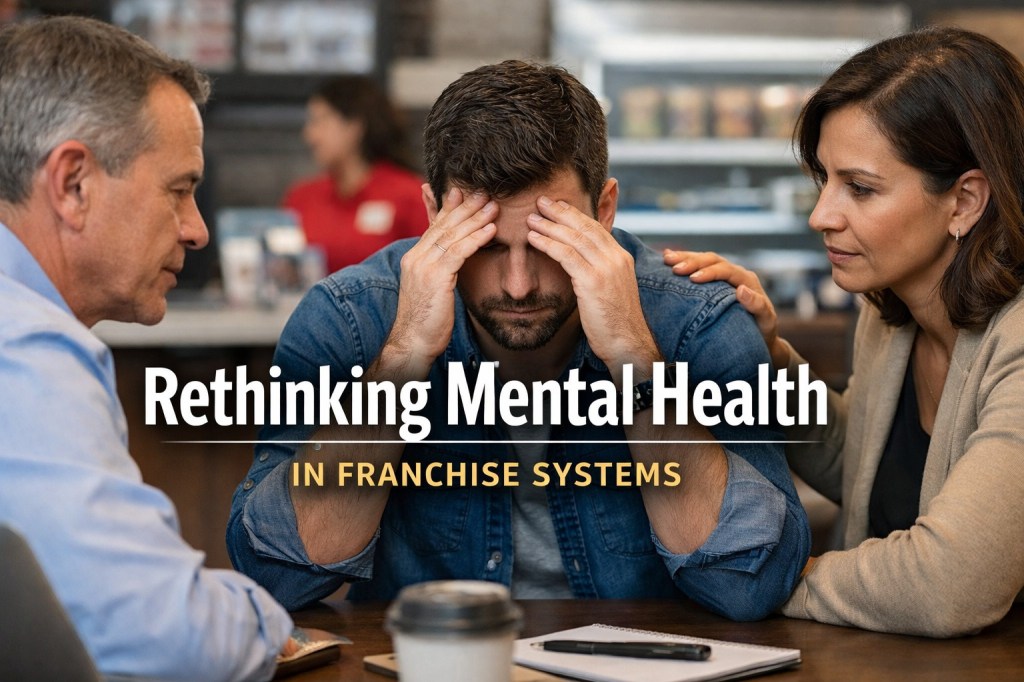
Mental health and physical health are not separate from franchisor leadership. They are foundational to it. When stress goes unchecked, communication suffers. When exhaustion builds, patience shortens. When clarity fades, decisions become reactive instead of strategic. Franchisees look to franchisors not just for answers, but for steadiness. Protecting your well-being protects your ability to show up as a leader they can trust, especially during uncertain or demanding times.

It can feel uncomfortable to step back, particularly during a season centered on giving and service. Franchisors are often wired to put the system first, the brand first, the franchisees first. That instinct comes from care, not ego. But neglecting yourself does not strengthen the system. It weakens it. You cannot consistently support franchisees from a place of depletion. You cannot guide others effectively if you are running on fumes. Taking care of yourself is not a withdrawal from leadership; it is part of sustaining it.

Your reasons for leading a franchise system run deep. They may include your family, your team, the franchisees who invested their futures in your brand, or the legacy you are building. Caring for yourself is not separate from those responsibilities. It is directly tied to them. When you protect your mental health, you protect your ability to listen and lead with intention. When you honor your physical health, you preserve the energy required to serve others. When you prioritize your well-being, you ensure that franchisees receive leadership that is thoughtful, present, and steady, not rushed or reactive.

This holiday season does not need to be about doing more for the sake of appearance. It can be about becoming more aware. Aware of your limits. Aware of the pressures you carry. Aware of the signals your body and mind have been sending. Giving yourself permission to pause is not a sign of weakness. It is a sign of maturity as a leader.

Mental health matters. Physical health matters. Well-being matters. These are not abstract ideas or seasonal talking points. They are leadership truths that franchisors often learn through experience. If there is one message worth carrying into the new year, it is this: you matter. Not only as the steward of a brand or the head of a system, but as a human being. Taking care of yourself is not stepping away from your franchisees. It is one of the most important ways you show up for them.


About the Author

Paul Segreto brings over forty years of real-world experience in franchising, restaurants, and small business growth. Recognized as one of the Top 100 Global Franchise and Small Business Influencers, Paul is the driving voice behind Acceler8Success Café, a daily content platform that inspires and informs thousands of entrepreneurs nationwide. A passionate advocate for ethical leadership and sustainable growth, Paul has dedicated his career to helping founders, franchise executives, and entrepreneurial families achieve clarity, balance, and lasting success through purpose-driven action.


About Acceler8Success America

Acceler8Success America is a comprehensive business advisory and coaching platform dedicated to helping entrepreneurs, small business owners, and franchise professionals achieve The American Dream Accelerated.

Through a combination of strategic consulting, results-focused coaching, and empowering content, Acceler8Success America provides the tools, insights, and guidance needed to start, grow, and scale successfully in today’s fast-paced world.

With deep expertise in entrepreneurship, franchising, restaurants, and small business development, Acceler8Success America bridges experience and innovation, supporting current and aspiring entrepreneurs as they build sustainable businesses and lasting legacies across America.

Learn more at Acceler8SuccessAmerica.com

When Franchisees Are Afraid—Leadership Becomes More Important Than Operations

Fear shows up quietly first. A nervous voice on a discovery day. A spouse asking are we sure about this? A new franchisee calling support three times a week—not because they don’t understand the system, but because they need reassurance the system will hold. Later it shows up differently: a once-confident operator suddenly avoiding calls, slipping into silence, pulling back from collaboration with peers. Fear is not always loud. Often it whispers. And if leadership isn’t listening, it goes unheard until it becomes something harder to fix: disengagement, resentment, burnout, or failure.

Understanding this is where true franchisor leadership begins.

Franchisees step into ownership full of hope. They invest time, money, identity—sometimes everything. But hope alone isn’t armor. Hope must be reinforced with guidance, with clarity, with trust. Too often franchisors focus only on the business mechanics: unit economics, marketing programs, compliance, labor models, food costs, margins. Necessary, absolutely. But these alone cannot carry a franchisee through the emotional turbulence of entrepreneurship.

Because franchising isn’t just business. It’s personal.

A franchisee’s fear is tied to livelihood, to family, to ego, to the story they’ve told themselves about who they wish to become. Fear shows up strongest when dreams feel fragile. A good franchisor teaches systems. A great franchisor strengthens belief.

This is where expansion matters most.

Fear is a leadership responsibility
Franchise leaders often want to fix. It’s natural. Show them processes. Give them tools. Point to the roadmap. But fear doesn’t respond to correction—it responds to connection. Franchisees need to feel seen, heard, understood. They need leadership that recognizes the emotional reality of ownership: the 2 a.m. cashflow panic, the silent dining room during slow hours, the weight of payroll, the fear of disappointing family and self.

Leadership here is not about eliminating fear. It’s about normalizing it and guiding through it.

What if franchisors treated fear like data?
A signal that communication needs strengthening.
A sign training must go deeper, not wider.
A cue that mentorship and peer-to-peer communities need attention.
A reminder that culture is either strengthening or cracking.

When fear becomes visible, it becomes manageable.

Culture is the true operating system
You can have the greatest playbook in franchising—but if the culture doesn’t reinforce courage, collaboration, and vulnerability, the playbook becomes nothing more than laminated paper.

Culture makes franchisees raise their hand before they’re in trouble.
Culture makes high performers share what’s working, and struggling operators listen without shame.
Culture makes franchisees say, I’m scared but I’m not alone.
That belief is worth more than any marketing fund or training module.

Support isn’t soft; it’s strategic
Franchisees who feel supported don’t fight the system—they engage with it. They ask questions instead of hiding mistakes. They lean into improvement instead of resisting change. They innovate responsibly instead of improvising dangerously. A franchisee who trusts leadership can take coaching. A franchisee who feels judged will retreat.

Fear-informed leadership develops:

✓ Field support that coaches instead of polices
✓ Training that reinforces competency and confidence
✓ Communication that is honest about challenges, not just celebrations
✓ A leadership tone that is steady even in uncertainty
✓ Peer networks where franchisees learn to lift each other

Empathy becomes operational advantage.

When uncertainty hits—economic shifts, rising costs, new competition—franchisees look not just for answers, but for anchors. They look to leadership for tone, for steadiness, for belief. The franchisor’s emotional posture during turbulence often matters more than the technical solution. Franchisees follow the energy before they follow the strategy.

Survival isn’t just about numbers
Units don’t close because of lack of marketing alone. They close when an owner loses belief. Declining metrics often begin weeks or months after hope starts to weaken. A franchise system survives long-term only if the people inside it feel worthy of survival.

When franchisors address fear at its root, they achieve more than compliance—they unlock commitment. Fear becomes motivation, not paralysis. Doubt becomes inquiry, not quiet withdrawal. Franchisees who feel emotionally supported push through slow seasons, adapt to new initiatives, and lead with resilience. And resilient franchisees build resilient brands.

Franchisors must become more than architects of systems—they must become architects of belief. The future of franchising will not belong to brands with the best operations alone, but to those who build a culture where franchisees feel safe enough to grow beyond their fear.

Because franchising is human.
Because leadership is emotional.
Because culture is the backbone.
Because belief is survival.

Fear is not a flaw in the franchise system.
Fear is an invitation—
for deeper leadership,
for stronger relationships,
for a culture that doesn’t just scale performance,
but scales courage.

And the franchisors who embrace this reality will not simply build businesses.
They will build legacy.


About the Author

Paul Segreto brings over forty years of real-world experience in franchising, restaurants, and small business growth. Recognized as one of the Top 100 Global Franchise and Small Business Influencers, Paul is the driving voice behind Acceler8Success Café, a daily content platform that inspires and informs thousands of entrepreneurs nationwide. A passionate advocate for ethical leadership and sustainable growth, Paul has dedicated his career to helping founders, franchise executives, and entrepreneurial families achieve clarity, balance, and lasting success through purpose-driven action.


About Acceler8Success America

Acceler8Success America is a comprehensive business advisory and coaching platform dedicated to helping entrepreneurs, small business owners, and franchise professionals achieve The American Dream Accelerated.

Through a combination of strategic consulting, results-focused coaching, and empowering content, Acceler8Success America provides the tools, insights, and guidance needed to start, grow, and scale successfully in today’s fast-paced world.

With deep expertise in entrepreneurship, franchising, restaurants, and small business development, Acceler8Success America bridges experience and innovation, supporting current and aspiring entrepreneurs as they build sustainable businesses and lasting legacies across America.

The Quiet Center of the Long Weekend

Why Stillness on Sunday May Be the Most Radical Act of Entrepreneurship

There is a certain transformation that takes place when a three-day weekend unfolds. It does more than grant an extra day of freedom; it alters our perception of time. The hours stretch differently, and the pace of life loosens its grip. Yet within this expanse, each day carries its own character.

Saturday is energetic. It hums with activity, crowded by errands postponed through the week, home projects finally faced, obligations chasing their turn. Saturday insists on movement, on catching up, on pushing forward.

Monday, though technically detached from the workweek, bends inevitably toward it. The mind moes toward preparation, calendars are reviewed, inboxes peeked at, and the body subtly braces for what’s coming. Monday is a bridge into obligation.

But Sunday stands apart. Suspended between two competing energies, it resists categorization. Neither consumed by duty nor stolen by anticipation, it exists in stillness. Sunday is the quiet heart of the long weekend, the sanctuary hidden in plain sight.

For entrepreneurs—whose lives are often written in the ink of ambition—this stillness is more than reprieve. It is revelation.

Sunday as Restoration

Entrepreneurship is a vocation of velocity. Every conversation seems tied to outcomes, every effort measured by results, every plan stretched toward the horizon of what’s next. This posture, leaning constantly forward, comes at a cost. The present moment, neglected, slips through unnoticed.

Sunday interrupts this drift. It is not leisure in the shallow sense but restoration in the truest one. Restoration is not about doing nothing; it is about recovering something lost: presence.

Consider the entrepreneur who wakes on Sunday with no alarm, pours coffee without rushing, and shares breakfast with family without a phone at arm’s reach. The conversation is not efficient. It meanders. Children laugh. Stories overlap. There is no agenda, and yet the moment feels more essential than any boardroom meeting.

Or the founder who spends Sunday afternoon in quiet reflection—perhaps reading a book untouched all week, or walking without direction, listening not for answers but for the questions that rarely surface in noise. Here, clarity comes not by effort but by allowing space for it to arrive.

This is Sunday’s gift: it restores the entrepreneur not by removing ambition but by grounding it.

The Radical Invitation

There is something radical about Sunday, especially in a world so thoroughly driven by productivity. To pause, truly pause, in a culture that worships efficiency is almost an act of rebellion.

The irony is that in this pause lies one of the greatest catalysts for entrepreneurial success. For it is not always in the spreadsheet, the business plan, or the late-night strategy session that the breakthrough arrives. Sometimes, it emerges in the quietest of moments.

One CEO I once knew described how his most transformative idea came not from a consultant’s report, but while sitting in his backyard on a Sunday, watching birds fly between branches. He realized, almost absurdly, that his company was structured more like a cage than a tree—too rigid, too closed. The metaphor shifted his thinking and reshaped his leadership.

Another founder spoke of a Sunday evening tradition: walking with her partner as the sun set. They rarely talked about business directly, but somehow in those walks she found the clarity she needed. “It wasn’t about solving problems,” she explained. “It was about seeing them differently.”

Sunday, then, is not passive. It is fertile ground where insight takes root in the soil of stillness.

The Paradox of Progress

Entrepreneurs are conditioned to equate movement with progress. Yet Sunday reminds us of a paradox: stillness can be the most productive state of all.

Consider the musician. A song is not only the notes but the silence between them. Without the pause, the music collapses into noise. In the same way, entrepreneurship without pause risks becoming noise—activity without meaning, progress without direction.

Sunday is the rest note in the composition of work. It gives shape to the music of ambition. It reminds us that the most important part of building may not be the building itself, but the breath that allows us to remember why the work matters.

One young restaurateur I mentored learned this lesson painfully. He had worked himself into exhaustion, believing his presence was required for every detail, every decision. Then, one Sunday, a family emergency forced him away from the restaurant. To his surprise, the business not only survived—it thrived in his absence. That Sunday taught him a truth: leadership is not control; it is trust. And that trust became the key to scaling his business.

Sunday as Mirror

More than rest, more than clarity, Sunday acts as a mirror. In the quiet, we see ourselves more clearly. Without the distractions of constant motion, our motivations, fears, and values reveal themselves.

For entrepreneurs, this reflection is critical. Why are we building what we’re building? What is the dream we are chasing—and is it still aligned with who we are becoming?

The hurried pace of entrepreneurship rarely allows such questions. The world rewards visible results, not invisible reflection. But Sunday pushes us toward them. In its stillness, we are invited to revisit the deeper “why” beneath our relentless “how.”

It is in these moments that many rediscover gratitude: for the family who supports them, for the partners who walk beside them, for the simple joy of being alive in a world of possibility. Gratitude transforms ambition, softening its edges, grounding it in something more enduring than numbers on a ledger.

The Entrepreneur’s Dilemma

To embrace Sunday fully is not easy. The entrepreneur’s dilemma is that ambition rarely sleeps. Even in quiet moments, the mind races: the deal that needs closing, the opportunity that could slip away, the competitor who might be gaining ground.

And yet, to deny ourselves the pause is to weaken our capacity for the very pursuit we hold dear. Burnout is not simply exhaustion—it is a loss of perspective, a forgetting of why we began. Sunday offers the antidote. It allows us to step back, not away, from our work. It refreshes the spirit so we can return not only with energy but with intention.

Entrepreneurship is not a sprint; it is a long, demanding journey. No one runs forever without rest. The strongest leaders are those who learn not just to move, but to stop.

The Practice of Presence

How, then, can entrepreneurs practice Sunday beyond the calendar? The truth is, Sunday is less a day and more a posture. It is an orientation toward presence that can be carried into daily life, even amid the demands of work.

Perhaps it begins with protecting one hour each day—no devices, no agendas, no performance. Just being. Perhaps it looks like treating meals as sacred pauses rather than fuel between tasks. Perhaps it means choosing to listen fully in a conversation, without rehearsing the next reply in your head.

Sunday teaches us that presence is not separate from productivity but woven into it. The entrepreneur who learns to pause will not only find greater clarity but will lead with greater humanity.

The Breath Between Notes

As the long weekend unfolds, and Sunday arrives in its quiet center, resist the urge to conquer it with plans. Do not let it collapse into Saturday’s busyness or Monday’s rehearsal. Protect it as a sanctuary of stillness.

Because Sunday is not simply a day. It is a teacher. It shows us that progress is not only measured in motion but in meaning. It reminds us that the dream we chase tomorrow must be rooted in the presence we hold today.

And in the long arc of building, creating, and leading, perhaps the most important lesson of all is this: The pause does not interrupt the music. The pause is what makes the music beautiful.

Make today a great day. Make it happen. Make it count.

About the Author

Paul Segreto brings over four decades of hands-on experience in franchising, restaurants, and small business development.

Named one of the Top 100 Global Franchise and Small Business Influencers, Paul is also the voice behind the Acceler8Success Cafe, a daily content platform where thousands of entrepreneurs gain insight and motivation. A lifelong advocate for ethical growth and brand integrity, Paul continues to coach founders, franchise leaders, and entrepreneurial families, helping them find clarity in chaos and long-term success through intentional leadership.

Looking to elevate your business or need expert guidance to navigate current challenges? Connect directly with Paul at paul@acceler8success.com — your next step starts with a conversation.

About Acceler8Success Group

Acceler8Success Group is a multifaceted business advisory platform committed to empowering entrepreneurs, small business owners, franchise professionals, and industry leaders through strategic consulting, coaching, and curated content.

With a strong focus on entrepreneurship, franchising, restaurants, and small business growth, Acceler8Success Group delivers actionable insights and real-world strategies across its suite of brands, including the following:

Acceler8Success,  FranchiseReclaim,  OwnABizness.com,  Accelerate Success Coaching,  Your Entrepreneurial Success, and relaunching soon, Franchise Foundry.

By blending deep industry expertise with a dynamic content ecosystem, Acceler8Success Group fosters sustainable success and responsible leadership for today’s innovators and tomorrow’s legacy builders.

When Rest Feels Risky: The Entrepreneur’s Dilemma on a Long Holiday Weekend

As we embrace the long Labor Day weekend, millions of people settle into a rhythm of backyard barbecues, family reunions, neighborhood get-togethers, and the final glimmers of summer. It’s a time traditionally reserved for relaxation and celebration, a symbolic pause before the busy fall season begins. Yet for entrepreneurs, this holiday often carries a more complicated meaning. Where others see a chance to unwind, entrepreneurs frequently feel the weight of an inner debate: Do I dare step away, or should I use this time to get ahead?

The entrepreneurial journey has never been a nine-to-five endeavor. The stakes are high, responsibilities vast, and the line between personal and professional life nearly invisible. Even as the smell of charcoal drifts through the air and laughter surrounds them, many business owners find their minds drifting back to emails left unanswered, invoices awaiting review, or ideas not yet tested. For some, the notion of disconnecting feels less like freedom and more like a threat—an open door for missed opportunities, hidden risks, or the fear of simply falling behind.

But perhaps the deeper truth lies in reframing what a holiday weekend can mean for the entrepreneur. Instead of treating it as an inconvenient interruption, it can serve as a mirror—a chance to reflect not only on the work itself but on the relationship to the work. When every day is a sprint, when every hour feels essential, what gets lost is perspective. And perspective is often the very thing that sparks innovation. Taking time to pause isn’t about neglecting the business; it’s about preserving the mental clarity and energy required to lead it forward.

There’s also the question of boundaries. The constant tether of smartphones and devices has made it harder than ever to fully “step away.” The temptation to peek at the inbox or respond to a message can feel irresistible, especially when the business is young or the stakes are personal. But without boundaries, even family gatherings can dissolve into half-moments—physically present, mentally elsewhere. Imagine instead what it could mean to create intentional structure for these breaks: delegating pressing tasks, setting a defined time to check in, or even daring to silence notifications for a few precious hours. These small acts of discipline signal more than self-control; they signal trust—trust in the systems built, trust in the people empowered, and trust in the business to endure without constant supervision.

Equally important is the willingness to embrace the idea of rest as strength. Our culture celebrates hustle, often equating long hours with dedication and sacrifice with success. Yet history is filled with examples of leaders and visionaries whose greatest breakthroughs arrived not in moments of constant grind but in pauses—those fleeting intervals when the mind had the freedom to wander, to imagine, to reset. For entrepreneurs, the Labor Day holiday can be exactly that: a reset button, a chance to engage in activities that feed the soul—whether it’s the warmth of family, the rhythm of a hobby, or simply the quiet of a morning without deadlines.

This isn’t to say that anxieties will disappear during the long weekend. They rarely do. The work will still be waiting on Tuesday morning. But perhaps the real question is whether the entrepreneur will return to it exhausted or renewed. That choice rests in how the weekend is approached. Treat it as an inconvenience, and it will drain. Treat it as an opportunity, and it can restore.

Labor Day itself was born from the recognition of the dignity of work and the importance of balance. It was meant as a tribute to the American worker, acknowledging that labor deserves both respect and rest. For the entrepreneur, who often embodies both the worker and the visionary, this holiday can hold an even deeper resonance. It is a reminder that while ambition fuels the journey, sustainability secures it.

So, as the holiday weekend unfolds, entrepreneurs have a decision to make. They can remain tethered to the endless hum of work, or they can allow themselves a pause—one that doesn’t weaken their progress but strengthens it. A pause that honors not just the business they are building, but the life they are living. After all, the truest measure of success isn’t just what is built in the marketplace. It’s also what is preserved in the heart, the mind, and the relationships that make the journey worthwhile.

Make today a great day. Make it happen. Make it count.

About the Author

Paul Segreto brings over four decades of hands-on experience in franchising, restaurants, and small business development.

Named one of the Top 100 Global Franchise and Small Business Influencers, Paul is also the voice behind the Acceler8Success Cafe, a daily content platform where thousands of entrepreneurs gain insight and motivation. A lifelong advocate for ethical growth and brand integrity, Paul continues to coach founders, franchise leaders, and entrepreneurial families, helping them find clarity in chaos and long-term success through intentional leadership.

Looking to elevate your business or need expert guidance to navigate current challenges? Connect directly with Paul at paul@acceler8success.com — your next step starts with a conversation.

About Acceler8Success Group

Acceler8Success Group is a multifaceted business advisory platform committed to empowering entrepreneurs, small business owners, franchise professionals, and industry leaders through strategic consulting, coaching, and curated content.

With a strong focus on entrepreneurship, franchising, restaurants, and small business growth, Acceler8Success Group delivers actionable insights and real-world strategies across its suite of brands, including the following:

Acceler8Success,  FranchiseReclaim,  OwnABizness.com,  Accelerate Success Coaching,  Your Entrepreneurial Success, and relaunching soon, Franchise Foundry.

By blending deep industry expertise with a dynamic content ecosystem, Acceler8Success Group fosters sustainable success and responsible leadership for today’s innovators and tomorrow’s legacy builders.

The Silent Weight: Why Franchise Founders Must Prioritize Mental Health

As we honor Mental Health Awareness Month, we’re reminded to check in with employees, franchisees, and their families. But there’s one voice that’s too often overlooked—the founder. The one who carries the dream, the brand, the vision, and the responsibility. The one who must make decisions not just for today, but for the legacy of tomorrow. When you’re the founder of a franchise brand, your mental health isn’t just about personal well-being. It’s a foundational pillar for everyone connected to your business.

Franchising magnifies the stakes. Every new franchise location represents a person or family who believed in the brand enough to invest their savings—often their life savings. Many times, they’ve brought along their partners, their kids, their closest friends, to share in the opportunity. A founder becomes more than a business leader. They become a mentor, a counselor, a beacon of hope. They become the glue that holds together an ecosystem of livelihoods, dreams, and futures.

The emotional weight of that role is staggering.

As a franchise grows, so does the pressure. Growth demands sharper decision-making, deeper strategy, and greater emotional resilience. A founder must lead franchisees through turbulent times, inspire teams through plateaus, and reassure stakeholders when things don’t go as planned. Every move is watched. Every word carries weight. And in the middle of it all, the founder is still human—subject to the same stress, anxiety, doubt, and emotional fatigue that any of us can experience.

That’s why mental health cannot be optional for founders. It must be proactive. It must be protected. And it must be supported.

Too often, the founder role is a lonely one. You’re expected to have all the answers. But when the questions start to pile up—when growth feels overwhelming, or challenges feel personal—it becomes essential to have someone to turn to. Not just a business advisor. Not just a therapist. But someone who embodies the best of several roles. Someone who listens without judgment, challenges without ego, encourages with empathy, and helps you laugh when you need it most.

Every founder should have a coach. A confidant. A therapist. A chaplain. Sometimes, that’s four different people. Sometimes, if you’re lucky, it’s one.

This person becomes your safe space. Someone who understands your vision and your vulnerabilities. Someone you don’t have to lead, pitch, or perform for. A sounding board. A truth-teller. A reminder that even leaders need to be led—gently, wisely, and with compassion.

They help in more than just business. They help with perspective. They help you slow down when you’re spinning too fast. They help you see through fog. They help you connect the dots between your personal well-being and the direction of your brand. Most of all, they help you be human again in a world that often expects you to be superhuman.

These relationships work best when they’re ongoing—not just called on in moments of crisis, but integrated into your rhythm. That could mean scheduled monthly strategy sessions. Informal coffee meetups. Walks. Late-night phone calls. Laughs over dinner. Venting during tough weeks. Celebrating milestones, both personal and professional. The best coaching relationships are rooted in trust and availability. They aren’t transactional—they’re transformational.

By investing in this kind of support, founders gain something invaluable: the ability to lead from a place of clarity, not chaos. And that changes everything.

Because when a founder is mentally healthy, the entire brand culture shifts. Communication improves. Decision-making becomes more grounded. Franchisees feel the ripple effect through better leadership, steadier guidance, and deeper support. And leadership teams are more likely to follow suit when they see mental health being prioritized from the top down.

Founders must give themselves permission to care for themselves—not after everything is solved, not once the next milestone is hit, but now. Mental well-being is not a luxury. It’s a necessity for anyone bearing the weight of other people’s futures.

In franchising, the collateral effect of leadership is enormous. Franchisees bring in their families, friends, and futures. The impact of your decisions reaches further than your P&L statement. That’s why your health—emotional, mental, spiritual—must be non-negotiable.

So this Mental Health Awareness Month, let this be a call to action for every founder out there: don’t carry the weight alone. Build your inner circle. Find your coach. Speak with your therapist. Confide in your chaplain. Laugh with your mentor. Because those who depend on you don’t just need your drive and vision—they need you at your best. And that starts with being whole, present, and supported.

Your mental health is not just about you. It’s about everyone counting on you. And they deserve a version of you who’s not just leading—but thriving.

Make today a great day. Make it happen. Make it count!

About the Author

Paul Segreto brings over four decades of hands-on experience in franchising, restaurants, and small business development. A passionate advocate for entrepreneurship, Paul has guided countless individuals on their journey to success, whether they are established entrepreneurs or just beginning to explore the path of business ownership.

Named one of the Top 100 Global Franchise and Small Business Influencers, Paul is also the voice behind the Acceler8Success Cafe, a daily content platform where thousands of entrepreneurs gain insight and motivation. A lifelong advocate for ethical growth and brand integrity, Paul continues to coach founders, franchise leaders, and entrepreneurial families, helping them find clarity in chaos and long-term success through intentional leadership.

Ready to take your next step in business or looking for expert insight to overcome today’s challenges? Reach out directly to Paul at paul@acceler8success.com — your path to success may be one conversation away.

About Acceler8Success Group

Acceler8Success Group is a multifaceted business advisory platform committed to empowering entrepreneurs, small business owners, franchise professionals, and industry leaders through strategic consulting, coaching, and curated content. With a strong focus on entrepreneurship, franchising, restaurants, and small business growth, Acceler8Success Group delivers actionable insights and real-world strategies across its suite of brands, including Acceler8Success, FranchiseReclaim, OwnABizness.com, Accelerate Success Coaching, Your Entrepreneurial Success, and relaunching soon, Franchise Foundry. By blending deep industry expertise with a dynamic content ecosystem, Acceler8Success Group fosters sustainable success and responsible leadership for today’s innovators and tomorrow’s legacy builders.

Remember Why You Opened a Restaurant in the First Place— And Why That Still Matters

If you’re a restaurant owner, it’s time to pause and take a look back. Not at your last service. Not at the bills on your desk or the issues you’ll have to fix tomorrow. Go all the way back to the beginning. Back to the moment you made the decision to open a restaurant. That one powerful moment when your passion outweighed your fear. When you knew deep down this was what you were meant to do.

You didn’t stumble into this business. You chose it.

You knew the road would be hard. You had heard it all — the failure rates, the long hours, the challenges of managing people, the struggle to make ends meet. You knew the restaurant industry was one of the most demanding in the world. But you didn’t let that stop you. You moved forward with clarity, commitment, and an unwavering belief in what you wanted to create.

You probably had a vision. Maybe it was a neighborhood bistro where locals would gather like family. Maybe it was a fast-casual concept you knew had the potential to scale. Maybe it was a bar and grill where you could showcase your favorite recipes and create an atmosphere full of energy. Whatever it was, you had purpose. You had drive.

You didn’t just open a restaurant. You brought a dream to life.

You signed the lease. You dealt with the permits, the buildout, the endless decisions about equipment, menu, branding, staffing, suppliers, vendors, POS systems, and marketing plans. You poured everything into it — time, energy, money, emotion. You made sacrifices. And when you finally opened the doors, there was that unforgettable rush.

You were nervous. You were excited. You were alive.

And then, the real work began. The grind. The late nights. The broken equipment, the call-outs, the difficult customers, the balancing act between quality and cost, the days where you questioned everything, and the nights where you collapsed from exhaustion. But even on the hardest days, there was always something that kept you going. That inner voice that reminded you, This is mine. This is what I was meant to do.

Then came the pandemic.

What was already a tough business became nearly impossible. Lockdowns. Layoffs. Capacity limits. Supply chain nightmares. Delivery platform fees that ate your profits. You had to change your business model overnight. You had to make painful decisions just to survive. And even after you made it through that storm, the world didn’t return to what it once was. Costs are higher. Hiring is harder. Diners have changed.

You’ve been in survival mode for a long time.

But let’s stop for a moment and ask: what has really changed? Your love for this industry? Your commitment to your guests? The feeling you get when service goes smoothly, when someone tells you that your place is their favorite, when your team finally clicks and the energy in the restaurant feels just right?

That passion is still there.

You didn’t do all of this just to struggle. You didn’t give up weekends and holidays, miss out on family events, or pour your soul into this business just to get by. You did it because you had a dream, and you believed in it. You still should. That spark may be buried under stress and fatigue, but it’s still inside you.

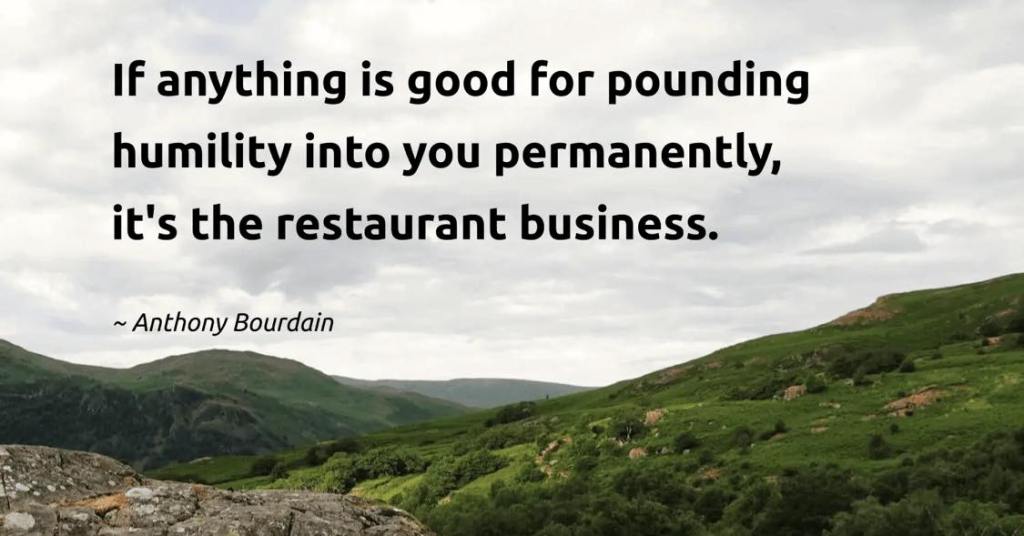
Anthony Bourdain once said,
“Anyone who’s ever owned a restaurant knows that it’s like running a marathon with a bag of bricks on your back, uphill, and someone’s throwing water balloons at you the entire time. And yet… we do it anyway. Because we love it.”

He also said,
“If anything is good for pounding humility into you permanently, it’s the restaurant business.”

No one enters this business thinking it’s going to be easy. But no one who stays in it does so without heart. Without fire. Without purpose.

This is your reminder to reconnect with that purpose.

Think back to the first dish you ever served that made someone say wow. Think about the first guest who became a regular. The first time your staff rallied around you and made you proud. The first time you stepped out from the kitchen or from behind the bar and took in the energy of a packed dining room, knowing you built this.

That’s the feeling you need to chase again.

Let it fuel your next move. Whether it’s refining your concept, refreshing your brand, mentoring your team, or simply falling back in love with the craft. Your restaurant is more than a business. It’s a reflection of who you are. It’s your legacy.

You’ve come so far. You’ve proven you can weather the storm.

Now it’s time to rise, not just to survive, but to thrive. To rebuild not only your business but your belief in it. To lead with the same passion that started this journey and the wisdom you’ve earned along the way.

Remember why you started.

The best stories have chapters filled with adversity — but the ones worth telling are those where the hero keeps going.

And you, without question, are still in the fight.

Make today a great day. Make it happen. Make it count!

About the Author

With more than 40 years of experience in small business, restaurant, and franchise management, marketing, and development, Paul Segreto is a respected expert in the entrepreneurial world, dedicated to helping others achieve success. Whether you’re an aspiring or current entrepreneur in need of guidance, support, or simply a conversation, you can connect with Paul at paul@acceler8success.com.

About Acceler8Success Group

Acceler8Success Group empowers entrepreneurs and business leaders with personalized coaching, strategic guidance, and a results-driven approach. Whether launching, scaling, or optimizing a business, we provide the tools, mentorship, and resources to drive long-term success.

Are Workplace Policies Changing in Ways That Will Affect All Employers?

As we celebrate 16 years of sharing information and provoking thought, we are bringing back our Question of the Week. The goal is to inspire discussions that benefit everyone.

Are Workplace Policies Changing in Ways That Will Affect All Employers?

Recent legal decisions regarding the wrongful termination of federal employees have sparked discussions beyond the realm of government operations. At the same time, questions surrounding employee accountability and the return to office mandates are adding to a broader conversation about workplace expectations. While these matters are often discussed in the context of public sector employment, they may be setting the stage for changes that impact businesses of all sizes.

The idea of requiring employees to document their work activities is not new. Performance reviews, productivity metrics, and project tracking have long been staples of management. However, when employees are explicitly asked to submit lists of tasks they worked on, it raises questions about trust, oversight, and the balance between management and micromanagement. Some view this approach as a necessary step in ensuring accountability, while others see it as an indication of a lack of confidence in employees’ ability to manage their responsibilities effectively.

The debate over returning to the office adds another layer of complexity. Many businesses pivoted to remote work during the pandemic, discovering efficiencies and cost savings in the process. Employees, too, adapted to new ways of working, often reporting improved work-life balance and increased productivity. Now, with many organizations mandating a return to in-person work, questions arise about the long-term implications of such policies. If a return to the office is being enforced in federal employment, will more private sector companies feel compelled to follow suit? And if so, what happens to the flexible work arrangements that became a defining characteristic of the modern workplace?

When considering wrongful termination cases and their outcomes, business leaders may wonder whether legal precedents will eventually extend beyond government employment. Could future rulings make it easier for employees in any sector to challenge terminations? Might businesses find themselves held to stricter standards when justifying disciplinary actions?

The workforce is evolving, and with it, the expectations of both employees and employers. Companies that fail to anticipate shifts in workplace policies may find themselves reacting to change rather than shaping it. The question that remains is whether businesses should be preparing for a future where these emerging trends become the norm, and if so, what steps should they be taking now to stay ahead?

#QuestionOfTheWeek #WorkplaceTrends #RemoteWork #EmployeeRights #FutureOfWork #BusinessLeadership #WorkplaceAccountability #HRPolicies #OfficeCulture #ChangingWorkplaces

When the Hustle Pauses: How to Unwind on a Quiet Saturday

For those of us who run at full speed all week, Saturday mornings can feel like an abrupt stop, a jarring silence after the constant hum of business, meetings, calls, and emails. The world slows down—texts are minimal, inboxes hold nothing but junk, and for once, there’s no urgent deadline pulling us in. But instead of relishing this moment, the mind stays in overdrive, scanning for something to do, something to solve. The workweek has trained it to crave action, making true relaxation feel almost impossible.

How does a person wired for business, success, and movement slow down without feeling unproductive? Can we really switch off, even for a few hours, without guilt or anxiety creeping in? The idea of work-life balance is constantly preached, but for those who thrive on momentum, does it even exist in a practical way?

Perhaps the answer isn’t stopping completely but instead, shifting gears. Saturday morning doesn’t have to be a time of total stillness—because for many of us, stillness breeds restlessness. Instead, it can be a time of recalibration, a moment to channel energy into something that doesn’t feel like work but still engages the mind.

Instead of reaching for a laptop, grab a book—one not related to business. A biography, a novel, even a magazine on a topic completely unrelated to work. The act of reading lets the brain focus, but in a different way, easing the transition from high-speed decision-making to something more reflective.

If reading isn’t the answer, movement might be. A long walk, not for exercise but for clarity. No phone, no distractions—just steps and thoughts, allowing ideas to flow without structure or pressure. For those who feel the need to create, writing in a journal—without an agenda—can be a productive release. Not a business plan, not a to-do list, just words on a page, untangling thoughts that have been pushed aside all week.

Some might argue that the best way to slow down is to lean into an entirely different kind of focus. Cooking a slow breakfast instead of grabbing something on the go. Watching a classic movie without checking notifications. Sitting outside with a cup of coffee, observing the world without rushing to be part of it. These small acts serve as a buffer between the chaos of the workweek and the inevitable return to responsibility.

The truth is, for a highly driven individual, balance might not mean completely unplugging. It might mean learning how to redirect energy in ways that don’t feel forced or unnatural. Rather than fighting the urge to be busy, why not redefine what busyness looks like on a Saturday morning? After all, slowing down doesn’t have to mean stopping—it just means finding a rhythm that allows the mind to breathe.

So, while the world is quiet, maybe the challenge isn’t to switch off completely. Maybe it’s just to shift into a different kind of motion—one that allows us to refuel for the inevitable race ahead.

Make today a great day. Make it happen. Make it count!

About the Author

With more than 40 years of experience in small business, restaurant, and franchise management, marketing, and development, Paul Segreto is a respected expert in the entrepreneurial world, dedicated to helping others achieve success. Whether you’re an aspiring or current entrepreneur in need of guidance, support, or simply a conversation, you can connect with Paul at paul@acceler8success.com.

The Power of Attitude

Winston Churchill, a world leader during the Second World War famously said, “Attitude is a little thing that makes a big difference.” This quote from a renowned leader underscores the transformative power of attitude. Churchill’s leadership, characterized by resilience and optimism during times of great adversity, exemplifies how a positive attitude can influence not only individual success but also inspire nations.

The quote encapsulates the profound impact our perspective and demeanor can have on every aspect of our lives. This principle suggests that the essence of our daily experiences and accomplishments is significantly shaped by our attitude. A positive outlook sets a constructive pace for the day, fostering an environment where productivity and harmony flourish, whether it be in personal endeavors, professional tasks, or relationships.

Attitude indeed steers our interactions and decisions, serving as the foundation upon which we build our responses to various situations. In a professional setting, for instance, an optimistic and determined attitude can inspire innovation and resilience, leading to remarkable achievements and the realization of ambitious goals. Conversely, a negative or rude demeanor not only hampers personal growth but can also have a contagious effect, eroding team morale and undermining collective efforts.

The influence of attitude extends beyond mere interpersonal dynamics; it profoundly affects our internal state and health. A positive attitude is linked to better stress management, a key factor in maintaining physical health and mental well-being. It bolsters our resilience against challenges, enabling us to navigate adversity with grace and to identify and seize opportunities for growth and improvement.

However, the path to success is often misconstrued with the idea that a ruthless or negative attitude is a necessary catalyst for achieving high levels of success. While determination and assertiveness are valuable traits, the misconception that rudeness or negativity can lead to success is flawed. Success achieved at the expense of others’ well-being or through negative means is often short-lived and can lead to isolation and dissatisfaction.

Reflecting on the impact of attitude invites several critical questions:

  1. How can adopting a more positive attitude each day transform my personal and professional life?
  2. In what ways have I allowed a negative attitude to influence my decisions and relationships, and how can I address this moving forward?
  3. What strategies can I employ to cultivate a positive attitude, even in the face of adversity or negativity from others?

These questions encourage introspection and highlight the importance of attitude in shaping our reality. They remind us that while we may not have control over every circumstance we encounter, we do have control over our response, and a positive attitude is a powerful tool in navigating life’s challenges.

In conclusion, a positive attitude is not just beneficial for achieving success in various aspects of life; it also contributes to better health and mental well-being. While it is possible to achieve certain levels of success with a negative attitude, such success is often unsustainable and unfulfilling. Cultivating a positive outlook empowers us to see beyond immediate challenges, fostering a sense of possibility and opening up opportunities for genuine and lasting achievements.

Make it a great day. Make it happen. Make it count!

The Vital Role of Self-Care in Entrepreneurship: Nurturing Mind and Body for Success

In the often demanding world of entrepreneurship, self-care emerges as a non-negotiable pillar of success. Entrepreneurs, recognized as the driving force behind innovation and economic growth, find themselves juggling multiple roles, responsibilities, and expectations. This continuous hustle, while admirable, can take a significant toll on physical and mental well-being. It’s crucial to remember: self-care is not just a luxury; it’s essential healthcare… self-care IS healthcare!

Understanding the Multi-Faceted Nature of Entrepreneurship: Entrepreneurs, whether introverts or extroverts, are de facto leaders. Their emotional and mental state can set the tone for their entire organization. In this high-stakes environment, staying physically and mentally sharp is not just beneficial; it’s imperative. An entrepreneur’s well-being directly influences decision-making, team morale, and ultimately, the success of their venture.

The Risks of Neglecting Self-Care: The perils of overlooking self-care are manifold. Lack of sleep, for instance, can weaken the immune system, leaving entrepreneurs more susceptible to illness. Mental exhaustion can lead to brain fog, impeding the ability to make clear, strategic decisions. Furthermore, the constant pressure can breed anxiety and depression, leading to poor personal and professional choices.

The Necessity of Support Systems: No entrepreneur is an island. Having a support system, be it a friend, coach, mentor, or a supportive community, is invaluable. These sounding boards offer perspective, guidance, and sometimes, the necessary jolt back to reality. Acts of kindness or encouragement from these supporters can reignite an entrepreneur’s passion and focus.

Faith and Reflection: Faith, whether in a higher power, in oneself, or in the vision of the business, can be a powerful source of strength and resilience. Reflective practices, such as meditation or journaling, can provide clarity and a sense of calm amidst the chaos of entrepreneurship.

Questions for Reflection:

  1. How do I balance my entrepreneurial drive with the need for physical and mental rest?
  2. What support systems do I have in place, and how can I effectively utilize them for my well-being and growth?
  3. In moments of overwhelming pressure, what practices help me regain perspective and maintain my mental health?

Conclusion: As entrepreneurs are poised to lead our nation’s recovery and growth, their well-being becomes a matter of public interest. The path to sustainable success in entrepreneurship is not just paved with hard work and innovation, but also with the crucial practice of self-care. Remember, taking care of oneself is not just a personal responsibility; it’s a professional imperative.

From the Author, Paul Segreto, CEO & Founder, Acceler8Success Group

The future may be a bit bumpy for some, more so for others. Knowing who to turn to and when for guidance and help is important. Having resources at your disposal is also important.

So, if you hit a wall, for whatever reason, please feel free to reach out to me for assistance or even if you just need to talk and bounce around a few thoughts. Please do not hesitate.

You can contact me at paul@acceler8success.com or you may reach me by text or phone at (832) 797–9851. I look forward to helping you… I’m sure we can help each other!

Make it a great day. Make it happen. Make it count!