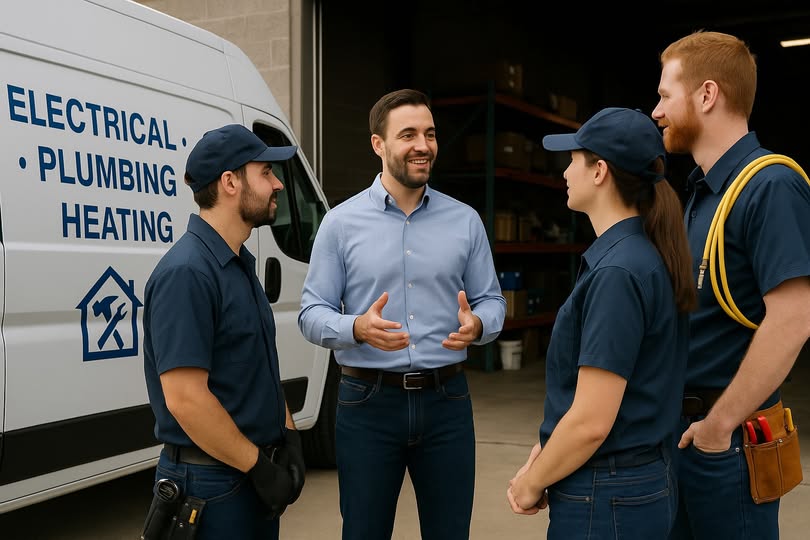
Debate continues across kitchen tables, classrooms, and boardrooms about whether a college degree still holds the same value it once did. Tuition climbs, student debt rises, and many graduates enter the workforce lacking practical skills that convert to income immediately. Meanwhile, the demand for skilled labor continues to surge. Electricians, plumbers, HVAC technicians, welders, mechanics, heavy equipment operators — even culinary professionals — remain in short supply. The contrast is striking. While society questions the worth of traditional higher education, the trades quietly offer a pathway that is more direct, more affordable, and often more lucrative.
Here’s the opportunity too many overlook: a trade is not merely a job. It can be the first step toward business ownership. A trade builds skill, skill builds confidence, and confidence paired with knowledge builds companies. The problem is not capability — tradespeople solve problems daily — the problem is that technical training rarely continues into business training. Apprentices learn wiring diagrams, gas lines, freon recovery, food safety, or blade sharpening, but few learn cash flow, pricing, branding, customer acquisition, or leadership. Yet those are the skills required to turn a talent into a business.
Imagine a system where both paths merge.
Trade school equips the individual with a certifiable skill. Business education teaches them how to monetize it. Together, they create a blueprint for entrepreneurship. The journey becomes logical: learn the craft, master the work, understand the numbers, create a brand, and eventually hire and scale. A welding student could graduate with not only a certification but a business plan. An apprentice plumber could understand profit margins as well as pipe sizing. An HVAC tech could diagnose compressors and price seasonal maintenance programs profitably.
And the culinary world may be the best example of this needed shift.
Many chefs dream of owning a restaurant, but passion and plate presentation alone do not guarantee success. The restaurant failure rate remains one of the highest in small business. Not because of lack of talent in the kitchen — but because business fundamentals are often missing. With the right business education integrated into culinary programs, chef-to-owner transitions would be smoother, smarter, and far more sustainable. Understanding labor percentages, menu engineering, food cost controls, licensing, marketing, and customer retention could turn thousands of talented chefs into long-term operators rather than short-lived dreamers. The difference between a great cook and a successful restaurateur is rarely flavor — it is financial literacy and business discipline.
Technical mastery paired with entrepreneurial readiness could reshape entire industries. It not only fills workforce shortages but builds new enterprises, creates jobs, strengthens local economies — and opens a new opportunity for franchising. If aspiring business owners enter the workforce with both trade competence and business fluency, franchise brands suddenly gain access to a highly qualified pool of future operators. People who already know the work, understand service delivery, and can manage people, financials, and customer relationships. Franchise organizations thrive on strong operators, and a talent pool of trades-based entrepreneurs could become one of the greatest assets for franchise development. Instead of training franchisees from scratch, brands would onboard individuals already equipped with technical mastery, business fundamentals, and the mindset to scale — accelerating growth systemwide.
A student who chooses a trade should see a future far beyond hourly work. They should see a path to owning the truck, the crew, the fleet, the brand. They should see themselves not just repairing air conditioners, building fences, or crafting plates — but hiring teams, designing logos on vans, expanding locations, and eventually franchising themselves.
Not everyone thrives in lecture halls. Many learn best by doing — and those who build, fix, cook, weld, wire, and restore are often the most creative problem-solvers in the workforce. When given business knowledge alongside technical training, they become something even more powerful.
They become entrepreneurs.
The next generation of business owners may not be found in classrooms. They may be in garages, commercial kitchens, job sites, fabrication labs, and boiler rooms — waiting not just for opportunity but for direction. A blended path from trade mastery to business ownership could very well be the most practical, accessible, and impactful educational model of the future — not just for workers and communities, but for franchise systems hungry for capable operators who can grow with strength and scale.
Hands can build careers. Business skills can build empires. Together, they build the American Dream.
About the Author
Paul Segreto brings over forty years of real-world experience in franchising, restaurants, and small business growth. Recognized as one of the Top 100 Global Franchise and Small Business Influencers, Paul is the driving voice behind Acceler8Success Café, a daily content platform that inspires and informs thousands of entrepreneurs nationwide. A passionate advocate for ethical leadership and sustainable growth, Paul has dedicated his career to helping founders, franchise executives, and entrepreneurial families achieve clarity, balance, and lasting success through purpose-driven action.
About Acceler8Success America
Acceler8Success America is a comprehensive business advisory and coaching platform dedicated to helping entrepreneurs, small business owners, and franchise professionals achieve The American Dream Accelerated.
Through a combination of strategic consulting, results-focused coaching, and empowering content, Acceler8Success America provides the tools, insights, and guidance needed to start, grow, and scale successfully in today’s fast-paced world.
With deep expertise in entrepreneurship, franchising, restaurants, and small business development, Acceler8Success America bridges experience and innovation, supporting current and aspiring entrepreneurs as they build sustainable businesses and lasting legacies across America.
Franchise businesses play a powerful and often underappreciated role in strengthening local communities. Although people may think of franchising as something “big” or “corporate,” the reality is far more personal. Behind every franchised location is a local owner investing their own money, time, and energy into a business that supports the community where they live, work, and raise their family. This blend of nationally recognized systems with locally owned entrepreneurship creates a unique engine for economic impact, job creation, and community enrichment. It’s why franchise businesses deserve special recognition — especially on Small Business Saturday, when communities come together to support the businesses that keep their local economies vibrant.
Across the United States, franchise businesses serve as anchors within neighborhoods, providing accessible services, predictable quality, and trusted brands while still keeping ownership local. These businesses hire locally, train locally, spend locally, and most importantly, keep their dollars circulating within the community. A franchise owner’s revenue isn’t being extracted by some faraway corporate headquarters; instead, it is fueling local payrolls, supporting Little League sponsorships, providing job opportunities for students, parents, and second-chance workers, and generating tax revenue that supports public services. Franchisees become part of the fabric of the community, contributing not just as business operators but as neighbors and civic participants.
This local impact is exactly what the International Franchise Association seeks to highlight through its “Franchise Means Local” initiative. The message is simple but profound: franchise businesses may carry national logos, but their heart and soul sit squarely within the local community. Franchisees are small business owners. They are entrepreneurs. They are job creators. They are the ones unlocking doors at dawn, greeting customers by name, supporting school fundraisers, and stepping up when their community needs them. The “Franchise Means Local” initiative aims to break down misconceptions and shine a spotlight on how franchising bridges the strength of a proven system with the passion of local ownership.
Small Business Saturday provides the ideal moment to amplify this reality. Too often, well-known franchise brands are unintentionally overlooked in the celebration of small business, simply because they are part of a larger network. But Small Business Saturday was built to uplift entrepreneurs — and franchisees embody the entrepreneurial spirit as much as any independent business owner. Their investments are personal. Their risks are real. Their success depends on the support of their neighbors. And their contribution to the community is substantial.
Recognizing franchise businesses on Small Business Saturday sends a message that strengthens the entire entrepreneurial ecosystem. It reminds people that buying a coffee from a franchised café supports a local family. Picking up takeout from a franchised restaurant helps a local owner employ dozens of team members. Getting a haircut, working out at a fitness studio, or visiting a home-service provider that operates under a franchise brand supports local operators who depend on community loyalty. These everyday actions translate into meaningful community impact — especially during the holiday season when small businesses depend heavily on consumer traffic.
Beyond economic benefits, franchise businesses bring stability and opportunity to communities in ways that independent businesses may struggle to match. Proven business models help franchisees ramp up faster, operate more efficiently, and maintain consistent service standards. This helps consumers feel confident supporting these businesses, which in turn creates stronger customer loyalty and more sustainable local operations. This synergy is good for everyone. Franchisees benefit from the support of a national brand, and the community benefits from a stable and reliable local employer and service provider.
At the same time, franchised businesses often become training grounds for future entrepreneurs. Young people learn customer service, teamwork, management, and leadership skills within these local establishments. Many franchise owners began their careers as hourly employees before working their way up. In this way, franchising not only strengthens communities today but also shapes the next generation of business owners.
As Small Business Saturday approaches, communities have an opportunity to broaden their appreciation for what it truly means to support local business. Whether a business is independently owned or franchised, the common thread is the local owner who stands behind it. Franchisees are small business owners in every sense, and they deserve to be celebrated alongside their independent counterparts. Supporting a franchised business on Small Business Saturday is another way of investing in the strength, diversity, and economic resilience of your community.
Franchise businesses don’t just operate within a community — they enhance it, fuel it, and help define its identity. Their contributions ripple outward, creating economic stability, job opportunities, philanthropic support, and a sense of place that enriches local life. When we recognize franchise businesses on Small Business Saturday and embrace the spirit of the International Franchise Association’s “Franchise Means Local” initiative, we are doing more than supporting a business. We are strengthening the foundation of the American entrepreneurial experience and reaffirming the vital role that local owners — including franchisees — play in building thriving, resilient communities across the country.
About the Author
Paul Segreto brings over forty years of real-world experience in franchising, restaurants, and small business growth. Recognized as one of the Top 100 Global Franchise and Small Business Influencers, Paul is the driving voice behind Acceler8Success Café, a daily content platform that inspires and informs thousands of entrepreneurs nationwide. A passionate advocate for ethical leadership and sustainable growth, Paul has dedicated his career to helping founders, franchise executives, and entrepreneurial families achieve clarity, balance, and lasting success through purpose-driven action.
About Acceler8Success America
Acceler8Success America is a comprehensive business advisory and coaching platform dedicated to helping entrepreneurs, small business owners, and franchise professionals achieve The American Dream Accelerated.
Through a combination of strategic consulting, results-focused coaching, and empowering content, Acceler8Success America provides the tools, insights, and guidance needed to start, grow, and scale successfully in today’s fast-paced world.
With deep expertise in entrepreneurship, franchising, restaurants, and small business development, Acceler8Success America bridges experience and innovation, supporting current and aspiring entrepreneurs as they build sustainable businesses and lasting legacies across America.
This article continues the Celebrating Entrepreneurship series — written in honor of National Entrepreneurship Month and steadily building into a comprehensive playbook for the modern entrepreneur. We have journeyed through disruption as precision, leadership presence, transferable culture, community relevance, anticipation-building, and sustaining momentum after opening day.
Now we reach a pivotal moment in the entrepreneurial arc:
Growth.
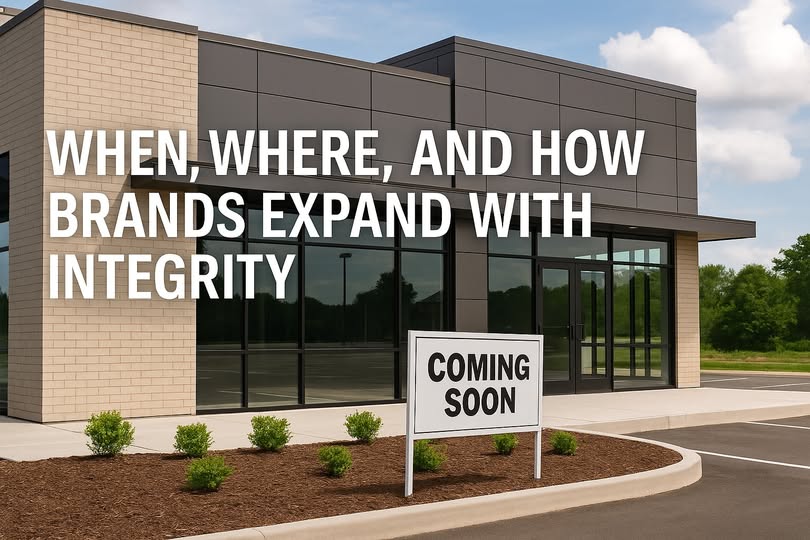
Not growth for growth’s sake. Not expansion fueled by pressure, ego, or imitation. But purposeful expansion — the kind that strengthens the brand instead of diluting it.
Because the hardest decision a restaurant or franchise brand will ever make is not how to grow. It is when to grow. And even more importantly — where and why.
Growth Is Not Proof of Success — It Is a Test of Identity
Many brands mistakenly treat expansion as a reward — the trophy for getting the first location right.
But growth is not a trophy. Growth is a magnifier.
If the identity is clear, culture is strong, and experience is consistent, growth amplifies excellence. If identity is vague, culture is spotty, and experience is inconsistent, growth amplifies dysfunction.
Growth does not fix problems — it exposes them.
This is why the most successful brands expand slowly, deliberately, intentionally — even when they could expand faster.
The Discipline of Saying “Not Yet”
Before expanding, strong brands ask:
Is our culture transferable and repeatable? Can we guarantee that the new location will feel like us?
Have we sustained momentum over time, not just at launch? A business must prove staying power before becoming a model for replication.
Is the community we are expanding into aligned with our values and identity? Not all markets are the right markets — even if they are profitable.
If the answer to any of these questions is uncertain, the correct move is not “no” — it is not yet.
Restraint is a form of leadership. Patience is a form of strategy.
How the Best Brands Choose Where to Grow
Raising Cane’s
Cane’s expands where there is cultural alignment, not just demand. They choose communities where their identity — simplicity, quality, and fun — will be felt, not merely consumed.
Trader Joe’s
They do not chase population counts — they chase community compatibility. When a Trader Joe’s opens, the neighborhood is already emotionally prepared to welcome it.
Whataburger (originally)
For decades, Whataburger was intentionally regional — building fierce loyalty in Texas before expanding outward. Their growth was geographic, but also cultural.
These brands prove something essential: A location is not just a map coordinate. It is a relationship.
The Signals That It Is Time to Grow
A brand is ready for expansion when:
• Existing guests ask for new locations • Team members are developing into leaders, not just workers • Systems run smoothly without founder oversight • Culture remains intact under strain • Community presence is strong and reciprocal • Demand exceeds capacity consistently, not occasionally
Expansion should be a response to pull, not a push.
If you have to convince the market, you are too early. If the market is asking — really asking — you may be ready.
Growth Without Identity Loss
As new units open, the question shifts from Can we grow? to Can we grow without forgetting who we are?
That requires: • A founder or leader who remains the emotional anchor • Cultural behaviors that are practiced and taught, not explained • Opening playbooks that include community integration, not just operational launch • Measurement systems that track guest feeling, not just revenue
A brand must guard its meaning as fiercely as its margin.
The Core Truth of Expansion
A brand should only grow to the extent that its culture can carry it.
If you expand faster than culture can transfer, identity fractures. If you expand where the community cannot embrace your meaning, relevance thins.
The strongest brands are not just present in many places. They are felt in every place they are present.
The Playbook Continues
We have now laid the foundation for: • Identity • Experience • Culture • Community • Anticipation • Momentum • Growth
Next in the series, we progress to the next natural stage:
Leadership succession and internal development — How to grow leaders inside the system so the brand can grow without the founder having to be everywhere.
Because legacy is not created when a brand expands. Legacy begins when a brand can thrive in the hands of others — without losing the heartbeat of the first location.
About the Author
Paul Segreto brings over forty years of real-world experience in franchising, restaurants, and small business growth. Recognized as one of the Top 100 Global Franchise and Small Business Influencers, Paul is the driving voice behind Acceler8Success Café, a daily content platform that inspires and informs thousands of entrepreneurs nationwide. A passionate advocate for ethical leadership and sustainable growth, Paul has dedicated his career to helping founders, franchise executives, and entrepreneurial families achieve clarity, balance, and lasting success through purpose-driven action.
Ready to elevate your business or navigate today’s challenges with confidence? Connect directly with Paul at paul@acceler8success.com, because every success story begins with a meaningful conversation.
About Acceler8Success America
Acceler8Success America is a comprehensive business advisory and coaching platform dedicated to helping entrepreneurs, small business owners, and franchise professionals achieve The American Dream Accelerated.
Through a combination of strategic consulting, results-focused coaching, and empowering content, Acceler8Success America provides the tools, insights, and guidance needed to start, grow, and scale successfully in today’s fast-paced world.
With deep expertise in entrepreneurship, franchising, restaurants, and small business development, Acceler8Success America bridges experience and innovation, supporting current and aspiring entrepreneurs as they build sustainable businesses and lasting legacies across America.
The American Dream has always been closely tied to entrepreneurship. From immigrant families opening corner stores to ambitious founders scaling national brands, business ownership has been the most powerful gateway to independence and opportunity. Yet in today’s fast-paced world, achieving that dream requires more than hard work and perseverance—it requires acceleration.
That belief is at the heart of the rebranding of Acceler8Success Group to Acceler8Success America. The new name reflects both a mission and a promise: to help entrepreneurs accelerate their path to the American Dream. With the United States approaching its 250th birthday in 2026, this rebrand underscores our commitment to ensuring entrepreneurship remains a vibrant engine for opportunity and growth in the decades ahead.
Acceleration begins with knowledge and mentorship. Instead of relying on trial and error, entrepreneurs can shorten their learning curves by drawing from decades of proven strategies. Acceler8Success America translates experience into actionable guidance that empowers entrepreneurs to launch, scale, and succeed more quickly.
Technology is another force of acceleration. From AI and automation to e-commerce and digital marketing, today’s tools allow even the smallest businesses to compete nationally or globally. Acceler8Success America helps entrepreneurs harness these tools to accelerate growth and keep pace with change.
Access to capital is also essential. By guiding entrepreneurs through crowdfunding, microloans, investor networks, and alternative financing, Acceler8Success America helps remove one of the most persistent barriers to entry, enabling businesses to move from concept to reality faster than ever.
At the center of this acceleration is community. Through Aspire Groups, coaching platforms, and entrepreneur-focused ecosystems, Acceler8Success America creates the networks that connect entrepreneurs to peers, advisors, and investors who help them stay accountable, share knowledge, and move forward with confidence.
Most importantly, The American Dream Accelerated is inclusive. Immigrants, veterans, women, and underrepresented groups continue to be some of the most dynamic forces in American entrepreneurship. By expanding access and removing friction, Acceler8Success America ensures that the Dream is truly within reach for all.
In short, The American Dream Accelerated is not about skipping the hard work. It is about removing unnecessary friction, compressing timelines, and empowering entrepreneurs to move from vision to reality at the speed of change. The rebrand from Acceler8Success Group to Acceler8Success America is more than a name—it’s a renewed mission to accelerate the American Dream for all who aspire to achieve it.
About the Author
Paul Segreto brings over forty years of real-world experience in franchising, restaurants, and small business growth. Recognized as one of the Top 100 Global Franchise and Small Business Influencers, Paul is the driving voice behind Acceler8Success Café, a daily content platform that inspires and informs thousands of entrepreneurs nationwide. A passionate advocate for ethical leadership and sustainable growth, Paul has dedicated his career to helping founders, franchise executives, and entrepreneurial families achieve clarity, balance, and lasting success through purpose-driven action.
Ready to elevate your business or navigate today’s challenges with confidence? Connect directly with Paul at paul@acceler8success.com — because every success story begins with a meaningful conversation.
About Acceler8Success America
Acceler8Success America is a comprehensive business advisory and coaching platform dedicated to helping entrepreneurs, small business owners, and franchise professionals achieve The American Dream Accelerated.
Through a combination of strategic consulting, results-focused coaching, and empowering content, Acceler8Success America provides the tools, insights, and guidance needed to start, grow, and scale successfully in today’s fast-paced world.
With deep expertise in entrepreneurship, franchising, restaurants, and small business development, Acceler8Success America bridges experience and innovation—supporting current and aspiring entrepreneurs as they build sustainable businesses and lasting legacies across America.
Rebranding aligns with Nation’s 250th Birthday and expanding support for entrepreneurs from every walk of life in pursuit of the American Dream.
HOUSTON – Oct. 6, 2025 – PRLog — Acceler8Success, founded in 2014 and later expanded into Acceler8Success Group, today announced its next evolution: Acceler8Success America. The official rebranding, set to launch in the 4th quarter, will align with the United States’ upcoming 250th birthday in 2026 — a historic milestone celebrating freedom, opportunity, and the American Dream.
Acceler8Success America was first introduced a year and a half ago as an initiative to help immigrant entrepreneurs pursue business ownership as a pathway to the American Dream. That program highlighted the resilience, diversity, and determination of individuals building futures in America through entrepreneurship. Building on its success, the organization is now expanding its efforts — accelerating its mission to empower all entrepreneurs, small business owners, franchisees, and restaurant operators nationwide.
“Our nation’s semi-quincentennial is more than just a celebration of history; it’s a chance to recommit to the values that make America unique,” said Paul Segreto, Founder and CEO of Acceler8Success America. “Entrepreneurship is at the heart of the American Dream, and by rebranding now, we’re aligning our vision with this national milestone. From immigrant entrepreneurs starting their first venture to seasoned operators scaling multi-unit businesses, Acceler8Success America is here to accelerate their journey.”
Throughout Q4 2025, the Acceler8Success ecosystem — including websites, blogs, newsletters, podcasts, social media platforms, and marketing materials — will transition to the Acceler8Success America brand. Updated logos, messaging, and digital assets will be unified under the tagline: The American Dream Accelerated.
Erik Premont, President of Acceler8Success America, emphasized the broader impact: “This rebrand reflects not just where we’ve been, but where we’re going. By expanding our consulting, coaching, business advisory, brokerage, and fractional leadership services, we are doubling down on our mission to equip entrepreneurs and operators with the tools, resources, and community they need to succeed in today’s competitive landscape.”
Acceler8Success America provides a full suite of services designed to support entrepreneurs and operators at every stage of the journey:
Consulting: Practical strategies to launch, grow, or transform businesses.
Coaching: Individual and group guidance to build confidence and accountability.
Business Advisory: Expertise in operations, marketing, finance, franchising, and scaling.
Brokerage Services: Connecting buyers and sellers of businesses, franchises, and restaurants.
Fractional Leadership: Part-time and project-based executive support to establish systems and accelerate growth.
Beyond its services, Acceler8Success America fosters a thriving community of like-minded individuals — from immigrant entrepreneurs to families building generational businesses, to franchisees and restaurant operators scaling their brands. This network of knowledge, collaboration, and support ensures that entrepreneurship is not a solitary pursuit but a shared movement.
“As we enter this exciting new chapter, our commitment remains unchanged,” Segreto added. “We’re not just helping people achieve the American Dream — we’re making it count by creating legacies, strengthening communities, and fueling the future of entrepreneurship in America.”
Although Acceler8Success Café is temporarily closed until October 6th, when we’ll be announcing exciting changes to Acceler8Success Group, I felt it important to share timely information about the American Franchise Act. This legislation, in my view, represents a significant step forward in helping entrepreneurs pursue and achieve the American Dream.
In putting this together, I’ve drawn from the work and insights of some of the greatest minds in franchising (and some AI for clarity). The credit is truly theirs for keeping us informed and for tirelessly advancing conversations that affect franchise owners, franchisors, and the communities they serve.
If I’ve overlooked something, or if what I’ve shared is incomplete, inaccurate, or perhaps even outdated, please don’t hesitate to let me know. I’ll gladly revise and update, as my goal is to ensure this information remains accurate, relevant, and useful to all who follow franchising’s evolving story.
Personally, I believe the American Franchise Act is long overdue. By clarifying the rules, reducing unnecessary risk, and fostering stability, it has the potential to positively transform the franchise landscape. More importantly, it can open the doors for countless entrepreneurs to start businesses, create jobs, and build lasting legacies.
At its core, franchising has always been one of the most accessible pathways to business ownership. The American Franchise Act reinforces that pathway, and I believe it will help many more entrepreneurs — including first-time business owners, women, immigrants, and underrepresented groups — realize their own version of the American Dream.
The American Dream and Entrepreneurship
For many Americans, the “American Dream” is the idea that through hard work, persistence, and some opportunity, one can build a business, achieve financial independence, and contribute to one’s community. Business ownership is a key pathway in that vision. Yet starting and scaling an independent business comes with high risk, capital requirements, operational challenges, regulatory burdens, and market risk.
Franchising has long been viewed as a hybrid model: giving entrepreneurs a structure, proven systems, brand recognition, and operational playbooks, while still allowing them to be (relatively) independent owners. It lowers some of the risk of going it completely alone. But uncertainties in the legal environment — especially around employment liability — have constrained that pathway. The American Franchise Act seeks to reduce that uncertainty, thereby strengthening the franchise avenue as a route to economic opportunity.
One of the thorniest legal and regulatory questions in franchising is: when can a franchisor (the brand owner) be held responsible for employment-related decisions at a franchisee’s location (e.g. wages, hours, hiring/firing, scheduling)? In other words — when are the franchisor and franchisee “joint employers”?
Over the last decade, that standard has repeatedly changed, depending on shifts in National Labor Relations Board (NLRB) rulings and federal regulation. This regulatory “whiplash” has created significant legal uncertainty. 1851 Franchise+5National Law Review+5franchiselaw.foxrothschild.com+5
Proponents of the American Franchise Act argue that this instability has discouraged investment, increased litigation risk, and made it harder for startups/franchisees to plan and grow.
What the Act Proposes
Under the Act, the law would explicitly define that in the franchise context:
In simpler terms, the franchisor would not automatically be deemed jointly liable merely because it sets standards, provides training, or monitors performance. Only where the franchisor steps into direct operational decisions (like hiring, firing, wages, discipline) would it be considered a joint employer. Saxton & Stump+3National Law Review+3franchiselaw.foxrothschild.com+3
By codifying this standard in statute, the Act aims to remove ambiguity, lock in a consistent rule, and allow franchise systems to better predict and manage liability.
How It Could Benefit Entrepreneurs & Foster the American Dream
Here’s how, if passed, the American Franchise Act could strengthen the franchise pathway for entrepreneurs and support their pursuit of the American Dream:
1. Reduced Legal & Regulatory Risk
One of the biggest barriers for prospective franchisees is the unpredictability of liability. If franchisors can be held jointly liable for employment practices of local franchisees even when not directly involved, that risk can deter investment, cause franchise systems to pull back support, or push franchisors to micromanage franchisees (reducing their autonomy).
2. Greater Access to Franchise Ownership, Especially for First-Time Owners
Because franchising allows entrepreneurs to “plug into” a tested model, it is often more accessible than creating an entirely new brand from scratch. But high uncertainty can make lenders or investors hesitant to back franchise deals. With legal certainty, more capital may flow, making franchise ownership viable for more people.
3. Preservation of Franchise Autonomy & Incentive to Invest Locally
If franchisees can be more confident that they control their staffing, operations, and strategic decisions (within brand standards), they may be more motivated to invest in local innovation, customer service, facility improvements, and community engagement.
4. Encouragement of Growth, Jobs, & Economic Activity
With lower risk and more certainty, existing franchisors may be more willing to expand, and new franchise systems may form. That leads to job creation, investment in new locations (especially in underserved communities), and ripple effects in the supply chains.
For example, in the hotel sector, the American Hotel & Lodging Association predicts that the Act would bolster hotel franchising — a key channel for entrepreneurs in hospitality — creating and safeguarding jobs. AHLA+2Hotel Online+2
Also, the International Franchise Association notes there are more than 831,000 franchise small-business establishments in the U.S. whose growth would be supported by this legal clarity. International Franchise Association
5. Stability for Long-Term Planning & Investments
Entrepreneurs need to make investments—capital improvements, hiring, training, marketing, scaling. But regulatory uncertainty makes long-term planning difficult. If the law is stable and predictable, entrepreneurs can confidently take on debt, expand, and innovate.
6. Protecting Entrepreneurs’ Equity & Capital
When liability is unclear, franchisors or regulators might seek to increase oversight, cast wider liability nets, or push for consolidation. That could squeeze franchisees’ margins or reduce their leverage in the relationship. By locking in a fair standard, franchisees’ capital investments are better safeguarded.
7. Boosting Local Economies & Broadening Access to Upward Mobility
Because franchises operate locally, the success of franchisees can seed wealth in local communities, particularly in areas underserved with business opportunities. As more entrepreneurs succeed, they can hire locally, stimulate local supply chains, and contribute to economic revitalization.
This dynamic helps ensure that the benefits of business ownership are not concentrated only in major cities or among already well-resourced individuals.
Potential Critiques & Challenges
No legislation is without challenges or critiques, and the American Franchise Act will likely face close scrutiny. Some of the potential counterpoints include:
Labor protections vs. liability shielding — Critics may argue that narrowing joint employer liability could weaken worker protections, because franchisors might evade accountability more easily. The counterargument is that the Act preserves worker rights under NLRA and FLSA; it only limits attribution of liability unless control is direct. Saxton & Stump+4International Franchise Association+4National Law Review+4
Definition and evidentiary challenges — What constitutes “substantial, direct, and immediate control” may itself be litigated. The Act’s language will need to be precise, and courts may have to interpret borderline cases.
Scope limitation — The Act applies only to franchise relationships. In non-franchise joint employer contexts (e.g. staffing agencies, subcontracting, gig economy arrangements), existing law or other reforms will be needed.
Political hurdles — Passage depends on legislative support, negotiations, amendments, and possible opposition over labor policy, federal-state balance, or other ideological lines.
Unintended consequences — There’s always a risk that franchisors interpret the law in ways that shift burdens to franchisees, or reduce support services, arguing that certain supervisory oversight would trigger liability.
Conclusion: Reinforcing the Franchise Pathway to the American Dream
The American Franchise Act is an ambitious, narrowly tailored attempt to bring stability and clarity to a legal framework that has been characterized by volatility and confusion for a decade. For entrepreneurs, especially those who see franchising as a viable route to business ownership, that clarity could be transformational.
By reducing liability uncertainty, preserving autonomy, encouraging capital investment, and facilitating expansion, the Act has the potential to make franchising a more robust and widely accessible vehicle for achieving upward mobility, community impact, and generational wealth.
If passed and enforced effectively, the American Franchise Act can help reaffirm franchising as one of the durable ladders of the American Dream — a ladder empowered not just for a few, but for many aspiring business owners across sectors, communities, and backgrounds.
About the Author
Paul Segreto brings more than 40 years of hands-on experience in franchising, restaurants, small business development, and entrepreneurship.
Recognized as one of the Top 100 Global Franchise and Small Business Influencers, Paul is also the voice of Acceler8Success Cafe and Your Entrepreneurial Success, daily platforms where thousands of entrepreneurs turn for insight, strategies, and motivation. A lifelong advocate for ethical growth and brand integrity, he coaches founders, franchise and restaurant executives, and entrepreneurial families, guiding them to find clarity in complexity and achieve lasting success through intentional leadership.
Ready to elevate your business or navigate today’s challenges with confidence? Reach out to Paul directly at paul@acceler8success.com — your next step begins with a conversation.
About Acceler8Success Group
Acceler8Success Group is a comprehensive business advisory firm dedicated to empowering entrepreneurs, small business owners, franchise professionals, restaurant operators, and industry leaders. Through strategic consulting, personalized coaching, and impactful content, we provide the tools and guidance needed to drive growth and long-term success.
With a sharp focus on entrepreneurship, franchising, restaurants, and small business development, Acceler8Success Group delivers practical insights and proven strategies that translate vision into results.
By combining deep industry expertise with a robust content ecosystem, we help build sustainable businesses and cultivate responsible leadership. Our mission is clear: to support today’s innovators and tomorrow’s legacy builders as they pursue—and accelerate—the American Dream.
Franchising is not merely a business strategy—it is a global cultural and economic phenomenon that transcends borders, industries, and individual goals. What began as a straightforward method to replicate business success has evolved into a dynamic and diverse ecosystem. Today, franchising represents an extraordinary range of industries, investment levels, business models, product and service offerings, and geographic reach. It unites the ambitions of entrepreneurs and the strategic growth objectives of brands, all under the unifying framework of the franchise relationship.
From neighborhood sandwich shops and fitness studios to senior care agencies, professional services, retail boutiques, and home improvement specialists, franchising touches nearly every corner of the economy. With thousands of brands operating in over 100 countries, and hundreds of thousands of individual franchise locations, the sheer scale of the franchising sector is a testament to its enduring relevance and adaptability.
At its core, franchising is built around a symbiotic relationship. The franchisor provides the brand, proven systems, operational support, and training. The franchisee contributes capital, sweat equity, local market knowledge, and the passion required to grow a business. This mutual exchange fosters entrepreneurial spirit while maintaining consistency and scalability—two hallmarks that make franchising unique.
The diversity within franchising is staggering. Investment levels range from a few thousand dollars for mobile or home-based operations to several million for hotel or full-service restaurant franchises. Some franchises offer owner-operator models ideal for first-time entrepreneurs seeking independence and hands-on involvement. Others cater to multi-unit operators, semi-absentee investors, or corporate portfolio builders seeking recurring revenue streams and long-term asset growth. Each model serves a different purpose and personality, offering a customized path to business ownership.
Geographically, franchising flourishes in large metropolitan areas, suburban neighborhoods, rural communities, and even internationally. The adaptability of franchising allows it to align with local consumer preferences while leveraging national or global brand recognition. Franchisors often fine-tune their models to fit various markets—from adjusting pricing and menu items in the food sector to creating scalable footprints for smaller towns and second-tier cities.
Franchising’s reach across industries further amplifies its cultural and economic impact. Quick-service restaurants may dominate public perception, but they are just the tip of the iceberg. Children’s education, health and wellness, automotive services, pet care, financial consulting, and technology solutions are all thriving sectors within franchising. This variety reflects modern consumer demands and creates opportunities for entrepreneurs with diverse passions, skill sets, and professional backgrounds.
But the heart of franchising lies in the human stories it cultivates. Immigrant entrepreneurs turn to franchising as a familiar, structured pathway into American business life. Military veterans find in it a system-driven model that mirrors their training and discipline. Families build generational wealth through legacy ownership. Millennials and Gen Zers, drawn to flexible models and digital engagement, redefine what franchise ownership looks like in the digital age.
Franchising also represents an evolving mindset. Today’s franchisors are not only looking to scale; they’re seeking alignment. The modern franchise relationship is built around shared values, vision, and purpose. Cultural fit, ethical growth, community impact, and responsible franchising practices have taken center stage. Franchisees are no longer just operators; they are brand ambassadors, local leaders, and partners in innovation.
The franchise community is vast, yet tightly interconnected. Trade shows, associations, and networking groups provide a hub of continuous learning and collaboration. Franchise-specific media and educational platforms fuel thought leadership and keep the ecosystem informed and inspired. From the International Franchise Association to regional expos, franchising is a culture that celebrates entrepreneurship and recognizes its power to transform lives.
As the landscape continues to evolve with new technologies, shifting consumer behaviors, and global challenges, franchising remains resilient and forward-thinking. It is a launchpad for dreams, a system for scaling success, and a cultural bridge across industries and borders.
In its truest form, franchising is not just about business—it’s about belonging to a vibrant, diverse community rooted in opportunity, empowerment, and shared success. A Mecca of culture and commerce, franchising stands as one of the most dynamic and inclusive paths to entrepreneurship in the world today.
Make today a great day. Make it happen. Make it count!
About the Author
Paul Segreto brings over four decades of hands-on experience in franchising, restaurants, and small business development. A passionate advocate for entrepreneurship, Paul has guided countless individuals on their journey to success, whether they are established entrepreneurs or just beginning to explore the path of business ownership.
Named one of the Top 100 Global Franchise and Small Business Influencers, Paul is also the voice behind the Acceler8Success Cafe, a daily content platform where thousands of entrepreneurs gain insight and motivation. A lifelong advocate for ethical growth and brand integrity, Paul continues to coach founders, franchise leaders, and entrepreneurial families, helping them find clarity in chaos and long-term success through intentional leadership.
Ready to take your next step in business or looking for expert insight to overcome today’s challenges? Reach out directly to Paul at paul@acceler8success.com — your path to success may be one conversation away.
About Acceler8Success Group
Acceler8Success Group is a multifaceted business advisory platform committed to empowering entrepreneurs, small business owners, franchise professionals, and industry leaders through strategic consulting, coaching, and curated content. With a strong focus on entrepreneurship, franchising, restaurants, and small business growth, Acceler8Success Group delivers actionable insights and real-world strategies across its suite of brands, including Acceler8Success, FranchiseReclaim, OwnABizness.com, Accelerate Success Coaching, Your Entrepreneurial Success, and relaunching soon, Franchise Foundry. By blending deep industry expertise with a dynamic content ecosystem, Acceler8Success Group fosters sustainable success and responsible leadership for today’s innovators and tomorrow’s legacy builders.
In the early days of a franchise relationship, there’s an undeniable sense of excitement and collaboration. The franchisor and the franchise candidate are in constant communication—calls, discovery days, on-site visits, and virtual meetings—creating a rhythm of engagement that helps both sides build trust and alignment. Once the candidate becomes a franchisee, the momentum continues with onboarding, extensive training, access to support teams, and integration into a network of vendors and suppliers. Everyone is energized. There’s a common rallying cry: We’re like family.
But just like families, not everything is always picture-perfect. Despite the training, the support, and the goodwill, some franchisees don’t succeed. Businesses close. Investments are lost. Relationships unravel. Today’s conversation isn’t about dissecting the reasons for failure or assigning blame. Rather, it’s about learning—how franchisors can use the experience to improve future relationships, and how system-wide growth can benefit from the honest reflection of past exits.
In the corporate world, there’s a process in place when an employee leaves a company: the exit interview. Conducted by human resources—an impartial third party not involved in day-to-day operations—these conversations serve a critical function. They uncover issues that might otherwise remain buried. They expose toxic leadership, broken systems, and patterns of discontent. They also present an opportunity for the company to improve, evolve, and prepare for the future.
Now imagine bringing that same process to franchising.
What if franchisee exits—whether due to financial distress, personal reasons, relocation, or burnout—were followed by structured interviews? Not by the development team or the operations manager who’s been on every call, but by a neutral, experienced third party. What would we uncover? What patterns might emerge?
Franchising is often romanticized as entrepreneurship with guardrails. And for many, it is. But when it goes wrong, it can go very wrong. Unfortunately, the lessons learned from failed units or strained relationships often stay locked away in legal documents, behind closed-door depositions, or in litigation. By the time a franchisor truly understands what went wrong, the opportunity to make meaningful change has passed. The franchisee is gone. The damage is done. And in some cases, the story gets spun as “a poor operator” or “they just weren’t a culture fit”—sometimes valid, sometimes just convenient.
Responsible franchising demands more.
If we agree that transparency and communication are key pillars of strong franchise systems, then we must also agree that learning from every experience—good or bad—is part of sustainable growth. Conducting exit interviews with departing franchisees could provide franchisors with an invaluable pulse on their system. They’d get candid feedback on support systems, training gaps, marketing programs, brand reputation, communication inconsistencies, and operational challenges. In many cases, it wouldn’t be about a single failure point—it would be about accumulation, or patterns unnoticed in the hustle of growth.
Of course, this raises important questions. Would franchisors really want to know? Would they be prepared to hear the uncomfortable truths? Would they act on them—or would they bury them?
And yet, not asking might be even riskier.
What if quiet exits are hiding a coming wave of dissatisfaction? What if the same systemic issues causing one franchisee to fail are quietly affecting others? What if a well-designed exit interview program, conducted in real time, could serve as a proactive tool—not just to analyze, but to prevent?
This isn’t about creating an adversarial environment. It’s about building a feedback loop that’s often missing in franchising. After all, franchise relationships are not employment contracts—they’re investments of life savings, time, and identity. When they end, they leave behind more than just financial wreckage—they leave insights. And responsible brands will want to mine those insights to improve their systems.
So maybe the phrase “we’re like family” needs an upgrade.
Because in real families, when something goes wrong, we talk about it. We try to understand it. We don’t wait for a courtroom to decide the narrative. We try to learn—and do better for the next time.
Franchisors, the next time a franchisee exits your system, ask yourself: What can I learn from this? And more importantly: What could I have learned if I had asked sooner?
Let’s start that conversation.
I welcome your comments, insights, and perspective. Please share.
Make today a great day. Make it happen. Make it count!
About the Author
Paul Segreto is a trusted voice in the franchise and small business world with over four decades of hands-on experience as a senior executive, consultant, coach, and entrepreneur. Known for his straight-talk approach and ability to connect strategy with real-world execution, Paul has guided countless emerging brands through the often-overwhelming challenges of growth, infrastructure development, and franchise system management.
Specializing in helping franchisors transition from startup to sustainable systems, Paul’s expertise is rooted in a deep understanding of responsible franchising—where accountability, transparency, and franchisee success are non-negotiable. Since 2001, he has advised startups and emerging brands through critical stages of development, supporting them in navigating crisis points, re-establishing trust, and building cultures centered around operational excellence.
Named one of the Top 100 Global Franchise and Small Business Influencers, Paul is also the voice behind the Acceler8Success Cafe, a daily content platform where thousands of entrepreneurs gain insight and motivation. A lifelong advocate for ethical growth and brand integrity, Paul continues to mentor founders, franchise leaders, and entrepreneurial families, helping them find clarity in chaos and long-term success through intentional leadership.
At Acceler8Success Group, we believe responsible franchising starts with responsible leadership. We help franchisors and small business owners turn vision into viable, scalable systems—especially when the pressure is high and the stakes are real.
Our team supports entrepreneurs at every stage of the journey: from defining brand positioning and building franchise infrastructure, to launching growth initiatives, guiding leadership transitions, and executing turnarounds. Whether you’re building from the ground up or trying to regain control of a struggling franchise system, we provide the tools, strategies, and support that create sustainable results.
What sets us apart is our integrated approach. Through coaching, advisory, digital media, marketing, and franchise development, we build alignment between brand promise and operational performance—because growth without stability is just noise.
If you’re a franchisor facing overwhelming challenges, uncertainty, or system strain, don’t go it alone. Let’s rebuild confidence, restore momentum, and reignite the brand you’ve worked so hard to build.
Inquire today at Acceler8Success.com. Let’s make your next chapter your strongest yet.
Selling a franchise resale is not like selling an independent business. It’s not just a transaction, it’s a transition within an established system, impacting not just the seller and the buyer but also the franchisor, the brand, and potentially other franchisees. The process must be carefully managed to protect brand integrity, ensure continuity, and maximize value for all parties involved.
For a franchisee looking to sell, the goal is to position the business as a valuable opportunity within a proven system. For the franchisor, it’s about maintaining quality control while supporting a smooth transition. When handled correctly, a franchise resale can strengthen the network and attract future franchise buyers.
For the Franchisee: Preparing for a Successful Sale
Selling a franchise is not just about finding a buyer; it’s about finding the right buyer. A franchisee must understand that their business is part of a larger ecosystem. While financials and operational performance are important, alignment with brand standards and franchisor approval is equally crucial.
First, a franchisee should review the Franchise Agreement to understand resale conditions. Many agreements include a right of first refusal for the franchisor or stipulate specific approval requirements for prospective buyers. Ignoring these could delay or derail the sale.
The business should be in its best shape before going to market. Strong financials, well-maintained facilities, and a solid team in place make the resale more attractive. Proper documentation—P&L statements, tax returns, lease agreements, and franchise-related obligations—should be readily available for due diligence.
The franchisee also needs to work with the franchisor to ensure a smooth transition. The franchisor will want to validate the buyer’s qualifications and ensure they are a good fit for the system. A cooperative approach here increases the likelihood of a successful transfer.
For the Franchisor: Facilitating a Strategic Transfer
Franchisors have a vested interest in ensuring that franchise resales align with the brand’s standards and long-term growth strategy. A poorly executed resale can lead to operational inconsistencies or franchisee dissatisfaction, while a well-executed transition can enhance brand strength.
It starts with a proactive resale strategy. Franchisors should educate franchisees early about exit planning, rather than waiting for a business to be listed in distress. A well-prepared sale means better outcomes for all parties.
Vet potential buyers carefully. While a franchise resale often attracts experienced entrepreneurs, they must still meet franchise system requirements. Just because someone can afford to buy doesn’t mean they are the right fit. Ensuring that the incoming franchisee is aligned with brand culture, training requirements, and operational expectations is critical.
The franchisor’s role also includes facilitating training and support during the handover process. Buyers need to feel confident that they will receive the same level of training and ongoing support as a new franchisee would. This reinforces system strength and sets up the new owner for success.
Creating Win-Win-Win Outcomes
When done right, a franchise resale benefits everyone. The selling franchisee successfully exits, often at a higher valuation when they have positioned the business correctly. The franchisor retains control over the quality of franchise operators, avoiding system dilution. The buyer steps into a business with established brand equity and operational support. However, there must be a plan, a business plan of sorts, for the buyer! That is where Acceler8Success Group steps in.
We’re all about WIN-WIN-WIN transactions for the franchisor, franchisee, and the buyer. So if you’re interested in learning about our unique franchise resale process, for both highly profitable locations as well as for underperforming locations, please contact me here on LinkedIn or by email at paul@acceler8success.com.
About Acceler8Success Group
Acceler8Success Group empowers entrepreneurs and business leaders with personalized coaching, strategic guidance, and a results-driven approach. Whether launching, scaling, or optimizing a business, we provide the tools, mentorship, and resources to drive long-term success.
For more information on our business advisory services or expert content for your company, brand, or personal needs, whether for blogs, articles, newsletters, or special projects, in English, Spanish or French, please inquire at https://acceler8success.com/contact.
Franchising stands as a cornerstone of entrepreneurship, serving as a vibrant force that fuels business growth and innovation. Whether through restaurants, service brands, hotels, or retail establishments, franchising has consistently demonstrated its resilience and adaptability in an ever-changing marketplace.
At its heart, franchising is about opportunity—not just for the franchisors creating scalable models but also for the franchisees who bring these concepts to life. Franchisees are, in every sense, small business owners. They face the same challenges, embrace the same opportunities, and contribute equally to the fabric of their communities as their independent counterparts on Main Street USA. This is a point I have made time and again, including directly to American Express since it launched Small Business Saturday years ago. Franchisees, too, deserve recognition for their pivotal role in driving local economies.
Last year, Acceler8Success Cafe has highlighted franchising as a key topic in countless articles, exploring its evolution, impact, and future potential. Each story has aimed to capture the essence of franchising as a dynamic avenue for entrepreneurial success. Listed below are some of last year’s most impactful articles, which have resonated deeply with entrepreneurs, aspiring franchisees, and small business advocates alike.
From the lessons learned by multi-unit operators to the emerging trends shaping restaurant and retail franchises, our coverage has been diverse and insightful. We have celebrated franchise success stories, analyzed the challenges of scaling franchise systems, and delved into the ways franchises contribute to local and national economies. Whether spotlighting innovative franchise models or discussing the essentials of franchisee-franchisor relationships, these articles have underscored franchising as an enduring pillar of entrepreneurship.
As we have moved into a new year, the focus on franchising at Acceler8Success Cafe will remain as strong as ever. It is more than just a business model—it is a testament to the entrepreneurial spirit, a vehicle for achieving the American Dream, and a vital part of our mission to inspire, educate, and connect.
For those who have followed our franchising coverage last year, thank you for being part of the journey. And for those just discovering the power of franchising, there is no better time to explore this extraordinary world of opportunity. Stay tuned as we continue to champion franchising and its role in shaping the future of entrepreneurship. In the meantime, please take some time to explore the following articles:
Franchising: A Proven Roadmap to Entrepreneurship
Often seen as a distinctive approach to business ownership, franchising is, at its core, a highly entrepreneurial venture. Franchise owners are individuals who invest their life savings, assume significant … More
Franchisee or Entrepreneur: Which Path is Right for You?
Franchisees and entrepreneurs who start businesses from scratch both seek the rewards of business ownership, but their paths are quite different. One of the most prominent differences between the two lies in their propensity for risk. Entrepreneurs who build their businesses from the ground up face significant uncertainty. They must develop everything from the brand … More
Franchise Opportunities: Weighing the Pros and Cons of New vs. Resale
When a franchise candidate explores either a new franchise opportunity or the purchase of an existing resale, they must carefully consider several factors that impact both the short-term and long-term success of their venture. Both paths can lead to rewarding outcomes, but they come with unique challenges and opportunities. A new franchise offers the chance … More
Buying a Franchise Restaurant vs. an Independent Restaurant: The Food Looks the Same, So What’s the Difference?
The restaurant industry offers diverse opportunities for aspiring entrepreneurs. Among the most significant decisions is whether to buy a franchise restaurant or an independent restaurant. Both options come with their own set of benefits and challenges, especially in today’s uncertain economy. Let’s scratch the surface and explore these two pathways to help you make an … More
Family Partnerships in Franchise Ventures: Leveraging Strengths for Success
Buying a franchise can be an exciting venture, offering the opportunity to tap into a proven business model with built-in support and brand recognition. However, when considering involving family members, particularly adult children, as minority partners and members of the leadership team, careful planning and strategy are essential for success. To ensure an effective and collaborative … More
Will Franchising Boom in the Wake of Corporate Layoffs?
As major corporations continue to announce significant layoffs, a potential boom in franchising emerges as a hot topic. This trend prompts a critical examination of franchising as a viable career alternative for those displaced by the shrinking job market. The Appeal of Franchising Franchising offers a structured business model with substantial support from the franchisor, … More
Considering a Franchise After a Career in Corporate America
For many professionals accustomed to the structured environment of corporate America, the idea of purchasing a franchise presents an appealing opportunity for entrepreneurship. While the transition from an employee to a business owner is filled with potential benefits, it also comes with significant challenges. This article outlines the key considerations for corporate professionals looking to … More
Understanding the Marriage-Like Relationship of Franchising
When venturing into a franchise agreement, many liken the relationship to a marriage. This analogy is not without merit, as both involve significant commitments, shared goals, and the need for compatibility. Yet, there are also critical distinctions that potential franchisees must consider. Understanding these similarities and differences can help entrepreneurs evaluate their readiness and suitability … More
Bridging the Knowledge Gap: Essential Business Skills for Franchise and Restaurant Success
In franchising, and in restaurant businesses, a significant gap exists in the discussion of general business skills and best practices. Articles and resources abound that dive into the specifics of running a franchise or restaurant, yet they often overlook the foundational business disciplines crucial for success at every management and leadership level. This oversight can … More
Why a Quick Service Restaurant Franchise is Ideal for First-Time Entrepreneurs
Choosing a Quick Service Restaurant (QSR) franchise as a venture into entrepreneurship, even without prior foodservice experience, can be a strategic and potentially rewarding decision. This article explores the rationale behind this choice, supported by facts and expert insights, and presents key questions for aspiring entrepreneurs to consider. Accessibility of the Franchise Model Key Reason: … More
Franchising embodies the essence of entrepreneurship, providing a reliable path to success for both newcomers and experienced business owners. At Acceler8Success, we are dedicated to showcasing franchising’s impact in driving innovation, fueling growth, and empowering individuals to turn their dreams into reality. Whether you’re just beginning to explore franchising or seeking to deepen your understanding, we invite you to connect with us. Discover more by reaching out HERE.
About the Author
With more than 40 years of experience in small business, restaurant, and franchise management, marketing, and development, Paul Segreto is a respected expert in the entrepreneurial world, dedicated to helping others achieve success. Whether you’re an aspiring or current entrepreneur in need of guidance, support, or simply a conversation, you can connect with Paul at paul@acceler8success.com.






You must be logged in to post a comment.