Rising costs and uncertainty reach far beyond the individual location. How franchisors and franchisees respond can shape a brand’s stability, its growth prospects, and the value of the businesses franchisees hope to sell.
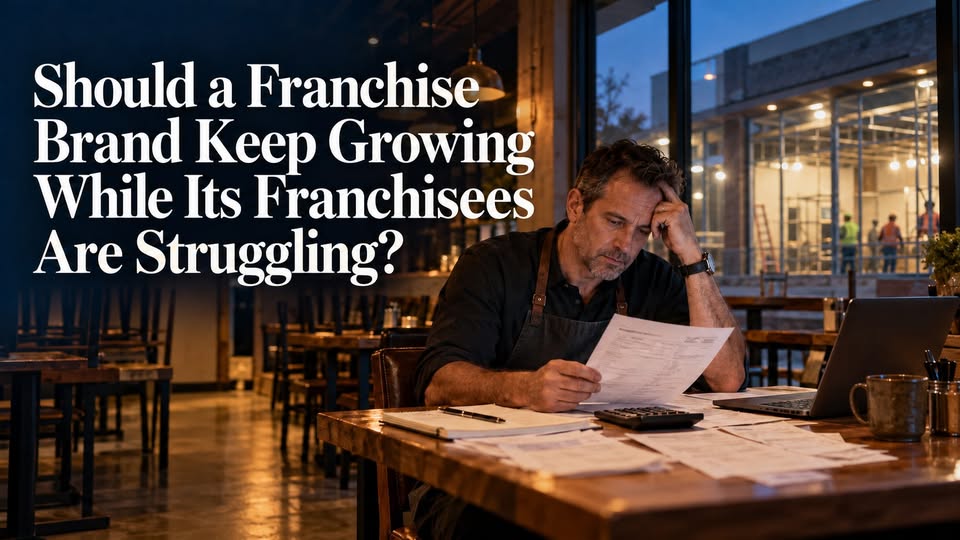
The first sign of trouble in a franchise system may be an expense that no longer fits comfortably within the week’s cash flow. An insurance renewal arrives higher than expected. A repair consumes the money set aside for local marketing. Payroll requires another transfer from the owner’s personal account.
The doors remain open. Customers continue to arrive. Royalties are paid. From a distance, the business appears stable.
Inside, however, the owner’s choices are narrowing.
That distance between outward stability and underlying strain deserves more attention throughout franchising. Economic pressure does not remain confined to the business where it first becomes visible. It moves through staffing, service, reinvestment, and the relationship between the franchisee and franchisor. Eventually, it can reach the brand’s reputation, its development pipeline, and the market for existing locations.
What begins as a ripple effect can become a vicious cycle.
In my professional opinion, I believe one of the most consequential questions facing franchise leadership is how quickly it recognizes that progression and whether it responds while meaningful options remain.
The current environment gives that question urgency. NFIB’s September 2026 survey reported an Uncertainty Index of 90, compared with a historical average of 68. Only 7 percent of surveyed small business owners considered it a good time to expand. Those findings describe NFIB’s small business membership, rather than franchisees specifically, but they provide useful context for the caution surrounding investment decisions. NFIB
Restaurants illustrate the accumulated cost burden. In July, the National Restaurant Association estimated that total expenses for an average restaurant had increased 36 percent between 2019 and 2026. Even when the pace of inflation moderates, owners still have to operate against the higher expense base already established. National Restaurant Association
At the same time, franchising continues to offer opportunities. The International Franchise Association’s February outlook projected establishment growth of 1.5 percent in 2026. That was a forecast, not a completed-year result, and it cannot tell us how comfortably individual owners are meeting their obligations. International Franchise Association
Growth and financial strain can exist within the same system. Understanding how they interact is essential.
Consider a simplified, hypothetical location generating $1 million in annual sales with $900,000 in operating expenses. It produces $100,000 in operating profit before financing costs and taxes. If those expenses increase by 5 percent while revenue remains unchanged, operating profit falls to $55,000.
A 5 percent increase in expenses has consumed 45 percent of operating profit.
That illustration does not represent a particular brand. It explains why a cost increase that looks manageable from brand headquarters can feel overwhelming to an owner. Debt service, necessary capital expenditures, and household needs can further narrow the room to maneuver. A franchisee who works additional unpaid hours may keep the location functioning while obscuring how little the business would earn if that labor had to be replaced.
Raising prices is one response, but it introduces another decision. Customers have budgets of their own. Some may reduce visit frequency, select less expensive products, postpone services, or seek alternatives. Discounting may protect transactions while leaving less contribution from each sale.
The franchisee is trying to preserve cash. The franchisor is trying to preserve the customer proposition and the brand’s competitive position. Both objectives are legitimate. The difficulty begins when each party assumes the other understands its constraints.
A technology requirement may promise efficiency but require cash before savings materialize. A remodel may support long-term relevance while arriving at the worst possible moment for the owner financing it. A promotion may create attractive systemwide sales results while producing uneven economics across markets.
These disagreements become more difficult when royalties are calculated as a percentage of sales. Under that common structure, a franchisee can experience a sharp decline in profit while the royalty obligation remains relatively steady. If sales rise through price increases, royalty dollars may even increase while the owner retains less. Note: A flat-fee royalty creates different challenges, but challenges nonetheless.
That is a structural tension requiring careful management. It does not establish that the franchisor is indifferent to franchisee profitability.
Franchisors have payroll, technology expenses, training obligations, vendor commitments, and costs associated with maintaining the system. Smaller organizations may have limited reserves. Larger organizations may face debt obligations and investor expectations. Broad fee relief can weaken the very support infrastructure owners need.
The danger lies in discussing these realities separately.
A franchisee who repeatedly hears about brand growth while struggling to replace equipment may begin to question whose success is being celebrated. A franchisor that receives incomplete financial information may see resistance without understanding the operating problem behind it.
Eventually, a disagreement over a particular expense can become a judgment about the entire relationship.
The franchisee begins to interpret initiatives as additional charges. Brand leadership begins to interpret questions as unwillingness to cooperate. Requests arrive later, conversations become more defensive, and each side starts documenting the other’s shortcomings.
That deterioration carries an economic cost. When people stop sharing problems early, the organization loses time to solve them.
Yet economic uncertainty cannot become a universal explanation for weak performance. Poor scheduling, waste, inconsistent service, inadequate local marketing, and excessive owner withdrawals can compound outside pressures. Franchisees remain responsible for managing their businesses, providing accurate information, and fulfilling their commitments.
Franchisors, in turn, need to distinguish among problems that require different remedies. A capable operator facing a temporary cash shortage is not in the same position as a location with persistently unsustainable occupancy costs. Neither is identical to an owner who refuses to address controllable deficiencies.
Treating every struggling franchisee as a compliance problem can destroy recoverable value. Treating every struggling franchisee as a victim can prolong an unworkable situation.
The response must follow the diagnosis.
In the short term, franchisees frequently reach for the expenses they can change quickly. They reduce staffing, postpone maintenance, cut training, or cancel local marketing. Some adjustments improve efficiency. Others quietly reduce the business’s ability to generate revenue.
A restaurant saves labor dollars but serves customers more slowly. A service franchise limits appointment availability and loses repeat business. A franchisee postpones equipment replacement until a breakdown interrupts operations.
The financial benefit appears immediately. The commercial damage may take longer to become visible.
Customers seldom separate the local operator’s financial challenges from their opinion of the brand. They remember an unreliable appointment, an inconsistent product, or a disappointing visit. When those experiences recur across locations, a local operating problem can become a broader reputation problem.
This is where the ripple effect can turn into a self-reinforcing cycle: cost pressure weakens execution; weaker execution reduces customer confidence and revenue; lower revenue creates additional financial pressure; and the owner has still fewer resources to restore performance.
At brand headquarters, sustained sales weakness, unpaid royalties, and closures can place pressure on support budgets. Cutting field support may conserve cash while leaving struggling owners with less help. Attempting to replace lost revenue through accelerated franchise sales may introduce new obligations before the organization has resolved its existing weaknesses.
None of this is inevitable. Healthy brands can interrupt the sequence. But they first have to recognize that opening counts and gross sales do not provide a complete picture of stability.
A system can maintain its footprint while owners defer reinvestment, absorb losses personally, and quietly begin looking for a way out.
That brings us to an area deserving far more attention: franchise resales.
A franchisee’s ability to sell a business is part of the economic meaning of ownership. Years of work may be intended to produce both current income and an asset that can eventually be transferred. When the resale market weakens, that second expectation becomes uncertain.
A candidate considering an existing franchise is evaluating more than the location’s equipment, sales history, and customer base. The buyer is also evaluating the system that will support the business after closing.
Will the brand remain relevant? Are required investments reasonable? Is support dependable? Why is this owner selling? What are other franchisees experiencing? Can the business produce an acceptable return after the purchase price, financing, owner compensation, and necessary reinvestment are considered?
A recognized brand may help attract interest. Confidence in the future helps sustain it.
A resale can offer advantages: an operating history, trained employees, an established customer base, and the opportunity to evaluate an actual location. It can also carry deferred maintenance, unfavorable lease economics, staffing problems, or operating practices that need substantial correction.
The buyer must understand the total commitment. Transfer-related costs, training, required improvements, working capital, and the applicable franchise and lease terms can materially change the economics. A lower asking price does not automatically produce an affordable or viable acquisition.
Nor does a profitable location become immune to weakness elsewhere in the system. A buyer may be comfortable with the store and still uncertain about the brand. That uncertainty can narrow the buyer pool, lengthen negotiations, or reduce the price a candidate is willing to offer.
The seller can therefore face two pressures simultaneously: lower earnings and less confidence in the durability of those earnings.
Franchisees who need a sale to fund retirement or resolve financial strain may find themselves unable to accept what buyers are prepared to pay. Some continue operating while postponing investment. Others become less engaged. A prolonged sale process can create additional uncertainty for employees and customers, further complicating the transition.
These are risks, not automatic outcomes. Resales occur for many healthy reasons, including retirement, relocation, estate planning, and changes in an owner’s portfolio. An increase in listings alone does not establish that a brand is in trouble.
Brand leadership should nevertheless want to understand why franchisees are selling, how long transactions take, why qualified buyers withdraw, and whether incoming operators have sufficient resources to succeed.
Those questions belong within brand strategy.
A well-managed resale can preserve employment, retain customers, protect the location’s presence in its market, and introduce an owner with the capacity to reinvest. A poorly handled transition can transfer an unresolved problem to a buyer who has even less financial flexibility.
Approving the next franchisee should therefore involve more than getting a transaction across the finish line. The business has to make sense for the person who will operate it.
The implications reach new franchise development as well. Candidates considering an unopened territory may speak with existing owners, examine available resales, and compare the cost of building with the cost of acquiring.
If established businesses are difficult to sell, a reasonable candidate may ask what that suggests about the eventual exit from a new investment. If experienced owners are reluctant to acquire additional locations, leadership should understand their reasons before assuming outside candidates will see the opportunity differently.
Here, the resale market becomes a source of information about confidence in the system.
It is not a perfect measure. Local real estate, financing, seller expectations, and individual circumstances all matter. But it is too consequential to treat merely as an administrative process managed after an owner submits a transfer request.
Longer term, persistent operating strain can alter the composition of a franchise system. Better-capitalized franchisees may acquire weaker locations. That can improve operations and preserve market coverage. It can also concentrate a larger portion of the network in fewer hands, making the brand more dependent on the financial health and priorities of a smaller group.
Closures can reduce convenience for customers and weaken local awareness. They may also remove locations that never had sustainable economics. The task is to distinguish a disciplined correction from a pattern of deterioration and explain the difference honestly.
Every location need not remain open forever. Every franchisee need not remain in the system indefinitely. Stability requires a credible process for reinvestment, correction, transition, and, where necessary, an orderly exit.
The same discipline should shape decisions about growth. A sound brand may reasonably expand during uncertainty when its economics, support capacity, and capitalization justify doing so. Another may need to redirect resources toward existing operations.
Neither continued expansion nor a development pause should be treated as proof of strength or weakness by itself. The question is whether the decision improves the system’s capacity to support successful ownership.
That requires a more useful conversation between franchisor and franchisee.
Start with a shared understanding of the numbers. Sales should be examined alongside traffic or transaction activity, operating margins, cash obligations, deferred investment, and the practical cost of replacing the owner’s labor. System averages should be broken down enough to show where difficulties are concentrated.
Then examine what each proposed initiative requires from the franchisee and when its benefits can reasonably be expected. A mandate supported by credible testing, a realistic funding plan, and transparent economics has a stronger foundation than one justified mainly by the assertion that everyone must move forward.
Where temporary assistance is appropriate, it should have a purpose, a time frame, and clear expectations. Fee deferrals can help bridge a timing problem but also create a future obligation. Relief that does not address the underlying economics may simply postpone the same conversation.
Franchisors should also examine their own spending, purchasing arrangements, required technology, and operational complexity. Franchisees should be prepared to act on controllable costs, share reliable information, and participate in a specific improvement plan.
Shared responsibility becomes meaningful when both parties can identify what they will do differently.
Communication matters throughout, especially when the answer is difficult. Franchisees can often understand a financial constraint more readily than unexplained silence. Headquarters can make better decisions when franchisees disclose problems before unpaid obligations and deteriorating standards leave few alternatives.
The relationship needs enough trust for bad news to arrive early.
Final Thoughts
Franchising has real advantages to bring to an uncertain economy: collective purchasing, shared learning, established systems, recognizable brands, and the ability to spread effective practices across a network. Those advantages become valuable through execution. Their presence in a presentation does not ensure their usefulness to a franchisee facing a difficult month.
The economic test of a franchise brand is therefore broader than whether it can continue selling franchises.
Can it help capable franchisees adapt? Can it preserve standards without ignoring financial reality? Can it support responsible transfers and attract buyers who understand the investment they are making? Can it recognize when protecting the existing system is the most important contribution it can make to future growth?
Cost pressure may arrive from outside the organization. What happens next is influenced by decisions made inside it.
When those decisions weaken operations, trust, and confidence in ownership, a ripple effect can become a vicious cycle. When they improve visibility, accountability, and the practical economics of the business, the system has a chance to interrupt that cycle before it defines the brand.
The franchise relationship is tested most seriously when both parties have less room for error. How they respond will help determine whether the brand emerges with owners willing to reinvest, buyers willing to enter, and a future worth building together.
For franchisors, that means examining whether the pursuit of the next location is receiving more attention than the financial health of the locations already operating. For franchisees, it means bringing reliable information, operational accountability, and a willingness to make difficult changes to the conversation. Both sides have a stake in addressing the pressure before it limits everyone’s choices.
The next franchise candidate may be listening to your growth story. The next resale buyer may be studying your existing locations. Both will ultimately look for evidence that the people already invested in the brand have a credible path forward.
That evidence is being built—or weakened—by the decisions made today.
Let’s Discuss the Future of Your Business or Brand
If rising costs, bottom-line challenges, or uncertainty about expansion are prompting you to reconsider your next steps, let’s discuss your priorities. Whether you are a franchisor evaluating system stability and growth, a franchisee working to strengthen profitability, or an operator considering a transition, an experienced outside perspective can help you assess the situation and establish a practical course of action.
At Acceler8Success America, we bring extensive experience in franchising, restaurants, and business development to those conversations. Together, we can examine what needs attention now and what will position your business or brand for the future.
Contact me at Paul@Acceler8Success.com or visit Acceler8Success.com to begin the conversation.

You must be logged in to post a comment.