Tag: Restaurants

The Silent Risk of Ignoring Gen Z in Franchising

Franchisors who are building relatively young brands, or stewarding established concepts that are now facing a generational handoff, are arriving at a moment that is both uncomfortable and unavoidable. Gen Z is no longer an abstract future customer. They are entering the workforce in force, influencing household spending, shaping digital culture, and increasingly deciding where brands earn relevance or quietly fade into the background. Ignoring this shift is not neutral. It is a strategic choice to age out.

The necessity of engaging Gen Z is not about chasing trends or reinventing a brand every six months. It is about recognizing how expectations around trust, transparency, values, and experience have fundamentally changed. Gen Z has grown up with unlimited access to information, constant comparison, and an instinctive skepticism toward polished brand promises. They can sense performative marketing almost instantly. They reward brands that feel human, consistent, and aligned with something beyond short-term profit. For franchisors, this creates tension because scale thrives on consistency while Gen Z thrives on authenticity. The challenge is not choosing one over the other, but proving they can coexist.

What Gen Z wants is often misunderstood. They are not demanding perfection, nor are they universally price-insensitive or anti-brand. They want clarity. They want to understand what a brand stands for, how it treats its people, how it contributes to the community, and whether its behavior matches its words. They value experiences that feel intentional rather than transactional. They care deeply about convenience, but they also notice friction immediately, especially digital friction. If ordering, onboarding, communication, or support feels outdated or confusing, trust erodes before the first purchase is even completed. For franchisors, the digital experience is no longer an extension of the brand. It is the brand.

For younger franchise systems, Gen Z represents an opportunity to grow alongside a generation rather than retrofit later. The brands that resonate most tend to bake clarity, flexibility, and transparency into their operating model early. That shows up in how franchisees are supported, how employees are trained, how feedback flows upward, and how stories are told outward. Gen Z notices when franchisees feel like true partners rather than interchangeable operators. They notice when frontline employees are empowered instead of scripted. They notice when marketing reflects real people and real moments rather than overly polished messaging.

For established or growing brands, the shift can feel far riskier. There is often a legitimate fear that leaning toward Gen Z will alienate the loyal customers who built the business in the first place. Mishandled change can fracture trust. But the mistake is framing the strategy as replacement rather than expansion. Appealing to Gen Z does not require abandoning what made the brand successful. It requires translating those strengths into a language that resonates today. Values that mattered to older generations still matter. They simply need to be expressed with less polish and more proof.

One of the biggest pitfalls franchisors face is confusing relevance with reinvention. Chasing viral moments, slang-heavy campaigns, or surface-level cultural signals often backfires. Gen Z is not impressed by brands trying to sound young. They are drawn to brands that sound honest. Another common pitfall is operational lag. A brand can refresh its logo, update its tone, and modernize its marketing, yet still lose Gen Z if franchisees are burdened with outdated systems, clunky technology, or rigid policies that prevent responsiveness. The gap between brand promise and lived experience is where trust erodes fastest.

There is also danger in standing still. Brands that rely solely on legacy loyalty eventually encounter shrinking traffic, declining unit economics, and increasing difficulty recruiting employees who see the brand as irrelevant. Gen Z is not just a customer base. They are your future managers, franchisees, and brand ambassadors. If they do not see a place for themselves inside the system, growth becomes increasingly expensive and fragile.

The balance that franchisors must strike is precarious. Long-time customers often value familiarity, consistency, and personal connection. Those priorities do not conflict with Gen Z expectations. In many cases, they reinforce them. A brand that communicates clearly, operates ethically, treats people well, and delivers a reliable experience tends to resonate across generations. The difference lies in how those attributes are expressed. One size no longer fits all, but fragmentation is rarely the answer.

Franchisors should be asking themselves difficult questions. Does our brand feel alive or preserved? Are we telling stories that reflect today’s operators and customers, or are we still celebrating yesterday’s wins? Do our franchisees have the tools to meet modern expectations, or are we asking them to compete with one hand tied behind their back? Are younger voices inside the system being invited into meaningful dialogue, or quietly dismissed as inexperienced? If Gen Z encountered our brand for the first time today, would they see relevance, or residue?

Shifting a brand toward Gen Z is not a marketing initiative. It is a leadership decision. It requires humility, curiosity, and a willingness to evolve without erasing the past. The franchisors who navigate this transition successfully are rarely the loudest or trendiest. They are the ones who remain grounded in who they are, clear about where they are going, and disciplined enough to build a brand that feels trustworthy to the generations who built it and credible to the generations who will carry it forward.


About the Author

Paul Segreto brings over forty years of real-world experience in franchising, restaurants, and small business growth. Recognized as one of the Top 100 Global Franchise and Small Business Influencers, Paul is the driving voice behind Acceler8Success Café, a daily content platform that inspires and informs thousands of entrepreneurs nationwide. A passionate advocate for ethical leadership and sustainable growth, Paul has dedicated his career to helping founders, franchise executives, and entrepreneurial families achieve clarity, balance, and lasting success through purpose-driven action.


About Acceler8Success America

Acceler8Success America is a comprehensive business advisory and coaching platform dedicated to helping entrepreneurs, small business owners, and franchise professionals achieve The American Dream Accelerated.

Through a combination of strategic consulting, results-focused coaching, and empowering content, Acceler8Success America provides the tools, insights, and guidance needed to start, grow, and scale successfully in today’s fast-paced world.

With deep expertise in entrepreneurship, franchising, restaurants, and small business development, Acceler8Success America bridges experience and innovation, supporting current and aspiring entrepreneurs as they build sustainable businesses and lasting legacies across America.

Learn more at Acceler8SuccessAmerica.com

Social Media and the Modern Restaurant: Visibility, Trust, and Survival

Social media is no longer a “nice to have” for restaurants. It is part of the business itself. Whether a restaurant is independently owned or part of a franchise system, social media now plays a direct role in visibility, credibility, traffic, and long-term relevance. For many guests, it is the first interaction with the brand, long before they see the front door, read a menu, or taste the food.

For independent restaurants, social media often serves as the great equalizer. A single location can compete for attention alongside national brands by telling its story authentically and consistently. Behind-the-scenes photos, daily specials, limited-time offers, community involvement, staff spotlights, and even imperfect moments help humanize the business. Guests don’t just follow independent restaurants for promotions; they follow them to feel connected. That connection turns into repeat visits, word-of-mouth referrals, and loyalty that no discount alone could ever create.

As Jennifer Lawson, owner of Bee the Buzz Digital, often puts it, “Restaurants don’t win on social media by trying to look like everyone else. They win by showing who they really are, consistently and confidently.” That authenticity is often what separates a forgettable feed from one that actually drives foot traffic.

For franchise brands, social media plays a dual role. At the brand level, it reinforces identity, positioning, and trust. It communicates what the brand stands for, what it promises, and what guests should expect everywhere they go. At the local level, social media becomes a traffic driver and relationship builder for each franchise location. When done right, brand-level and local-level efforts work together rather than compete, creating consistency without sacrificing local personality.

One of the most overlooked aspects of social media is how closely it mirrors how people actually choose where to eat. Guests scroll before they decide. They check photos, recent posts, comments, reviews, and how responsive a restaurant appears. An inactive feed, inconsistent messaging, or outdated content can quietly signal neglect, instability, or indifference, even if the dining room is busy. In many cases, a dismal or ineffective social media presence does more damage than having none at all, because it creates doubt at the exact moment a guest is deciding where to spend their money.

A weak social media presence can also undermine trust. Missed comments, unanswered questions, unresolved complaints, or months of silence suggest that the restaurant is not paying attention. For franchise brands, inconsistency across locations can dilute the brand, confuse guests, and frustrate franchisees who are doing things right. Poor-quality photos, off-brand messaging, or unprofessional posts can unintentionally lower perceived food quality, service standards, and overall value.

Lawson frequently emphasizes this risk, noting that “Social media doesn’t just show what a restaurant wants people to see. It shows what they ignore. And customers notice neglect faster than they notice clever content.” In a competitive restaurant landscape, those small signals add up quickly.

There is also an internal cost. Restaurants with ineffective social media often struggle more with hiring and retention. Potential team members see little energy, culture, or pride reflected online and move on. In a labor-challenged industry, that missed opportunity can be significant. Social media, when neglected, becomes a silent barrier not just to customers, but to talent.

By contrast, an effective social media presence delivers compounding benefits. It keeps the restaurant top of mind, even when guests are not actively planning to dine out. It reinforces familiarity, which reduces friction when someone is deciding where to eat. Guests are more likely to choose a restaurant that feels familiar, current, and engaged over one that feels distant or outdated.

An effective presence also strengthens credibility. Regular posting, timely responses, and consistent storytelling signal professionalism and care. For franchise systems, this builds confidence among franchisees and prospects alike, demonstrating that the brand understands modern marketing and supports growth beyond the four walls. At the local level, it empowers franchise locations to feel connected to their communities while staying aligned with the brand.

Social media also becomes a powerful amplifier for moments that already matter. New menu items, promotions, seasonal offerings, community events, catering opportunities, and even everyday wins gain extended life beyond the dining room. Instead of being seen by only the guests who happen to walk in that day, those moments are shared, remembered, and revisited.

Perhaps most importantly, an effective social media strategy creates resilience. When challenges arise, whether operational disruptions, economic shifts, or competitive pressure, restaurants with strong digital relationships have a voice and an audience. They can communicate, adapt, and maintain trust rather than scrambling to be heard.

In today’s restaurant environment, social media is not about chasing trends or viral moments. It is about presence, consistency, and connection. A neglected or poorly managed social media presence quietly erodes confidence and opportunity. A thoughtful, authentic, and active presence builds visibility, trust, loyalty, and long-term value. The difference between the two is not cosmetic. It can directly influence whether a restaurant is chosen, remembered, and supported in an increasingly crowded marketplace.


About the Author

Paul Segreto brings over forty years of real-world experience in franchising, restaurants, and small business growth. Recognized as one of the Top 100 Global Franchise and Small Business Influencers, Paul is the driving voice behind Acceler8Success Café, a daily content platform that inspires and informs thousands of entrepreneurs nationwide. A passionate advocate for ethical leadership and sustainable growth, Paul has dedicated his career to helping founders, franchise executives, and entrepreneurial families achieve clarity, balance, and lasting success through purpose-driven action.


About Acceler8Success America

Acceler8Success America is a comprehensive business advisory and coaching platform dedicated to helping entrepreneurs, small business owners, and franchise professionals achieve The American Dream Accelerated.

Through a combination of strategic consulting, results-focused coaching, and empowering content, Acceler8Success America provides the tools, insights, and guidance needed to start, grow, and scale successfully in today’s fast-paced world.

With deep expertise in entrepreneurship, franchising, restaurants, and small business development, Acceler8Success America bridges experience and innovation, supporting current and aspiring entrepreneurs as they build sustainable businesses and lasting legacies across America.

Learn more at Acceler8SuccessAmerica.com

When Restaurants Stop Serving People and Start Managing Transactions

When restaurants lose sight of hospitality, they don’t usually notice it all at once. It rarely happens because someone wakes up and decides guests no longer matter. It happens quietly, through small decisions that feel practical in the moment. Speed replaces warmth. Efficiency replaces eye contact. Policies replace judgment. Over time, the restaurant still serves food, but it stops serving people.

Hospitality is not the same as service. Service is transactional. Hospitality is relational. Service is about delivering what was ordered. Hospitality is about how a guest feels before, during, and after the meal. When hospitality fades, restaurants often convince themselves they are improving operations. They tighten scripts. They shorten conversations. They push staff to turn tables faster. They reduce flexibility in the name of consistency. The result is a place that may run smoothly on paper but feels cold in practice.

Guests notice immediately, even if they can’t articulate why. They sense when a greeting feels rehearsed instead of genuine. They feel when a server is rushing past them rather than welcoming them. They notice when a problem is met with policy instead of empathy. Food quality may remain strong, pricing may be competitive, and marketing may be clever, yet something feels off. The experience becomes forgettable at best and frustrating at worst.

For staff, the loss of hospitality is just as damaging. When employees are trained to execute tasks rather than care for guests, their work becomes mechanical. Pride erodes. Engagement drops. Team members stop thinking like hosts and start thinking like rule enforcers. Turnover rises because people rarely stay long in environments where they are discouraged from being human. A restaurant without hospitality often becomes a restaurant constantly hiring.

Leadership plays a central role in this shift. When owners and managers focus exclusively on food cost, labor percentages, ticket times, and reviews, hospitality becomes an afterthought. Metrics matter, but when they become the mission, they crowd out the very behavior that drives long-term loyalty. Hospitality cannot be delegated to a training video or a line in a handbook. It must be modeled, reinforced, and protected, especially during busy or stressful moments.

Technology can accelerate the problem when misused. Tablets, kiosks, QR codes, and apps can improve efficiency, but they can also create distance. When technology replaces interaction instead of supporting it, guests feel like obstacles in a process rather than welcomed participants in an experience. Convenience without connection is not hospitality. It is automation.

Over time, restaurants that lose sight of hospitality begin to rely heavily on discounts, promotions, and advertising to compensate for declining loyalty. They chase new customers because they fail to keep existing ones. The brand becomes louder while the experience becomes quieter. The restaurant survives, but it no longer inspires. It becomes interchangeable with dozens of others offering similar food at similar prices.

The most successful restaurants understand that hospitality is not soft or optional. It is a strategic advantage. It is what turns first-time guests into regulars and regulars into advocates. It is what allows a restaurant to recover from mistakes with grace rather than damage. Hospitality creates forgiveness, trust, and emotional connection, none of which can be purchased through marketing.

When restaurants rediscover hospitality, the change is immediate and powerful. Guests feel seen again. Staff feel empowered again. The room feels alive. Hospitality does not slow a restaurant down. Done right, it gives meaning to everything else happening inside the four walls. Food feeds the body, but hospitality feeds the relationship. When that relationship is lost, the restaurant may still operate, but it stops truly serving.


About the Author

Paul Segreto brings over forty years of real-world experience in franchising, restaurants, and small business growth. Recognized as one of the Top 100 Global Franchise and Small Business Influencers, Paul is the driving voice behind Acceler8Success Café, a daily content platform that inspires and informs thousands of entrepreneurs nationwide. A passionate advocate for ethical leadership and sustainable growth, Paul has dedicated his career to helping founders, franchise executives, and entrepreneurial families achieve clarity, balance, and lasting success through purpose-driven action.


About Acceler8Success America

Acceler8Success America is a comprehensive business advisory and coaching platform dedicated to helping entrepreneurs, small business owners, and franchise professionals achieve The American Dream Accelerated.

Through a combination of strategic consulting, results-focused coaching, and empowering content, Acceler8Success America provides the tools, insights, and guidance needed to start, grow, and scale successfully in today’s fast-paced world.

With deep expertise in entrepreneurship, franchising, restaurants, and small business development, Acceler8Success America bridges experience and innovation, supporting current and aspiring entrepreneurs as they build sustainable businesses and lasting legacies across America.

Learn more at Acceler8SuccessAmerica.com

When Restaurants Fight Back: Are Online Review Retaliations Hurting More Than Helping?

I’ve been reading a lot lately about the growing frustration restaurant operators feel toward online reviews and the sense that customer posting on review platforms may be getting out of hand. I understand where that frustration comes from. Reviews today can feel less like feedback and more like public judgment, delivered instantly, permanently, and often without context. Still, my mindset remains unchanged. Restaurants should be proactive in driving the best reviews possible rather than becoming reactive to the worst ones. I recently wrote about the value of each tenth of a point in Google Reviews and how those fractional increases materially affect trust, traffic, and revenue. Against that reality, the emerging conversation around how restaurants should respond, or even retaliate, against poor reviews deserves deeper scrutiny.

The idea of retaliation is emotionally understandable. Operators invest their money, their time, and often their identity into their restaurants. A single harsh review can feel personal, unfair, or even malicious, especially when it ignores circumstances, exaggerates facts, or misrepresents what actually happened. The instinct to push back is human. The risk is that once retaliation becomes a posture rather than an exception, it shifts the restaurant’s focus away from hospitality and toward ego. At that moment, the audience is no longer the unhappy guest. It is every future guest who reads the exchange and quietly evaluates whether this is a business that handles pressure with professionalism or defensiveness.

If retaliation is even considered a strategy, it must be narrowly defined and rarely used. A calm, factual response that corrects misinformation or explains policy is not true retaliation. It is brand stewardship. There is a meaningful difference between protecting the truth and trying to win an argument in public. Once responses cross into sarcasm, condescension, or moral superiority, the restaurant has already lost, regardless of whether the original review was fair. Online, perception becomes reality, and perception favors composure over confrontation every time.

The deciding factor in whether to respond firmly should never be how offensive the review feels. It should be whether the review introduces inaccuracies that, if left unaddressed, could mislead future guests. Silence can sometimes imply agreement, but not every negative review deserves oxygen. Responding emotionally to every complaint trains customers to believe the restaurant is combative rather than confident. The strongest brands respond selectively, deliberately, and with restraint.

The larger danger emerges when retaliation evolves from an occasional response into a prevailing mindset. At that point, reviews stop being viewed as potential signals and start being dismissed as noise. Operators begin to frame criticism as proof that customers are unreasonable, impossible to satisfy, or simply wrong. This mindset subtly undermines accountability. Teams absorb the message that feedback is something to fight rather than something to learn from. Over time, that attitude dulls the urgency to improve systems, consistency, and execution.

There is an even more troubling dimension to this way of thinking. A retaliatory posture can become a convenient excuse for improper or even nonexistent training. If operators convince themselves that bad reviews are primarily the result of overly sensitive customers or a broken review culture, it becomes easier to rationalize why investment in training is unnecessary. In some cases, this logic is taken a step further and framed as a cost-saving measure. If guests are going to complain anyway, why spend time and money on onboarding, service standards, leadership development, or reinforcement? As absurd as that sounds, it is a rationale that surfaces more often than many operators would like to admit.

This thinking is dangerous precisely because it can feel pragmatic in the short term. Training budgets get trimmed. Standards become loosely defined. Accountability softens. Meanwhile, leadership reassures itself that the problem exists outside the restaurant, not within it. The irony is that these decisions almost always produce the very outcomes operators claim are unfair. Inconsistent service, poor recovery, and disengaged staff generate more negative experiences, which then generate more negative reviews. Retaliation becomes the visible reaction, while the root cause remains unaddressed.

Hospitality has always been a people business, and people do not perform well in a vacuum. They need clarity, structure, coaching, and reinforcement. Choosing retaliation over training is not strength. It is surrender disguised as toughness. It signals a shift from ownership to defensiveness, from leadership to justification. No review response strategy, no matter how clever or aggressive, can compensate for weak preparation on the front lines.

There is also a philosophical line that should concern every operator. When the internal narrative becomes “we can’t please everyone, so why try,” something fundamental has already been lost. Guests do not expect perfection. They expect effort, care, and respect. Even unfair reviews often illuminate friction points that leadership may not see from inside the operation. Dismissing all criticism as unreasonable risks missing opportunities to improve the guest experience in ways that matter.

A proactive review strategy changes the entire dynamic. When a restaurant consistently delivers positively memorable experiences, encourages satisfied guests to share those experiences, and responds thoughtfully when things fall short, the occasional unfair review loses its power. Volume and consistency dilute outliers. In that environment, a firm response to a truly inaccurate review feels credible rather than defensive because it is supported by a broader pattern of positive feedback.

Reviews are not going away, and customers are not becoming quieter. The real decision for restaurant operators is whether reviews are treated as an adversary to battle or a reality to manage with discipline. Retaliation, if it exists at all, should be rare, deliberate, and rooted in protecting truth rather than pride. The real work remains unchanged. Build a culture that values the guest experience. Train teams to handle pressure and recover when things go wrong. Design systems that reduce inconsistency before it reaches the guest. When those fundamentals are in place, responses to reviews become less about damage control and more about reinforcing who you are.

The question is not whether customers sometimes go too far. They do. The more important question is whether restaurants allow those moments to pull them away from the principles that earn trust in the first place.


About the Author

Paul Segreto brings over forty years of real-world experience in franchising, restaurants, and small business growth. Recognized as one of the Top 100 Global Franchise and Small Business Influencers, Paul is the driving voice behind Acceler8Success Café, a daily content platform that inspires and informs thousands of entrepreneurs nationwide. A passionate advocate for ethical leadership and sustainable growth, Paul has dedicated his career to helping founders, franchise executives, and entrepreneurial families achieve clarity, balance, and lasting success through purpose-driven action.


About Acceler8Success America

Acceler8Success America is a comprehensive business advisory and coaching platform dedicated to helping entrepreneurs, small business owners, and franchise professionals achieve The American Dream Accelerated.

Through a combination of strategic consulting, results-focused coaching, and empowering content, Acceler8Success America provides the tools, insights, and guidance needed to start, grow, and scale successfully in today’s fast-paced world.

With deep expertise in entrepreneurship, franchising, restaurants, and small business development, Acceler8Success America bridges experience and innovation, supporting current and aspiring entrepreneurs as they build sustainable businesses and lasting legacies across America.

Learn more at Acceler8SuccessAmerica.com

A Tenth of a Star: The Most Overlooked Growth Lever in Fast Food, QSR, and Fast Casual

It’s hard for me to ignore what’s happening in the restaurant world right now.

Almost daily, it seems I read something about another restaurant closing. Sometimes it’s a small independent concept that never found its footing. Sometimes it’s a once-busy local favorite that quietly ran out of runway. Sometimes it’s a brand that looked strong from the outside, until it wasn’t. And then, in the middle of all that, I’ll visit restaurants that are clearly succeeding, some that have found short-term momentum and others that have stayed relevant and profitable for years. That contrast has been hitting me in a very real way, because it doesn’t feel like we’re just watching businesses close. We’re watching livelihoods disappear. We’re watching dreams end.

And as I’ve spent more time in the field talking to operators, observing service, watching team dynamics, and paying attention to what guests say when they think no one is listening, I’ve found myself drilling down to a common denominator that keeps showing up again and again.

Customer reviews.

Not because reviews are always fair. Not because a star rating tells the whole story. But because reviews reveal something that too many restaurants overlook: the gap between what an operator believes is being delivered and what the guest is actually experiencing. Reviews shine a light on execution, consistency, and trust… all the things that determine whether a guest comes back, and whether they tell someone else to try you or avoid you.

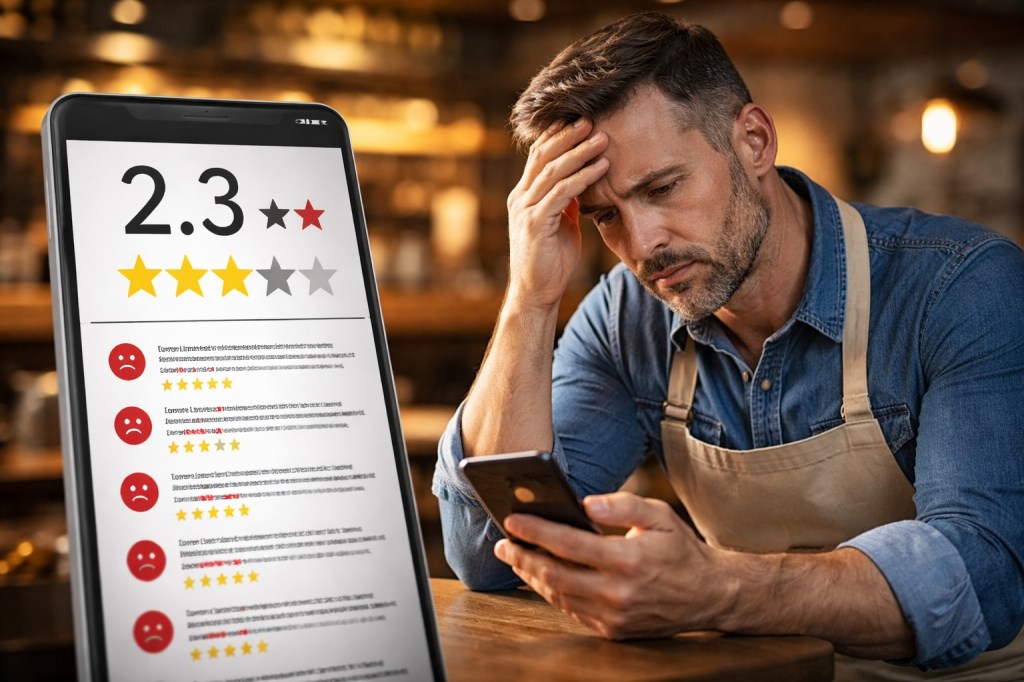
In our ongoing work at Acceler8Success America, we keep seeing a pattern that should get the attention of every operator and leadership team in fast food, quick service, and fast casual. Across many concepts and markets, the overall rating tends to settle around the high threes. An average around 3.7 out of 5 is common. Then you have brands like Chick-fil-A consistently showing higher averages, often around 4.2, enough of a difference to change customer behavior. The gap between 3.7 and 4.2 isn’t just a few tenths of a point. Online, it’s the difference between “it’s probably fine” and “I feel good about going there.” It’s the difference between convenience and confidence.

And it begs a bigger question: how much better would these restaurants perform if they could consistently move their locations from 3.7 to 4.2, and then beyond that to 4.5, 4.7, or even higher?

Because at that point, reviews stop being a vanity metric and become a growth engine.

Here’s another question that deserves to be asked out loud, especially by leadership teams and franchise operators who track every food cost variance and labor hour with precision: what does a tenth of a point actually equal in revenue and profitability?

If your rating moves from 3.7 to 3.8, what does that do to first-time trial? To repeat visits? To conversion when a customer is choosing between you and two nearby competitors? To the number of guests who decide to “give you a shot” versus scroll past you? To the number of comps you issue, the remakes you absorb, the refunds you process, and the time your managers spend dealing with avoidable recovery moments?

Now multiply that effect. Not once. Multiply it to the desired level.

If a tenth of a point creates lift, what does three tenths do? What does five tenths do? What does a full point do over the course of a year?

That right there is your future!

A 3.7 score often creates invisible drag. You may still get traffic, especially if you’re well located and convenient, but you’re constantly leaking first-time trial. You’re losing the guest who compares three nearby options and chooses the one that feels safer. You’re also paying a hidden tax that doesn’t show up as a neat line item in the P&L: more refunds, more remakes, more complaints, more comps, more employee stress, and more operational disruption. That tax hurts profitability. It hurts morale. And over time, it wears down leadership teams and owners who already feel like they’re fighting a daily battle just to stay afloat.

At 4.2, the perception changes. Customers trust you faster. The decision to visit becomes easier. Your online reputation does part of your marketing for you, which means you’re less dependent on promotions and discounting just to keep volume steady. That trust also tends to attract stronger talent. Better-run restaurants feel better to work in, and teams stay longer in environments that feel organized, supported, and consistent. The business becomes healthier from the inside out.

At 4.5 and above, you enter a different tier. You are no longer “one of the options.” You become the preferred choice. And that is where long-term growth becomes easier, faster, and more sustainable. Expansion carries less friction because new guests are more willing to try you. Franchise development becomes easier because operators want in. Unit-level economics improve because waste decreases and loyalty increases. And when the market tightens, as it always does, the most trusted brands tend to hold share while others scramble.

This is why customer reviews matter so much, and why they show up as a common denominator when you compare closures to longevity.

Reviews are not primarily judging your menu. They are judging your execution.

They measure friction.

Guests aren’t reviewing your strategy, your labor model, your lease terms, or your challenges with vendors. They’re reviewing what happened in the last thirty minutes of their life. If the experience felt smooth, respectful, and consistent, they reward you. If it felt slow, wrong, careless, or indifferent, they punish you, often with emotion that seems disproportionate to what went wrong.

And in fast food, QSR, and fast casual, those breakdowns tend to happen in predictable moments: lunch rush, dinner rush, late-night shifts, understaffed days, high-turnover weeks, promotion surges, weather spikes, and any situation where the team is operating under stress.

That’s where ratings are won or lost. Not at 2:00 p.m. when everything is calm. Ratings are determined at 12:10 p.m. and 6:40 p.m., when the line is long, the kitchen is slammed, and leadership either shows up, or doesn’t.

So why does Chick-fil-A often land higher?

Because their advantage is not perfection. Their advantage is a system that reduces breakdowns and protects the guest experience under pressure. They don’t treat service as separate from operations. They treat service as the outcome of operations done well.

Hospitality isn’t just a script. It’s a standard. And standards only work when supported by process, training, and leadership presence. When the system is designed well, the guest experiences consistency. And consistency is what lifts ratings above the high-threes ceiling that many brands can’t break.

Which leads to the most uncomfortable question of all.

If the upside is so clear, why aren’t more establishments pushing harder?

Some operators will argue that reviews are biased. Others will say customers only leave reviews when they’re angry. And while there’s truth in both, those explanations can become excuses that keep businesses stuck.

The more honest answer is that raising ratings requires operational discipline, and operational discipline requires leadership focus. Many restaurants are trapped in survival mode. They’re fighting labor shortages, turnover, food cost swings, equipment issues, delivery complaints, and constant urgency. In that environment, excellence starts to feel optional. A 3.7 begins to feel “good enough,” because it’s familiar.

But familiar is not the same as profitable.

And it definitely isn’t the same as scalable.

Another reason many brands don’t push harder is that they measure the wrong things with the most intensity. They track sales, labor, and food cost religiously, but treat guest sentiment like a soft metric. Yet guest sentiment drives the very traffic that produces the sales they’re chasing. When ratings drop, everything gets harder. When ratings rise, everything becomes easier.

So what needs to be done to raise scores?

It starts by identifying the handful of recurring failures that drive most 1-star reviews. In fast food, QSR, and fast casual, they are almost always the same: long waits, incorrect orders, missing items, cold food, inconsistent quality, disengaged tone, messy dining rooms or restrooms, and off-premise mistakes like poor packaging or forgotten sauces. These aren’t mysteries. They’re predictable.

Then you stop treating reviews like a marketing problem and start treating them like operational intelligence. Every week, reviews should be categorized into a small set of themes and tied back to dayparts, staffing patterns, and bottlenecks. “We’re slow” isn’t a diagnosis. “Drive-thru stalls during staging between 12:00 and 1:00 when we’re down one expo and bagging is inconsistent” is a diagnosis. Once you diagnose correctly, fixes become clear.

You build an “under load” playbook. A real one. Not a binder on a shelf. A trained, rehearsed plan for peak hours that defines roles, staging flow, accuracy checks, and guest communication standards. Speed and accuracy are not supposed to be trade-offs. The best operations achieve both because they are structured.

You make order accuracy a ritual, not a hope. One simple verification step at the right point of the line prevents an angry guest later and a public one-star review that lasts forever.

You protect hospitality during stress. This is where many restaurants lose the most ground. Teams get slammed and tone turns transactional or irritated. Guests interpret that as disrespect. The standard doesn’t have to be theatrical. It has to be consistent: greet quickly, acknowledge delays, communicate clearly, thank the guest, and never allow stress to turn into attitude.

You treat cleanliness like trust-building. Guests use cleanliness as a shortcut for what they can’t see. A neglected dining room makes them doubt your kitchen. A bad restroom makes them doubt leadership. Cleanliness needs a cadence of frequent micro-resets so it never becomes a visible failure.

You win off-premise with packaging discipline. Pickup and delivery are review accelerators. When guests eat at home, the bag is your brand. Label it, seal it, stage it correctly, and ensure hot/cold handling is intentional. Missing sauces and utensils sound small until they become the reason a family meal feels ruined.

You build recovery into the operation. Mistakes will happen. The difference between a 3.7 store and a 4.2 store is how often mistakes happen and how they are handled. A fast, respectful, generous recovery can actually create loyalty. A slow, dismissive recovery turns a small problem into a permanent warning sign for hundreds of future customers.

And you invite feedback consistently. Not selectively. Many restaurants get review scores skewed downward because only frustrated guests speak up. The ethical answer is simply to make it easy for satisfied guests to share too. A healthier review mix doesn’t “game” the system. It reflects reality.

When you put this all together, the real point becomes clear.

Moving from 3.7 to 4.2 isn’t just about looking better online. It’s about building a stronger business, one that grows faster, wastes less, recruits better, retains longer, and withstands tougher market cycles. It’s about building a restaurant that doesn’t just survive the season, but earns loyalty year after year.

And if we’re serious about reducing restaurant closures, if we truly care about the people behind these businesses, then we have to stop treating customer reviews like background noise.

Because the question isn’t whether reviews matter.

The question is whether leadership teams are willing to treat review performance as the strategic asset it is.

If the difference between “average” and “trusted” is only a few recurring breakdowns per week, then the opportunity is not theoretical.

It’s operational.

And it’s available to every fast food, QSR, and fast casual brand willing to push harder… not with slogans, but with systems.


About the Author

Paul Segreto brings over forty years of real-world experience in franchising, restaurants, and small business growth. Recognized as one of the Top 100 Global Franchise and Small Business Influencers, Paul is the driving voice behind Acceler8Success Café, a daily content platform that inspires and informs thousands of entrepreneurs nationwide. A passionate advocate for ethical leadership and sustainable growth, Paul has dedicated his career to helping founders, franchise executives, and entrepreneurial families achieve clarity, balance, and lasting success through purpose-driven action.


About Acceler8Success America

Acceler8Success America is a comprehensive business advisory and coaching platform dedicated to helping entrepreneurs, small business owners, and franchise professionals achieve The American Dream Accelerated.

Through a combination of strategic consulting, results-focused coaching, and empowering content, Acceler8Success America provides the tools, insights, and guidance needed to start, grow, and scale successfully in today’s fast-paced world.

With deep expertise in entrepreneurship, franchising, restaurants, and small business development, Acceler8Success America bridges experience and innovation, supporting current and aspiring entrepreneurs as they build sustainable businesses and lasting legacies across America.

Learn more at Acceler8SuccessAmerica.com

Why Guests Leave Quietly and Don’t Come Back: A Lesson for Restaurant Operators

Doing things right in restaurant operations shouldn’t feel elusive, yet the industry continues to struggle under the weight of declining sales, shrinking margins, and an ever-growing list of closures. Hardly a day goes by without another restaurant becoming a cautionary tale. Labor shortages, rising food costs, rent, competition, and the economy are often cited as the reasons. All of them are real. All of them are challenging. But they also tend to mask a deeper, more uncomfortable truth: many restaurants aren’t failing because of one catastrophic mistake, but because of dozens of small ones quietly piling up over time.

This raises an important question for every operator. Are the challenges you’re facing the result of one major issue, or are they the accumulation of overlooked details? At what point do small missteps stop being isolated and start becoming a pattern your guests can feel? And perhaps most importantly, do you recognize that moment when it happens, or does it only become clear once customers stop coming back?

Taking care of a customer to a high degree of satisfaction is not rocket science. Hospitality is not abstract. It lives in awareness, intention, and consistency. Yet the bar seems to have lowered, with an unspoken expectation that guests should be more forgiving. But should they be? When a guest reaches for cash or pulls out a Gold American Express card, they’re not just paying for food. They’re paying for care, pride, and the expectation of a positively memorable experience. Is that really too much to ask, every time?

In an ideal world, restaurants would approach every guest interaction as if it truly mattered, because it does. Not through slogans or mission statements, but through execution. Through doing the right things, the right way, repeatedly. Talk doesn’t build loyalty. Results do. And the results customers experience are shaped by the details you either notice first or miss entirely.

Perfection is often dismissed as unrealistic in today’s restaurant environment. Too many variables. Too many moving parts. But is perfection actually unattainable, or has it simply become inconvenient to pursue? Absolute perfection may be elusive, but coming damn close is not only possible, it’s necessary. Standards rise when perfection is the goal. Training improves. Accountability sharpens. Pride returns. When excellence is chased, even the inevitable mistakes are handled with care.

A recent visit to a well-regarded local pizza and Italian restaurant illustrates how easily small details can undermine an otherwise solid operation. The concept was good. The space was attractive. Yet the experience felt uneasy. A side of spaghetti arrived watery, clearly not drained correctly. A basic step missed. The spoon meant for twirling pasta was oversized and awkward, making eating uncomfortable. The new tables, while beautiful, wobbled just enough to be distracting. None of these issues were disastrous on their own, but together they planted doubt. If these visible details slipped through, what else might be overlooked behind the scenes?

This is the danger of “little things” in restaurants. They don’t shout. They whisper. They accumulate. They shape perception. How many small irritations does it take before a guest decides not to return? How many details must be missed before trust begins to erode? And how many operators never realize customers are leaving, not because of one bad experience, but because of several slightly disappointing ones?

That reality becomes even clearer in what I now call the Rainbow Cookie Story.

For fifteen years, our family ordered rainbow cookies every holiday season from the same Brooklyn bakery. These cookies are a staple on Italian tables, and for us, they were tradition. Each year, we ordered four pounds. The package barely arrived before it was opened. One bite and memories flooded back—years past, holidays, conversations. It wasn’t just dessert. It was an experience.

Then last year, that experience changed. The familiar festive tin with its carefully arranged pinwheel of cookies was replaced with a flimsy cardboard box. The presentation was gone. Worse, the cookies weren’t fresh. They had absorbed the taste of damp cardboard. This was an order that, with shipping, ran well over $125. We called the bakery to express disappointment and were met with a dismissive response: “Yep, we changed. No more tins. Sorry. That’s the way we do it now.”

No empathy. No effort to make it right.

For the first time in fifteen years, the cookies didn’t disappear before Christmas. Half were thrown out once the holidays ended. This year, we didn’t order from them at all. No second chance. No referrals. Loyalty vanished in one season, not because of change, but because disappointment was met without care.

Instead, we tried a different Brooklyn bakery. The cookies were phenomenal. Fresh. Thoughtfully packaged. Familiar in all the right ways. Within a day of the order arriving, we placed another one because everyone dove right in. Four pounds are fading fast. A new tradition was born, and an old one quietly ended.

That’s how quickly loyalty can be lost.

This story isn’t about cookies. It’s about respect. It’s about understanding that every experience reinforces or erodes trust. When a guest expresses disappointment, how you respond matters more than the mistake itself. Are they heard? Are they valued? Or are they told, implicitly or explicitly, to accept it or move on?

So here is the challenge, and the call to action for restaurant operators.

Slow down and walk your restaurant as a guest, not as an owner. Sit at the tables. Use the utensils. Taste the food exactly as it’s served. Notice what wobbles, what feels rushed, what feels overlooked. Pay attention to how your team responds when something goes wrong. Ask yourself whether the experience you’re delivering today truly earns loyalty tomorrow. Create systems that catch the small issues before guests do. Empower your team to fix problems in the moment. Treat disappointment as a gift, not an inconvenience.

Because in this industry, the little things are never little. They are the difference between a guest who comes back and one who quietly disappears. And in a business where loyalty is fragile and memories are powerful, doing things right—consistently, intentionally, and with care—isn’t optional. It’s survival.


About the Author

Paul Segreto brings over forty years of real-world experience in franchising, restaurants, and small business growth. Recognized as one of the Top 100 Global Franchise and Small Business Influencers, Paul is the driving voice behind Acceler8Success Café, a daily content platform that inspires and informs thousands of entrepreneurs nationwide. A passionate advocate for ethical leadership and sustainable growth, Paul has dedicated his career to helping founders, franchise executives, and entrepreneurial families achieve clarity, balance, and lasting success through purpose-driven action.


About Acceler8Success America

Acceler8Success America is a comprehensive business advisory and coaching platform dedicated to helping entrepreneurs, small business owners, and franchise professionals achieve The American Dream Accelerated.

Through a combination of strategic consulting, results-focused coaching, and empowering content, Acceler8Success America provides the tools, insights, and guidance needed to start, grow, and scale successfully in today’s fast-paced world.

With deep expertise in entrepreneurship, franchising, restaurants, and small business development, Acceler8Success America bridges experience and innovation, supporting current and aspiring entrepreneurs as they build sustainable businesses and lasting legacies across America.

Learn more at Acceler8SuccessAmerica.com

Beyond Service: Why the Experience Is the Real Secret Ingredient

During these uncertain times when restaurants are working harder than ever to stay relevant, profitable, and connected to their communities, it’s easy to get caught up in the daily grind of food costs, staffing challenges, online reviews, and social media trends. Yet through all the noise, one truth stands taller than the rest: what truly sets a restaurant apart today isn’t just its food, or its décor, or even its service. It’s the experience.

Food is fundamental — it’s the heart of the business. Ambience adds atmosphere. Service ensures functionality. But experience is what gives a restaurant soul. It’s what lingers long after the last bite. It’s what transforms a meal into a memory and a visit into a story worth retelling. It’s what keeps people coming back.

Customer experience is often misunderstood. Many believe it’s interchangeable with customer service, but that couldn’t be further from the truth. Service is about what you do for a customer — taking orders, delivering food, clearing tables, thanking them as they leave. Experience is about what the customer feels while all that happens — seen, heard, cared for, and appreciated. As Maya Angelou said, “People will forget what you said, people will forget what you did, but people will never forget how you made them feel.” Every great restaurant in history, whether fine dining or fast casual, lives and breathes by that principle.

Think of the restaurants you love most. It’s probably not just because the food is good — though it surely is. It’s because the place makes you feel something. It feels familiar or inspiring or comforting. You trust that when you go there, you’ll be treated like more than just another customer. Maybe it’s the owner greeting you by name, the bartender who remembers your favorite drink, or the server who anticipates your needs before you ask. Those moments of connection are not accidents. They are the foundation of customer experience.

In an industry where competition is fierce and expectations are constantly shifting, experience has become a restaurant’s most powerful and effective marketing. A satisfied guest might leave a decent review. But a guest who feels emotionally connected will tell everyone they know. They’ll post about it, talk about it at work, and bring their friends the next time. They become ambassadors for your brand, doing what no paid advertisement can — telling your story with authenticity and heart.

A positive experience doesn’t just create loyalty; it drives measurable business results. Guests who feel valued spend more. They visit more often. They’re more forgiving when mistakes happen because they trust your intentions. That kind of goodwill cannot be bought — it must be earned, one interaction at a time. In contrast, one negative experience can undo months of effort. It’s not always because the food was bad or the service slow, but because something emotional went wrong — a sense of indifference, a lack of empathy, a feeling that the restaurant cared more about the transaction than the person.

So, to today’s restaurant owners, I ask: when was the last time you dined in your own restaurant as a guest? When was the last time you truly listened to how your team interacts with customers, not just to see if they’re polite or efficient, but to see if they’re genuine? Have you created a culture where employees understand they are not just serving meals, but crafting experiences? Have you given them the freedom and encouragement to connect with people, to show kindness, to notice the small things that make a big difference?

And to today’s restaurant brand leaders, who oversee multiple locations or entire chains: how well are you protecting that emotional connection across every store? Are your brand standards focused only on operational consistency, or do they also measure emotional consistency? Do your marketing messages promise warmth, community, and connection that your locations actually deliver? Are your training programs teaching your teams to smile because they have to — or because they want to?

The restaurant industry has evolved dramatically, especially after the challenges of recent years. Technology has transformed ordering and delivery. Automation has improved efficiency. Digital marketing has expanded reach. But none of these things can replace the human element. At the end of the day, restaurants are still about people — people cooking, people serving, and people gathering. No algorithm can replicate the feeling of being genuinely welcomed, the comfort of being remembered, or the joy of being part of something shared. That’s the magic of hospitality, and it’s as timeless as it is powerful.

A great restaurant experience is not built by chance; it’s designed. It’s the result of leadership that understands emotion is as important as execution. It’s built in the details — the lighting, the music, the pacing, the body language, the attentiveness. It’s built in how the staff treats each other behind the scenes because that energy inevitably flows into the dining room. Guests can feel authenticity. They can sense pride, passion, and sincerity just as easily as they can sense indifference.

Every restaurant has a brand, whether intentionally crafted or unintentionally developed. That brand isn’t defined by logos or slogans — it’s defined by how people feel when they think about your restaurant. That feeling is your brand. That feeling is your marketing. That feeling is your future.

As we move deeper into this new era of dining — one defined by convenience, digital connection, and shifting expectations — the restaurants that will thrive are those that remain deeply human. They will be the ones that remember that hospitality is not a task or a trend but a calling. They will understand that a meal may satisfy hunger, but a great experience nourishes the heart. Because long after guests have forgotten what they ordered or how much they paid, they will still remember how your restaurant made them feel — welcomed, valued, and inspired to return.

That feeling, above all else, is what keeps the doors open, the tables full, and the brand alive. It is the single most enduring ingredient in the recipe for restaurant success.


About the Author

Paul Segreto brings over forty years of real-world experience in franchising, restaurants, and small business growth. Recognized as one of the Top 100 Global Franchise and Small Business Influencers, Paul is the driving voice behind Acceler8Success Café, a daily content platform that inspires and informs thousands of entrepreneurs nationwide. A passionate advocate for ethical leadership and sustainable growth, Paul has dedicated his career to helping founders, franchise executives, and entrepreneurial families achieve clarity, balance, and lasting success through purpose-driven action.

Ready to elevate your business or navigate today’s challenges with confidence? Connect directly with Paul at paul@acceler8success.com — because every success story begins with a meaningful conversation.


About Acceler8Success America

Acceler8Success America is a comprehensive business advisory and coaching platform dedicated to helping entrepreneurs, small business owners, and franchise professionals achieve The American Dream Accelerated.

Through a combination of strategic consulting, results-focused coaching, and empowering content, Acceler8Success America provides the tools, insights, and guidance needed to start, grow, and scale successfully in today’s fast-paced world.

With deep expertise in entrepreneurship, franchising, restaurants, and small business development, Acceler8Success America bridges experience and innovation — supporting current and aspiring entrepreneurs as they build sustainable businesses and lasting legacies across America.


Discover More from Acceler8Success America

Continue your journey toward The American Dream Accelerated by exploring Paul’s other platforms — each designed to inspire, educate, and empower entrepreneurs at every stage:

  • Substack Newsletter: Exclusive articles exploring the personal journey behind achieving entrepreneurial success — subscribe at paulsegreto.substack.com
  • LinkedIn: Join thousands of professionals following Paul’s commentary and the Acceler8Success Café newsletter at linkedin.com/in/paulsegreto
  • InstagramFacebook, and X: Follow for real-time thoughts, quotes, and stories from the entrepreneurial journey
  • Acceler8Success America (Acceler8SuccessAmerica.com): Visit often for updates, events, and initiatives

Wherever you connect, you’ll find one consistent message — empowering entrepreneurs to succeed faster, smarter, and with greater purpose.

The End of Expansion, the Rise of Evolution: Rethinking Restaurant Growth in a New Era

The restaurant industry has always been a reflection of culture — a mirror of how people live, work, and connect. Today, that mirror shows an image that’s both sobering and full of possibility. Across the country, we’re seeing an unsettling trend: restaurants closing their doors at an accelerating pace. Beloved independents that once defined neighborhoods are shuttering. National chains, long considered untouchable, are scaling back or disappearing entirely. For many, it feels like the soul of the dining industry is under siege. But perhaps what we’re witnessing isn’t an ending — it’s a reckoning, and maybe even a rebirth.

It’s tempting to view this wave of closures through a purely negative lens. It’s emotional, after all — restaurants are personal. They’re where families gather, where communities are built, where memories are made over meals. When those spaces vanish, it feels like loss. Yet, beneath the disappointment lies an unavoidable truth: much of the industry has been operating on borrowed time. For years, restaurants have faced unsustainable pressures — thin margins, escalating rents, rising labor costs, supply chain unpredictability, and consumer expectations that shift faster than many operators can adapt. The pandemic didn’t cause these weaknesses; it exposed them. What we are seeing now may not be collapse but correction.

So, what does this moment truly mean for the future of the restaurant industry? Is this an existential crisis or an inflection point that forces innovation? Perhaps it’s both. Those who study patterns in business cycles might argue that contraction is often the precursor to the next wave of growth. The restaurant world may well be entering that cycle now — painful in the short term but potentially transformative in the long run. The closures, while tragic on the surface, are creating space for reinvention, for a new class of operators to emerge, and for outdated systems to give way to models that are more resilient, efficient, and aligned with modern realities.

It’s worth asking: what went wrong? How did an industry built on something as universal as hospitality become so fragile? Part of the answer lies in our obsession with growth. The pre-pandemic era was marked by relentless expansion — more units, more square footage, more menu items, more delivery partnerships. Growth became the measure of success, often at the expense of sustainability. Many brands mistook scale for strength. When market conditions shifted, they discovered that bigger didn’t always mean better — or safer. Restaurants that had doubled down on efficiency, culture, and brand relevance, however, found themselves better equipped to weather the storm.

Technology is also redrawing the landscape. Operators who once saw digital tools as a luxury now view them as essential. Point-of-sale systems are no longer just cash registers — they’re data hubs. Online ordering platforms have become extensions of the dining room. Artificial intelligence is helping operators predict labor needs, manage inventory, and personalize marketing. This digital evolution is empowering smaller operators to compete with large chains and enabling franchises to operate with unprecedented precision. But technology alone won’t save the industry; it must be integrated thoughtfully, preserving the human element that defines hospitality. The challenge ahead lies in finding the balance between efficiency and empathy — using technology to enhance experience, not replace it.

There is also a cultural shift unfolding among consumers. Dining out is no longer just about food; it’s about alignment. Guests want to support businesses that reflect their values — whether that means sustainability, local sourcing, inclusivity, or transparency. They seek authenticity, not perfection. They care about the people behind the counter as much as the product on the plate. Restaurants that understand this are thriving, often in unexpected ways. The most successful operators today are those who have reconnected with the essence of hospitality — listening to guests, valuing employees, and weaving purpose into every plate served.

Still, this moment demands reflection. What lessons are hidden in the ashes of closures? Did too many operators become complacent, assuming that what worked yesterday would work tomorrow? Did some franchises lose sight of the entrepreneurial spirit that once defined them? Did independents underestimate the power of systems, structure, and scalability? Each closure, painful as it may be, tells a story — one that the industry would be wise to study closely. The future belongs to those who learn from these lessons, not lament them.

Moving forward, protection won’t come from insulation but from innovation. Restaurants must embrace adaptability as their greatest asset. They must diversify revenue streams, invest in leadership development, and rethink what community engagement means in the digital age. It’s no longer enough to serve good food; brands must serve relevance. Operators must become storytellers, brand builders, and strategists. They must understand their guests deeply — not through guesswork but through data, dialogue, and empathy.

The next generation of restaurant success won’t come from replicating the past but from reimagining it. Independents will thrive by leaning into their individuality, turning local loyalty into competitive advantage. Franchise brands will succeed by empowering their operators, decentralizing creativity while maintaining consistency. Collaboration — between chefs, technologists, marketers, and suppliers — will redefine the business model. The winners will be those who don’t just adapt to change but anticipate it.

And so, we must ask ourselves: Are we prepared to let go of old habits in order to build something stronger? Are we willing to reexamine what hospitality means in an era of digital convenience and shifting consumer trust? Are we ready to view closures not as endings, but as catalysts for clarity, discipline, and innovation?

If we are, then the future of the restaurant industry isn’t bleak — it’s brighter than ever. The field is being cleared for new ideas, for passionate leaders, and for those who understand that restaurants are not just businesses, but living organisms that reflect the spirit of their communities. This period of attrition, as difficult as it is, may very well be the moment that redefines what it means to serve, to lead, and to endure.

Perhaps the real question isn’t whether the industry can survive. It’s whether it can evolve — and in doing so, rediscover the heart of hospitality that made it special in the first place.


About the Author

Paul Segreto brings over forty years of real-world experience in franchising, restaurants, and small business growth. Recognized as one of the Top 100 Global Franchise and Small Business Influencers, Paul is the driving voice behind Acceler8Success Café, a daily content platform that inspires and informs thousands of entrepreneurs nationwide. A passionate advocate for ethical leadership and sustainable growth, Paul has dedicated his career to helping founders, franchise executives, and entrepreneurial families achieve clarity, balance, and lasting success through purpose-driven action.

Ready to elevate your business or navigate today’s challenges with confidence? Connect directly with Paul at paul@acceler8success.com — because every success story begins with a meaningful conversation.


About Acceler8Success America

Acceler8Success America is a comprehensive business advisory and coaching platform dedicated to helping entrepreneurs, small business owners, and franchise professionals achieve The American Dream Accelerated.

Through a combination of strategic consulting, results-focused coaching, and empowering content, Acceler8Success America provides the tools, insights, and guidance needed to start, grow, and scale successfully in today’s fast-paced world.

With deep expertise in entrepreneurship, franchising, restaurants, and small business development, Acceler8Success America bridges experience and innovation — supporting current and aspiring entrepreneurs as they build sustainable businesses and lasting legacies across America.


Discover More from Acceler8Success America

Continue your journey toward The American Dream Accelerated by exploring Paul’s other platforms — each designed to inspire, educate, and empower entrepreneurs at every stage:

  • Substack Newsletter: Exclusive articles exploring the personal journey behind achieving entrepreneurial success — subscribe at paulsegreto.substack.com
  • LinkedIn: Join thousands of professionals following Paul’s commentary and the Acceler8Success Café newsletter at linkedin.com/in/paulsegreto
  • InstagramFacebook, and X: Follow for real-time thoughts, quotes, and stories from the entrepreneurial journey
  • Acceler8Success America (Acceler8SuccessAmerica.com): Visit often for updates, events, and initiatives

Wherever you connect, you’ll find one consistent message — empowering entrepreneurs to succeed faster, smarter, and with greater purpose.

Remember Why You Opened a Restaurant in the First Place— And Why That Still Matters

If you’re a restaurant owner, it’s time to pause and take a look back. Not at your last service. Not at the bills on your desk or the issues you’ll have to fix tomorrow. Go all the way back to the beginning. Back to the moment you made the decision to open a restaurant. That one powerful moment when your passion outweighed your fear. When you knew deep down this was what you were meant to do.

You didn’t stumble into this business. You chose it.

You knew the road would be hard. You had heard it all — the failure rates, the long hours, the challenges of managing people, the struggle to make ends meet. You knew the restaurant industry was one of the most demanding in the world. But you didn’t let that stop you. You moved forward with clarity, commitment, and an unwavering belief in what you wanted to create.

You probably had a vision. Maybe it was a neighborhood bistro where locals would gather like family. Maybe it was a fast-casual concept you knew had the potential to scale. Maybe it was a bar and grill where you could showcase your favorite recipes and create an atmosphere full of energy. Whatever it was, you had purpose. You had drive.

You didn’t just open a restaurant. You brought a dream to life.

You signed the lease. You dealt with the permits, the buildout, the endless decisions about equipment, menu, branding, staffing, suppliers, vendors, POS systems, and marketing plans. You poured everything into it — time, energy, money, emotion. You made sacrifices. And when you finally opened the doors, there was that unforgettable rush.

You were nervous. You were excited. You were alive.

And then, the real work began. The grind. The late nights. The broken equipment, the call-outs, the difficult customers, the balancing act between quality and cost, the days where you questioned everything, and the nights where you collapsed from exhaustion. But even on the hardest days, there was always something that kept you going. That inner voice that reminded you, This is mine. This is what I was meant to do.

Then came the pandemic.

What was already a tough business became nearly impossible. Lockdowns. Layoffs. Capacity limits. Supply chain nightmares. Delivery platform fees that ate your profits. You had to change your business model overnight. You had to make painful decisions just to survive. And even after you made it through that storm, the world didn’t return to what it once was. Costs are higher. Hiring is harder. Diners have changed.

You’ve been in survival mode for a long time.

But let’s stop for a moment and ask: what has really changed? Your love for this industry? Your commitment to your guests? The feeling you get when service goes smoothly, when someone tells you that your place is their favorite, when your team finally clicks and the energy in the restaurant feels just right?

That passion is still there.

You didn’t do all of this just to struggle. You didn’t give up weekends and holidays, miss out on family events, or pour your soul into this business just to get by. You did it because you had a dream, and you believed in it. You still should. That spark may be buried under stress and fatigue, but it’s still inside you.

Anthony Bourdain once said,
“Anyone who’s ever owned a restaurant knows that it’s like running a marathon with a bag of bricks on your back, uphill, and someone’s throwing water balloons at you the entire time. And yet… we do it anyway. Because we love it.”

He also said,
“If anything is good for pounding humility into you permanently, it’s the restaurant business.”

No one enters this business thinking it’s going to be easy. But no one who stays in it does so without heart. Without fire. Without purpose.

This is your reminder to reconnect with that purpose.

Think back to the first dish you ever served that made someone say wow. Think about the first guest who became a regular. The first time your staff rallied around you and made you proud. The first time you stepped out from the kitchen or from behind the bar and took in the energy of a packed dining room, knowing you built this.

That’s the feeling you need to chase again.

Let it fuel your next move. Whether it’s refining your concept, refreshing your brand, mentoring your team, or simply falling back in love with the craft. Your restaurant is more than a business. It’s a reflection of who you are. It’s your legacy.

You’ve come so far. You’ve proven you can weather the storm.

Now it’s time to rise, not just to survive, but to thrive. To rebuild not only your business but your belief in it. To lead with the same passion that started this journey and the wisdom you’ve earned along the way.

Remember why you started.

The best stories have chapters filled with adversity — but the ones worth telling are those where the hero keeps going.

And you, without question, are still in the fight.

Make today a great day. Make it happen. Make it count!

About the Author

With more than 40 years of experience in small business, restaurant, and franchise management, marketing, and development, Paul Segreto is a respected expert in the entrepreneurial world, dedicated to helping others achieve success. Whether you’re an aspiring or current entrepreneur in need of guidance, support, or simply a conversation, you can connect with Paul at paul@acceler8success.com.

About Acceler8Success Group

Acceler8Success Group empowers entrepreneurs and business leaders with personalized coaching, strategic guidance, and a results-driven approach. Whether launching, scaling, or optimizing a business, we provide the tools, mentorship, and resources to drive long-term success.

Springtime Brunch: A Restaurant’s Best Friend for Bouncing Back from Winter Slumps

The following article was originally published in March 2024.

How Spring Fever Can Transform Your Restaurant

As winter begins to fade and signs of spring grow increasingly evident day by day, the restaurant industry can harness the transformative energy of the season to rejuvenate and thrive. This period, often marked by “spring fever,” is not just a metaphorical awakening of nature but also a prime opportunity for restaurant owners and entrepreneurs to breathe new life into their establishments. Let’s explore how the principles of a fresh perspective, approach, attitude, and the ritual of spring cleaning can collectively elevate a restaurant’s experience, foster innovation, and positively impact mental well-being.

A Fresh Perspective: Menu Innovation and Customer Experience

Spring is the season of renewal, making it the perfect time for restaurant owners to refresh their menus with seasonal ingredients and introduce innovative dishes that excite the palate. This fresh perspective extends beyond the menu, touching every aspect of the customer experience, from decor updates to enhanced service protocols. Embracing seasonality in your offerings not only showcases your commitment to quality and sustainability but also keeps your clientele engaged and eager to see what’s next.

Incorporating seasonal themes into your restaurant’s ambiance and marketing can rejuvenate your brand’s appeal. Engage with your customers through social media, sharing behind-the-scenes looks at menu development or inviting them to spring-themed events. This strategy can reinvigorate your customer base and attract new patrons, driven by the allure of experiencing something new and seasonal.

A Fresh Approach: Sustainability and Efficiency

With the spirit of spring in the air, it’s an opportune time to reevaluate your restaurant’s operational efficiencies and sustainability practices. A fresh approach might involve reducing waste, implementing energy-saving solutions, or sourcing ingredients locally. These changes not only benefit the environment but can also enhance your restaurant’s reputation and appeal to a growing demographic of eco-conscious consumers.

Consider adopting technologies or systems that streamline operations, from reservation and ordering systems to kitchen management tools. Efficiency in these areas can improve customer satisfaction and allow your team to focus on delivering exceptional dining experiences.

A Fresh Attitude: Team Engagement and Morale

The psychological boost that comes with spring can significantly impact the mood and motivation of your staff. Embrace this natural uplift to foster a positive work environment, where team members feel valued and inspired. A fresh attitude can be contagious, enhancing the overall dining experience for your guests.

Organize team-building activities or training sessions that align with your spring renewal theme. Investing in your staff’s development not only boosts morale but also equips them with the skills needed to elevate service quality and innovate within their roles.

Spring Cleaning: Revitalizing Your Space for Mental Clarity

Spring cleaning is a powerful tradition that significantly impacts both the physical environment of your restaurant and the mental well-being of your staff and customers. Thoroughly cleaning and organizing the kitchen, dining areas, and patio enhances the ambiance, making it more welcoming. Decluttering storage areas boosts efficiency and decreases stress. Adding spring flowers at entrances and on tables further elevates the atmosphere.

This season, take the time to assess and organize not just your physical space but also your restaurant’s digital presence. Update your website and social media profiles to reflect your spring renewal efforts. A clean, well-organized, and up-to-date online presence can attract more customers and enhance their engagement with your brand.

In summary, spring offers a unique opportunity for the restaurant industry to innovate, rejuvenate, and reconnect with customers and team members. By adopting a fresh perspective, approach, attitude, and committing to the practice of spring cleaning, restaurant owners can harness the season’s energy to drive success. This period of renewal is not just about temporary changes; it’s about setting the foundation for sustained growth and vibrancy in the vibrant world of food and hospitality.

Make today a great day. Make it happen. Make it count!

About the Author

With more than 40 years of experience in small business, restaurant, and franchise management, marketing, and development, Paul Segreto is a respected expert in the entrepreneurial world, dedicated to helping others achieve success. Whether you’re an aspiring or current entrepreneur in need of guidance, support, or simply a conversation, you can connect with Paul at paul@acceler8success.com.

About Acceler8Success Group

Acceler8Success Group empowers entrepreneurs and business leaders with personalized coaching, strategic guidance, and a results-driven approach. Whether launching, scaling, or optimizing a business, we provide the tools, mentorship, and resources to drive long-term success.