Over the years at Acceler8Success Café, I’ve written over two thousand articles.
On franchising. On restaurants. On small business ownership. On leadership, growth, survival, reinvention, and resilience.
Some were tactical. Some philosophical. Some urgent. Some reflective. All written with the intention of helping entrepreneurs navigate an increasingly complex business landscape.
But recently, I’ve been asking myself a different question.
Is more content what entrepreneurs actually need?
We live in an era where information is infinite. Advice is everywhere. Every scroll offers another expert, another framework, another checklist promising clarity.
Yet clarity feels more elusive than ever.
The problem is no longer access to knowledge. The problem is discernment.
After four decades as an entrepreneur, operator, executive, advisor, and franchise professional, I’ve come to a simple conclusion:
Entrepreneurs don’t need more noise. They need sharper thinking.
They don’t need more hacks. They need discipline.
They don’t need urgency. They need deliberation.
Looking back at the volume of what I’ve written, I’m proud of the work. But I also recognize something important. Content alone does not build stronger businesses. Leadership does. Financial discipline does. Emotional resilience does. Strategic clarity does.
So this next season of Acceler8Success Café will look different.
Less coverage. More conviction.
Less reacting to trends. More defining standards.
Less publishing for the sake of publishing. More writing that challenges how we think about building, scaling, franchising, stabilizing, and leading.
In the weeks ahead, I’ll be focusing on a handful of themes that matter deeply in 2026 and beyond:
The discipline of deliberate leadership. The realities behind strategic franchising. Financial clarity in restaurant and franchise operations. The emotional cost of entrepreneurship. And the evolving meaning of the American Dream through business ownership.
Not every business should franchise. Not every growth opportunity is healthy. Not every busy restaurant is profitable. Not every entrepreneur is prepared for the weight of ownership.
These aren’t popular statements. They’re honest ones.
I’ve spent decades watching operators succeed quietly and fail loudly. I’ve seen growth mask structural weakness. I’ve seen ego interfere with EBITDA. I’ve seen brands expand before they were ready. I’ve also seen disciplined leadership build durable, generational enterprises.
The difference was rarely access to information.
It was judgment.
If you’ve followed my writing for years, thank you. That foundation matters. But going forward, my intention is simple.
I’m not interested in publishing more. I’m interested in publishing better.
I’m not here to compete with the noise. I’m here to elevate the conversation.
Acceler8Success Café will continue. But it will reflect a more deliberate standard. A higher bar. A sharper lens.
If you’re serious about building thoughtfully in 2026, about stabilizing what you’ve built, about refranchising with intention, about strengthening culture, profitability, and revenue before chasing expansion — stay with me.
If you’re looking for shortcuts, surface-level advice, or quick inspiration without structure, there is no shortage of that elsewhere.
Entrepreneurship has always been a serious pursuit. It deserves serious thinking.
This is the next chapter.
And I’m writing it with greater intention than ever.
So, if you are building, scaling, or working to stabilize a business and you recognize that clarity, not more content, is what you truly need, then it may be time for a different level of conversation.
Acceler8Success America was never meant to be just a content channel. It was built as a strategic business advisory platform dedicated to strengthening entrepreneurs, franchise brands, and restaurant operators who are serious about building durable enterprises.
This next chapter reflects that commitment.
Through Acceler8Success America, we work with leaders who want disciplined growth, structural clarity, and financial strength, not surface-level motivation. The focus is deliberate leadership, measurable profitability, and long-term enterprise value.
If you are ready to think differently about your business and approach the rest of 2026 with intention rather than reaction, reach out directly.
Schedule a confidential advisory discussion. Email me. Send a direct message.
Let’s determine whether your next move strengthens the foundation… or simply adds motion.
The American Dream is still alive. But it rewards discipline.
Franchising is often viewed as the ultimate badge of success for business owners. The idea of expanding rapidly with someone else’s capital while gaining brand recognition and market share is understandably attractive. But the truth is, franchising is not a shortcut to growth, nor is it a guaranteed path to fortune. In fact, for many business owners, it can become a burden financially, emotionally, and operationally if pursued prematurely or for the wrong reasons.
Before you take the leap into franchising, it’s essential to understand why you shouldn’t. These aren’t roadblocks meant to discourage ambition but rather reality checks that, when addressed, will either affirm your business is ready to scale or save you from a costly and painful detour. Below are 20 reasons why you should not attempt to franchise your business, at least not yet.
20 Reasons Why You Should Not Franchise Your Business
Your Business Isn’t Profitable Enough If you aren’t consistently generating strong profits, there’s no business model to replicate, let alone sell to others.
You Don’t Have Documented Systems Without clearly defined and repeatable operational procedures, your business can’t be taught, and franchising is, at its core, a teaching model.
You Are the Business If your business relies heavily on your personal involvement, personality, or expertise, it’s not yet ready to be duplicated.
You Don’t Understand Franchising Franchising isn’t just growth, it’s legal, operational, marketing, and support infrastructure with very specific responsibilities to franchisees.
You’re Desperate for Capital Franchising should never be a Band-Aid for cash flow problems. You’re selling a business model, not just collecting franchise fees.
Your Brand Isn’t Established Weak branding makes it hard to market and differentiate your franchise from others, leading to confusion or poor consumer reception.
You Can’t Support Franchisees Without the infrastructure to provide training, marketing assistance, and ongoing support, your franchisees will struggle, and so will your brand.
You Don’t Like Managing People Franchising involves managing relationships, solving disputes, and leading by influence, not command. If this doesn’t appeal to you, think twice.
You’re Not Ready for Legal Compliance Franchise laws are strict, vary by state, and require specialized legal documentation and ongoing disclosures… a major commitment.
You Don’t Have a Unique Selling Proposition If your concept isn’t truly different or better, why would someone invest their future into your business instead of starting their own?
You Can’t Let Go Franchising requires letting others run your concept their way within your system. Micromanagement doesn’t scale.
Your Current Location Isn’t Strong Enough If your flagship store isn’t a well-oiled machine with strong customer reviews and a loyal base, it won’t serve as a convincing model.
You Haven’t Tested in Multiple Markets A business that works in one neighborhood may not work in another. Proving adaptability across markets is crucial.
You Lack Marketing & Sales Strategy You’ll need a strategy to attract franchisees, sell territories, and market the brand and that takes time, talent, and money.
You Underestimate the Cost Franchising costs more than most anticipate. From legal fees to training manuals, marketing, and franchisee support, it adds up fast.
You’re Not Ready to Train Others Can you break down every role, process, and nuance into an understandable training program that others can replicate?
You Don’t Have a Clear Vision Without a long-term roadmap for growth, brand standards, and expansion, you’ll struggle to lead a network of franchisees effectively.
You Think Franchising Means Less Work The reality: franchising is more work, more responsibility, and less control, especially at the beginning.
You Haven’t Considered Alternative Growth Models Franchising isn’t the only way to grow. Corporate-owned expansion might be more suitable.
You’re Not Emotionally Ready Franchisees will challenge you, markets will shift, and expectations will rise. You must be resilient, strategic, and adaptable.
After the Reality Check: Rethink, Refocus, Rebuild
If several of these reasons resonated with you, that’s not a signal to give up, it’s a wake-up call to double down on strengthening your existing business. Use this pause to refine your systems, train your team, define your brand, test your concept in other locations, and build the infrastructure that can eventually support multiple units, franchised or not.
Going through this process may prove to be one of the best decisions you’ll ever make. Even if you ultimately decide not to franchise, your business will be stronger, more efficient, and better positioned to scale. You may discover that developing company-owned locations is a better fit. Or, after building a rock-solid foundation and developing the right support systems, you might find franchising to be the logical next step… one you’re finally ready for.
Either way, you win because a well-built business is always the best growth strategy.
About the Author
Paul Segreto brings over forty years of real-world experience in franchising, restaurants, and small business growth. Recognized as one of the Top 100 Global Franchise and Small Business Influencers, Paul is the driving voice behind Acceler8Success Café, a daily content platform that inspires and informs thousands of entrepreneurs nationwide. A passionate advocate for ethical leadership and sustainable growth, Paul has dedicated his career to helping founders, franchise executives, and entrepreneurial families achieve clarity, balance, and lasting success through purpose-driven action.
About Acceler8Success America
Acceler8Success America is a comprehensive business advisory and coaching platform dedicated to helping entrepreneurs, small business owners, and franchise professionals achieve The American Dream Accelerated.
Through a combination of strategic consulting, results-focused coaching, and empowering content, Acceler8Success America provides the tools, insights, and guidance needed to start, grow, and scale successfully in today’s fast-paced world.
With deep expertise in entrepreneurship, franchising, restaurants, and small business development, Acceler8Success America bridges experience and innovation, supporting current and aspiring entrepreneurs as they build sustainable businesses and lasting legacies across America.
The question comes up often in conversations with small business owners and restaurant operators who wonder where they actually fit on the entrepreneurial spectrum. They ask if owning a single location automatically makes them an entrepreneur. They ask if franchising their business suddenly elevates them to the status of founder. They ask if moving from startup to brand to franchise system makes them a true franchisor. What they’re really asking is something deeper: What am I becoming on this journey?
The answer is rarely simple because the journey itself is anything but simple. It is not linear. It does not move cleanly from Point A to Point B. It looks much more like the childhood game of Chutes & Ladders. One moment you’re climbing a ladder—hiring a great general manager, landing a strong commercial lease, hitting consistent profitability, earning glowing customer reviews. The next moment you’re staring at a chute—staff turnover, equipment failure, a dip in sales, a bad location choice, a supply chain issue, a lawsuit, or simply burnout from trying to do everything alone. The path forward is full of ups, downs, leaps, stalls, and sudden slides backward. Yet, for those who persist, it’s also full of transformation.
A small business owner or restaurant operator absolutely is an entrepreneur because running a business is one of the purest forms of entrepreneurship. They take risks every day. They solve problems in real time. They innovate out of necessity. They learn to lead, sometimes without even realizing it. They build something that wasn’t there before. Entrepreneurship isn’t measured by scale. It’s measured by intent, courage, and action. Still, many operators hesitate to call themselves entrepreneurs because they associate the term with investors, founders, tech startups, or multi-unit empire builders. In reality, the owner of a neighborhood restaurant or a local service business who hires, fires, markets, budgets, and hustles is doing the work that defines entrepreneurship more authentically than many in the startup world.
When a small business owner decides to franchise their business model, something shifts. They don’t become a founder because they franchise. They become a founder because they created something that others believe is worth replicating. They built a brand with a promise. They built an operating system that can live outside their building. They built intellectual property, a vision, and a blueprint for success. Scaling through franchising means the business owner evolves into a brand steward, a leader of leaders, a teacher, and an architect of systems. They’re no longer simply running a business. They’re building a pathway for others to run businesses too. That’s when the title of founder begins to make sense. It signals the transition from operator to originator.
If the franchising effort succeeds, the next evolution emerges: becoming a franchisor. This is a significant shift because being a franchisor is a completely different business altogether. It is no longer about selling pizzas, tacos, roofing services, home cleaning, or fitness classes. It becomes about franchise development. Training. Support. Culture. Quality assurance. Compliance. Technology platforms. Supply chain. Brand governance. Territory mapping. Strategic growth. Franchise relations. The franchisor journey introduces entirely new ladders—signing your first franchisee, onboarding the first out-of-state operator, launching a national marketing fund, hiring a VP of operations, achieving profitability from franchise royalties. It also introduces new chutes—legal disputes, underperforming franchisees, premature national expansion, growing too fast, growing too slow, running out of capital, losing brand consistency, discovering the business model doesn’t replicate easily.
The road from small business owner to franchisor is not for the faint of heart. It demands reinvention at every step. It chisels away ego and replaces it with resilience. It forces a shift from “me doing everything” to “others depending on me.” It replaces the adrenaline of daily operations with the responsibility of building a scalable ecosystem. It replaces certainty with courage, because scaling a business through franchising is one of the greatest entrepreneurial leaps a founder can take.
The milestones are exhilarating. Opening a first location. Becoming profitable. Developing a second location. Documenting processes. Building manuals. Protecting trademarks. Creating the initial FDD. Selling the very first franchise. Training the very first franchisee. Watching the system grow beyond your city, your state, your imagination. These moments become markers that the ladders are working. You’re climbing. You’re moving. You’re becoming someone new.
Yet the chutes remain. A franchisee fails. A system flaw reveals itself. A new competitor emerges. The cost of capital spikes. A national crisis hits. A supply issue threatens margins. A key employee leaves. A legal review uncovers a misstep. That’s the nature of the game. You slide, regroup, learn, and climb again.
This journey invites reflection. Are you ready to be more than an operator? Are you willing to let go of total control in exchange for scalable impact? Are you prepared to build systems, not just sales? Are you committed to consistency even when creativity feels more natural? Are you comfortable leading people who bought into your vision and now rely on your guidance? Are you willing to shift from doing the work to teaching the work? Are you ready to be accountable for the success or failure of entrepreneurs who bet their future on your brand?
Most importantly, are you prepared for the truth that the journey of entrepreneurship—especially through franchising—never really ends? There is no final square on the board. There’s always another ladder to climb or chute to navigate. There’s always another opportunity to leap forward or a challenge that forces you to pause and rethink. The beauty of the entrepreneurial path is that it changes you. The small business owner learns to be an entrepreneur. The entrepreneur grows into a founder. The founder transforms into a franchisor. Each step reshapes your identity, broadens your vision, and deepens your impact.
In the end, the titles matter far less than the journey itself. What matters is that you keep moving. You keep climbing. You keep choosing the next square with intention. Because somewhere on that board—sometimes ahead of you, sometimes behind you, sometimes directly under your feet—you discover who you’re becoming. And that discovery is the real win in the game of entrepreneurship.
About the Author
Paul Segreto brings over forty years of real-world experience in franchising, restaurants, and small business growth. Recognized as one of the Top 100 Global Franchise and Small Business Influencers, Paul is the driving voice behind Acceler8Success Café, a daily content platform that inspires and informs thousands of entrepreneurs nationwide. A passionate advocate for ethical leadership and sustainable growth, Paul has dedicated his career to helping founders, franchise executives, and entrepreneurial families achieve clarity, balance, and lasting success through purpose-driven action.
About Acceler8Success America
Acceler8Success America is a comprehensive business advisory and coaching platform dedicated to helping entrepreneurs, small business owners, and franchise professionals achieve The American Dream Accelerated.
Through a combination of strategic consulting, results-focused coaching, and empowering content, Acceler8Success America provides the tools, insights, and guidance needed to start, grow, and scale successfully in today’s fast-paced world.
With deep expertise in entrepreneurship, franchising, restaurants, and small business development, Acceler8Success America bridges experience and innovation, supporting current and aspiring entrepreneurs as they build sustainable businesses and lasting legacies across America.
If your customers buy once, you make a sale. If they come back, you build trust. If they tell others, you build a brand. That progression is not only timeless; it is the blueprint for durable franchising. Every franchise that has built real equity has done so by understanding that scale is earned—not declared. A franchisor may dream of dozens, hundreds, even thousands of units, but the true measure of readiness is whether success can be repeated inside one store, one market, one neighborhood. A brand is a living organism, and its life begins at the unit level. Not in a strategy meeting. Not in a marketing campaign. But in a moment between a team member and a customer—a moment worth repeating, a moment worth sharing.
As we approach a new year, the question for franchisors is not how fast they want to grow, but how solid the foundation truly is. Does the brand consistently inspire customers to return? Are franchisees equipped to perform with excellence even without oversight? Is the culture felt, not just described? Is word-of-mouth organic and strong enough to drive awareness without constant paid promotion? It is easy to say a brand is ready for expansion; it is far harder to know. The answer lives inside the guest experience. When customers return willingly and refer enthusiastically, growth becomes almost inevitable. When they do not, expansion simply stretches weakness across territory lines.
Local success is the litmus test. Every major franchise we admire today started with a single location that customers loved enough to adopt as their own. They told friends. They brought family. They celebrated life inside those four walls. That is how brands become movements. A franchisor who focuses solely on selling more franchises risks building on unstable ground. A franchisor who obsesses over unit-level excellence builds longevity. The difference is profound. One pursues growth. The other attracts it.
Franchising is a business of replication, but it is also a business of belief. Franchisees invest not only in a model, but in the confidence that the model will work for them the way it worked at the start. They want proof. They want history. They want evidence that customers come back again and again—and bring others with them. A franchisor must ask: Are we giving them that confidence? Are we demonstrating consistency from open to close, day after day, through every transaction and every challenge? Is the culture of the original location strong enough to survive distance, change, and scale?
The coming year will belong to the brands that answer those questions honestly. It will belong to franchisors who choose depth over speed, discipline over excitement, systems over assumptions. It will belong to leaders who understand that culture is not a slogan, nor a promise—it is a practice. It is what happens when new employees are trained, when a customer complains, when sales dip, when a franchisee struggles. Culture is revealed in stress, not comfort. And growth exposes truth quickly.
For emerging franchisors, this next year will be defining. The decisions made today—about systems, support, leadership, and expectations—will determine whether the brand thrives or merely expands. Are the franchisees being developed into advocates rather than just operators? Are new locations opening with clarity instead of confusion? Is the support system proactive instead of reactive? Can the customer experience be duplicated without dilution? Growth is not simply opening new units; growth is opening successful ones.
This is the philosophy that drives Acceler8Success America in our work with franchisors, especially those just beginning their expansion journey. We focus on strengthening the core so growth is not just possible, but sustainable. We push brands to ask the hard questions, refine the weak points, and build a culture that scales instead of strains. We know that when customers return, trust is built. When they refer, brands accelerate. When franchisees succeed, systems expand naturally, without force, without fragility.
So as the new year stands a few weeks away, the reflection becomes vital.
What will define your brand in the year ahead? Will your focus be on selling franchises or creating successful franchisees? Will your growth be measured by how many units open—or how many thrive? Will customers remember your product or the way they felt interacting with your team? Will your brand be one people try once—or one they tell others about?
Those answers will shape everything that follows. A sale is only the beginning. A returning customer is momentum. A referral is multiplication. The brands that win in the coming year will be the ones built from repeatable excellence outward—from community, to region, to nation—not by ambition alone, but by proof.
If they buy once, you win today. If they buy again, you win tomorrow. But if they bring others—you’ve built something powerful enough to last.
About the Author
Paul Segreto brings over forty years of real-world experience in franchising, restaurants, and small business growth. Recognized as one of the Top 100 Global Franchise and Small Business Influencers, Paul is the driving voice behind Acceler8Success Café, a daily content platform that inspires and informs thousands of entrepreneurs nationwide. A passionate advocate for ethical leadership and sustainable growth, Paul has dedicated his career to helping founders, franchise executives, and entrepreneurial families achieve clarity, balance, and lasting success through purpose-driven action.
About Acceler8Success America
Acceler8Success America is a comprehensive business advisory and coaching platform dedicated to helping entrepreneurs, small business owners, and franchise professionals achieve The American Dream Accelerated.
Through a combination of strategic consulting, results-focused coaching, and empowering content, Acceler8Success America provides the tools, insights, and guidance needed to start, grow, and scale successfully in today’s fast-paced world.
With deep expertise in entrepreneurship, franchising, restaurants, and small business development, Acceler8Success America bridges experience and innovation, supporting current and aspiring entrepreneurs as they build sustainable businesses and lasting legacies across America.
Franchising has long stood at the intersection of entrepreneurship, community, and economic growth, yet too often it is overlooked in the broader conversations around local business support. Small Business Saturday, launched as a way to shine a spotlight on independent businesses, has unintentionally left many franchisees standing in the shadows, despite the fact that the overwhelming majority of them are small business owners themselves. The truth is simple: franchising not only belongs within the Small Business Saturday conversation, but its role in local communities should be celebrated year-round. And today, with the International Franchise Association’s powerful initiative, Franchise Means Local, the message is clearer and more important than ever.
Most franchise locations are owned and operated by someone who has made a personal investment in their neighborhood. They are parents coaching Little League, volunteers at community fundraisers, donors to local schools, employers of local residents. They live where they work. They hire from the same talent pool as independent businesses. They pay taxes into the same community they serve. They wake up every day with the same pressures, hopes, challenges, and ambitions as any other small business owner. Yet public perception has often painted franchise businesses as distant corporate extensions rather than the hyper-local enterprises they truly are. Franchise Means Local is reframing that narrative by uplifting the people behind the signs: the franchisees whose sweat equity and personal sacrifice make these businesses thrive.
Small Business Saturday reminds Americans to shop small, dine local, and support the entrepreneurs in their communities. Franchising deserves to be part of that mindset not because franchisees seek special recognition, but because the reality of their role has been misunderstood for far too long. Franchisees operate under a brand, but they assume all the financial risk. They sign the lease. They make payroll. They secure financing. They weather inflation. They create jobs. They contribute to the vibrancy of local commerce. To support franchising is to support local economies in a measurable, meaningful way. If the goal of Small Business Saturday is to strengthen the backbone of communities, then franchisees belong in that story every single day, not just once a year.
Even multi-unit franchisees, who often operate multiple locations across a region, are deeply rooted at the local level. Each of their stores is a community fixture with its own staff, its own customers, and its own neighborhood identity. Their success is tied directly to the health and engagement of the markets they serve. And in many systems, multi-unit operators play an even greater local role by cultivating upward mobility within their teams. Many frontline managers, shift leaders, and general managers gain the opportunity to own their own franchise locations — a pathway that transforms employees into entrepreneurs and keeps the next generation of owners anchored in the same communities where they worked, grew, and learned the business. This creates a powerful cycle of local ownership, local wealth-building, and local stability that few other business models can match.
For franchise systems, embracing a year-round Small Business Saturday mindset is not just about community goodwill; it is a blueprint for long-term brand strength. The clearer and more authentic the connection between franchisees and their communities, the more powerful the brand becomes. And for emerging franchise brands especially, this approach may be one of the most effective strategies to build early traction and eventually become a household name. When a brand is young, national awareness doesn’t drive growth—local trust does. Emphasis on local connection gives new brands a foundation that glossy branding alone cannot create. It puts real faces in front of real people. It helps early franchisees tell the brand’s story in their own communities, making the brand feel familiar before it is famous. That familiarity builds loyalty, and that loyalty builds momentum. For emerging brands striving to stand out in competitive markets, showing up locally is not just beneficial; it is essential.
Consumers today want authenticity. They want to support businesses that support them. They want to feel that their dollars are contributing to their own neighborhoods, not disappearing into distant corporate coffers. When they understand that franchisees — whether single-unit owners or multi-unit operators — are local owners with local investment and local impact, their relationship with the brand changes entirely. Franchise Means Local helps make that understanding visible. It positions franchisees not as operators of a national chain, but as the face of the brand in that community, the ones who show up at civic events, sponsor school programs, contribute to charitable initiatives, and participate in local life in ways that no corporate team ever could.
Franchising elevates the spirit of Small Business Saturday by keeping the focus on entrepreneurship at every stage of the journey. Franchisees represent one of the most accessible and scalable paths to business ownership in America. They create jobs, revitalize neighborhoods, and help shape the economic landscape of the towns they call home. Recognizing them as small business owners reinforces the broader belief that entrepreneurship is within reach for anyone willing to work for it. It also inspires future franchisees, proving that locally rooted business ownership is both attainable and impactful.
At a time when local economies are evolving, when small business owners face rising operational challenges, and when consumers crave meaningful ties to the businesses they patronize, franchising offers a uniquely strong foundation. Franchise Means Local captures that strength and amplifies it. It’s a reminder that behind every brand, every storefront, and every logo is a local owner invested in the success of their community.
The future of franchising will be shaped not only by expansion maps and growth metrics but by the way franchisees continue to show up in the lives of the people they serve. Year-round recognition, year-round support, year-round appreciation — this is the heart of the Small Business Saturday mindset. Franchising deserves to be part of that energy every day. And by embracing the Franchise Means Local philosophy, the industry ensures that franchisees remain at the center of the story: local owners, multi-unit operators, and future franchisee-entrepreneurs who are building businesses, creating opportunity, and strengthening the communities they proudly call home.
About the Author
Paul Segreto brings over forty years of real-world experience in franchising, restaurants, and small business growth. Recognized as one of the Top 100 Global Franchise and Small Business Influencers, Paul is the driving voice behind Acceler8Success Café, a daily content platform that inspires and informs thousands of entrepreneurs nationwide. A passionate advocate for ethical leadership and sustainable growth, Paul has dedicated his career to helping founders, franchise executives, and entrepreneurial families achieve clarity, balance, and lasting success through purpose-driven action.
About Acceler8Success America
Acceler8Success America is a comprehensive business advisory and coaching platform dedicated to helping entrepreneurs, small business owners, and franchise professionals achieve The American Dream Accelerated.
Through a combination of strategic consulting, results-focused coaching, and empowering content, Acceler8Success America provides the tools, insights, and guidance needed to start, grow, and scale successfully in today’s fast-paced world.
With deep expertise in entrepreneurship, franchising, restaurants, and small business development, Acceler8Success America bridges experience and innovation, supporting current and aspiring entrepreneurs as they build sustainable businesses and lasting legacies across America.
Of late, I’ve noticed a surge of conversations on LinkedIn about franchise scalability, systems that weren’t truly ready for duplication, and brands that pushed into franchising long before their operational foundation was capable of supporting franchisees. These discussions keep resurfacing and they resonate with me for one central reason: I genuinely love franchising. I believe in the franchise model with everything in me. I’ve seen how it changes lives. I’ve seen how entire families build financial stability, how second-generation ownership emerges, and how communities benefit from strong, well-run franchise businesses that offer jobs, consistency, service, and local pride. My belief in franchising is exactly why I feel compelled to look honestly at the gaps holding it back from reaching its full potential.
After many years working exclusively with emerging franchise brands, I’ve learned that franchising is both powerful and inherently fragile. It is powerful because it gives everyday people a chance at business ownership without having to invent a concept from scratch. It is fragile because the entire system depends on one thing: whether the franchisor can truly deliver a model that the average franchisee can successfully execute. Not the top 10%. Not the outliers. The average franchisee… the one who reflects real-world reality.
So much of the challenge begins in how systems are created. Most franchisors spend years, often a decade or more learning through trial and error: pivoting, improvising, reacting, adjusting the model, and sometimes making decisions driven more by instinct than strategy. That is the entrepreneurial journey. But franchisees aren’t entering that season of experimentation. They’re buying what they believe is a refined, replicable, dependable system. So the question becomes: is the system truly proven, or just proven enough to be functional in the franchisor’s hands?
Once franchisors open corporate stores, the imbalance becomes clearer. Corporate units naturally benefit from visibility, resources, internal support, and immediate attention. Franchisees usually do not. They’re expected to meet performance standards that often rely on tools they don’t have, support they don’t receive, or instincts they haven’t yet developed. And that dynamic leads to more questions: How can we expect uniformity of results without uniformity of resources? And what does that reveal about the readiness of the system?
Back-office operations highlight these disparities even further. Franchisors operate with full teams—accounting, HR, marketing, purchasing, technology, scheduling, reporting—while franchisees often operate without anything close to that infrastructure. Responsibilities trickle downward: “You need to handle this,” “You need to manage that.” But if the franchisor needed a full internal structure to succeed, why would a franchisee succeed without one? Is the system scalable if it requires expertise or support the franchisee may never have?
And then there’s marketing. The truth is simple: the stronger the marketing machine, the stronger the entire system performs. Marketing drives traffic. Traffic drives momentum. Momentum buys time. But marketing also exposes operational weaknesses. When customers arrive and experience inconsistency, long waits, lackluster service, or a culture that feels transactional instead of relational, they don’t come back. So we must ask: how much potential revenue vanishes because the system isn’t strong enough to support the demand generated through marketing?
Yet perhaps the most overlooked element of scalability is culture, both organizational culture at the franchisor level and local culture at the store level.
A franchisor’s culture sets the tone for everything the brand represents. It shows up in how they communicate, how they support, how they lead, how they handle conflict, and how they treat franchisees. If the internal culture is fragmented, reactive, or inconsistent, those characteristics spill into the franchise system. Franchisees feel it. Employees feel it. Customers feel it. A strong culture can elevate a brand beyond its operational limitations; a weak culture can undermine even the most polished operating system.
But culture isn’t just a corporate responsibility. Franchisees must build a positive, empowering culture within their own four walls. A franchise location’s culture determines the energy, the service, the guest experience, and the team’s pride in the brand. And culture affects everything: employee retention, morale, guest satisfaction, customer loyalty, community reputation. A brand might have the best operational manual in the world, but if the culture inside the store is weak, the system will always struggle at the unit level.
For this reason, franchisors must expand their training programs beyond processes and checklists. Training must include, and emphasize the why behind the why:
Why culture matters. Why guest experience must be positively memorable, not simply acceptable. Why community involvement strengthens the brand from the outside in. Why hospitality and human connection matter just as much as speed and consistency. Why the emotional experience determines whether someone becomes a repeat customer.
This deeper training, focused not just on “what to do,” but “why we do it” is essential. Franchisees who understand the heart of the brand create the kind of environment that draws customers in, keeps them coming back, and builds lasting value. When franchisors teach franchisees not just how to run the business but how to lead it, the brand becomes stronger in every market.
Another often underutilized tool for strengthening both system and culture is franchisee involvement. Franchisees are on the front lines. They know what customers love, what frustrates employees, what slows down operations, and what opportunities exist in their local markets. Their insights are invaluable. That’s why well-run systems create strong Franchise Advisory Councils. These councils serve as a voice for the network, a bridge between corporate strategy and real-world execution.
But some of the best insights don’t come from formal meetings at all. They come from casual conversations… small groups of franchisees meeting with the franchisor over lunch, sharing candid thoughts, exchanging ideas, and speaking honestly about what’s working and what isn’t. These small-group interactions often reveal truths that don’t appear in dashboards, reports, or surveys.
And when franchisors listen… truly listen… everything changes. Feedback is king. Franchisees don’t need perfection. They need partnership. They need a franchisor who values their voice, their experience, their challenges, and their contributions. When franchisees feel heard, they become allies, ambassadors, leaders, and contributors to a healthier system.
All of these reflections lead back to one essential question: Is the system truly built for the average franchisee to succeed, not just operationally, but culturally, emotionally, and in service to the community they belong to?
I ask these questions not as a critic of franchising, but as someone who believes deeply in its potential. I’ve seen what franchises can do for individuals and families. I’ve watched small towns thrive because a franchise brought jobs, stability, and community involvement. I’ve witnessed franchisees achieve personal and financial success that changed the trajectory of their lives. That’s why I want more systems to embrace deeper training, stronger culture, better communication, and real franchisee collaboration.
When franchisors build systems that are duplicable, cultural foundations that are meaningful, marketing engines that are powerful, and environments where franchisee voices matter, everyone wins. The franchisor grows. Franchisees flourish. Employees thrive. Guests feel valued. Communities benefit. And the entire franchise model fulfills the extraordinary promise I’ve always believed in.
Franchising, at its best, changes lives. And because I love franchising, I want more brands to build systems not just to grow, but to grow with purpose, integrity, collaboration, and heart.
About the Author
Paul Segreto brings over forty years of real-world experience in franchising, restaurants, and small business growth. Recognized as one of the Top 100 Global Franchise and Small Business Influencers, Paul is the driving voice behind Acceler8Success Café, a daily content platform that inspires and informs thousands of entrepreneurs nationwide. A passionate advocate for ethical leadership and sustainable growth, Paul has dedicated his career to helping founders, franchise executives, and entrepreneurial families achieve clarity, balance, and lasting success through purpose-driven action.
About Acceler8Success America
Acceler8Success America is a comprehensive business advisory and coaching platform dedicated to helping entrepreneurs, small business owners, and franchise professionals achieve The American Dream Accelerated.
Through a combination of strategic consulting, results-focused coaching, and empowering content, Acceler8Success America provides the tools, insights, and guidance needed to start, grow, and scale successfully in today’s fast-paced world.
With deep expertise in entrepreneurship, franchising, restaurants, and small business development, Acceler8Success America bridges experience and innovation, supporting current and aspiring entrepreneurs as they build sustainable businesses and lasting legacies across America.
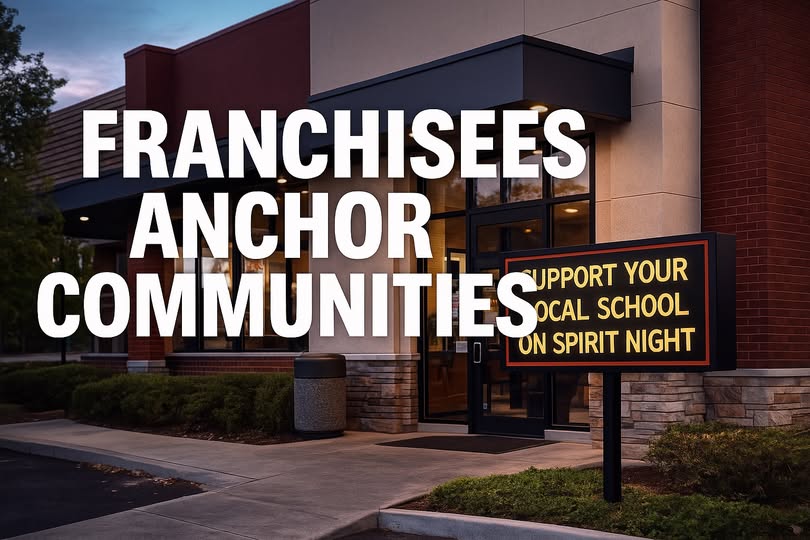
Franchise businesses play a powerful and often underappreciated role in strengthening local communities. Although people may think of franchising as something “big” or “corporate,” the reality is far more personal. Behind every franchised location is a local owner investing their own money, time, and energy into a business that supports the community where they live, work, and raise their family. This blend of nationally recognized systems with locally owned entrepreneurship creates a unique engine for economic impact, job creation, and community enrichment. It’s why franchise businesses deserve special recognition — especially on Small Business Saturday, when communities come together to support the businesses that keep their local economies vibrant.
Across the United States, franchise businesses serve as anchors within neighborhoods, providing accessible services, predictable quality, and trusted brands while still keeping ownership local. These businesses hire locally, train locally, spend locally, and most importantly, keep their dollars circulating within the community. A franchise owner’s revenue isn’t being extracted by some faraway corporate headquarters; instead, it is fueling local payrolls, supporting Little League sponsorships, providing job opportunities for students, parents, and second-chance workers, and generating tax revenue that supports public services. Franchisees become part of the fabric of the community, contributing not just as business operators but as neighbors and civic participants.
This local impact is exactly what the International Franchise Association seeks to highlight through its “Franchise Means Local” initiative. The message is simple but profound: franchise businesses may carry national logos, but their heart and soul sit squarely within the local community. Franchisees are small business owners. They are entrepreneurs. They are job creators. They are the ones unlocking doors at dawn, greeting customers by name, supporting school fundraisers, and stepping up when their community needs them. The “Franchise Means Local” initiative aims to break down misconceptions and shine a spotlight on how franchising bridges the strength of a proven system with the passion of local ownership.
Small Business Saturday provides the ideal moment to amplify this reality. Too often, well-known franchise brands are unintentionally overlooked in the celebration of small business, simply because they are part of a larger network. But Small Business Saturday was built to uplift entrepreneurs — and franchisees embody the entrepreneurial spirit as much as any independent business owner. Their investments are personal. Their risks are real. Their success depends on the support of their neighbors. And their contribution to the community is substantial.
Recognizing franchise businesses on Small Business Saturday sends a message that strengthens the entire entrepreneurial ecosystem. It reminds people that buying a coffee from a franchised café supports a local family. Picking up takeout from a franchised restaurant helps a local owner employ dozens of team members. Getting a haircut, working out at a fitness studio, or visiting a home-service provider that operates under a franchise brand supports local operators who depend on community loyalty. These everyday actions translate into meaningful community impact — especially during the holiday season when small businesses depend heavily on consumer traffic.
Beyond economic benefits, franchise businesses bring stability and opportunity to communities in ways that independent businesses may struggle to match. Proven business models help franchisees ramp up faster, operate more efficiently, and maintain consistent service standards. This helps consumers feel confident supporting these businesses, which in turn creates stronger customer loyalty and more sustainable local operations. This synergy is good for everyone. Franchisees benefit from the support of a national brand, and the community benefits from a stable and reliable local employer and service provider.
At the same time, franchised businesses often become training grounds for future entrepreneurs. Young people learn customer service, teamwork, management, and leadership skills within these local establishments. Many franchise owners began their careers as hourly employees before working their way up. In this way, franchising not only strengthens communities today but also shapes the next generation of business owners.
As Small Business Saturday approaches, communities have an opportunity to broaden their appreciation for what it truly means to support local business. Whether a business is independently owned or franchised, the common thread is the local owner who stands behind it. Franchisees are small business owners in every sense, and they deserve to be celebrated alongside their independent counterparts. Supporting a franchised business on Small Business Saturday is another way of investing in the strength, diversity, and economic resilience of your community.
Franchise businesses don’t just operate within a community — they enhance it, fuel it, and help define its identity. Their contributions ripple outward, creating economic stability, job opportunities, philanthropic support, and a sense of place that enriches local life. When we recognize franchise businesses on Small Business Saturday and embrace the spirit of the International Franchise Association’s “Franchise Means Local” initiative, we are doing more than supporting a business. We are strengthening the foundation of the American entrepreneurial experience and reaffirming the vital role that local owners — including franchisees — play in building thriving, resilient communities across the country.
About the Author
Paul Segreto brings over forty years of real-world experience in franchising, restaurants, and small business growth. Recognized as one of the Top 100 Global Franchise and Small Business Influencers, Paul is the driving voice behind Acceler8Success Café, a daily content platform that inspires and informs thousands of entrepreneurs nationwide. A passionate advocate for ethical leadership and sustainable growth, Paul has dedicated his career to helping founders, franchise executives, and entrepreneurial families achieve clarity, balance, and lasting success through purpose-driven action.
About Acceler8Success America
Acceler8Success America is a comprehensive business advisory and coaching platform dedicated to helping entrepreneurs, small business owners, and franchise professionals achieve The American Dream Accelerated.
Through a combination of strategic consulting, results-focused coaching, and empowering content, Acceler8Success America provides the tools, insights, and guidance needed to start, grow, and scale successfully in today’s fast-paced world.
With deep expertise in entrepreneurship, franchising, restaurants, and small business development, Acceler8Success America bridges experience and innovation, supporting current and aspiring entrepreneurs as they build sustainable businesses and lasting legacies across America.
This article continues the Celebrating Entrepreneurship series — each installment deliberately expanding the playbook forming in real time, one principle building upon the last. As we honor National Entrepreneurship Month, our exploration now turns from the emotional center of leadership toward the expectations that leadership must meet and continually exceed.
In the previous article, we explored the founder’s role as the emotional anchor — the steady presence that gives culture shape and meaning. But a brand does not live solely in the internal space of its people. A brand lives in the expectations of its customers. Today, customers do not evaluate experiences in isolation. Their standards are shaped by the best experiences they’ve ever had — anywhere.
This is why even the smallest restaurant or emerging franchise now competes with giants. Not in scale. In expectation.
Whether consciously or not, consumers compare every point of service, responsiveness, design, and reliability against companies like Apple and Amazon — two organizations that have redefined what it means to be effortless, intuitive, and thoughtfully engineered. Yet the lessons they offer are not about size, technology, or capital. They are about how decisions are made.
Apple does not lead through feature count or price advantage. It leads through coherence. From the tactile feel of a device to the layout of a store to the simple “Hello” that appears when a new product starts for the first time, everything is intentional. Apple understands that users do not remember the mechanics of an experience — they remember how it felt.
In contrast, restaurants and franchise brands often make the mistake of adding more: more menu items, more products, more messaging, more complexity. Apple teaches us the strategic power of removal. Remove clutter. Remove unnecessary variation. Remove friction. Remove anything that does not reinforce the emotional center of the brand. The company succeeds not by giving customers more to choose from, but by giving them less to think about.
A small restaurant can do the same. A franchise location can do the same. Not by copying Apple, but by practicing clarity as a daily discipline. Every brand can ask: what should this feel like, and what must be removed to ensure that feeling is never diluted?
If Apple elevates experience through design, Amazon elevates trust through reliability. Customers return to Amazon not because it surprises them, but because it does not surprise them. It shows up. It works. It delivers. Reliability, it turns out, is a form of hospitality.
Many restaurants and franchise brands focus so heavily on new promotions, specials, and campaigns that they unintentionally compromise consistency. Amazon reminds us that dependability is the true differentiator. Orders arrive when promised. Claims are resolved without friction. Prices are clear. Communication is steady. The customer never has to wonder. In restaurants, the same principle applies: the order is correct, the temperature is right, the cleanliness is consistent, the greeting is familiar, and the goodbye is sincere. No fanfare — just excellence as a rhythm.
The entrepreneur, especially in franchising and restaurants, must now operate with the understanding that customers do not lower expectations simply because a business is smaller. The playing field may be smaller, but the stakes are not. Assume the guest has experienced seamlessness somewhere else today. Assume they will notice any friction. Assume they desire clarity, ease, and welcome. And assume they will reward brands that deliver those things consistently.
This is not about copying Apple or Amazon. It is about adopting the mindset that excellence is expected, not exceptional. When Disney taught us the importance of choreographed experience, we learned the emotional side of disruption. When we examined leadership presence, we understood the human anchor of culture. Now, through Apple and Amazon, we uncover the next layer: experience must be both elevated and repeatable, thoughtful and dependable, human and precise.
This is how modern brands earn trust, loyalty, and advocacy — no matter their size.
We are not studying giants to imitate them. We are studying them to understand why they feel inevitable. The modern entrepreneur must learn to design experiences that feel intentional, to show up with consistency that feels reliable, and to lead in a manner that feels steady.
The next article in this series will explore how culture becomes transferable — the key to scaling meaning as brands expand from one location to many. Because the true test of entrepreneurship is not whether you can build something remarkable once, but whether that remarkability can be preserved when others begin building it with you.
About the Author
Paul Segreto brings over forty years of real-world experience in franchising, restaurants, and small business growth. Recognized as one of the Top 100 Global Franchise and Small Business Influencers, Paul is the driving voice behind Acceler8Success Café, a daily content platform that inspires and informs thousands of entrepreneurs nationwide. A passionate advocate for ethical leadership and sustainable growth, Paul has dedicated his career to helping founders, franchise executives, and entrepreneurial families achieve clarity, balance, and lasting success through purpose-driven action.
Ready to elevate your business or navigate today’s challenges with confidence? Connect directly with Paul at paul@acceler8success.com — because every success story begins with a meaningful conversation.
About Acceler8Success America
Acceler8Success America is a comprehensive business advisory and coaching platform dedicated to helping entrepreneurs, small business owners, and franchise professionals achieve The American Dream Accelerated.
Through a combination of strategic consulting, results-focused coaching, and empowering content, Acceler8Success America provides the tools, insights, and guidance needed to start, grow, and scale successfully in today’s fast-paced world.
With deep expertise in entrepreneurship, franchising, restaurants, and small business development, Acceler8Success America bridges experience and innovation — supporting current and aspiring entrepreneurs as they build sustainable businesses and lasting legacies across America.
This article is the second installment in the Celebrating Entrepreneurship series — a deliberate progression in thought and practice. Each article builds on the one before it, and by the conclusion, the collective work will stand as a playbook for the modern entrepreneur. It is both a tribute to entrepreneurial rigor and a meaningful acknowledgment of National Entrepreneurship Month — honoring those who build not only businesses, but experiences, communities, and lasting value.
Our last discussion explored disruption as a strategic act — not chaotic, but deliberate — the choice to challenge norms and create new outcomes. This installment extends that concept into operations. Because disruption, when sustained, is not fueled by inspiration alone; it requires precision.
And no brand demonstrates precision-driven disruption better than Disney.
The Disney Standard: Operational Precision as Emotional Experience
While the franchise and restaurant industries often speak of consistency, Disney practices something far more advanced: consistency as emotional engineering.
Disney does not simply aim to avoid mistakes. It aims to create moments worth remembering. It ensures that each interaction — no matter how routine — contributes to a larger narrative.
This is where the lesson for franchise and restaurant brands becomes clear:
Experience is the product.
The menu, the food, the décor, the signage, the service — these are artifacts. The memory is the outcome.
Most restaurants try to deliver accuracy. Disney delivers affection.
Most franchise systems strive for standardization. Disney strives for continuity of feeling.
This is why Disney can replicate magic at scale — daily, globally, seamlessly. It operates each day as if it were a two-minute drill, where every second matters and every detail contributes to victory.
The result does not look intense. The result looks effortless. That is the mark of mastery.
Relevance for Franchises and Restaurants
Franchise and restaurant brands live in a uniquely challenging environment:
• Multiple operators • Varied labor pools • Diverse customer demographics • High competition • Public visibility of every failure
Precision is not optional. Precision is survival.
But precision built around process alone becomes sterile. Precision built around experience becomes powerful.
This is where franchisors must pivot.
The shift looks like this:
• Employees → Hosts and ambassadors • Dining rooms → Atmospheres for belonging • Menu training → Story training • Operational checklists → Experience choreography • Consistency → Consistency with character
Franchisees do not simply run units. They steward meaning. They carry culture on their shoulders.
The restaurant counter is not the end of the journey. It is the stage.
How Disney Thinks — And How Franchises Can Apply It
Disney designs experiences around four foundational principles:
Purpose-first culture — everyone knows why they are there
Narrative-driven environments — the setting tells the story before anyone speaks
Human-centered performance — service is not task execution, but emotional presence
Operational choreography — details are intentional, practiced, measurable, and refined
Restaurant and franchise brands already have the structure. What is often missing is the story and the emotional expectation embedded into every action.
When teams know the purpose, the details become sacred. When the details become sacred, the experience becomes unforgettable.
The Playbook Continues
As the Celebrating Entrepreneurship series progresses, we are not simply exploring theory — we are constructing a framework for modern entrepreneurial leadership, especially in franchise and restaurant environments where scale makes culture harder, not easier.
What we are building together will serve as:
• A guide for founders • A compass for franchise executives • A mindset model for emerging restaurant brands • A reinforcement tool for franchisees stepping into leadership
Because the brands that endure will be those that deliver not just transactions, but reassurance, welcome, rhythm, familiarity, and meaning.
Disney shows us that magic is not mystical. It is operational excellence in service of emotional connection. It is process with soul.
And when a franchise or restaurant brand operates at that level — consistently, intentionally, humbly — disruption is no longer a strategy. It becomes the natural state of the brand.
About the Author
Paul Segreto brings over forty years of real-world experience in franchising, restaurants, and small business growth. Recognized as one of the Top 100 Global Franchise and Small Business Influencers, Paul is the driving voice behind Acceler8Success Café, a daily content platform that inspires and informs thousands of entrepreneurs nationwide. A passionate advocate for ethical leadership and sustainable growth, Paul has dedicated his career to helping founders, franchise executives, and entrepreneurial families achieve clarity, balance, and lasting success through purpose-driven action.
Ready to elevate your business or navigate today’s challenges with confidence? Connect directly with Paul at paul@acceler8success.com — because every success story begins with a meaningful conversation.
About Acceler8Success America
Acceler8Success America is a comprehensive business advisory and coaching platform dedicated to helping entrepreneurs, small business owners, and franchise professionals achieve The American Dream Accelerated.
Through a combination of strategic consulting, results-focused coaching, and empowering content, Acceler8Success America provides the tools, insights, and guidance needed to start, grow, and scale successfully in today’s fast-paced world.
With deep expertise in entrepreneurship, franchising, restaurants, and small business development, Acceler8Success America bridges experience and innovation — supporting current and aspiring entrepreneurs as they build sustainable businesses and lasting legacies across America.
Yesterday, I wrote about the importance of delivering positively memorable experiences — the kind that stay with guests long after the meal is over. Today, let’s take that a step further and build upon that premise by exploring how those experiences become the foundation for something even more powerful: loyalty.
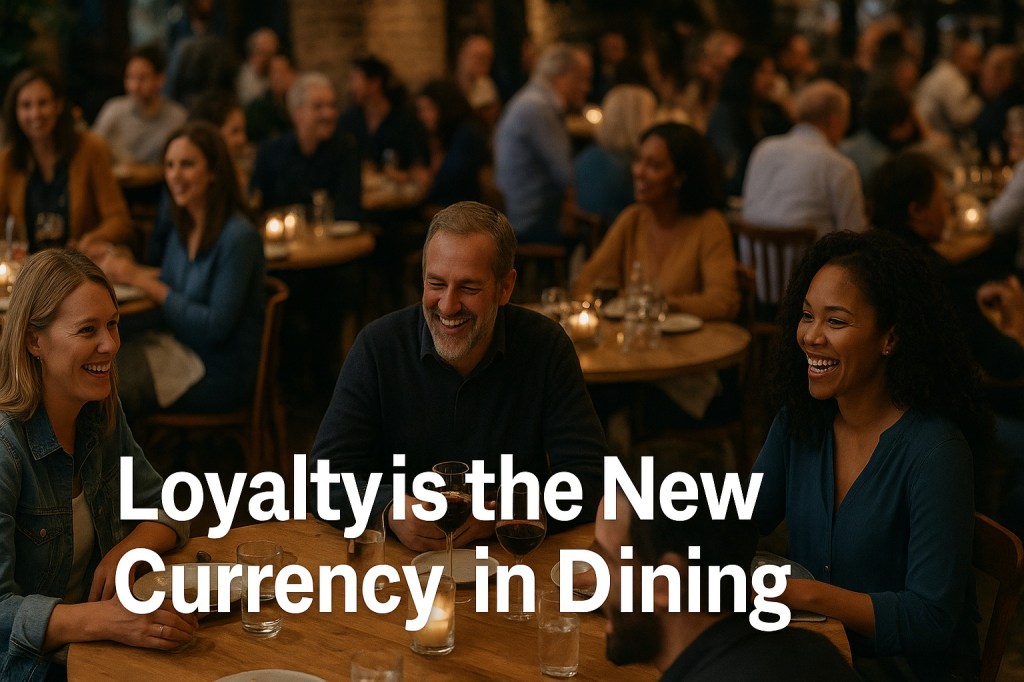
Loyalty isn’t just a strategy — it’s a philosophy. In the restaurant world, where countless establishments compete for attention and where closures continue to make headlines, the concept of loyalty can make the difference between surviving and thriving. When a restaurant builds a loyalty program grounded in genuinely positive and memorable experiences, it does more than reward visits — it creates lasting emotional connections that inspire customers to return again and again. Over time, those loyal guests become the foundation for consistent revenue, glowing reviews, and long-term brand strength.
At its core, a loyalty program is about relationships. It’s a structured way to say, “We value you. We remember you. We appreciate that you choose us.” While many operators mistakenly treat loyalty programs as discount systems or marketing gimmicks, the real opportunity lies in something deeper — turning customers into true fans through a combination of thoughtful rewards, personalized engagement, and consistently excellent service.
In the short term, a well-designed loyalty program drives repeat business almost immediately. Guests who sign up are more likely to come back within a shorter period, often spending more each time. When a customer knows they’re earning something tangible — points, special offers, or early access to new menu items — their visits feel more rewarding. Just as important, those repeat visits give the restaurant valuable insights: what customers love, what they order, and how often they return. That information fuels better decision-making, from menu design to promotional timing, allowing restaurants to meet guests where they are and exceed their expectations.
Those short-term returns evolve into powerful long-term benefits. Over time, loyalty members tend to spend more per visit, bring more friends, and actively refer others — often without being asked. A loyalty program creates built-in advocates who share their enthusiasm both in person and online. In fact, loyal customers consistently produce better reviews, higher star ratings, and more thoughtful feedback than non-members. Because they feel recognized and appreciated, they are naturally more inclined to praise the restaurant publicly, defend it privately, and recommend it passionately. Every positive review helps build credibility and attracts new guests who, in turn, can become loyal members themselves — creating a virtuous cycle of engagement and growth.
Loyalty programs also drive higher average check totals. Members tend to explore the menu more freely, adding appetizers, beverages, or desserts because they perceive greater value through their rewards. When executed properly, loyalty encourages indulgence without the feeling of overspending. The result is a sustainable lift in revenue without relying on constant deep discounts, which can erode profitability and cheapen brand perception over time.
Beyond the numbers, however, lies the emotional heart of loyalty — the guest experience. The best programs aren’t driven solely by points or perks but by the consistent delivery of experiences guests want to remember. When customers feel that they are treated like family — when servers remember their favorite drink, greet them by name, or simply show genuine appreciation — the loyalty program becomes more than a transactional tool. It becomes a symbol of belonging, a reflection of the restaurant’s culture, and proof that the brand values its relationship with guests as much as the revenue they bring in.
And that sense of belonging is especially powerful in today’s climate. With rising costs and restaurant closures continuing nationwide, diners are making more careful choices about where they spend their money. They want to support establishments that make them feel appreciated, where their loyalty is reciprocated with gratitude and consistency. They’d rather dine where they’re treated like gold — where every visit feels personal, every smile feels genuine, and every meal feels like coming home. That emotional connection not only drives repeat visits but also creates resilience. When challenges arise — a price increase, a service hiccup, or even a temporary closure — loyal customers tend to be more forgiving because they feel invested in the brand’s success.
The long-term effect is transformational. A strong loyalty base acts as a built-in marketing engine, reducing reliance on expensive advertising. Repeat customers cost far less to retain than new ones cost to acquire, and their lifetime value is significantly higher. Moreover, loyalty members’ behavior provides real-time insights that can shape everything from menu innovation to staffing and even location strategy. In essence, the loyalty program becomes both a retention tool and a research platform — one that continually refines the restaurant’s offering to meet evolving customer desires.
But the true magic happens when loyalty and experience intertwine. A guest who earns points for dining is pleased. A guest who earns points while being remembered, appreciated, and genuinely delighted — that guest becomes devoted. That’s how restaurants build emotional equity — through authentic moments that matter: a warm greeting, a personal thank-you, a small gesture of recognition that reinforces why they chose the restaurant in the first place.
In a world where customers have endless choices, loyalty gives them a reason not to look elsewhere. It reminds them why they fell in love with a restaurant to begin with. When backed by great food, genuine hospitality, and meaningful engagement, a loyalty program becomes much more than a marketing initiative. It becomes the heartbeat of the business — fueling repeat business, referrals, better reviews, higher sales, and above all, enduring relationships.
Ultimately, loyalty is not something that can be bought; it’s something that must be earned. And when a restaurant earns it, the rewards are endless — for the guest, for the staff, and for the brand itself. In a time when customers still want to dine out but crave familiarity and trust, loyalty rooted in memorable experiences is more than just smart business. It’s the future of hospitality — and the truest reflection of what it means to serve from the heart.
About the Author
Paul Segreto brings over forty years of real-world experience in franchising, restaurants, and small business growth. Recognized as one of the Top 100 Global Franchise and Small Business Influencers, Paul is the driving voice behind Acceler8Success Café, a daily content platform that inspires and informs thousands of entrepreneurs nationwide. A passionate advocate for ethical leadership and sustainable growth, Paul has dedicated his career to helping founders, franchise executives, and entrepreneurial families achieve clarity, balance, and lasting success through purpose-driven action.
Ready to elevate your business or navigate today’s challenges with confidence? Connect directly with Paul at paul@acceler8success.com — because every success story begins with a meaningful conversation.
About Acceler8Success America
Acceler8Success America is a comprehensive business advisory and coaching platform dedicated to helping entrepreneurs, small business owners, and franchise professionals achieve The American Dream Accelerated.
Through a combination of strategic consulting, results-focused coaching, and empowering content, Acceler8Success America provides the tools, insights, and guidance needed to start, grow, and scale successfully in today’s fast-paced world.
With deep expertise in entrepreneurship, franchising, restaurants, and small business development, Acceler8Success America bridges experience and innovation — supporting current and aspiring entrepreneurs as they build sustainable businesses and lasting legacies across America.
Discover More from Acceler8Success America
Continue your journey toward The American Dream Accelerated by exploring Paul’s other platforms — each designed to inspire, educate, and empower entrepreneurs at every stage:
Substack Newsletter: Exclusive articles exploring the personal journey behind achieving entrepreneurial success — subscribe at paulsegreto.substack.com
LinkedIn: Join thousands of professionals following Paul’s commentary and the Acceler8Success Café newsletter at linkedin.com/in/paulsegreto
Instagram, Facebook, and X: Follow for real-time thoughts, quotes, and stories from the entrepreneurial journey






You must be logged in to post a comment.