
Tag: Small Business

More Than Capital: Who Truly Fits Your Franchise System?

As a franchisor, one of the most critical questions you can ask yourself is this: Who is my ideal franchise candidate? The answer goes well beyond someone with available capital or interest in business ownership. It requires introspection into your brand’s standards, values, vision, mission, and customer promise. It requires clarity on the type of person who not only wants to join your system—but will thrive in it.

Think about your brand at its core. What does it stand for? Is it built on speed and efficiency, creativity and personalization, community and service, or luxury and exclusivity? Your franchise candidate must embody the spirit of the brand, not just wear the logo. They need to live and breathe what your brand delivers—day in and day out, not just during discovery day presentations or grand opening celebrations.

Culture plays a pivotal role. A franchise system is, in essence, a culture-driven ecosystem. Your ideal franchisee should be someone who integrates seamlessly into that ecosystem, upholding and championing brand standards while contributing positively to the greater network. If your brand is built around innovation, a candidate who resists change is a poor fit. If your success hinges on community involvement, someone uncomfortable stepping out from behind the counter won’t represent your values effectively.

It’s also vital to look beyond the brand and toward your end user—your customer. Your ideal candidate should be someone who naturally delivers a customer experience that reflects your brand promise. If you operate a family-oriented restaurant, the ideal franchisee likely thrives in hospitality, has strong people skills, and takes genuine pleasure in creating welcoming environments. If you’re in health and wellness, perhaps your best candidates are passionate about lifestyle improvement and personal transformation.

This is where mindset and skillset converge. You’re not just seeking operators; you’re seeking stewards of the brand. They must be able to lead a team, follow systems, make decisions, and adapt to market challenges. But they must also have a mindset grounded in accountability, brand loyalty, growth orientation, and a long-term vision—not just a desire for financial return.

Visualization is often underrated in the qualification process. The ideal franchisee is someone who can see themselves in the role—someone who doesn’t just think your concept is interesting, but someone who envisions managing the team, interacting with customers, solving daily operational challenges, and proudly representing the brand in their community. It’s not a stretch for them; it’s a natural extension of who they are.

So who is your ideal franchise candidate? They’re the person whose values echo your mission, whose skills align with operational demands, whose personality fits your culture, and whose energy enhances the customer experience. They’re someone who wakes up each day with pride in what your brand stands for and sees themselves as part of something greater than just one location.

The clearer you are about who that person is, the more effectively you can build a thriving franchise system—one strong brand ambassador at a time.

Make today a great day. Make it happen. Make it count!

About the Author

Paul Segreto brings over four decades of hands-on experience in franchising, restaurants, and small business development. A passionate advocate for entrepreneurship, Paul has guided countless individuals on their journey to success, whether they are established entrepreneurs or just beginning to explore the path of business ownership.

Named one of the Top 100 Global Franchise and Small Business Influencers, Paul is also the voice behind the Acceler8Success Cafe, a daily content platform where thousands of entrepreneurs gain insight and motivation. A lifelong advocate for ethical growth and brand integrity, Paul continues to coach founders, franchise leaders, and entrepreneurial families, helping them find clarity in chaos and long-term success through intentional leadership.

Ready to take your next step in business or looking for expert insight to overcome today’s challenges? Reach out directly to Paul at paul@acceler8success.com — your path to success may be one conversation away.

About Acceler8Success Group

Acceler8Success Group is a multifaceted business advisory platform committed to empowering entrepreneurs, small business owners, franchise professionals, and industry leaders through strategic consulting, coaching, and curated content.

With a strong focus on entrepreneurship, franchising, restaurants, and small business growth, Acceler8Success Group delivers actionable insights and real-world strategies across its suite of brands, including the following:

Acceler8Success,  FranchiseReclaim,  OwnABizness.com,  Accelerate Success Coaching,  Your Entrepreneurial Success, and relaunching soon, Franchise Foundry.

By blending deep industry expertise with a dynamic content ecosystem, Acceler8Success Group fosters sustainable success and responsible leadership for today’s innovators and tomorrow’s legacy builders.


The High Stakes of Restaurant Entrepreneurship: Passion Isn’t Enough

It’s often said that owning a restaurant is one of the toughest businesses to run. Margins are razor-thin, turnover is high, and just one bad week can spiral into disaster. Pair that with the relentless demands of entrepreneurship—the constant problem-solving, financial pressure, and emotional toll—and it becomes clear that operating a restaurant is not just a business; it’s a high-stakes balancing act. A game of inches, with little to no room for error.

Yet, despite the odds, restaurant ownership remains one of the most alluring pursuits in business. For many, it’s a passion project or a legacy dream. For others, it’s the promise of scalability and the excitement of building a brand people love. And remarkably, while countless restaurants barely scrape by or ultimately shutter their doors, there are operators—both independent owners and multi-unit franchisees—who are thriving. So how is it that one group fails while another finds extraordinary success in the very same industry?

The answer lies in execution, systems, mindset, and adaptation.

The Thin Line Between Success and Struggle

The restaurant business is unforgiving. Even the most promising concept can fail due to poor location, inadequate marketing, inconsistent service, or rising food and labor costs. It’s not just about great food or a trendy interior; it’s about managing hundreds of variables in real time, every single day. And for entrepreneurs entering the space with little industry experience or underestimating the demands of operations, the learning curve can be brutal.

Moreover, many independent operators fall into the trap of trying to do everything themselves. Passion alone cannot sustain a business without proper systems, cost controls, staff training, marketing strategy, and leadership. A lack of financial literacy or an emotional resistance to letting go of control can further compound the struggle. This is often where restaurant dreams go to die—not in lack of effort, but in lack of structure.

The Blueprint Behind Success

Successful operators approach the business differently. They don’t just work in their business; they work on it. They treat the restaurant not just as a passion project, but as a performance-based business model that must be monitored, measured, and optimized continuously.

These operators invest in:

  • Systems and Processes: From food prep to service protocols, consistency is king. Whether it’s a single-unit or a franchise, the most profitable restaurants run like clockwork because every task is streamlined and repeatable.
  • Financial Discipline: Successful restaurateurs know their numbers inside out. Food cost, labor percentage, average ticket size, customer acquisition cost—these metrics aren’t just tracked, they’re used to make daily decisions.
  • Leadership and Culture: High-performing teams don’t happen by accident. The best operators invest in training, create clear expectations, and foster a culture of accountability and growth. Employee turnover is expensive—top operators know how to build loyalty.
  • Scalability and Brand Consistency: For franchisees, success hinges on following a proven model. For independents, it’s about creating a brand that is scalable, from menu to marketing. The difference? Discipline versus chaos.
  • Adaptability: Consumer behavior shifts quickly—what worked three years ago may be obsolete today. The most successful operators are nimble. They embrace technology, optimize for takeout and delivery, leverage social media, and continually evolve their offerings.

Franchise vs. Independent: A Tale of Two Paths

Multi-unit franchise operators often succeed where others don’t because they start with a proven framework. Franchisors provide support in site selection, training, marketing, and operations, which helps reduce risk. But success is never guaranteed—franchisees must still execute at a high level. The most successful franchisees are those who treat each location as its own business while benefiting from the strength of the system.

On the other hand, independent operators have full creative control, but the lack of infrastructure can be a double-edged sword. The most successful independents know how to marry creativity with discipline. They build something unique, but also something operationally sound. Many of them become local legends, and a select few even evolve into franchise concepts themselves.

The Entrepreneur’s Mindset

At its core, restaurant ownership is entrepreneurship in its purest form. It’s about risk, reward, resilience, and relentless attention to detail. The wide spread between success and failure is often not about luck or location—it’s about mindset.

Successful restaurateurs are not just food lovers; they are leaders, data analysts, marketers, negotiators, and visionaries. They know when to pivot and when to double down. They stay curious, keep learning, and surround themselves with people who are smarter than they are in specific areas.

In contrast, those who struggle often do so in isolation, avoiding hard truths, resisting change, or failing to seek out mentorship and support.

In Conclusion

Owning a restaurant is not for the faint of heart. It demands an entrepreneurial spirit backed by discipline, strategy, and grit. The allure of restaurant ownership is real, but so is the risk. The wide spread between success and failure is not an accident—it’s the natural outcome of how well an operator understands and executes the business behind the dream.

So yes, it’s one of the hardest games in town—but for those who master it, the reward is not just profit. It’s legacy, impact, and a deeply satisfying sense of purpose.

Make today a great day. Make it happen. Make it count!

About the Author

Paul Segreto brings over four decades of hands-on experience in franchising, restaurants, and small business development. A passionate advocate for entrepreneurship, Paul has guided countless individuals on their journey to success, whether they are established entrepreneurs or just beginning to explore the path of business ownership.

Named one of the Top 100 Global Franchise and Small Business Influencers, Paul is also the voice behind the Acceler8Success Cafe, a daily content platform where thousands of entrepreneurs gain insight and motivation. A lifelong advocate for ethical growth and brand integrity, Paul continues to coach founders, franchise leaders, and entrepreneurial families, helping them find clarity in chaos and long-term success through intentional leadership.

Ready to take your next step in business or looking for expert insight to overcome today’s challenges? Reach out directly to Paul at paul@acceler8success.com — your path to success may be one conversation away.

About Acceler8Success Group

Acceler8Success Group is a multifaceted business advisory platform committed to empowering entrepreneurs, small business owners, franchise professionals, and industry leaders through strategic consulting, coaching, and curated content.

With a strong focus on entrepreneurship, franchising, restaurants, and small business growth, Acceler8Success Group delivers actionable insights and real-world strategies across its suite of brands, including the following:

Acceler8Success,  FranchiseReclaim,  OwnABizness.com,  Accelerate Success Coaching,  Your Entrepreneurial Success, and relaunching soon, Franchise Foundry.

By blending deep industry expertise with a dynamic content ecosystem, Acceler8Success Group fosters sustainable success and responsible leadership for today’s innovators and tomorrow’s legacy builders.

Strengthening the Foundation of Franchising: Why Developing People Matters More Than Just Building Processes

A well-structured franchise system is only as strong as the people behind it. While much is often said about systems, manuals, technology, and marketing programs, one of the most critical and sometimes overlooked components of a successful franchise organization is the team responsible for providing support to franchisees. These support personnel are the boots on the ground, the first line of defense, and often the most direct link between the franchisor and its franchisees. Their role extends well beyond technical expertise or knowledge of the brand’s products and services. It demands a high level of emotional intelligence, interpersonal skills, and a commitment to fostering trust and partnership.

Franchisors must be proactive in identifying, developing, and continually supporting individuals in these vital roles. It’s not enough to hire people who understand operations or sales. Effective franchise support requires a unique blend of personal and professional skills—qualities that should be nurtured just as rigorously as knowledge of systems or processes.

At the heart of franchisee support is communication. Strong verbal and written communication skills are essential for conveying ideas, delivering feedback, and diffusing tension. But communication is more than words—it’s about listening, empathizing, and understanding the perspectives and challenges that franchisees face. Support team members must be trained to listen actively, not just to respond, but to truly understand and help solve problems in a way that respects the franchisee’s point of view and circumstances.

Problem-solving and adaptability are also key. Support teams must be prepared to troubleshoot a wide array of issues—some operational, some personal, and many that fall somewhere in between. No two franchisees are the same, and no two situations are identical. A successful support team member must be able to adapt their approach, think on their feet, and help franchisees find workable solutions within the framework of the brand.

Patience and diplomacy cannot be overstated. Franchisees may become frustrated, especially during the early stages of operation or in times of economic or operational strain. Support personnel must remain composed and constructive, balancing empathy with accountability. It’s a delicate dance: upholding the brand’s standards while respecting the entrepreneurial spirit of the franchisee.

Equally important is emotional intelligence. The ability to read between the lines, detect when a franchisee is struggling even if they’re not saying it directly, and respond with the appropriate level of concern or guidance is what separates good support from great support. It’s about building relationships that go beyond checklists and compliance.

And finally, there’s a need for personal investment. Franchise support staff must be fully bought into the mission and values of the brand. When support team members believe in the vision of the franchisor and care about the success of each franchisee as if it were their own business, their passion becomes contagious and their efforts more impactful.

For franchisors, this means more than hiring for experience or training on technical topics. It requires the creation of a robust internal infrastructure to identify high-potential individuals, train them on both the hard and soft skills necessary for support roles, and offer them ongoing professional development and mentoring. This includes clear onboarding pathways, role-specific coaching, and leadership development tracks to retain and grow this essential talent.

Supporting the supporters is not optional—it’s foundational. When a franchisor makes a concerted effort to develop its support team, it enhances the franchise system’s ability to scale, adapt, and thrive. Franchisees—new and seasoned—are more likely to feel confident, connected, and capable when they know they’re backed by a knowledgeable and emotionally intelligent team that genuinely cares about their success.

A franchise system is a partnership, and like all great partnerships, it flourishes when people are empowered, understood, and equipped to support one another. That begins with the franchisor investing not just in systems, but in people.

Make today a great day. Make it happen. Make it count!

About the Author

Paul Segreto brings over four decades of hands-on experience in franchising, restaurants, and small business development. A passionate advocate for entrepreneurship, Paul has guided countless individuals on their journey to success, whether they are established entrepreneurs or just beginning to explore the path of business ownership.

Named one of the Top 100 Global Franchise and Small Business Influencers, Paul is also the voice behind the Acceler8Success Cafe, a daily content platform where thousands of entrepreneurs gain insight and motivation. A lifelong advocate for ethical growth and brand integrity, Paul continues to coach founders, franchise leaders, and entrepreneurial families, helping them find clarity in chaos and long-term success through intentional leadership.

Ready to take your next step in business or looking for expert insight to overcome today’s challenges? Reach out directly to Paul at paul@acceler8success.com — your path to success may be one conversation away.

About Acceler8Success Group

Acceler8Success Group is a multifaceted business advisory platform committed to empowering entrepreneurs, small business owners, franchise professionals, and industry leaders through strategic consulting, coaching, and curated content.

With a strong focus on entrepreneurship, franchising, restaurants, and small business growth, Acceler8Success Group delivers actionable insights and real-world strategies across its suite of brands, including the following:

Acceler8Success,  FranchiseReclaim,  OwnABizness.com,  Accelerate Success Coaching,  Your Entrepreneurial Success, and relaunching soon, Franchise Foundry.

By blending deep industry expertise with a dynamic content ecosystem, Acceler8Success Group fosters sustainable success and responsible leadership for today’s innovators and tomorrow’s legacy builders.
20 Reasons Not to Franchise Your Business (Until You’re Ready… Or Not!)

Franchising is often viewed as the ultimate badge of success for business owners. The idea of expanding rapidly with someone else’s capital while gaining brand recognition and market share is understandably attractive. But the truth is, franchising is not a shortcut to growth, nor is it a guaranteed path to fortune. In fact, for many business owners, it can become a burden — financially, emotionally, and operationally — if pursued prematurely or for the wrong reasons.

Before you take the leap into franchising, it’s essential to understand why you shouldn’t. These aren’t roadblocks meant to discourage ambition but rather reality checks that, when addressed, will either affirm your business is ready to scale or save you from a costly and painful detour. Below are 20 reasons why you should not attempt to franchise your business — at least not yet.

20 Reasons Why You Should Not Franchise Your Business

  1. Your Business Isn’t Profitable Enough
    If you aren’t consistently generating strong profits, there’s no business model to replicate, let alone sell to others.
  2. You Don’t Have Documented Systems
    Without clearly defined and repeatable operational procedures, your business can’t be taught — and franchising is, at its core, a teaching model.
  3. You Are the Business
    If your business relies heavily on your personal involvement, personality, or expertise, it’s not yet ready to be duplicated.
  4. You Don’t Understand Franchising
    Franchising isn’t just growth — it’s legal, operational, marketing, and support infrastructure with very specific responsibilities to franchisees.
  5. You’re Desperate for Capital
    Franchising should never be a Band-Aid for cash flow problems. You’re selling a business model, not just collecting franchise fees.
  6. Your Brand Isn’t Established
    Weak branding makes it hard to market and differentiate your franchise from others, leading to confusion or poor consumer reception.
  7. You Can’t Support Franchisees
    Without the infrastructure to provide training, marketing assistance, and ongoing support, your franchisees will struggle — and so will your brand.
  8. You Don’t Like Managing People
    Franchising involves managing relationships, solving disputes, and leading by influence, not command. If this doesn’t appeal to you, think twice.
  9. You’re Not Ready for Legal Compliance
    Franchise laws are strict, vary by state, and require specialized legal documentation and ongoing disclosures — a major commitment.
  10. You Don’t Have a Unique Selling Proposition
    If your concept isn’t truly different or better, why would someone invest their future into your business instead of starting their own?
  11. You Can’t Let Go
    Franchising requires letting others run your concept their way — within your system. Micromanagement doesn’t scale.
  12. Your Current Location Isn’t Strong Enough
    If your flagship store isn’t a well-oiled machine with strong customer reviews and a loyal base, it won’t serve as a convincing model.
  13. You Haven’t Tested in Multiple Markets
    A business that works in one neighborhood may not work in another. Proving adaptability across markets is crucial.
  14. You Lack Marketing & Sales Strategy
    You’ll need a strategy to attract franchisees, sell territories, and market the brand — and that takes time, talent, and money.
  15. You Underestimate the Cost
    Franchising costs more than most anticipate. From legal fees to training manuals, marketing, and franchisee support — it adds up fast.
  16. You’re Not Ready to Train Others
    Can you break down every role, process, and nuance into an understandable training program that others can replicate?
  17. You Don’t Have a Clear Vision
    Without a long-term roadmap for growth, brand standards, and expansion, you’ll struggle to lead a network of franchisees effectively.
  18. You Think Franchising Means Less Work
    The reality: franchising is more work, more responsibility, and less control — especially at the beginning.
  19. You Haven’t Considered Alternative Growth Models
    Franchising isn’t the only way to grow. Corporate-owned expansion might be more suitable.
  20. You’re Not Emotionally Ready
    Franchisees will challenge you, markets will shift, and expectations will rise. You must be resilient, strategic, and adaptable.

After the Reality Check: Rethink, Refocus, Rebuild

If several of these reasons resonated with you, that’s not a signal to give up — it’s a wake-up call to double down on strengthening your existing business. Use this pause to refine your systems, train your team, define your brand, test your concept in other locations, and build the infrastructure that can eventually support multiple units — franchised or not.

Going through this process may prove to be one of the best decisions you’ll ever make. Even if you ultimately decide not to franchise, your business will be stronger, more efficient, and better positioned to scale. You may discover that developing company-owned locations is a better fit. Or, after building a rock-solid foundation and developing the right support systems, you might find franchising to be the logical next step — one you’re finally ready for.

Either way, you win — because a well-built business is always the best growth strategy.

Make today a great day. Make it happen. Make it count!

About the Author

Paul Segreto brings over four decades of hands-on experience in franchising, restaurants, and small business development. A passionate advocate for entrepreneurship, Paul has guided countless individuals on their journey to success, whether they are established entrepreneurs or just beginning to explore the path of business ownership.

Named one of the Top 100 Global Franchise and Small Business Influencers, Paul is also the voice behind the Acceler8Success Cafe, a daily content platform where thousands of entrepreneurs gain insight and motivation. A lifelong advocate for ethical growth and brand integrity, Paul continues to coach founders, franchise leaders, and entrepreneurial families, helping them find clarity in chaos and long-term success through intentional leadership.

Ready to take your next step in business or looking for expert insight to overcome today’s challenges? Reach out directly to Paul at paul@acceler8success.com — your path to success may be one conversation away.

About Acceler8Success Group

Acceler8Success Group is a multifaceted business advisory platform committed to empowering entrepreneurs, small business owners, franchise professionals, and industry leaders through strategic consulting, coaching, and curated content.

With a strong focus on entrepreneurship, franchising, restaurants, and small business growth, Acceler8Success Group delivers actionable insights and real-world strategies across its suite of brands, including the following:

Acceler8Success,  FranchiseReclaim,  OwnABizness.com,  Accelerate Success Coaching,  Your Entrepreneurial Success, and relaunching soon, Franchise Foundry.

By blending deep industry expertise with a dynamic content ecosystem, Acceler8Success Group fosters sustainable success and responsible leadership for today’s innovators and tomorrow’s legacy builders.

Coaching vs. Managing: Why Today’s Franchisees Want More Than Just a Business Model

“High expectations are the key to everything.” That quote from Sam Walton doesn’t just describe the mindset of an extraordinary business leader—it defines the new generation of franchisees entering today’s marketplace. These aren’t just people looking for a job alternative or a second income stream. They are transitioning executives, business professionals, as well as entrepreneurs and legacy-builders with big dreams and even bigger standards. They’re investing with purpose and fully expect to succeed—not eventually, but intentionally, and at a high level.

For franchisors, this rise in ambition is not a burden. It’s an opportunity to raise the bar system-wide. When franchisees come in with high expectations, it drives innovation, sharpens operations, and improves results across the board. But those expectations must be matched with clarity, structure, and support. Otherwise, even the most promising partnerships can unravel.

Expectation Setting: The Foundation for High-Performance Franchising

Franchisors must understand that today’s franchisee expects transparency from day one. Glossy brochures and vague promises won’t cut it. They want to know exactly what the franchisor expects from them, and in turn, what they can count on in support, systems, and ongoing guidance. Setting this foundation early—before the agreement is signed—is not just about due diligence. It’s about trust.

Clear communication around operational standards, timelines, compliance obligations, and even revenue benchmarks must be established during the recruitment and onboarding process. When these standards are laid out plainly and reinforced often, they help prevent friction down the line.

But the conversation cannot be one-sided. It’s just as critical that franchisors understand what the franchisee expects from the opportunity. This is where a structured, introspective goal-setting process comes into play.

The Written Goal-Setting Exercise: Creating a Personal Roadmap

During onboarding, each new franchisee should be required—not encouraged, but required—to participate in a structured goal-setting session. This should be more than jotting down a few revenue targets. It’s a reflective and strategic exercise that defines their vision of success.

Franchisees should be prompted to articulate:

  • What are your personal and professional goals over the next 1, 3, and 5 years?
  • What does your business look like if you achieve these goals—number of employees, revenue, location count, community impact?
  • What does your life look like if these goals are met—freedom, income, family time, satisfaction?
  • What does your business and life look like if these goals are not met?
  • What expectations do you have of yourself, your team, and your franchisor?
  • What obstacles do you anticipate, and how will you respond to them?
  • What daily, weekly, and monthly habits will you commit to in order to stay on track?

The goal is not to intimidate or overwhelm the franchisee—it’s to help them get clear about what they’re building and why it matters. These written goals form the basis for a customized success plan and a powerful tool for accountability and coaching moving forward.

Elevating Onboarding: More Than Just Operations

Once the franchisee’s goals are articulated, onboarding takes on a different tone. Rather than just being about how to run the business, onboarding becomes a launchpad for leadership, personal development, and strategic alignment.

Franchisors should incorporate these goals into the training process. How does the brand’s system support the franchisee’s vision? What tools exist to help them get there? What data will they need to monitor progress?

This approach shifts onboarding from compliance to commitment. It becomes the first milestone in a business-building journey rather than a box to check.

Ongoing Support Must Be Structured, Personal, and Relational

The biggest mistake franchisors make is allowing support to become reactive. When field staff or corporate support teams only reach out when there’s a problem, the franchisee begins to view the relationship as transactional. Today’s high-expectation franchisees want something more—they want a partner who’s invested in their goals.

This is why the original goal-setting document is so important. It should become a living reference point during every check-in, quarterly review, or coaching call.

Support staff should be trained to ask:

  • How are you progressing toward your year-one goals?
  • Are your daily habits and team structure aligned with the outcomes you envisioned?
  • What’s changed since our last conversation, and how does that impact your roadmap?
  • Are there gaps in training, marketing, or staffing that we need to address to get you back on track?

These discussions turn accountability into empowerment. Instead of franchisees feeling like they’re being audited, they feel like they’re being supported in achieving something they’ve defined as important.

Technology, Tools, and Reporting: Enabling Franchisees to Take Ownership

Today’s franchisees are sophisticated. They expect digital dashboards, performance insights, real-time analytics, and operational tools that allow them to run lean and smart. But it’s not enough to have these tools—they must be integrated into the support framework.

Franchisors should connect key performance indicators directly to the goals the franchisee set early on. For instance:

  • If the franchisee’s goal was to reach $1M in revenue in Year 2, what KPIs matter most today?
  • How does labor efficiency, cost of goods, and local marketing ROI connect to that vision?
  • Is the franchisee being taught how to read these numbers and act on them effectively?

By connecting franchisee goals with performance metrics, franchisors elevate the conversation. It’s no longer about hitting arbitrary numbers. It’s about building a business that reflects the franchisee’s definition of success.

Coaching vs. Managing: A Cultural Shift

Franchisees don’t want to be managed—they want to be coached. This requires a cultural shift in how franchisors engage their networks. Field staff should not merely be auditors or trainers. They should be mentors, motivators, and accountability partners.

To support this, franchisors can create structured coaching programs that include:

  • Quarterly “goal reviews” based on the franchisee’s written roadmap
  • Peer mastermind groups to promote best practices and shared learning
  • Optional strategic planning retreats or workshops
  • Scorecards that blend financial, operational, and personal growth metrics

This level of engagement is what high-performing franchisees crave. It separates thriving franchise brands from those simply surviving.

Celebrate the Journey, Not Just the Destination

Every goal achieved should be celebrated. Franchisees want to feel seen and validated for their efforts. Recognize milestones—not just financial ones, but personal ones too. Did a franchisee finally promote a team member into management? Did they take their first real vacation in years? Did they give back to their community?

Celebrating wins reinforces the idea that the brand is aligned with the franchisee’s “why.” It deepens emotional connection and cultivates loyalty.

Likewise, when setbacks occur, returning to the original goal-setting exercise provides context. It helps the franchisee reassess, regroup, and recommit. It becomes a tool not of judgment, but of reflection and resilience.

Conclusion: Building a Brand Worth Investing In

Franchising is evolving. Today’s franchisees aren’t just looking for business opportunities. They’re looking for platforms that support their dreams, structures that foster their growth, and partners who believe in their potential.

By building a culture around goal-setting, structured support, strategic coaching, and personal accountability, franchisors can meet—and exceed—the high expectations of this new generation of operators.

And when done right, those expectations won’t just drive individual success. They’ll elevate the entire brand.

Because as Sam Walton wisely said, “High expectations are the key to everything.” In franchising, that key opens the door to transformation—for franchisees, for franchisors, and for the future of the business itself.

Make today a great day. Make it happen. Make it count!

About the Author

Paul Segreto brings over four decades of hands-on experience in franchising, restaurants, and small business development. A passionate advocate for entrepreneurship, Paul has guided countless individuals on their journey to success, whether they are established entrepreneurs or just beginning to explore the path of business ownership.

Named one of the Top 100 Global Franchise and Small Business Influencers, Paul is also the voice behind the Acceler8Success Cafe, a daily content platform where thousands of entrepreneurs gain insight and motivation. A lifelong advocate for ethical growth and brand integrity, Paul continues to coach founders, franchise leaders, and entrepreneurial families, helping them find clarity in chaos and long-term success through intentional leadership.

Ready to take your next step in business or looking for expert insight to overcome today’s challenges? Reach out directly to Paul at paul@acceler8success.com — your path to success may be one conversation away.

About Acceler8Success Group

Acceler8Success Group is a multifaceted business advisory platform committed to empowering entrepreneurs, small business owners, franchise professionals, and industry leaders through strategic consulting, coaching, and curated content.

With a strong focus on entrepreneurship, franchising, restaurants, and small business growth, Acceler8Success Group delivers actionable insights and real-world strategies across its suite of brands, including the following:

Acceler8Success,  FranchiseReclaim,  OwnABizness.com,  Accelerate Success Coaching,  Your Entrepreneurial Success, and relaunching soon, Franchise Foundry.

By blending deep industry expertise with a dynamic content ecosystem, Acceler8Success Group fosters sustainable success and responsible leadership for today’s innovators and tomorrow’s legacy builders.
Preserving Brand Integrity Across Multiple Locations: Why Consistency Is the Cornerstone of Sustainable Growth

For brand operators, whether in franchising, corporate chains, licensing, or joint ventures, maintaining the integrity of the business model is not a luxury—it’s a non-negotiable necessity. As a brand expands, what once was controlled by a founder or small team becomes a much broader system influenced by dozens or even hundreds of hands. With each additional location, the risks of dilution, misinterpretation, or outright deviation increase. And with them, the risks of brand erosion.

Brand integrity is not simply about logos and color palettes. It is the sum total of what the brand promises, delivers, and represents—strategically, operationally, and emotionally. It encompasses the business model that defines unit economics and customer value, the trade dress that creates instant recognition, and the trademark and logo that symbolize trust and familiarity. When all elements are in alignment, brand integrity reinforces itself, building momentum with every customer interaction. But when misaligned, each crack grows larger, threatening the foundation upon which the business is built.

The business model is where it begins. From product offerings to service procedures, pricing structure to profit margins, the model provides the blueprint. Every store or unit is a direct extension of this framework. When a store changes that model—perhaps by offering unauthorized menu items, using cheaper ingredients, or altering operating hours—it isn’t just tweaking a store-level tactic. It’s compromising the brand’s economic engine. Suddenly, customers experience inconsistency. Franchisees and store managers become confused about the rules. Investors start to worry that growth will lead to chaos, not scale.

Trade dress—interior design, signage, uniforms, layout, packaging—is more than aesthetics. It’s a system of visual and experiential cues that tell the customer they’re in the right place. A customer walking into one location should feel the same rhythm, tone, and sensory experience as they would in another city or state. When locations start to “personalize” beyond brand standards, that familiarity disappears. It can feel jarring and uncertain, and trust quietly begins to erode.

Then there’s the trademark and logo—the heart of legal brand identity. These elements are what customers see first and what they remember last. They carry with them the weight of every marketing campaign, every social media post, every earned review and recommendation. If unauthorized locations or loosely affiliated operators misuse the brand or adopt similar names and designs, not only is the customer confused, but the brand owner may lose exclusive rights to its most valuable asset. Failure to enforce trademark protections can lead to legal vulnerability and long-term devaluation of the brand itself.

All of this matters not only to customers but to every stakeholder. Employees rely on a consistent brand identity to understand what’s expected of them. When standards change from one location to another, morale drops, and turnover increases. Franchisees and investors count on the strength and uniformity of the brand to support their investment. If they see inconsistent enforcement or favoritism, confidence in leadership erodes. Suppliers structure pricing and logistics based on predictability. Deviations cause inefficiencies, cost overruns, and damaged partnerships. Lenders evaluate brand strength as a factor in loan decisions—especially in franchise systems where royalties, marketing funds, and average unit volumes are essential to repayment models.

But what happens when brand integrity is compromised?

The answer can be swift and devastating. Customers notice first. Inconsistent quality, altered menu offerings, different service approaches—they all signal a lack of control. Social media accelerates that perception. A single photo or bad review from a non-compliant location can go viral and tarnish the entire system. Disgruntled franchisees may use the brand’s failure to maintain standards as grounds for legal action—or worse, for departure. Expansion slows, especially in new markets where brand equity hasn’t yet been firmly established. Media attention may shift from positive growth stories to damage control narratives. And in worst-case scenarios, the brand implodes under the weight of its own inconsistency.

On the flip side, protecting brand integrity creates long-term strength. Consistency builds trust. Trust drives loyalty. Loyalty drives lifetime value and fuels word-of-mouth growth. From the moment a guest enters a location or sees a logo online, they expect reliability. That reliability doesn’t just reflect on a local store—it reflects on the entire brand. Operators who uphold that standard, who demand compliance, who audit performance, who correct deviations immediately, are investing in more than quality control. They’re investing in the brand’s future.

Ultimately, maintaining brand integrity is not about rigidity or stifling creativity. It’s about discipline, clarity, and commitment. It’s about recognizing that growth multiplies both opportunity and risk—and the only way to sustain that growth is through a unified brand that customers, partners, and team members can believe in without question.

Because when a brand becomes inconsistent, it becomes forgettable. But when it becomes consistent, it becomes unstoppable.

Make today a great day. Make it happen. Make it count!

About the Author

Paul Segreto brings over four decades of hands-on experience in franchising, restaurants, and small business development. A passionate advocate for entrepreneurship, Paul has guided countless individuals on their journey to success, whether they are established entrepreneurs or just beginning to explore the path of business ownership.

Named one of the Top 100 Global Franchise and Small Business Influencers, Paul is also the voice behind the Acceler8Success Cafe, a daily content platform where thousands of entrepreneurs gain insight and motivation. A lifelong advocate for ethical growth and brand integrity, Paul continues to coach founders, franchise leaders, and entrepreneurial families, helping them find clarity in chaos and long-term success through intentional leadership.

Ready to take your next step in business or looking for expert insight to overcome today’s challenges? Reach out directly to Paul at paul@acceler8success.com — your path to success may be one conversation away.

About Acceler8Success Group

Acceler8Success Group is a multifaceted business advisory platform committed to empowering entrepreneurs, small business owners, franchise professionals, and industry leaders through strategic consulting, coaching, and curated content.

With a strong focus on entrepreneurship, franchising, restaurants, and small business growth, Acceler8Success Group delivers actionable insights and real-world strategies across its suite of brands, including the following:

Acceler8Success,  FranchiseReclaim,  OwnABizness.com,  Accelerate Success Coaching,  Your Entrepreneurial Success, and relaunching soon, Franchise Foundry.

By blending deep industry expertise with a dynamic content ecosystem, Acceler8Success Group fosters sustainable success and responsible leadership for today’s innovators and tomorrow’s legacy builders.

Answering the Call: The Family Dynamic of Franchising

Most franchise locations, especially in food service, are open nearly every day of the week. They operate early mornings, late nights, weekends, and holidays — often when customers are most active. That’s the nature of the business. These long hours are where the brand’s promise is fulfilled, where customer experience is shaped, and where franchisees carry the weight of operations. Meanwhile, franchisor corporate offices typically function within standard business hours — Monday through Friday, nine to five. This contrast between storefront urgency and office routine creates a natural friction. And it raises a question that speaks directly to the heart of the franchisor-franchisee relationship: should weekend or late-night calls from franchisees — even to the founder or CEO — be answered?

It’s not a question of policy as much as one of values. Franchising at its best is like being part of a family. It’s personal. It’s close. It’s built on shared belief in the brand and mutual commitment to success. And in a family, if someone calls late at night, you pick up — not because it’s convenient, but because it matters. For many franchisees, especially those in the first wave of an emerging brand, the founder isn’t just an executive; they’re a mentor, a partner, and in some ways, a lifeline. These early franchisees often invested based on a personal relationship. They took a leap with a brand that’s still defining itself. That trust runs deep — and so do the expectations.

Answering that call, even at 2:15 a.m., can mean everything. It may not always be about solving a problem in the moment. Sometimes, it’s just about being there. The founder picking up shows solidarity, humility, and hands-on leadership. It communicates: “You’re not in this alone.” That single moment of responsiveness can reinforce the franchisee’s belief in the brand more than any email or training session ever could.

But constant availability comes at a cost. If every issue — large or small — finds its way to the founder’s phone, it’s not just a problem of bandwidth. It signals a system lacking infrastructure. Long-term, this creates dependency rather than empowerment. It also erodes the founder’s ability to lead strategically. A business built on constant crisis management can’t scale. The answer isn’t total availability or total avoidance. It’s thoughtful boundaries — built on structure, not silence.

Screening calls may feel cold, but when done through a clearly communicated support system — like after-hours reps or a triage protocol — it respects both the franchisee’s need for support and the franchisor’s need for focus. The key is clarity. Franchisees should know when and why a call will be answered immediately versus directed to the right channel. Emergencies shouldn’t be filtered. But frustrations that can wait until Monday shouldn’t dominate Sunday night.

At what point does calling the CEO become intrusive? When it becomes a habit rather than an exception. One call during a real crisis isn’t overstepping. It’s part of the relationship. But repeated calls that bypass the chain of support dilute the CEO’s role and risk blurring professional lines. The founder should remain visible, accessible, and present — but not as the default operator for every issue.

Responsible franchising isn’t just about legal compliance or operational excellence. It’s about relationships. That means showing up, even after hours — but also building systems that respect everyone’s time and role. The strongest brands find the balance. They answer the call when it matters most, but they also train their franchisees to thrive with the support structures in place. Because when trust is earned — not just promised — the family grows stronger.

Make today a great day. Make it happen. Make it count!

About the Author

Paul Segreto brings over four decades of hands-on experience in franchising, restaurants, and small business development. A passionate advocate for entrepreneurship, Paul has guided countless individuals on their journey to success, whether they are established entrepreneurs or just beginning to explore the path of business ownership.

Named one of the Top 100 Global Franchise and Small Business Influencers, Paul is also the voice behind the Acceler8Success Cafe, a daily content platform where thousands of entrepreneurs gain insight and motivation. A lifelong advocate for ethical growth and brand integrity, Paul continues to coach founders, franchise leaders, and entrepreneurial families, helping them find clarity in chaos and long-term success through intentional leadership.

Ready to take your next step in business or looking for expert insight to overcome today’s challenges? Reach out directly to Paul at paul@acceler8success.com — your path to success may be one conversation away.

About Acceler8Success Group

Acceler8Success Group is a multifaceted business advisory platform committed to empowering entrepreneurs, small business owners, franchise professionals, and industry leaders through strategic consulting, coaching, and curated content.

With a strong focus on entrepreneurship, franchising, restaurants, and small business growth, Acceler8Success Group delivers actionable insights and real-world strategies across its suite of brands, including the following: 

Acceler8Success,  FranchiseReclaim,  OwnABizness.com,  Accelerate Success Coaching,  Your Entrepreneurial Success, and relaunching soon, Franchise Foundry.

By blending deep industry expertise with a dynamic content ecosystem, Acceler8Success Group fosters sustainable success and responsible leadership for today’s innovators and tomorrow’s legacy builders.
Awarding Franchises to the Wrong Candidates: The Domino Effect That Can Topple a Brand

Too often, in the pursuit of growth, franchisors make the critical mistake of awarding franchises to individuals who are either undercapitalized or simply not qualified to operate within the structure of the business model. While the most immediate and obvious consequence is a failed franchise location, the damage runs far deeper—and wider.

When a franchisee struggles due to lack of capital, insufficient operational knowledge, or an inability to follow the system, the brand takes a direct hit. Their failure isn’t isolated; it ripples across the network. Other franchisees in the same market feel the immediate impact. They have to answer questions from customers, deal with increased skepticism from their own employees, and often face unfair comparisons. Even if they’re operating at a high level, the proximity to failure can dampen morale and performance.

Customer perception is even more fragile. A single location that provides subpar service, closes prematurely, or experiences obvious instability can taint the entire brand in the eyes of the public. Word spreads fast—especially in a connected, review-driven economy. Rumors and half-truths take on a life of their own. What starts as an isolated issue becomes a narrative: “That franchise is struggling.”

This same perception trickles into the minds of vendors and local lenders. If one franchisee defaults on payments, relationships strain for everyone. A vendor may tighten payment terms across the board. A bank may become hesitant to approve loans for new locations or for existing franchisees looking to expand. The performance of one franchisee can put the brakes on others’ growth.

Employees, both current and prospective, begin to question the stability of the brand. High turnover, reduced applicant pools, and a loss of confidence in the leadership of the brand can follow. Talent, especially at the unit level, becomes harder to attract and retain.

And then there’s the FDD. Closed locations must be documented. As more closures appear, red flags go up for prospective franchisees. Questions become tougher. Candidates take longer to decide—or walk away altogether. Growth slows. Leads dry up. And the franchisor is left spending more time explaining past mistakes than promoting the opportunity ahead.

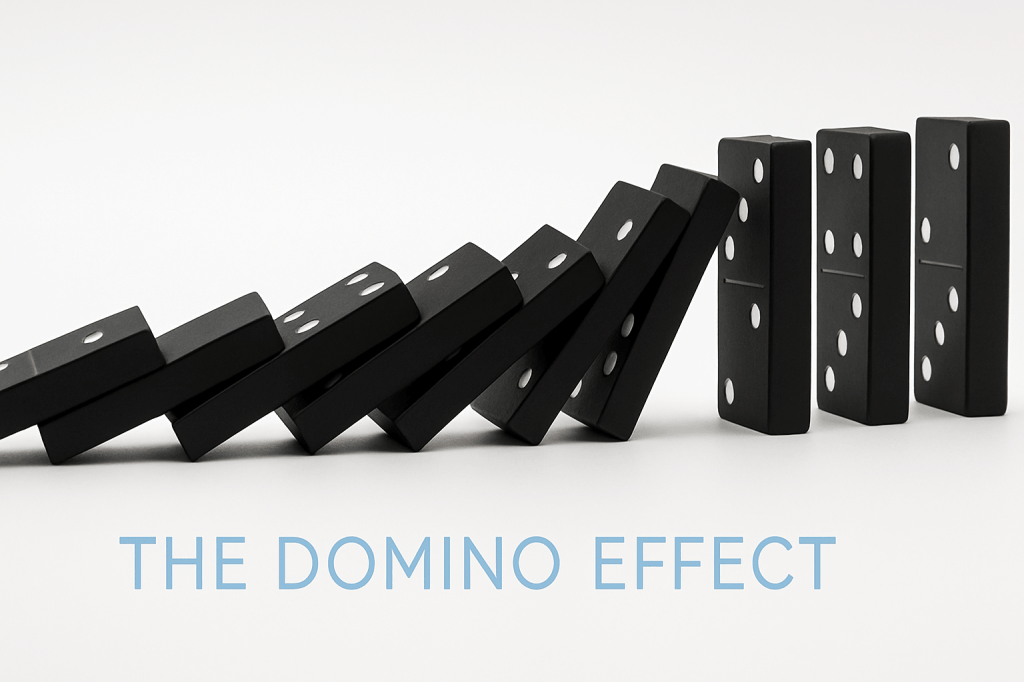
This is the domino effect of awarding franchises to the wrong people. It begins with one flawed decision and cascades across the entire system. Brand integrity erodes. System value diminishes. Culture weakens. What looked like growth on paper turns into contraction in reality.

It’s imperative that franchisors maintain discipline in their development efforts. Awarding a franchise should never be viewed as merely a sale. It’s a strategic investment in the long-term health of the system. Financial qualifications must be non-negotiable. Operational fit must be assessed with rigor. Personality, attitude, alignment with the brand’s values—all must be considered.

Every franchise awarded to the wrong candidate puts the entire system at risk. Franchisors must remember: it’s not about how fast the system grows—it’s about how strong it stands when growth is tested.

The future of the brand depends on every domino being carefully and thoughtfully placed. Because once they begin to fall, it’s much harder to stand them back up.

Make today a great day. Make it happen. Make it count!

About the Author

Paul Segreto brings over four decades of hands-on experience in franchising, restaurants, and small business development. A passionate advocate for entrepreneurship, Paul has guided countless individuals on their journey to success, whether they are established entrepreneurs or just beginning to explore the path of business ownership.

Named one of the Top 100 Global Franchise and Small Business Influencers, Paul is also the voice behind the Acceler8Success Cafe, a daily content platform where thousands of entrepreneurs gain insight and motivation. A lifelong advocate for ethical growth and brand integrity, Paul continues to coach founders, franchise leaders, and entrepreneurial families, helping them find clarity in chaos and long-term success through intentional leadership.

Ready to take your next step in business or looking for expert insight to overcome today’s challenges? Reach out directly to Paul at paul@acceler8success.com — your path to success may be one conversation away.

About Acceler8Success Group

Acceler8Success Group is a multifaceted business advisory platform committed to empowering entrepreneurs, small business owners, franchise professionals, and industry leaders through strategic consulting, coaching, and curated content.

With a strong focus on entrepreneurship, franchising, restaurants, and small business growth, Acceler8Success Group delivers actionable insights and real-world strategies across its suite of brands, including the following: 

Acceler8Success,  FranchiseReclaim,  OwnABizness.com,  Accelerate Success Coaching,  Your Entrepreneurial Success, and relaunching soon, Franchise Foundry.

By blending deep industry expertise with a dynamic content ecosystem, Acceler8Success Group fosters sustainable success and responsible leadership for today’s innovators and tomorrow’s legacy builders.
Franchising: A Mecca of Culture, Commerce, and Entrepreneurial Opportunity

Franchising is not merely a business strategy—it is a global cultural and economic phenomenon that transcends borders, industries, and individual goals. What began as a straightforward method to replicate business success has evolved into a dynamic and diverse ecosystem. Today, franchising represents an extraordinary range of industries, investment levels, business models, product and service offerings, and geographic reach. It unites the ambitions of entrepreneurs and the strategic growth objectives of brands, all under the unifying framework of the franchise relationship.

From neighborhood sandwich shops and fitness studios to senior care agencies, professional services, retail boutiques, and home improvement specialists, franchising touches nearly every corner of the economy. With thousands of brands operating in over 100 countries, and hundreds of thousands of individual franchise locations, the sheer scale of the franchising sector is a testament to its enduring relevance and adaptability.

At its core, franchising is built around a symbiotic relationship. The franchisor provides the brand, proven systems, operational support, and training. The franchisee contributes capital, sweat equity, local market knowledge, and the passion required to grow a business. This mutual exchange fosters entrepreneurial spirit while maintaining consistency and scalability—two hallmarks that make franchising unique.

The diversity within franchising is staggering. Investment levels range from a few thousand dollars for mobile or home-based operations to several million for hotel or full-service restaurant franchises. Some franchises offer owner-operator models ideal for first-time entrepreneurs seeking independence and hands-on involvement. Others cater to multi-unit operators, semi-absentee investors, or corporate portfolio builders seeking recurring revenue streams and long-term asset growth. Each model serves a different purpose and personality, offering a customized path to business ownership.

Geographically, franchising flourishes in large metropolitan areas, suburban neighborhoods, rural communities, and even internationally. The adaptability of franchising allows it to align with local consumer preferences while leveraging national or global brand recognition. Franchisors often fine-tune their models to fit various markets—from adjusting pricing and menu items in the food sector to creating scalable footprints for smaller towns and second-tier cities.

Franchising’s reach across industries further amplifies its cultural and economic impact. Quick-service restaurants may dominate public perception, but they are just the tip of the iceberg. Children’s education, health and wellness, automotive services, pet care, financial consulting, and technology solutions are all thriving sectors within franchising. This variety reflects modern consumer demands and creates opportunities for entrepreneurs with diverse passions, skill sets, and professional backgrounds.

But the heart of franchising lies in the human stories it cultivates. Immigrant entrepreneurs turn to franchising as a familiar, structured pathway into American business life. Military veterans find in it a system-driven model that mirrors their training and discipline. Families build generational wealth through legacy ownership. Millennials and Gen Zers, drawn to flexible models and digital engagement, redefine what franchise ownership looks like in the digital age.

Franchising also represents an evolving mindset. Today’s franchisors are not only looking to scale; they’re seeking alignment. The modern franchise relationship is built around shared values, vision, and purpose. Cultural fit, ethical growth, community impact, and responsible franchising practices have taken center stage. Franchisees are no longer just operators; they are brand ambassadors, local leaders, and partners in innovation.

The franchise community is vast, yet tightly interconnected. Trade shows, associations, and networking groups provide a hub of continuous learning and collaboration. Franchise-specific media and educational platforms fuel thought leadership and keep the ecosystem informed and inspired. From the International Franchise Association to regional expos, franchising is a culture that celebrates entrepreneurship and recognizes its power to transform lives.

As the landscape continues to evolve with new technologies, shifting consumer behaviors, and global challenges, franchising remains resilient and forward-thinking. It is a launchpad for dreams, a system for scaling success, and a cultural bridge across industries and borders.

In its truest form, franchising is not just about business—it’s about belonging to a vibrant, diverse community rooted in opportunity, empowerment, and shared success. A Mecca of culture and commerce, franchising stands as one of the most dynamic and inclusive paths to entrepreneurship in the world today.

Make today a great day. Make it happen. Make it count!

About the Author

Paul Segreto brings over four decades of hands-on experience in franchising, restaurants, and small business development. A passionate advocate for entrepreneurship, Paul has guided countless individuals on their journey to success, whether they are established entrepreneurs or just beginning to explore the path of business ownership.

Named one of the Top 100 Global Franchise and Small Business Influencers, Paul is also the voice behind the Acceler8Success Cafe, a daily content platform where thousands of entrepreneurs gain insight and motivation. A lifelong advocate for ethical growth and brand integrity, Paul continues to coach founders, franchise leaders, and entrepreneurial families, helping them find clarity in chaos and long-term success through intentional leadership.

Ready to take your next step in business or looking for expert insight to overcome today’s challenges? Reach out directly to Paul at paul@acceler8success.com — your path to success may be one conversation away.

About Acceler8Success Group

Acceler8Success Group is a multifaceted business advisory platform committed to empowering entrepreneurs, small business owners, franchise professionals, and industry leaders through strategic consulting, coaching, and curated content. With a strong focus on entrepreneurship, franchising, restaurants, and small business growth, Acceler8Success Group delivers actionable insights and real-world strategies across its suite of brands, including Acceler8SuccessFranchiseReclaimOwnABizness.comAccelerate Success CoachingYour Entrepreneurial Success, and relaunching soon, Franchise Foundry. By blending deep industry expertise with a dynamic content ecosystem, Acceler8Success Group fosters sustainable success and responsible leadership for today’s innovators and tomorrow’s legacy builders.

The Silent Weight: Why Franchise Founders Must Prioritize Mental Health

As we honor Mental Health Awareness Month, we’re reminded to check in with employees, franchisees, and their families. But there’s one voice that’s too often overlooked—the founder. The one who carries the dream, the brand, the vision, and the responsibility. The one who must make decisions not just for today, but for the legacy of tomorrow. When you’re the founder of a franchise brand, your mental health isn’t just about personal well-being. It’s a foundational pillar for everyone connected to your business.

Franchising magnifies the stakes. Every new franchise location represents a person or family who believed in the brand enough to invest their savings—often their life savings. Many times, they’ve brought along their partners, their kids, their closest friends, to share in the opportunity. A founder becomes more than a business leader. They become a mentor, a counselor, a beacon of hope. They become the glue that holds together an ecosystem of livelihoods, dreams, and futures.

The emotional weight of that role is staggering.

As a franchise grows, so does the pressure. Growth demands sharper decision-making, deeper strategy, and greater emotional resilience. A founder must lead franchisees through turbulent times, inspire teams through plateaus, and reassure stakeholders when things don’t go as planned. Every move is watched. Every word carries weight. And in the middle of it all, the founder is still human—subject to the same stress, anxiety, doubt, and emotional fatigue that any of us can experience.

That’s why mental health cannot be optional for founders. It must be proactive. It must be protected. And it must be supported.

Too often, the founder role is a lonely one. You’re expected to have all the answers. But when the questions start to pile up—when growth feels overwhelming, or challenges feel personal—it becomes essential to have someone to turn to. Not just a business advisor. Not just a therapist. But someone who embodies the best of several roles. Someone who listens without judgment, challenges without ego, encourages with empathy, and helps you laugh when you need it most.

Every founder should have a coach. A confidant. A therapist. A chaplain. Sometimes, that’s four different people. Sometimes, if you’re lucky, it’s one.

This person becomes your safe space. Someone who understands your vision and your vulnerabilities. Someone you don’t have to lead, pitch, or perform for. A sounding board. A truth-teller. A reminder that even leaders need to be led—gently, wisely, and with compassion.

They help in more than just business. They help with perspective. They help you slow down when you’re spinning too fast. They help you see through fog. They help you connect the dots between your personal well-being and the direction of your brand. Most of all, they help you be human again in a world that often expects you to be superhuman.

These relationships work best when they’re ongoing—not just called on in moments of crisis, but integrated into your rhythm. That could mean scheduled monthly strategy sessions. Informal coffee meetups. Walks. Late-night phone calls. Laughs over dinner. Venting during tough weeks. Celebrating milestones, both personal and professional. The best coaching relationships are rooted in trust and availability. They aren’t transactional—they’re transformational.

By investing in this kind of support, founders gain something invaluable: the ability to lead from a place of clarity, not chaos. And that changes everything.

Because when a founder is mentally healthy, the entire brand culture shifts. Communication improves. Decision-making becomes more grounded. Franchisees feel the ripple effect through better leadership, steadier guidance, and deeper support. And leadership teams are more likely to follow suit when they see mental health being prioritized from the top down.

Founders must give themselves permission to care for themselves—not after everything is solved, not once the next milestone is hit, but now. Mental well-being is not a luxury. It’s a necessity for anyone bearing the weight of other people’s futures.

In franchising, the collateral effect of leadership is enormous. Franchisees bring in their families, friends, and futures. The impact of your decisions reaches further than your P&L statement. That’s why your health—emotional, mental, spiritual—must be non-negotiable.

So this Mental Health Awareness Month, let this be a call to action for every founder out there: don’t carry the weight alone. Build your inner circle. Find your coach. Speak with your therapist. Confide in your chaplain. Laugh with your mentor. Because those who depend on you don’t just need your drive and vision—they need you at your best. And that starts with being whole, present, and supported.

Your mental health is not just about you. It’s about everyone counting on you. And they deserve a version of you who’s not just leading—but thriving.

Make today a great day. Make it happen. Make it count!

About the Author

Paul Segreto brings over four decades of hands-on experience in franchising, restaurants, and small business development. A passionate advocate for entrepreneurship, Paul has guided countless individuals on their journey to success, whether they are established entrepreneurs or just beginning to explore the path of business ownership.

Named one of the Top 100 Global Franchise and Small Business Influencers, Paul is also the voice behind the Acceler8Success Cafe, a daily content platform where thousands of entrepreneurs gain insight and motivation. A lifelong advocate for ethical growth and brand integrity, Paul continues to coach founders, franchise leaders, and entrepreneurial families, helping them find clarity in chaos and long-term success through intentional leadership.

Ready to take your next step in business or looking for expert insight to overcome today’s challenges? Reach out directly to Paul at paul@acceler8success.com — your path to success may be one conversation away.

About Acceler8Success Group

Acceler8Success Group is a multifaceted business advisory platform committed to empowering entrepreneurs, small business owners, franchise professionals, and industry leaders through strategic consulting, coaching, and curated content. With a strong focus on entrepreneurship, franchising, restaurants, and small business growth, Acceler8Success Group delivers actionable insights and real-world strategies across its suite of brands, including Acceler8Success, FranchiseReclaim, OwnABizness.com, Accelerate Success Coaching, Your Entrepreneurial Success, and relaunching soon, Franchise Foundry. By blending deep industry expertise with a dynamic content ecosystem, Acceler8Success Group fosters sustainable success and responsible leadership for today’s innovators and tomorrow’s legacy builders.