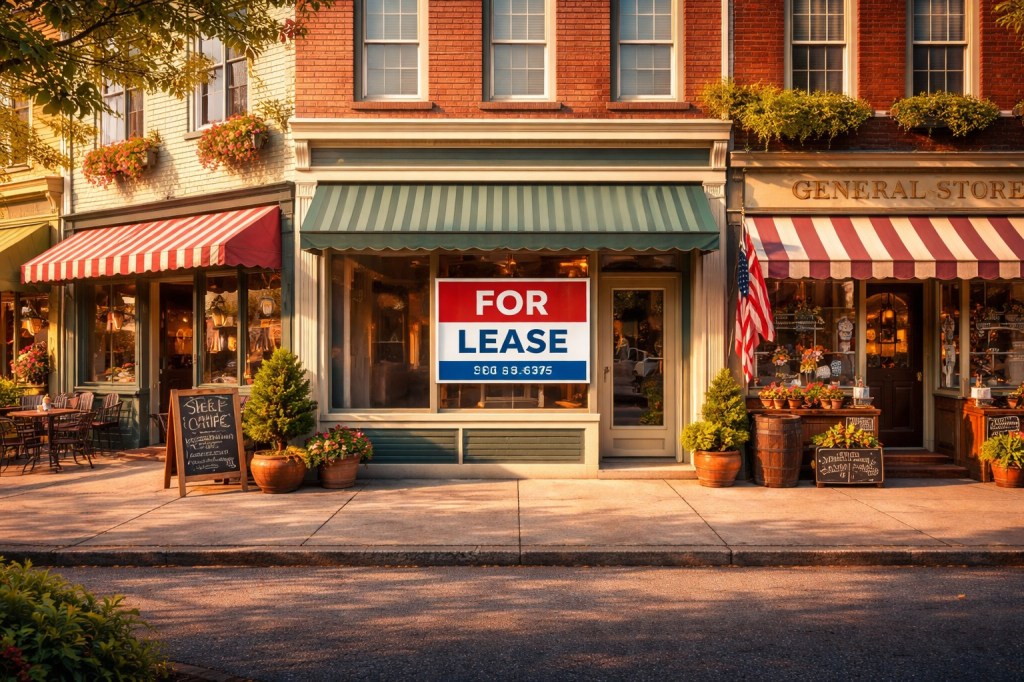
Across America, there is a renewed conversation taking place about the future of small towns. For decades, many rural communities and smaller municipalities have faced population decline, economic stagnation, and the slow erosion of their once vibrant Main Streets. Manufacturing jobs disappeared, younger generations migrated toward large cities, and locally owned businesses that had served communities for generations closed their doors. Yet today, a new wave of interest in small-town America is emerging. Remote work, lifestyle changes, housing affordability, and a renewed appreciation for community have sparked a shift in how people view smaller towns. As communities look for ways to rebuild their local economies, a compelling question arises. Can franchising play a meaningful role in small town revitalization without sacrificing the character and charm that make these places special?
Franchise brands have historically focused their expansion strategies on large metropolitan markets, high-traffic suburban corridors, and dense retail centers where population density ensures strong sales volumes. The traditional franchise development model often assumes certain market fundamentals: large trade areas, strong daytime populations, heavy traffic counts, and standardized store footprints that fit neatly into shopping centers or major retail corridors. Small towns rarely meet these conventional development criteria. Yet the economic potential of small-town America is significant, and for franchise brands willing to rethink their approach, these communities may represent one of the most meaningful growth opportunities ahead.
However, the opportunity is not simply to insert standardized franchise locations into small towns as though they were miniature versions of suburban markets. Doing so often creates resistance within the community and may even undermine the brand’s long-term success. Residents of small towns take pride in their local identity, their traditions, and the businesses that have historically served as gathering places for neighbors and families. When large corporate brands enter these markets without sensitivity to the local culture, they can be viewed as outsiders rather than contributors to the community fabric.
This is where a thoughtful shift in franchise strategy becomes important. Instead of viewing small towns as simply another market to penetrate, forward-thinking brands may find success by tailoring their concepts specifically for these environments. Doing so requires adjustments not only in real estate strategy but also in store design, operations, marketing, and ownership structure.
One of the most practical adaptations is the development of smaller footprint locations. In many small towns, the economics of a traditional 2,000 to 3,000 square foot restaurant or retail space may not make sense. Population density is lower, customer traffic patterns are different, and real estate opportunities often involve historic buildings, repurposed storefronts, or unique local spaces rather than standardized shopping centers. By designing smaller, more flexible footprints, franchise brands can reduce construction costs, lower rent obligations, and create spaces that better fit within the existing architectural character of a town’s Main Street.
These smaller formats can also encourage more personal customer interactions. In a small town, people often know one another. Customers may visit the same establishment several times per week, and business owners frequently develop strong relationships with their guests. A smaller, more intimate location aligns well with these community dynamics. Rather than feeling like a large corporate operation, the business can feel more like a neighborhood gathering place, which has always been a hallmark of successful small-town businesses.
This approach can extend beyond the physical space itself. Franchise brands entering smaller communities should consider adapting their exterior signage and storefront presentation so that it blends naturally with what already exists along Main Street. Instead of imposing oversized corporate signage that feels out of place among historic buildings, antique shops, and locally owned cafés, brands can thoughtfully scale signage, colors, and storefront design to complement the surrounding architecture and character of the town. When signage and design feel like they belong, the brand becomes part of the street rather than something imposed upon it.
Beyond the storefront, brand awareness should be built through local marketing efforts that reflect the rhythms of the community rather than relying solely on national campaigns. Participation in town events, sponsorship of local school programs or youth sports teams, support of community festivals, and collaboration with nearby businesses can help the brand quickly become part of the town’s daily life. Over time, the business is no longer seen as a national chain that arrived in town, but rather as a locally embraced establishment that contributes to the vitality and social fabric of the community.
Beyond the physical footprint, marketing and community engagement strategies should also reflect the values of small-town life. Traditional franchise marketing often relies heavily on national campaigns, standardized promotions, and corporate messaging. While these elements remain important for brand consistency, small-town locations benefit greatly from localized marketing that connects with community traditions, local events, and civic involvement.
Imagine a franchise restaurant that sponsors the local high school football team, hosts fundraisers for local charities, participates in town festivals, and collaborates with nearby farms or producers. These actions transform the business from a corporate brand into a genuine member of the community. The brand still benefits from its national identity and operational systems, but its local presence feels authentic rather than imposed.
Perhaps one of the most intriguing opportunities in small-town franchising lies in ownership structure. Historically, many small towns thrived because businesses were owned and operated by local families. These businesses were more than economic engines; they were institutions woven into the fabric of daily life. The owner often lived in the community, attended the same schools, supported the same churches, and participated in the same civic organizations as their customers. Their success was directly tied to the well-being of the town itself.
Franchising, when approached thoughtfully, can recreate this dynamic. Instead of relying primarily on large multi-unit operators or investor groups, franchise brands entering small towns could prioritize local ownership opportunities. Programs designed specifically for families or community members to own and operate their local franchise location could bring the spirit of traditional small-town entrepreneurship back into the equation.
In this model, the brand provides the systems, training, supply chain, and brand recognition that come with franchising. The local owner brings community knowledge, relationships, and personal commitment. The result is a hybrid that combines the operational strengths of franchising with the authenticity of locally owned businesses.
Such programs could include reduced franchise fees for qualifying local operators, flexible development agreements, or partnerships with local economic development agencies. Communities themselves often have strong incentives to attract businesses that will create jobs and stimulate economic activity without displacing the character of the town. When franchisors work collaboratively with local stakeholders, these initiatives can become powerful engines for revitalization.
There is also a broader economic development perspective worth considering. Small towns frequently struggle to attract outside investment because large corporations prefer markets with higher population densities. Yet franchise systems represent a unique bridge between local entrepreneurship and national business infrastructure. They allow communities to access proven business models without requiring massive corporate investment. When a locally owned franchise opens in a small town, it creates jobs, generates tax revenue, attracts visitors, and often stimulates additional nearby development.
At the same time, care must be taken to avoid overwhelming small communities with excessive or poorly planned commercial development. A thoughtful, measured approach ensures that new businesses complement existing ones rather than displace them. Franchise brands that respect the scale and culture of a town are far more likely to be welcomed and supported by residents.
The future of small-town revitalization will likely involve a blend of locally owned businesses, entrepreneurial startups, and carefully integrated franchise brands. When done correctly, franchising does not have to represent the invasion of corporate branding that many fear. Instead, it can serve as a modern evolution of the same entrepreneurial spirit that built small-town America in the first place.
The opportunity lies in rethinking how franchising fits within these communities. Smaller footprints, locally tailored marketing, signage that blends with Main Street architecture, family-based ownership opportunities, and genuine community engagement can transform franchise brands from outsiders into partners in revitalization. Rather than replacing the charm of small towns, franchising has the potential to help preserve and strengthen it.
Across America, countless small towns are searching for ways to restore their economic vitality while maintaining the identity that makes them unique. Franchise brands willing to adapt their models to these environments may find that the rewards extend far beyond simple expansion. They become part of a larger story—one in which entrepreneurship, community pride, and thoughtful development come together to breathe new life into the places that helped define the American experience.
The Quiet Comeback of Small Town America
If you are a franchisor, founder, or leadership team exploring ways to expand your development strategy beyond traditional markets, it may be time to start thinking differently about where and how your brand grows next. Small towns across America present unique opportunities for thoughtful expansion, but success requires creativity, flexibility, and a willingness to challenge conventional development models.
If you would like to explore these ideas further and discuss how franchise brands can rethink expansion strategies and uncover new opportunities by thinking outside the box, I welcome the conversation. Reach out to me directly at paul@acceler8success.com.

You must be logged in to post a comment.