Tag: Social Media

Why Customers Return: Ritual, Familiarity, and the Power of Being Known

This article continues the Celebrating Entrepreneurship series — each installment building toward a complete playbook for the modern entrepreneur in honor of National Entrepreneurship Month. So far, we’ve moved from disruption grounded in precision, to leadership presence, to transferable culture, to community belonging, and most recently, to creating anticipation that leads to opening-day excitement.

Now we arrive at the next stage in the entrepreneurial arc:

Opening day can create attention. But only consistency, connection, and meaning create enduring momentum.

A long line at a grand opening is the spark.

Sustained momentum is the fire that keeps the business alive, relevant, and valued — long after the ribbon is cut and the excitement fades.

Grand openings are emotional events.

Sustained success is a relational practice.

The Problem Most Brands Face After Opening Day

After the excitement fades, many restaurants and franchise locations experience a decline that feels inevitable:

• Customer visits normalize

• Energy stabilizes

• Word of mouth slows

• Team enthusiasm fades

• Community connection weakens

This is not because demand disappears.

It is because intentional momentum-building stops.

The brands that remain top-of-mind do not wait for customers to return.

They continue to show up.

The Lesson: Ritual Sustains What Excitement Begins

Excitement is temporary.

Ritual is permanent.

Starbucks does not depend on launch campaigns to fill stores every day.

It depends on ritual — the morning stop, the familiar barista, the drink that matches identity.

Local restaurants and franchise brands can do the same.

Not by imitation — but by repetition of emotional touchpoints.

Momentum is not sustained by newness.

It is sustained by familiarity.

Three Pillars of Post-Opening Momentum

1. Consistency in Experience

Guests return when:

• Quality is reliable

• Staff interactions feel personal

• The business feels “the same” in the best way

This is where the transferable culture we discussed in the last article becomes essential.

If opening-day service is warm and present — and week eight feels automated and indifferent — momentum dies.

Consistency is not repetition of procedure.

Consistency is repetition of care.

2. Community Engagement as Continuing Behavior

Brands that remain relevant do not disappear after opening weekend.

They embed themselves into the rhythm of the community.

Examples:

• Hosting school spirit nights

• Sponsoring youth teams

• Providing meeting space for local groups

• Donating meals to community organizations

• Showing up at farmers’ markets, festivals, and local gatherings

These actions are not marketing.

They are presence.

Presence creates familiarity.

Familiarity creates loyalty.

3. Fresh Moments Without Losing Identity

Sustaining momentum requires periodic bursts of renewed curiosity — without confusing the brand’s identity.

Think of:

• Limited-time specials that fit the brand

• Seasonal menu items that feel natural

• Customer appreciation days

• Events that highlight team members or regulars

These are not promotions.

These are invitations.

The brand remains recognizable, yet alive.

Examples of Momentum Maintainers

Dutch Bros.

Energy and personality stay consistent every visit.

The excitement at the window is replicated, not performed once.

Buffalo Wild Wings

Connection to sports culture creates repeating reason to return.

The brand ties itself to local ritual, not just food.

Local Main Street Diners That Last for Generations

They don’t chase customers.

They know customers.

They become part of life, not an occasional visit.

The Key Truth of Sustained Momentum

Opening day creates awareness.

Identity creates loyalty.

Rhythm creates permanence.

Momentum is not preserved by doing more.

It is preserved by doing what matters again, and again, and again.

Customers return not because they are reminded —

but because they are remembered.

The Playbook Expands

This series has now shown the entrepreneur how to:

• Disrupt through intention

• Lead through presence

• Meet modern consumer expectations

• Become essential to the community

• Scale culture across locations

• Build anticipation before opening

• And now, sustain momentum long after

Next in the series, we move from sustaining momentum to expanding opportunity:

How the best brands grow without losing identity — and how to decide when and where to grow.

Because growth, when done in alignment with meaning, becomes legacy.


About the Author

Paul Segreto brings over forty years of real-world experience in franchising, restaurants, and small business growth. Recognized as one of the Top 100 Global Franchise and Small Business Influencers, Paul is the driving voice behind Acceler8Success Café, a daily content platform that inspires and informs thousands of entrepreneurs nationwide. A passionate advocate for ethical leadership and sustainable growth, Paul has dedicated his career to helping founders, franchise executives, and entrepreneurial families achieve clarity, balance, and lasting success through purpose-driven action.

Ready to elevate your business or navigate today’s challenges with confidence? Connect directly with Paul at paul@acceler8success.com, because every success story begins with a meaningful conversation.


About Acceler8Success America

Acceler8Success America is a comprehensive business advisory and coaching platform dedicated to helping entrepreneurs, small business owners, and franchise professionals achieve The American Dream Accelerated.

Through a combination of strategic consulting, results-focused coaching, and empowering content, Acceler8Success America provides the tools, insights, and guidance needed to start, grow, and scale successfully in today’s fast-paced world.

With deep expertise in entrepreneurship, franchising, restaurants, and small business development, Acceler8Success America bridges experience and innovation, supporting current and aspiring entrepreneurs as they build sustainable businesses and lasting legacies across America.

Why Loyalty, Not Discounts, Will Save Restaurants in Tough Times

Yesterday, I wrote about the importance of delivering positively memorable experiences — the kind that stay with guests long after the meal is over. Today, let’s take that a step further and build upon that premise by exploring how those experiences become the foundation for something even more powerful: loyalty.

Loyalty isn’t just a strategy — it’s a philosophy. In the restaurant world, where countless establishments compete for attention and where closures continue to make headlines, the concept of loyalty can make the difference between surviving and thriving. When a restaurant builds a loyalty program grounded in genuinely positive and memorable experiences, it does more than reward visits — it creates lasting emotional connections that inspire customers to return again and again. Over time, those loyal guests become the foundation for consistent revenue, glowing reviews, and long-term brand strength.

At its core, a loyalty program is about relationships. It’s a structured way to say, “We value you. We remember you. We appreciate that you choose us.” While many operators mistakenly treat loyalty programs as discount systems or marketing gimmicks, the real opportunity lies in something deeper — turning customers into true fans through a combination of thoughtful rewards, personalized engagement, and consistently excellent service.

In the short term, a well-designed loyalty program drives repeat business almost immediately. Guests who sign up are more likely to come back within a shorter period, often spending more each time. When a customer knows they’re earning something tangible — points, special offers, or early access to new menu items — their visits feel more rewarding. Just as important, those repeat visits give the restaurant valuable insights: what customers love, what they order, and how often they return. That information fuels better decision-making, from menu design to promotional timing, allowing restaurants to meet guests where they are and exceed their expectations.

Those short-term returns evolve into powerful long-term benefits. Over time, loyalty members tend to spend more per visit, bring more friends, and actively refer others — often without being asked. A loyalty program creates built-in advocates who share their enthusiasm both in person and online. In fact, loyal customers consistently produce better reviews, higher star ratings, and more thoughtful feedback than non-members. Because they feel recognized and appreciated, they are naturally more inclined to praise the restaurant publicly, defend it privately, and recommend it passionately. Every positive review helps build credibility and attracts new guests who, in turn, can become loyal members themselves — creating a virtuous cycle of engagement and growth.

Loyalty programs also drive higher average check totals. Members tend to explore the menu more freely, adding appetizers, beverages, or desserts because they perceive greater value through their rewards. When executed properly, loyalty encourages indulgence without the feeling of overspending. The result is a sustainable lift in revenue without relying on constant deep discounts, which can erode profitability and cheapen brand perception over time.

Beyond the numbers, however, lies the emotional heart of loyalty — the guest experience. The best programs aren’t driven solely by points or perks but by the consistent delivery of experiences guests want to remember. When customers feel that they are treated like family — when servers remember their favorite drink, greet them by name, or simply show genuine appreciation — the loyalty program becomes more than a transactional tool. It becomes a symbol of belonging, a reflection of the restaurant’s culture, and proof that the brand values its relationship with guests as much as the revenue they bring in.

And that sense of belonging is especially powerful in today’s climate. With rising costs and restaurant closures continuing nationwide, diners are making more careful choices about where they spend their money. They want to support establishments that make them feel appreciated, where their loyalty is reciprocated with gratitude and consistency. They’d rather dine where they’re treated like gold — where every visit feels personal, every smile feels genuine, and every meal feels like coming home. That emotional connection not only drives repeat visits but also creates resilience. When challenges arise — a price increase, a service hiccup, or even a temporary closure — loyal customers tend to be more forgiving because they feel invested in the brand’s success.

The long-term effect is transformational. A strong loyalty base acts as a built-in marketing engine, reducing reliance on expensive advertising. Repeat customers cost far less to retain than new ones cost to acquire, and their lifetime value is significantly higher. Moreover, loyalty members’ behavior provides real-time insights that can shape everything from menu innovation to staffing and even location strategy. In essence, the loyalty program becomes both a retention tool and a research platform — one that continually refines the restaurant’s offering to meet evolving customer desires.

But the true magic happens when loyalty and experience intertwine. A guest who earns points for dining is pleased. A guest who earns points while being remembered, appreciated, and genuinely delighted — that guest becomes devoted. That’s how restaurants build emotional equity — through authentic moments that matter: a warm greeting, a personal thank-you, a small gesture of recognition that reinforces why they chose the restaurant in the first place.

In a world where customers have endless choices, loyalty gives them a reason not to look elsewhere. It reminds them why they fell in love with a restaurant to begin with. When backed by great food, genuine hospitality, and meaningful engagement, a loyalty program becomes much more than a marketing initiative. It becomes the heartbeat of the business — fueling repeat business, referrals, better reviews, higher sales, and above all, enduring relationships.

Ultimately, loyalty is not something that can be bought; it’s something that must be earned. And when a restaurant earns it, the rewards are endless — for the guest, for the staff, and for the brand itself. In a time when customers still want to dine out but crave familiarity and trust, loyalty rooted in memorable experiences is more than just smart business. It’s the future of hospitality — and the truest reflection of what it means to serve from the heart.


About the Author

Paul Segreto brings over forty years of real-world experience in franchising, restaurants, and small business growth. Recognized as one of the Top 100 Global Franchise and Small Business Influencers, Paul is the driving voice behind Acceler8Success Café, a daily content platform that inspires and informs thousands of entrepreneurs nationwide. A passionate advocate for ethical leadership and sustainable growth, Paul has dedicated his career to helping founders, franchise executives, and entrepreneurial families achieve clarity, balance, and lasting success through purpose-driven action.

Ready to elevate your business or navigate today’s challenges with confidence? Connect directly with Paul at paul@acceler8success.com — because every success story begins with a meaningful conversation.


About Acceler8Success America

Acceler8Success America is a comprehensive business advisory and coaching platform dedicated to helping entrepreneurs, small business owners, and franchise professionals achieve The American Dream Accelerated.

Through a combination of strategic consulting, results-focused coaching, and empowering content, Acceler8Success America provides the tools, insights, and guidance needed to start, grow, and scale successfully in today’s fast-paced world.

With deep expertise in entrepreneurship, franchising, restaurants, and small business development, Acceler8Success America bridges experience and innovation — supporting current and aspiring entrepreneurs as they build sustainable businesses and lasting legacies across America.


Discover More from Acceler8Success America

Continue your journey toward The American Dream Accelerated by exploring Paul’s other platforms — each designed to inspire, educate, and empower entrepreneurs at every stage:

  • Substack Newsletter: Exclusive articles exploring the personal journey behind achieving entrepreneurial success — subscribe at paulsegreto.substack.com
  • LinkedIn: Join thousands of professionals following Paul’s commentary and the Acceler8Success Café newsletter at linkedin.com/in/paulsegreto
  • InstagramFacebook, and X: Follow for real-time thoughts, quotes, and stories from the entrepreneurial journey
  • Acceler8Success America (Acceler8SuccessAmerica.com): Visit often for updates, events, and initiatives

Wherever you connect, you’ll find one consistent message — empowering entrepreneurs to succeed faster, smarter, and with greater purpose.

Authenticity and Consistency: The New Cornerstones of Franchise Growth

Consistent content creation is no longer optional in franchising; it is a strategic imperative. The modern franchisor operates in an ecosystem where attention is fragmented across dozens of platforms, trust is hard-earned, and decision-making—whether by a potential franchisee or a consumer—begins with what they read, watch, and hear online. Well-crafted, consistent content becomes the cornerstone for building brand awareness, strengthening credibility, and ultimately driving both franchise sales and consumer engagement.

Brand Awareness as a Foundation for Growth

For a franchisor, visibility equals opportunity. Franchise candidates are rarely influenced by a single advertisement; instead, they are drawn by the cumulative effect of steady, recognizable content that reinforces brand presence. Consistency ensures the brand is not only discoverable but memorable. When a franchise system maintains a reliable cadence of publishing articles, video stories, leadership insights, and industry commentary, it signals vitality, stability, and growth. Prospective franchisees evaluate not just financials but the vibrancy of a brand, and consistent communication demonstrates momentum.

Content as a Sales Accelerator for Franchise Development

Franchise recruitment is as much about narrative as it is about numbers. A Franchise Disclosure Document may outline legal and financial specifics, but it is the steady stream of stories—franchisee successes, operational innovations, community impact—that shapes candidate perception. Prospects are nurtured long before they speak to a development director. By encountering consistent, value-driven content across industry media, LinkedIn, and franchise opportunity platforms, candidates arrive at conversations already informed and predisposed to trust. Content, therefore, functions as an “always-on” sales accelerator.

Consumer Proposition and Market Trust

Equally critical, franchisors must continuously reinforce their consumer proposition. Today’s customers expect transparency, relatability, and consistency in tone. Whether a restaurant concept demonstrating menu innovation, a service franchise highlighting its role in communities, or a retail brand reinforcing lifestyle alignment, repeated messaging builds trust. For potential franchisees, this consumer trust is validation; a brand that resonates consistently with customers is one that can sustain their investment long-term.

Authenticity in the Age of AI

As artificial intelligence reshapes how information is created, distributed, and ranked in search results, authenticity has become paramount. AI-driven algorithms prioritize freshness, authority, and engagement, but they also increasingly filter for signals of human credibility. Franchise brands that rely too heavily on generic or automated content risk dilution, as audiences quickly discern between mass-produced material and content that reflects lived experience, leadership perspective, and genuine brand values.

Authenticity means more than avoiding “cookie-cutter” content. It requires franchisors to amplify real voices: franchisees sharing their entrepreneurial journey, executives offering candid insights, customers providing testimonials, and communities showcasing impact. This approach anchors the brand in reality at a time when AI-generated content often lacks nuance and emotional resonance. Moreover, authentic content helps future-proof the franchise’s digital presence: as search engines and AI-driven discovery tools evolve, they increasingly reward brands that demonstrate consistency, originality, and trustworthiness.

Multi-Channel Synergy

The real power of content emerges when it is strategically distributed across multiple channels, with each tailored to its audience while reinforcing a unified brand narrative:

  • Owned Channels: Blogs, newsletters, and corporate websites capture search visibility and build authority. They serve as a hub where long-form insights and cornerstone content can be repurposed elsewhere.
  • Social Media: LinkedIn for B2B franchise development, Instagram and TikTok for consumer engagement, and X for thought leadership amplify brand voice while building community and dialogue.
  • Video & Podcasts: Video spotlights and franchisor-hosted podcasts humanize leadership, deepen trust, and stand out in an increasingly visual, audio-driven content landscape.
  • Paid Media: Consistent organic content creates brand familiarity, dramatically increasing the ROI of targeted advertising campaigns.
  • Public Relations: Earned media placements and press releases validate authority and extend credibility beyond controlled channels.

The Benefits of Consistency and Authenticity

When consistency is paired with authenticity, content shifts from noise to narrative, delivering measurable benefits:

  • Credibility: Demonstrates operational discipline and leadership reliability.
  • Familiarity: Keeps the brand top-of-mind in both consumer and franchise candidate decision-making.
  • Engagement: Creates dialogue, not just impressions, across communities and platforms.
  • Conversion: Nurtures leads by steadily moving them from awareness to trust to action.
  • Defensibility: Positions the brand above the flood of generic AI content by rooting communication in authentic human stories.
  • Scalability: Provides a replicable framework for content creation that adapts to new markets and channels.

Strategic Imperative

In essence, consistent and authentic content is the connective tissue between franchise sales and consumer proposition. It bridges perception and reality, ensuring the brand is not just visible but believable. In an era where digital presence often precedes physical interaction—and where AI increasingly shapes how information is surfaced—franchisors who commit to disciplined, multi-channel, and authentic content strategies will achieve more than visibility. They will command authority, inspire trust, and create a sustainable competitive advantage that fuels both franchise development and consumer loyalty.

Make today a great day. Make it happen. Make it count.

About the Author

Paul Segreto brings over four decades of hands-on experience in franchising, restaurants, and small business development.

Named one of the Top 100 Global Franchise and Small Business Influencers, Paul is also the voice behind the Acceler8Success Cafe, a daily content platform where thousands of entrepreneurs gain insight and motivation. A lifelong advocate for ethical growth and brand integrity, Paul continues to coach founders, franchise leaders, and entrepreneurial families, helping them find clarity in chaos and long-term success through intentional leadership.

Looking to elevate your business or need expert guidance to navigate current challenges? Connect directly with Paul at paul@acceler8success.com — your next step starts with a conversation.

About Acceler8Success Group

Acceler8Success Group is a multifaceted business advisory platform committed to empowering entrepreneurs, small business owners, franchise professionals, and industry leaders through strategic consulting, coaching, and curated content.

With a strong focus on entrepreneurship, franchising, restaurants, and small business growth, Acceler8Success Group delivers actionable insights and real-world strategies across its suite of brands, including the following:

Acceler8Success,  FranchiseReclaim,  OwnABizness.com,  Accelerate Success Coaching,  Your Entrepreneurial Success, and relaunching soon, Franchise Foundry.

By blending deep industry expertise with a dynamic content ecosystem, Acceler8Success Group fosters sustainable success and responsible leadership for today’s innovators and tomorrow’s legacy builders.

Navigating Rough Waters: What Cracker Barrel’s Saga Teaches About Change

The current Cracker Barrel saga could easily fill weeks of conversation, dissection, and debate. Critics point to what feels like a decolonization of the brand, while others see it as a clumsy attempt to modernize. Every observer seems to have their own take, whether rooted in culture, nostalgia, or market positioning. Yet, if we strip away the noise and controversy, what remains are the fundamentals of business and brand management. These principles transcend industries, eras, and fads. They are the bedrock of how change must be approached, stewarded, and communicated.

At the core, business change is not about executives, consultants, or even investors—it is about customers. Always. A rebrand, a logo update, a new menu item, or a complete overhaul of brand identity cannot succeed unless it resonates with the people already walking through the door. Growth does not magically appear from strangers. It begins with cultivating repeat visits, deepening loyalty, and making existing customers feel like they are seen, heard, and valued. For a brand like Cracker Barrel, whose long history has been built on a sense of tradition, comfort, and community, this truth is even more pronounced. You cannot discard the very foundation upon which customers placed their trust and expect them to come along willingly.

Surveys, online engagement, and interactive ways to gather feedback must not be afterthoughts. They are essentials. Loyalty is not just a function of habit; it is earned over and over through inclusion and recognition. A loyal customer base doesn’t just buy the product; they buy into the story, the tradition, the experience, and the feeling. They must be invited into the process of change, not informed after the fact.

To illustrate, think of business as captaining a large ship. The captain’s primary responsibility is to protect the cargo—whether that cargo is physical goods, passengers, or in the case of a business, its reputation, stakeholders, and customers. No competent captain makes abrupt turns at full speed; the risk of capsizing is too great. Instead, direction is altered through long, subtle arcs—slow but steady, deliberate but protective. This is how brands, too, must navigate change. Abrupt pivots confuse employees, alienate customers, and destabilize everything a business has spent years building.

And yet, Cracker Barrel today is not sailing calm waters. The brand finds itself in stormy seas, caught between cultural headwinds, generational shifts in consumer preferences, and the rocky shoals of its own identity crisis. These rough waters are not temporary squalls—they are the new normal for legacy brands trying to remain relevant in an era of hyper-sensitivity, instant feedback, and shifting expectations. Cracker Barrel is learning the hard way that the stakes are higher than ever.

In such conditions, reckless moves or reactionary decisions are the fastest way to sink the ship. During storms, a captain must be deliberate and composed. Communication with the crew becomes paramount. Every hand on deck must know the plan, the purpose, and their role in keeping the ship afloat. Similarly, Cracker Barrel must ensure that employees understand not only what is changing but why it is changing. Ambiguity breeds doubt, and doubt quickly spreads to customers. Customers themselves must feel included, not blindsided. And stakeholders—investors, partners, and suppliers—must see evidence that decisions are strategic, not impulsive.

Change, by its very nature, is uncomfortable. It disrupts rhythms, challenges habits, and stirs emotions. But discomfort does not have to mean dysfunction. When change is handled with clarity, care, and respect, it can be embraced as necessary progress. When it is forced abruptly and without explanation, it becomes a source of division. At that point, it is not merely poor leadership—it is a dereliction of duty to the brand and all who rely upon it.

The challenge for Cracker Barrel—and for countless other businesses in similar positions—is one of balance. On one hand, brands cannot afford to chase every cultural trend or marketing fad, because doing so risks eroding the very essence that made them beloved in the first place. On the other hand, they cannot resist evolution entirely, clinging to nostalgia while the market passes them by. For Cracker Barrel, the challenge is heightened because its identity has always been tied to a particular sense of tradition and Americana. To alter that foundation too abruptly is to risk alienating the very customers who built its empire.

So where does that leave them? In a place where listening deeply becomes non-negotiable. Cracker Barrel, like any brand facing turbulent waters, must steer carefully and deliberately. The course cannot be dictated solely by executives in boardrooms or by consultants with PowerPoint decks. It must be informed by the voices of loyal customers who have made the brand what it is.

That means surveys, yes—but more importantly, it means genuine engagement. Inviting feedback online. Creating campaigns that make customers feel like participants in the story rather than spectators. Offering small but meaningful opportunities for them to feel their influence on the future direction of the brand. When customers feel included, they are far more likely to forgive missteps, weather changes, and even defend the brand in times of controversy.

The seas ahead for Cracker Barrel will not calm quickly. The cultural debates surrounding its identity will continue, and competitors will happily seize any opportunity to attract disillusioned customers. But there is still a path forward—if the brand remembers the fundamentals. Communicate openly. Include customers in the journey. Empower employees to become ambassadors of the change rather than victims of it. And above all, stay true to the essence of what Cracker Barrel means to those who have kept its doors open for decades: comfort, familiarity, and a sense of home.

In the end, a brand’s greatest risk is not in staying the same or in changing too much—it is in forgetting who it serves. For Cracker Barrel, the waters ahead may be rough, but the course forward remains the same: listen, include, communicate, and navigate with care. Otherwise, the very ship you are steering may be the one you sink.

Op-Ed: Cracker Barrel Didn’t Need a Makeover—It Needed to Honor Its Past and Embrace the Next Generation

Make today a great day. Make it happen. Make it count.

About the Author

Paul Segreto brings over four decades of hands-on experience in franchising, restaurants, and small business development.

Named one of the Top 100 Global Franchise and Small Business Influencers, Paul is also the voice behind the Acceler8Success Cafe, a daily content platform where thousands of entrepreneurs gain insight and motivation. A lifelong advocate for ethical growth and brand integrity, Paul continues to coach founders, franchise leaders, and entrepreneurial families, helping them find clarity in chaos and long-term success through intentional leadership.

Looking to elevate your business or need expert guidance to navigate current challenges? Connect directly with Paul at paul@acceler8success.com — your next step starts with a conversation.

About Acceler8Success Group

Acceler8Success Group is a multifaceted business advisory platform committed to empowering entrepreneurs, small business owners, franchise professionals, and industry leaders through strategic consulting, coaching, and curated content.

With a strong focus on entrepreneurship, franchising, restaurants, and small business growth, Acceler8Success Group delivers actionable insights and real-world strategies across its suite of brands, including the following:

Acceler8Success,  FranchiseReclaim,  OwnABizness.com,  Accelerate Success Coaching,  Your Entrepreneurial Success, and relaunching soon, Franchise Foundry.

By blending deep industry expertise with a dynamic content ecosystem, Acceler8Success Group fosters sustainable success and responsible leadership for today’s innovators and tomorrow’s legacy builders.

Share Your Voice, Inspire Others: Contribute to Acceler8Success Cafe

Acceler8Success Cafe Content Submission Guidelines

Are you creating content about entrepreneurship, franchising, restaurants & hospitality, or small business? Whether you’re sharing lessons from your journey, offering insights into operations, or providing practical resources, Acceler8Success Cafe is your platform to be heard—with full creation credit and no cost to you.

We’re inviting contributors to join our mission of educating, inspiring, and empowering current and aspiring entrepreneurs through content that reflects the real-world challenges and triumphs of business ownership.

What We’re Looking For

We welcome original or republished content that fits one or more of the following themes:

  • Entrepreneurship & startup journeys
  • Franchising insights & development strategies
  • Restaurant and hospitality operations & trends
  • Small business tips, marketing, and growth
  • Leadership, mindset, and personal development
  • Lessons learned, best practices, or case studies

Types of Content Accepted:

  • Articles or blog posts
  • Infographics or visuals
  • Short-form videos or reels
  • Podcast episodes or audio snippets
  • Thoughtful social media posts or threads
  • Brand stories and founder interviews

Submission Guidelines

  • Content should educate, inform, or inspire our audience of entrepreneurs and business leaders.
  • Keep written content between 500–1,200 words when possible. Shorter or longer pieces will be considered if highly engaging or visual.
  • Include your name, company (if applicable), and social media handles for proper credit and tagging.
  • You may include links back to your website or blog for additional exposure.
  • Content must be your own or properly credited if co-created or repurposed.

How to Submit

Email your content or pitch directly to paul@acceler8success.com, or send a message on LinkedIn to Paul Segreto. Please attach files or include links to hosted content (Google Drive, Dropbox, YouTube, etc.).

What to Expect

  • Submissions are reviewed for quality and alignment with our mission.
  • While there’s no compensation, you will receive full credit and visibility across our platforms.
  • We share content via Acceler8SuccessCafe.com and our extended social media network.
  • We may lightly edit for grammar, clarity, or formatting. We’ll reach out for approval if edits are substantial.

Final Notes

All content is subject to editorial approval. We’re happy to collaborate on adjustments to make your piece ready for publication. Our goal is to help amplify your voice and provide value to our readers and followers.

Explore our archive of over 1,400 published features at Acceler8SuccessCafe.com to get a feel for the platform—and imagine how your voice could contribute to this growing collection of entrepreneurial insight.

Let’s build something impactful together.

Transforming Your Business with the Disney and Apple Mindset

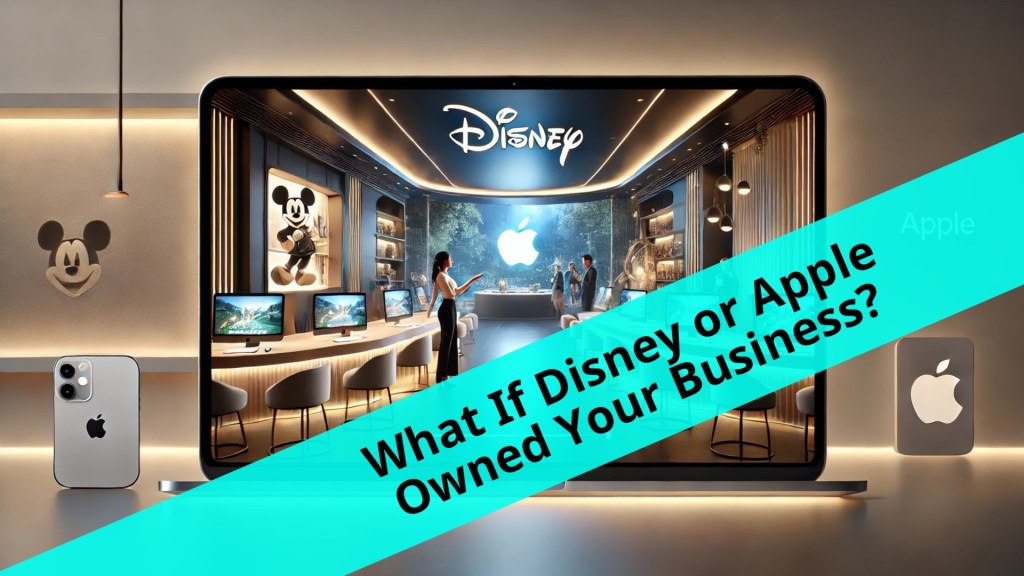
Disclaimer: The images in this article were developed using AI to visually represent the concept of a business inspired by Disney and Apple. These AI-generated visuals are not real-world depictions but are intended to provoke thought and inspire possibilities. Just as Disney and Apple push the boundaries of innovation and imagination, AI serves as a tool to help visualize what a business could become when built with an obsessive focus on excellence, customer experience, and attention to detail.

If Disney or Apple owned your business, how would every customer interaction, process, and detail transform to create an unforgettable experience?

Two companies stand out when it comes to delivering positively memorable experiences. Disney and Apple have set the benchmark for customer experience, attention to detail, and brand loyalty. Their success is not just about the products or services they offer but how they have built cultures that embrace excellence, consistency, and emotional connection. If a business—whether in retail, service, or the restaurant industry—were to operate under the same principles as Disney or Apple, it would require a deep commitment to a customer-centric philosophy and a relentless pursuit of perfection in every aspect.

At the foundation of such an approach is culture. Disney and Apple have strong, well-defined cultures that guide their employees’ actions, behaviors, and decisions. A business looking to replicate this must first establish core values that define the brand’s essence and mission. These values should be ingrained in every employee, starting from the hiring process. Employees must be selected not just for their skills but for their alignment with the company’s philosophy. Training is an ongoing effort, not just an onboarding event. Employees must be empowered to make decisions that enhance the customer experience without waiting for managerial approval. This level of trust and autonomy ensures that service remains seamless and consistently exceeds expectations.

Processes and procedures play a crucial role in maintaining a standard of excellence. Every customer touchpoint must be carefully analyzed, designed, and refined to ensure a frictionless and enjoyable experience. This means reducing complexities, eliminating unnecessary steps, and predicting customer needs before they even arise. Apple stores, for example, are designed with a clear and intentional flow, allowing customers to engage with products freely and interact with knowledgeable employees rather than feeling pressured by sales tactics. Disney’s theme parks follow a strict operational design that minimizes wait times and ensures guests are immersed in magic at every turn. A business following this model must create systems that make interactions effortless, whether it’s a streamlined checkout process, intuitive service flow, or personalized engagement.

Branding must go beyond logos and colors to become a fully immersive experience. Both Disney and Apple have mastered the art of creating emotional connections with their audiences. Every touchpoint, from advertising to physical environments to digital interactions, must tell a cohesive story that resonates with the customer. A business aspiring to this level of excellence must consider how its brand is perceived at every level. It should have a clear brand promise and ensure that every experience lives up to that promise. Consistency is key. Customers should receive the same level of service and engagement regardless of location, time, or platform. This requires meticulous training, well-defined brand standards, and a leadership team committed to enforcing those standards.

“Do what you do so well that they will want to see it again and bring their friends.” – Walt Disney

The customer experience should be designed around emotional impact. Disney’s magic is rooted in storytelling and immersive experiences. Apple’s genius lies in simplicity, elegance, and an almost obsessive attention to detail. A business that adopts this approach must consider how it makes customers feel. Every detail, no matter how small, contributes to the overall perception. The physical space must be welcoming, intuitive, and engaging. Service interactions must be warm, knowledgeable, and proactive. Digital experiences must be seamless and user-friendly. Every aspect of the business must be engineered to delight and surprise, fostering a sense of loyalty and advocacy.

Technology should be leveraged to enhance, not replace, human interaction. Apple uses technology to create effortless customer journeys, from mobile checkouts to personalized recommendations. Disney incorporates technology to elevate guest experiences, whether through mobile apps, interactive attractions, or seamless payment systems. A business adopting this mindset must embrace technology as a tool for personalization, efficiency, and engagement. It should not be implemented for the sake of innovation alone but with the intent of making customer interactions more intuitive and meaningful.

“Be a yardstick of quality. Some people aren’t used to an environment where excellence is expected.” – Steve Jobs

Marketing and community engagement must reflect the brand’s core values. Disney and Apple do not simply sell products; they sell a vision, a feeling, a lifestyle. Their marketing efforts are aspirational, focusing on what customers can experience, achieve, or become. A business that follows this model must craft messaging that goes beyond features and benefits to tap into human emotion. It must create a community around the brand, fostering deep connections through storytelling, exclusivity, and authenticity. Social media, content marketing, and public relations should all align to create a seamless narrative that reinforces the brand’s identity.

The leadership team must embody the brand’s values at every level. It is not enough to create a mission statement and expect employees to follow it. Leaders must set the example, demonstrating the same level of commitment to excellence and customer focus that they expect from their teams. They must be involved in the details, actively participating in the customer experience and constantly refining processes to improve them. They must also foster a culture of innovation, encouraging employees to challenge norms, bring forth new ideas, and contribute to the evolution of the brand.

A business operating with the mindset of Disney or Apple must be unwavering in its commitment to excellence, from the way employees are trained to the way products and services are delivered. Every detail matters. Every experience should be designed with the customer in mind. The brand should not just be a company that sells products or services, but an entity that customers trust, admire, and connect with on a deeper level. Those who master this approach do not just attract customers; they create lifelong brand advocates who return time and time again, not just for what they buy but for the way it makes them feel.

So, with a Disney and Apple mindset, what steps can/will you take to make positively memorable experiences an unrelenting passion and as such, a reality in your business?

Make today a great day. Make it happen. Make it count!

About the Author

With more than 40 years of experience in small business, restaurant, and franchise management, marketing, and development, Paul Segreto is a respected expert in the entrepreneurial world, dedicated to helping others achieve success. Whether you’re an aspiring or current entrepreneur in need of guidance, support, or simply a conversation, you can connect with Paul at paul@acceler8success.com.

About Acceler8Success Group

Acceler8Success Group empowers entrepreneurs and business leaders with personalized coaching, strategic guidance, and a results-driven approach. Whether launching, scaling, or optimizing a business, we provide the tools, mentorship, and resources to drive long-term success.

Why Storytelling is Your Most Powerful Marketing Tool as an Entrepreneur

Storytelling has always been one of the most profound ways humans connect with one another. Since ancient times, stories have been used to educate, inspire, and bring people together. In the world of entrepreneurship, storytelling has emerged as more than just an art form—it is one of the most powerful marketing tools at your disposal. Whether you are launching a startup, growing your small business, or scaling an established enterprise, storytelling can transform the way you connect with your audience and set your brand apart in a crowded marketplace.

At its core, storytelling is about making connections. It turns your business from a faceless entity into a relatable, approachable force that customers can trust. People don’t just buy products or services; they buy experiences, emotions, and solutions to their problems. By weaving your business into a narrative that resonates with your audience, you create an emotional bond that goes far beyond transactional interactions.

For entrepreneurs, storytelling provides a platform to share the “why” behind your business. Why did you start this journey? What inspired you to solve a particular problem? What challenges have you faced along the way? These questions form the foundation of your story. When shared authentically, they reveal the humanity behind the business—a critical element in building trust and loyalty.

Storytelling also has the power to differentiate your brand. In today’s competitive markets, there are countless businesses offering similar products and services. What sets your business apart? Your story is your unique selling point. Competitors might replicate your pricing, features, or even marketing strategies, but they cannot replicate the authenticity of your journey. Sharing your story allows you to carve out a distinctive identity that resonates with your target audience.

Furthermore, storytelling fosters a sense of community. Customers are not just passive consumers—they want to feel like they are part of something bigger. When your brand narrative aligns with your audience’s values, aspirations, and experiences, they become emotionally invested. They aren’t just buying from you; they’re joining your mission and contributing to the continuation of your story.

In the digital age, the avenues for storytelling are endless. Social media platforms, blogs, podcasts, and video content provide unparalleled opportunities to bring your story to life. A behind-the-scenes video about your business operations, a heartfelt blog post about overcoming obstacles, or a podcast episode discussing your industry insights can all draw people into your world. Each medium allows you to engage with your audience on a deeper level, bringing them closer to your brand.

Effective storytelling is also a driver of action. Stories have a unique ability to inspire. When people hear about the passion, dedication, and perseverance that fuel your business, they are more likely to support you. A powerful story can turn casual observers into loyal customers and enthusiastic advocates. It’s not just about selling a product—it’s about making people feel like they’re part of something meaningful.

Consider some of the most iconic brands in the world. Companies like Apple, Nike, and Tesla have built their empires not just on innovative products but on the strength of their stories. They’ve mastered the art of connecting emotionally with their customers by sharing compelling narratives of innovation, perseverance, and empowerment. As an entrepreneur, you can do the same, no matter the size of your business or the industry you operate in.

To leverage storytelling effectively, authenticity is key. Audiences today are incredibly savvy—they can sense inauthenticity from a mile away. Stay true to your values and be genuine about your journey. Share both your successes and your struggles. Don’t be afraid to show vulnerability. In doing so, you create a narrative that feels real and relatable.

It’s also important to align your story with your audience. Know who they are, what they value, and what challenges they face. Craft your narrative to reflect those shared experiences and aspirations. The more your audience sees themselves in your story, the stronger the connection you’ll build.

To put a fine point on this, storytelling is not a one-time effort; it’s an ongoing process. Your business is always evolving, and so is your story. Share your milestones, celebrate your wins, and let your audience see the growth and transformation of your journey. Keep them engaged by making them feel like they’re a part of your success.

In a world overflowing with information and competing brands, storytelling allows you to rise above the noise. It creates a lasting impression, builds trust, and transforms customers into advocates. For entrepreneurs, it’s more than just a marketing tool—it’s the bridge that connects your vision with the hearts of your audience. Embrace the power of storytelling, and watch how it transforms your business into a brand that people truly care about.

Make today a great day. Make it happen. Make it count!

About the Author

With more than 40 years of experience in small business, restaurant, and franchise management, marketing, and development, Paul Segreto is a respected expert in the entrepreneurial world, dedicated to helping others achieve success. Whether you’re an aspiring or current entrepreneur in need of guidance, support, or simply a conversation, you can connect with Paul at paul@acceler8success.com.

Four Steps to Social Media Success

Share Interact Engage

Updated January 11, 2017

A year or so ago, there was a great article shared with me about things we can learn from teens about about social media. To me, the article was spot-on. Point blank, the reason teens are better at social media than, well, anybody, is answered directly in the article as follows:

“Because teens aren’t on social media to promote or sell. They’re there for 1 main reason… To be social!”

The article reaffirmed some things in my mind about social media that we at Franchise Foundry execute on for both our franchise development and accelerated digital strategies clients, but many companies haven’t even begun to do, are afraid to and/or have no clue how to do. One thing in particular is integration across platforms. Another is community-building. And, another is avoiding brand regurgitation making sure to be social and to make it about the audience, not just about the brand.

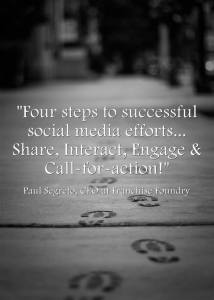
The key, the true key is that businesses (and marketers) view social media solely as marketing while teens look at it as communicating (sharing information, interacting, engaging… developing the relationship whereby asking for something, a call-for-action, if you will, is normal to the relationship, it is not out of sync, it is not overstepping boundaries, it is not selfish – instead, it is earned! Yes, these are my four steps to social media success – share, interact, engage and then, only then have your earned the right for a call-to-action… and together they are quite effective as they’re all about communicating first, marketing second.

Social Networking & Franchise Lead Generation Revisited

In light of discussions at this year’s International Franchise Association Convention about “new” ways of generating franchise candidate leads, and as I continue to field an influx of questions from start up and emerging franchisors trying to find a “silver bullet” to jump-start franchise sales, I am again sharing the following article I wrote back in 2011 as the principles continue to apply to this day. Actually, they may apply even more today as more and more have adopted social networking platforms as major sources of securing information and for communicating.

Social Networking and Lead Generation

We’re often asked if social networking can be utilized effectively for franchise lead generation purposes. Well, the answer is a resounding, “Yes!”

When working on a lead generation project, establishing objectives is paramount to the success of the overall strategy. Assuming the strategy has been developed, complete with establishing an ideal candidate profile and identifying specific geographic areas for expansion, we typically proceed as follows:

First, we focus on networking groups that include individuals that best fit our client’s ideal candidate profile. From there we drill down to individuals in the geographic area we’re targeting per our plan. Let’s say teachers fit my candidate profile. we would search out networking groups specific to teachers, education, etc. Then, we would participate in discussion groups to get a feel for the group and to be noticed and subsequently accepted within the group. There’s always a spin one could use to achieve this objective.

Next, we seek out members from the specific geographic areas we’re targeting and begin communicating what we’re ultimately trying to accomplish… to generate interest in a specific franchise opportunity. Sometimes there’s interest right there in the group. Often, it’s a referral that we get that makes the effort within that group worthwhile.

We also focus on groups that can provide me with referrals such as insurance agents, realtors, financial planners and attorneys. Again, if you’re proactive within networking groups it’s relatively easy to enlist support and gather information. Again, there has been some interest from members of these groups but it’s amazing how many times we’ve been referred to an interested party who lives in another part of the country that is willing to jump at an opportunity in my target area. You see, the fact that it stems from a referral is key!

Lead generation through social networking takes time and effort no doubt. However, once you’re proactive within networking groups, you almost end up with a snowball effect as the leads come in bunches. Some leads start out by simply posting a thought provoking discussion with some back and forth interaction with a responder and the responder saying,”what is it that you do?” Next thing you know, you’re discussing an opportunity and the door is wide open.

Most times however, it takes considerably more effort, but we’ve found people are networking online and participating in discussion groups for specific reasons. They’re all looking to expand their business, improve their position, seek out various types of opportunities, and make money. Attracting these individuals online sure beats running an ad in the local paper and waiting for the phone to ring!

Franchise Social Media – Beyond the Basics [REVISITED]

The following is an updated article that was originally posted on several sites online including Franchising.com and in-part right here in this blog. As social media continues to be a significant component of a franchise brand’s digital footprint and an essential element in direct or complementary franchise development efforts, I thought it prudent to update and re-post accordingly.

What is Franchise Social Media?

blog-mcdonalds_mom_bloggersBasically, Franchise Social Media is more than just social media. It’s the application and utilization of social media within a franchise system. Sure, many of the same principles apply, but franchising is different than most small business models. It’s unique in many ways beyond the typical B2B or B2C model. There are specific disclosure laws that are a major part of the franchise candidate recruitment process. Even from a consumer proposition standpoint, the integrity of the entire franchise organization must be considered. And, one cannot discuss social media in a franchise environment without touching upon guidelines, policies and procedures, and brand uniformity.

So, Franchise Social Media is how social media is utilized to not only fit within the various levels of franchising, messaging and content must be considered. It must be integrated within processes and methods across and within all franchise marketing and development efforts. Certainly, utilizing social media within franchising is more than just asking an administrative assistant to set up Facebook, Twitter and Google+ accounts and post and tweet away; especially, without a purpose or specific objective, and definitely not without a well-defined plan of action.

Despite what many marketing professionals believe, Franchise Social Media must be more than what is defined and implemented across most small business segments. The interdependency of the franchise relationship, the franchise dynamic, if you will, must be considered and focused upon as a social media plan is put into action. At all times, the question, “How does today’s activity affect others within the organization?” must be on the forefront of administrators’ minds as they post, tweet, connect, and engage every day! A simple mistake can send a ripple effect throughout an organization. A major error, which could include a slow reaction to a potential crisis (remember Dominos employees’ You Tube video?), could be akin to a tsunami racing ashore at 500 miles an hour, with little or no warning to the people (franchisees) along the coast, and possibly inland as well.

Are you afraid or frightened yet? Are your thoughts circling around the decision to just continue to leave social media alone? Or, if you’re already entrenched within social media, are you now considering slowing down, pulling back on your efforts, or maybe even bailing out altogether? Well, you shouldn’t be afraid or frightened, and certainly, you should not bail out. Actually, there truly needs be more focus beyond the basics of social media, with a very detailed, comprehensive plan to direct efforts specifically to Franchise Social Media.

At Franchise Foundry we still utilize a basic acronym of e-IDEA (originated back to our earlier company, FranchisEssentials) as a guideline when developing franchise social media strategies for clients. The acronym translates to Explore, Identify, Develop, Execute and Analyze. Five easy steps to keep in mind and remember to remain focused and stay on track in your efforts.

EXPLORE

In the initial stages of a developing a Franchise Social Media plan, it is essential to review current levels of general social media proficiency throughout the organization. This includes the franchisee base as well. Determine not only who within the organization is proficient, but within which social media platforms they excel. Be sure not forget the enjoyment factor!

For instance, if franchisees are utilizing videos and photos effectively within their efforts, it’s safe to say that video and photo sharing should be integral components of the franchise social media strategy. Explore further for individuals within the organization that enjoy photography and video production. Having these individuals interact with marketing professionals bring new perspective to the process, especially as they will also bring practical perspective of working within the franchise organization at different levels.

PodcastThe same holds true for individuals within the organization who are most proficient and passionate about training, and are fully versed on internal training processes and procedures. It lends to being able to bring other aspects of social media to the table – webinars being the most obvious. The less obvious, but very effective includes internet radio for podcast replays or on-demand access, and video again, for sharing simple or more complex information.

Upon exploring various types of social media and the increasing number of tools available including social media management software along with determining the proficiency and enjoyment/passion levels within the franchise organization, it is then the correct time to step into the Identify stage.

IDENTIFY

Here’s where Franchise Social Media really starts to make practical sense as this stage fosters thought about the ultimate objectives of the franchise organization. Most believe this stage is entirely focused on identifying targets. However, identifying targets is only a portion of this stage.

Identifying objectives within a franchise organization is where Franchise Social Media separates itself from basic social media as there are typically many objectives to define, including increasing business at the franchisee level, improving brand awareness, creating interest in the franchise opportunity, and developing or strengthening communications throughout the system. Much of this process is unique to franchising as franchise law and the franchise relationship both need to be taken into consideration. Proceeding ahead without these considerations could result in significant consequences at various levels.

In identifying objectives, it’s most likely apparent there are multiple targets to attract. Within the consumer proposition the targets will be customers, but are they retail customers, business customers, or both? For franchise lead generation, there may be multiple targets that could be attracted in different ways. For example, attracting a transitioning executive may take a different approach than attempting to attract a transitioning executive from a specific industry segment.

Next, in this stage is identifying where all these targets communicate and congregate online. This is often an ignored component of a social media strategy, and one that would specifically lead to the strategy being non-effective. After all, what use is it to broadcast a message if it is not known where to broadcast the message so it will be heard by the target audience? Identifying the online locale of the target audience is critical to the success of the program, but it’s also critical to identify if the target audience is communicating within that locale.

DEVELOP

The results of the two previous stages provide the foundation for which the Franchise Social Media strategy should be built. Without the proper foundation, the strategy structure would be flat, lineal and two-dimensional. With a firm, well-defined foundation, the strategy will rise to a cross-platform, multi-tiered structure with communications lines running across the structure, to and from different points.

Franchise Social MediaEssentially, it can be looked at as the difference between a simple tic-tac-toe diagram drawn on a piece of paper, to a Rubik’s Cube that has many sides and angles, and is three-dimensional. Taking it a step further, when attempting to solve the tic-tac-toe challenge, there are only a handful of options before success or failure is imminent. Not so with a Rubik’s Cube as there are many, many options to succeed. In fact, the only way to fail at solving the Rubik’s Cube challenge is to give up and stop trying.

The Develop stage must address key components to the program including resources available AND dedicated to the effort. Resources include both human and financial resources. As social media has no time limitation or barrier, it can be considered a 24/7 plan of managing and monitoring. The various defined objectives must overlap for the three-dimensional structure to remain upright. The strategy must resemble blueprints similar to those developed when building an office building complete with common infrastructure and utilities, but where various floors will be designed for different tasks, and will be occupied by different people.

An effective Franchise Social Media strategy has some commonality built into it through the use of the basic social media channels. However, it should never be considered a one-size-fits-all solution as there are just too many variables from one franchise organization to another. These variables must be individually addressed and include, but are not limited to franchisees already using social media, percentage of effort to be dedicated to consumer proposition and lead development, coordination of timed events, content development for daily activity, responsibility for response both at the franchisee and franchisor levels and timeliness of the same, and transition from the virtual to the real world whether it be at the unit level face-to-face with customers, or within the franchise sales process with a candidate.

Development of the Franchise Social Media strategy is not much different than the development of an operations manual for a franchise system. It must be thought-out and planned for every aspect of the business at-hand. It must be comprehensive to handle the “what ifs?” It must be well-defined to work seamlessly from one individual to another. From 30,000 feet it could look not much different than a franchise system.

EXECUTE

Now, the fun part kicks in and execution of plan is put into action. If the strategy is well-developed and communicated throughout the organization, including to and with franchisees, execution of plan should run smoothly, and should actually be an enjoyable experience. The strategy, defined in a living document, must be in the hands of all involved in the effort. Guidelines must be followed for optimum results. Policies and procedures must be in place for reference as needed.

social media actionsThe key to executing the plan lies within engagement and monitoring. It’s imperative to share content and information that is pertinent and relevant to the target audience. That does not, and should not mean the constant regurgitation of brand messages. The opposite is actually more effective and will actually attract and retain individuals within the online community. Many will return again and again seeking new information. If done effectively, an online community develops and becomes a portal of sorts with followers returning almost daily for new information they may be able use that day.

From a lead generation standpoint it’s imperative to share information beyond the brand message and certainly of the franchise opportunity itself. Information pertaining to entrepreneurship and small business ownership along with links to articles about transitioning executives, establishing goals and objectives, family role in business ownership, and small business finance are popular topics. Sharing this type of information with occasional posts about the brand and franchise ownership will keep this target audience returning day after day, looking forward to new information that will assist them in achieving their goals and objectives. As a valuable resource, a relationship begins to form; a key component of the franchise sales process.

Monitoring the activity is vital to further developing the relationship regardless of whether it’s with consumers or candidates. Timely responses to questions and comments go a long way in common courtesy. More importantly, interacting when the consumer or candidate is “hot” typically spurs conversation. It’s that conversation that establishes the personal interaction that potentially moves the process along. It’s the backbone of the “people buy from people” theory. It’s also at this point where the virtual to in-person transition begins to happen. It’s also where the relationship is most prone to unravel.

It is essential that front-line staff and franchise sales personnel fully understand and are aware of the information being shared with consumers and candidates alike. They should also be aware of online activity, especially the activity leading towards “buying” activity. As the transition to the in-person setting, which includes a visit to a franchise location and a telephone call with a franchise sales representative, the professionalism established online must continue. The online message must be consistent and continue to be conveyed.

ANALYZE

Certainly, metrics are important in gauging the effectiveness of any online strategy. And, it’s vitally important to analyze and quantify results on a regular basis. However, the key metrics are actually simpler than that of algorithms, click-through rates, and impressions. It’s what I refer to as a Social Media P&L.

This P&L takes the objectives, expectations and desired results, as established in earlier planning stages, and quantifies them into hard numbers. Then, these numbers are analyzed against actual results. This should be done weekly, monthly and quarterly in order to view development and progression of trends which then creates the opportunity to tweak and revise the plan much like turning a ship at sea. As you know, turning a ship at sea is done in a very slow, deliberate manner as a quick turn could easily capsize the vessel.

Ultimately, the results achieved within the plan must line up with the initial objectives of getting involved in social media in the first place. Therefore, it’s imperative the initial planning stages include specifying desired results and defined numbers. It’s not enough to just say, “We want to increase business and franchise sales.” Well, how much of sales increase? And, where? What particular market(s)? Over what period of time? And, for franchise sales purposes the same holds true but from its’ own unique perspective.

Keep in mind the operational aspect that needs to be considered in the process, and in evaluating plan effectiveness. It’s not uncommon to drive leads to franchise locations and to franchise sales departments, only to result in poor conversion rates. Obviously, the poor results in this situation are not the result of a poor social media plan as much as it stems from a poor sales effort. It is essential to take into consideration all aspects of daily operations, at the appropriate levels of the organization. It’s imperative the information pulled from these various levels be accurate and timely to accurately evaluate potential issues, and to be able to quickly resolve problems.

Erik Qualman, Author of Socialnomics and the person behind the infamous Social Media Revolution videos states that Social Media ROI is still being in business five years from now. A powerful statement, indeed! But one that I highly value and believe in as social media continues to gain momentum and becomes even more valuable, and essential, than it is today.

Expanding social media beyond its basic elements and utilizing it with specific intent and purpose can prove quite effective in generating multiple benefits at all levels of a franchise organization including increasing traffic at the unit level, creating brand awareness, generating interest in franchise opportunity and improving communications throughout the system. Understanding how social media need to operate in a franchise environment is critical to future success, and a primary reason for referring to it as Franchise Social Media, complete with functionality unique to franchising.