Tag: technology

How McDonald’s Put Its Stamp on Franchising Forever

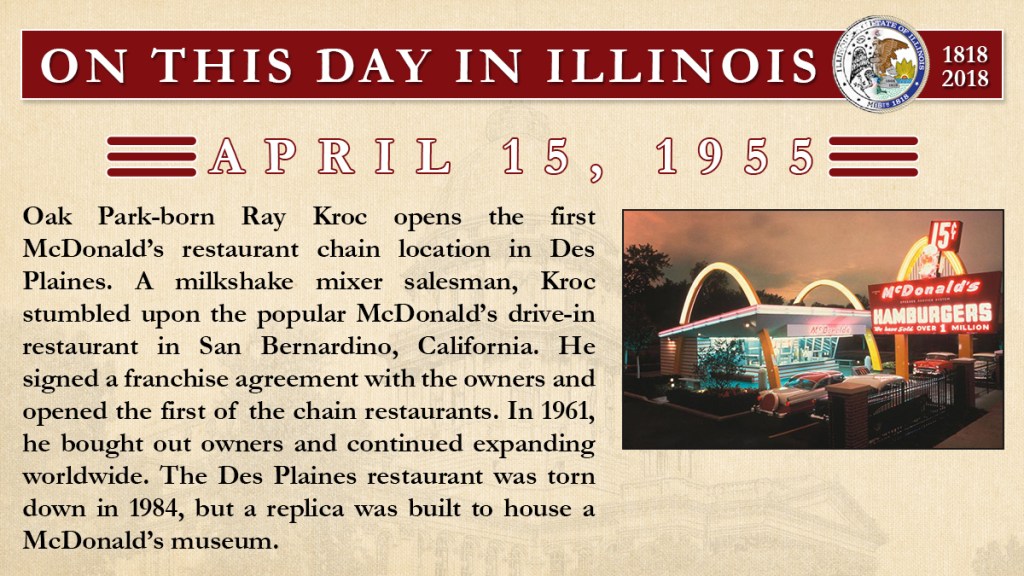
On April 15, 1955, Ray Kroc opened the first McDonald’s restaurant under his new corporation in Des Plaines, Illinois. It was not the first McDonald’s ever built, nor was it the first franchise business in America. Yet this date is widely recognized as the beginning of a new era in franchising, one that introduced a level of systemization, standardization, and scalability that would define modern franchising for decades to come.

Although franchising had existed in various forms for over a century, most notably in the soft drink, automobile, and petroleum industries, Ray Kroc’s vision for McDonald’s introduced a disciplined and replicable model that reshaped the business landscape. What began as a single unit serving a simple menu of burgers, fries, and shakes would evolve into one of the most influential business systems in history. More importantly, the principles established under Kroc’s leadership would become the foundation for the franchise industry as we know it today.

A New Model for Business Replication

What distinguished Ray Kroc’s approach from others before him was not simply the idea of duplication, but the meticulous structure around which that duplication would occur. At the heart of the McDonald’s model was consistency across locations, across operators, and across experiences. Kroc believed that a customer’s experience at a McDonald’s in Illinois should be identical to that of a customer visiting a McDonald’s in Arizona or New York. This was a radical departure from the more flexible, often decentralized franchise models of the time.

To achieve this level of consistency, Kroc introduced what would become some of the most widely emulated practices in franchising: detailed operational manuals, centralized training at the company’s Hamburger University, stringent site selection protocols, and ongoing franchisee support. These elements collectively established the franchise relationship not just as a legal contract, but as a fully integrated business partnership built on mutual success and accountability.

Kroc also understood the value of owning the real estate on which McDonald’s restaurants were built, an approach that allowed the corporation to exert significant control over franchisees while also creating a strong and stable revenue stream. This dual focus on operations and ownership created a model that was both financially sound and operationally efficient.

A Leadership Pipeline That Shaped an Industry

The culture within the McDonald’s system produced more than just successful franchisees, it became a breeding ground for industry leaders. Many executives, operators, and suppliers who cut their teeth within the McDonald’s ecosystem went on to establish or lead some of the most well-known brands in the franchise sector. Their success stories reflect the depth of the McDonald’s influence, which extends far beyond burgers and fries.

Fred Turner, who started as a grill operator in 1956, would eventually become CEO and chairman of McDonald’s. Under his stewardship, the company grew into a global institution, with increasingly refined systems and processes that reinforced the strength of the franchise model. Turner’s leadership further solidified the internal philosophy that training, discipline, and support were essential to sustainable growth.

Ed Rensi, another McDonald’s veteran who began as a grill cook, rose through the ranks to become President and Chief Executive Officer of McDonald’s USA. After leaving the company, Rensi applied the same operational discipline to other ventures, including serving as CEO of Famous Dave’s and as an advisor to several emerging franchise brands.

Rick Rosenfield and Larry Flax, both former McDonald’s franchisees, went on to found California Pizza Kitchen, a more upscale concept, yet one that retained many of the operational efficiencies they learned under Kroc’s system.

Others from the McDonald’s sphere brought their expertise to brands such as Burger King, Wendy’s, and countless franchise development firms, investment groups, and consulting practices. The culture of discipline and performance instilled at McDonald’s carried with them, and they replicated elements of that model in every new venture they touched.

An Enduring Legacy in Today’s Franchising Landscape

Nearly seventy years after Ray Kroc opened that first McDonald’s in Des Plaines, the company’s influence on franchising remains as strong as ever. The operational playbook he created is still used, in some form, by nearly every franchise system in existence today. From quick service restaurants to fitness concepts, from home service brands to education platforms, the core principles—consistency, support, replicability, and brand uniformity can all be traced back to the standards McDonald’s set in motion.

Training universities, franchise manuals, structured discovery processes, and site development protocols were not just innovations; they were institutional advancements that elevated franchising from an entrepreneurial experiment to a legitimate industry. Even the legal and regulatory frameworks that govern franchising today were influenced by the rise and scale of McDonald’s, prompting state and federal agencies to develop guidelines that could support this growing method of business expansion.

Today, as franchising continues to evolve in response to changing consumer behavior, digital transformation, and global market dynamics, the McDonald’s model remains a touchstone. Whether in discussions of operational excellence, franchisee support, or brand scalability, the example set by Ray Kroc and his successors continues to be studied, admired, and, more often than not, emulated.
A Historical Milestone With Modern Relevance

April 15, 1955, marks more than the opening of a restaurant. It marks the genesis of a movement. Ray Kroc may not have invented franchising, but he gave it form, function, and credibility. He showed the world what was possible when systems and people aligned in the pursuit of a singular brand experience delivered at scale.

The lessons learned under the golden arches have found their way into boardrooms, training rooms, and franchise expos across the globe. In doing so, McDonald’s did more than change the way people eat, it changed the way people do business. And it all began on a spring day in suburban Illinois, with a vision, a system, and a determination to do things differently.

Make today a great day. Make it happen. Make it count!

About the Author

Paul Segreto brings over four decades of hands-on experience in franchising, restaurants, and small business development. A passionate advocate for entrepreneurship, Paul has helped countless individuals turn their visions into thriving ventures. Ready to take your next step in business or looking for expert insight to overcome today’s challenges? Reach out directly to Paul at paul@acceler8success.com—your path to success may be one conversation away.

About Acceler8Success Group

Acceler8Success Group is where entrepreneurial ambition meets expert execution. We partner with entrepreneurs, founders, and business leaders to ignite growth through a tailored hybrid appoach of coaching, consulting, and business advisory. Whether you’re launching your first venture or scaling your next big idea, our team is ready to help you accelerate success. Let’s build your future—visit and connect with us today at Acceler8Success.com.
10 Things An Entrepreneur Should Know About AI

Artificial intelligence (AI) is reshaping industries, offering opportunities for efficiency, innovation, and competitive advantage. For entrepreneurs, understanding AI is no longer optional—it’s essential. Whether you’re in tech, retail, restaurants, or franchising, knowing how to leverage AI can drive growth and profitability. Here are ten crucial things every entrepreneur should know about AI.

First, AI is a tool, not a replacement. While it automates tasks and enhances decision-making, the human element remains vital. Entrepreneurs must guide AI implementation with clear goals and creative vision.

Second, data is the lifeblood of AI. The effectiveness of AI depends on the quality of data it processes. Entrepreneurs should prioritize collecting, organizing, and protecting their business data.

Third, AI enhances customer experiences. From chatbots offering 24/7 support to personalized recommendations, AI helps businesses meet customer needs efficiently and effectively.

Fourth, AI-driven marketing is powerful. With tools for audience targeting, campaign optimization, and performance analysis, entrepreneurs can achieve better results with less effort and expense.

Fifth, AI improves operations. Inventory management, demand forecasting, and supply chain optimization are areas where AI boosts efficiency and reduces costs.

Sixth, AI supports smarter decision-making. Predictive analytics can help entrepreneurs anticipate market trends, customer behavior, and operational challenges, enabling proactive adjustments.

Seventh, AI tools are more accessible than ever. From affordable no-code platforms to industry-specific apps, entrepreneurs can implement AI without extensive technical knowledge.

Eighth, cybersecurity is crucial. With AI handling sensitive data, robust security measures are necessary to prevent breaches and protect customer trust.

Ninth, ethical AI matters. Entrepreneurs should ensure their AI systems are transparent, fair, and free from bias, fostering trust and social responsibility.

Tenth, AI is constantly evolving. Entrepreneurs should commit to continuous learning, staying updated on trends, tools, and best practices to maintain a competitive edge.

AI offers transformative potential for entrepreneurs willing to embrace it. By understanding its capabilities, challenges, and ethical considerations, business owners can harness AI to drive growth, innovation, and long-term success.

LEARN MORE HERE

About Acceler8Success Group

Acceler8Success Group empowers entrepreneurs and business leaders with personalized coaching, strategic guidance, and a results-driven approach. Whether launching, scaling, or optimizing a business, we provide the tools, mentorship, and resources to drive long-term success.

Explore entrepreneurship coaching at Acceler8Entrepreneurship.com or business ownership resources at OwnABizness.com.

For more information on our business advisory services or expert content for your company, brand, or personal needs, whether for blogs, articles, newsletters, or special projects, in English, Spanish or French, please inquire at https://acceler8success.com/contact.

Adapt or Be Left Behind

When the telephone was first introduced into businesses, it was met with skepticism and resistance. Many saw it as an unnecessary interruption, a nuisance that disrupted the rhythm of daily work. Yet, as time passed, the telephone became not just accepted but essential. It revolutionized communication, making business operations faster and more efficient. The same cycle repeated itself with the fax machine, computers, and later, smartphones—each initially dismissed as impractical or unnecessary, only to become indispensable tools that reshaped industries.

Social media followed a similar trajectory. Initially mocked as a passing fad, it was dismissed by many as a waste of time. Yet, businesses that embraced it early on found themselves at the forefront of an entirely new way to connect with customers, market their brands, and drive sales. Those who refused to adapt fell behind, while those who capitalized on the shift gained a competitive edge.

Now, artificial intelligence is here, and history is repeating itself. Some see AI as a distraction, an unnecessary complexity, or even a threat. But as with all the innovations that came before, AI is not just another tool—it is a transformational force that will impact every aspect of business and life. The difference this time? AI’s reach is far broader, touching every industry, every function, and every individual.

AI will revolutionize customer service, enabling businesses to provide instant, personalized responses at scale. It will streamline operations, automating repetitive tasks and freeing up human workers to focus on high-value strategic initiatives. It will enhance decision-making, using data-driven insights to improve efficiency and effectiveness. In restaurants, AI will optimize inventory management, enhance customer experience through personalization, and even power autonomous cooking and delivery systems. In franchising, it will analyze consumer trends, predict franchise success, and create hyper-personalized marketing campaigns.

Beyond business, AI is already transforming daily life. It powers the voice assistants we rely on, the navigation systems that guide us, and the medical advancements that extend our lives. It will continue to push the boundaries of what is possible, making everyday tasks more efficient and unlocking opportunities we have yet to imagine.

Those who hesitate, who resist change, will find themselves in the same position as those who once dismissed the telephone, the internet, or social media. AI is not a passing trend. It is not a distraction. It is the next great shift in how the world operates. The question is not whether AI will shape the future—it already is.

The real questions are: How are you embracing AI? Are you afraid of AI? Do you believe AI is here to stay, or will it go the wayside? Will you embrace it and reap the benefits, or will you be left behind?

Make today a great day. Make it happen. Make it count!

About the Author

With more than 40 years of experience in small business, restaurant, and franchise management, marketing, and development, Paul Segreto is a respected expert in the entrepreneurial world, dedicated to helping others achieve success. Whether you’re an aspiring or current entrepreneur in need of guidance, support, or simply a conversation, you can connect with Paul at paul@acceler8success.com.

About Acceler8Success Group

Acceler8Success Group empowers entrepreneurs and business leaders with personalized coaching, strategic guidance, and a results-driven approach. Whether launching, scaling, or optimizing a business, we provide the tools, mentorship, and resources to drive long-term success. Explore entrepreneurship coaching at Acceler8Entrepreneurship.com or business ownership resources at OwnABizness.com. For more information on our services, programs, or unique opportunities, inquire HERE.

Smart AI Tools Every Small Business Owner Should Know About

Artificial Intelligence (AI) is transforming the way small businesses and restaurants operate, offering tools and technologies that were once available only to large corporations. From automating repetitive tasks to providing deep insights into customer behavior, AI empowers business owners to save time, reduce costs, and make more informed decisions. By integrating AI into their operations, entrepreneurs can focus on enhancing customer experience, driving revenue growth, and staying competitive in a rapidly evolving marketplace.

How AI Can Be Used by Small Business and Restaurant Owners

  1. Customer Experience and Personalization AI chatbots and virtual assistants can handle customer inquiries, book reservations, and provide 24/7 support. Recommendation systems suggest menu items or services based on customer preferences, enhancing the guest experience.
  2. Marketing and Customer Engagement AI tools analyze customer data to optimize marketing campaigns and deliver personalized communications. Social media management platforms automate posting, engagement, and performance analysis.
  3. Inventory Management Predictive analytics tools forecast inventory needs to prevent overstocking or understocking, reducing waste and saving costs.
  4. Menu Optimization AI can analyze sales trends to identify high-performing dishes and suggest menu changes to maximize profitability.
  5. Operational Efficiency AI scheduling tools ensure optimal staff allocation by predicting busy times, while automation handles payroll, ordering, and other administrative tasks.
  6. Financial Management AI-powered platforms track expenses, manage cash flow, and generate revenue forecasts, helping owners maintain financial health.
  7. Customer Feedback and Sentiment Analysis AI tools analyze online reviews and feedback to identify trends, areas for improvement, and opportunities to enhance the customer experience.
  8. Delivery and Logistics AI optimizes delivery routes for efficiency and speed, ensuring timely order fulfillment and reducing delivery costs.

AI for small businesses. Where to start?

Best AI Apps for Small Business and Restaurant Owners

  1. Customer Interaction and Support Tidio: Provides AI-driven chatbots for managing customer inquiries and offering instant support. Zendesk AI: Enhances customer service with smart insights and automated workflows.
  2. Marketing and Social Media Hootsuite Insights: An AI tool for managing social media campaigns and analyzing engagement metrics. Mailchimp: Offers AI-driven email marketing and campaign optimization features.
  3. Inventory and Supply Chain BlueCart: Manages restaurant inventory and orders with predictive analytics. xtraCHEF by Toast: Tracks costs and simplifies inventory management for restaurants.
  4. Operational Tools 7shifts: AI-powered staff scheduling tailored for restaurants. QuickBooks Online: Automates accounting and financial management with AI features.
  5. Feedback Analysis ReviewTrackers: Monitors and analyzes online reviews to provide actionable insights. Google Business Profile AI tools: Helps businesses understand customer sentiment and behavior.
  6. Delivery and Logistics Onfleet: Streamlines delivery management and route optimization with AI technology. Uber Eats Manager: Offers AI-driven analytics for menu performance and customer preferences.
  7. Restaurant-Specific AI Tools OpenTable or Resy: AI-integrated reservation systems that streamline bookings and customer data management. Square POS: Combines point-of-sale features with AI analytics for restaurants.
  8. AI-Driven Insights Domino Data Lab: Provides advanced predictive analytics and data science solutions. Fivestars: Integrates AI to enhance customer loyalty and engagement programs.

By leveraging these AI applications, small business and restaurant owners can streamline their operations, enhance customer satisfaction, and maintain a competitive edge in the market.

Make today a great day. Make it happen. Make it count!

About the Author

With more than 40 years of experience in small business, restaurant, and franchise management, marketing, and development, Paul Segreto is a respected expert in the entrepreneurial world, dedicated to helping others achieve success. Whether you’re an aspiring or current entrepreneur in need of guidance, support, or simply a conversation, you can connect with Paul at paul@acceler8success.com. Preview his LinkedIn profile HERE.

The Power of Strategic Partnerships in Business Success

Achieving success in business often requires collaboration rather than working in isolation. Strategic partnerships play a pivotal role in accelerating growth, enhancing capabilities, and driving innovation for business owners, entrepreneurs, and professional service providers. These partnerships are more than just alliances—they are collaborative relationships built on trust, shared goals, and mutual benefit.

For entrepreneurs and business owners, strategic partnerships provide opportunities to leverage complementary strengths. Partnerships can open doors to new markets, provide access to resources, and enhance credibility. Whether collaborating with a supplier, distributor, or even a competitor, the right partnership can yield exponential growth. For example, a startup in the foodservice industry might partner with a local farm to ensure a consistent supply of fresh ingredients while reinforcing its commitment to quality and sustainability.

Professional service providers like consultants, coaches, attorneys, and CPAs thrive on their ability to provide specialized expertise to clients. Strategic partnerships allow these professionals to broaden their service offerings, provide holistic solutions, and deliver greater value. A CPA partnering with a legal firm, for instance, can provide comprehensive advice on tax and legal matters for small business owners, creating a one-stop shop for clients while strengthening the relationship between the two providers.

Collaboration fosters innovation by bringing diverse perspectives to the table. When partners combine expertise from different fields, they create opportunities for new solutions and approaches. Entrepreneurs can benefit from tapping into the expertise of consultants or coaches, while consultants can enhance their own value by partnering with technology providers or other professionals who offer complementary services.

Strategic partnerships also mitigate risks. In business, challenges such as market fluctuations, resource shortages, and technological disruptions are inevitable. Having a reliable partner to share responsibilities and resources can help organizations weather the storm. For professional service providers, partnerships can be a source of referrals, reducing the uncertainty of client acquisition.

The value of strategic partnerships lies not just in the tangible benefits but also in the relationships they foster. Trust and collaboration form the foundation of a successful partnership. Both parties must commit to transparent communication, clear expectations, and a shared vision. These elements are essential for long-term success.

As the business landscape evolves, strategic partnerships will continue to be a cornerstone of growth and innovation. For entrepreneurs, business owners, and professional service providers, investing time and effort into building strong partnerships is not just a strategic move—it’s a necessity for staying competitive and achieving sustainable success.

Make today a great day. Make it happen. Make it count!

About the Author

With more than 40 years of experience in small business, restaurant, and franchise management, marketing, and development, Paul Segreto is a respected expert in the entrepreneurial world, dedicated to helping others achieve success. Whether you’re an aspiring or current entrepreneur in need of guidance, support, or simply a conversation, you can connect with Paul at paul@acceler8success.com.

Technology As The New Norm – Are We There Yet?

As we’re at mid-year, it’s essential we look forward to the second half of the year and review our goals and objectives. But, too often we don’t take into consideration how we’re going to make certain we achieve those goals and objectives… understanding what’s involved, doing the necessary prep work, learning about technology that will help, etc.

As the world rapidly moves towards “everything digital” it is vitally important, and absolutely essential we stay on top of technology. This cannot be stressed enough! It is reality and is paramount to any type of business success. The key is not to look at this from a negative perspective. Instead, embrace it for what it is, and for what it can do to help grow your business. Technology is not the enemy. It truly is your friend and one that can help you in more ways than you could ever imagine.

Imagine doing business today without computers? Without the internet?

Many business owners in the late ’80’s were reluctant to embrace computers and many thought the internet was a fad and would wither away. Many of today’s business owners have the same thoughts about social media and digital technology. Heck, many are still complaining about Web 2.0, when Web 3.0 is already here!

I guess the most important thing to realize, and probably quite different than looking back at technological advances in the ’80’s and ’90’s is the fact that today’s consumer has embraced technology and has incorporated it into their daily routine. Of course, let’s not lose sight of the younger generations that utilize technology because, quite frankly, they don’t really know any other way of doing things. It’s the norm to them. Actually, many in the younger generations don’t even look at it as technology!

So, back to today’s consumer… As they have embraced technology at a quicker pace than in the past, they demand, correction, expect, brands to have embraced it as well. They also expect brands to be ahead of the curve, and at the very least, ahead of where they are as consumers using technology. I guess a key question to ask at this time is, “At what point does today’s and tomorrow’s consumer meld together and eliminate the transition stage?” I ask that because the transition stage is today’s business owner’s comfort zone. It’s the comfort zone relied upon that minimizes the sense of urgency to embrace technology. It’s the comfort zone that has many business owners stating, “I have time. I’ll check it out next year.” or, “Our customers are older. They don’t use this new stuff. I’ll worry about it when I have to.”

Understand, today’s consumer, regardless of age, has embraced, or at the very least, accepted technology. Their expectations are growing by the minute, and most have ventured far beyond their own comfort zones. Add to this the influence of younger generations that in the past would have been considered to be bringing up the rear, that are now pushing forward, and pushing hard. Before you know it, the transition stage, the comfort zone, will be gone, and business owners that have not embraced and accepted technology will not survive.