Tag: travel

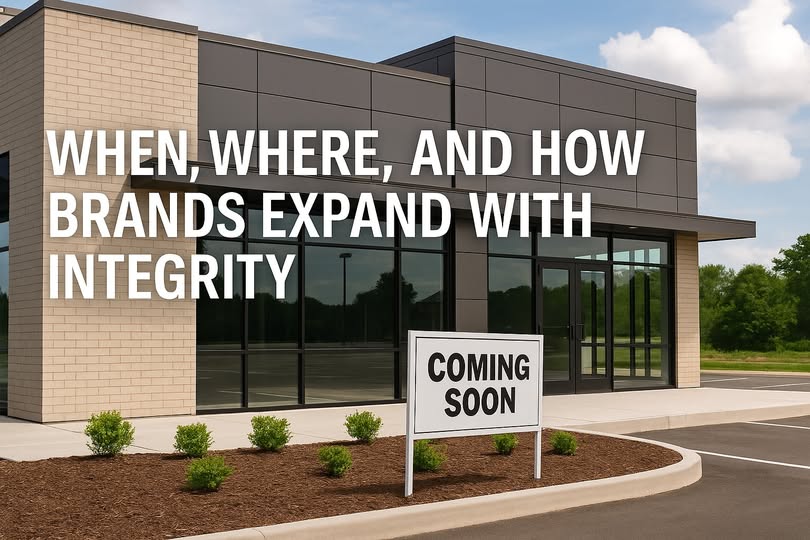
The Discipline of Growth: The Entrepreneur’s Guide to Purposeful, Culture-Driven Expansion

This article continues the Celebrating Entrepreneurship series — written in honor of National Entrepreneurship Month and steadily building into a comprehensive playbook for the modern entrepreneur. We have journeyed through disruption as precision, leadership presence, transferable culture, community relevance, anticipation-building, and sustaining momentum after opening day.

Now we reach a pivotal moment in the entrepreneurial arc:

Growth.

Not growth for growth’s sake.
Not expansion fueled by pressure, ego, or imitation.
But purposeful expansion — the kind that strengthens the brand instead of diluting it.

Because the hardest decision a restaurant or franchise brand will ever make is not how to grow.
It is when to grow.
And even more importantly — where and why.

Growth Is Not Proof of Success — It Is a Test of Identity

Many brands mistakenly treat expansion as a reward — the trophy for getting the first location right.

But growth is not a trophy.
Growth is a magnifier.

If the identity is clear, culture is strong, and experience is consistent, growth amplifies excellence.
If identity is vague, culture is spotty, and experience is inconsistent, growth amplifies dysfunction.

Growth does not fix problems — it exposes them.

This is why the most successful brands expand slowly, deliberately, intentionally — even when they could expand faster.

The Discipline of Saying “Not Yet”

Before expanding, strong brands ask:

  1. Is our culture transferable and repeatable?
    Can we guarantee that the new location will feel like us?
  2. Have we sustained momentum over time, not just at launch?
    A business must prove staying power before becoming a model for replication.
  3. Is the community we are expanding into aligned with our values and identity?
    Not all markets are the right markets — even if they are profitable.

If the answer to any of these questions is uncertain, the correct move is not “no” — it is not yet.

Restraint is a form of leadership.
Patience is a form of strategy.

How the Best Brands Choose Where to Grow

Raising Cane’s

Cane’s expands where there is cultural alignment, not just demand.
They choose communities where their identity — simplicity, quality, and fun — will be felt, not merely consumed.

Trader Joe’s

They do not chase population counts — they chase community compatibility.
When a Trader Joe’s opens, the neighborhood is already emotionally prepared to welcome it.

Whataburger (originally)

For decades, Whataburger was intentionally regional — building fierce loyalty in Texas before expanding outward.
Their growth was geographic, but also cultural.

These brands prove something essential:
A location is not just a map coordinate. It is a relationship.

The Signals That It Is Time to Grow

A brand is ready for expansion when:

• Existing guests ask for new locations
• Team members are developing into leaders, not just workers
• Systems run smoothly without founder oversight
• Culture remains intact under strain
• Community presence is strong and reciprocal
• Demand exceeds capacity consistently, not occasionally

Expansion should be a response to pull, not a push.

If you have to convince the market, you are too early.
If the market is asking — really asking — you may be ready.

Growth Without Identity Loss

As new units open, the question shifts from Can we grow? to Can we grow without forgetting who we are?

That requires:
• A founder or leader who remains the emotional anchor
• Cultural behaviors that are practiced and taught, not explained
• Opening playbooks that include community integration, not just operational launch
• Measurement systems that track guest feeling, not just revenue

A brand must guard its meaning as fiercely as its margin.

The Core Truth of Expansion

A brand should only grow to the extent that its culture can carry it.

If you expand faster than culture can transfer, identity fractures.
If you expand where the community cannot embrace your meaning, relevance thins.

The strongest brands are not just present in many places.
They are felt in every place they are present.

The Playbook Continues

We have now laid the foundation for:
• Identity
• Experience
• Culture
• Community
• Anticipation
• Momentum
• Growth

Next in the series, we progress to the next natural stage:

Leadership succession and internal development —
How to grow leaders inside the system so the brand can grow without the founder having to be everywhere.

Because legacy is not created when a brand expands.
Legacy begins when a brand can thrive in the hands of others —
without losing the heartbeat of the first location.


About the Author

Paul Segreto brings over forty years of real-world experience in franchising, restaurants, and small business growth. Recognized as one of the Top 100 Global Franchise and Small Business Influencers, Paul is the driving voice behind Acceler8Success Café, a daily content platform that inspires and informs thousands of entrepreneurs nationwide. A passionate advocate for ethical leadership and sustainable growth, Paul has dedicated his career to helping founders, franchise executives, and entrepreneurial families achieve clarity, balance, and lasting success through purpose-driven action.

Ready to elevate your business or navigate today’s challenges with confidence? Connect directly with Paul at paul@acceler8success.com, because every success story begins with a meaningful conversation.


About Acceler8Success America

Acceler8Success America is a comprehensive business advisory and coaching platform dedicated to helping entrepreneurs, small business owners, and franchise professionals achieve The American Dream Accelerated.

Through a combination of strategic consulting, results-focused coaching, and empowering content, Acceler8Success America provides the tools, insights, and guidance needed to start, grow, and scale successfully in today’s fast-paced world.

With deep expertise in entrepreneurship, franchising, restaurants, and small business development, Acceler8Success America bridges experience and innovation, supporting current and aspiring entrepreneurs as they build sustainable businesses and lasting legacies across America.
Beyond Service: Why the Experience Is the Real Secret Ingredient

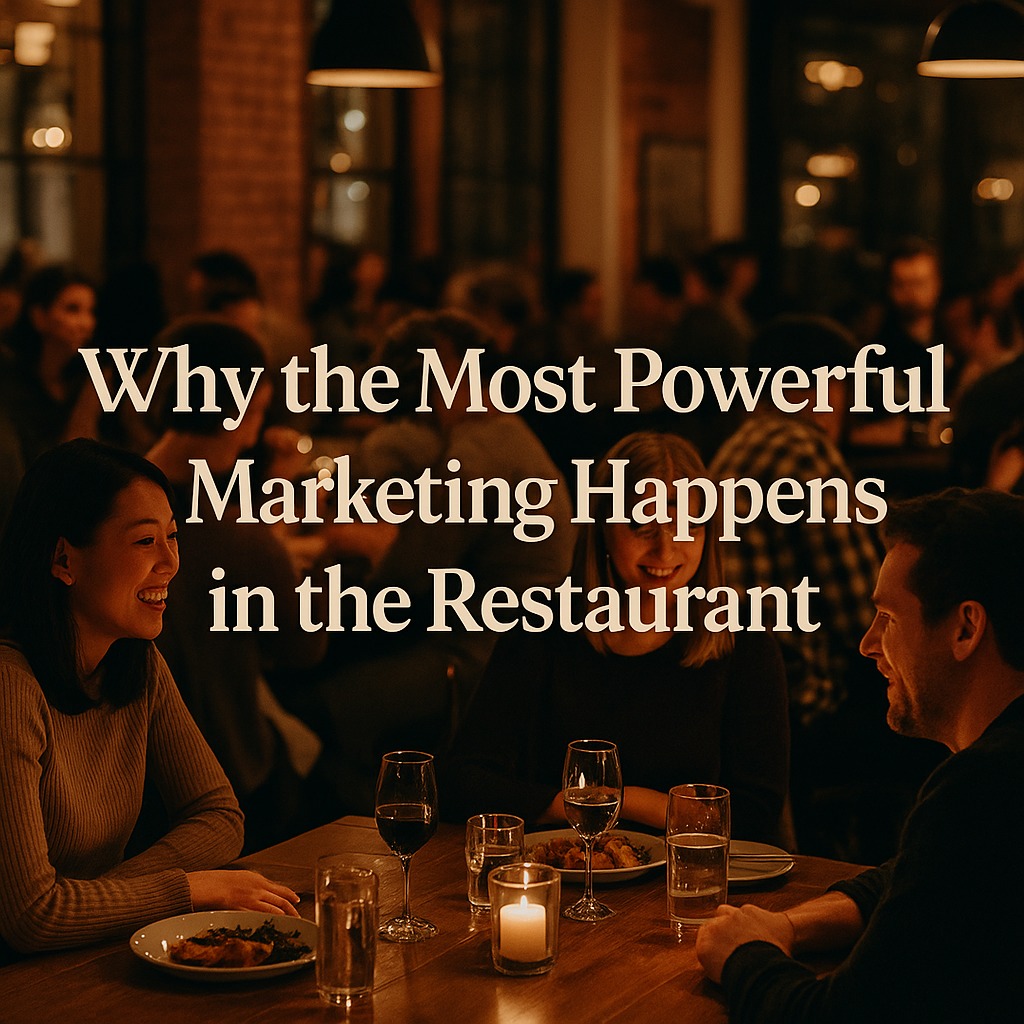
During these uncertain times when restaurants are working harder than ever to stay relevant, profitable, and connected to their communities, it’s easy to get caught up in the daily grind of food costs, staffing challenges, online reviews, and social media trends. Yet through all the noise, one truth stands taller than the rest: what truly sets a restaurant apart today isn’t just its food, or its décor, or even its service. It’s the experience.

Food is fundamental — it’s the heart of the business. Ambience adds atmosphere. Service ensures functionality. But experience is what gives a restaurant soul. It’s what lingers long after the last bite. It’s what transforms a meal into a memory and a visit into a story worth retelling. It’s what keeps people coming back.

Customer experience is often misunderstood. Many believe it’s interchangeable with customer service, but that couldn’t be further from the truth. Service is about what you do for a customer — taking orders, delivering food, clearing tables, thanking them as they leave. Experience is about what the customer feels while all that happens — seen, heard, cared for, and appreciated. As Maya Angelou said, “People will forget what you said, people will forget what you did, but people will never forget how you made them feel.” Every great restaurant in history, whether fine dining or fast casual, lives and breathes by that principle.

Think of the restaurants you love most. It’s probably not just because the food is good — though it surely is. It’s because the place makes you feel something. It feels familiar or inspiring or comforting. You trust that when you go there, you’ll be treated like more than just another customer. Maybe it’s the owner greeting you by name, the bartender who remembers your favorite drink, or the server who anticipates your needs before you ask. Those moments of connection are not accidents. They are the foundation of customer experience.

In an industry where competition is fierce and expectations are constantly shifting, experience has become a restaurant’s most powerful and effective marketing. A satisfied guest might leave a decent review. But a guest who feels emotionally connected will tell everyone they know. They’ll post about it, talk about it at work, and bring their friends the next time. They become ambassadors for your brand, doing what no paid advertisement can — telling your story with authenticity and heart.

A positive experience doesn’t just create loyalty; it drives measurable business results. Guests who feel valued spend more. They visit more often. They’re more forgiving when mistakes happen because they trust your intentions. That kind of goodwill cannot be bought — it must be earned, one interaction at a time. In contrast, one negative experience can undo months of effort. It’s not always because the food was bad or the service slow, but because something emotional went wrong — a sense of indifference, a lack of empathy, a feeling that the restaurant cared more about the transaction than the person.

So, to today’s restaurant owners, I ask: when was the last time you dined in your own restaurant as a guest? When was the last time you truly listened to how your team interacts with customers, not just to see if they’re polite or efficient, but to see if they’re genuine? Have you created a culture where employees understand they are not just serving meals, but crafting experiences? Have you given them the freedom and encouragement to connect with people, to show kindness, to notice the small things that make a big difference?

And to today’s restaurant brand leaders, who oversee multiple locations or entire chains: how well are you protecting that emotional connection across every store? Are your brand standards focused only on operational consistency, or do they also measure emotional consistency? Do your marketing messages promise warmth, community, and connection that your locations actually deliver? Are your training programs teaching your teams to smile because they have to — or because they want to?

The restaurant industry has evolved dramatically, especially after the challenges of recent years. Technology has transformed ordering and delivery. Automation has improved efficiency. Digital marketing has expanded reach. But none of these things can replace the human element. At the end of the day, restaurants are still about people — people cooking, people serving, and people gathering. No algorithm can replicate the feeling of being genuinely welcomed, the comfort of being remembered, or the joy of being part of something shared. That’s the magic of hospitality, and it’s as timeless as it is powerful.

A great restaurant experience is not built by chance; it’s designed. It’s the result of leadership that understands emotion is as important as execution. It’s built in the details — the lighting, the music, the pacing, the body language, the attentiveness. It’s built in how the staff treats each other behind the scenes because that energy inevitably flows into the dining room. Guests can feel authenticity. They can sense pride, passion, and sincerity just as easily as they can sense indifference.

Every restaurant has a brand, whether intentionally crafted or unintentionally developed. That brand isn’t defined by logos or slogans — it’s defined by how people feel when they think about your restaurant. That feeling is your brand. That feeling is your marketing. That feeling is your future.

As we move deeper into this new era of dining — one defined by convenience, digital connection, and shifting expectations — the restaurants that will thrive are those that remain deeply human. They will be the ones that remember that hospitality is not a task or a trend but a calling. They will understand that a meal may satisfy hunger, but a great experience nourishes the heart. Because long after guests have forgotten what they ordered or how much they paid, they will still remember how your restaurant made them feel — welcomed, valued, and inspired to return.

That feeling, above all else, is what keeps the doors open, the tables full, and the brand alive. It is the single most enduring ingredient in the recipe for restaurant success.


About the Author

Paul Segreto brings over forty years of real-world experience in franchising, restaurants, and small business growth. Recognized as one of the Top 100 Global Franchise and Small Business Influencers, Paul is the driving voice behind Acceler8Success Café, a daily content platform that inspires and informs thousands of entrepreneurs nationwide. A passionate advocate for ethical leadership and sustainable growth, Paul has dedicated his career to helping founders, franchise executives, and entrepreneurial families achieve clarity, balance, and lasting success through purpose-driven action.

Ready to elevate your business or navigate today’s challenges with confidence? Connect directly with Paul at paul@acceler8success.com — because every success story begins with a meaningful conversation.


About Acceler8Success America

Acceler8Success America is a comprehensive business advisory and coaching platform dedicated to helping entrepreneurs, small business owners, and franchise professionals achieve The American Dream Accelerated.

Through a combination of strategic consulting, results-focused coaching, and empowering content, Acceler8Success America provides the tools, insights, and guidance needed to start, grow, and scale successfully in today’s fast-paced world.

With deep expertise in entrepreneurship, franchising, restaurants, and small business development, Acceler8Success America bridges experience and innovation — supporting current and aspiring entrepreneurs as they build sustainable businesses and lasting legacies across America.


Discover More from Acceler8Success America

Continue your journey toward The American Dream Accelerated by exploring Paul’s other platforms — each designed to inspire, educate, and empower entrepreneurs at every stage:

  • Substack Newsletter: Exclusive articles exploring the personal journey behind achieving entrepreneurial success — subscribe at paulsegreto.substack.com
  • LinkedIn: Join thousands of professionals following Paul’s commentary and the Acceler8Success Café newsletter at linkedin.com/in/paulsegreto
  • InstagramFacebook, and X: Follow for real-time thoughts, quotes, and stories from the entrepreneurial journey
  • Acceler8Success America (Acceler8SuccessAmerica.com): Visit often for updates, events, and initiatives

Wherever you connect, you’ll find one consistent message — empowering entrepreneurs to succeed faster, smarter, and with greater purpose.

Remember Why You Opened a Restaurant in the First Place— And Why That Still Matters

If you’re a restaurant owner, it’s time to pause and take a look back. Not at your last service. Not at the bills on your desk or the issues you’ll have to fix tomorrow. Go all the way back to the beginning. Back to the moment you made the decision to open a restaurant. That one powerful moment when your passion outweighed your fear. When you knew deep down this was what you were meant to do.

You didn’t stumble into this business. You chose it.

You knew the road would be hard. You had heard it all — the failure rates, the long hours, the challenges of managing people, the struggle to make ends meet. You knew the restaurant industry was one of the most demanding in the world. But you didn’t let that stop you. You moved forward with clarity, commitment, and an unwavering belief in what you wanted to create.

You probably had a vision. Maybe it was a neighborhood bistro where locals would gather like family. Maybe it was a fast-casual concept you knew had the potential to scale. Maybe it was a bar and grill where you could showcase your favorite recipes and create an atmosphere full of energy. Whatever it was, you had purpose. You had drive.

You didn’t just open a restaurant. You brought a dream to life.

You signed the lease. You dealt with the permits, the buildout, the endless decisions about equipment, menu, branding, staffing, suppliers, vendors, POS systems, and marketing plans. You poured everything into it — time, energy, money, emotion. You made sacrifices. And when you finally opened the doors, there was that unforgettable rush.

You were nervous. You were excited. You were alive.

And then, the real work began. The grind. The late nights. The broken equipment, the call-outs, the difficult customers, the balancing act between quality and cost, the days where you questioned everything, and the nights where you collapsed from exhaustion. But even on the hardest days, there was always something that kept you going. That inner voice that reminded you, This is mine. This is what I was meant to do.

Then came the pandemic.

What was already a tough business became nearly impossible. Lockdowns. Layoffs. Capacity limits. Supply chain nightmares. Delivery platform fees that ate your profits. You had to change your business model overnight. You had to make painful decisions just to survive. And even after you made it through that storm, the world didn’t return to what it once was. Costs are higher. Hiring is harder. Diners have changed.

You’ve been in survival mode for a long time.

But let’s stop for a moment and ask: what has really changed? Your love for this industry? Your commitment to your guests? The feeling you get when service goes smoothly, when someone tells you that your place is their favorite, when your team finally clicks and the energy in the restaurant feels just right?

That passion is still there.

You didn’t do all of this just to struggle. You didn’t give up weekends and holidays, miss out on family events, or pour your soul into this business just to get by. You did it because you had a dream, and you believed in it. You still should. That spark may be buried under stress and fatigue, but it’s still inside you.

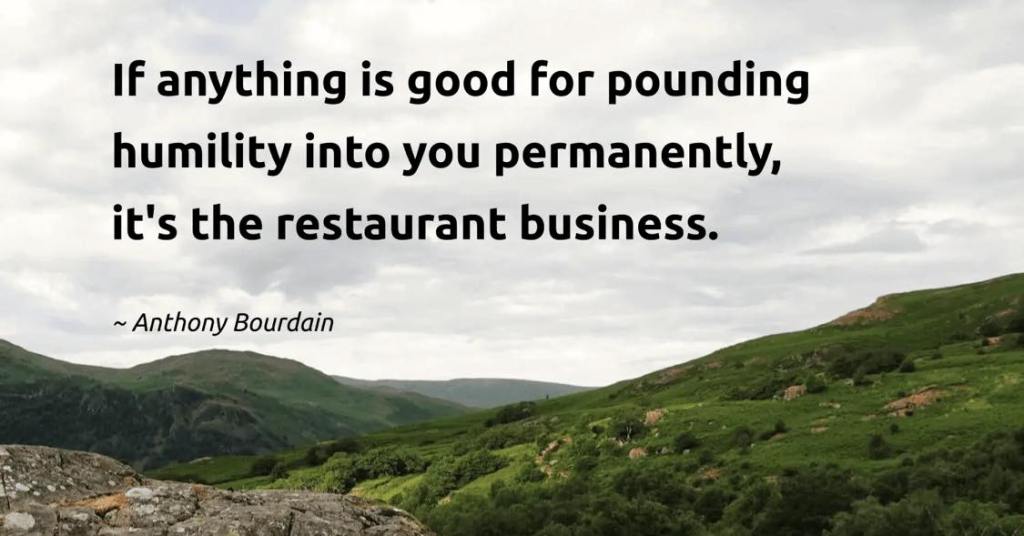
Anthony Bourdain once said,
“Anyone who’s ever owned a restaurant knows that it’s like running a marathon with a bag of bricks on your back, uphill, and someone’s throwing water balloons at you the entire time. And yet… we do it anyway. Because we love it.”

He also said,
“If anything is good for pounding humility into you permanently, it’s the restaurant business.”

No one enters this business thinking it’s going to be easy. But no one who stays in it does so without heart. Without fire. Without purpose.

This is your reminder to reconnect with that purpose.

Think back to the first dish you ever served that made someone say wow. Think about the first guest who became a regular. The first time your staff rallied around you and made you proud. The first time you stepped out from the kitchen or from behind the bar and took in the energy of a packed dining room, knowing you built this.

That’s the feeling you need to chase again.

Let it fuel your next move. Whether it’s refining your concept, refreshing your brand, mentoring your team, or simply falling back in love with the craft. Your restaurant is more than a business. It’s a reflection of who you are. It’s your legacy.

You’ve come so far. You’ve proven you can weather the storm.

Now it’s time to rise, not just to survive, but to thrive. To rebuild not only your business but your belief in it. To lead with the same passion that started this journey and the wisdom you’ve earned along the way.

Remember why you started.

The best stories have chapters filled with adversity — but the ones worth telling are those where the hero keeps going.

And you, without question, are still in the fight.

Make today a great day. Make it happen. Make it count!

About the Author

With more than 40 years of experience in small business, restaurant, and franchise management, marketing, and development, Paul Segreto is a respected expert in the entrepreneurial world, dedicated to helping others achieve success. Whether you’re an aspiring or current entrepreneur in need of guidance, support, or simply a conversation, you can connect with Paul at paul@acceler8success.com.

About Acceler8Success Group

Acceler8Success Group empowers entrepreneurs and business leaders with personalized coaching, strategic guidance, and a results-driven approach. Whether launching, scaling, or optimizing a business, we provide the tools, mentorship, and resources to drive long-term success.

Springtime Brunch: A Restaurant’s Best Friend for Bouncing Back from Winter Slumps

The following article was originally published in March 2024.

How Spring Fever Can Transform Your Restaurant

As winter begins to fade and signs of spring grow increasingly evident day by day, the restaurant industry can harness the transformative energy of the season to rejuvenate and thrive. This period, often marked by “spring fever,” is not just a metaphorical awakening of nature but also a prime opportunity for restaurant owners and entrepreneurs to breathe new life into their establishments. Let’s explore how the principles of a fresh perspective, approach, attitude, and the ritual of spring cleaning can collectively elevate a restaurant’s experience, foster innovation, and positively impact mental well-being.

A Fresh Perspective: Menu Innovation and Customer Experience

Spring is the season of renewal, making it the perfect time for restaurant owners to refresh their menus with seasonal ingredients and introduce innovative dishes that excite the palate. This fresh perspective extends beyond the menu, touching every aspect of the customer experience, from decor updates to enhanced service protocols. Embracing seasonality in your offerings not only showcases your commitment to quality and sustainability but also keeps your clientele engaged and eager to see what’s next.

Incorporating seasonal themes into your restaurant’s ambiance and marketing can rejuvenate your brand’s appeal. Engage with your customers through social media, sharing behind-the-scenes looks at menu development or inviting them to spring-themed events. This strategy can reinvigorate your customer base and attract new patrons, driven by the allure of experiencing something new and seasonal.

A Fresh Approach: Sustainability and Efficiency

With the spirit of spring in the air, it’s an opportune time to reevaluate your restaurant’s operational efficiencies and sustainability practices. A fresh approach might involve reducing waste, implementing energy-saving solutions, or sourcing ingredients locally. These changes not only benefit the environment but can also enhance your restaurant’s reputation and appeal to a growing demographic of eco-conscious consumers.

Consider adopting technologies or systems that streamline operations, from reservation and ordering systems to kitchen management tools. Efficiency in these areas can improve customer satisfaction and allow your team to focus on delivering exceptional dining experiences.

A Fresh Attitude: Team Engagement and Morale

The psychological boost that comes with spring can significantly impact the mood and motivation of your staff. Embrace this natural uplift to foster a positive work environment, where team members feel valued and inspired. A fresh attitude can be contagious, enhancing the overall dining experience for your guests.

Organize team-building activities or training sessions that align with your spring renewal theme. Investing in your staff’s development not only boosts morale but also equips them with the skills needed to elevate service quality and innovate within their roles.

Spring Cleaning: Revitalizing Your Space for Mental Clarity

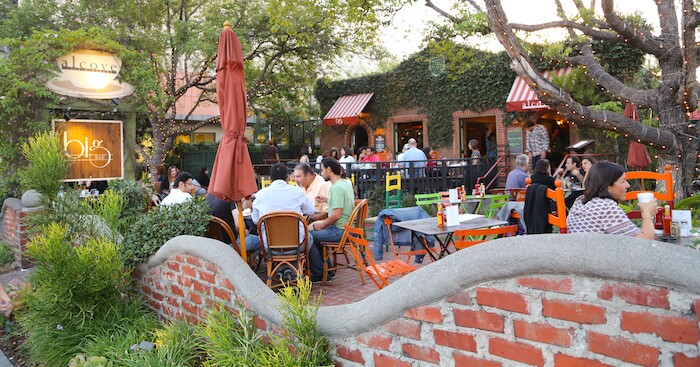
Spring cleaning is a powerful tradition that significantly impacts both the physical environment of your restaurant and the mental well-being of your staff and customers. Thoroughly cleaning and organizing the kitchen, dining areas, and patio enhances the ambiance, making it more welcoming. Decluttering storage areas boosts efficiency and decreases stress. Adding spring flowers at entrances and on tables further elevates the atmosphere.

This season, take the time to assess and organize not just your physical space but also your restaurant’s digital presence. Update your website and social media profiles to reflect your spring renewal efforts. A clean, well-organized, and up-to-date online presence can attract more customers and enhance their engagement with your brand.

In summary, spring offers a unique opportunity for the restaurant industry to innovate, rejuvenate, and reconnect with customers and team members. By adopting a fresh perspective, approach, attitude, and committing to the practice of spring cleaning, restaurant owners can harness the season’s energy to drive success. This period of renewal is not just about temporary changes; it’s about setting the foundation for sustained growth and vibrancy in the vibrant world of food and hospitality.

Make today a great day. Make it happen. Make it count!

About the Author

With more than 40 years of experience in small business, restaurant, and franchise management, marketing, and development, Paul Segreto is a respected expert in the entrepreneurial world, dedicated to helping others achieve success. Whether you’re an aspiring or current entrepreneur in need of guidance, support, or simply a conversation, you can connect with Paul at paul@acceler8success.com.

About Acceler8Success Group

Acceler8Success Group empowers entrepreneurs and business leaders with personalized coaching, strategic guidance, and a results-driven approach. Whether launching, scaling, or optimizing a business, we provide the tools, mentorship, and resources to drive long-term success.

Surviving the Restaurant Industry Shakeup (Part Two): Staying Ahead of Customer Needs and Exceeding Expectations

A recent article at Acceler8Success Cafe, Surviving the Restaurant Industry Shakeup: Why Customer Experience and Marketing Matter More Than Ever, explored the challenges facing restaurant operators today. It emphasized how customer experience and marketing are more crucial than ever in a highly competitive and rapidly evolving industry. While these elements are critical, a seasoned industry professional recently shared that success ultimately comes down to strong operations. A well-run restaurant that prioritizes attention to detail, efficiency, and proactive problem-solving is far more likely to stand the test of time.

This article builds on those insights by exploring the importance of staying ahead of customer needs and expectations. It is not enough to react to issues as they arise. Instead, restaurant operators must anticipate customer desires, address concerns before they become problems, and create a culture where staff takes ownership of the entire guest experience.

The effort to stay ahead does not just improve daily operations. It can position a restaurant for long-term growth, even expansion. By focusing on the right strategies, an operator who once believed expansion to a second location was impossible may find the opportunity to take over a second generation restaurant space. This creates a pathway for sustainable growth with lower upfront costs than building a restaurant from the ground up.

Elevating the Customer Experience

We would be neglecting a key factor if we did not emphasize the customer experience once again. After all, the restaurant industry has always been about more than just food. It is about delivering a complete experience. Customers today have high expectations and seek consistency, quality, and hospitality. To stay ahead, operators must focus on several key areas.

Personalized service makes a significant impact. Knowing regular customers, remembering their preferences, and offering a tailored experience creates a strong connection. A simple greeting by name or recalling a favorite dish can turn a guest into a loyal patron. Speed and convenience are also essential. Whether dining in, ordering takeout, or requesting delivery, customers expect efficiency. Streamlining operations to reduce wait times, optimizing online ordering, and ensuring seamless pickup and delivery services are crucial.

Anticipating guest needs elevates the experience even further. Staff should be trained to recognize when a guest needs a refill, requires assistance with the menu, or is waiting for a check. A proactive approach makes the difference between a good and an exceptional experience. Creating a warm and inviting atmosphere also plays a key role. Lighting, music, cleanliness, and décor should align with the restaurant brand and make customers feel comfortable and welcome.

Keeping the Menu Fresh and Relevant

A restaurant that refuses to evolve will quickly lose its appeal. Keeping the menu dynamic while maintaining core favorites is essential. This requires analyzing customer preferences by tracking best-selling dishes, seasonal trends, and feedback to determine what customers want more of and what can be phased out.

Introducing limited-time offers generates excitement and encourages return visits. Seasonal items, chef specials, and exclusive dishes create a sense of urgency. Customers enjoy discovering new flavors while still having access to familiar favorites. Quality and innovation are equally important. Modern diners seek fresh, high-quality ingredients, global flavors, and creative dishes. Even minor tweaks to existing menu items can generate renewed interest.

Dietary trends should also be taken into account. Offering plant-based, gluten-free, and healthier options ensures the menu appeals to a broad audience. A diverse menu caters to different tastes and dietary needs, making the restaurant more accessible to a wider customer base.

Promoting Value Without Compromising Perception

In an era of rising costs, customers are looking for value, but that does not necessarily mean the cheapest option. Value is about delivering a quality experience at a fair price. Value-driven promotions such as combo meals, loyalty programs, happy hour specials, and bundled deals encourage spending while giving customers a sense of getting more for their money.

Highlighting house specials is another way to enhance perceived value. Customers trust restaurant recommendations. Positioning high-margin, customer-favorite dishes as chef’s picks or must-tries makes them more appealing.

Leveraging upselling tactics can also contribute to profitability. Well-trained staff can recommend premium add-ons, drinks, or desserts in a way that enhances the dining experience rather than feeling forced. When done correctly, upselling benefits both the customer and the business.

Creating a Culture Where Staff Takes Ownership of Customer Care

A restaurant’s success depends on the motivation and attitude of its team. If staff members feel valued and engaged, they will naturally extend that energy to guests. Empowering employees is an effective way to improve service. Allowing staff the autonomy to make small customer service decisions, such as offering a complimentary dessert for a special occasion, helps build positive customer relationships.

Recognizing and rewarding excellence reinforces a culture of care. Acknowledging team members who go above and beyond in delivering great service creates a sense of pride and motivation. Training for hospitality, not just service, also plays a key role. Exceptional service goes beyond taking orders. It involves genuine engagement, making guests feel valued and appreciated.

Fostering team camaraderie leads to a more positive work environment, which in turn translates to better service. Encouraging team-building activities and creating a workplace culture where employees feel like they are part of something meaningful contributes to overall success.

Staying Ahead of Physical and Operational Issues

A restaurant’s physical environment should be as carefully managed as its customer service. Guests notice every detail, from the cleanliness of the dining area to the condition of the restrooms. Conducting regular maintenance checks ensures that small issues are addressed before they become bigger problems. Kitchen equipment, HVAC systems, and restrooms should always be in top shape.

Auditing the restaurant from a guest’s perspective can reveal problem areas. Walking through the restaurant as if you were a customer can help identify worn furniture, flickering lights, smudged windows, or other aesthetic concerns that need attention. Prioritizing cleanliness is essential. Guests equate cleanliness with quality, and ensuring that floors, tables, restrooms, and even exterior areas are spotless at all times is non-negotiable.

Managing traffic flow and seating efficiency can also improve the customer experience. Paying attention to how guests move through the space can reveal areas that need improvement. If guests are bumping into chairs or if the host stand is frequently congested, small adjustments can greatly improve comfort and efficiency.

Leveraging Technology to Stay a Step Ahead

Restaurants that embrace technology gain a competitive edge. AI and data analytics can be used to predict demand, optimize labor schedules, and personalize marketing efforts. Contactless ordering and payment options such as mobile apps, QR codes, and digital kiosks enhance convenience and speed.

Social media engagement is another critical component. Staying connected with customers by actively posting updates, responding to reviews, and leveraging influencer partnerships helps maintain visibility. Feedback systems should also be in place to make it easy for customers to leave reviews and for management to address concerns in real time.

The Bigger Picture: Expansion Becomes Possible

By mastering these principles and consistently staying ahead of customer needs, restaurant operators may find themselves in a position to expand. Strong operations, loyal customers, and financial stability can open doors to new opportunities.

Second generation restaurant spaces, locations where a previous restaurant has closed but still has a functional kitchen and dining area, offer an ideal path to expansion. These locations can often be acquired at a fraction of the cost of a new build. With minimal modifications, a thriving restaurant can duplicate its success and scale operations.

What was once thought to be beyond reach can become a reality. A well-run restaurant that stands out in service, food quality, and operational excellence creates opportunities beyond survival. It becomes a brand that customers trust and one that can grow successfully into multiple locations.

The Bottom Line: Attention to Detail Leads to Long-Term Success

As many restaurants are facing challenges, staying ahead demands vigilance, adaptability, and an unwavering commitment to excellence. Success comes from anticipating customer needs before they arise, continuously refining every aspect of the operation, and ensuring that every detail—from the food to the service to the overall dining environment—is executed to perfection.

Restaurants that embrace this proactive approach will not only navigate the industry’s challenges but will set themselves apart as market leaders. They will become go-to destinations that customers trust and return to repeatedly. By staying ahead, restaurant operators go beyond serving meals—they create exceptional experiences that build long-term loyalty and drive sustainable success.

While customer focus and marketing are essential, they must be complemented by operational precision. Exceeding expectations and maintaining a competitive edge requires meticulous attention to every detail, ensuring that customer needs are not only met but consistently surpassed.

Make today a great day. Make it happen. Make it count!

About the Author

With more than 40 years of experience in small business, restaurant, and franchise management, marketing, and development, Paul Segreto is a respected expert in the entrepreneurial world, dedicated to helping others achieve success. Whether you’re an aspiring or current entrepreneur in need of guidance, support, or simply a conversation, you can connect with Paul at paul@acceler8success.com.

About Acceler8Success Group

Acceler8Success Group empowers entrepreneurs and business leaders with personalized coaching, strategic guidance, and a results-driven approach. Whether launching, scaling, or optimizing a business, we provide the tools, mentorship, and resources to drive long-term success.