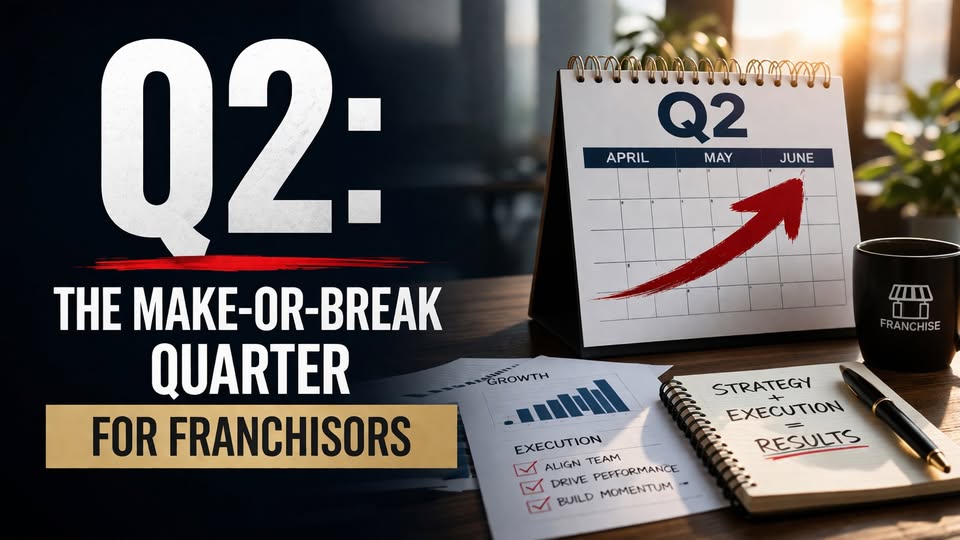
Q2 is where intention either becomes traction or quietly fades into another year of “almost.”
For franchisors, the first quarter is fueled by energy. New plans are rolled out. Strategic shifts are introduced. Teams are restructured. Goals are communicated with clarity and optimism. There is momentum, but it is largely directional. It points the organization forward, but it has not yet been tested.
Then comes Q2.
This is the execution window. Not glamorous. Not loud. But absolutely defining.
It sits between the ambition of Q1 and the natural slowdown of Q3. Summer looms. Calendars begin to fragment. Decision cycles stretch. Industry activity softens as conferences taper off and development pipelines pause until September. The urgency that existed in January is no longer automatic. It must be created.
This is where strong franchisors separate themselves.
Q2 is not about adding more. It is about doing what was already decided… better, faster, and with discipline.
The first priority is alignment. Not assumed alignment, but confirmed alignment. What was introduced in Q1 must now be clearly understood across the system. From the executive team to field support to franchisees, everyone should be operating from the same playbook. If there is confusion in April, there will be underperformance in July. Q2 is the time to tighten communication, simplify messaging, and ensure that priorities are not just known, but embraced.
The second priority is operational execution. Strategies do not fail because they are flawed. They fail because they are inconsistently executed. Q2 is where franchisors must get closer to the unit level. Field teams should be actively engaged, not observational. Coaching should be specific, measurable, and tied directly to the initiatives introduced in Q1. This is the time to reinforce standards, refine processes, and ensure that what is happening on the ground reflects what was planned in the boardroom.
The third priority is unit economics. Every franchisor talks about growth, but sustainable growth is always rooted in unit-level performance. Q2 is the ideal time to evaluate what is actually happening inside the four walls of the business. Are margins improving? Are labor models working? Is pricing aligned with the market? Are marketing initiatives driving profitable traffic or just activity? Before pushing further expansion, Q2 demands honest answers. It is far easier to adjust now than to explain underperformance later.
The fourth priority is development discipline. While the summer months may slow external activity, Q2 should be used to strengthen the development engine internally. This means refining the candidate journey, improving validation processes, and ensuring that the story being told to prospective franchisees is backed by operational reality. It is also a time to build relationships, not just pipelines. When September arrives, those who have been deliberate in Q2 will be ready to move with confidence.
The fifth priority is leadership cadence. With potential shifts in personnel coming out of Q1, Q2 is where leadership must stabilize and perform. Roles should be clear. Accountability should be visible. Meetings should be purposeful. This is not the time for organizational ambiguity. It is the time for leadership to demonstrate consistency and control.
There is also an often-overlooked opportunity in Q2: cultural reinforcement. The energy of Q1 can sometimes feel corporate, even top-down. Q2 allows franchisors to reconnect with the human side of the system. Recognition, communication, and engagement should not be delayed until conferences resume. They should be embedded into the rhythm of the business now. A connected system performs better, especially when external distractions increase.
What makes Q2 unique is that it does not demand attention. It is easy to underestimate. There are no natural deadlines forcing action. No major industry events creating urgency. No year-end pressure driving results.
And that is exactly why it matters.
Q2 rewards discipline. It favors those who can execute without external pressure. It is where systems are either strengthened or exposed.
By the time Q3 arrives, it is often too late to make meaningful adjustments. Teams are dispersed. Focus is diluted. Decisions are deferred. Momentum, if not already established, becomes difficult to create.
But when Q2 is approached with intention, it changes everything.
Execution becomes habit. Alignment becomes clarity. Performance becomes measurable. And when September returns, it is not a restart. It is an acceleration.
Now is the time to take a hard look at Q1. What worked, what didn’t, and where adjustments need to be made to ensure your mid-year results truly reflect being halfway to your 2026 goals. This is especially important for emerging brands!
If you’re serious about execution, alignment, and finishing the year strong, let’s schedule time to talk. Together, we’ll evaluate your current position, recalibrate where necessary, and put a deliberate plan in place for the months ahead.
Reach out directly at paul@acceler8success.com or via a direct message to get started.
Because waiting until later doesn’t just delay progress… it risks missing your goals altogether.
Discover more from Acceler8Success Cafe
Subscribe to get the latest posts sent to your email.

You must be logged in to post a comment.