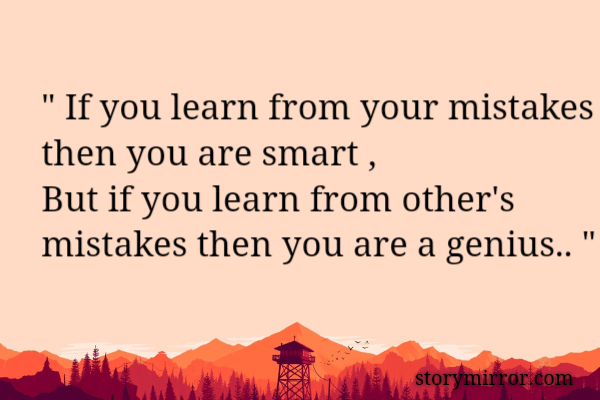
Mistakes are a part of life. However, so is learning from mistakes. But if you could learn from the mistakes of others rather than your own, wouldn’t you?
Let’s look at some common mistakes individuals make when exploring and investing in a franchise in order that you avoid them and improve your chances of success within your new business.
Mistake 1: Not Learning About Life as a Franchisee
While you have instincts for a reason, when investing in a franchise, relying solely on your instincts is not necessarily the best decision. Rather than just trusting your instincts, which could land you in hot water with your franchisor, landlord or tenant, choose to learn all you can before you finalize any agreement.
That said, always trust your gut and dig into what may be giving you that bad feeling. Talk with other franchisees. Ask them to share with you a day in the life of a franchisee. As well, speak with other tenants in the shopping center where you’re considering a lease. For both parties, ask whether they would do it again?
Knowledge is power. By learning from a leader within the franchise organization, as well as doing as much research as possible about the franchise before you dive in head-first, you are positioning yourself (and your franchise) for success by providing yourself with the tools necessary in case something goes awry. Ask franchisees how issues and disagreements have been addressed in the past. Same for tenants.
Mistake 2: Rushing Your Due Diligence
Slow and steady can still win the race, including in franchising. While you might be eager to get started as soon as possible, there may be moments where more time—and patience—is prudent.
For example, when choosing a location for your business, never allow yourself to be in such a rush that you choose a bad location or even fail to negotiate not only best rate per square foot but also tenant improvement allowance and other benefits such as free rent. Look to the future by checking current visibility and try to determine if there’s a possibility of that visibility being blocked, maybe by a new building on a pad site along the property’s outer rim or heaven forbid, road construction. Often, plans for both are made well in advance.
Mistake 3: Not Following and Trusting in the Process
Remember, you are making an investment in a franchise. And, when you do so, you’re making an investment in that franchise’s brand, processes and procedures. Understand what that means and what you’ll need to do to adhere to operations manuals regarding the same. It’s a huge responsibility that may carry some significant liabilities if you’re not in compliance.
You will want to make certain before you finalize your investment, to be sure to fully understand responsibilities, both of yourself and the franchisor. Read the small print closely and carefully so that you are fully on board when you sign on the dotted line(s). This applies to all agreements – lease, equipment, suppliers, etc. Remember, it’s difficult to put toothpaste back in the tube. So, be diligent on the front end of all transactions and heed the age-old advice of haste makes waste.
“When it comes to business success, there’s no room for half measures. If you want to succeed, you must go for it with everything you have. Hold nothing back. Give it your all. Then watch just how high you can fly!” – Jim Connolly Marketing Blog
78 years ago, today thousands of Americans in unity stormed the beaches of Normandy and changed the course of World War II. Many lives were lost in the effort to keep the world free. In light of current unrest and discord I appreciate our freedoms even more than ever before. As the threat against freedom has again reared its ugly head, it will take unity to prevail once again.
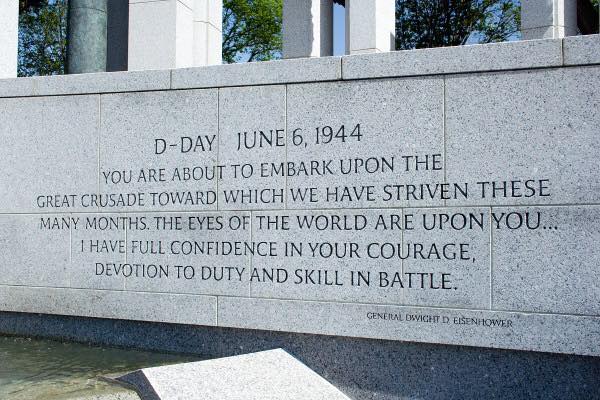
“You are about to embark upon the Great Crusade, toward which we have striven these many months,” General Dwight D. Eisenhower wrote.
“The eyes of the world are upon you. The hope and prayers of liberty-loving people everywhere march with you. In company with our brave Allies and brothers-in-arms on other fronts, you will bring about the destruction of the German war machine, the elimination of Nazi tyranny over the oppressed peoples of Europe, and security for ourselves in a free world.
“Your task will not be an easy one. Your enemy is well trained, well equipped and battle-hardened. He will fight savagely.
“But this is the year 1944! Much has happened since the Nazi triumphs of 1940-41. The United Nations have inflicted upon the Germans great defeats, in open battle, man-to-man. Our air offensive has seriously reduced their strength in the air and their capacity to wage war on the ground. Our Home Fronts have given us an overwhelming superiority in weapons and munitions of war and placed at our disposal great reserves of trained fighting men. The tide has turned! The free men of the world are marching together to Victory!
“I have full confidence in your courage, devotion to duty and skill in battle. We will accept nothing less than full Victory!
“Good luck! And let us beseech the blessing of Almighty God upon this great and noble undertaking.”
The following article on D-Day casualties is an excerpt from Barrett Tillman’ D-Day Encyclopedia.
Allied figures for D-Day casualties are contradictory, and German figures will necessarily remain inexact. Historian Stephen Ambrose cites 4,900 Allied troops killed, missing, and wounded.
The First U.S. Army, accounting for the first twenty-four hours in Normandy, tabulated 1,465 killed, 1,928 missing, and 6,603 wounded. The after-action report of U.S. VII Corps (ending 1 July) showed 22,119 casualties including 2,811 killed, 5,665 missing, 79 prisoners, and 13,564 wounded, including paratroopers.
Canadian forces at Juno Beach sustained 946 casualties, of whom 335 were listed as killed.
Surprisingly, no British figures were published, but Cornelius Ryan cites estimates of 2,500 to 3,000 killed, wounded, and missing, including 650 from the Sixth Airborne Division.
German sources vary between four thousand and nine thousand D-Day casualties on 6 June—a range of 125 percent. Field Marshal Erwin Rommel’s report for all of June cited killed, wounded, and missing of some 250,000 men, including twenty-eight generals.
By early July the Allied armies had captured 41,000 German troops while sustaining 60,771 casualties, including 8,975 dead. French losses in the Normandy campaign have been calculated at fifteen thousand civilian dead.
The total number of casualties that occurred during Operation Overlord, from June 6 (the date of D-Day) to August 30 (when German forces retreated across the Seine) was over 425,000 Allied and German troops. This figure includes over 209,000 Allied casualties:
Nearly 37,000 dead amongst the ground forces
16,714 deaths amongst the Allied air forces.
Of the Allied casualties, 83,045 were from 21st Army Group (British, Canadian and Polish ground forces)
125,847 from the US ground forces.
The losses of the German forces during the Battle of Normandy can only be guessed. Roughly 200,000 German troops were killed or wounded. The Allies also captured 200,000 prisoners of war (not included in the 425,000 total, above). During the fighting around the Falaise Pocket (August 1944) alone, the Germans suffered 90,000 losses, including prisoners.
“There’s a graveyard in northern France where all the dead boys from D-Day are buried. The white crosses reach from one horizon to the other. I remember looking it over and thinking it was a forest of graves. But the rows were like this, dizzying, diagonal, perfectly straight, so after all it wasn’t a forest but an orchard of graves. Nothing to do with nature, unless you count human nature.” ― Barbara Kingsolver
If you can’t appreciate what they accomplished, just try to imagine what life would be like today had they failed. United we stand. Divided we fall.
Sunday at Acceler8Success Cafe is the time for looking back over the past week. It’s a time for review as with so much going on at Acceler8Success Cafe I know it’s easy to miss a newsletter or two. Possibly my Question of the Week slipped by without you noticing, or an announcement I may have made just seemingly got lost amongst the busy news feed.
Just like an experience at your local cafe, I really want Acceler8Success Cafe to be conveniently located when you desire or need to relax, enjoy a cup of coffee, and catch up on some reading. My goal is for Acceler8Success Cafe to be your virtual cafe. A place where you may frequently visit to enjoy a few minutes to yourself. I’d like the experience to be memorable by providing learning opportunities, by presenting a different perspective & insight, by spurring thought & reflection, by encouraging interaction, and by spotlighting topics that, frankly, may not be as front and center as they should or need to be.
Acceler8Success Cafe is open for business seven days a week. For the benefit of current & aspiring entrepreneurs, this daily newsletter is delivered each morning. As a way to jumpstart the week ahead, a weekly review is delivered each Sunday morning listing and linking to the articles you might have missed during the previous week. My goal is to provide an opportunity for you to begin the new week informed and with ideas that possibly could accelerate your success.
“America’s fighting men and women sacrifice much to ensure that our great nation stays free. We owe a debt of gratitude to the soldiers that have paid the ultimate price for this cause, as well as for those who are blessed enough to return from the battlefield unscathed.” ― Allen Boyd
Culture lives and breathes in all organizations. It must be nurtured – fed and taken care of. If sick, the virus causing the sickness must be addressed.
Having worked with many, many with entrepreneurs exploring franchising as a business growth and expansion strategy, I’m often asked the question, “How does a new franchise company sell franchises without brand recognition?”
Instead of just focusing on investment level, industry segment and competition franchise candidates should know about the difference between legacy and emerging brands and the advantage of one over the other.
Question of the Week: Is it safer to invest in a recognized brand with a proven system as opposed to investing in something new and relatively unknown?
How will transitioning corporate executives or well-educated young professionals (or combination thereof between partners) consider a brand’s franchise opportunity amongst the growing number of franchise opportunities across a multitude of industries and industry segments? How should a brand be best presented in today’s competitive market… in today’s franchise buyer’s market?
What are you passionate about? If you’re not sure or maybe you’re thinking about doing something different in life, think no more and follow Nike’s slogan to, JUST DO IT!
What must be done to make life in America sensible and great again is a focus on kindness, along with care & respect. It’s nothing new as it’s what most of us were brought up to do – be kind to others and show care for others & respect others. It really is a simple formula, but it must start at home, one person, one family, one community at a time… one act of kindness at a time. What we do makes a difference. Let’s all do our part!
Have a great day (and week ahead). Make it happen. Make it count!
If you could do one thing to transform your life, it’s highly recommended finding something you’re passionate about and focus a significant amount of your energy toward the same.
Now, this isn’t as easy as it sounds, but it’s well worth the effort. If you dread going to your job or business, or find yourself constantly lacking motivation, or find what you’re doing dull and repetitive, you need to start looking for a new direction. Staying where you are will not only continue to make you unhappy, but you are not realizing your full potential in life.
If you’re thinking about doing something different in life, think no more and follow Nike’s slogan to, JUST DO IT!
“When you keep hitting walls of resistance in life, the universe is trying to tell you that you are going the wrong way. It’s like driving a bumper car at an amusement park. Each time you slam into another car or the edge of the track, you are forced to change direction.” – Suzy Kassem, Rise Up and Salute the Sun: The Writings of Suzy Kassem
Did I Choose Entrepreneurship, or Did it Choose Me?
Perhaps the buzzword of the internet in the 21st century, Entrepreneur is a term that is thrown around quite loosely nowadays. With the abundance of opportunities to start businesses online with little to no capital, more and more people are choosing the path of creating their own destiny. Much like myself.
When it comes to being an entrepreneur, there are a lot of things that people don’t consider. For one, it requires a lot of self-discipline and accountability – which not many people have. Fortunately for me, I developed a lot of the characteristics and habits of a high-performing entrepreneur through playing golf at an elite level.
There’s no doubt, the past two and a half years have been a bit odd, to say the least. The encouraging news for franchising – for the most part it continues to grow! This is very good news not only for those of us that spend the greater part of every day in franchise development, but for the economy, as well!
But I do believe franchisors must be prepared. Besides handling what I believe will be an increase in inquiries from a wider segment of the population than we’ve seen before, but in working effectively with today’s franchise candidates who are more diligent, cautious and sophisticated than ever before. And certainly, more tuned to social issues, personal well-being, and of course, flexibility and work/life balance. Expectations could not be higher!
Many of today’s candidates are voluntarily or involuntarily unemployed, soon to be unemployed, or may just want to do something more rewarding, spiritually or otherwise, or to [finally] control their own destiny. With economic uncertainty abound, many are approaching business ownership with the attitude that they will not fail, and besides, failure is not an option. To that end, today’s candidate is well-prepared to do his or her homework, dive into research, taking due diligence to a higher level, which really is as it should be, right?
However, working with these candidates, franchise professionals must be extremely diligent themselves in presenting the franchise opportunity all the way through to executing the franchise agreement, and beyond into the franchise relationship. I know, many franchise professionals are probably thinking they already do that. Besides, it’s the law to fully disclose the opportunity, right? They’ll go on to state they’ve always done things by the book, at all times. Blah, blah, blah!
It really doesn’t matter what was done in the past, how it was done, why it was done, or even having the belief all is being done right today. What matters is ensuring individuals inquiring today receive timely, focused attention across multiple communications channels. After all, it’s not uncommon to communicate with today’s candidate via phone, online meeting, text AND email almost simultaneously, seemingly bouncing from one to another and back. Today’s candidates not only expect this, but they also command it as it’s the level of communications they’ve grown accustomed to.
Focus on communications and diligence from both parties is a must in order for an astute transitioning corporate executive or well-educated young professional (or combination thereof between partners) to even consider a brand’s franchise opportunity, and especially amongst the growing number of franchise opportunities across a multitude of industries and industry segments. It’s a competitive market. It is a franchise buyer’s market!
And, if they ultimately do sign the franchise agreement, remit the franchise fee, and commit to investing a substantial sum of money, rest assured today’s franchisees will be even more inclined to expect and command a high level of accountability from the franchisor, and from the system itself. From themselves? Not likely as they will rarely blame themselves for any part of failure. But they will certainly hold others accountable, and possibly differently than would have been the case in the past. That same level of diligence and sophistication exhibited in the sales process will be increased exponentially if problems arise. Maybe even more if doubt and buyer’s remorse settle in.
Well, my fellow franchise professionals, it’s time to continue honing your communication skills and staying abreast of technology around today’s communications. It is time to study your franchise documents to understand and present it better than ever before. It’s time to fine-tune all aspect of operations with a keen eye to detail and examine and perfect your franchise sales process.
Any shortcomings will surely raise their ugly heads in the future if today’s new franchisees become dismayed, discontented, and or fail in their businesses. They will not hold themselves accountable. Instead, they will blame the person who “sold” them their franchise, or the operations department that they perceive to have provided little or no support, or the franchise executive that they feel showed no compassion in “forcing” them into paying royalties and advertising fees.
So, why did I turn what started out to be a positive regarding franchise interest and growth after a couple of years of uncertainty, and turn it into a picture of potential problems complete with gloom and doom?
Well, it’s to encourage and motivate every franchise professional to be on his or her A-game and as necessary to put their house in order. Not only to bring new franchisees and revenue into the system, but to continue to grow their system with franchisees that, when attaining a relative level of success, will refer new franchise candidates, validate the franchise system, possibly look to purchase additional locations in the future, and to keep franchising on solid ground. The alternative of course, is dedication of resources to dispute resolution, possible litigation, and toward uncertainty (whatever that may look like).
As you’re pondering whether you agree with my perspective or not, or whether you want to or will take your efforts to a higher level, below is something to think about. Of course, I do encourage comments and understanding your perspective regardless of if you agree or disagree.
Winners or Losers: Choices Are Made Everyday
The Winner is always part of the answer; The Loser is always part of the problem.
The Winner always has a program; The Loser always has an excuse.
The Winner says, “Let me do it for you”; The Loser says, “That is not my job.”
The Winner sees an answer for every problem; The Loser sees a problem for every answer.
The Winner says,” It may be difficult, but it is possible”; The Loser says,” It may be possible but it is too difficult.”
When a Winner makes a mistake, they say,” I was wrong”; When a Loser makes a mistake, they say,” It wasn’t my fault.”
A Winner makes commitments; A Loser makes promises.
Winners have dreams; Losers have schemes.
Winners say,” I must do something”; Losers say, “Something must be done.”
Winners are a part of the team; Losers are apart from the team.
Winners see the gain; Losers see the pain.
Winners see possibilities; Losers see problems.
Winners believe in win/win; Losers believe for them to win someone has to lose.
Winners see the potential; Losers see the past.
Winners are like a thermostat; Losers are like thermometers.
Winners choose what they say; Losers say what they choose.
Winners use hard arguments, but soft words; Losers use soft arguments, but hard words.
Winners stand firm on values, but compromise on petty things; Losers stand firm on petty things, but compromise on values.
Winners follow the philosophy of empathy: “Don’t do to others what you would not want them to do to you”; Losers follow the philosophy, “Do it to others before they do it to you.”
Winners make it happen; Losers let it happen.
~ Author Unknown
Have a great day. Make it happen. Make it count! And Happy Weekend!
As franchising continues to grow despite the pandemic, new concepts are entering the space offering franchise opportunities across most industry segments. This has been occurring at a rapid clip for the past few years and is anticipated to continue for the foreseeable future. That means that in addition to exploring opportunities with household names like Taco Bell, FastSigns and The UPS Store, candidates now have options to explore new brands such as Pepperoni’s, Outlaw FitCamp and Code Ninja. These newer brands are referred to as emerging brands while the former considered legacy brands.
With this new wave of brands, candidates are faced with questions beyond the norm. Instead of just focusing on investment level, industry segment and competition they will ask about the difference between legacy and emerging brands and advantage of one over the other. They’ll also ask specifically about an emerging brand head-to-head with a competing legacy brand that may clearly be the leader in that industry segment. They’ll wonder, isn’t it safer to invest in a recognized brand with a proven system as opposed to investing in something new and relatively unknown?
Let’s look at the obvious differences.
Legacy Brands
Typically, the brand has been developed over many years. In some cases, 20-50 years or more. There’s a relative level of success as exemplified by the sheer number of locations across a region or across the country. The perception of success is even greater. The brand name is well known from geographic locations to a multitude of advertising. Some by slogans and spoke persons – Who doesn’t know, Double A ‘Beep Beep” MCO (AAMCO) or Colonel Sanders (KFC) real or lookalike? For training and support there’s most likely an impressive corporate office with various departments and possibly local field offices or training centers.
Emerging Brands
The brand or initial business from which the franchise has been developed is well known locally. The founder is also well known and may be a local hero, of sorts. Customers live in the founder’s neighborhood with some knowing him or her from way back when. The brand is viewed as the antithesis of the big chain attracting customers like a magnet.
So, with these obvious differences, why invest in an emerging brand? It really does come down to personality and specifically willingness to tolerate a higher-than-normal level of risk, desire to communicate directly with the founder, desire to get in on the ground floor and opportunity to help mold the brand. Yes, it’s an entrepreneurial personality that is attracted to emerging brands and is probably the best answer to-date in the ongoing debate about whether or not a franchisee is an entrepreneur? Well, let’s leave that for another day…
In upcoming editions of Acceler8Success Cafe, I’ll take a deeper dive into the difference between legacy and emerging brands, and I’ll address the relatively new brands that have rapidly grown beyond the emerging brand category but certainly not to be considered a legacy brand. A couple of exciting brands immediately come to mind including Teriyaki Madness, Mosquito Joe and Crave Hot Dogs and BBQ. In addition, I’ll take a close look at a fast-growing segment of franchising, the multi-brand franchise systems offering complementing opportunities. Last, I’ll also be exploring a booming segment of franchising – home-based and home services businesses, both offering relatively low initial investments levels and flexibility, opportunities in high-demand by Millennials and Generation Z and also by Seniors.
Although franchising offers a plethora of opportunities across many industry segments and investment levels, diligence is even more important than ever before. So, if you’re considering owning a franchise as the next step in your career path, PLEASE, DO YOUR HOMEWORK AND MORE!
Question of the Week:
Is it safer to invest in a recognized brand with a proven system as opposed to investing in something new and relatively unknown?
Other articles at Acceler8Success Cafe that are relevant to buying a franchise include:
Having worked with many, many entrepreneurs exploring franchising as a business growth and expansion strategy, I’m often asked the question, “How does a new franchise company sell franchises without brand recognition?” Here are my thoughts…
Initially, the founder is the brand. It’s his or her passion for the business. It’s how he or she treats customers and employees alike. It’s how the business is promoted within the local market. Not just through typical advertising efforts, but through solid grassroots, organic efforts.
The initial franchise candidates are actually the “low hanging fruit” of the original business. These are the customers that inquire whether or not the business is a franchise and how they can learn more about owning their own. Most are interested because the business appears to be thriving and they’ve seen the owner (founder) time and again, always smiling and shaking hands. Public Relations efforts should ensure this occurs.
They admire the owner a great deal and will base their decision to open a franchise location, on the potential of establishing a relationship with the owner. They’ll compare the opportunity to other franchises and justify to themselves that they’re in on a ground floor opportunity with a direct line to the founder. As such, they feel their probability of success is greater because their location will be in the home office city and if they need help, they could easily approach the founder and the home office because of the proximity to their franchise location.
Ideally, the next few franchisees will also be in the same market as the original business and the first franchise location. It’s prudent to only expand locally until brand awareness begins to be achieved in the market and immediate suburbs or outlying towns, some semblance of an ad cooperative is developed for economy of scale, and support systems are perfected. Now the concept is ready to expand outside the initial market or hub.
However, it is often financial suicide to entertain requests from candidates all over the country. Instead, development efforts should be concentrated on one or two cities relatively close to the home office city. For instance, if original business and home office is in Houston, the natural progression would be to promote the opportunity next in San Antonio/Austin and Dallas/Fort Worth areas, and smaller markets in between.
My rule of thumb: Early-stage development should occur less than a 4-hour drive or a 2.5-hour flight from the home office market. Essentially, being able to provide hands-on support but still having the ability to make it back and forth in the same day or with just a one-night stay. Managing time is critical during initial development efforts.
As these markets start to become established with franchise locations, it’s advisable to promote the concept in another two or three markets. Maybe, explore another “hub” and “spoke” scenario. Let’s say, Greater Atlanta as the next hub.
Expansion efforts should be the same as they were in Texas and expansion out of that market shouldn’t occur until development moves from Atlanta to the suburbs – for instance, to Roswell, Alpharetta and beyond, for example to Savannah and Augusta. Then, as that occurs, the opportunity could be promoted close by in Nashville, Charlotte and Birmingham. Now, you see the spokes of national expansion beginning to form.
While this is going on, maybe inquiries start coming in from the Rocky Mountain Region. The Greater Denver Area would naturally become the hub as the gateway to Wyoming, Utah, Montana and into Idaho. Initially, locations should be developed in downtown Denver and out to the suburbs – Boulder, Centennial and even into Fort Collins and Colorado Springs. All the while building brand awareness.
It’s all about controlled growth and the founder exhibiting tremendous restraint in expanding too fast and in areas far away from his core group and subsequent hubs to be able to provide ample support, create ad cooperatives and build the brand geographically. Chances of franchise success are far greater at all levels of the franchise organization within the parameters of a controlled plan of development.
So, to answer the often-asked question directly, I suggest everyone in the system having a clear understanding of the founder’s vision. If it includes anything but a controlled development plan with his or her firm commitment to actively participate in the franchise sales process, the chances of selling the first ten to twenty franchises will be a frustrating, monumental task.
The results? Most likely the brand will immediately miss franchise development goals. Stakeholders will be upset as expectations are repeatedly missed. Before one knows it, the franchise system is scrambling to recover. Resources will be thrown at various ways to turn things around. Decisions will be reactive to the next fire that is burning or of a knee-jerk nature out of shear frustration. Little if anything will be done proactively with a plan. It’ll be akin to playing not to lose instead of playing to win. Although, I’m not sure what a tie relates to in business, so I must consider anything less than a win, a failure.
Other articles at Acceler8Success Cafe that are relevant to franchising include:
I do believe, in many, if not most cases, the level of business success contributes to the decision on whether or not a high performer is let go because their style is detrimental to the culture. In the case of a high performer in a business that is barely making it, that high performer probably stays. This situation works for the immediate time being but not for long-term growth. It’s difficult to build a team in this scenario.
A high performer with a bad attitude in an environment with other high performers, probably should go. But not without trying to get the person in line first. Bad attitudes are detrimental to team building. However, often times a bad attitude actually develops as a result of how people are treated by management, or by a particular manager. There are various other scenarios as well.
Culture lives and breathes in all organizations. It must be nurtured – fed and taken care of. If sick, the virus causing the sickness must be addressed. In the case of cancer, it must be identified, isolated and removed – making sure to properly treat closely affected areas to be sure of total elimination. If healthy, it must continue to be fortified – an immune system built, and new well-being programs developed.
At the end of the day, culture is a work in progress! It must be fluid. It must fill in the cracks and gaps and reach its own level. It must be understood by all. It must be allowed to grow. But it must be managed. The key is whether you do so reactively or proactively!
Recently, I read an interesting article about strategy and its effect on culture, “Why Strategy Matters and How it Influences Culture”. The author brought up several key points:
Does strategy matter?
If you do not think that it matters, then you are in good company. There are many who question the value of strategy. And I see many companies where there is no formal strategy; the informal strategy is to keep doing what has worked in the past or to chase what is fashionable today.
Strategy v Execution
When it comes to questioning strategy there are two schools that are particularly prominent. First, there is the school of execution. The execution school which says that strategy is waste of time. Why? Because strategies are generic-obvious and what matters is execution. The ability to turn strategy into the daily lives of the organization. Clearly, there is some truth in this school. Strategy which cannot be operationalized is waste of time-resource.
Strategy v Culture
Then there is the school that says, “culture eats strategy for breakfast”. Yes, culture is powerful. Culture determines what gets done and how it gets done. A strategy that does not take into account the fit with culture will meet lots of resistance. Getting people to enact such a strategy will be like fighting a guerilla war with an enemy who is patient and cunning. What is forgotten is that culture can be and is influenced-shaped-shifted through strategy.
To see strategy and culture as being separate and distinct is a gross misunderstanding. This misunderstanding arises due to our reductionist-analytical thinking. Strategy and culture are interlinked. Put differently, if you change strategy, you will take actions that will influence the culture. And if you change culture, it will eventually influence the strategy.
Corporate Culture as defined by Investopedia (aka Business Culture, Company Culture, Organizational Culture)
Corporate culture refers to the beliefs and behaviors that determine how a company’s employees and management interact and handle outside business transactions. Often, corporate culture is implied, not expressly defined, and develops organically over time from the cumulative traits of the people the company hires.
A company’s culture will be reflected in its dress code, business hours, office setup, employee benefits, turnover, hiring decisions, treatment of clients, client satisfaction, and every other aspect of operations.
A commonly used definition by Inc. Magazine
Corporate culture refers to the shared values, attitudes, standards, and beliefs that characterize members of an organization and define its nature. Corporate culture is rooted in an organization’s goals, strategies, structure, and approaches to labor, customers, investors, and the greater community.
Positively Memorable Experiences… They’re Not Only for Customers!
Several months ago, I shared my article, “Positively Memorable Experiences… They’re Not Only for Customers“. The focus of that article was on the franchisor / franchisee relationship, but the tenets of a strong relationship are paramount in developing a strong culture regardless of the organization, franchise or otherwise. The following 5 points are from that article and now shared here with some editing, making them applicable to relationships within any organization:
Understanding the true meaning and spirit of relationships. This must be shared and exemplified at every point of contact with all within the organization.
Developing the right culture at all levels. Be careful — culture is also defined as bacteria. This takes time and commitment, and is a reflection of how people, whether employees, suppliers or others, are treated at all times.
Creating an environment of truth, trust and transparency based upon open, two-way communication — the cornerstone of creating the right culture. Think of a three-legged stool that could hold a great deal of weight when fully intact yet would immediately fall under its own weight if one leg was compromised.
Establishing your organization as family. Treat them as such but understand that this is not the typical type of family of yesteryear with subservience to the head of the household. Mutual respect is paramount.
Building an environment whereby all are focused on mutual goals and objectives. All must sing from the same hymnal, and not just for dress rehearsal; be sure everyone has the hymn book; ideally, one that is based upon collaborative efforts.
Some may refer to the above as being great in theory, and not really practical. But just think what could happen if every touch point were seen as another opportunity to create or enhance positively memorable experiences. How would that change the culture of your organization? How would that lend credibility toward growing your organization? Think of the ripple effect.
Live it and breathe it every day for optimum results!
“America’s fighting men and women sacrifice much to ensure that our great nation stays free. We owe a debt of gratitude to the soldiers that have paid the ultimate price for this cause, as well as for those who are blessed enough to return from the battlefield unscathed.” ― Allen Boyd
The following is shared from the U.S. Department of Veterans Affairs.
Celebrating America’s Freedoms
The Origins of Memorial Day
Three years after the Civil War ended, on May 5, 1868, the head of an organization of Union veterans — the Grand Army of the Republic (GAR) — established Decoration Day as a time for the nation to decorate the graves of the war dead with flowers. Maj. Gen. John A. Logan declared it should be May 30. It is believed the date was chosen because flowers would be in bloom all over the country.
The first large observance was held that year at Arlington National Cemetery, across the Potomac River from Washington, D.C. The ceremonies centered around the mourning- draped veranda of the Arlington mansion, once the home of Gen. Robert E. Lee. Various Washington officials, including Gen. and Mrs. Ulysses S. Grant, presided over the ceremonies. After speeches, children from the Soldiers’ and Sailors’ Orphan Home and members of the GAR made their way through the cemetery, strewing flowers on both Union and Confederate graves, reciting prayers and singing hymns.
Local Observances Claim to Be First
Local springtime tributes to the Civil War dead already had been held in various places. One of the first occurred in Columbus, Miss., April 25, 1866, when a group of women visited a cemetery to decorate the graves of Confederate soldiers who had fallen in battle at Shiloh. Nearby were the graves of Union soldiers, neglected because they were the enemy. Disturbed at the sight of the bare graves, the women placed some of their flowers on those graves, as well. Today, cities in the North and the South claim to be the birthplace of Memorial Day in 1866. Both Macon and Columbus, Ga., claim the title, as well as Richmond, Va. The village of Boalsburg, Pa., claims it began there two years earlier. A stone in a Carbondale, Ill., cemetery carries the statement that the first Decoration Day ceremony took place there on April 29, 1866. Carbondale was the wartime home of Gen. Logan. Approximately 25 places have been named in connection with the origin of Memorial Day, many of them in the South where most of the war dead were buried.
Official Birthplace Declared
In 1966, Congress and President Lyndon Johnson declared Waterloo, N.Y., the “birthplace” of Memorial Day. There, a ceremony on May 5, 1866, honored local veterans who had fought in the Civil War. Businesses closed and residents flew flags at half-staff. Supporters of Waterloo’s claim say earlier observances in other places were either informal, not community- wide or one-time events. By the end of the 19th century, Memorial Day ceremonies were being held on May 30 throughout the nation. State legislatures passed proclamations designating the day, and the Army and Navy adopted regulations for proper observance at their facilities. It was not until after World War I, however, that the day was expanded to honor those who have died in all American wars. In 1971, Memorial Day was declared a national holiday by an act of Congress, though it is still often called Decoration Day. It was then also placed on the last Monday in May, as were some other federal holidays.
Some States Have Confederate Observances
Many Southern states also have their own days for honoring the Confederate dead. Mississippi celebrates Confederate Memorial Day on the last Monday of April, Alabama on the fourth Monday of April, and Georgia on April 26. North and South Carolina observe it on May 10, Louisiana on June 3 and Tennessee calls that date Confederate Decoration Day. Texas celebrates Confederate Heroes Day January 19 and Virginia calls the last Monday in May Confederate Memorial Day.
Gen. Logan’s order for his posts to decorate graves in 1868 “with the choicest flowers of springtime” urged: “We should guard their graves with sacred vigilance. … Let pleasant paths invite the coming and going of reverent visitors and fond mourners. Let no neglect, no ravages of time, testify to the present or to the coming generations that we have forgotten as a people the cost of a free and undivided republic.”
The crowd attending the first Memorial Day ceremony at Arlington National Cemetery was approximately the same size as those that attend today’s observance, about 5,000 people. Then, as now, small American flags were placed on each grave — a tradition followed at many national cemeteries today. In recent years, the custom has grown in many families to decorate the graves of all departed loved ones.
The origins of special services to honor those who die in war can be found in antiquity. The Athenian leader Pericles offered a tribute to the fallen heroes of the Peloponnesian War over 24 centuries ago that could be applied today to the 1.1 million Americans who have died in the nation’s wars: “Not only are they commemorated by columns and inscriptions, but there dwells also an unwritten memorial of them, graven not on stone but in the hearts of men.”
To ensure the sacrifices of America’s fallen heroes are never forgotten, in December 2000, the U.S. Congress passed and the president signed into law “The National Moment of Remembrance Act,” P.L. 106-579, creating the White House Commission on the National Moment of Remembrance. The commission’s charter is to “encourage the people of the United States to give something back to their country, which provides them so much freedom and opportunity” by encouraging and coordinating commemorations in the United States of Memorial Day and the National Moment of Remembrance.
The National Moment of Remembrance encourages all Americans to pause wherever they are at 3 p.m. local time on Memorial Day for a minute of silence to remember and honor those who have died in service to the nation. As Moment of Remembrance founder Carmella LaSpada states: “It’s a way we can all help put the memorial back in Memorial Day.”
Sunday at Acceler8Success Cafe is the time for looking back over the past week. It’s a time for review as with so much going on at Acceler8Success Cafe I know it’s easy to miss a newsletter or two. Possibly my Question of the Week slipped by without you noticing, or an announcement I may have made just seemingly got lost amongst the busy news feed.
Just like an experience at your local cafe, I really want Acceler8Success Cafe to be conveniently located when you desire or need to relax, enjoy a cup of coffee, and catch up on some reading. My goal is for Acceler8Success Cafe to be your virtual cafe. A place where you may frequently visit to enjoy a few minutes to yourself. I’d like the experience to be memorable by providing learning opportunities, by presenting a different perspective & insight, by spurring thought & reflection, by encouraging interaction, and by spotlighting topics that, frankly, may not be as front and center as they should or need to be.
Acceler8Success Cafe is open for business seven days a week. For the benefit of current & aspiring entrepreneurs, this daily newsletter is delivered each morning. As a way to jumpstart the week ahead, a weekly review is delivered each Sunday morning listing and linking to the articles you might have missed during the previous week. My goal is to provide an opportunity for you to begin the new week informed and with ideas that possibly could accelerate your success.
The process of personal branding involves finding your uniqueness, building a reputation on the things you want to be known for, and then allowing yourself to be known for them. Ultimately, the goal is to create something that conveys a message and that can be monetized.
This week as I’m focusing on Personal Branding, my thoughts wandered back to 2012 when I presented at the Franchise Brokers Association Conference & Expo. My presentation was appropriately titled, Personal Branding for Franchise Brokers. I recall many questions that essentially asked the same thing – What is personal branding and why is it important to me as a franchise broker or franchise salesperson (or business development professional)?
Question of the Week: How important do you believe personal branding is today?
Economic uncertainty. Recession. Failing business. All would certainly depict challenging times, if not devastating times. For most, these are unchartered waters. Certainly, giving up is not the answer. Or, at the very least, it shouldn’t be the only option. So, how can personal branding help navigate through rough seas until the waters calm down again?
We often hear about entrepreneurs being incessant about working long hours, never taking a day off, missing family functions, and essentially not having lives outside their own minds, and their work. Many have asked me if all of that is true?
Mental Health Awareness Month is coming to an end. Hopefully, we’ve all learned a little more about mental health than we did before. Truly, it needs to be front and center, and we must all do our part to recognize and address it however we can for ourselves, as well as for others.
Remembering the tragic event in Uvlade, TX
Words cannot describe my thoughts and the sadness I feel… It’s all so senseless. How? Why? Both repeat through my mind. I think about these poor people – and of course, the children! I cry for them and their loved ones. I think of my own grandchildren – OMG I couldn’t even begin to imagine… it’s true that in an instant, life can change forever.
Instead of sharing our thoughts & prayers as we do EVERY time we hear about a tragic event, especially, seemingly after a mass shooting involving children, I’ve chosen to promote kindness to honor the victims and their families. Maybe, just maybe, by spreading acts of kindness, we can change the tide of isolation, loneliness, despair, hopelessness, lawlessness, godlessness, and yes, evil that ultimately is behind these dreadful, heartless acts. What we do makes a difference. Let’s all do our part, one act of kindness at a time.
Have a great day (and week ahead). Make it happen. Make it count!














You must be logged in to post a comment.