As we slowly move toward Q4 amidst challenging times and economic uncertainty, I’d like to share a heartfelt story about the hard truth of entrepreneurship. As more and more are exploring entrepreneurship as a career alternative for a multitude of reasons, I feel compelled to share this story as I believe it truly outlines the efforts and emotional toll of today’s entrepreneur.
I met Amy Martinez through a local group of restaurant owners and managers. This group was started to enable restaurant operators to exchange ideas, discuss difficulties they may be facing, and as one might imagine, just to vent. I’ve been honored to have presented to the group several times and often interact with members as the need arises.
Approximately a year or so before COVID raised its ugly head, I started interacting with Amy on Facebook as she was building her brand, Grazeables. It was essentially a side-business whose products were described as artisan-created grazing boxes, boards & tablescapes. You see, Amy was a full-time nurse and a single mother of four. So, it truly was a side-business.
As many know, I am extremely interested in seeing an entrepreneurial quest unfold. Amy’s quest was one that was a textbook example. Amy would often share absolutely magnificent photos each weekend on Facebook of extraordinary tablescapes for clients’ events — birthdays, anniversaries, family get-togethers and the like.
Each beautiful tablescape included magnificent arrays of mouth-watering food, all exquisitely displayed. They were true masterpieces with absolute attention to detail. This was not your typical restaurant catering off to the side for the sole purpose of providing food for that evening’s guests. Instead, Amy’s work — a work of art — was the centerpiece of the event. It was also a conversation piece as evident by the detailed positive reviews after the event.
There was no doubt Amy was committed to excellence. She truly exemplified the delivery of positively memorable experiences — all the time. However, it certainly wasn’t easy as she wore so many hats. Yet, wore them exceptionally well — at least so it appeared to everyone looking in from the outside.
Well, it’s not my story to tell as to what Amy endured as she juggled work, family and business. One day, I’m sure there will be a book that will share Amy’s story. But what I do recall was Amy openly sharing her struggles. Although, it was never about the hard work or the long hours, nor the difficulties of being a single parent. It was about the struggle between her job as a nurse helping others and being able to dedicate full-time to her brand and business.
Today, I’m proud to share what Amy posted this past weekend on Facebook. I don’t know what prompted her to do so. Although as many entrepreneurs do, or should do is to share her thoughts and frustrations, and maybe even vent a bit. But more so, that as an entrepreneur or not she is also a person and as such, has emotions and feelings just like everyone else. She may appear to be Super Woman by her drive and commitment, but she is still human and should always be respected as such.
The Truth of Entrepreneurship by Amy Martinez — Creator of Grazeables
The majority of people with side hustles or small businesses are hobbyists, not entrepreneurs. There’s a HUGE difference, and I’ll tell you why.
Walking the tightrope of Entrepreneurship is HARD and SCARY AF!!! It’s quitting your secure job and selling everything you have to lay yourself and your creativity out there… naked… to take a chance with no safety net. It’s the nauseating churn that forces you to work 3 days straight without sleeping because if you don’t sell, your kids don’t eat. It’s the painful loss of relationships along the way because effort & focus are never evenly divided.
We spend MONTHS, years even… researching, building, and scraping every penny just to pour it all out over a dream while we hold our breath and pray that it works. We jump the hoops with exhausted legs, we sign our security away on the dotted line, and we navigate our communities in the dark with the hope of discovering that one missing piece we can fill with our work.
The creative process is an IMMENSE amount of effort… but it’s NOTHING compared to the magnitude of work it takes to scale that process into a profitable business. Then, just when it all starts to come into focus, you learn how completely unprepared you are for the toll it takes on your spirit while you fight like hell to protect it.
This enormous, beautiful, soul-aching, brilliant work that we do… I guess I just wish that more people respected and understood the gravity of the accomplishment for those of us that have succeeded… ESPECIALLY as women!
When you marvel at the originality and uniqueness of someone’s work, please also take the time to notice & appreciate the efforts behind its publication.
Profitable businesses require years of strenuous and consistent effort, high risk, deep investment, and personal sacrifice. If you aren’t willing to put in the required amount of work & education it takes to lay the foundation from the beginning, you will spin your wheels on the very short road to failure.
Please also understand the occasional frustration from those of us that try like hell to mentor others along the way. We offer tons of wisdom and experience, but none of us can do the work for you, nor will we reveal the proprietary information that gives us the distinct, however minute, edge over our competition and its the essence of who we are. Our brand is our baby, and we protect it al all costs.
Those in the trenches get it. Everyone else? Well, they never will.
Very well said, Amy. Your words are truly from the heart and soul of an entrepreneur. You are amazing. Thank you for sharing your thoughts as I’m sure they will resonate with many, as they have to me.
I fully understand the importance and necessity for today’s entrepreneur to be motivated & inspired, and educated & well-informed. I also acknowledge that an entrepreneur’s time is limited, and quite valuable.
As such, and as part of my commitment to entrepreneurial success at all levels, me and my team will do the heavy lifting and review podcasts & videos we know will help entrepreneurs achieve their goals. Then, each Sunday I will share what we believe to be of interest to our growing list of current and aspiring entrepreneurs, and as a complement to daily editions of Acceler8Success Cafe.
In addition, below the videos, I will provide links to the past week’s articles to provide an opportunity to read what may have been missed during the week and/or to be reviewed a second time.
“Here’s to your entrepreneurial success. Make it happen. Make it count!”
NOTE: Please pause video before moving from one to another. Thank you!
Articles from September 12 to September 16
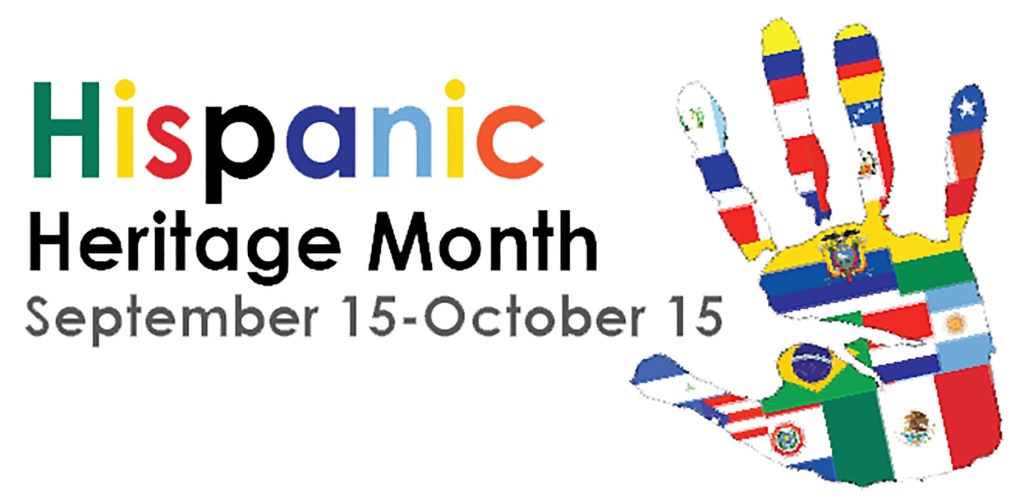
Our focus this past week was on immigrant entrepreneurship as we recognized and began to celebrate National Hispanic Heritage month which runs from September 15 to October 15.
To get what you want you must make sacrifices, trade-offs and decisions no one else can make except for you. The decisions to change are often difficult to make but are necessary to continue moving forward even if it means taking a few steps backwards in order to get back on track.
Change that can help make even incremental progress towards a goal is priceless. But remember, effective change requires thought and calculation. It is not meant to have caution thrown to the wind in a flurry of reckless abandonment to change just for the sake of change.
Act swiftly. Act decisively. Make it happen. Make it count. This is the mantra at Acceler8Success Group and as an action plan, it works and especially when change is necessary or imminent.
Change in the Workplace
But why is change good? Why is it important to adapt to change? These questions are addressed by Leadership & Management Expert, Karen McCullough in her article, Why Change In the Workplace is Good! A Guide For Companies. She shared the following:
Change in an organization leads to many positive aspects – that lead to retaining a competitive edge and also remaining relevant in your business area. Change encourages innovation, develops skills, develops staff and leads to better business opportunities, and improves staff morale.
Change in the workplace can make us uncomfortable as we step out of what we normally do and attempt new ways of working. Adapting to change in the workplace is often difficult because it’s too easy to stay accustomed to our habits, however… change is essential to many aspects of business and our working life.
Those companies that don’t change can stagnate and not develop. Our current world is constantly evolving in terms of technology and many other challenging but innovative ways. Having the ability to face these new challenges head-on will not only develop the company as a whole but also those who work within it.
Change… Because Failure is not an Option
Like a ship at sea, a business should make directional changes in a long, sweeping manner. Conversely, although abrupt change in direction may create havoc, it may be deemed necessary by the captain and navigation team to avoid what may not be apparently visible on the surface to others on the ship but is evident nonetheless through compilation of data and viewing radar.
In any event, well thought-out plans, including contingency plans must be in place and acted upon to arrive safely at a specific destination within a certain time frame, and with available resources.
However, what happens when seas are rough, or when a storm is approaching, or when an engine shuts down? It’s then the captain’s responsibility to crew and passengers, and to the ship’s stakeholders to make any and all necessary changes to ensure all interests are protected.
Thereafter, when the ship is safely docked, management must review the events that took place and explore options to ensure the same problems don’t reoccur. Management must identify ways to improve performance by developing strategy and executing on tactical plans to accomplish objectives at all required intervals – short, mid and long-term.
Change requires thought and planning, just the same as operating a successful business. As change occurs, many within the business are exposed to decisions that on the surface appear to be “drastic or severe” and are not understood and/or agreed upon.
But what is typically not realized are areas of weakness and vulnerability that must be addressed and with the utmost sense of urgency. In many cases there are common denominators across multiple areas of the business. Most will be directly attributable to reduction in sales. Some will adversely affect profitability.
Unfortunately, financial concerns are back and now even more so than during the economic downturn of 2008-2012. And as was the case back then, deficiencies, previously overshadowed by high sales levels are standing out once again like sore thumbs.
Accepting these facts while realizing limitations and shortcomings is vitally important but knowing what and how to improve [and change] is required. Being proactive and acting now is paramount!
Change what needs to be changed. Prioritize changes that will make the most immediate impact. Grow into the changes that aren’t urgent. However, do it all within the time frame where challenges present themselves as survival may be dependent upon the same. Change, as unpopular as it might be, is necessary to recover AND to move forward.
To this end, hard decisions must be made – with absolute conviction and without delay for the good of the business and ultimately, for all within the business. Yes, change is difficult. But so is failure, and failure is not an option!
Action. Not Just Words!
Change is necessary. Change is imminent. Don’t procrastinate. Do not put your head in the sand, thinking whatever is prompting change will miraculously disappear. Change requires taking swift action. After all, just as shit happens, change happens, too. And neither should be ignored!
So, I leave you with this… Success is a marathon, not a sprint. Do you have what it takes to cross the finish line to success? In the face of change, are you committed to staying the course, yet doing whatever is necessary to succeed? Are you prepared to address change head-on?
Which brings us back to the Acceler8Success mantra… Act swiftly. Act decisively. Make it happen. Make it count!
Have a great day. And yes, make it happen and make it count!
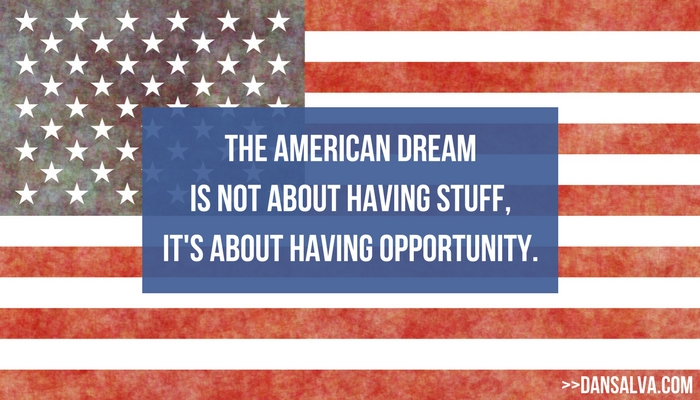
This week I’ve been sharing information about immigrants and the American Dream of business ownership and entrepreneurship. Hispanic and Latino entrepreneurship was in the spotlight as we began celebrating National Hispanic Heritage Month (September 15 to October 15). Today, I’ll wrap up this series with a look at whether the American Dream is still alive for immigrants.
According to a recent story at Axios.com… We often hearthe American Dream is dead. But whatever you think of immigration, every year people come here from around the world in pursuit of that dream.
Why it matters: People across borders and oceans still view the U.S. as the place to come to build a better life for their children.
And 70% of U.S. adults — across race, gender, political party and income — say the American Dream is achievable, Gallup polling found.
Three stats to chew on:
Founder frenzy: 44% of Fortune 500 companies have at least one founder who is an immigrant or the child of immigrants, according to stats from New American Economy, founded by Michael Bloomberg.
Upward mobility: Even the children of immigrants who fall in the poorest quarter of the U.S. end up in the middle class, Princeton researchers found.
Self-made wealth: 80% of America’s millionaires — foreign- and U.S.-born — are first-generation.
The bottom line: The U.S. remains the leading destination for immigrants with big dreams. 20% of all the world’s immigrants are in the U.S., according to Pew Research Center.
Historian James Truslow Adams gave an eloquent interpretation of the American Dream in his 1931 book Epic of America:
But there has been also the American dream, that dream of a land in which life should be better and richer and fuller for every man, with opportunity for each according to his ability or achievement. It is a difficult dream for the European upper classes to interpret adequately, and too many of us ourselves have grown weary and mistrustful of it. It is not a dream of motor cars and high wages merely, but a dream of social order in which each man and each woman shall be able to attain to the fullest stature of which they are innately capable, and be recognized by others for what they are, regardless of the fortuitous circumstances of birth or position.
I’ll end this week with a look back at an article I shared last month, Pursuing & Achieving the American Dream. It’s a story about my grandparents and about one of my best friends, and their experiences toward and in achieving the American Dream. My grandparents are long gone, and my friend, Gustavo’s life sadly ended as a result of COVID. However, the light of the American Dream shines brightly within their families.
Statue of Liberty
Pursuing & Achieving the American Dream
I recently read an interesting article at Vox.com about what the American Dream looks like today for immigrants. The article referenced a massive study by the National Bureau of Economic Research. Published in 2019, the study examined millions of father-son pairs of immigrants over the last century. The authors found that children of immigrants have higher rates of upward mobility than the children of those born in the U.S.
More significantly, they found that shifts in immigration policy and country of origin have not altered the pattern — and that it holds true whether the first generation was poor (in the bottom 25th percentile of income distribution) or relatively well-off (in the top 25th percentile).
For those who’ve personally watched upward mobility work within their families, the promises of the American Dream often feel like promises kept. Hard work and education led to significantly better outcomes for their children, with more stability for the entire family.
Immigrants Achieving the American Dream
My grandparents immigrated to America from Sicily with little money and few belongings to their name. They were moved through Ellis Island and settled in Brooklyn. They weren’t provided with government housing or given welfare checks.
Initially staying with relatives and friends of family, some they barely knew, they took menial jobs as they could find them. They saved every penny they could and as quickly as possible they secured an apartment, and then a better one until they purchased a home, and then a nicer one.
My grandfather started as a laborer and eventually became a bricklayer. My grandmother worked in the garment sweatshops, often starting work at 4AM. Literally, working their fingers to the bone. Yet, supper was on the table every day without fail.
Sundays were an open house for family and friends. My grandparents had no education. Nor did they ever own a car. All they wanted from America was opportunity and the chance for their children to have better lives than they did.
Well, they helped my Mom and I as my parents had divorced when I was a young child. We lived in their home with my two uncles. They helped one of my uncles start a business while putting my other uncle through college and medical school. And they never received, nor expected anything from the U.S. government. Yet, I had never heard them complain.
As they sailed past the Statue of Liberty in New York Harbor they only wanted one thing and that was opportunity. They found it and capitalized on it without handouts, grants, welfare, etc. Truly, they wouldn’t have accepted any of it as they were very proud people. They lived for their dreams, and accepted their responsibility. I’m forever grateful for the foundation they built for our family.
Gustavo Hernandez
A very good friend of mine, Gustavo Hernandez legally immigrated to the U.S. from Mexico with barely a dollar in his pocket. He worked his butt off, taking whatever job he could find and worked his way through the ranks of the restaurant industry. From doing menial jobs to waiter to assistant manager to manager to restaurant owner, he excelled at each position.
Over the years, he worked to attain U.S. citizenship and did the same for his wife, Betty who had immigrated from Central America. Betty worked at a local hospital as they started a family. Despite all the hardships they had gone through, they were determined to achieve the American Dream, and they did.
Gustavo started a restaurant with his brother. He made sure to bring in other family members along the way. In a relatively short period of time he started a second restaurant and then a third. He and Betty purchased a home, and eventually a second home while keeping the first one to rent to a friend of the family. Gustavo was already helping others within his family and community.
My wife and I were honored to be invited to attend Betty’s swearing in ceremony for her American citizenship. I’ll never forget how proud they were as they were now a family of American citizens. And like my grandparents, they never accepted anything from anyone in the way of financial assistance. I couldn’t believe how much money Gustavo spent to legally achieve American Citizenship for himself and for Betty. It was an insane amount of money!
One time Gustavo asked me why so many people that were born in America were unhappy and why so many had trouble finding and keeping a job. He said he couldn’t understand it as he had hundreds of friends that had immigrated to the U.S. and he didn’t know of any that were unemployed. In fact, some had two, three, and even four jobs!
As Gustavo’s eldest son was preparing to attend college, Gustavo came down with COVID and passed away two months later. The last time I had met with him, just days before he got sick, he informed me he had leased the restaurant where we had first met some fifteen or so years ago. He said it felt like he had come full circle.
Today, the new restaurant is open and his dream continues as his family has stepped up to keep his legacy alive. His son is still attending college. Gustavo’s influence carried on to two of his nieces who have graduated from college with degrees in mechanical engineering. The family continues to carry on Gustavo’s dream as he has helped them achieve their dream… The American Dream!
El Chaparro Mexican Bar & Grill
As the 2nd Anniversary of Gustavo’s untimely passing quickly approaches, with tears in my eyes, I remember sitting at the bar at one of his restaurants awaiting his family after his funeral. I recall that I couldn’t help but focus on the American Flag hanging on the wall. It made me smile as I thought back to the many conversations Gustavo and I had over the years talking about America and the American Dream.
He had very strong opinion about the great opportunities in America. He was proud to have become a U.S. Citizen and that his wife, Betty did as well. We talked often about business ownership, establishing a culture within the business and the importance of people being the heart of the business.
One time we talked five straight hours about employment opportunities in America. He specifically stated, the desire to work is the first step toward achieving the American Dream.
Gustavo Hernandez was certainly proud of his heritage but he was also proud to display the American Flag, not only for himself, but also for the benefit of others. I know there are many other immigrants just like Gustavo with a similar feeling of pride.
To Gustavo, to my grandparents, and to all immigrants that have kept and who are keeping the American Dream alive, I say, thank you!
“According to the U.S. Census Bureau’s Survey of Business Owners, among the Fortune 500 companies, 40% were created by first- or second-generation immigrants.” – Sari Pekkala Kerr and William R. Kerr, “Immigrant Entrepreneurship in America: Evidence from the Survey of Business Owners,” National Bureau of Economic Research.
This week we’ve been focusing on Hispanic & Latino entrepreneurship. There’s so much to discuss about this booming sector of small business owners but the issues are apparent for all groups of immigrant entrepreneurs. With entrepreneurship considered as the cornerstone to our country’s economic recovery and with so many immigrants interested in the American Dream of business ownership, it makes perfect sense to address these issues sooner rather than later.
In many ways, immigrant entrepreneurs are no different than other small business owners. They start with a dream. They nurture the seed. And, if all goes well, it grows – bigger than even they had imagined.
The difference for immigrant entrepreneurs: they often start with fewer resources than the native-born. They struggle with things that other small business owners take for granted. And when they need help, they often have no one to turn to – no one but family or an informal network of other newcomers facing the same barriers.
Last year, Opportunity America conducted a series of round-table-like discussions with immigrant entrepreneurs including blue-collar Mexican Americans in Chicago, white-collar Mexican Americans in Phoenix, and a mixed group of Asian Americans – Indian, Chinese, Korean, Vietnamese, and Middle Eastern immigrants – in St. Louis.
The two questions at the heart of this Kauffman Foundation-funded research, which also included a small online survey: what accounts for the extraordinary entrepreneurial energy many newcomers bring to the U.S., and what barriers do they face in starting and growing businesses?
The responses showed that immigrants are twice as likely as native-born Americans to launch new businesses. Their firms often look similar to other startups: a little smaller, but with similar seed capital and a similar volume of sales per employee. Some are wildly successful – we all know the iconic brands. But many grow more slowly than other small businesses, and they are more likely to fail.
More than half of those who responded to the survey said they had always wanted to own their own businesses. Another 40% said they were drawn by the flexibility and independence of entrepreneurship. Fewer than 5% said they could find no other suitable employment.
Many seemed to feel that entrepreneurship was something they learned from their parents or others in the immigrant enclaves where they came of age – part of their immigrant DNA.
According to an article in Harvard Business Review, if you’re lucky enough to have received a Covid-19 vaccination, you probably have an immigrant entrepreneur to thank. Not only are Pfizer, BioNTech, and Moderna pioneers in the field of mRNA-based vaccine research; they were all founded or cofounded by immigrants.
Recent research explored a more hidden driver of immigrant entrepreneurship: personality-based self-selection. The decisions to emigrate voluntarily and to start a company are both associated with high levels of risk. Entrepreneurs of all types face the threat of business failure.
As a study of startups in several OECD countries showed, just above 60% survive past their third birthday, and only 40% make it past their seventh one. Immigrants, too encounter significant additional risks, from unemployment or underemployment to xenophobia and psychological trauma.
BusinessRecord.com reports, immigrants are still coming to the United States in search of the American Dream. And though there’s no shortage of ideas or drive to start new businesses, they do have to overcome a multitude of challenges that American-born entrepreneurs don’t face. A restrictive and limited visa process, cultural barriers, a complex, foreign legal system and too much self-reliance can often hinder their growth.
Despite the many hurdles they have to overcome, how have such a large number of immigrants been able to push forward and start something where others, who were born in the U.S. have not? What can we learn from them?
With so much at stake for the future of our country, what more can we do to help immigrant entrepreneurs achieve the American Dream of business ownership?
If entrepreneurship is truly the path to economic recovery as has been stated many times over the past few years, then doesn’t it make sense to do more to encourage entrepreneurship while also providing resources for ALL individuals and groups interested in pursuing entrepreneurial endeavors, and regardless of their backgrounds?
Well, one way is to develop programs like The Hispanic Entrepreneur Initiative. But there must be other initiatives. If you know of any, please let me know and I will do my part to promote them. In future editions of Acceler8Success Cafe, I will focus more on Immigrant Entrepreneurship – addressing both continuing challenges and solutions.
With my goal of helping as many people and groups as I can to achieve success as entrepreneurs, I firmly believe immigrants must not be left behind.
Each year, Americans observe National Hispanic Heritage Month from September 15 to October 15, by celebrating the histories, cultures and contributions of American citizens whose ancestors came from Spain, Mexico, the Caribbean and Central and South America.
The observation started in 1968 as Hispanic Heritage Week under President Lyndon Johnson and was expanded by President Ronald Reagan in 1988 to cover a 30-day period starting on September 15 and ending on October 15. It was enacted into law on August 17, 1988, on the approval of Public Law 100-402.
The day of September 15 is significant because it is the anniversary of independence for Latin American countries Costa Rica, El Salvador, Guatemala, Honduras and Nicaragua. In addition, Mexico and Chile celebrate their independence days on September 16 and September18, respectively.
Promoting Entrepreneurship to the Hispanic Community
Yesterday, I shared a recent experience about Acceler8Success Group President, Erik Premont’s participation in an all “Spanish” panel at Franchise Expo South in Fort Lauderdale, Florida.
To clarify an often misunderstood point, Erik reminded me Hispanic and Latino are often used interchangeably though they actually mean two different things. Hispanic refers to people who speak Spanish or are descended from Spanish-speaking populations, while Latino refers to people who are from or descended from people from Latin America. Nevertheless, it’s typical to see either of the terms used to describe business ownership by these groups.
Further, he reminded me that Portuguese and French are also spoken in some Latin American communities – two languages that he is fluent in speaking and understanding to go along with Spanish, Italian, German, Russian, and of course, English.
Erik is also quite knowledgeable about the various cultures associated with these languages. He often tells me, it’s not only what is being said, but how it’s being said, and in the context of the person’s country of origin.
The basis of this initiative, is for organizations to sponsor a certain number of Hispanic entrepreneurs who will receive free access to The Lonely Entrepreneur Learning Community – a one stop shop for the knowledge, tools and support a current or aspiring Hispanic entrepreneur needs to start or grow a business.
Spearheaded by Erik Premont, Acceler8Success Group has committed to expand its efforts to drive Hispanic entrepreneurship and what better time than to accelerate these efforts during Hispanic Heritage Month.
Our goal is to continue to assist Hispanics (and Latinos) in achieving the American Dream of business ownership whether via franchising or business acquisition. In addition, we are also focused on assisting current Hispanic entrepreneurs bring their concepts to the United States.
Nearly one in four new businesses is Hispanic-owned.
The nearly 5 million Hispanic-owned businesses in the United States contribute more than $800 billion to the American economy annually.
There are more than 300,000 Hispanic-owned, employer businesses located across all 50 states and the District of Columbia. These enterprises employ at least one employee other than the owner.
Hispanic employer businesses employ about 1 million workers, with more than $100 billion in annual payroll. The number of Hispanic-owned businesses that employ at least one employee other than the owner increased by 14% between 2012 and 2017 — more than twice as fast as the national average.
In the decade preceding the pandemic, the number of Hispanic business owners increased 34% compared to an increase of just 1% among non-Hispanic business owners.
The report highlights key areas of Latino entrepreneurship, including firmographics, financial data and employee statistics from Latino businesses and the overall ongoing effect of COVID-19 on the Latino entrepreneur community.
Key themes and findings include:
Firm & Employee Growth: The number of Latino-owned employer firms has grown 35% in the last 10 years compared to 4.5% growth among White-owned firms. In addition, Latino-owned businesses are increasing their number of employees at a dramatically faster rate than White-owned employer businesses (55% vs. 8% since 2007).
Tech Focus: Latino-owned businesses are as likely as White-owned businesses to be in the technology industry.
Career Advancement: Latino business owners are more likely to provide opportunities for the growth and advancement of their employees than White business owners.
COVID Bright Spots: Latino-owned businesses are more likely to make proactive, strategic business changes to mitigate the negative challenges of the pandemic.
September 14th is Support Latino Business Day, recognizing & celebrating the economic contributions of Latino-owned businesses.
Our Commitment
We want to do our part to both encourage and assist all the hardworking Hispanic and Latino business owners as well as the many individuals who want to own their own business. You’re all essential to our society and economic growth. So, keep thriving because we believe in everything you offer and we want to help you reach your business goals.
For more information about our resources, plans and programs, as well as the Hispanic Entrepreneur Initiative, please reach out to me or Erik Premont on LinkedIn. Or, if you prefer, please send either of us an email to Paul@Acceler8Success.com or Erik@Acceler8Success.com. We look forward to helping to make a difference for Hispanic & Latino Entrepreneurs everywhere.
Hablamos español. On parle français. A gente fala português.
As our focus is always on connecting the right people, brands and opportunities, we can help you… and we want to help you.
Moving to another country is certainly risky, as well as courageous. So, it comes as no surprise that immigrants tend to be more entrepreneurial than the rest of the population. In 2019, immigrant entrepreneurs made up 21.7 percent of all business owners in the United States, despite making up just over 13.6 percent of the population and 17.1 percent of the U.S. labor force.
Nothing was more evident to the Acceler8Success Group Senior Leadership team this past weekend than the high level of interest in Immigrant Entrepreneurship.
Yesterday, I shared my experience over the weekend speaking to 130+ Nigerian immigrants at the annual Nigerian Muslim Conference. My focus was on entrepreneurship and franchising.
In Florida at Franchise Expo South, Acceler8Success Group President, Erik Premont was doing something similar. Erik was asked to participate in a discussion panel, FRANQUICIAS = OPORTUNIDAD para los Emprendedores Hispanos en USA.
This was the first time a discussion panel at an MFV Expositions event that was presented completely in Spanish. The discussion was centered around the theme “Franchise = Opportunity for Hispanic Entrepreneurs in the United States.”
The main objective was to increase awareness of the opportunities and benefits that franchises represent for entrepreneurs, and give greater prominence to diversity in general, including traditionally underrepresented groups. Hopefully, this was the first of many panels that will be delivered in such a beautiful language, with a message delivered without necessity of translation or interpretation by attendees.
As Hispanic Immigrants make up the largest underrepresented group, it made perfect sense for the inaugural panel to take place at Franchise Expo South in South Florida. After all, for immigrant Hispanics, the key findings are:
Roughly 1.2 million of the 12.2 million business owners in the United States are immigrant Hispanics. Business ownership is higher among immigrant Hispanics than U.S.-born Hispanics, and in fact, is comparable to business ownership rates among non-Hispanic whites.
“This panel is our first initiative to attract entrepreneurs who represent the composition of the communities that are served. The IFA and HLFLC are stepping forward to foster an environment where equal opportunity is part of the lived experience in all of our communities.” said Elena Dolinski – Moderator of this panel.
After doing some of my own research about the event, I was impressed to see the extent of coverage and specifically about this panel as Elena Dolinski was interviewed on ActualidadRadio.com. Listen to the interview HERE.
Other panel guests included:
Ericka Garza, President Bon Au Pain – President of the Council of Hispanic-Latino Franchise Leaders – Bon Au Pain
Eduardo Torres, South Florida Director, US Department of Commerce
Elizabeth Porth, Leader of the Golden Arches Women’s Network – McDonald’s Latam
Armando Conde, Founder of Franquiciate.com
Carolina Veira, Leader of Hispanic Star Miami
When discussing the event with me, Erik said, “To quote my co-panelist and good friend Ericka Garza, President of Au Bon Pain and Council Chair for the Hispanic Latino Franchise Leadership Council at the IFA, “The collective feedback, emotion, and passion confirmed how Franchising unites people and transforms lives,” and in his passionate way he continued, “I am thankful beyond words for having been invited to participate in an all “Spanish” panel at Franchise Expo South in Fort Lauderdale last week.”
The more we work with Hispanic Entrepreneurs, more commonly known as Latino Entrepreneurs, the more I personally appreciate the possibilities for our great country. To that point, I’d like to share the following facts:
Latino-Owned Business in the U.S.
Latino entrepreneurs make up 29 percent of the U.S. population by 2050, up from 17 percent today.
If Latino owned businesses grow as fast as the U.S. average, they could add $1.4 trillion to the U.S. economy. Which would add almost eight percent to the $18 trillion U.S. economy.
When Latino entrepreneurs start a business, 70 percent of their funding comes from personal savings, according to a Stanford study, while just six percent comes from commercial loans.
And from NewAmericanEconomy.org:
Entrepreneurship and business creation is fundamental to a healthy economy. Companies less than five years old create an average of 1.5 million new jobs for Americans each year. Immigrants in particular play an important role in creating jobs as they are more likely to start a new business than the rest of the population.
Despite this, the United States lacks a startup visa to welcome immigrant entrepreneurs with a proven idea and solid investment. This results in many business owners struggling to stay—at a cost to our economy and its workers.
The Hispanic Entrepreneur Initiative
As previously mentioned at Acceler8Success Cafe, we’re very excited to partner again with Michael Dermer and his organization, The Lonely Entrepreneur. Maybe even more so on The Hispanic Entrepreneur Initiative as it perfectly aligns with our goal to continue to build upon a growing list of clients from Mexico and Latin America whose interests focus on entrepreneurship in the U.S.
With a goal of empowering 100,000 Hispanic entrepreneurs, Hispanic entrepreneurs will be provided with free access to The Lonely Entrepreneur Learning Community – a one stop shop for the knowledge, tools and support an individual needs to start or grow a business. This access is provided free due to the financial contributions of corporations, philanthropies, individuals, and economic development organizations.
For more information about this exciting initiative, please reach out to me or Erik Premont on LinkedIn. Or, if you prefer, please send either of us an email to Paul@Acceler8Success.com or Erik@Acceler8Success.com. We look forward to helping to make a difference for Hispanic Entrepreneurs, as well as for all Immigrant Entrepreneurs!
This past weekend I was honored to speak at the annual summit of the Nigerian Muslim Association of Greater Houston. The 3-day summit was held in Lake Livingston, TX.
The event was attended by approximately 130 males aged 15 and above, with the majority between the ages of 30 and 50. Attendees included students, professionals and business owners. They were fathers, sons and brothers. The theme of the summit was “Striking the balance – Family, Career, Health and Spirituality”.
In preparation for this year’s summit, event committee members were requested to include a special session on achieving the American Dream of business ownership. Association members firmly believed the time was right.
In addition to learning about various options for owning a business, members were very interested in learning about franchising and how it could be the right path to business ownership for members of the Nigerian Muslim community.
“85 percent of small business owners believe that being your own boss and owning a business is achieving the American Dream.” – Kabbage
As I presented for 40 minutes or so, followed by more than an hour of Q & A, I was quite impressed by the attendees’ high level of attention. Their questions were articulate and well thought out. They were definitely prepared. Many took copious notes. Afterwards, a line of people waited to speak with me. Several set up appointments to get together this week!
All in all, I found the attendees to be extremely passionate about the American Dream and especially the American Dream of business ownership. None appeared to have short-term expectations. Instead, all spoke about long-term goals and about building businesses for their families and for others within their community.
They were certainly looking toward the future. They expressed their thoughts about fully understanding the necessity of starting as soon as possible and then doing whatever it would take to succeed. Saying they were extremely confident would be an understatement
During the drive back home, I reflected upon the event and smiled as I thought about our ongoing commitment to help both current and aspiring entrepreneurs from various immigrant groups. I thought about the common denominator from the group I had just presented to other groups we’re currently working with. Seemingly all have similar dreams, as well as similar mindsets as to what it would take to ensure a better future.
I smiled even more as I thought that despite differences in cultures, languages, and skin colors, the passion for the American Dream of business ownership is consistent from one immigrant group to another.
In short order, my mind shifted to Michael Dermer and The Lonely Entrepreneur, and their project, The Hispanic Entrepreneur Initiative. I exclaimed outloud – albeit only to myself – that we really needed to do more to help make that initiative a great success. I also thought that, in time a similar initiative could be developed for other immigrant groups.
As previously mentioned at Acceler8Success Cafe, we’re very excited to partner again with Michael and his organization. May even more so on this project as it perfectly aligns with our goal to continue to build upon a growing list of clients from Mexico and Latin America whose interests focus on entrepreneurship in the U.S.
Yes, The Hispanic Entrepreneur Initiative is certainly of major interest to Acceler8Success Group. We are committed to help this initiative succeed. That all said, and for the benefit of anyone who may not be familiar with this initiative, let’s revisit:
The Hispanic Entrepreneur Initiative
With a goal of empowering 100,00 Hispanic entrepreneurs, Hispanic entrepreneurs will be provided with free access to The Lonely Entrepreneur Learning Community – a one stop shop for the knowledge, tools and support an individual needs to start or grow a business. This access is provided free due to the financial contributions of corporations, philanthropies, individuals, and economic development organizations.
Supporters include UPS, Microsoft, US Hispanic Chamber of Commerce, HISPA and Molson Coors and the initiative has been endorsed by over 50 Hispanic leaders including:
Dr. Juan Andrade, Jr. (President, US Hispanic Leadership Institute, Recipient – Presidential Citizen’s Medal)
Luis Ubinas (Investor, Entrepreneur, Past President – Ford Foundation, Past President – Pan American Development Foundation)
Dr. Loui Olivas (Professor Emeriti, W.P. Carey School of Business At Arizona State University)
The challenges for entrepreneurs in general are great. The challenges for Hispanic entrepreneurs are even greater. And there isn’t just one “Hispanic” entrepreneur – there are entrepreneurs from various countries that face some of the same – but some different – challenges and opportunities.
In addition to lack of access to capital, many Hispanic entrepreneurs possess passion and great ideas but lack access to the knowledge and support they need to succeed.
With the help from corporations, philanthropies, individuals, and economic development organizations, the Hispanic Entrepreneur Initiative will change that by putting the tools in the hands of 100,000 Hispanic entrepreneurs.
How it Works
In this initiative, organizations sponsor a certain number of Hispanic entrepreneurs who receive free access to The Lonely Entrepreneur Learning Community – a one stop shop for the knowledge, tools and support a current or aspiring Hispanic entrepreneur needs to start or grow a business. The platform addresses both the business and personal issues Hispanic entrepreneurs face and provides multiple ways for Hispanic entrepreneurs to get the answers they need:
• Knowledge: 500 learning modules that cover both the business and personal issues entrepreneurs face including issues Hispanic entrepreneurs face
• Tools: 100s of templates (e.g., business plans, legal agreements) and reviews of the top vendors and solution providers they need (e.g., accounting software) including Ongoing Support via Two Channels: multiple ways to solve their pressing challenges, Guidance from the TLE Team in Our Community: where entrepreneurs can ask questions and get answers from members of the TLE Team, Group Coaching: entrepreneurs can sign up for an unlimited number of group coaching sessions on the various business and personal issues they face. If they miss sessions, recordings are available for future reference at any time.
• Funding Sources: 150+ funding sources available for entrepreneurs
• Vendors: 50+ vendor reviews, discounts and a list of “vetted vendors” (including some free resources)
• Procurement Opportunities: 150+ opportunities made available by large organizations
• Business and Personal Issues: our program not only covers business issues, but all the personal issues entrepreneurs face (dealing with stress, ego and humility, leading)
• Daily Perspective: an entrepreneurial “tip” sent to every individual each day
• Access: 24/7 access from any desktop or mobile device
Having the Learning Community at every step of the journey significantly increases their chance of success.
The Needs of Different Hispanic Entrepreneurs
There isn’t just one “Hispanic” entrepreneur. There are native born and immigrant entrepreneurs from various countries that face some of the same – but some different – challenges and opportunities. In addition to providing answers for the issues facing all Hispanic entrepreneurs, the initiative addresses the issues and opportunities faced by the different Hispanic entrepreneurs, including entrepreneurs from: Mexico, Puerto Rico, Brazil, Colombia, Argentina, Venezuela, Guatemala, Cuba, Chile, Spain, El Salvador, and Peru.
Program Supporters
The initiative has gotten off to a fast start with programs launched by major corporations including:
• Microsoft empowering Hispanic entrepreneurs in El Paso Texas as reported in El Diario Mx and on television
• UPS launching its program at the L’Attitude 2021 conference to empower Hispanic entrepreneurs
• US Hispanic Chamber of Commerce
Benefits of the Program
There are multiple benefits to the program:
• Help Entrepreneurs: provide individuals with the knowledge, tools and support they need
• Proven Success: the program has been implemented successfully by a vast array of corporations, governments and charitable organizations
• Scalability: the ability to put the tools in the hands of a large number of individuals quickly
• Branding: various elements of the program would be branded including landing pages, access to the leaning assets and a group in the online community.
• Minimal Effort on Your Part: the program is turn-key and is executed with minimal lift on your part
• Turn-Key Execution: you are investing in a program that delivers turn-key execution
• Marketing Opportunities: making a program like this available and the success stories that come from it are powerful marketing opportunities
• Flexibility: to apply to the specific type, geography or group of entrepreneurs
• Measurement: the ability to measure activity and impact of the program
The program provides the opportunity to quickly get tools in the hands of a large number of current and aspiring small business owners.
Integrated Marketing to Highlight Impact
The TLE Team works with supporter marketing teams to maximize the impact on their public image:
• Public Relations: coordinated communications with media outlets to highlight supporter efforts
• Social Media: ongoing social media activities to show the impact supporter is having
• Success Stories: to be used in marketing and to inspire supporter audiences
Endorsements from Leaders
A coalition of stewards of the Hispanic community have endorsed the Hispanic Entrepreneur Initiative:
• Yvette Donado (former Chief Diversity Officer of ETS; Hispanic Magazine, 50 Most Influential Hispanics)
• Marcel Portmann (Latin America Advisor for +70 global brands; liaison to Inter-American Development Bank (IADB); former Vice President of Emerging Markets, International Franchise)
• Dr. Pilar Nava-Parada, (Philanthropist and Leader For Women Entrepreneurs with Mexican Origin)
• Dr. Joy Nicole Martínez (Raised $240m for nonprofits; inaugural member of Peace50 Community; Director, World Woman Foundation)
• Andrés Guardado, (Mexican Football star and his wife Sandra De La Vega)
• Sheila Ivelisse Borges, (Managing Director, Research, at Rutgers University; former Assistant Director – NYU Adjunct Professor/STEM Educator/Diversity & Equity – Columbia University in New York City)
• Gabriel Brodbar, (Social Impact Leader; former Executive Director, NYU Social Entrepreneurship Program)
• Nepherter Estrada (Charlotte Business Journal 40 Under 40 Honoree)
• Catherine Milone, (President, Junior Achievement of New Jersey)
Three different areas are measured to ensure that current and aspiring entrepreneurs are getting the value of the Learning Community and moving toward the achievement of business results:
• Engagement – engage with the Learning Community and fellow entrepreneurs
• Achieve Key Business Activities – achieve business activities and improvements that are necessary steppingstones to achieving business results (e.g., form a company, prepare financials)
• Achieve Business Results – achieve key business results (e.g., increase revenue)
Each day, entrepreneurs in the program improve their chance of success.
For more information about this exciting initiative, please reach out to me or Acceler8Success Group president, Erik Premont on LinkedIn. Or, if you prefer, please send either of us an email to Paul@Acceler8Success.com or Erik@Acceler8Success.com. We look forward to helping to make a difference for Hispanic Entrepreneurs, as well as for all Immigrant Entrepreneurs!
21 years ago tonight, we went to bed thinking tomorrow was going to be just another day… The memories of that fateful day never seem to stop.
In fact, I believe they’re becoming more and more vivid as we passed the ten and fifteen-year marks, and now, twenty-one, a milestone number that we’ve come to know as an entry to adulthood, a defining number between generations. Could 9/11 really be that long ago?
Certainly, the questions continue. Many say, never forget! I say, How could we possibly forget? 21 years and the tears still flow, hearts still ache and still, it’s hard to understand why and how this could have possibly occurred… and on our soil, in our backyards, to our friends, classmates and loved ones??
“Time is passing. Yet, for the United States of America, there will be no forgetting September the 11th. We will remember every rescuer who died in honor. We will remember every family that lives in grief. We will remember the fire and ash, the last phone calls, the funerals of the children.” George W. Bush
I’m still mesmerized by the events of 9/11… It’s so hard not to get caught up in all the reminders on TV, replaying the events, new documentaries, review of thousand-page reports, theories of blame and on and on. And of course, social media.
That being said, I guess it’s good that it’s all front and center as we do need to remember as we must never forget, never surrender. More importantly, it brings to mind the unselfish acts of first-responders, whose acts of courage and heroism are beyond words, beyond even what many could ever possibly imagine.
Being from New York and knowing families of firemen and policemen I have seen some of what is referred to as a true brotherhood. But it’s more than that. Sure it’s definitely a close-knit group, often of generation after generation of friends and family working together, living together, laughing together, crying together…
But the thing they do more together than anything is to serve and protect others, together.
To all the brave, and to all the victims, and to all the families affected by 9/11, my prayers continue for you every day. To friends that perished, I’ll never forget you. It’s all still so hard to believe…
Of course, there are so many images that are posted to remember the tragic events of 9/11. Many have been developed very tastefully and respectfully to honor those that lost their lives that dreadful day.
Others have also been developed quite well to honor America and to exemplify our resolve as citizens to protect our great nation at all costs, and especially the freedoms many have sacrificed their lives protecting.
However great those images of honoring and remembering, I respectfully choose to share the ones above that show the true human emotions of that day. It’s these images that have been etched in my mind that will never allow me to forget the human loss and the lasting effect this horrible event has had on so many individuals and families to this day.
I’ll never forget the images of the many policemen, firemen, emergency medical technicians and other first-responders that were there at Ground Zero… Yes, I will never forget! We must never forget!
It’s certainly going to be a tough few days as image after image similar to the ones above will appear on social media about 9/11. My mind will wander as so many questions remain unanswered, a tragedy of unthinkable magnitude, so many families affected and for years to come.
Tears will fill my eyes as I see graduation photos of of high school classmates, friends that perished. It feels as if time is slowing to a crawl as 9/11 approaches, and especially now with the backdrop of crime in our cities including NYC. Still, the memories vividly stand out like it were yesterday.
Could it really be 21 years since that fateful day? Could it be that most of our youngest generation was born after that day? I was born in 1957 with the end of WW II only twelve years prior and just sixteen years after the attack on Pearl Harbor! Yet, WWII seemed so distant when I was a kid.
Anyway, it’s still tough for me to believe as I try to set aside emotions and make tomorrow about those who deserve to be honored for their courage, selflessness and sacrifice. I wish the world could pause so we may shine the spotlight on the heroes of that day. They and their families deserve it.
I can’t help thinking about John Lennon’s song, Imagine. It just seems right for the moment.
”Imagine all the people. Living life in peace. You may say that I’m a dreamer. But I’m not the only one. I hope someday you’ll join us. And the world will be as one”
With so much uncertainty and divisiveness in our great country, how the past two and a half years have affected all of us, and now with the anniversary of that fateful day, this morning finds me deep in thought about friends and family, and especially those I haven’t seen or spoken to in quite some time. I love you all!
Much has changed and continues to change. Certainly, that has been the case over the past 21 years. I hope and pray we can, and will come together again as we did after 9/11. The challenges we’re facing, at times seem insurmountable one person at a time but as families, friends and communities pull together, stay together, and be strong for each other, we can overcome current and future challenges.
So today, let’s reach out to friends and family and strengthen or even reestablish those relationships – the bonds of friendship, the bonds of family, the bonds of communities… all are bonds of Americans that benefit us all. Let us realize that, “United we stand, divided we fall” are words to live by
I pledge allegiance to the Flag of the United States of America, and to the Republic for which it stands, one Nation under God, indivisible, with liberty and justice for all.
If you’re thinking about business ownership and considering whether franchising is right for you, the following articles and resources, previously shared at Acceler8Success Cafe will help you make an informed decision and provide clarity on your entrepreneurial journey. Be sure to click on the various links to access the information.
With the Great Resignation still in full swing, a lot of people are choosing to take control of their personal and professional future by exploring entrepreneurship.
Of those who realize their entrepreneurial potential many choose owning a franchise as the vehicle to take them from employment to entrepreneurship due to the already proven business model and built-in, ongoing support system, among other benefits.
If becoming a franchisee seems like the right path for you, follow the tips in this article to find the perfect opportunity.
Potential franchise buyers know before making a final decision, they need to obtain information from other franchisees and also, their possible franchisors. But what information do they need to get?
Generally, I recommend using the Franchise Disclosure Document (FDD) as a guide. Read through it and ask a potential franchisor very specific questions about each item listed. It’s a can’t miss road map. This article outlines the various FDD items that every candidate should ask questions about in order they have complete understanding of the brand and its business model.
The dream of owning your own business is alive and well for most Americans. The only problem is that many people don’t know where to start on the journey to becoming self-sufficient. There are a million different options, but first and foremost each potential entrepreneur must decide if he or she wants to become a franchisee or start a business independently.
Each route has its benefits; therefore, it’s critical to take the time to consider both options before making a decision. What it initially comes down to is asking yourself the questions listed within this article.
Too often than not, franchisees are of the mindset that they’ve bought into a franchise system and just need to sit back and wait for the business to flow through their doors. Sometimes, it’s ignorance and perception that clouds their thoughts. Thinking that the brand name they invested in should be enough for instant business success at their location. But most of the time, it’s just plain old arrogance that gets in the way.
It’s the arrogance of having committed hundreds of thousands of dollars to buy a franchise as being the sole reason for success. It’s also the basis of feeling that with this level of financial commitment, the franchisor should be solely responsible for making sure franchisees succeed. Almost demanding a guarantee of success!
Well, it is not the franchisor’s sole responsibility, under any circumstances, for making sure that franchisees succeed. Read this article to gain a better understanding of personal responsibility and accountability when owning a franchise business.
With a new wave of brands, candidates are faced with questions beyond the norm. Instead of just focusing on investment level, industry segment and competition they will ask about the difference between legacy and emerging brands and advantage of one over the other. They’ll also ask specifically about an emerging brand head-to-head with a competing legacy brand that may clearly be the leader in that industry segment. They’ll wonder, isn’t it safer to invest in a recognized brand with a proven system as opposed to investing in something new and relatively unknown? This article identifies some of the obvious differences.
The Great American Franchise Expo connects hundreds of franchise businesses with potential owners. They provide education through seminars from industry experts on topics including franchise law, financing, and other critical business concepts. Attending these expos will provide potential franchisees with the opportunity to network with leading industry executives and franchise developers.
Recommended Books on Franchising
Listed below are several books on franchising that I highly recommend. I firmly believe these books must be read BEFORE signing a franchise agreement and remitting a franchise fee. They should be considered essential components of your due diligence. Know before you invest!
The definitive A-to-Z guide to researching, selecting, and starting a viable franchise business
With more and more professionals looking for alternatives to traditional corporate employment, Become a Franchise Owner! informs would-be franchise owners of the joys and perils of purchasing a franchise. Authored by a trusted, feisty, tell-it-how-it-is independent franchise industry insider, this book offers straightforward, step-by-step tips and advice on how to properly (and carefully) research and select a franchise business.
Get tips on how to locate information about franchises, current industry trends, interviews with franchisors, and hot franchise opportunities.
Offers a self-evaluation to discover if you are “franchise material”
Describes how to choose the right franchise for your specific situation
Lists the 40 crucial questions to ask current franchise owners
Owning a franchise isn’t for everyone; in fact, as Joel Libava says, “it’s really not for most people.” But if it is for you, this book can guide you in starting your own successful franchise business.
This comprehensively researched and deftly written franchise guide brings together experience and fact to give you the tools you need to understand which franchise is right for you. With insights from respected franchise leaders and a thorough understand of franchising, this book will help you understand and master the 4 Critical Steps to finding the Ideal Franchise: 1. The Introspective Self 2. The Franchisor 3. The Franchisees 4. The Legal and Financial
The Insider’s Guide to Buying a Franchise or Franchising Your Business
In this easy-to-read guide, franchise expert Rick Grossmann and franchise attorney Michael J. Katz impart decades-worth of insight and advice on what it takes to make your franchise operation successful. Grossmann and Katz share expert tutorials, tricks of the trade, and access to sample franchise documents, checklists, and questionnaires designed to get you organized, support you through the process and get your new franchise off the ground.
If you’re thinking of buying a franchise, you’ll learn how to:
Determine if running a franchise is right for you
Navigate franchise disclosure documents and agreements
Identify the signs of a good franchise opportunity
If you’re thinking of franchising your existing business, you’ll learn how to:
Pick the best method for expanding your business
Understand the keys to establishing a successful franchise system
Evaluate potential franchisees and grow your franchise Whether you want to buy a franchise or franchise your own business you’ll learn what to expect, how to move forward, and how to avoid costly mistakes–making Franchise Bible required reading.
Get fast, economical, custom funding and realize your small business or startup dreams with help from Benetrends Financial. The experts at Benetrends provide an innovative approach to help you achieve the ideal funding you need to get your ideas off the ground for long-term entrepreneurial success!

















You must be logged in to post a comment.