Category: Franchising

Franchising Excluded from AMEX Small Business Saturday Events!

This Saturday, November 26th is the 2nd Annual American Express Small Business Saturday. Most likely you have seen advertising and promotions for the event. Possibly you’ve seen the event’s Facebook page that has over 2.3 million LIKES. If you spend as much time online as I have you, then you have definitely seen promo after promo mentioning the event.

Well, franchising, supposedly the cornerstone of small business and as many claim, the driving force behind economic recovery in America, has been excluded from the event. Here’s the AMEX notice…

ELIGIBILITY: The Program is only available to independently owned businesses. Small business cannot promote any of the following: pharmaceuticals, drugs, politics, pornography or sexual aids, diet aids, gambling, liquor, tobacco, firearms/weapons, or any sensitive topic with respect to current events, and any such small businesses are not eligible for this Program. Franchisees, national chains and government agencies are not eligible. By participating in this Program, you represent and warrant that (i) your business complies with the requirements set forth herein and (ii) you are the owner of the business and have the right to participate in this Program.

Yet, American Express heavily solicits franchise brands and franchisees to accept the American Express Card. And, as we all know, at a higher rate than that of Visa and MasterCard. Not to mention the fact that American Express typically exhibits at franchise conferences and trade shows where they promote AMEX Merchant Services. Besides, aren’t franchise locations independently owned and operated?

At the very least, franchisees should be able to participate locally even if franchise brands are prohibited from participating at the national level!

So, do you believe American Express was correct in excluding franchise brands and franchisees from Small Business Saturday? What are your thoughts?


Bookmark and Share

The Changing World of Social Media

Here’s an interesting statement from an article I’ve recently read regarding the changing world of social media…

“A decade of social media disruption is now coming to an end. To a very large number of mainstream enterprises, large and small, social media is just one more item to integrate into the workflow process. While a few years ago, there were just ideas, today there are processes. While a few years ago social media [evangelists] were relegated to research and education, now social media is being used for marketing, recruiting, communications, business development, sales, support and so much more. In short, social media’s disruption is pretty much over and now the longer, slower, duller process of integrating social media into enterprise fabric, where diverse workers use tools to get their jobs done the same way they use computers, search and email.”

Any thoughts?


Bookmark and Share

Improving Local Brand Awareness AND Driving Sales & Profitability for Franchisees!

Individuals on the buying side of a transaction in today’s business environment are more diligent and cautious than ever before. Not only are these individuals consumers, but they are also business owners, executives, and basically anyone making a purchase for personal or business use. Taking this a step further, although a decision to offer credit is not considered to be a buy / sell transaction, today’s credit providers are also exercising caution and diligence at higher levels than in the past. So, what does this mean for today’s franchisees?

Considering that people buy from people, and people do business with people, the personal aspect is paramount to establishing a relationship that evolves thru to the transaction, and many times, repeat transactions. But, who has the time to network and afford people the opportunity to learn about them and their experience? Well, the answer is, “not many”, as they also have businesses to operate and manage, and time is limited. The key, then, is to brand ones’ self in a way to create a personal platform whereby franchisees, the business owners, will be searchable by the diligent and cautious parties that want to learn more about the person behind the local business before deciding whether or not doing business with them makes sense, and is in line with their own objectives, and possibly, values.

Typically, franchisees are hesitant, reluctant and frightened to network. Even in their communities. Basically, they don’t know where to start or even know what to say beyond, “I’m a such and such franchisee, and we sell this and that.” Therefore, franchisees work hard in the business by working long hours behind the counter, serving customers and interacting with employees; both important to the business but not to the growth of the business. Or, they do the opposite and check-in at some point, pick up the deposits and then do something completely unrelated to the business. Again, things may be in order but the business remains status quo. Does this all sound familiar?

Personal Branding for Franchisees, developed specifically for retail and service B2C and B2B franchises, can change how franchisees are perceived by consumers and others desiring to do business with them. It will improve franchisees’ confidence in going main-stream into the local community. It will create a platform whereby franchisees would be perceived to be on a similar level as executives of larger businesses and corporations. It will provide franchisees with the motivation to expand his or her reach into the local business community. It will present franchisees as experts in their field and in business in general. It will open communications at various business levels potentially exposing franchisees to strategic alliances, future employees and key contracts. Ultimately, it will help improve local brand awareness and drive sales and profitability.

Bookmark and Share

The Digital Holy Trinity – Possibility or Probability?

I was recently asked my opinion of Groupon and I immediately thought of its place within the whole realm of traditional and social media marketing, and how I see its sustainability in small business, including franchising, and if I recommend using group coupon deals at all.

Here’s my opinion, subsequent rant… and a bold prediction!

Groupon and others like it should only be utilized strategically and only for a specific purpose such as generating immediate interest and cash flow for a typically slow period, and to infiltrate a competitor’s customer base. Both of these objectives have been achieved by utilizing a Groupon-type coupon. Further effectiveness is evident as the coupon strategy is enhanced by social media.

Personally, there are so many Groupon copycats that the allure, even from a customer perspective, has diminished considerably from just six months ago. Case in point – I had purchased over 30 Groupons and similar coupons and was happy to use them all. That being said, over the past three or so months I have not purchased a single one. Why? Because before it was one deal per day and I was notified of the same and I could simply decide one way or the other. Now, I’ve got to look at deals, is it family based or not, entertainment or service… just too much of a hassle. Not to mention the bombardment of collateral emails like for Social Escapes by Living Social, etc.

Beyond that, coupons and promotions will be very geo-specific. Actually, social media is becoming very geo-specific which will drive the geo-specificity of coupons and promotions. Facebook has a distinct advantage over many others as they have both Facebook Places and Facebook Deals. Further, they have finalized or are close to finalizing a deal with Foursquare whereby it works hand-in-hand with Facebook Places. As it is, Foursquare populates into Facebook (and Twitter). And mobile phone usage will continue to drive check-ins and geo-specific marketing. Customer Review sites are jumping on the bandwagon and offer check-ins as well.

Where I believe Facebook will prevail as the leader, is the community feature. Basically, a captive audience where fans can realize all, including coupons and promotions, check-ins, customer reviews, sharing information, posting comments, etc. The push to a more mobile-friendly Facebook is already occurring. If you can think it, Facebook is probably working on it. If not, they’ll buy it. Long-term contracts? Facebook deems them as not being necessary. They really don’t need to as no one really competes with Facebook.

Now that Facebook has become more business-friendly, the sky is the limit. I project you’ll see Facebook go after LinkedIn or develop something similar. Twitter could be a possible acquisition. MySpace? That will be interesting especially as Zuckerburg feels the under 13 crowd should be on Facebook. With MySpace, he’d give them more reason to do so… or maybe justification. Foursquare? Some type of merger would be practical. How about the rumors that Apple is stockpiling their cash for a run at Facebook? Now THAT would be very interesting!

On the other front is Google. Certainly, they are a search powerhouse. And, with their acquisition of YouTube, they now have the top two search engines. Yes, YouTube is used for search even more than Yahoo and Bing. But, Google has not done well with social media. Think GoogleBuzz and GoogleWave. So, at what point does Google and Facebook realize they’ve each cornered their own parts of the market. Maybe even covering the whole market? Would that then create the possibility of a Google-Facebook merger? Just think of THOSE possibilities! And, now that Microsoft has purchased Skype, maybe the celestial landscape will include Skype… albeit with an improved mobile application.

So, the winning combination in one way, shape or form is… Search, Social, Mobile. I like to call it the Digital Holy Trinity!

*This post was originally posted on this site May 2011.

Author’s note – As for Google +, it remains to be seen what happens with Google’s latest attempt at social media.  I, for one, believe it will also fall by the wayside as their other attempts within social media have in the past.


Bookmark and Share

Ten Commandments of Social Media

Lon Scafko, author of The Social Media Bible, and keynote speaker for the upcoming Franchise Social Media Summit, wrote an article some time back for Fast Company magazine where he discussed the Ten Commandments of Social Media. These commandments are an excellent guideline to developing a social media marketing strategy, and for future reference.

ten_commandments_large_web-copyCommandment 1. Thou Shalt Blog (like crazy)

Blog. Please. That’s the first priority. Set up a blog, a personal blog, a business blog. It’s easier than you think. Use an existing blogging site such as Blogger.com or GoingOn.com or install your own branded blogging site right on your own server by using WordPress. And, WordPress is free.

Commandment 2. Thou Shalt Create Profiles (everywhere)

Create your profiles; do it now before someone else takes them. Once they are gone, they are gone forever. That’s called cyber squatting. So get out there. Use Open Social to make filling in your profiles as easy as a click of a button.

Commandment 3. Thou Shalt Upload Photos (lots of them)

Upload photographs. You’ve got them. Don’t upload the one with you with a lampshade on your head…counterproductive; but other photographs? Absolutely. Customers want to see and participate. You want to give people a face to go with your company.

Commandment 4. Thou Shalt Upload Videos (all you can find)

Videos. You all have got videos. I don’t care whether it’s training videos or customer videos, grab your video camera and go interview some of your customers. What’s better than seeing your customer’s smiley face on your Web site? And it doesn’t cost anything.

Commandment 5. Thou Shalt Podcast (often)

Podcast. If you’re too cheap to get a camera, use the free audio software that’s in your computer. That’s what I did. I created 48 audio podcasts. If you take the podcasts I did for my book and played them back-to-back, they run 24 continuous hours of interviews. You can do that. It’s free. It just takes time.

Commandment 6. Thou Shalt Set Alerts (immediately)

Set alerts. People are talking about you. You probably need to know what they are saying and you want to participate.

Commandment 7. Thou Shalt Comment (on a multitude of blogs)

Comment. Commenting is like going to a cocktail party. You wouldn’t walk into a networking event, walk up to a group of people talking, and tell them your name and what you do in your business. That would be rude and unacceptable. Listen first. Read the blogs and add comments. You can be controversial, that’s okay. But participate. Get involved.

Commandment 8. Thou Shalt Get Connected (with everyone)

Get LinkedIn. Put it in your email that you have a LinkedIn account, you have a Facebook account, and that you have a Twitter account. Make it a part of your heading on your letterhead, because that’s how you propagate. That’s how you sell it.

Commandment 9. Thou Shalt Explore Social Media (30 minutes per week)

Explore social media. Give me thirty minutes a week, that’s all I’m asking. Friday morning grab your coffee, lock yourself in your office, and give me thirty minutes. Just Google something. I promise you within the first 30 days you will be excited. You’ll be as excited as I am. You will get excited because of the ROI.

Commandment 10. Thou Shalt Be Creative (go forth and create creatively)

And the most important commandment is creativity. That’s all. It’s just creativity and having fun. But you know what, that’s what your customers want. They want to see transparency. They want to see authenticity. They want to see you having fun. They want to be able to relate and communicate.

* Previously posted on franchisEssentials June 2010 and June 2011


Bookmark and Share

Hello? Are We Communicating?

The following is a guest post by David Muray. David is a marketing and a digital communications strategist. He carries extensive experience in social media, online community management, product development, and any project that requires creative out of the box solutions.
A member of iDetroit, David founded the Social Media Club chapter of Detroit, and is one of the co-chairs for FutureMidwest, the region’s largest technology and knowledge conference. He has also been featured in David Meerman Scott’s blog, Web Ink Now; and his book, The New Rules of Marketing and PR.

David’s passion is in helping others. He enjoys sharing how businesses can learn the true value of the digital landscape, which is relationships; and how job seekers can use social media to find employment.

Do You Really Communicate, or Do You Just Tweet?
Originally posted on The Way of the Murr blog, March 5, 2011

Do you try to connect, or do you just broadcast?

Are you creating content, or are you just blogging?

Do you tell or show someone what you like, or do you just hit the button?

Are you sharing, or are you yelling?

Are you helping, or are you telling someone what to do?

Do you share your passion, or do you simply share your products?

Are you really excited, or are you just bragging?

Did you write a resource, or did you just write a book?

Do you have think tanks, or do you just put on a conference?

Do you help educate, or do you just like to speak?

Are you a leader, or are you a rock star?

Are you bringing value, or are you just interested in the party?

Do you truly interact and engage, or are you simply showing up?

Are you showing up, or are you just checking in?

Do you share your accomplishments, or are you simply collecting badges?

Do you read, or do you just bookmark?

Do you feel, or do you think?

Do you have things to do, or are you just busy?

Are you here right now, or are you thinking about two hours from now?

Are you creating something others can participate with, or are you just building something?

Are you adding constructive criticism, or are you just complaining?

Are you critiquing, or are you jealous?

Are you in the business to innovate, or are you just making money?

Do you include creativity in your bottom line, or is it just revenue?

Do you create functionality, or do you just create apps?

Do you have an experience, or do you just have a brand?

Do you listen, or do you simply monitor?

Are you looking to create relationships, or are you simply looking for leads?

Do you lead, or do you manage?

Do you manage, or do you constrict?

Do you listen to people’s ideas, or do you just tell them what to do?

Are you excited, or are you scared?

Is it just about ROI, or is it also about communicating?

The ones who communicate the best, will win.

Does your business or organization truly communicate? Do you really strive to connect? Are you honestly trying to help solve a problem?

I hope so, because if you are only concerned with charts, graphs, numbers, and how well you are doing, you’ll be obsolete.

We won’t need you. We’ll create our own solutions, and we’ll do this by truly communicating with others.

Do you communicate, or… ?

*This post was originally published on this site March 2011


Bookmark and Share

Social Media Policies & Procedures – What’s to Debate?

I agree local opportunities within social media are huge and I project it will continue to expand and improve as more tools and technology are introduced. Just think, it wasn’t all that long ago we didn’t even know about Foursquare and now it’s growing like crazy!

And, yes, franchisors should not “manhandle” social media and content marketing as some have dictated, but it is vitally important to have very detailed social media policies and procedures so that everyone within an organization participating in social media is afforded the opportunity to be as active as they so desire. That being said, their activity must be in line with the guidelines that are determined to be in the best interests of the brand. After all, utilizing the brand within social media should be deemed no different than using the brand name on signage or in traditional marketing. Ultimately, it is the brand’s trademark and use of the same, in any manner, still must comply with the franchisor’s authorization to use the same.

Social media should not be considered one-size-fits-all. Instead, a strategy must be developed in line with the goals and objectives for utilizing social media and all that goes along with the strategy including resources available to execute the plan, identifying targets and where they congregate and communicate, the types of social media that may be best suited for sharing information and in some cases calls for action, and of course, how the results are to be analyzed and quantified.

For instance, from a very simplistic point of view, how would anyone propose a chain of 500 franchise locations each be active on Twitter considering there are limitations on characters in the profile name? It’s one thing for each location to have an individual presence on Facebook by using the brand name along with a geographic acronym of sorts (XYZ Finest Pizza – North Hollywood, CA). But, how could the same be accomplished within Twitter especially to maintain consistency in the brand name? In this case I would recommend a corporate Twitter account for the brand only. In other situations, each location having a Twitter account may be feasible. But even then, that doesn’t mean it’s appropriate. Only proper strategy development will make that determination.

Certainly, mapping out the strategy and overall web presence, then planning out the role social media will play is the correct course of action. and will make implementing a social media policy must easier. Not to mention providing defined reasons for specific parts of the policies and procedures that can be used to “convince” franchisees to abide by the policies and procedures as opposed to unsubstantiated reasons which may cause franchisees to feel they’re in a “demand” situation. Convince rather than demand always wins out!

*This post was originally published on this site March 2011


Bookmark and Share

Social Media in Franchise Organizations: Who’s Responsible?

I work with many franchise groups in developing and implementing social media strategies. Right now, there’ s a pretty equal split in franchisors handling all social media activities and franchisees participating in the activities. This includes financial and operational activities and responsibilities.

Personally, I believe franchisors should embrace and participate in social media from a brand standpoint. They should develop a basic social media presence and manage it accordingly. Of course, they should be responsible for related costs as well.

As for the franchisees, I believe they should have a presence as well, but with the franchisor’s guidance, training and direction to maintain brand consistency in appearance and message. As for day-to-day activity, franchisees should be responsible for their own posts, which of course, will be complemented by posts on franchisor’s site. Franchisees should also be responsible for the costs involved in day-to-day activity just as they are for marketing activities.

The most effective programs I’m working with include a very detailed, comprehensive social media training program for franchisees. Many franchisors are now incorporating the same into their initial franchisee training. The training provides know-how, basic understanding and the information necessary to move forward in social media effectively and efficiently.

The problem I have found with the franchisor taking on all responsibility, financial and operational, is that franchisees never really realize the effort, nor the results. And, they never truly understand what social media is and they never fully appreciate the benefits of social media. Programs in these scenarios are certain to fail.

Social Media, with involvement and responsibility at all levels of a franchise organization, should provide multiple benefits including creating brand awareness in new markets and improving brand awareness in established markets, generating consumer interest in the brand and building franchise candidate interest in the concept, driving business to franchise locations and generating leads for franchise development, providing firm base for due diligence efforts by both consumers and candidates, enhance marketing efforts through integration of social media activity with traditional marketing to consumers and candidates alike, and develop a foundation for transparent and honest communications and information sharing throughout the franchise organization.

With proper planning and diligence, social media can be a very effective tool for franchise organizations and will be a stepping stone to embracing more and more social media as it continues to expand and develop. Done haphazardly and off-the-cuff, it can be very frustrating and disappointing and as such, will be considered a failure and a waste of time.

*This post was originally published on this site March 2011


Bookmark and Share

Do You Hate That You Love Facebook?

I recently asked the question, “Do You Hate That You Love Facebook?” in the general Q & A section of LinkedIn, and as anticipated, received many responses. Some were quite interesting. A few confirmed the love-hate relationship. Others expressed love for personal use, but hate for business purposes. And some focused on the dependency of having to check Facebook, almost incessantly. I thought it would be fun to share some of the responses here. Upon reading the same, please feel free to share your thoughts.
This response was from a Senior Vice President who stated, “The only thing I hate is that FB is addictive! I spend way too much time blogging about nothing & the not important things in my life, as well as making comments on others’ profiles than I should. Years ago, we spent time outside – now we are glued to our computers. I am off on vacation tomorrow for the weekend – and decided not to take my computer along. Since I am not a Blackberry or iPhone user – it’ll be a real test…”

A Business Development Manager added, “No emotional attachment to Facebook or whatsoever..just another online tool to connect with friends and family overseas and former classmates…. nice to check out the apps once in a while and add some amusement in reading funny statuses from people..and sometimes expressing myself too…just a tool but not something I can’t live without :)”

An entrepreneur and self-professed non-executive stated, “Sometimes i am confused as to exactly why i love it / like it and other times i hate that i cant work out why i am using it….Every now and again i realise that there are moments when i love it (its a nugget of insight or a lost connection)”

A Virtual Assistant posted one of the longer responses… “I like that I like Facebook. I actually don’t love it. I keep a Facebook page and a Facebook Fan Page for business. The issues some have mentioned can be easily remedied using the many available features on FB now…segmenting friends into lists, setting up a Fan page with using the FBML app that truly represents your business, connecting it to LinkedIn and other social networking sites. Facebook is a very valuable tool for driving traffic to your business web site or blog. It is so flexible, now, though you have filter and segment it so that you only see what you want to see and share what you want to share to who you want to share it with. There is no need to ever be bothered with comments, posts, etc. that are not relevant for you.”

A retired manager exclaimed, “Facebook has very little utility any more for me, particularly for business. It is compromising its security with frivolous features that defy focus, foster meaningless exchanges and updates every time someone breaks a fingernail. Other than for close family contacts, pictures of the cute kids in my relationship and staying in touch with family, it is annoying beyond belief. My address book is shrinking to a bare minimum.”

A Plilanthropic Advisor pronounced, “I love that I love Facebook! I just don’t use it for anything related to business or e-commerce. I’m a serial contact purger – if we haven’t talked in person or on the phone or by email in the past year, I purge that person from my friend list until that happens. Try to keep it to 100 friends or less that I’m actively in touch with. Simply purge out the people who have annoying updates and that seems pretty rare right now. Love the updates, love the humor, love the photos that my friends post and love staying connected to people and groups that I like.”

A Lead Business Analyst responded, “I like that I hate it as I bailed out.. too much serial status updaters with useless information – such as “I cooked pot roast for dinner” and too many people I hardly knew in high school acting like we were best friends.”

And this, from a Chief Marketing Strategist, “As Marketing platforms, can we hate unlogical Reality TV shows? As Marketing platforms, do we still use yellow pages, neighborhood brochures etc? If above questions makes us think, then we can’t hate Facebook. No matter how useful or useless, no matter how simple of complex, no matter how time consuming or efficient, if a platform has 550 million users, 2/3rd people, 14 and above as part of it, one of the top traffic generators to your website (when you see analytics for referral site), marketing personal or business operator for sure need to be serious about it. Now how to optimize and utilize these numbers to our benefit, is what differentiates between the “Yes” or “No” of this answer. Having said that, I’m no Facebook fan, neither I have been able to optimize it fully for my business yet, but for sure we are getting more and more out of it every day.”

*This post was originally published on this site March 2011


Bookmark and Share

Social Media Metrics: Not Yet a Science!

In continuing to simplify Social Media, let’s take a peek at Social Media metrics, or better yet, how to figure out if it’s working effectively for YOU and your franchise organization!

If, the net result of online activity adds up to effective social media engagement, then, what is the monetary value of a visit, comment, link or friend? Well, the ONLY honest answer is, “it depends.” Only YOU know how much these interactions matter to your brand, and how they relate to YOUR goals and objectives.

Measuring Social Media is not yet a science. Nor, is it rocket science! But, we can break it down to five key factors, Attention, Participation, Authority, Influence, and what I like to call the “X-Factor,” Sentiment.

Attention
– The amount of traffic to your content for a given period of time.  Similar to the standard web metrics of site visits and page/video views.

Participation – The extent to which users engage with your content in a channel.  Think blog comments, Facebook wall posts, YouTube ratings, or widget interactions.

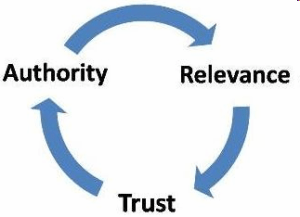
Authority – The inbound links to your content – like trackbacks & inbound links to a blog post or sites linking to a YouTube video.

Social Media Authority
Influence – The size of the user base subscribed to your content. Subscribers for blogs, feed or email
Followers on Twitter or Friendfeed. Fans of your Facebook page.

Sentiment, the “X-Factor” – The spirit driving user participation, because it really matters!

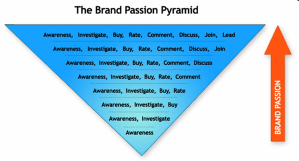
brand passion

Yesterday, we noted some specific goals that are typically listed in discussions with franchise executives about venturing into Social Media and determining exactly what they would like to accomplish. This list includes:

Create or improve brand awareness
Increase business at unit level
Create or improve interest in franchise opportunity
Generate qualified franchise sales leads
Improve franchise sales efficiency
Improve communications throughout franchise system
Locally, regionally or nationally

But, as your Social Media program is moving along, don’t lose site of the not so obvious results that are often mixed in with the obvious results.

System-wide revenue – obvious
Customer satisfaction – not so obvious
Corporate profitability – obvious
System-wide stability – not so obvious
Franchise development – obvious
Vendor / Supplier reaction – not so obvious

I look forward to your questions and comments.

*This post was originally published on this site March 2011


Bookmark and Share