Op-Ed: Cracker Barrel Didn’t Need a Makeover—It Needed to Honor Its Past and Embrace the Next Generation

Cracker Barrel is not just a restaurant. It’s a piece of Americana, a place etched into the fabric of family traditions across generations. For decades, it has served as a dependable stop on road trips, a weekend gathering spot, and a nostalgic connection between grandparents, parents, and kids. From the rocking chairs on the porch to the checkerboards on the tables, Cracker Barrel has always been about more than food—it’s about family.

That’s why I believe the brand’s recent decision to completely overhaul its logo and visual identity misses the mark. It’s not that legacy brands should never evolve—they must. But there is a difference between evolution and reinvention. For Cracker Barrel, a thoughtful update to the existing logo would have been enough to signal relevance without severing the deep emotional ties that families associate with the brand. (Note: The image below is an extension of my thoughts, not an official logo or graphic by Cracker Barrel.)

Look at the most enduring logos in corporate history. Coca-Cola’s script, McDonald’s golden arches, even Starbucks’ siren—these brands have modernized their look over the decades, but never so drastically that they became unrecognizable. The essence remained, while subtle refinements kept them fresh. Cracker Barrel could have followed the same path: cleaning up lines, simplifying the design, or refreshing its color palette, while still preserving the iconic barrel and country-store imagery that customers immediately associate with warmth and comfort.

Instead, the overhaul suggests the brand is chasing an audience that was never truly theirs. Cracker Barrel is not the place for Gen Z friends meeting over salads and sparkling cocktails. It’s not meant to be a trendy brunch spot competing with urban eateries. The heart of its customer base—both present and future—is families. In fact, the very children who grew up stopping at Cracker Barrel on family road trips are now parents themselves. They want to pass along the same tradition, to bring their kids to the place where they once made memories with mom and dad, or even with grandma and grandpa.

That’s why the photos that so often appear at the top of Cracker Barrel’s promotional material—a family gathered around the table—is the most accurate reflection of the brand’s future. Families are the new target audience, just as they have always been the core audience. By leaning into that, Cracker Barrel could have made a generational handoff seamless: honoring the past while ensuring relevance for the future.

This isn’t about resisting change. Legacy brands must adapt or risk fading into irrelevance. But the best way to adapt is to understand who you are and who you serve. Cracker Barrel has never been about being trendy—it’s about being timeless. A younger family doesn’t want a “cool” Cracker Barrel; they want the same comforting Cracker Barrel their parents took them to, perhaps with slightly fresher design cues that assure them the brand isn’t stuck in the past.

The danger of a complete overhaul is that it risks breaking the emotional bridge between generations. When a brand strips away too much of what made it iconic, it can alienate both its loyal base and the very audience it’s hoping to attract. Families crave continuity. They want to see the same barrel, the same porch, the same touchstones that make Cracker Barrel feel like Cracker Barrel.

In the end, a subtle logo update would have been more than enough. It would have modernized the brand without sacrificing identity. It would have reminded parents who grew up with Cracker Barrel that the brand still belongs to them, and it would have assured grandparents that their favorite stop remains a place to bring the whole family.

It’s okay for legacy brands to change, but not at the expense of who they are. Cracker Barrel’s future lies in embracing families—not trying to reinvent itself for audiences that will never see it as their gathering place. The image of a family sharing a meal around the table says it all. That should be the brand’s compass, not a logo that tries to be something it isn’t.

All that said, it’s just my persepctive. I’d love to hear yours.

Make today a great day. Make it happen. Make it count.

About the Author

Paul Segreto brings over four decades of hands-on experience in franchising, restaurants, and small business development.

Named one of the Top 100 Global Franchise and Small Business Influencers, Paul is also the voice behind the Acceler8Success Cafe, a daily content platform where thousands of entrepreneurs gain insight and motivation. A lifelong advocate for ethical growth and brand integrity, Paul continues to coach founders, franchise leaders, and entrepreneurial families, helping them find clarity in chaos and long-term success through intentional leadership.

Looking to elevate your business or need expert guidance to navigate current challenges? Connect directly with Paul at paul@acceler8success.com — your next step starts with a conversation.

About Acceler8Success Group

Acceler8Success Group is a multifaceted business advisory platform committed to empowering entrepreneurs, small business owners, franchise professionals, and industry leaders through strategic consulting, coaching, and curated content.

With a strong focus on entrepreneurship, franchising, restaurants, and small business growth, Acceler8Success Group delivers actionable insights and real-world strategies across its suite of brands, including the following:

Acceler8Success,  FranchiseReclaim,  OwnABizness.com,  Accelerate Success Coaching,  Your Entrepreneurial Success, and relaunching soon, Franchise Foundry.

By blending deep industry expertise with a dynamic content ecosystem, Acceler8Success Group fosters sustainable success and responsible leadership for today’s innovators and tomorrow’s legacy builders.
Stretching the System, Not Breaking It: The Balance Franchisors Must Strike to Evolve and Thrive

On my Your Entrepreneurial Success blog on Substack, I shared my thoughts on the idea of the entrepreneurial stretch—how entrepreneurs are pushed to their limits, often to the point of discomfort, in order to grow. That reflection led me to another important question: What does the stretch look like for franchisors? After all, franchisors aren’t just responsible for their own journey; they carry the weight of an entire network of franchisees who depend on their leadership, vision, and ability to push beyond comfort zones. The franchisor’s stretch, then, takes on an even deeper meaning—one that impacts not just themselves, but the long-term strength of the entire brand.

The Barriers to Stretching

Too often, franchisors fall into patterns that prevent meaningful growth. Excuses for slow development, procrastination on system improvements, poor prioritization of franchisee support, or complacency with “good enough” operations—these behaviors can keep a brand from reaching its true potential.

The danger of not stretching is greater in franchising than in many other industries. A franchisor’s comfort zone can quickly become a franchisee’s ceiling, limiting both their profitability and the long-term strength of the brand.

Defining the Franchisor’s Stretch

The franchisor’s entrepreneurial stretch is about more than signing new agreements or growing unit count. It’s about stretching into the uncomfortable, high-responsibility areas that define system-wide success:

  • Developing and operating company-owned locations to lead by example.
  • Making bold investments in technology, training, and support systems.
  • Protecting the brand while navigating growth and change.
  • Tackling tough conversations with underperforming franchisees.
  • Committing to constant innovation without destabilizing the system.

As one thought-provoking quote puts it:
“An entrepreneurial stretch, though, is one that puts great strain on you, the entrepreneur, due to the circumstances you’re in. It extends you to your limits – your breaking point – a place where you never thought you could go.”

For franchisors, that breaking point might be the balancing act between supporting current franchisees and pursuing aggressive expansion. It might be reimagining the business model to adapt to consumer shifts. Or it might mean resisting complacency when the brand seems stable.

Why the Stretch Matters for Franchisors

The franchisor’s stretch matters because it builds resilience not just for you—but for your entire system. When a franchisor leans into the stretch, franchisees notice. They gain confidence knowing leadership is committed to evolving and adapting.

Stretching beyond your comfort zone creates innovation pipelines, stronger operational foundations, and deeper trust with your network. It ensures that franchisees aren’t left experimenting alone, but instead are guided by proven systems, bold leadership, and forward-thinking strategies.

Asking Yourself the Question

The challenge isn’t whether the stretch will be hard—it always will be. The challenge is whether you, as a franchisor, will embrace it.

Will you push past excuses, complacency, and the temptation to settle for incremental progress? Will you stretch far enough to inspire your franchisees, strengthen your brand, and secure long-term growth?

Because your entrepreneurial stretch isn’t just about you—it’s about every franchisee who has invested in your vision.

So, I’ll leave you with this: What is your franchisor stretch?

Make today a great day. Make it happen. Make it count.

About the Author

Paul Segreto brings over four decades of hands-on experience in franchising, restaurants, and small business development.

Named one of the Top 100 Global Franchise and Small Business Influencers, Paul is also the voice behind the Acceler8Success Cafe, a daily content platform where thousands of entrepreneurs gain insight and motivation. A lifelong advocate for ethical growth and brand integrity, Paul continues to coach founders, franchise leaders, and entrepreneurial families, helping them find clarity in chaos and long-term success through intentional leadership.

Looking to elevate your business or need expert guidance to navigate current challenges? Connect directly with Paul at paul@acceler8success.com — your next step starts with a conversation.

About Acceler8Success Group

Acceler8Success Group is a multifaceted business advisory platform committed to empowering entrepreneurs, small business owners, franchise professionals, and industry leaders through strategic consulting, coaching, and curated content.

With a strong focus on entrepreneurship, franchising, restaurants, and small business growth, Acceler8Success Group delivers actionable insights and real-world strategies across its suite of brands, including the following:

Acceler8Success,  FranchiseReclaim,  OwnABizness.com,  Accelerate Success Coaching,  Your Entrepreneurial Success, and relaunching soon, Franchise Foundry.

By blending deep industry expertise with a dynamic content ecosystem, Acceler8Success Group fosters sustainable success and responsible leadership for today’s innovators and tomorrow’s legacy builders.

Why Every Franchisor Needs Company-Owned Locations (Even Just a Few)

Operating even a handful of company-owned locations can be one of the most strategic decisions a franchisor can make. While franchising’s power lies in leveraging other people’s capital, talent, and effort to achieve rapid scale, the reality is that systems relying exclusively on franchisees often lack a critical element: firsthand operational grounding. Maintaining ownership of select units, and more importantly proactively building new ones—not merely taking over closed or struggling franchisee stores—provides franchisors with invaluable benefits that strengthen the brand, improve franchisee performance, and attract long-term investment.

Forward-thinking franchisors view company-owned stores not as an afterthought or fallback strategy but as a core element of system growth. By intentionally building and operating locations the same way new franchisees would, franchisors experience the business model at its most authentic level. They go through the same processes—site selection, lease negotiations, permitting, financing, construction delays, hiring, grand opening marketing—that their franchisees face. This “walking in their shoes” approach builds empathy, enhances support systems, and creates best practices rooted in actual experience rather than theoretical planning.

In addition, many franchisors are developing company-owned prototype locations. These prototypes serve as the brand’s innovation hubs and future-facing laboratories. They are designed to test new build-outs, customer experiences, technology integrations, and even alternative operating models, such as smaller footprints for urban areas, drive-thru-only models, or off-premise-focused kitchens. The lessons learned from these prototypes become the foundation for systemwide evolution, ensuring the brand stays relevant, competitive, and ahead of consumer trends. Franchisees benefit by adopting proven models rather than shouldering the risk of untested changes.

Company-owned locations also allow franchisors to pressure test their own standards and strategies. For instance, if corporate leadership insists on a new digital ordering platform, they should first experience the implementation challenges and customer feedback within their own locations. By proactively building and operating these stores, franchisors refine the rollout before franchisees are ever asked to adopt the new tools. This builds credibility, reduces pushback, and positions the franchisor as a partner invested in franchisee success.

From a financial standpoint, company-owned locations diversify revenue streams. Royalties provide predictable recurring income, but royalties are tied directly to franchisee sales performance. During economic slowdowns or franchisee attrition, franchisors with no company-owned stores are left fully exposed. Company-owned units, particularly those in flagship markets or high-volume locations, provide an additional stream of cash flow that can fund corporate infrastructure, cover overhead, and fuel future growth initiatives such as marketing campaigns, new product development, and international expansion.

Another underappreciated benefit is the credibility company-owned stores create in the eyes of prospective franchisees and investors. Candidates evaluating whether to invest in a franchise opportunity often ask: “How many stores does corporate own? And how are they performing?” A franchisor that can point to profitable, well-run corporate stores demonstrates confidence in the business model and signals that the leadership team is willing to invest alongside its franchisees. This “skin in the game” reassures franchisees that the franchisor is motivated by operational success, not just royalty collection.

Moreover, proactively building new corporate locations in varied markets allows franchisors to study geographic adaptability. How does the model perform in urban centers versus suburban shopping plazas? How do labor costs or real estate expenses affect profitability across different regions? This intelligence is priceless when advising franchisees on market entry and expansion. It also sharpens the franchisor’s growth strategy, making franchise sales more targeted and sustainable.

Company-owned stores also serve as cultural anchors. They give the franchisor a physical presence in the marketplace, demonstrating that corporate leadership is as committed to the brand’s success as franchisees are. Employees trained in corporate-owned stores often become future field consultants, trainers, or corporate staff who bring a deeper appreciation of the realities of store-level operations. This strengthens culture, improves franchisee relations, and builds a sense of shared purpose throughout the system.

Finally, company-owned locations enhance brand value in the eyes of private equity, institutional investors, and lenders. A franchisor that can point to a portfolio of corporate-owned, profitable locations alongside a healthy franchise network is far more attractive for acquisition or investment. It demonstrates not only scalability through franchising but also operational strength and resilience. For brands considering an eventual exit or recapitalization, this dual strength can significantly increase valuation.

In short, franchisors who view company-owned stores as an intentional growth and innovation strategy—not simply a fallback or a way to recycle failed franchisee units—set themselves up for long-term success. These stores allow for innovation without risk to franchisees, strengthen training and support systems, provide financial diversification, build credibility, and prove adaptability in real-world conditions. By proactively building and developing new locations—including prototypes—franchisors maintain control over the future of their brand while aligning themselves more closely with franchisees, investors, and customers alike.

For these reasons, even a small portfolio of strategically operated company-owned units can be the cornerstone of sustainable growth. They serve as the franchisor’s laboratory, training center, profit center, and proof of concept—ensuring that the system is not only scalable but resilient, innovative, and credible for decades to come.

Make today a great day. Make it happen. Make it count.

About the Author

Paul Segreto brings over four decades of hands-on experience in franchising, restaurants, and small business development.

Named one of the Top 100 Global Franchise and Small Business Influencers, Paul is also the voice behind the Acceler8Success Cafe, a daily content platform where thousands of entrepreneurs gain insight and motivation. A lifelong advocate for ethical growth and brand integrity, Paul continues to coach founders, franchise leaders, and entrepreneurial families, helping them find clarity in chaos and long-term success through intentional leadership.

Looking to elevate your business or need expert guidance to navigate current challenges? Connect directly with Paul at paul@acceler8success.com — your next step starts with a conversation.

About Acceler8Success Group

Acceler8Success Group is a multifaceted business advisory platform committed to empowering entrepreneurs, small business owners, franchise professionals, and industry leaders through strategic consulting, coaching, and curated content.

With a strong focus on entrepreneurship, franchising, restaurants, and small business growth, Acceler8Success Group delivers actionable insights and real-world strategies across its suite of brands, including the following:

Acceler8Success,  FranchiseReclaim,  OwnABizness.com,  Accelerate Success Coaching,  Your Entrepreneurial Success, and relaunching soon, Franchise Foundry.

By blending deep industry expertise with a dynamic content ecosystem, Acceler8Success Group fosters sustainable success and responsible leadership for today’s innovators and tomorrow’s legacy builders.
Ensuring Responsible Franchising and Restoring Profitability

In April, I authored OP-ED: Responsible Franchising Requires a Better Sales Model, a piece that generated notable attention and discussion. While public dialogue around the article subsided quickly, private conversations that followed revealed a significant undercurrent of agreement within the franchising community. Many acknowledged the urgent need to rethink franchise sales practices as a pathway to ensuring responsible franchising and restoring profitability across the industry.

It is in this context that I revisit the original piece below, with the belief that responsible franchising and sustainable profitability demand continued attention and action.

OP-ED: Responsible Franchising Requires a Better Sales Model (Originally published April 2025)

For years, an overlooked issue has been quietly undermining the financial health and long-term stability of franchise brands: the excessive reliance on third-party brokers and franchise sales organizations. What began as a perceived shortcut to accelerate growth has evolved into a costly and unsustainable dependency that strips brands of profitability and control.

Franchisors now routinely surrender 45 to 75 percent of their franchise and development fees in commissions — often in exchange for little more than a lightly qualified lead. Despite these fees, the burden of nurturing, educating, and closing the sale frequently still falls on the franchisor’s internal team. The value proposition, in most cases, simply does not add up.

Beyond commissions, franchisors are subjected to mounting costs for expos, “network access” fees, and recurring monthly dues. When these expenses are multiplied across several broker groups, the financial strain becomes inescapable. However, the implications go beyond economics.

Poorly vetted candidates, attracted by polished marketing rather than genuine brand alignment, often progress through the system unchecked. The result: increased franchisee dissatisfaction, compliance issues, operational breakdowns, and costly turnover. Brand equity is quietly eroded, while the appearance of growth masks deeper vulnerabilities.

These practices raise a critical question for the franchising community: Are systems being built for sustainable, long-term success or is growth being purchased at the expense of brand health and franchisee outcomes?

In today’s landscape, the concept of responsible franchising is no longer optional — it is essential. As such, a reassessment of franchise sales models is overdue. The current structure, in many cases, rewards volume over value, hype over fit, and speed over sustainability.

A more viable path forward is both possible and necessary.

Under a modernized model, franchisors would maintain ownership of the development process while leveraging support systems designed for alignment, not volume. This could begin with a modest one-time onboarding fee, used not as a pay-to-play entry point, but as an opportunity to define brand criteria, cultural fit, operational expectations, and candidate profiles.

Referral fees would be paid only upon the formal awarding of a franchise and the receipt of development fees, replacing high commissions just for introductions with performance-based fees that reflect the nature of a true referral. Interested parties would be drawn in not through aggressive sales tactics, but through access to valuable information and resources — essential components of the due diligence process required before even considering franchising as a path to business ownership.

Most importantly, candidate vetting would be performed by experienced franchise professionals — individuals equipped to evaluate not only financial qualifications but also alignment with operational models, values, and long-term potential. Monthly strategic review meetings between franchisors and development partners would ensure consistent alignment and transparent collaboration.

This model accomplishes three essential goals:

It restores financial discipline by eliminating wasteful spending on unproductive leads, inflated commissions, and ineffective events.

It enhances franchisee selection, reducing the likelihood of mismatched candidates and the risks they pose to operational performance and brand cohesion.

It returns control to franchisors, allowing them to protect their brand, culture, and long-term viability.

Responsible franchising starts at the very first touchpoint: the sales process. When that process is driven by trust, transparency, high-quality resources, and qualified matchmaking — rather than access fees and mass-market hype — stronger foundations are built. Foundations capable of supporting scalable, healthy growth.

Brands must now ask themselves a defining question: Who truly represents the brand — internal leadership or outsourced brokers with no accountability for long-term outcomes?

Franchising’s future depends on reclaiming control of the development journey. With practical structure, clear expectations, and a renewed focus on quality over quantity, franchise growth can be both profitable and principled.

The time for change is not next quarter, or next year. The time is now.

Franchisors committed to responsible growth must rethink their sales strategies, prioritize long-term brand health over short-term gains, and reclaim control of the development process. Care to explore how this can work for your brand? Reach out to the author below — it all starts with a conversation.

Make today a great day. make it happen. Make it count!

Responsible Franchising: A Gradual Journey, Not a Sharp Turn

Franchisors: Don’t Stick Your Head in the Sand—This Is the Moment to Lead

A Cautionary Tale for Emerging Franchise Brands: Beware the Cracked Cup

About the Author

Paul Segreto brings over four decades of hands-on experience in franchising, restaurants, and small business development.

Named one of the Top 100 Global Franchise and Small Business Influencers, Paul is also the voice behind the Acceler8Success Cafe, a daily content platform where thousands of entrepreneurs gain insight and motivation. A lifelong advocate for ethical growth and brand integrity, Paul continues to coach founders, franchise leaders, and entrepreneurial families, helping them find clarity in chaos and long-term success through intentional leadership.

Looking to elevate your business or need expert guidance to navigate current challenges? Connect directly with Paul at paul@acceler8success.com — your next step starts with a conversation.

About Acceler8Success Group

Acceler8Success Group is a multifaceted business advisory platform committed to empowering entrepreneurs, small business owners, franchise professionals, and industry leaders through strategic consulting, coaching, and curated content.

With a strong focus on entrepreneurship, franchising, restaurants, and small business growth, Acceler8Success Group delivers actionable insights and real-world strategies across its suite of brands, including the following:

Acceler8Success,  FranchiseReclaim,  OwnABizness.com,  Accelerate Success Coaching,  Your Entrepreneurial Success, and relaunching soon, Franchise Foundry.

By blending deep industry expertise with a dynamic content ecosystem, Acceler8Success Group fosters sustainable success and responsible leadership for today’s innovators and tomorrow’s legacy builders.

The Next Digital Divide in Franchising: AI Adoption

When social media first emerged, many franchisors dismissed it as a fad. Franchisees, however, saw the immediate value and began using Facebook and Twitter to connect with their communities. The result was inconsistent messaging, fragmented brand voices, and confusion over who controlled the customer relationship. By the time franchisors stepped in with guidelines and policies, they were already years behind—and often forced to clean up the chaos.

Artificial intelligence is creating the same kind of inflection point today. Some franchisors are cautiously observing from a distance, expecting proof of ROI before committing. Meanwhile, franchisees are experimenting with AI tools for local marketing, scheduling, recruiting, and customer engagement. Without proactive franchisor leadership, the same challenges that emerged in the early days of social media are likely to repeat themselves—only this time, at a much faster pace.

Key Risks if Franchisors Delay

  • Fragmented adoption: Franchisees will use different tools, creating inconsistency in customer interactions and brand standards.
  • Lost time: Competitors who move faster with AI will set new expectations for both customers and franchise prospects.
  • Reactive policies: As with social media, franchisors may be forced to play catch-up, developing guidelines after problems arise.
  • Missed value: Treating AI as a short-term marketing line item instead of an operational transformation will limit long-term growth.

Recommendations for Franchisors

  1. Lead the Conversation
    Don’t wait for franchisees to experiment unchecked. Establish system-wide discussions, education sessions, and workshops to introduce AI’s potential.
  2. Develop Clear Guidelines
    Just as brand standards were eventually created for social media, franchisors should define how AI tools can and should be used across the system.
  3. Pilot, Then Scale
    Start with controlled pilots—whether in marketing, customer service, or training—before rolling out system-wide. Measure success on efficiency, consistency, and scalability, not just short-term ROI.
  4. Provide Approved Tools
    Offer vetted and brand-specific AI resources so franchisees aren’t forced to source their own. This ensures consistency and protects the brand.
  5. Think Beyond Marketing
    AI isn’t just about ads or social media. Look at applications in operations, training, supply chain, and recruitment to drive system-wide benefits.
  6. Build a Long-Term Strategy
    Treat AI as an ongoing investment in brand competitiveness, not as a “campaign” or experimental expense.

Final Thought

The lesson from social media is clear: hesitation creates vulnerability. Franchisors who embrace AI now—setting the pace instead of following it—can strengthen their systems, support franchisees more effectively, and avoid another cycle of reactive adoption. AI isn’t a fad. It’s infrastructure for the next era of franchising.

Make today a great day. Make it happen. Make it count.

About the Author

Paul Segreto brings over four decades of hands-on experience in franchising, restaurants, and small business development.

Named one of the Top 100 Global Franchise and Small Business Influencers, Paul is also the voice behind the Acceler8Success Cafe, a daily content platform where thousands of entrepreneurs gain insight and motivation. A lifelong advocate for ethical growth and brand integrity, Paul continues to coach founders, franchise leaders, and entrepreneurial families, helping them find clarity in chaos and long-term success through intentional leadership.

Looking to elevate your business or need expert guidance to navigate current challenges? Connect directly with Paul at paul@acceler8success.com — your next step starts with a conversation.

About Acceler8Success Group

Acceler8Success Group is a multifaceted business advisory platform committed to empowering entrepreneurs, small business owners, franchise professionals, and industry leaders through strategic consulting, coaching, and curated content.

With a strong focus on entrepreneurship, franchising, restaurants, and small business growth, Acceler8Success Group delivers actionable insights and real-world strategies across its suite of brands, including the following:

Acceler8Success,  FranchiseReclaim,  OwnABizness.com,  Accelerate Success Coaching,  Your Entrepreneurial Success, and relaunching soon, Franchise Foundry.

By blending deep industry expertise with a dynamic content ecosystem, Acceler8Success Group fosters sustainable success and responsible leadership for today’s innovators and tomorrow’s legacy builders.

The Silent Gap: How Post-Signing Lulls Create Doubt and Buyer’s Remorse in Franchising

Franchise systems thrive when franchisees feel supported, connected, and confident from the very beginning of their journey. While franchisors have long focused on creating positively memorable experiences for customers and employees, an overlooked opportunity lies in ensuring franchisees have that same experience—especially during the critical period immediately following the signing of the franchise agreement.

This article explores the risks of communication lulls in the post-signing stage, how doubt and buyer’s remorse can emerge, and why structured, transparent communication is essential. It concludes with actionable recommendations for franchisors to strengthen relationships, prevent dissatisfaction, and build lasting advocacy.

The Franchise Sales Journey: A High Point of Engagement

During the sales process, prospective franchisees are immersed in communication. They engage with:

  • Franchise development representatives through frequent calls.
  • Corporate team members across departments.
  • C-suite executives during validation calls or “meet the team” sessions.
  • Existing franchisees to learn firsthand experiences.

This stage is fast-paced, engaging, and filled with validation points. It sets high expectations for the relationship between franchisor and franchisee.

The Post-Signing Lull: Where the Experience Often Breaks Down

Once the agreement is signed, the process typically transitions to site selection. At this stage, communication often decreases significantly. Franchisees may wait weeks or months for updates until training is scheduled.

This lull, while unintentional, creates a dangerous opening. Franchisees suddenly move from consistent contact to minimal engagement. In this vacuum, small disappointments can take on outsized weight:

  • A missed call or forgotten promise.
  • A misunderstood process detail.
  • A rumor picked up from another franchisee.

Left unchecked, these seemingly minor issues can snowball into frustration, anger, hostility, and ultimately buyer’s remorse. By the time the franchisee opens their doors, their trust in the franchisor may already be eroded—a condition that lingers for years and undermines long-term success.

The Consequences of Poor Post-Signing Experiences

  • Franchisee Dissatisfaction: Early negativity colors the entire franchise relationship.
  • Erosion of Trust: If issues are not addressed quickly, franchisees question the franchisor’s commitment.
  • Poor Validation: Dissatisfied franchisees are unlikely to serve as strong references for new candidates.
  • Long-Term Cultural Impact: Negative early experiences ripple across the system, damaging brand culture and franchisee morale.

Best Practices: How to Accelerate Communication After the Sale

Franchisors must intentionally design the post-signing stage to ensure momentum, confidence, and trust continue to build.

1. Structured 90-Day Engagement Plan

Create a roadmap for consistent touchpoints after signing:

  • Weekly check-in calls or emails.
  • Monthly updates from leadership.
  • Regular progress tracking toward site selection and training.

2. Dedicated Transition Support

Assign a relationship manager, onboarding specialist, or “franchisee concierge” to serve as the primary contact during this stage. This ensures no franchisee feels abandoned in the handoff between departments.

3. Transparent Next Steps

Outline what franchisees should expect over the next 3–6 months. Provide a clear timeline of milestones, responsibilities, and corporate support.

4. Reinforce Brand Culture

Continue sharing the brand’s story, mission, and successes during this waiting period. Franchisees should feel increasingly connected, not disconnected.

5. Proactive Issue Resolution

Encourage franchisees to share concerns early and often. Address questions quickly before they grow into doubts.

Conclusion

Franchising is more than signing agreements—it is about building strong, lasting partnerships. The post-signing stage is the first true test of that partnership. If franchisors accelerate communication rather than decrease it, they create positively memorable experiences that foster trust, satisfaction, and advocacy.

A franchisee who feels supported from day one becomes more than an operator. They become an ambassador for the brand, fueling growth and strengthening the entire system.

Key Takeaway

The most important calls and conversations with a franchisee are not those that lead to the signing. They are the ones that happen after.

Make today a great day. Make it happen. Make it count.

About the Author

Paul Segreto brings over four decades of hands-on experience in franchising, restaurants, and small business development.

Named one of the Top 100 Global Franchise and Small Business Influencers, Paul is also the voice behind the Acceler8Success Cafe, a daily content platform where thousands of entrepreneurs gain insight and motivation. A lifelong advocate for ethical growth and brand integrity, Paul continues to coach founders, franchise leaders, and entrepreneurial families, helping them find clarity in chaos and long-term success through intentional leadership.

Looking to elevate your business or need expert guidance to navigate current challenges? Connect directly with Paul at paul@acceler8success.com — your next step starts with a conversation.

About Acceler8Success Group

Acceler8Success Group is a multifaceted business advisory platform committed to empowering entrepreneurs, small business owners, franchise professionals, and industry leaders through strategic consulting, coaching, and curated content.

With a strong focus on entrepreneurship, franchising, restaurants, and small business growth, Acceler8Success Group delivers actionable insights and real-world strategies across its suite of brands, including the following:

Acceler8Success,  FranchiseReclaim,  OwnABizness.com,  Accelerate Success Coaching,  Your Entrepreneurial Success, and relaunching soon, Franchise Foundry.

By blending deep industry expertise with a dynamic content ecosystem, Acceler8Success Group fosters sustainable success and responsible leadership for today’s innovators and tomorrow’s legacy builders.
From Inspiration to Action: Steve Jobs’ Blueprint for Entrepreneurs

It’s no secret that one of my favorite entrepreneurs is Steve Jobs—and for good reason. His vision, creativity, and relentless drive to challenge the status quo are legendary. Jobs didn’t just change industries; he reshaped culture. From the iPhone to Pixar to the rebirth of Apple, his accomplishments continue to influence how we live, work, and connect.

But what has always struck me most about Jobs is not only the companies he built or the products he launched. It’s his philosophy about life and work that continues to inspire me as an entrepreneur. Many of his quotes have become guiding lights, but none more so than this:

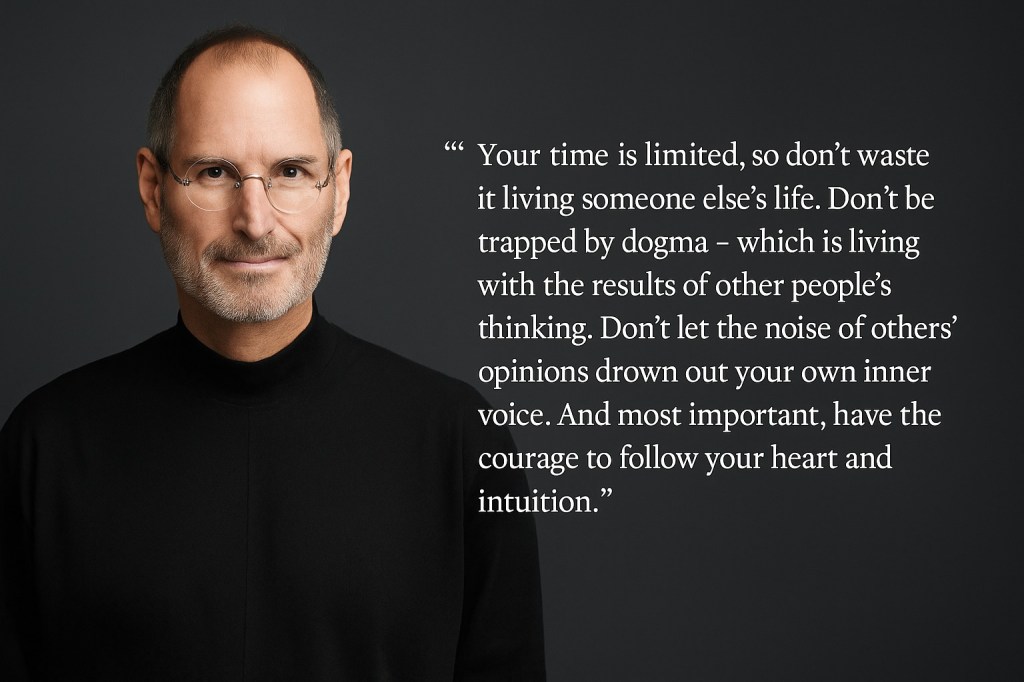
“Your time is limited, so don’t waste it living someone else’s life. Don’t be trapped by dogma – which is living with the results of other people’s thinking. Don’t let the noise of others’ opinions drown out your own inner voice. And most important, have the courage to follow your heart and intuition.”

This single statement reads like a roadmap for the entrepreneurial journey. Each line is packed with meaning that speaks directly to the realities entrepreneurs face every day.

Your time is limited.

For entrepreneurs, this is a powerful reminder that hesitation comes with a cost. Waiting for the “perfect” moment, over-analyzing, or clinging to comfort can rob us of opportunity. There is no infinite runway. The business landscape moves fast, and the window for an idea may close before we even take the first step. Jobs’ words remind us that progress comes from action—testing ideas, embracing mistakes, and moving forward with urgency.

Don’t waste it living someone else’s life.

At its core, entrepreneurship is about carving your own path. Too often, people chase careers or build businesses based on what others define as success. They measure their worth against expectations imposed by family, peers, or society. Jobs challenges us to reject that. Entrepreneurship demands authenticity. The businesses that thrive are those born out of genuine passion, purpose, and a vision that reflects the entrepreneur’s true self.

Don’t be trapped by dogma.

Innovation lives in questioning the status quo. Jobs built Apple by refusing to accept “the way it’s always been done.” He consistently pushed boundaries in design, technology, and customer experience. For entrepreneurs, this means refusing to settle for convention. It means asking different questions, challenging assumptions, and daring to think differently. The future belongs to those who are not constrained by the results of other people’s thinking.

Don’t let the noise drown out your inner voice.

Every entrepreneur faces doubt—sometimes from those closest to them. Family and friends may question the risks. Investors may doubt the model. Competitors may dismiss the idea. The louder those voices grow, the easier it becomes to second-guess yourself. Jobs reminds us that while feedback matters, the inner voice matters more. As entrepreneurs, only we have the clarity of vision for what we’re building. The ability to quiet the noise and stay true to that vision is what carries us through setbacks and uncertainty.

Have the courage to follow your heart and intuition.

This, perhaps, is the most important lesson of all. Entrepreneurship requires courage—not just in the early days of starting a venture, but at every stage. Data, research, and strategy are essential tools, but intuition often makes the difference between hesitation and breakthrough. Following your heart means being willing to take a leap of faith on an idea no one else believes in, to pivot when something feels wrong, or to double down when conviction outweighs doubt. Courage is the engine of resilience and the spark behind true innovation.

A Living Philosophy for Entrepreneurs

When we look at this quote in its entirety, we see more than motivational words. We see a philosophy that captures what it means to be an entrepreneur: urgency, independence, boldness, resilience, and courage. Jobs distilled into a few sentences what many spend a lifetime trying to learn.

Entrepreneurship is not just about launching companies or chasing profit. It’s about building a life that reflects our vision and values. It’s about trusting ourselves in the face of uncertainty and daring to create something the world hasn’t seen before. That’s why Steve Jobs continues to inspire me—and why his words remain a guiding light for anyone bold enough to embark on the entrepreneurial journey.

Make today a great day. Make it happen. Make it count.

About the Author

Paul Segreto brings over four decades of hands-on experience in franchising, restaurants, and small business development.

Named one of the Top 100 Global Franchise and Small Business Influencers, Paul is also the voice behind the Acceler8Success Cafe, a daily content platform where thousands of entrepreneurs gain insight and motivation. A lifelong advocate for ethical growth and brand integrity, Paul continues to coach founders, franchise leaders, and entrepreneurial families, helping them find clarity in chaos and long-term success through intentional leadership.

Looking to elevate your business or need expert guidance to navigate current challenges? Connect directly with Paul at paul@acceler8success.com — your next step starts with a conversation.

About Acceler8Success Group

Acceler8Success Group is a multifaceted business advisory platform committed to empowering entrepreneurs, small business owners, franchise professionals, and industry leaders through strategic consulting, coaching, and curated content.

With a strong focus on entrepreneurship, franchising, restaurants, and small business growth, Acceler8Success Group delivers actionable insights and real-world strategies across its suite of brands, including the following:

Acceler8Success,  FranchiseReclaim,  OwnABizness.com,  Accelerate Success Coaching,  Your Entrepreneurial Success, and relaunching soon, Franchise Foundry.

By blending deep industry expertise with a dynamic content ecosystem, Acceler8Success Group fosters sustainable success and responsible leadership for today’s innovators and tomorrow’s legacy builders.

Prompt Engineering: The New Core Skill Every Franchisor Must Master

Artificial Intelligence is rapidly reshaping franchising. From franchise development to operations to training, AI has the potential to transform how systems grow and thrive. Yet for all the sophistication behind these tools, there’s one simple truth franchisors and franchisees must understand: it’s all about the prompt.

A prompt is the instruction you give to AI. Think of it as your question, your request, or your direction. The clarity and detail of your prompt determines the quality of the output. In franchising—an industry built on systems, processes, and consistency—that makes prompt engineering one of the most important new skills to learn.

Franchise Development

When franchise sales teams use AI, the results depend on the input.

  • Weak prompt: “Write a franchise ad.”
  • Strong prompt: “Write a 200-word LinkedIn post promoting a fast casual restaurant franchise. Target professionals in Texas who may want to leave corporate careers. Highlight benefits of daytime hours, training, and brand support. End with a clear call to action.”

The difference between generic messaging and compelling recruitment is all in the prompt.

Training and Support

Franchisors know that training is a cornerstone of success. AI can generate effective materials—but only if guided with detail.

  • Weak prompt: “Create a training module for staff.”
  • Strong prompt: “Develop a 30-minute training module for new front-of-house staff at a quick service pizza franchise. Cover greeting customers, upselling family combos, handling online orders, and managing peak lunch rushes.”

Clarity leads to consistency. And in franchising, consistency drives brand culture.

Franchisee Operations

Franchisees can use AI to support marketing, HR, and operations.

  • Weak prompt: “Help me market my restaurant.”
  • Strong prompt: “Create a 4-week local marketing calendar for a suburban sandwich franchise with a $500 monthly budget. Focus on social media, community events, and catering to local offices.”

The stronger the prompt, the more actionable the output.

Why This Matters

Franchising has always thrived on systems and replication. AI is no different—it thrives on clear communication. The better the prompt, the better the result.

For franchisors, this means sharper development campaigns, more effective training, and stronger support. For franchisees, it means tools that make operations easier and marketing more impactful.

AI doesn’t replace the human element of franchising. It enhances it. But just like following an operations manual, success depends on how well we give direction.

Because whether it’s scaling a system or growing a single unit, one truth applies to both franchising and AI: it’s all about the prompt.

I’d love to hear from my franchising colleagues: how are you (or your system) starting to use AI today? What results have you seen—and what challenges are you facing?

Make today a great day. Make it happen. Make it count.

About the Author

Paul Segreto brings over four decades of hands-on experience in franchising, restaurants, and small business development.

Named one of the Top 100 Global Franchise and Small Business Influencers, Paul is also the voice behind the Acceler8Success Cafe, a daily content platform where thousands of entrepreneurs gain insight and motivation. A lifelong advocate for ethical growth and brand integrity, Paul continues to coach founders, franchise leaders, and entrepreneurial families, helping them find clarity in chaos and long-term success through intentional leadership.

Looking to elevate your business or need expert guidance to navigate current challenges? Connect directly with Paul at paul@acceler8success.com — your next step starts with a conversation.

About Acceler8Success Group

Acceler8Success Group is a multifaceted business advisory platform committed to empowering entrepreneurs, small business owners, franchise professionals, and industry leaders through strategic consulting, coaching, and curated content.

With a strong focus on entrepreneurship, franchising, restaurants, and small business growth, Acceler8Success Group delivers actionable insights and real-world strategies across its suite of brands, including the following:

Acceler8Success,  FranchiseReclaim,  OwnABizness.com,  Accelerate Success Coaching,  Your Entrepreneurial Success, and relaunching soon, Franchise Foundry.

By blending deep industry expertise with a dynamic content ecosystem, Acceler8Success Group fosters sustainable success and responsible leadership for today’s innovators and tomorrow’s legacy builders.
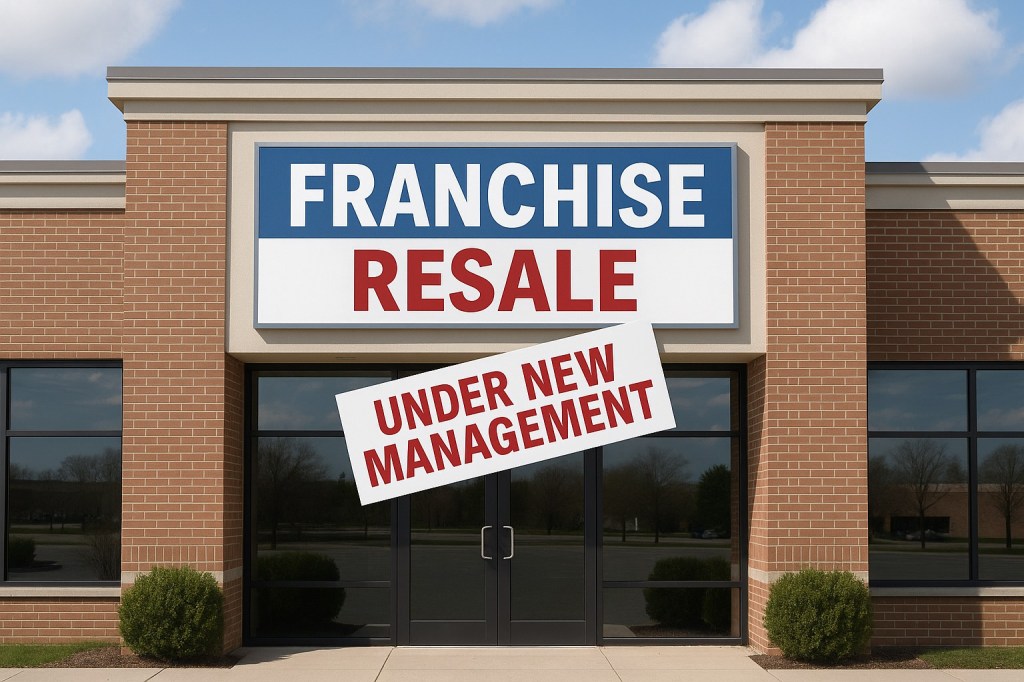
Franchise Resales: Ensuring the Right Fit for Your Brand

Franchise resales are an increasingly common part of franchise development. Whether an existing franchisee is retiring, seeking a new venture, or transitioning out for personal reasons, the opportunity to transfer ownership can be beneficial for all parties involved. For the franchisor, however, resales present unique challenges. Unlike new franchisees, resale buyers do not experience the full franchise journey of site selection, construction, and pre-opening collaboration with the franchisor. That process, while operational in nature, is also relational. It creates consistent communication, builds trust, and provides natural checkpoints for alignment with brand culture and values.

When buyers come into the system through a resale, they often miss these steps. Instead, they find themselves stepping directly into an operating business, where training becomes their first true brand immersion. This can feel like jumping feet first into the fire. For franchisors, ensuring these individuals are a right fit for the brand requires intentional effort well before the resale deal is finalized.

The process starts with screening. A resale buyer may already be financially qualified and attracted to the appeal of an operating business with existing customers and cash flow. But franchisors must go deeper than financial capability. They must evaluate whether the buyer has the right mindset, leadership style, and cultural alignment to sustain and grow within the system. A franchisor should consider:

  • Does the buyer understand that while this is an existing business, it is still part of a larger brand?
  • Will they respect and follow established systems, rather than attempt to run it as an independent operation?
  • Do they demonstrate the passion and work ethic to manage through the transition period, where staff, customers, and operations may require significant adjustments?
  • Are they open to ongoing learning, communication, and collaboration with the franchisor and their peer franchisees?

These questions help identify whether the buyer has the entrepreneurial spirit balanced with brand loyalty needed to succeed.

Equally important is communication. In a typical new franchise build-out, communication between franchisor and franchisee is frequent and intense, covering site approval, construction, pre-opening marketing, and training. With a resale, that cadence is not built in. Franchisors must proactively create it. Structured onboarding programs for resale buyers can help replicate that early relationship-building. This might include scheduled calls, shadowing opportunities with top-performing franchisees, and additional operational field support in the first six to twelve months.

Training plays a critical role as well. While all franchisees go through training, resale buyers require a tailored approach. They must quickly adapt to running an existing operation while absorbing brand standards and systems. Training that blends classroom-style learning with in-store immersion at their acquired location can be especially effective. In many cases, additional coaching and mentoring should be arranged, recognizing that their learning curve is accelerated and more demanding.

Finally, franchisors should take an active role in the transition process between outgoing and incoming franchisees. Facilitating introductions with staff, helping manage customer communications, and ensuring operational continuity can reduce disruption. It also reassures the buyer that the franchisor is invested in their success, building trust at a time when the relationship is most vulnerable.

In the end, franchise resales are both an opportunity and a risk. They allow the system to maintain stability and demonstrate long-term viability. But without the proper screening, onboarding, and relationship-building, they can also weaken brand culture and consistency. For franchisors, the key is to recognize that while resale buyers skip some early milestones, they cannot be allowed to skip the relationship-building that defines successful franchising.

The most successful brands treat franchise resales not as a shortcut, but as a transition requiring the same care, diligence, and partnership as opening a new unit. That is how a resale buyer becomes not just the next owner, but a long-term contributor to the strength of the system.

Make today a great day. Make it happen. Make it count.

About the Author

Paul Segreto brings over four decades of hands-on experience in franchising, restaurants, and small business development.

Named one of the Top 100 Global Franchise and Small Business Influencers, Paul is also the voice behind the Acceler8Success Cafe, a daily content platform where thousands of entrepreneurs gain insight and motivation. A lifelong advocate for ethical growth and brand integrity, Paul continues to coach founders, franchise leaders, and entrepreneurial families, helping them find clarity in chaos and long-term success through intentional leadership.

Looking to elevate your business or need expert guidance to navigate current challenges? Connect directly with Paul at paul@acceler8success.com — your next step starts with a conversation.

About Acceler8Success Group

Acceler8Success Group is a multifaceted business advisory platform committed to empowering entrepreneurs, small business owners, franchise professionals, and industry leaders through strategic consulting, coaching, and curated content.

With a strong focus on entrepreneurship, franchising, restaurants, and small business growth, Acceler8Success Group delivers actionable insights and real-world strategies across its suite of brands, including the following:

Acceler8Success,  FranchiseReclaim,  OwnABizness.com,  Accelerate Success Coaching,  Your Entrepreneurial Success, and relaunching soon, Franchise Foundry.

By blending deep industry expertise with a dynamic content ecosystem, Acceler8Success Group fosters sustainable success and responsible leadership for today’s innovators and tomorrow’s legacy builders.
Maintaining Brand Consistency in the AI Era: A Franchisor’s New Challenge

For any franchisor, protecting the integrity of the brand is a non-negotiable responsibility. A franchise’s value is built on the perception of uniformity—customers expect the same experience, the same quality, and the same messaging whether they walk into a location across the street or across the country. That consistency doesn’t happen by accident. It comes from painstaking attention to detail, constant oversight, and a willingness to invest heavily in monitoring and enforcement. Even something as seemingly small as ensuring the proper placement of the trademark symbol requires a methodical, almost obsessive, diligence repeated again and again.

In the past, maintaining this level of brand uniformity meant issuing brand standards manuals, training teams, approving local marketing materials, and checking compliance through field visits and audits. This was a highly manual process, often backed by entire teams of brand managers and marketing coordinators. The goal: every word, image, and color had to reflect the approved brand voice and look—no deviations, no shortcuts.

Now, with artificial intelligence rapidly becoming a core tool in marketing, content creation, and even customer interaction, a new challenge has emerged: ensuring that AI-generated material aligns with brand standards just as meticulously as traditional materials have. AI doesn’t inherently know your franchise’s tone, terminology, or legal requirements—it has to be taught, guided, and monitored. Left unmanaged, it could quickly produce content that confuses customers, contradicts your brand story, or creates legal exposure.

To maintain consistency in the AI era, franchisors must act early and decisively. That means developing a clear AI content governance strategy before AI tools become embedded in daily operations across the system. This strategy should start with creating an AI-specific brand style guide that goes beyond fonts and colors to include tone, approved terminology, key messages, and even examples of “do’s and don’ts.” It also means deciding which AI tools are authorized, training corporate and franchise teams on their use, and integrating brand guardrails into the tools themselves—whether through pre-loaded prompts, templates, or approved asset libraries.

Beyond guidelines, franchisors must also establish review and approval processes for AI-generated materials, just as they do for other marketing assets. This could involve setting up a centralized AI content review team or leveraging AI detection tools to flag unapproved language or imagery. The key is to maintain human oversight, especially in the early stages, to catch subtle inconsistencies or misinterpretations that AI may produce.

Speed is critical. As AI adoption accelerates, franchisees and their teams will increasingly experiment with it for social media posts, local advertising, and customer communications. Without proactive rules and training, you risk an explosion of inconsistent and off-brand messaging—undermining the very consistency you’ve worked so hard to protect. Early action means embedding brand alignment into AI use from day one, rather than trying to correct habits after they’ve formed.

AI Governance Checklist for Franchisors
Maintaining Brand Consistency in the AI Era

  1. Define the Purpose of AI in Your Franchise
    • Identify approved use cases (social media posts, ad copy, email marketing, chatbot responses, etc.).
    • Prohibit or restrict high-risk applications (legal documents, pricing changes, brand statements without review).
  2. Create an AI-Specific Brand Style Guide
    • Include tone of voice, brand vocabulary, and messaging priorities.
    • Specify rules for trademark, logo, and proprietary language use.
    • Provide “approved” and “never use” lists of words, phrases, and imagery styles.
  3. Select and Authorize AI Tools
    • Approve only AI platforms that meet your security, privacy, and compliance standards.
    • Configure tools with pre-set prompts, templates, and asset libraries aligned with your brand.
  4. Train Corporate Staff and Franchisees
    • Offer AI training sessions focused on both how to use the tools and how to maintain brand alignment.
    • Include AI-specific modules in your franchise onboarding program.
  5. Implement a Review & Approval Workflow
    • Require all AI-generated content to be reviewed before publication—especially in the early adoption phase.
    • Use AI detection and brand compliance software to flag off-brand content automatically.
  6. Establish a Centralized AI Content Repository
    • Maintain an internal library of approved AI-generated content, prompts, and campaign templates.
    • Encourage franchisees to reuse approved materials rather than creating new ones from scratch.
  7. Monitor and Audit Regularly
    • Conduct periodic brand compliance checks on all digital channels.
    • Include AI content reviews in your field visits or virtual audits.
  8. Update Guidelines as AI Evolves
    • Review and revise your AI governance policy quarterly.
    • Stay informed on emerging AI features, regulations, and risks that could impact your brand.
  9. Communicate Expectations Clearly
    • Reinforce AI brand guidelines in newsletters, webinars, and training refreshers.
    • Make it clear that protecting brand integrity is a shared responsibility across the network.
  10. Lead by Example
    • Use AI internally at the franchisor level in ways that model proper brand alignment.
    • Share success stories of AI being used effectively within your brand.

Ultimately, the role of the franchisor in the AI age remains the same as it always has been: to protect, project, and perfect the brand at every touchpoint. What changes is the toolkit—and the speed at which missteps can multiply. By putting AI governance, training, and oversight in place now, franchisors can turn this powerful technology from a brand risk into a brand-building advantage.

Make today a great day. Make it happen. Make it count.

About the Author

Paul Segreto brings over four decades of hands-on experience in franchising, restaurants, and small business development.

Named one of the Top 100 Global Franchise and Small Business Influencers, Paul is also the voice behind the Acceler8Success Cafe, a daily content platform where thousands of entrepreneurs gain insight and motivation. A lifelong advocate for ethical growth and brand integrity, Paul continues to coach founders, franchise leaders, and entrepreneurial families, helping them find clarity in chaos and long-term success through intentional leadership.

Looking to elevate your business or need expert guidance to navigate current challenges? Connect directly with Paul at paul@acceler8success.com — your next step starts with a conversation.

About Acceler8Success Group

Acceler8Success Group is a multifaceted business advisory platform committed to empowering entrepreneurs, small business owners, franchise professionals, and industry leaders through strategic consulting, coaching, and curated content.

With a strong focus on entrepreneurship, franchising, restaurants, and small business growth, Acceler8Success Group delivers actionable insights and real-world strategies across its suite of brands, including the following:

Acceler8Success,  FranchiseReclaim,  OwnABizness.com,  Accelerate Success Coaching,  Your Entrepreneurial Success, and relaunching soon, Franchise Foundry.

By blending deep industry expertise with a dynamic content ecosystem, Acceler8Success Group fosters sustainable success and responsible leadership for today’s innovators and tomorrow’s legacy builders.