Your Franchise Has Scaled—Now It’s Time to Scale Your Leadership

Franchise founders often begin their journey wearing every hat—operator, marketer, trainer, developer, culture keeper. In the early stages, success depends almost entirely on the founder’s energy, decision-making, and vision. But once the franchise reaches a level of scale—25 or more locations, a core leadership team in place, and a stable system humming along—the founder’s role must evolve.

This isn’t the finish line. In many ways, it’s just the beginning of the next chapter. And it demands a fundamental shift in focus, responsibility, and mindset.

So, what should the founder be doing once the franchise is running smoothly?

1. Protecting and Promoting the Brand’s Core Values

At scale, a franchise system is vulnerable to dilution—of quality, of culture, of purpose. The founder must act as the brand’s cultural guardian, ensuring that the original vision and values remain alive in every corner of the organization. As the brand scales, local interpretations of the brand experience can creep in, weakening consistency.

This requires more than lip service. The founder should take an active role in embedding the brand’s ethos into onboarding, communications, and day-to-day decision-making. Whether that’s through storytelling, participating in franchisee conferences, or creating internal content that connects back to the brand’s origins, it’s vital that the “why” behind the brand is never lost.

2. Steering Strategic Expansion and Evolution

Operational growth can be delegated to development teams and operations leaders. But strategic growth—the kind that positions the brand for the next decade—requires the founder’s long view.

Now is the time to ask big questions:

  • Are we positioned for multi-unit development?
  • Should we enter international markets?
  • Could we diversify with co-brands or new revenue streams?
  • Is our supply chain scalable and resilient?
  • Are we leveraging data to drive innovation and performance?

Founders at this stage often focus on forming key partnerships, pursuing joint ventures, evaluating mergers and acquisitions, or exploring licensing opportunities that expand the brand without overstretching the internal team.

3. Becoming a Thought Leader and Public Brand Ambassador

In the early days, the founder is internally focused—solving problems, answering calls, supporting franchisees. But with a team in place, it’s time to become more outward-facing.

Media, podcasts, industry events, investor meetings, social media—these platforms can now be leveraged to elevate the brand through the founder’s voice. Not only does this increase visibility and credibility, it strengthens franchise development efforts by attracting like-minded, passionate candidates who feel connected to the founder’s story and values.

In many cases, future franchisees “buy the story” before they buy the brand. A founder who serves as a compelling brand ambassador can drive recruitment and enhance the brand’s overall prestige in the marketplace.

4. Guiding and Mentoring the Leadership Team

The shift from founder-driven to team-driven operations is one of the most difficult transitions in any franchise organization. Founders must resist the urge to micromanage, but that doesn’t mean becoming disconnected.

Instead, the role becomes one of mentor, coach, and sounding board—helping key leaders mature into strategic thinkers, make high-stakes decisions, and continue to lead with integrity. The founder ensures that everyone stays aligned with the long-term vision and values, even as they make tactical decisions independently.

Regular offsite strategy sessions, one-on-one development conversations, and candid feedback loops keep the team growing and engaged—ensuring the founder’s legacy lives on through their leadership.

5. Exploring Innovation and Market Shifts

With the day-to-day covered, founders have the opportunity to explore what’s next without the pressure of immediate execution. This is the time to be curious, to investigate:

  • New technologies (AI, automation, digital loyalty programs)
  • Evolving customer preferences and behaviors
  • Competitive threats or emerging players
  • Trends that may reshape the industry
  • Innovations from adjacent sectors that could be adopted

Innovation is often stifled by the grind of operations. When founders reclaim their time, they can return to their creative, entrepreneurial roots—focusing on what’s next instead of what’s now.

6. Maintaining Select Franchisee Touchpoints

No matter how large a franchise becomes, founders remain a symbolic and emotional figure to franchisees. Even if direct involvement in daily operations is no longer necessary, strategic visibility goes a long way.

This might include attending annual conventions, joining the occasional discovery day, recording welcome messages for new franchisees, or conducting quarterly virtual town halls. These gestures create connection, reinforce trust, and demonstrate that the founder still cares deeply about the system and its people.

Founders can also play an important role in nurturing high-performing franchisees, encouraging them to expand or take on leadership roles in advisory councils or peer mentoring groups.

7. Building Enterprise Value and Succession Readiness

Once the system is stable and profitable, it’s time to think in terms of enterprise value. This includes maximizing EBITDA, strengthening brand equity, and improving unit-level economics. It also includes cleaning up liabilities, refining governance, and formalizing internal systems and processes.

The founder must now think like an investor or future buyer. What would make this brand more valuable? What would make it more attractive in a private equity roll-up? Could it be sold or passed down?

Succession planning becomes critical—especially if the founder eventually wants to step back further, sell the brand, or transition to a chairman role.

8. Reflecting on Personal Purpose and Legacy

Finally, with a seasoned team in place and the brand running well, founders should take time to reflect on what they want next—personally and professionally.

Some may choose to start new ventures, write a book, or launch an incubator. Others may stay on as board chair or brand visionary. For many, this phase is about giving back—mentoring young entrepreneurs, supporting franchisee growth, or shaping the future of the industry they helped build.

This is where legacy comes into focus—not just for the brand, but for the founder as a person.

Conclusion

Scaling to 25+ franchise locations is a remarkable achievement. But it’s not the end of the journey—it’s the beginning of the founder’s evolution from doer to visionary, from builder to brand steward.

The founder’s role at this stage isn’t to stay out of the way—it’s to lead in a different, more strategic, and inspiring capacity. It’s about expanding influence, creating future value, and ensuring the brand thrives far beyond their daily involvement.

The franchise doesn’t stop growing when the founder steps back from operations. In fact, that’s when the brand is finally positioned to soar. The founder’s role now is to fly above it, guiding its trajectory with clarity, courage, and unwavering purpose.

Make today a great day. Make it happen. Make it count!

About the Author

Paul Segreto brings over four decades of hands-on experience in franchising, restaurants, and small business development. A passionate advocate for entrepreneurship, Paul has guided countless individuals on their journey to success, whether they are established entrepreneurs or just beginning to explore the path of business ownership.

Named one of the Top 100 Global Franchise and Small Business Influencers, Paul is also the voice behind the Acceler8Success Cafe, a daily content platform where thousands of entrepreneurs gain insight and motivation. A lifelong advocate for ethical growth and brand integrity, Paul continues to coach founders, franchise leaders, and entrepreneurial families, helping them find clarity in chaos and long-term success through intentional leadership.

Ready to take your next step in business or looking for expert insight to overcome today’s challenges? Reach out directly to Paul at paul@acceler8success.com — your path to success may be one conversation away.

About Acceler8Success Group

Acceler8Success Group is a multifaceted business advisory platform committed to empowering entrepreneurs, small business owners, franchise professionals, and industry leaders through strategic consulting, coaching, and curated content.

With a strong focus on entrepreneurship, franchising, restaurants, and small business growth, Acceler8Success Group delivers actionable insights and real-world strategies across its suite of brands, including the following:

Acceler8Success,  FranchiseReclaim,  OwnABizness.com,  Accelerate Success Coaching,  Your Entrepreneurial Success, and relaunching soon, Franchise Foundry.

By blending deep industry expertise with a dynamic content ecosystem, Acceler8Success Group fosters sustainable success and responsible leadership for today’s innovators and tomorrow’s legacy builders.

More Than Capital: Who Truly Fits Your Franchise System?

As a franchisor, one of the most critical questions you can ask yourself is this: Who is my ideal franchise candidate? The answer goes well beyond someone with available capital or interest in business ownership. It requires introspection into your brand’s standards, values, vision, mission, and customer promise. It requires clarity on the type of person who not only wants to join your system—but will thrive in it.

Think about your brand at its core. What does it stand for? Is it built on speed and efficiency, creativity and personalization, community and service, or luxury and exclusivity? Your franchise candidate must embody the spirit of the brand, not just wear the logo. They need to live and breathe what your brand delivers—day in and day out, not just during discovery day presentations or grand opening celebrations.

Culture plays a pivotal role. A franchise system is, in essence, a culture-driven ecosystem. Your ideal franchisee should be someone who integrates seamlessly into that ecosystem, upholding and championing brand standards while contributing positively to the greater network. If your brand is built around innovation, a candidate who resists change is a poor fit. If your success hinges on community involvement, someone uncomfortable stepping out from behind the counter won’t represent your values effectively.

It’s also vital to look beyond the brand and toward your end user—your customer. Your ideal candidate should be someone who naturally delivers a customer experience that reflects your brand promise. If you operate a family-oriented restaurant, the ideal franchisee likely thrives in hospitality, has strong people skills, and takes genuine pleasure in creating welcoming environments. If you’re in health and wellness, perhaps your best candidates are passionate about lifestyle improvement and personal transformation.

This is where mindset and skillset converge. You’re not just seeking operators; you’re seeking stewards of the brand. They must be able to lead a team, follow systems, make decisions, and adapt to market challenges. But they must also have a mindset grounded in accountability, brand loyalty, growth orientation, and a long-term vision—not just a desire for financial return.

Visualization is often underrated in the qualification process. The ideal franchisee is someone who can see themselves in the role—someone who doesn’t just think your concept is interesting, but someone who envisions managing the team, interacting with customers, solving daily operational challenges, and proudly representing the brand in their community. It’s not a stretch for them; it’s a natural extension of who they are.

So who is your ideal franchise candidate? They’re the person whose values echo your mission, whose skills align with operational demands, whose personality fits your culture, and whose energy enhances the customer experience. They’re someone who wakes up each day with pride in what your brand stands for and sees themselves as part of something greater than just one location.

The clearer you are about who that person is, the more effectively you can build a thriving franchise system—one strong brand ambassador at a time.

Make today a great day. Make it happen. Make it count!

About the Author

Paul Segreto brings over four decades of hands-on experience in franchising, restaurants, and small business development. A passionate advocate for entrepreneurship, Paul has guided countless individuals on their journey to success, whether they are established entrepreneurs or just beginning to explore the path of business ownership.

Named one of the Top 100 Global Franchise and Small Business Influencers, Paul is also the voice behind the Acceler8Success Cafe, a daily content platform where thousands of entrepreneurs gain insight and motivation. A lifelong advocate for ethical growth and brand integrity, Paul continues to coach founders, franchise leaders, and entrepreneurial families, helping them find clarity in chaos and long-term success through intentional leadership.

Ready to take your next step in business or looking for expert insight to overcome today’s challenges? Reach out directly to Paul at paul@acceler8success.com — your path to success may be one conversation away.

About Acceler8Success Group

Acceler8Success Group is a multifaceted business advisory platform committed to empowering entrepreneurs, small business owners, franchise professionals, and industry leaders through strategic consulting, coaching, and curated content.

With a strong focus on entrepreneurship, franchising, restaurants, and small business growth, Acceler8Success Group delivers actionable insights and real-world strategies across its suite of brands, including the following:

Acceler8Success,  FranchiseReclaim,  OwnABizness.com,  Accelerate Success Coaching,  Your Entrepreneurial Success, and relaunching soon, Franchise Foundry.

By blending deep industry expertise with a dynamic content ecosystem, Acceler8Success Group fosters sustainable success and responsible leadership for today’s innovators and tomorrow’s legacy builders.

The Franchise Track Is Shaky—Will You Slow Down or Risk the Wreck?

Franchising is often fueled by momentum. It’s the energy of new units opening, deals being signed, market announcements being made, and brand visibility growing. But for a franchisor facing operational challenges, weak franchisee profitability, a strained culture, and thinning financial reserves, continuing to push forward with franchise development can cross the line from ambition to recklessness.

It is in these moments that the most responsible and visionary decision a franchisor can make is to pull back on the development reins. This isn’t an act of surrender or failure—it’s an act of integrity. It’s a commitment to protect the brand, to restore internal strength, and to rebuild the foundation necessary for sustainable growth.

Growth at All Costs? Not Responsible, Not Sustainable

In the franchise world, the desire to grow can become blinding. The development team is incentivized by deal flow. Investors expect hockey-stick growth curves. The media favors the “fastest-growing” brand over the “most-resilient” one. It’s easy to fall into the trap of pushing ahead despite knowing the system is not ready.

But when franchisee profitability is declining, average unit volumes are stagnant, and internal resources are stretched too thin to support current franchisees—let alone new ones—there is only one right decision: pause, refocus, and fix what’s broken.

To do otherwise is not only shortsighted—it’s irresponsible. It compromises the brand’s integrity, puts franchisees’ investments at risk, and eventually results in negative press, franchisee turnover, and brand erosion. In some cases, it leads to lawsuits or the death of the franchise system altogether.

What It Really Means to Pull Back

Pulling back on development does not mean shutting down the brand or walking away from your vision. It means making the tough but necessary choice to hit pause on franchise sales in order to recalibrate and recommit. It means facing the issues head-on, not covering them up with another round of franchise fees or expansion announcements.

It’s about leadership. It’s about doing what’s right even when it’s hard. It’s about having the courage to protect the long-term health of your brand over short-term vanity metrics.

When the Warning Lights Are Flashing

Here are a few clear indicators that it may be time to reassess your development strategy:

  • Franchisee Profitability Is Declining: If your franchisees aren’t making money, recruiting new ones isn’t just unfair—it’s unethical.
  • Systemwide Sales Are Weak: If AUVs are flat or falling and there’s no clear strategy to reverse the trend, growth only magnifies the problem.
  • Franchisor Support Is Stretched Thin: If your support team can’t keep up with the needs of existing franchisees, more units will only accelerate dysfunction.
  • Cultural Cohesion Is Failing: If the system is marked by franchisee unrest, fractured communication, or us-vs-them dynamics, your brand needs healing—not more complexity.
  • Corporate Resources Are Running Dry: If your P&L can’t support brand marketing, innovation, and reinvestment, growth becomes a hollow, unsustainable exercise.

When these symptoms surface, the responsible path is to pause, not sell more.

The Strategic Pivot: Doubling Down on the Right Things

Pulling back on development does not mean standing still. It means pivoting your energy and resources inward. It means strengthening the very core that will allow for sustainable expansion in the future. It means trading short-term growth for long-term stability.

Double Down on Franchisee Success
Start with the unit level. Analyze why franchisees are struggling. Is it pricing? Labor? Marketing? Operational inefficiencies? Fix it. Provide hands-on support, relaunch tools, targeted training, and resources. Help each operator turn the corner. When franchisees start to win, the system starts to heal.

Double Down on Communication
If trust is broken, transparency is the path to restoration. Own the challenges. Share your action plan. Make franchisees part of the recovery strategy. Consistent, open, authentic communication is the foundation of franchisee engagement and unity.

Double Down on Infrastructure
Reinforce your team. Shore up field support. Enhance training systems, improve onboarding, and refine your franchisee recruitment process. This isn’t overhead—it’s investment in scalability. Without the infrastructure to support growth, development is just a house of cards.

Double Down on Culture
Culture can be your greatest competitive advantage—or your greatest liability. Reconnect your team and franchisees to the brand’s original mission. Celebrate core values. Create opportunities for shared wins. Culture eats strategy for breakfast—nurture it daily.

Double Down on Leadership
The toughest decisions define leadership. When times are uncertain, franchisors must rise to the occasion—not retreat or hide. Leadership is being visible, accessible, and accountable. Your franchisees need to see you leaning in, not backing away.

Double Down on Your ‘Why’
Remember what made you launch the brand in the first place. Reignite your sense of purpose. Revisit the mission. Reground your entire system in values before you chase new territories. Purpose is the compass that guides brands through turbulence.

The Path Forward

Once the brand is stabilized, systems are improved, profitability returns, and culture is restored, only then is it time to resume responsible franchise growth. And when that time comes, your brand will be stronger, your reputation enhanced, and your future brighter for having chosen the path of discipline over desperation.

You’ll recruit better franchisees. You’ll retain them longer. And you’ll grow from a foundation built not on hype—but on truth, trust, and results.

A Final Word to Franchisors

Franchise development is not a scoreboard. It’s a responsibility. Each new franchisee represents a dream, an investment, a life. They deserve a system that can help them succeed.

Having the courage to pull back when your brand’s future is uncertain is not the end of growth—it’s the beginning of leadership.

Growth will come again. But it will be smarter. Stronger. More sustainable. And most importantly, more worthy of the franchisees who believe in your brand.

Make today a great day. Make it happen. Make it count!

About the Author

Paul Segreto brings over four decades of hands-on experience in franchising, restaurants, and small business development. A passionate advocate for entrepreneurship, Paul has guided countless individuals on their journey to success, whether they are established entrepreneurs or just beginning to explore the path of business ownership.

Named one of the Top 100 Global Franchise and Small Business Influencers, Paul is also the voice behind the Acceler8Success Cafe, a daily content platform where thousands of entrepreneurs gain insight and motivation. A lifelong advocate for ethical growth and brand integrity, Paul continues to coach founders, franchise leaders, and entrepreneurial families, helping them find clarity in chaos and long-term success through intentional leadership.

Ready to take your next step in business or looking for expert insight to overcome today’s challenges? Reach out directly to Paul at paul@acceler8success.com — your path to success may be one conversation away.

About Acceler8Success Group

Acceler8Success Group is a multifaceted business advisory platform committed to empowering entrepreneurs, small business owners, franchise professionals, and industry leaders through strategic consulting, coaching, and curated content.

With a strong focus on entrepreneurship, franchising, restaurants, and small business growth, Acceler8Success Group delivers actionable insights and real-world strategies across its suite of brands, including the following:

Acceler8Success,  FranchiseReclaim,  OwnABizness.com,  Accelerate Success Coaching,  Your Entrepreneurial Success, and relaunching soon, Franchise Foundry.

By blending deep industry expertise with a dynamic content ecosystem, Acceler8Success Group fosters sustainable success and responsible leadership for today’s innovators and tomorrow’s legacy builders.

Summer Conversations That Strengthen Franchise Relationships

There’s something about the dog days of summer that naturally slows things down. Maybe it’s the heat, the longer days, or just the collective exhale that happens after the chaos of spring and before the ramp-up to fall. Whatever it is, these mid-summer weeks offer a golden opportunity for franchisors to do something that often gets lost in the shuffle of meetings, KPIs, and system-wide updates—reconnect, personally and casually, with their franchisees.

Now is the time to pick up the phone, not to talk about performance metrics or compliance checklists, but just to check in. Ask how things are going. Not with the business—at least not first—but with them. Their families. Their summer plans. What’s new in their lives. It’s amazing how a simple “How are you holding up this summer?” can open the door to meaningful conversation and authentic connection.

Franchise systems are built on relationships, and the most successful ones are rooted in trust and mutual respect. Early on, when the relationship was new, chances are your conversations with franchisees were more personal, more frequent, more genuine. You took time to get to know them as people, not just as operators. Those moments helped lay the foundation for a strong business partnership. But as systems grow, and as the day-to-day pressures of operations mount, that personal connection can quietly slip away.

Summer gives you a chance to get it back.

There’s no better time to revisit the human side of franchising. The pressure to perform is still there, of course—but it doesn’t have to dominate every conversation. When business topics inevitably come up, let them do so naturally. Ease into them. Ask how they’re feeling about their numbers, what they’re seeing in their markets, what ideas they might have for the fall. Not as a directive, but as a discussion.

These casual conversations aren’t just good for morale—they’re good for business. They foster openness, uncover insights you won’t get from formal surveys or field reports, and reinforce the idea that your franchisees are more than just a unit number or P&L statement. They’re partners. They’re people.

And when you make that human connection a habit—not just a seasonal occurrence—you lay the groundwork for stronger communication, greater loyalty, and deeper collaboration in the months ahead.

So, make a commitment now. Use these slower summer days to check in with a handful of franchisees each week. No agenda. No bullet points. Just a simple conversation. Then keep it going. As schedules get busier again in the fall, carve out time to stay in touch—not just when things go wrong or when performance lags, but regularly, intentionally, and personally.

Franchising may be a business model, but at its core, it’s a people business. And summer, with all its laid-back rhythm, offers a perfect reminder: sometimes, the most productive thing you can do as a franchisor is simply to be present, listen, and reconnect.

After all, relationships built on genuine connection are the ones that stand the test of time—and seasons.

Make today a great day. Make it happen. Make it count!

About the Author

Paul Segreto brings over four decades of hands-on experience in franchising, restaurants, and small business development. A passionate advocate for entrepreneurship, Paul has guided countless individuals on their journey to success, whether they are established entrepreneurs or just beginning to explore the path of business ownership.

Named one of the Top 100 Global Franchise and Small Business Influencers, Paul is also the voice behind the Acceler8Success Cafe, a daily content platform where thousands of entrepreneurs gain insight and motivation. A lifelong advocate for ethical growth and brand integrity, Paul continues to coach founders, franchise leaders, and entrepreneurial families, helping them find clarity in chaos and long-term success through intentional leadership.

Ready to take your next step in business or looking for expert insight to overcome today’s challenges? Reach out directly to Paul at paul@acceler8success.com — your path to success may be one conversation away.

About Acceler8Success Group

Acceler8Success Group is a multifaceted business advisory platform committed to empowering entrepreneurs, small business owners, franchise professionals, and industry leaders through strategic consulting, coaching, and curated content.

With a strong focus on entrepreneurship, franchising, restaurants, and small business growth, Acceler8Success Group delivers actionable insights and real-world strategies across its suite of brands, including the following:

Acceler8Success,  FranchiseReclaim,  OwnABizness.com,  Accelerate Success Coaching,  Your Entrepreneurial Success, and relaunching soon, Franchise Foundry.

By blending deep industry expertise with a dynamic content ecosystem, Acceler8Success Group fosters sustainable success and responsible leadership for today’s innovators and tomorrow’s legacy builders.

The Power of Vision: Why Entrepreneurs Must Listen

“Never ignore a vision.” Those four words struck a powerful chord as I sat in a session at an International Franchise Association conference a number of years ago. They were spoken by Susan BlackBeth—a respected leader in franchising, a proven entrepreneur, and undeniably, a true visionary. When Susan speaks, people listen. But this time, it wasn’t just insight she offered—it was a challenge, an urging, a declaration. And I haven’t forgotten it since.

At the time, Susan was speaking about a new venture she felt called to pursue. She had long been involved in her family’s business, deeply rooted in operations and legacy. Yet, something stirred within her—an idea, a calling, a glimpse of a future that looked different. It wasn’t just a business plan. It was a vision. One bold enough, meaningful enough, and persistent enough to shift her direction entirely. For Susan, the vision was not something to be ignored. It was something to follow. And follow it, she did.

For entrepreneurs, this moment holds a universal truth: when a vision is revealed to you—especially one that won’t let go—heed it. Vision isn’t always loud. Sometimes it’s a whisper. Sometimes it starts as a discomfort or a curiosity. But it lingers. It grows. And for those willing to listen, it becomes a force that reshapes careers, industries, and lives.

Too often, vision is ignored. Brushed aside in favor of what’s practical. Deferred in fear of the unknown. Silenced by the comfort of the familiar. Entrepreneurs are especially vulnerable to this. The daily grind, the weight of responsibility, the pull of stability—it can all drown out that inner voice calling us toward something greater. But vision doesn’t go away. It waits. And if ignored too long, it becomes a haunting “what if.”

Susan’s words remind us that vision is not random. It’s not a distraction. It’s direction.

As entrepreneurs, we must learn to trust that inner prompting. Vision is often the first spark of innovation. It’s the seed of disruption. It’s the origin of every game-changing brand, breakthrough technology, and bold movement. Vision is what takes us from maintaining the status quo to building what’s next.

To follow vision is to take a risk—but it’s the kind of risk that aligns with purpose. It’s a leap of faith grounded in conviction. That doesn’t mean every vision will unfold exactly as imagined. But the act of pursuing it sharpens us. It leads us to new experiences, teaches us resilience, and reveals new pathways we never could have charted otherwise.

Whether you’re in a corporate role, running a startup, or leading a growing franchise system, you’ve likely experienced that nudge—a persistent thought, a compelling idea, a future you can’t stop seeing. Maybe it doesn’t make sense on paper yet. Maybe others can’t see it. That’s okay. Vision often comes to the one who’s meant to carry it.

The real question is: will you listen? Will you take the next step, however small, toward what you’ve been shown?

Susan BlackBeth did. And that leap shaped not only her journey but inspired others, like myself, to listen more closely when vision calls.

So, to every entrepreneur holding onto an idea they can’t shake—one that both excites and terrifies you—this is your reminder: Never ignore a vision. It just might be the start of your greatest chapter yet.

Make today a great day. Make it happen. Make it count!

About the Author

Paul Segreto brings over four decades of hands-on experience in franchising, restaurants, and small business development. A passionate advocate for entrepreneurship, Paul has guided countless individuals on their journey to success, whether they are established entrepreneurs or just beginning to explore the path of business ownership.

Named one of the Top 100 Global Franchise and Small Business Influencers, Paul is also the voice behind the Acceler8Success Cafe, a daily content platform where thousands of entrepreneurs gain insight and motivation. A lifelong advocate for ethical growth and brand integrity, Paul continues to coach founders, franchise leaders, and entrepreneurial families, helping them find clarity in chaos and long-term success through intentional leadership.

Ready to take your next step in business or looking for expert insight to overcome today’s challenges? Reach out directly to Paul at paul@acceler8success.com — your path to success may be one conversation away.

About Acceler8Success Group

Acceler8Success Group is a multifaceted business advisory platform committed to empowering entrepreneurs, small business owners, franchise professionals, and industry leaders through strategic consulting, coaching, and curated content.

With a strong focus on entrepreneurship, franchising, restaurants, and small business growth, Acceler8Success Group delivers actionable insights and real-world strategies across its suite of brands, including the following:

Acceler8Success,  FranchiseReclaim,  OwnABizness.com,  Accelerate Success Coaching,  Your Entrepreneurial Success, and relaunching soon, Franchise Foundry.

By blending deep industry expertise with a dynamic content ecosystem, Acceler8Success Group fosters sustainable success and responsible leadership for today’s innovators and tomorrow’s legacy builders.
The Real Meaning of Happiness in Entrepreneurship: What If Success Wasn’t the Goal?

As an avid reader of The Self-Reliant Entrepreneur by John Jantsch, I’ve come to rely on it as a thoughtful and grounding way to begin my day. The format — 366 daily meditations — is easy to digest but deeply reflective. It’s become a companion of sorts, a book that invites introspection as much as it encourages action. But recently, one page struck a particularly profound chord: the meditation for the day titled, The Meaning of Happiness.

Happiness? In entrepreneurship?

Sure, I’ve associated entrepreneurship with freedom, drive, opportunity, maybe even excitement and stress — but happiness? It’s not that entrepreneurs aren’t happy, or shouldn’t be. It just never registered as a “category” within the entrepreneurial mindset — at least not in the same way as resilience, vision, or leadership.

But then Jantsch wrote something that reframed everything:

“What many entrepreneurs have found, is the thing that actually makes [entrepreneurs] feel happy and fulfilled isn’t what some call happiness or even success; it’s the feeling that what they’re doing has meaning.”

That line didn’t just resonate — it stuck. And it made me reflect more deeply on what drives entrepreneurs beyond the bottom line.

Too often, we define success by metrics — revenue, growth, valuation, exits. But those markers, while measurable, don’t always satisfy the soul. I’ve met countless entrepreneurs who, despite achieving what many would deem “success,” still felt unfulfilled. And conversely, I’ve seen others — some with modest means or businesses still in early stages — radiate contentment, purpose, even joy. Why? Because what they were doing mattered. To them. To others. To the world around them.

Jantsch goes even further in his meditation, warning that,

“Without meaning or purpose in your work, happiness is reduced to pleasure seeking.”

That line is worth pausing over. Entrepreneurship without meaning becomes a series of highs and lows, wins and losses, deals closed and missed opportunities — a chase, not a calling. But when what we build aligns with who we are, when we see our work as an extension of our values, interests, and mission, it transforms. Our business becomes more than just a source of income. It becomes a vessel of impact.

Many of the most fulfilled entrepreneurs aren’t in it solely for the money. Sure, financial security is a natural and necessary component, but the real driving force is often something deeper — helping others, solving meaningful problems, creating something from nothing, or building a legacy that will outlast them. That’s why so many entrepreneurs pour themselves into their work with unrelenting passion. Not because it’s easy, but because it’s worth it.

Purpose is what gets us through the hard days. It’s the compass when the strategy is unclear, the fuel when energy runs low, and the satisfaction that makes the sacrifices make sense.

So yes, happiness is part of the entrepreneurial journey — just not in the way we may have thought. It isn’t a mood or a moment. It’s the quiet fulfillment that comes from knowing what you’re doing matters, that your work means something, that your journey has a purpose bigger than yourself.

And when you embrace that meaning — when you let it guide your decisions, shape your brand, and inspire your team — you’ll find something more lasting than happiness: peace, alignment, and perhaps even joy. Not in spite of the entrepreneurial life, but because of it.

Make today a great day. Make it happen. Make it count!

About the Author

Paul Segreto brings over four decades of hands-on experience in franchising, restaurants, and small business development. A passionate advocate for entrepreneurship, Paul has guided countless individuals on their journey to success, whether they are established entrepreneurs or just beginning to explore the path of business ownership.

Named one of the Top 100 Global Franchise and Small Business Influencers, Paul is also the voice behind the Acceler8Success Cafe, a daily content platform where thousands of entrepreneurs gain insight and motivation. A lifelong advocate for ethical growth and brand integrity, Paul continues to coach founders, franchise leaders, and entrepreneurial families, helping them find clarity in chaos and long-term success through intentional leadership.

Ready to take your next step in business or looking for expert insight to overcome today’s challenges? Reach out directly to Paul at paul@acceler8success.com — your path to success may be one conversation away.

About Acceler8Success Group

Acceler8Success Group is a multifaceted business advisory platform committed to empowering entrepreneurs, small business owners, franchise professionals, and industry leaders through strategic consulting, coaching, and curated content.

With a strong focus on entrepreneurship, franchising, restaurants, and small business growth, Acceler8Success Group delivers actionable insights and real-world strategies across its suite of brands, including the following:

Acceler8Success,  FranchiseReclaim,  OwnABizness.com,  Accelerate Success Coaching,  Your Entrepreneurial Success, and relaunching soon, Franchise Foundry.

By blending deep industry expertise with a dynamic content ecosystem, Acceler8Success Group fosters sustainable success and responsible leadership for today’s innovators and tomorrow’s legacy builders.

Gen Z Is Ready for Franchising—But Are Franchisors Ready for Gen Z?

Franchisors have long adapted their systems to meet the needs of changing consumer demographics—but far fewer have adjusted for the evolving face of the franchisee. As Gen Z (born 1997–2012) enters adulthood, a powerful shift is underway. This generation isn’t waiting for permission to pursue business ownership—they’re actively seeking opportunities to build something of their own. And while most haven’t owned businesses yet, many are gravitating toward franchising as a way to blend structure with autonomy.

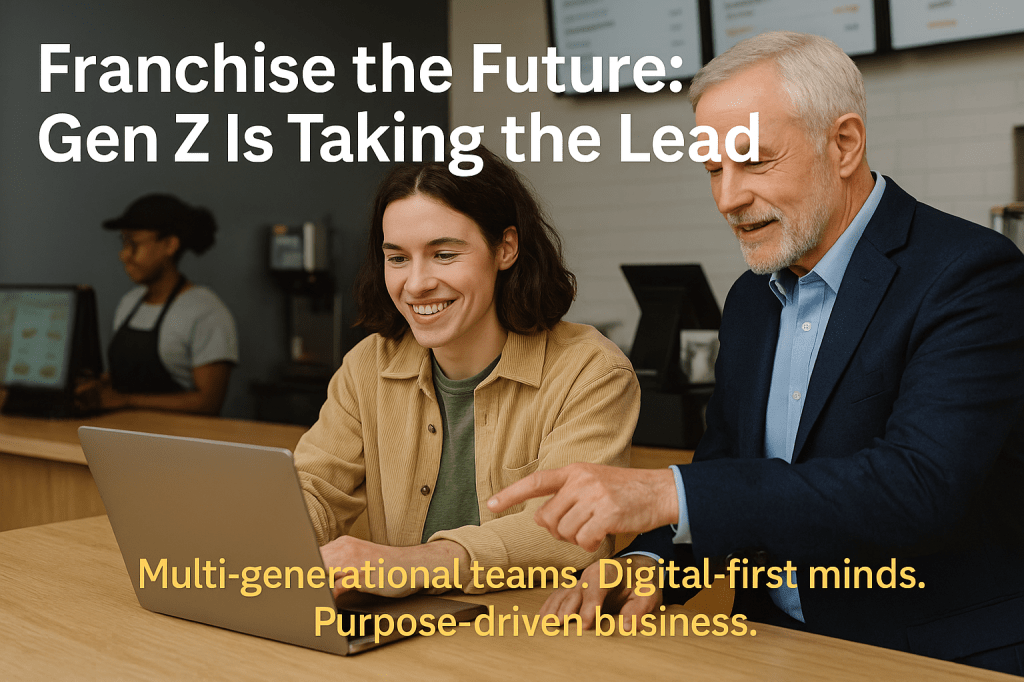
But Gen Z isn’t looking to do it alone. One of the most promising trends is multi-generational franchise partnerships. Gen Z is teaming up with parents—and even grandparents—where the younger partner brings day-to-day hustle, frontline engagement, and digital savvy, while older generations provide capital, mentorship, and operational wisdom. In these cases, Gen Z often influences branding, marketing, and technology strategies right away, setting the stage to gradually assume full control of the business.

This new dynamic requires a fresh approach across franchise development, onboarding, support, and communication. Franchisors who embrace it now can future-proof their brand.

Franchise Recruitment Must Evolve
Traditional franchise marketing—email drip campaigns, static websites, or formal pitch decks—isn’t enough. Gen Z expects content that’s short, visual, and authentic. They discover brands through Instagram, TikTok, YouTube, and Reddit, and they trust real voices over polished messaging. Storytelling, behind-the-scenes video, and purpose-led content are more likely to inspire action than sales-heavy materials.

They also care deeply about impact. Gen Z wants to align with franchises that reflect their values—sustainability, inclusion, community involvement—not just profits. Franchisors must lead with culture and vision, not just unit economics.

Redefining Ownership for New Realities
High startup costs can be a roadblock for Gen Z, but creative ownership structures can lower the barrier to entry. Franchisors should consider flexible investment models, micro-formats, or financing partnerships tailored to younger entrepreneurs. Multi-generational teams also provide a strong pathway: Gen Z handles the operational frontlines, while family partners provide the resources and long-term view.

These aren’t absentee investors and operators—they are collaborative, aligned teams, with Gen Z increasingly steering the business as they gain experience.

Training for a Generation of Digital Natives
Gen Z grew up learning from apps, YouTube, and interactive platforms. They don’t want lengthy seminars or outdated PDFs—they expect training that is mobile-first, on-demand, and intuitive. Franchisors should offer engaging, multimedia-rich onboarding systems that use video, gamification, quizzes, and even AR or VR elements to reinforce knowledge.

And learning should never stop. Gen Z values personal growth, so ongoing development, peer mentoring, and upskilling opportunities are crucial for retention and long-term success.

Support That’s Real-Time, Not Old-School
Gen Z won’t wait three days for an email reply or sit on hold for a callback. They expect responsive, multichannel support that fits their digital habits. That means real-time options like live chat, mobile app access, and searchable knowledge bases. Better yet, build community—platforms where franchisees share solutions, tips, and feedback.

Field support teams should act more like coaches and collaborators than inspectors. Regular check-ins, encouragement, and open feedback loops can make all the difference.

Communicate Where They Are
Perhaps one of the most important shifts franchisors must make is in how they communicate with Gen Z. This generation doesn’t check voicemail and may not read lengthy emails. They prefer text messages, direct messages on social platforms, and app-based notifications. Franchisors must meet them on their preferred channels—and communicate in a tone that’s informal, transparent, and authentic.

Gen Z Rewrote the Rules on Phone Etiquette … Again. Find Out the New Mistake You May Be Unknowingly Making

Whether it’s confirming a field visit, sharing updates, or soliciting feedback, traditional communication methods must give way to faster, more intuitive, and frictionless exchanges.

Make Culture and Purpose Central
Gen Z is wary of corporate spin and empty slogans. They crave transparency and expect businesses to take a stand on issues that matter. Franchisors must be crystal clear about what they stand for—and back it up with action.

Highlight franchisees who are making an impact, share your brand story openly, and involve Gen Z candidates in real conversations about your system’s direction. Let them feel heard before they ever sign on the dotted line.

Conclusion: The Future Is Here
Gen Z is not a trend—they’re the future of franchising. They’re curious, bold, and eager to build businesses that matter. Whether working solo or alongside family, they bring digital fluency, social awareness, and a hunger to create impact. But they’ll only succeed—and stay—with brands that are willing to evolve with them.

Franchisors must rethink how they market, train, support, and communicate—not someday, but now. Because Gen Z isn’t just ready to take the wheel—they already have one hand on it.

Make today a great day. Make it happen. Make it count!

About the Author

Paul Segreto brings over four decades of hands-on experience in franchising, restaurants, and small business development. A passionate advocate for entrepreneurship, Paul has guided countless individuals on their journey to success, whether they are established entrepreneurs or just beginning to explore the path of business ownership.

Named one of the Top 100 Global Franchise and Small Business Influencers, Paul is also the voice behind the Acceler8Success Cafe, a daily content platform where thousands of entrepreneurs gain insight and motivation. A lifelong advocate for ethical growth and brand integrity, Paul continues to coach founders, franchise leaders, and entrepreneurial families, helping them find clarity in chaos and long-term success through intentional leadership.

Ready to take your next step in business or looking for expert insight to overcome today’s challenges? Reach out directly to Paul at paul@acceler8success.com — your path to success may be one conversation away.

About Acceler8Success Group

Acceler8Success Group is a multifaceted business advisory platform committed to empowering entrepreneurs, small business owners, franchise professionals, and industry leaders through strategic consulting, coaching, and curated content.

With a strong focus on entrepreneurship, franchising, restaurants, and small business growth, Acceler8Success Group delivers actionable insights and real-world strategies across its suite of brands, including the following:

Acceler8Success,  FranchiseReclaim,  OwnABizness.com,  Accelerate Success Coaching,  Your Entrepreneurial Success, and relaunching soon, Franchise Foundry.

By blending deep industry expertise with a dynamic content ecosystem, Acceler8Success Group fosters sustainable success and responsible leadership for today’s innovators and tomorrow’s legacy builders.

5 Entrepreneurial Quotes That Should Guide Every Franchisor’s Playbook

The most successful franchise systems aren’t built solely on products or processes—they’re built on people. The relationships between franchisors and franchisees, the culture that lives in every unit, and the communication that ties it all together are the lifeblood of sustainable growth. As franchisors work to strengthen these areas, the words of legendary entrepreneurs offer timeless wisdom and actionable insight.

Here are five powerful quotes that speak directly to today’s franchisors—with reflections on how each one can guide franchise leadership in culture, relationships, and communication.

“None of us is as good as all of us.” – Ray Kroc (McDonald’s)
Ray Kroc, the architect of one of the most iconic franchise systems in the world, understood that franchising is a team sport. His words are a reminder that collaboration—not control—is the key to scaling a brand. Franchisors who cultivate a spirit of partnership with their franchisees foster trust, shared accountability, and system-wide innovation. When franchisees feel heard and valued, they contribute ideas, solve local challenges, and elevate the brand beyond what any one person could achieve alone.

“Success seems to be connected with action. Successful people keep moving. They make mistakes, but they don’t quit.” – Conrad Hilton (Hilton Hotels)
Hilton’s insight captures the tenacity required of franchisors as they support a growing network. Mistakes are inevitable—especially when scaling fast—but the difference between good and great franchise systems lies in how they respond. Consistent communication, proactive support, and a willingness to adapt help franchisors build credibility. It’s not about having all the answers but about showing franchisees that leadership is in motion, not standing still.

“Your culture is your brand.” – Tony Hsieh (Zappos)
In franchising, culture must be more than an abstract concept—it has to be embedded in every touchpoint. From discovery day to daily operations, franchisors must lead with values that resonate system-wide. Tony Hsieh’s words remind us that customer experience is only as strong as the culture behind it. When franchisees and their teams are immersed in a shared set of beliefs and behaviors, customers feel it—and they come back for more.

“You can design and create, and build the most wonderful place in the world. But it takes people to make the dream a reality.” – Walt Disney (Disney)
Walt Disney’s quote underscores the power of people in realizing brand vision. For franchisors, this means acknowledging that franchisees and frontline employees are the true stewards of the brand. No matter how brilliant the concept, it’s their passion, service, and execution that determine how it’s experienced. The franchisor’s role is to inspire, equip, and support these people, turning a brand blueprint into a living, breathing business.

“In the end, it’s not about the coffee. It’s about the people.” – Howard Schultz (Starbucks)
Howard Schultz built an empire not just on coffee, but on connection. His quote speaks to the heart of brand loyalty—not just for customers, but for franchisees, team members, and vendors. Franchisors who prioritize relationships over transactions create ecosystems where people feel empowered and committed. Open lines of communication, ongoing support, and authentic engagement build the type of culture that transcends product and fuels growth.

Final Thoughts
Franchising is as much about leadership as it is about systems. These five quotes remind today’s franchisors that while products and playbooks matter, it’s culture, relationships, and communication that truly move the needle. By taking these lessons to heart, franchisors can build not only strong brands—but enduring communities that grow together, succeed together, and stay together.

Make today a great day. Make it happen. Make it count!

About the Author

Paul Segreto brings over four decades of hands-on experience in franchising, restaurants, and small business development. A passionate advocate for entrepreneurship, Paul has guided countless individuals on their journey to success, whether they are established entrepreneurs or just beginning to explore the path of business ownership.

Named one of the Top 100 Global Franchise and Small Business Influencers, Paul is also the voice behind the Acceler8Success Cafe, a daily content platform where thousands of entrepreneurs gain insight and motivation. A lifelong advocate for ethical growth and brand integrity, Paul continues to coach founders, franchise leaders, and entrepreneurial families, helping them find clarity in chaos and long-term success through intentional leadership.

Ready to take your next step in business or looking for expert insight to overcome today’s challenges? Reach out directly to Paul at paul@acceler8success.com — your path to success may be one conversation away.

About Acceler8Success Group

Acceler8Success Group is a multifaceted business advisory platform committed to empowering entrepreneurs, small business owners, franchise professionals, and industry leaders through strategic consulting, coaching, and curated content.

With a strong focus on entrepreneurship, franchising, restaurants, and small business growth, Acceler8Success Group delivers actionable insights and real-world strategies across its suite of brands, including the following:

Acceler8Success,  FranchiseReclaim,  OwnABizness.com,  Accelerate Success Coaching,  Your Entrepreneurial Success, and relaunching soon, Franchise Foundry.

By blending deep industry expertise with a dynamic content ecosystem, Acceler8Success Group fosters sustainable success and responsible leadership for today’s innovators and tomorrow’s legacy builders.

The High Stakes of Restaurant Entrepreneurship: Passion Isn’t Enough

It’s often said that owning a restaurant is one of the toughest businesses to run. Margins are razor-thin, turnover is high, and just one bad week can spiral into disaster. Pair that with the relentless demands of entrepreneurship—the constant problem-solving, financial pressure, and emotional toll—and it becomes clear that operating a restaurant is not just a business; it’s a high-stakes balancing act. A game of inches, with little to no room for error.

Yet, despite the odds, restaurant ownership remains one of the most alluring pursuits in business. For many, it’s a passion project or a legacy dream. For others, it’s the promise of scalability and the excitement of building a brand people love. And remarkably, while countless restaurants barely scrape by or ultimately shutter their doors, there are operators—both independent owners and multi-unit franchisees—who are thriving. So how is it that one group fails while another finds extraordinary success in the very same industry?

The answer lies in execution, systems, mindset, and adaptation.

The Thin Line Between Success and Struggle

The restaurant business is unforgiving. Even the most promising concept can fail due to poor location, inadequate marketing, inconsistent service, or rising food and labor costs. It’s not just about great food or a trendy interior; it’s about managing hundreds of variables in real time, every single day. And for entrepreneurs entering the space with little industry experience or underestimating the demands of operations, the learning curve can be brutal.

Moreover, many independent operators fall into the trap of trying to do everything themselves. Passion alone cannot sustain a business without proper systems, cost controls, staff training, marketing strategy, and leadership. A lack of financial literacy or an emotional resistance to letting go of control can further compound the struggle. This is often where restaurant dreams go to die—not in lack of effort, but in lack of structure.

The Blueprint Behind Success

Successful operators approach the business differently. They don’t just work in their business; they work on it. They treat the restaurant not just as a passion project, but as a performance-based business model that must be monitored, measured, and optimized continuously.

These operators invest in:

  • Systems and Processes: From food prep to service protocols, consistency is king. Whether it’s a single-unit or a franchise, the most profitable restaurants run like clockwork because every task is streamlined and repeatable.
  • Financial Discipline: Successful restaurateurs know their numbers inside out. Food cost, labor percentage, average ticket size, customer acquisition cost—these metrics aren’t just tracked, they’re used to make daily decisions.
  • Leadership and Culture: High-performing teams don’t happen by accident. The best operators invest in training, create clear expectations, and foster a culture of accountability and growth. Employee turnover is expensive—top operators know how to build loyalty.
  • Scalability and Brand Consistency: For franchisees, success hinges on following a proven model. For independents, it’s about creating a brand that is scalable, from menu to marketing. The difference? Discipline versus chaos.
  • Adaptability: Consumer behavior shifts quickly—what worked three years ago may be obsolete today. The most successful operators are nimble. They embrace technology, optimize for takeout and delivery, leverage social media, and continually evolve their offerings.

Franchise vs. Independent: A Tale of Two Paths

Multi-unit franchise operators often succeed where others don’t because they start with a proven framework. Franchisors provide support in site selection, training, marketing, and operations, which helps reduce risk. But success is never guaranteed—franchisees must still execute at a high level. The most successful franchisees are those who treat each location as its own business while benefiting from the strength of the system.

On the other hand, independent operators have full creative control, but the lack of infrastructure can be a double-edged sword. The most successful independents know how to marry creativity with discipline. They build something unique, but also something operationally sound. Many of them become local legends, and a select few even evolve into franchise concepts themselves.

The Entrepreneur’s Mindset

At its core, restaurant ownership is entrepreneurship in its purest form. It’s about risk, reward, resilience, and relentless attention to detail. The wide spread between success and failure is often not about luck or location—it’s about mindset.

Successful restaurateurs are not just food lovers; they are leaders, data analysts, marketers, negotiators, and visionaries. They know when to pivot and when to double down. They stay curious, keep learning, and surround themselves with people who are smarter than they are in specific areas.

In contrast, those who struggle often do so in isolation, avoiding hard truths, resisting change, or failing to seek out mentorship and support.

In Conclusion

Owning a restaurant is not for the faint of heart. It demands an entrepreneurial spirit backed by discipline, strategy, and grit. The allure of restaurant ownership is real, but so is the risk. The wide spread between success and failure is not an accident—it’s the natural outcome of how well an operator understands and executes the business behind the dream.

So yes, it’s one of the hardest games in town—but for those who master it, the reward is not just profit. It’s legacy, impact, and a deeply satisfying sense of purpose.

Make today a great day. Make it happen. Make it count!

About the Author

Paul Segreto brings over four decades of hands-on experience in franchising, restaurants, and small business development. A passionate advocate for entrepreneurship, Paul has guided countless individuals on their journey to success, whether they are established entrepreneurs or just beginning to explore the path of business ownership.

Named one of the Top 100 Global Franchise and Small Business Influencers, Paul is also the voice behind the Acceler8Success Cafe, a daily content platform where thousands of entrepreneurs gain insight and motivation. A lifelong advocate for ethical growth and brand integrity, Paul continues to coach founders, franchise leaders, and entrepreneurial families, helping them find clarity in chaos and long-term success through intentional leadership.

Ready to take your next step in business or looking for expert insight to overcome today’s challenges? Reach out directly to Paul at paul@acceler8success.com — your path to success may be one conversation away.

About Acceler8Success Group

Acceler8Success Group is a multifaceted business advisory platform committed to empowering entrepreneurs, small business owners, franchise professionals, and industry leaders through strategic consulting, coaching, and curated content.

With a strong focus on entrepreneurship, franchising, restaurants, and small business growth, Acceler8Success Group delivers actionable insights and real-world strategies across its suite of brands, including the following:

Acceler8Success,  FranchiseReclaim,  OwnABizness.com,  Accelerate Success Coaching,  Your Entrepreneurial Success, and relaunching soon, Franchise Foundry.

By blending deep industry expertise with a dynamic content ecosystem, Acceler8Success Group fosters sustainable success and responsible leadership for today’s innovators and tomorrow’s legacy builders.

My Awakening to Entrepreneurial ADD: From Chaos to Clarity

Until recently, I wore my chaos like a crown.

I saw it as a symbol of ambition, of creativity, of entrepreneurial drive. I prided myself on the constant brainstorms, the late-night bursts of inspiration, the notebooks scattered across my workspace—each filled with plans for five or six different ventures, some fresh, others long-forgotten. That was how I operated. It felt electric. Productive. Alive.

Or at least, that’s what I told myself.

I genuinely believed I was wired to move fast, to chase opportunity, to stay endlessly “on.” But what I failed to see—what I refused to see—was that I wasn’t actually building momentum. I was spinning in circles. Fast, noisy, exhausting circles.

The realization didn’t come in a flash. It crept in quietly, disguised as a simple conversation with someone from my trusted circle of advisors—what I like to call my personal board of directors.

It wasn’t criticism. It wasn’t judgment. It was just an honest observation:
“You know, you’re always three steps into the next thing before you finish the one in front of you.”

At first, I brushed it off, like I’d done so many times before.

But later that evening, I remembered a moment from a few years back—my daughter, Jennifer, had said something nearly identical. I laughed it off at the time, chalking it up to the eccentricities of being a “creative entrepreneur.” She didn’t press. And I didn’t reflect.

But this time, hearing it again—and truly feeling the weight of it—I was ready to listen.

Sorry, Jennifer. I should have listened then.

Because deep down, I knew it was true.

What I’d been calling energy and drive was often just noise. What I thought was ambition was, more often than not, avoidance. I wasn’t leaving projects because I’d outgrown them or pivoted strategically. I was abandoning them because I got bored. Or overwhelmed. Or distracted by something shiny and new.

And there was also this essential, often-ignored piece: the business itself. You know, the part that actually keeps everything running. The revenue-generating, system-building, operational backbone that turns passion into something sustainable. I was so deep in the clouds of ideation that I wasn’t anchoring myself to what truly mattered.

That’s when I stumbled on the term “Entrepreneurial ADD.” Not a clinical diagnosis, but a painfully accurate one.

The description was like reading my own biography—hyper-creative, constantly chasing stimulation, addicted to the rush of starting but rarely following through. Always in the launch phase. Rarely in the finish line photo.

Suddenly, it all made sense.

I realized I’d been navigating a storm for years without knowing I was even in one. And worse—I had been calling it progress.

A Clearer Kind of Clarity

This wasn’t just about being busy or scattered. It was deeper. I was mistaking motion for progress. I was confusing passion with purpose. I was getting high on new beginnings and resisting the slow, unglamorous work of follow-through.

Even though it’s just me and my business partner, Erik, managing the business day-to-day—and me personally with a small, tight circle of trusted confidants—the impact was undeniable.

I’d pitch a new idea with fire in my eyes. We’d dive in, maybe even make some early traction. Then just as quickly, I’d shift gears. Not because the idea was bad—but because something newer, louder, or more exciting came along.

We weren’t short on opportunities. We were drowning in them—most of them the wrong ones, or at the very least, the wrong ones for right now. We were working hard, under constant pressure, but not really moving forward.

Once I saw the pattern, I couldn’t unsee it. And that shift—acknowledging it for what it was—began to change everything.

What I’m Doing Differently Now

This isn’t one of those before-and-after stories where everything magically falls into place. There’s no secret hack or single breakthrough moment. What’s happening is slow, steady, deliberate recalibration—retraining how I create, focus, and finish.

Here’s what’s working for me:

1. Naming the Pattern Out Loud
There’s tremendous power in calling something by its name. When I said it out loud—“I think I’ve been dealing with Entrepreneurial ADD”—something shifted. I talked about it with the advisors I trust most. No one was surprised. They saw it before I did. But naming it took away the shame and created space for solutions.

2. The 3-Day Rule
Now, when a new idea pops into my head (which still happens often), I write it down and let it sit for 72 hours. No action. No obsessing. Just time. If it still feels worthy after three days, I’ll bring it forward. But most of the time, the urgency fades—and I can let it go without guilt.

3. One Page, One Focus
I’ve replaced stacks of notebooks and endless folders with a single piece of paper—what I call my focus sheet. No more than three core initiatives per quarter. There a few “doodle” pages attached where I’m drawing lines and connecting dots to visualize organization. That’s it. It’s all on my desk, in plain sight. These are the priorities. No pivots, no new lanes, just clarity. Truth be told, a journal still sits on my desk, albeit for notes, reminders, etc. for daily operations.

4. Leaning on My Inner Circle for Accountability
It’s still just Erik and me leading the charge, supported by a small team—but I’ve invited a handful of close collaborators and advisors into my personal fold to keep me grounded. They don’t manage me—they mirror me. They help me see the things I sometimes can’t, and they ask the questions that make me pause before I pivot. They also answer my questions without telling me what I want to hear.

5. Redefining What It Means to Be “Creative”
For years, I believed creativity was all about the spark—the beginning. But now I see creativity in the editing. In the repetition. In the systems. In the discipline to finish. Creativity isn’t just invention. It’s endurance. It reminds me that it’s a marathon, not a sprint.

6. Making Peace With Boredom
This was tough. I had to learn that boredom—or more accurately, frustration—isn’t something to avoid. It’s part of the process. It’s where real work lives. Where grit is built. Distraction was the real enemy. Boredom just pointed me back to the work.

7. Designing Boundaries Around My Brain
I used to think structure would kill my creativity. But I’ve learned that without boundaries, my creativity burns itself out. Now I use time-blocking, weekly priorities, and digital limits. I give my brain room to wander—but not to run wild.

What’s Changed—and What’s Still Changing

The shift hasn’t been dramatic, but it’s been undeniable.

I’m finishing more. I feel more present in conversations. My thoughts are clearer. My decisions more grounded. Erik and I are having more meaningful conversations—not reactive, but strategic. Rooted in intention, not impulse.

And the best part?

The ideas haven’t stopped coming. If anything, they’re better—more refined, more aligned, more executable. I no longer feel the need to chase every opportunity. I’m learning to choose the right ones. And when I do? I follow through.

A Work in Progress

Entrepreneurial ADD didn’t show up yesterday. It’s been with me for years. So I know this isn’t a one-and-done journey. I’ll still get distracted. I’ll still want to chase something shiny. But now, I see the signs. I have tools. I have support.

And most importantly—I’ve developed a new respect for commitment. The kind that doesn’t make headlines. The kind that builds legacies.

So that’s where I am now. Not at the finish line. Not back at the starting gate. Somewhere in the middle. Between realization and refinement. Between chaos and clarity. Between dreaming and doing.

Finally Building What Matters

I’m building something now that’s been on and off the proverbial drawing board for more than a decade. A project that’s the culmination of everything—experience, failure, curiosity, resilience. It’s still complex (because meaningful things always are), but it’s becoming streamlined, focused, and real.

And for once, I’m not launching it in haste. Not rushing to push it out half-baked. I’m letting it come together when it’s truly ready.

Yes—this time, I’m building something that will last. A sum of all the parts—entrepreneurship, franchising, restaurants, small business, and my love for helping others succeed. And in the not-so-distant future, when it finally introduced, I have a feeling some of you will see it and nod in agreement, acknowledgment…

Not just starting—finishing.
Not just dreaming—doing.

Not just making it happen—making it count.

About the Author

Paul Segreto brings over four decades of hands-on experience in franchising, restaurants, and small business development. A passionate advocate for entrepreneurship, Paul has helped countless individuals turn their visions into thriving ventures. Ready to take your next step in business or looking for expert insight to overcome today’s challenges? Reach out directly to Paul at paul@acceler8success.com — your path to success may be one conversation away.